In the summer of 2018 as the elated French champions cavorted and the Croatian players lay prone and disconsolate a group of men in fluorescent light-blue jerseys went to the podium to collect their medals, they were referee Néstor Pitana and his team of officials. This was surely the sporting pinnacle for Pitana, who had celebrated his 43rd birthday just a month before and had begun his career refereeing in the Argentine second tier back in 2006.
But Néstor Pitana is but the latest link in a chain that stretches back almost 90 years to John Langenus, the Belgian official who had refereed the chaotic first World Cup final in 1930, as well as games in the 1934 and ’38 tournaments and the 1928 Olympics. Such was Langenus’s international reputation that he was in high demand for club games outside of his native Belgium, and it is here that the Irish connection appears, because just three months before he refereed in the Amsterdam Olympics of 1928 and two years before the World Cup final, he was in Dalymount Park for the Free State Cup Final between Bohemians and Drumcondra.
Bohs won that Cup final 2-1 in front of a crowd of over 25,000 on St. Patrick’s Day, 1928 to secure a clean sweep of all four domestic competitions that season. Their goals came from Jimmy White and Billy Dennis which cancelled out John Keogh’s opener for Drums. Match reports record that the Bohs were deserved winners with Drumcondra offering little in attack after their opening goal. Of the referee’s role The Irish Times noted that “while feelings ran high at intervals, the referee, Mr. Langenus of Belgium, handled the game splendidly and that nothing unseemly occurred to mar the enjoyment of the huge crowd”.
Langenus was something of a Pierluigi Collina of his day, well-known, popular and well-respected throughout the sporting world as well as being visually arresting, as a tall figure with slicked back hair who took to the field in a shirt, tie, jacket and a pair of plus-fours. It was this reputation that led him to Dalymount Park in 1928. Then as now there were constant debates about the quality of referees and plenty of criticism was aimed at the men in the middle during the early years of the League of Ireland. This meant that for high profile games such as Cup finals the FAI had established the practice of bringing in referees from outside of Ireland.
Usually this meant an English referee, Ireland still looked to England as a bastion of the game and it made sense to use an English speaking referee. For example, in 1927 J.T. Howcroft from Bolton had taken charge of his second FAI Cup Final. A prominent English referee, Howcroft had also officiated the 1920 FA Cup final between Aston Villa and Huddersfield. However, John Langenus had two things in his favour, he was a fluent English-speaker and in addition to his native Flemish he also spoke French, German, Spanish and Italian. The second reason that it should not be such a surprise that he refereed the Cup Final was that a year earlier he had been in Lansdowne Road to referee the Ireland v Italy international which Italy had won 2-1 thanks to two goals from Juventus striker Federico Munerati.
At a banquet following that Ireland match held in the Hibernian Hotel on Dawson Street where John Langenus and his wife were guests, the Honourary Secretary of the Association John S. Murphy toasted Langenus and described him as “one of the best referees they had ever seen in Dublin”. This surely helped with his appointment to the following year’s Cup final.
The paths of the Irish national team and John Langenus would cross on several further occasions, he took charge of Irish matches against Spain, the Netherlands, Hungary, Switzerland and finally against Czechoslovakia in 1938. Langenus himself had many happy memories of his trips to Dublin. He committed some of these to record in one of his memoirs Whistling through the world printed in 1942.
In his book he recalls witnessing the St. Patrick’s day parade on the morning of the FAI Cup Final, as well as his chats with Lord Mayor of Dublin Alfie Byrne, and his visits to the main tourist attractions; Dublin Zoo, the Botanic Gardens and St. Michan’s Church where he saw the famous preserved bodies in the church crypt. But his main memories are of Irish social culture, and Irish drink! John Langenus took a particular interest in Irish whiskey and would go directly to the distilleries to buy 90 and 100 year old bottles that wouldn’t usually be found on general sale, these he would keep as special gifts for friends (and perhaps a couple for his own collection). He was lucky on one occasion that he managed to bluff his was through English customs checks with two bottles of vintage whiskey in his suitcase.
Similarly he remembered the good humour of the after-match banquets, once again his beloved Irish whiskey makes an appearance though he mentioned that the only way he could tell his Irish hosts were getting a little drunk was that they tended to sing more. In winning or losing he recalls the good mood of his hosts remained the same.
Not all of Langenus’s sporting engagements were to be as enjoyable. His most famous role, that of World Cup Final referee was as far from the relaxed surroundings of a Dublin banquet as was possible. As the great Brian Glanville wrote of Langenus during that final match in Montevideo’s Estadio Centenario “The prospects of dealing with twenty-two players, each of whom was capable of disputing any and every decision, to say nothing of the nearly 100,000 spectators who, once they had paid their money, felt entitled to behave as they pleased, would have daunted men of lesser experience and courage than Langenus”.
Doubtless that Langenus was experienced and courageous but he was also pragmatic, he would no doubt have heard the chants and songs thousands of passionate Argentine fans as they streamed from their ferries across the River Plate and into the stadium hours before kick-off, he would have heard their Uruguayan counterparts fanatically chanting their own calls to arms, including the ominous “Victory or death!”. Who’s death exactly? In such cases often it’s the referee in the firing line and Langenus had sought assurances from the Montevideo police that a swift, armed escort, direct to their ship should be arranged right after the match for him and his team of officials should this be required.
Although the match was intense and undoubtedly passionate Langenus escaped the ire of either set of supporters, in fact he was involved in solving the biggest point of conflict even before kick-off. With both sides insisting that a football manufactured in their own country be used, Solomon-like, Langenus agreed that a ball from Argentina would be used in the first half and a ball from Uruguay in the second.
On that day, as Uruguay celebrated victory in the maiden World Cup, in front of their own home fans, John Langenus must have realised he had reached the apex of his refereeing career. He would return again to officiate in the next two World Cups, signing off his last World Cup match officiating the 3rd place play-off in 1938 which saw Brazil claim bronze, defeating Sweden 4-2. While he continued to referee international games for another year the outbreak of World War Two effectively ended his career as an international referee though he continued to referee matches in the Belgian League throughout the War until finally the league was suspended for the 1944-45 season. By that stage Langenus was 53 years of age.
According to one source, as a teenager he had played youth football for AS Anversoise but was already a referee in the Belgian top flight since at least 1912, refereeing his first international match in 1923 aged just 31. Throughout his career he was a committed amateur. He worked as a public servant in his home city of Antwerp for his whole working life and was also an occasional sports journalist. While on international duty only his expenses were paid and he refused any fees to referee games though often in such instances medals, cut glass, watches or decorative cups were given as mementos. He also had the perk of being able to bring back the likes of whiskey from Ireland or cigars from Spain. His positively Corinthian idealism is evident even just by looking at him with august bearing and almost formal attire.
His talent for writing was something that he put to good use in his retirement, writing a memoirs and two other football related books. He passed away in his native Belgium in 1952 aged 60.
With thanks to the people behind @WC1930blogger and @RefereeingBooks for their assistance.
The 17th of September marks another landmark moment in the history of Bohemian Football Club, and indeed the League of Ireland as a whole. On that date one hundred years ago the League of Ireland kicked off, and Bohemians played our first League of Ireland fixture against the YMCA. While Bohemians (along with Shelbourne) had been among the very few clubs from outside of Ulster to compete in the Irish League, there had been a significant gap between 1915 to 1920 when football was regionalised due to the War. In June of 1921, the Leinster Football Association, after several disagreements with the IFA, including over venues for Irish Cup matches, formally decided to split from the IFA and later that year they would form the FAI.
It is a testament to how swiftly things were changing that a new League and Cup were arranged so by September, though all of the eight teams in that initial season were Dublin based, most having formed part of the Leinster Senior League prior to the split from the IFA. Alongside recognisable names like Bohemians and Shelbourne, were St. James’s Gate, Dublin United, Jacobs, Frankfort, Olympia and YMCA.
The fixtures on that opening day were Bohemians v YMCA; Shelbourne v Frankfort; and St James’s Gate v Dublin United. The other fixture due to take place had been between Olympia and Jacobs in Donnybrook but this match was postponed at relatively short notice.
The Bohs v YMCA game was the first to kick off, in what was described as a “poorly filled” Dalymount, those who did turn out though witness a masterclass from Bohemians. The Bohemians XI for that first league game was as follows – George Wilson, Tom Parslow, Albert Kelly, Mike Stafford, Tom O’Sullivan, Billy Otto, James Marken, Edward Pollock, Frank Haine, Harry Willitts, Johnny Murray. An eclectic bunch, Parslow was an Irish hockey international, Willitts was a WWI veteran who was originally from Middlesborough, while Billy Otto had been born in the Leper Colony on Robben Island off the coast of South Africa.
It was Haine (a former IFA amateur international) who opened the scoring in the first half after some sustained Bohemian pressure, as a result becoming the first goal-scorer in League of Ireland history. YMCA then gave away two penalties in quick succession for a foul on Pollock and later a handball. Marken duly dispatched both to give Bohs a 3-0 lead. Johnny Murray and Harry Willitts rounded out the scoring to give Bohemians a 5-0 win on the season’s opening day.
Bohs would ultimately finish that season in second place, two points behind inaugural St. James’s Gate who would go on to do the double by beating Shamrock Rovers (then a Leinster Senior League side) in a replayed FAI Cup final. As for YMCA, they finished bottom in what was their only season in the League of Ireland.
First published in the Bohemian FC v Maynooth Town match programme.
“Cup tie fever! Who is it who has not been affected with it at some period of another? It is an epidemic which always occurs in a virulent form about the same time each year… Its principle characteristics are a blind, unfaltering belief in the capacity of one’s own team to win “The Cup”… I am afraid the supporters of the Bohemian Club are in no way immune from the ravages of this disease”
These words were written by Dudley Hussey, a founder member of Bohemian Football Club in one of the first histories of the club. Though this history was written some 110 years ago the words remain true to this day, indeed his references to epidemics and disease carry an additional significance!
By the time of writing Hussey had seen a club he helped found prosper from humble beginnings in the Phoenix Park to residents of Dalymount and become serial Leinster Senior Cup champions. However, the prize that they most desired was the Irish Cup.
Bohs had been members of the Irish League since the 1902-03 season, the first Dublin club to join, and also regularly competed in the Irish Cup, becoming the first Dublin side to make the final in 1894-95. However, that cup final was to be a bitter disappointment with Bohs incurring a record 10-1 defeat to Linfield. Bohs would reach the final twice more in subsequent years, a narrow, controversial defeat to Cliftonville 2-1 in 1900 and a 3-1 defeat to Distillery in Dalymount Park in 1903. In 1906 Shelbourne became the first Dublin side to lift the trophy, defeating Belfast Celtic 2-0 in the final in Dalymount Park, surely the Cup couldn’t elude Bohs for much longer?
As an amateur side Bohs were often at a disadvantage against the big Belfast clubs who could afford professional players or who could give their stars cushy sinecures with companies connected with the side. Bohemians often travelled north with many of their best players unavailable due to work commitments and league form was patchy at this time. However, they believed that when they could field their strongest XI they were more than a match for any team in Ireland. The 1907-08 cup campaign would prove just that.
As a member of the Irish League; Bohs were exempt from the first round of the cup and were drawn to face Glentoran in the Oval in the second round. Leading 2-1 with minutes remaining in Belfast, the Glens were awarded a late penalty to secure a replay in Dalymount. A week later Bohs made no mistake, running out easy 4-1 winners with Dick Hooper scoring a hat-trick.
The next round pitted Bohs against league champions Linfield in Windsor Park, again a lead was squandered, Bohs being pegged back from 2-0 in driving rain and sleet to be held for a 2-2 draw after another penalty award, and so to another Dublin replay. In a close and hard-fought match in Dalymount Bohs won out 2-1 and were through to the semi-finals of the Cup.
Lying in wait were Belfast Celtic, and once again Bohemians were drawn away, necessitating another trip north to Belfast. In a thrilling game Bohs were 2-0 down inside the first half after giving away yet another penalty, however, an amazing feat of dribbling by Dinny Hannon where he ran the length of the pitch to score, followed by a second half penalty by Willie Hooper secured a replay in Shelbourne Park. The Belfast Celtic performance was far below their standard of the previous week and Bohs ran out easy 2-0 winners. The final was set – for the first time ever two Dublin clubs, Bohemians and Shelbourne would fight it out for the Cup.
On the 21st of March 1908 the first final took place in Dalymount. First final? Because of course even the final would go to a replay after 1-1 draw. Bohemians goalkeeper Jack Hehir was the hero of this match, producing the “most brilliant display of goalkeeping ever seen in Dublin” by saving two penalties over the course of the game.
The following Saturday was to be the 8th and final match of Bohs epic Cup quest. This was a talented Shelbourne side, among their starting XI were the likes of Billy Lacey and captain, Val Harris both of whom would be lining out for Everton as they finished runners up in the English first division the following season. Bohs were not to be overawed however, and tore into Shels from the outset, Hehir was once again impressive in goals but it was the Hooper brothers who ran riot, Dick Hooper scoring after only eight minutes before grabbing a second on the half hour while just before the interval Jack Slemin played in Willie Hooper to put Bohs 3-0 up.
Shels rallied in the second half, putting in some rough tackles and as a result several Shelbourne players were cautioned, one such tackle forced Bohs captain Jimmy Balfe from the pitch for treatment and while Bohs were reduced to 10 men John Owens scored a consolation goal for Shelbourne. But it was to be Balfe’s day, returning to the pitch after treatment it was he who would life the Cup for Bohemians and fulfil what could only have been a distant dream of Hussey and the other founders when the met in the Phoenix Park in 1890.
Teams as shown in the Dublin Daily Express on March 30th
Bohemians Cup Final XI:
Jack Hehir, Jimmy Balfe, P.J. Thunder, William Bastow, Tom Healy, Mick McIlhenney, William Hooper, Dinny Hannon, Dick Hooper, Harold Sloan, Jack Slemin
Originally published in the Bohemian FC match programmein 2021.
Against a backdrop of the War of Independence and a city consumed by sectarian violence, thousands of Belfast’s shipyard and engineering workers found themselves expelled from their jobs for reasons ranging from their religion to their political affiliation. Many of these men found solace and indeed, the money to get by, through football. Cup tournaments for expelled workers were created and fundraising initiatives launched. At a pivotal time for the development of football in Ireland many clubs, including Bohemian FC, were to the fore in showing solidarity with the expelled workers of Belfast. This is my attempt to tell at least part of that story.
On the 12th of July 1920, Edward Carson, the Dublin-born icon of Unionism made an impassioned and inflammatory speech in a field in Finaghy, some four miles from the centre of Belfast, in front of an estimated crowd of 25,000. He railed against the dangers of a Sinn Féin invasion and stressed that, if needed, Ulster Unionism would oppose Home Rule by force, referring to secret plans by prominent Unionist politicians to resurrect the Ulster Volunteer Force (UVF). He then finished with quite the rhetorical flourish –
“We must proclaim today clearly that come what will and be the consequences what they may, we in Ulster will tolerate no Sinn Féin – no Sinn Féin organisation, no Sinn Féin methods… And these are not mere words. I hate words without action”.
Edward Carson – 12th July 1920
Edward Carson
Some Unionists had been shocked when earlier in the year Sinn Féin candidates had made significant gains in local elections across Ireland, including taking control of local Councils in several Ulster Counties. There was also the obvious backdrop of the escalating violence of the Irish War of Independence as further cause for concern. In March 1920 the Sinn Féin Lord Mayor of Cork, Tomás Mac Curtain was murdered in front of his family by members of the Royal Irish Constabulary (RIC) under the orders of RIC District Inspector, Oswald Swanzy. Three months later Lieutenant-Colonel Gerald Bryce Ferguson Smyth, a British Army officer seconded to the RIC made an incendiary speech to members of the RIC in Listowel, Co. Kerry regarding the methods which he wanted to see deployed in dealing with the Volunteers, culminated with the reported lines;
You may make mistakes occasionally and innocent persons may be shot, but that cannot be helped and you are bound to get the right persons sometimes. The more you shoot the better I will like you; and I assure you that no policeman will get into trouble for shooting any man and I will guarantee that your names will not be given at the inquest.
Lieutenant-Colonel Gerald Smyth (RIC) – June 1920
These events specifically would have a bearing on what was to come in Belfast and other parts of Ulster. While the 12th of July holiday had passed off peacefully, on the 17th of July, Gerald Smyth, targeted in part as a reprisal for his speech, was shot dead by the IRA in the smoking rooms of his members club in Cork. His body was taken to Banbridge, Co. Down, where his mother’s family had come from, for burial. It was after his burial on 21st July that most workers in Belfast returned to their jobs after the holiday break. The timing was bad and discussion quickly moved from the funeral of Smyth to Catholic workers in the Belfast shipyards and other related industrial sites, members of the Belfast Protestant Association had put up posters on the gates of Queen’s Island (Belfast Harbour) calling for a meeting of “all Unionist and Protestant workers” for lunchtime that day. Members of the militant Belfast Protestant Association made “very angry and hot” speeches to assembled workers from the Harland and Wolff and the Workman Clark yards, with the result that as many as a thousand workers then swept into the Harland and Wolff yards looking for Catholic workers and so-called “rotten Prods”, those viewed as Socialists or not sufficiently loyal to Unionism. It had not been lost on the mob that Carson in his speeches had also attacked ‘men who come forward posing as the friends of labour’, whose real object was ‘to mislead and bring disunity amongst our own people; and in the end, before we know where we are, we may find ourselves in the same bondage and slavery as is the rest of Ireland’.
Men had their shirt collars torn open as members of the mob searched for religious medals, while some even dived into the Musgrave channel and swam for their lives to escape the violence being meted out. The violence continued to grow and extended beyond the confines of the shipyards and became focused on neighbouring streets and businesses, trams were attacked and workers aboard, fleeing the violence of the shipyard were targeted.
East Belfast 1920
Ultimately, almost 8,000 workers were expelled from their jobs. This in a city where in 1907, the dockers, under the leadership of James Larkin, had put aside sectarian division and stood together and fought for Union recognition. Even as recently as 1919 there had been a level of solidarity among the workers during the Belfast Engineering Strike which helped secure a shorter working week. However, as Padraig Yeates notes among those who were prominent in leading the 1919 strike, such as the Catholic, Charles McKay, the chairman of the strike committee, and James Baird, a syndicalist, were among the thousands of workers expelled from the shipyards.
In response to the expulsion of the workers, who were now left without a wage, a relief fund was set up in August of 1920. Soon there were over 8,000 workers registered for the relief scheme which supported them and their families meaning in all over 23,000 people were dependent on the relief scheme for their daily survival. This situation became even more perilous as the violence continued into the autumn of 1920. As Mícheál MacDonncha writes,
In East Belfast where many Catholic-owned public houses and ‘spirit groceries’ (grocery shops with alcohol licenses) were attacked and looted and the families who lived over them forced out. One estimate said that over 70 such premises were looted and destroyed. The Catholic St. Matthew’s Chapel and nearby convent in Short Strand were attacked and burned. Catholic families were expelled from their homes in Bombay Street between the Falls and Shankill Road
In addition to thousands of men and women being expelled from their jobs the next two years would see close to 500 people lose their lives in political and sectarian violence in the city. Some historians have referred to the events of the period as the “Belfast Progrom”. This violent and uncertain time may be a decidedly inopportune time to start a new football league but that is precisely what happened. As Chris Donnelly has written, the Falls and District League was established to compete in the 1920-21 season, with local businessman John Kennedy a key driver in getting the league established, later becoming its President.
Football was not immune from the social upheaval taking place and there had been several instances of serious violence at games in the previous two years. While this was certainly not confined to Belfast the most prominent incidents had involved Belfast Celtic, the club in the city most closely associated with the Catholic and Nationalist population. The 1920 Irish Cup had been awarded to Dublin side Shelbourne without a final being played after the semi-final between Belfast Celtic and Glentoran, played in March of that year, had to be abandoned amid pitch invasions and revolver fire. Belfast Celtic, league Champions in the 1919-20 season would withdraw from the Irish League and not return until the 1924-25 season.
Several of the former Belfast Celtic players found their way into the line-ups of the Falls & District League teams which soon sought to align itself with the break-away Football Association of Ireland, formed after a split between Dublin and the IFA in Belfast. There were some historic tensions between Dublin and Belfast over issues like player selection as well as choice of venue for international matches and cup games, however, things came to a head in 1921 against the backdrop of the increasing violence of the War of Independence and the sectarian and industrial unrest in Belfast.
The IFA made the decision to move Junior and Intermediate Cup matches which had been scheduled for Dublin to Belfast, while there was something approaching a diplomatic incident at an amateur international between Ireland and France in Paris in February, 1921. The Irish team, which included players from Bohemians, Dublin United and St. James’s Gate in the starting eleven was greeted by a “Sinn Féin flag”, in actuality an Irish tricolour, in Paris by a number of the crowd. These later were reported to be students from Egypt who identified or sympathised with the Irish struggle for independence. In reality, there was only one Egyptian student among their number, Ibrahim Rashid, who had previously attended University College Dublin. The others involved in the protest were members of the Irish Student Association of Paris and included Roy C. Geary, a UCD graduate then studying in the Sorbonne, who would later become the founder of both the Central Statistics Office and the Economic and Social Research Institute, A.J. Leventhal (a Trinity graduate and friend of James Joyce) and man named Patrick Gallagher who later became a Professor of Chemistry in UCD. The identities of those involved were only disclosed by a letter from Roy Geary to the Irish Times in January 1982, more than 60 years after the event.
The final straw arrived in March 1921 when the venue for a replay of the drawn Cup game between Glenavon and Shelbourne came to be decided. The original match had taken place in Belfast so custom would suggest that the replay should take place in Dublin. However, the IFA ruled that the replay should also take place in Belfast. The FAI was founded a few months later in September and it was to this organisation that the teams of the Falls and District League chose to affiliate.
By September 1921, as the FAI was in the process of establishing itself as a separate entity and arranging its first competitions, the Falls and District League were coming to Dublin to take on Bohemians in a fundraising match for the expelled workers of Belfast. The match, set for Saturday, 10th September was to be the curtain raiser of the new season for Bohemians. Both they, and Shelbourne had withdrawn from the Irish League after the end of the 1919-20 season and they were preparing for the first season of the League of Ireland, due to kick off the following week. Bohs would finish second that season behind St. James’s Gate, and possessed a strong squad which included Billy Otto, the South African half-back, English winger Harry Willetts, Johnny Murray, Bert Kerr, Edward Pollock and amateur international striker Frank Haine as well as future Irish international Jack McCarthy.
Teams for the Dalymount match, September 1921
The Falls team were made up of players from several member clubs, St. Peter’s, Alton United, Ardoyne, Rosario, Trojans, Highfield and West Ham. In fact, West Ham, a team made up mostly of expelled workers from the Belfast shipyards won a regional Belfast qualifying competition and as a result were drawn in the first round proper of the inaugural FAI Cup against Dublin side Shelbourne, who they took to a replay. Shelbourne triumphed in the replay but it was not the last significant impact that a Belfast side would have on the FAI Cup. According to one report from the Evening Herald Johnny McIlroy of Rosario and Joe Devlin of St. Peter’s were both former Belfast Celtic players. While it seems that Andy McSherry had also been on their books some years earlier.
There was significant interest in the Bohemians v Falls XI game in Dalymount and a large crowd of around 6,000 attended and significant sums, estimated at £130, were raised for the expelled workers fund. The Herald further reported that “a novelty was occasioned by the policing of the ground by the IRA which proved most satisfactory”, specifically the Military Pension files of Michael Murphy show that this work was done by “C” company of the 3rd Battalion of the Dublin Brigade of the IRA. The reports describe a lively, entertaining, and competitive match. The Falls took the lead after around 15 minutes when O’Donnell of the St. Peter’s club scored after good work from Duffy. Kerr came close to doubling their advantage soon afterwards. Bohs equalized before half-time through the quick-thinking of Harry Willetts whose parried shot was tapped in by Thomas Holden. In the second half Bohs began playing with the wind and began pressing for the winner, it eventually came through some excellent individual play on the part of Johnny Murray who curled a shot past Killeen in the Falls goal which secured a victory for Bohemians.
Afterwards dinner was served to both teams in the Dalymount Pavillion followed by a “smoking concert”. Such was the success of the match that it was agreed that a return game in Belfast in the very near future was desirable. Initially a return game for later that month was suggested, although this clashed with a League of Ireland fixture between Bohs and Jacobs. Eventually October 8th 1921 was agreed as a date for the return fixture in Belfast and the Falls League set about trying to secure Celtic Park, home ground to Belfast Celtic as a venue. This, however, couldn’t be arranged and the match was due to be held in Shaun’s Park, a former home to Belfast Celtic and later known as MacRory Park and in later years more associated as a site for GAA than soccer. As Chris Donnelly notes the venue also played host to an all-Ireland semi final in October 1909 between Antrim and Louth, in which the Wee County would run out winners by 2-13 to 0-15. During the mid-1930s, many Catholic families were forced to take shelter in the park after being burnt out of their homes in the sectarian riots that engulfed the city.
Along with the difficulty securing the ground there were also challenges to even secure a hotel or restaurant to host the visiting Bohemians team. In the end the Falls side had to host Bohs in their clubhouse and arrange their own catering. For Bohs part they seem to have made a day of it in relation to their journey north. Certainly, there was no mention of any concern for the safety of the travelling party. They stopped for lunch at Cushendall where there were speeches from the various members present, including club President Michael Moynihan, and secretary of the FAI Jack Ryder. While dining they also met with Clemens J. France, a lawyer from Seattle working in Ireland as part of the White Cross who were providing aid during the War of Independence. France would later become part of a committee chaired by Michael Collins that helped develop early drafts of the first Constitution of the Irish Free State.
Bohs leisurely journey continued with stops in Camlough, Co. Armagh where they were welcomed by the Parish Priest Father Kerr who described the group as “plucky” for venturing up north during the “days of trouble”, while there was a further stop in Larne before the eventual arrival in Belfast just before the curfew.
The return match itself was a significant draw, even hampered as the game was with having to use Shaun’s Park. The newspaper Sport claimed it was the biggest gate of the weekend, and would have undoubtably been even larger had Celtic Park been made available. That the match drew larger crowds than other games in Belfast that weekend, which included Linfield taking on Cliftonville and Glentoran hosting Distillery, was testament to the appeal of both Bohemians and the Falls selection. Estimates had the crowd at around 3,000 and the return from the gate at around £65. Roughly half and attendance and takings of the earlier Dalymount match.
The scoreline on the day was the reverse of the Dublin game, the Falls selection triumphing 2-1 this time. They were aided considerably by the return to the starting line-up of their centre-forward, Vincent Davey of the St. Matthew’s club. Davey scored both goals either side of Frank Haine netting for Bohs with Johnny Murray missing a great opportunity to equalise. Just a few weeks earlier Haine had scored the first goal ever in the League of Ireland as he helped Bohemians to a comfortable win over YMCA. Davey on the other hand had missed out on the trip to Dublin a few weeks earlier, his absence and his reputation noted by the media on that occasion. As well as being centre-forward for St. Matthew’s, Davey was also the Parish Priest of St. Matthew’s.
Located in the Short Strand area of Belfast, St. Matthew’s Church and the neighbouring convent had been attacked on successive nights on the 22nd and 23rd July as Loyalist gangs first began pelting the buildings with stones before then trying to set them ablaze. This was only prevented by a detachment of British troops opening fire on the attackers. Fr. Davey had also been involved in attempting to ease tensions at the time of the worker expulsions and sectarian violence.
In a somewhat bizarre connection a Church of Ireland Reverend and former British Army officer, Frederick Chesnutt-Chesney from the same area was also involved in leading civilian groups from his congregation to protect Catholics and try to stem the tide of violence in July and again later in the year after the killing of Oswald Swanzy by the IRA in Lisburn sparked a fresh wave of disorder. Chesnutt-Chesney had been a goalkeeper for Bohemians in the years prior to the First World War. In the small world of Belfast surely the two footballing clerics must have known each other?
Around the same time that his Church had been attacked Davey had intervened in a sectarian labour dispute. In response to the shipyard expulsions a small group sent a letter claiming to be from the IRA and threatened the management of the Anderson & Son felt and roofing works factory in Short Strand. They had demanded the dismissal of all Protestant workers from the factory. Fr. Davey as a local priest approached the factory’s Managing Director, a Mr. Brock to assure him that these demands were not representative of the community and we not made “by any responsible members of their flock”. Davey, some other Catholic clergy, and according to the Freeman’s Journal a group of IRA men acted as a picket to protect the Protestant workers at the factory as they left during their dinner hour. Davey would later work in the Catholic Missions in Nigeria before returning to Ireland and becoming the Parish Priest of the town of Antrim until his death in 1970. He maintained in interest in football and an affection for Killyleagh United F.C. from the town where he had been priest during the years of the First World War.
Bohemians returned to Dublin and to the League of Ireland, they would finish second in that inaugural season. Despite the limits placed on their hosts in terms of venue for both the game and a reception the Bohs players and administrators enjoyed themselves after the match and spoke “glowingly in praise of the hospitality of the northern adherents to the FAI”. The following year they bolstered their squad with the signing of Johnny McIlroy, the former Belfast Celtic star who had been lining out for the Falls League as a full-back when they came to Dalymount. McIlroy would have a long and successful career with Bohs, winning league titles in 1924 and 1928 and adding the 1928 FAI Cup to the Irish Cup he had won with Belfast Celtic ten years earlier.
Johnny McIlroy during his time with Belfast Celtic
For the Falls League things remained challenging. A cup competition, entitled the Expelled Workers Cup was created to help raise money and keep the workers active. The teams of the Falls league competed in it. In 1922 this cup was won by the Ardoyne club while West Ham, the side who had taken Shelbourne to replay in the FAI Cup, won the Falls and District League. While they had nearly caused a cup upset, their Falls League counterparts, Alton United, created a downright shock – they would win the 1923 FAI Cup final against Shelbourne.
Alton United, 1923
Alton had some pedigree, previously known just as “United” they had been IFA Junior Cup champions in 1920, when they began operating from rooms above the Alton Bar they changed their name to Alton United. Alton were based in Carrick Hill, a small Catholic enclave at the bottom of Belfast’s fiercely loyalist Shankill Road area and surprised all of Ireland when they defeated Cork side Fordsons in the semi-final and then beat clear favourites Shelbourne 1-0 in the final, with Andy McSherry grabbing the winning goal. On that Alton team was Michael Brennan, who had played centre-half as the only Alton player in the Falls XI which visited Dalymount in September 1921. In another echo of that match the security for the Alton side on their visit to Dublin were, according to some reports members of the IRA. This was likely a mistake and actually referred to the Free State Army as just days earlier Liam Lynch had issued the “Amusements Order” which called for all sports and amusements to be cancelled and called for a period of national mourning for the members of the IRA executed by the Free State Government. This was in March 1923, two months before the “dump arms” notice led to the end of the Irish Civil War.
Michael Brennan, the star centre-half for Alton United and the Falls League XI is an interesting character and his story gives a glimpse into the complexity of life in Belfast at the time. From the research carried out by family members Siobhán Deane and Damien Brannigan we learn that Brennan was a WWI veteran, having heeded the call of John Redmond to join the Irish Volunteers and subsequently the British Army where he served with the 6th Connaught Rangers for whom he was regiment boxing champion as well as playing football for the regiment. He was from Alton Street in Belfast and was a shop owner in the city after being demobbed in 1919. His business was one of those destroyed during the violence of the 1920-22 period while his older brother Bernard (Barney) was seriously injured after being shot in the Carrick Hill area of the city. Both Michael and his brother Robert had fought in World War I and both played for Alton United after their return home. Robert would later become involved with the Belfast Brigade of the IRA and his home was used as a safe house. Michael would remain in Belfast and remain involved with Alton United for many years after hanging up his boots being at various points club chairman as well as club treasurer.
Michael Brennan in the uniform of the Connaught Rangers
The Alton United win, which might have become a significant landmark to progress for Belfast clubs affiliated to the FAI became something of a coda. By the end of 1923 the FAI had affiliated to FIFA and also met with the IFA and the Football Associations of England, Scotland and Wales in Liverpool at a conference designed to heal relations after the split two years previously. Part of this rift-healing meant that the FAI agreed to confine its jurisdiction to the twenty-six counties. One gesture towards a healing of old animosities was an early cross-border competition – the Condor Cup – a two-legged annual affair contested between Bohemians and Linfield. Aside from such cross border cups there would be end to any Northern sides involvement in FAI domestic league and cup competitions until the affiliation of Derry City in 1985. Today, it is fair to say, the Falls league and it’s member clubs are mostly forgotten, even in their home city. Belfast Celtic returned to the Irish League in the 1924-25 season and once again became the footballing focus for much of the city’s Nationalist community until their eventual, complete and final withdrawal from football in 1949.
The expelled workers relief fund continued to support thousands of workers and their families in Belfast, in some cases the burden was even greater than the mere loss of employment as hundreds of predominantly Catholic occupied homes had also been burnt down. Fundraising continued, apart from the games involving Bohemians to raise funds, Shelbourne also made financial donations to support the workers, while in July 1922, some two years after the original shipyard expulsions, there was even an “Italian Operatic concert” under the management of Enrico Gagni, held to raise funds in Dublin’s Theatre Royal.
While the immediate post-War years had seen a boom in Belfast’s shipyards with a huge demand for new shipping to replace the vessels lost in the First World War, the worker expulsions had a damaging impact. Many of the workers expelled has specialist skills that were not easy to replace, they had also gotten rid of some of their strongest, most formidable Trade Union representatives. This coupled with the collapse in global demand by the end of the decade caused by the stock market crash of 1929 meant that Belfast’s shipyards and engineering industries had taken blows from which they wouldn’t recover.
The 1920s were a challenging decade from a sporting point of view for the FAI, they had to battle for international recognition and even domestic credibility. There was real concern that directly after the split that clubs like Bohemians and Shelbourne would want to remain part of the Irish League rather than throw their lot in with the FAI, while it was clear that Belfast clubs like Linfield or Glentoran would never leave the IFA and that the crowds generated by the visits of these clubs as well as international matches in the Home Nations Championship were also lost. Despite being an amateur club the 20s were to be a time of relative success for Bohemians, a league title was secured in 1924 while the 1927-28 season saw Bohs make a “clean sweep” of the League, FAI Cup, Shield and Leinster Senior Cup. This decade also saw Dalymount become the venue of choice for international matches as well as cup finals and prestige friendlies.
The joining of FIFA in 1923 and the Liverpool conference with the other UK associations put an end to any claims of jurisdiction by the FAI over northern clubs, by the 1950s the habit of the IFA and FAI selecting the same players for international games had also come to an end. Cross border tournaments with a variety of sponsorship titles, came and went but the distance between Belfast and Dublin grew in footballing terms. The split which in the 1920s had seemed temporary and resolvable, hardened. It is worth remembering that at a time of crisis Bohemians (and indeed Shelbourne) were there to support the footballers and the workers of Belfast.
With a special thank you to Manus O’Riordan for his assistance in researching thisarticle.
The Dubliners were always a prolific enough band and in 1976 they released the evocatively titled compilation Drinking and Wenching and the studio album A Parcel of Rogues and toured them widely, even playing the famous Montreaux Jazz festival on a European tour.
The Dubliners album Drinking and wenching
As part of that 1976 tour they played Fanø, the picturesque island just a short ferry ride from the town of Esbjerg and went down a storm, however it was another group of Irishmen who would making sporting history there just a week after that concert, as Bohemian FC knocked out Esbjerg FC in the Cup Winners Cup to secure that they had won a tie for the first time in Europe.
Bohs winning the previous years’ FAI Cup thanks to a screamer from Niall Shelley had secured their fifth ever season of European football and they were drawn against Esbjerg FB, one of the dominant Danish sides of the 1960s who had just won their second domestic cup, they’d also some experience against Irish sides having knocked Linfield out of the European Cup in 1962-63. Danish football was only beginning its transition towards professionalism (this wouldn’t happen until 1978) so all the Esbjerg players were technically amateurs, though they did have players of genuine quality. Young midfielder Jens Jørn Bertelsen made his international debut that year and would go on to represent Denmark at Euro 84 and World Cup 86, while goalkeeper Ole Kjær would go on to win 27 caps for Denmark and was also a squad member Euro 84.
Kjaer at Euro ’84
Bohs were in the unusual position of being the more fancied of the two sides in European competition and to turn stereotypes on their heads it was the Danes who were talked about as being defensive and physical. The first leg in Dalymount saw Esbjerg keep nine men behind the ball most of the time as they tried to hold out for a point in front of a disappointing Dublin crowd of only 2,500.
Bohs won that home leg 2-1, their main attacking threat coming from the wings in the form of Pat Byrne and Gerry Ryan (both future Irish internationals), with Ryan grabbing the opening goal just before half time. In a rare moment of skill from the Danes, Henrick Nielsen levelled on 58 minutes with a spectacular overhead kick, but the Gypsies were to prevail, the Esbjerg keeper Kjær failed to deal with a long-range Niall Shelley shot that rebounded in off a defender to give Bohs the home win. They even had time to bring on another future Irish international, 18-year-old Ashley Grimes as a sub for veteran, Tommy Kelly.
The away goal, however, gave the Danes confidence that they could pull off a result in Esbjerg in front of a home crowd estimated at 8,000. But despite drawing one fine save from ‘keeper Mick Smyth it was Bohs who did the only scoring, Noel Mitten, on as a sub for Turlough O’Connor heading in a cross from Pat Byrne to secure that Bohs progressed in Europe for the first time in their history. A tie with Polish cup winners Śląsk Wrocław awaited. The Dubliners European tour continued…
This piece originally appeared in the Bohemian FC v Fehérvár FC match programme
The FAI Cup quarter final versus Dundalk fell just a day shy of the 100th anniversary of Bloody Sunday, a day remembered in Irish history for actions that morning when Michael Collins’ “Squad”, supported by members of the Dublin Brigade carried out a series of assassinations across Dublin which helped to cripple the British Intelligence network in the city. It is also remembered for the brutal reprisal that took place in Croke Park later that day when a combined force of RIC, including the Black and Tans and Auxillaries along with British Army troops opened fire at a Gaelic Football match between Dublin & Tipperary in Croke Park, causing the deaths of thirteen spectators and Tipperary player Michael Hogan.
Though Dalymount Park sits only a short walk away from Croker any connections with Bohemians and the events of that day would appear remote or non-existent, though that is certainly not the case. Both in the streets of Dublin that morning and in Croke Park that afternoon there were men who were, or would become, players, coaches, administrators and supporters of Bohemians.
We’ll begin early that morning on the streets of the south inner city, Charlie Dalton the 17 year old Drumcondra native and IRA intelligence officer has been preparing the attack on 28 Pembroke Street, making arrangements with Maudie, a maid who worked in the house to gather intelligence on the six suspected British intelligence operatives residing there. At the appointed hour of 9am Dalton and several other Volunteers burst into the house. Dalton’s job was to ransack the house for documents and intelligence files. His colleagues were tasked with the other work. Lieutenant Dowling and Captain Price were shot to death in their beds. Four other British officers were also shot in a volley of bullets in the hallway, Colonel Montgomery was killed and though the other officers were badly wounded they survived. Dalton was a member of Bohemians and an occasional player for the lower Bohs sides. His older brother Emmet, a British military veteran had also joined the IRA by this stage and was also a member of Bohemians, playing for the first team as an inside-forward and becoming club President in 1924. Be the end of the War of Independence Emmet had become the IRA’s head of training.
Emmet and Charles Dalton in their National Army uniforms
Teenaged Jeremiah “Sam” Robinson was acting was out that morning as a lookout for was his friend Vinny Byrne, one of Collins’ famed “12 Apostles”. Their destination was 28 Upper Mount Street, their targets British Lieutenants Aimes and Bennett. This was a late change to the plans due to a recent piece of intelligence received Charlie Dalton. Byrne and fellow Squad member Tom Ennis led the party and in Byrne’s witness statement he mentioned that they were a party of about ten men and that the operation did not go as smoothly as hoped. The sound of shooting aroused the attention of other British military personnel in the area and the men keeping an eye on the entrance to Mount Street came under fire. Most of the party fled to the river and rather than risk crossing any of the city bridges back to the north side where they could be intercepted. They crossed by a ferry and Sam and the others disappeared into the maze of streets and safe-houses of the north inner city. Robinson would later become a member of the “Squad” when it was reinforced in 1921.
While Sam, along with his brother Christy (another IRA Volunteer) would go on to enjoy a stellar career with Bohemians as part of the all-conquering 1927-28 side and would be capped twice by Ireland. His cousin William “Perry” Robinson would not escape Bloody Sunday unscathed. He was the second youngest victim in Croke Park, perched in a tree near the Canal end of Croke Park, he was struck by a bullet through the chest and would die in Jervis hospital. He was 11 years old.
The all-conquering 1927-28 Bohemian FC team. Sam Robinson is in the front row immediately to the right of goalkeeper Harry Cannon
On Ranelagh Road was Christopher “Todd” Andrews, a Bohemian fanatic, who would later become a senior civil servant and begin a political dynasty. His younger brother Paddy would enjoy success with Bohs in the 1930s, becoming club captain and would be capped for Ireland. However, for Todd his thoughts were with the headache caused by a clash of heads during a match for UCD the previous day as well as his duty that morning, the shooting of Lt. William Noble. As he later recalled:
“I had increasing fears we might be surprised by the Tans. If that happened and we were captured, we would have been shot or hanged. It is not an agreeable prospect for a nineteen-year-old psychologically unattuned to assassination.”
C.S. “Todd” Andrews – Dublin Made Me
In the end Andrews didn’t have to fire a shot, their target had escaped, Noble had left at 7am that morning. Andrews’ home was raided later than night, and his father, also Christopher, was lifted by the Black and Tans. Todd was forced into hiding, searching for a safe house in the south Dublin suburbs.
That afternoon in Croke Park, strange as it may seem, there was also a strong Bohs connection. Many of the Dublin side were taken from the O’Toole’s club from Seville Place in the North inner city, they would become the dominant club side of the 1920s in Dublin, winning seven county football championships over the course of the decade. Their trainer was Charlie Harris and he was also assisting the Dubs that day from the Croke Park touchline. A former athletics champion, Croke Park was familiar terrain for Harris, he had even raced against a horse there in 1912 (narrowly losing)! Harris had also been the trainer of Bohemians since 1916 and was involved with the club for over 30 years as an integral part of many successful Bohemians teams. He even coached the Irish national side on a number of occasions, including at the 1924 Olympics. Harris, like most of the Dublin team was likely among the group that was rounded up by the RIC and detained in the Croke Park dressing rooms before finally being released later that day.
One other Bohs connection was a steward at that day’s game, Joe Stynes. Already an IRA member Stynes was also an exceptional all round athlete, be it Gaelic Football, hurling or as a goal-scoring winger for Bohemians. Stynes would star for Bohs in the 1925-26 season (and would receive the first of a number of bans from the GAA for it) but back in 1920 he helped dispose of guns belonging to the Volunteers before escaping the ground, according to an account provided by his grand-nephew, the Aussie Rules footballer Jim Stynes.
A version of this piece appeared in the 2020 match programme for the Bohemian F.C. v Dundalk FAI Cup game.
I grew up always knowing never to cross a picket line. My father had been Chairman of a Trade Union, my mother had been a shop steward, they had both been involved in strikes during their working life, it was something I was instilled with from an early age and have always abided by. Which is why, when researching the history of Bohemian F.C. I was troubled by the accusations of scabbing levelled at players of the club during the momentous beginnings of the 1913 Lock-out. Despite this event occuring some 107 years ago the allegations still cast a small stain on the good name of the club and is invoked as an insult at regular enough intervals by supporters of rival teams, even to this day.
I did however, want to know more, who were the players involved? Could we speculate as to their circumstances? What happened to them afterwards? What had prompted Jim Larkin to call for action in a speech to the public during the early days of the lockout?
The more I researched these events, the harder it was to find definite answers to these questions, in fact, the more I researched the more confused things seemed to become. At this point it might be worth relating the story as conventionally told of the Bohs scabs accusations.
On Friday August 29th 1913, a day before Bohemians and Shelbourne were due to play a friendly match to inaugurate Shelbourne Park, James Larkin made a speech on Beresford Place to a crowd of almost 10,000 people, including many striking tram workers. Larkin had just learned that the proposed mass meeting scheduled for that Sunday (what would soon become known as one of Irish history’s many Bloody Sundays) had been banned by a Dublin Magistrate. Larkin burned the judge’s proclamation and in a lengthy speech, covering many topics he mentioned the upcoming football match with Bohs and Shels. Quoting Larkin the Evening Herald reported his words as follows;
Mr. Larkin said that Millar and Hastings of the Bohemians were scabs. “I want you” Mr. Larkin continued, “to assemble in O’Connell Street at twelve o’clock to-morrow, board the tram cars, go out as far as you can and pay no money. Then if they want to prosecute you give your name and address. Moral persuasion and pay no rents are our weapons”
There are other sources that report on this meeting and Larkin’s speeches, writing for the Come Here To Me blog, Donal Fallon shared the following extract from Arnold Wright’s first hand account of events in Disturbed Dublin ;
The opening scene, in what was to prove a prolonged and sanguinary drama, was enacted in the Ringsend district. In his speech on Friday night Mr. Larkin had referred to a football match which was to be played on Saturday on the Shelbourne Ground at Ringsend between two local clubs. ‘ There are ” scabs ” in one of the teams, and you will not be there except as pickets,’ he said, in language whose menacing character was understood by those who heard him. In obedience to the implied command, a large body of members of the Transport Workers’ Union gathered at the time announced for the match near the entrance to the grounds.
Arnold does not mention the players by name as the report in the Herald does and neither does it identify which team was accused of having scabs. After the meeting had ended there were clashes with those attending the rally and the Dublin Metropolitan Police which set an ominous tone for what was to unfold over the coming days.
Writing in his excellent and authoritative study of the Lock-out, Lock-out, Dublin 1913, Padraig Yeates writes the following, also citing the Irish Times,
The trouble began outside the new grounds of Shelbourne Football Club. About six thousand spectators had come to watch a match with Bohemians, the team that Larkin had accused of using ‘scabs’. A picket of about a hundred tramway men stood outside the gate and were jeered by some of the football crowd. The pickets retaliated in kind and were in joined by growing numbers of sympathetic locals. ‘The members of the Bohemian team, who pluckily drove to the scene of the match on outside cars through a hostile crowd of roughs were assailed with coarse epithets’, the Times reported.
The historian Neal Garnham in his history of football, Association Football and Society in Pre-partition Ireland, also mentions the match but sows the first real seeds of doubt as to the identity of the scabs and the teams they played for, he writes;
On 30 August 1913 the Irish Worker, the official newspaper of the Irish Transport and General Workers’ Union denounced two Dublin players – Jack Millar of the Bohemian club and Jack Lowry of Shelbourne – as scabs.
Here, for the first time we see mentioned the full names of the two supposed scabs, the Millar mentioned in the Herald report is revealed to be a Jack Millar while the other player is identified not as a Bohemians player, but as a Shelbourne one, Jack Lowry, there is no mention of a “Hastings”. Crucially Garnham also mentions a new source, the Irish Worker, the newspaper of the ITGWU, the Union that represented the tram workers, and a paper that Larkin had founded, edited and featured in regularly. Having read the relevant issues of the Irish Worker cover to cover (it’s Covid, what else would I be doing) I found the reference to Jack Lowry of Shelbourne in the edition of the 30th September and a mention of a Jack Millar in the edition on the 27th. Under the heading “Retail dept. O’Connell Street (scabs)” it includes among a list the name “Jack Millar, Phibsboro’ Bohemian AFC”.
Clipping for the Irish Worker on 30th August 1913 from a article entitled ‘scabs’ which identifies Jack Lowry of Shelbourne
It is important to note that Lowry is not mentioned as being a Shelbourne player, merely a “prominent member” while no further information is given on Millar other than the fact that he lives in Phibsboro. In-club trial matches were played by both Shelbourne and Bohemians a week before the game, and before any scabbing accusations – there is no mention of a Lowry nor Millar (or Hastings) among the forty-four players used by both clubs across these games, or in the final line-ups selected for the much anticipated game to inaugurate Shelbourne Park on Saturday August 30th 1913.
Shelbourne had become the first Dublin side to begin the practice of paying players, though the club was not full time and would have still featured amateur players and others who would have day jobs away from the football field. The new 1913-14 season had seen them invest heavily in cross-channel talent, signing defender Oscar Linkson from Manchester United, David Neave from Merthyr Town, Robert Carmichael from Clyde while Andrew Osbourne, a British soldier had signed up as their new centre forward. Osbourne was part of the 16th Queen’s Lancers who were then based in the Curragh.
Images from the game as published in the Irish Times
As Yeates noted in his account there was indeed trouble outside the ground, pickets were formed, and those on the pickets tried to force entry to the ground at one stage, and some even successfully gained entry and “hurled vile language” at the players. It was also claimed that incidents involving a crowd attacking trams was only brought to an end when “one of the passengers jumped from the tram, produced a revolver, and effectively dispersed the crowd.” as the Irish Times reported. A Sergeant Keane of the DMP spoke about crowds of perhaps 1,000 gathering in Ringsend who were “hostile to the club” in all reports in which Keane is interviewed the week following the riots there is no mention of Bohemians and the hostility is stated to be directed towards Shelbourne, or perhaps Keane not appreciating the nature of the game and just assumed this as they were the home team?
But who were the players subjected to this “vile language”? While I have introduced some of Shels new signings, English and Scottish professionals among them, there were of course no professionals in the Bohemians team as the club was at that point still strictly amateur. Could one of the Bohs players have been the Millar mentioned by Larkin, but merely called out under a mistaken name, could there still have been a scab?
The starting XIs for both Bohemians and Shelbourne as reported in the Freeman’s Journal on 30th August 1913
After much research I believe I have identified all the Bohemians players listed and their occupations, this is based on earlier research on players who served during World War I as well as reviews of the players listed at Bohemians in 1913 from their team line-ups. I have given them a quick biographical outline below:
Goalkeeper: J. Cooke – an interesting one to begin with as this is an alias, Cooke was the name of the Bohemian trainer, George Cooke, usually the trainer’s name would be used as a cover as Bohs players did on occasion miss work duties to play a match. Could this be the Millar that was mentioned by Larkin under an assumed name? This would be highly unlikely. Bohs two main goalkeepers at the time were Jack Hehir and Fred Chestnutt-Chesney. Hehir, who had won an international cap in 1910 and was club captain for 1913 and well established at Bohs, he worked as a Civil Service clerk in the estates office and later in 1915 was transferred to London to work in the War Office.
Fred Chestnutt-Chesney was a Trinity College student studying Divinity. He later became a Church of Ireland Reverend in Belfast and then London. Chestnutt-Chesney had also commanded a company at the battle of Passchendaele and reached the rank of Major. In 1920 when working in the parish of Ballymacarrett in East Belfast he helped organise volunteer groups to try and stop rioting and protect Catholic residents during the riots after the shooting of RIC Inspector Oswald Swanzy.
Full back: William George McConnell was a commercial traveller in the drapery trade at the time. He and his family established the McConnell’s advertising agency in 1916 which continued to trade up until 2010. McConnell won six international caps for Ireland and was an important part of the squad that won the Home Nations championship of 1914. McConnell also found significant success as an amateur golfer being successful enough to triumph in the 1925 and 1929 West of Ireland Amateur Championships.
Full back: Joseph Irons worked on the staff at the Viceregal Lodge (now Áras an Uachtaráin) and was a member of the Army reserve and on the outbreak of the First World War was called up. He didn’t go far initially, being was on guard duty at the Viceregal Lodge during Easter 1916 though he later served time in the Dardanelles campaign. He was also a useful cricket player.
Half back: Jocelyn Rowe was born in India in 1886 and raised in Kingston upon Thames, he had briefly played for Manchester United. He was a professional soldier and was a Sergeant in the 1st Battalion, East Surreys Regiment and was wounded in action during World War I.
Half back: Alfred J. Smith, born in Ireland, Smith was a professional soldier (rank of Sergeant Major) in the Army Service Corps and was wounded in action during World War I. He had been capped at amateur level by Ireland in a 3-2 win over England in 1912. He scored in that match along with his Bohs teammates Johnny McDonnell and Ted Seymour.
Centre back: Bartholomew “Battie” Brennan, was a railway clerk for the Great Southern & Western Railway. This means that Brennan is the only player with any connection to the transport industry. However, the Great Southern was a completely separate company to the Dublin United Tramway Company (DUTC) whose drivers and conductors were on strike. William Martin Murphy the owner of the DUTC used his own former drivers and office staff to fill the roles of the striking workers. Brennan’s name also bears no similarity to the names Millar or Hastings and is unlikely to be confused with them. Brennan was a high profile member of the Bohs squad, he had been a regular for the club since 1910 and had scored against Wales in a 3-2 win for Ireland in 1912. He later set up his own company, Dublin Wholesale Newsagency, who imported and sold newspapers, they were based on Abbey Street.
John Bartholomew “Battie” Brennan
Outside right: Thomas William Gerald Johnson, only 20 at the time of the match was a medical student from Rathmines. He was another fine sporting all-rounder with a talent for both cricket and golf. During the First World War Johnson became a Lieutenant in the 5th Connaught Rangers and later brought his professional talents to the Royal Army Medical Corps. He was awarded the Military Cross for his actions at Gallipoli. He received numerous citations for bravery, for example at the Battle of Lone Pine during the Gallipoli campaign the Battalion history notes “Second-Lieutenant T.W.G. Johnson behaved with great gallantry in holding an advanced trench during one of the counter-attacks. Twice he bound up men’s wounds under heavy fire, thereby saving their lives”. After the War he worked as a GP in both Ireland and England.
Inside right: Fred Morrow was born in Belfast but grew up in Sandymout, Dublin, one of the youngest men on the pitch at only 17. He was still at school and would later play for Shels while also briefly working as a clerk before joining the British Army (Royal Field Artillery) in 1915. Corporal Fred Morrow died of his wounds in France in October 1917 aged 21.
Centre forward: Johnny McDonnell, not the popular former St. Pat’s manager but the prolific centre-forward of Bohemians. McDonnell had won his fourth and final Irish cap in January of 1913. He also scored more than 150 goals for Bohemians during his career. He was originally from Athlone and was a talented Gaelic footballer and hurler for Westmeath. McDonnell worked for more than fifty years in the Post Office, transferring from Athlone to Dublin and later becoming Private Secretary to the Minister for Posts and Telegraphs and by 1926, after the formation of the Free State, he ended up in charge of programming for Raidió Éireann.
Inside left: Johnny “Dodger” West was 24 at the time of the match, he’d been playing for Bohemians since at least 1909. West was born in England, but grew up in Glasnevin, Dublin, his father was a Cork man who worked in the Ordnance survey and John followed in his father’s footsteps in this regard. In the 1911 Census his job is listed as an Ordnance Survey Temporary Civil Assistant Computer. In the early 1920s, owing to his fine baritone voice he pursued a singing career and would tour England and Italy while also featuring on the stage of major Dublin venues like the Theatre Royal.
A clipping of West from the Freeman’s Journal in January 1920
Outside left: Harry Willits was born in Middlesborough, England in 1889 but moved to Dublin in 1908 to take up a Civil Service post and quickly joined Bohemians, staying involved with the club as a player and administrator for decades. Willits initially worked in the Post Office stores before eventually moving to work in the Registry of Deeds where he stayed until retirement. For further reading on Willits see here.
A Bohemian FC team from the 1913-14 season
As is demonstrated there is no Millar and no Hastings in the Bohs first team, nor one in the wider squad either that played in the earlier trial game ahead of the season opening friendly match. There are no Millars or Millers or Hastings in the Bohs “B” team which played in the Leinster Senior League system that I could find either. Nor are there any Millar/Millers or Hastings listed in any senior management or committee role at the time with the club. Digging deeper and going back to the previous seasons the only mentions I could find are of two players (perhaps brothers) with the surname Millar occasionally playing for Bohemian “C” and “D” teams, though neither ever progressed higher than that level and are not recorded in any match report that I could find for the 1913-14 season even at “C” , “D” and “E” team level.
Each of the players who played that fateful day in Shelbourne Park was in another form of employment, mainly as clerks and civil servants with a couple of soldiers and students thrown in. None were in any role or profession that could lead them to being accused of scabbing during the tram strike.
Further mysteries then? Well, one more tantalising lead appears in the 20th September 1913 edition of the Irish Worker, some three weeks after the Bohs match, under the heading “Shelbourne Football Grounds”, this short article seems to be an attempt to explain, apologise or simply win back fans to Shelbourne games. No players are mentioned by name although the “engagement of players who were blacklegging” is mentioned. It further states that an “understanding has been arrived at, and we may state that Shelbourne Football Club were in no way to blame for what occurred.” No detail is given on what “understanding” was reached while the line stating that the club were in no way to blame is vague and unspecific.
Did this mean that Shels are denying that there were scabs on their team? This seems unlikely as they acknowledge that players were engaged “who were blacklegging” ? It perhaps seems more likely to be a move to show that the club was unaware of any players blacklegging/scabbing and to excuse themselves of any blame? The message is not signed off on behalf of any club director or member so its specific origin is unclear, though it ends with the rousing call to arms – “Comrades, assemble at all matches.”
Taken from the 20th September 1913 edition of the Irish Worker
The exact truth of what happened may never be known. Larkin and the ITGWU were, by the end of August 1913, already in a fierce battle with William Martin Murphy, and soon other major employers, the courts and the media, much of it controlled by Murphy himself. The pages of Murphy’s newspapers revelled in reports which painted pictures of full trams heading to the RDS for events around this time, staffed by scab labour and patronised by an apathetic Dublin populace. The Irish Worker fought back denouncing Murphy and anyone viewed to be in league with him, or sympathetic to him. Many of those who are accused of scabbing are not only named in his paper but given small pen-pics, with nicknames and personality traits being described in cutting detail.
All we know of the Jack Lowry that is mentioned is that he was a “member” of Shelbourne, and of Millar that he lived in Phibsboro, there is little biographical detail to work with. It should be noted that the Irish Worker did get things wrong, there are also retractions in the paper with individuals or businesses called out in the pages of the Worker that are later found to be fair employers or to have been unjustly labelled as scabs. Could this be the case here?
Was the mention of the football players as scabs perhaps part of a protest tactic by Larkin? Consider that he had just heard that a court proclamation had been issued preventing him from holding a meeting and he knew the following day that a major sporting event, well-serviced by trams would be taking place. The opening of Shelbourne Park had been well publicised and thousands were expected. Was this Larkin seeing a clever way of creating a scene, of challenging the employers’ cabal by focusing on a large public event for maximum publicity. Did he create the scab footballers? Or perhaps exaggerate a claim or hearsay? Or were there people who were scabs associated with Bohemians and Shelbourne, perhaps not as first team players but prominent in some other way, members, former players, other well-known supporters?
We may never know but I would be interested to hear from any reader who has more information on this historic match and the tumultuous scenes that surrounded it. Despite these remaining uncertainties I hope I have done justice to the names of the eleven Bohemians who took the field over a hundred years ago, they may have been many things but scabs they were not.
My thanks to the following for their assistance in researching this piece, Donal Fallon, Ruaidhrí Croke, Stephen Burke and Aidan Geraghty. The work of Padraig Yeates has also been of significant benefit.
The football highlights don’t do justice to the man but let’s recount them anyway. One of only three players in the history of the English top-flight to score 30+ league goals across three consecutive seasons, the most recent is Alan Shearer. The record for the longest scoring streak in English league football; scoring in 12 consecutive games, a league Champion with Arsenal, a League of Ireland and FAI Cup winner, national team record goal-scorer for 28 years. Not a bad football CV – it belongs to Jimmy Dunne.
But there is so much more to Dunne than 90-year-old scoring records. He was born on Cambridge Street in Ringsend in 1905 the son of Thomas and Catherine Dunne. Thomas was a bottle blower in the nearby glass bottle works. The Dunne family’s life was far from easy, of the eight children born to Catherine only four survived, with Jimmy being the youngest.
A further blow to the family occurred with the death of Thomas from tuberculosis when Jimmy was just two years of age. To make ends meet the newly widowed Catherine took in lodgers to their small, two-room tenement home, while Jimmy’s older brother Michael was working at the glass bottle works by the age of 14. Local stories record that Jimmy himself got a job for a local bakery as a delivery boy, bringing fresh bread, and occasionally secret IRA communications, on his bicycle around the city.
As a teenager his Republican sympathies continued, and along with his brother Christy he took the anti-Treaty side in the Civil War, eventually being interned in both Portlaoise and the Tintown camp in the Curragh after being arrested during the “Bridges Job” of August 1922 when anti-Treaty forces sabotaged various roads and bridges throughout Dublin. The association game proved popular in the internment camps and playing with rag-balls in tight confines no doubt honed Dunne’s touch and control. Upon his release in 1923 he played briefly for junior club Parkview before he joined Shamrock Rovers and made his debut for Rovers “B” against Pioneers in the Leinster Senior League in December of that year. While he was a Shield winner with Rovers an extended run in the first team was limited by the dominance and scoring prowess of Billy “Juicy” Farrell at centre forward.
Frustrated at the lack of opportunities Jimmy joined New Brighton (on Merseyside not to be confused with Brighton on the South Coast) in the old English Third Division North for the 1925-26 season.
His time on Merseyside was brief however, he made an impressive start to his career, scoring on his debut against Rochdale and registering six goals in eight league games as well as scoring in the cup, this quickly brought him to the attention of Sheffield United’s secretary John Nicholson who signed him for a fee reported between £750 – £800. Apparently this swift turnaround for Dunne, who had gone from Leinster Senior League to the top of the English football pyramid in less than year, was completely unexpected and the modest Dunne had to be persuaded that his future lay in the First Division.
A young Jimmy Dunne after signing for Sheffield United – 1926
As before with “Juicy” Farrell the path to first team football was initially blocked, this time in the form of Harry Johnson. Dunne spent much of the next three seasons in the reserves, making only occasional appearances and at one stage was on the verge of being transfer listed. However, the 1929-30 season would be his breakthrough year, scoring 36 in 39 league games to keep Sheffield United clear of relegation by the old method of goal ratio. Dunne’s amazing run continued with the 1930-31 season being his best ever 41 goals in 41 league games (a record for an Irish player in the English top-flight) and 50 in all competitions. The following seasons brought more goals, significant improvements in United’s league positions and interest from other clubs, especially from Arsenal and their legendary manager Herbert Chapman.
Sheffield United rebuffed an initial approach of £10,000 as they wanted a record £12,000 for Dunne, however Chapman played the waiting game, and with the 1933-34 season underway United found themselves in financial trouble. Chapman boarded an early train and had Dunne signed up for a reduced fee of just over £8,000. Dunne went right into the team and helped Arsenal to the League title, though the manager who signed him, died suddenly in January 1934. Soon after Ted Drake arrived from Southampton, and it would be the goals of Drake, not Dunne that would propel the Gunners to the title again the following season. Drake’s excellent form effectively ended Dunne’s Arsenal career, and belatedly Jimmy Dunne would end up as Drake’s replacement by signing for a struggling Southampton for the 1936-37 season. He would be the club’s top scorer that season and helped them avoid relegation to the third tier.
Dunne, from the numerous reports and descriptions of him as a player, and the very limited footage of him in action, appears as a complete centre forward, he had a good touch and ball control, no doubt honed as a teenager during times of confinement, he was strong and robust, quick off the mark and could shoot with power with either foot. He was versatile enough to drop deeper and play in the more creative role as an inside forward, however, all sources describe his greatest asset as his heading ability. Despite his height being listed as 5’10” the blonde head of Dunne struck fear into defences across Europe. He once scored a hat-trick of headers in a game for Sheffield United against Portsmouth and the innovative coach Jimmy Hogan (himself the son of Irish immigrants) chose Dunne as the player to demonstrate the skill of heading in an instructional coaching film that he made in the 1930s. In an interesting article with Dunne in the Sunday Pictorial while at Arsenal he even mentions having watched the famously skillful and scheming Austrian centre-forward Matthias Sindelar play, nothing the effectiveness of his “withdrawn striker” or “false 9” role as we would know it today. This demonstated Dunne’s keen eye for positioning and tactical possibilities.
While Dunne could have stayed an extra season at The Dell he chose to return home to Dublin and Shamrock Rovers as a player-coach. Though now into his 30s Dunne’s passion was undimmed and helped Rovers to back to back league titles as well as victory in the 1940 FAI Cup. Despite his advancing years these would be his most productive days in the Green of Ireland, in fact, Dunne won 14 of the 15 caps awarded to him by FAI after the age of 30. While Sheffield United released Dunne for seven IFA games during his time with them they very rarely released him for any FAI squads, this was mainly due to the fact that IFA matches coincided with the English national team game while FAI games had to work to other schedules that made English club reluctant to release players. Despite this Dunne amassed 15 caps and scored a record 13 goals which stood until broken by Noel Cantwell in 1967.
One incident of note was that Dunne was released to the IFA by Sheffield United for a game against Scotland in Ibrox. The goalkeeper Tom Farquharson, born in Dublin, withdrew from the squad and wrote to the IFA stating that he only recognised the FAI as the representative Association for Ireland. Dublin-born Harry Duggan followed suit and there was some expectation that Dunne, another Dubliner would do likewise. Without any guidance from the FAI about whether he should play or not Dunne travelled to Scotland. However, Dunne received a letter, sent to Ibrox from Belfast which called him a “traitor to his country” and threatened him with death for playing for an IFA selection. Dunne started the game and duly scored in a 3-1 defeat to the Scots.
If fixtures had been different or UEFA dictats that today require clubs to release players for internationals had existed magine what he could have achieved had he worn the jersey for Ireland in his goalscoring prime with Sheffield United? Perhaps he could have made the difference in qualifying for the 1934 World Cup? Dunne continued playing into the 1940s, although the War had put an end to his international career. His final game for Ireland being a controversial match against Germany in Bremen in May 1939. Dunne was injured in the game but returned to the pitch and had a huge influence as Ireland drew 1-1.
His playing career finished in slightly acrimonious fashion, when aged 37 he was pressured into not playing in a FAI Cup semi-final by the owners of Shamrock Rovers. Dunne, hung up his boots and left the club to take the reins as coach across the city at Bohemians in 1942. Dunne would improve the fortunes of the Gypsies and led them to victory in the Inter-City Cup in 1945, before eventually rifts were healed with Shamrock Rovers and he returned to them as coach in 1947. Dunne was now a full-time coach with Rovers and gave up his job with boiler manufacturers Babcock and Wilcox.
The Irish football world was plunged into mourning in November 1949 when Jimmy Dunne passed away suddenly. His day had been a usual one, and he even spent time watching the Swedish national team train in Dublin ahead of their match with Ireland. Dunne was keen to talk football with their English coach George Raynor before he passed away suddenly after returning to his home on the Tritonville Road and suffered a heart attack.
It is no exaggeration to say that his footballing legacy endured, whether at Rovers in the form of the likes of Paddy Coad who succeeded him, or with his own family with his sons Jimmy Jnr. and Tommy becoming footballers, as well as his nephews, another Tommy Dunne and Christy Doyle.
While almost always referenced as being quiet apart from occasionally accompanying teammates in a sing-song on his button-accordian, mild-mannered, and gentlemanly in demeanour Dunne, in his playing style was robust and fearless. It is worth remembering he had been part of a revolutionary movement in his youth, he was the man who roared “Remember Aughrim, Remember 1916!” to psyche up his teammates before that match in Bremen against Nazi Germany in 1939 and who left his beloved Rovers because of interference from the Cunningham family, he even defied death threats to play for the IFA selection against Scotland in 1931, he was certainly a man who knew his own mind and could stand up for himself. He should also be remembered as one of the greatest strikers this island has ever produced.
The cover of a match programme from a Jimmy Dunne memorial game in 1952 featuring the two teams that Dunne had coached (courtesy Ruairí Devlin)
The following is a condensed version of the talk given in the Jackie Jameson bar on December 7th 2019
After a gap of eight years the 2020 season will see Bohemian FC return to European competition, given the club’s name and its history it could be argued that this is merely a return to its rightful position as for more than a century the Bohemian Football Club has looked beyond the borders of Ireland for challenge and opposition.
Bohemian internationalism really dates back to the development of Dalymount Park as the club’s permanent home. This base allowed them to invite the cream of British talent to Dublin to try their luck against the Bohemians, in those early years Preston North End, Aston Villa, Celtic and Sheffield United were among the early visitors. In 1908 Bohemians played Queens Park in Glasgow on New Year’s Day in an annual fixture which was the world’s most prestigious amateur club match usually contested against English side Corinthians. With them being unavailable to travel Bohemians were asked in their place and contested the game in front of over 20,000 spectators in Hampden Park.
After the split from the IFA the footballing landscape for clubs based in the new Free State was very different, the emerging FAI sought membership to FIFA and clubs like Bohemians also began to look to the Continent. In 1923 the first Continental side to play in Ireland since the split from the IFA arrived to take on Bohemians and an FAI XI, they were Gallia Club of Paris who played out a draw with Bohs.
From further afield came the South African national team, embarking on a tour of Britain and Ireland, the first opponents on this tour were Bohs in Dalymount Park and the unusual situation arose as two South African captains faced off against each other. Because the captain of Bohs for that 1924 season was Billy Otto, born on Robben Island he had left South Africa as a teenager to fight in World War I before ending up working in Dublin as a civil servant. A talented and versatile footballer he captained Bohemians to the League title before moving back to South Africa with his Irish wife in 1927.
By 1929 Bohemians were embarking on their first European tour themselves, competing in the Aciéries D’Angleur – an annual invitational tournament held around Liege in Belgium. Bohs played four games in all, including friendlies, winning every one and emerging victorious in a tournament which also featured Union Saint Gilloise, Standard Liege and RFC Tilleur. During this visit to Belgium the club also performed diplomatic functions on behalf of the Irish State such as flying the tricolor (at the first game the club had been mistakenly introduced under a Union Jack) and laying a wreath at the tomb of the unknown soldier.
Further continental success would follow three years later in the 1932 Tournois de Pentecôte held in Paris in the Stade Buffalo ahead of the first full professional season of the French League. Bohemians triumphed again by beating Cercle Athlétique de Paris (aka CA Paris/Gallia who we encountered earlier) and Club Français and winning the tournament and securing a second European trophy in three years. These were no mean achievements as both sides featured a number of French internationals who had competed in the 1930 World Cup and who had scored a stunning victory over England only a year earlier.
A year after the trip to France, Dalymount Park welcomed the first ever South American touring side to visit Britain or Ireland. This was the combined selection from Peru and Chile – the “Combinado del Pacifico” who also visited Scotland, England, the Netherlands, Czechoslovakia, Germany, France, Italy and Spain
There was significant interest and media attention paid to the game, with an official reception by the Lord Mayor of Dublin etc. The success of Uruguay in recent Olympic games (1924 & 28) and at the 1930 World Cup had sparked interest in South American football and despite the talent within the squad, including several future Copa America champions Bohs were able to hold out for a more than credible 1-1 with the touring side.
Bohs didn’t even taste defeat on European soil until April 1st 1934 when they were made to look the fools, losing the opening match of another European tournament against Dutch side Go Ahead in Amsterdam. The tournament also featured Cercle Bruges and Ajax. While the Gypsies bounced back and defeated Cercle Bruges 4-1 and secured a draw against ADO Den Haag there was sadly to be no match against that emerging force of Dutch football, Ajax.
While it would be the 1970-71 before Bohs would enter an official UEFA competition let nobody tell you that we don’t have a long history in Europe.
This piece first appeared in the Bohemian FC v Fehérvár match programme in August 2020.
A podcast recorded with sports researcher Michael Kielty – a lively discussing which covers early patterns of emigration by Irish footballers, the emergence of the New York Bohemians in the 1920s, as well as the stories of unique characters like Billy Synott and Joe Stynes.


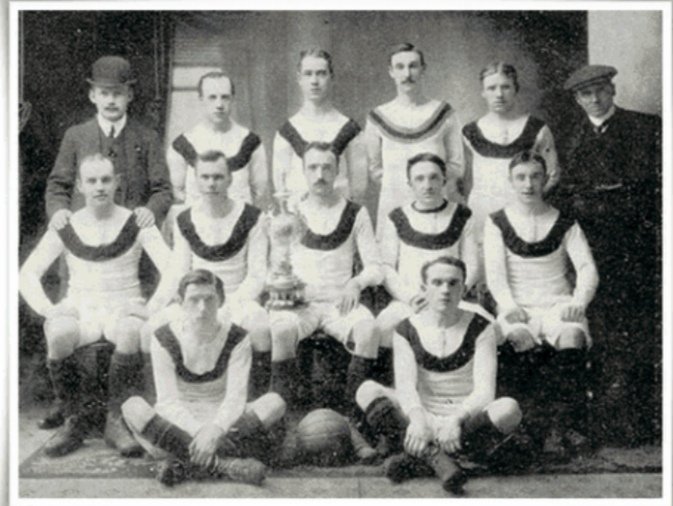
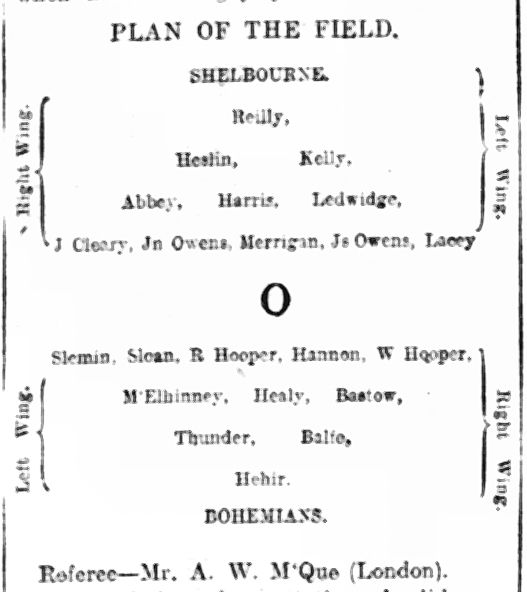

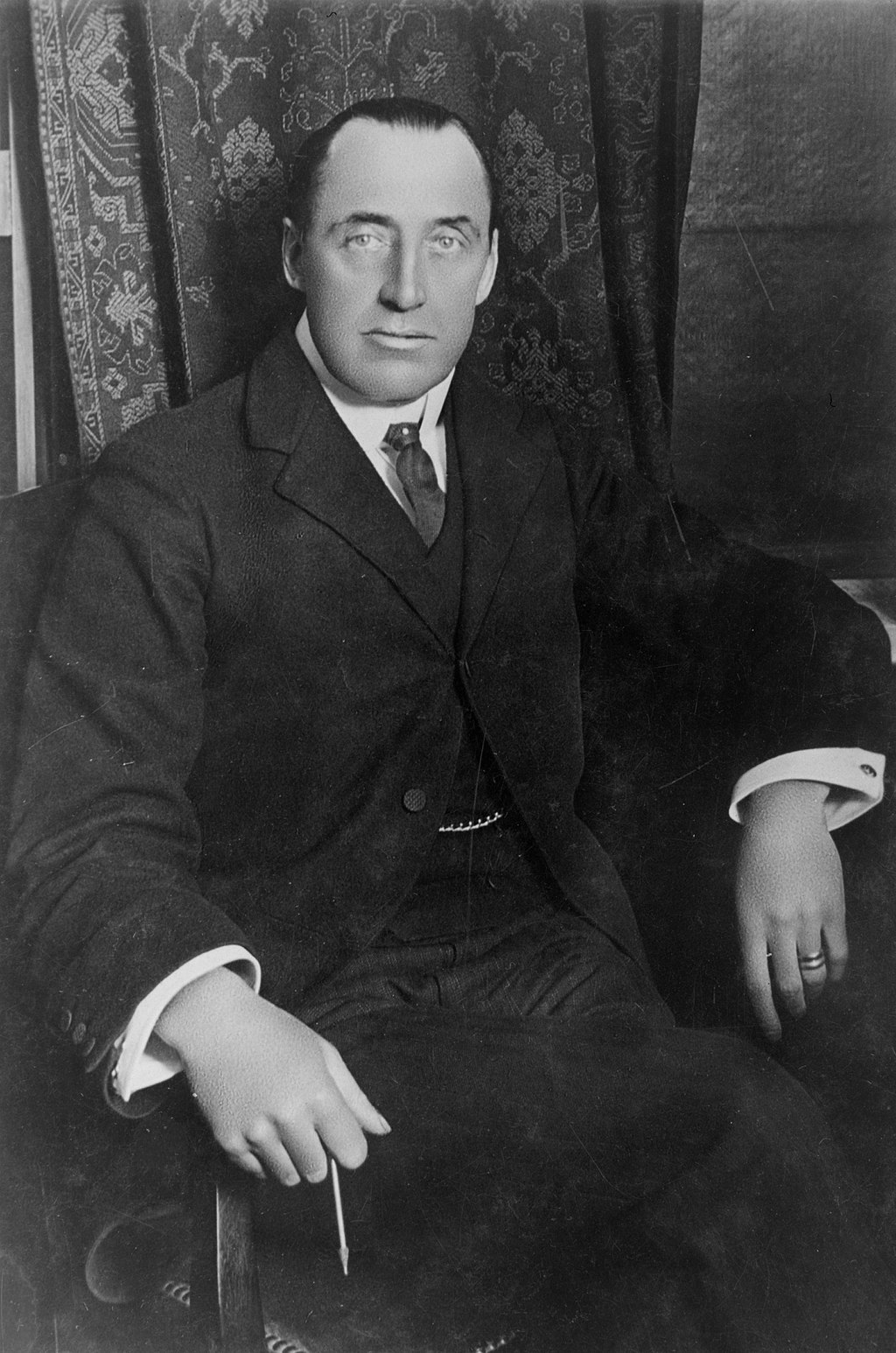
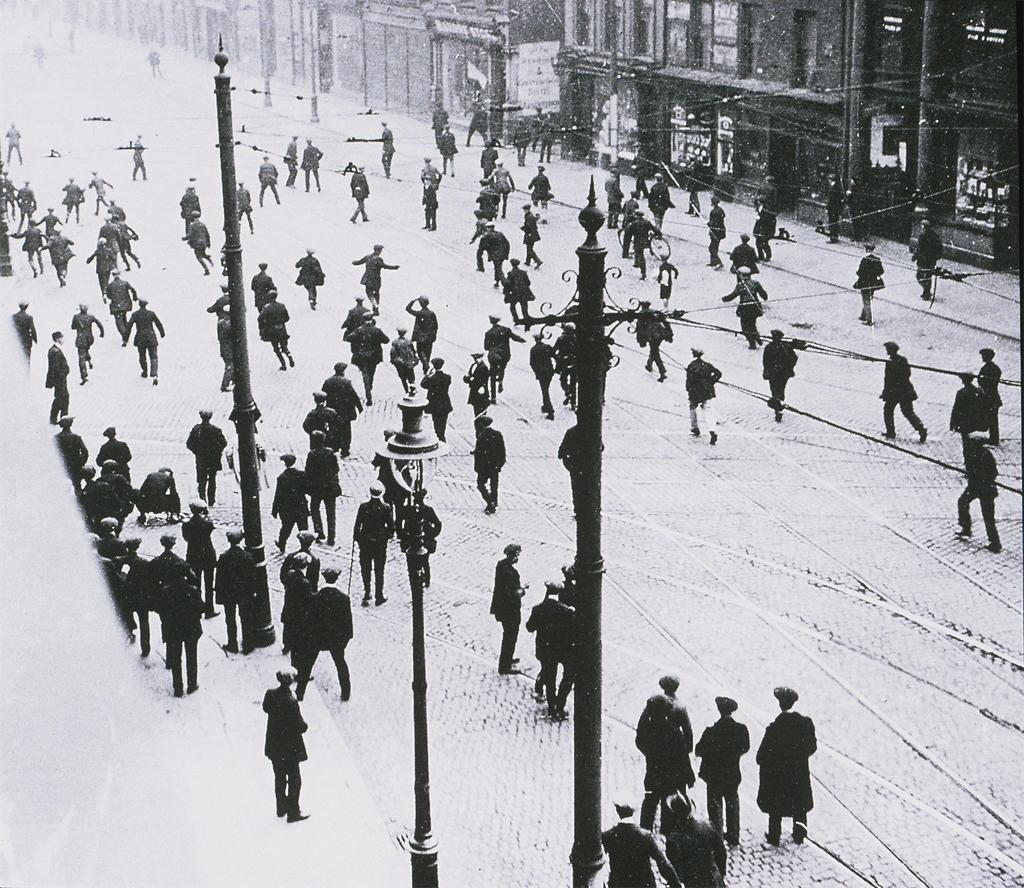

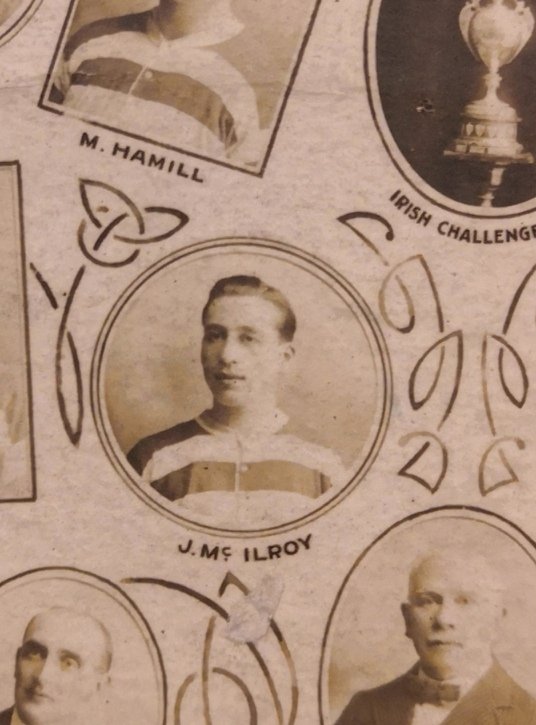


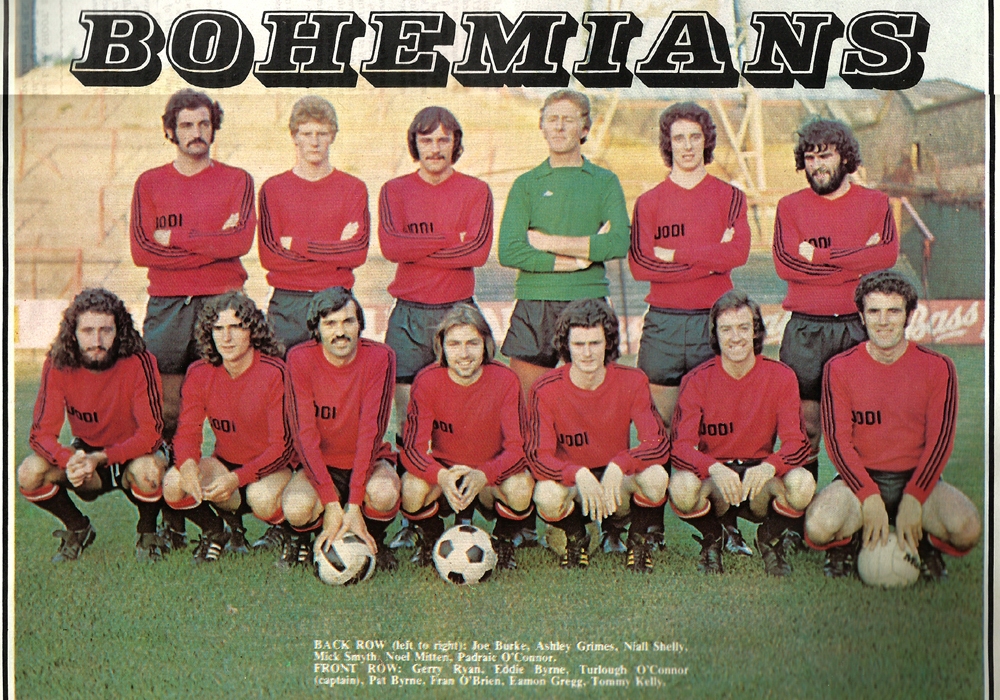
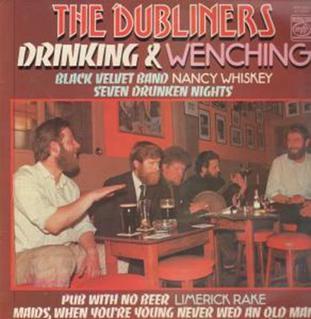
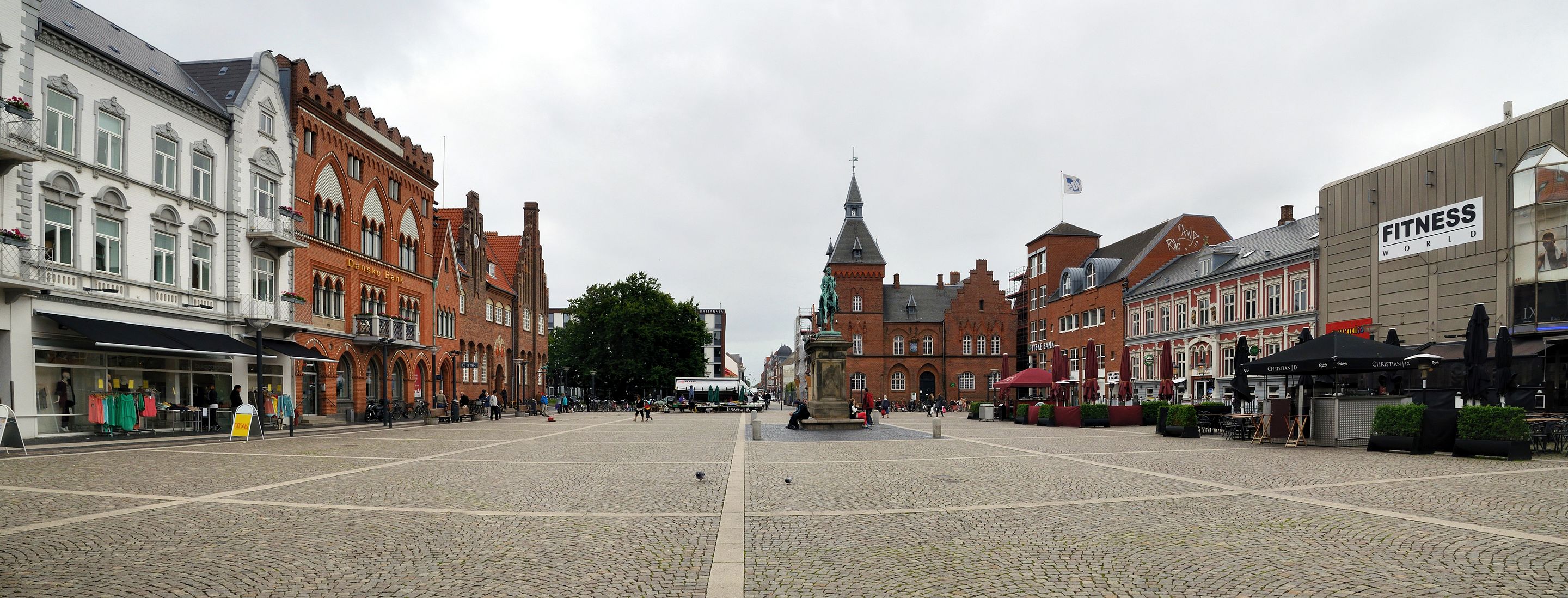
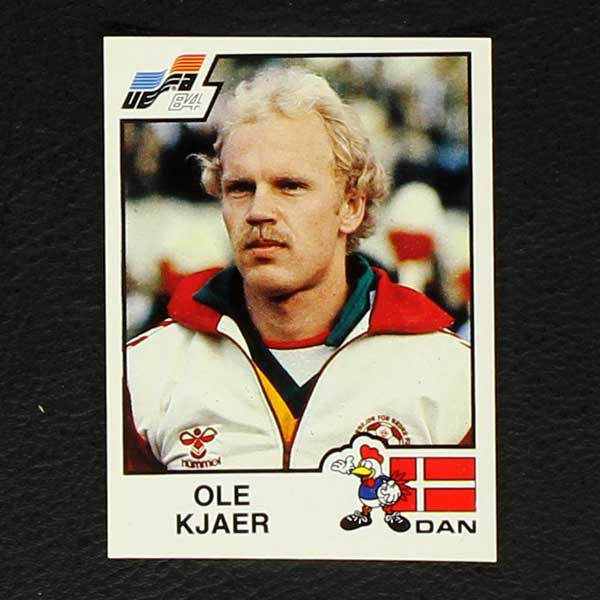
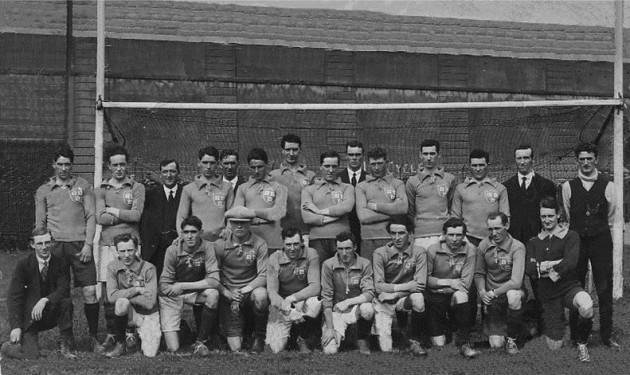


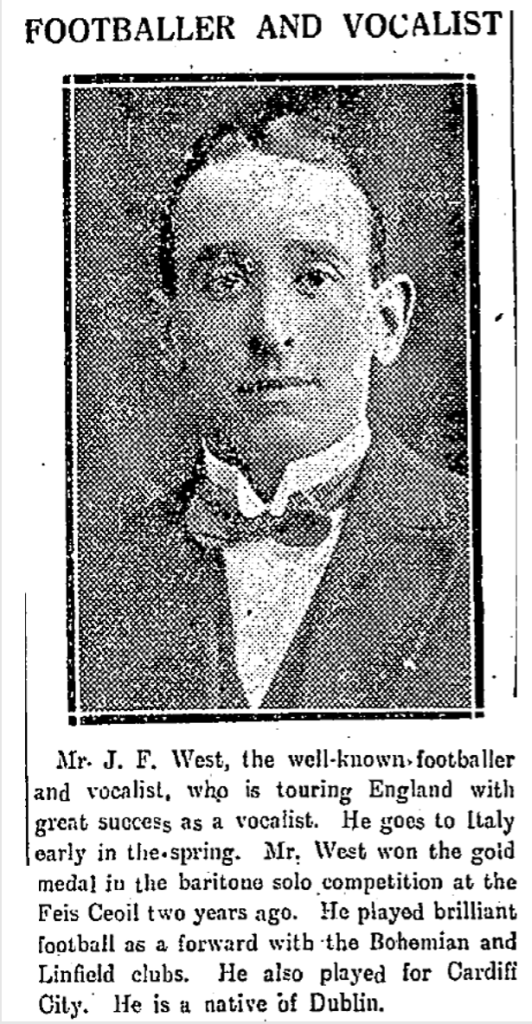


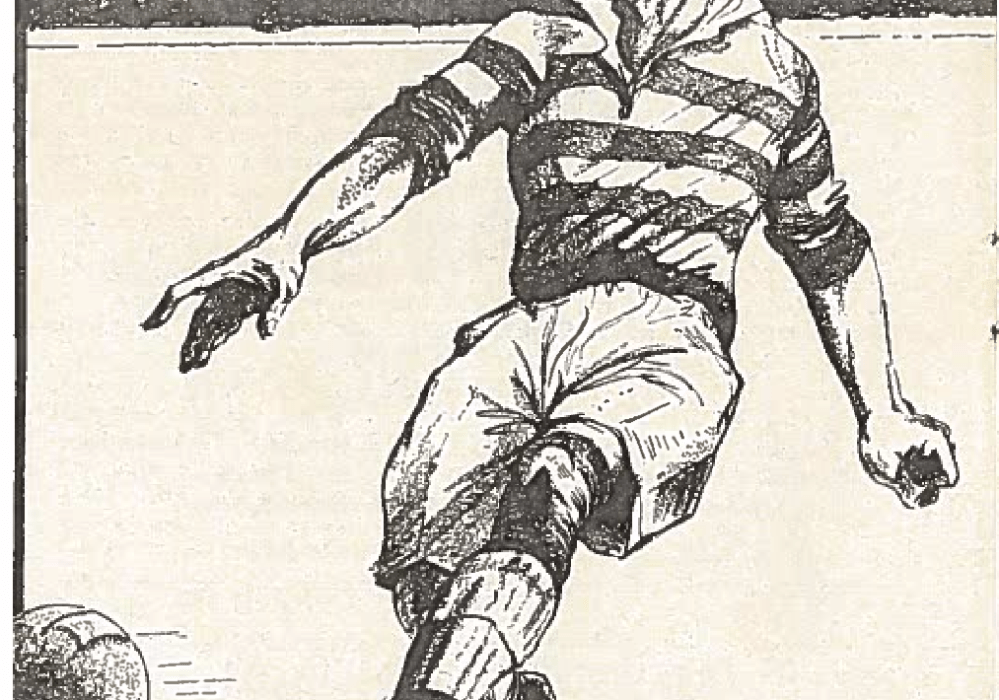
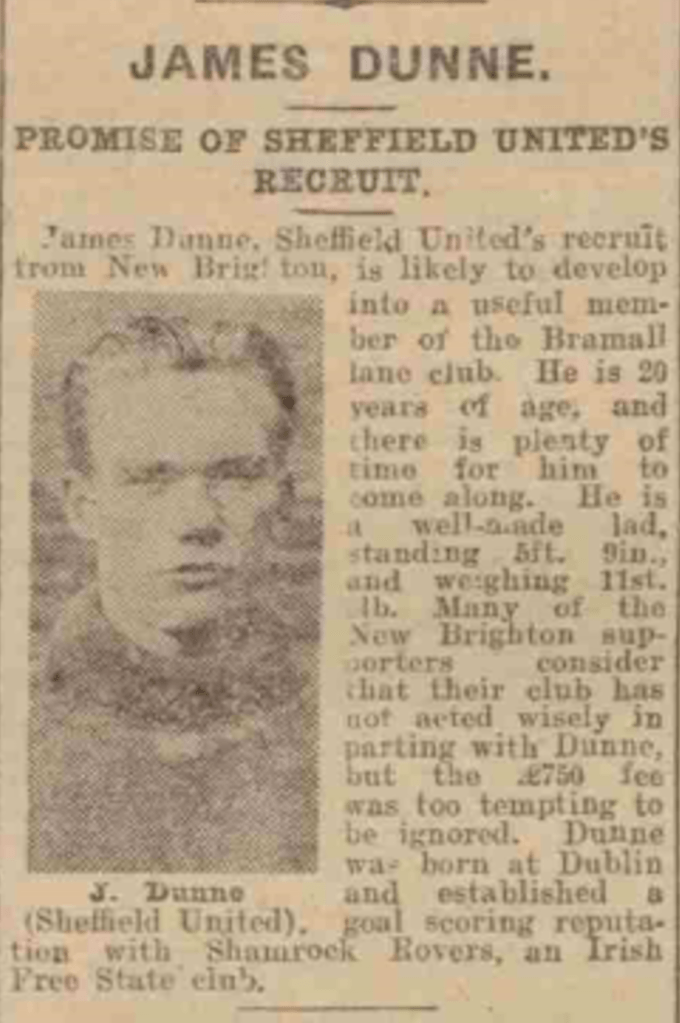
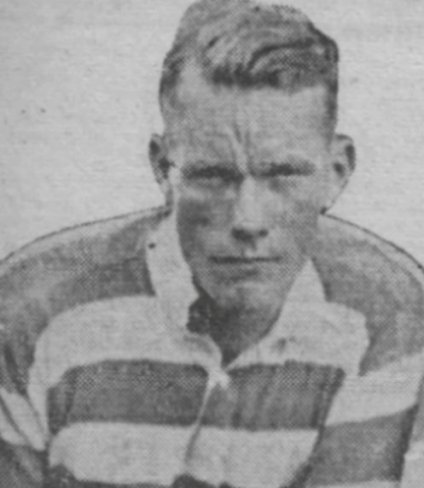


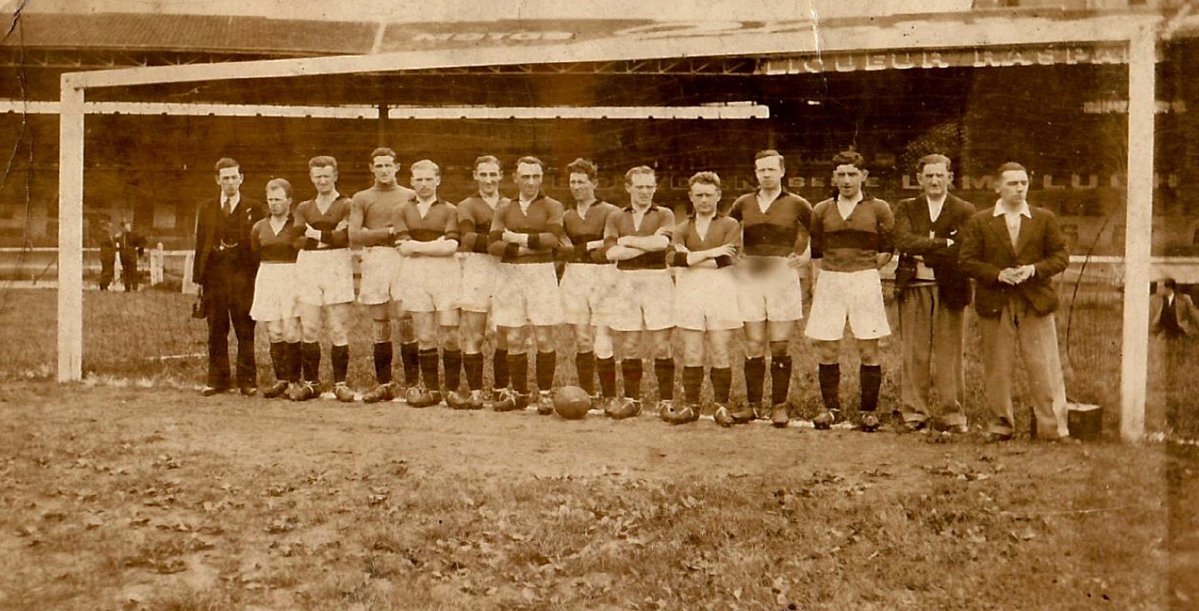
 A Bohemian Sporting Life