A city can often be known simply by an architectural or geographic feature but it’s not often that a city is known for its smell. However, on certain days, depending on how the wind is blowing there is an aroma that is quintessentially Dublin as the rich, sweet smell of roasting hops wafts down the Liffey in testament to the presence of Europe’s largest brewery, St. James’s Gate. The Gate is home to Guinness, the product, for better or worse, that is most associated with Ireland.
The brewery is situated on an early monastic site and those monks used the fresh water resources of the district for their own brewing, perhaps as far back as the 13th Century. The name of the brewery references it’s history as a site for pilgrim voyages back as far as medieval times when devout Dubliners would set off in pilgrimage to Santiago de Compostela in Spain to venerate the relics of St. James. When the Guinness family signed the famous 9,000 year lease on the brewery site in the 18th Century they quickly grew from being just one of a number of breweries in the city to becoming one of the country’s largest industries. In the years after independence the economy of Dublin was often derogatorily referred to as one of “beer and biscuits” as Guinness and Jacobs were among the dominant large manufacturers in an economically deprived city.
Unsurprisingly both of these large employers followed a trend common with many large manufacturers in Britain and formed sporting and social clubs for their staff. Guinness had long had a reputation as a “good employer” and offered a rare example a decent, well-paid and steady work in a city where such employment was a scarce commodity. The Guinness family had generally demonstrated a strong paternalism towards their staff as well as to the wider city in terms of the construction of public baths, social housing and the donation of St. Stephen’s Green park as a gift to the city. Such paternalism and munificence motivated the establishment of the St. James’s Gate Football Club in 1902.
A fair share of the credit for these developments must rest with Dr. John Lumsden, chief medical officer with Guinness at this time and a tireless campaigner who made countless improvements to the lives and health of Guinness workers and their families. Born in Drogheda, the son of a Scottish banker, Lumsden was a man of many passions and talents. As a medical doctor as well as his work with Guinness he was a physician at Mercer’s Hospital, he was a hugely active member of the St. John’s Ambulance Brigade, tending to the injured on all sides during the 1916 Rising, and can also lay claim to involvement in the foundation of the Irish Red Cross and what would eventually become the Irish Blood Transfusion Service.
As the medical officer he visited over 1,700 homes of Guinness workers to assess the quality of their accommodation, he set up cookery classes to ensure families of employees knew how to cook nutritious meals, he successfully lobbied to have public baths included in the Iveagh Trust housing developments and he also clearly saw the benefit of sports and exercise to the Guinness workforce. He also had a keen personal interest in sport and helped establish one of Dublin’s first golf clubs.
The St. James’s Gate football club was just one of several works teams that emerged in Ireland around this period, others such as Dundalk, Linfield, or Jacob’s had similar beginnings in other industries (railways, linen and biscuits respectively), but the Gate also had something in common with a continental European model of a wider multi-sports club. As well as playing football the Guinness employees pursued athletics and cycling and later tennis, cricket and rugby. They had access to gymnasiums and swimming baths, and eventually had their own designated sports complex at the Iveagh grounds. All of which gave them an advantage over many other clubs.
Dr. Lumsden who was instrumental in the creation of St. James’s Gate F.C. in 1902 also played an important role in finding the club a permanent home. In their first decades they played their home matches in Inchicore and later in Dolphin’s Barn but by 1928 Lumsden and the club members had secured the purchase and development of the Iveagh Sports Grounds in Crumlin. These were bought, developed and donated to the Guinness Athletic Union by their patron Edmund Guinness, the 1st Earl of Iveagh after whom the grounds are named.
Those early decades were the most successful for the football club, in the 1919-20 season the Gate won both the Leinster Senior Cup and also the Irish Intermediate Cup against Dunmurray. Recreation F.C. Given this success it was no surprise that St. James’s Gate were one of the of the sides who formed the inaugural season of the Free State League of Ireland after the split from the IFA in 1921.
That debut league season was an all-Dublin affair and featured only eight teams in total. While Shelbourne and Bohemians may have been the bigger names, having previously been Irish Cup winners and regular competitors in the earlier, Irish League it was to be a season dominated by the men from the Gate. Not only did they win the title but they added the FAI Cup and Leinster Senior Cup for good measure.
It was a turbulent time in Irish society,, the Gate’s FAI Cup final win against Shamrock Rovers took place just months before the outbreak of the Civil War and the game was marred by a pitch invasion from irate Rovers fans and a standoff in the Dalymount dressing rooms between the Gate’s Charlie Dowdall and Shamrock Rovers’ Bob Fullam. This was only ended when Dowdall’s brother John pulling a gun and Fullam and Co. sensibly backed off.
Several of that successful James’s Gate side would go on to represent Ireland at the Paris Olympics in 1924, among them Charlie Dowdall and team-mates like Ernie McKay and Paddy “Dirty” Duncan. It was Duncan who would get the first goal in an international competition for the Irish Free State, grabbing the only score in a 1-0 victory over Bulgaria in the sparsely populated Stade Olympique de Colombes.
Ultimately there would be five St. James’s Gate players in that Olympic squad. The Olympics at the time was an amateur competition in keeping with a certain Corinthian spirit of the time. The James’s Gate players were nominally amateurs but even by the time of the Cup final they were not necessarily all Guinness employees. There was a quota of a maximum four non-Guinness players allowed play for the club.
Among those not employed by Guinness included Ernie McKay, the son of a Scottish soldier, Ernie worked for at the GPO for decades while also remaining involved with James’s Gate as a player and administrator well into the 1940’s. His team-mate at inside-left, Charlie Dowdall who had worked for Guinness briefly but spent most of his career working at the Inchicore railway works.
The Olympics of 1924 wasn’t the only time that James’s Gate players would pull on the green of Ireland either. Joe O’Reilly, one of Ireland’s most prominent inter-war internationals and team captain on numerous occasions finished his league and international career while a Gate player. Alf Rigby, a centre-forward who twice finished top scorer in the League of Ireland won his three international caps while a St. James’s Gate player though he failed to find the net.
One player who didn’t have that problem was Paddy Bradshaw. Top scorer in the 1939-40 season as St. James’s Gate clinched their second ever league title Bradshaw had a somewhat unusual route to football stardom. A dock worker for much of his life he played at Leinster Senior League level until he was 26 before making an immediate impact upon signing for the Gate in 1938. He would win five international caps, scoring four goals. His first came only 20 seconds into his debut game against Switzerland in a match that ended as a 4-0 victory for Ireland. He grabbed a second in that game as well as scoring against both Hungary and Germany. The outbreak of the Second World War in 1939 brought a premature end to his brief but successful international career.
That short era of the late 1930’s was a period of triumph for the Gate as they won not only the title in 1939-40 but also the FAI Cup in the 1937-38 season, defeating Dundalk 2-1 in front of a crowd of 30,000 in Dalymount Park. A penalty scored by Irish international Peadar Gaskins proving to be the decisive goal.
While players like Bradshaw were coming to the fore in this era perhaps the most famous player to play for the club also got to make his fleeting impression as a Gate player around this time. Despite a first team career at the Iveagh Grounds that last just a matter of months St. James’s Gate have every right to be incredibly proud of the achievements of Johnny Carey. The young Dubliner debuted for the Gate aged just 17 in the 1936-37 season and quickly began to turn heads. He was spotted playing for the Gate in a match against Bohemians by Billy Behan, a one time Manchester United goalkeeper who now acted as a scout for the club in Dublin. With him at that game was Louis Rocca, United’s chief scout who had come to run the rule over Bohs’ forward Benny Gaughran. Rocca was disappointed to learn that Gaughran had already agreed to join Celtic but Behan convinced him that the teenage Carey was worth a closer look.
Ultimately Carey was signed by United for a fee of £250, a reported record for a League of Ireland footballer. By the age of 18 he was starting at inside-left for Manchester United and helping them win promotion from the Second Division. When he left United 16 years later he had captained them to victory to both the FA Cup and a League title while becoming the first Irish player to be named Football Writers Player of the Year. He’d also won 29 caps for Ireland and captained a European XI in a challenge match against a combined Great Britain side.
Despite recruiting top quality players in the late 30’s and enjoying success in both the league and cup within a couple of years of these triumphs St. James’s Gate would be bottom of the league. That misfortune came to pass in the 1943-44 season and the club were not re-elected to the league for the following season; their spot being taken by another Dublin club, Brideville who had moved between the Leinster Senior League and the League of Ireland on a number of occasions. This, however, wasn’t quite the last experience the Gate had at League of Ireland level.
Forty-six years after failing to be re-elected St. James’s Gate returned to the League of Ireland, rejoining as a First Division side in 1990. During their second spell in the League they never finished higher than 5th in the First Division and even finished bottom on two occasions. The club withdrew from the League before the beginning of the 1996-97 season with their place (albeit briefly) being allotted to St. Francis.
St. James’s Gate continue to this day as a football club, playing in the Leinster Senior League, perhaps one of their most famous recent players was Irish international Katie Taylor who achieved greater international fame in the boxing ring rather than on the football field.
In 2017 St. James’s Gate F.C. celebrated their 115th anniversary, that same year the sale of the Iveagh Sports Grounds to Trinity College Dublin was agreed. As a result the grounds will now be home to the various sports teams associated with the College though it is likely that the Gate will continue to play there for future seasons. As Guinness advertisements regularly note, they are only a short time into the 9,000 year lease on the St. James’s Gate brewery site, you’d hope that the famous football club had plans for similar longevity.
The great Bohemians team of the 1927-28 season is one that has rightly gone down in the annals as one of the finest sides in Irish football history; simply put they won everything there was to win, the League, the FAI cup, the Shield and the Leinster Senior Cup. An achievement all the more impressive when you remember that Bohs were strictly amateur at the time. Such was the confidence and camaraderie in the team that season that Jeremiah “Sam” Robinson, the tall, well-built and versatile half-back or full back, said that the Bohs players of that season never doubted that they would win the game, the only question was by how much. Sam was joined in that successful team by his older brother Christy, smaller and lighter than Sam, he was a tricky, skillful inside-left whose 12 goals had been crucial when Bohs won the league in 1923-24. He also holds the honour of scoring Bohemians first ever goal in the FAI Cup when he netted the first in a 7-1 win over Athlone Town in 1922.
For these achievements alone the brothers are significant and worthy of discussion, however by the time the Robinson brothers had joined Bohemians, as still young men, they had already led an extraordinary life. Both brothers had been active in the IRA in Dublin and Sam had even become a member of the Active Service Unit and later joined Michael Collins’ infamous “Squad ”.
Both brothers played in the Cup Final of 1928 when Bohemians defeated Drumcondra 2-1, although it was touch and go for Sam. Incidentally the reason Sam was known as Sam, and not by his given name Jeremiah was because of the fondness as a boy for using “Zam-buk” soaps and ointments for his legs, something he may have needed in getting ready for the Cup final. During some dressing room hijinks celebrating yet another victory Sam had his leg badly scalded by a bucket of hot water. The damage was so bad that it looked like he would miss the game until the intervention of Bohemians own Dr. Willie Hooper who bound up Sam’s leg (like a turkey cock as he later remarked) and tended to him regularly as they prepared for the final. The squad were worried that the Sam might not make the game but he was declared fit enough to play. Bohs won the match in front of 25,000 at Dalymount, Billy Dennis and Jimmy White getting the goals.
Bohemians have a long tradition of brothers playing in the same team. The aforementioned Willie Hooper and his brother Richard both captained Bohs in the early 1900’s while Sam and Christy had the distinction of becoming the first brothers to play for Ireland after the FAI had split with the Belfast-based IFA. Christy was part of the Irish Olympic squad that went to Paris in 1924 and defeated Bulgaria before being knocked out by the Netherlands in the next round. In all, six Bohemians were selected (Bertie Kerr, Jack McCarthy, Ernie Crawford, John Thomas & Johnny Murray were the others and were trained by Bohs’ Charlie Harris) The Irish team also played two friendlies after being knocked out of the tournament, Christy played and scored for Ireland in the game against Estonia as Ireland won 3-1 and would also represent the League of Ireland XI in their first ever representative fixture, against the Welsh League that same year. Sam won two senior caps, in 1928 and 1931 with a victory over Belgium and with a draw against Spain respectively.
Sam would eventually move on and play professionally for a period, he joined Dolphin F.C. based in the Dolphin’s Barn area of the city in 1930 and won his second Irish cap while there. He was also part of their team which contested the 1932 FAI Cup final, losing out to Shamrock Rovers in a tight game, while also guesting on a number of occasions for Belfast Celtic.
Christy and “Sam” were born in the Dublin’s north inner city on East Arran Street in 1902 and 1904 respectively, their home was close to the markets where their mother Lizzie worked as a fish dealer. Lizzie’s earnings had to support the family; the two boys and daughter Mary, when their father Charles died in 1905.
From left to right Christy, Lizzy and Sam Robinson
In 1916 as youngsters of 15 and 12 they would presumably have witnessed first-hand the fighting around the Four Courts just yards from their home and the family would likely have known some of the victims of the infamous North King Street massacre when British Army soldiers shot dead unarmed men and boys. Whatever the reason we know that by 1919 Sam, then aged only 15 had joined the IRA. He was a friend of Vinny Byrne who would also form part of the “Squad” and it was Byrne who brought him along to be inducted. At the time Sam lied about his age and claimed to be 17. The family story was that Michael Collins, on seeing young Sam told the boy that he wasn’t running a nursery and he should go home, however Sam insisted that he wished to join and both Byrne and Paddy Daly (one of Collins’ senior officers) vouched for the young man. It was to begin a long association between Sam and the armed forces.
Christy, also joined the IRA and took part in a number of notable actions, the most prominent probably being the raid on a British Army party at Monk’s bakery on Church Street in September 1920. This was the operation in which Kevin Barry was captured. Christy Robinson was one of the section commanders within H company of the 1st Battalion, Dublin brigade of the IRA during the raid when they encountered a much larger British army force than expected. Kevin Barry found that his new-fangled automatic pistol was jamming and hid under a lorry hoping to escape the attentions of the British forces. After heavy gunfire which left three British soldiers dead, H company withdrew but were unaware that Kevin was still hidden under the lorry on the side of the street. The unfortunate teenager was spotted by the British forces, arrested, and later became the first Republican prisoner to be executed since the Easter Rising over four years earlier.
Kevin Barry had attended the prestigious Belvedere secondary school and had been a promising rugby player. He had graduated and was studying medicine, in fact he intended to go sit an exam only hours after the raid on Monk’s bakery and was not a full time soldier. Christy would later christen his son, Kevin in honour of his executed comrade. Christy later joined the Free State Army and rose to the rank of Captain before leaving in 1924. After his football career Christy would move to England, first to London and later to Dover, where he would pass away in 1954.
Most of the members of the Dublin Brigade were men who took part in operations when they could but had to hold down jobs in order to support themselves and their families. Christy Robinson fell into this category. The IRA however saw the need for a full time force of both soldiers and intelligence staff. This led to the creation of the Active Service Unit (ASU); full time soldiers who were expected to make themselves available as operations required them, they were paid a good wage for the time. Sam Robinson would eventually join this select group of full time soldiers; a role he would continue after Independence.
The Robinson family had been victims during this period of bloodshed, two of the brothers’ cousins met violent ends just weeks apart in 1920. William Robinson, a former British soldier and a goalkeeper for the Jacobs football team was shot dead on Capel Street, just yards from his home in October 1920 by men identifying themselves as “Republican Police”. Another cousin, also named William, but better known as Perry Robinson was one of the youngest victims of the Bloody Sunday shootings in Croke Park. Aged just 11 years old Perry was shot in the shoulder and chest as he was perched in a tree watching Dublin take on Tipperary. The trainer of the Dublin side that day was none other than Bohs’ own Charlie Harris who would accompany Christy Robinson to the Paris Olympics just four years later.
The Dublin Football team on Bloody Sunday- Bohemians trainer Charlie Harris is at the back row, far right.
The Robinson family history tells that Sam was out that morning that would be remembered for all time as “Bloody Sunday”, in the company of his friend Vinny Byrne. Their destination on that fateful day was 28 Upper Mount Street, their targets British Lieutenants Aimes and Bennett. This was a late change to the plans due to a recent piece of intelligence received by one of Collins’ intelligence officers, Charlie Dalton who was also at the time also a member of Bohemians. Byrne and fellow Squad member Tom Ennis led the party. Although not named in these accounts Sam always claimed that he was out with Byrne and his group that day when Aimes and Bennett were shot dead in their beds, Byrne’s own witness statement mentioned that there were a party of about ten men involved and that the operation did not go as smoothly as hoped. The sound of shooting aroused the attention of other British military personnel in the area and the men keeping an eye on the entrance to Mount Street came under fire. Most of the party fled to the river and rather than risk crossing any of the city bridges back to the north side where they could be intercepted. They crossed by a ferry and disappeared into the maze of streets and safe-houses of the north inner city.
Not long after the events of Bloody Sunday Sam became a full time member of the “Squad” when it was reinforced in May of 1921. Within weeks they would be pressed into service in one of the largest operations ever undertaken, the attack on the Custom House, one of the centres of British administration, local Government and home to a huge amount of records.
Sam being arrested at the Custom House, he is fourth from the right with his hands on his head.
This was going to be a huge job and a symbolic attack at one of the nerve-centres of British rule in Ireland, up to 120 men of the 2nd Dublin Brigade along with members of the Squad and the Active Service Unit took part. They were poorly equipped, armed only with revolvers and a limited supply of ammunition, they did however have plenty of petrol and bales of cloth which was used to destroy the records and ultimately the building itself which burned for five days straight. The raiding party soon drew the attention of a brigade of Auxiliaries. Unable to stay in the burning building, surrounded by the British forces and very quickly running out of ammunition the Republican forces knew they were in serious difficulty. Most of the men surrendered but some made a run for it, a few escaped, but others like Sean Doyle were killed as they tried to get away. Among the more than 70 IRA men captured was Sam Robinson, although he was not to be in captivity long. Within two months a truce had been called and the Treaty negotiations had begun and Sam was released by Christmas of 1921.
Upon his release Sam became part of the new Free State Army, by the 1922 Army census he was listed as a Lieutenant and he was heavily involved during the Civil War, seeing action in areas of some of the heaviest fighting around Cork, Kerry and later Sligo. He was in the Imperial Hotel in Cork City along with other serving officers to have breakfast with Michael Collins the day he was shot. Despite Collins’ initial scepticism about this teenager who had lied about his age to join the IRA he had trusted and promoted Sam. In turn Sam, like many other officers became a great admirer and loyal follower of the “Big Man” and was devastated to learn of his death at Béal na Bláth. In another freak Bohemians connection, the man who tended to Collins as he died was General Emmet Dalton, a former Bohemian F.C. player and later President of the Club.
Sam was promoted to the rank of Captain in February of 1923 and remained in the Army throughout the horrific violence of the Civil War but left, somewhat disillusioned, in 1924. There was concern among members of the Free State army about plans to significantly decrease the size of the army in peacetime and there was also a feeling among some soldiers that ex-British army officers were being favoured for advancement within the Free State forces. Such was the seriousness of this issue that Charlie Dalton (the ex-Bohs player we encountered above, and brother of Emmet Dalton) and General Liam Tobin were accused of attempting an Army Mutiny due to their opposition to the proposed demobilisation.
Sam in his Irish Army uniform
The army’s loss was Bohemians gain however and the civilian Sam Robinson joined his brother at the club and helped build towards the eventual dominance of the 1927-28 season. It was not to be Sam’s last involvement with the Army however, upon the declaration of the national state of Emergency during World War II Sam re-enlisted and was made a Captain of C Company of the 14th Battalion, his years of experience no-doubt appreciated by younger troops. He stayed in the Army until the end of the War before returned to the trade he had developed as a plasterer. In fact he started his own plastering company, Robinson & Son near Church Street in Dublin.
Things went well for Sam’s business for a while and he was a generous man always making sure that old Army or footballing colleagues were helped out with a job if they fell on hard times. Among those employed at one stage by Sam was his former Bohs team-mate John Thomas. However, in 1957 perhaps because of his generosity, Robinson & Son went out of business, Sam’s auditor incidentally at the time was a young man by the name of Charles J Haughey! While this was a setback Sam used it as an opportunity to travel, his trade took him to Canada, Malta, Britain and even Rhodesia (now Zimbabwe) before he returned to Ireland. Fate would have it that one of his final jobs as a plasterer was on the Phibsboro shopping centre, overlooking the pitch at Dalymount that had been so familiar to him.
Sam’s connection with Bohemians continued long after his playing days ended. His nephew Charlie Byrne began his career for Bohemians in the 1940’s , while his son Johnny Robinson enjoyed a successful League of Ireland career with Drumcondra and Dundalk. Sam remained a Bohemian member until the day he died in 1985.
The Bohemian membership card of Jeremiah “Sam” Robinson
With special thanks to Eamon Robinson, Frank Robinson and Kevin Robinson for their assistance and sharing their family research and photos.
An introduction to just some of the Bohemian F.C. members who swapped the playing fields of Ireland for the killing fields of Europe.
Fred Morrow was only 17 when he took to the pitch for Bohemians at the curtain raiser at their great rivals’ new home, Shelbourne Park. The Bohs v Shels games were known then as the Dublin derby and as with many derbies, passions were inflamed. But this game’s atmosphere was even more heightened and it wasn’t just to do with the 6,000 spectators packed into the ground. Even in just getting to the ground Morrow and his teammates had seen over one hundred Dublin Tramway workers picketing the game.
The 1913 Dublin lock-out was only a few days old and Jim Larkin had declared that there were players selected for the game who were “scabs”: Jack Millar of Bohemians and Jack Lowry of Shelbourne were the names identified during the strike. The striking tramway workers subjected the players and supporters to (in the words of the Irish Times) “coarse insults” and had even tried to storm the gates of the new stadium. Foreshadowing the events of the next day, there were some violent altercations with the officers of the Dublin Metropolitan Police, with 16 arrests made and over 50 people suffering injuries.
This can’t have affected the teenaged Morrow too badly as he scored Bohs’ goal in a one all draw that day. Although less than 5’5” in height, the youngster was shaping up to be quite a prolific centre forward. Fred had started his career early, lining out for his local side Tritonville FC based in Sandymount, and while with the club he had won a Junior cap for Ireland, scoring in a 3-0 victory over Scotland in front of over 8,000 spectators in Belfast. The following season he’d been persuaded north of the river to Dalymount, and he was to enjoy a successful season including scoring a hat-trick in an unexpected 3-1 victory over title holders Linfield.
The Shelbourne side that Bohs faced that day included in their ranks a new signing of their own, Oscar Linkson, who had just been signed from Manchester United. Linkson had made almost 60 appearances for United and had been at the club when they won the FA Cup in 1909 and the League in 1911. Quite the coup, then, for Shels. Oscar moved to Dublin with his 17 year old wife Olive and his son Eric, who would be joined by a baby sister just months later. He faced Fred Morrow that day as part of the Shels defence.
Within a year of this game, War would be declared. Both Fred Morrow and Oscar Linkson volunteered to serve in the British Army, Oscar with the famous “Football Battalion” of the Middlesex Regiment alongside a whole host of star players which included the Irish international John Doran. Neither Fred nor Oscar would return, by the end of 1917 both were dead on the fields of France.
The Memorial plaque or “Death penny” issued to Fred Morrow’s family
The events that the players had witnessed leading up to that Bohs v Shels game had far-reaching consequences, with the violence in the adjoining Ringsend streets at the game growing worse over the following day, culminating with violent clashes between the Dublin Metropolitan Police and striking workers on Sackville Street (now O’Connell Street). Hundreds were wounded amid baton charges and three striking workers were killed. The dramatic events convinced Union leaders James Connolly, James Larkin and Jack White that the workers needed to be protected, and that an Irish Citizen Army needed to be formed for this purpose. Ireland’s decade of lead had begun.
A year earlier in 1912, in response to the passing of the third Home Rule bill, and the possibility that Home Rule would finally become a reality in Ireland, hundreds of thousands of Irish Unionists signed what was known as the Ulster Covenant, where allegiance was pledged to the King of England. They stated that Home Rule would be resisted by “all means necessary”. This included the very real possibility of armed resistance, as demonstrated by the Ulster Volunteers (formed in 1912) importing thousands of rifles into the port of Larne from Germany in April 1914. In response, the Irish Volunteers, supporters of Home Rule formed in order to guarantee the passage of Home Rule bill, also imported German arms into Howth in July 1914; just days before the outbreak of the First World War. This mini arms-race in Ireland mirrored the greater stockpiling of armour and weaponry by the great European powers in the lead-up to the First World War; the whole Continent was in the grip of militarism. Violence seemed, to many people, to be unavoidable.
Clashes on Sackville Street during the 1913 lock-out
Over 200,000 Irish men fought in the First World War. To put this in perspective, the total male population of Ireland at the 1911 Census was just over 2.1 million. Those who fought did so for many reasons. Some, including many members of the Irish Volunteers, heeded John Redmond, the leader of the Irish Parliamentary Party who called on Irishmen to go and fight to help secure Home Rule, as a gesture of fidelity to Britain, in support of Catholic Belgium and in defence of smaller nations.
Redmond asked Irish men to prove “on the field of battle that gallantry and courage which has distinguished our race” in a war that he said was fought “in defence of the highest principles of religion and morality”.
Some men went in search of adventure, unaware then of the horrors that awaited them. Many Dublin men joined up as a way to financially support their families, the city at the time had a population of 304,000, with roughly 63% described as “working class”, the majority of whom lived in tenement houses, almost half with no more than one room per family. The army might offer death but least it offered a steady income.
What we also know is that many Bohemians joined up. Some like Harry Willits or Harold Sloan may have simply joined out of a sense of duty, that this was the “right thing to do”. Most joined in what was known as a “short service attestation”, meaning that they were only joining for the duration of the war, which many mistakenly assumed would be over quickly. In one edition of the Dublin based weekly paper Sport, it was estimated that Bohemians lost forty members to War service, among the highest of any club in the whole country, although we know that there was also significant enlistment from other Dublin clubs such as Shelbourne and Shamrock Rovers, while the loss of players to military service was cited as one of the reasons for the withdrawal from football of the original Drumcondra F.C.
Bohemian F.C. Roll of Honour – Evening Herald, September 1915 source @Cork1914to1924
Some like Harry Willits did return to resume their football career. Several did not return at all. Corporal Fred Morrow, who we met earlier as Bohs centre-forward, was a member of the Royal Field Artillery in France when he died of his wounds in October 1917. His mother had to write formally asking for the death certificate that the armed forces had neglected to send so that she could receive the insurance money for his funeral.
Private Frank Larkin was only 22 when he died just before Christmas 1915. He had been a Bohs player before the war. At this time, due the growing popularity of both the club and football generally in Dublin, Bohs often fielded several teams. Frank featured for the C and D teams, but like many Bohemians, was a fine all-rounder. He played cricket for Sandymount and rowed for the Commercial Rowing Club. He and two of his colleagues from the South Irish Horse were killed by a shell on December 22nd in Armentieres, Belgium. His will left a grand total of £5 14 shillings and 2p to his two married sisters.
Thomas Johnson as pictured at Royal Lytham & St. Anne’s Golf Club in his later years
Thomas Johnson, a young Doctor from Palmerstown was just 23 when the War broke out. He had won an amateur international cap for Ireland and was a star of the Bohs forward line, usually playing at outside right. He was a hugely popular player who the Evening Herald described as “always likely to do something sensational”. He was another fine sporting all-rounder with a talent for both cricket and golf. Johnson became a Lieutenant in the 5th Connaught Rangers during the War and later brought his professional talents to the Royal Army Medical Corps. He was awarded the Military Cross for his actions at Gallipoli. He received numerous citations for bravery, for example at the Battle of Lone Pine during the Gallipoli campaign the Battalion history notes “Second-Lieutenant T.W.G. Johnson behaved with great gallantry in holding an advanced trench during one of the counter-attacks. Twice he bound up men’s wounds under heavy fire, thereby saving their lives”.
While his medical skills were a great asset in saving lives Johnson also was a fierce soldier during the most brutal and heavy fighting. He was awarded the Military Cross specifically for his actions around the attack on the infamous Battle of Hill 60 where so many Irishmen perished. The battalion history states that on August 21st 1915
“Lieutenant T.W.G. Johnson went out to the charge, with rifle and bayonet, and killed six Turks. He shot two more and narrowly missed killing another one. Later, although wounded severely, he reported to the commanding officer, and showed exactly where the remaining men of his company were still holding their own, in a small trench on “Hill 60.”
It was by this means that these men eventually were carefully withdrawn, after keeping the Turks at bay for some hours.” . Hill 60 of course was for many years the name by which Dubliners knew the terrace at the Clonliffe Road end of Croke Park, it was only in the 1930’s that it became known as Hill 16 and later the apocryphal story emerged that the terrace had been built from the ruins of O’Connell Street after the Easter Rising.
Herbert Charles Crozier – back row far left. Harold Sloan – front row third from the right
Other Bohemians suffered serious wounds but managed to make it through to the armistice. One of the most prominent of these was Herbert Charles “Tod” Crozier. He had joined Bohemians as a 17 year old and took part in the victorious Leinster Senior Cup final of 1899. In 1900 he appeared for Bohs on the losing side in an all-amateur Irish Cup Final, which was won 2-1 by Cliftonville. Crozier was described as one of the most “brilliant half-backs playing association football in Ireland” and he formed a formidable and famous midfield trio of Crozier-Fulton-Caldwell who were still revered for their brilliance decades after their retirement. “Tod” had a long association with Bohemians and was also a prominent member of Wanderers Rugby Club. He grew up on Montpellier Hill, close to the North Circular Road and not far from Dalymount.
Major H.C. Crozier
His Scottish-born father was a veterinary surgeon but “Tod” became a career military man with the 1st battalion of the Royal Dublin Fusiliers. In 1908 he was awarded the Bronze Star by the Royal Humane Society while serving in Sudan for trying to save the drowning Lieutenant Cooper from the River Nile. It was noted that he behaved with great bravery despite knowing of the “dangerous under-current and that crocodiles were present”. He was a Captain at the beginning of the War and was part of the Mediterranean Expedition Force that travelled to Gallipoli. It was here that he was wounded, and as a result of his actions was awarded the Military Cross, and later, after a promotion to the rank of Major, the Military Star. Despite the wounds he received at Gallipoli he returned to Montpelier Hill in Dublin and continued to attend football and rugby games. He was still enough of a well-known figure that he was the first person quoted in a newspaper report about Bohs progression to the 1935 FAI Cup Final. He lived to the age of 80, passing away in 1961 and was buried in Mount Jerome Cemetery.
One man who returned from the War and then joined Bohemian F.C. was the legendary Ernie Crawford. Born in Belfast in 1891 Ernie was perhaps best known for his endeavours on the Rugby pitch. He starred for Malone in Belfast and later Lansdowne Rugby Club and won 30 caps for Ireland, fifteen of them as Captain. He would later be named President of the IRFU. His obituary in the Irish Times listed him as one of the greatest rugby full-backs of all time, he was honoured for his contribution to sport by the French government and even featured on a Tongan stamp celebrating rugby icons.
Ernie Crawford in uniform, on a Tongan stamp and as an Irish Rugby international
He was, however, a successful football player who turned out for Cliftonville and for Bohemians. Ernie, a chartered accountant by trade, moved to Dublin to take up the role of accountant at the Rathmines Urban Council in 1919, and this facilitated his joining Bohemians. Despite his greater reputation as a rugby player, Ernie, as a footballer for Bohs, was still considered talented enough to be part of the initial national squad selected by the FAIFS (now the FAI) for the 1924 Olympics. In all, six Bohemians were selected (Bertie Kerr, Jack McCarthy, Christy Robinson, John Thomas & Johnny Murray were the others and were trained by Bohs’ Charlie Harris), but when the squad had to be cut to only 16 players Ernie was dropped, though he chose to accompany the squad to France as a reserve. The fact that he was born in Belfast may have led to him being cut due to the tension that existed with the FAIFS and the IFA over player selection.
That he could captain the Irish Rugby Team and be selected for the Olympics is even more impressive when you consider that during the Great War Ernie was shot in the wrist causing him to be invalided from the Army and to lose the power in three of his fingers. He had enlisted in the 6th Inniskilling Dragoons in October 1914 and was commissioned and later posted to the London Regiment (Royal Fusiliers), becoming a Lieutenant in August 1917. He was a recipient of the British War and Victory Medals. Ernie later returned to Belfast where he became City Treasurer. It was in Belfast in 1943 that Ernie encountered Bohs again, as he was chosen to present the Gypsies with the Condor Cup after their victory over Linfield in the annual challenge match. He passed away in January 1959.
So who were these men who went to war? From looking through the various records available (very much an ongoing task) it is clear to see that they were of a variety of different backgrounds. Most were from Dublin, though some like Sidney Kingston Gore (born in Wales) were only in Dublin due to Military placement. Some like Harry Willitts came to Dublin as a young man, others like Crozier and Morrow were children to parents from Scotland, Belfast or elsewhere. They were of various religious beliefs with Catholics, Church of Ireland and Presbyterians among their number.
By the outbreak of the War Bohemian F.C. was not yet 25 years old, some of those who had helped to found the club as young men were still very much involved. The employment backgrounds of the men who enlisted seem to have connections back to those early days when young medical students, those attending a civil service college as well as some young men from the Royal Hibernian military school in the Phoenix Park helped found the club. There were a number who are listed as volunteering for the “Pals” battalion of the Royal Dublin Fusiliers, in this case more than likely the 7th battalion. This battalion was made up of white collar workers and many civil servants, they were sometimes referred to as the “Toffs among the toughs”.
The 7th Battalion also featured a large number of Trinity College graduates, as well as many Rugby players encouraged to join by President of the Irish Rugby Football Union, F.H. Browning, a number of those who joined would end up dead on the beaches of Gallipoli. Browning later died after encountering the Volunteers on return from maneuvers at Mount Street Bridge during Easter 1916. The medical profession is clearly represented by men such as Thomas Johnson and J.F. Whelan. There were also characters like Alfred Smith and Tod Crozier who were career military men.
We know that like many Bohemians they were great sporting all-rounders, many being talented Rugby players, rowers, tennis players and cricketers in addition to their talents on the football field. In most cases they were young; Fred Morrow was still a teenager when he joined up, Frank Larkin only 21. Even the prematurely bald Harry Willitts looked much older than his 25 years.
Those who did return from the trenches came back to an Ireland that was changed utterly. The events of the Easter Rising, the growth in Republican Nationalist sentiment and the gathering forces that would soon unleash the War of Independence meant that those who returned may well have felt out of step with the Dublin of 1918-19. Those mentioned above are only a small selection of the Bohemians who took part in the First World War, there are many more stories; of Ned Brooks the prolific centre forward posted to Belfast who ended up guesting for Linfield, of Jocelyn Rowe the half-back who had also played for Manchester United who was injured in combat. There are many others forgotten to history. Those men described above often only appear in the records because of their death or serious injury, many more passed without comment. For men like Harry Willits and Tod Crozier, they could return to familiar surroundings of Dalymount Park whether as a player or just as a spectator. Some of those who returned, like Ernie Crawford, were yet to begin their Bohemian adventure. Among this latter group was a dapper Major of the Dublin Fusiliers named Emmet Dalton. He was a man who had won a Military Cross for his bravery in France and trained British soldiers to be snipers in Palestine. On his return to Ireland, he would join Bohemians as a player along with his younger brother Charlie. Both men would also join the IRA. They would play a central role in the War of Independence and the Civil War though they weren’t the only Bohemian brothers with this distinction as I’ll outline in my next piece.
A partial list of Bohemian F.C.members who served in World War I
Captain H.C. Crozier (wounded, recipient of the Military Cross) 1st Royal Dublin Fusiliers. Later promoted to Major.
Lt-Colonel Joseph Francis Whelan Royal Army Medical Corps, recipient of the Distinguished Service Order for his actions in Mesopotamia (Bohemian player, committee member and club vice-president). Later awarded and O.B.E. as well as an Honorary Master of Science degree by the National University.
Surgeon Major George F. Sheehan, Royal Army Medical Corps. Awarded the D.S.O.
Lieutenant Sidney Kingston Gore, 1st Battalion Royal West Kent Regiment (killed in action). He died after being shot in the head on 28th October 1914 near Neuve Chapelle he was a talented centre-forward who was particularly strong with the ball at his feet.
Sgt-Major Jocelyn Rowe, 1st Battalion, East Surreys (wounded in action). Rowe was born in Nottingham and had briefly played for Manchester United. A report in the Irish Independent of 30th March 1916 stated that Rowe had been wounded an astounding 83 times but was still hopeful of playing football again.
Company Sgt-Major Alfred J Smith, Army Service Corps, (amatuer Irish international, wounded in action)
Private Joseph Irons, on guard duty at the Viceregal Lodge during Easter 1916 he later served duty in the Dardanelles campaign. Irons was born in England and was considered one of the best full-backs in Irish football, he worked on the staff of the Viceregal Lodge (now Áras an Uachtaráin) before being called up to the army from the reserve on the outbreak of War.
Lieutenant P.A. Conmee, Royal Navy (a former Rugby player and a goalkeeper for Bohemians)
Sgt-Major B.W. Wilson Inniskilling Dragoons
Lieutenant JRM Wilson, Bedfords (brother of above)
Reverend John Curtis, Royal Army Chaplains’ Department
Lieutenant Thomas William Gerald Johnson, 5th Connaught Rangers and later Royal Army Medical Corps (wounded in action, awarded the Military Cross for his actions in taking the infamous “Hill 60” during the battle for Gallipoli). Also an Irish amateur international player.
Private Frank Kelly, Army Service Corps
Lieutenant Ernie Crawford, Inniskilling Dragoons and Royal Fusiliers
Corporal F. Barry, Black Watch
Second lieutenant Charlie Webb, King’s Royal Rifle Corps. He was captured in March 1918 near Nesle in Northern France and saw out the war from a Prisoner of War camp near Mainz. Webb was an Irish international forward who was born into a military family in the Curragh Camp, Co. Kildare. He played for Bohemians between 1908-09 but is most associated with Brighton & Hove Albion where as a player he scored the winning goal in the 1910 Charity Shield Final. He later became Brighton’s longest serving manager, beginning in 1919 and continuing until 1947, a span that covered over 1,200 matches.
Private James Nesbitt, Black Watch (killed in action 16/07/15) the son of W. H. and Jeannie Nesbitt, of 54, North Strand Road, Dublin. James was a Customs and Excise Officer at Bantry, Co. Cork, at the outbreak of war. Although badly injured he directed medical attention to other wounded men. He walked back to the field hospital but died soon afterwards. Nesbitt was also a member of the Irish Parliamentary Party who sat on Blackrock Urban Council. He was known as the “Battalion Bard” as he amused the other troops by writing and singing “topical songs”. Nesbitt mostly played for the Bohs C and D teams.
Sergeant Harrison McCloy, Tank Corps. (Killed in action) McCloy was born 12th December 1883 in Belfast. He continued a common tradition of being a footballer for Clinftonville before joining Bohemians. He was a player for Bohemians from 1902 to 1905 including appearing for the first team in the Irish League. He later moved into an administrative role and was a club Vice President for Bohemians from the 1905-06 season through to 1911-12, He was also mentioned as having been Honorary Secretary of the Irish League in 1911. He had been part of the Young Citizens Volunteers before transferring to the Tank Corps serving as a Quartermaster Sergeant during World War I. His main role was supervision and security of tanks used in battle pre or post engagement. He was killed in Belgium by enemy shellfire on the 21st August 1917 whilst engaged in such duties. He was 33 years old. Buried in the White House Cemetery St-Jean-Les-Ypres. His gratuity was left to four of his siblings.
Corporal Fred Morrow, Royal Field Artillery (formerly of Tritonville F.C. Bohemian F.C. and Shelbourne), killed in action 1917.
Private Angus Auchincloss from Clontarf joined the Army Cycling Corps in 1915 and transferred to the Royal Irish Rifles in 1916. He was discharged in 1919 and died in Eastbourne, England in 1975 at the age of 81.
Lieutenant Harold Sloan, Royal Garrison Artillery killed in action January 1917.
Major Emmet Dalton, Royal Dublin Fusiliers. On returning to Dublin Dalton became IRA Head of Intelligence during the War of Independence and later a Major-General in the Free State Army.
Lieutenant Robert Tighe, 5th Battalion Royal Dublin Fusiliers
Private G.R. McConnell, Black Watch (wounded)
Trooper Francis Larkin, South Irish Horse (killed in action)
Major Fred Chestnutt-Chesney, 6th Lancashire Fusiliers (former goalkeeper for Bohemians and for Trinity College’s football team). Later a Church of Ireland Reverend. Wounded in combat by a gun shot to his left leg.
Private J.S. Millar, Black Watch
John C. Hehir, the star goalkeeper for Bohemians until January 1915. He was also capped by Ireland in 1910. Hehir played rugby for London-Irish and also won a Dublin Senior Club championship medal with the Keatings GAA club in 1903. He left Bohs to take up an “important role” with the War Office in London
Lieutenant William James Dawson, Royal Flying Corps. Injured in 1917 he returned to action but died in 1918. He was also a member of the Neptune Rowing Club and the Boys Brigade.
Private F.P. Gosling, Black Watch and later the Machine Gun Corps
Lieutenant L.A. Herbert, Veterinary Corps
Private Bobby Parker, Royal Scots Fusiliers. Parker was the English First Divisions top goalscorer in the 1914-15 season as he helped Everton to the League title. However, after league football was suspended Parker enlisted and was wounded in early 1918. Despite attempts to continue his playing career the bullet lodged in his back essentially meant his time as a player was over at the age of 32 after a brief spell with Nottingham Forest. Parker moved into coaching and in 1927 was appointed coach of Bohemian FC, a position he held until 1933. He led Bohemians to a clean sweep of every major trophy in the 1927-28 season.
Private William Woodman, 7th Battalion Royal Dublin Fusiliers and his brother Private Albert Woodman, Royal Engineers. After the war Albert returned to his job at the General Post Office, working there until his retirement. During World War II, he worked as a censor and redactor. He bought a home on Rathlin Road, in Glasnevin. Albert passed away in 1969, at the age of 78. For more on the Woodman family see here.
Private Stephen Wright served with the Leicestershire Regiment and the Royal Army Medical Corps during World War I. Born in Leicester he had two spells with Bohemians, before the outreak of the war, and again in the 1919-20 season. He would also appear for Bolton Wanderers, Norwich City and Brighton and Hove Albion. He returned to Ireland as a coach after breaking his leg while at Brighton, taking up a role at Dundalk in 1930 and leading the Louth club to their first ever league title in the 1932-33 season.
Private F. W. Taylor
Corporal H. Thompson, Royal Engineers
Trooper Griffith Mathews, North Irish Horse
Part of a series of posts on the history of Bohemian F.C from 1913-1923. Read about Bohs during Easter 1916 here or about the life and career of Harry Willits here.
When Harry Willits finished his first season as Bohemian captain in spring 1916 he had other major responsibilities on his mind. He had joined the Royal Dublin Fusiliers in late 1915 “for the duration of the war” and soon he would be sent to the western front in France during the Battle of the Somme.
He had followed his friends and several Bohemian colleagues in signing up for the army. His choice was the Commercial Battalion of the Dublin Fusiliers, established to cater for young men of the “commercial class” and farmers.
Willits was not the military type, according to his daughter Audrey, still living in the family home aged 93. But English-born and a civil servant, he moved in circles where enlisting for military service would have been regarded as a matter of duty.
He was promoted to corporal in February 1916, three months after enlisting. According to military records he became a sergeant in July 1916, though he was already identified in a June 1916 report of a cricket match between King’s Hospital and 10th Dublin Fusiliers as “Sgt Willetts”, bowled out for a duck.
He had a short period – three months – of active military service, yet he lived all his days with the consequences of it. In October or November 1916 he was wounded in the thigh, and he spent several months in hospital in southern England before returning to Dublin, and to Bohemians. His injury was serious enough for amputation to have been considered.
He missed all of the football season, 1916-17, as he recovered from his injury. The mark of the wound remained visible and the strain of playing in a weakened condition took its toll on his health in later life.
Harry Willits was born in Middlesborough in 1889 and already made a strong impression as a footballer in his teens, when he played for Middlesbrough Old Boys, Cambridge House and the famous South Bank club where a team-mate was later English international George Elliott.
Willits’s father was headmaster of Middlesborough High School when Harry and George were pupils there. But it was apparently in order to get away from his over-bearing father that Harry sat the civil service examinations and then, when he was admitted to the service, chose to take up a post in Dublin. He worked in the Post Office stores and later, over several decades, in the Registry of Deeds.
He joined Bohemians just after the club had captured the Irish Cup for the first time in 1908. He was a regular first-team player over the following years in the forward line, at inside-left or outside-left, alongside internationals Harold Sloan and Johnny McDonnell.
In spring 1916 he played football and cricket for the Dublin Fusiliers as well as captaining Bohemians. When he resumed service with Bohemians in late 1917, he was profiled in the Dublin weekly newspaper, Sport, as The Darling of Dalymount. The writer claimed there were many who came to Dalymount specifically to see Willits play.
A feature on Harry in a 1917 edition of Sport
Tall and prematurely balding, he was a striking figure. He was best-known as a skilful passer and crosser of the ball, but also contributed goals, including some from the penalty spot. Willits and Johnny West were a potent partnership at inside- and outside-left. (West was also a popular baritone singer, who performed at summer evening ‘promenades’ in Dalymount during the war years.)
Willits lived for a time near the Botanic Gardens with his mother, who had moved to Dublin following the death of Willits’s father. In 1919, however, Harry married Annie ‘Cis’ Wilson and with her inheritance they bought a house in Lindsay Road that remains in the family nearly a century later. The furniture includes a large dining-room sideboard that was a wedding gift to Harry and Cis from Bohemians, and a mark of the high esteem in which the club held him.
Willits was Bohemian captain again in 1920-21, when he was reported to have had a “new lease of life” as a footballer. Now in his thirties, he was prominent also in the Bohemian team that won their first League of Ireland title in 1923, and was selected with four other Bohemians for the new league in their first representative match against their Welsh counterparts in 1924. Willits played for club and league alongside Christy Robinson, who had a very different military record as a member of the IRA during the War of Independence.
Harry stars in the first ever inter-league game against the Welsh League
Some newspaper correspondents suggested that, but for his English birth, Willits might have been selected for Ireland. From 1925 onwards, he was playing with Bohemians’ second team and scored in a 4-0 win over Dublin University (Trinity College) in 1929, when he was 40. He featured in a short Bohemian’newsreel’ of 1930 as a “model Bohemian” who was “still going strong” and “a sportsman to the core”. Nearly fifty years old, in April 1938, he lined out for an Old Bohs team in a charity match in Dalymount against an Old Rovers side.
Even before his playing days with Bohemians finally ended, Willits became involved with the club’s Management Committee, also later the Selection Committee, and he served as Vice-President.
From the 1920s Harry Willits was a keen and competitive tennis player, being club champion in Drumcondra Tennis Club several times over the period 1923-33. He served also as club president and vice-president.
A man of routines, he always had two books on loan – one fiction, one non-fiction – from the Phibsborough Library. He dressed formally, in suit, tie and hat, and walked from his home to the Registry of Deeds in King’s Inns, responding to the frequent greetings of Bohemian fans in the streets. He practised calligraphy and did charcoal drawings.
His daughter Audrey and son Alec were both kicking footballs with their father in the family’s Glasnevin garden from early days. Alec played briefly for Bohemians first and second teams in the 1940s, but could not live up to what was expected of him as his father’s son. He later played for the Nomads.
Audrey applied her kicking skills to keeping goal for Pembroke Wanderers hockey teams for many years, appearing also for Leinster provincial teams and serving many years in the club’s committees.
From 1937, as Audrey recalls, Harry Willits developed asthma due to the strain of living with a war wound and this had a serious impact on his quality of life, also taking a financial toll. Harry had to reduce his work to half-time, which also meant half-pay, and Audrey remembers that the family often struggled to get by.
Despite this, Willits continued his involvement with Bohemians, as club officer and selector, and even – up to the age of 60 – as a coach. He was actively associated with Bohemians in one capacity or another for over forty years. He died in April 1960, aged 70, and is buried with his wife in Mount Jerome Cemetery.
This post originally appeared on the official Bohemian F.C. website in May 2016. Co-written and researched with Brian Trench as part of an ongoing series on Bohemians players from the First World War to the end of the Irish Civil War
A good while back I did up a League of Ireland International XI elsewhere on this blog. It seemed to go down well and provoked a little bit of discussion. My previous version featured those players who had been capped by other nations and had featured in league football in Ireland, it included the likes of George Best, Bobby Charlton, Uwe Seeler and of course Avery John. That post deliberately excluded Irish internationals but I’d like to redress this by compiling my Irish International League of Ireland XI. My criteria are that all players included have to have been capped for Ireland while playing for a club in the League of Ireland. I’ve focused on players from the immediate years after the split with the IFA right up to the modern day. I’ve tried to represent various different eras basing much on pieces of research and reportage and the input of various older football fans. As always this is just a personal selection of players I like or that interest me so this will obviously reflect my own bias and interest but hopefully might create a bit of discussion, hence the sizeable bench! Anyway in goal I’ve gone for….
Goalkeeper – Alan Kelly Sr. (Drumcondra, 47 caps): A man with a strong claim to be one of Ireland’s greatest ever keepers and a founder of somewhat of an Irish goalkeeping dynasty. (Not the only one mind, hello to the Hendersons) Alan Kelly Sr. was a FAI Cup winner and a League champion with Drumcondra during their 1950’s heyday when he made his debut for the Republic of Ireland as they defeated World Champions Germany 3-0 in Dalymount Park. Before long a move to Preston North End beckoned and he spent 14 years as a player at Deepdale making a club record 513 appearances, including an impressive performance in the 1964 FA Cup final where the unfancied Preston were deafeated 3-2 by the West Ham of Bobby Moore and Geoff Hurst. Such was his importance at Preston that in 2001 a redeveloped stand was named after him. Kelly would later manager Preston and would assist John Giles during his managerial reign as well as being caretaker manager for Ireland during a 2-0 win over Switzerland.
Right-back – Paddy Mulligan (Shamrock Rovers, 50 caps, 1 goal): Paddy was already a four-time FAI cup winner and an Irish international by the time he left Shamrock Rovers to head to West London and the glamorous surroundings of one of Chelsea’s pre-Abramovich high-points. While at Chelsea he tasted European glory as Chelsea beat the might of Real Madrid 3-2 on aggregate in the Cup Winners Cup final before moving onto Crystal Palace and later West Bromwich Albion, managed at the time by his international team-mate Johnny Giles. While Paddy finished his career with a very respectable 50 caps he didn’t have the easiest start to his international career, he was a part-timer with Shamrock Rovers while also holding down a job with the Irish National Insurance Company when he was called up to the Irish squad in 1966, his employers weren’t too happy about his decision to travel with the squad to face Austria and Belgium and he was issued with an official warning by the company directors!
Centre Back – Al Finucane (Limerick, 11 caps): An elegant, ball playing centre-half Al Finucane won all of his 11 international caps while on the books of his home-town club Limerick. However his time in the green of his country coincided with a dreadful run of results and his international record reads played 11, won 0, drew 1, lost 10. There was to far most success on the domestic front where he captained Limerick to two FAI Cups (1971 & 1982 when he was 39!) as well as lifting the famous old trophy with Waterford in 1980. Only the second player to achieve this after Johnny Fullam who captained both Shamrock Rovers and Bohemians to victory. Finucane’s longevity was astonishing and along the way he picked up a number of records in his 28 year League of Ireland career including the record number of appearances by any player in the league and also becoming the oldest player ever to play in a UEFA competition. At the age of 43 years 261 days he lined out for Waterford United against Bordeaux in the Cup Winners Cup, breaking a record previously held by Dino Zoff. His final game was at the age of 45 for Newcastlewest.
Centre Back – Con Martin (Drumcondra, 30 caps, 6 goals): Con Martin made his first two international appearances as a Drumcondra player and in somewhat unexpected circumstances as a goalkeeper. His first appearance came as a substitute away to Portugal. With Ireland trailing 3-0, thanks in no small part to the prolific Sporting striker Fernando Peyroteo, the Irish keeper Ned Courtney is forced to go off injured. Courtney kept goal for Cork United and was an officer in the Irish Army, he had also won a Munster title in Gaelic Football with Cork. Brought on in his place was Con Martin, who at the time was in the Irish Air Corps and had also won a provincial GAA football title, with Dublin in 1941, he kept a clean sheet for the remainder of the game and started in goal in the next match, a 1-0 victory over Spain. Martin was a hugely versatile player, he lined out as a centre half for Drumcondra he played almost an entire season in goal later in his career for Aston Villa and also regularly played as a half back or at inside forward. He was a regular penalty taker for Ireland and it was Con Martin who opened the scoring in the ground-breaking 2-0 win over England at Goodison Park.
Left Back – Mick Hoy (Dundalk, 6 caps): While the selection of the likes of James McClean and Marc Wilson has generated some ire with those in the IFA they are certainly not the first men born north of the border to play for an FAI selection. Mick was born in Tandragee, Co. Armagh and began his career at Glenavon before moving south to Dundalk in 1937 the same year he made his international debut in a 3-2 defeat to Nroway. He started that game alongside his fellow Dundalk team-mate Joey Donnelly. Mick won five further caps and his debut was to be the only game where he finished on the losing side. His final match for Ireland was the 1-1 draw away to Germany in 1939, the nation’s final international fixture before the outbreak of War.
Midfield – John Giles (Shamrock Rovers, 59 caps, 5 goals): To celebrate its 50th anniversary in 2004 UEFA asked each of its member associations to select their greatest player of the preceding 50 years. The FAI selected Johnny Giles. While there will always be
differences of opinion regarding the selection of any one player over another there would be a general consensus that Giles was worthy of the accolade. He was a FA Cup winner with Man Utd in 1963 before moving to Leeds where he won two league titles, another FA Cup, a League Cup and two Inter-City Fairs Cups and played in the final of the 1975 European Cup where Leeds finished runners-up to Bayern Munich. Only two years after playing in that final Giles was lining out as player-manager for Shamrock Rovers in the League of Ireland where he was attempting to make Rovers not only a force in Ireland but also in Europe with the introduction of a full-time, professional ethos, the “Milltown project” as it was dubbed by some. While this approach did yield an FAI Cup in 1978 it yielded little else in terms of silverware. During this time however Giles was a very busy man. As well as being player-manager at Rovers he was also the national team player-manager and also spent a summer in 1978 playing in the NASL for Philadelphia Fury! During this time he continued to add to his caps total, his final game coming in 1979 at the age of 38.
Midfield – Frank O’Neill (Shamrock Rovers, 20 caps, 1 goal): Frank O’Neill is the most capped League of Ireland player in history with a total of 20 to his name. All of these came during his time at Shamrock Rovers. Despite treading the well-worn path going from Home Farm schoolboy to England, joining Arsenal aged just 18 it was as one the classiest players in Rovers’ “Cup Kings” sides that he made his name. After only two league appearances for the Gunners, O’Neill, then aged 21 joined Rovers on their Summer 1961 tour of North American where they took part in the grandly titled Bill Cox International Soccer League against the likes of Dukla Prague, Red Star Belgrade and Monaco. O’Neill impressed grabbing six goals in seven games after which he was signed for £3,000. O’Neill would make over 300 appearances for Rovers, winning a league title as well as six consectutive FAI Cups, mostly playing on the right wing. His international career coincided with a downturn in the national team’s fortunes though there were highlights including the scoring of his only international goal against Turkey in a 2-1 victory.
Midfield – Mick Martin (Bohemian FC, 51 caps, 4 goals): The second member of the prolific Martin football family in our team, Mick, son of Con began his career at Dalymount Park with Bohemians. His early international career didn’t get off to a great start as he was selected by new manager Liam Touhy for his début in a 6-0 defeat to Austria. The Irish team that day was comprised of League of Ireland players as the match had been scheduled just a day after a full English league fixture programme. He also made a number of appearances at the Brazil Independence Cup while still of Bohs player, scoring in a 3-2 win over Ecuador. Better was to come for Martin, he got to mark Pelé as part of a Bohs/Drumcondra select that took on Santos and shortly afterwards secured a move to Manchester United and later joining Johnny Giles at West Brom. In his club career he is probably most associated with Newcastle United, who he joined for £100,000 in 1978. He was hugely popular with the St. James’s Park faithful who dubbed him “Zico” and he got to play alongside the likes of Kevin Keegan and a young Chris Waddle during his time there.
Forward – Jimmy Dunne (Shamrock Rovers, 15 caps, 13 goals): Jimmy Dunne began and ended his playing career at Shamrock Rovers. In his first spell at the club the Ringsend native didn’t manage to get much playing time due to the dominance of Rovers’ “Four Fs” forward line of “Juicy” Farrell, Jack “Kruger” Fagan, Bob Fullam and John Joe Flood though when he did get a look in he usually scored. A move to New Brighton (a now defunct club on Merseyside) in the old Third Division North followed, as did the goals. He joined First Division Sheffield United in 1926 though he had to bide his time before getting a prolonged run in the first team. However he exploded into life in the 1929-30 season scoring 42 goals in 43 games and winning his first cap for Ireland (he scored twice in a 3-1 win over Belgium) that year as well. Dunne however wouldn’t be released by United for further fixtures (though he was allowed to play 7 times for the IFA selection) during his prolific scoring exploits over the next few years and he wouldn’t win a second cap until 1936 when he was playing for Arsenal by which stage he had fallen down the pecking order at Highbury due to the arrival of Ted Drake. A season at Southampton followed before Jimmy or “Snowy” as he was known to some returned to Dublin and to Shamrock Rovers in 1937 at the age of 32. It was while on the books of Rovers that Dunne would win nine of his 15 caps and score five of his international goals. Dunne still has by far the best scoring ratio for Ireland of any player who has scored 10+ goals at 0.87 goals per game and one wonders what his stats would have been like had he been made available to play for Ireland during his peak years at Sheffield United.
Forward – Glen Crowe (Bohemian FC, 2 caps): The best striker that I’ve personally witnessed in the League of Ireland and the most recent player to feature on this list. Crowe during the years of his peak was unplayable for opposing defences, he had strength, aerial ability and a cracking shot. He’s Bohs record league goalscorer, FAI Cup scorer and European scorer and was the League’s top scorer three years running. He’s also won 5 league titles (4 with Bohs, 1 with Shels) and two FAI Cups. At international level he featured against Greece under care-taker manager Don Givens and then again early in the reign of Brian Kerr in a cameo appearance against Norway.
Forward – Alfie Hale (Waterford, 14 caps, 2 goals): The Hale’s are one of the great football families in Waterford, a place that has given us plenty of them, including the Coads, the Fitzgeralds and the Hunts. Alfie’s father (Alfie Snr.) had been part of the first Waterford side to compete at League of Ireland level and at one stage formed an entire half back line for the club along with his brothers Tom and John in the 1930’s. Alfie Jnr. was born in 1939 and began his career with his hometown club before a somewhat peripatetic existence brought him to Aston Villa, where he would win his first international cap against Austria, and later to Doncaster Rovers where he would spend the majority of his stay in Britain. After seven years away Hale returned to Waterford where he was joined by Johnny Matthews and a little later by keeper Peter Thomas as part of a team that would dominate the League of Ireland, bringing five titles to the south coast between 1967 and 1973. Alfie’s final game for Ireland was as a Waterford United player in 1973 at the age of 34 when he came on to replace Don Givens in a 1-0 victory over a Polish side that had just finished ahead of England in World Cup qualifying.
Subs: Peter Thomas (Waterford) Tommy McConville (Dundalk & Waterford) Johnny Fullam (Shamrock Rovers) Willie Browne (Bohemians) Shay Brennan (Waterford), Peter Farrell (Shamrock Rovers), Tommy Eglinton (Shamrock Rovers) Joe O’Reilly (Brideville, St. James Gate) Paddy Coad (Shamrock Rovers) Paddy Moore (Shamrock Rovers) Pat Byrne (Shamrock Rovers) Paddy Bradshaw (St. James Gate) Jason Byrne (Shelbourne)
*a note on the layout, I’ve listed players’ Irish clubs when they received their international caps only but have listed their total number of caps won at all of their clubs.
Waterford has had its share of visitors over the centuries, ever since the Vikings first set up shop there back in the 9th Century. The football team have been no different, whether it was former World Cup winner Bobby Charlton, Polish international Piotr Suski or the Coventry born duo of Johnny Matthews and Peter Thomas who would enjoy great success down on the south coast, all playing in the blue of the city at one stage or other.
In his recent, meticulously researched history of soccer in Munster, David Toms goes into some detail in the development of the sport in the southern province and he focuses especially on developments in urban centres like Cork, Limerick and Waterford. What Toms’ research shows is that the Waterford predilection for a British footballing import has a long history. In 1930, despite the city suffering significant unemployment levels as well as the economics effects of the Great Depression the city’s business community and local football supporters embarked on a significant fundraising venture. Their aim? To provide sufficient funds to have a competitive Waterford team in the League of Ireland.
To compete with the likes of Shelbourne, Bohemians, Dundalk and Shamrock Rovers it was felt that Waterford FC would need to invest in bringing in some quality professional imports to play along home grown stars like Alfie Hale Sr. and future Ireland international Tom Arrigan. Brought in as player-coach was former Brighton and Man City player Jack Doran who had been capped three times by Ireland and he used his connections in the game to recruit a number of players with experience of the English league.
In fact for Waterford’s opening fixture in league football seven out of their starting XI were players who had some experience of cross-channel football. That opening game was in front of 10,000 spectators in the Dundalk Athletic Grounds on August 24th 1930 where the fledgling Waterford site were defeated 7-3 by the home side. It was somewhat of an inauspicious start for the Munster side but their undoubted star on the day was an Englishman named Dick Forshaw who scored Waterford’s first goal in league football. Forshaw opened the scoring in the match against Dundalk and was unlucky not to grab a second as he struck the post late on in the second half. He’d grab two goals the following week in Waterford’s first home league fixture as they secured their first win of the season, a 3-2 victory over St. James’s Gate.
That Forshaw was such as instant success should not be that surprising, although he had just turned 35 before he made his Waterford debut he had until very recently been playing in the English second division for Wolves. Prior to that he had enjoyed an illustrious and record-making career with both Liverpool and Everton.
Born in the Lancashire town of Preston in 1895, Forshaw had joined the British army as a young man and spent some time during World War I stationed in the British colony of Ceylon (modern day Sri Lanka), at the time a fairly favourable posting as the area was spared the sort of brutality endured on the like of the Western Front. Upon returning to Britain he was signed by Liverpool manager George Patterson and made his debut for the Reds in September of 1919 with the Evening Telegraph describing him as a hockey and tennis enthusiast who was destined to “develop into a top-notcher”. Forshaw was a skillful right sided inside-forward, his early seasons for Liverpool weren’t prolific in goal scoring terms but he did tend to enjoy “purple patches”, for instance he grabbed a hat-trick against Derby County in his first season.
Dick’s progress in those early seasons was steady, he became a first team regular as Liverpool enjoyed consecutive fourth place finishes, it was however in the 1921-22 and 1922-23 seasons that Forshaw would really make his name. It was in these seasons that Liverpool would win back to back titles and Forshaw wouldn’t miss a single league game for those two years, chipping in with an impressive 36 goals from 84 matches, second only to centre forward Harry Chambers in the club’s goalscoring stakes. One of his team-mates in that Liverpool side was Wexford man Billy Lacey who he would encounter again as player-manager of Cork Bohemians during Forshaw’s sojourn with Waterford.
Although further titles would elude Liverpool for the next two decades Forshaw continued his good form including a knack of scoring hat-tricks against Manchester United. In fact he scored three against United at Anfield two seasons running in 1925 and 1926! In all he scored seven hat-tricks in his time at Anfield and also jointly holds the record (with John Aldridge) for scoring in the most consecutive games (9 in case you’re wondering) in one season.
It wasn’t just with Liverpool that Forshaw made history, he made history by leaving the club as well. Despite playing well during the 1926-27 season (he was on 14 league goals at the time of his departure) the club sold him for £3,750 to city rivals Everton in March of 1927. While this was a significant sum at the time (the transfer record was the £6,500 Sunderland paid for Bob Kelly) especially for a man that was nearly 32, it still came as somewhat of a shock to the Liverpool faithful and to Forshaw and his family. As was the style of the time this was something agreed by the Directors of the two clubs with no discussion with the player. His wife was said to have declared “I have never been an Evertonian and I don’t know what I shall do about it.” By the time he left he had scored 123 goals in 288 games for the Reds in all competitions.
Success followed Forshaw to Goodison Park however and he made history by becoming the first, and so far only man, to win league titles with both Everton and Liverpool when he was part of the triumphant Everton side of 1927-28. Central to this achievement of course was “Dixie” Dean who would score his record breaking 60 league goals that season, he was helped in part by his forward partner Forshaw.
However by the start of the 1929 season Forshaw was on the move again, aged 34 he signed for a “substantial fee” to second division Wolves. He was only there a matter of months before he handed in a transfer request and began somewhat of a peripatetic existence, popping up at non-league sides like Hednesford Town and Rhyl Athletic (now simply Rhyl FC) for short spells. It was in this set of circumstances that John Doran was able to sign Forshaw for Waterford, only two years after he was playing alongside Dixie Dean and winning a Championship with Everton.
Dean of course, would also enjoy a spell in the League of Ireland in the 1930s, spending some time on the books of Sligo Rovers in 1939 and scoring a club record 5 goals against a hapless Waterford side, however by that stage Forshaw was long gone and his life after football was filled with more tragedy than joy.
Within a year of leaving Waterford Forshaw was up in court charged with defrauding an acquaintance of his, one Richard Green. In April 1932 Green had given Forshaw £100 to place a bet on a horse at Ascot, the horse won and Green of course expected to collect his winnings of over £2,000, however Forshaw was nowhere to be found. Not expecting the horse to win Forshaw had doctored betting slips to make it appear that he had placed the full wager when in fact he had only placed a couple of £2 bets and kept the remained of the stake money for himself.
Forshaw had acted, according to the judge, with “peculiar meanness”, and he gave little consideration to Forshaw’s justifications about needing the money. Now aged 36, Forshaw claimed that due to an accident he had been forced to give up on his playing career, he had tried his hand at other trades and at the time of his trial was living in Kilburn, London and running a Fish and Chip shop with his wife. This carried little weight and the unfortunate ex-footballer was sentenced to 12 months of hard labour for his offence.
His difficulties did not end here, within months of completing his sentence Forshaw was back in court, when in November 1933 and listing his livelihood as a salesman, he pleaded guilty to four counts of theft and was sentenced to a further 17 months of hard labour. The next few years would repeat this pattern, release from gaol before almost immediate re-arrest, mainly for offences like theft. In 1937, then he was in the dock on two counts of theft. Only hours after release from his previous sentence Forshaw had gone out drinking, he had stolen some silverware from a London hotel before drunkenly stealing two suitcases from Euston train station. At the trial the magistrate spoke to Forshaw, a married man, father of three who was now stuck in a cycle of crime and punishment, he said the following to Forshaw as he told him he was likely to face imprisonment with hard labour;
“I want you to take warning from this. Can’t you pull yourself up before it is too late?”
Forshaw replied– “That’s what I want to do.”
Forshaw would pass away in 1963, in what was an era of dominance for his former clubs, Everton winning the league in 1962-63 and Liverpool bringing the title across Stanley Park the following year. Waterford too were improving, they finished second in the 1962-63 season with Mick Lynch taking up the role as the side’s main attacking threat. Lynch, who was a friend of Coventry City manager Jimmy Hill used that connection to bring over the likes of goalkeeper Peter Thomas and Johnny Matthews to Waterford where they would help (along with the likes of the returning Alfie Hale) bring unprecedented success to the south coast by the end of the decade.
Forshaw played a small part in helping to establish a league footfall foothold in the city, Waterford finished a credible 9th in their first season of League football and even picked up some silverware with a victory of the League of Ireland shield. Despite the hardship of his later life it’s worth remembering his small contribution to the growth of football in Ireland.
Remember when Magdeburg, Mechelen, Aberdeen and Dinamo Tbilisi were European champions? Those clubs from East Germany, Belgium, Scotland and Georgia respectively were all winners of the lamentably departed Cup Winners Cup, the UEFA competition that did what it said on the tin and provided a competition for well… Cup Winners.
The Cup Winners Cup, a straight knock out tournament for the victors of domestic knock out tournaments tended to throw up more unexpected champions than in other tournaments and had a greater representation from a broader geographical area. Before the greater consolidation of power and wealth into the hands of a group of superclubs in a handful of leagues the Cup Winners Cup was a chance to see teams from corners of Europe that one was not necessarily exposed to on a regular basis.
Match programme from the 1981 Cup Winner Cup Final
Since that 1998-99 season UEFA has ran the two main European club competitions of the Champions League and Europa League but as of 2018 that could change. In 2018 the television rights for the two main competitions comes to an end and there area early discussion about returning a 3rd European club competition but one focused mainly on smaller clubs who exit other European competitions early. This could provide a potential windfall for Irish clubs who miss out on the lucrative group stages of either competition and present a tantalising array of possible outcomes. European football beyond September could finally be a realistic expectation for Irish clubs.
Such move would be in keeping with the ethos of UEFA president Michel Platini who has extended the European Championships to 24 sides and made changes to qualifying for club tournaments to give greater representation to smaller nations. Quite what format the tournament would take should UEFA decide to proceed with its creation is still up in the air. As reported in the Guardian the Scottish FA’s Stewart Regan said that
“It’s a discussion around whether it’s a separate third competition exclusively for smaller countries who then relinquish their place in the Europa League and/or Champions League or whether it’s a competition that basically acts as a further safety net for those clubs that enter the Champions League or Europa League but are typically out by August and then [instead] they fall down into a third competition,”
Whether smaller nations would choose to give up on the possibility, albeit a slim one, of qualifying for the Champions League in order to compete in a lower tier competition is dubious but the option for a follow up competition for club sides from smaller nations to compete in beyond August and September could prove to be a welcome boost. Such a competition could generate revenue and interest for clubs and also give club sides from smaller nations the opportunity to test themselves in a competitive environment against sides from other jurisdictions.
Manuel Veth, writing on the subject for the Futbolgrad.com website highlighted the example of the Baltic League competition held between the major teams from the Baltic States or the Royal League held between sides from Denmark, Sweden and Norway as regionalised multi-league tournaments that have already been tried.
A regionalised competition based on a straight knock-out format could prove popular, especially if victory could guarantee something like automatic group phase qualification for either the Champions League or Europa League the following season.
However, significant potential drawbacks from such a hypothetical competition exist. In a regionalised format would their be sufficient interest in a competition between top sides in say the Republic of Ireland, Northern Ireland, Scotland and Wales? Especially if a larger team like Celtic secured qualification through to the Champions League and were not involved? Much would depend on the prize money available and the draw of other sides in the competition. Irish football fans on both sides of the border would have seen interest in Setanta Cup wane once there was significant reductions in the prize money. Such prize money would most likely have to come from TV rights deals and sponsorship and it remains to be seen whether there would be an appetite on behalf of broadcasters to covers games in what would effectively be a third tier competition.
Even moderate TV income would benefit smaller clubs in smaller nations. Perhaps it could be considered in the negotiations of TV rights deals in 2018 with preferred bidders for the Champions League being required to purchase a certain number of games from this new tournament? Similarly UEFA could create a solidarity fund from the massive TV and sponsorship revenues that the Champions League and Europa League enjoy and use such a fund to provide incentives and prize money for clubs from smaller nations competing?
UEFA headquarters, Nyon
Despite the reforms brought in by Michel Platini and his administration to facilitate greater participation of small nations and their clubs there seems to be a growing gap between the hyper-wealth elite like Real Madrid, Barcelona, Bayern Munich, Chelsea and so on, the historic clubs from smaller and middling sized nations and clubs from more peripheral nations. Whether we like it or not, Ireland in this context is a peripheral nation. There has long been a hope among League of Ireland fans that an Irish side could “do a Rosenburg” and secure regular qualification for the group phases of major competitions but despite Shamrock Rovers making the Europa League group stages those days don’t appear to be on the immediate horizon.
In the absence of regular group stage qualification could a third tournament give us our European fix?
Sander Puri the Estonian international and Sligo Rovers player was called up a couple of weeks ago for the European Championship qualifiers against Lithuania and Slovenia. Manager Micky Adams would have been more used to international call-ups from his previous stints as manager of clubs like Leicester City but admitted it wasn’t something he was expecting upon relocation to the north-west of Ireland.
While not all that common foreign internationals who have played in our very own League or Ireland do have a long and storied history, so I set about creating a match day squad and first XI of players who had been capped by their countries who had also played League or Ireland. The only criteria were that they had been capped at some stage, whether before, during or after their Irish adventure and that they were capped by a nation that was not the Republic of Ireland.
The resulting squad is not exhaustive, it is certainly subjective and probably biased but I hope it makes for interesting reading. It contains three World Cup winners, one beaten world cup finalist, a European player of the year, an international World cup captain and a former team-mate of Pelé.
The first XI features players from seven different nations across Europe, Africa, North and Central America in a slightly unorthodox 3-4-3 formation. I’m sure I’ve made glaring omissions so feel free to make your suggestions below.
Goalkeeper
Gordon Banks
World Cup winner with England in 1966, Banks is often credited with making one of the greatest saves in history during the 1970 World Cup when he acrobatically changed direction to deny Pelé a headed goal when holders England met eventual winners Brazil.
Best remembered at club level for his service to Leicester and Stoke City (he won League Cups with both), he tragically lost the vision in one eye after a car accident in 1972. This led to an enforced retirement, which he broke to line out for the Fort Lauderdale Strikers in the NASL in 1977-78. It was around this time that he made his one appearance in the League of Ireland, guarding the net for St. Patrick’s Athletic in the 1-0 win over Shamrock Rovers in Richmond Park in 1977.
Defence
Avery John
Avery John was a high-profile part of a group of Caribbean players that graced the League of Ireland during the 90’s and early 2000’s. He just about edges out ex Galway United and Bray Wanderers man Wesley Charles (100 caps for St. Vincent & the Grenadines) for spot in defence due to the fact that he played in a World Cup.
Avery John not only featured in the 2006 World Cup for tournament debutants Trinidad & Tobago, he had the dubious distinction of being the first player in the tournament to be sent off, receiving two yellows in the opening game against Sweden. Trinidad survived, gaining a credible 0-0 draw, thanks in no small part to the expertise of their coach Leo Beenhakker who threw on another attacker shortly after John’s dismissal to keep the Swedes pegged back.
During his club career John played with merit for Bohemians (twice), Shelbourne and Longford Town in the League of Ireland. He spawned his own chant while at Bohs, the highly original “Avery, John, John, John” sung to the tune of “Feeling Hot Hot Hot” before moving to the MLS in 2004, first lining out for New England Revolution and later Miami FC and DC United where he retired in 2010.
Alvaro Ros Rodriguez (Alvarito)
One of more unusual members of the team; a two-time Spanish international who featured in away matches against Chile (win) and Argentina (loss), Alvarito spent the bulk of his career at Atletico Madrid winning two Spanish Cups (Copa del Generalisimo as it was during the Franco dictatorship) as well as the 1961-62 Cup Winners Cup against the competitions’ inaugural Champions Fiorentina.
Despite this success Alvarito was never a regular with Atletico, he suffered injuries including a severe leg-break and was mainly understudy to Spanish international Isacio Calleja. However he did start in the final of the 1959-60 Copa del Generalisimo, a famous 3-1 win over city rivals Real Madrid in a packed Santiago Bernabéu.
His experience of the League of Ireland, like many in our team, was short-lived. Upon leaving Atletico Madrid he spent a single season with Real Murcia before joining Shelbourne as a player-coach in 1965, making his debut in a 2-1 win for Shels over Dublin rivals Drumcondra. Some impressive performances followed but a combination of injury and difficulties with the language meant that his stay was brief. What followed after leaving Shels was over 20 years of coaching in the Spanish lower leagues, something that Shels can look on with a little bit of pride as they gave him his first coaching role in the game.
Bobby Smith
Bobby Smith won 18 caps for the United States national team over a seven-year international career and was an NASL All-Star. Born and raised in the town of Trenton, New Jersey, which would later give us NBA All-Star and global diplomat Denis Rodman, Smith began his career at the Philadelphia Atoms in the NASL, winning the Championship in his debut season of 1973.
As was often the case in the 70s players from both sides of the Atlantic would take advantage of the differing season schedules with European players going on loan to North American teams during the summer off-season, and in the case of Smith some American based players going in the opposite direction during the NASL off-season. Smith’s port of call was Dundalk where he was signed up on loan by the legendary Jim McLaughlin who was player-manager at the time. Also signed up was fellow American Dave D’Errico.
Smith would later join the star-studded New York Cosmos where his team-mates would include Pelé, Franz Beckenbauer, Giorgio Chinaglia and Playgirl centrefold Shep Messing. Further NASL Championships would follow before he was transferred to Seattle, followed by a return to Philadelphia (this time to Philadelphia Fury) where he played alongside Irish international John Dempsey. He continued with Philadelphia Fury when the team was sold, renamed and moved to Montreal finishing his career at Montreal Manic in 1981.
Midfield
George Best
In quite an attacking line-up the European Player of the Year for 1968 is included as an attacking right-winger in our League XI. The great George Best, capped 37 times by Northern Ireland, lined out for Cork Celtic in the 1975-76 season. This was only seven years after winning the European Cup and the previously mentioned player of the year award. Though not quite 30 he was already well on the downward spiral of his peripatetic footballing career.
Spells with the LA Aztecs amongst others in the NASL and two seasons with Fulham would follow, as would occasional reminders of his utter beguiling brilliance . League of Ireland fans only witnessed Best live on three occasions in matches against Drogheda United, Bohemians and Shelbourne, although he attracted sizeable crowds Best failed to score in any of his games and left spectators unimpressed.
Ed McIlvenney
When asked to name the moment in football history when England first realised that they were not the world’s greatest team, when they perhaps got their first inkling that those damn foreigners might know something about football after all, many will point to the 1953 destruction of the English national team by Hungary’s Magic Magyars in Wembley. Certainly the 6-3 humiliation had a seismic impact on English theories of footballing superiority.
Some Irish observers may suggest the 2-0 win by an Irish team over the English in Goodison Park, 1949 as another such a moment. A third such game was in England’s second match of the 1950 World Cup (the first time they had deigned to enter, having tended to ignore the pre-war tournaments) when the United States defeated England 1-0 thanks to a goal from Haitian student Joe Gaetjens.
What is often forgotten is that the captain of the American team that day was a Scotsman named Ed McIlvenney. McIlvenney was born in Greenock in Scotland in 1924 and in the late 1940s went to live with his sister in the States, having by that stage played some football for Wrexham, then in the Third Division North. After excelling for the Philadelphia Nationals he was called up to the United States national team for the World Cup.
His Philadelphia team-mate Walter Bahr was usually the captain of the USA national team, however as a Scotsman, McIlvenney was given the honour of captaining the side against the old enemy for what would become a famous upset. Impressed by his performances Matt Busby gave him a chance at Manchester United where he only made a couple of appearances before moving across the Irish sea to sign for Waterford in 1953.
He even had the privilege of being immortalised in a feature film by none other than Sheffield Wednesday icon John Harkes in 2005’s The Game of their Lives which also bizarrely features Bush lead signer Gavin Rossdale as Blackpool legend Stan Mortensen.
Bobby Charlton
Bobby Charlton, much like Ed McIlvenney was signed for Manchester United by Matt Busby, however their similarities in the red shirt of United end there. The second of our World Cup winners, Charlton remains United’s record goal scorer and certainly adds a goal threat to our midfield.
Also like McIlvenney , Charlton signed for Waterford, in this case in 1976 after his spell as Preston North End player-manager had ended in disaster, with the club being relegated in his first season. His number two at Preston was his old team-mate Nobby Stiles, who was married to Johnny Giles’ sister Kay so perhaps it was Nobby’s idea for Bobby to go to Waterford? More likely it was the diplomacy of Joe Delaney (John’s Da) who correctly saw the potential for Charlton to boost Waterford’s crowds.
Charlton’s career in Ireland was, like Best’s brief, but it was slightly more successful, 6,000 souls braved the snow to see him score against Finn Harps in his second game for the club, after impressing everyone during his debut, a 3-2 win over St. Patrick’s Athletic, in which Charlton won the penalty that opened the scoring. Charlton would play twice more but both games ended in defeat with Waterford going down 2-0 to Bohemians and losing 3-0 as Finn Harps gained their revenge in the Cup.
Joseph N’Do
Many of the players discussed in this article were veteran pros who, in the days before hyper-inflated salaries saw the League of Ireland as somewhere they could earn a few quid by playing a handful of games in the twilight of their careers. Then there are those who were international players from smaller nations for whom the League of Ireland offered professional football and even the potential for a mini-run in European competition. Then there’s Joey N’Do.
An African Cup of Nations winner with Cameroon in 2002 (the year before he signed for Pat’s) and a Coupe de France winner with Strasbourg of Ligue 1, N’Do’s presence seems gloriously incongruous, as though he had just stumbled upon the League of Ireland while looking for somewhere else, liked it and decided to stick around.
N’Do’s career has seen him win every honour in the Irish game as well as being voted player of the year in 2006. He has also managed to play for the four main Dublin clubs; St. Pat’s, Shelbourne, Bohemians and Shamrock Rovers (on loan) without incurring the bile and invective of supporters usually associated with moves to local rivals. During his more than ten years in the League he has played a multitude of roles from tricky, skilful winger to deep-lying forward, and in recent years with Sligo Rovers that of deep- lying play maker, his intelligence and reading of the game making up for any loss of pace. His talent is as self-evident as the warmth and joie de vivre which accompanies his game. The images of Joey dancing pitch-side with a trophy after another victory are ones that many of his fans will fondly remember.
Recently he auctioned off his African Cup of Nations medal, his most recent FAI Cup winner’s medal and his World Cup participation medal to raise money for his former team-mate Gary O’Neil who had just been diagnosed with cancer. Joey N’Do, one of the good guys of Irish football.
Forwards
William Ralph ‘Dixie’ Dean
He didn’t like being called Dixie, he much preferred Bill as a moniker. And for a time in the 20’s and 30’s he was the greatest centre forward in the world. Beginning his career at Tranmere, he was snapped up by Everton, the team he supported as a boy, at the age of 18. He would set a scoring record for the Toffees that stands to this day, along with a record for most goals in a season (60) which also remains intact. His international record reads 18 goals in 16 games for England.
To fully understand his celebrity in a pre-television age consider that Dean was an Evertonian beloved of Bill Shankly, that Babe Ruth asked to meet him after an Everton game and bemoaned how little English football players were paid for their talents. In one possibly apocryphal story a captured Italian soldier during World War 2 was said to have shouted at his English captors “Fuck your Winston Churchill, and fuck your Dixie Dean!”.
This is the same Bill ‘Dixie’ Dean who pitched up at Sligo Rovers in 1939 aged 32. Dean scored 10 goals in his seven-league games for Sligo starting with a goal on his debut against Shelbourne. He would score another against Shelbourne in that years Cup Final, however the game finished 1-1 and Dean was unable to repeat this feat in the replay, Sligo going down 1-0 to a William ‘Sacky’ Glen goal in front of almost 29,000 in Dalymount.
Infamously his runner-up medal went missing after the game only for it to reappear in a package sent from Ireland seven years later to Dean who, by then, was then running the Dublin Packet pub in Chester.
Uwe Seeler
Apart from Pele only two other men has played and scored in four World Cups, both are German, one is current Lazio striker Miroslav Klose the other is Uwe Seeler. The runner-up medal Seeler recieved in 1966 when he was 30 years of age was to be his best placed finish. He retired from international football in 1968 but was coaxed back into the national team by coach Helmut Schoen for the Mexico World Cup of 1970. It proved to be schrewd move as the veteran striker scored three goals, including a header against England in the quarter finals to bring the game to extra time. Inevitably Germany prevailed 3-2 with Seeler’s successor Gerd Muller grabbing the crucial winner.
During his career Seeler remained a one club man almost to the end, spending nearly 20 years as a first team player with his local side Hamburg, where both his father Erwin and brother Dieter also played. He remains their record goalscorer to this day with an astonishing 404 goals in 476 games.
What endeared Seeler to the German public even more than his goals was his humble and friendly attitude, gaining the nickname ‘Uns Uwe’ or ‘Our Uwe’. He turned down Inter Milan coach Helenio Herrera when he came calling, offering a huge transfer fee and salary. For much of his career Seeler played in a regionalised, ‘amateur’ league system in Germany, whatever he earned from football in Germany would have been a paltry amount compared to the riches available in Italy. However he turned down Herrera and remained in Hamburg. In response the club looked after him with a relatively well-paid role as a regional sales rep for Adidas as some sort of compensation.
However, six years after retirement he, along with his former Hamburg teammate Franz Josef Konig lined out for a club other than Hamburg. That club was Cork Celtic. Seeler thought this game was a sponsored event for Adidas but would find out later that it was an actual league match against Dundalk in 1978. Needless to say Seeler scored both goals as part of Cork Celtic’s 2-1 victory.
Geoff Hurst
Aparently Geoff Hurst scored a hat-trick in a World Cup final, but we don’t really hear too much about that. Hurst is the final World Cup winner in our team but was considered a little bit of a wild card in 1966. Originally a defensive midfielder he benifitted from a move up front early in his West Ham career and then the goals began to flow.
He caught the eye of Alf Ramsey and was given a chance for England in a friendly against Germany in February of 1966, impressing in his role up front with Liverpool’s Roger Hunt as England won 1-0 thanks to a Nobby Stiles goal. Hurst got his chance in the World Cup proper due to an injury to Jimmy Greaves in the final group game against France. Hurst seized his opportunity, scoring against Argentina and impressing against Eusebio’s Portugal in the semi-final. He didn’t disappoint in the final either, even if one of his goals didn’t cross the line.
Hurst finished as the second highest scorer in West Ham’s history before moving on to Stoke and then West Brom. After his contract finished there a 34-year-old Hurst signed a one month deal with (once again) Cork Celtic in 1976. He managed three goals in three league games as well as featuring in cup games against Shamrock Rovers and Dundalk.
Team
Gordon Banks
Alvaro ‘Alvarito’ Ros Rodriguez, Avery John, Bobby Smith
George Best, Ed McIlvenney, Bobby Charlton, Joey Ndo
Dixie Dean, Uwe Seeler, Geoff Hurst
Subs: Ryan Thompson (gk), Bobby Tambling, Wesley Charles, Terry McDermott , Peter Lorimer, Mindaugas Kalonas, Jimmy Johnstone, Piotr Suski, Charles Livingstone Mbabazi
It was on a still, sunny November afternoon last year on the approach to the Aviva Stadium (Lansdowne Road as was) that I spotted Paul McGrath. Paul was, like the rest of the crowd, on his way to the FAI Cup final between Derry City and his former club, St. Patrick’s Athletic. He is of course no stranger to the old ground; he strode its turf with gazelle-like grace over the course of his 12 year international career, and it was his performances in a green shirt that have ensured his status as a sporting legend in Ireland. Despite his much publicised personal problems, or perhaps because of them, Paul is not only respected by the Irish public, but genuinely loved. It is that hint of vulnerability that was so at odds with his commanding, assured performances, that has struck such a chord with football fans.
He was my footballing hero growing up, my early childhood helpfully coinciding with an unprecedented level of success for the Irish national team. Paul was of course a key part of that success, a national talisman, and a rock during the nations’ first tournament involvement; Euro 88, Italia 90, where the team reached the quarter-finals, and USA 94. For many, the opening game in World Cup 94 was Paul’s defining moment in a green shirt, when an ageing McGrath, dodgy knees, painkilling injection in his shoulder, dominated an Italian attack featuring Giuseppe Signori and Roberto Baggio. If the World Cups were the peak of his career, then his presence at Lansdowne Road last November was a reminder of his more humble beginnings as a professional footballer.
Despite playing only a single season for St. Pat’s (1981-82), Paul remains a legend at the club based in the South Dublin suburb of Inchicore. It was pleasing to see by his attendance at the final that Paul hadn’t forgotten his roots. Such was his popularity with the Pat’s faithful that Paul became known as “The Black Pearl of Inchicore”, a reference to Benfica legend Eusebio. Paul was the first player to be given that moniker by the Pat’s fans, but not the last, as both Curtis Fleming (later of Middlesboro and Crystal Palace) and Paul Osam were sometimes given the “Black Pearl” sobriquet.
Though perhaps the most prominent person of colour to play for the national team, Paul was not the first. The first mixed race player to don the green jersey in a senior international was Spurs’ Chris Hughton back in 1979, six years before Paul’s debut. Like Paul he would also feature in Euro 88 and World Cup 90. As for the first player of colour in the League of Ireland? Well we have to go back a little further…
In fact we’ll have to go back to May 1961, back to the FAI Cup final, this time held in Dalymount Park, and as in 2014 St. Patrick’s Athletic are one of the teams in action. Pat’s would win the final in 2014, as they would also triumph in 1961 though in the intervening 53 years, the Saints would contest seven cup finals and lose them all. One other thing that the finals of 2014 and 1961 had in common was that my father was in attendance at both. We sat together in the south stand in 2014, but back in 1961 he was in Dalymount Park as a member of Drumcondra F.C.’s under-18 team watching their senior counterparts lose 2-1 to St. Pats. As an outside-right he would have been paying special attention to the senior player in his position, a 21 year old full of skill and trickery named Ray Keogh.
Ray, as far as any League of Ireland historian or statistician can confirm was the first black player in the League of Ireland. British football has, in recent years started to pay attention to the contribution made by players of colour in the early years of football’s development. Men like Andrew Watson, Walter Tull and Arthur Wharton have begun to have their input to the game recognised, and there is a growing understanding that the early decades of British football were not as white and homogenous as once portrayed. However in Ireland there has been little discussion on similar subjects. In the absence of any earlier players being mentioned I’d like to talk a little about Ray’s career in the League of Ireland.
Ray was raised in a white family in the Dublin suburb of Milltown in the 1940s. The area was in close proximity to Glenmalure Park, the then home of Shamrock Rovers, one of the country’s biggest clubs. Ray joined them as a teenager after playing schoolboy football with Castleville and the famous Home Farm club, and made appearances for the Rovers’ reserve side in 1958 before making his first team debut a year later. Some reports incorrectly stated that Ray was part of the Rovers team in 1957 that took on Busby Babes era Manchester United early in their tragic European Cup campaign, mistaking a 17 year old Ray for the similarly named Shay Keogh. Despite his talent and versatility, primarily as an outside right (though he played in a variety of positions), first team opportunities at Rovers were limited for Ray. They had been League Champions in the 56-57 and 58-59 seasons, and their forward line was full of Irish internationals such as Paddy Ambrose, Liam Tuohy, Tommy Hamilton, “Maxie” McCann and experienced player-manager Paddy Coad.
A move was needed and initially it was a trip north-west to Longford Town in the 59-60 season. Longford were a “B” division side at the time playing against reserve sides of the likes of Shamrock Rovers and other smaller and regional sides. His stay with Longford was brief, however, as he moved back to the top-flight of Irish football and to Drumcondra F.C. Based in the north Dublin suburb of the same name, “Drums” had been Shamrock Rovers’ great rivals throughout the 50’s. The club had been home to players of the highest quality such as Alan Kelly Sr. (a Preston North End legend with a stand named after him at Deepdale) as well as League of Ireland stars like Jimmy Morrissey and Christy “Bunny” Fullam.
Drumcondra FC before the 1961 FAI Cup final. Ray Keogh is bottom left. (source http://drumcondrafc.com/)
While Drums lost out in that 1961 final, they qualified for the European Cup as League Champions for 1960-61, which was Ray’s first full season with the side. Ray would feature in the European Cup defeat at the hands of German champions FC Nurnberg in the first round, but would fare better the following year in the Inter-Cities Fairs Cup, when Drumcondra made football history by becoming the first Irish side to win a European game on aggregate, defeating Danish side Odense 6-5 over two legs, with Ray playing both games. They were drawn against Bayern Munich in the following round. Ray didn’t feature in the heavy 6-0 defeat in Munich, however he did return to the starting line-up for the home leg and helped restore some pride as Drums beat Bayern 1-0.
He would also win representative honours representing the League of Ireland selection on a number of occasions. Inter-league games were usually against British and occasionally mainland European league sides, and were considered to be highly prestigious at the time. The fact that Ray, on several occasions, was judged to be among the best players in the league and worthy of selection is testament to his ability. He made his debut in 1961 against a Scottish XI in a 1-1 draw and would make several appearances for the league before a move to his next club, Ards based in the County Down town of Newtownards in Northern Ireland.
The Northern Irish league was traditionally dominated by the bigger Belfast sides like Linfield and Glentoran, though Ards had enjoyed a league title success in the 1957-58 season. Though signed by Johnny Neilson the manager for the majority of Ray’s stay north of the border was George Eastham Sr., a former Bolton Wanderers player and father to Arsenal and Newcastle star George Eastham Jr. The town of Newtownards was overwhelmingly Protestant and it must have been somewhat daunting for a black, Catholic Dubliner venturing over the border in 1964. Although the horrific violence of “the Troubles” was still a few years off it was still a time of tension in Northern Ireland. The IRA’s ill-fated border campaign, which led to the use of internment on both sides of the border had only ended two years previously, while the beginnings of the Civil Rights Movement would soon be heard in the city of Derry. Ray would spend two seasons with Ards with the team itself struggling at the lower end of the Irish League table as well as brief unhappy spell with Portadown.
His next move would take him to the other end of the island, moving almost 700km south to Cork, where he would spend a season lining out for Cork Hibernians before moving again after the arrival of former Irish international Amby Fogarty as player-manager. This move was to Drogheda F.C. During his time with Drogheda, Ray worked with some notable managers, first former Middlesboro player Arthur Fitzsimons who had previously coached the Libyan national team, and later, player-manager Mick Meagan; the tireless former Everton defender who combined these roles with his position as manager of Republic of Ireland national team. Meagan would bring in other experienced players such as Ronnie Whelan Sr. to add to the emerging young stars at the club such as Mick Fairclough. Despite the talent at the Lourdes Stadium, the best that Drogheda would achieve during Ray’s stay would be a 5th place league finish in 1967-68. They would make it to the Cup final of 1970-71, but by that stage Ray had moved on to pastures new.
By then on the wrong side of 30, Ray would drop out of senior football and move into coaching, first with Tullamore Town where as player-manager he would win the Intermediate Cup and the League of Ireland “B” division, and then on to Parkvilla F.C. based in Navan. Despite the drop down from senior football ranks, Ray, as both player and manager would still encounter players of real quality. In the FAI Cup they would come close to a giant-killing, forcing a replay against Shamrock Rovers. While Parkvilla’s title rivals Pegasus featured a young defender, one Kevin Moran, who would go on to make his name at Manchester United. Another rival side were Dalkey United who featured a young full back by the name of Paul McGrath. Dalkey is a well-healed south-Dublin coastal town that also happened to be home to one of the orphanages where Paul grew up. It is tempting to see Parkvilla versus Dalkey United, an unglamorous amateur tie probably watched by a couple of dozen spectators, as somehow significant: Ray, a trailblazer in his own way but now in his late 30s, encountering an 18 year Paul McGrath at a point before his career took off. Two black Dubliners who would help to change the perception of what the traditional, homogenous view of what it means to be Irish at a time when to be Irish seemed to be synonymous with words like white and Catholic, denying the pluralism (albeit stifled and hidden) that has always existed in Irish society.
So what sort of player was Ray and how was he treated by spectators of the day? From talking to those who watched him and who played alongside him, his main attributes were his passing ability and dribbling, fast without being lightning quick he was also excellent on set-pieces. Newspaper reports are full of descriptions of him humiliating fullbacks, constantly beating his man and delivering excellent crosses. While usually employed as an old-fashioned, chalk-on-your-boots right winger, Ray was versatile playing across all of the old front five positions, his awareness and passing ability assisting his role as an inside forward, reports referring to him as a “delightful ball player”. He also played centre forward with some success, no small feat for a man described as “diminutive” even by the standards of the day and he also played as a sweeper during his later years as a player-manager. The fact that he was black didn’t seem to cause much comment either, a few early reports noted the talents of the young “coloured” player and while at Longford he was referred to as “Nigerian forward Ray Keogh”. He did attract some bizarre and offensive nicknames such as “Darky” Keogh and the more esoteric “Blessed Martin” after Saint Martin de Porres, the 16th Century Peruvian monk who was the mixed-race son of a Spanish nobleman and a freed Panamanian slave.
Ray’s senior playing career coincided with the golden age of the League of Ireland, the 50’s and 60’s were an era of big crowds, bigger clubs often having gates of over 20,000 while cup finals could see over 40,000 in attendance. The League was also able to keep more of the better quality Irish players in the country. The maximum wage remained in place in England until 1961, and even after the limit was lifted it was still often more financially beneficial for a player to stay in Ireland than to go to England. Domestic players were truly local heroes, especially at clubs like Shamrock Rovers and Drumcondra, who enjoyed a great popular sporting rivalry through the 50s and 60s. Ray got to play in front of big crowds, win league titles, compete in cup finals, play in Europe against the likes of Bayern Munich, and represent his league in prestigious games. He was a local icon but because of the era he played in, the strange role that domestic football played in Irish society at the time, and the lack of surviving TV footage, Ray is mainly remembered these days by groups of ageing Drumcondra fans who hold on to memories of a club that disappeared from senior league football back in 1972.
When the Irish national team enjoyed its own golden age, reaching its peak at Italia 90, players like Chris Hughton and Paul McGrath were household names. The constant replaying of the penalty shoot-out against Romania, Kevin Sheedy’s equaliser against England and the pain of Bonner’s parry and Schillaci’s finish means that the players of that era are never likely to be forgotten. Nor will the way that Jack Charlton’s side helped that process of redefining Irishness. That men from Dublin, Cork and Donegal could line up alongside men from Glasgow, London and Manchester, be they black or white, Catholic or Protestant and still represent Ireland and the green jersey with pride had a profound effect on how we viewed our nation and diaspora. And in a small way we should remember the contribution of a man named Ray Keogh to that process.
Tullamore FC in 1971 – the author’s father Leo Farrell (ball at his feet) is pictured to the right of Ray Keogh
This article was first published in edition 8 of The Football Pink magazine. They do good work so do check them out. If any readers out there have more information on Ray or his career please get in touch.
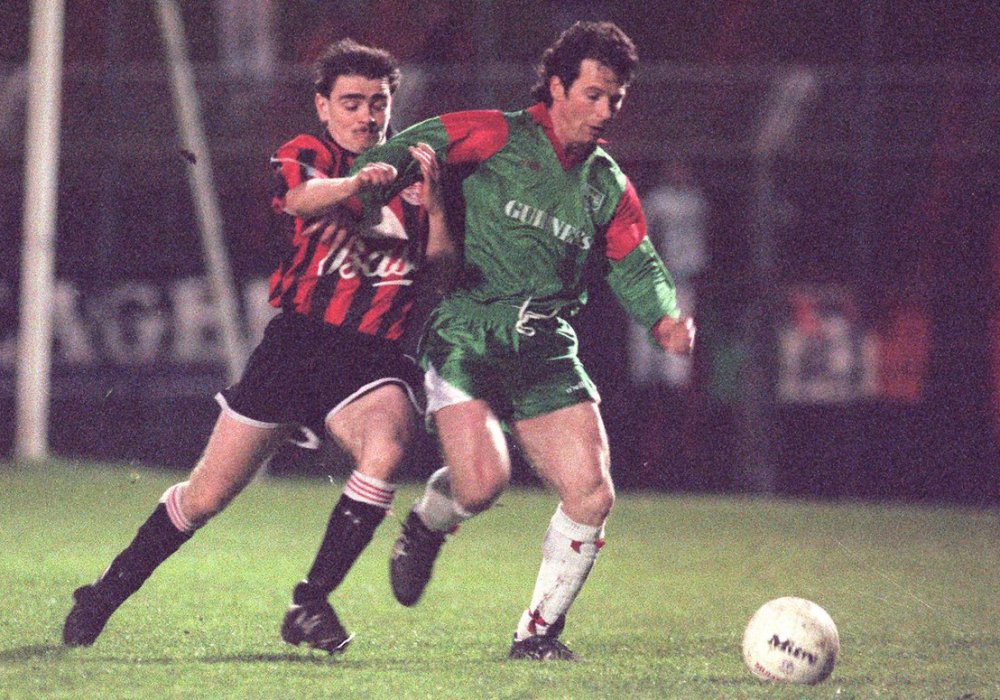
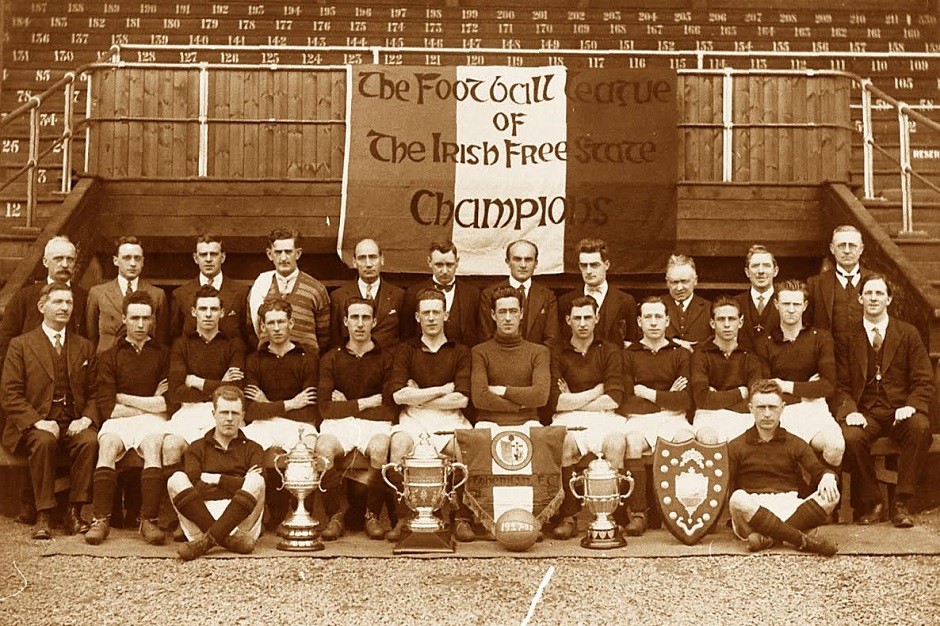


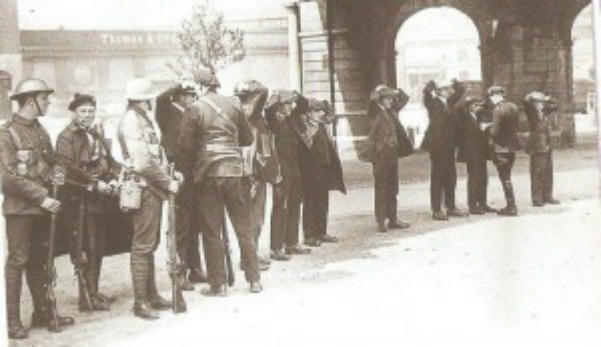

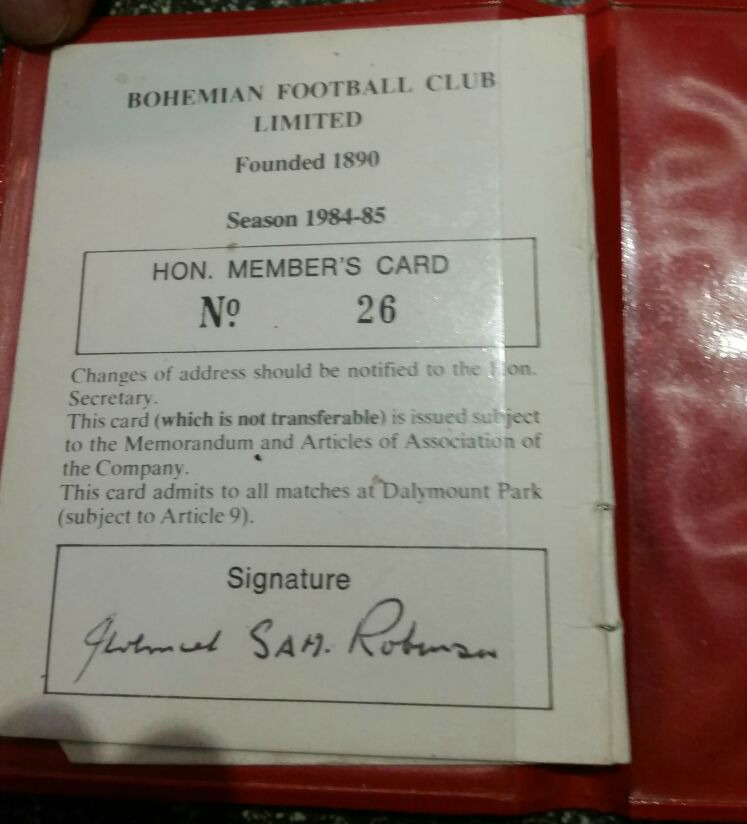
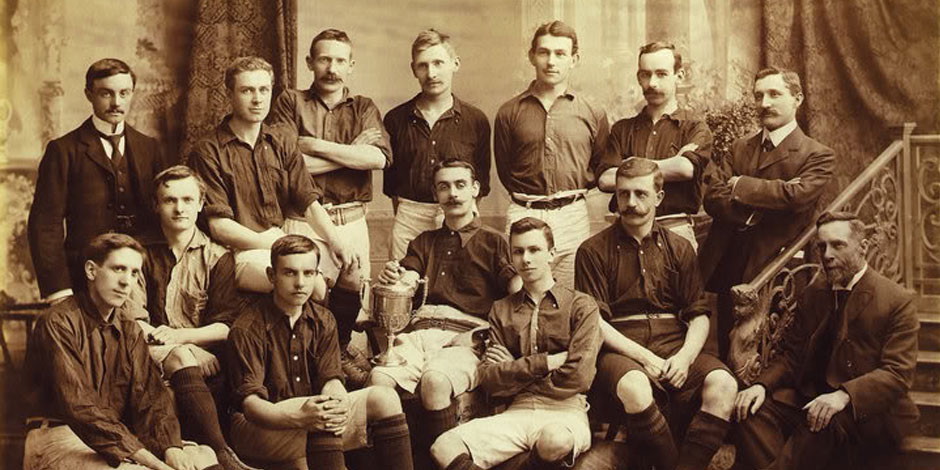
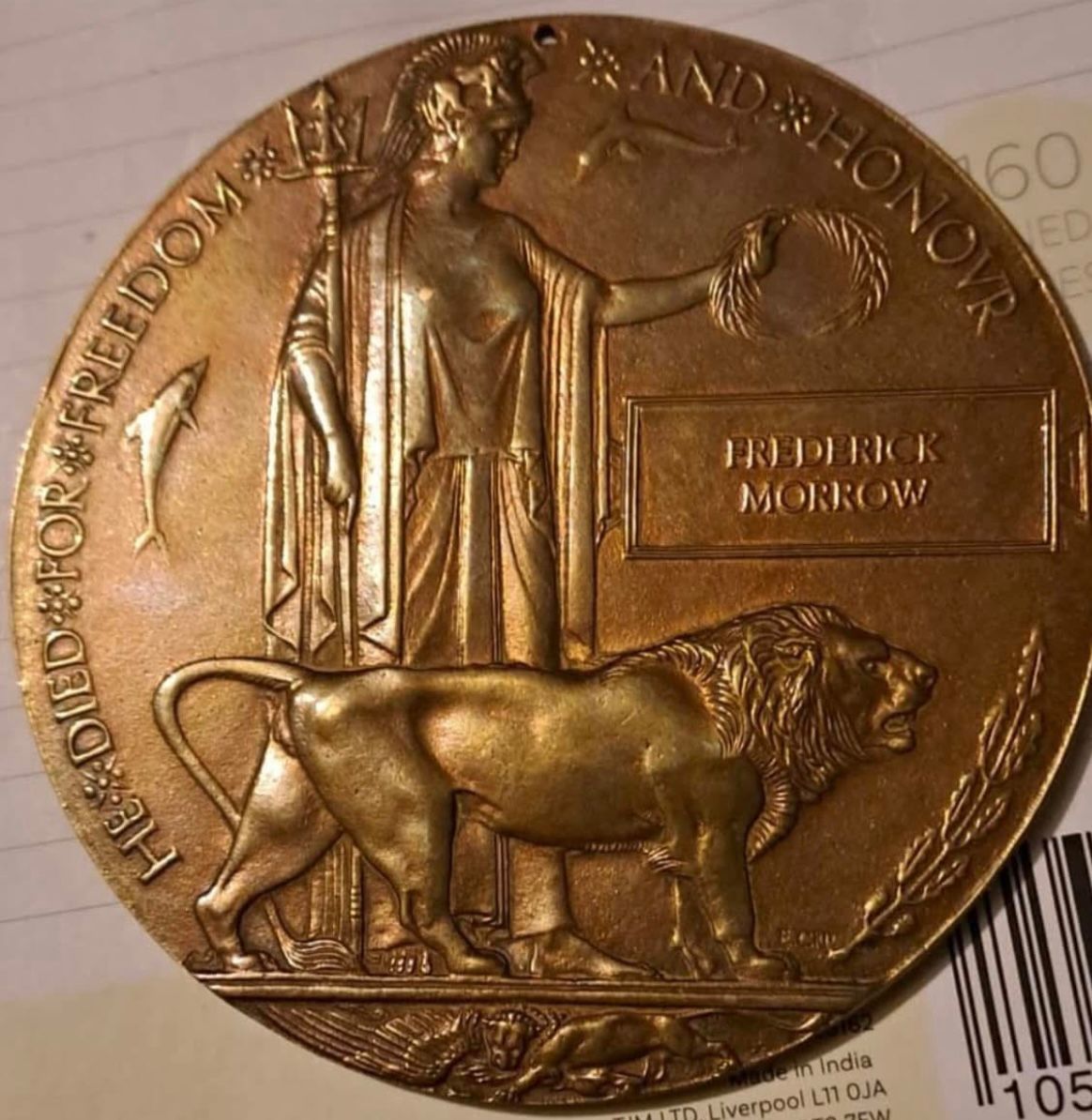

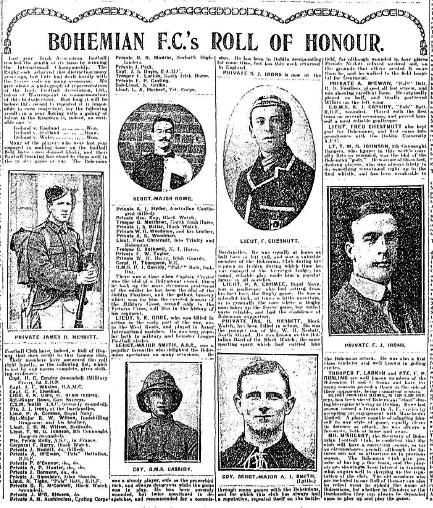


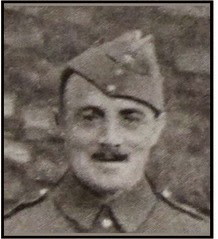


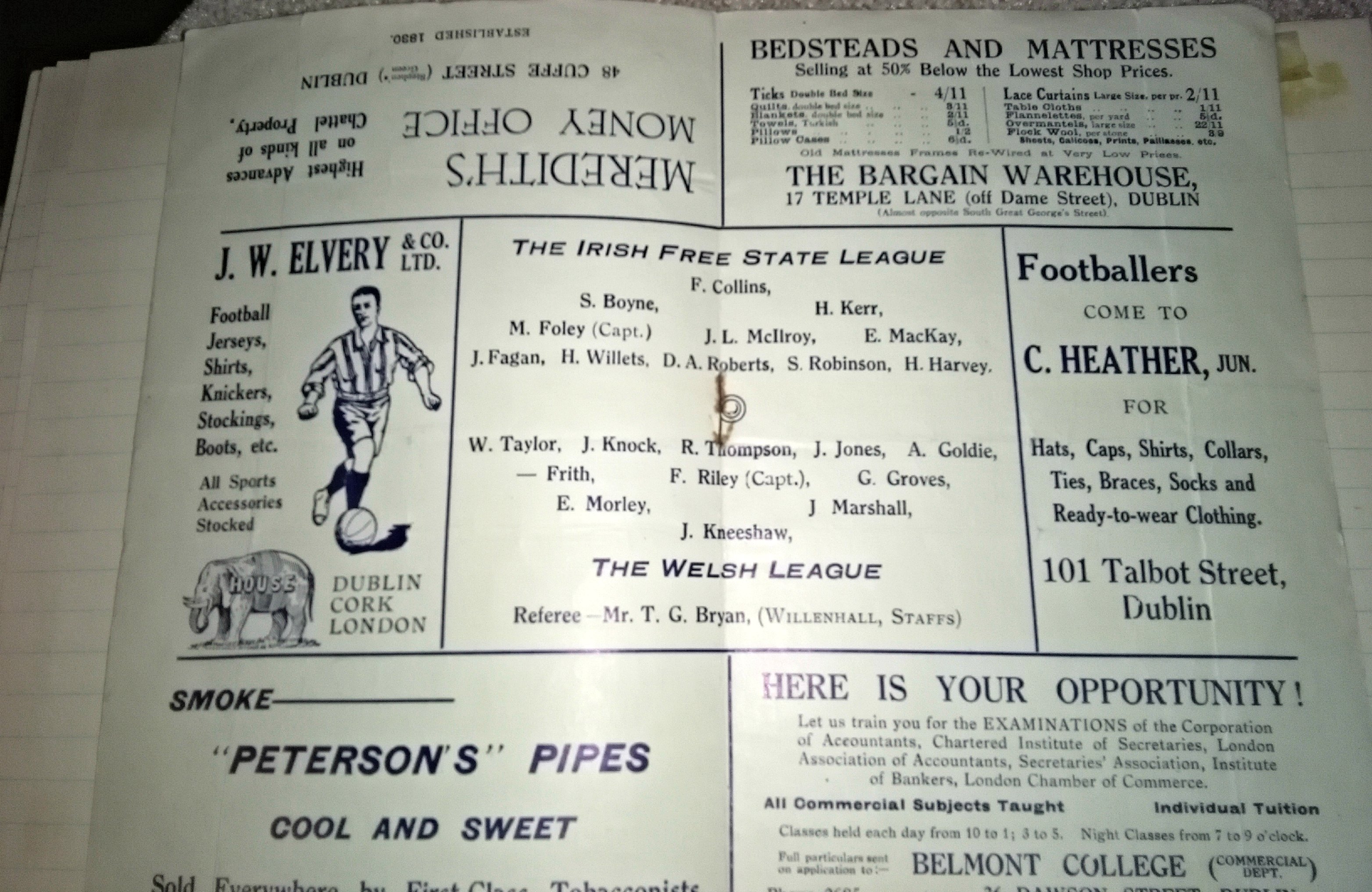

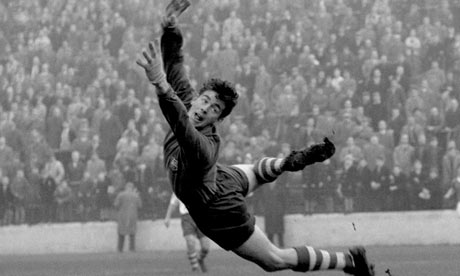 of Ireland’s greatest ever keepers and a founder of somewhat of an Irish goalkeeping dynasty. (Not the only one mind, hello to the Hendersons) Alan Kelly Sr. was a FAI Cup winner and a League champion with Drumcondra during their 1950’s heyday when he made his debut for the Republic of Ireland as they defeated World Champions Germany 3-0 in Dalymount Park. Before long a move to Preston North End beckoned and he spent 14 years as a player at Deepdale making a club record 513 appearances, including an impressive performance in the 1964 FA Cup final where the unfancied Preston were deafeated 3-2 by the West Ham of Bobby Moore and Geoff Hurst. Such was his importance at Preston that in 2001 a redeveloped stand was named after him. Kelly would later manager Preston and would assist John Giles during his managerial reign as well as being caretaker manager for Ireland during a 2-0 win over Switzerland.
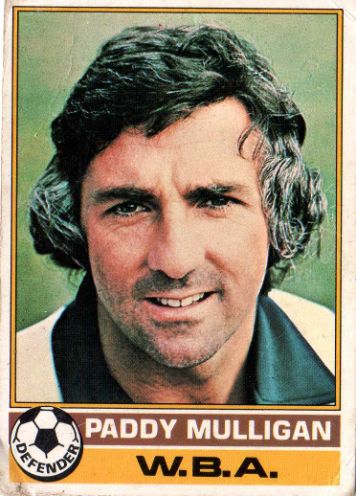 might of Real Madrid 3-2 on aggregate in the Cup Winners Cup final before moving onto Crystal Palace and later West Bromwich Albion, managed at the time by his international team-mate Johnny Giles. While Paddy finished his career with a very respectable 50 caps he didn’t have the easiest start to his international career, he was a part-timer with Shamrock Rovers while also holding down a job with the Irish National Insurance Company when he was called up to the Irish squad in 1966, his employers weren’t too happy about his decision to travel with the squad to face Austria and Belgium and he was issued with an official warning by the company directors!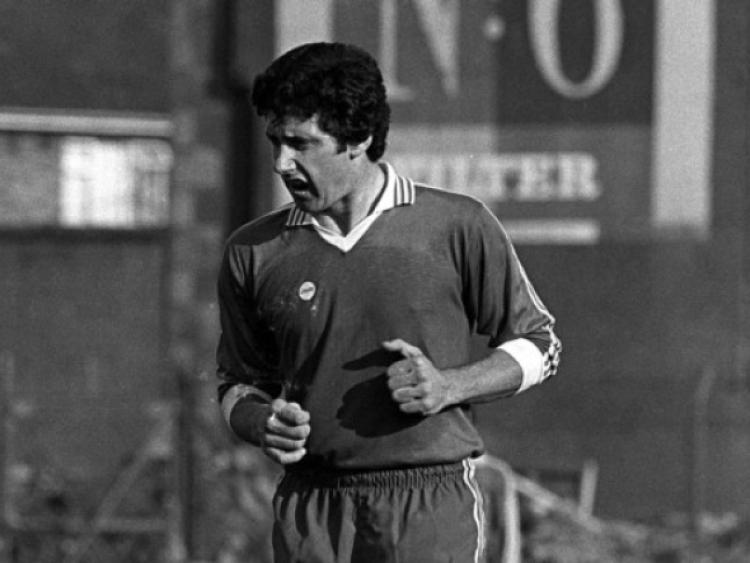
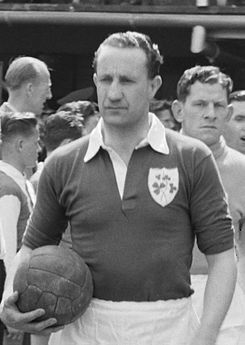 With Ireland trailing 3-0, thanks in no small part to the prolific Sporting striker Fernando Peyroteo, the Irish keeper Ned Courtney is forced to go off injured. Courtney kept goal for Cork United and was an officer in the Irish Army, he had also won a Munster title in Gaelic Football with Cork. Brought on in his place was Con Martin, who at the time was in the Irish Air Corps and had also won a provincial GAA football title, with Dublin in 1941, he kept a clean sheet for the remainder of the game and started in goal in the next match, a 1-0 victory over Spain. Martin was a hugely versatile player, he lined out as a centre half for Drumcondra he played almost an entire season in goal later in his career for Aston Villa and also regularly played as a half back or at inside forward. He was a regular penalty taker for Ireland and it was Con Martin who opened the scoring in the ground-breaking 2-0 win over England at Goodison Park.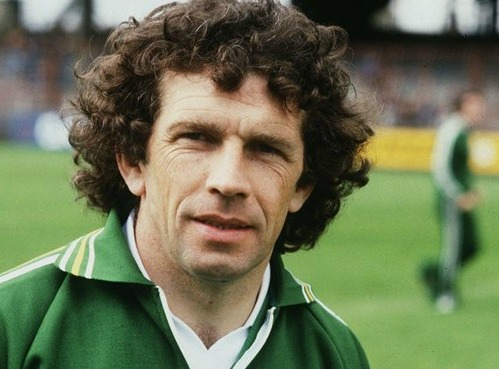
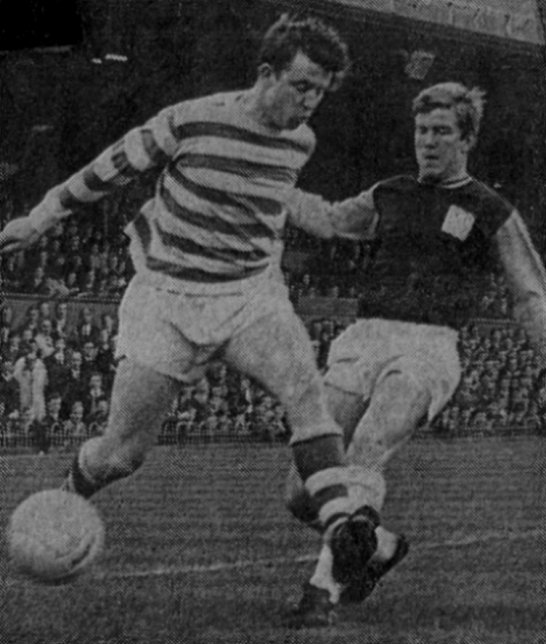 Despite treading the well-worn path going from Home Farm schoolboy to England, joining Arsenal aged just 18 it was as one the classiest players in Rovers’ “Cup Kings” sides that he made his name. After only two league appearances for the Gunners, O’Neill, then aged 21 joined Rovers on their Summer 1961 tour of North American where they took part in the grandly titled Bill Cox International Soccer League against the likes of Dukla Prague, Red Star Belgrade and Monaco. O’Neill impressed grabbing six goals in seven games after which he was signed for £3,000. O’Neill would make over 300 appearances for Rovers, winning a league title as well as six consectutive FAI Cups, mostly playing on the right wing. His international career coincided with a downturn in the national team’s fortunes though there were highlights including the scoring of his only international goal against Turkey in a 2-1 victory.
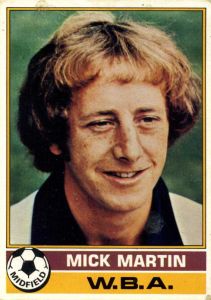 team that day was comprised of League of Ireland players as the match had been scheduled just a day after a full English league fixture programme. He also made a number of appearances at the Brazil Independence Cup while still of Bohs player, scoring in a 3-2 win over Ecuador. Better was to come for Martin, he got to mark Pelé as part of a Bohs/Drumcondra select that took on Santos and shortly afterwards secured a move to Manchester United and later joining Johnny Giles at West Brom. In his club career he is probably most associated with Newcastle United, who he joined for £100,000 in 1978. He was hugely popular with the St. James’s Park faithful who dubbed him “Zico” and he got to play alongside the likes of Kevin Keegan and a young Chris Waddle during his time there.
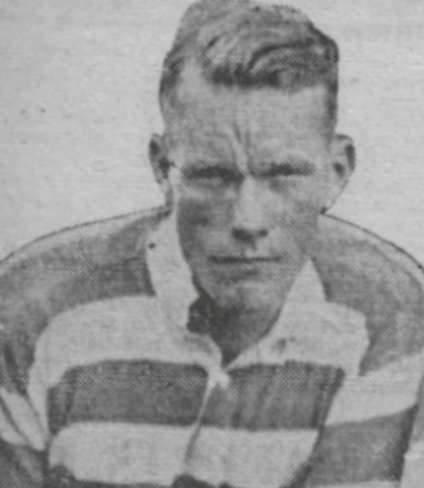 A move to New Brighton (a now defunct club on Merseyside) in the old Third Division North followed, as did the goals. He joined First Division Sheffield United in 1926 though he had to bide his time before getting a prolonged run in the first team. However he exploded into life in the 1929-30 season scoring 42 goals in 43 games and winning his first cap for Ireland (he scored twice in a 3-1 win over Belgium) that year as well. Dunne however wouldn’t be released by United for further fixtures (though he was allowed to play 7 times for the IFA selection) during his prolific scoring exploits over the next few years and he wouldn’t win a second cap until 1936 when he was playing for Arsenal by which stage he had fallen down the pecking order at Highbury due to the arrival of Ted Drake. A season at Southampton followed before Jimmy or “Snowy” as he was known to some returned to Dublin and to Shamrock Rovers in 1937 at the age of 32. It was while on the books of Rovers that Dunne would win nine of his 15 caps and score five of his international goals. Dunne still has by far the best scoring ratio for Ireland of any player who has scored 10+ goals at 0.87 goals per game and one wonders what his stats would have been like had he been made available to play for Ireland during his peak years at Sheffield United.
 witnessed in the League of Ireland and the most recent player to feature on this list. Crowe during the years of his peak was unplayable for opposing defences, he had strength, aerial ability and a cracking shot. He’s Bohs record league goalscorer, FAI Cup scorer and European scorer and was the League’s top scorer three years running. He’s also won 5 league titles (4 with Bohs, 1 with Shels) and two FAI Cups. At international level he featured against Greece under care-taker manager Don Givens and then again early in the reign of Brian Kerr in a cameo appearance against Norway.
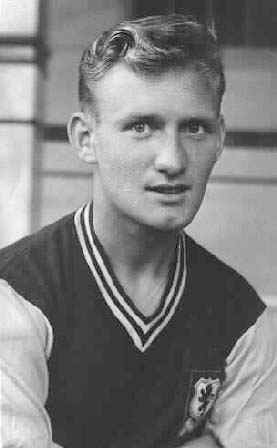 place that has given us plenty of them, including the Coads, the Fitzgeralds and the Hunts. Alfie’s father (Alfie Snr.) had been part of the first Waterford side to compete at League of Ireland level and at one stage formed an entire half back line for the club along with his brothers Tom and John in the 1930’s. Alfie Jnr. was born in 1939 and began his career with his hometown club before a somewhat peripatetic existence brought him to Aston Villa, where he would win his first international cap against Austria, and later to Doncaster Rovers where he would spend the majority of his stay in Britain. After seven years away Hale returned to Waterford where he was joined by Johnny Matthews and a little later by keeper Peter Thomas as part of a team that would dominate the League of Ireland, bringing five titles to the south coast between 1967 and 1973. Alfie’s final game for Ireland was as a Waterford United player in 1973 at the age of 34 when he came on to replace Don Givens in a 1-0 victory over a Polish side that had just finished ahead of England in World Cup qualifying.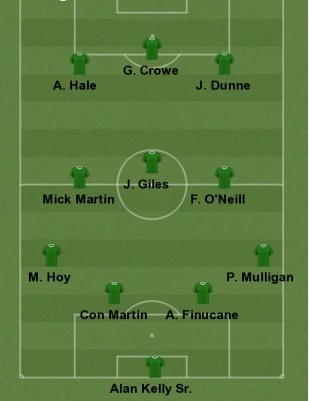

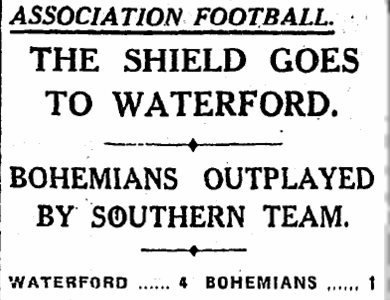
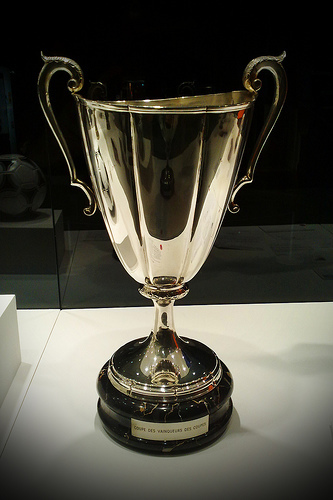
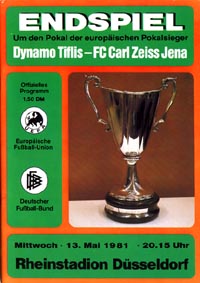


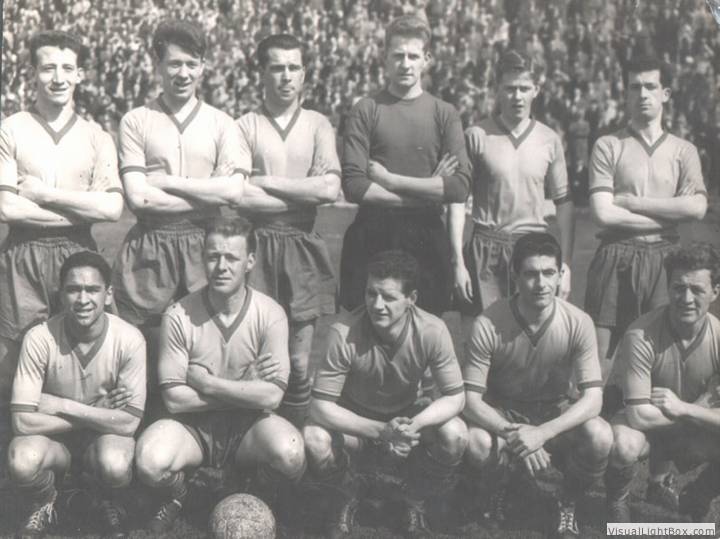

 A Bohemian Sporting Life