The Philadelphia Story

Irish emigration to the United States is not a new phenomenon, Annie Moore from County Cork became the first immigrant to pass through Ellis Island, New York in 1892 but by that stage there had already been millions of Irish immigrants who had set up home throughout the USA. It is estimated that as many as 4.5 million Irish arrived in America between 1820 and 1930. Between 1820 and 1860 alone, the Irish constituted over one third of all immigrants to the United States.

With this number of Irish immigrants it should not be surprising that there are many Irish names to be found within the early years of US football history, names like Cahill, Peel, Farrell and Cunningham who were either Irish-born or the children and grandchildren of emigrants. Even the club names bear witness to this with plenty of Hibernians and Shamrocks being used as suffixes back into the 1890s. There was even mention of a team called the Philadelphia Irish Nationalists back as far as the 1870s.

However by the 1920s something different was happening: along the Eastern seaboard a professional soccer league was emerging, the ASL (American Soccer League), which began its inaugural season in 1921-22 featuring clubs from in and around New York, New Jersey,  Massachusetts and Pennsylvania, areas with strong concentrations of Irish immigrants. The debut season was won by the Philadelphia Field Club who were mostly made up of players formerly of the Bethlehem Steel Football Club. However, after this early success Philadelphia soccer took something of a nose-dive, with the club struggling towards the bottom of the league in subsequent years.

At this point, Irish interest re-emerges in the form of Irish-born, Brooklyn based businessman Fred Maginnis, who took over the struggling Philadelphia Field Club and boldly rebranded them as Philadelphia Celtic ahead of the 1927-28 season of the ASL. The change of name was not just a nod to his homeland; Maginnis had intended to bring across the cream of Irish footballing talent to join his squad. His hope, apparently, was that the significant Irish community in and around the city would come out in big numbers to support this Irish branded football team.

Maginnis got rid of most of the previous year’s squad, though he did keep former Irish League players Billy Pitt, once of Newry Town, and Hugh Reid, a promising defender who had previously been on the books of Glentoran. Both Pitt and Reid had been highly rated during their Irish League careers. Pitt, was a Belfast-born wing-half who had been part of the first Newry Town squad to compete in the Irish League, and he and young Reid had been selected for an Irish League XI for an inter-league game against a League of Ireland XI in 1926.

Billy Pitt proved to be especially useful for Maginnis in recruiting new players for the Philadelphia Celtic directly from Ireland. Pitt’s footballing connections, and Maginnis’ promises of free passage to America and $55 a week in wages, turned a lot of heads and players of varying talents made the journey. Of the more prominent figures convinced to journey across the Atlantic were Ards players Jimmy McAuley and Eddie Maguire, as well as the much-travelled forward Arnold Keenan, who had featured for Fordsons in the Free State League, Glentoran in the Irish League, and for Crystal Palace in England. Others who travelled from the League of Ireland included Michael Maguire, an inside-right, and Paul O’Brien, an outside-left who had played for Brideville, and Larry Kilroy, an inside-right from Bray Unknowns. Also included was Shelbourne player William Burns, who broke an FAI suspension from football to go and play in the United States.

Perhaps the two most famous players who travelled were Free State internationals Denis “Dinny” Doyle and Bob Fullam of Shamrock Rovers, who were joined by fellow Rovers team-mate Alfie Hale (father of the Waterford footballing legend of the same name). By the time of their journey they were both Irish internationals, having represented the Irish Free State in two games against Italy. While Doyle only featured in the home fixture against the Italians, Fullam played in both Turin and Dublin games and got on the score sheet in the home match.

Fullam was one of the best known figures in the League of Ireland. A talented inside forward, he had a rocket-like left-foot and had already been central to Shamrock Rovers’ three league titles and an FAI Cup win. Such was his importance to the team that the popular terrace cry of “Give it to Bob” became common among Rovers fans any time their team were on the back foot.

Fullam had played outside of Ireland before, lining out for a short time for Leeds United but the trip to Philadelphia was a bigger jump into the unknown. Billy Pitt would have faced Fullam in that inter-league match in 1926, and he would certainly been aware of him by reputation when he approached him about the trip to America. It was Fullam in turn who convinced Dinny Doyle to travel. Some newspaper reports suggested that Fullam and co travelled in August 1927, ostensibly as part of a touring Irish exhibition side to the United States, though this seems to have something of a cover story for their true intentions.

What was clear however, was that the Philadelphia Celtic, although rapidly assembled, could certainly hold their own in the professional ranks of the American Soccer League. Although they lost their opening game, they followed this up with a draw and then two victories over the impressive Fall River Marksmen and the Boston team. All was not well in the camp however, as the Boston result was overturned because Philadelphia had made an improper substitution. The lack of any proper coach or manager no doubt was partly to blame, as well as the mounting financial problems.

The ethnic marketing of an Irish Philadelphia side was not creating as big a stir in the city of Brotherly Love as Fred Maginnis might have hoped: even games against strong sides like Boston and Fall River were only drawing crowds of 2,000 – 3,000. Results were very unlikely to improve, as quite quickly the players realised that the riches they had been promised weren’t materialising. Whether Maginnis’s strategy had been to use money raised from expected big gates to pay the squad’s wages, or whether he was just a poor businessman without a Plan B isn’t clear, however, the Irish players quickly realised that the $55 a week they’d be promised wasn’t going to turn up, nor even a fraction of it.

There had been problems with payments from the beginning, and the ASL had come in and taken over the running of the team on an interim basis while they told Maginnis to find a buyer to take over the club. Maginnis, however, didn’t seem to be trying very hard. The Philadelphia franchise being deliberately over-valued put off potential investors, however, Maginnis did seem keen to strike a deal to sell the majority of the club’s playing staff to the Fall River Marksmen club. The league objected to this, and there were even discussions about whether the players could move. Eight of the players had work permits sponsored by Philadelphia Celtic (describing their profession as artists) which would then have to be endorsed by the new club that they would join.

It all came to a head before the end of October 1927 after only 10 games for Celtic, when the League Commissioner Bill Cunningham announced that Philadelphia Celtic had folded and that as far as they were concerned the players who had remained were free agents who could move to a club of their choosing. Some of the Irish contingent decided that they’d had enough; they’d struggled financially due to Maginnis’s mismanagement and by November William Burns and Paul O’Brien had already returned to Ireland. Bob Fullam had a short sojourn with the wonderfully named Detroit Holley Carburettor FC before eventually returning to Shamrock Rovers ahead of the 1928-29 season. Others like Kilroy, McGuire and Alfie Hale would return to Ireland after a matter of months. Billy Pitt, who had helped recruit many of the players for this Philadelphia experiment, would stay a few years longer, playing first for Fall River and later the New Bedford Whalers, Bethlehem Steel and the Pawtucket Rangers. He eventually returned to the Irish League in 1931 where he signed for Glentoran, after some disagreement regarding his transfer from his former club Newry Town. Pitt had left Newry for the States without a transfer being paid and personally faced a significant fine of £50 for breach of contract, it was only after Glentoran agreed to pay this fine that the transfer was sanctioned.

Fullam’s erstwhile team-mate Dinny Doyle had, however, taken to American living and to the ASL. After initially being frustrated in his attempts to sign the Philadelphia players, Sam Mark, owner of the Fall River Marksmen, was successful in signing not only Doyle and Pitt but also Arnold Keenan and Jimmy McAuley. Doyle would go on to be a league Champion with Fall River the following season, as they became one of the most dominant American soccer teams of that era. Dinny Doyle made his life in North America, passing away in his home in Canada in the late 1980s. He was the last surviving member of that first Shamrock Rovers side to win the league title.

The idea of importing an Irish soccer team wholesale into a professional American league was a novel one, it played to the ethnic target marketing that was common in American soccer at the time, but it was ultimately doomed to failure due to the unscrupulous behaviour of an Irish-American businessman trying to get one over on footballers eager for a better life.

While the Philadelphia Celtic quickly failed and many of their players returned to their careers in Ireland, it was not to be the last time that an Irish side was parachuted into an American soccer league…

The research of Steve Holroyd and Michael Kielty has been especially useful in preparing this article.
Luke Kelly takes the biscuit

Raised on songs & stories Heroes of renown/ 
The passing tales & glories that once was DublinTown

The opening lines of “Dublin in the rare ould times” are a distillation of nostalgia at its purest for many Dubliners. The Pete St. John song found fame on the ballad circuit of the 1970’s and for my money the definitive version of the song will always be the Dubliners’ version with Luke Kelly on lead vocals. This song appeared on The Dubliners 1979 release “Together Again”, it marked the return to the band of Ronnie Drew and it would be the last album to feature Luke Kelly who would pass away less than 5 years later.

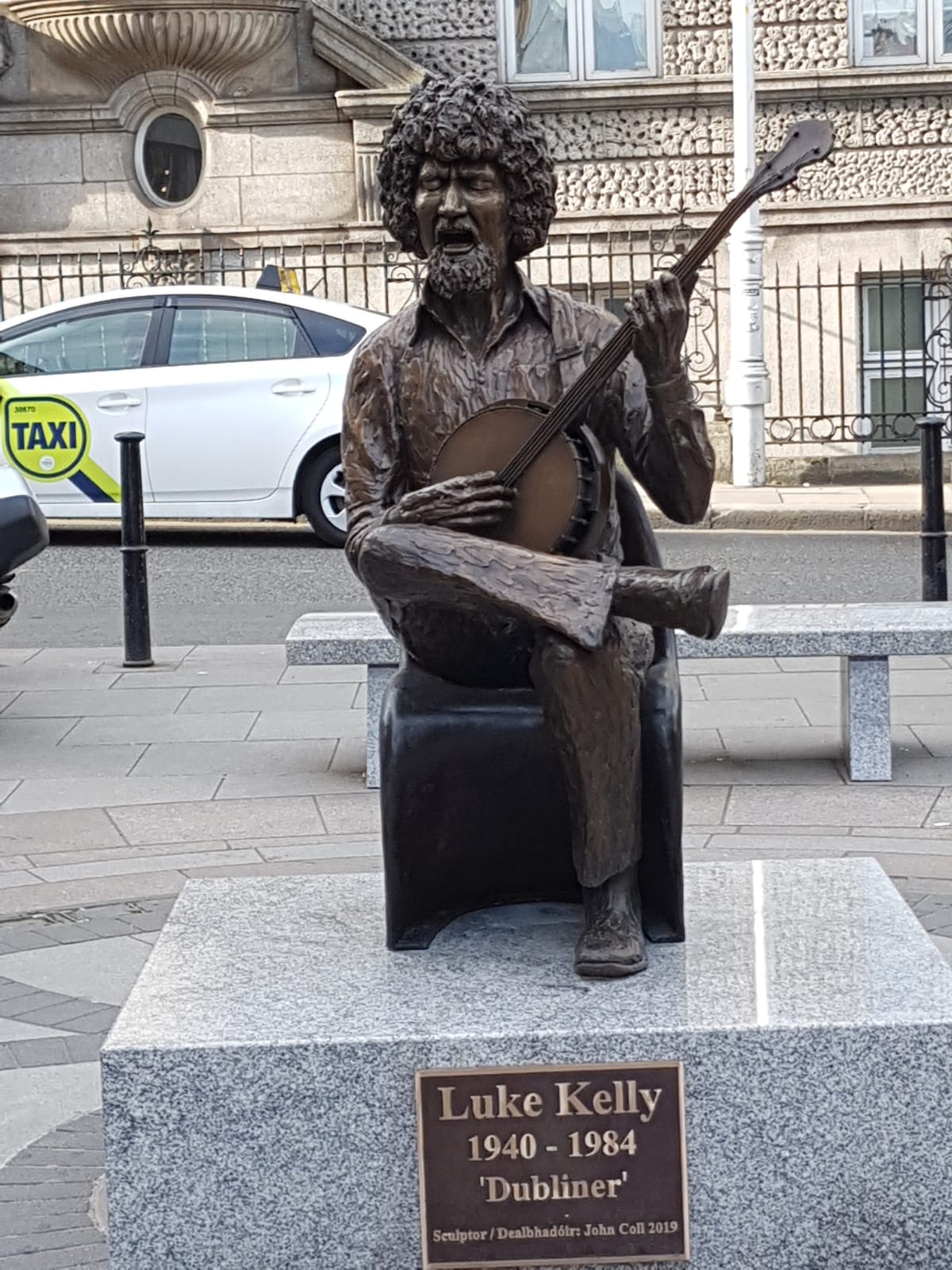
A rousing version of the song was performed in January of last year by Damien Dempsey accompanied by Kelly’s former bandmate John Sheahan on South King Street, a short walk from Grafton Street and Merrion Row and many venues that were home to performances by the Dubliners during the so-called “ballad boom”. This performance coincided with the 35th anniversary of Kelly’s death, aged just 43, but more positively it also announded the unveiling of a new bronze statue of the troubador and activist.

Statue

The unveiing of two pieces of public art celebrating the life and work of Luke Kelly provoked much fond reminiscence of him by friends and family, one area of his life that was discussed in detail was Luke’s love of football which was detailed in an excellent piece by David Sneyd in the Irish Mail on Sunday. The article had mentioned Kelly’s time as a schoolboy when he lined out for the famous Home Farm club, playing alongside future League of Ireland legend Billy Dixon.

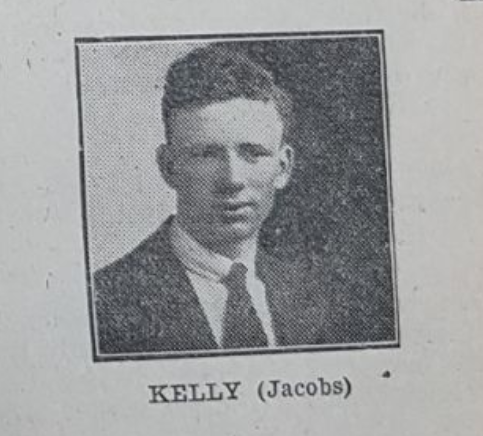
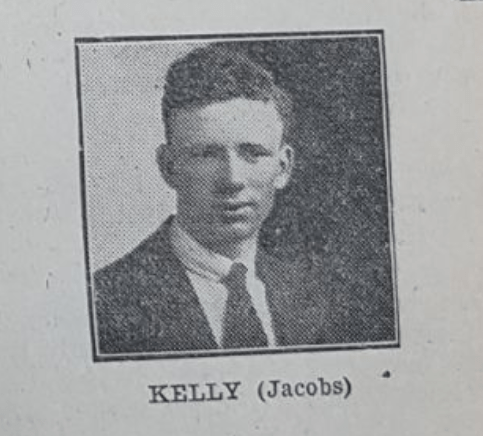
It also mentioned the playing career of his father, Luke Kelly Senior who played in the League of Ireland for Jacob’s F.C. In a piece for the “Lost Clubs” series on this website I focused on the history of Jacobs and in the course of my research had come across Luke Kelly Senior. A talented half-back or “pivot” in the Jacob’s teams of the late 1920’s.  Reports at the time describe him as a “tireless worker” , a “typical tackler and spoiler” and “most consistent”, though he was mentioned as being a shade on the small side. He was however, no brutal hatchet man, plenty of reports mention his range of passing and ability to switch the play and begin attacks.

The “pivot” role so commonly ascribed to him was one which had developed as part of the old 2-3-5 formation. The “centre-half” was not yet a central defender, but played in a more advanced role as an instigator of attacking play who could also drop back and assist in defensive areas. Hence he functioned as the “pivot” between defence and attack. This would change gradually over the 1920s, especially after Arsenal had success with withdrawing a centre-half into a more definsive position of a third defended, helping create what became known as the W-M formation.

Luke Senior was born on 1st September 1904 in Ryan’s Cottages on Marlborough Place in Dublin’s north inner-city. He was the son of Paddy and Christina Kelly who had been married nearby in Dublin’s Pro-Cathedral in 1898. Paddy Kelly had been born in Bealnamulla, Co. Roscommon just outside Athlone back in 1867, he in turn was the son of another Luke Kelly also from Bealnamulla. Luke Sr. married Julie Fleming in September of 1934 in St. Laurence O’Toole’s church which sits next to Sheriff Street, a part of the city to be forever associated with his son, Luke Kelly the singer who was born nearby in 1 Lattimore Cottages, Sheriff Street less than six years later.

Football was obviously deeply engrained in Luke Kelly Sr. from an early age, in an interview many years later when his son was at the height of his fame, he remembered playing football in Fairview Park when he and his pals spotted a brigade of the Scottish Borderers marching towards the city. Kelly recalled in the Irish Independent that he and his friends followed them all the way into the city, jeering at them and throwing stones.

What the young Kelly did not realise then was that the Scottish Borderers regiment had been called into the city centre on serious businesses. Earlier that day the Irish Volunteers had taken possession of a cache of weapons brough by boat into Howth harbour and which were en route to the city. The Dublin Metropolitan Police had been ordered to confront the Volunteers but many would have had sympathy with the Nationalist cause.

As prominent Irish Volunteer and IRB member Bulmer Hobson noted “A considerable number of the police did not move and disobeyed the order, while the remainder made a rush for the front Company of the Volunteers and a free fight ensued, in which clubbed rifles and batons were freely used. This fight lasted probably less than a minute, when the police withdrew to the footpath of their own accord and without orders.”

As a result the Borderers were sent to disarm the Volunteers, they also failed in this task and eventually a growing crowd stoned and jeered them as they marched back to Richmond Barracks along the Dublin quays. The troops opened fire on this taunting crowd on Bachelor’s Walk, killing three bystanders and injuring 37, including a 9 year old Luke Kelly as the youngest victim.

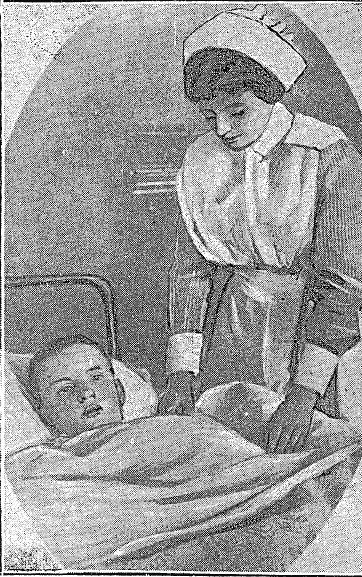
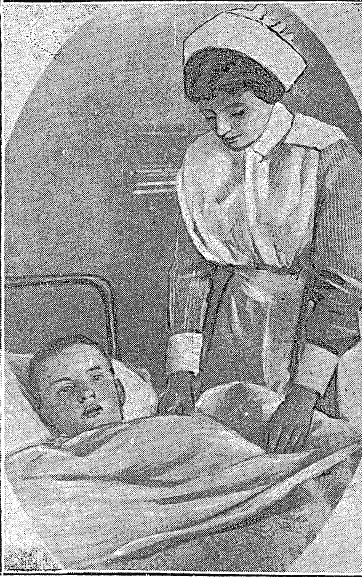
Kelly was shot in the back and a priest was called to administer to him as the staff in the nearby Jervis Hospital feared for his life. However Kelly was lucky and made a full recovery. A photo of him in his hospital bed even appeared in an edition of the Irish Independent a few days after the attack.

Indo hospital pic

Photo taken from the Irish Independent July 28th 1914: Luke Kelly, a little schoolboy, a victim of the Borderers fusilade, in a ward in Jervis Street hospital

Kelly joined the Jacobs factory as an employee at the age of 16 and continued working for them for 46 years, until his passing in 1966. During his time with Jacobs he was an accomplished athlete, he ultimately played seven seasons in the League of Ireland with Jacobs, and although at one stage he was linked with a move to Fordsons in Cork, he remained with the Biscuitmen as a player even after they dropped out of the League of Ireland and returned to the Leinster Senior League.

Though Jacobs struggled for much of Kelly’s time as a player there are numerous reports that mention Kelly as their stand-out individual performer. Such was the high regard in which he was held as a player he was also selected to play in a number of high profile friendly matches, such as a charity game in aid of St. Vincent de Paul at Christmas 1927 as well as being picked to play for Shelbourne as a guest in a benefit match against Linfield for their star player, the Irish international, Val Harris.

Jacobs were justifiably proud of the sporting achievements of their employees, apart from a football team they also constructed a swimming pool for employees, based on the example of a pool built by Heinz for their workers in Pittsburgh. Kelly was also an able swimmer, though it did get him into trouble on one occasion. In May 1932 Luke Kelly senior (then aged 27) was arrested by a Garda Burns and charged with attempted suicide by drowning in the River Liffey.

Kelly’s defence to this charge was that he had been out with friends for a drink on Sunday and after some significant alcohol consumption a bet was proposed as to whether Kelly could swim across the Liffey from Custom House Quay. As part of Kelly’s defence it was stated that he was an excellent swimmer as evidenced by the fact that although he was wearing a hat at the time it had remained dry throughout. The Judge at the hearing of the case let Kelly off on the condition that he took the pledge and kept the peace.

To return to the opening lines of this piece, the words of Pete St. John as sung by Luke Kelly, it always struck me that they apply equally well to how we hear about football and its players when we are young, father’s, olders siblings, relations and bar-room bores regaling youngsters about scarcely believeable feats of skill from years gone by. Luke Kelly Senior was a friend of John Giles’ father Dickie and one can imagine that both Luke and John heard many romanticised tales from their respective fathers about their exploits on and off the field.

Raised on songs & stories Heroes of renown/ 
The passing tales & glories…

Shutting the open door – when the League of Ireland tried to poach Britain’s best

Jock Dodds was a larger than life character, a man known to swan around Depression era Sheffield in an open-top Cadillac, wearing a silk scarf and fedora hat, a man who ran greyhounds (and casinos) among an impressive number of side-projects, he was also one of the most powerful, dashing and effective centre-forwards of his era, though his prime years were robbed by the outbreak of the Second World War. Dodds’ extrovert personality and determination to make a buck often brought him into conflict with the powers that be, one such occassion led to him spending a short but significant spell in Dublin, and in the process changing the sporting relationship between Ireland, Britain and FIFA.

Ephraim “Jock” Dodds (pictured above) was born in Grangemouth, Scotland in 1915, his father died when he was just two years of age and he moved with his mother to Durham, England when she remarried in 1927. Jock, the name he was known by for the rest of his long life was a particularly unoriginal nickname due to he Scottish birth and upbringing.

As a teenager he was signed up by Huddersfield Town but it wasn’t until he joined Second Division Sheffield United in 1934 that he enjoyed an extended run as a first team player. United had just been relegated from the top flight and had lost their top scorer, Irish international Jimmy Dunne, to league winners Arsenal the previous season, Dodds, not yet 20 had big boots to fill but he enjoyed an impressive debut season for the Blades, scoring 19 goals in 30 matches. His good form and scoring touch for United continued over the following four seasons, to the point that in March 1939, Blackpool, then in the top flight, spent £10,000 to bring Dodds out to the coast. The fact that this represented the second-highest fee ever paid for a player in British football, (just behind the £14,000 price that Arsenal had paid Wolves for Welsh international Bryn Jones), shows just how highly rated Dodds was at the time.

Dodds was an immediate success at Blackpool, scoring 13 goals in his opening 15 games, but on the 3rd September 1939, just days before Dodds’ 24th birthday, Britain declared War on Germany after the latter’s invasion of Poland. League football was immediately suspended. During the War Dodds was employed by the RAF as a drill sergeant and physical training instructor in the Blackpool area, spending most of his time working from a repurposed Pontin’s holiday camp. Dodds continued playing for Blackpool during the Wartime Leagues and also featured eight times for Scotland in Wartime internationals, including scoring a hat-trick in front of over 90,000 fans in a 5-4 victory over England

The 1946-47 season represented a return to the traditional English football calendar after the Wartime suspensions and Blackpool and Dodds were gettting ready for a return to the top-flight. Almost 31 years of age at the beginning of the season Dodds had starred for Blackpool and Scotland during the War and was surely hopeful of continuing his career with the resumption of League football. However, Dodds was quickly at loggerheads with the Blackpool hierarchy who only offered him £8 a week if he was dropped to the second team but the maximum wage of £10 if he played for the first team. Other reports suggest he was offered even less than the maximum wage. Dodds felt slighted, as a star of the Blackpool side during the War years, that regularly played to home crowds of 30,000 he thought he was worth more and refused to sign. He was placed on the transfer list at the stated price of £8,000.

With Dodds transfer listed, it was reported that Liverpool and Nottingham Forest were among the clubs interest in signing him. At this point it is worth giving some further explanation of player registration and transfer arrangements at the time. Jock Dodds was out of contract with Blackpool. In today’s game this would make him a free agent an allow him to sign for the club of his choosing. However, this was not the case in 1946 when clubs held far greater sway, and as Blackpool were the club who held the player’s registration Dodds could not move to another club without their cooperation in transferring this registration to the new club. This meant that Dodds was on the so-called “retained list” , a player out of contract but with the club keeping their registration as they viewed the player as being worth a transfer fee. This system was recognised throughout Britain and Northern Ireland, but importantly not in the Irish Free State.

This arrangement had usually benefitted clubs in Britain and Northern Ireland where players on the “retained list” of League of Ireland clubs were signed up without a transfer fee changing hands. In several cases clubs in Northern Ireland signed players from the League of Ireland for nothing but sold them on to English or Scottish side for a sizeable profit after short periods. The process could of course also work in reverse, League of Ireland clubs could sign players of sigificance for nothing from British clubs. This policy was popularly known as “The Open door” and was something that League of Ireland clubs exploited especially in the immediate aftermath of the Second World War.

Shamrock Rovers and Shelbourne in particular were keen to sign up well known players from British clubs retained lists in these immediate post war years. Rovers had experienced a disappointing 1945-46 season, finishing 4th in the league and losing the FAI Cup final to Drumcondra, several of their star players had also departed, Davy Cochrane and Jimmy McAlinden – both capped by the IFA, returned to England on the resumption of post-War football, rejoining Leeds United and Portsmouth respectively, and the Cunningham family sought to recruit some big-name players who would generate an increase in crowd numbers and have Rovers back in contention for honours.

Rovers’ historian Robert Goggins notes in his history of the club that Hoops players would have been earning in or around £2 a week at this time, but the Cunninghams were prepared to go far beyond this level to attract prominent players from the other side of the Irish Sea. First of all they signed Tommy Breen, Manchester United’s Irish international goalkeeper through the “open door” system. Not to be outdone, rivals Shelbourne signed Manchester United’s other goalkeeper, Norman Tapken as well as former Liverpool and Chelsea forward Alf Hanson who finished as Shels top scorer that season.

Alf Hanson during his time at Liverpool (source playupliverpool.com/)

Rovers then turned their attention to Jock Dodds who was reportedly offered £20 a week and a signing on fee of £750. Huge money at the time but considering Blackpool were looking for a transfer fee of £8,000 still something of a bargain. Despite the objections of the Blackpool Chairman, Colonel William Parkinson there was no stopping Dodds who remarked,

Whatever happens I shall fly to Dublin a week from now, I intend to see it all through to the end.

The Blackpool chairman complained that the movement of footballers to Ireland was an “absurd traffic” and expressed concern that he and other clubs could continue losing out on significant transfer fees if the situation continued.

While Parkinson was understandably concerned about losing one of his best players who he valued at £8,000, for nothing it was a bit rich hearing this coming from a senior figure in British football. The “open door” of course swung both ways, and the wealthier clubs in Britain and indeed Northern Ireland exploited it readily when it suited them to sign players without paying a transfer fee, from clubs in the League of Ireland. The Shamrock Rovers chairman Joe Cunningham was quick to point this out when pressed on the issue. The Irish Independent’s football columnist W.P. Murphy went further and listed several players who had been signed from League of Ireland clubs by sides in England or Northern Ireland without a fee being paid, the most recent case cited was that of Eddie Gannon. Rated as one of the best half-backs in the league, the 25 year old Gannon had been signed for nothing by Notts County from Shelbourne earlier in 1946.

Notts County FC 1946-47 – Gannon is in the middle row, sixth from the left

Gannon would make over 100 appearances for County and become a regular for Ireland before being signed by Sheffield Wednesday for £15,000 (a massive fee at the time) less than three years later. Shelbourne would be right to have been aggreived as this would have been a record transfer fee for an Irish player yet the Dublin club saw none of it. As mentioned, clubs in Northern Ireland also did well from these arrangements, in those immediate post war years players of the calibre of Thomas “Bud” Aherne (Limerick to Belfast Celtic) Con Martin (Drumcondra to Glentoran) Robin Lawlor (Drumcondra to Belfast Celtic) and Noel Kelly (Shamrock Rovers to Glentoran) all moved north of the border without fees being paid, in many cases these players later moved on to clubs in England for significant sums.

On the pitch the signing of Dodds by Shamrock Rovers had the desired impact, on September 8th 1946 he scored twice on his debut, a 2-2 draw with Drumcondra in a City Cup game. He also paid back part of his sizeable wages and signing on fee, Milltown was packed for the match, the crowd was estimated at 20,000 and many of them there to catch a glimpse of the dashing Dodds. Rovers lost their next City Cup game against Shelbourne 2-1 which effectively ended their challenge for that trophy, although Dodds was once again on the scoresheet and proved a star attraction; Shelbourne Park had recorded its highest gate receipts in fifteen years, totalling £718.

There were reports that Rovers were looking to add to their star names with new cross-channel signings to further boost their gates and improve on some indifferent performances. Among the names mentioned were Stanley Matthew, who was in dispute with his club Stoke at the time, as well as Peter Doherty, one of the great inside-forwards of his era and someone that Rovers tried to sign on more than one occasion, he had fallen out with the directors of Derby County after they objected to his taking over the running of a hotel. Neither deal would materialise in the end but the move of Dodds to Rovers, and to a lesser extent the signings made by Shelbourne were a significant point of controversy. It brought the issue of the maximum wage (then capped at £10 per week) into the pages of the press, with columnists asking if it were not reasonable for a top player, whose presence alone could add thousands to attendance figures and hundreds of pounds to ticket takings, to be paid a higher amount? The Reveille newspaper was moved to write the following on the Dodds transfer;

Unless some satisfactory agreement is reached before very long on the question of a player’s wage, I forsee one of two one or two other prominent stars crossing to Eire

Dodds time with Rovers was to be relatively short-lived, Blackpool had complained to the FA about the situation, and the FA in turn complained to FIFA, an organisation that they had just re-joined after one of their periodic absences. The Britsh press reported that Dodds had even approached the Blackpool Chairman, William Parkinson in late October stating that he had made an “unwise move” and wished to return to England. In all Dodds would only play in five games for Rovers scoring four goals over the course of just over six weeks. This included two games in the City Cup and three in the League of Ireland Shield. Dodds would ultimately join Everton at the beginning of November 1946, having signed off for Rovers with another goal against Drumcondra just days earlier. The agreed fee would be £8,250 between Everton and Blackpool although the Irish Independent reported that some payment was made to Rovers by Everton as they recognised the contract Dodds had with them, and that this was crucial to Everton getting in ahead of Sheffield Wednesday in the bidding war. The minute books of Everton confirm that Rovers did receive payment in the amount of £550 which Everton noted that they felt “was not obligatory” but that there was “a moral responsibility in ratifying the payment”.

This idea that Rovers would have received financial compensation is slightly surprising, along with Dodds desire to return to England, the FAI had also apparently received a letter from FIFA seeking a resolution to the “open door” system. Before the month was out a conference was arranged in Glasgow to regularise transfer arrangements, delegates from the League of Ireland and representatives of the Scottish and English Leagues were present and on the 27th November Jim Brennan, secretary of the League of Ireland was in a position to telegram Dublin to advise that “full and harmonious agreement was reached for the mutual recognition of retained and transfer lists” – the open door had finally closed. The following month the Irish Football League met and agreed that they would also abide by the Glasgow agreement which ceased the practice of the major Belfast clubs signing players from south of the border without fees being paid.

Dodds would go on to have a productive couple of seasons for Everton before moving on again, this time to Lincoln City for a fee of £6,000 in 1948. He continued to find the back of the net for the Imps before finally hanging up his boots in 1950, aged 35. He did however, have one more brush with officialdom over the breaking of contracts and transfers abroad. In 1949, a Colombian football association called DIMAYOR had broken away from FIFA following a dispute with an amateur football association, as a result this association was banned by FIFA but an independent Colombian league offering huges salaries to entice the best players from abroad was formed. Nicknamed “El Dorado” due to the wealth on offer, the league’s clubs signed the likes of Alfredo Di Stefano from River Plate but were also keen on British professionals and ended up enticing top players like Manchester United’s Charlie Mitten and Stoke City’s Neil Franklin to Bogotá. Jock Dodds was also in the mix, acting as a recruiter and go-between for the Colombian league, and getting a cut for himself of course. Dodds ended up being banned by the Football Association in July 1950 for bringing the game into disrepute for his role in the “Bogotá bandits” affair, but was later cleared.

As for the League of Ireland, well it was a qualified victory, Hanson, Tapken et al would leave Shelbourne after a successful season and return to England. Tommy Breen left Shamrock Rovers, moving to Glentoran for a fee of £600, though this was paid to Manchester United, the club that held his registration. The fears of the British press, that big money contracts could entice the cream of their footballing talent across the Irish sea without a transfer fee never materialised, nor where they likely to. Astute businesspeople like Joe and Mary Jane Cunningham at Shamrock Rovers saw the benefit of offering big money to the likes of Dodds to come to Milltown. For the £900 or so they invested in his signing on fee and wages they probably made as much back in increases to gate receipts generated by his presence in the team and seem to have made at least some money out of the Everton transfer. Such signings and wages were not sustainable overall and can be seen as part of an ongoing pattern of League of Ireland sides signing up big name players (usually coming towards the end of their careers) on short term contracts to boost crowd numbers and generate interest and media coverage for the club. The likes of George Best, Bobby Charlton, Geoff Hurst, Gordon Banks and even Uwe Seeler would appear in the League of Ireland for a handful of games in the decades to come, and usually ended up putting extra bums on seats, at least in the short term.

More positively it put the League of Ireland on an equal footing with the Irish, Scottish and English leagues, no more could the best talent in the league be snapped up for absolutely nothing (though plenty of British clubs still try), transfer fees had to be paid and over the intervening decades this proved crucial in keeping many League of Ireland clubs afloat. Another benefit of the Glasgow conference was that the Scottish and English leagues agreed to start playing inter-league games against the League of Ireland. Previously these games had mostly been restricted to matches against the Irish or Welsh leagues, but now the best the English and Scottish Leagues had to offer would begin coming to Dublin while the League of Ireland selections would journey to Celtic Park, Goodison, Maine Road and Ibrox among others. These games were highly prestigious and importantly the large crowds they attracted to Dalymount were significant revenue generators.

For so long League of Ireland fans have become used to a certain condescening attitude towards their clubs from their British counterparts, especially in relation to transfer fees for players, many of whom have gone on to have excellent careers. Everton fans still sing about getting Seamus Coleman from Sligo Rovers for “60 grand” as just one example. With this in mind it is interesting to look back at post-war stories in the British media where sports columnnists and football club officials fretted about the spending power of rogue Irish clubs enticing away the best of British talent.

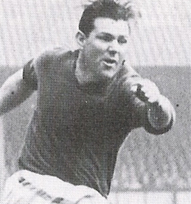
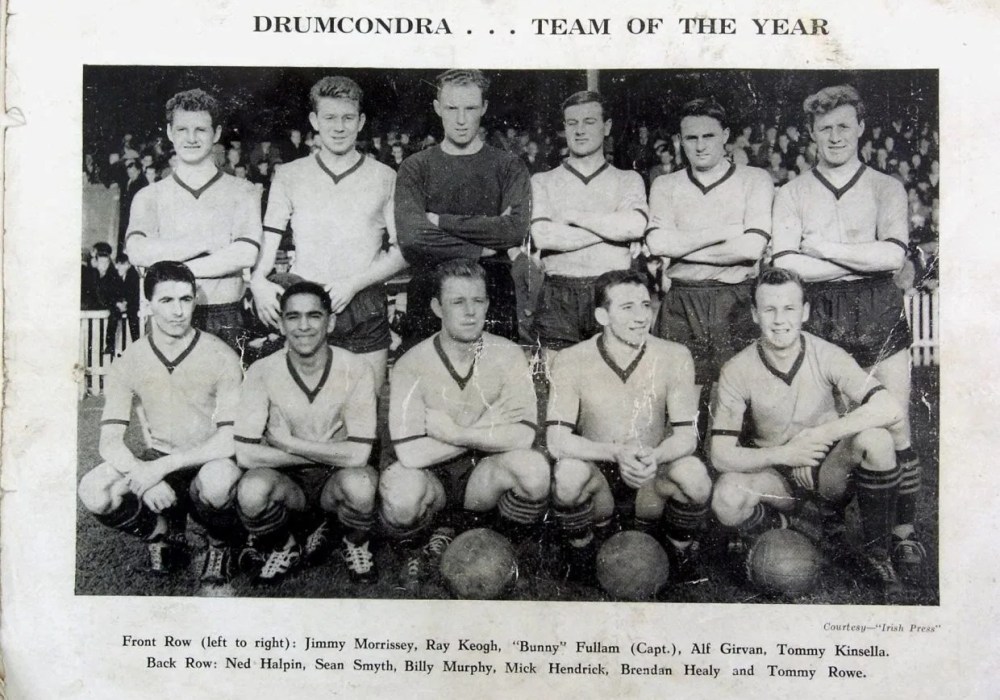
Ray Keogh – a pioneer in Irish football (Podcast)

Recordings of my talk on the life and career of Ray Keogh from January 2020. This talk took place in Drumcondra Library and I would like to thank Conor Curran and Emma Kelly for their assistance in organising everything on the night.

Also discussed are topics like the demise of Drumcondra FC as a league club, as well as the career of other players of colour in the League of Ireland and the Irish League. Also heard at the end of the talk is Ray’s former Drumcondra teammate Alf Girvin who shares some of his memories of Ray and Drums.

Some photos included below are provided by Ray’s family as well as some images from the evening of the talk.

This slideshow requires JavaScript.

Early football players of colour in the League of Ireland

As some readers may be aware I’ve had the opportunity to write a number of articles on the life and career of former Drumcondra footballer Ray Keogh. Indeed recently I was lucky enough to be asked by Dublin City Council libraries to give a talk on the subject, which you can listen to here.

Ray’s life and career were filled with plenty of drama and highlights which would have been worth recording no matter his background, but the fact that initially I thought that Ray may have been the first person of colour to play in the League of Ireland meant that I felt that his story really needed to be recorded and told while he was still with us. Sadly Ray died in August 2019 but I was lucky enough to meet him before he passed away, I was also fortunate enough to speak with members of his family, former teammates and others who remembered him from his playing days.

In the course of this research I learned that although Ray was one of the first people of colour to play football in the League, he was not the very first. This short article will give a little bit of background on some of the other players who featured, albeit often fleetingly, in Irish football in the years before Ray made his debut. Ray played that first senior game for Shamrock Rovers in 1959 but there was at least one other player who appeared for a League club before then.

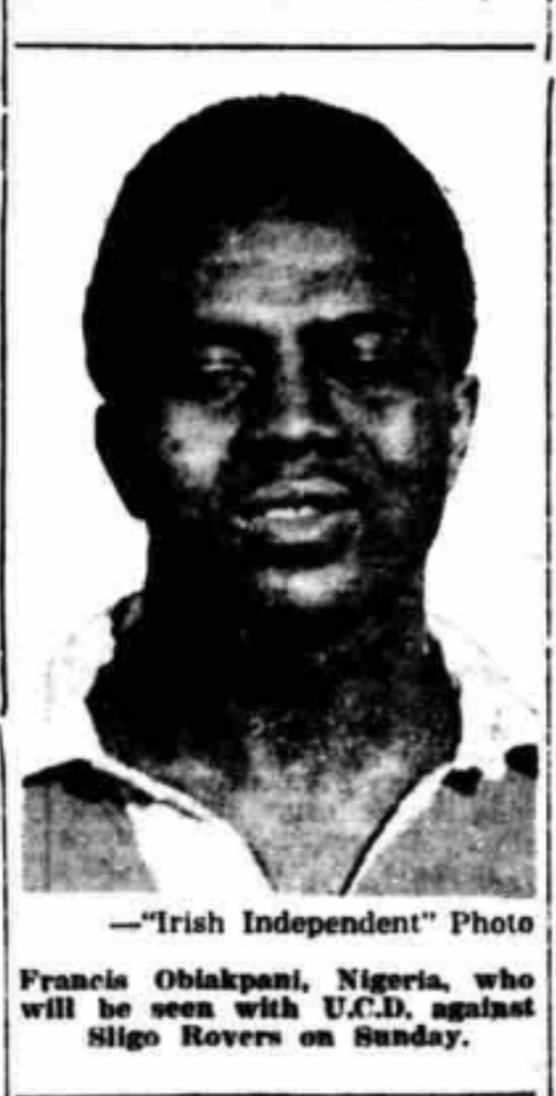
One early black player who was brought to my attention by Bohemian FC historian Stephen Burke was Francis Archibong, who had a brief career with Bohs more than ten years before Ray made his debut for Rovers. Francis Archibong was born in Nigeria and came to Dublin in the late 1940s to study English in University College Dublin. During his spell studying in Dublin he lived on Coulson Avenue in Rathgar but found time to line out for the Bohemians on a number of occasions during the 1948-49 season.

In total Francis Archibong’s Bohs career amounted to four games; two for the Bohemian “B” team in the Leinster Senior League and two for the first team in the League of Ireland Shield, a competition played ahead of the commencement of the main league season. Bohs lost all four matches in these competitions:- to Shamrock Rovers “B”, Jacobs, Waterford and Sligo Rovers respectively, with Francis playing as centre-forward in these games but failing to find the net in any of the contests.

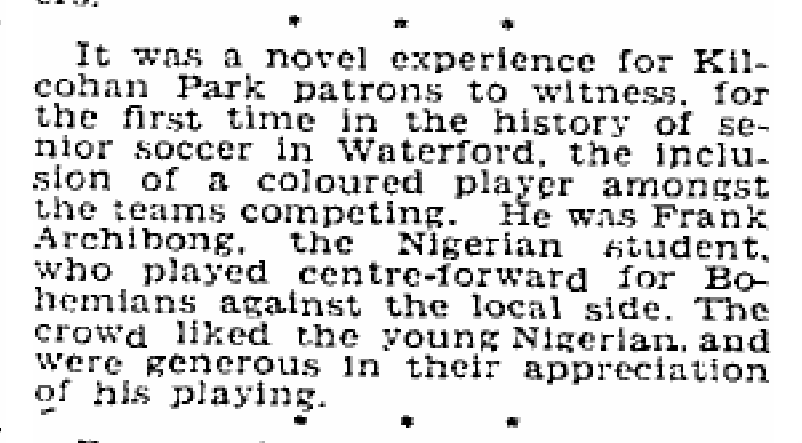
I’ve made the assumption that Archibong may also have lined out for UCD AFC who were not a league side at the time but I’ve yet to find any definite evidence of this. Though there are newspaper reports of his Shield appearances for Bohemians against Waterford and Sligo which mention the novelty of a black African footballer appearing in the game, most reports are not particularly complimentary about his performances, or that of the Bohs side as a whole. The Munster Express was perhaps the most generous in their appraisal of Archibong’s performances who noted the warm welcome afforded to him by the Waterford crowd.

Archibong snippet

Munster Express 15th October 1948

While Francis’s Bohs career was short he did feature alongside players of note such as Brendan O’Kelly who would represent Ireland in football at the 1948 Olympics and Frank Morris. He also played against the likes of Ireland internationals Fred Kiernan and Sean Fallon who were lining out for Sligo. And if his football career didn’t perhaps live up to hopes then his professional life saw huge success.

He graduated with a degree in English from UCD in 1950, his thesis was entitled A history of the criticism of King Lear from Condell to Coleridge. Francis returned to Nigeria in October 1950 on board a plane packed with European missionaries, thereafter he devoted his career to educating young people in his home country. Francis Archibong ended up working for the Nigerian Ministry of Education and was involved in large scale literacy projects in the 1960s and even represented Nigeria at meetings of UNESCO.

Apart from Francis Archibong there were a number of subsequent people of colour with UCD connections who appeared in Irish football in the years after Francis’s brief sporting career.

UCD tended to be a Leinster Senior League side who also featured in the FAI Cup early

Pic of Obakpani

Francis Obiakpani

rounds, it would be 1979 before UCD AFC would be elected to the League of Ireland. UCD generally had a small number of foreign students at this time, including several from West Africa. A few years after Francis Archibong had graduated the UCD football team featured two Nigerian players in a Metropolitan Cup semi-final against Jacobs in 1956; they were Frank Obiakpani and Fidelis Ezemenari. They lost that game 3-1 with Ezemenari getting the consolation goal.

By that time Obiakpani was a medical student who had just graduated, he had been starring for the UCD side since 1953 and had helped the college to triumph in the Collingwood Cup.  While Ezemenari was studying Zoology. It was mentioned in one report that the two young men had known each other before their arrival in Ireland.

Among their teammates for UCD was a talented attacker named Brian Lenihan (see photo below) who won an amateur international cap for Ireland and who would later become Minister for Finance and run for office as President of Ireland, also on the side was Willie Browne, an accountancy student who would later win three caps for Ireland and captain Bohemian Football Club.

Lenihan UCD

Back in 1953 Obiakpani had faced off for UCD against a friend who was playing for UCC, listed as A. Ezenwa who was described as a talented centre-half who had played football with Obiakpani back in Nigeria, he was also a useful athlete away from the football pitch, excelling in the Long Jump. While in Cork he was studying Science. That UCC side were captained by Tommy Healy who was a star player for League of Ireland side Cork Athletic. Writer Cian Manning has written previously for Póg mo Goal about Francis/Frank Obiakpani and what happened to him after his graduation, he has suggested that Obiakpani may have been killed during the Biafran War in 1967.

I would love to know more about these players, while they did not feature at League of Ireland level they were playing at a high standard and alongside present and future League of Ireland stars. However, the information I’ve been able to find still leaves unanswered questions, even down to simple details like the first name of players like Ezenwa.

If you know more I’d love to hear from you.

The Hungarian Revolution?

At the beginning of the 1950’s the Hungarian international side were the great ascendant football team of the era, it was a period that would deliver them an Olympic Gold medal in 1952 and see them become runners-up in the 1954 World Cup in somewhat controversial circumstances as the West German national team pulled off on of the all-time sporting shocks.

Hungary’s international exploits were at somewhat of a remove from the League of Ireland where a Englishman, Welshman or Scotsman was usually as exotic as things got in terms of playing personnel, however the huge political changes that took place in post- War Hungary ended up having an unexpected, tangential impact on the League of Ireland as within ten years or each other two men, apparently Hungarian internationals, were lining up for League of Ireland clubs like Limerick City, Sligo Rovers and Drumcondra.

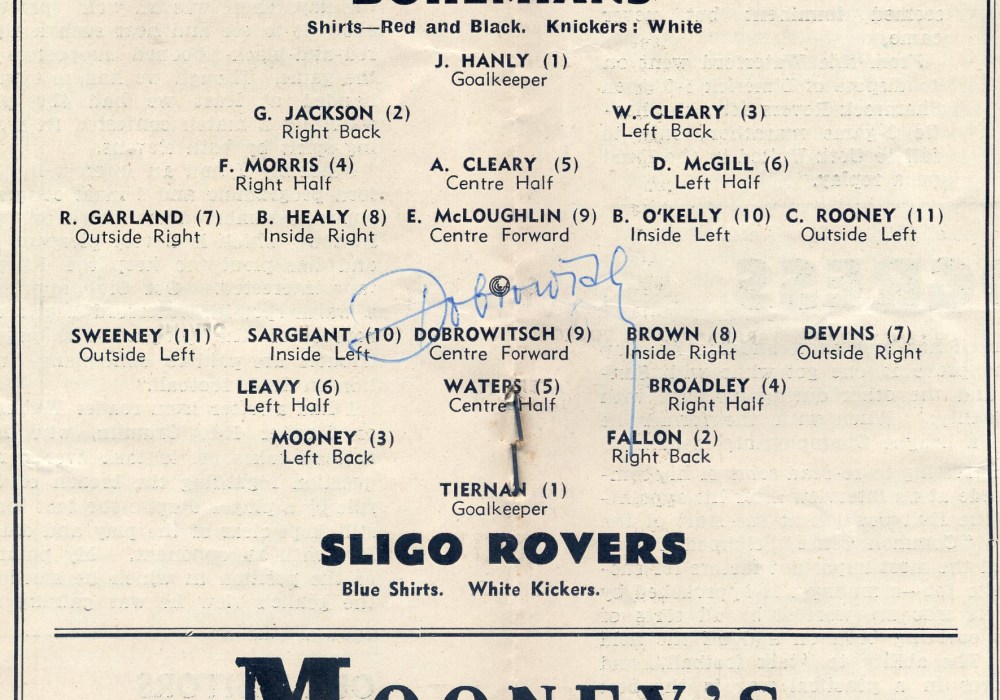
The first of these two was Siegfried Dobrowitsch who arrived in Ireland in 1949 via France after leaving his Hungarian homeland in 1947. Siegfried or “Dobro” and many of his Irish team-mates nicknamed him had left Hungary as the Hungarian Communist party were growing in power, becoming the dominant party in the short-lived Second Hungarian Republic before, in 1949, declaring Hungary a single party Communist state; the People’s Republic of Hungary.

Dobrowitsch claimed that he had heard about Sligo Rovers as part of a recruitment advertisement for new players brought to his attention by his French wife, not that far fetched when you consider only ten years earlier the club had persuaded an ageing “Dixie” Dean to sign up for a short stint in the north west. In fact the Sligo Champion newspaper went as far to lead with the headline announcing his signing with “First Dean, Now Dobrowitsch”.

Dobro image 2

Siegfried Dobrowitsch

In various reports it was stated that Dobrowitsch had been capped either five, or six times by the Hungarian national team and there was much comment about this being something of a coup for Sligo Rovers who were anxious to get him into their starting XI. However, Siegfried’s first game was delayed several times as Rovers had to seek international clearance for him to make his debut, there seemed to have been long, drawn-out correspondence with the French Football Association as Dobrowitsch had  most recently been plying his trade for Strasbourg.

More information on Siegfried’s early life has come to light through the research of his daughter Alda Cornish, who recently visited Ireland and met with representatives of Sligo Rovers. In a piece in the Sligo Weekender where she filled in some scant details of her father’s early years, noting that “he was born in a part of what was Hungary and we understand he lost both of his parents by the age of seven. He was put in a Jesuit Boys Home, but it was a very cruel place where he grew up. The next thing I could find was he was playing football and working as an electrician. He ended up in France around 1947 and played with Strasbourg, where he met his first wife.”

Newspaper reports at the time state that Dobrowitsch was born in a part of Yugoslavia that had come under Hungarian control and that his multi-lingual French wife acted as his interpreter. In an interview published in February 1949 in the Irish Independent, presumably with his wife acting as translator Siegfried got to explain something of his personal story. Born around 1920 he claimed to have won six international caps for Hungary between 1938 and 1942, after which point he was drafted into the Hungarian army to fight for the Axis powers during the Second World War.

After his army discharge in 1946 he returned to his farm before it was seized by the government the following year, fleeing across the country he was assisted in crossing into Austria and from there into France, where he met his wife and eventually relocated to Dublin, commuting to Sligo with the club’s other Dublin-based players and using Dalymount Park as a personal training ground. He was even in the stands at Dalymount, awaiting his international clearance when Sligo met Bohemians in early March 1949, going so far to sign a match programme for a star-struck fan, obviously impressed by the presence of a supposed Hungarian international. (You can see his signature in the header image of this article).

His international clearance eventually arrived and on March 27th, over a month after his signing was initially publicised Siegfried Dobrowitsch made his debut for Sligo Rovers in a 1-1 draw with Limerick in the Showgrounds. While the reports describe a tight game where Dobrowitsch, the starting centre-forward had to survive on scraps, he did manage to score Sligo’s only goal of the game, a well dispatched, powerful penalty kick early in the second half.

Despite a good start there was misfortune only a couple of weeks later when Dobrowitsch was involved in a car crash on his way from Dublin to a match in Sligo. Travelling up for a match against a Sligo local league selection, Dobrowitsch, along with goalkeeper Fred Kiernan and winger Stephen Leavey crashed into another vehicle. While luckily nobody was seriously injured Siegfried did suffer a dislocated shoulder and missed a number of games as a result.

Perhaps as a result of his injury, work commitments in Dublin, or merely through inconsistent form Dobrowitch’s stay in Sligo was relatively short-lived, by November of 1949 he had been released by Sligo despite boasting a relatively successful strike rate and had been signed by Drumcondra in Dublin.

Things started relatively well for Siegfried at Drums, scoring twice on his debut against Shelbourne in a Shield game which Drumcondra won 4-1. Despite this initial success only a year later Seigfried had dropped out of senior football and was lining out for Larkhill in the AUL.

When interviewed many years later Dobrowitsch’s former teammate Pa Daly recalled playing alongside him. While he was referred to as “Dobro” when in Sligo the Drumcondra players had instead dubbed him “drop-a-stritch”, and in Daly’s opinion Dobrowitsch had never been a Hungarian international as they had been led to believe. While he praised Siegfreid for his dedication to training, recalling the exasperated Drums groundsman Peter Penrose calling in Dobrowitsch from training with the words “come on in or the pubs will be closed!” he was of the opinion that his claims to have been a Hungarian international were exaggerated.  Any research in relation to the matches that Siegfried Dobrowitsch claimed to have played in for Hungary show no similar names on the historic teamsheets. Ultimately Siegfried would leave Ireland around 1956 bound for Zimbabwe where he spent much of the remainder of his life before he passed away in 1994.

More recently, research by Hungarian sports writer Gergely Marosi has suggested that these details may actually refer to the life and career of Andor Dobrovics, who seemed to be from the town of Rákosszentmihály and played for his locaL club, RAFC who were a lower tier club. He played as a midfielder and occasionally a forward before he moved to top-flight side Elektromos for a short stay. Dobrovics never played for the first team, mostly lining out for their reserve side.

While the story of Seigfried Dobrowitsch may seem unusual he was just the first supposed Hungarian international footballer to play in the League of Ireland in the 1950s. The second was Laszlo Lipot who enjoyed a brief spell at Limerick after arriving in Ireland as a refugee around the time that Seigfried Dobrowitsch was leaving Ireland.  Lipot, who lined out at right half for a short time with Limerick in 1956-57 had ended up as one of a small group of refugees taken in by Ireland after the Hungarian Revolution of 1956 was crushed by the state authorities with the backing of the Soviet Union.

What had begun as a series of protests in Budapest in October 1956, mostly from students, journalists and writers seeking reform of the system of government, and a move away from the influence of Moscow quickly turned violent,  the Hungarian government sought military support from the Soviet Union which was speedily dispatched. The revolutionaries stood little chance against the might of the Soviet military. The newly installed Hungarian government quickly carried out mass-arrests numbering in the tens of thousands, it was estimated that upwards of 200,000 refugees fled Hungary in the aftermath of the failed revolution and among their number was Laszlo Lipot.

Of the thousands who fled Hungary more than 300 refugees found themselves in the far from glamourous surroundings of the Knockalisheen army camp just outside of Limerick City on the far side of the Clare border. While the refugees were broadly welcomed by the local people life in the army camp was tough and there was even a threatened hunger strike by some of the refugees at the conditions they endured.

Laszlo Lipot is first mentioned in December of 1956, less than two months after the Hungarian Uprising had been suppressed. In the December 8th edition of the Limerick Leader there is a cryptic reference to Lipot under the pseudonym “Janos” who is described as a Hungarian international right back who had only recently represented the national team against Czechoslovakia and had been an international teammate of no less a luminary than Ferenc Puskás. It states that “Janos” has been training with Limerick and had impressed the team management and was hopeful of making his first team debut in the near future. He did make his debut shortly afterwards, in a game against Shelbourne, which ended in a heavy 6-1 defeat, though match reports say that Lipot/Janos was one of the better Limerick players on the pitch. He was unable to add to this single start as his playing registration still lay with the Hungarian FA.

Newspaper reports named his club as “Tata” which according to Hungarian football expert Gergely Marosi was a reference to Hungarian club Tatai Vörös Meteor SK who have since merged into umbrella club Tatai AC. This would mean however, that he certainly was never an international as his club would have been in the third tier at the time. The closest he would have ever come to this standard was playing for his county in inter-region exhibition matches so the talk of an “international” seems to be another tall tale.

Back in Limerick it would be August 1957 before he would get to play another game for the Shannonsiders when the issues with his playing registration were finally resolved, and he was able to line out for Limerick under his own name of Lazslo Lipot. His Limerick career was shortlived however as by the end of the summer of 1957 most of the few hundred Hungarians who had been living in the Knockalisheen camp had left the country, many left to start new lives in Canada and the United States while Laszlo and his wife took the shorter journey to England in September of 1957. His Limerick playing career had amounted to a single league game against Shelbourne in the 1956-57 season and a handful of Shield games in August and September of 1957.

What exactly became of Laszlo after he left Ireland is something that I’ve been unable to find out, there is a death notice for a Laszlo Lipot in the town of Caerphilly in South Wales from 2004. This Laszlo had been born in 1931 and would be the correct age, perhaps he was the same man who once graced the Markets Field?

The cases of Seigfried Dobrowitsch and Laszlo Lipot are striking in their similarity, both were refugees from the post-War turmoil that engulfed Hungary, in Dobrowitsch’s case as an orphaned former soldier he claimed to have fled after the loss of his farm to the new emerging Communist rulers in the late 1940’s, for Laszlo it was the violent events of the 1956 Uprising that led him to leave his homeland. Whether he had been directly involved and feared reprisal or simply wanted to escape a harsher regime after the direct military intervention of the Soviet Union that spurred him to leave we simply don’t know.

We do know however, that both men had some talent for football, and in the days before Youtube highlights videos and professional scouting software both men were able to embellish their playing careers, adding international caps that almost certainly never existed to their playing CVs. While neither player had the longest or most successful League of Ireland career they are examples of a subgroup rarely mentioned in Irish football or indeed, Irish society, namely political and economic migrants who came to Ireland to make a better life. While we might think this is a recent phenomenon the stories of Siegfried and Laszlo shows that is dates back decades. It also shows that we perhaps haven’t learned from the mistakes of the past, while several of Laszlo’s fellow refugees in Knockalisheen did remain in Ireland and built new lives the majority left after less than a year in Ireland, often after protests and threatened hunger strikes about the poor quality of their accommodation. Today Knockalisheen is used as a Direct Provision Centre.

With both men there are many unanswered questions about their lives and careers, especially back in their native Hungary, if any readers have any further information I’d hope they would get in touch so that I can better separate the truth for the stories told about them.

Programme image provided by Stephen Burke. If you enjoyed this article you may also find this piece on the life, career and tragic death of Hungarian international Sandor Szucs of interest.

Rodriguez of Richmond Road (Podcast)

As part of a series for the SSE Airtricity LeagueSSE Airtricity League website I’ve written a number of League of Ireland history blog posts, some of which have been turned into podcasts.

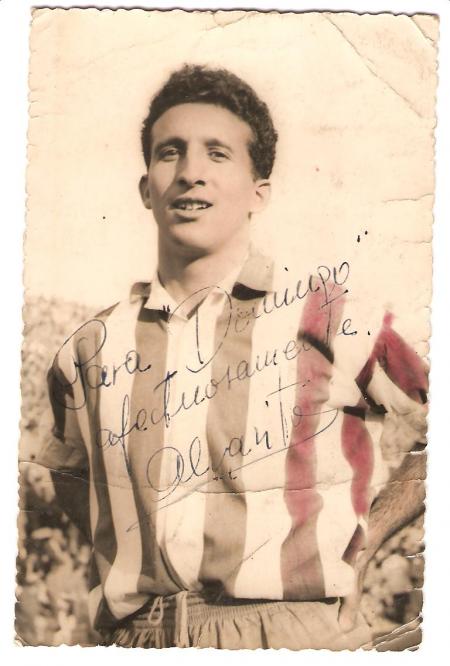
This one focuses on the short Shelbourne career of Spanish international Álvaro Rodríguez Ros, better known as Alvarito. Links below to Spotify and Soundcloud.


Three fates of the German League

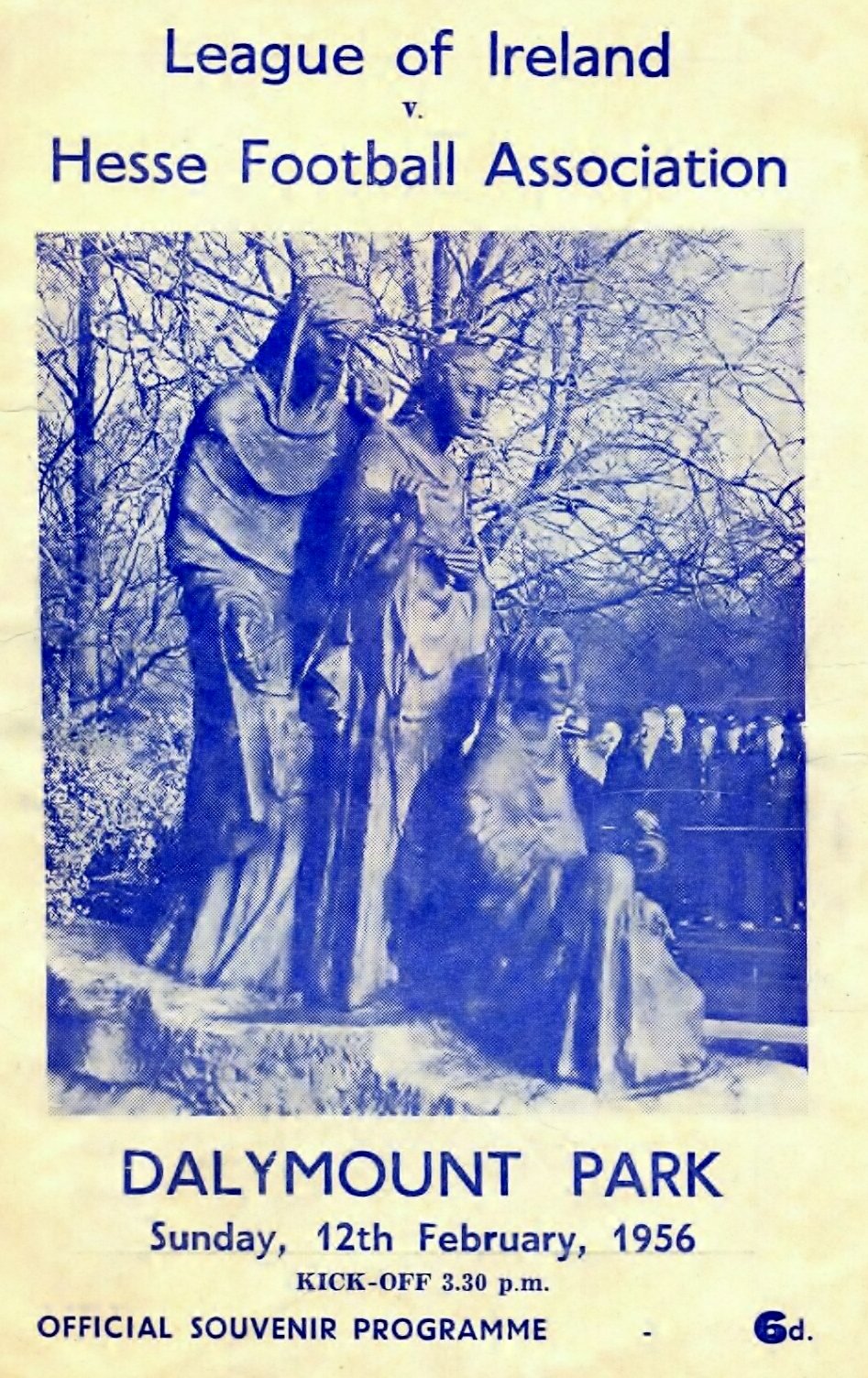
In February 1956 the League of Ireland XI played an inter-league match against a team from the Oberliga Hessen, a German selection from the state of Hesse, home to cities like Frankfurt and Offenbach. Adorning the cover of the match programme is a photograph of a three-figured statue with a vaguely religious air and surrounding the statue are rows of men in suits and still others in uniform, all solemn onlookers. This photo seems incongruous with its subject matter, that of a simple football match. But perhaps it tells us something more about Ireland, Germany and the two country’s relationship in the 1950s.

Saint Stephen’s Green – Saturday 28th January, 1956

It was just over ten years after the end of the Second World War and on a cold January morning a crowd had gathered at the Leeson Street corner of St. Stephen’s Green park. Among their number was the 35 year old Minister for External Affairs, Liam Cosgrave, a future Taoiseach and opposite him stood the German Minister to Ireland Dr. Hermann Katzenberger, a man who had once presided over the upper house of the German parliament.

Katzenberger looked every inch the stereotypical German gentleman, with his rounded spectacles framing a bushy Edwardian era moustache. The left sleeve of his suit jacket hung empty, tucked into a pocket, the result of an arm amputated when he was barely out of boyhood and serving in the trenches of the First World War. As a conservative Catholic he was a member of the Zentrum (Centre) party of the late 1920s and early 1930s but had fallen foul of Franz von Papen who sought to move the party further to the right and ultimately assisted in bringing Adolf Hitler to power in 1933. When the Nazis came to power they viewed Katzenberger as “politically unreliable” and saw to it that he was removed from any position of influence during their murderous reign.

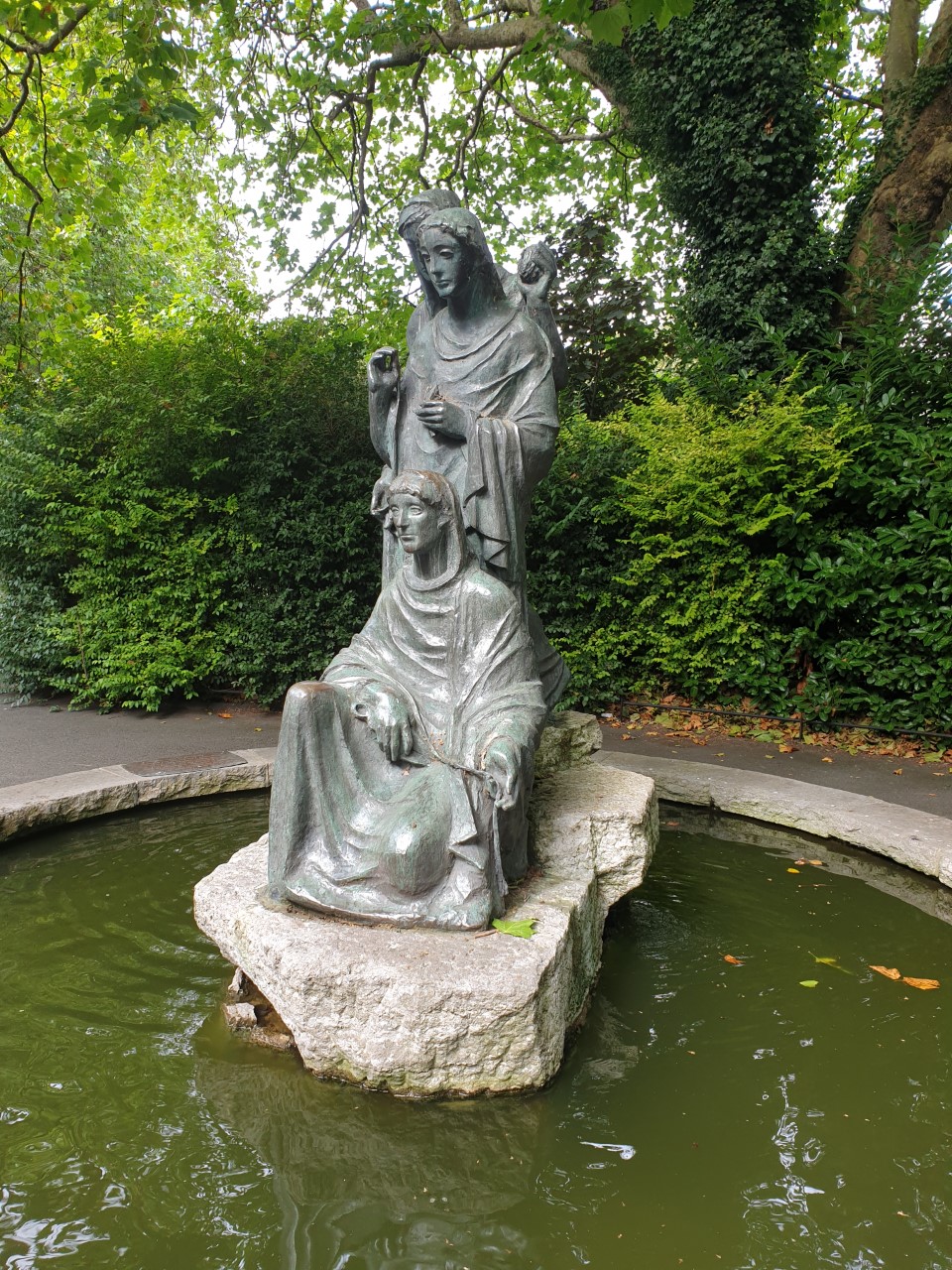
But Katzenberger prevailed, after the War he was involved in setting up the Christian Democratic Union of Germany (CDU) which became the most successful political party in the country. As a man with a passion for writing and journalism he was also involved in founding the Neue Zeit, the newspaper of the CDU, but that was years earlier – Here he was on a winter’s morning in Ireland, just months away from his final professional posting, with his retirement on the horizon. He stood before a statue of three female figures, the Three Fates of Norse mythology; Urd (past), Verdandi (present) and Skuld (future), they who control the destinies of Gods and men.

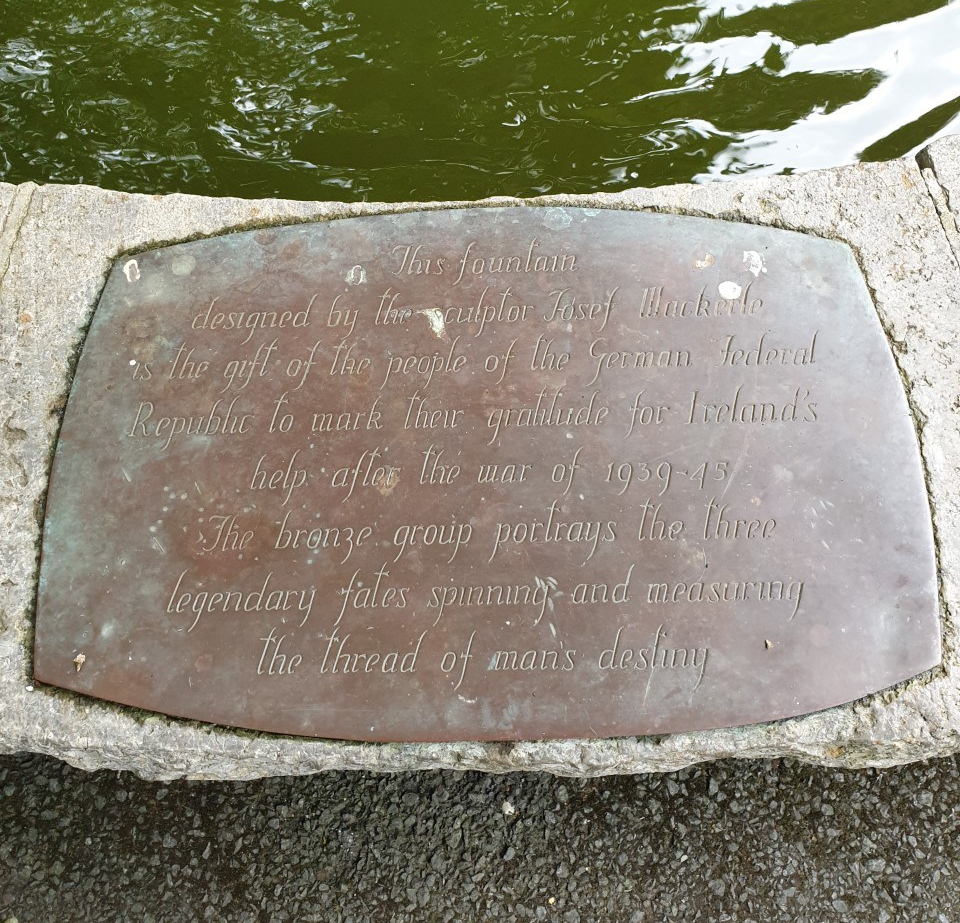
This theme is laid bare in the bronze plaque that the men must unveil in front of the waiting dignitaries and press corps, written in English, Irish and German it states “This fountain, designed by the sculptor Josef Wackerle, is the gift of the people of the German Federal Republic to mark their gratitude for Ireland’s help after the war of 1939-45. The bronze group portrays the three legendary fates spinning and measuring the thread of man’s destiny.”

Stephen's Green plaque three fates

Bronze commemorative plaque at the Three Fates monument

Absent from the gathering was Dr. Kathleen Lynn, who had passed away some four months earlier, the vice-chair of the Save the German children campaign which had helped give safe and secure homes to almost 500 German children in the years immediately after the war. Lynn had spent some of her early education in Germany in the late 19th century, like Katzenberger, and like Cosgrave’s father – W.T. she had seen violence first hand, had seen what a bullet or grenade could do to a body. During the 1916 Rising she had been Chief Medical Officer for the Irish Citizens Army, stationed at City Hall. As she moved away from politics she had devoted her life to helping children, through her work in founding St. Ultan’s children’s hospital and later through her wholehearted support for offering respite for children in post-war Germany.

Statue2

The Three Fates statue in St. Stephen’s Green (photo Gerard Farrell 2019)

It was these actions that were primarily in the mind of the sculptor when the words “Ireland’s help after the war” were cast in bronze. When Katzenberger arrived in Ireland in 1951 to present his credentials to Sean T. O’Kelly as German minister, the generosity of Irish families in offering to host German children, (some of them orphans, most of them merely suffering the poverty of a vanquished, rubble-strewn nation), was foremost in his comments. For O’Kelly’s part he referenced with pleasure the role that German scholars had played in studying and documenting the Irish language and folklore, and cited this as a particular tie connecting the two nations. The Irish President would later be awarded the Order of Merit of the Federal Republic of Germany. When the award was created in 1951 its stated aim was to acknowledge achievements that served the rebuilding of the country in the fields of political, socio-economic and intellectual activity, and is intended to mean an award of all those whose work contributes to the peaceful rise of the Federal Republic of Germany.

So much for the political and diplomatic context, now on to football. While the February 1956 game was not organised to coincide with the unveiling of the “Three Fates” statue in Stephen’s Green an explicit connection between the fraternal relations enjoyed between the two nations was made by the use of the cover photograph on the match programme.

This can been seen as part of an ongoing football and political relationship between the two nations stretching back at least to the 1930s. I’ve written extensively elsewhere on this blog (here and here for starters) about Irish football connections with Germany during Nazi rule and the problems that this raises. The post- war relationship is one that I haven’t covered as much until now.

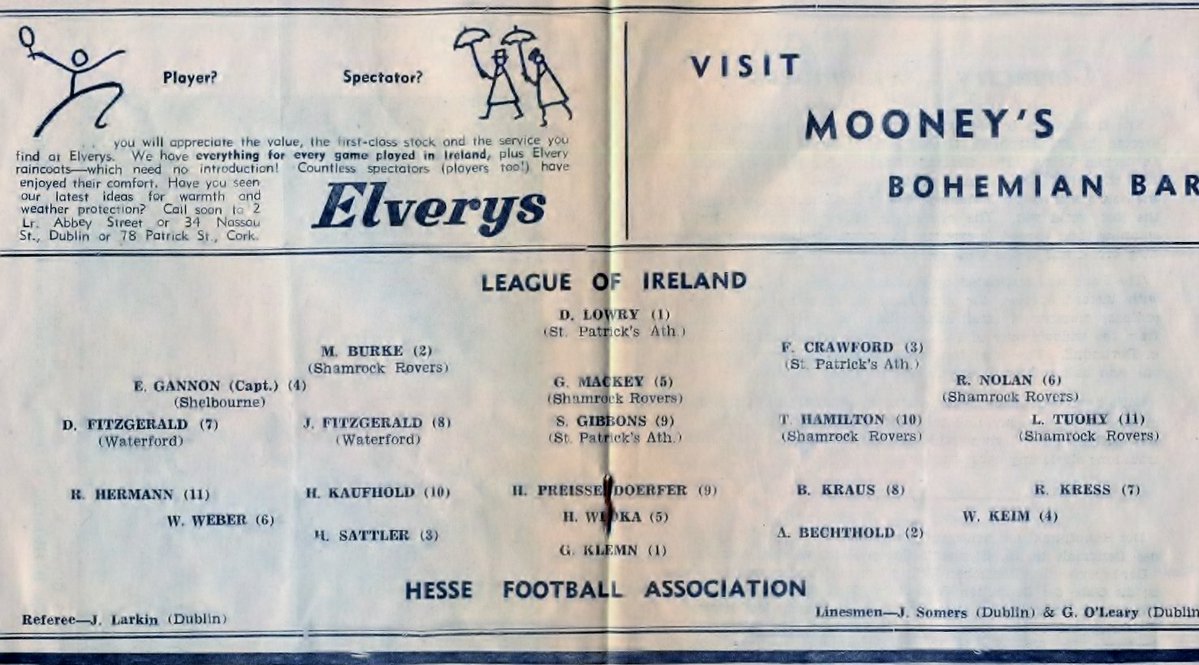
1956 cover

Cover of the 1956 programme showing the unveiling of the “Three Fates” statue

There is a popular footballing myth that the West German National team wore a green away jersey for many years out of a sense of gratitude to Ireland because the Irish were the first country to play them after the war. This of course is not true, the German national team did indeed play Ireland in October 1951 (Ireland won 3-2 thanks to a goal by Drumcondra striker Dessie Glynn) but the Germans had already played Switzerland, Austria and Turkey during the previous year and a half. The more prosaic origin for the green away kit was that green and white are the colours of the German FA’s (DFB) badge, with the colours symbolising the green and white of the football pitch.

That the myth persisted does demonstrate the sense of a sporting connection between the two nations however, Ireland were the last country to play Germany before the outbreak of the war, at a time when the abuses of the Nazi regime were almost impossible to ignore (though ignore it the FAI did), and between 1951 and 1960 Ireland played West Germany five times in international friendlies, more than any other nation over that period.

From a League of Ireland point of view, more than six months before the international sides would meet in that October 1951 match a League of Ireland XI had faced off against the first visiting Hessenliga selection in a game that took place in Dalymount Park on St. Patrick’s Day of that year. The Hesse selection was only picked from two German clubs on that occasion, Kickers Offenbach and FSV Frankfurt, however this selection was sufficient to run riot over the hapless League of Ireland players, trouncing the Irish 7-0 in front of 24,000 spectators in Dalymount.

A further game against the Hessenliga was played in 1954, this time a well-taken, chipped finish from Drums’ Rosie Henderson gave the League of Ireland a measure of revenge for their humiliation three years earlier. There followed a double-header of away matches (in Frankfurt and Kassel) in 1955 with the Hessenliga winning both.

1954 lineups

Starting teams fromt the 1954 game

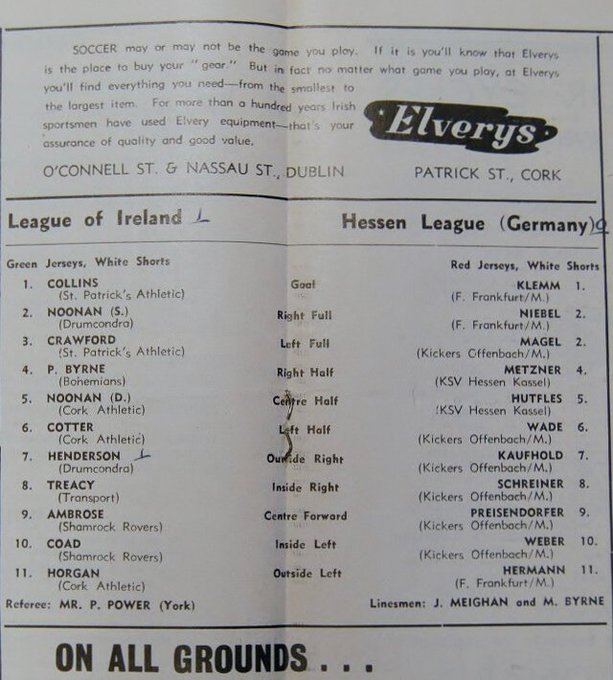
There was a return to success for the League of Ireland XI in 1956. A strong Irish selection ran out confortable 4-1 winners after the Hessenliga had taken an early lead. This was a strong selection from the Hessenliga with at least two full German internationals; Gerhard Kaufhold, who made his debut against England two years earlier and Richard Herrmann who had been part of West Germany’s World Cup winning squad in 1954, in the starting XI.

Apart from internationals there was good quality throughout the side, centre half Adolf Bechtold was a club legend at Eintracht Frankfurt where he was a league winner and club captain who also featured in the European Cup. At centre forward was Helmut Preisendörfer, a prolific striker for Kickers Offenbach he had been called up by West German coach Sepp Herberger to the national team but never won a full cap.

1956 team

Starting line-ups from the 1956 fixture

The Hessen League actually took the lead through a Kraus goal in the first half. He was unlucky not to double their advantage as his powerful header hit the bar a few minutes later, however, before half-time the League of Ireland took the lead through Waterford’s Jack Fitzgerald who scored two in quick succession. Early in the second half Shamrock Rovers’ Liam Touhy made it 3-1 before Fitzgerald secured his hat-trick 15 minutes from time. Despite the comprehensive nature of the victory in front of the bumper crowd of 23,000 there was some controversy.

Many reports in the following days were critical of the performance of Ignatius Larkin the referee in the game, criticising an undue leniency towards the League of Ireland side, particularly an apparently obvious foul by Shay Gibbons in the build up to Fitzgerald’s second goal. Despite the suggestion of hometown bias it seems clear from the match reports that the League of Ireland were the deserved victors on this occasion. This was probably one of the strongest sides available at the time with Liam Tuohy, Eddie Gannon, Tommy Hamilton, Shay Gibbons, Gerry Mackey, Dinny Lowry and Ronnie Nolan all being present or future Irish internationals.

There would be one further game against a Hesse selection in 1960, this yielded yet another victory for a League of Ireland inspired by the brilliance of Alfie Hale securing a 5-2 scoreline but by the early 1960s changes were afoot in German football which led to a major restructuring of the league, by the start of the 1963-64 season a truly national top division, the Bundesliga was formed, eventually the regional leagues would give way to a national competition across the highest divisions in German football.

Why particularly the Hesse league was always represented poses an interesting question. Perhaps this was because of the German FA are based in the Hessen city of Frankfurt? Early reports ahead of the first game in 1951 suggest that the arranging of that match was quite a haphazard affair based on informal discussions after the arranging of a series of amateur boxing contests between German and Irish fighters. It seems that the idea might even have been something pushed by a couple of intrepid German sports journalists. Initially it seemed that a game set for St. Patrick’s Day would be unlikely. Even as late as February Kurt Schaffner of the DFB suggested such a game wasn’t expected to take place as it was in the middle of the footballing season, however, just a month later the first Hessen League XI made their appearance at Dalymount Park.

This snapshot of time gives an interesting insight into Hiberno-German relations, like the statues of the Three Fates they showed the past, present and future of a German nation and their football culture. From the past, the deeply dubious sporting relationship cultivated between the FAI and the DFB during Nazi rule, to a post-war present where a vanquished Germany tried to rebuild literally and figuratively and sought to rekindle associations with Ireland. This was done in a sporting sense through the numerous friendly games between the Leagues and the national teams, but also away from sport through the fostering of German children by Irish families, redevelopment of trade connections, and through cultural and artistics ties, whether through gifts like public art or through German support for the study and research of the Irish language and culture. These connections are at least tacitly acknowledge by the match programme from 1956.

It might seem strange for Ireland to have been in a relatively more influential position than Germany but that is to underestimate the scale of post war destruction. Of course as we know now the scale and pace of German rebuilding was rapid, both in economic terms, with the Wirtschaftswunder economic miracle as it became known, and in footballing terms with the triumph in the 1954 World Cup, but in the immediate post-war years these successes were far from obvious or preordained. The third fate, that of the future, was perhaps echoed in the “Miracle of Bern” victory in 1954 and in the creation of the Bundesliga, or even with West Germany’s role in the Treaty of Rome and laying the foundations for the modern European Union.

With special thanks to Kevin Haney for providing the images of the match programmes shown above and sparking my interest in researching these games. You can follow Kevin on Twitter at @29Palmateer – he regularly shares excellent football history content.

The Dubliner who took the biscuit (Podcast)

As part of a regular series of articles that I was writing for the SSE Airtricity League website a number of my stories have been turned into podcasts, as read by Con Murphy. One of the most recent is this piece on the playing career of Luke Kelly Senior, father to the great ballad singer and activist Luke Kelly.

This podcast covers not only his playing career for Jacobs FC in the early years of the League of Ireland but also some family background and some incidents of his early life like why he got arrested for swimming across the Liffey or how he ended up in hospital with a bullet wound aged just 9.

Links below for both Soundcloud and Spotify


Indo hospital picLuke Kelly Jacobs

Statue

From top to bottom: Luke Kelly in hospital aged 9, Luke Kelly as a footballer in 1927, the statue of “Dubliner” Luke Kelly