1847 – the height of the Great Famine and in Dublin the Ordnance Survey were engaged in the first major survey of Dublin since John Roque produced his famous map in 1756. On the plan one can clearly see the North Circular Road intersecting Phibsborough Road as it headed towards St. Peter’s Church. On the right a short row of five houses bearing the name Daly Mount. But who precisely was the eponymous Daly of the mount? This brings us to Peter Daly, a prosperous businessman involved in shipping and also Chairman of the Orange Lodges of Dublin. He owned a tavern in Werburgh Street that bore his name and was described as a ‘Temple of Orangeism’. Indeed in 1823 a group of Orangemen had met in his tavern before staging a riot in a nearby theatre intended to intimidate Richard Wellesley, the Lord Lieutenant including chants of “No Popery!”, due to his support for Catholic emancipation.
OS Map of the area in the 1840s
A 1834 report in the Dublin Evening Packet recounts the funeral of Peter Daly, when his body was borne from his home at Dalymount through the city down Sackville Street as far as Werburgh Street Church to his family crypt, with many businesses closing along the route for the funeral procession. His eldest son Samuel Allen Daly, also living in Daly Mount became a church warden in Grangegorman the year after and in 1836 became a barrister. By 1844 he had been elected to the Poor Law Union board of guardians for the Glasnevin area. It it reasonable to surmise that it was this family who first developed the houses along the north circular road that appear in the survey map of 1847.
Around this time the area now occupied by Dalymount Park was depicted as being grassland or farmland while the area now occupied by the tram sheds between the stadium and shopping centre looks like it may have been a garden or orchard. Further research shows that the lands occupied under long term leases by the Daly family and which included areas now occupied by the shopping centre, were ultimately the property of the Monck family and this likely included Dalymount. The Monck family were members of the Anglo-Irish aristocracy and their name is still visible in the area in street names like Monck Place just off the Phibsborough Road.
The Monck family came to own their Phibsborough estates through marriage, George Monck, was created 1st Duke of Albemarle in 1660 by Charles II arising from his services to the monarchy in bringing about the Restoration of the English monarchy. The Irish connection of the Monck family dates from 1627 when Charles Monck was appointed Joint Surveyor General of Customs in Ireland. He purchased an estate in county Westmeath and also represented Coleraine in the English parliament. Their son, Henry Monck, married Sarah, the daughter and heiress of Sir Thomas Stanley of Grangegorman, whose sizeable estates (including Dalymount and the surrounding streets) became vested in the second son of the marriage, Charles Monck. Overall, at the peak of their influence the Monck estate owned over 14,000 acres across five counties.
Samuel Allen Daly began lease arrangements with Henry Monck on these lands starting in 1835, however by the 1850s it seems that Samuel’s financial situation had worsened significantly and by 1855 his various leases around the Dalymount site and surrounding area were up for sale.
But let us talk briefly of Bohemians…
The Bohemian Football Club, founded in the North Circular Road gate-lodge of the Phoenix Park in 1890 had endured a peripatetic existence in their first decade, playing in the likes of the Phoenix Park, then in the Jones’s Road sports grounds, now site of Croke Park from 1893-96, and then in an area known as Whitehall, close to Glasnevin cemetery and the Finglas Road as we know it today. It was this wandering existance that some have suggested gave Bohemians their nickname of the “Gypsies”.
That was all to change however in 1901, when according to his own account, the club’s Honorary Treasurer William Sanderson, when visiting a friend in Connaught Street, looked over a back wall at what was known at the time as “Pisser Dignam’s field”, and got the idea that it might be a suitable home for the Bohemian Football Club. Though who Pisser Dignam was and how he got such a moniker remains unclear!
As for Sanderson, he was a tailor born in Belfast but a long-time resident in Dublin. He had been involved with the early YMCA and Tritonville football teams before getting involved with Bohemians in the 1890s eventually becaming Treasurer in 1900. Sanderson was clearly a man with a head for finances and could spot the opportunity that a well placed sporting ground could offer. He recalled that a cup tie against Linfield in 1900 had generated a Dublin record of £39 in gate money at the old Whitehall ground. Imagine what a better situated ground, adjacent to a busy tram line could generate!
The land itself was used for small scale allotments growing vegetables and fruit trees, horse grazing and also as something of a rubbish tip. The early Dalymount Park groundsman, Dinny Quinn would keep shotguns in the ground which he used to get rid of hares and rabbits that might be found digging up the pitch. On the plus side, it was a central location, only a twenty minute walk from the centre of the city, situated in a rapidly developing suburb and adjacent to a tram line which added to ease of access for both players and spectators. But to take a lease on the ground the club would have to contact the property owners.
This brings us from the Monck estates to the Taylor family. In one version of the story, by the late football historian Tony Reid, it was Sanderson and the Bohemian FC committee negotiating with the Reverend Henry Taylor who was acting on behalf of the Monck estate over the leasehold of what would become Dalymount Park. However, some subsequent research would suggest that Taylor was acting not on behalf of the Monck estate but on behalf of his own familial interests.
Henry Taylor was the son of Thomas and Sophia Taylor and was also the chaplain to the the Female Orphan House, more commonly known as Kirwan House which is one of Ireland’s oldest charities, founded in the 1790 at 42 Prussia Street to look after orphaned girls and to train them to be domestic servants and in the manufacture of clothing, and built on lands of the Monck estate.
The girls of the home received the following training and treatment at the “Orphan House, near Dublin, for the support of destitute female children, it is proposed that they shall be received from the age of five to ten years; that they shall be lodged, clothed and taught reading, writing, and common accounts; carefully instructed in the Christian Religion; and habituated to cleanliness and industry, in proportion to their age and strength; to spin, knit and when able, to make their own clothes. They are to take in plain work as the Charity advances; the profits arising from which are to be applied towards the support of the House”
It is named Kirwan House after Dean Kirwan who used to preach on behalf of the charity and raise funds for it annually in St. Peter’s Church in Aungier Street.
A description of the average day for one of the orphaned children in the 19th Century is detailed below on the History Eye website – “The orphans rose at 6 in the morning and retired to bed at 10pm. Their day was divided into three segments. Eight hours for work and instruction, eight hours for play and worship, eight hours for sleep. There was meat provided three times a week and dinner was served at 2pm. Each orphan’s upkeep was set at 3 pence a week or 10 shillings a year. Porter was also provided in the children’s diet for health reasons.”
Returning to Rev. Henry Taylor and the connection with Bohemian FC. Taylor would combine his role as Chaplain at Kirwan House with a position on as a Vice President of Bohemians (there were several club Vice Presidents, numbering between eight and fourteen at various stages) between 1901 and 1920. One suggestion proposed was that Taylor may also have represented the Monck estate in matters related to the lease of Dalymount Park and as such would have been their placeman on the board to make sure that they were happy with the use and development of Dalymount as a sporting venue. However, it seems that Henry’s father, Thomas had already purchased Dalymount Park long before William Sanderson had the bright idea to use it as a football ground.
As far back as September 1869 The Freeman’s Journal, in an article discussing the revision of boundaries in Dublin mentioned “Thomas Taylor, of Prussia Street, described as a 50l [pound] freeholder out of houses in Dalymount and Fassaugh Lane”. We know that Thomas Taylor was part of the same Grangegorman religious congregation as Viscount Monck and that in the early 1870s both men served it as Vestrymen. Taylor also lived on Prussia Street for much of his life, before eventually moving the short distance to Cumberland Place on the North Circular Road, right next to Kirwan House.
We can see how, given the congrational aspect and the close physical proximity that connections with the likes of the Monck family, the Daly family and others could have developed. We know that Thomas Taylor (who was born around 1805) was well established in the area, by 1862 he is mentioned in The Freeman’s Journal, along with his Prussia Street neighbour John Jameson of whiskey fame, as two property owners that Dublin Corporation were intending to buy lands from in order to develop the Cattle Market site.
In later life, when appearing on offical civic documents such on his daughter’s marriage certificate or even on his death certificate, his profession is listed simply as “Gentleman” showing that he had sources of income primarily from his various property holdings, though as far back as his son Henry’s birth in 1851 he is referred to as a “Retired Government officer”. It is likely that Thomas purchased the land when it was put up for sale by Samuel Allen Daly in the 1850s when he was experiencing financial difficulties. Thomas would pass away at the age of 84 in 1889, while his wife Sophia would follow him in 1895. Her son, Henry was by her bedside when she passed away.
It would them seem that Henry, rather than acting on behalf of the Monck estate was acting in his own family’s interest when an annual rent of £48 was agreed with Bohemians. William Sanderson would pay the first three months out of his own pocket. Whether a role as a club vice-president was offered to Taylor as part of this negotiation, or requested by him is unclear, however is was a position he served with Bohemians for almost twenty years, leaving in 1920 as he approached his seventieth birthday.
Throughout his busy life Henry Taylor had held many roles, he had been a student in Trinity College, though his time there would have been before the foundation of their Association Football Club in 1883, he was Chaplain not only in the Kirwan House orphanage but also at the Royal Hospital in Donnybrook (The Royal Hospital of the Incurables), was private chaplain to the Lord Lieutenant and from 1908 until 1932, was honorary Clerical Vicar to Christ Church Cathedral. In later life he went in retirement to live with his daughter Dr. Eleanor Taylor-Pengelly in Orpington, Kent where he passed away aged 85 in 1937.
Henry Taylor would have been around eighty, and more than a decade removed from his role as one of the vice-presidents of Bohemians when the renewal of the lease was up for discussion again in 1931. By this stage Bohemians were making ambitious plans to further improve Dalymount and make it the best Association Football ground in the country, bringing in the famous stadium architect Archibald Leitch to develop the main stand and the Tramway end terracing in 1931. Dalymount was by this stage the unquestioned home of Irish football and the venue for Cup finals and international matches.
Negotiating this lease on behalf of Bohemians were Charles Heron, Henry Mitchell and Patrick Hedigan, all local businessmen and supporters of the club. Heron ran a butcher’s shop on the North Circular Road with family members running similar shops on Dorset Street, Mitchell ran a printing business on Capel Street (his family still operate on the street, from Mitchell’s Auto Shop) and counted Oscar Traynor as a former employee of his. Traynor had surreptitiously printed nationalist propaganda posters and newspapers during his time there. Finally, Patrick Hedigan, a Limerick man, was the owner of Hedigan’s – The Brian Boru public house since 1904, the pub is still in the ownership of the Hedigan family to this day and they continue to be a sponsor of the club.
Euphan Maxwell – source Wikipedia
Representing the Taylor estate wasn’t Henry however, the family trust’s solicitor was George Herbert Parkes, a maternal grandson of John West Elvery of Elvery Sports fame. George practiced from offices on Fleet Street in the city centre – incidentally a solicitor named Parkes, former player Warren Parkes, represented Bohemians against a winding up order in 2011, any relation? There were two other trustees were named, Dr. Euphan Maxwell and Winifred Allen. Maxwell was was an Irish ophthalmologist and the first woman ophthalmic surgeon in Ireland at the Royal Victoria Eye and Ear Hospital, Dublin, however, she also lived for a time while a medical student with Henry Taylor and his sister Eleanor at the Kirwan House orphanage. Winifred Allen also lived on the North Circular Road and seems to have been a friend of Edith Parkes, sister of George Herbert Parkes. It seems that it was they who negotiated the new lease on Dalymount where Bohemians remain to this day.
It started in somewhat unusual fashion, a Whatsapp chat with some fellow historians, a screenshot from the Irish Newspaper archive with the unusual headline “Replay for Sex Memorial Gold Medals”, which of course provoked a bit of schoolboy humour but also planted a seed of curiosity. From the short clipping I could see that it was a replayed football match between Bohemians and a Leinster football XI, the Bohemian teamsheet was shown and I could tell that this was a game from the early 1920s with several high profile players featuring, including future internationals like Joe Grace, Jack McCarthy, John Thomas and Johnny Murray as well as South African centre-half Billy Otto.
But who or what was “Sex” referring to? Memorial games or charity matches for sets of gold medals were not uncommon in the era but I could find nobody with the surname Sex as having been associated with Bohemian FC in their first thirty or so years, and as the opposition were a selection of other Leinster based players then there was no specific opponent club who might have been arranging a memorial. A quick look at the 1911 Census suggested a possible answer, as it displayed 22 people with the surname “Sex” living in Dublin.
Having ascertained that there indeed may be a “Sex” living in Dublin, deserving of a memorial game, but unsure of any footballing connections I started searching the Irish newspaper archives for the early 1920s and quickly discovered a likely candidate for the “Sex Memorial Gold medal match”, namely Patrick Sex of Dominick Street in Dublin’s north inner city with the memorial match and replay taking place for him in May 1921.
Patrick Sex was born in Dublin in 1880 and by the time of his marriage to Mary Kenna – a dressmaker living in Mary’s Abbey off Capel Street – in September 1901, he was living in Coles Lane, a busy market street off Henry Street and working as a butcher. Coles Lane, which now leads into the Ilac Centre but once ran all the way to Parnell Street, was full of stalls and shops selling everything from clothing to meat, fish and vegetables and formed part of a warren of streets and lanes feeding off the busy shopping areas of Henry Street and Moore Street. The area was a booming spot for a butcher to find work, it is likely that Patrick was raised and apprenticed in the trade as “butcher” is listed as his father James’s trade on Patrick’s marriage certificate.
Patrick and Mary, welcomed a son, James in August 1902 and they moved around the same small footprint of this section of north inner city Dublin in the coming years, with addresses on Jervis Street, Great Britain Street (now Parnell Street) and Dominick Street. It is on Dominick Street where we found the Sex family living in the 1911 Census, by which point they have five children, with one-year-old Esther being the youngest and Patrick was still working in the same trade, being listed as a Butcher’s Porter.
Moving forward ten years to 1921, the year of Patrick’s violent and untimely death, and the family had a total of ten children and were still living at 72 Dominick Street. Patrick was still working in the butchery trade in McInnally’s butchers at 63 Parnell Street, close to the junction with Moore Lane, roughly where the Leonardo (formerly Jury’s) hotel is today and would have been close to Devlin’s Pub, owned by Liam Devlin and a popular meeting spot for the IRA during the War of Independence.
Parnell Street as it appears on the Goad Insurance maps from 1895
By this stage in his life, as well as his place of work and large family we know that Patrick was active in the trade union movement, being Chairman of the No. 3 branch of the Irish Transport and General Workers’ Union (ITGWU), this branch featured many from the butchers’ trade and was known as the Victuallers’ Union. Living and working where he did, no doubt Patrick would have clear memories of the Lock-out in 1913 and the infamous baton charge by the Dublin Metropolitan Police on Sackville Street in August of that year when two workers were mortally wounded.
Parnell Street as it appears today – the Point A hotel is built on the site of the former Devlin’s Pub, McInnally’s butcher shop would have been within the footprint of the current Leonardo Hotel and Moore Street Mall
On March 26th 1921, Patrick Sex was, as usual, working at McInnally’s butcher’s shop on Parnell Street, it was owned by Hugh McInnally, originally from Scotland he had set up a number of butcher’s shops in Dublin and by the 1920s was entering his 70s and living in some comfort near Howth. The city and country more broadly were far less comfortable – more than two years into the violent period of the War of Independence, Dublin had seen the city placed under curfew in February 1920, there had been wide scale arrests, November 1920 had seen Bloody Sunday when fourteen people were killed in Croke Park by Crown Forces in reprisal for the wave of assassinations earlier that morning by the “Squad” and the Active Service Unit of the IRA. Croke Park was just a few minutes walk from Patrick’s home and place of work, he likely knew many who had attended the match, or perhaps some of those arrested in the wide scale arrests across the city by Crown Forces that followed. As mentioned, McInnally’s butcher’s was just doors away from an IRA safe house and meeting place in Devlin’s Pub, while Vaughan’s Hotel was just around the corner on Parnell Square.
This was the backdrop against which Patrick Sex and his family lived and worked in Dublin. On that fateful day of the 26th just before 3pm a lorry, carrying Crown Forces was attacked by members of “B” company of the 1st Dublin Brigade of the IRA as they journeyed up Parnell Street. The brigade report, taken from the Richard Mulcahy papers reads as follows;
“8 men… attacked a lorry containing 16 enemy at Parnell Street and Moore Street. 3 grenades exploded in lorry followed by revolver fire. Enemy casualties believed to be heavy. The lorry drove into O’Connell Street and was again attacked by a further squad of this coy. [company] numbering 18 men. They attacked another lorry at Findlater Place but were counter-attacked by lorry coming from the direction of Nelson’s Pillar. 3 of our grenades failed to explode so we retired. One of our men was slightly wounded”.
The Freeman’s Journal, reporting on the attacks a couple of days later goes into more detail on the impact of the grenade and gun attacks as they affected the public caught in the melee;
“the first bomb was thrown and exploded with a great crash in the channel opposite MacInally’s (sic) victualling establishment, 63 Parnell Street. The explosion was followed by a wild stampede of pedestrians.”
They continued: “The glass and woodwork of the houses from 63 to 66 Parnell Street were damaged by the flying fragments of the bombs. Mr. Patrick Sex, an assistant in the victualling establishment of Mr. MacInally was wounded in the hip and leg… and others in the shop had narrow escapes from the contents of the bomb, which in the words of Mr. O’Doherty ‘came through the shop like a shower of hail’.”
John O’Doherty the butcher in McInnally’s, mentioned above, would give a statement to a subsequent court of inquiry at Jervis Street Hospital, stating that he heard “two explosions and three or four shots”, before adding that “several fragments of the bombs came into the shop, and Patrick Sex who was attending a customer at the time said ‘I am struck’ , I saw that he had a wound in his left thigh and hurried him off to hospital.”
Another of those to give testimony at the court of inquiry (inquests into deaths had been suspended during the War of Independence) was Charles Smith of the RAF, he was in one of the Crossley Tender lorries, with two other RAF men in the driver’s cab as it made its way up Parnell Street, when he recalled that a man armed with a revolver stepped into the street and shouted “Hands up” and “Stop” at which point “3 or 4 other civilians fired at us, the driver was immediately hit and collapsed in his seat. Several bombs were thrown at us, as far as I know three or four.”
The driver who was hit was Alfred Walter Browning, a nineteen year old RAF recruit from Islington. He was taken to the King George V Hospital (later St Bricin’s Military Hospital) at Arbour Hill where he died later that evening. The other passenger was David Hayden from the Shankill in Belfast, he was badly injured but survived. All three men were based at the airfield in Baldonnell which was in use then as a RAF base. There was another fatality related to the attack on the lorry at Findlater Place, just off O’Connell Street, when 15 year old Anne Seville was struck by a ricocheting fragment of a bullet as she watched the fighting below from her bedroom window. Despite an operation in an attempt to save her life she passed away two days later.
But what of Patrick Sex? His wound was deemed to be not particularly serious, he was brought to Jervis Street hospital and initially it seemed that everything would be alright. Patrick was seen by Dr. L.F. Wallace who also testified before the inquiry and he stated that there was a wound to Patrick’s left thigh, with no corresponding exit wound. Despite being admitted on the 26th March, Patrick was not thought in need of emergency surgery and was not operated on until April 4th when an “irregular piece of metal” about half an inch long was removed from his thigh. However, despite all seeming to have gone well Patrick contracted tetanus and his condition immediately worsened, he only survived until April 6th. His death notice read “cardiac failure following on tetanus caused by a wound from a fragment of a bomb”.
This left Mary, widowed with a family of ten children to support, and while it may not even have been known yet by Mary and Patrick, she was pregnant with their eleventh child, who would be born in November of that year and would be christened, Vincent Patrick by his mother.
Mary hired prominent solicitor John Scallan who had offices on Suffolk Street in the city centre to pursue a claim for compensation from the Corporation of Dublin and the Provisional Government in January, 1922. Scallan’s letters to the military inquiry requested information on the outcome of the inquiry and a list of any witnesses that they could call, the letter also incorrectly states that Patrick Sex was wounded by a bullet and not a bomb fragment. These claims were reported on in May, 1922 with it being stated in the Freeman’s Journal that a claim for £5,000 had been lodged by Mary Sex “in respect of the murder of her husband, Patrick Sex”. The article describes the compensation claims as those “alleged to have been committed by any of the several units of the British forces in Ireland”. While Patrick was an innocent bystander from the medical reports it would seem a bomb fragment from a grenade thrown by members of the Dublin Brigade, rather than a British bullet was the ultimate cause of his death. It was reported that by November 1922 over 10,000 claims for compensation had been made.
While Mary lodged that claim in January 1922, after the ceasing of hostilities and the signing of the Anglo-Irish treaty, she still had to provide for her large, and growing family. The tragic case of Patrick’s death had clearly struck a particular chord among the Dublin public, despite the amount of violence and death they had witnessed over the previous two years. Perhaps it was the fact that he left a widow and ten children, his role as a prominent trade union organiser, or perhaps it was also the fact that several newspapers, including Sport, The Freeman’s Journal and The Dublin Evening Telegraph had reported that Patrick had sustained his injuries while protecting others leant even greater emphasis to his harrowing story.
The mention that Patrick had protected others is hard to confirm but from piecing together accounts in various newspaper reports it seems that Patrick may have shielded a child who was in the shop from the blast, possibly the child of an Annie Flynn who was mentioned as also being injured by the grenade blast, (see header image) though this is not specifically mentioned by John O’Doherty, the one witness at the inquiry who had seen Patrick get hit by the bomb fragment.
Clipping of Patrick Sex’s funeral from the Freeman’s Journal
Patrick’s funeral took place on the 11th of April in St. Mary’s Pro-Cathedral, just a couple of minutes walk from his place of work. There was a huge crowd in attendance, estimated by the Evening Herald as numbering as high as two thousand with the funeral described as “one of the largest witnessed in Dublin for a considerable period”. As well as family mourners there was a strong representation of Patrick’s trade union colleagues, they presented a large floral wreath in the shape of a celtic cross. His funeral cortege passed through a Parnell Street which shut all its shops in a sign of mourning and was then met by more of the ITGWU branch members at Cross Guns bridge where they took the coffin from the hearse and carried it to Glasnevin cemetery for burial.
The grave of Patrick Sex in Glasnevin cemetery
The burial itself was somewhat unusual as the gravediggers at Glasnevin cemetery were on strike, which they would not break, even for a fellow union man, so Patrick’s grave was dug and closed by friends and family members. Gravediggers’ strikes were not uncommon at the time, they had taken place in 1916, 1919, and again in 1920. The one exception made by the gravediggers during their strike did take place a couple of days before Patrick’s burial, for the internment of Dublin’s Archbishop, William Walsh.
By contrast, the elaborate grave of Archbishop William Walsh
The outpouring of public support for the Sex family was evident not only in the strong turnout for Patrick’s funeral but also in the sporting world. A memorial committee had been established and a month after Patrick’s funeral there was to be an end-of season benefit match staged in Dalymount Park between Bohemians and a Best of Leinster XI, a set of high-quality gold medals were to be presented to the winning team while the proceeds from the game would go to help Mary Sex and her children.
The selection to face Bohemians in the charity match which included future Ireland internationals Alec Kirkland and Paddy Duncan – from the Evening Herald16th May 1921
The game was played on the 18th May, 1921 and a crowd of around 4,000 was in attendance to witness an entertaining 2-2 draw. With no extra-time and no penalty shoot-outs a replay to decide the winner of the gold medals was set, which also guaranteed a second opportunity to fundraise for the Sex family. After some back and forth around a replay date, the 26th May was chosen and Dalymount Park was once again the venue, this time Bohemians were the victors, triumphing 1-0 over the best of Leinster selection, thanks to a goal by Billy Otto. It was said that the game was played “before a good attendance” and this hopefully translated into funds for Patrick’s family.
It had been suggested in a Dublin Evening Telegraph report that Laurence O’Neill, the Lord Mayor of Dublin might ceremonially kick off the game, but this did not happen due to his having to travel to the USA where O’Neill was working with the “White Cross” who were providing aid in Ireland during the War of Independence. It was suggested in O’Neill’s absence that W.T. Cosgrave, then an Alderman on Dublin City Council, might take over that role but it is not clear from reports whether this happened.
The same report stated that “this is the first time the Dublin footballers and supporters have come forward to do something the alleviate the sorrow of at least one household in these unsettled days” while also encouraging those who did not attend football matches to “rid themselves of all petty prejudices and bring all their friends and associates for the once to Dalymount”. Which would appear to be a not so subtle appeal to supporters of the GAA codes to ignore “the Ban” and attend a soccer match due to the good cause that it was supporting.
One final question that arises, considering the level and scale of violence witnessed over the previous two years, why was Patrick Sex the first victim of the violence in the War of Independence to receive a benefit match? While Patrick Sex may have been a football fan, though it is not specifically mentioned in any reports, he doesn’t seem to have been mentioned in any role in connection with any club or with the Leinster Football Association (LFA). As previously discussed the size of Patrick’s family, his role in the Trade Union movement, and being well known in the local area having worked for many years for McInnally’s butchers all contributed to the prominence given to his funeral, but he was sadly far from unique. Many people with large families, who were well known within their communities lost their lives during the War of Independence, so why a football benefit for Patrick if we can’t find any specific connection of Bohemians, the LFA or any other football club?
I would suggest the answer lies in the timing of Patrick’s death in April 1921, with the benefit match and its replay being held the following month. For context, long-standing issues within the Belfast-based Irish Football Association and its relationship with the LFA and its member clubs were coming to a head against the backdrop of internal bureaucratic strife and the ongoing violence of the War of Independence. In February 1921 there are been consternation among the IFA officials at the displaying of an Irish tricolour at an amateur international against France in Paris, those involved were arrested and there were charges within Dublin football and local media of bias on the part of the IFA. The IFA had also made the decision to not play that season’s Junior Cup and move Intermediate Cup matches which had been scheduled for Dublin to Belfast. The final straw arrived in March 1921 when the venue for a replay of the drawn Cup game between Glenavon and Shelbourne came to be decided. The original match had taken place in Belfast so custom would suggest that the replay should take place in Dublin. However, the IFA ruled that the replay should also take place in Belfast.
On June 1st, less than a week after the Sex memorial match replay, at the annual meeting of the LFA in Molesworth Hall in Dublin, an overwhelming majority of committee members voted to break away from the IFA. The LFA had been polling its member clubs on the subject since April before passing the motion at the beginning of June and by September of that year the Football Association of Ireland had been established, and surprisingly quickly new League of Ireland cup and league competition had also been formed.
As Neal Garnham notes “by mid-May the LFA was effectively operating independently of the IFA”. Somewhat bizarrely the IFA held a Council meeting on June 7th, seemingly blissfully unaware that the LFA had voted to remove itself from IFA jurisdiction, among the items voted on and approved at the meeting was a motion by Bohemians to play a benefit match for Patrick Sex. It perhaps, shows the sporting and communications division between Belfast and Dublin, that the IFA were unaware that the LFA was no longer affiliated, or that two benefit matches for Patrick Sex had already been played. The organising of the game by Bohemians, the LFA and the role of the memorial committee which seems to have included prominent Republican politicians like Laurence O’Neill and W.T. Cosgrave, seems to suggest that the Patrick Sex memorial match was part of a larger, ongoing process of Dublin football moving away from Belfast control and taking charge of its own affairs, this coupled with the specific nature of Sex’s death and his background suggests why he, and not some other innocent victim was the first to receive such a benefit game.
With special thanks to Aaron Ó’Maonigh, Sam McGrath and Gerry Shannon for their help with elements of the research, and for Aaron for sending on the original “Sex memorial” clipping.
I can’t say that I’m in any real way qualified to talk about Billy Young, the man, the player, the manager, the Bohemian. His managerial spell had finished a few years before I started going to Dalymount, my knowledge of Billy the talented League of Ireland full back was limited to the stories told by my Dad, a brief, erstwhile teammate of his who always singled out Billy and centre-half Willie Browne as the two great players of a difficult Bohemian era.
However, I did get to spend a few hours in Billy’s company on different occasions to interview him for various projects, to hear his amazing recall or games, events, characters. Most importantly, as recently as March this year at our home game against Drogheda United I saw the love and esteem in which Billy was held by many of his former players. There was a half-time presentation at the game to honour Billy and the players of the League winning 1974-75 team, and in the Jackie Jameson Bar beforehand (of course it was Billy who brought Jackie to Dalymount) it was like a celebrity had walked in when Billy arrived with his son Paul.
So many former players, men who won so much in the game, who had been capped at international level, were straight out of their seats to shake his hand, to ask after his health, to share old memories and stories. Walking down in front of the Jodi stand at half-time was a slow process given the amount of well-wishers seeking to stop and chat. Roddy Collins, raced down the steps to embrace his former manager at the halfway line.
Billy was a man who encapsulated so much of Bohemian Football Club’s history, one of the best fullbacks in the League, he stayed loyal to an amateur club through the 1960s knowing there was little chance of silverware. A thoughtful and forward-thinking coach, he replaced the great Seán Thomas in 1973, by which stage Bohemians had abandoned the club’s famed amateur status and would remain at the helm for an unbelievable sixteen years.
During that time he assembled several exciting teams, built around his unerring eye for talent. The 70s witnessed Bohemians win a fist league title since the 1930s a feat achieved again in the 1977-78 season as well as Niall Shelly’s famous winner in the 1976 FAI Cup final. There were numerous other minor trophies as well as many famous European nights. Billy was in change when Bohemians made the last 16 of the European Cup despite having to play home games away from Dalymount, he was the man at the helm when Rangers were beaten in Dalymount in 1984.
The list of players he brought through cannot be done justice in the space available but suffice to say that through the 1970s and 80s it was not unusual for there to be senior Irish internationals in the Dalymount dressing room, or for players to make the step of transferring straight into the first teams of topflight clubs in Britain.
Billy told great stories of transfer dealings with Tommy Docherty, or calling Bob Paisley for advice on European opponents. He was selected as coach for numerous League of Ireland sides, travelling to Libya when under the rule of Muammar Gaddafi or bringing the first side to face the Basque national team in the famous San Mames since the death of Franco. He was a modern, progressive coach in a league with dwindling attendances, aging infrastructure and in time when transfer fees for top players were a pittance and European football often ended up diminishing club coffers.
One wonders, what a man of his talents could achieve in the game were he coming through today. By 1989 some in the club were losing patience with his tenure in charge, a decade of near misses, runner up finishes, a decade that promised much but delivered only occasionally. A group of members tried to force an EGM to have a change in manager but it never got that quite far. After almost 25 years as player of manager Billy’s time with Bohemians came to end. But thankfully, not his involvement in the club, he has still been a regular sight at games, has returned in previous seasons to speak to new players an instil the Bohemian values, and with the benefit of hindsight the scale of his achievements is all the more impressive.
Beyond all this Billy was a gentleman, great company, a wonderful storyteller with a fine eye for humour. I can only imagine how much he will be missed by his family and those close to him. With an association with the club that goes back to 1962, and a winning personality and footballing CV sure we can say that Billy Young is one of the greatest ever Bohemians.
This article originally featured as a tribute to Billy Young in the Bohemian FC match programme in April 2025, the display shown in the photo is the work of the NBB and was unveiled in July 2025
Charlie Harris spent the early 1910s collecting an array of titles on the Irish athletics scene, excelling over a variety of events; four miles, five miles, steeplechase, cross country. He beat the best, including John J. Daly an American-based, Irish runner who had won a silver at the 1904 Olympics. Harris even faced off against competitors of the non-human variety, when in 1912, he raced a trotting pony over 10 miles around Jones’s Road (later Croke Park). Harris had a 20-minute head-start over his equine foe, named Kathleen H. and narrowly lost out over the final 100 yards but setting an Irish (human) record for 10 miles in the process.
An advertisement for Charlie Harris’ race against a horse
Eight years later Harris was once again on that touchline where he had once raced a pony, this time trainer of the Dublin Gaelic football team when British Crown Forces opened fire into Croke Park causing murder and panic. No doubt, he feared the worst when he and the other Dublin players and officials were crowded into the dressing rooms in the aftermath of the outrage. Quite the sporting life, and we haven’t even mentioned the football!
Harris can be seen on the far right with the Dublin GAA team on Bloody Sunday
From around 1916 onwards Harris was trainer to Bohemian FC, a role which was part physio, part coach, part cheerleader. His role in various teams over the years puts one in mind of Mick Byrne and the impact he had under Jack Charlton and Mick McCarthy.
Charlie quickly developed a reputation as the best in the business and despite a background of having worked as a sales assistant and carpenter during his running career it was as a sports trainer and physio that he became increasingly sought out, with players from outside of Bohemians and across a variety of sports seeking his assistance.
At international level Charlie was asked by the IFA to accompany its amateur team to France for a match in Paris in 1921. This match caused some controversy when Irish tricolours were displayed by fans in the Parc de Princes which was not well-received by the IFA and added to existing tensions with the Leinster FA just months before an eventual split.
After the split in September 1921 and the formation of the FAI it was inevitable that Charlie Harris would be the go-to man for the new association’s international programme. This meant another trip to Paris for Charlie in 1924 for the Olympic games as a one-man coaching team. Charlie would remain on the touchlines for Ireland, for Bohemians and for the League of Ireland representative sides for more than twenty years to come, travelling Europe in his customary white coat and carrying his faithful leather satchel full of cures, ointments and health salts.
Harris can be seen on the left in his trademark white coat.
In 1940 Charlie was given a benefit match by Bohemians to acknowledge his 25 years service with the club, Belfast Celtic were the guests on that occasion in Dalymount. Some nine years later with Charlie now in his 60s and his health beginning to fail there was another game to honour one of the most popular figures in Irish football. In June of 1949 Manchester United were Bohemians guests in Dalymount as over 40,000 turned up to see United defeat a Bohemian Select XI 3-1 and to pay tribute to Charlie.
The cover of the testimonial game against Manchester United for Charlie Harris
Charlie would pass away just three months later in September 1949, the Evening Herald recalling him as “witty and genial and of a very likeable personality and he will be keenly missed by his legion of friends”. His funeral was attended his wife of 41 years, Kathleen, his children and wider family and by senior representatives of the Army, Gardaí the wider football world but also from the fields of athletics, rugby and boxing showing the esteem in which he was held and the impact he had on the Irish sporting landscape.
A version was first published in the Ireland v Hungary match programme in June 2024. Images of Charlie’s kitbag, watch, pistol and whistle are shared by his family.
The mystery of Peter Hoban– early days & influences
Where to begin with the life of Peter Hoban? On the football pitches of Dublin? Under cover of darkness in a Liverpool warehouse before it burst into flames? In the streets and Union halls of Chicago facing off against rivals as disperate as the Mafia, Jimmy Hoffa and even the United States Government? His is a life of many chapters that defies easy narration, every aspect worthy of its own focus but for the sake of clarity lets begin chronologically with March 18th 1895 in the town Westport, Co. Mayo. There in his mother’s family home Peter Joseph Hoban was born, the first child to Henry and Catherine. While both Henry and Catherine (Kate) were from Mayo, Henry was already living and working in Dublin as a bricklayer and was a member of the Ancient Guild of Incorporated Brick and Stone Layers, one of the oldest craft unions in the city. The Union would be led by Richard O’Carroll, a City Councillor and Irish Volunteer who was killed in the 1916 Rising.
By the time of the 1901 census the family were living on Villa Bank in Phibsborough, directly opposite Mountjoy Prison and close to the Royal Canal, Peter had been joined by sisters Mary and Kathleen and a brother Michael, however on census night Peter was away from his parents and staying with his maternal grandparents, Peter and Catherine Mulkerin back in Westport. The family remained living in the Phibsborough area and by the next census in 1911 had moved the short distance to Enniskerry Road. Peter, now sixteen years of age was the eldest of eight children and by this stage would have been attending the well-known O’Connell’s School just off the North Circular Road where his uncle, Rev. Michael Angelus Hoban was on the teaching staff. This uncle, years later was recalled to have been sympathetic to the Irish Revolutionary movement and was alleged to have assisted Éamonn Ceannt with storing guns for the rebels in advance of the Rising by the O’Connell’s school historian, Brother W.P. Allen. Perhaps these views from his uncle and teacher had an impact on the young Peter?
Many of the leading figures of the Revolutionary period had been students in O’Connell’s around this period, including future Taoiseach Seán Lemass, rebel and author Ernie O’Malley, and executed 1916 leader Seán Heuston. Whether Hoban encountered these men, all relatively close in age, during his schooling we don’t know for certain, however just weeks after his 21st birthday he would be involved in the taking of the Four Courts as part of the 1916 Rising and apparently fought in the North King Street area of the city during Easter Week.
The 1916 Rising and footballing progress
This being the case he is somewhat lucky as North King Street was the focus of heavy fighting and a controversial and disputed order to “take no prisoners” which led to the murder of fifteen men and boys who were either shot or bayonetted by members of the South Staffordshire Regiment. The precise details of Hoban’s actions in both 1916 and the War of Independence are scarce, Hoban would spend limited time in Ireland after 1916 and apparently never applied for either a military pension, any service medals nor left a Bureau of Military History witness statement.
Whether Peter was arrested after 1916, whether he was interned in Frongoch or elsewhere, or managed to avoid arrest is not clear, however we do know that he begins to appear on the footballing teamsheets of Richmond Asylum from 1917 onwards. Richmond Asylum were the works team of the psychiatric hospital located at Grangegorman in modern Dublin 7, not far from where Peter lived. The hospital had a long and enduring connection with football and over the years featured teams under the various names of Richmond Asylum, Grangegorman, and later St. Brendan’s. We know that Peter’s father Henry had been a staff member there as a mason and bricklayer from roughly 1912 until 1937 which would suggest a likely connection to the team of the asylum for young Peter. We know also that prior to this, in his late teens a player, most likely Peter Hoban, was already active playing for Midland Athletic among other local sides. Midland Athletic were a works team of the Midland Great Western Railway centred around the Broadstone, founded by among others. another O’Connell’s student, Trade Unionist and future Bohemian Joe Wickham.
Peter spent at least two seasons playing for Richmond Asylum in the Leinster Senior League (Division II) with highpoints being an appearance in the 1917-1918 Leinster Junior Cup final, which was lost to a strong Olympia side in front of a crowd of more than 2,000, and an appearance for the Irish junior international side against Scotland in April of 1918. The Irish lost 1-0 in front of a crowd of 7,000 in Firhill Park in Glasgow though there was positivity that five of the starting eleven were selected from Dublin clubs as there was a percieved bias in favour of Belfast based players by the IFA selection committees.
Such was his success that year that Hoban moved the short distance to Dalymount Park to join Bohemians for the 1918-19 season. With the First World War only ending with the Armistice of November 1918, football in Ireland was still regionalised and the Irish League had not resumed. The Leinster Senior League, Division I was the highest level of football being played in Dublin at the time and Bohemians had been Leinster Senior League champions for the 1917-18 season.
Peter was usually deployed as a left-half, that is a left sided mostly defensive midfielder in the old 2-3-5 formation employed by the vast majority of teams until the late 1920s. Hoban was a regular in the half-back link for Bohemians, making twenty appearances and scoring once during the 1918-19 season. It wasn’t to be the most successful year for Bohs as the club’s great rivals Shelbourne won both the Leinster Senior League and Cup and also knocked Bohemians out in the first round of the Irish Cup. During his time at Bohemians he would have played with a number of high-profile players such as current and future internationals like Bert Kerr, Dinny Hannon and John Thomas. He continued with Bohemians into the following season, making six appearances before a departure for England.
The Irish Independent reported that;
Mr. Peter Hoban, the Bohemian and Irish Junior international half-back, has signed an amateur form for Barrow F.C., a team in the Lancashire League. This hard-working and consistent player has not reached the zenith of his football prowess, and he is certain to make good in his new quarters. He will carry with him the good wishes of Dublin footballers.
Irish Independent – 15th July 1919
A gas man and a Rover
But why a sudden move to Lancashire? Later that year the Lancashire Daily Post told readers that Hoban “came to Barrow to complete his training in engineering just as the present season opened, and at once expressed his willingness to play for the club”. It also listed Hoban as being 5’7″ tall and weighing 11 stone, although like many footballers moving between countries at the time (and later) there seems to be confusion about his age, the newspaper listing him as 21 years old when in fact he was 24 by that time. Whether that is a simple mistake by the journalist or a piece of misinformation provided by Hoban isn’t clear but it isn’t the last time that a confusion around age would have an impact on Hoban’s career.
Hoban while on the books of Barrow – from the Lancashire Daily Post 20th December 1919
Peter’s time at Barrow, playing in the Lancashire Combination would be relatively short, he was back in Dublin visiting family at Christmas 1919 and lined out again for Bohemians into early 1920, one of his teammates at the time was Emmet Dalton who would shortly become IRA Director of Training. In early 1920 he seems to have relocated closer to Liverpool and was employed at the Garston Gasworks near the eastern bank of the River Mersey. The gasworks towered over the district and had been constructed in 1891 before being expanded significantly in the 1920s. Garston Gasworks also had a football team and Peter Hoban played for them briefly in early 1920 before moving across the Mersey to Birkenhead and providing his footballing services to Tranmere Rovers. Tranmere was another step up, moving from the Lancashire Combination to the Central League. The following year they became founding members of the Football League Third Division North.
Garston gasworks
While living on Merseyside, forging a career as an engineer and continuing his passion for football Peter Hoban hadn’t forgotten his committment to Irish independence. Again, much like his time in the Four Courts and around North King Street during 1916 records are sketchy but several later reports indentify Peter as being active with the Liverpool IRA. Hugh Early, the Commandant of the Liverpool IRA estimated their strengh as being around 310 men at their peak but of that number only about 130 could be described as being particularly active. The Military Service Pension records turned up 156 applicants from the Liverpool area to date, however there are tens of thousands of further files to process so this is not a final total, but the estimation by Early still seems broadly accurate. In the early days their primary role was in the sourcing and supply of arms to the IRA operating in Ireland.
Lurgan Mail clipping from January 1920 showing one of Peter’s last ever games for Bohs
In October 1920, during the height of the War of Independence in Ireland the Liverpool IRA were visited by senior figures in the movement, Rory O’Connor and George Plunkett. Attacks on England (though not on Scotland or Wales) had been authorised, and as O’Connor put it there was a desire to disrupt “the daily life of enemy people”. September 1920 had seen the sack and burning of both Balbriggan and Trim by Crown Forces and there was a desire to bring the reality of such destruction home to the English public.
The initial plan had been to bomb the actual docks at Liverpool which, if blown when the Mersey was at a low ebb could have scuppered any ships docked there and would have caused significant and costly damage. However, these plans were uncovered and additional security was placed on the docks as a precaution. Attention was then switched to the dock warehouses, adjacent to the docks but outside the heavily secured area. Most of these warehouses were full of flamable material like timber, or more commonly cotton brought in to supply the Lancashire textile industry.
On the night of November 27th 1920 fifteen cotton warehouses and two timber yards in Liverpool and Bootle, some of them six storeys high, were targetted by up to forty men of the Liverpool IRA armed with revolvers and bottles of paraffin. The impact was immediate and estimates of the damage ranged from £750,000 up to £1,500,000, while some of the fires were still burning on the evening of the 29th. The fires weren’t without further incident however, a local man, William Joseph Ward was killed when coming across one of the warehouse fires on the way back from a meeting at a local Catholic mission. In his witness statement Early alleged that Ward was among a group of young men who attacked the Liverpool Volunteers as they were burning one of the warehouses, and several of those involved in the arson attacks were later arrested. Once again however, Peter Hoban remained at liberty and was in the first team for matches with Tranmere directly after the attacks and throughout December 1920.
It is worth noting that the attacks on the Liverpool dock warehouses took place less than a week after Bloody Sunday and the reprisal massacre of civilians at Croke Park by Crown Forces followed by the mass arrests that took place across Dublin. The day after the warehouse attacks the Kilmichael ambush took place in west Cork which resulted in the death of sixteen members of the RIC’s elite and feared Auxilary Division which shows the significantly increased levels of activity on the part of the IRA.
The dock warehouse fires are the only specific action during this period where Hoban is mentioned as having been involved and his exact role is not completely clear, however we can see that it was part of a coordinated escalation of activity by the IRA in both Ireland and England. As for Peter we know he remained in and around Liverpool, he appears in 1921 once again lining out for the Garston Gasworks team and by August 1922 he seems to have moved to the Kent town of Ramsgate and is mentioned as signing for Ramsgate FC. We can likely assume that this move was motivated by employment reasons however his stay on England’s east coast was to be relatively short-lived.
An Irish return
We know this because by September 1922 he had enlisted in the army of the Irish Free State, then in the midst of the Irish Civil War against the forces of the anti-Treaty IRA. By the time Peter had joined the army on 23rd September 1922, much of the convential warfare was coming to a conclusion, the anti-Treaty forces had been defeated in the battle of Dublin and large scale arrests had been made during the summer months there. In Munster and parts of Connacht aquatic landings by Free State forces had surprised those on the anti-Treaty side and resulted in the loss of control over key towns and territory, however by the end of August, National Army Commander-in-Chief Michael Collins was killed in an ambush in County Cork.
Peter’s time in the army would be relatively short-lived, he was discharged in January of 1924 and the Civil War had effectively ended by May 1923 with the issuing of the “dump arms” order by Frank Aiken of the anti-Treaty side. However, those months of September ’22 to May ’23 would be marked by a particular viciousness, characterised by executions (both “judicial” and summary), reprisals, and a move away from more convential warfare to a conflict of small scale skirmishes and assassinations as well as a focus by anti-Treaty forces on the destruction of infrastructure in an attempt to bankrupt the nascent Free State.
Peter, given his engineering background, having worked in gasworks, and listed on his army attestment as a fitter was placed in the Motor Transport Corps and spent much of his time in the Gormanston camp in Co. Meath. Tom Barry, the famed leader of the Kilmichael Ambush during the War of Independence was imprisoned and escaped from Gormanston shortly after Peter was posted there. While billeted in Gormanston it seems Peter was still able to find time to indulge his passion for football, an issue of An t-Óglách, the magazine of the Free State army, from December 1923 records a dispute over whether Hoban had played a match for his former club Richmond Asylum in September of that year against a Bohemians B side. Hoban denied this was the case and was backed by Sergeant Major Duffy who said that Hoban was in Gormanston on the day in question so couldn’t be the same man who played in the match. However another witness, identified only in the short snippet as Mr. Harris stated emphatically that it was Hoban and that he had spoken with him. In the evidence against him there is a Hoban listed on the Richmond Asylum teamsheet for the day in newspaper reports and is worth noting that “foreign games” such as Association Football, Rugby, Hockey and Cricket were looked down upon and banned by the Army Athletic Association and those serving were not accomodated in these sporting pursuits within the armed forces, a situation that would persist for decades to come.
While the Army during the Civil War could obviously be a dangerous place – attacks from the anti-Treaty forces, friendly fire, limited training and accidents due to lack of familiarity with equipment all added to a not insignificant death toll and injury list – it was a relatively well paying job for the era. However, after the end of the Civil War, with the Free State counting the massive cost of the infrastructural damage wrought, it couldn’t support and didn’t require a bloated army whose numbers were to be significantly reduced.
Peter sets sail
The intervening time period of about a year from his demobilisation are not so clear in Peter’s life but we know that by March 1925 he was back in Liverpool. He wasn’t there this time to find work in the city, his residential address was still listed as the family home on Geraldine Street in Phibsboro, but to travel from Liverpool as his port of disembarkment for that of St. John’s in Canada, before travelling on through to Detroit and eventually Chicago. Just after his 30th birthday Peter set sail from Liverpool aboard the Marloch bound for St. Johns arriving after a ten day voyage, from there Peter journeyed on to Detroit, later claiming to have set out on his voyage with only £5 to his name. By September of 1925 he was living in Cook County, Illinois and the process of his naturalisation as an American citizen was being completed by that stage.
The Canadian Pacific Steamship the Marloch – sourced from Wikimedia Commons
We know that Peter likely chose Chicago as his ultimate destination due to family connections in that city, with aunts, uncles and cousins living there, indeed his own parents may have lived there briefly prior to his birth. Among this sizeable family was his cousin Edward Hoban, born in Chicago, he later became the Catholic Bishop of the Chicago dioscese of Rockford and later still became the Archbishop of Cleveland, Ohio.
Hoban’s experience with the Army Motor Corps may have played a role in his choice of employment as a milk wagon driver. Perhaps having been familiar with working in unionised jobs and union politics from his father’s role with the bricklayers craft union he had decided by 1929 to become a member of Local 753 the Milk Wagon drivers Union of Chicago. For context 1929 in Chicago was also the year of the Valentine’s day massacre, followed a month later by the arrest of Al Capone, leader of the “Chicago Outfit” organised crime gang, his numerous trials and Capone’s eventual imprisonment.
Union dues – the Mob and the Milk Wars
Capone’s gang were involved in a raft of illegal activity, though by far their most lucrative was the illegal sale of alcohol, its distilling or importation for sale was known as “bootlegging”, which generated massive income for criminal gangs across the United States after the introduction in 1919 of the Volstead Act which prohibited the sale of alcoholic drinks. However, by the late 1920s it was clear that this Act might be revoked, in the Presidential election of 1928 the Democratic candidate, Al Smith had campaigned on a platform of scrapping the bill, and while he was roundly defeated by Republican, Herbert Hoover, there was a growing groundswell of opinion that Prohibition’s days were numbered. If alcohol were to be legalised again then Capone’s mob would have to look to diversify into other areas to maintain their staggering revenues. Their attention turned to other goods including the dairy industry. They took over the Meadowmoor Dairy and, with Capone now in prison, his associates Frank Nitti and Murray “The Camel” Humphreys, sought to take control of the union that could control the distribution of their dairy products, specifically their gaze shifted to the over 7,000 members, who generated almost $1 million in union dues for the Milk Wagon drivers union and delivered milk and dairy products across the city.
Come 1932, the Mob’s Meadowmoor dairies wanted to hire non-union workers to undercut the other dairies. Then when Union protests would natually follow this would give Meadowmoor reason to raise milk prices again. This required union cooperation and was a proposal put towards the then leader of the Milk Wagon drivers local 753, Steve Sumner. All of this was in exchange for the mob’s cooperation and protection, of course. Steve Sumner, the no-nonsense leader of the union refused to be intimidated or acquiesce, and a conflict known as the “Milk Wars” ensued.
A position as a Union official was no protection from the Mob, a year before the visit to Sumner, William “Wild Bill” Rooney, the colourful boss of the Sheet Metal Workers’ Union in Chicago had been gunned down in front of his home, while Patrick Burrell, a senior International Brotherhood of Teamsters (from here abbreviated to IBT or simply Teamsters) official whose office was in the same building as Sumner’s had also been murdered. Sumner took to driving around in an armoured car and having the walls of his office lined with steel plating. What followed were bombings, beatings and the destruction of vehicles and property. The unions picketed the dairies, but these methods found them involved in court wrangles over the legality of such practices, which often included allegations of threats and violence by union officials.
While these disputes dragged on through the 1930s, Peter Hoban was rising through the ranks of the Milk Wagon drivers union, in 1939 he was elected as recording secretary as the old guard of Sumner and his colleagues, who had once been promised positions for life, were voted out. Robert Fitchie, one of the older, outgoing officials referred to Hoban and his colleagues as “a radical element within the union”. As a fresh-faced youth at the turn of the century Steve Sumner had lied about his age, remarkably claiming to be 17 years older than he actually was, at the time of the 1939 election when he was replaced by James Kennedy and Hoban was elected as secretary, everyone believed him to be almost 90 years of age despite only being in his early 70s!
Rising the ranks and fighting on all sides
By 1942 Hoban had become union Vice-President, and was also represented on the regional War Labour Board which were set up to mediate labor disputes as part of the American home front during World War II. After James Kennedy’s death in 1951 Hoban replaced him as President of the Milk Wagon drivers union local 753. In later interviews Peter claimed to have gone to night school to study economics at the University of Chicago and also to have studied labour law around this time. With his studies and his work it was not a quiet time for Hoban coupled with the previous mob influence, and the changing marketplace; with more milk being sold from stores and chains and less being delivered door to door was changing things significantly for their drivers, changes that the union didn’t take lying down.
In 1941, Hoban and seven other union officials were hit by an injunction against picketing the Belmont dairy, who alleged that union officials including Hoban, were responsible for violence and intimidation, citing the slashing of tyres on vendor delivery trucks. Hoban and the other union officials denied these allegations and stated that individual vendors (who owned and drove their own delivery trucks) had all sought union membership.
The picketing case against Meadowmoor dating back years ended up in front of the US Supreme Court In Milk Wagon Drivers Union v. Meadowmoor, 312 U.S. 287 (1941), where the Court upheld an injunction by a local Illinois court against peaceful picketing, which the state court believed was enmeshed in what they called “contemporaneously violent conduct”.
Similar allegations were made that same year by the Maywood Farms Company Independent Dairy in relation to imtimidation, including the insinuation that a union official and close ally of Hoban, Thomas Haggerty may have been responsible for running a milk truck off the road, but these allegations were thrown out of court due to lack of evidence.
Clipping from the Chicago Tribune from 1941
Joseph Glimco
Things didn’t quieten down for Peter either once he became President of the union in 1951, nor did his ambitions stop there. In 1953 he sought election to the Teamsters joint council for Chicago to the position of recording secretary. There were two distinct factions for three key positions, one featuring a polling slate of John Bray, Virgil Floyd and Hoban faced off against three other candidates for the roles of trustee, secretary treasurer and recording secetary. The opposing slate of candidates were backed by Joseph Glimco, a member of the Teamsters joint council in Chicago but also a feared former henchman of both Capone and Frank Nitti and someone whose rise to prominence in organised labour circles owed more to death threats, bombings and shootings than any aptitude in labour negotiations.
Both Bray and Floyd were convinved to drop out of the race at the last minute, leaving Glimco (and by extention the Mafia’s) chosen candidates unopposed. Henry Burger, a labour representative opposed to Glimco’s faction in the Byzantine world or American labour politics said of Virgin Floyd;
He was a loyal friend. I knew that if I asked him to stay in the race, he would, but I did not want him to be killed”.
Henry Burger on Virgil Floyd’s withdrawal from election.
With the two other positions now due to be elected unopposed the only role that would go to a vote was that of recording secretary where Peter Hoban faced off against William Hicks. When asked about the pressure to withdraw from the race, Hoban replied somewhat nonchalantly;
After Bray and Floyd dropped out, I got all the pressure, but I remained in the race. I figured that if Glimco had representatives on the executive board then the Milk Wagon Drivers should have one too.
Peter Hoban when asked about withstanding pressure to withdraw from the election race.
Hoban’s courage and refusal to be intimidated wasn’t enough to carry the day and he lost out by a margin of 43 votes.
Jimmy Hoffa photographed in 1965
Glimco was closely aligned with Jimmy Hoffa and by 1957, Hoffa, a vice President of the International Brotherhood of Teamsters since 1952, saw his chance to become President at their convention in Miami. Peter Hoban had been a loyal follower of fellow Irish-born, labour leader Daniel Tobin who had been ousted by Dave Beck for Teamster leadership in 1952 with the support of Hoffa and Glimco. Newspaper reports would refer to Hoban as a “bitter foe” of Hoffa and there was tension at the the 1957 convention where the almost 2,000 delegates in Miami heard that Teamster membership stood at 1.4 million and that the union had a net worth of $38 million prior to voting for their new leaders.
Hoban was campaign manager for his friend Thomas J. Haggerty in opposition to Hoffa, though Hoffa easily defeated him and the small selection of other candidates who opposed him. While Hoban could not get Haggerty elected he was successful in campaiging to get the Irish tricolour installed alongside the flags of other nations in the convention hall. Surely a proud, personal moment for Hoban, but as he walked up the aisle holding the flag aloft one of Hoffa’s supporters tried to trip him up. As one report noted;
Famous in Ireland as a professional soccer player in his youth, Hoban did a quick side-step, kicked the goon in the ankle and marched on.
Peter Hoban at the 1957 IBT convention
Despite the apparent rude health in terms of membership and finance of the Teamsters there were also significant challenges facing them, federal officials were aware of labour racketeering and mob involvement, not helped by the election of individuals such as Hoffa who’s reputations preceeded them. The American Federation of Labor and Congress of Industrial Organizations expelled the Teamsters that year and had charged that Hoffa himself was corrupt. Peter Hoban came under some scrutiny for defeding the hiring of a yacht at the Miami convention to entertain delegates. This would seem to be representative of the man, whatever his views of his opponents within the IBT, and it was clear he had little time for the likes of Glimco or Hoffa, he was vocal in fiercely defending the Milk Wagon Drivers local 753 and the wider Teamsters organisation.
This fierce devotion was best exemplified in an extraordinary letter written to Robert F. Kennedy in 1958 when Kennedy was the chief counsel of the United States Senate Select Committee on Improper Activities in Labor and Management, more commonly known as the McClellan Committee after Senator John McClellan. The five page letter was published, with a further one page editorial introduction in the September 1958 issue of The International Teamster , official magazine of the IBT. In it Hoban responds to the McClellan committees descriptions of the Teamsters and Kennedy’s own appearance on a television interview where he was quoted as saying that “the leadership of the Teamsters, is gangster and hoodlum controlled, and that the highest officials of the Union, are gangsters, or are controlled by gangsters or hoodlums.”
While Hoban is at pains to point out that he opposed Hoffa and that he was not a “yes man” for him and didn’t seek to gain any special consideration from Hoffa, he defended Hoffa’s election and the overall work of the Teamsters citing the work done to lift workers out of poverty and the hypocrisy of certain Senate committee members who claimed to be friends of the working man.
Describing himself and his fellow Trades Unionists, Hoban writes in the following manner; “I am a trades unionist, and, I believe in the progressive, idealistic, and militant type of Trades Unionism, as embodied by The International Teamtster the Executive Board, and the General President of the Teamsters, and the philosophy of our Great Teamster Movement.”
In the final page Hoban signs off with something of a flourish, noting Kennedy’s Irish heritage, he likens the situation of Trade Unionists in the United States to that of Irish Rebels and gives some of his own personal history while also having a not so subtle dig at Kennedy’s style of chosen language, the final page is worth reading alone!
Letter from Peter Hoban to Robert F. Kennedy as published in The International Teamster, Sep. 1958
The front cover of the magazine bears an animated photo of Hoban speaking into a microphone and it would seem useful to Hoffa that a vocal opponent of his would come to the defence of the Teamsters and was given prominence in the edition along with an editorial by Hoffa himself. It is also interesting to note that when comparing the treatment of the Teamsters by the committee to the treatment of the Irish at the hands of the English, Hoban says the tactics used “against Organized Labor, and especially the Teamsters, was used by Imperialistic England, against the young leaders of the Irish Republic, away back in 1916, until 1923!”
Considering that we know Peter Hoban was in the Free State Army for some of 1922 and all of 1923 it is an unusual choice of dates to include the Civil War period!
Peter Hoban on the cover of the Sep. 1958 edition of the International Teamster
Connections to home and later life
Hoban did make a number of visits back to Ireland that we know of; in 1952 he returned and conversed with Irish labour officials and urged the youth of Ireland not to emigrate, in 1954 he returned to attend the funeral of his uncle Michael who had taught him during his time in O’Connell’s. And he came back again two years later to present the Provisional United Organisation of the Irish Trade Union movement, with a cheque for over £1,500. That organisation was attempting to restore an historic Trade Union split, which it did eventually in 1959 when the Congress of Trade Unions and the Irish Trade Union Congress amalgamated to form the Irish Congress of Trade Unions. Incidentally this author’s great uncle (Terence Farrell) was the last President of the Congress of Trade Unions prior to their amalgamation and may have met Hoban during his visit, perhaps at the reception in the Shelbourne Hotel when Hoban presented the cheque. There was also comment during his visits about the scale of Hoban’s salary, reported as $6,000 per annum at a time when the average Irish industrial wage was somewhere in the regiod of £600 per annum.
Hoban continued to work with the union until 1961, and continued to be an occasional controversial and confrontational character, fighting the union’s corner until the end. While it is clear he was deeply involved in local and national Teamster and wider labour politics in the United States he never forgot his family or his homeland.
From the Irish Independent February 24th 1956
An earlier visit had occured in 1948 when Peter, apparently on whim deceided to adopt Brendan McVeigh, then aged 3, from the St. Patrick’s Guild orphanage in Blackrock. Brendan would journey to join his new family the following summer accompanied by an air stewardess, and a Chicago newspaper would later report thay he was “doing nicely” in his new home and was enjoying the confectionary luxuries afforded by an affluent American childhood. By that stage Peter already had two children with his wife Helena (nee Helena McLaughlin, born on 25 October 1899 in Arigna, Roscommon), their oldest son, Peter Jerome was also adopted but from a Chicago orphanage while they also had another son named Joseph.
Peter Hoban passed away, doing what he loved, speaking passionately from the pulpit of a union meeting hall in 1961. A relatively minor dispute involving a union member named Farrell (no relation) over sick leave and the issuing of a traffic ticket had descended into acrimony and in the course of giving a robust defence of the Milk Wagon drivers local 753 Peter Hoban had a heart attack and died aged 66. Hoban had endured a minor stroke some years earlier but their was to be no recovery from this second cardiac incident. His body was brought home to Glasnevin accompanied by his widow and three sons, one of whom we are told was a member of the United States Air Force.
Peter Hoban’s grave, Glasnevin cemetery
Peter Hoban’s granite tombstone is located in a prominent location within Prospect Cemetery, Glasnevin, in the shadow of the Daniel O’Connell tower and mere feet away from many prominent Republican graves. On the morning of my visit the maintenance crews of the cemetery were busy cleaning some gravestones directly opposite that of Peter’s, they were the graves of the De Valera family. His gravestone gives little hint at his busy and remarkable life, merely stating “Peter Hoban, Who died in Chicago, September 14 1961”.
In his obituaries some of the many facets and complexities of his life were mentioned, despite the 40 year gap since his last football match in Ireland his prowess as a soccer player was discussed prominently, even by US newspapers, as was his service with the IRA during 1916 and the War of Independence. Many reports spoke of his larger than life character, described as an excitable speaker and physically as a “brawny Irishman”. Clearly a rebellious character we can see how those in his family, education, sporting and social circles may have influenced his views on Irish Independence and on the importance of worker’s rights and trade unionism as a boy and young man. The passion and conviction (and perhaps a willingness to resort to physical methods) that could be found in a 21 year old rebel in 1916 was still evident in the man 30 or 40 years later in his work on behalf of the Milk Wagon drivers of Chicago and the Teamster movement more broadly.
It may seem difficult to reconcile how someone who stood up to mob intimidation in union elections when others backed down and who was a visible and vocal critic and rival to Jimmy Hoffa and those in his thrall, could then so robustly attack Robert Kennedy and the Senate committee he represented, going as far as to use a Hitler comparison! Knowing what he knew about Hoffa I can only speculate that it was his devotion to the International Brotherhood of Teamsters, that he felt this organisation’s importance was about far more than just one man. Or that he saw the role of the Senate committee was less focused on dealing with corruption in the Teamsters and more as a tool to weaken the Teamsters as a political force and as a representative of organised labour. His personal criticisms in the letter to Kennedy of the worker’s rights records of some of the more critical Senators suggests this. And while he may have been a firebrand he was also clearly someone with a more thoughtful side who also remained deeply connected to his country or origin as shown by flying the tricolour at the Teamsters Congress, his frequent visits back to Ireland and his personal and financial aid to the Irish Trade Union movement, and of course ultimately his decision to be buried back in Dublin in Glasnevin cemetery.
From left to right Barbara Hoban, the author, and Joseph Hoban (Peter’s son) in Dublin, 2024.
There is still plenty I don’t know about Peter Hoban but would love to learn about, did he continue playing football in his 30s as a Chicago resident, what was his exact role within 1916 around the Four Courts and North King Street? How involved was he with the Liverpool IRA? I was lucky enough to meet Peter’s son Joseph on a visit to Ireland after the original publication of this article but sadly he knew little of his father’s early life.
And as always my screeds are never mine alone but can only be written with the kind help and assistance of others. A special thanks to the following; to Sam McGrath for posing the question as to whether Peter Hoban, who was then just a paragraph in a Jimmy Wren book on the Four Courts, could have played for Bohs, thanks also to Michael Kielty, especially for some of the American newspaper and archival research, and to Stephen Burke for Peter’s Bohemian stats.
Recorded live in the Joyce Tower museum during the Joycenight festival, your host Gerard Farrell chairs a discussion on the events that took place in the Sandycove Martelloe tower that fractured the friendship of James Joyce and Oliver St. John Gogarty, gave rise to Stately plump Buck Mulligan and what all this has to do with Bohemian Football Club.
With expert guests Des Gunning, Graham Hopkins and Brian Trench.
A mildly amusing or unusual name is often the thing that stops me when looking through old Bohs teamsheets. Many names are familiar and repeated, numerous brothers playing for the club from its earliest days, the Blayneys, the Sheehans, the Murrays, the Hoopers. Some more or less common names, but there are fewer Pratts in Dublin, especially at the turn of the 20th Century so the name stuck.
The more I searched the more the name began appearing. H. Pratt regularly getting among the goals. H short for Herbert, Bert to his friends. Born in the small town of Woodstock in Oxfordshire in 1878 to parents Mary and Henry Pratt, Bert was one of a large family of eight. His upbringing seems to have been comfortable, his father running a hotel and mentioned as having served a term as Mayor of Woodstock. His father’s profession necessitated a move to the relatively nearby, midlands town of Worcester where his father ran a busy hotel next to the main railway station.
The younger Bert learned his trade in the emerging profession of electrical engineering, and there is reference to him briefly attending Oxford University, but he also seems to have maintained an interest in football, being listed as being on the books (as an amateur) of Wolverhampton Wanderers as a teenager. We can only speculate but it seems that perhaps it was his profession rather than a sporting transfer that brought the young Bert to Dublin. Bohemians were a strictly amateur side when Bert signed for them during the 1898-99 season at which point he would have been roughly 19 or 20 years of age. He appears on the 1901 Census, living as a boarder in a house at 99 South Circular Road with the Rudd family, an older couple in their 60s. Also present in the house was a Reginald Timmins, who like Bert was English born and was also an electrical engineer. All the residents of the house were members of the Anglican Church, apart from the one servant, Mary Lynch who was a Roman Catholic.
By this stage Bert was already a well known player, in fact he was probably regarded as one of the best forwards in Ireland. A big man for his day, at around six foot and strongly built, the main adjective used to describe Pratt’s play is “clever”, it’s a word used again and again from very early in his Bohemian career. He mostly played at inside-right but also featured as a centre-forward and even in a more deep-lying midfield role. He was variously described as “the most dashing and brilliant inside man in the country”, and the “finest forward in Dublin”.
And Bert’s career was indeed successful, in the 97 games in which he featured for the Bohemians he had an excellent strike rate of 70 goals, including scores in some hugely important matches. By the end of his sojourn in Ireland he was considered among the best forwards on the island. It was also a time of huge change and maturation for the Bohemian Football Club. By the time of Pratt’s arrival the Leinster Senior League and Leinster Senior Cup had been established and while with Bohemians Pratt would win both as the Gypsies demonstated their superiority as the strongest team in Dublin.
During his time in Dublin, Bohemians would become the first team from the capital to join the Belfast dominated Irish League, in 1902. Pratt was also part of the Bohemian teams that twice reached the Irish Cup final, in 1900, where Bohemians were narrowly defeated 2-1 by Cliftonville and again in 1903 as Bohemians lost 3-1 to Distillery in the first ever final played in Dalymount Park. Despite finishing on the losing side in that game it was Bert who had been the star in the semi-final rout of Derry Celtic and it was he who got Bohs’ consolation goal just before the whistle in the final.
In 1901 Bert Pratt had been among that famous first eleven Bohemians who lined out in the inaugural match at Dalymount Park against Shelbourne. When he joined the club were playing their games in the grounds of Whitehall Lodge on the Finglas road (roughly opposite the modern main entrance of Glasnevin cemetery) but within a matter of years not only had the club secured its new grounds but this new stadium was already hosting cup finals.
All told, during his Bohemian career Bert won three Leinster Senior League titles, three Leinster Senior Cups, finished runner-up twice in the Irish Cup and also featured in Bohemians first ever Irish League seasons. He was also selected by the Irish League to represent them in the prestigious inter-league games against the Scottish League and the English League as well as being part of the first Bohemian team to welcome a British side to Dalymount when Bohs hosted Preston North End in their new home in 1901.
By 1900 Bert had already featured for Leinster in the regular inter-provincial challenge matches against Ulster and in 1902 was selected for the first time by the Irish League to face the English League in front of a 10,000 crowd in Solitude, Belfast. The Irish League performed commendably and were only defeated 3-2 by a late goal from Steve Bloomer, the star forward of Derby County and probably the best centre-forward in the world at that time. Bert was selected again the following year when he was picked for the visit of the Scottish League to Grosvenor Park, where in front of an even larger crowd Bert Pratt scored the only goal of the game to record only the third ever victory by an Irish League side in a representative game.
After these successes the sports pages wistfully remarked that due to his English birth it was a great pity that Bert could not represent Ireland at full international level as he was clearly considered one of the best players in the country. In fact, Bert was moving around a bit, even while on the books of Bohemians. In 1902 he was apparently spending part of his time in Lancashire and got mired in a minor transfer saga when he signed for Blackburn Rovers after his impressive performance against the English League. However, his registration (in English football at least) was still held by Wolves from his time with them as a teenager. While it seems that this was eventually sorted out Bert’s stay at Blackburn was brief. There was reported interest from both Preston North End and Manchester United but Bert quickly found himself back at Dalymount.
The 1903-04 season was to be Bert’s last in Dublin, despite all his success there was nearly a tragic coda to his time in Ireland as he was struck down with a serious bout of pneumonia in January of 1904. Luckily, considering the strong medical connections with Bohemian Football Club, his medical team-mates, the various Doctors Blayney were able to nurse him back to health. It is around this time that Bert moved more permanently to England, relocating to Liverpool and staying in the shadow of Anfield. By September of that year he would be signing for Liverpool as an amateur. Despite playing some pre-season games his short spell with the Reds was limited to eleven appearances for the Liverpool reserve side who were then playing in the Lancashire Combination.
During this time Bert also made the newspapers for a non-sporting reason, while attending the Theatre Royal in Birmingham in December 1904, along with his brother Robert the two were reported to the police for some drunken and unruly behaviour in the Theatre bar and for refusing to leave when requested. Things turned heated, when upon the arrival of the police, Bert’s brother Robert became violent. The whole affair ended up in court and both men were lucky to escape with a fine, Robert who seemed to be the more aggressive of the two facing a 60 shilling fine or face a month in prison while Bert got off more lightly, having to only pay 40 shillings.
By the time of the theatre incident Bert had thrown in his lot with Old Xaverians, an amateur side in Liverpool who were enjoying some success at the time. In 1902 they had been one of the first English amateur sides to tour Europe and did this again in 1908 with Bert as team captain on a visit to Belgium. Bert enjoyed great success at this level, he received further representative honours, representing Lancashire amateur sides in games against similar teams from Leicestershire and London. He did however make one more appearance for Bohemians, having the honour of captaining a Bohemian side in 1905 when they hosted Aston Villa at Dalymount.
The combined Bohemian and Aston Villa teams. Bert is seated in the front row in the darker jersey with the ball at his feet.
Bert would have been just 30 years old when he was captaining Old Xaverians on the tour to Belgium in 1908. He had graudally moved back in his playing role, from the forward line to a centre-half, or pivot role, effectively a central midfielder in the modern parlance. Old Xaverians were prospering at their level, winning regional amateur cups and being toasted by the Lord Mayor. However, less than a year later they were stunned when Bert was to pass away suddenly in September 1909 at the age of just 31.
There were glowing tributes paid in Ireland and England, The Irish Times calling him “one of the most popular players in the Irish metropolis” while the Liverpool Daily Post called him a “splendid exponent of the game”. There was a large funeral and Bert was buried in Kirkdale Cemetery in Liverpool, his sizeable family were joined by many from the local football scene including the Liverpool manager, Tom Watson as one of the mourners. Incidentally, the photo from the top of this article is from an In Memoriam section of a joint Liverpool-Everton match programme from 1909 expressing sympathy at Bert’s passing.
While perhaps forgotten in the mists of time Herbert Pratt was a crucial player in the early years of the Bohemian Football Club, a star forward, a fan favourite and a prolific goalscorer as the club became a dominant force in the city and moved up to challenge at the highest level in Ireland by joining the Irish League while also being part of the first Bohs side to make Dalymount their home.
With thanks to Rob Sawyer, Stephen Burke, Jonny Stokkeland and Kjell Hanssen for their assistance in the research for this article.
Bohemians began with a pre-season tournament in August of 1929. While the club had played matches in England and Scotland in the past this was to be our first foray onto the Continent and things could not have gone better with Bohemians winning every game on the tour and securing the Aciéries d’Angleur Tournoi trophy after victories over the likes of Standard Liege and R.F.C. Tilleur. The invitational tournament ran for many years and would feature the likes of PSV Eindhoven and Bohemians Prague. Bohemians became only the second Irish side, after Glentoran in 1914, to win a European trophy, though it is worth noting that it would not be Bohemians’ last such title.
In the league it was a case of third time’s a charm as Bohemians won our third title in the 1929-30 season. It was a much-changed line-up from that of the all-conquering 1927-28 side, many of whom had moved to pastures new, although the likes of Jimmy White, Jimmy Bermingham, Johnny McMahon and goalkeeper Harry Cannon remained in the side. Cannon once again was a feature on the scorers list, hitting yet another penalty-kick that season. Added to these Bohs veterans were newer players like Stephen McCarthy who hit thirteen goals in the league that year, as well as a young Fred Horlacher (shown in cartoon form on the left) who continued to delivery on his exceptional promise. Further back in the midfield was the likes of Paddy O’Kane, yet another future Irish international.
Bohs only lost twice all season in the League, both away fixtures, while winning every single game at fortress Dalymount, they ultimately pipped defending champions Shelbourne to the title by a solitary point. Shels had a fine side that year, propelled by the goals of Johnny Ledwidge signed from LSL side Richmond Rovers, as well as former Bohemian inside forward Christy Robinson, they had to content themselves with victory in the League of Ireland Shield that year. There were no other changes to the make up of the League from the previous season and while Bohs finished top, Jacobs would finish bottom, winless all season, amassing only a meagre three points, despite featuring the talented Luke Kelly Snr. (father of the future Dubliners’ frontman) in midfield.
In the cup there was high drama as Shamrock Rovers won a controversial final 1-0 against Brideville thanks to a “Hand of God” moment from David “Babby” Byrne, the diminutive striker fisting the ball past Brideville’s Charlie O’Callaghan (in the Peter Shilton role) to secure Rovers second consecutive Cup triumph. Despite losing to Fordsons in the second round of the Cup, Bohemians did make history that year when forward Billy Cleary scored six goals in a 7-3 win over Bray Unknowns in a first round replay. Cleary’s record for most individual goals scored in a Cup tie remains intact to this day.
At international level Ireland’s sole match was a 3-1 win against Belgium in Brussels in May 1930, with Jimmy Dunne scoring twice. Among the starting eleven were Bohemians’ Fred Horlacher and Jack McCarthy who returned to Belgium after their successful, pre-season trip to Liege, also in the line-up was Billy Lacey who became Ireland’s oldest ever international, just four months short of his 41st birthday. Lacey would later become a successful coach at Bohemians in the 1930s.
Part of a series in the Bohemian FC match programmes.The 1928-29 season review can be found here.
Bohemians entered the new season as champions and were fancied to retain their crown after their clean-sweep the previous year. The league remained at 10 teams with Athlone Town, who had finished bottom and been on the end of a number of drubbings failing to be re-elected to the League and their place being taken by Drumcondra who had been Cup winners in 1927 and beaten finalists a year later.
It was one of the tightest title races ever with a ding-dong battle between Shelbourne and Bohs for the Championship, despite only losing once and drawing twice in the League campaign Shelbourne pipped Bohs to the title by a single point. David “Babby” Byrne and Jock McMillan supplying the goals while Shels had also added Bob Thomas, a star of the all-conquering Bohs the previous season to their midfield where he’d play alongside his brother Paddy.
For Bohemians Billy Dennis was once more top scorer but getting in among the goals was a young inside-left named Fred Horlacher who made his debut that season and would go on to become one of the greatest players in the club’s history. The son of a Mormon, German, pork-butcher Freddie Horlacher would play in numerous positions for Bohs as well as making several appearances for Ireland in a career that would see him become one of the club’s highest ever goalscorers.
Top scorer in the League overall however, was Eddie Carroll (left), a former Northern Ireland international who had spent the previous seasons playing in Scotland for Aberdeen and Dundee United, Carroll was in his first of three spells with Dundalk.
There was further disappointment in the Cup for Bohemians, despite knocking out St. James’s Gate, Jacobs and Drumcondra on the way to the final, we were ultimately defeated in a replay by Shamrock Rovers as they won their first of five consecutive Cup titles. The initial final had been played at Dalymount and ended in a 0-0 draw, however the replay was moved to Shelbourne Park and Rovers would triumph on the southside 3-0, with two goals from John Joe Flood and one from veteran forward Bob Fullam.
Bohemians would get a modicum of revenge when they defeated Shamrock Rovers 2-0 in a test match to settle the winner of the League of Ireland Shield later that season. Although Bohs were comfortable winners in that game with Jimmy White grabbing both goals it was Rovers teenage forward Paddy Moore who caught the eye of a Cardiff City scout who signed up the prodigious talent the following month.
At Inter-league level the LOI had mixed fortunes, beating the Welsh League 4-3 in Dublin, with Johnny McMahon and Peter Kavanagh of Bohs getting three of the goals, but then losing to the Irish League 2-1 later the same season. At international level Ireland only played one game, a resounding 4-0 victory over Belgium in April 1929 front of 30,000 fans in Dalymount. John Joe Flood scored a hat-trick with Babby Byrne getting the other goal. Jimmy Bermingham was the sole Bohemian in the starting XI for Ireland that day. Just four months later Bermingham and his Bohs teammates would be part of a visit to Belgium that would see them enjoy further success.
Jimmy White who scored the decisive goals to secure the Shield for Bohemians.
This Saturday (January 14th) Dalymount Park, specifically the Member’s Bar, will host a League of Ireland football history conference to mark the publiction by Routledge of it’s new academic collection The League of Ireland: An Historical and Contemporary Assessment which is edited by Conor Curran.
I have a paper included which looks at several case studies highlighting the complex patterns of migration of players into the League of Ireland over the last century. The conference is free to attend and you might even get a cup of tea and a sandwich.
Conference schedule
9.30-10 am: Conor Curran (Trinity College Dublin) – Introductory Comments
10-10.30 am: Julien Clenet (University College Dublin) – Association football in Dublin in the late Nineteenth Century: an Overview
10.30-11 am: Cormac Moore (Dublin City Council Resident Historian) – The Formation of the Football Association of Ireland
11.00-11.30 am: Aaron Ó Maonaigh (Independent Scholar) – ‘In the Ráth Camp, rugby or soccer would not have been tolerated by the prisoners’: Irish Civil War attitudes to sport, 1922–23.
11.30-12 pm: Conor Heffernan (Ulster University) and Joseph Taylor (University College Dublin) – A League is Born: The League of Ireland’s Inaugural Season, 1921–1922
12-12.30 pm: Conor Curran (Trinity College Dublin) – The cross-border movement of Republic of Ireland-born footballers to Northern Ireland clubs, 1922–2000
12.30-1.30 pm Lunch
1.30-2 pm: Gerry Farrell (Independent Scholar) – One-way traffic? – 100 years of soldiers, mercenaries, refugees and other footballing migrants in the League of Ireland, 1920 -2020
2-2.30 pm: Tom Hunt (Independent Scholar) – Ireland’s Footballers at the 1924 and 1948 Olympic Games: Compromised by the Politics of Sport
2.30-3 pm: Michael Kielty (Dublin Business School): Peter J. Peel: The Soccer King
3-3.30 pm: Ken McCue (De Montfort University) – Who’s SARI now: Social enterprise and the use of the medium of sport to further human rights in society
3.30-4 pm: Helena Byrne (Independent Scholar) – Breaking new ground: The formation of women’s football governing bodies in 1970s Ireland
4-4.15pm Closing Comments
Papers will be for the duration of twenty minutes, with ten minutes afterwards for questions.
You can attend for free by registering through eventbrite.

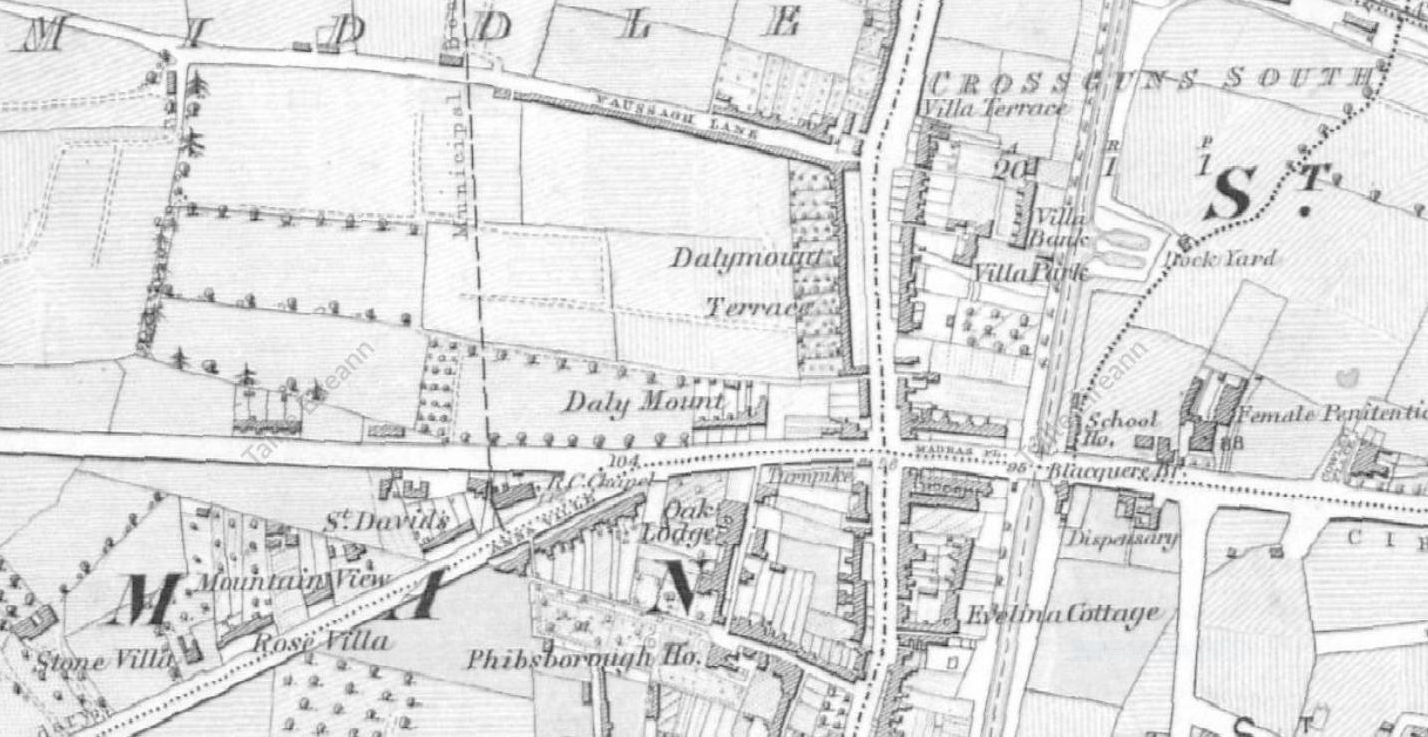


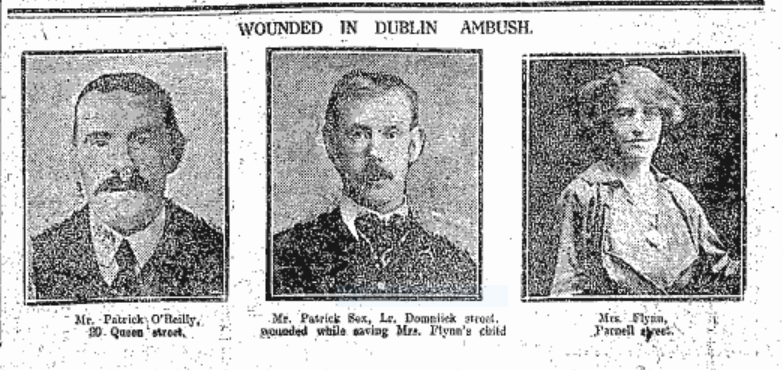

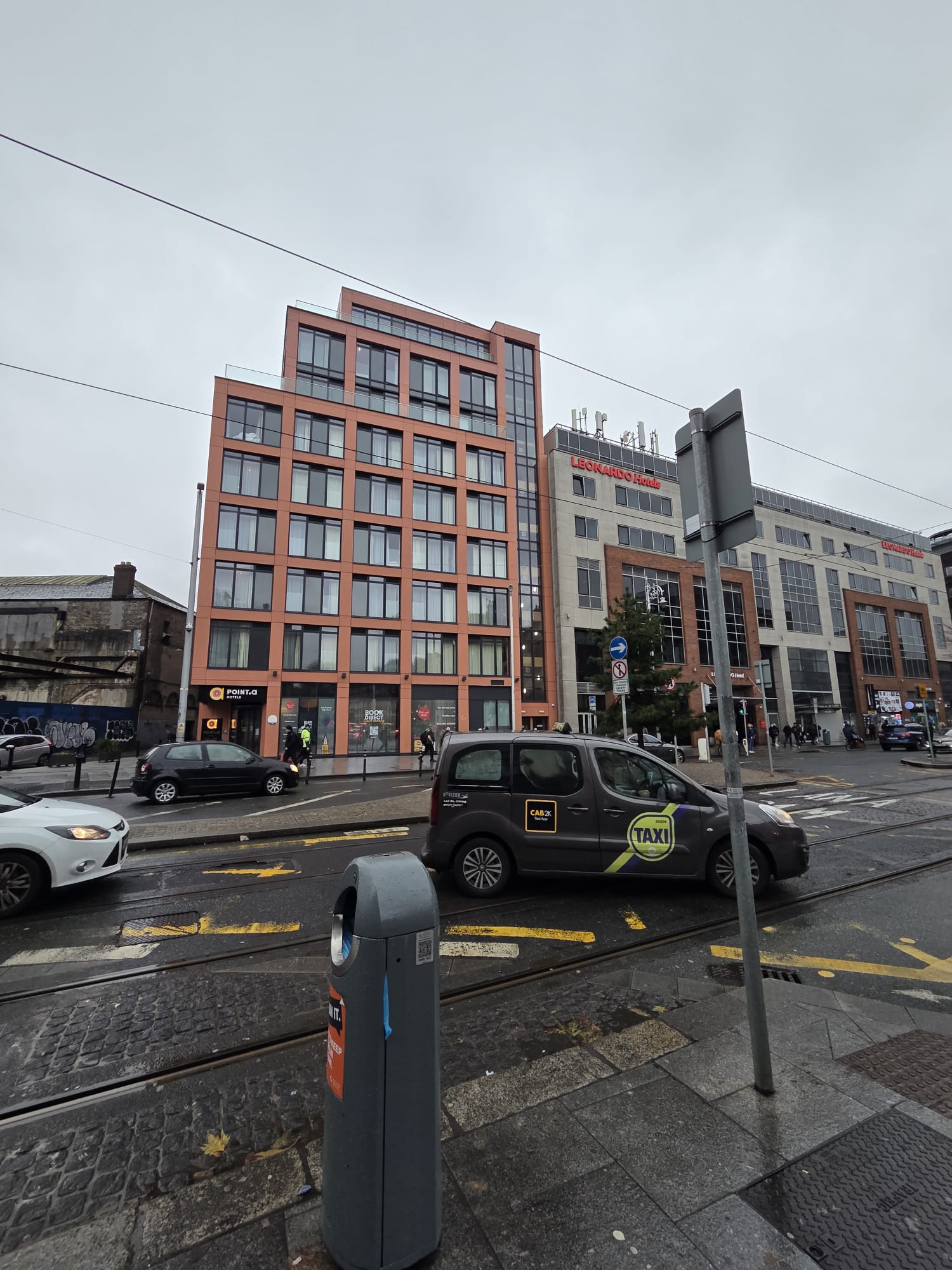

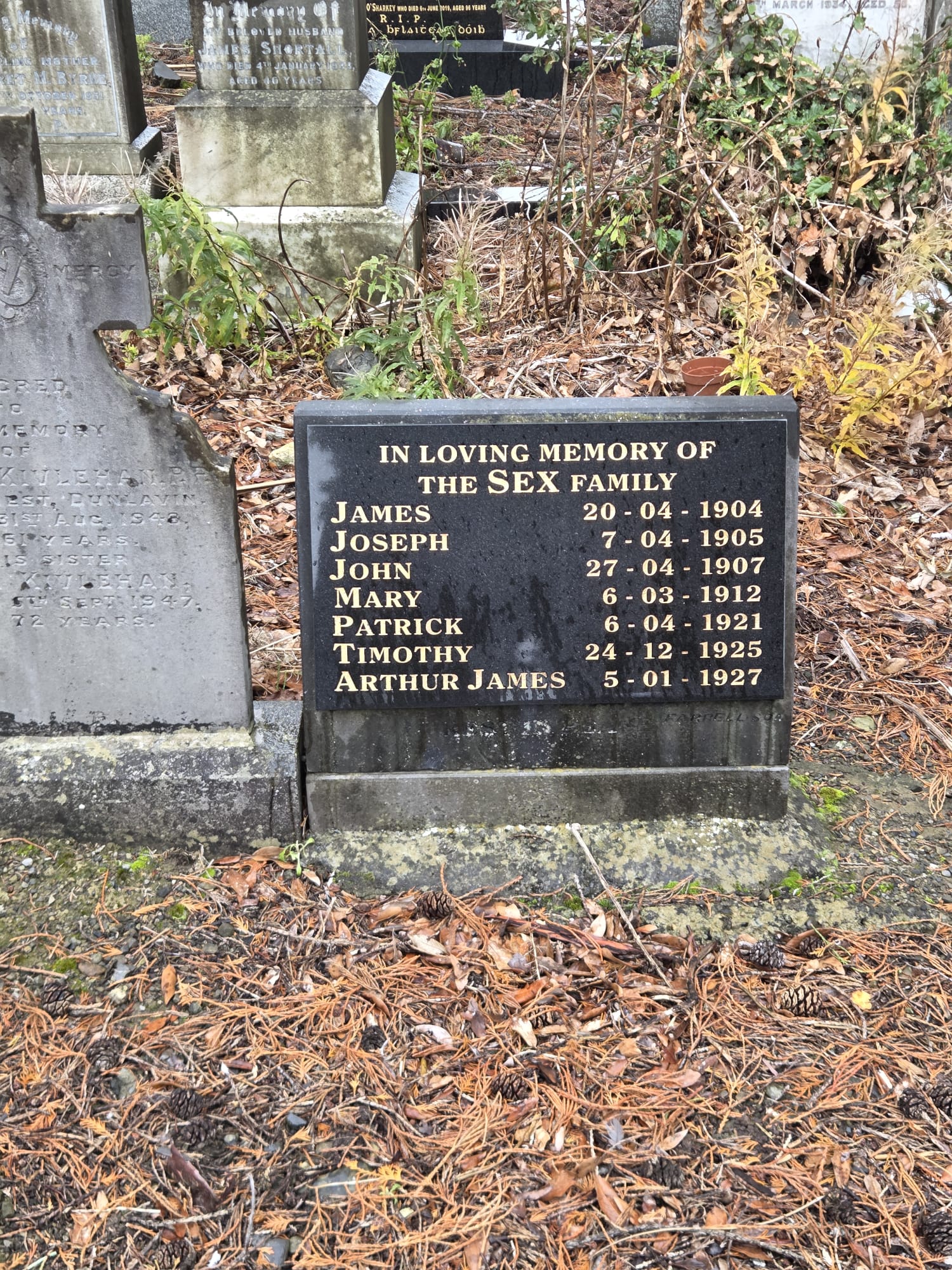
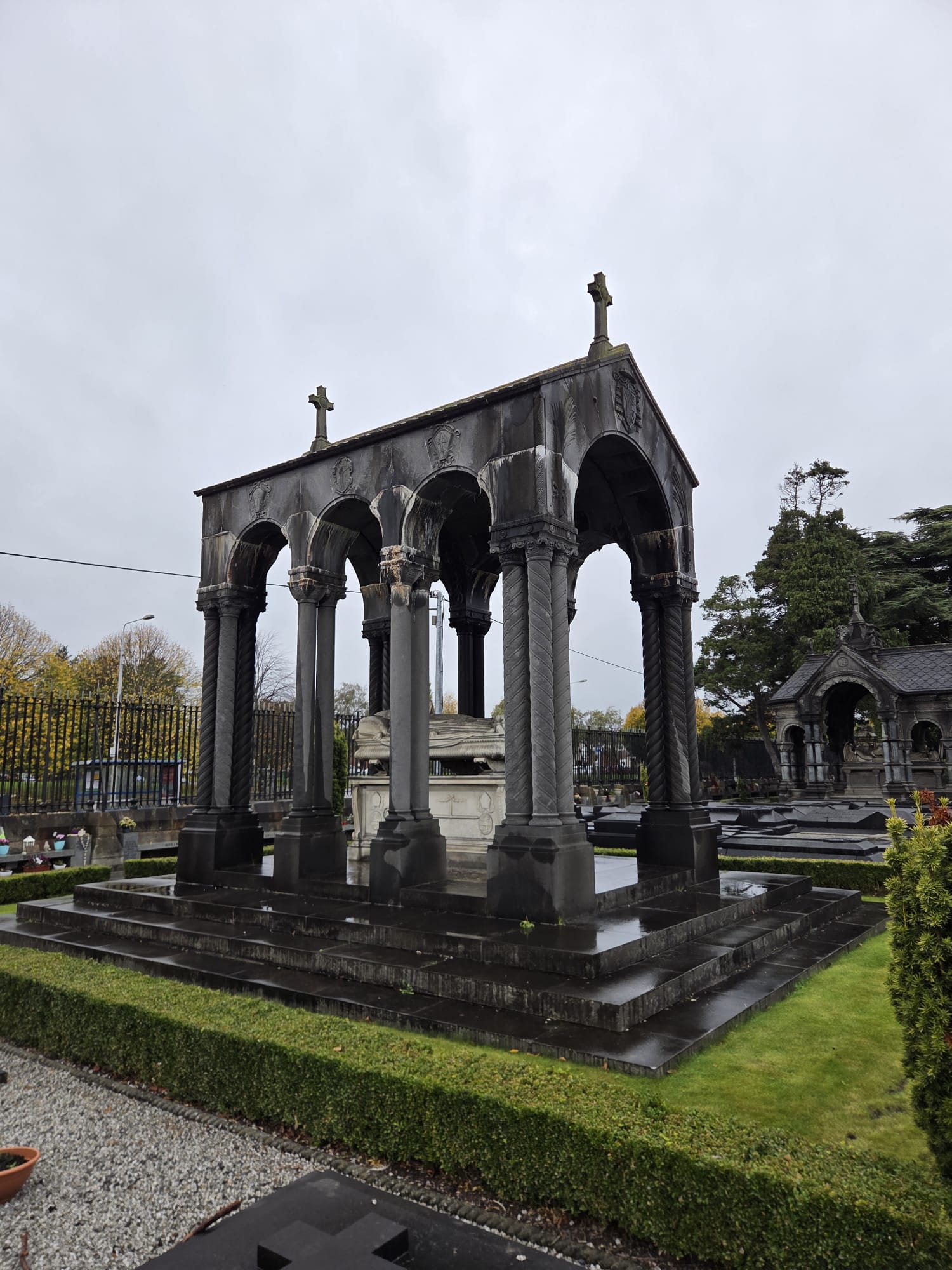

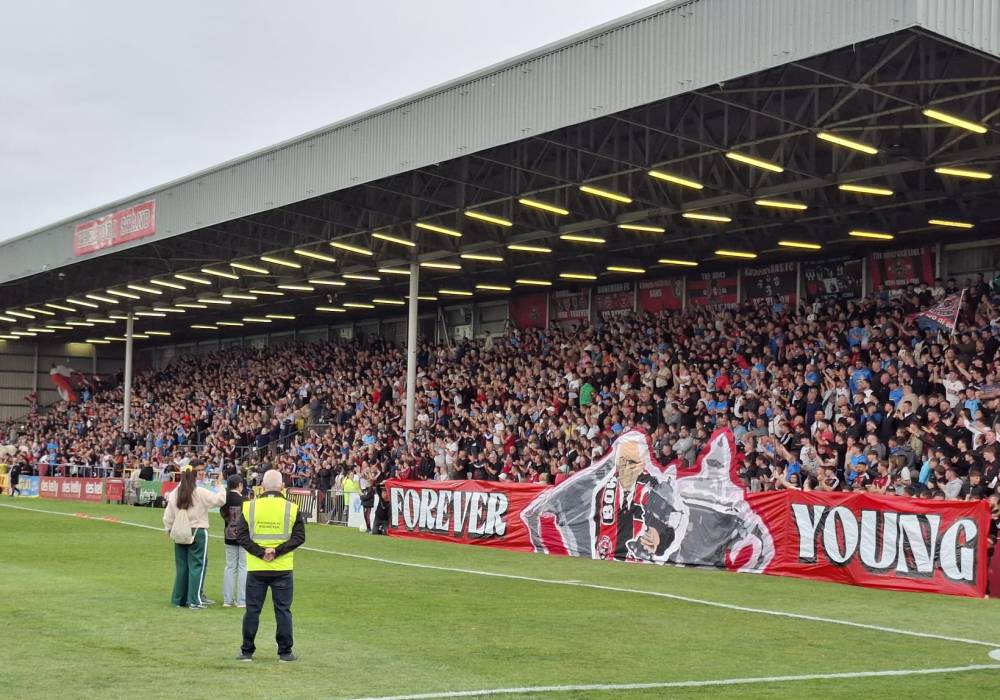

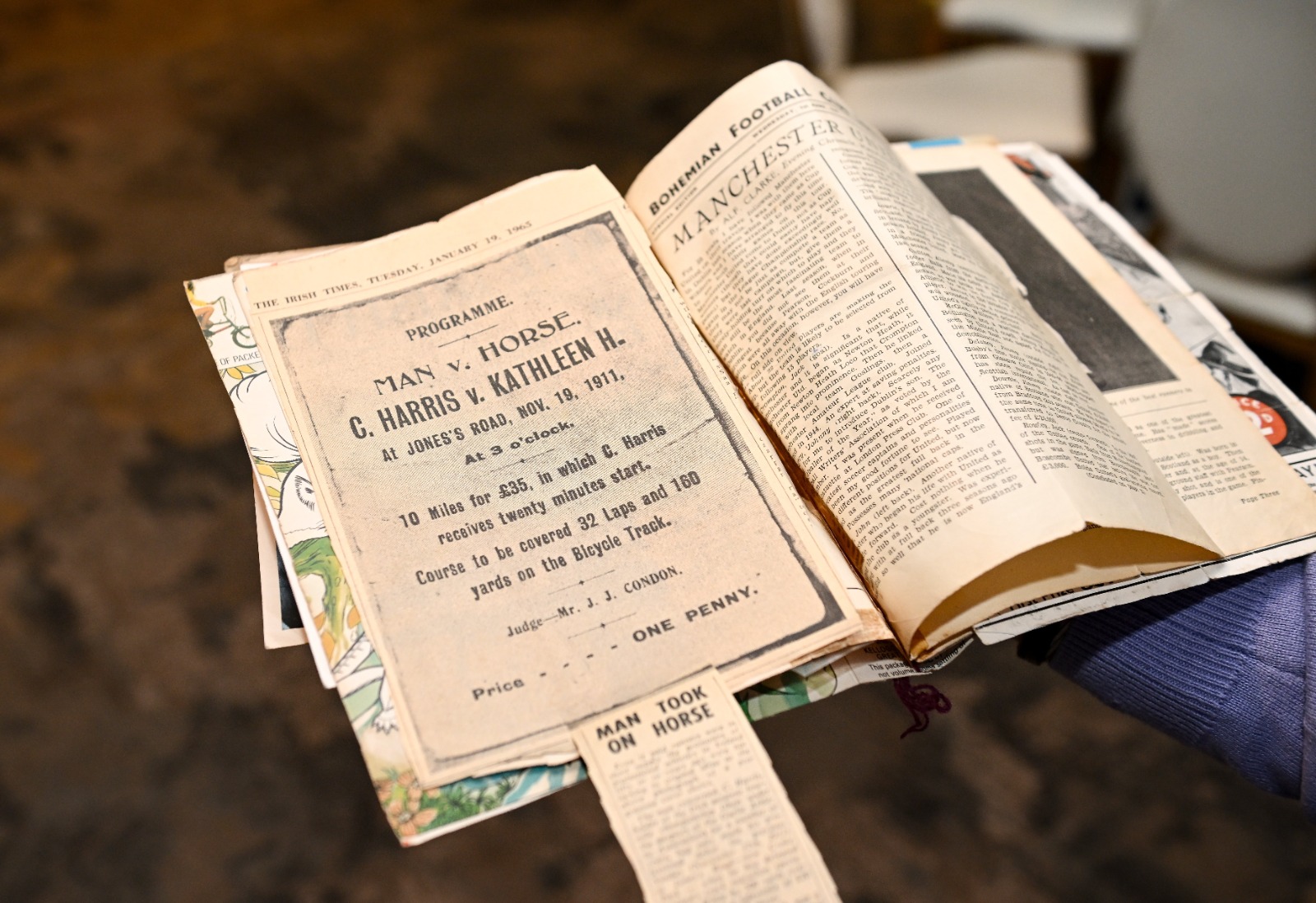


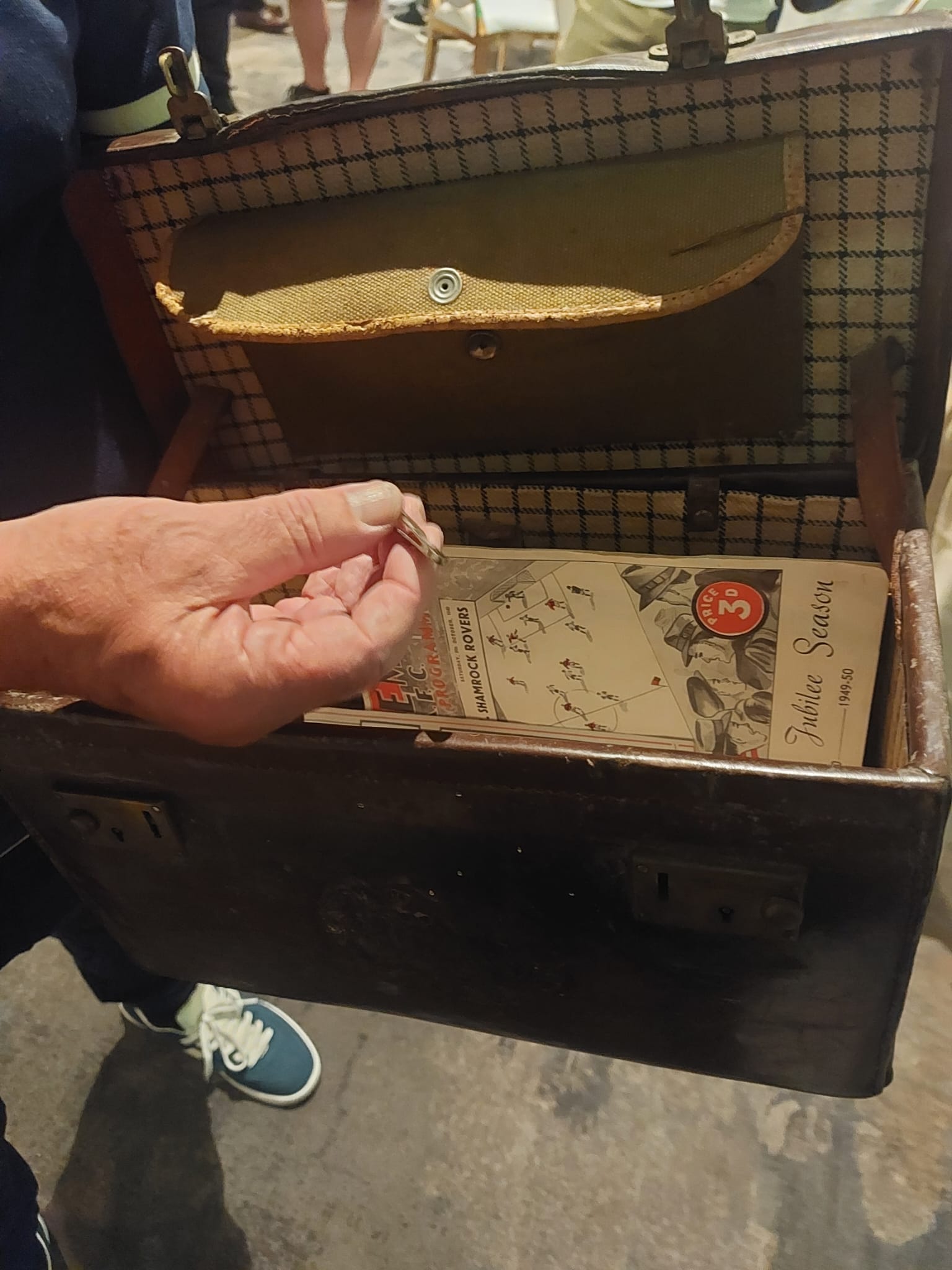
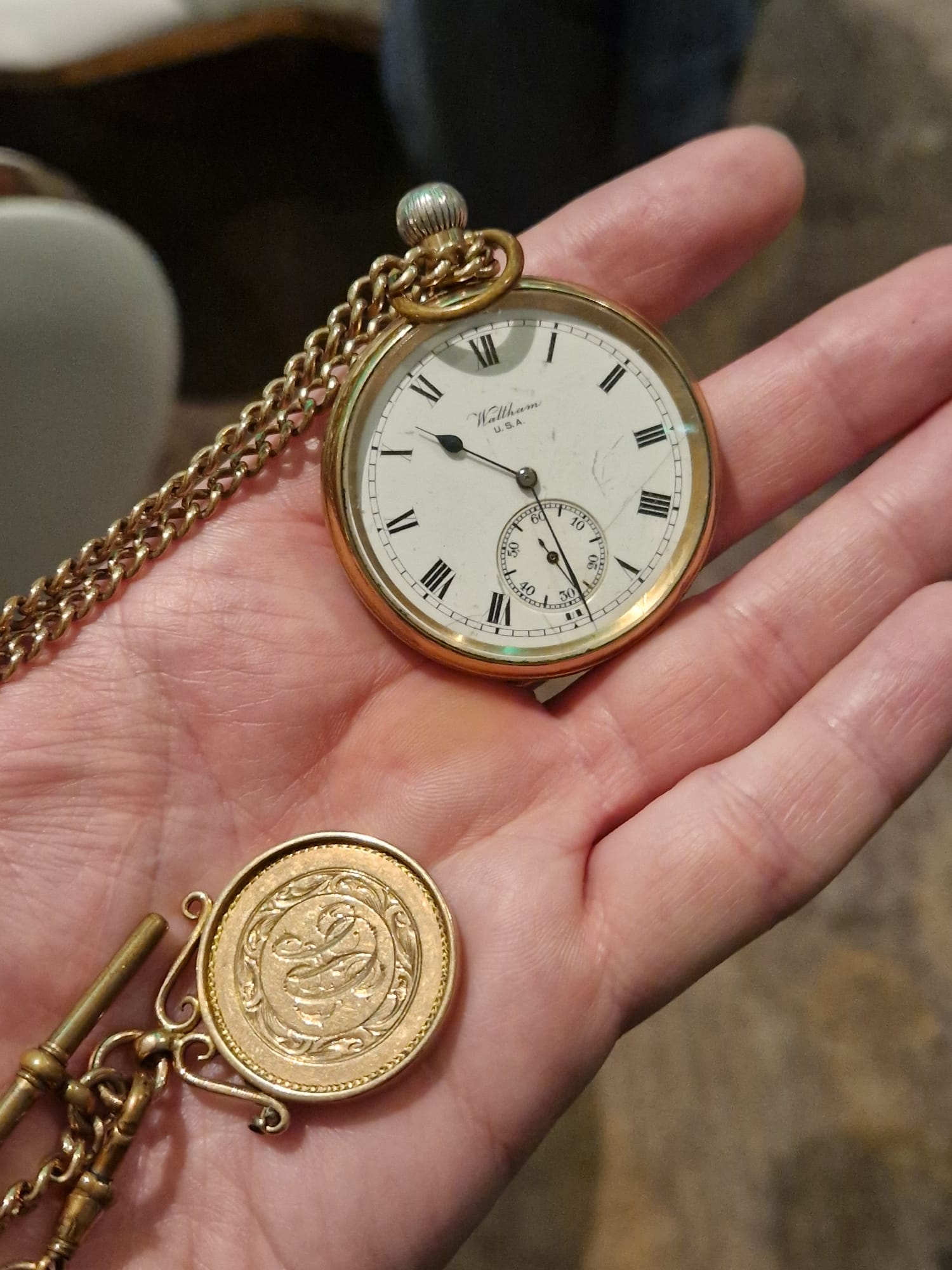


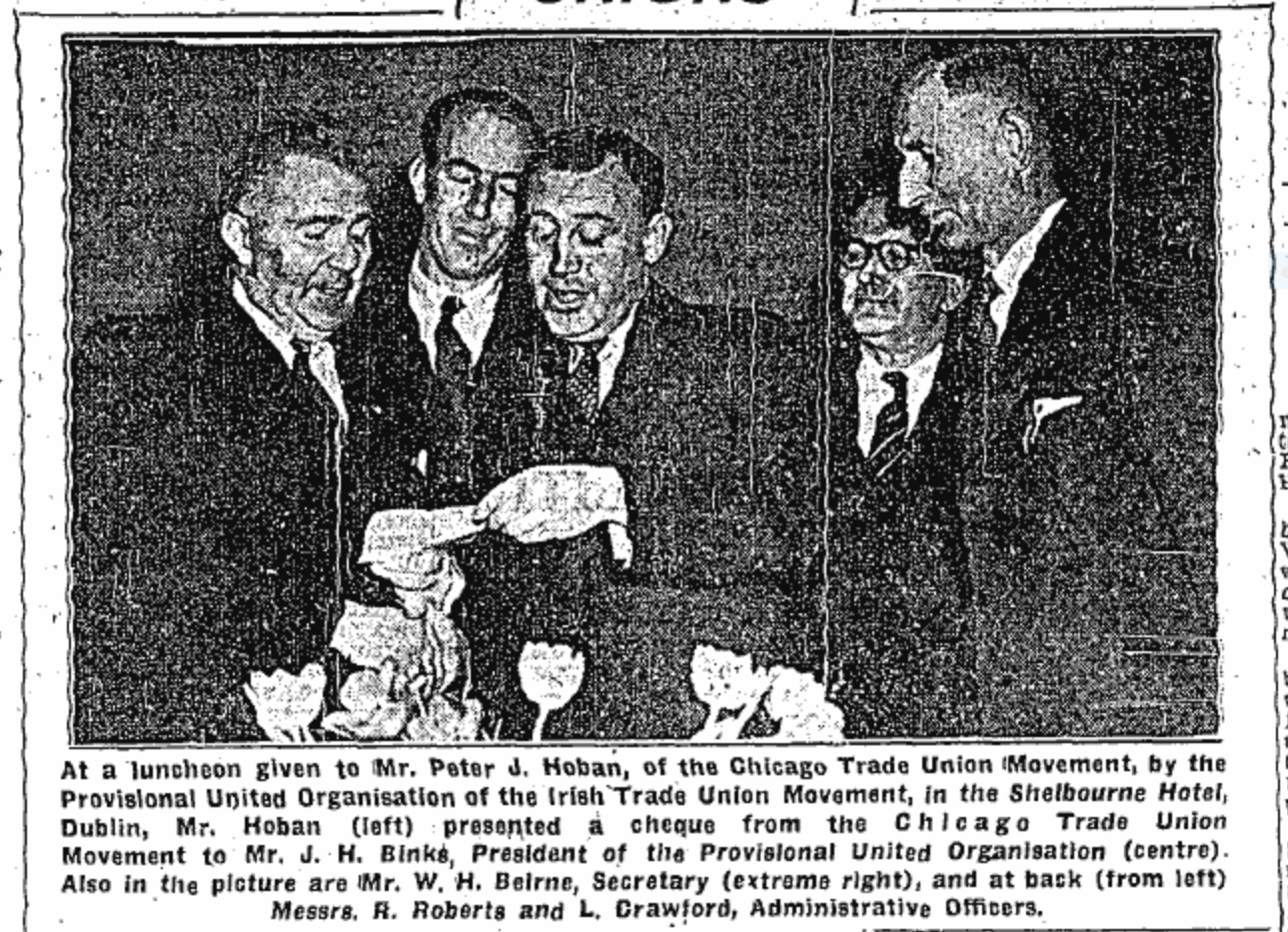
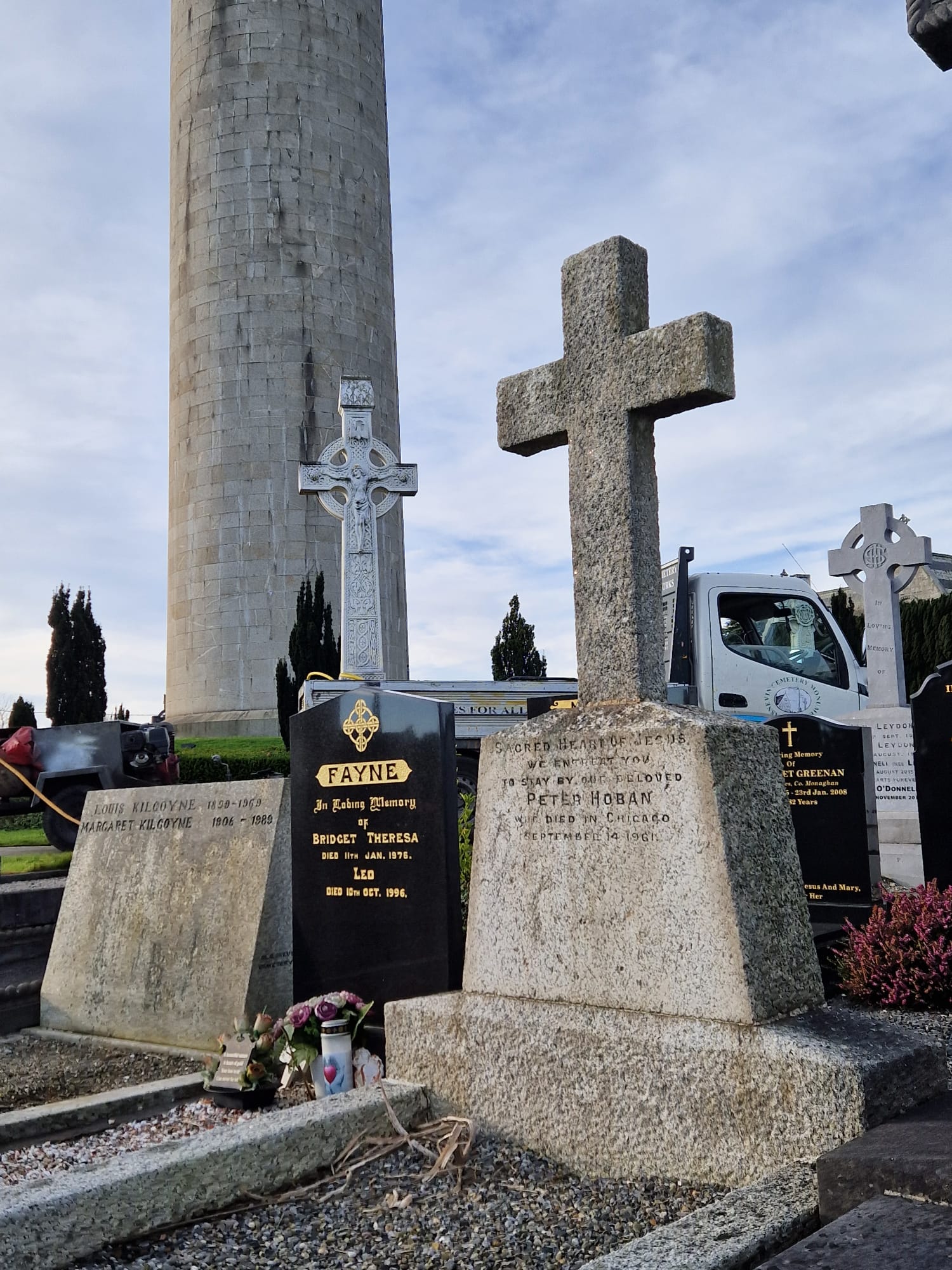



 A Bohemian Sporting Life