Ted Sagar was an Everton legend, a league and cup winning goalkeeper, an England international, and the holder of the record amount of league appearances for the club for some forty years until it was broken by the Toffees other legendary keeper, Neville Southall. It is quite the impressive CV. Sagar’s Everton career ultimately lasted for an amazing 24 years but as time comes for all of us, with Ted approaching his late 30s the Everton manager Cliff Britton was on the lookout for a replacement for his veteran custodian. His eventual long-term successor, a man who would make over 200 appearances in more than ten years at the club was discovered in the most unusual of places, the south Dublin suburbs playing for “Bulfin United under 17s, Division 2.”
This young man was Jimmy O’Neill, as well as over a decade of service with Everton he enjoyed a successful spell at Stoke City where he was hugely popular and would win 17 caps for the Republic of Ireland. At just 5’9″ and willowy thin he didn’t conform to the stereotypical physique of the goalkeeper. This is the story about how his journey from the schoolboy leagues of Dublin to the Everton first team in the course of just over a year was facilitated through an unusual source, a League of Ireland club official and Dublin shopkeeper who had also been a revolutionary from his teens, was imprisioned during the War of Independence and had remained an active member of the IRA during and well after, the Civil War. It is the story of Michael Douglas.
Michael Douglas was born in Dublin’s North Inner City in 1901, growing up on Stafford Street (now Wolfe Tone Street) and later on Granby Place, his parents, James and Lizzie were both born Dubliners, James beginning a family tradition of working for the City Council, his job being a paver. By 1917 young Michael was a member of Na Fianna Éireann, the Republican boy scout movement, where he was later joined by his younger brother Willie, both are pictured below. Also, by this stage the teenage Michael had followed his father into employment with the City Council.
By the end of 1917 Michael had become a fully fledged member of “G company” of the Dublin Brigade of the IRA, parading with them at the enormous public funeral of Thomas Ashe, a 1916 veteran who had died in Mountjoy prison after being force-fed while on hunger strike. Later during the War of Independence Michael continued to parade and provide guard duty at various functions while also being involved in well known raids including the one on Monk’s Bakery, North King Street which left three British soldiers dead but also resulted in the capture, and later execution of Kevin Barry. In another footballing connection with that incident, one of the other members of the Dublin Brigade involved was Christy Robinson who would later represent Bohemian FC and travel to the 1924 Olympics with Ireland.
By 20th November 1920 (a day before Bloody Sunday) Michael had been arrested as part of a wide crackdown by Crown Forces, he was found with Sinn Féin literature in the family home in Granby Place and was sent by steamer to Ballykinlar internment camp in Co. Down. Michael stated that the Crown Forces had not found any weapons in the raid but claimed that £29 (a considerable sum at the time) had been taken from his father’s house during the raid.
Ballykinlar was a former army base turned into an internment camp and which grew to bursting point by the end of 1920 as raids and arrests escalated in November and December of that year. There were upwards of 2,000 men interned from all across Ireland at its peak. Many were active in the Independence struggle, others were unlucky, not actively involved perhaps merely sympathetic to the Republican cause but arrested all the same as part of sweeps by Crown Forces.
While interned in Ballykinlar in July 1921, Michael’s sister Kate was injured in an altercation with Crown Forces around Dominick Street in the north inner city. On two occasions Crown Forces removed an Irish tricolour from the street where it had been strung between houses, on the first occasion a group of local women managed to wrestle the flag back and restring it across the street, however the Military patrol returned later that night to successfully remove the flag and Kate was injured by a revolver bullet as the local women harassed and jeered the soldiers from the street.
Michael requested leave to visit his injured sister, however as a truce was called shortly afterwards gradually the prisoners of Ballykinlar were released. It is around this time after his release that Michael seems to have taken a more keen interest in football and his own letters identifies the early 1920s as around the time he became involved with Shelbourne FC.
Michael’s interest in the national movement did not end after his release however, he remained actively involved, briefly being part of the group of anti-Treaty IRA who were occupying the Four Courts in 1922 just before the outbreak of the Civil War. Michael remained on the anti-Treaty side after the official outbreak of hostilities and was arrested by the Free State forces in November 1922, although he was released a month later. Michael remained inactive as the final months of the Civil War ground on although he did return to IRA activity in 1924 after the effective end of the Civil War and the issuing the of the “Dump arms order” in May 1923.
Perhaps the most significant incident in this period of his involvement was the bombing, in November 1928 of the equestrian statue of King William of Orange on College Green. It had been “first erected in 1701 to commemorate William’s victory over King James at the Battle of the Boyne in 1690″, the statue was always controversial, some felt that even Trinity College was being disrespected as Billy’s horse, White Sorrel, was positioned so its arse faced the University. Even by the end of the 18th Century the statue had been subjected to vandalism, and later in the 19th Century suffered from significant neglect and poor maintenance from an apathetic City Council.
King William’s statue on College Green (pic courtesy of Donal Fallon/Come Here to me)
On Armistice Day, 11th November 1928 in the early hours of the morning the statue was attacked yet again, it was blown up by the IRA. John Dorney explains the significance of the event as follows:
It was a part of a campaign by republicans, casting about for ways to remain relevant following their defeat in the 1922-23 Civil War, against Armistice Day in Dublin in which the Union flag was flown and ‘God Save the King’ sung by war veterans and unionists. On the same day, another bomb was placed at the statue of King George on Stephen’s Green. Rioting also took place between republicans and Poppy wearers in the city centre.
John Dorney, the Irish Story
Such was the damage to the statue that it was ultimately removed permanently by the City Council the following year. Among those responsible for the destruction of the statue was Michael Douglas, working under the supervision of former IRA Quartermaster and explosives expert Paddy Saunders. It is noted in the reports at the time that despite the blast taking place around 5am, with thankfully no injuries to anyone other than the leaden William, there were members of An Garda Síochána nearby who gave chase to those responsible for the bombing, they were chased up Trinity Street before a number of shots were fired at their pursuers. Interestingly in Michael’s military pension application the mention of Saunders (written as Sanders) is crossed out. Possibly because at the time of Michael’s application in the late 1930s Paddy Saunders had joined the ranks of An Garda Síochána himself!
By the 1930s Michael was married to Mary O’Neil and living in Little Ship Street with a growing family, right by the walls of Dublin Castle where he ran a small shop. He was also being referenced as a promintent member of Shelbourne Football Club, appearing in newspaper clippings representing the club at various functions, funerals etc. Moving forward a little later Michael is mentioned and photographed for the Shelbourne Golden Jubilee programme of 1945. Michael is mentioned as being a member of the Ways and Means committee of the club. The committee looked after matters such as the publication of the match programme, and the more social aspects of club life such as organising dances, events and fundraisers.
Douglas as part of the Shelbourne Ways and Means committee, 1945
It is perhaps in this context that Michael encountered Jimmy O’Neill, in a series of correspondence beginning in January 1949 he contacted Cliff Britton the Everton manager to recommend the young goalkeeper to him. Perhaps O’Neill was a relative through his wife and known to him that way? Or perhaps he had gotten to know young Jimmy through his work for Shelbourne? Either way he decided to approach the Everton manager, Britton who had been a star player for the Toffees in the era of ‘Dixie’ Dean and was also capped nine times by England. After enjoying some success with Burnley as a manager in the post war years Everton appointed him as manager in 1948. Everton also had a number of prominent Irish players at this time including Tommy Eglington and Peter Farrell and enjoyed quite a bit of support in Dublin at the time.
First contacting Britton on 25th January 1949, Douglas wrote, apparently with no prior connection with Britton, in order to
“recommend to you a boy who is playing goalkeeper for a schoolboys’ team and he is certainly playing great. I know of two League of Ireland Clubs who are interested in him but he is not inclined to sign for either of them. He has informed me that if he got the chance he would like a trip across.
He is 17 years, 3 months old: height – 5′ 9″: weight – 10st. 10lbs.I should like to mention that I am officially connected with a League of Ireland Club for the past 27 years and, for this reason, whether you are interested or not, I should like you and your Dublin representative (Scout) to treat this matter as strictly confidential.”
Letter from Michael Douglas to Cliff Britton
Reply to Michael Douglas from Cliff Britton
Britton replied within two days, asking for more detail on O’Neill and where he could have him watched. Douglas replied the following day, recommending that Everton have O’Neill watched in Bulfin United’s upcoming cup match against a strong Home Farm team before signing off wishing Everton success in their own Cup tie against Chelsea, a fourth round FA Cup match that Everton lost 2-0.
Everton duly had O’Neill scouted by no less a figure than former Goodison and Ireland great Alex Stevenson and in May 1949 Everton completed the signing of Jimmy O’Neill for the princely sum of £100 from Bulfin United. As for Michael he continued in conversation with Everton and recommended they scout Mortimer “Murty” Broderick, then plying his trade in the League of Ireland for Cork Athletic. He also had to chase Everton for a payment promised arising out the transfer of O’Neill. Eventually in October 1949, five months after signing Jimmy O’Neill, Everton paid Michael Douglas £5 for his part in recommending the club’s new goalkeeper.
Below you can see the fee of £100 paid for O’Neill (left) while on the right the £5 earmarked for Michael Douglas. Both taken from the excellent Everton Collection website
Everton never did sign Murty Broderick although they had played a friendly against Cork Athletic in 1949 and perhaps were not sufficiently impressed, Broderick would later join Sheffield United in 1950 and I can find no further contact or mention of Michael Douglas in club minute books after the signing of Jimmy O’Neill.
Writing an obituary for Jimmy O’Neill in 2007, The Independent’s Ivan Ponting described him as “the sort of goalkeeper that football fans love to watch. Whether plunging acrobatically to repel shots on his line or springing skywards to pluck crosses from the heads of rampaging centre-forwards, the slim, almost willowy Republic of Ireland international was a natural crowd-pleaser.”
He won 17 caps for Ireland playing in World Cup qualifiers and Ireland’s first ever games in European Championship qualification, a popular figure for both Everton and Stoke City but without the personal intervention of Michael Douglas he may never have reached those football pinacles. His almost 20 year professional football career owes a debt to the man who blew King Billy of his horse in College Green.
With a special thank you to the Fox and Carroll families for sharing Michael’s story and to Sam McGrath for assistance in the research of Michael Douglas’ and Paddy Saunders pension files.
The 17th of September marks another landmark moment in the history of Bohemian Football Club, and indeed the League of Ireland as a whole. On that date one hundred years ago the League of Ireland kicked off, and Bohemians played our first League of Ireland fixture against the YMCA. While Bohemians (along with Shelbourne) had been among the very few clubs from outside of Ulster to compete in the Irish League, there had been a significant gap between 1915 to 1920 when football was regionalised due to the War. In June of 1921, the Leinster Football Association, after several disagreements with the IFA, including over venues for Irish Cup matches, formally decided to split from the IFA and later that year they would form the FAI.
It is a testament to how swiftly things were changing that a new League and Cup were arranged so by September, though all of the eight teams in that initial season were Dublin based, most having formed part of the Leinster Senior League prior to the split from the IFA. Alongside recognisable names like Bohemians and Shelbourne, were St. James’s Gate, Dublin United, Jacobs, Frankfort, Olympia and YMCA.
The fixtures on that opening day were Bohemians v YMCA; Shelbourne v Frankfort; and St James’s Gate v Dublin United. The other fixture due to take place had been between Olympia and Jacobs in Donnybrook but this match was postponed at relatively short notice.
The Bohs v YMCA game was the first to kick off, in what was described as a “poorly filled” Dalymount, those who did turn out though witness a masterclass from Bohemians. The Bohemians XI for that first league game was as follows – George Wilson, Tom Parslow, Albert Kelly, Mike Stafford, Tom O’Sullivan, Billy Otto, James Marken, Edward Pollock, Frank Haine, Harry Willitts, Johnny Murray. An eclectic bunch, Parslow was an Irish hockey international, Willitts was a WWI veteran who was originally from Middlesborough, while Billy Otto had been born in the Leper Colony on Robben Island off the coast of South Africa.
It was Haine (a former IFA amateur international) who opened the scoring in the first half after some sustained Bohemian pressure, as a result becoming the first goal-scorer in League of Ireland history. YMCA then gave away two penalties in quick succession for a foul on Pollock and later a handball. Marken duly dispatched both to give Bohs a 3-0 lead. Johnny Murray and Harry Willitts rounded out the scoring to give Bohemians a 5-0 win on the season’s opening day.
Bohs would ultimately finish that season in second place, two points behind inaugural St. James’s Gate who would go on to do the double by beating Shamrock Rovers (then a Leinster Senior League side) in a replayed FAI Cup final. As for YMCA, they finished bottom in what was their only season in the League of Ireland.
First published in the Bohemian FC v Maynooth Town match programme.
“Cup tie fever! Who is it who has not been affected with it at some period of another? It is an epidemic which always occurs in a virulent form about the same time each year… Its principle characteristics are a blind, unfaltering belief in the capacity of one’s own team to win “The Cup”… I am afraid the supporters of the Bohemian Club are in no way immune from the ravages of this disease”
These words were written by Dudley Hussey, a founder member of Bohemian Football Club in one of the first histories of the club. Though this history was written some 110 years ago the words remain true to this day, indeed his references to epidemics and disease carry an additional significance!
By the time of writing Hussey had seen a club he helped found prosper from humble beginnings in the Phoenix Park to residents of Dalymount and become serial Leinster Senior Cup champions. However, the prize that they most desired was the Irish Cup.
Bohs had been members of the Irish League since the 1902-03 season, the first Dublin club to join, and also regularly competed in the Irish Cup, becoming the first Dublin side to make the final in 1894-95. However, that cup final was to be a bitter disappointment with Bohs incurring a record 10-1 defeat to Linfield. Bohs would reach the final twice more in subsequent years, a narrow, controversial defeat to Cliftonville 2-1 in 1900 and a 3-1 defeat to Distillery in Dalymount Park in 1903. In 1906 Shelbourne became the first Dublin side to lift the trophy, defeating Belfast Celtic 2-0 in the final in Dalymount Park, surely the Cup couldn’t elude Bohs for much longer?
As an amateur side Bohs were often at a disadvantage against the big Belfast clubs who could afford professional players or who could give their stars cushy sinecures with companies connected with the side. Bohemians often travelled north with many of their best players unavailable due to work commitments and league form was patchy at this time. However, they believed that when they could field their strongest XI they were more than a match for any team in Ireland. The 1907-08 cup campaign would prove just that.
As a member of the Irish League; Bohs were exempt from the first round of the cup and were drawn to face Glentoran in the Oval in the second round. Leading 2-1 with minutes remaining in Belfast, the Glens were awarded a late penalty to secure a replay in Dalymount. A week later Bohs made no mistake, running out easy 4-1 winners with Dick Hooper scoring a hat-trick.
The next round pitted Bohs against league champions Linfield in Windsor Park, again a lead was squandered, Bohs being pegged back from 2-0 in driving rain and sleet to be held for a 2-2 draw after another penalty award, and so to another Dublin replay. In a close and hard-fought match in Dalymount Bohs won out 2-1 and were through to the semi-finals of the Cup.
Lying in wait were Belfast Celtic, and once again Bohemians were drawn away, necessitating another trip north to Belfast. In a thrilling game Bohs were 2-0 down inside the first half after giving away yet another penalty, however, an amazing feat of dribbling by Dinny Hannon where he ran the length of the pitch to score, followed by a second half penalty by Willie Hooper secured a replay in Shelbourne Park. The Belfast Celtic performance was far below their standard of the previous week and Bohs ran out easy 2-0 winners. The final was set – for the first time ever two Dublin clubs, Bohemians and Shelbourne would fight it out for the Cup.
On the 21st of March 1908 the first final took place in Dalymount. First final? Because of course even the final would go to a replay after 1-1 draw. Bohemians goalkeeper Jack Hehir was the hero of this match, producing the “most brilliant display of goalkeeping ever seen in Dublin” by saving two penalties over the course of the game.
The following Saturday was to be the 8th and final match of Bohs epic Cup quest. This was a talented Shelbourne side, among their starting XI were the likes of Billy Lacey and captain, Val Harris both of whom would be lining out for Everton as they finished runners up in the English first division the following season. Bohs were not to be overawed however, and tore into Shels from the outset, Hehir was once again impressive in goals but it was the Hooper brothers who ran riot, Dick Hooper scoring after only eight minutes before grabbing a second on the half hour while just before the interval Jack Slemin played in Willie Hooper to put Bohs 3-0 up.
Shels rallied in the second half, putting in some rough tackles and as a result several Shelbourne players were cautioned, one such tackle forced Bohs captain Jimmy Balfe from the pitch for treatment and while Bohs were reduced to 10 men John Owens scored a consolation goal for Shelbourne. But it was to be Balfe’s day, returning to the pitch after treatment it was he who would life the Cup for Bohemians and fulfil what could only have been a distant dream of Hussey and the other founders when the met in the Phoenix Park in 1890.
Teams as shown in the Dublin Daily Express on March 30th
Bohemians Cup Final XI:
Jack Hehir, Jimmy Balfe, P.J. Thunder, William Bastow, Tom Healy, Mick McIlhenney, William Hooper, Dinny Hannon, Dick Hooper, Harold Sloan, Jack Slemin
Originally published in the Bohemian FC match programmein 2021.
It’s not all that often that an international from one of the bone-fide European football powers ends up playing in the League of Ireland. But just that did happen in the mid 1960’s when Spanish international Alvaro Ros Rodriguez, better known simply as Alvarito joined Shelbourne in 1965.
Alvarito was born in 1936 in the small town of Ujo in Asturias, an industrial area synonymous with the coal mining industry. He was a two-time Spanish international who featured in away matches against Chile (a 4-0 win) and Argentina (2-0 loss) in 1960. For Spain in these games he played alongside the likes of Alfredo Di Stéfano, Luis Suarez, Juan Segarra and his Atlético Madrid teammate Enrique Collar.
Alvarito played for Oviedo early in his career but spent his best years at Atlético Madrid, winning two Spanish Cups (Copa del Generalisimo as it was during the Franco dictatorship) as well as the 1961-62 Cup Winners Cup against that competitions inaugural Champions, Fiorentina.
Despite this success Alvarito was never a regular with Atlético, he suffered injuries including a severe leg-break in a game against Valladolid, and was mainly understudy to Spanish international Isacio Calleja when he returned from injury. That injury not only limited his club career but also put paid to whatever hopes Alvarito might of harboured of a recall to the Spanish national team ahead of the 1962 World Cup.
He did start in the final of the 1959-60 Copa del Generalisimo, a famous 3-1 win over city rivals Real Madrid in a packed Santiago Bernabéu. Atlético went into that game as complete underdogs, not least because their rivals the great Real Madrid that had demolished Eintracht Frankfurt 7-3 in the final of the European Cup final just a month earlier. That famous victory meant that Real had won the first five European Cups and their side was full of stars including Ferenc Puskás, Paco Gento, Alfredo Di Stéfano and José Santamaría. However the Atlético humbled their city rivals and lifted the cup after scoring three unanswered second half goals after Puskás had giving Real an early lead.
Alvarito’s experience of the League of Ireland with Shelbourne was short-lived. Upon leaving Atlético Madrid he spent a single season with Real Murcia before joining Shelbourne as a player-coach in 1965, while studying English in Dublin. Because of injury he hadn’t played much competitive football for five months prior to having signed for Shelbourne, he was also not completely unfamiliar with Shels and their players having seen them play against his former club Atlético in the Inter City Fairs Cup only a month before he joined. Alvarito made his debut in a 2-1 win for Shels over Dublin rivals Drumcondra.
Some impressive performances followed with Alvarito operating in both full-back positions but a combination of recurring injury and difficulties with the language meant that his stay was brief. What followed after leaving Shelbourne was over 20 years of coaching in the Spanish lower leagues, something that Shels can look on with a little bit of pride as they gave him his first coaching role in the game.
Directly after his spell with Shels Alvarito took up an offer from his friend and former international teammate Ferenc Puskás to cross the Atlantic and join the Vancouver Royals in the NASL where Puskás had recently been installed as head coach. Alvarito’s English lessons must have done him some good as he spent a number of years coaching in the United States before returning to Spain to continue his coaching career. He became most associated with UD Melilla, a team based in a autonomous Spanish city of Melilla, on the coast of North Africa.
Alvarito passed away in June 2018 at the age of 82 in the Spanish city of Melilla.
I grew up always knowing never to cross a picket line. My father had been Chairman of a Trade Union, my mother had been a shop steward, they had both been involved in strikes during their working life, it was something I was instilled with from an early age and have always abided by. Which is why, when researching the history of Bohemian F.C. I was troubled by the accusations of scabbing levelled at players of the club during the momentous beginnings of the 1913 Lock-out. Despite this event occuring some 107 years ago the allegations still cast a small stain on the good name of the club and is invoked as an insult at regular enough intervals by supporters of rival teams, even to this day.
I did however, want to know more, who were the players involved? Could we speculate as to their circumstances? What happened to them afterwards? What had prompted Jim Larkin to call for action in a speech to the public during the early days of the lockout?
The more I researched these events, the harder it was to find definite answers to these questions, in fact, the more I researched the more confused things seemed to become. At this point it might be worth relating the story as conventionally told of the Bohs scabs accusations.
On Friday August 29th 1913, a day before Bohemians and Shelbourne were due to play a friendly match to inaugurate Shelbourne Park, James Larkin made a speech on Beresford Place to a crowd of almost 10,000 people, including many striking tram workers. Larkin had just learned that the proposed mass meeting scheduled for that Sunday (what would soon become known as one of Irish history’s many Bloody Sundays) had been banned by a Dublin Magistrate. Larkin burned the judge’s proclamation and in a lengthy speech, covering many topics he mentioned the upcoming football match with Bohs and Shels. Quoting Larkin the Evening Herald reported his words as follows;
Mr. Larkin said that Millar and Hastings of the Bohemians were scabs. “I want you” Mr. Larkin continued, “to assemble in O’Connell Street at twelve o’clock to-morrow, board the tram cars, go out as far as you can and pay no money. Then if they want to prosecute you give your name and address. Moral persuasion and pay no rents are our weapons”
There are other sources that report on this meeting and Larkin’s speeches, writing for the Come Here To Me blog, Donal Fallon shared the following extract from Arnold Wright’s first hand account of events in Disturbed Dublin ;
The opening scene, in what was to prove a prolonged and sanguinary drama, was enacted in the Ringsend district. In his speech on Friday night Mr. Larkin had referred to a football match which was to be played on Saturday on the Shelbourne Ground at Ringsend between two local clubs. ‘ There are ” scabs ” in one of the teams, and you will not be there except as pickets,’ he said, in language whose menacing character was understood by those who heard him. In obedience to the implied command, a large body of members of the Transport Workers’ Union gathered at the time announced for the match near the entrance to the grounds.
Arnold does not mention the players by name as the report in the Herald does and neither does it identify which team was accused of having scabs. After the meeting had ended there were clashes with those attending the rally and the Dublin Metropolitan Police which set an ominous tone for what was to unfold over the coming days.
Writing in his excellent and authoritative study of the Lock-out, Lock-out, Dublin 1913, Padraig Yeates writes the following, also citing the Irish Times,
The trouble began outside the new grounds of Shelbourne Football Club. About six thousand spectators had come to watch a match with Bohemians, the team that Larkin had accused of using ‘scabs’. A picket of about a hundred tramway men stood outside the gate and were jeered by some of the football crowd. The pickets retaliated in kind and were in joined by growing numbers of sympathetic locals. ‘The members of the Bohemian team, who pluckily drove to the scene of the match on outside cars through a hostile crowd of roughs were assailed with coarse epithets’, the Times reported.
The historian Neal Garnham in his history of football, Association Football and Society in Pre-partition Ireland, also mentions the match but sows the first real seeds of doubt as to the identity of the scabs and the teams they played for, he writes;
On 30 August 1913 the Irish Worker, the official newspaper of the Irish Transport and General Workers’ Union denounced two Dublin players – Jack Millar of the Bohemian club and Jack Lowry of Shelbourne – as scabs.
Here, for the first time we see mentioned the full names of the two supposed scabs, the Millar mentioned in the Herald report is revealed to be a Jack Millar while the other player is identified not as a Bohemians player, but as a Shelbourne one, Jack Lowry, there is no mention of a “Hastings”. Crucially Garnham also mentions a new source, the Irish Worker, the newspaper of the ITGWU, the Union that represented the tram workers, and a paper that Larkin had founded, edited and featured in regularly. Having read the relevant issues of the Irish Worker cover to cover (it’s Covid, what else would I be doing) I found the reference to Jack Lowry of Shelbourne in the edition of the 30th September and a mention of a Jack Millar in the edition on the 27th. Under the heading “Retail dept. O’Connell Street (scabs)” it includes among a list the name “Jack Millar, Phibsboro’ Bohemian AFC”.
Clipping for the Irish Worker on 30th August 1913 from a article entitled ‘scabs’ which identifies Jack Lowry of Shelbourne
It is important to note that Lowry is not mentioned as being a Shelbourne player, merely a “prominent member” while no further information is given on Millar other than the fact that he lives in Phibsboro. In-club trial matches were played by both Shelbourne and Bohemians a week before the game, and before any scabbing accusations – there is no mention of a Lowry nor Millar (or Hastings) among the forty-four players used by both clubs across these games, or in the final line-ups selected for the much anticipated game to inaugurate Shelbourne Park on Saturday August 30th 1913.
Shelbourne had become the first Dublin side to begin the practice of paying players, though the club was not full time and would have still featured amateur players and others who would have day jobs away from the football field. The new 1913-14 season had seen them invest heavily in cross-channel talent, signing defender Oscar Linkson from Manchester United, David Neave from Merthyr Town, Robert Carmichael from Clyde while Andrew Osbourne, a British soldier had signed up as their new centre forward. Osbourne was part of the 16th Queen’s Lancers who were then based in the Curragh.
Images from the game as published in the Irish Times
As Yeates noted in his account there was indeed trouble outside the ground, pickets were formed, and those on the pickets tried to force entry to the ground at one stage, and some even successfully gained entry and “hurled vile language” at the players. It was also claimed that incidents involving a crowd attacking trams was only brought to an end when “one of the passengers jumped from the tram, produced a revolver, and effectively dispersed the crowd.” as the Irish Times reported. A Sergeant Keane of the DMP spoke about crowds of perhaps 1,000 gathering in Ringsend who were “hostile to the club” in all reports in which Keane is interviewed the week following the riots there is no mention of Bohemians and the hostility is stated to be directed towards Shelbourne, or perhaps Keane not appreciating the nature of the game and just assumed this as they were the home team?
But who were the players subjected to this “vile language”? While I have introduced some of Shels new signings, English and Scottish professionals among them, there were of course no professionals in the Bohemians team as the club was at that point still strictly amateur. Could one of the Bohs players have been the Millar mentioned by Larkin, but merely called out under a mistaken name, could there still have been a scab?
The starting XIs for both Bohemians and Shelbourne as reported in the Freeman’s Journal on 30th August 1913
After much research I believe I have identified all the Bohemians players listed and their occupations, this is based on earlier research on players who served during World War I as well as reviews of the players listed at Bohemians in 1913 from their team line-ups. I have given them a quick biographical outline below:
Goalkeeper: J. Cooke – an interesting one to begin with as this is an alias, Cooke was the name of the Bohemian trainer, George Cooke, usually the trainer’s name would be used as a cover as Bohs players did on occasion miss work duties to play a match. Could this be the Millar that was mentioned by Larkin under an assumed name? This would be highly unlikely. Bohs two main goalkeepers at the time were Jack Hehir and Fred Chestnutt-Chesney. Hehir, who had won an international cap in 1910 and was club captain for 1913 and well established at Bohs, he worked as a Civil Service clerk in the estates office and later in 1915 was transferred to London to work in the War Office.
Fred Chestnutt-Chesney was a Trinity College student studying Divinity. He later became a Church of Ireland Reverend in Belfast and then London. Chestnutt-Chesney had also commanded a company at the battle of Passchendaele and reached the rank of Major. In 1920 when working in the parish of Ballymacarrett in East Belfast he helped organise volunteer groups to try and stop rioting and protect Catholic residents during the riots after the shooting of RIC Inspector Oswald Swanzy.
Full back: William George McConnell was a commercial traveller in the drapery trade at the time. He and his family established the McConnell’s advertising agency in 1916 which continued to trade up until 2010. McConnell won six international caps for Ireland and was an important part of the squad that won the Home Nations championship of 1914. McConnell also found significant success as an amateur golfer being successful enough to triumph in the 1925 and 1929 West of Ireland Amateur Championships.
Full back: Joseph Irons worked on the staff at the Viceregal Lodge (now Áras an Uachtaráin) and was a member of the Army reserve and on the outbreak of the First World War was called up. He didn’t go far initially, being was on guard duty at the Viceregal Lodge during Easter 1916 though he later served time in the Dardanelles campaign. He was also a useful cricket player.
Half back: Jocelyn Rowe was born in India in 1886 and raised in Kingston upon Thames, he had briefly played for Manchester United. He was a professional soldier and was a Sergeant in the 1st Battalion, East Surreys Regiment and was wounded in action during World War I.
Half back: Alfred J. Smith, born in Ireland, Smith was a professional soldier (rank of Sergeant Major) in the Army Service Corps and was wounded in action during World War I. He had been capped at amateur level by Ireland in a 3-2 win over England in 1912. He scored in that match along with his Bohs teammates Johnny McDonnell and Ted Seymour.
Centre back: Bartholomew “Battie” Brennan, was a railway clerk for the Great Southern & Western Railway. This means that Brennan is the only player with any connection to the transport industry. However, the Great Southern was a completely separate company to the Dublin United Tramway Company (DUTC) whose drivers and conductors were on strike. William Martin Murphy the owner of the DUTC used his own former drivers and office staff to fill the roles of the striking workers. Brennan’s name also bears no similarity to the names Millar or Hastings and is unlikely to be confused with them. Brennan was a high profile member of the Bohs squad, he had been a regular for the club since 1910 and had scored against Wales in a 3-2 win for Ireland in 1912. He later set up his own company, Dublin Wholesale Newsagency, who imported and sold newspapers, they were based on Abbey Street.
John Bartholomew “Battie” Brennan
Outside right: Thomas William Gerald Johnson, only 20 at the time of the match was a medical student from Rathmines. He was another fine sporting all-rounder with a talent for both cricket and golf. During the First World War Johnson became a Lieutenant in the 5th Connaught Rangers and later brought his professional talents to the Royal Army Medical Corps. He was awarded the Military Cross for his actions at Gallipoli. He received numerous citations for bravery, for example at the Battle of Lone Pine during the Gallipoli campaign the Battalion history notes “Second-Lieutenant T.W.G. Johnson behaved with great gallantry in holding an advanced trench during one of the counter-attacks. Twice he bound up men’s wounds under heavy fire, thereby saving their lives”. After the War he worked as a GP in both Ireland and England.
Inside right: Fred Morrow was born in Belfast but grew up in Sandymout, Dublin, one of the youngest men on the pitch at only 17. He was still at school and would later play for Shels while also briefly working as a clerk before joining the British Army (Royal Field Artillery) in 1915. Corporal Fred Morrow died of his wounds in France in October 1917 aged 21.
Centre forward: Johnny McDonnell, not the popular former St. Pat’s manager but the prolific centre-forward of Bohemians. McDonnell had won his fourth and final Irish cap in January of 1913. He also scored more than 150 goals for Bohemians during his career. He was originally from Athlone and was a talented Gaelic footballer and hurler for Westmeath. McDonnell worked for more than fifty years in the Post Office, transferring from Athlone to Dublin and later becoming Private Secretary to the Minister for Posts and Telegraphs and by 1926, after the formation of the Free State, he ended up in charge of programming for Raidió Éireann.
Inside left: Johnny “Dodger” West was 24 at the time of the match, he’d been playing for Bohemians since at least 1909. West was born in England, but grew up in Glasnevin, Dublin, his father was a Cork man who worked in the Ordnance survey and John followed in his father’s footsteps in this regard. In the 1911 Census his job is listed as an Ordnance Survey Temporary Civil Assistant Computer. In the early 1920s, owing to his fine baritone voice he pursued a singing career and would tour England and Italy while also featuring on the stage of major Dublin venues like the Theatre Royal.
A clipping of West from the Freeman’s Journal in January 1920
Outside left: Harry Willits was born in Middlesborough, England in 1889 but moved to Dublin in 1908 to take up a Civil Service post and quickly joined Bohemians, staying involved with the club as a player and administrator for decades. Willits initially worked in the Post Office stores before eventually moving to work in the Registry of Deeds where he stayed until retirement. For further reading on Willits see here.
A Bohemian FC team from the 1913-14 season
As is demonstrated there is no Millar and no Hastings in the Bohs first team, nor one in the wider squad either that played in the earlier trial game ahead of the season opening friendly match. There are no Millars or Millers or Hastings in the Bohs “B” team which played in the Leinster Senior League system that I could find either. Nor are there any Millar/Millers or Hastings listed in any senior management or committee role at the time with the club. Digging deeper and going back to the previous seasons the only mentions I could find are of two players (perhaps brothers) with the surname Millar occasionally playing for Bohemian “C” and “D” teams, though neither ever progressed higher than that level and are not recorded in any match report that I could find for the 1913-14 season even at “C” , “D” and “E” team level.
Each of the players who played that fateful day in Shelbourne Park was in another form of employment, mainly as clerks and civil servants with a couple of soldiers and students thrown in. None were in any role or profession that could lead them to being accused of scabbing during the tram strike.
Further mysteries then? Well, one more tantalising lead appears in the 20th September 1913 edition of the Irish Worker, some three weeks after the Bohs match, under the heading “Shelbourne Football Grounds”, this short article seems to be an attempt to explain, apologise or simply win back fans to Shelbourne games. No players are mentioned by name although the “engagement of players who were blacklegging” is mentioned. It further states that an “understanding has been arrived at, and we may state that Shelbourne Football Club were in no way to blame for what occurred.” No detail is given on what “understanding” was reached while the line stating that the club were in no way to blame is vague and unspecific.
Did this mean that Shels are denying that there were scabs on their team? This seems unlikely as they acknowledge that players were engaged “who were blacklegging” ? It perhaps seems more likely to be a move to show that the club was unaware of any players blacklegging/scabbing and to excuse themselves of any blame? The message is not signed off on behalf of any club director or member so its specific origin is unclear, though it ends with the rousing call to arms – “Comrades, assemble at all matches.”
Taken from the 20th September 1913 edition of the Irish Worker
The exact truth of what happened may never be known. Larkin and the ITGWU were, by the end of August 1913, already in a fierce battle with William Martin Murphy, and soon other major employers, the courts and the media, much of it controlled by Murphy himself. The pages of Murphy’s newspapers revelled in reports which painted pictures of full trams heading to the RDS for events around this time, staffed by scab labour and patronised by an apathetic Dublin populace. The Irish Worker fought back denouncing Murphy and anyone viewed to be in league with him, or sympathetic to him. Many of those who are accused of scabbing are not only named in his paper but given small pen-pics, with nicknames and personality traits being described in cutting detail.
All we know of the Jack Lowry that is mentioned is that he was a “member” of Shelbourne, and of Millar that he lived in Phibsboro, there is little biographical detail to work with. It should be noted that the Irish Worker did get things wrong, there are also retractions in the paper with individuals or businesses called out in the pages of the Worker that are later found to be fair employers or to have been unjustly labelled as scabs. Could this be the case here?
Was the mention of the football players as scabs perhaps part of a protest tactic by Larkin? Consider that he had just heard that a court proclamation had been issued preventing him from holding a meeting and he knew the following day that a major sporting event, well-serviced by trams would be taking place. The opening of Shelbourne Park had been well publicised and thousands were expected. Was this Larkin seeing a clever way of creating a scene, of challenging the employers’ cabal by focusing on a large public event for maximum publicity. Did he create the scab footballers? Or perhaps exaggerate a claim or hearsay? Or were there people who were scabs associated with Bohemians and Shelbourne, perhaps not as first team players but prominent in some other way, members, former players, other well-known supporters?
We may never know but I would be interested to hear from any reader who has more information on this historic match and the tumultuous scenes that surrounded it. Despite these remaining uncertainties I hope I have done justice to the names of the eleven Bohemians who took the field over a hundred years ago, they may have been many things but scabs they were not.
My thanks to the following for their assistance in researching this piece, Donal Fallon, Ruaidhrí Croke, Stephen Burke and Aidan Geraghty. The work of Padraig Yeates has also been of significant benefit.
Jock Dodds was a larger than life character, a man known to swan around Depression era Sheffield in an open-top Cadillac, wearing a silk scarf and fedora hat, a man who ran greyhounds (and casinos) among an impressive number of side-projects, he was also one of the most powerful, dashing and effective centre-forwards of his era, though his prime years were robbed by the outbreak of the Second World War. Dodds’ extrovert personality and determination to make a buck often brought him into conflict with the powers that be, one such occassion led to him spending a short but significant spell in Dublin, and in the process changing the sporting relationship between Ireland, Britain and FIFA.
Ephraim “Jock” Dodds (pictured above) was born in Grangemouth, Scotland in 1915, his father died when he was just two years of age and he moved with his mother to Durham, England when she remarried in 1927. Jock, the name he was known by for the rest of his long life was a particularly unoriginal nickname due to he Scottish birth and upbringing.
As a teenager he was signed up by Huddersfield Town but it wasn’t until he joined Second Division Sheffield United in 1934 that he enjoyed an extended run as a first team player. United had just been relegated from the top flight and had lost their top scorer, Irish international Jimmy Dunne, to league winners Arsenal the previous season, Dodds, not yet 20 had big boots to fill but he enjoyed an impressive debut season for the Blades, scoring 19 goals in 30 matches. His good form and scoring touch for United continued over the following four seasons, to the point that in March 1939, Blackpool, then in the top flight, spent £10,000 to bring Dodds out to the coast. The fact that this represented the second-highest fee ever paid for a player in British football, (just behind the £14,000 price that Arsenal had paid Wolves for Welsh international Bryn Jones), shows just how highly rated Dodds was at the time.
Dodds was an immediate success at Blackpool, scoring 13 goals in his opening 15 games, but on the 3rd September 1939, just days before Dodds’ 24th birthday, Britain declared War on Germany after the latter’s invasion of Poland. League football was immediately suspended. During the War Dodds was employed by the RAF as a drill sergeant and physical training instructor in the Blackpool area, spending most of his time working from a repurposed Pontin’s holiday camp. Dodds continued playing for Blackpool during the Wartime Leagues and also featured eight times for Scotland in Wartime internationals, including scoring a hat-trick in front of over 90,000 fans in a 5-4 victory over England
The 1946-47 season represented a return to the traditional English football calendar after the Wartime suspensions and Blackpool and Dodds were gettting ready for a return to the top-flight. Almost 31 years of age at the beginning of the season Dodds had starred for Blackpool and Scotland during the War and was surely hopeful of continuing his career with the resumption of League football. However, Dodds was quickly at loggerheads with the Blackpool hierarchy who only offered him £8 a week if he was dropped to the second team but the maximum wage of £10 if he played for the first team. Other reports suggest he was offered even less than the maximum wage. Dodds felt slighted, as a star of the Blackpool side during the War years, that regularly played to home crowds of 30,000 he thought he was worth more and refused to sign. He was placed on the transfer list at the stated price of £8,000.
With Dodds transfer listed, it was reported that Liverpool and Nottingham Forest were among the clubs interest in signing him. At this point it is worth giving some further explanation of player registration and transfer arrangements at the time. Jock Dodds was out of contract with Blackpool. In today’s game this would make him a free agent an allow him to sign for the club of his choosing. However, this was not the case in 1946 when clubs held far greater sway, and as Blackpool were the club who held the player’s registration Dodds could not move to another club without their cooperation in transferring this registration to the new club. This meant that Dodds was on the so-called “retained list” , a player out of contract but with the club keeping their registration as they viewed the player as being worth a transfer fee. This system was recognised throughout Britain and Northern Ireland, but importantly not in the Irish Free State.
This arrangement had usually benefitted clubs in Britain and Northern Ireland where players on the “retained list” of League of Ireland clubs were signed up without a transfer fee changing hands. In several cases clubs in Northern Ireland signed players from the League of Ireland for nothing but sold them on to English or Scottish side for a sizeable profit after short periods. The process could of course also work in reverse, League of Ireland clubs could sign players of sigificance for nothing from British clubs. This policy was popularly known as “The Open door” and was something that League of Ireland clubs exploited especially in the immediate aftermath of the Second World War.
Shamrock Rovers and Shelbourne in particular were keen to sign up well known players from British clubs retained lists in these immediate post war years. Rovers had experienced a disappointing 1945-46 season, finishing 4th in the league and losing the FAI Cup final to Drumcondra, several of their star players had also departed, Davy Cochrane and Jimmy McAlinden – both capped by the IFA, returned to England on the resumption of post-War football, rejoining Leeds United and Portsmouth respectively, and the Cunningham family sought to recruit some big-name players who would generate an increase in crowd numbers and have Rovers back in contention for honours.
Rovers’ historian Robert Goggins notes in his history of the club that Hoops players would have been earning in or around £2 a week at this time, but the Cunninghams were prepared to go far beyond this level to attract prominent players from the other side of the Irish Sea. First of all they signed Tommy Breen, Manchester United’s Irish international goalkeeper through the “open door” system. Not to be outdone, rivals Shelbourne signed Manchester United’s other goalkeeper, Norman Tapken as well as former Liverpool and Chelsea forward Alf Hanson who finished as Shels top scorer that season.
Rovers then turned their attention to Jock Dodds who was reportedly offered £20 a week and a signing on fee of £750. Huge money at the time but considering Blackpool were looking for a transfer fee of £8,000 still something of a bargain. Despite the objections of the Blackpool Chairman, Colonel William Parkinson there was no stopping Dodds who remarked,
Whatever happens I shall fly to Dublin a week from now, I intend to see it all through to the end.
The Blackpool chairman complained that the movement of footballers to Ireland was an “absurd traffic” and expressed concern that he and other clubs could continue losing out on significant transfer fees if the situation continued.
While Parkinson was understandably concerned about losing one of his best players who he valued at £8,000, for nothing it was a bit rich hearing this coming from a senior figure in British football. The “open door” of course swung both ways, and the wealthier clubs in Britain and indeed Northern Ireland exploited it readily when it suited them to sign players without paying a transfer fee, from clubs in the League of Ireland. The Shamrock Rovers chairman Joe Cunningham was quick to point this out when pressed on the issue. The Irish Independent’s football columnist W.P. Murphy went further and listed several players who had been signed from League of Ireland clubs by sides in England or Northern Ireland without a fee being paid, the most recent case cited was that of Eddie Gannon. Rated as one of the best half-backs in the league, the 25 year old Gannon had been signed for nothing by Notts County from Shelbourne earlier in 1946.
Notts County FC 1946-47 – Gannon is in the middle row, sixth from the left
Gannon would make over 100 appearances for County and become a regular for Ireland before being signed by Sheffield Wednesday for £15,000 (a massive fee at the time) less than three years later. Shelbourne would be right to have been aggreived as this would have been a record transfer fee for an Irish player yet the Dublin club saw none of it. As mentioned, clubs in Northern Ireland also did well from these arrangements, in those immediate post war years players of the calibre of Thomas “Bud” Aherne (Limerick to Belfast Celtic) Con Martin (Drumcondra to Glentoran) Robin Lawlor (Drumcondra to Belfast Celtic) and Noel Kelly (Shamrock Rovers to Glentoran) all moved north of the border without fees being paid, in many cases these players later moved on to clubs in England for significant sums.
On the pitch the signing of Dodds by Shamrock Rovers had the desired impact, on September 8th 1946 he scored twice on his debut, a 2-2 draw with Drumcondra in a City Cup game. He also paid back part of his sizeable wages and signing on fee, Milltown was packed for the match, the crowd was estimated at 20,000 and many of them there to catch a glimpse of the dashing Dodds. Rovers lost their next City Cup game against Shelbourne 2-1 which effectively ended their challenge for that trophy, although Dodds was once again on the scoresheet and proved a star attraction; Shelbourne Park had recorded its highest gate receipts in fifteen years, totalling £718.
There were reports that Rovers were looking to add to their star names with new cross-channel signings to further boost their gates and improve on some indifferent performances. Among the names mentioned were Stanley Matthew, who was in dispute with his club Stoke at the time, as well as Peter Doherty, one of the great inside-forwards of his era and someone that Rovers tried to sign on more than one occasion, he had fallen out with the directors of Derby County after they objected to his taking over the running of a hotel. Neither deal would materialise in the end but the move of Dodds to Rovers, and to a lesser extent the signings made by Shelbourne were a significant point of controversy. It brought the issue of the maximum wage (then capped at £10 per week) into the pages of the press, with columnists asking if it were not reasonable for a top player, whose presence alone could add thousands to attendance figures and hundreds of pounds to ticket takings, to be paid a higher amount? The Reveille newspaper was moved to write the following on the Dodds transfer;
Unless some satisfactory agreement is reached before very long on the question of a player’s wage, I forsee one of two one or two other prominent stars crossing to Eire
Dodds time with Rovers was to be relatively short-lived, Blackpool had complained to the FA about the situation, and the FA in turn complained to FIFA, an organisation that they had just re-joined after one of their periodic absences. The Britsh press reported that Dodds had even approached the Blackpool Chairman, William Parkinson in late October stating that he had made an “unwise move” and wished to return to England. In all Dodds would only play in five games for Rovers scoring four goals over the course of just over six weeks. This included two games in the City Cup and three in the League of Ireland Shield. Dodds would ultimately join Everton at the beginning of November 1946, having signed off for Rovers with another goal against Drumcondra just days earlier. The agreed fee would be £8,250 between Everton and Blackpool although the Irish Independent reported that some payment was made to Rovers by Everton as they recognised the contract Dodds had with them, and that this was crucial to Everton getting in ahead of Sheffield Wednesday in the bidding war. The minute books of Everton confirm that Rovers did receive payment in the amount of £550 which Everton noted that they felt “was not obligatory” but that there was “a moral responsibility in ratifying the payment”.
This idea that Rovers would have received financial compensation is slightly surprising, along with Dodds desire to return to England, the FAI had also apparently received a letter from FIFA seeking a resolution to the “open door” system. Before the month was out a conference was arranged in Glasgow to regularise transfer arrangements, delegates from the League of Ireland and representatives of the Scottish and English Leagues were present and on the 27th November Jim Brennan, secretary of the League of Ireland was in a position to telegram Dublin to advise that “full and harmonious agreement was reached for the mutual recognition of retained and transfer lists” – the open door had finally closed. The following month the Irish Football League met and agreed that they would also abide by the Glasgow agreement which ceased the practice of the major Belfast clubs signing players from south of the border without fees being paid.
Dodds would go on to have a productive couple of seasons for Everton before moving on again, this time to Lincoln City for a fee of £6,000 in 1948. He continued to find the back of the net for the Imps before finally hanging up his boots in 1950, aged 35. He did however, have one more brush with officialdom over the breaking of contracts and transfers abroad. In 1949, a Colombian football association called DIMAYOR had broken away from FIFA following a dispute with an amateur football association, as a result this association was banned by FIFA but an independent Colombian league offering huges salaries to entice the best players from abroad was formed. Nicknamed “El Dorado” due to the wealth on offer, the league’s clubs signed the likes of Alfredo Di Stefano from River Plate but were also keen on British professionals and ended up enticing top players like Manchester United’s Charlie Mitten and Stoke City’s Neil Franklin to Bogotá. Jock Dodds was also in the mix, acting as a recruiter and go-between for the Colombian league, and getting a cut for himself of course. Dodds ended up being banned by the Football Association in July 1950 for bringing the game into disrepute for his role in the “Bogotá bandits” affair, but was later cleared.
As for the League of Ireland, well it was a qualified victory, Hanson, Tapken et al would leave Shelbourne after a successful season and return to England. Tommy Breen left Shamrock Rovers, moving to Glentoran for a fee of £600, though this was paid to Manchester United, the club that held his registration. The fears of the British press, that big money contracts could entice the cream of their footballing talent across the Irish sea without a transfer fee never materialised, nor where they likely to. Astute businesspeople like Joe and Mary Jane Cunningham at Shamrock Rovers saw the benefit of offering big money to the likes of Dodds to come to Milltown. For the £900 or so they invested in his signing on fee and wages they probably made as much back in increases to gate receipts generated by his presence in the team and seem to have made at least some money out of the Everton transfer. Such signings and wages were not sustainable overall and can be seen as part of an ongoing pattern of League of Ireland sides signing up big name players (usually coming towards the end of their careers) on short term contracts to boost crowd numbers and generate interest and media coverage for the club. The likes of George Best, Bobby Charlton, Geoff Hurst, Gordon Banks and even Uwe Seeler would appear in the League of Ireland for a handful of games in the decades to come, and usually ended up putting extra bums on seats, at least in the short term.
More positively it put the League of Ireland on an equal footing with the Irish, Scottish and English leagues, no more could the best talent in the league be snapped up for absolutely nothing (though plenty of British clubs still try), transfer fees had to be paid and over the intervening decades this proved crucial in keeping many League of Ireland clubs afloat. Another benefit of the Glasgow conference was that the Scottish and English leagues agreed to start playing inter-league games against the League of Ireland. Previously these games had mostly been restricted to matches against the Irish or Welsh leagues, but now the best the English and Scottish Leagues had to offer would begin coming to Dublin while the League of Ireland selections would journey to Celtic Park, Goodison, Maine Road and Ibrox among others. These games were highly prestigious and importantly the large crowds they attracted to Dalymount were significant revenue generators.
For so long League of Ireland fans have become used to a certain condescening attitude towards their clubs from their British counterparts, especially in relation to transfer fees for players, many of whom have gone on to have excellent careers. Everton fans still sing about getting Seamus Coleman from Sligo Rovers for “60 grand” as just one example. With this in mind it is interesting to look back at post-war stories in the British media where sports columnnists and football club officials fretted about the spending power of rogue Irish clubs enticing away the best of British talent.
As part of a series for the SSE Airtricity LeagueSSE Airtricity League website I’ve written a number of League of Ireland history blog posts, some of which have been turned into podcasts.
This one focuses on the short Shelbourne career of Spanish international Álvaro Rodríguez Ros, better known as Alvarito. Links below to Spotify and Soundcloud.
As a goalkeeper little is more important that being in the right place at the right time. No one wants to be all at sea, watching helplessly as a ball arches overhead and into the goal. The ball nestling accusingly in the back of the net, the criticisms of the crowd ringing in a ‘keeper’s ears, whether its his fault or not the keeper bears the brunt. However, when you’re in the right place at the right time, the slightest tip of a gloved finger sending the ball over the bar and away from danger the keeper becomes the hero, the last line of defence, the glory, fleetingly, is theirs.
At Bohemians we pride ourselves on being a bit different, the clue is in the name. In the reductive dictionary description a Bohemian (noun) is described as a “socially unconventional person”. Through this blog I’ve tried at times to demonstrate this unconventionality through the stories of some significant individuals from the past. And surely the most Bohemian, most unconventional of players is the goalkeeper? Jonathan Wilson in his wonderful examination of the goalkeeper’s lot named his book The Outsider, taking inspiration not only from the keeper’s role on the pitch but from the title of the Albert Camus’ novel. Camus grew up in North Africa, the son of a Spanish mother and a French father and was himself a useful goalkeeper.
Bohs have been lucky over the years to have been blessed with a great array of goalkeepers, recognised not only for their sporting talents but their big personalities. We have a truly impressive collection of great “Outsiders” dating back to the likes of Jack Hehir an Irish international whose Bohs career was interrupted after a mysterious summons for an “important appointment” to the War Office in 1915 through to the likes of Mick Smyth, Mick O’Brien (of crossbar destruction fame) Dermot O’Neill, Dave Henderson, one-season-wonder Ashley Bayes, Brian Murphy and on down to present day Shane Supple. And then of course there is Mick Morgan, a man, depending on how you look at it either in the right place at the right time or the wrong place at the wrong time.
For you see you can’t really tell the story of Mick Morgan, a Bohemian F.C. goalkeeper between 1930 and 1936 without also telling the story of Harry Cannon as Mick’s fortunes were so much intertwined with the peaks and troughs of perhaps Bohemians greatest ever goalkeeper, Captain Harry Cannon. That Morgan was a talented ‘keeper and spent six years at Bohemians yet managed to make only around 50 first team appearances due to the prominence of Cannon in the Bohemian goal tells its own story. However, it was due to Cannon’s success as an all-round sportsman and administrator that presented the opportunity for Morgan to make the bulk of those appearances, including a number of games against quality European opposition.
Cannon was an Irish Army officer who made his Bohemian debut in 1924 at the age of 27 and wouldn’t make his final appearance for Bohs until after his 40th birthday. During this time he was also capped twice by Ireland, against Italy in 1926 and in a 4-2 win against Belgium in 1928 when Cannon saved a penalty. At club level he would win four league titles and two FAI Cups for the Bohs.
Being the understudy to one of the most dominant and consistent goalkeepers in the league couldn’t have been an easy task, especially at what was then an amateur club. Several men filled this role in the more than a decade of Cannon’s dominance but one of the most talented and interesting is Mick “Boysie” Morgan who got the chance to make his mark for Bohemians due to the extra-Bohemian sporting activities of Captain Cannon.
The North Circular, the Lock-out and early sporting passions
Michael Morgan was born in November 1910 to Joseph and Mary Morgan at 35 Avondale Avenue just off the North Circular Road and only a short distance from Dalymount. Both of Michael’s parents were originally from County Meath. Joseph worked as a tram conductor and was one of those transport workers who suffered the deprivations of the 1913 Dublin Lock-out before passing away in December 1916 of tuberculosis at the age of just 33. Michael’s mother Mary was greatly affected by her husband’s early death and her son was sent to live with relatives in Dunboyne.
It was while living in Dunboyne that Michael first rose to sporting prominence, somewhat surprisingly as a Meath hurler. As a 14 year old he was part of the 1924 Dunboyne team that won the Meath Junior hurling title. Included among his hurling teammates was John Oxx Senior who would go on to find greater fame as a racehorse trainer.
Mick’s time as a hurler was short lived however, he had a passion for sports beyond Gaelic Games and fell foul of the infamous GAA Rule 27 which prohibited the playing or watching of “foreign games” like rugby, association football, cricket and hockey. By 1929 when Mick would have been 19 he was double jobbing as a hurler for Dunboyne while playing in goal for Leinster Senior League side Strandville F.C.
Strandville took their name from Strandville Avenue off Dublin’s North Strand and were a team of some prominence. For example Oscar Traynor who achieved fame and on-field success as a goalkeeper for Belfast Celtic had played for Strandville pre-1910. Traynor became a prominent Republican during the War of Independence as a Brigadier in the Dublin Brigade of the IRA. He would later become a government Minister and was President of the FAI for almost thirty years until he passed away in 1977.
Morgan developed a sufficient profile for Strandville to be signed up by Bohemians, joining the club in March of 1930. According to his son, also Michae,l his signing for Bohs was somewhat fortuitous. As an ambitious young keeper, always eager to improve aspects of his game Mick Morgan used to go to the Connaught Street entrance mid-week to watch Bohemians train. He was there so often that one of the officials asked him what he was doing. Mick simply told them he wanted to watch and learn because he was a football player and that he already played in goal. On one of these mid-week visits Bohs were short a goalkeeper and the trainer asked Mick to fill in and he obviously impressed enough that he was asked if he wanted to join the club.
By this stage however, his GAA career was over. Displeased by the Associations attitude towards his playing soccer he focused his sole sporting attentions on the “garrison game”. Even years later Morgan refused to attend GAA matches and carried a certain resentment towards the organisation due to its attitude.
Morgan had joined Bohemians at a time of success, they were league Champions for the 1929-30 season and secure as first choice keeper was Captain Harry Cannon. Like his young understudy Cannon had also started out as a GAA man, being a talented Gaelic footballer and hurler, however, like Morgan that side of his sporting life came to an end when he joined Bohemians in 1924. Due to Cannon’s prominence Morgan was confined to appearances for the Bohemian “B” selection who competed in the Leinster Senior League and also appeared in competitions like the Metropolitan Cup. Bohs were victorious in that season’s Metropolitan Cup, beating Dolphin in the final 2-0 with Mick Morgan between the sticks.
Harry Cannon in action for Bohemian F.C.
Morgan was in good company in that side, featuring alongside the likes of Paddy Andrews (a future Irish international), Christy “Dicky” Giles (father of Irish football legend Johnny Giles), as well as veteran Ireland and Bohemians player Jack McCarthy. During the 1930-31 season the Bohs “B” side also finished runners-up in the Leinster Senior League division one with Mick Morgan as their regular keeper. This good form meant that in December 1930 he was given the chance to keep goal for the Bohs first XI in a league match against Dundalk. The reason this opportunity presented itself was the death of Harry Cannon’s father, Thomas, a carpenter, at the age of 64, a few days before the game. As a mark of respect to Cannon the flags were flown at half mast and the players wore black armbands.
Morgan performed well in this debut match as Bohs ran out 3-1 winners but it was to be his only appearance that season as Harry Cannon returned swiftly as the undisputed number one. Progress was also slow the following year despite Morgan continuing to impress for the Bohs “B” side who triumphed in the Leinster Senior League and in the Intermediate Cup during the 1931-32 season. However his first team appearances were limited to two games in the League of Ireland Shield, one of which ended in a heavy 5-0 defeat to Cork F.C.
How the Los Angeles Olympics sent Mick Morgan to France
There would however be something of a bonus for Mick Morgan towards the end of the year as he was chosen to be part of the travelling party that went to Paris for a series of friendly matches. By early 1932 Harry Cannon was well into his work in preparation for the Los Angeles Olympics taking place later that summer. Through his involvement with the Army Athletics Association and subsequently the Irish Amateur Boxing Association (IABA) he had demonstrated himself to be an able administrator. By the end of 1931 Cannon had found himself the Secretary of a Irish Olympic committee alongside Henry Brennan (Irish Amateur Swimming Association) as Treasurer and the infamous Eoin O’Duffy, Garda Commissioner, sports enthusiast, and future ally of Francisco Franco, as its President.
Cannon as secretary was heavily involved in the detailed preparation for the Los Angelus games and by June of 1932, as Tom Hunt has noted, Harry Cannon was “given an additional responsibility when he was appointed Chef de Mission of the Irish team. As such, he was effectively the team manager in Los Angeles and brought the experience of a still active competitive sportsman to the post for the only occasion in Irish Olympic history”. The Games were to go down in history as one of Ireland’s most successful with both Bob Tisdall (400 meter hurdles) and Dr. Pat O’Callaghan (Men’s hammer) winning gold on the same day, 1st August 1932.
These commitments prevented Cannon from travelling for the end of season tour to France in May of 1932 and gave Mick Morgan his opportunity to shine. Bohs took part in two scheduled games in France in what was an interesting time for football in that nation. The French league had up until that point been an amateur one but the upcoming 1932-33 season was to be professional with the 20 team league broken into two groups of ten with the winners of each group playing off in a final for the title. The ultimate winners would be Olympique Lillois who have since merged with another club to form Lille OSC that we know today.
In this context it is interesting that two of these newly professional clubs chose to play matches against Bohemians as preparation ahead of that first professional campaign. The two sides in question were Cercle Athlétique de Paris (CA Paris) and Club Français, both of whom used the Stade Buffalo in the suburb of Montrouge, Antony in Paris. The stadium got its somewhat unusual name due to the fact that an early incarnation of the ground had hosted the Wild West shows of Buffalo Bill Cody, and it would be here that Bohs would play both matches.
Both French sides had a certain pedigree, to even be accepted to the inaugural professional Ligue 1 season they had to demonstrate that they could sign at least eight professional players and had to have performed to a certain standard in the previous seasons. CA Paris had been champions in the amateur era in the 1926-27 season while Club Français had been runners up in 1928-29 and also won the 1931 Coupe de France. Both clubs had players of international caliber as well . Lucien Laurent, the inside right for Club Français had appeared for France in the 1930 World Cup and had scored in their win over Mexico in that competition. He had also gotten on the score-sheet when France played England a year later in Paris where the French emerged triumphant by a 5-2 scoreline. His club mate Robert Mercier scored twice in that game and would finish the inaugural professional season of Ligue 1 as its top scorer.
Lucien Laurent
Louis Finot of CA Paris also featured in that surprise, first-ever win over England in 1931. Such was the joy of the players in beating the English after six previous defeats that the French players asked to keep the English jerseys as souvenirs in one of the earliest examples of shirt-swapping in football history. Finot was also highly successful in other sporting fields as a champion sprinter.
The games against the two sides were scheduled back to back for a Sunday and Monday (15th & 16th May) to coincide with the public holiday around the feast day of Pentecost which gave the competition its name, the Tournois de Pentecôte . Mick Morgan, who had never been out of the country had to collect his passport on the 12th May, catch the ferry that same day and then travel by train and boat to Paris arriving with the team on the 14th, a day before the first game.
Michael Morgan’s passport, stamped on the day he arrived in France, 14 May 1932
While this may have been a maiden voyage beyond Irish shores for Mick it was not the first time a Bohs side had traveled abroad. In 1929 Bohemians had journeyed to Belgium to take part in the Aciéries d’Angleur tournament, which also featured Standard Liege and RFC Tilleur. Bohs won both games and the tournament as well as two other friendly matches during that tour and several of the side who took part would also be part of the travelling party to France such as Billy Dennis, Johnny McMahon and Jack McCarthy. In fact McCarthy had already been to Paris as part of the Irish football team that competed in the 1924 Olympics.
It was perhaps not surprising that Bohemians should be invited to tour, the late 20’s and early 30’s was a good period for Bohs results-wise and they may have had a certain prominence after their tour to Belgium in 1929 and other high profile games against English and Scottish sides.
Team photo from the trip to France with Mick Morgan in the centre
The opening game on Sunday 15th was against CA Paris and finished as a comfortable win for Bohemians. Irish internationals Fred Horlacher and Jimmy White scoring either side of a Parisian O.G. There was a clean sheet for Mick Morgan and the rest of the Bohemian XI that day. The following day saw the game against Club Français which presented a tougher test. They were led by player-coach Kaj Andrup, an interesting character, who as a player represented Danish side AB as well as Hamburg SV, and as a coach would also enjoy spells with Amiens, FC Nancy and Strasbourg later in his career. He was still living in France when the Second World War broke out and despite being a Danish citizen quickly joined up with the French army, he was later captured by the Germans, imprisoned, escaped, and went on to continue his fight as part of the French Resistance.
From the match reports that survive it is not clear if Andrup played against Bohs but he would have been on the touchline to see his charges lose out 2-1. A Billy Dennis goal and a Johnny McMahon penalty making the difference on the day. The team that day (likely the same XI as the earlier match) was Mick Morgan; King, Jack McCarthy; Paddy O’Kane, Johnny McMahon, Doherty; Plev Ellis, Billy Dennis, Ebbs, Fred Horlacher and Jimmy White. A crowd of 6,000 spectators watched the game which was played in poor conditions due to heavy downpours of rain. Despite the journalists bemoaning the impact of the weather on the quality of football the reports suggest it was still a fiercely contested game which was full of incident.
Two wins out of two and only a single goal conceded and victory in the Tournois de Pentecote proved to be a good return for Mick Morgan in his first trip outside the country. An even more impressive return when considered that both CA Paris and Club Français were professional clubs and founding members of the first professional season of Ligue 1. CA Paris would finish their group in 5th place in that debut season while Club Français would finish in the bottom three in their group and be relegated to the second tier despite the fact that centre-forward Robert Mercier finished as the league’s top scorer.
Bohemians must have made a favourable enough impression on the French footballing public as the following season, prominent amateur French side, Stade Français (not to be confused with Club Français) traveled to Dublin to take on Bohemians in another friendly match in which Mick Morgan also featured in goal as part of a 1-1 draw.
The Bohemian F.C. and Stade Français players and their partners in formal wear at a celebratory dinner in the Metropole Hotel after their 1-1 draw.
First team action and personal tragedy
That season (1932-33) was the most successful one in terms of appearances and personal achievements for Mick Morgan. Harry Cannon’s role in the organisation of Ireland’s participation in the Olympics meant that this dominated much of his time and gave an opportunity to his young understudy. The Los Angeles Olympics ran from July 30th to August 14th and also around the same time Captain Cannon was elected to the executive board of the Federation Internationale de Boxe Amateur (FIBA), the world governing body of amateur boxing.
While Cannon’s absence may have gifted Morgan his chance it was his ability that kept him in the team. Over the course of the season Morgan made 31 first team appearances, including starting in 14 out of 18 league games. Cannon, by contrast only made 10 appearances in total after his return from the Olympics. Such was the form of young Morgan that he was even selected to keep goal for the League of Ireland XI in a match against the Welsh League. The Irish Press lauded his selection after a series of “brilliant displays” in the league, they further commented that his “rise to fame is meteoric, as he got his place on the Bohemians team due to the absence of Capt. Cannon who was in Los Angeles when the season opened. Since then Morgan has maintained his place on sheer merit”.
Morgan played with “confidence and skill” and kept a clean sheet against the Welsh League as the League of Ireland notched up a 2-0 victory in Dalymount. Inter-league games were highly prestigious affairs at the time and shouldn’t be viewed as a mere friendly. At the time international matches were far less commonplace and the so-called “Home Nations” were still refusing to play an FAI selection after their split from the IFA. Inter-league matches offered Irish footballers and the sporting public the rare chance to compete against cross-channel opposition. Morgan’s form must have been impressive enough for him to be called up ahead of any other keepers in the league.
While there was inter-league action there was also inner-city action as Mick Morgan was chosen to represent Dublin’s Northside against the Southside in a fundraising match for the construction of Christ the King church in Cabra. Morgan was part of a side that contained other Bohemians players as well as representatives of Drumcondra and somewhat confusingly Bray Unknowns players against a selection from Shamrock Rovers, Shelbourne, Dolphin F.C. and St. James’s Gate. The southsiders would win that game one nil.
One game that did see a return to the side for Harry Cannon was a Shield game early in 1933. Much as the passing off Cannon’s father Thomas had given Morgan his first team opportunity so did the sudden passing of Mick’s mother Mary mean that Cannon was recalled to the Bohs side to face St. James’s Gate. Mary Morgan was only 51 when she passed away, she was described in the language at the time as a woman who “suffered from her nerves” and when her body was spotted floating in the Royal Canal on a cold January day it was presumed that she had taken her own life.
The coroner recorded a death by “asphixiation from immersion in the Royal Canal” on her death certificate. The family history tells that there was some salacious interest in her passing from journalists but such comment never made it to print partially due to the intervention of members of the Bohemian F.C. committee.
Harry’s return and Going Dutch
Despite Mick’s personal playing success and prominence over the course of the 1932-33 season Bohs finished a disappointing 9th out of 10 teams. With the veteran Harry Cannon back for the start of the following year Morgan’s contribution to the first team was greatly diminished. In all Mick Morgan would only make seven first team appearances, all in the Shield or in the Leinster Senior Cup while Cannon starred in the League as Bohs won their fourth title.
The Bohemian squad en route to the Netherlands
While not first choice for Bohs that season there was still the bonus of another end of season tour to the Continent and again Mick Morgan would be first choice. Perhaps this could be viewed as an early example of rotating keepers for European competition? In a later reminiscence in the Irish Independent Mick mentioned that Harry Cannon was “unable to travel” on the tour though the reason wasn’t mentioned.
The destination for this tour was the Netherlands, to compete in the Amsterdam International Tournament along with Go Ahead (now Go Ahead Eagles), Belgian side Cercle Bruges and Ajax. There are some tenuous connections between the sides; former Bohemians striker Dominic Foley ended up at Cercle Bruges in 2009 and helped them to a Belgian Cup final. With Ajax there was an early Bohs link, the first professional manager of Ajax in 1910 was Jack Kirwan an ex Irish international who had lined out for Everton and Tottenham Hotspur where he was part of the 1901 FA Cup winning side.
Kirwan took over an Ajax side in 1910 that were struggling in the 2nd tier of Dutch football but won the second division in his debut season which saw Ajax promoted to the top flight for the first time. It is even said that Kirwan was responsible for choosing the distinctive Ajax strip with its prominent central red stripe so as not to clash with the jersey of Sparta Rotterdam. With the outbreak of war on the horizon Kirwan returned to Dublin in 1914 and later became involved in coaching Bohemians before setting off again to coach Livorno in Italy in the 1920’s.
The trip to Holland wasn’t as successful as previous European outings to Belgium and France. The opening game against Go Ahead took place on 1st April 1934 and Bohs were made to look the fools, losing 6-2 against the side from Deventer. There was however a chance to improve the record the following day when Bohs faced Bruges. A comfortable 4-1 win in front of 13,000 fans in Amsterdam followed, with two goals from Billy Dennis and one each from Ray Rogers and Billy Jordan. In a somewhat unusual format, despite only having won one game each Ajax played Go Ahead in the tournament final with Ajax winning 2-0. Ajax never faced Bohemians in the tournament that they hosted.
The Bohemians team on their tour to the Netherlands
There was one final match as part of Bohs tour, a friendly match in the Hague against a combined XI selected from the city’s clubs. Bohs secured a 1-1 draw with Billy Dennis on the score-sheet for the third game in a row. This game was also a historic moment for Bohemians since it was the first game the club ever played under floodlights. In three games Bohs had a win, a loss and a draw and Mick Morgan had played 90 minutes in every game. That final match against the Hague XI had taken place on April 4th and most of the Bohs team would then have headed back to Dublin although Billy Jordan and Fred Horlacher remained behind on international duty.
The Netherlands had a World Cup qualifying fixture against Ireland in Amsterdam on the 8th of April and Jordan and Horlacher had been selected as part of the squad. Those with a more cynical view might suggest that the invitation to Bohemians was in fact a bit of a scouting exercise by the Dutch? Bohs were league champions and players like Paddy O’Kane, Paddy Andrews, Fred Horlacher and Billy Jordan were all present or future Irish internationals. Indeed Horlacher had featured for Ireland in 1932 against the Netherlands, a game which Ireland had won 2-0.
The Dutch FA certainly weren’t taking any chances this time around though, going so far as to ask the FAI for photos and fact-files on their main players under the premise of using this information for promotional material ahead of the game. The FAI duly obliged, with photos and details of Ireland’s star striker Paddy Moore appearing in Dutch newspapers ahead of the game. The Dutch had good reason to fear Moore, the Aberdeen player had scored four in the previous game, a 4-4 draw with Belgium and was seen as Ireland’s main attacking threat.
In the game against the Dutch Cork City’s Jim “Fox” Foley kept goal, he had just won the FAI Cup with Cork and was about to make a move to Celtic. Among the Bohs men in the squad Billy Jordan started the game but was injured in the first half and was replaced by his club-mate Horlacher just before half-time. This Bohemian for Bohemian swap meant that Horlacher made history by becoming the first substitute used by the FAI in an international match.
With the sides tied at 1-1 Paddy Moore scored a controversial goal just before the hour mark when he pushed the Dutch keeper Adri van Male over the goal line when he had the ball in his hands. This tactic of barging the keeper was not uncommon in Irish or British football at the time and was something that Mick Morgan and Harry Cannon would have encountered regularly but it was not something the amateur Dutch players had experienced before. The goal was awarded much to the dismay of the record crowd of almost 40,000 packed into the Olympic stadium in Amsterdam. Ireland were now 2-1 up with just over half an hour to play. A win would have sent them to their first ever World Cup.
But it wasn’t to be. The controversial goal spurred the a talented Dutch side into action, they scored four unanswered goals in 23 minutes to claim a 5-2 victory and qualify for the 1934 World Cup. Ireland would just go home.
For Mick Morgan the trip to Holland would prove to be something of a final hurrah for him at Bohemians. The following season (1934-35) Harry Cannon remained firmly Bohemians’ number 1. Morgan’s only first team appearance was in a 3-2 defeat to Drumcondra in the now-defunct Dublin City Cup. Even at the “B” team level his place was under threat from other keepers like Bill Nolan and Austin Norton.
Later life and career
The following season saw Mick keeping goal for the Bohemian “C” team. Slightly later in 1936 he was also tending goal for the Hospitals’ Trust side in the Leinster Senior League and during their successful run to victory in the Metropolitan Cup in May 1936. Around this time he left Bohemians for good as a player and it seems there may have been slightly more to it than just the lack of first team action.
Mick’s son Michael says that around that time things were a bit tight financially for the family, and to help out Mick was gifted some money. Michael says that this was the result of a collection by some concerned team-mates or perhaps another explanation may have been some money paid by Hospitals’ Trust by way of an appearance fee. Somehow the Bohemian board got wind of this and cancelled Mick’s membership, perhaps seeing this as a breach of the club’s strict adherence to it’s amateur ethos? Either way it was a deeply disappointing way for Mick to end his time as a player with Bohemians.
There was a very brief return to League of Ireland action at the beginning of the 1936-37 season when he signed for Shelbourne, however Mick’s time with Shels was brief to say the least, he played a single game in the Shield as Shels lost 4-1 to Dundalk.
Mick had always previously played as an amateur prior to his spell with Shels, his day job was with CIE. As a fifteen year-old he had apprenticed as a tinsmith with CIE for a period of five years before eventually he ended up as an engineer at the works at the Broadstone depot. He also grew to be a prominent individual within the trade union movement where he became treasurer of the Irish Sheet Metal Workers Union. According to his grandson, yet another Michael, he felt uncomfortable being paid as a semi-professional at Shels and decided such a role wasn’t for him and quickly left the club. In August of 1936 he had also gotten married to Mary Flynn from East Wall and soon afterward Mick and Mary became parents, these changes in life and the greater responsibility due to his position in the union would have also placed greater demands on Mick’s time, perhaps to the detriment of his sporting career?
It wasn’t to be his last involvement with the sport however, he continued to appear for the Hospitals’ Trust in the late 1930’s before lining out for Jacob’s F.C. in the Leinster Senior League. There was a family connection, Mick’s in-laws had previously worked in the Jacob’s factory off Bishop Street and their works team were competing at a good standard. He continued to line out in goal for the Biscuitment until the early 1940’s and on one occasion at least was even selected to represent a Leinster Senior League XI.
Mick Morgan keeping goal for a Leinster Senior League XI in 1940
In later years Mick Morgan also ran the line at League of Ireland matches and was even linesman during some prestige friendly matches, such as the occasion in 1952 when a Bohemians XI took on Glasgow Celtic in Dalymount Park. When asked by his son what was favourite memory from his time in football, he recalled not his trips to France or the Netherlands but rather the occasion when he saved a penalty taken by Shamrock Rovers defender and Irish international William “Sacky” Glen. That precious type of moment when the ‘keeper stands apart from others and can bask in rare glory.
In his personal life Mick and Mary moved to Drimnagh shortly after their wedding (perhaps another reason for representing Jacob’s?) but couldn’t settle in the newly built, south-side suburb, and then moved back to the northside settling in St. Eithne Road in Cabra, staying in close proximity to Mick’s beloved Dalymount. Whatever the nature of his departure, from the club he had remained good friends with several of his former Bohs team-mates, especially the likes of Billy Dennis and Plev Ellis with whom he had surely whiled away hours of boredom on those boat crossings to the Continent. Mick maintained a keen interest in football generally and Bohemians in particular, he regularly attended matches in Dalymount (standing on the Connaught Street side where he had watched Bohs train as an aspiring goalkeeper) and introduced his grandson Michael to the club as a boy. The younger Michael followed in his grandfather’s footsteps lining out as a goalkeeper for the likes of Home Farm and Tolka Rovers, he also remains a Bohs supporter to this day and was the source for much of the information and excellent photos in this article.
Mick Morgan passed away suddenly in 1979 aged just 69. In a relatively short life he had seen and achieved a great deal. His life was buffeted by the ebbs and flows of wider social change, as a young child his family had been directly affected by the deprivations caused by the 1913 lock-out, had this perhaps informed Mick’s later career for the state-owned CIE and his own activism as a trade union official?
He had encountered first-hand the sporting exclusion of the GAA “ban” as a teenage hurler in the early years of the State, an experience which soured him towards Gaelic Games but perhaps ensured his focus remained on football. It was through football that he had opportunities to travel that were not afforded to many young men of his generation, to play in France and the Netherlands with and against players of international calibre in front of tens of thousands. Even under floodlights decades before the Dalymount pylons would help define the Dublin skyline. Though in all he made barely fifty first team appearances for Bohemians it is through this small sporting prism that we can view a life lived during decades of upheaval in a period that straddles the foundation of the State, exposing the issues of nationalism, worker’s rights and the day to day challenges that ordinary people faced when times were tough and life was too often cut short.
Mick’s story is one that opens a window into the life of an ordinary man in the Dublin of the 20’s and 30’s but one who had little bit more of a Bohemian, unconventional life.
With special thanks to Michael Kielty and his family for sharing their stories, photos and memories of Mick Morgan and as is often the case to Bohemian F.C. historian Stephen Burke.
Do we make a political statement when we as a society decide who to remember and who to forget, whose home or resting place is commemorated, and those who remained unmentioned? This is an argument as old as portraiture and statuary, but one that seems especially relevant today.
Beyond our shores, the ‘Rhodes must fall’ protest movement in South Africa, and more recently in Britain, has campaigned for the removal of statues depicting Cecil Rhodes, as part of a wider protest against institutional racial discrimination. Protests in the United States, especially in the south, have focused on the commemoration of Confederate icons of their Civil War. This has included groups calling for the removal of statues of figures such as Jefferson Davis, while also sparking some counter-protests from torch-wielding white supremacists. This has recently culminated in the outbreak of deadly violence in Charlottesville, Virginia due to the local government’s decision to remove a statue of the Confederate General and slave-owner Robert E. Lee.
In Ireland the contested nature of symbols and artwork has been especially prominent in recent years. The 12th of July commemorations by sections of the Unionist community in Northern Ireland continue to be a highly sensitive issue with occasional flashpoints, while last year saw the huge state commemoration of the 1916 Rising. While there seemed to be broad public support for the tone and content of the commemorations, they have not been immune from criticism. The commemorative wall in Glasnevin Cemetery which listed all the dead from the Rising, and included not just Irish Volunteers and civilians but also British soldiers, was vandalised with paint only a few months ago. Similarly, the statue of Irish Republican Sean Russell that stands in Fairview Park has been repeatedly been vandalised over the years by various groups, including its decapitation, due to his wartime links with Nazi Germany and indeed the Soviet Union.
These historic events and personages are marked either by significant commemorative events, like the 12th of July “festivities” with marches and bonfires, or by physical monuments, like the remembrance wall in Glasnevin, or the statue of Russell. There is also much to be said about the nature of a society in showing who is not commemorated in word, art or celebration. The Tuam babies story, of over 800 children buried in an unmarked grave in a former septic tank has dominated public discussion and forced the nation into uncomfortable reflection about our recent past. For decades, the remains of these babies and toddlers from the Sisters of the Bon Secours Mother and Baby Home in Tuam, Co. Galway, were disposed of as though they were detritus. It was only the work of local people, especially the meticulous research of amateur historian Catherine Corless that brought this story to national attention and meant that these deceased children could at least be remembered and perhaps suitably commemorated.
To try and consider all physical points of remembrance or indeed collective amnesia in a country, or even a city like Dublin would be a lifelong task, but living around Dublin 9 and having a particular interest I’ve decided to focus my modest talents on how our city commemorates something a little more trivial, though still important to many: its footballers.
Dublin has long been the hub for football in the Republic of Ireland, producing more international players than all other counties combined. Areas like Cabra or Ringsend could field full international XI’s out of players born in those suburbs alone. The city is also home to the main stadiums used for international matches, Lansdowne Road, which hosted its first football international in 1900, and Dalymount Park, home to Bohemian F.C. since 1901 and for many years the main home stadium for the Republic of Ireland national team after the FAI/IFA split in 1921. Other stadiums from the past and present such as Drumcondra’s Tolka Park and Glenmalure Park in Milltown also feature prominently in Irish football history. Yet the sport has also seemed controversial to some, viewed as an un-Irish, “garrison game” that was not truly representative of a post- independence Ireland. My focus is on who, and what, we as a supposedly football-loving city have chosen to commemorate.
Plaque build-up
From a quick examination, the commemoration of football in Dublin street signs and plaques is fairly limited to ex-Ireland internationals of prominence, or those sites associated with the creation of the most well-known city clubs.
In terms of playing personnel, there are three men commemorated publicly that I could find; John Giles, Liam Whelan, Patrick O’Connell and Oscar Traynor. Giles, who was the first of these to receive a commemorative plaque, is also the youngest and the only one still alive. His plaque is located in Ormond Square, Dublin 7, just off the city quays close to the house where he was born.
John Giles Irish International Footballer was born and raised in Ormond Square – Heroes come from here
The square of houses surrounds a playground area and, appropriately, the plaque is mounted on a low wall surrounding this space. It was unveiled in 2006 and the intention of the message seems to aim as inspiration for children living in this part of the city. It seems to suggest that if Johnny Giles could make it as an elite player for Manchester United and Leeds United, play for and manage Ireland, then the future should likewise be wide open for other children from this area.
Giles is of course something of a national institution, rightfully regarded as one of the country’s greatest ever players. He also managed Ireland for seven years, and later became known to successive generations due to his extended service as a newspaper, radio and television football pundit through the many highs and lows of the Irish national team.
Giles seems to still be held in affection by the vast majority of Irish football fans despite his playing or managerial involvement ending almost 40 years ago. As a player he was one of our most technically gifted and sought to encourage a more expansive style of play when Irish manager. He found success in England as a cup winner with Manchester United before his move to Leeds United, where he won two league titles, an FA Cup, League Cup and two Fairs/Uefa cups.
Not a great distance from either of the two spots in Dublin that John Giles called home stands a plaque to another ex-Manchester United star, Liam Whelan. The plaque in question is on the east side of a bridge that links Connaught Street across the old railway lines, now part of the extended Luas green route, to Fassaugh Road. The bridge has been known as Liam Whelan Bridge since an act of Dublin City Council gave it that name in 2006. It is a fitting location, as the bridge is just a few seconds walk from St. Attracta Road, where Liam was born.
While Liam was an exceptional player, a back to back league winner with the stylish Manchester United side of the mid-fifties, it is more his tragic death in the Munich air disaster at the tender age of 22 for which he is most remembered. Whelan made but 98 first team appearances for Manchester United and won only 4 four senior caps for Ireland, two of those appearances made in Dalymount Park, located just yards from the bridge that bears his name.
Then as now, Manchester United were a hugely popular team in Ireland. They had been captained to FA Cup glory in 1948 by Irish international Johnny Carey, and a year later 48,000 fans packed out Dalymount Park for a testimonial match for Bohemians’ legendary trainer Charlie Harris, between Bohemians and Man Utd .
The “Busby Babes” team were famed not just for their youth but for the appealing, attacking style of football they played. Liam had been their top scorer when they won their second consecutive title in the 1956-57 season, scoring 33 goals in all competitions. His loss, and that of his team-mates symbolised the unfulfilled potential of a group of young men cut down before even reaching their prime.
Patrick O’Connell plaque at 87 Fitzroy Avenue, Dublin
The most recently unveiled football related plaque in Dublin City is in remembrance of Patrick O’Connell. He was born in Dublin in 1887, growing up on Fitzroy Avenue in Drumcondra, just a stones throw from Croke Park. Patrick was a successful footballer for Belfast Celtic before moving across the Irish Sea with spells at Sheffield Wednesday, Hull City and Manchester United. He also made six appearances for the Irish national team and was a member of the victorious Home Nations Championship winning side of the 1913-14 season, Ireland’s first victory in the competition.
Despite a relatively successful and eventful playing career (captaining Manchester United, becoming embroiled in a betting scandal, winning the Home Nations), O’Connell is best remembered for his managerial achievements. He began his managerial career as player-manager with Ashington before moving to Spain in 1922. During more than 25 years in Spain he managed a host of clubs, including Racing Santander, Real Oviedo, Barcelona and both of the major Seville clubs; Real Betis and Sevilla. O’Connell even lead Betis to their sole league title in the 1934-35 season. Strangely, despite the influence of Irish players and managers in Britain, this success is more recent than the last time an Irish manager won the League in England, namely Belfast’s Bob Kyle with Sunderland in 1913.
O’Connell is revered as a hero in Betis for this championship victory, and is similarly lauded in Barcelona as the man who saved the club from going bankrupt during the tumult of the Spanish Civil War by arranging a series of lucrative foreign tours that kept both the club coffers full and the players out of harm’s way.
The tireless activities of O’Connell’s descendants and enthusiasts has meant that this previously forgotten footballing pioneer is now commemorated not only in Dublin but in Seville, Barcelona, Belfast and in London where he is buried. The efforts of this small group has seen television and radio documentaries commissioned as well as a biography being published. In this regard O’Connell is the 3rd Manchester United player commemorated in Dublin, but the only manager. His unique achievements in Spain and his crucial role in the history of Barcelona setting him apart in an Irish footballing context.
Oscar Traynor is probably better known as a Government Minister for Fiánna Fáil between 1936 and 1961 as well as for his significant role in the revolutionary movement. He was out in 1916, was a senior figure in the Dublin Brigade during the War of Independence and took the anti-treaty side in the Civil War. He was however also a footballer of some talent and a man whose love and interest in game continued throughout his life. The opening of his Bureau of Military History witness statement contains the wonderful lines:
I was connected with football up to that and I broke with football when I saw there was something serious pending.
Traynor’s connections with football included keeping goal for Dublin side Frankfort and most notably for the great Belfast Celtic. Traynor later became President of the FAI from 1948 until his death in 1963. In the 1920s he wrote a series of impassioned articles in Football Sports Weekly defending the sport from the charges that it was a “Garrison Game” or that those who played it were somehow less Irish. In these articles he references several figures of note in the Revolutionary movement who were also prominent soccer players.
In 2016, coinciding with the centenary of the Easter Rising the residents of the Woodlawn estate (just off Oscar Traynor road) were successful in getting a plaque dedicated to Traynor installed at the entrance to the housing estate where it was unveiled by Traynor’s grandnepthew Robbie Gilligan.
Plaque to Oscar Traynor – photo from the Twitter account of his grandnephew Robbie Gilligan
A thank you to Donal Fallon for bringing the Traynor plaque to my attention.
Moore to see!
The most recent plaque dedicated to a footballer in Dublin was unveiled in April 2021 on Clonliffe Avenue, just in the shadow of Croke Park and is dedicated to Paddy Moore. Though born on Buckingham Street in 1909, Moore grew up in the Ballybough neighbourhood and called this single-storey cottage his home.
Moore is most associated with Shamrock Rovers and the plaque records his unique achievement of scoring in three FAI Cup finals and emerging on the victorious side on each occasion. Though short and stocky Moore also had a habit of scoring important goals with his head but was most renowned for his skill and finishing ability. Joe O’Reilly, who played with Moore for both Ireland and Aberdeen had this to say of him.
He was a wonderful footballer, a wonderful personality. The George Best of his time… He was a very cute player. If, in a match, things weren’t going his way, he could produce the snap of genius to turn the match around – and he was always in the right spot. I had a good understanding with him.
The comparison with best in terms of skill and technique was sadly not the only similarity, both Best and Moore developed serious problems with alcohol, and in both cases their careers at elite level were over before the age of 30. Despite this in the space of only five years and a mere nine caps Moore made history for Ireland. He scored on his debut in a 1-1 draw with Spain in Barcelona, before he and O’Reilly scored in a 2-0 win over the Netherlands in 1932. After this match Moore, O’Reilly and Jimmy Daly were all signed by Aberdeen manager Paddy Travers where Moore was an immediate success, scoring 28 goals in 30 games in his opening season for the Scottish side.
However, the following season would be less successful. While Moore still scored a respectable 18 goals in 32 appearances his strike rate had decreased and he eventually ended up going AWOL after returning to Ireland for a match against Hungary in December 1934, blaming injury and a miscommunication with Aberdeen. It seems that Moore’s problematic relationship with alcohol was impacting his performances, to the point that manager Paddy Travers had effectively chaperoned him back to Dublin for an international match against Belgium earlier in 1934. Whatever Travers did seemed to work as Paddy Moore would score all four goals in a 4-4 draw in that game. That match was Ireland’s first ever World Cup qualification game. This historic feat is also recorded on the plaque.
Moore scored again that April in the next qualifier against the Netherlands to give Ireland a 2-1 lead, however the Dutch regrouped and emerged as 5-2 victors, ending Ireland’s hopes of qualification.
One of Moore’s last games for Ireland was in 1936 against Germany in Dalymount , where the German side gave the fascist salute Irish side ran out 5-2 winners with Oldham’s Tom Davis scoring a brace on his debut, and Paddy Moore, slower, less mobile, but still perhaps the most skillful player on the pitch pulling the strings from the unusual position for him of inside left and creating three of the five goals. The German coach Otto Nerz raved about Moore and felt that he was the player that his team could learn the most from.
This was something of an Indian Summer in Moore’s career (a strange thing to say about a man aged just 26), he was back at Rovers and was instrumental in helping the Hoops win the 1936 FAI Cup His last cap for Ireland was an unispiring display in a 3-2 defeat to Hungary two months later. Injury and Moore’s well-documented problems with alcohol had, not for the last time, derailed a hugely promising football career. He finished his Ireland career with nine caps and seven goals. There were later spells with Brideville and Shelbourne before a final ill-fated return to Shamrock Rovers. Paddy Moore, one of the most celebrated and skillful footballers of his era died in 1951 just weeks before his 42nd birthday.
Paddy Moore plaque
Paddy Moore’s house
Pubs, clubs and housing estates
Many League of Ireland fans understandably feel that our domestic game gets a raw deal in wider Irish society, and with the FAI and the Irish media in particular. John Delaney’s description of the league as the “problem child” of Irish football only seemed to confirm this to the die-hard supporters of clubs around the country. However, it was not always thus. In the early days of the FAI, domestic clubs held significant sway and grandees of League of Ireland sides made up many of the committees of the FAI, including the selection committees for the national team.
Dublin has always been at the forefront of the game in this country. Again, the capital alone has comfortably provided more international players than every other county combined and the Dublin clubs have generally tended to be among the predominant clubs in the league, regardless of the era.
Upon creation of the Free State League in 1921 after the split from the IFA, the entirety of the eight-team division were Dublin based clubs. Prior to that, the only non-Ulster based clubs to compete in the Irish league for any significant amount of time came from the capital. Bohemian F.C. and Shelbourne, two clubs formed in the 1890s who remain in existence today and both their founding locations are commemorated.
The gate lodge at the North Circular Road entrance to the Phoenix Park. Bohemian FC were founded here in 1890.
Bohemian F.C. were founded on the 6th September 1890 in the Gate Lodge at the North Circular Road entrance to the Phoenix Park. Those forming the club were young men in their late teens from Bells Academy, a civil service college in North Great Georges Street, and students from the Hibernian Military School, also located in the Phoenix Park. The early matches of the club were played on the nearby Polo grounds. By 1894 the club had its first major piece of silverware, the Leinster Senior Cup, defeating Dublin University 3-0 in the final. It was to be the first of six consecutive victories in the competition. Less than two years after that first victory John Fitzpatrick became the first Bohs player to be capped at international level, captaining Ireland on his debut against England.
The club continued to grow, purchasing Pisser Dignam’s field in Phibsboro as their new home ground. Dalymount Park, named after the nearby line of terrace houses remains the club’s home to this day. It also played host to dozens of cup finals and hundreds of international matches. Bohemians were founder members of the Free State league, becoming champions for the first time in 1923-24. The club have proceeded to win the title on a further ten occasions.
Shelbourne F.C. plaque on Slattery’s Pub
Shelbourne were founded in what is now Slattery’s Pub at the corner of South Lotts Road, Bath Avenue and Shelbourne Road in 1895 by a group of dock workers from the local Ringsend/Sandymount area. Their name was reportedly decided upon by a coin toss between the various nearby streets. By the 1902-03 season they were champions of the Leinster Senior League and by 1905 they had become one of the first Dublin clubs to begin paying players, with James Wall receiving the princely sum of a halfpenny per week!
Paying players seemed to pay dividends because by 1906 the had become the first side from outside of Ulster to win the IFA Cup beating Belfast Celtic in the final. Other triumphs would follow and to date Shelbourne have won 13 league titles and seven FAI Cups.
Commemorating the founding of Shamrock Rovers in 1901. The building is located on Irishtown Road.
Shamrock Rovers, as with Shelbourne mentioned above, took their name from a street in the local area around Ringsend, in this case Shamrock Avenue. The street as it was then no longer remains, but is roughly located where the Square is today, a small side street off Irishtown Road. The first home ground of the nascent Rovers was Ringsend Park, just to the rear of Shamrock Avenue. The club was formed at a meeting held at number 4 Irishtown Road, the home of Lar Byrne, the first secretary of Shamrock Rovers. The plaque shown above commemorates this event, and can be found on Irishtown Road near to the corner with the Square, opposite the Ringsend public library.
Irishtown Road past and present
Ringsend Park would not remain Shamrock Rovers’ permanent home for too long, as the club moved to a number of grounds in their early years and withdrew for competitive football completely on a number of occasions. However, by the early 20s, they were on the rise. They finished as runners-up in the inaugural FAI Cup final in 1921, and would win the league title a year later. By late 1926, Rovers had begun playing their matches in Glenmalure Park on the Milltown Road, and they had been playing on other pitches nearby in the years immediately preceding 1926. Glenmalure Park would remain Rovers’ home until 1987, when it was finally sold for redevelopment as a housing estate by the club’s owner, Louis Kilcoyne. The Rovers support had strongly opposed this move, and formed the pressure group KRAM (Keep Rovers At Milltown) to fight this decision. Ultimately, they were unsuccessful and the intervening years would see Rovers lead a peripatetic existence, moving to Tolka Park, Dalymount Park, the RDS and Morton Stadium amongst others, before finally relocating to their present home in Tallaght in 2009.
Glenmalure Park retains a strong significance for Rovers fans, and more than a decade after leaving, a monument commemorating their time on the Milltown Road was unveiled in 1998. In credit to Shamrock Rovers, a particularly active branch of their support have been prominent in recording and marking their heritage and history, not just with the plaque above, but also with initiatives like the fundraising for a new headstone for their former striker Paddy Moore.
Monument to Glenmalure Park on the Milltown Road at the former site of the stadium
This is pretty much the sum total of the football commemorations that I could find, although I would appreciate any other suggestions. For clarity I’ve excluded and plaques, monuments and such, that exist within football grounds and clubhouses. A quick review shows that despite the long football heritage of the city, very little of this is marked physically.
Statues of other sports stars adorn other parts of the country, from the recently unveiled statue of Sonia O’Sullivan in Cobh, to numerous GAA stars remembered in bronze in other parts of the country, hurlers Nicky Rackard in Wexford Town and Ollie Walsh in Thomastown being two personal favourites. There is a statue of Spanish golfer Seve Ballesteros at Heritage golf club in Co. Laois, and even our four-legged friends have been immortalised, with the legendary racing greyhound Mick the Miller getting pride of place in the centre of Killeigh, Co. Offaly and another of his ancestor Master McGrath just outside Dungarvan. In terms of football, there is a statue of big Jack Charlton in Cork Airport, but if you didn’t know him as the former Irish manager you might think it commemorates a noted angler.
So what have we learned? In Dublin, to be a footballer and receive a physical commemoration, it really helps if you’ve played for Manchester United! The city’s three biggest clubs are all remembered at their places of birth, while Rovers’ home ground at their peak has also been commemorated in granite and bronze. Perhaps Tolka Park will receive similar treatment if and when it is redeveloped? I for one would certainly hope so.
I’ll end on one final commemorative plaque. This one is on Parnell Square East and marks the birth place of the inimitable Oliver St. John Gogarty. The plaque commemorates Gogarty as a Surgeon, Poet and Statesman. Plenty more terms could be added. He was the inspiration for the character Buck Mulligan in James Joyce’s Ulysses, and he was also a fine sportsman, in swimming, cricket and indeed football. Gogarty was a Bohemian F.C. player from 1896 until at least 1898 and featured as a forward in the clubs first team. It may not be as a footballer that he is best remembered but it was certainly another string to his bow.
An introduction to just some of the Bohemian F.C. members who swapped the playing fields of Ireland for the killing fields of Europe.
Fred Morrow was only 17 when he took to the pitch for Bohemians at the curtain raiser at their great rivals’ new home, Shelbourne Park. The Bohs v Shels games were known then as the Dublin derby and as with many derbies, passions were inflamed. But this game’s atmosphere was even more heightened and it wasn’t just to do with the 6,000 spectators packed into the ground. Even in just getting to the ground Morrow and his teammates had seen over one hundred Dublin Tramway workers picketing the game.
The 1913 Dublin lock-out was only a few days old and Jim Larkin had declared that there were players selected for the game who were “scabs”: Jack Millar of Bohemians and Jack Lowry of Shelbourne were the names identified during the strike. The striking tramway workers subjected the players and supporters to (in the words of the Irish Times) “coarse insults” and had even tried to storm the gates of the new stadium. Foreshadowing the events of the next day, there were some violent altercations with the officers of the Dublin Metropolitan Police, with 16 arrests made and over 50 people suffering injuries.
This can’t have affected the teenaged Morrow too badly as he scored Bohs’ goal in a one all draw that day. Although less than 5’5” in height, the youngster was shaping up to be quite a prolific centre forward. Fred had started his career early, lining out for his local side Tritonville FC based in Sandymount, and while with the club he had won a Junior cap for Ireland, scoring in a 3-0 victory over Scotland in front of over 8,000 spectators in Belfast. The following season he’d been persuaded north of the river to Dalymount, and he was to enjoy a successful season including scoring a hat-trick in an unexpected 3-1 victory over title holders Linfield.
The Shelbourne side that Bohs faced that day included in their ranks a new signing of their own, Oscar Linkson, who had just been signed from Manchester United. Linkson had made almost 60 appearances for United and had been at the club when they won the FA Cup in 1909 and the League in 1911. Quite the coup, then, for Shels. Oscar moved to Dublin with his 17 year old wife Olive and his son Eric, who would be joined by a baby sister just months later. He faced Fred Morrow that day as part of the Shels defence.
Within a year of this game, War would be declared. Both Fred Morrow and Oscar Linkson volunteered to serve in the British Army, Oscar with the famous “Football Battalion” of the Middlesex Regiment alongside a whole host of star players which included the Irish international John Doran. Neither Fred nor Oscar would return, by the end of 1917 both were dead on the fields of France.
The Memorial plaque or “Death penny” issued to Fred Morrow’s family
The events that the players had witnessed leading up to that Bohs v Shels game had far-reaching consequences, with the violence in the adjoining Ringsend streets at the game growing worse over the following day, culminating with violent clashes between the Dublin Metropolitan Police and striking workers on Sackville Street (now O’Connell Street). Hundreds were wounded amid baton charges and three striking workers were killed. The dramatic events convinced Union leaders James Connolly, James Larkin and Jack White that the workers needed to be protected, and that an Irish Citizen Army needed to be formed for this purpose. Ireland’s decade of lead had begun.
A year earlier in 1912, in response to the passing of the third Home Rule bill, and the possibility that Home Rule would finally become a reality in Ireland, hundreds of thousands of Irish Unionists signed what was known as the Ulster Covenant, where allegiance was pledged to the King of England. They stated that Home Rule would be resisted by “all means necessary”. This included the very real possibility of armed resistance, as demonstrated by the Ulster Volunteers (formed in 1912) importing thousands of rifles into the port of Larne from Germany in April 1914. In response, the Irish Volunteers, supporters of Home Rule formed in order to guarantee the passage of Home Rule bill, also imported German arms into Howth in July 1914; just days before the outbreak of the First World War. This mini arms-race in Ireland mirrored the greater stockpiling of armour and weaponry by the great European powers in the lead-up to the First World War; the whole Continent was in the grip of militarism. Violence seemed, to many people, to be unavoidable.
Clashes on Sackville Street during the 1913 lock-out
Over 200,000 Irish men fought in the First World War. To put this in perspective, the total male population of Ireland at the 1911 Census was just over 2.1 million. Those who fought did so for many reasons. Some, including many members of the Irish Volunteers, heeded John Redmond, the leader of the Irish Parliamentary Party who called on Irishmen to go and fight to help secure Home Rule, as a gesture of fidelity to Britain, in support of Catholic Belgium and in defence of smaller nations.
Redmond asked Irish men to prove “on the field of battle that gallantry and courage which has distinguished our race” in a war that he said was fought “in defence of the highest principles of religion and morality”.
Some men went in search of adventure, unaware then of the horrors that awaited them. Many Dublin men joined up as a way to financially support their families, the city at the time had a population of 304,000, with roughly 63% described as “working class”, the majority of whom lived in tenement houses, almost half with no more than one room per family. The army might offer death but least it offered a steady income.
What we also know is that many Bohemians joined up. Some like Harry Willits or Harold Sloan may have simply joined out of a sense of duty, that this was the “right thing to do”. Most joined in what was known as a “short service attestation”, meaning that they were only joining for the duration of the war, which many mistakenly assumed would be over quickly. In one edition of the Dublin based weekly paper Sport, it was estimated that Bohemians lost forty members to War service, among the highest of any club in the whole country, although we know that there was also significant enlistment from other Dublin clubs such as Shelbourne and Shamrock Rovers, while the loss of players to military service was cited as one of the reasons for the withdrawal from football of the original Drumcondra F.C.
Bohemian F.C. Roll of Honour – Evening Herald, September 1915 source @Cork1914to1924
Some like Harry Willits did return to resume their football career. Several did not return at all. Corporal Fred Morrow, who we met earlier as Bohs centre-forward, was a member of the Royal Field Artillery in France when he died of his wounds in October 1917. His mother had to write formally asking for the death certificate that the armed forces had neglected to send so that she could receive the insurance money for his funeral.
Private Frank Larkin was only 22 when he died just before Christmas 1915. He had been a Bohs player before the war. At this time, due the growing popularity of both the club and football generally in Dublin, Bohs often fielded several teams. Frank featured for the C and D teams, but like many Bohemians, was a fine all-rounder. He played cricket for Sandymount and rowed for the Commercial Rowing Club. He and two of his colleagues from the South Irish Horse were killed by a shell on December 22nd in Armentieres, Belgium. His will left a grand total of £5 14 shillings and 2p to his two married sisters.
Thomas Johnson as pictured at Royal Lytham & St. Anne’s Golf Club in his later years
Thomas Johnson, a young Doctor from Palmerstown was just 23 when the War broke out. He had won an amateur international cap for Ireland and was a star of the Bohs forward line, usually playing at outside right. He was a hugely popular player who the Evening Herald described as “always likely to do something sensational”. He was another fine sporting all-rounder with a talent for both cricket and golf. Johnson became a Lieutenant in the 5th Connaught Rangers during the War and later brought his professional talents to the Royal Army Medical Corps. He was awarded the Military Cross for his actions at Gallipoli. He received numerous citations for bravery, for example at the Battle of Lone Pine during the Gallipoli campaign the Battalion history notes “Second-Lieutenant T.W.G. Johnson behaved with great gallantry in holding an advanced trench during one of the counter-attacks. Twice he bound up men’s wounds under heavy fire, thereby saving their lives”.
While his medical skills were a great asset in saving lives Johnson also was a fierce soldier during the most brutal and heavy fighting. He was awarded the Military Cross specifically for his actions around the attack on the infamous Battle of Hill 60 where so many Irishmen perished. The battalion history states that on August 21st 1915
“Lieutenant T.W.G. Johnson went out to the charge, with rifle and bayonet, and killed six Turks. He shot two more and narrowly missed killing another one. Later, although wounded severely, he reported to the commanding officer, and showed exactly where the remaining men of his company were still holding their own, in a small trench on “Hill 60.”
It was by this means that these men eventually were carefully withdrawn, after keeping the Turks at bay for some hours.” . Hill 60 of course was for many years the name by which Dubliners knew the terrace at the Clonliffe Road end of Croke Park, it was only in the 1930’s that it became known as Hill 16 and later the apocryphal story emerged that the terrace had been built from the ruins of O’Connell Street after the Easter Rising.
Herbert Charles Crozier – back row far left. Harold Sloan – front row third from the right
Other Bohemians suffered serious wounds but managed to make it through to the armistice. One of the most prominent of these was Herbert Charles “Tod” Crozier. He had joined Bohemians as a 17 year old and took part in the victorious Leinster Senior Cup final of 1899. In 1900 he appeared for Bohs on the losing side in an all-amateur Irish Cup Final, which was won 2-1 by Cliftonville. Crozier was described as one of the most “brilliant half-backs playing association football in Ireland” and he formed a formidable and famous midfield trio of Crozier-Fulton-Caldwell who were still revered for their brilliance decades after their retirement. “Tod” had a long association with Bohemians and was also a prominent member of Wanderers Rugby Club. He grew up on Montpellier Hill, close to the North Circular Road and not far from Dalymount.
Major H.C. Crozier
His Scottish-born father was a veterinary surgeon but “Tod” became a career military man with the 1st battalion of the Royal Dublin Fusiliers. In 1908 he was awarded the Bronze Star by the Royal Humane Society while serving in Sudan for trying to save the drowning Lieutenant Cooper from the River Nile. It was noted that he behaved with great bravery despite knowing of the “dangerous under-current and that crocodiles were present”. He was a Captain at the beginning of the War and was part of the Mediterranean Expedition Force that travelled to Gallipoli. It was here that he was wounded, and as a result of his actions was awarded the Military Cross, and later, after a promotion to the rank of Major, the Military Star. Despite the wounds he received at Gallipoli he returned to Montpelier Hill in Dublin and continued to attend football and rugby games. He was still enough of a well-known figure that he was the first person quoted in a newspaper report about Bohs progression to the 1935 FAI Cup Final. He lived to the age of 80, passing away in 1961 and was buried in Mount Jerome Cemetery.
One man who returned from the War and then joined Bohemian F.C. was the legendary Ernie Crawford. Born in Belfast in 1891 Ernie was perhaps best known for his endeavours on the Rugby pitch. He starred for Malone in Belfast and later Lansdowne Rugby Club and won 30 caps for Ireland, fifteen of them as Captain. He would later be named President of the IRFU. His obituary in the Irish Times listed him as one of the greatest rugby full-backs of all time, he was honoured for his contribution to sport by the French government and even featured on a Tongan stamp celebrating rugby icons.
Ernie Crawford in uniform, on a Tongan stamp and as an Irish Rugby international
He was, however, a successful football player who turned out for Cliftonville and for Bohemians. Ernie, a chartered accountant by trade, moved to Dublin to take up the role of accountant at the Rathmines Urban Council in 1919, and this facilitated his joining Bohemians. Despite his greater reputation as a rugby player, Ernie, as a footballer for Bohs, was still considered talented enough to be part of the initial national squad selected by the FAIFS (now the FAI) for the 1924 Olympics. In all, six Bohemians were selected (Bertie Kerr, Jack McCarthy, Christy Robinson, John Thomas & Johnny Murray were the others and were trained by Bohs’ Charlie Harris), but when the squad had to be cut to only 16 players Ernie was dropped, though he chose to accompany the squad to France as a reserve. The fact that he was born in Belfast may have led to him being cut due to the tension that existed with the FAIFS and the IFA over player selection.
That he could captain the Irish Rugby Team and be selected for the Olympics is even more impressive when you consider that during the Great War Ernie was shot in the wrist causing him to be invalided from the Army and to lose the power in three of his fingers. He had enlisted in the 6th Inniskilling Dragoons in October 1914 and was commissioned and later posted to the London Regiment (Royal Fusiliers), becoming a Lieutenant in August 1917. He was a recipient of the British War and Victory Medals. Ernie later returned to Belfast where he became City Treasurer. It was in Belfast in 1943 that Ernie encountered Bohs again, as he was chosen to present the Gypsies with the Condor Cup after their victory over Linfield in the annual challenge match. He passed away in January 1959.
So who were these men who went to war? From looking through the various records available (very much an ongoing task) it is clear to see that they were of a variety of different backgrounds. Most were from Dublin, though some like Sidney Kingston Gore (born in Wales) were only in Dublin due to Military placement. Some like Harry Willitts came to Dublin as a young man, others like Crozier and Morrow were children to parents from Scotland, Belfast or elsewhere. They were of various religious beliefs with Catholics, Church of Ireland and Presbyterians among their number.
By the outbreak of the War Bohemian F.C. was not yet 25 years old, some of those who had helped to found the club as young men were still very much involved. The employment backgrounds of the men who enlisted seem to have connections back to those early days when young medical students, those attending a civil service college as well as some young men from the Royal Hibernian military school in the Phoenix Park helped found the club. There were a number who are listed as volunteering for the “Pals” battalion of the Royal Dublin Fusiliers, in this case more than likely the 7th battalion. This battalion was made up of white collar workers and many civil servants, they were sometimes referred to as the “Toffs among the toughs”.
The 7th Battalion also featured a large number of Trinity College graduates, as well as many Rugby players encouraged to join by President of the Irish Rugby Football Union, F.H. Browning, a number of those who joined would end up dead on the beaches of Gallipoli. Browning later died after encountering the Volunteers on return from maneuvers at Mount Street Bridge during Easter 1916. The medical profession is clearly represented by men such as Thomas Johnson and J.F. Whelan. There were also characters like Alfred Smith and Tod Crozier who were career military men.
We know that like many Bohemians they were great sporting all-rounders, many being talented Rugby players, rowers, tennis players and cricketers in addition to their talents on the football field. In most cases they were young; Fred Morrow was still a teenager when he joined up, Frank Larkin only 21. Even the prematurely bald Harry Willitts looked much older than his 25 years.
Those who did return from the trenches came back to an Ireland that was changed utterly. The events of the Easter Rising, the growth in Republican Nationalist sentiment and the gathering forces that would soon unleash the War of Independence meant that those who returned may well have felt out of step with the Dublin of 1918-19. Those mentioned above are only a small selection of the Bohemians who took part in the First World War, there are many more stories; of Ned Brooks the prolific centre forward posted to Belfast who ended up guesting for Linfield, of Jocelyn Rowe the half-back who had also played for Manchester United who was injured in combat. There are many others forgotten to history. Those men described above often only appear in the records because of their death or serious injury, many more passed without comment. For men like Harry Willits and Tod Crozier, they could return to familiar surroundings of Dalymount Park whether as a player or just as a spectator. Some of those who returned, like Ernie Crawford, were yet to begin their Bohemian adventure. Among this latter group was a dapper Major of the Dublin Fusiliers named Emmet Dalton. He was a man who had won a Military Cross for his bravery in France and trained British soldiers to be snipers in Palestine. On his return to Ireland, he would join Bohemians as a player along with his younger brother Charlie. Both men would also join the IRA. They would play a central role in the War of Independence and the Civil War though they weren’t the only Bohemian brothers with this distinction as I’ll outline in my next piece.
A partial list of Bohemian F.C.members who served in World War I
Captain H.C. Crozier (wounded, recipient of the Military Cross) 1st Royal Dublin Fusiliers. Later promoted to Major.
Lt-Colonel Joseph Francis Whelan Royal Army Medical Corps, recipient of the Distinguished Service Order for his actions in Mesopotamia (Bohemian player, committee member and club vice-president). Later awarded and O.B.E. as well as an Honorary Master of Science degree by the National University.
Surgeon Major George F. Sheehan, Royal Army Medical Corps. Awarded the D.S.O.
Lieutenant Sidney Kingston Gore, 1st Battalion Royal West Kent Regiment (killed in action). He died after being shot in the head on 28th October 1914 near Neuve Chapelle he was a talented centre-forward who was particularly strong with the ball at his feet.
Sgt-Major Jocelyn Rowe, 1st Battalion, East Surreys (wounded in action). Rowe was born in Nottingham and had briefly played for Manchester United. A report in the Irish Independent of 30th March 1916 stated that Rowe had been wounded an astounding 83 times but was still hopeful of playing football again.
Company Sgt-Major Alfred J Smith, Army Service Corps, (amatuer Irish international, wounded in action)
Private Joseph Irons, on guard duty at the Viceregal Lodge during Easter 1916 he later served duty in the Dardanelles campaign. Irons was born in England and was considered one of the best full-backs in Irish football, he worked on the staff of the Viceregal Lodge (now Áras an Uachtaráin) before being called up to the army from the reserve on the outbreak of War.
Lieutenant P.A. Conmee, Royal Navy (a former Rugby player and a goalkeeper for Bohemians)
Sgt-Major B.W. Wilson Inniskilling Dragoons
Lieutenant JRM Wilson, Bedfords (brother of above)
Reverend John Curtis, Royal Army Chaplains’ Department
Lieutenant Thomas William Gerald Johnson, 5th Connaught Rangers and later Royal Army Medical Corps (wounded in action, awarded the Military Cross for his actions in taking the infamous “Hill 60” during the battle for Gallipoli). Also an Irish amateur international player.
Private Frank Kelly, Army Service Corps
Lieutenant Ernie Crawford, Inniskilling Dragoons and Royal Fusiliers
Corporal F. Barry, Black Watch
Second lieutenant Charlie Webb, King’s Royal Rifle Corps. He was captured in March 1918 near Nesle in Northern France and saw out the war from a Prisoner of War camp near Mainz. Webb was an Irish international forward who was born into a military family in the Curragh Camp, Co. Kildare. He played for Bohemians between 1908-09 but is most associated with Brighton & Hove Albion where as a player he scored the winning goal in the 1910 Charity Shield Final. He later became Brighton’s longest serving manager, beginning in 1919 and continuing until 1947, a span that covered over 1,200 matches.
Private James Nesbitt, Black Watch (killed in action 16/07/15) the son of W. H. and Jeannie Nesbitt, of 54, North Strand Road, Dublin. James was a Customs and Excise Officer at Bantry, Co. Cork, at the outbreak of war. Although badly injured he directed medical attention to other wounded men. He walked back to the field hospital but died soon afterwards. Nesbitt was also a member of the Irish Parliamentary Party who sat on Blackrock Urban Council. He was known as the “Battalion Bard” as he amused the other troops by writing and singing “topical songs”. Nesbitt mostly played for the Bohs C and D teams.
Sergeant Harrison McCloy, Tank Corps. (Killed in action) McCloy was born 12th December 1883 in Belfast. He continued a common tradition of being a footballer for Clinftonville before joining Bohemians. He was a player for Bohemians from 1902 to 1905 including appearing for the first team in the Irish League. He later moved into an administrative role and was a club Vice President for Bohemians from the 1905-06 season through to 1911-12, He was also mentioned as having been Honorary Secretary of the Irish League in 1911. He had been part of the Young Citizens Volunteers before transferring to the Tank Corps serving as a Quartermaster Sergeant during World War I. His main role was supervision and security of tanks used in battle pre or post engagement. He was killed in Belgium by enemy shellfire on the 21st August 1917 whilst engaged in such duties. He was 33 years old. Buried in the White House Cemetery St-Jean-Les-Ypres. His gratuity was left to four of his siblings.
Harrison McCloy, who was killed aged 33
Corporal Fred Morrow, Royal Field Artillery (formerly of Tritonville F.C. Bohemian F.C. and Shelbourne), killed in action 1917.
Private Angus Auchincloss from Clontarf joined the Army Cycling Corps in 1915 and transferred to the Royal Irish Rifles in 1916. He was discharged in 1919 and died in Eastbourne, England in 1975 at the age of 81.
Lieutenant Harold Sloan, Royal Garrison Artillery killed in action January 1917.
Major Emmet Dalton, Royal Dublin Fusiliers. On returning to Dublin Dalton became IRA Head of Intelligence during the War of Independence and later a Major-General in the Free State Army.
Lieutenant Robert Tighe, 5th Battalion Royal Dublin Fusiliers
Private G.R. McConnell, Black Watch (wounded)
Trooper Francis Larkin, South Irish Horse (killed in action)
Major Fred Chestnutt-Chesney, 6th Lancashire Fusiliers (former goalkeeper for Bohemians and for Trinity College’s football team). Later a Church of Ireland Reverend. Wounded in combat by a gun shot to his left leg.
Private J.S. Millar, Black Watch
John C. Hehir, the star goalkeeper for Bohemians until January 1915. He was also capped by Ireland in 1910. Hehir played rugby for London-Irish and also won a Dublin Senior Club championship medal with the Keatings GAA club in 1903. He left Bohs to take up an “important role” with the War Office in London
Lieutenant William James Dawson, Royal Flying Corps. Injured in 1917 he returned to action but died in 1918. He was also a member of the Neptune Rowing Club and the Boys Brigade.
Private F.P. Gosling, Black Watch and later the Machine Gun Corps
Lieutenant L.A. Herbert, Veterinary Corps
Private Bobby Parker, Royal Scots Fusiliers. Parker was the English First Divisions top goalscorer in the 1914-15 season as he helped Everton to the League title. However, after league football was suspended Parker enlisted and was wounded in early 1918. Despite attempts to continue his playing career the bullet lodged in his back essentially meant his time as a player was over at the age of 32 after a brief spell with Nottingham Forest. Parker moved into coaching and in 1927 was appointed coach of Bohemian FC, a position he held until 1933. He led Bohemians to a clean sweep of every major trophy in the 1927-28 season.
Private William Woodman, 7th Battalion Royal Dublin Fusiliers and his brother Private Albert Woodman, Royal Engineers. After the war Albert returned to his job at the General Post Office, working there until his retirement. During World War II, he worked as a censor and redactor. He bought a home on Rathlin Road, in Glasnevin. Albert passed away in 1969, at the age of 78. For more on the Woodman family see here.
Private Stephen Wright served with the Leicestershire Regiment and the Royal Army Medical Corps during World War I. Born in Leicester he had two spells with Bohemians, before the outreak of the war, and again in the 1919-20 season. He would also appear for Bolton Wanderers, Norwich City and Brighton and Hove Albion. He returned to Ireland as a coach after breaking his leg while at Brighton, taking up a role at Dundalk in 1930 and leading the Louth club to their first ever league title in the 1932-33 season.
Private F. W. Taylor
Corporal H. Thompson, Royal Engineers
Trooper Griffith Mathews, North Irish Horse
Part of a series of posts on the history of Bohemian F.C from 1913-1923. Read about Bohs during Easter 1916 here or about the life and career of Harry Willits here.

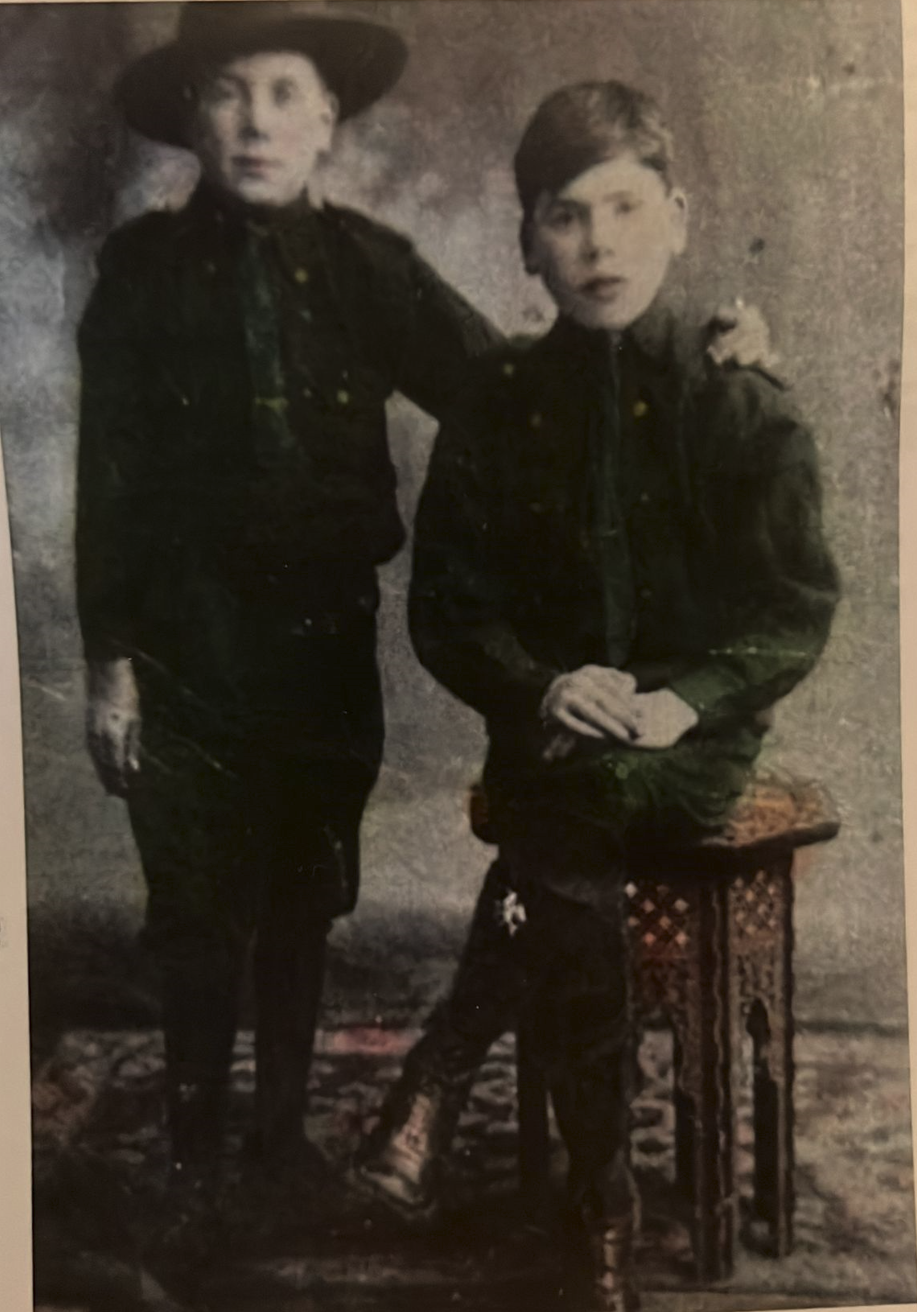


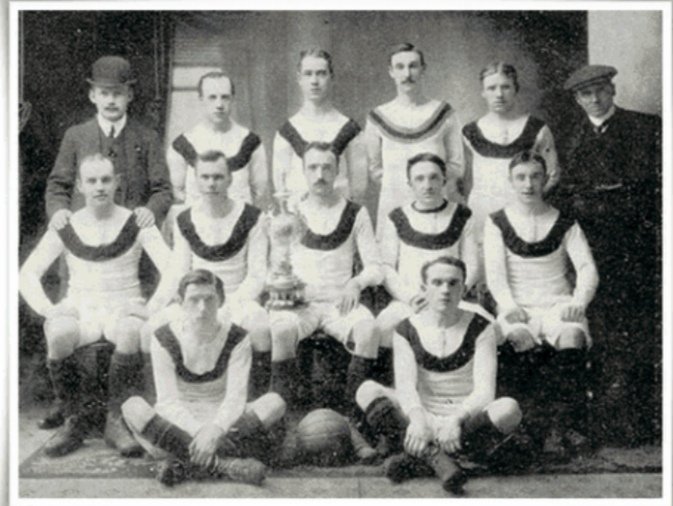
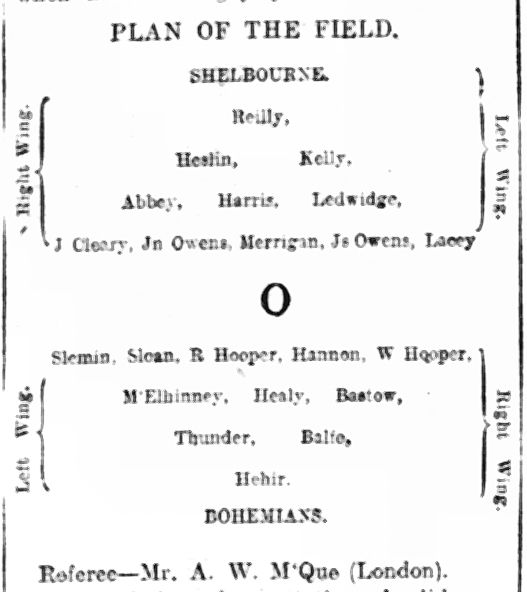


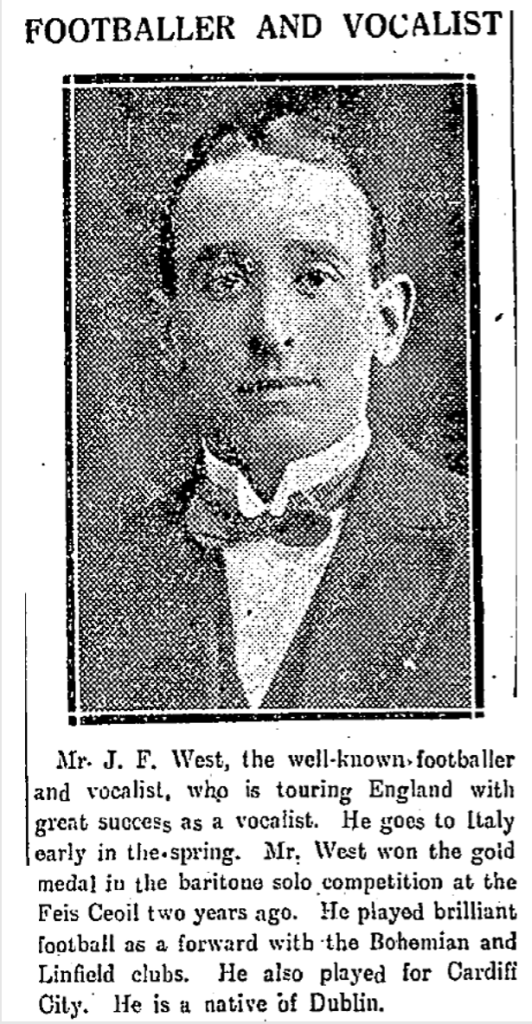


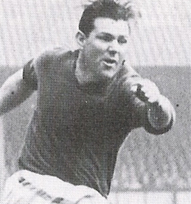


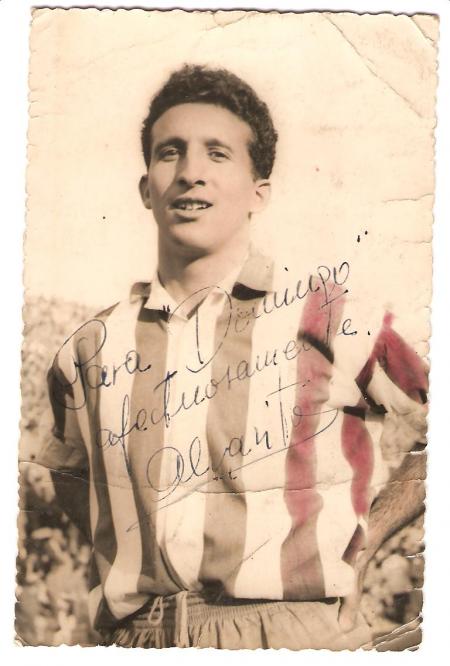


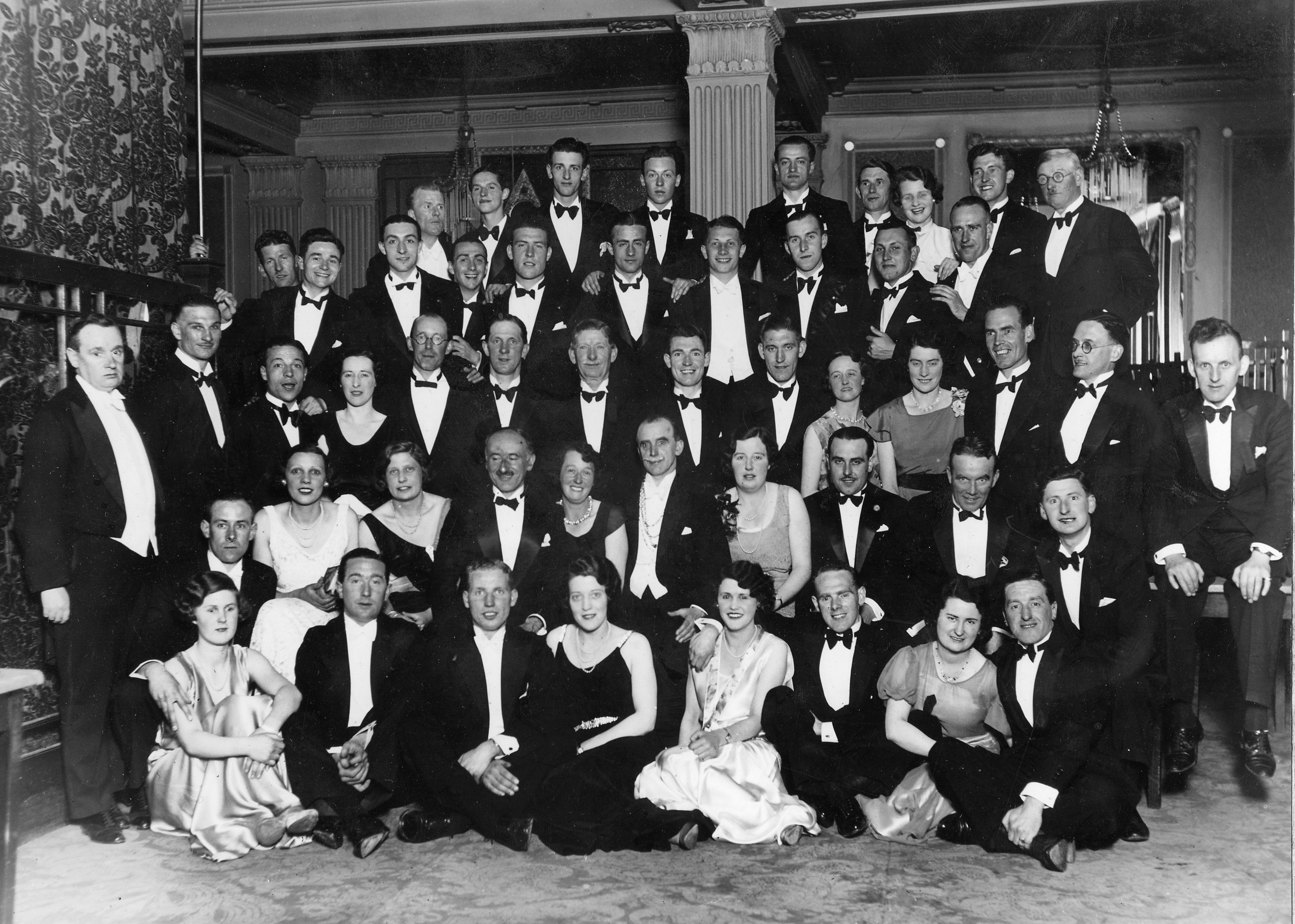

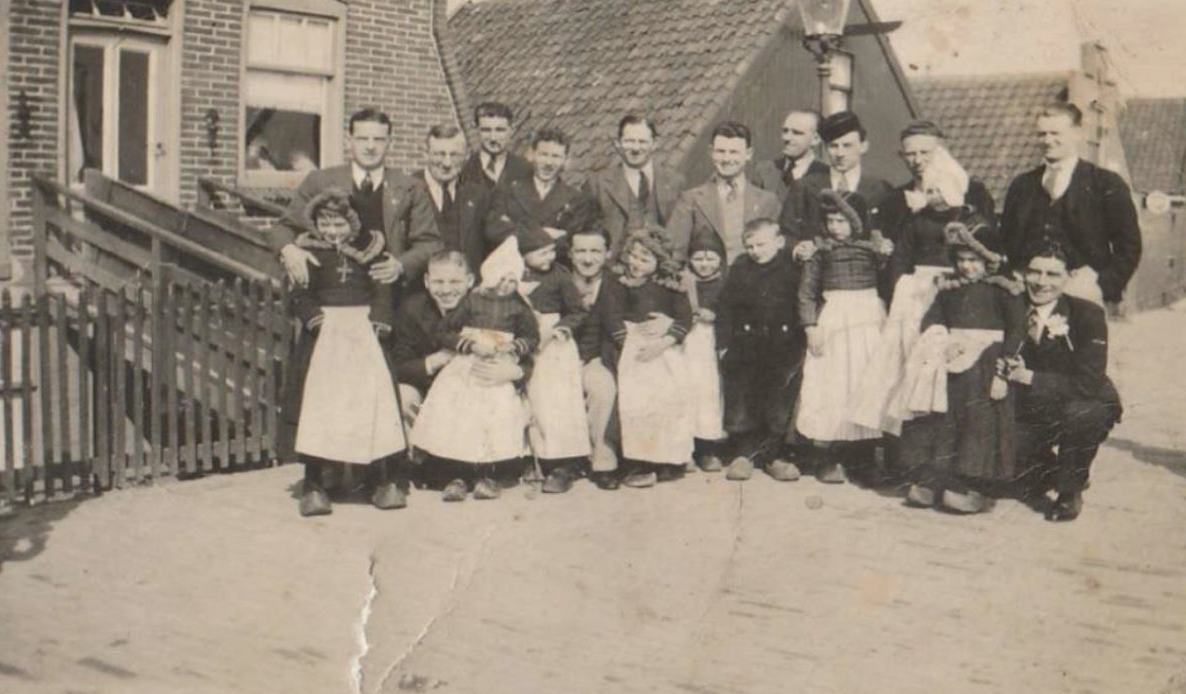

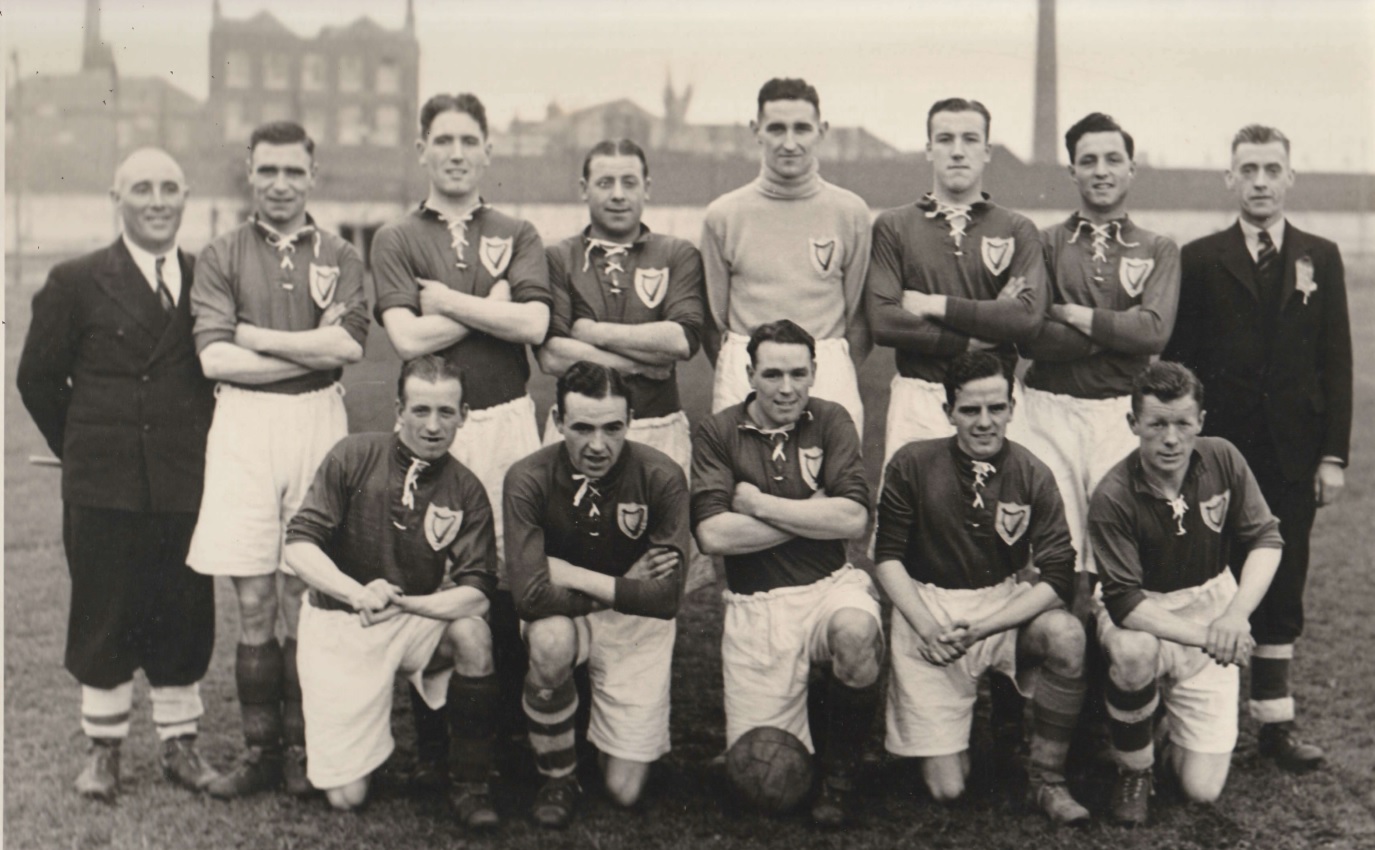


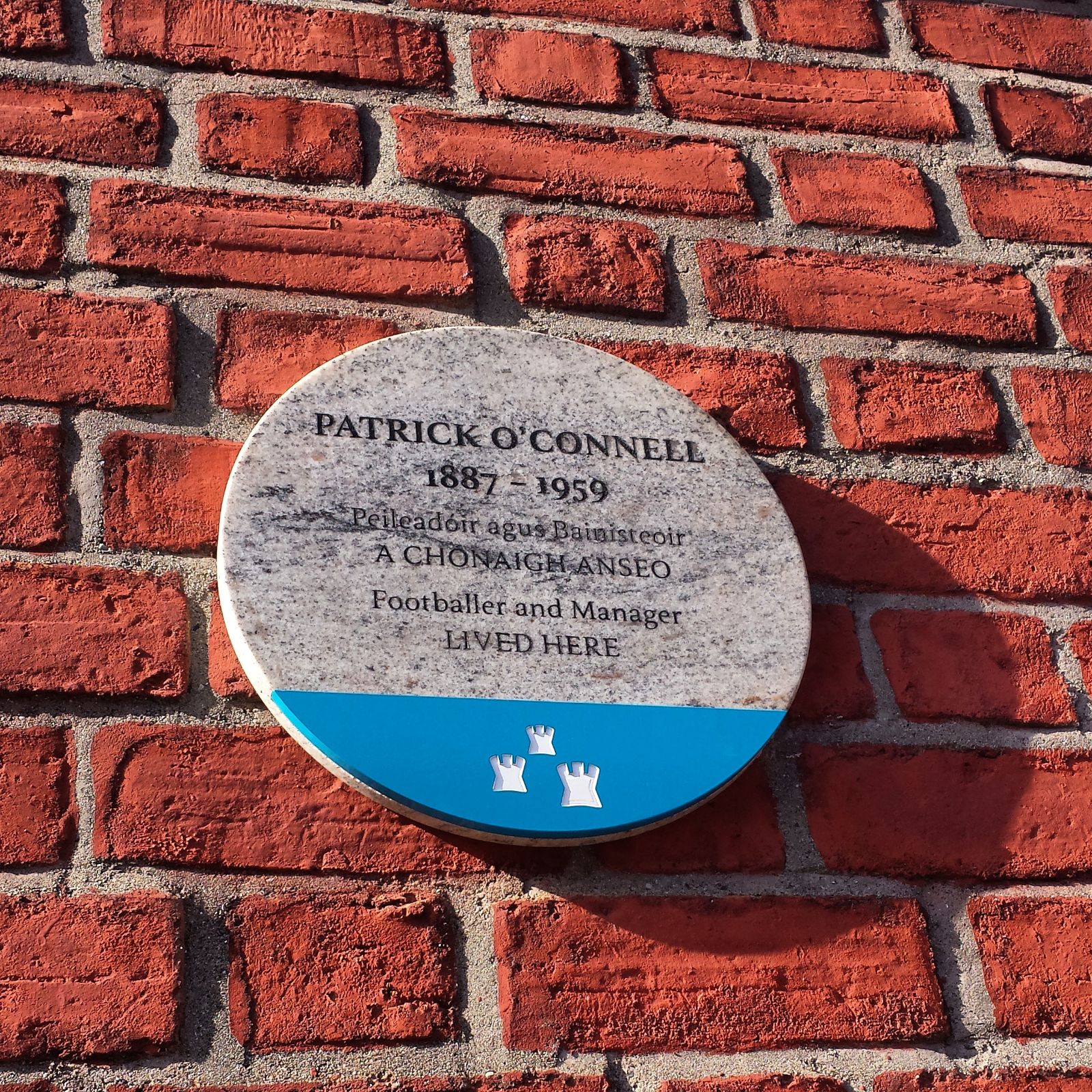


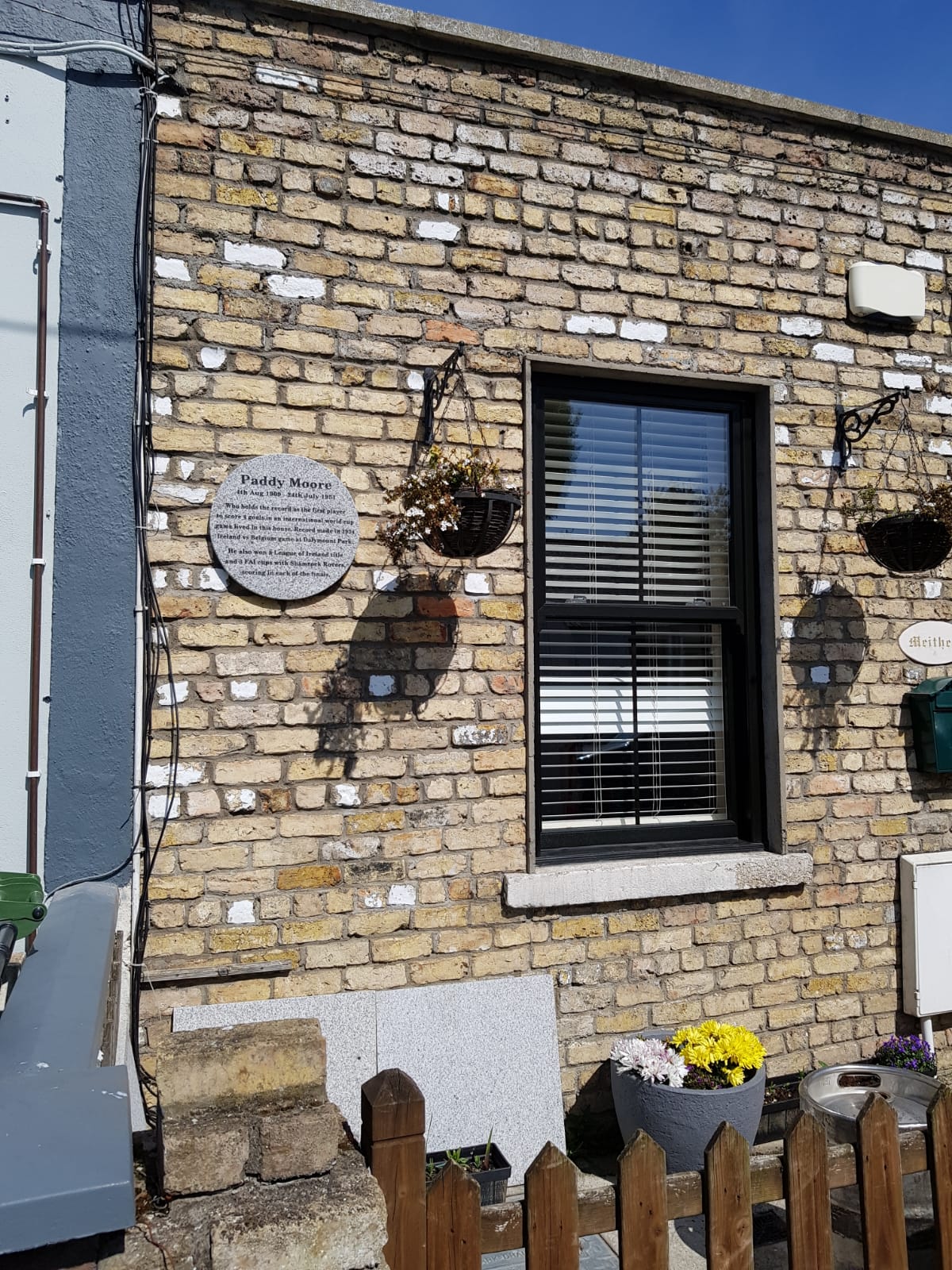
 The early matches of the club were played on the nearby Polo grounds. By 1894 the club had its first major piece of silverware, the Leinster Senior Cup, defeating Dublin University 3-0 in the final. It was to be the first of six consecutive victories in the competition. Less than two years after that first victory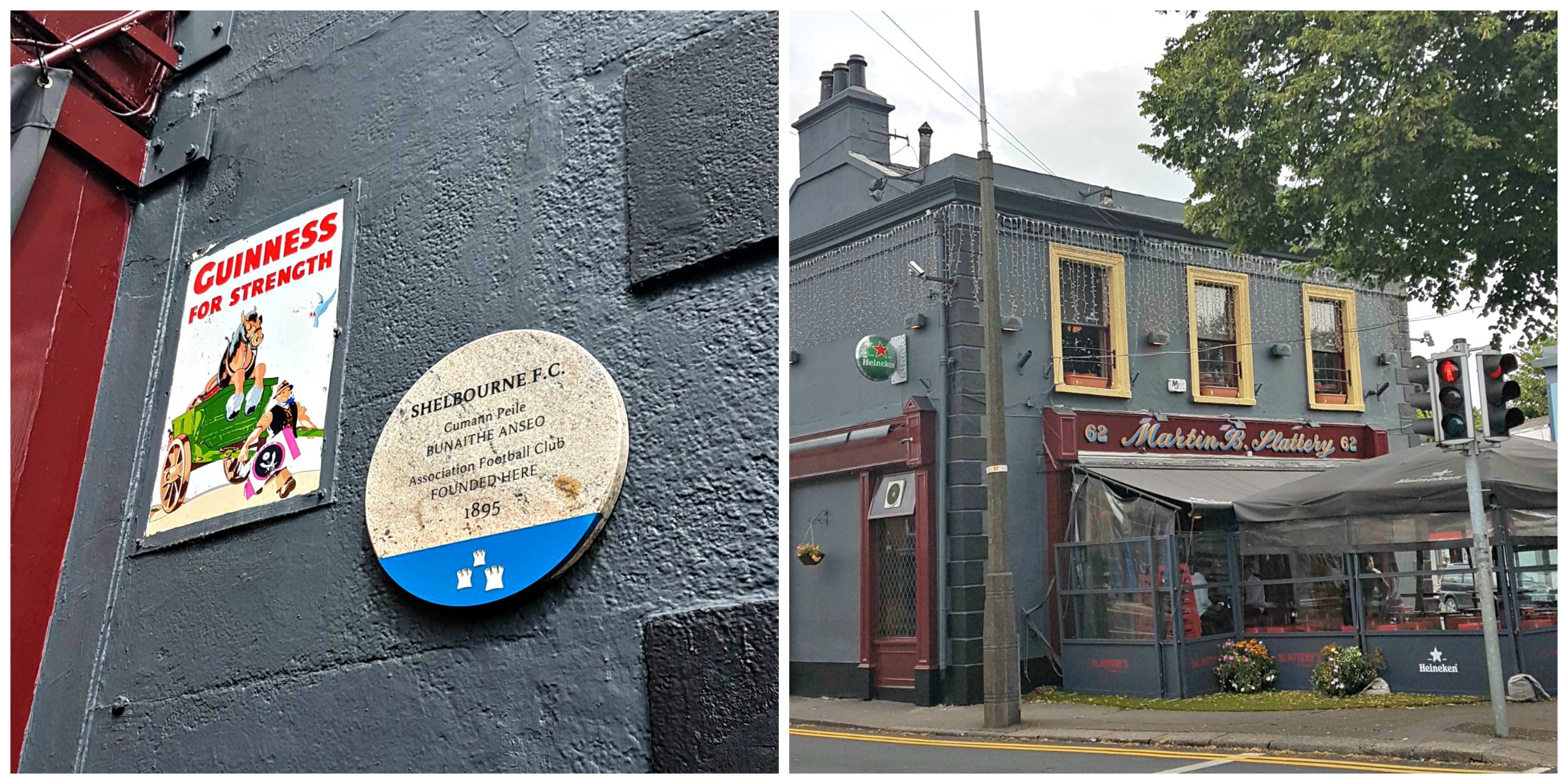


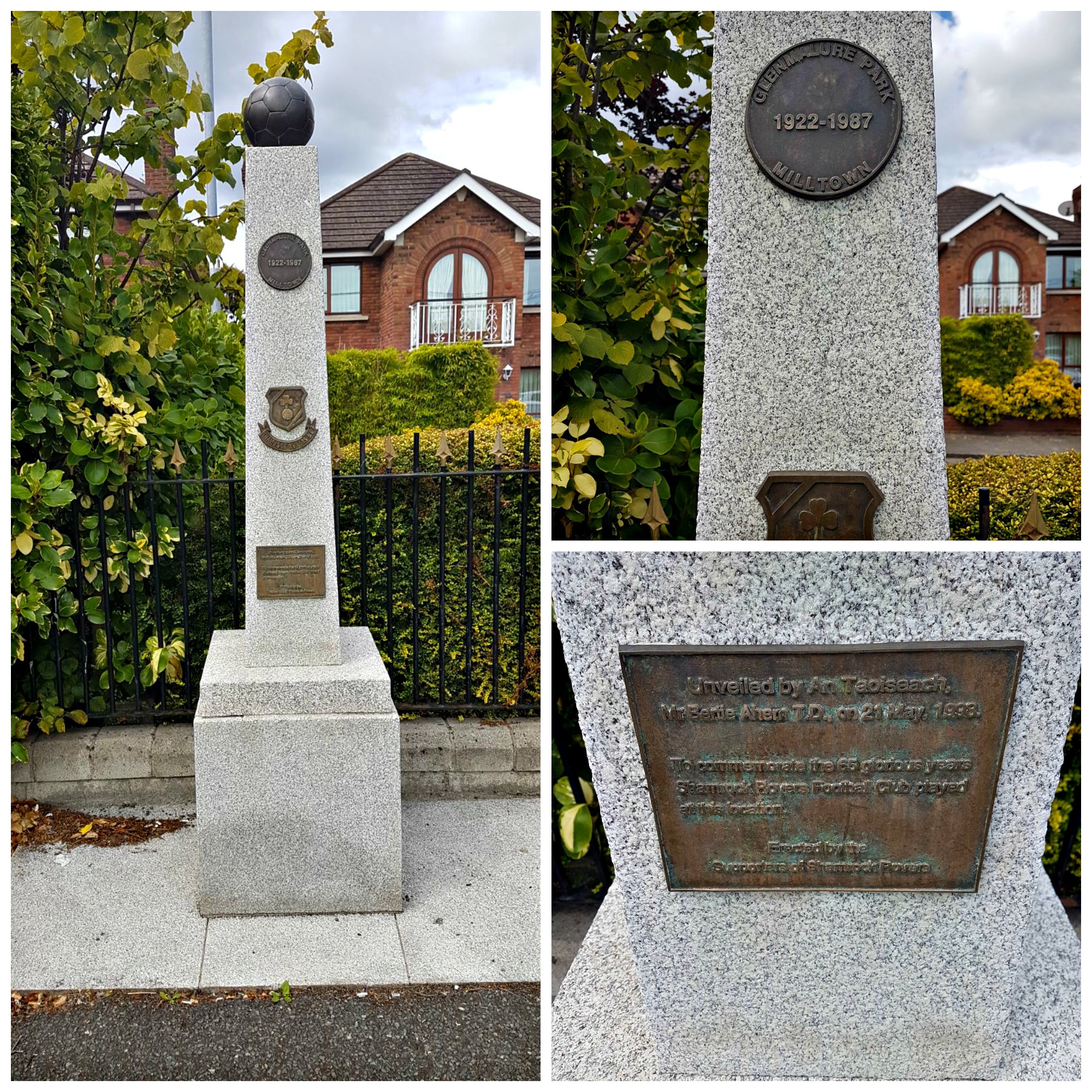
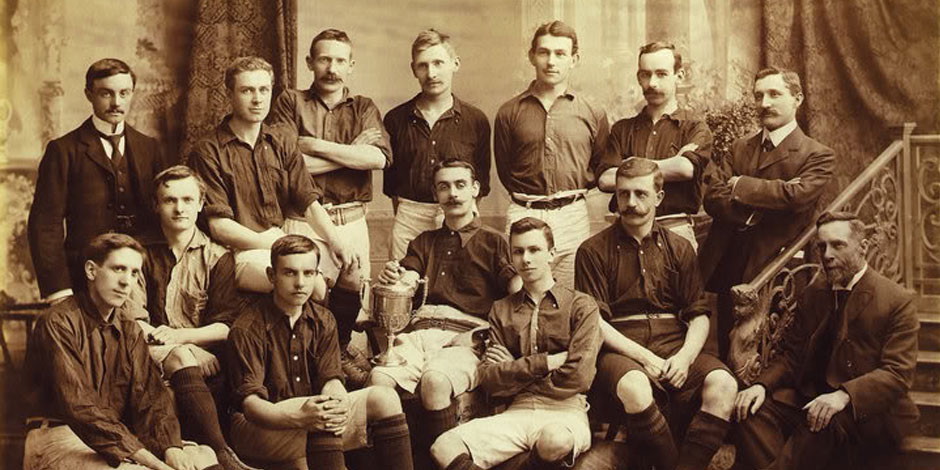
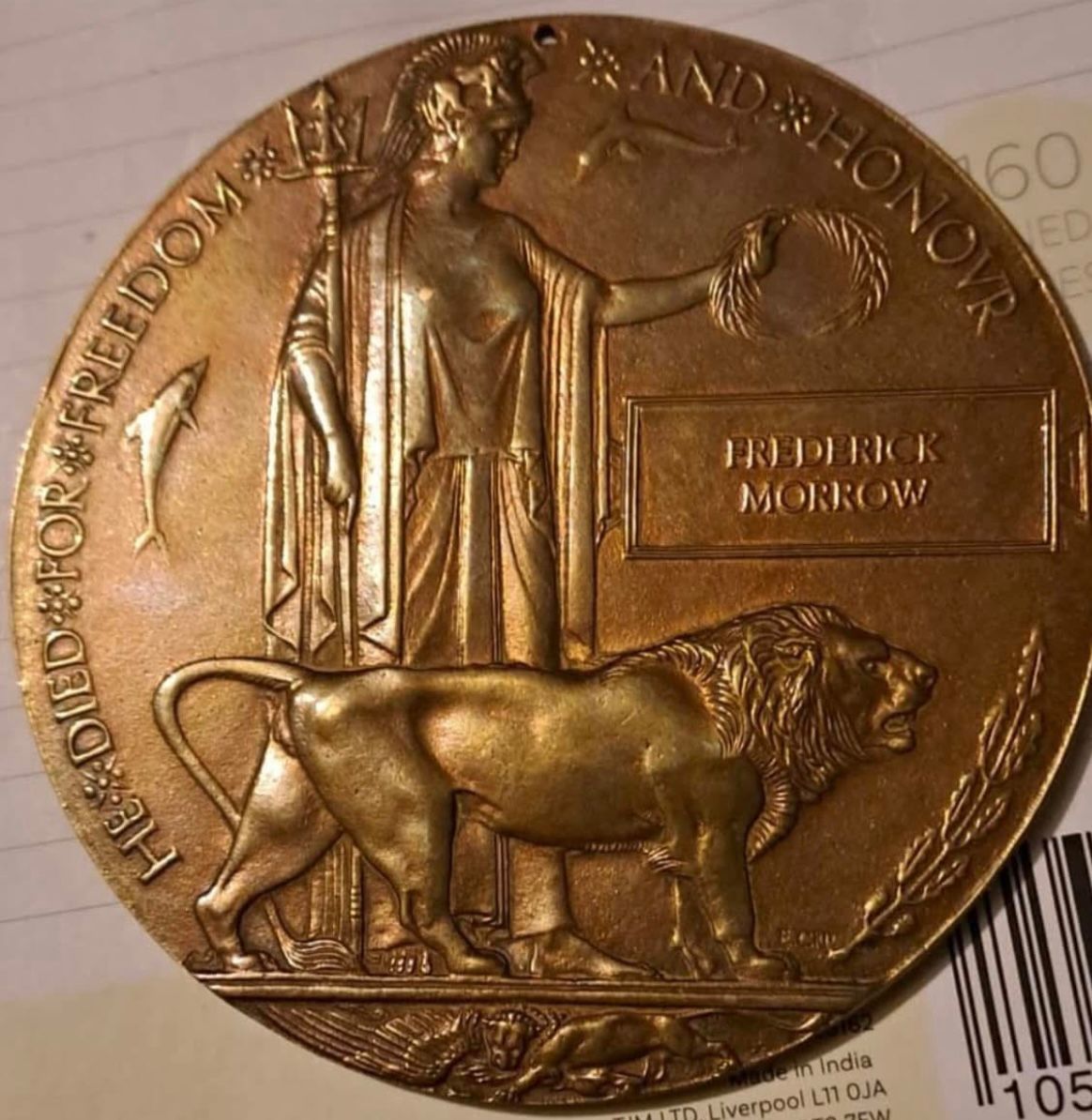

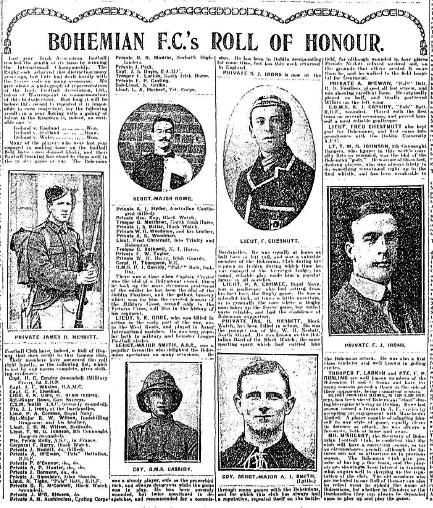


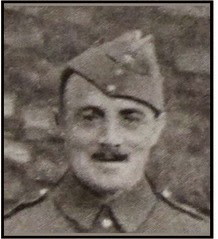

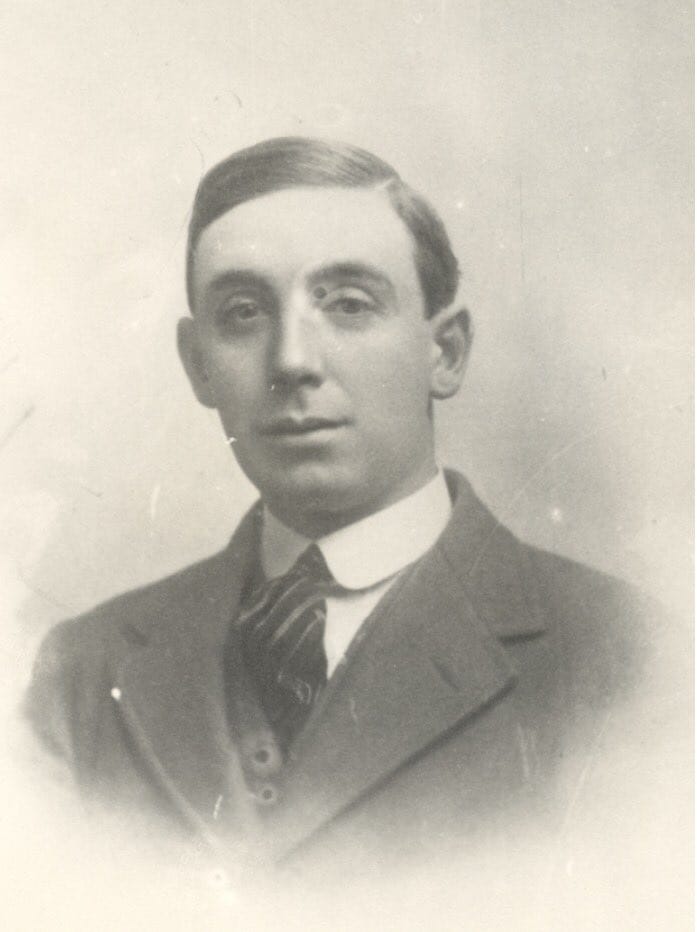
 A Bohemian Sporting Life