The 1925-26 season was a last exit for Brooklyn as the southside club withdrew from the league, being replaced by another Dublin side, Brideville FC who were the original League of Ireland side to compete out of Richmond Park in Inchicore.
Shamrock Rovers were defending champions but there was stiff competition expected from other quarters, mainly from the Fordsons team who started the season strongly and had added Bohemians striker Dave Roberts to their ranks, as well as from Shelbourne for whom John Simpson and Fran Watters provided the bulk of the attacking talent.
Despite all the striking talent in the league in the goalscoring stakes it was once again Billy “Juicy” Farrell of Shamrock Rovers who topped the scoring charts with 24 league goals. An all-round sportsman, Farrell excelled at hockey, cricket, Gaelic football and even billiards. However, the 25-26 season would be the last one in which he would play regularly, a broken leg after a serious motorbike accident in May 1926 prematurely curtailing one of the most promising careers in the League.
For Bohemians their top scorer was the South African, Billy Otto, pressed into service more often as a centre forward after the departure of Roberts, with the likes of Dr. Jim O’Flaherty (another in a long line of Bohemian doctors), Jimmy Bermingham, and Joe Stynes (a prominent Republican during the Civil War and former Dublin county footballer) all chipping in through the season. Between the posts the Irish Army Officer, Harry Cannon had made the goalkeeper spot his own.
As mentioned Fordsons had a particularly good start to the season but it was Bohemians who became the first side to win against them in Cork, securing an impressive 2-0 win. However, this win and the two points that came with it were overturned and awarded to the Cork team after a protest that veteran Bohs player Harry Willits had been listed on a team sheet for the game as “Henry” Willits. The league committee awarding Fordsons the victory due to the mis-spelling of the name of one of the league’s best known and longest serving players.
Despite that dubious victory Fordsons would only finish 3rd in the league, Shelbourne capturing the title for the first time in their history with Simpson and Watters scoring 33 goals between them to propel them to victory. In the Cup however it was to be Fordsons year, they defeated Shamrock Rovers 3-2 in the final in front of a record crowd of 25,000 in Dalymount.
Key to their victory was their goalkeeper Billy O’Hagan, the Donegal born former IFA international saved a penalty from Bob Fullam with the scores tied at 2-2 to inspire his team onwards, and with five minutes to go Paddy Barry scored the winner to bring the cup to Leeside for the first time. Harry Buckle, (who we met in the last issue) made history by becoming the oldest player at 44 years old, to win the cup, a record that still stands to this day.
In terms of trophies Bohemians had to be content with the Leinster Senior Cup which they won 2-1 in a replayed final against Shelbourne, Dr. Jim O’Flaherty grabbing both the goals in the game played on April 19th as one of the final matches of the football season.
A month earlier the League had secured its first inter-league victory, defeating the Irish League 3-1 in a comfortable victory in Dalymount in the first ever meeting between representative teams from the island’s two leagues.
And just a week after that history was made as an Irish international side under the auspices of the FAI took to the field in Turin to face Italy. Despite a 3-0 reverse it was an important first step in world football for the national side, among the starting XI that day were Bohemians Harry Cannon in goal and Jack McCarthy in the defence.
Sean O’Casey’s Juno and the Paycock debuted on the Abbey Theatre stage in 1924 with the focus of the drama set in the city of Dublin after the outbreak of the Civil War just a couple of years earlier in 1922. The “Paycock” of the title, the feckless Captain Jack Doyle, became identified by the malapropism which he exclaimed repeatedly through the play, “the whole world is in a terrible state o’ chassis”. And indeed it was. If we take it that Captain Jack meant by “chassis” that the world was in a state of chaos and change then certainly his final drunken quip was accurate. Maybe he’d been at the first ever Free State cup final a few months earlier?
By the dawn of 1922 the truce in bloody War of Independence was’t yet six months old, the Anglo-Irish Treaty had only been signed in December of 1921 which allowed for the creation of a 26 county Free State by the end of 1922. But before that would happen 1922 would also witness the beginnings of the Irish Civil War. A state of chassis indeed.
In the middle of this chaos the Football Association of Ireland had been formed after a split from the Belfast-based IFA and a brand new league and cup competition were begun before the Irish Free State had even officially come into being. While that first season can be viewed as a success from a footballing perspective, it was not to be without incident or drama. Befittingly, it was the cup final that witnessed some of the most dramatic scenes.
The first season of the league had kicked off in September 1921, it only featured eight teams in total and all of them were from Dublin. Of those eight only two are still involved in League of Ireland football today, Shelbourne and Bohemians. The cup however, was slightly more diverse, featuring the likes of Athlone Town, who would join the league the following season, as well as West Ham. The West Ham from Belfast that is.
West Ham were a team in the Falls and District League in Belfast. When the split from the IFA occurred these clubs chose to affiliate with the FAI and in West Ham’s case their new cup competition. This wasn’t to be the only occasion that something like this happened, the following season the cup winners were Alton United, previously a junior club in Belfast they shocked Shelbourne in the final with a 1-0 win. The relative success of junior clubs from Belfast was likely to have drawn some condescending looks from the IFA in relation to the standard of football south of the border. But it should be noted that at the time due to the political turmoil in Belfast one the foremost clubs on the island; Belfast Celtic had withdrawn from the league and many of their players were active for sides in the FAI affiliated Falls and District league.
This would change when by the end of 1923 the FAI was admitted to FIFA. One of the conditions of acceptance being that only clubs from the 26-county Free State could be members of the Association. This meant an end to the involvement of northern clubs until Derry City joined the league in 1985. West Ham were not to have much of a cup run. Their highlight was holding Shelbourne to a scoreless draw before they were knocked out in a replay.
While the West Ham versus Shelbourne game may have been tight there were a few hammerings in the early rounds of the cup. In the opening round Dublin United beat their league rivals Frankfort 8-1. While Dublin United would drift out of football over the following few years Frankfort, from the Raheny area of Dublin are still active locally, playing their matches in St. Anne’s Park.
Despite their convincing win in the opening round Dublin United were dumped out in the following tie by Shamrock Rovers, then a Leinster Senior League side. Rovers had already had a long cup campaign before the met Dublin United. Not being a league club they had to negotiate a number of qualifying rounds which had their own fair share of drama. A comfortable win over UCD was followed by a trip to Tipp to take on Tipperary Wanderers. Despite the recent prominence of Shane Long we don’t often think of Tipperary as a soccer stronghold but the local side were good enough to beat Rovers 1-0. The men from Ringsend however, made a formal protest because of the poor quality of the pitch that they were forced to play on. A ruling was made that the match had to be replayed and this time Rovers emerged victorious.
Further victories followed over St. James’s Gates “B” side and Shelbourne United (a club who also had their origins in Ringsend but not to be confused with Shelbourne F.C.) which meant that Rovers were through to the first round proper of the cup against Free State league side Olympia. A 3-1 win there and the 5-1 hammering of Dublin United saw them drawn in the semi-finals against Bohemians.
Bohs being the more well established side went into the games as favourites. They enjoyed home advantage as both semi-finals were to be played in Dalymount Park, they’d finished a close second to St. James’s Gate in the inaugural league season and they’d demolished Athlone Town 7-1 in the previous round. But it was Rovers who emerged victorious thanks to a lone strike by John Joe Flood. The result was somewhat of a shock, accounts at the time describe Bohs enjoying the better of the play but failing to take their chances, ultimately the more direct, physical approach taken by Rovers paid dividends.
The scorer of the winning goal, John Joe Flood was one of the team’s early stars. A Ringsend local, he was the son of John Flood, a bottle blower at the nearby glass bottle works. He had previously played for Shelbourne but was very much a Shamrock Rovers man. He even spent some of his youth living on Shamrock Terrace, the road that gave Rovers their name. In all he had four spells at the club, while also trying his luck on two occasions in England, a short spell with Leeds United and later sojourn at Crystal Palace.
He was known as tough and pacey inside forward and was occasionally referred to by the nickname “Slasher” which makes him sound like a fairly formidable opponent. In Rovers’ colours he’d end up collecting four League of Ireland medals and six cup winners medals and later became part of the famous “Four F’s” forward line along with Billy “Juicy” Farrell, Jack “Kruger” Fagan and Bob Fullam. He would also be capped five times by Ireland, scoring four goals, including a hat-trick in a 4-0 victory over Belgium.
Victory over Bohs had secured Rovers’ place in the final, due to take place on St. Patrick’s Day 1922 but they would have to wait a while before the identity of their opponents was confirmed. The other semi-final had gone to a replay, St. James’s Gate versus Shelbourne had finished scoreless in their first meeting and there was a gap of more than two weeks before the game was replayed. The victors on that day were St. James’s Gate and they were confirmed as the side to face Rovers in the final on St. Patrick’s Day.
St. James’s Gate at the time were based around grounds in Dolphin’s Barn that were rented by the Guinness brewery which gave them their name. Guinness were known for the paternalistic attitude they took towards their workers and a job at the brewery offered a level of security and benefits that were not often found in other workplaces around Dublin. The James’s Gate players were nominally amateurs, five players from the team would be part of the amateur squad that competed for Ireland in the football tournament at the 1924 Olympics, but even by the time of the Cup final there were a quota of non-Guinness players allowed play for the team.
Some of those who weren’t Guinness employees included Ernie MacKay, the son of a Scottish soldier, Ernie worked for at the GPO for decades while also remaining involved with James’s Gate as a player and administrator well into the 1940’s. His team-mate at inside-left was Charlie Dowdall who had worked for Guinness briefly but spent most of his career working at the Inchicore railway works. Still they would have had access to the superior sporting facilities of the Guinness workers, pitches, gymnasiums and medical experts. Such was the prestige of the club at the time that many star players who did work at the brewery were excused from more taxing work to make sure they were fit and healthy for upcoming matches.
This approach had brought impressive results. In the 1919-20 season St. James’s Gate had won the Leinster Senior Cup, the Leinster Senior League, the Metropolitan Cup and the Irish Intermediate Cup. By the time the cup final rolled around on St. Patrick’s Day 1922 the Gate had already become the inaugural Free State league champions and Leinster Senior Cup winners, an FAI Cup win would seal a treble.
The Gate were favourites, despite the fact that they were technically viewed as an amateur “works” team whereas Rovers (still a Leinster Senior League side) were paying players between 20-30 shillings a game. The Gate possessed the league’s top scorer, Jack Kelly in their ranks, and while Rovers had a certain reputation for toughness and aggression (especially men like Bob Fullam, Dinny Doyle and William “Sacky” Glen) St. James’s were no push-overs in this regard.
Their midfield half-back line of Frank Heaney, Ernie MacKay and Bob Carter were tough, tall, physically imposing men. Heaney, a veteran at this stage, had won amateur caps for the IFA, while MacKay, Dowdall and the versatile Paddy “Dirty” Duncan would also all represent Ireland at the 1924 Olympics. They were certainly a side with pedigree.
What was described as a “fine holiday crowd” numbering up to 15,000 were in attendance in Dalymount Park that St. Patrick’s Day for the final. Despite the fact that the Gate midfield was physically bigger the Rovers half-backs were dominant in the opening half, but their forward-line, though “aggressive” missed a succession of chances and five minutes before the break Jack Kelly rose highest to power home a header from a Johnny Gargan corner kick to give St. James’s Gate a half-time lead.
Ten minutes into the second half Rovers restored parity, Paddy Coleman, the Gate keeper failing to clear a ball from an in-swinging corner meant an easy finish for the Rovers winger Charlie Campbell. Rovers rallied and had some good chances before the end of the game but their earlier slack finishing persisted and they failed to make their pressure count. The Irish Times used the standard parlance (then, as now) referring to the match as a “typical cup tie”, it was hard fought, but they complained that much of the play was “crude”. A replay was set of the 8th of April and there was even greater drama to come.
The crowd wasn’t quite as sizable for the replayed game, perhaps due to the fact that the Irish Rugby team were playing France that same day in Lansdowne Road and enjoying a rare will over Les Blues. The 10,000 or so who were there in Dalymount Park were in full voice, and the Gate’s Charlie Dowdall later described the atmosphere as “electric”, and remembered the “intense fanaticism between the supporters” before ominously noting that “those were the troubled days, and there were a few guns lying around in supporters’ pockets, though it all ended happily”. As we’ll see later at least one supporters’ gun didn’t end up staying in his pocket!
As the game kicked off with Rovers captain Bob Fullam winning the toss and deciding to play into the wind in the opening half, this didn’t seem to hamper Rovers who had the better of the play and created most of the chances, however, as in the previous game, they couldn’t make possession and territorial advantage count. Rovers errant finishing would cost them as a minute before the interval Johnny Gargan nicked the ball from Joe “Buller” Byrne (later a groundsman at Milltown) and squared for Jack Kelly who beat Bill Nagle in the Rovers goal with a fierce, low strike. Despite Rovers continuing to have the better of the play in the second half it would remain the only goal of the game as Paddy Coleman put in a display described as “miraculous” between the sticks for the James’s Gate.
The final whistle was met with a pitch invasion from some of the Rovers support who headed straight for the James’s Gate players. They were soon joined by several of the Rovers players. Two tough teams had obviously gotten under each others skin and Dowdall and Fullam in particular had been having something of a running battle throughout the match.
As the St. James’s Gate players made for the dressing rooms at pace they were chased from the pitch by the invading fans and three Rovers players. Bob Fullam, allegedly joined by Dinny Doyle and John Joe Flood, pursued the Gate players inside where Fullam advanced on the object of his ire, Charlie Dowdall. It all seemed set to kick-off when Jack Dowdall, Charlie’s younger brother and an IRA volunteer stepped forward and produced a pistol. Fullam and his Rovers teammates were outnumbered, and now out-gunned and they sensibly beat a retreat from the changing rooms. Fullam, along with Doyle and Flood ended up receiving bans from the FAI for their part in the disturbances.
Fullam wouldn’t be banned for long and ended up scoring 27 times in the league for Rovers the following year. Most with his howitzer-like left foot. While his first cup final may have ended is defeat he would retire from the game with four winners medals to his credit, to go with the four league titles he’d collected. So central did he become to Rovers success that the popular refrain among their support whenever the team were lacking inspiration on the pitch was “Give it to Bob”, a phrase that entered widespread use through Dublin in the subsequent decades.
Fullam also has an important footnote in Irish international football history. After the 1924 Olympics few international matches were forthcoming and the FAI had to wait until 1926 to secure a full international fixture, in this case a game against Italy in Turin with a return game in Dublin also agreed. Fullam and Frank Brady of Fordsons were the only players to play in both of those early games. The Italians ran out comfortable 3-0 winners in Turin but performed better in Lansdowne Road the following year with Ireland taking the lead through a powerful strike from none other than Bob Fullam. It was counted as the first goal in International football for a FAI national team. Indeed he nearly grabbed a second shortly after from a free-kick, the power of which meant that Mario Zanelli, the Italian full-back was stretchered off after he blocked the fierce shot with his head. Despite the performance that was to be Fullam’s last cap for Ireland, he was by then into his 30’s and Rovers were to be the main focus of his footballing exploits.
That inaugural season of Free State football belonged to St. James’s Gate who finished with three trophies, while Paddy Duncan, Charlie Dowdall and Ernie MacKay would all go on to represent the nascent international team in the following years. Despite the chaos of the cup final replay over 25,000 spectators had paid in to watch the two games, bringing in gate receipts of over £1,000 which were crucial to the FAI’s finances in those early days.
Less than a week after the replay anti-treaty IRA volunteers, led by Rory O’Connor occupied the Four Courts in Dublin city. Tensions mounted and in the early hours of June 28th the Free State army began shelling the Four Courts from their positions south of the Liffey. The Civil War had begun, the nation was convulsed by almost a year of violence that would leave thousands dead. By the time a cessation to the violence arrived in May 1923, amid the turmoil, lawlessness and death somehow an entire football league season and cup competition had been played out. Circumstances that seem so utterly bizarre and unreal today. Shamrock Rovers, newly elected to the Free State league had won it at their first attempt. With Bob Fullam, returned from his ban, as top scorer. In the cup Alton United enjoyed their brief moment in the sun by winning the cup, a Belfast side triumphing in the Free State blue ribbon competition. A tragic, dramatic, scarcely believable, terrible state o’ chassis indeed.
Irish emigration to the United States is not a new phenomenon, Annie Moore from County Cork became the first immigrant to pass through Ellis Island, New York in 1892 but by that stage there had already been millions of Irish immigrants who had set up home throughout the USA. It is estimated that as many as 4.5 million Irish arrived in America between 1820 and 1930. Between 1820 and 1860 alone, the Irish constituted over one third of all immigrants to the United States.
With this number of Irish immigrants it should not be surprising that there are many Irish names to be found within the early years of US football history, names like Cahill, Peel, Farrell and Cunningham who were either Irish-born or the children and grandchildren of emigrants. Even the club names bear witness to this with plenty of Hibernians and Shamrocks being used as suffixes back into the 1890s. There was even mention of a team called the Philadelphia Irish Nationalists back as far as the 1870s.
However by the 1920s something different was happening: along the Eastern seaboard a professional soccer league was emerging, the ASL (American Soccer League), which began its inaugural season in 1921-22 featuring clubs from in and around New York, New Jersey, Massachusetts and Pennsylvania, areas with strong concentrations of Irish immigrants. The debut season was won by the Philadelphia Field Club who were mostly made up of players formerly of the Bethlehem Steel Football Club. However, after this early success Philadelphia soccer took something of a nose-dive, with the club struggling towards the bottom of the league in subsequent years.
At this point, Irish interest re-emerges in the form of Irish-born, Brooklyn based businessman Fred Maginnis, who took over the struggling Philadelphia Field Club and boldly rebranded them as Philadelphia Celtic ahead of the 1927-28 season of the ASL. The change of name was not just a nod to his homeland; Maginnis had intended to bring across the cream of Irish footballing talent to join his squad. His hope, apparently, was that the significant Irish community in and around the city would come out in big numbers to support this Irish branded football team.
Maginnis got rid of most of the previous year’s squad, though he did keep former Irish League players Billy Pitt, once of Newry Town, and Hugh Reid, a promising defender who had previously been on the books of Glentoran. Both Pitt and Reid had been highly rated during their Irish League careers. Pitt, was a Belfast-born wing-half who had been part of the first Newry Town squad to compete in the Irish League, and he and young Reid had been selected for an Irish League XI for an inter-league game against a League of Ireland XI in 1926.
Billy Pitt proved to be especially useful for Maginnis in recruiting new players for the Philadelphia Celtic directly from Ireland. Pitt’s footballing connections, and Maginnis’ promises of free passage to America and $55 a week in wages, turned a lot of heads and players of varying talents made the journey. Of the more prominent figures convinced to journey across the Atlantic were Ards players Jimmy McAuley and Eddie Maguire, as well as the much-travelled forward Arnold Keenan, who had featured for Fordsons in the Free State League, Glentoran in the Irish League, and for Crystal Palace in England. Others who travelled from the League of Ireland included Michael Maguire, an inside-right, and Paul O’Brien, an outside-left who had played for Brideville, and Larry Kilroy, an inside-right from Bray Unknowns. Also included was Shelbourne player William Burns, who broke an FAI suspension from football to go and play in the United States.
Perhaps the two most famous players who travelled were Free State internationals Denis “Dinny” Doyle and Bob Fullam of Shamrock Rovers, who were joined by fellow Rovers team-mate Alfie Hale (father of the Waterford footballing legend of the same name). By the time of their journey they were both Irish internationals, having represented the Irish Free State in two games against Italy. While Doyle only featured in the home fixture against the Italians, Fullam played in both Turin and Dublin games and got on the score sheet in the home match.
Fullam was one of the best known figures in the League of Ireland. A talented inside forward, he had a rocket-like left-foot and had already been central to Shamrock Rovers’ three league titles and an FAI Cup win. Such was his importance to the team that the popular terrace cry of “Give it to Bob” became common among Rovers fans any time their team were on the back foot.
Fullam had played outside of Ireland before, lining out for a short time for Leeds United but the trip to Philadelphia was a bigger jump into the unknown. Billy Pitt would have faced Fullam in that inter-league match in 1926, and he would certainly been aware of him by reputation when he approached him about the trip to America. It was Fullam in turn who convinced Dinny Doyle to travel. Some newspaper reports suggested that Fullam and co travelled in August 1927, ostensibly as part of a touring Irish exhibition side to the United States, though this seems to have something of a cover story for their true intentions.
What was clear however, was that the Philadelphia Celtic, although rapidly assembled, could certainly hold their own in the professional ranks of the American Soccer League. Although they lost their opening game, they followed this up with a draw and then two victories over the impressive Fall River Marksmen and the Boston team. All was not well in the camp however, as the Boston result was overturned because Philadelphia had made an improper substitution. The lack of any proper coach or manager no doubt was partly to blame, as well as the mounting financial problems.
The ethnic marketing of an Irish Philadelphia side was not creating as big a stir in the city of Brotherly Love as Fred Maginnis might have hoped: even games against strong sides like Boston and Fall River were only drawing crowds of 2,000 – 3,000. Results were very unlikely to improve, as quite quickly the players realised that the riches they had been promised weren’t materialising. Whether Maginnis’s strategy had been to use money raised from expected big gates to pay the squad’s wages, or whether he was just a poor businessman without a Plan B isn’t clear, however, the Irish players quickly realised that the $55 a week they’d be promised wasn’t going to turn up, nor even a fraction of it.
There had been problems with payments from the beginning, and the ASL had come in and taken over the running of the team on an interim basis while they told Maginnis to find a buyer to take over the club. Maginnis, however, didn’t seem to be trying very hard. The Philadelphia franchise being deliberately over-valued put off potential investors, however, Maginnis did seem keen to strike a deal to sell the majority of the club’s playing staff to the Fall River Marksmen club. The league objected to this, and there were even discussions about whether the players could move. Eight of the players had work permits sponsored by Philadelphia Celtic (describing their profession as artists) which would then have to be endorsed by the new club that they would join.
It all came to a head before the end of October 1927 after only 10 games for Celtic, when the League Commissioner Bill Cunningham announced that Philadelphia Celtic had folded and that as far as they were concerned the players who had remained were free agents who could move to a club of their choosing. Some of the Irish contingent decided that they’d had enough; they’d struggled financially due to Maginnis’s mismanagement and by November William Burns and Paul O’Brien had already returned to Ireland. Bob Fullam had a short sojourn with the wonderfully named Detroit Holley Carburettor FC before eventually returning to Shamrock Rovers ahead of the 1928-29 season. Others like Kilroy, McGuire and Alfie Hale would return to Ireland after a matter of months. Billy Pitt, who had helped recruit many of the players for this Philadelphia experiment, would stay a few years longer, playing first for Fall River and later the New Bedford Whalers, Bethlehem Steel and the Pawtucket Rangers. He eventually returned to the Irish League in 1931 where he signed for Glentoran, after some disagreement regarding his transfer from his former club Newry Town. Pitt had left Newry for the States without a transfer being paid and personally faced a significant fine of £50 for breach of contract, it was only after Glentoran agreed to pay this fine that the transfer was sanctioned.
Fullam’s erstwhile team-mate Dinny Doyle had, however, taken to American living and to the ASL. After initially being frustrated in his attempts to sign the Philadelphia players, Sam Mark, owner of the Fall River Marksmen, was successful in signing not only Doyle and Pitt but also Arnold Keenan and Jimmy McAuley. Doyle would go on to be a league Champion with Fall River the following season, as they became one of the most dominant American soccer teams of that era. Dinny Doyle made his life in North America, passing away in his home in Canada in the late 1980s. He was the last surviving member of that first Shamrock Rovers side to win the league title.
The idea of importing an Irish soccer team wholesale into a professional American league was a novel one, it played to the ethnic target marketing that was common in American soccer at the time, but it was ultimately doomed to failure due to the unscrupulous behaviour of an Irish-American businessman trying to get one over on footballers eager for a better life.
While the Philadelphia Celtic quickly failed and many of their players returned to their careers in Ireland, it was not to be the last time that an Irish side was parachuted into an American soccer league…
The research of Steve Holroyd and Michael Kielty has been especially useful in preparing this article.
The football highlights don’t do justice to the man but let’s recount them anyway. One of only three players in the history of the English top-flight to score 30+ league goals across three consecutive seasons, the most recent is Alan Shearer. The record for the longest scoring streak in English league football; scoring in 12 consecutive games, a league Champion with Arsenal, a League of Ireland and FAI Cup winner, national team record goal-scorer for 28 years. Not a bad football CV – it belongs to Jimmy Dunne.
But there is so much more to Dunne than 90-year-old scoring records. He was born on Cambridge Street in Ringsend in 1905 the son of Thomas and Catherine Dunne. Thomas was a bottle blower in the nearby glass bottle works. The Dunne family’s life was far from easy, of the eight children born to Catherine only four survived, with Jimmy being the youngest.
A further blow to the family occurred with the death of Thomas from tuberculosis when Jimmy was just two years of age. To make ends meet the newly widowed Catherine took in lodgers to their small, two-room tenement home, while Jimmy’s older brother Michael was working at the glass bottle works by the age of 14. Local stories record that Jimmy himself got a job for a local bakery as a delivery boy, bringing fresh bread, and occasionally secret IRA communications, on his bicycle around the city.
As a teenager his Republican sympathies continued, and along with his brother Christy he took the anti-Treaty side in the Civil War, eventually being interned in both Portlaoise and the Tintown camp in the Curragh after being arrested during the “Bridges Job” of August 1922 when anti-Treaty forces sabotaged various roads and bridges throughout Dublin. The association game proved popular in the internment camps and playing with rag-balls in tight confines no doubt honed Dunne’s touch and control. Upon his release in 1923 he played briefly for junior club Parkview before he joined Shamrock Rovers and made his debut for Rovers “B” against Pioneers in the Leinster Senior League in December of that year. While he was a Shield winner with Rovers an extended run in the first team was limited by the dominance and scoring prowess of Billy “Juicy” Farrell at centre forward.
Frustrated at the lack of opportunities Jimmy joined New Brighton (on Merseyside not to be confused with Brighton on the South Coast) in the old English Third Division North for the 1925-26 season.
His time on Merseyside was brief however, he made an impressive start to his career, scoring on his debut against Rochdale and registering six goals in eight league games as well as scoring in the cup, this quickly brought him to the attention of Sheffield United’s secretary John Nicholson who signed him for a fee reported between £750 – £800. Apparently this swift turnaround for Dunne, who had gone from Leinster Senior League to the top of the English football pyramid in less than year, was completely unexpected and the modest Dunne had to be persuaded that his future lay in the First Division.
A young Jimmy Dunne after signing for Sheffield United – 1926
As before with “Juicy” Farrell the path to first team football was initially blocked, this time in the form of Harry Johnson. Dunne spent much of the next three seasons in the reserves, making only occasional appearances and at one stage was on the verge of being transfer listed. However, the 1929-30 season would be his breakthrough year, scoring 36 in 39 league games to keep Sheffield United clear of relegation by the old method of goal ratio. Dunne’s amazing run continued with the 1930-31 season being his best ever 41 goals in 41 league games (a record for an Irish player in the English top-flight) and 50 in all competitions. The following seasons brought more goals, significant improvements in United’s league positions and interest from other clubs, especially from Arsenal and their legendary manager Herbert Chapman.
Sheffield United rebuffed an initial approach of £10,000 as they wanted a record £12,000 for Dunne, however Chapman played the waiting game, and with the 1933-34 season underway United found themselves in financial trouble. Chapman boarded an early train and had Dunne signed up for a reduced fee of just over £8,000. Dunne went right into the team and helped Arsenal to the League title, though the manager who signed him, died suddenly in January 1934. Soon after Ted Drake arrived from Southampton, and it would be the goals of Drake, not Dunne that would propel the Gunners to the title again the following season. Drake’s excellent form effectively ended Dunne’s Arsenal career, and belatedly Jimmy Dunne would end up as Drake’s replacement by signing for a struggling Southampton for the 1936-37 season. He would be the club’s top scorer that season and helped them avoid relegation to the third tier.
Dunne, from the numerous reports and descriptions of him as a player, and the very limited footage of him in action, appears as a complete centre forward, he had a good touch and ball control, no doubt honed as a teenager during times of confinement, he was strong and robust, quick off the mark and could shoot with power with either foot. He was versatile enough to drop deeper and play in the more creative role as an inside forward, however, all sources describe his greatest asset as his heading ability. Despite his height being listed as 5’10” the blonde head of Dunne struck fear into defences across Europe. He once scored a hat-trick of headers in a game for Sheffield United against Portsmouth and the innovative coach Jimmy Hogan (himself the son of Irish immigrants) chose Dunne as the player to demonstrate the skill of heading in an instructional coaching film that he made in the 1930s. In an interesting article with Dunne in the Sunday Pictorial while at Arsenal he even mentions having watched the famously skillful and scheming Austrian centre-forward Matthias Sindelar play, nothing the effectiveness of his “withdrawn striker” or “false 9” role as we would know it today. This demonstated Dunne’s keen eye for positioning and tactical possibilities.
While Dunne could have stayed an extra season at The Dell he chose to return home to Dublin and Shamrock Rovers as a player-coach. Though now into his 30s Dunne’s passion was undimmed and helped Rovers to back to back league titles as well as victory in the 1940 FAI Cup. Despite his advancing years these would be his most productive days in the Green of Ireland, in fact, Dunne won 14 of the 15 caps awarded to him by FAI after the age of 30. While Sheffield United released Dunne for seven IFA games during his time with them they very rarely released him for any FAI squads, this was mainly due to the fact that IFA matches coincided with the English national team game while FAI games had to work to other schedules that made English club reluctant to release players. Despite this Dunne amassed 15 caps and scored a record 13 goals which stood until broken by Noel Cantwell in 1967.
One incident of note was that Dunne was released to the IFA by Sheffield United for a game against Scotland in Ibrox. The goalkeeper Tom Farquharson, born in Dublin, withdrew from the squad and wrote to the IFA stating that he only recognised the FAI as the representative Association for Ireland. Dublin-born Harry Duggan followed suit and there was some expectation that Dunne, another Dubliner would do likewise. Without any guidance from the FAI about whether he should play or not Dunne travelled to Scotland. However, Dunne received a letter, sent to Ibrox from Belfast which called him a “traitor to his country” and threatened him with death for playing for an IFA selection. Dunne started the game and duly scored in a 3-1 defeat to the Scots.
If fixtures had been different or UEFA dictats that today require clubs to release players for internationals had existed magine what he could have achieved had he worn the jersey for Ireland in his goalscoring prime with Sheffield United? Perhaps he could have made the difference in qualifying for the 1934 World Cup? Dunne continued playing into the 1940s, although the War had put an end to his international career. His final game for Ireland being a controversial match against Germany in Bremen in May 1939. Dunne was injured in the game but returned to the pitch and had a huge influence as Ireland drew 1-1.
His playing career finished in slightly acrimonious fashion, when aged 37 he was pressured into not playing in a FAI Cup semi-final by the owners of Shamrock Rovers. Dunne, hung up his boots and left the club to take the reins as coach across the city at Bohemians in 1942. Dunne would improve the fortunes of the Gypsies and led them to victory in the Inter-City Cup in 1945, before eventually rifts were healed with Shamrock Rovers and he returned to them as coach in 1947. Dunne was now a full-time coach with Rovers and gave up his job with boiler manufacturers Babcock and Wilcox.
The Irish football world was plunged into mourning in November 1949 when Jimmy Dunne passed away suddenly. His day had been a usual one, and he even spent time watching the Swedish national team train in Dublin ahead of their match with Ireland. Dunne was keen to talk football with their English coach George Raynor before he passed away suddenly after returning to his home on the Tritonville Road and suffered a heart attack.
It is no exaggeration to say that his footballing legacy endured, whether at Rovers in the form of the likes of Paddy Coad who succeeded him, or with his own family with his sons Jimmy Jnr. and Tommy becoming footballers, as well as his nephews, another Tommy Dunne and Christy Doyle.
While almost always referenced as being quiet apart from occasionally accompanying teammates in a sing-song on his button-accordian, mild-mannered, and gentlemanly in demeanour Dunne, in his playing style was robust and fearless. It is worth remembering he had been part of a revolutionary movement in his youth, he was the man who roared “Remember Aughrim, Remember 1916!” to psyche up his teammates before that match in Bremen against Nazi Germany in 1939 and who left his beloved Rovers because of interference from the Cunningham family, he even defied death threats to play for the IFA selection against Scotland in 1931, he was certainly a man who knew his own mind and could stand up for himself. He should also be remembered as one of the greatest strikers this island has ever produced.
The cover of a match programme from a Jimmy Dunne memorial game in 1952 featuring the two teams that Dunne had coached (courtesy Ruairí Devlin)
Jock Dodds was a larger than life character, a man known to swan around Depression era Sheffield in an open-top Cadillac, wearing a silk scarf and fedora hat, a man who ran greyhounds (and casinos) among an impressive number of side-projects, he was also one of the most powerful, dashing and effective centre-forwards of his era, though his prime years were robbed by the outbreak of the Second World War. Dodds’ extrovert personality and determination to make a buck often brought him into conflict with the powers that be, one such occassion led to him spending a short but significant spell in Dublin, and in the process changing the sporting relationship between Ireland, Britain and FIFA.
Ephraim “Jock” Dodds (pictured above) was born in Grangemouth, Scotland in 1915, his father died when he was just two years of age and he moved with his mother to Durham, England when she remarried in 1927. Jock, the name he was known by for the rest of his long life was a particularly unoriginal nickname due to he Scottish birth and upbringing.
As a teenager he was signed up by Huddersfield Town but it wasn’t until he joined Second Division Sheffield United in 1934 that he enjoyed an extended run as a first team player. United had just been relegated from the top flight and had lost their top scorer, Irish international Jimmy Dunne, to league winners Arsenal the previous season, Dodds, not yet 20 had big boots to fill but he enjoyed an impressive debut season for the Blades, scoring 19 goals in 30 matches. His good form and scoring touch for United continued over the following four seasons, to the point that in March 1939, Blackpool, then in the top flight, spent £10,000 to bring Dodds out to the coast. The fact that this represented the second-highest fee ever paid for a player in British football, (just behind the £14,000 price that Arsenal had paid Wolves for Welsh international Bryn Jones), shows just how highly rated Dodds was at the time.
Dodds was an immediate success at Blackpool, scoring 13 goals in his opening 15 games, but on the 3rd September 1939, just days before Dodds’ 24th birthday, Britain declared War on Germany after the latter’s invasion of Poland. League football was immediately suspended. During the War Dodds was employed by the RAF as a drill sergeant and physical training instructor in the Blackpool area, spending most of his time working from a repurposed Pontin’s holiday camp. Dodds continued playing for Blackpool during the Wartime Leagues and also featured eight times for Scotland in Wartime internationals, including scoring a hat-trick in front of over 90,000 fans in a 5-4 victory over England
The 1946-47 season represented a return to the traditional English football calendar after the Wartime suspensions and Blackpool and Dodds were gettting ready for a return to the top-flight. Almost 31 years of age at the beginning of the season Dodds had starred for Blackpool and Scotland during the War and was surely hopeful of continuing his career with the resumption of League football. However, Dodds was quickly at loggerheads with the Blackpool hierarchy who only offered him £8 a week if he was dropped to the second team but the maximum wage of £10 if he played for the first team. Other reports suggest he was offered even less than the maximum wage. Dodds felt slighted, as a star of the Blackpool side during the War years, that regularly played to home crowds of 30,000 he thought he was worth more and refused to sign. He was placed on the transfer list at the stated price of £8,000.
With Dodds transfer listed, it was reported that Liverpool and Nottingham Forest were among the clubs interest in signing him. At this point it is worth giving some further explanation of player registration and transfer arrangements at the time. Jock Dodds was out of contract with Blackpool. In today’s game this would make him a free agent an allow him to sign for the club of his choosing. However, this was not the case in 1946 when clubs held far greater sway, and as Blackpool were the club who held the player’s registration Dodds could not move to another club without their cooperation in transferring this registration to the new club. This meant that Dodds was on the so-called “retained list” , a player out of contract but with the club keeping their registration as they viewed the player as being worth a transfer fee. This system was recognised throughout Britain and Northern Ireland, but importantly not in the Irish Free State.
This arrangement had usually benefitted clubs in Britain and Northern Ireland where players on the “retained list” of League of Ireland clubs were signed up without a transfer fee changing hands. In several cases clubs in Northern Ireland signed players from the League of Ireland for nothing but sold them on to English or Scottish side for a sizeable profit after short periods. The process could of course also work in reverse, League of Ireland clubs could sign players of sigificance for nothing from British clubs. This policy was popularly known as “The Open door” and was something that League of Ireland clubs exploited especially in the immediate aftermath of the Second World War.
Shamrock Rovers and Shelbourne in particular were keen to sign up well known players from British clubs retained lists in these immediate post war years. Rovers had experienced a disappointing 1945-46 season, finishing 4th in the league and losing the FAI Cup final to Drumcondra, several of their star players had also departed, Davy Cochrane and Jimmy McAlinden – both capped by the IFA, returned to England on the resumption of post-War football, rejoining Leeds United and Portsmouth respectively, and the Cunningham family sought to recruit some big-name players who would generate an increase in crowd numbers and have Rovers back in contention for honours.
Rovers’ historian Robert Goggins notes in his history of the club that Hoops players would have been earning in or around £2 a week at this time, but the Cunninghams were prepared to go far beyond this level to attract prominent players from the other side of the Irish Sea. First of all they signed Tommy Breen, Manchester United’s Irish international goalkeeper through the “open door” system. Not to be outdone, rivals Shelbourne signed Manchester United’s other goalkeeper, Norman Tapken as well as former Liverpool and Chelsea forward Alf Hanson who finished as Shels top scorer that season.
Rovers then turned their attention to Jock Dodds who was reportedly offered £20 a week and a signing on fee of £750. Huge money at the time but considering Blackpool were looking for a transfer fee of £8,000 still something of a bargain. Despite the objections of the Blackpool Chairman, Colonel William Parkinson there was no stopping Dodds who remarked,
Whatever happens I shall fly to Dublin a week from now, I intend to see it all through to the end.
The Blackpool chairman complained that the movement of footballers to Ireland was an “absurd traffic” and expressed concern that he and other clubs could continue losing out on significant transfer fees if the situation continued.
While Parkinson was understandably concerned about losing one of his best players who he valued at £8,000, for nothing it was a bit rich hearing this coming from a senior figure in British football. The “open door” of course swung both ways, and the wealthier clubs in Britain and indeed Northern Ireland exploited it readily when it suited them to sign players without paying a transfer fee, from clubs in the League of Ireland. The Shamrock Rovers chairman Joe Cunningham was quick to point this out when pressed on the issue. The Irish Independent’s football columnist W.P. Murphy went further and listed several players who had been signed from League of Ireland clubs by sides in England or Northern Ireland without a fee being paid, the most recent case cited was that of Eddie Gannon. Rated as one of the best half-backs in the league, the 25 year old Gannon had been signed for nothing by Notts County from Shelbourne earlier in 1946.
Notts County FC 1946-47 – Gannon is in the middle row, sixth from the left
Gannon would make over 100 appearances for County and become a regular for Ireland before being signed by Sheffield Wednesday for £15,000 (a massive fee at the time) less than three years later. Shelbourne would be right to have been aggreived as this would have been a record transfer fee for an Irish player yet the Dublin club saw none of it. As mentioned, clubs in Northern Ireland also did well from these arrangements, in those immediate post war years players of the calibre of Thomas “Bud” Aherne (Limerick to Belfast Celtic) Con Martin (Drumcondra to Glentoran) Robin Lawlor (Drumcondra to Belfast Celtic) and Noel Kelly (Shamrock Rovers to Glentoran) all moved north of the border without fees being paid, in many cases these players later moved on to clubs in England for significant sums.
On the pitch the signing of Dodds by Shamrock Rovers had the desired impact, on September 8th 1946 he scored twice on his debut, a 2-2 draw with Drumcondra in a City Cup game. He also paid back part of his sizeable wages and signing on fee, Milltown was packed for the match, the crowd was estimated at 20,000 and many of them there to catch a glimpse of the dashing Dodds. Rovers lost their next City Cup game against Shelbourne 2-1 which effectively ended their challenge for that trophy, although Dodds was once again on the scoresheet and proved a star attraction; Shelbourne Park had recorded its highest gate receipts in fifteen years, totalling £718.
There were reports that Rovers were looking to add to their star names with new cross-channel signings to further boost their gates and improve on some indifferent performances. Among the names mentioned were Stanley Matthew, who was in dispute with his club Stoke at the time, as well as Peter Doherty, one of the great inside-forwards of his era and someone that Rovers tried to sign on more than one occasion, he had fallen out with the directors of Derby County after they objected to his taking over the running of a hotel. Neither deal would materialise in the end but the move of Dodds to Rovers, and to a lesser extent the signings made by Shelbourne were a significant point of controversy. It brought the issue of the maximum wage (then capped at £10 per week) into the pages of the press, with columnists asking if it were not reasonable for a top player, whose presence alone could add thousands to attendance figures and hundreds of pounds to ticket takings, to be paid a higher amount? The Reveille newspaper was moved to write the following on the Dodds transfer;
Unless some satisfactory agreement is reached before very long on the question of a player’s wage, I forsee one of two one or two other prominent stars crossing to Eire
Dodds time with Rovers was to be relatively short-lived, Blackpool had complained to the FA about the situation, and the FA in turn complained to FIFA, an organisation that they had just re-joined after one of their periodic absences. The Britsh press reported that Dodds had even approached the Blackpool Chairman, William Parkinson in late October stating that he had made an “unwise move” and wished to return to England. In all Dodds would only play in five games for Rovers scoring four goals over the course of just over six weeks. This included two games in the City Cup and three in the League of Ireland Shield. Dodds would ultimately join Everton at the beginning of November 1946, having signed off for Rovers with another goal against Drumcondra just days earlier. The agreed fee would be £8,250 between Everton and Blackpool although the Irish Independent reported that some payment was made to Rovers by Everton as they recognised the contract Dodds had with them, and that this was crucial to Everton getting in ahead of Sheffield Wednesday in the bidding war. The minute books of Everton confirm that Rovers did receive payment in the amount of £550 which Everton noted that they felt “was not obligatory” but that there was “a moral responsibility in ratifying the payment”.
This idea that Rovers would have received financial compensation is slightly surprising, along with Dodds desire to return to England, the FAI had also apparently received a letter from FIFA seeking a resolution to the “open door” system. Before the month was out a conference was arranged in Glasgow to regularise transfer arrangements, delegates from the League of Ireland and representatives of the Scottish and English Leagues were present and on the 27th November Jim Brennan, secretary of the League of Ireland was in a position to telegram Dublin to advise that “full and harmonious agreement was reached for the mutual recognition of retained and transfer lists” – the open door had finally closed. The following month the Irish Football League met and agreed that they would also abide by the Glasgow agreement which ceased the practice of the major Belfast clubs signing players from south of the border without fees being paid.
Dodds would go on to have a productive couple of seasons for Everton before moving on again, this time to Lincoln City for a fee of £6,000 in 1948. He continued to find the back of the net for the Imps before finally hanging up his boots in 1950, aged 35. He did however, have one more brush with officialdom over the breaking of contracts and transfers abroad. In 1949, a Colombian football association called DIMAYOR had broken away from FIFA following a dispute with an amateur football association, as a result this association was banned by FIFA but an independent Colombian league offering huges salaries to entice the best players from abroad was formed. Nicknamed “El Dorado” due to the wealth on offer, the league’s clubs signed the likes of Alfredo Di Stefano from River Plate but were also keen on British professionals and ended up enticing top players like Manchester United’s Charlie Mitten and Stoke City’s Neil Franklin to Bogotá. Jock Dodds was also in the mix, acting as a recruiter and go-between for the Colombian league, and getting a cut for himself of course. Dodds ended up being banned by the Football Association in July 1950 for bringing the game into disrepute for his role in the “Bogotá bandits” affair, but was later cleared.
As for the League of Ireland, well it was a qualified victory, Hanson, Tapken et al would leave Shelbourne after a successful season and return to England. Tommy Breen left Shamrock Rovers, moving to Glentoran for a fee of £600, though this was paid to Manchester United, the club that held his registration. The fears of the British press, that big money contracts could entice the cream of their footballing talent across the Irish sea without a transfer fee never materialised, nor where they likely to. Astute businesspeople like Joe and Mary Jane Cunningham at Shamrock Rovers saw the benefit of offering big money to the likes of Dodds to come to Milltown. For the £900 or so they invested in his signing on fee and wages they probably made as much back in increases to gate receipts generated by his presence in the team and seem to have made at least some money out of the Everton transfer. Such signings and wages were not sustainable overall and can be seen as part of an ongoing pattern of League of Ireland sides signing up big name players (usually coming towards the end of their careers) on short term contracts to boost crowd numbers and generate interest and media coverage for the club. The likes of George Best, Bobby Charlton, Geoff Hurst, Gordon Banks and even Uwe Seeler would appear in the League of Ireland for a handful of games in the decades to come, and usually ended up putting extra bums on seats, at least in the short term.
More positively it put the League of Ireland on an equal footing with the Irish, Scottish and English leagues, no more could the best talent in the league be snapped up for absolutely nothing (though plenty of British clubs still try), transfer fees had to be paid and over the intervening decades this proved crucial in keeping many League of Ireland clubs afloat. Another benefit of the Glasgow conference was that the Scottish and English leagues agreed to start playing inter-league games against the League of Ireland. Previously these games had mostly been restricted to matches against the Irish or Welsh leagues, but now the best the English and Scottish Leagues had to offer would begin coming to Dublin while the League of Ireland selections would journey to Celtic Park, Goodison, Maine Road and Ibrox among others. These games were highly prestigious and importantly the large crowds they attracted to Dalymount were significant revenue generators.
For so long League of Ireland fans have become used to a certain condescening attitude towards their clubs from their British counterparts, especially in relation to transfer fees for players, many of whom have gone on to have excellent careers. Everton fans still sing about getting Seamus Coleman from Sligo Rovers for “60 grand” as just one example. With this in mind it is interesting to look back at post-war stories in the British media where sports columnnists and football club officials fretted about the spending power of rogue Irish clubs enticing away the best of British talent.
Bohs versus Rovers, what was the first flashpoint that turned a local game into one of the biggest rivalries in Irish sport? Well to understand we need to travel back almost a century. Over the course of the month of April 1923 Bohemian F.C. and Shamrock Rovers played each other four times in various cup competitions. As the old saying goes “familiarity breeds contempt” and the final of these matches almost ended in violence after two Bohemians players had to be stretchered from the field due to rough tackling by Rovers. At the final whistle, the Bohemians’ half-back Ernie Crawford removed his jersey and challenged Rovers star forward Bob Fullam to a fist-fight. Crawford was born in Belfast and was the full-back and Captain of the Irish Rugby Team, he was also a decorated World War One veteran. Not a man to be taken lightly.
Fullam himself was no shrinking violet, as well as being an accomplished footballer who was capped twice by Ireland he supplemented his income as a docker in Dublin Port. He had finished the 1922 FAI Cup final amid a mass brawl after Rovers were beaten by St. James Gate. The fighting only ceased when the brother of the Gate’s Charlie Dowdall reportedly confronted Fullam with a pistol.
Could we perhaps trace the beginnings of perhaps the fiercest rivalry in Irish football back to these events in 1920’s?
In the early decades of football in Ireland the Dublin Derby were the games contested between Bohemians and Shelbourne. Both clubs had been founded in the 1890’s with Bohemians finally settling into their permanent home in Dalymount Park in 1901. Shelbourne had their beginnings in what is now Slattery’s Pub at the junction of South Lotts Road, Bath Avenue and Shelbourne Road in 1895. Founded by a group of dock workers from the local Ringsend/Sandymount area, their name was reportedly decided upon by a coin toss between the names of the various nearby streets. It was these two clubs who would have the great north -south city rivalry of the city.
By the 1904-05 season Shelbourne and Bohs were the only Dublin-based clubs who were competing in the Ulster dominated Irish League and they faced off against each other in the final of the 1908 Irish Cup which Bohs won in a replay. This was the first time the final had been contested by two Dublin sides.
Bohs didn’t even face Rovers in competitive games until 1915. In a Leinster Senior Cup first round tie on the 9th January 1915, Bohs won 3-1 thanks to a hat-trick by forward Ned Brooks. Later that same year the Rovers were elected to the top division of the Leinster senior league, their second game at this level was against Bohs where they again lost 3-1. This game came just two weeks after Rovers young centre-back James Sims died tragically in a shipping accident in Dublin Bay. At this time Bohs great rivals were still very much Shelbourne F.C.
By the early 20’s the FAI had split from the Belfast based IFA and founded a new league for the clubs in the nascent Irish Free State. Shamrock Rovers didn’t compete in the League in that first season but they made their mark, reaching the Cup final against eventual double winners St. James Gate. The following season they were elected to the league and finished as Champions.
The 20’s would begin an era of fierce competition for Bohs and Rovers, before the decade was out both clubs would have 3 league titles apiece to their names. Rovers would have also begun a run which would establish their reputation as “Cup kings” by winning the FAI Cup five years in a row. The first of those five-in-a-row titles would begin with victory over the holders Bohemians in the 1928-29 final in Dalymount Park. The initial game finished 0-0 but in the replay Rovers ran out 3-0 winners, with two goals coming from John Joe “Slasher” Flood and another from that man again Bob Fullam.
On 22nd April 1945, almost exactly 22 years since the tussle between Ernie Crawford and Bob Fullam and 16 years since their last cup final meeting Bohs and Rovers met again in Dalymount Park in the final. To date it is the last cup final meeting of the pair and remains the biggest attendance ever for an FAI Cup Final. Depending on which estimate you read there were anything from between 39,000 and 45,000 packed into the famous old ground that Sunday afternoon. Among Bohs ranks was the Irish international Kevin O’Flanagan, newly qualified as a doctor. He had an untypically poor game that day, perhaps due to the fact that he’d failed to diagnose himself with the flu and had played the game with a 103 degree temperature! Podge Gregg, the Rovers centre-forward broke Bohemian hearts in the second half as he converted from a Mickey Delaney cross to score the game’s only goal. On the Rovers bench that day as coach was a man well familiar with the fixture, Bob Fullam.
By the time of that final Bohs star was already on the wane. Their strictly amateur status meant that they tended to bring through and develop players before losing them to other Irish or cross channel clubs who were prepared to offer professional terms. As just one example the following year Rovers lost the FAI Cup final with four former-Bohemians in their line-up; Frank Glennon, Noel Kelly, Charlie Byrne and goalkeeper Jimmy Collins. The team that defeated Rovers in that 1946 final was Drumcondra F.C. For the next two decades as Bohemians drifted towards the lower reaches of the league table the great north-south Dublin rivalry would be between Drumcondra and Rovers in what many view as the competitive peak of the League of Ireland.
Between the end of the 40’s and the early 60’s Drumcondra would see players of exceptional quality grace Tolka Park. Among them future Ireland legends Con Martin, Eoin Hand and Alan Kelly Snr. as well as the likes of Tommy Rowe, “Kit” Lawlor, Christopher “Bunny” Fullam, Ray Keogh, Dessie Glynn, and Jimmy Morrissey to name but a few. They would win five league titles and another two cups. In Europe, they would knock out Danish side Odense from the Fairs Cup and also face the likes of Atletico Madrid and Bayern Munich.
Rovers would claim three more titles in the 50’s. This was the era of player-manager Paddy Coad and his exiting young side that became known as Coad’s Colts and featured the likes of Liam Touhy, Paddy Ambrose and Ronnie Nolan. The matches between Drums and Rovers, whether in Tolka Park or at Milltown were huge fixtures in the sporting calendar. Well before TV coverage became the norm and when direct experience of British football was through occasional newsreels and the odd pre-season friendly or player guest appearance, the Rovers/Drums rivalry capturing the sporting imaginations of the Dublin sporting public in a way that has happened seldom since in relation to the League of Ireland.
As this great rivalry played out during the 50’s and into the 60’s Bohs were very much in the back seat. However, in the early 1960’s they experienced a turnaround in fortunes thanks in no small part to their new manager Seán Thomas. He was the man who had just led Rovers to the 1963-64 league title but quit after a bust up with the club’s owner’s, the Cunningham family. His next port of call was Dalymount Park where he helped revive the fortunes of the struggling Bohemian club. In his first season Bohs finished an impressive 3rd place, a huge improvement on 12th the year before.
By the end of the 60’s the Bohemian membership had decided to make the biggest change in their history. They were going to scrap their amateur status and begin paying players. The policy quickly began to pay dividends. Only a year later Bohs would win their first major trophy in almost 35 years when they defeated Sligo Rovers in a 2nd replay of the FAI Cup final. Among the Bohs XI were a number of seasoned pros, which included several names more than familiar to the Rovers faithful, among them Ronnie Nolan, Johnny Fullam and the first professional Bohemian, Tony O’Connell.
Over the course of the next decade Bohemians would win another two league titles and another cup during a relatively fallow period for Rovers. Despite bringing in Johnny Giles as player-manager (and a certain Eamon Dunphy as player-coach) and signing Irish international Ray Treacy a solitary FAI Cup was all their reward. Things would change by the beginning of the 1980’s. Manager Jim McLaughlin, backed by the finances of the Kilcoyne family brought unprecedented success to Milltown and in some ways the basis for a lot of the modern enmity with Bohs crystallised in these years.
By the early 70’s Drumcondra were on the wane before their League spot was eventually taken over by Home Farm. With the disappearance of Drums from League football so went over 20 decades of a great footballing rivalry. A resurgent Bohemians in the 1970’s meant a rekindling of an old enmity that had never truly disappeared. While as we’ve seen earlier players swapping the red and black of Bohs for the green and white hoops of Rovers has never been particularly uncommon many Bohemians supporters with longer memories still clearly recollect the movement of several significant players from Dalymount to Milltown. From the 70’s, 80’s and into the 90’s many prominent players such as Pat Byrne, Terry Eviston, Paul Doolin and Alan Byrne all made that journey southside which tended to create a certain amount of rancour amongst Bohs supporters.
It should be mentioned that the movement wasn’t totally one-way, and that (whisper it) even the legendary Jackie Jameson began his footballing career at Shamrock Rovers before making his name at Dalymount in the 1980’s.
Despite the success of the Jim McLaughlin era the 80’s were also a time of disharmony for Rovers. Owner Louis Kilcoyne decided to sell the club’s home ground of Glenmalure Park in Milltown which would then be developed for houses and apartments. Glenmalure had been home to Rovers since the 20’s and the fans acted swiftly by forming the pressure group KRAM (Keep Rovers at Milltown). Their actions however couldn’t halt the sale of the ground and the by the late 80’s Rovers had migrated northside, first to Tolka Park and then, for two seasons to Dalymount Park, home of arch-rivals Bohemians. No doubt a galling episode for the small group of supporters who chose to attend games in the Phibsborough venue, tenants to their great adversaries.
The 90’s were to be fallow years for the Hoops, a solitary league title in the 1993-94 season, when the club were playing their games in the RDS was the sole silverware of note. The club had plans to relocate to a permanent new home in the south Dublin suburb of Tallaght as far back as the mid-1990’s but it was to be almost another 15 years of wandering before Rovers would kick a ball at a completed Tallaght stadium. In the meantime, the intervening period contained more lows than highs, including examinership and a first ever relegation in the 2005 season. But there were a couple of notable victories against their old rivals Bohemians, perhaps the most pleasing would have been Rovers 1-0 win thanks to a Sean Francis goal in Dalymount in 2001. That victory sent Rovers briefly to the top of the league but it also meant that they had defeated their great rivals in their own back yard on the 100th anniversary of the opening of Dalymount Park. Rovers may have viewed that as some form of revenge for a result earlier that year which has gone down as one of the most storied in League of Ireland history.
That particular game took place on the 28th January 2001 in the then-home of Shamrock Rovers, Morton Stadium, Santry. Rovers then managed by Damien Richardson swept into a commanding 4-1 lead by half-time having got their first goal through Tony Grant only two minutes into the game. At half-time Bohs manager Roddy Collins gave a rousing team-talk, exhorting his charges to go out and “win the second half” what followed has gone down in legend for Bohemians supporters.
Five second half goals followed unanswered from Alex Nesovic, Dave Morrison, Mark Rutherford and a brace from Glen Crowe. Bohs left the pitch 6-4 winners and on a roll. Many players from that side have credited that result as part of the impetus that would see Bohemians haul back league leaders Shelbourne and finish up winning the double by the season’s end.
Today whenever the two sides meet they is likely to be action and drama and plenty of colour and pageantry in the stands. There have been times when footballing passions have spilled over as happened all those years ago with Crawford and Fullam. In 2003 Rovers were forced to move from their then-base of Richmond Park in Inchicore after crowd trouble during a match against Bohemians. A year later at a match in Dalymount former Hoops Tony Grant and James Keddy who had just signed for Bohemians were greeted with a torrent of abuse, then pig’s feet and finally a large pig’s head was thrown onto the pitch. A not so subtle message from the Rovers faithful about what they thought of Grant and Keddy’s move cross-city. Grant, interviewed by the Sun newspaper several years after the event described the Derby games in this way,
That game, it’s a religion to the supporters, it’s a cult, it’s what they live for. It’s the same for both sets of fans.
The noughties did nothing to diminish the rivalry between the two. The move to Tallaght stadium was to revitalise Rovers who took the title in 2010. Despite being in the ascendance and Bohs encountering financial troubles of their own the Derby games have remained wildly unpredictable. While recent seasons have been dominated by exceptional Dundalk and Cork City sides the Bohs v Rovers rivalry remains the biggest game in the Irish football calendar.
This article first appeared on the SSE Aitricity League website and in the “Greatest League in the World” magazine, issue one with artwork by Barry Masterson.
A great distance separates the Pacific coast of South America with the more modest expanse of Dublin Bay yet it connects the lives, and the deaths of two former football teammates who died within months of each other more than 100 years ago.
I came across the premature demise of these two Shamrock Rovers players while doing some research on an upcoming piece focusing on the development of the great rivalry between Bohemian F.C. and Shamrock Rovers when I started looking at the earliest recorded meeting between the two sides over 100 years ago in January 1915. As often happens with such investigations I got sidetracked down a different path and onto a tragic tangent of the lives and deaths of James Sims and William Skinner in 1914-15.
William was born in 1880 and grew up in Thomas Street in Ringsend, a street which has since disappeared and which is now roughly occupied by the Ringsend Library. He was son to Laurence, a Dublin born labourer and Lizzie a housewife originally from Co. Wexford. Lizzie gave birth to 14 children during her lifetime but sadly just six of them would survive beyond childhood.
William was listed as a labourer in the 1901 census but just two years later when he was getting married to Catherine (Kate) McDonnell, who also grew up on Thomas Street, he listed his profession as a “sailor on a Man of War”. William had obviously joined the Royal Navy by this stage. When we next encounter William it is in the 1911 Census and he is back in civilian life working as a Hailing Man in Dublin Port and had moved just north of the River Liffey to Russell Avenue in East Wall. He had also become a father to two children; Laurence, born in 1907 and Mary born in 1909. By 1913 the family had moved once more this time to St. Joseph’s Square in Clontarf. This perhaps shows improving fortunes for the family, moving from a smaller, single-storey cottage, to a two storey, terrace in Clontarf.
1914 would be a year of significant change both globally and locally. July saw the outbreak of the First World War. More locally Shamrock Rovers reformed at a meeting in Sam Beatty’s barber shop in Bridge Street, Ringsend, some eight years after they had folded and withdrawn from the Leinster Senior and Junior League due to difficulties securing both a home ground and sufficient player numbers.
In 1914 William and his younger brother James would be listed as Rovers players, William was described as “a very useful forward” while James was mentioned as “a reliable forward with an accurate and speedy shot”. However, 1914 would also see William return to the Royal Navy. He immediately re-enlisted once war was declared.
William’s war was not going to be a long one, at 34 at the time of enlistment and with his previous experience in mind he was already somewhat of a veteran. He was posted aboard the HMS Good Hope. In August 1914 the Good Hope was ordered to reinforce the 4th Cruiser Squadron and became the flagship of Rear Admiral Christopher Cradock. In October the British learned from intercepted radio messages that the Germans planned to attack shipping on the trade routes along the west coast of South America. Cradock’s small squadron was sent to prevent this from happening. On the 1st November 1914 the German Vice Admiral Graf Maximilian von Spee, commander of the East Asia Squadron, identified the light cruiser HMS Glasgow, (part of the British Squadron under Cradock) at the Chilean port of Coronel and pursued the ship in order to engage it. The ensuing encounter was one of the first major naval battles of the War and became known as the Battle of Coronel.
The German squadron of armoured cruisers, SMS Scharnhorst and Gneisenau and the light cruisers SMS Dresden, Leipzig and Nürnberg engaged Cradock’s squadron with the Good Hope as the flagship after its initial pursuit of the HMS Glasgow. The Scharnhorst hit the Good Hope with one of its early salvos causing severe damage. Cradock’s ship was at a disadvantage to the Germans in terms of the range of their guns so his only available tactic was to head directly for the German squadron in order to get them in range by charging down their flagship. The Germans concentrated their fire on the Good Hope and at close to 8pm that night, with much of the ship aflame, their forward ammunition magazine exploded. The force of the blast severed the ship in two and it sank in the darkness. The Good Hope (along with the HMS Monmouth) was sunk with all hands in the chill waters of the ironically named Pacific Ocean. It was the first defeat the British Royal Navy had suffered in combat in more than a hundred years. A total of 919 officers and enlisted men lost their lives including Able Seaman William Skinner from Ringsend.
A year later William’s younger brother James joined the Army Service Corps as a driver. He had been certified as a “Chauffeur” by the Irish Automobile Club and saw action in Egypt and Greece, ended up contracting Malaria, surviving, and being sent to London to work as a driver at the munitions docks at Woolwich before being eventually discharged in 1919.
The HMS Good Hope (source wikipedia)
Much closer to home is the story is that of James Sims, highlighted in the photo above. Born in 1892 in Ringsend, James became a star midfielder with Rovers after their re-emergence in 1914. He was the centre-half in the side that had defeated Derry Swifts 1-0 in the final of the Irish Junior Cup in April of 1915. Sims was not part of that first Rovers side that took on Bohemians in the first of those great derby games (Bohs won 3-1 by the way) in January 1915, but he appeared regularly in team line-ups from February of that year onward.
In August of 1915 at a meeting of the Leinster Senior League Shamrock Rovers were elected to the top division, unlike the situation in 1906 the revived Rovers were better equipped this time to fulfill their fixtures. They played a warm-up match against neighbours Shelbourne on August 28th, James Sims started that game at centre half. Their first Senior League fixture was a game against Strandville on September 18th followed by a League match against Bohemians the week after. Just eight days before the League kicked off James Sims was dead.
Like many men in Ringsend at the time, given its close proximity to the city docks James “Sailor” Sims made his living as a hobbler and occasional fisherman. Hobblers were intrepid, entrepreneurial sailors who set off in groups of between 3 and 6 men in lightweight skiffs or hobbling boats. The purpose of these boats was twofold, to lead cargo vessels into Dublin Port and to be the boat that unloaded the incoming vessels onto the quays.
“Hobbling” was a very competitive business, the small, lightweight boats could be out for hours or even days in attempts to get a ship coming into port. When a ship was spotted it was a rush between the different hobbling boats to get to it first and agree a price with the ship for their services. Hobbling was also dangerous work, as well as the usual dangers of being at sea, the small lightweight boats were trying to load large cargo at sea from winches and cranes, a mistake could mean a severed limb or a capsized boat.
At five in the morning on the 10th of September 1915 James Sims was in a hobble boat with John Lawless (who owned the boat) and John Lynch about two and a half miles beyond Poolbeg Lighthouse when they spotted a steamer coming into port. It was the Huanchaco, named after a Peruvian town, which plied a route from the west coast of South America, including the port of Coronel. It would likely have traveled much the same route as William Skinner’s final journey many times.
The exact details of what happened next to James Sims and his friends is not completely clear. It seems that the 390-foot Huanchaco, either refused their hobble, or were in discussions about a fee when the small skiff got caught in the backwash of the far larger ship. The result was that the smaller vessel got dragged behind the Huanchaco and into its huge propeller. The reports are thankfully more restrained than much modern reportage, but the smaller boat was cut in two, Lynch and Lawless were able to jump into the sea and then scramble back onto what was left of their craft before being rescued by a pilot boat led by a man named Michael Tallon and brought to the safety of Dun Laoghaire harbour. James Sims however was not so lucky, he,was struck by the propeller and killed outright. He met his gruesome end at just 23 years old.
Shamrock Rovers were due to play Orwell F.C. the following day but the game was called off as a mark of respect. At a specially convened meeting Shamrock Rovers issued a notice of condolence with the Sims family and there was a large, well-attended funeral for James in the Ringsend area.
Just two days after James had been killed the Huanchaco was involved in another accident leaving Dublin Port. The Huanchaco under the command of Captain Pierce crashed into the Irish Steam Packet company steamer the Lady Martin badly damaging its starboard bow. Two incidents in the space of three days seems to suggest either extreme bad luck or shows just how dangerous shipping could by at the time even away from the heat of battle.
In 1934 the practice of “hobbling” was finally prohibited although the modernisation of the port also played a part. The main catalyst for this decision was the death of three young men from Dun Laoghaire; brothers Henry and Richard Shortall and their friend John Hughes, all drowned when their boat capsized when they were attempting to hobble a boat into port. A decision that came some 20 years too late for James Sims.
These weren’t the only tragedies to affect Rovers at the time, the Great War dominated the decade, and as I’ve highlighted at other clubs like Bohemians and Shelbourne, claimed its fair share of young sportsmen. In Rovers case one of their early heroes from their beginnings at the turn of the century was full-back James Keogh. Like many he joined the Royal Dublin Fusiliers but never made it back from the battlefields of France.
These men left families and friends behind, they also never got to see the club they re-founded go on to enjoy success as Rovers progressed within ten years from Junior football to League and Cup champions.
For more on life in Dublin Port check out “The Dublin Docker” by Aileen O’Carroll and Don Burnett. Also a thank you to Rovers historian Robert Goggins for proof reading this piece.
Do we make a political statement when we as a society decide who to remember and who to forget, whose home or resting place is commemorated, and those who remained unmentioned? This is an argument as old as portraiture and statuary, but one that seems especially relevant today.
Beyond our shores, the ‘Rhodes must fall’ protest movement in South Africa, and more recently in Britain, has campaigned for the removal of statues depicting Cecil Rhodes, as part of a wider protest against institutional racial discrimination. Protests in the United States, especially in the south, have focused on the commemoration of Confederate icons of their Civil War. This has included groups calling for the removal of statues of figures such as Jefferson Davis, while also sparking some counter-protests from torch-wielding white supremacists. This has recently culminated in the outbreak of deadly violence in Charlottesville, Virginia due to the local government’s decision to remove a statue of the Confederate General and slave-owner Robert E. Lee.
In Ireland the contested nature of symbols and artwork has been especially prominent in recent years. The 12th of July commemorations by sections of the Unionist community in Northern Ireland continue to be a highly sensitive issue with occasional flashpoints, while last year saw the huge state commemoration of the 1916 Rising. While there seemed to be broad public support for the tone and content of the commemorations, they have not been immune from criticism. The commemorative wall in Glasnevin Cemetery which listed all the dead from the Rising, and included not just Irish Volunteers and civilians but also British soldiers, was vandalised with paint only a few months ago. Similarly, the statue of Irish Republican Sean Russell that stands in Fairview Park has been repeatedly been vandalised over the years by various groups, including its decapitation, due to his wartime links with Nazi Germany and indeed the Soviet Union.
These historic events and personages are marked either by significant commemorative events, like the 12th of July “festivities” with marches and bonfires, or by physical monuments, like the remembrance wall in Glasnevin, or the statue of Russell. There is also much to be said about the nature of a society in showing who is not commemorated in word, art or celebration. The Tuam babies story, of over 800 children buried in an unmarked grave in a former septic tank has dominated public discussion and forced the nation into uncomfortable reflection about our recent past. For decades, the remains of these babies and toddlers from the Sisters of the Bon Secours Mother and Baby Home in Tuam, Co. Galway, were disposed of as though they were detritus. It was only the work of local people, especially the meticulous research of amateur historian Catherine Corless that brought this story to national attention and meant that these deceased children could at least be remembered and perhaps suitably commemorated.
To try and consider all physical points of remembrance or indeed collective amnesia in a country, or even a city like Dublin would be a lifelong task, but living around Dublin 9 and having a particular interest I’ve decided to focus my modest talents on how our city commemorates something a little more trivial, though still important to many: its footballers.
Dublin has long been the hub for football in the Republic of Ireland, producing more international players than all other counties combined. Areas like Cabra or Ringsend could field full international XI’s out of players born in those suburbs alone. The city is also home to the main stadiums used for international matches, Lansdowne Road, which hosted its first football international in 1900, and Dalymount Park, home to Bohemian F.C. since 1901 and for many years the main home stadium for the Republic of Ireland national team after the FAI/IFA split in 1921. Other stadiums from the past and present such as Drumcondra’s Tolka Park and Glenmalure Park in Milltown also feature prominently in Irish football history. Yet the sport has also seemed controversial to some, viewed as an un-Irish, “garrison game” that was not truly representative of a post- independence Ireland. My focus is on who, and what, we as a supposedly football-loving city have chosen to commemorate.
Plaque build-up
From a quick examination, the commemoration of football in Dublin street signs and plaques is fairly limited to ex-Ireland internationals of prominence, or those sites associated with the creation of the most well-known city clubs.
In terms of playing personnel, there are three men commemorated publicly that I could find; John Giles, Liam Whelan, Patrick O’Connell and Oscar Traynor. Giles, who was the first of these to receive a commemorative plaque, is also the youngest and the only one still alive. His plaque is located in Ormond Square, Dublin 7, just off the city quays close to the house where he was born.
John Giles Irish International Footballer was born and raised in Ormond Square – Heroes come from here
The square of houses surrounds a playground area and, appropriately, the plaque is mounted on a low wall surrounding this space. It was unveiled in 2006 and the intention of the message seems to aim as inspiration for children living in this part of the city. It seems to suggest that if Johnny Giles could make it as an elite player for Manchester United and Leeds United, play for and manage Ireland, then the future should likewise be wide open for other children from this area.
Giles is of course something of a national institution, rightfully regarded as one of the country’s greatest ever players. He also managed Ireland for seven years, and later became known to successive generations due to his extended service as a newspaper, radio and television football pundit through the many highs and lows of the Irish national team.
Giles seems to still be held in affection by the vast majority of Irish football fans despite his playing or managerial involvement ending almost 40 years ago. As a player he was one of our most technically gifted and sought to encourage a more expansive style of play when Irish manager. He found success in England as a cup winner with Manchester United before his move to Leeds United, where he won two league titles, an FA Cup, League Cup and two Fairs/Uefa cups.
Not a great distance from either of the two spots in Dublin that John Giles called home stands a plaque to another ex-Manchester United star, Liam Whelan. The plaque in question is on the east side of a bridge that links Connaught Street across the old railway lines, now part of the extended Luas green route, to Fassaugh Road. The bridge has been known as Liam Whelan Bridge since an act of Dublin City Council gave it that name in 2006. It is a fitting location, as the bridge is just a few seconds walk from St. Attracta Road, where Liam was born.
While Liam was an exceptional player, a back to back league winner with the stylish Manchester United side of the mid-fifties, it is more his tragic death in the Munich air disaster at the tender age of 22 for which he is most remembered. Whelan made but 98 first team appearances for Manchester United and won only 4 four senior caps for Ireland, two of those appearances made in Dalymount Park, located just yards from the bridge that bears his name.
Then as now, Manchester United were a hugely popular team in Ireland. They had been captained to FA Cup glory in 1948 by Irish international Johnny Carey, and a year later 48,000 fans packed out Dalymount Park for a testimonial match for Bohemians’ legendary trainer Charlie Harris, between Bohemians and Man Utd .
The “Busby Babes” team were famed not just for their youth but for the appealing, attacking style of football they played. Liam had been their top scorer when they won their second consecutive title in the 1956-57 season, scoring 33 goals in all competitions. His loss, and that of his team-mates symbolised the unfulfilled potential of a group of young men cut down before even reaching their prime.
Patrick O’Connell plaque at 87 Fitzroy Avenue, Dublin
The most recently unveiled football related plaque in Dublin City is in remembrance of Patrick O’Connell. He was born in Dublin in 1887, growing up on Fitzroy Avenue in Drumcondra, just a stones throw from Croke Park. Patrick was a successful footballer for Belfast Celtic before moving across the Irish Sea with spells at Sheffield Wednesday, Hull City and Manchester United. He also made six appearances for the Irish national team and was a member of the victorious Home Nations Championship winning side of the 1913-14 season, Ireland’s first victory in the competition.
Despite a relatively successful and eventful playing career (captaining Manchester United, becoming embroiled in a betting scandal, winning the Home Nations), O’Connell is best remembered for his managerial achievements. He began his managerial career as player-manager with Ashington before moving to Spain in 1922. During more than 25 years in Spain he managed a host of clubs, including Racing Santander, Real Oviedo, Barcelona and both of the major Seville clubs; Real Betis and Sevilla. O’Connell even lead Betis to their sole league title in the 1934-35 season. Strangely, despite the influence of Irish players and managers in Britain, this success is more recent than the last time an Irish manager won the League in England, namely Belfast’s Bob Kyle with Sunderland in 1913.
O’Connell is revered as a hero in Betis for this championship victory, and is similarly lauded in Barcelona as the man who saved the club from going bankrupt during the tumult of the Spanish Civil War by arranging a series of lucrative foreign tours that kept both the club coffers full and the players out of harm’s way.
The tireless activities of O’Connell’s descendants and enthusiasts has meant that this previously forgotten footballing pioneer is now commemorated not only in Dublin but in Seville, Barcelona, Belfast and in London where he is buried. The efforts of this small group has seen television and radio documentaries commissioned as well as a biography being published. In this regard O’Connell is the 3rd Manchester United player commemorated in Dublin, but the only manager. His unique achievements in Spain and his crucial role in the history of Barcelona setting him apart in an Irish footballing context.
Oscar Traynor is probably better known as a Government Minister for Fiánna Fáil between 1936 and 1961 as well as for his significant role in the revolutionary movement. He was out in 1916, was a senior figure in the Dublin Brigade during the War of Independence and took the anti-treaty side in the Civil War. He was however also a footballer of some talent and a man whose love and interest in game continued throughout his life. The opening of his Bureau of Military History witness statement contains the wonderful lines:
I was connected with football up to that and I broke with football when I saw there was something serious pending.
Traynor’s connections with football included keeping goal for Dublin side Frankfort and most notably for the great Belfast Celtic. Traynor later became President of the FAI from 1948 until his death in 1963. In the 1920s he wrote a series of impassioned articles in Football Sports Weekly defending the sport from the charges that it was a “Garrison Game” or that those who played it were somehow less Irish. In these articles he references several figures of note in the Revolutionary movement who were also prominent soccer players.
In 2016, coinciding with the centenary of the Easter Rising the residents of the Woodlawn estate (just off Oscar Traynor road) were successful in getting a plaque dedicated to Traynor installed at the entrance to the housing estate where it was unveiled by Traynor’s grandnepthew Robbie Gilligan.
Plaque to Oscar Traynor – photo from the Twitter account of his grandnephew Robbie Gilligan
A thank you to Donal Fallon for bringing the Traynor plaque to my attention.
Moore to see!
The most recent plaque dedicated to a footballer in Dublin was unveiled in April 2021 on Clonliffe Avenue, just in the shadow of Croke Park and is dedicated to Paddy Moore. Though born on Buckingham Street in 1909, Moore grew up in the Ballybough neighbourhood and called this single-storey cottage his home.
Moore is most associated with Shamrock Rovers and the plaque records his unique achievement of scoring in three FAI Cup finals and emerging on the victorious side on each occasion. Though short and stocky Moore also had a habit of scoring important goals with his head but was most renowned for his skill and finishing ability. Joe O’Reilly, who played with Moore for both Ireland and Aberdeen had this to say of him.
He was a wonderful footballer, a wonderful personality. The George Best of his time… He was a very cute player. If, in a match, things weren’t going his way, he could produce the snap of genius to turn the match around – and he was always in the right spot. I had a good understanding with him.
The comparison with best in terms of skill and technique was sadly not the only similarity, both Best and Moore developed serious problems with alcohol, and in both cases their careers at elite level were over before the age of 30. Despite this in the space of only five years and a mere nine caps Moore made history for Ireland. He scored on his debut in a 1-1 draw with Spain in Barcelona, before he and O’Reilly scored in a 2-0 win over the Netherlands in 1932. After this match Moore, O’Reilly and Jimmy Daly were all signed by Aberdeen manager Paddy Travers where Moore was an immediate success, scoring 28 goals in 30 games in his opening season for the Scottish side.
However, the following season would be less successful. While Moore still scored a respectable 18 goals in 32 appearances his strike rate had decreased and he eventually ended up going AWOL after returning to Ireland for a match against Hungary in December 1934, blaming injury and a miscommunication with Aberdeen. It seems that Moore’s problematic relationship with alcohol was impacting his performances, to the point that manager Paddy Travers had effectively chaperoned him back to Dublin for an international match against Belgium earlier in 1934. Whatever Travers did seemed to work as Paddy Moore would score all four goals in a 4-4 draw in that game. That match was Ireland’s first ever World Cup qualification game. This historic feat is also recorded on the plaque.
Moore scored again that April in the next qualifier against the Netherlands to give Ireland a 2-1 lead, however the Dutch regrouped and emerged as 5-2 victors, ending Ireland’s hopes of qualification.
One of Moore’s last games for Ireland was in 1936 against Germany in Dalymount , where the German side gave the fascist salute Irish side ran out 5-2 winners with Oldham’s Tom Davis scoring a brace on his debut, and Paddy Moore, slower, less mobile, but still perhaps the most skillful player on the pitch pulling the strings from the unusual position for him of inside left and creating three of the five goals. The German coach Otto Nerz raved about Moore and felt that he was the player that his team could learn the most from.
This was something of an Indian Summer in Moore’s career (a strange thing to say about a man aged just 26), he was back at Rovers and was instrumental in helping the Hoops win the 1936 FAI Cup His last cap for Ireland was an unispiring display in a 3-2 defeat to Hungary two months later. Injury and Moore’s well-documented problems with alcohol had, not for the last time, derailed a hugely promising football career. He finished his Ireland career with nine caps and seven goals. There were later spells with Brideville and Shelbourne before a final ill-fated return to Shamrock Rovers. Paddy Moore, one of the most celebrated and skillful footballers of his era died in 1951 just weeks before his 42nd birthday.
Paddy Moore plaque
Paddy Moore’s house
Pubs, clubs and housing estates
Many League of Ireland fans understandably feel that our domestic game gets a raw deal in wider Irish society, and with the FAI and the Irish media in particular. John Delaney’s description of the league as the “problem child” of Irish football only seemed to confirm this to the die-hard supporters of clubs around the country. However, it was not always thus. In the early days of the FAI, domestic clubs held significant sway and grandees of League of Ireland sides made up many of the committees of the FAI, including the selection committees for the national team.
Dublin has always been at the forefront of the game in this country. Again, the capital alone has comfortably provided more international players than every other county combined and the Dublin clubs have generally tended to be among the predominant clubs in the league, regardless of the era.
Upon creation of the Free State League in 1921 after the split from the IFA, the entirety of the eight-team division were Dublin based clubs. Prior to that, the only non-Ulster based clubs to compete in the Irish league for any significant amount of time came from the capital. Bohemian F.C. and Shelbourne, two clubs formed in the 1890s who remain in existence today and both their founding locations are commemorated.
The gate lodge at the North Circular Road entrance to the Phoenix Park. Bohemian FC were founded here in 1890.
Bohemian F.C. were founded on the 6th September 1890 in the Gate Lodge at the North Circular Road entrance to the Phoenix Park. Those forming the club were young men in their late teens from Bells Academy, a civil service college in North Great Georges Street, and students from the Hibernian Military School, also located in the Phoenix Park. The early matches of the club were played on the nearby Polo grounds. By 1894 the club had its first major piece of silverware, the Leinster Senior Cup, defeating Dublin University 3-0 in the final. It was to be the first of six consecutive victories in the competition. Less than two years after that first victory John Fitzpatrick became the first Bohs player to be capped at international level, captaining Ireland on his debut against England.
The club continued to grow, purchasing Pisser Dignam’s field in Phibsboro as their new home ground. Dalymount Park, named after the nearby line of terrace houses remains the club’s home to this day. It also played host to dozens of cup finals and hundreds of international matches. Bohemians were founder members of the Free State league, becoming champions for the first time in 1923-24. The club have proceeded to win the title on a further ten occasions.
Shelbourne F.C. plaque on Slattery’s Pub
Shelbourne were founded in what is now Slattery’s Pub at the corner of South Lotts Road, Bath Avenue and Shelbourne Road in 1895 by a group of dock workers from the local Ringsend/Sandymount area. Their name was reportedly decided upon by a coin toss between the various nearby streets. By the 1902-03 season they were champions of the Leinster Senior League and by 1905 they had become one of the first Dublin clubs to begin paying players, with James Wall receiving the princely sum of a halfpenny per week!
Paying players seemed to pay dividends because by 1906 the had become the first side from outside of Ulster to win the IFA Cup beating Belfast Celtic in the final. Other triumphs would follow and to date Shelbourne have won 13 league titles and seven FAI Cups.
Commemorating the founding of Shamrock Rovers in 1901. The building is located on Irishtown Road.
Shamrock Rovers, as with Shelbourne mentioned above, took their name from a street in the local area around Ringsend, in this case Shamrock Avenue. The street as it was then no longer remains, but is roughly located where the Square is today, a small side street off Irishtown Road. The first home ground of the nascent Rovers was Ringsend Park, just to the rear of Shamrock Avenue. The club was formed at a meeting held at number 4 Irishtown Road, the home of Lar Byrne, the first secretary of Shamrock Rovers. The plaque shown above commemorates this event, and can be found on Irishtown Road near to the corner with the Square, opposite the Ringsend public library.
Irishtown Road past and present
Ringsend Park would not remain Shamrock Rovers’ permanent home for too long, as the club moved to a number of grounds in their early years and withdrew for competitive football completely on a number of occasions. However, by the early 20s, they were on the rise. They finished as runners-up in the inaugural FAI Cup final in 1921, and would win the league title a year later. By late 1926, Rovers had begun playing their matches in Glenmalure Park on the Milltown Road, and they had been playing on other pitches nearby in the years immediately preceding 1926. Glenmalure Park would remain Rovers’ home until 1987, when it was finally sold for redevelopment as a housing estate by the club’s owner, Louis Kilcoyne. The Rovers support had strongly opposed this move, and formed the pressure group KRAM (Keep Rovers At Milltown) to fight this decision. Ultimately, they were unsuccessful and the intervening years would see Rovers lead a peripatetic existence, moving to Tolka Park, Dalymount Park, the RDS and Morton Stadium amongst others, before finally relocating to their present home in Tallaght in 2009.
Glenmalure Park retains a strong significance for Rovers fans, and more than a decade after leaving, a monument commemorating their time on the Milltown Road was unveiled in 1998. In credit to Shamrock Rovers, a particularly active branch of their support have been prominent in recording and marking their heritage and history, not just with the plaque above, but also with initiatives like the fundraising for a new headstone for their former striker Paddy Moore.
Monument to Glenmalure Park on the Milltown Road at the former site of the stadium
This is pretty much the sum total of the football commemorations that I could find, although I would appreciate any other suggestions. For clarity I’ve excluded and plaques, monuments and such, that exist within football grounds and clubhouses. A quick review shows that despite the long football heritage of the city, very little of this is marked physically.
Statues of other sports stars adorn other parts of the country, from the recently unveiled statue of Sonia O’Sullivan in Cobh, to numerous GAA stars remembered in bronze in other parts of the country, hurlers Nicky Rackard in Wexford Town and Ollie Walsh in Thomastown being two personal favourites. There is a statue of Spanish golfer Seve Ballesteros at Heritage golf club in Co. Laois, and even our four-legged friends have been immortalised, with the legendary racing greyhound Mick the Miller getting pride of place in the centre of Killeigh, Co. Offaly and another of his ancestor Master McGrath just outside Dungarvan. In terms of football, there is a statue of big Jack Charlton in Cork Airport, but if you didn’t know him as the former Irish manager you might think it commemorates a noted angler.
So what have we learned? In Dublin, to be a footballer and receive a physical commemoration, it really helps if you’ve played for Manchester United! The city’s three biggest clubs are all remembered at their places of birth, while Rovers’ home ground at their peak has also been commemorated in granite and bronze. Perhaps Tolka Park will receive similar treatment if and when it is redeveloped? I for one would certainly hope so.
I’ll end on one final commemorative plaque. This one is on Parnell Square East and marks the birth place of the inimitable Oliver St. John Gogarty. The plaque commemorates Gogarty as a Surgeon, Poet and Statesman. Plenty more terms could be added. He was the inspiration for the character Buck Mulligan in James Joyce’s Ulysses, and he was also a fine sportsman, in swimming, cricket and indeed football. Gogarty was a Bohemian F.C. player from 1896 until at least 1898 and featured as a forward in the clubs first team. It may not be as a footballer that he is best remembered but it was certainly another string to his bow.
A good while back I did up a League of Ireland International XI elsewhere on this blog. It seemed to go down well and provoked a little bit of discussion. My previous version featured those players who had been capped by other nations and had featured in league football in Ireland, it included the likes of George Best, Bobby Charlton, Uwe Seeler and of course Avery John. That post deliberately excluded Irish internationals but I’d like to redress this by compiling my Irish International League of Ireland XI. My criteria are that all players included have to have been capped for Ireland while playing for a club in the League of Ireland. I’ve focused on players from the immediate years after the split with the IFA right up to the modern day. I’ve tried to represent various different eras basing much on pieces of research and reportage and the input of various older football fans. As always this is just a personal selection of players I like or that interest me so this will obviously reflect my own bias and interest but hopefully might create a bit of discussion, hence the sizeable bench! Anyway in goal I’ve gone for….
Goalkeeper – Alan Kelly Sr. (Drumcondra, 47 caps): A man with a strong claim to be one of Ireland’s greatest ever keepers and a founder of somewhat of an Irish goalkeeping dynasty. (Not the only one mind, hello to the Hendersons) Alan Kelly Sr. was a FAI Cup winner and a League champion with Drumcondra during their 1950’s heyday when he made his debut for the Republic of Ireland as they defeated World Champions Germany 3-0 in Dalymount Park. Before long a move to Preston North End beckoned and he spent 14 years as a player at Deepdale making a club record 513 appearances, including an impressive performance in the 1964 FA Cup final where the unfancied Preston were deafeated 3-2 by the West Ham of Bobby Moore and Geoff Hurst. Such was his importance at Preston that in 2001 a redeveloped stand was named after him. Kelly would later manager Preston and would assist John Giles during his managerial reign as well as being caretaker manager for Ireland during a 2-0 win over Switzerland.
Right-back – Paddy Mulligan (Shamrock Rovers, 50 caps, 1 goal): Paddy was already a four-time FAI cup winner and an Irish international by the time he left Shamrock Rovers to head to West London and the glamorous surroundings of one of Chelsea’s pre-Abramovich high-points. While at Chelsea he tasted European glory as Chelsea beat the might of Real Madrid 3-2 on aggregate in the Cup Winners Cup final before moving onto Crystal Palace and later West Bromwich Albion, managed at the time by his international team-mate Johnny Giles. While Paddy finished his career with a very respectable 50 caps he didn’t have the easiest start to his international career, he was a part-timer with Shamrock Rovers while also holding down a job with the Irish National Insurance Company when he was called up to the Irish squad in 1966, his employers weren’t too happy about his decision to travel with the squad to face Austria and Belgium and he was issued with an official warning by the company directors!
Centre Back – Al Finucane (Limerick, 11 caps): An elegant, ball playing centre-half Al Finucane won all of his 11 international caps while on the books of his home-town club Limerick. However his time in the green of his country coincided with a dreadful run of results and his international record reads played 11, won 0, drew 1, lost 10. There was to far most success on the domestic front where he captained Limerick to two FAI Cups (1971 & 1982 when he was 39!) as well as lifting the famous old trophy with Waterford in 1980. Only the second player to achieve this after Johnny Fullam who captained both Shamrock Rovers and Bohemians to victory. Finucane’s longevity was astonishing and along the way he picked up a number of records in his 28 year League of Ireland career including the record number of appearances by any player in the league and also becoming the oldest player ever to play in a UEFA competition. At the age of 43 years 261 days he lined out for Waterford United against Bordeaux in the Cup Winners Cup, breaking a record previously held by Dino Zoff. His final game was at the age of 45 for Newcastlewest.
Centre Back – Con Martin (Drumcondra, 30 caps, 6 goals): Con Martin made his first two international appearances as a Drumcondra player and in somewhat unexpected circumstances as a goalkeeper. His first appearance came as a substitute away to Portugal. With Ireland trailing 3-0, thanks in no small part to the prolific Sporting striker Fernando Peyroteo, the Irish keeper Ned Courtney is forced to go off injured. Courtney kept goal for Cork United and was an officer in the Irish Army, he had also won a Munster title in Gaelic Football with Cork. Brought on in his place was Con Martin, who at the time was in the Irish Air Corps and had also won a provincial GAA football title, with Dublin in 1941, he kept a clean sheet for the remainder of the game and started in goal in the next match, a 1-0 victory over Spain. Martin was a hugely versatile player, he lined out as a centre half for Drumcondra he played almost an entire season in goal later in his career for Aston Villa and also regularly played as a half back or at inside forward. He was a regular penalty taker for Ireland and it was Con Martin who opened the scoring in the ground-breaking 2-0 win over England at Goodison Park.
Left Back – Mick Hoy (Dundalk, 6 caps): While the selection of the likes of James McClean and Marc Wilson has generated some ire with those in the IFA they are certainly not the first men born north of the border to play for an FAI selection. Mick was born in Tandragee, Co. Armagh and began his career at Glenavon before moving south to Dundalk in 1937 the same year he made his international debut in a 3-2 defeat to Nroway. He started that game alongside his fellow Dundalk team-mate Joey Donnelly. Mick won five further caps and his debut was to be the only game where he finished on the losing side. His final match for Ireland was the 1-1 draw away to Germany in 1939, the nation’s final international fixture before the outbreak of War.
Midfield – John Giles (Shamrock Rovers, 59 caps, 5 goals): To celebrate its 50th anniversary in 2004 UEFA asked each of its member associations to select their greatest player of the preceding 50 years. The FAI selected Johnny Giles. While there will always be
differences of opinion regarding the selection of any one player over another there would be a general consensus that Giles was worthy of the accolade. He was a FA Cup winner with Man Utd in 1963 before moving to Leeds where he won two league titles, another FA Cup, a League Cup and two Inter-City Fairs Cups and played in the final of the 1975 European Cup where Leeds finished runners-up to Bayern Munich. Only two years after playing in that final Giles was lining out as player-manager for Shamrock Rovers in the League of Ireland where he was attempting to make Rovers not only a force in Ireland but also in Europe with the introduction of a full-time, professional ethos, the “Milltown project” as it was dubbed by some. While this approach did yield an FAI Cup in 1978 it yielded little else in terms of silverware. During this time however Giles was a very busy man. As well as being player-manager at Rovers he was also the national team player-manager and also spent a summer in 1978 playing in the NASL for Philadelphia Fury! During this time he continued to add to his caps total, his final game coming in 1979 at the age of 38.
Midfield – Frank O’Neill (Shamrock Rovers, 20 caps, 1 goal): Frank O’Neill is the most capped League of Ireland player in history with a total of 20 to his name. All of these came during his time at Shamrock Rovers. Despite treading the well-worn path going from Home Farm schoolboy to England, joining Arsenal aged just 18 it was as one the classiest players in Rovers’ “Cup Kings” sides that he made his name. After only two league appearances for the Gunners, O’Neill, then aged 21 joined Rovers on their Summer 1961 tour of North American where they took part in the grandly titled Bill Cox International Soccer League against the likes of Dukla Prague, Red Star Belgrade and Monaco. O’Neill impressed grabbing six goals in seven games after which he was signed for £3,000. O’Neill would make over 300 appearances for Rovers, winning a league title as well as six consectutive FAI Cups, mostly playing on the right wing. His international career coincided with a downturn in the national team’s fortunes though there were highlights including the scoring of his only international goal against Turkey in a 2-1 victory.
Midfield – Mick Martin (Bohemian FC, 51 caps, 4 goals): The second member of the prolific Martin football family in our team, Mick, son of Con began his career at Dalymount Park with Bohemians. His early international career didn’t get off to a great start as he was selected by new manager Liam Touhy for his début in a 6-0 defeat to Austria. The Irish team that day was comprised of League of Ireland players as the match had been scheduled just a day after a full English league fixture programme. He also made a number of appearances at the Brazil Independence Cup while still of Bohs player, scoring in a 3-2 win over Ecuador. Better was to come for Martin, he got to mark Pelé as part of a Bohs/Drumcondra select that took on Santos and shortly afterwards secured a move to Manchester United and later joining Johnny Giles at West Brom. In his club career he is probably most associated with Newcastle United, who he joined for £100,000 in 1978. He was hugely popular with the St. James’s Park faithful who dubbed him “Zico” and he got to play alongside the likes of Kevin Keegan and a young Chris Waddle during his time there.
Forward – Jimmy Dunne (Shamrock Rovers, 15 caps, 13 goals): Jimmy Dunne began and ended his playing career at Shamrock Rovers. In his first spell at the club the Ringsend native didn’t manage to get much playing time due to the dominance of Rovers’ “Four Fs” forward line of “Juicy” Farrell, Jack “Kruger” Fagan, Bob Fullam and John Joe Flood though when he did get a look in he usually scored. A move to New Brighton (a now defunct club on Merseyside) in the old Third Division North followed, as did the goals. He joined First Division Sheffield United in 1926 though he had to bide his time before getting a prolonged run in the first team. However he exploded into life in the 1929-30 season scoring 42 goals in 43 games and winning his first cap for Ireland (he scored twice in a 3-1 win over Belgium) that year as well. Dunne however wouldn’t be released by United for further fixtures (though he was allowed to play 7 times for the IFA selection) during his prolific scoring exploits over the next few years and he wouldn’t win a second cap until 1936 when he was playing for Arsenal by which stage he had fallen down the pecking order at Highbury due to the arrival of Ted Drake. A season at Southampton followed before Jimmy or “Snowy” as he was known to some returned to Dublin and to Shamrock Rovers in 1937 at the age of 32. It was while on the books of Rovers that Dunne would win nine of his 15 caps and score five of his international goals. Dunne still has by far the best scoring ratio for Ireland of any player who has scored 10+ goals at 0.87 goals per game and one wonders what his stats would have been like had he been made available to play for Ireland during his peak years at Sheffield United.
Forward – Glen Crowe (Bohemian FC, 2 caps): The best striker that I’ve personally witnessed in the League of Ireland and the most recent player to feature on this list. Crowe during the years of his peak was unplayable for opposing defences, he had strength, aerial ability and a cracking shot. He’s Bohs record league goalscorer, FAI Cup scorer and European scorer and was the League’s top scorer three years running. He’s also won 5 league titles (4 with Bohs, 1 with Shels) and two FAI Cups. At international level he featured against Greece under care-taker manager Don Givens and then again early in the reign of Brian Kerr in a cameo appearance against Norway.
Forward – Alfie Hale (Waterford, 14 caps, 2 goals): The Hale’s are one of the great football families in Waterford, a place that has given us plenty of them, including the Coads, the Fitzgeralds and the Hunts. Alfie’s father (Alfie Snr.) had been part of the first Waterford side to compete at League of Ireland level and at one stage formed an entire half back line for the club along with his brothers Tom and John in the 1930’s. Alfie Jnr. was born in 1939 and began his career with his hometown club before a somewhat peripatetic existence brought him to Aston Villa, where he would win his first international cap against Austria, and later to Doncaster Rovers where he would spend the majority of his stay in Britain. After seven years away Hale returned to Waterford where he was joined by Johnny Matthews and a little later by keeper Peter Thomas as part of a team that would dominate the League of Ireland, bringing five titles to the south coast between 1967 and 1973. Alfie’s final game for Ireland was as a Waterford United player in 1973 at the age of 34 when he came on to replace Don Givens in a 1-0 victory over a Polish side that had just finished ahead of England in World Cup qualifying.
Subs: Peter Thomas (Waterford) Tommy McConville (Dundalk & Waterford) Johnny Fullam (Shamrock Rovers) Willie Browne (Bohemians) Shay Brennan (Waterford), Peter Farrell (Shamrock Rovers), Tommy Eglinton (Shamrock Rovers) Joe O’Reilly (Brideville, St. James Gate) Paddy Coad (Shamrock Rovers) Paddy Moore (Shamrock Rovers) Pat Byrne (Shamrock Rovers) Paddy Bradshaw (St. James Gate) Jason Byrne (Shelbourne)
*a note on the layout, I’ve listed players’ Irish clubs when they received their international caps only but have listed their total number of caps won at all of their clubs.


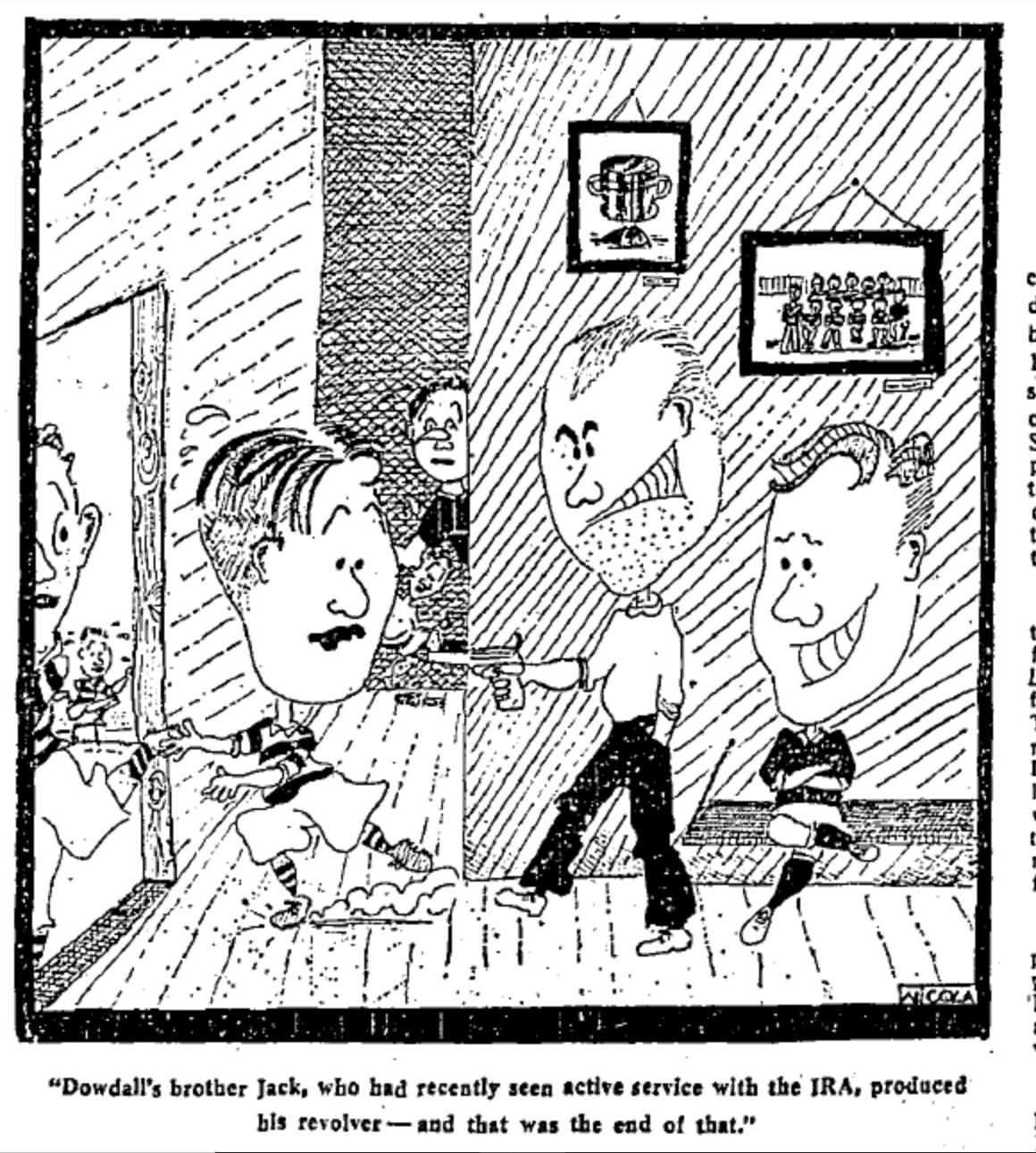

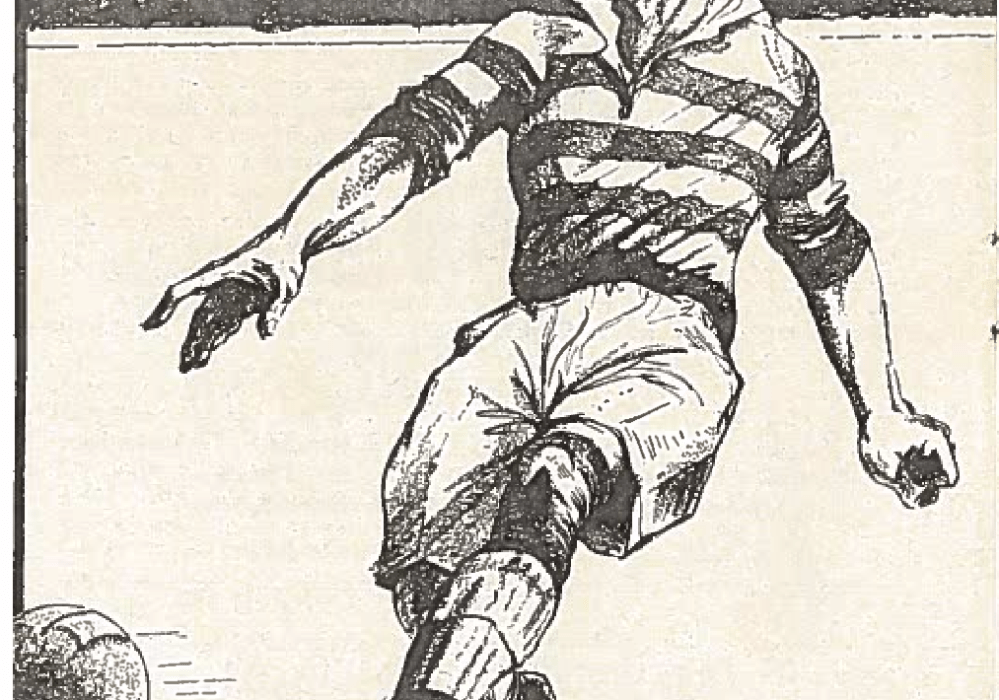
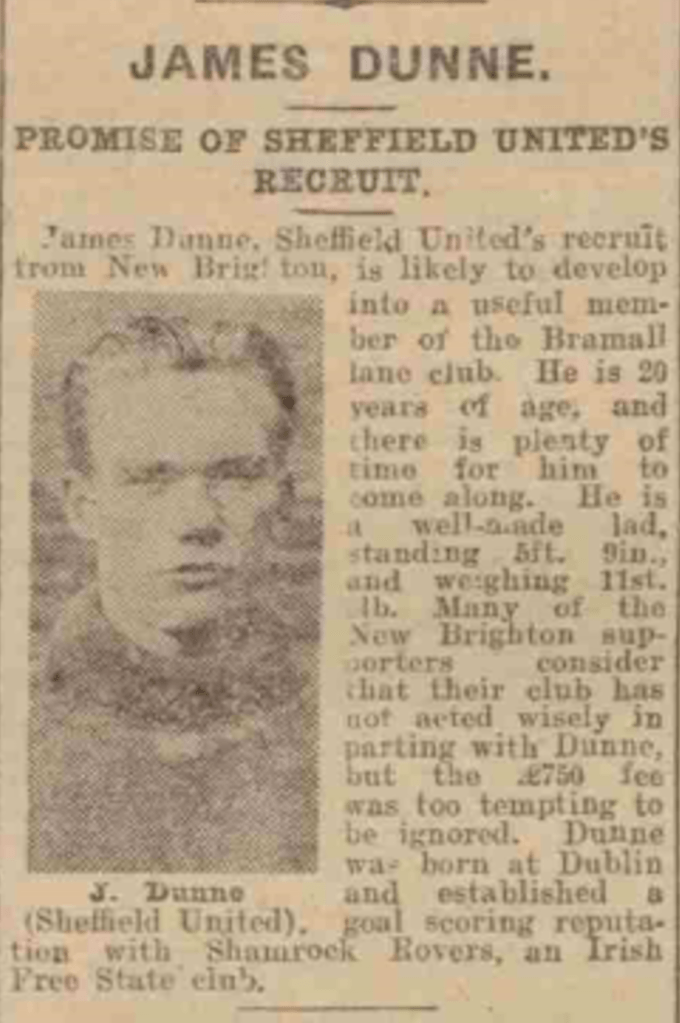
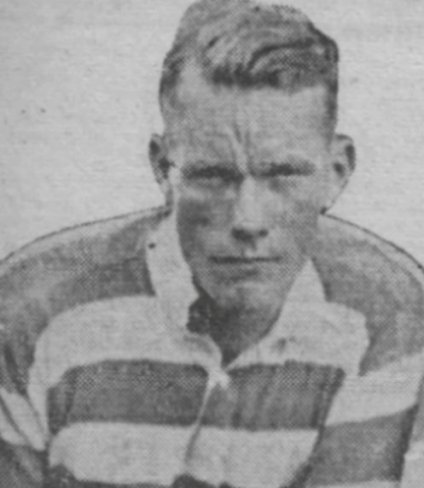

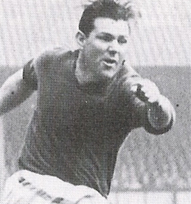


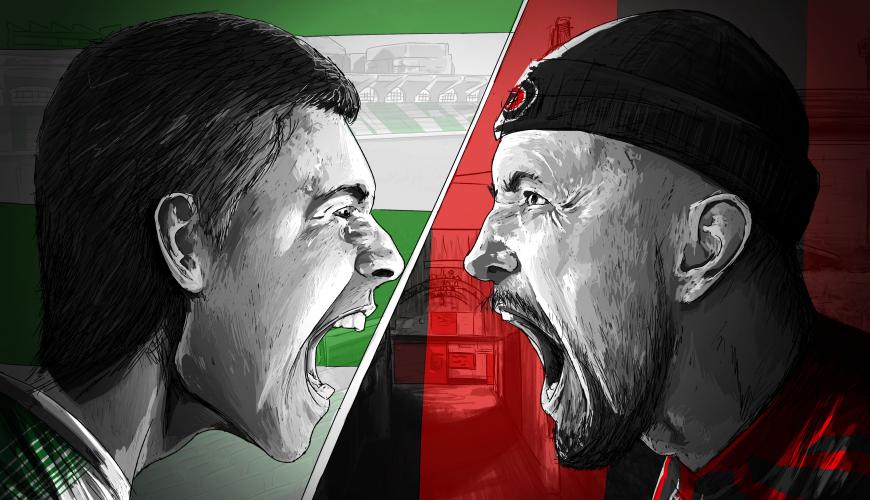
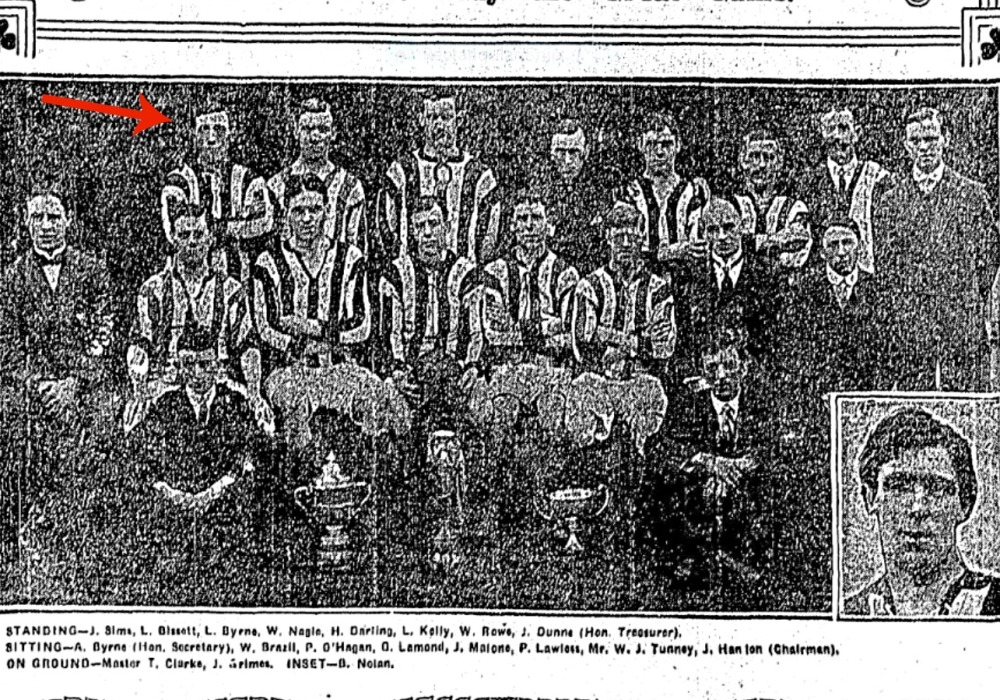


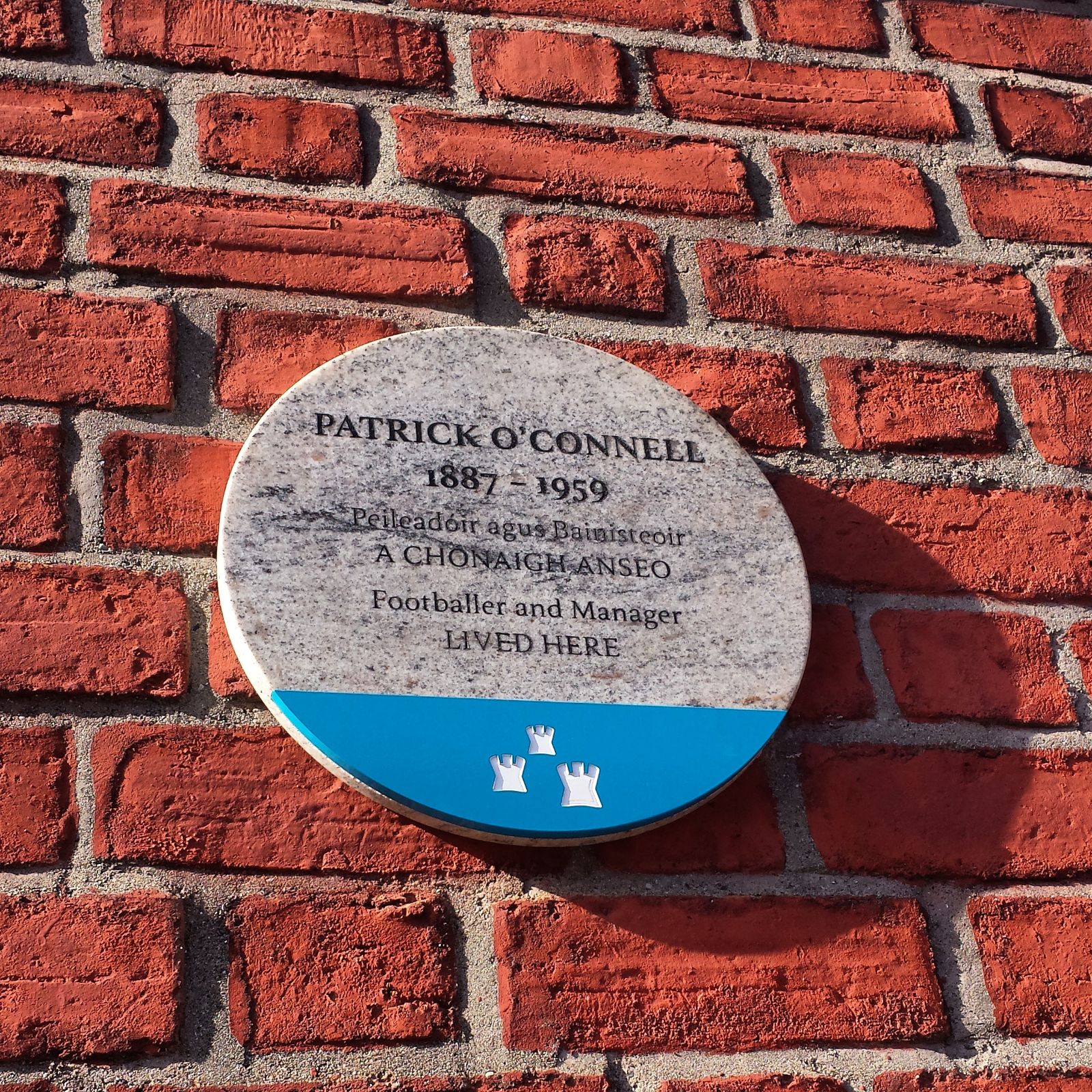


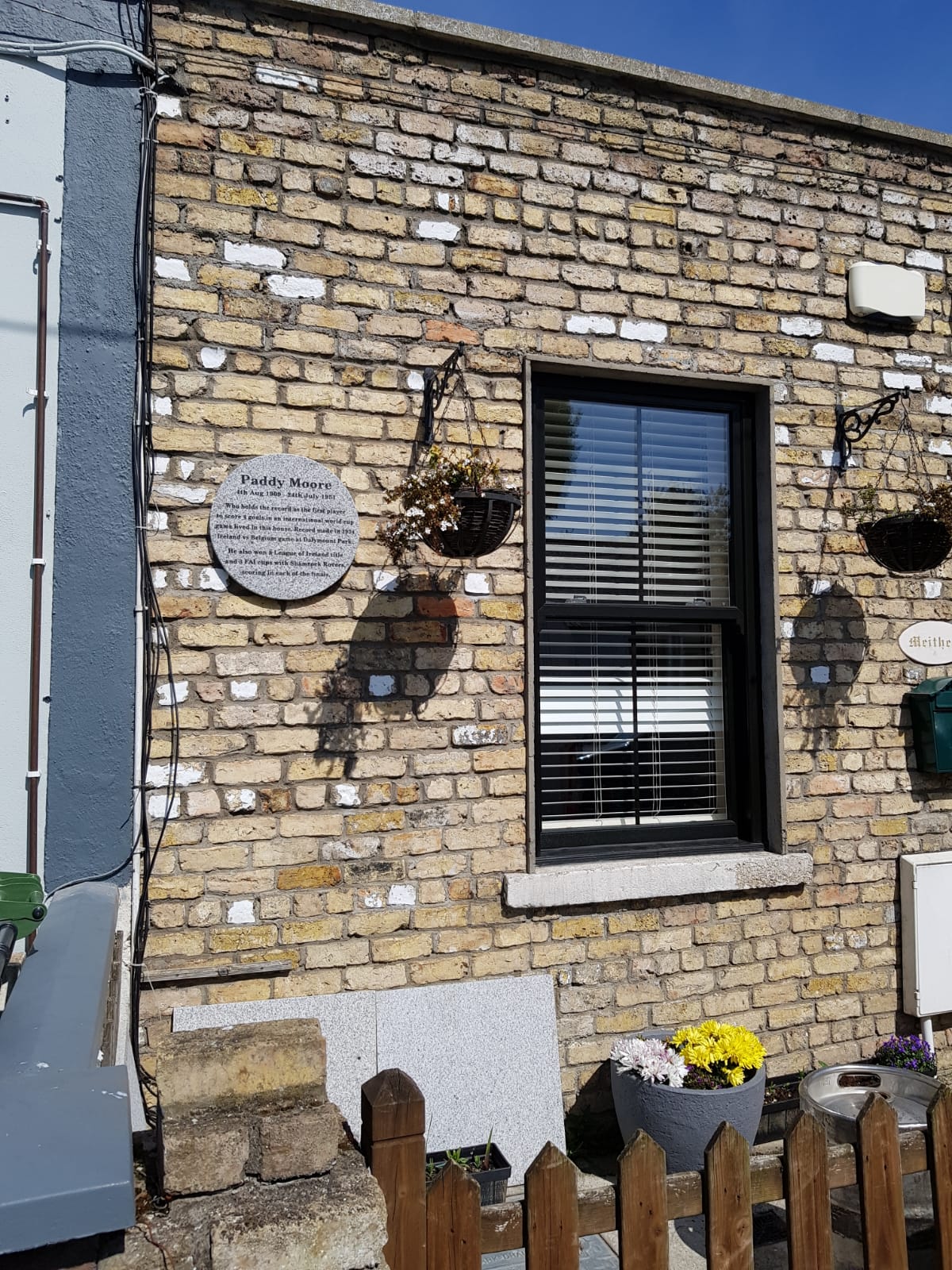
 The early matches of the club were played on the nearby Polo grounds. By 1894 the club had its first major piece of silverware, the Leinster Senior Cup, defeating Dublin University 3-0 in the final. It was to be the first of six consecutive victories in the competition. Less than two years after that first victory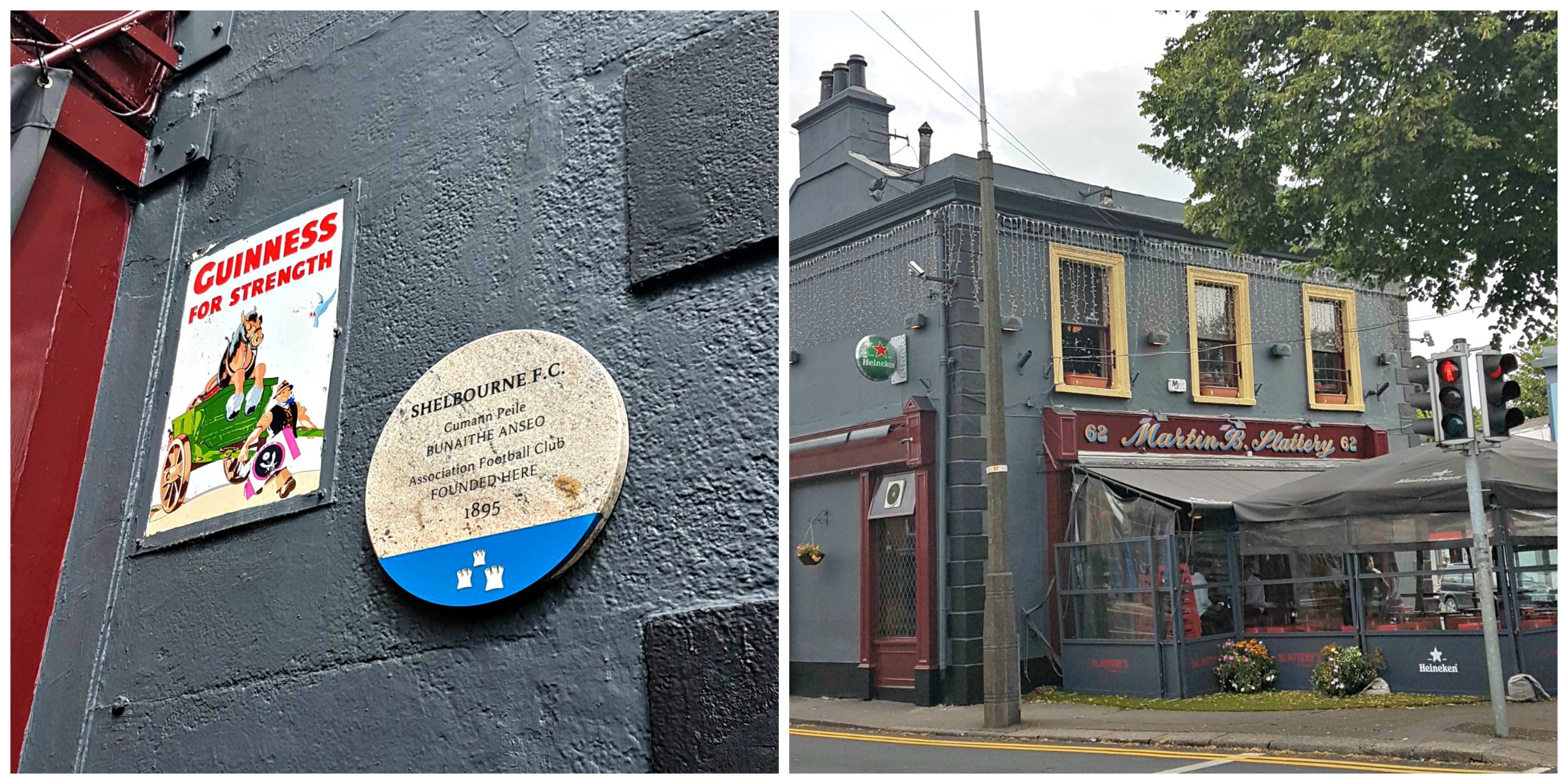


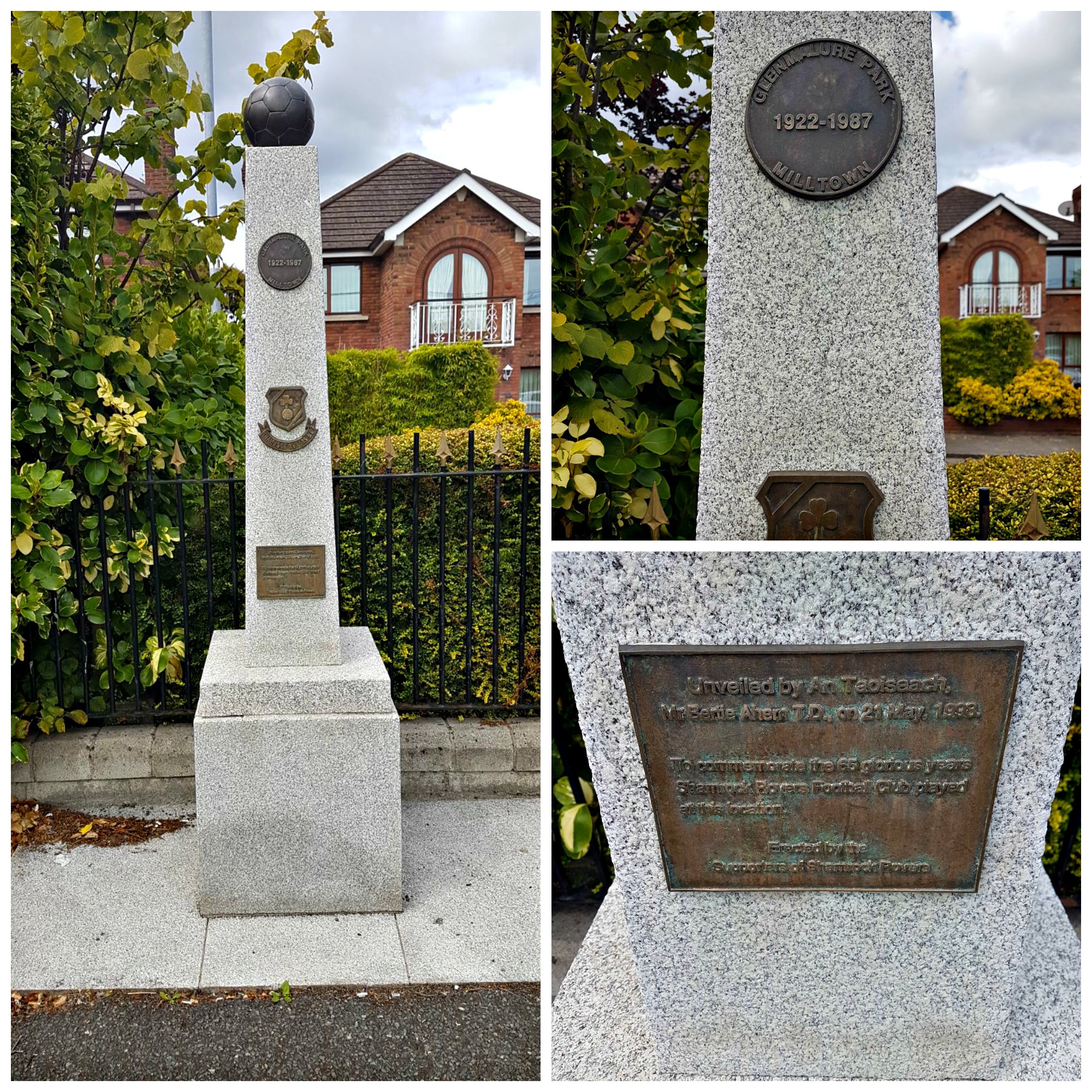

 of Ireland’s greatest ever keepers and a founder of somewhat of an Irish goalkeeping dynasty. (Not the only one mind, hello to the Hendersons) Alan Kelly Sr. was a FAI Cup winner and a League champion with Drumcondra during their 1950’s heyday when he made his debut for the Republic of Ireland as they defeated World Champions Germany 3-0 in Dalymount Park. Before long a move to Preston North End beckoned and he spent 14 years as a player at Deepdale making a club record 513 appearances, including an impressive performance in the 1964 FA Cup final where the unfancied Preston were deafeated 3-2 by the West Ham of Bobby Moore and Geoff Hurst. Such was his importance at Preston that in 2001 a redeveloped stand was named after him. Kelly would later manager Preston and would assist John Giles during his managerial reign as well as being caretaker manager for Ireland during a 2-0 win over Switzerland.
 might of Real Madrid 3-2 on aggregate in the Cup Winners Cup final before moving onto Crystal Palace and later West Bromwich Albion, managed at the time by his international team-mate Johnny Giles. While Paddy finished his career with a very respectable 50 caps he didn’t have the easiest start to his international career, he was a part-timer with Shamrock Rovers while also holding down a job with the Irish National Insurance Company when he was called up to the Irish squad in 1966, his employers weren’t too happy about his decision to travel with the squad to face Austria and Belgium and he was issued with an official warning by the company directors!
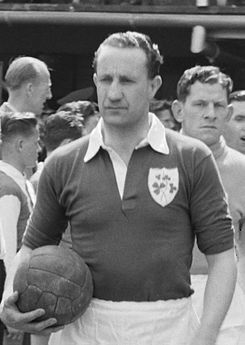 With Ireland trailing 3-0, thanks in no small part to the prolific Sporting striker Fernando Peyroteo, the Irish keeper Ned Courtney is forced to go off injured. Courtney kept goal for Cork United and was an officer in the Irish Army, he had also won a Munster title in Gaelic Football with Cork. Brought on in his place was Con Martin, who at the time was in the Irish Air Corps and had also won a provincial GAA football title, with Dublin in 1941, he kept a clean sheet for the remainder of the game and started in goal in the next match, a 1-0 victory over Spain. Martin was a hugely versatile player, he lined out as a centre half for Drumcondra he played almost an entire season in goal later in his career for Aston Villa and also regularly played as a half back or at inside forward. He was a regular penalty taker for Ireland and it was Con Martin who opened the scoring in the ground-breaking 2-0 win over England at Goodison Park.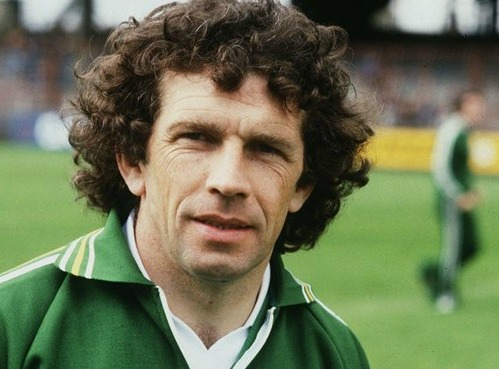
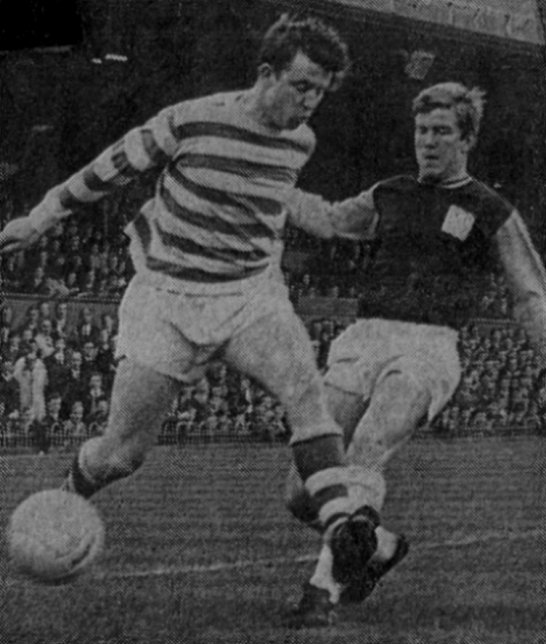 Despite treading the well-worn path going from Home Farm schoolboy to England, joining Arsenal aged just 18 it was as one the classiest players in Rovers’ “Cup Kings” sides that he made his name. After only two league appearances for the Gunners, O’Neill, then aged 21 joined Rovers on their Summer 1961 tour of North American where they took part in the grandly titled Bill Cox International Soccer League against the likes of Dukla Prague, Red Star Belgrade and Monaco. O’Neill impressed grabbing six goals in seven games after which he was signed for £3,000. O’Neill would make over 300 appearances for Rovers, winning a league title as well as six consectutive FAI Cups, mostly playing on the right wing. His international career coincided with a downturn in the national team’s fortunes though there were highlights including the scoring of his only international goal against Turkey in a 2-1 victory.
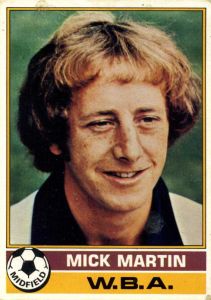 team that day was comprised of League of Ireland players as the match had been scheduled just a day after a full English league fixture programme. He also made a number of appearances at the Brazil Independence Cup while still of Bohs player, scoring in a 3-2 win over Ecuador. Better was to come for Martin, he got to mark Pelé as part of a Bohs/Drumcondra select that took on Santos and shortly afterwards secured a move to Manchester United and later joining Johnny Giles at West Brom. In his club career he is probably most associated with Newcastle United, who he joined for £100,000 in 1978. He was hugely popular with the St. James’s Park faithful who dubbed him “Zico” and he got to play alongside the likes of Kevin Keegan and a young Chris Waddle during his time there.
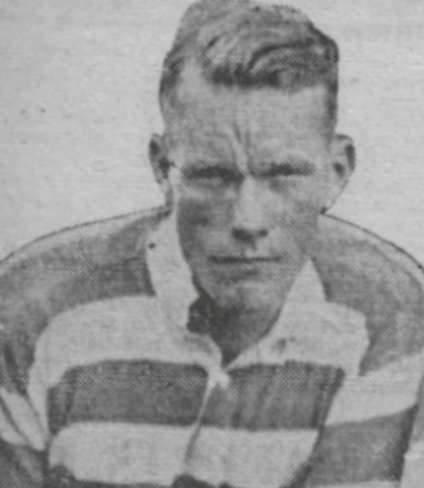 A move to New Brighton (a now defunct club on Merseyside) in the old Third Division North followed, as did the goals. He joined First Division Sheffield United in 1926 though he had to bide his time before getting a prolonged run in the first team. However he exploded into life in the 1929-30 season scoring 42 goals in 43 games and winning his first cap for Ireland (he scored twice in a 3-1 win over Belgium) that year as well. Dunne however wouldn’t be released by United for further fixtures (though he was allowed to play 7 times for the IFA selection) during his prolific scoring exploits over the next few years and he wouldn’t win a second cap until 1936 when he was playing for Arsenal by which stage he had fallen down the pecking order at Highbury due to the arrival of Ted Drake. A season at Southampton followed before Jimmy or “Snowy” as he was known to some returned to Dublin and to Shamrock Rovers in 1937 at the age of 32. It was while on the books of Rovers that Dunne would win nine of his 15 caps and score five of his international goals. Dunne still has by far the best scoring ratio for Ireland of any player who has scored 10+ goals at 0.87 goals per game and one wonders what his stats would have been like had he been made available to play for Ireland during his peak years at Sheffield United.
 witnessed in the League of Ireland and the most recent player to feature on this list. Crowe during the years of his peak was unplayable for opposing defences, he had strength, aerial ability and a cracking shot. He’s Bohs record league goalscorer, FAI Cup scorer and European scorer and was the League’s top scorer three years running. He’s also won 5 league titles (4 with Bohs, 1 with Shels) and two FAI Cups. At international level he featured against Greece under care-taker manager Don Givens and then again early in the reign of Brian Kerr in a cameo appearance against Norway.
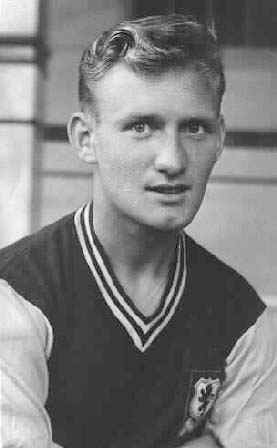 place that has given us plenty of them, including the Coads, the Fitzgeralds and the Hunts. Alfie’s father (Alfie Snr.) had been part of the first Waterford side to compete at League of Ireland level and at one stage formed an entire half back line for the club along with his brothers Tom and John in the 1930’s. Alfie Jnr. was born in 1939 and began his career with his hometown club before a somewhat peripatetic existence brought him to Aston Villa, where he would win his first international cap against Austria, and later to Doncaster Rovers where he would spend the majority of his stay in Britain. After seven years away Hale returned to Waterford where he was joined by Johnny Matthews and a little later by keeper Peter Thomas as part of a team that would dominate the League of Ireland, bringing five titles to the south coast between 1967 and 1973. Alfie’s final game for Ireland was as a Waterford United player in 1973 at the age of 34 when he came on to replace Don Givens in a 1-0 victory over a Polish side that had just finished ahead of England in World Cup qualifying.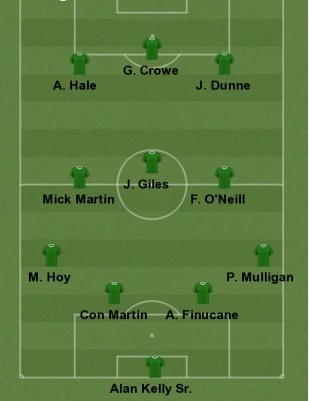
 A Bohemian Sporting Life