Name a footballer who has won a cup winners medal in three different countries across three separate decades? Quite the pub quiz brain teaser but if you answered – Jimmy Delaney award yourself 5 points. Delaney the scintillating and pacey Scottish international winger, won a Scottish Cup with Celtic in 1937, the FA Cup with Manchester United in 1948 and the IFA Cup with Derry City in a twice replayed final against Glentoran in 1954. Delaney came within 12 minutes of winning a fourth cup medal, in 1956 with Cork Athletic, but fate, and Paddy Coad intervened.
With Cork leading 2-0 with 12 minutes to go (Delaney then aged 41 had put Cork ahead after 34 minutes) a tactical change by Shamrock Rovers player-manager Paddy Coad helped get them a late lifeline through Tommy Hamilton and two more goals followed between then and the final whistle to deliver the cup to Rovers. The Cork players, including their veteran player-coach Delaney were left in a state shock. Such had been their confidence one of the Cork directors had left Dalymount early to buy bottles of champagne! Delaney had his own theories as to why Cork Athletic lost the cup – mainly around the team diet. As quoted by Seán Ryan he stated that “Soup, spuds, cabbage, meat was their usual diet while I had a poached egg or something light. They ate too much but they were a grand bunch.”
Despite that down-note at the end of his career Delaney, born in Cleland near Motherwell to Patrick and Bridget in an area populated mostly by generations of Irish immigrants, enjoyed great success on the biggest stages. Signed by the legendary Celtic manager Willie Maley, Jimmy made his Celtic debut as a 19-year-old as part of a squad that included the likes of Celtic’s record goalscorer Jimmy McGrory. Delaney was a key component of a Celtic revival in the late 1930s winning two league titles and the aforementioned Scottish Cup, while thrilling crowds with his skill, pace and workrate down the touchline. A severe injury to his arm in 1939 would put him out of the game for a time but would also have likely have exempted him from military service as the Second World War broke out soon after. He did however, work in the mining industry to support the war effort while continuing to line out for Celtic in war time games.
After the hardship of War the opportunity to join fellow Scot Matt Busby at Old Trafford proved too good even for a die-hard Celt like Jimmy to resist and in 1946 he joined Manchester United and became an integral part of Busby’s first great post war team. He played an important role in the 1948 Cup Final as Manchester United, captained by Irishman Johnny Carey, defeated Blackpool. Jimmy set up the opening goal for Jack Rowley with one of his pinpoint crosses.
Just after his move to United he enjoyed one of his finest moments in a Scotland shirt, when in April 1946 he scored the only goal as Scotland defeated England in a post-war “Victory International” in front of a crowd of over 130,000 in Hampden Park. He finished his War-interrupted international career with 15 caps and six goals for Scotland, often playing in front of record-breaking crowds. He was posthumously inducted into the Scottish Football Hall of Fame in 2009
After finishing up at United aged 38 further spells with Aberdeen and Falkirk were followed by Jimmy’s Irish adventure in Derry and Cork. Football also continued in his family, his grandson was Celtic centre back John Kennedy whose career was curtailed by injury but who has since successful moved into coaching with Celtic FC.
This piece first appeared in the 2022 Ireland v Scotland match programme.
In 1864 Dutchman James Cox built the largest Jute factory in the world in the town of Lochee just west of Dundee on the Firth of the Tay. Camperdown Works would house five thousand employees and its campanile style chimney would cover the town’s skyline; the town’s prosperity would lie solely on the textile industry and the manufacturing of Jute.
Lochee would soon have a school, two railway stations, a police station, and several chuches and the Irish would flock to the town leaving behind a land scourged by famine. Fourteen thousand would set foot in Lochee lured by the prospect of employment in Cox’s jute mills, the town would soon have the moniker of ‘Little Tipperary’. Most came skilled and knowledgable about the work leaving the linen towns of Donegal, Derry, Sligo, and Monaghan. Within forty years Lochee Harp football club would be formed following in the footsteps of the Irish in the Cowgate area of Edinburgh and the East End of Glasgow.
As the population in the area grew housing and sanitation couldn’t keep a pace with many families living in overcrowded slums and in an era before the welfare state some suffered from hunger and disease leading to a loss of regular income. Among this poverty and prosperity ‘The Harp’ was born by church leaders and members to raise much needed funds through the playing of football matches and to alleviate the boredom of the daily grind for workers.
In their first season the club would win the Dundee Junior Cup with the names of Gallagher, Mac Colla and Curran featuring prominently. Watching from the stands and immersing himself in the success was one James Connolly who had left the British Army in 1889 after serving for seven years in Ireland, to settle back in Dundee. It is in Dundee and the Irish heartland of Lochee where Connolly would begin his activism in socialist politics and trade union rights.
Connolly was born in 1868 at 107 Cowgate in Edinburgh to an Irish immigrant family close to St. Patrick’s Church where the Catholic Youth Mens Society was founded. From the embers of this society Michael Whelehan an Irish immigrant from Co. Roscommon would convince Canon Edward Hannon to allow the CYMS to form its own football club, out of this conversation came Hibernian football club in 1875.
On the football pitches across Dundee Lochee’s success would continue recapturing the local junior cup in season 1906/07 with a third title four years later. The Harp’s achievements did not go unnoticied and by March 22nd, 1909, the Scottish Referee newpaper was reporting of a new ‘Irish team’ being formed taking the name Dundee Hibernian.
“The promoters are all Dundee Irishmen, and as the city is said to include in its population no less than thirty thousand of the same persuasion, the new organisation will not want for support. Mr Pat Reilly, the well-known cycle manufacturer, has been appointed secretary. The new club is meant to take the place of the defunct Dundee Harp, which was, in its time, one of the most prominent clubs outside of Glasgow.”
Scottish Referee newspaper
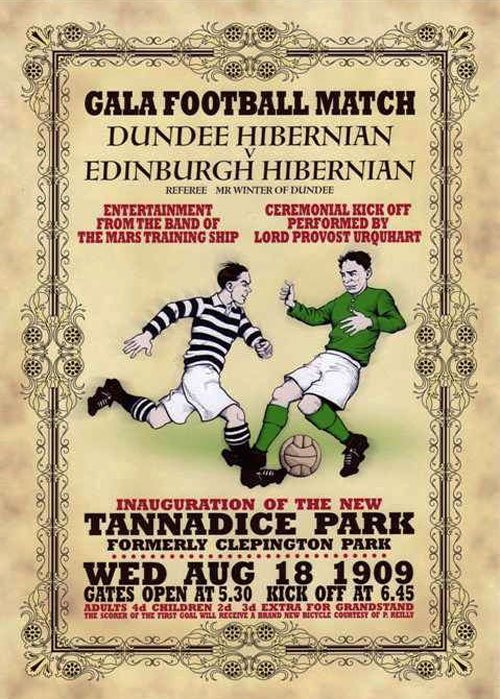
By mid-May of 1909 Dundee Hibernians became sole tenants of Clepington Park on Tannadice Street, the old tenants Dundee Wanderers took everything but the grass. The local Irish community in the city would put in a mammoth effort to have the ground ready for the clubs first friendly against Hibernians of Edinburgh; a new pavilion was erected, stand and fencing while just days before the match turnstiles were purchased at a cost of £9 each with a discount of 5% sourced by paying in cash.
Dundee Hibernians v Hibernian, 1909
At 5:45 pm on Wednesday August 18th, 1909, seven thousand patrons would pay in at the turnstiles to officially open the new ground which would become Tannadice Park. Pre-match entertainment would come from the band of the Mars Training Ship for dissolute children, the music adding to the jovial occasion. Messers Brady, Strachan, Gallacher, Hannan, Ramsay, Boland, Flood, Brown, Dailly, Docherty and McDermott would don the club’s green shirts for this inaugural outing.
Hibernians of Edinburgh who usually wore green and white hoops would borrow a kit from Leith Amatuers lining out in unfamiliar black and white hooped shirts. To watch proceedings adults would be charged 4d and children 2d the crowd primarily drawn from the forty thousand strong Irish community in the city. John O’Hara of Hibs would be the first man to net at the new stadium and after the game he would be presented with a bicycle by Dundee Hibernians founder and manager on the day Pat Reilly from his shop on Perth Road. However, forward Jamie Docherty would send the home crowd into raptures with an equalisier and as Mr. J. Winter blew the proceedings to an end the game finished in an entertaining 1-1 draw. The Edinburgh Hibernians fees amounted to £8 one shilling as darkness fell across Tayside both teams enjoyed an aftermatch cup of tea.
Tannadice, 1909
Disappointingly though the new ‘Irish club’ of Dundee was not welcomed with open arms by all as the Scottish Football Authorities refused an application by Reilly and Dundee Hibernian to join the Scottish League – they would line out in the Northern League facing off against their nemisis Dundee Wanderers. This did not defer Reilly who was born in Dundee to Irish parents, the eldest of five children, the family were steeped in the bicycle trade. Pat would spend his days with his father and two brothers manufacturing two-wheeled cycles fom the ‘standard’ Triumph Roadster for ‘Sir’ to the Chater Lea X-frame for ‘the Ladies’.
Reilly began writing to all Scottish League clubs looking for support to allow Dundee Hibernians join the national league system he advised that Tannadice consisted of a “pavilion with excellent dressing rooms, hot and cold running water, a grandstand holding 1200 supporters and that Tannadice Park could hold 15,000 – 20,000 spectators.”
By 1910 the lobbying of other league clubs paid off and Dundee Hibernian started life in the second tier of Scottish football playing Leith Athletic in their opening league fixture at Tannadice, they would finish the season in 8th place with twenty-two games played and win the local Carrie Cup.
The World at War would have a profound effect on Dundee Hibernian with many players leaving for the front and financial woes leading the club to have to transfer to the Eastern Legue by 1915. However, ‘The Irishmen’ as they were known would be reinstated to the Scottish League after the War ended in 1919 and again in 1920 but no fixture would be fullfilled by the Hibernians of Dundee.
In October 1923 as the club faced financial ruin a group of local businessmen offered the board a financial package to stop ‘The Greens’ going out of business however, it came with a price. Those proposing the stimulus requested a change of name and colours which would appeal to a wider audience not just the Irish of Dundee. Originally the name Dundee City was put forward but frowned upon by city rivals Dundee this was then changed to Dundee United and a black and white kit would replace the green.
United kept the white and black colours until as late as 1969, when they switched to tangerine shirts and black shorts. They had worn this combination while competing as Dallas Tornado in the United Soccer Association in 1967 and it was the wife of manager Jerry Kerr who persuaded the Tannadice outfit to adopt the colours.
In November 1971 a former Lanarkshire joiner by the name of Jim McLean would replace Jerry Kerr as manager of Dundee United, he had made his name in football across the road at Dens Park. McLean would spend twenty-two years in the hot seat at Tannadice and shake the foundations of Scottish football to its very core creating a ‘new firm’ through one of the greatest youth policies ever established in Scotland. Following League Cup victories in 1979-80 and 1980-81 McLean would lead the club that Pat Reilly founded to the promise land winning the title in 1982/83 pipping Glasgow Celtic by a point. The title was clinched at Dens Park with a 2-1 victory, on the day McLean’s men would get changed in Tannadice Park and walk the 200 yards in their orange shirts to their great rival’s stadium.
It would mean United would line out in the European Cup of 1983/84 it would be some adventure with Sturrock, Bannon, Hegarty and Milne all starring along the way as McLean’s charges reached the semi final defeated by Italians Roma 3-2 on aggregate. An impressive two nil victory at Tannadice in the first leg was duly scratched out as United succumb to a three-nil defeat in the second leg in Rome – ‘The Irishmen’ as once they were known had dared to dream of the top prize in European club football.
Three years later Dundee United went one better reaching the UEFA Cup final of 1987, after defeating FC Barcelona in the quarter final where McLean asked those of Irish Catholic faith to pray in the Camp Nou cathedral before the game, they would narrowly lose out to IFK Gothenburg.
Today in the Tannadice boardroom you will find the original minutes book which includes the writings of those who founded the club and those who saved it; a football club founded by Irish immigrants and expanded by locals.
Louis Bookman, formerly Louis Buchalter, the Lithuanian-born, Irish international footballer and cricketer is a figure of huge sporting significance not only in Irish, but in world sporting history. He is likely the first Jewish footballer to play top-flight football in England, for Bradford City and West Bromwich Albion. He was also part of the Irish team that won the British Home Nations Championship for the first time in the 1913-14 season, and represented Ireland with distinction at cricket, including being part of an Irish team that defeated the West Indies.
Bookman had success as a young player with Adelaide, a local, mostly Jewish team from Dublin City’s southside, before moving north to the powerhouse that was Belfast Celtic in 1911 before eventually making the move to England. However, in my research it appears that there may have been another Jewish footballer lining out for Belfast Celtic more than a decade earlier. This same player seems to have also previously played at the highest level in Scotland. While I’m continuing in my attempts to find greater detail on his life and career, this is my early summary of the life and career of Joseph Abrahams, surely one of the first Jewish, top level footballers?
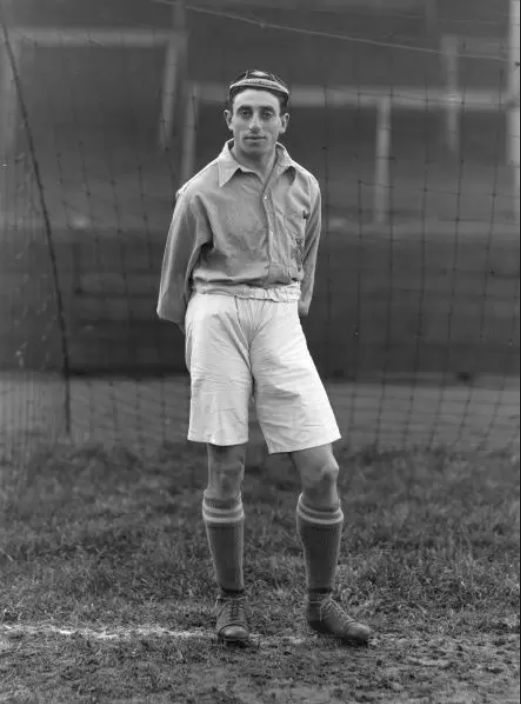
Louis Bookman, complete with Ireland cap, during his time with West Brom
Grasping the Thistle
Joseph Abrahams was born January 28th 1876 in Lanarkshire, Scotland, the son of Nathan Abrahams and his wife Annie (sometimes recorded as Fanny) née Solomon. His parents had been emigrants from Suwalki in the Russian Empire, a city in what is now modern-day Poland. The timing of their move to Britain would coincide with the beginning of large-scale immigration of Jewish citizens of the Russian Empire. Britain was seen as offering a chance for a better life and potentially an escape from rising anti-Semitism which developed into anti-Jewish pogroms in the 1880s. Joseph’s father Nathan was a tailor, and Joseph was the third of their ten children. His two older siblings (Kate and Samuel) had been born in England, most likely in London, while his younger siblings were all born in Glasgow. At the time of the 1881 and 1891 censuses the Abrahams family were living first on Norfolk Street, then in the later census on Robertson Street, both locations were very close to the River Clyde and the job opportunities that the river presented such as shipbuilding as well as large textile factories and warehouses.
As well as his father being a master tailor who had four people in his employment, Joseph’s older sister Kate was also a “tailoress”, while he and his brother Samuel trained to be machinists, with Joseph starting his apprenticeship in his early teens.
Joseph makes his first appearance as a footballer of note in May of 1897, when he would have been about 21 years of age. He was one of the players for Glasgow Perthshire F.C. who won the Glasgow Evening News Charity final cup with a 2-1 win over Ashfield. The game was played in Celtic Park and the Scottish Referee newspaper reported that “Abrahams was a great success on the right wing, where he was admirably backed up by Willie Spence. This young player once he gains confidence will be a great help to the Kelburn club.”
By September of that year the same newspaper was announcing the signing of Joseph Abrahams by Partick Thistle. This was to be the club’s first season in the top division of Scottish football. Founded in 1876 in the area of Partick, north Glasgow, they had won the Scottish Second Division in the 1896-97 season and been elected to promotion to the highest tier of football in the country where they would battle it out with Rangers, Hibernian, Hearts and eventual champions Celtic. Partick Thistle would ultimately finish eighth in the ten-team league, and Joe Abrahams had made a decent start, playing in at least six matches in the early months of the season.
In October 1897, just over a month after signing there was a comment in Scottish Referee that Abrahams, who had mostly been playing at outside right, was to be dropped for the game against St. Mirren. The report noted that “Partick Thistle are giving little Abrahams a rest to-morrow, but only because it is thought the metal opposed to him is too heavy.” From this we can surmise that Abrahams wasn’t the biggest of players and that perhaps the St. Mirren defenders were known for their size and robust play.
Joe Abrahams did return to the team for subsequent matches after that game, his final match for the Thistle seems to have been in November 1897 when they beat St. Bernard’s (a club from Edinburgh rather than a group of large dogs) 5-3 in front of a crowd of 2,000. However, despite this victory just days later it was announced in Scottish Referee that “Abrahams has not come up to expectations in the last few games” and that he had been dropped from the starting XI and was next listed as playing for the Thistle reserve side.
We next encounter Joseph Abrahams in the starting XI of Linthouse in April 1898. Linthouse were another Glasgow club from the Govan area who were playing then in the second division. Joe is recorded as getting on the scoresheet during a 7-1 victory for Linthouse over the hapless Renton and is still in the starting XI at the beginning of the following season (1898-99), however by the end of September he was dropped for a game against Dumbarton and there are no further mentions of an Abrahams in the starting teams for Linthouse who struggled that year, finishing second bottom of the second division.
Across the Irish Sea
It is almost a full year before Joe Abrahams reappears, in late September 1898 he is dropped by Linthouse and in August 1899 he appears on trial at Belfast Celtic. After impressing in training he features in the opening game against Cliftonville at the start of the Irish League season, once again Abrahams impressed in a scoreless draw, this time playing at inside-right and obviously does enough to secure a contract with Belfast Celtic.
Joe quickly became a regular in the Belfast Celtic side and within a couple of weeks he even playing an international of sorts. As Chris Bolsmann writes;
In September 1899 an association football team from Bloemfontein in the Orange Free State, South Africa, arrived in the United Kingdom. The team comprised 16 black South Africans who played under the auspices of the whites-only Orange Free State Football Association and was the first ever South African football team to tour abroad.
The 1899 Orange Free State football team tour of Europe: ‘Race’, imperial loyalty and sporting contest
This touring side from South Africa would play one match in Ireland against Belfast Celtic in front of “an enormous crowd of spectators”. An entertaining game would end with a 5-3 win for Belfast Celtic with Abrahams scoring Celtic’s fifth. Before the season was out Joe Abrahams would be selected to represent Antrim in a match against a selection of the best players from Co. Derry while a month later he would represent Distillery as a guest player in a high-profile friendly match against Blackburn Rovers.
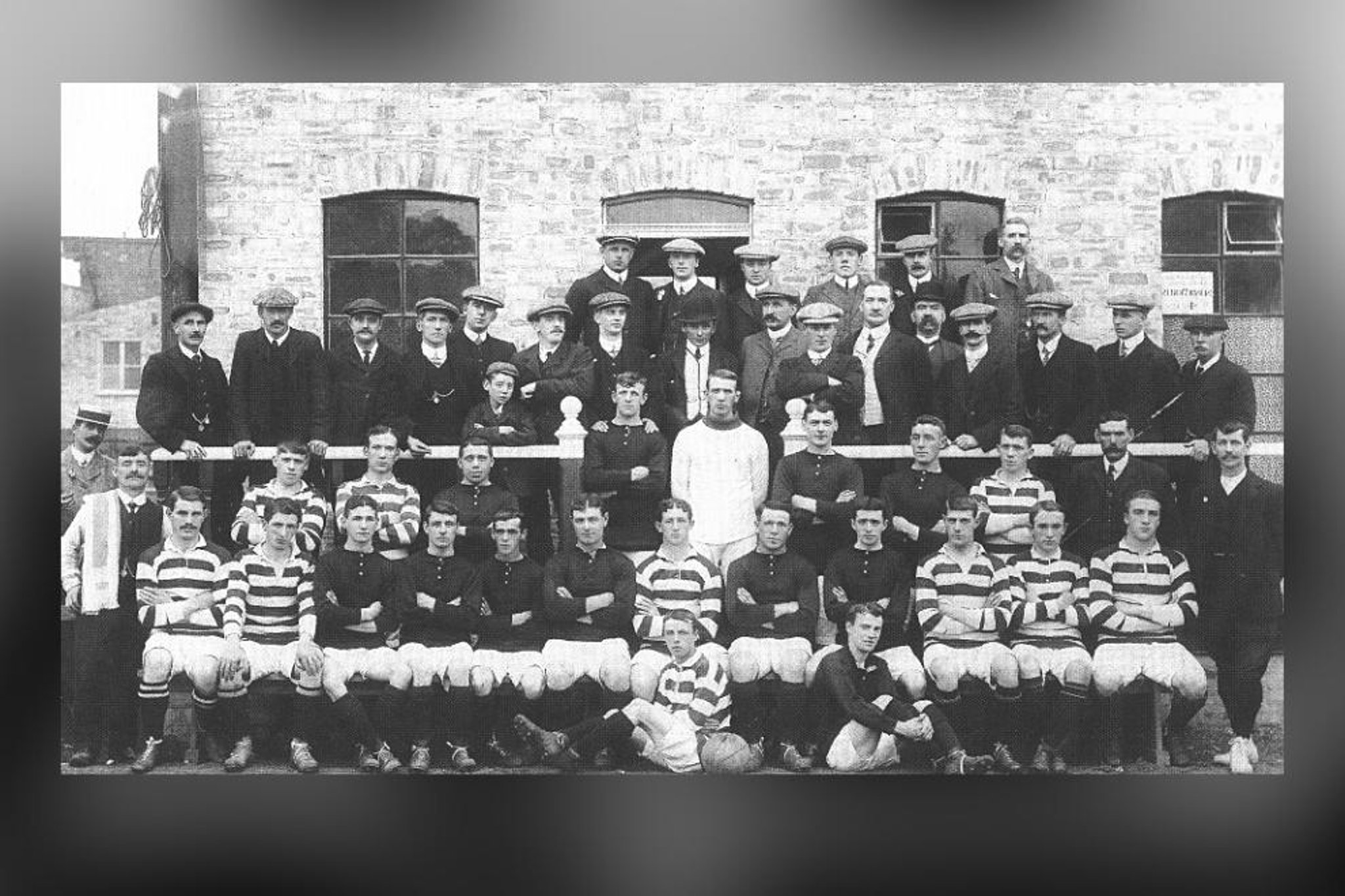
Belfast Celtic in 1900 from John Kennedy’s book Belfast Celtic – thanks to Martin Moore for providing the image. Possibly Abrahams in the back row third from the left?
In fact, Joe’s first season in Ireland (1899-00) couldn’t have gone much better, he was one of the standout players of the Celtic forward line that won the club its first ever Irish League title which helped to establish the club as one of the emerging powers in the Irish game. Abrahams played 22 matches and scored six goals across all competitions that season. By 1901 Belfast Celtic had moved to their new ground at Celtic Park, but by that stage Joe Abrahams had moved on. In fact, by the opening game of the 1900-01 season Joe Abrahams was part of the Linfield team that defeated defending champions Belfast Celtic.
This was a huge move by Joe, Celtic and Linfield were already rivals, a rivalry that would only become more intense as Celtic continued to improve over the coming years. Elements of crowd violence and sectarianism were also already present in the game, it was even something that had been remarked upon during Joe’s first game for Celtic against Cliftonville with the Belfast Newsletter describing the “behaviour of several mobs on leaving the ground was brutal and savage.”
It is during his time at Linfield that there is reference to Joe, albeit not by name, as a professional, in Neal Garnham’s Association Football in pre-partition Ireland he notes that “The Linfield club registered eight players of known religions: three were Anglicans, three were Presbyterians, one a Congregationalist and one a Jew. None was Catholic.”
When examining the 1901 Census Joseph Abraham is easy to spot, he is living, appropriately enough given his upbringing on Lanark Street (now Lanark Way) in the Woodvale area of West Belfast, he is married and has a young son, also named Joseph. Both he and Joseph Junior list their religion as “Jew” while his wife, Fanny, is listed as a member of the Church of England. Joseph’s job is not however listed as professional footballer, a very uncommon designation to find in the Irish census at the time, but rather as “Ship Yard Labourer”.
As was the case with most footballers who were paid in Ireland at the time the amount they received was not sufficient to live on and was usually topping up wages received from more regular work. Payments to players in Ireland had only been allowed since 1894, a year after the practice had been permitted in Scotland and nine years after paying players had been allowed in English football. At the time of Abrahams’ spell in Ireland the number of paid players was still very low, and what could be described as “full time professionals” was even rarer still.
We can speculate that after leaving Linthouse there must have been some inducement to travel to Ireland for the trial with Belfast Celtic in August 1899, perhaps promise of the job in the shipyards, something Joe would have been familiar with from Clydeside, as well as a wage for playing football? We know that within two months of arriving in Belfast he had married Frances “Fanny” Kennon, a dressmaker from Lanark in Scotland who we must assume he had been engaged to before moving to Ireland.
Perhaps she knew Joseph through his tailor father? Or worked near him in one of the textile and garment factories in Glasgow? Fanny was the second child of five born William Kennon, a blacksmith and Sarah Kennon his English wife. They were married on October 5th 1899 in St. Anne’s, Belfast. Who knows if their families could attend from Scotland, this is perhaps unlikely as the witnesses were Charles Frederick Carson and his wife Lillie. Charles was also a shipyard worker and had perhaps become friendly with Joe through this connection after his recent move?
Less than a year later, on the sixteenth of July 1900, just months after Belfast Celtic had won their first ever title with Joe Abrahams in their team, Joseph Junior was born in the family home, which was then at 15 Crumlin Road, Belfast.
The season with Linfield was far less successful than the preceding one with Belfast Celtic. In a six-team league Linfield finished fifth and were knocked out of the Irish Cup at the semi-final stage by Dublin side Freebooters. However, Abrahams was once again selected to represent Antrim in the game against Derry, which they comfortably won 6-1. Despite this, by the beginning of 1901 there were some critical comments about Abraham and his “weak” play. During his time at Linfield he would have played with some high-profile players including a veteran Irish international Jack Peden, who had begun his career at Linfield in the 1880s before becoming one of the first high-profile Irish players to move to England, joining Newton Heath (subsequently renamed Manchester United) and later Sheffield United before returning to Belfast with Distillery and finally Linfield.
While the move from Belfast Celtic to Linfield might have been controversial, Joe Abrahams seemed not to care if he provoked a bit of a reaction. That’s why we perhaps shouldn’t be surprised when he appeared on a teamsheet for Glentoran in a charity cup game in April 1901 for Linfield’s great rivals in a match against Distillery. Glentoran lost the game and it is perhaps the only match that he played for them.
Later Life
According to historians at Partick Thistle around this time Joe Abrahams left Ireland and returned to Scotland where he played briefly for Ayr who were in the Scottish second division. There are reports that the family’s ultimate destination was New York and that Joseph died there many years later in 1965. However, with the help of Michael Kielty I have found that this is not accurate, rather than New York, Joseph would ultimately end up in California. Sadly his wife Fanny would not make it that far with him.
After the birth of their son Joseph there were a further two daughters for Joseph and Fanny but tragedy struck when she died in childbirth with daughter Polly in 1909. Polly was then raised by Fanny’s sister. Joseph later married Sarah Rosenburg, with the help of a matchmaker. Sarah was born on January 31, 1886, in Kaminets, Minsk, Belarus. She had one son from a previous relationship – Charlie, whose father had died during the political unrest in Russia.
When Joseph and Sarah married they had another son together – Maurice. The family moved to Melbourne, Australia in 1912 where they became farmers and as well as taking in some tailoring work. Moving again later in life they landed at Angel Island, San Francisco Bay on board the ship RMS Makura on Christmas Day, 1925 to start another new life in the United States. Joseph, it seems then began a career as a grocer selling vegetables which he added to his previous trades as shipyard worker, machinist, farmer, tailor and footballer.
The Abrahams/Abrams family in Australia
Sarah passed away in 1951 while Joseph died on May 4, 1961, in Alameda County, California, at the age of 85, and was buried in Oakland, California at “Home of Eternity Cemetery” his second wife Sarah is buried next to him. Despite being credited mostly in records and match reports as Abrahams and occasionally Abraham both of their names are spelled “Abrams” on their crypts.
What I believe is that this shows that more than a decade before Louis Bookman, there was a Jewish footballer playing top level football in Scotland and Ireland. During this time he was paid by Linfield and in all likelihood by Belfast Celtic and perhaps by Partick Thistle and Linthouse. While Bookman would ultimately have the more successful career, would play top level football in England, win important titles with Ireland and be paid as a full-time professional, I believe the career of Joseph Abrahams is worthy of note.
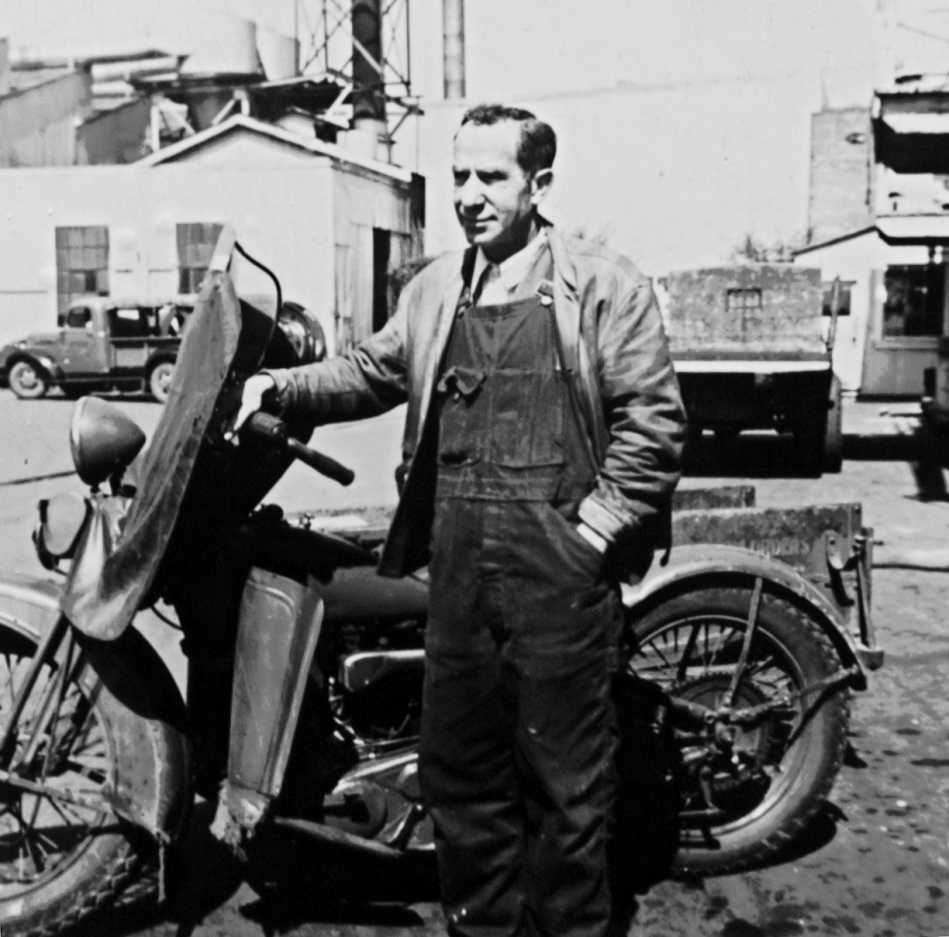
Joe Abrahams in later life in Oakland, California. The header photo of this article is of Joe and his first wife Fanny
They came across the narrow channel from the Antrim coast in the north-east of Ireland to the island of Iona in a wicker currach leaving behind conflict and bringing their religion to the neighbouring land. It was the year 563AD and their leader was Columba, a man now venerated as a Saint whose patronages include the lands of Ireland and Scotland and with him he rather appropriately brought twelve followers.
He certainly wasn’t the first Irish man to make this crossing. The Dál Riata kingdom of north Antrim had been expanding into western Scotland since the early 5th Century, even before that in the 3rd Century the Picts who lived north of Hadrian’s Wall had sought help from their Irish neighbours in their campaigns against Roman imperial might. Back then the Romans had referred to the tribes of northern Britain as the Caledonians, they called their Irish allies the Scotti.
In time Iona, where Columba landed became a great centre of learning and religious devotion and a prestigious Abbey was founded there. From Iona, the Picts were gradually converted to Christianity as were the Anglo-Saxons of Northumbria. In the centuries to come the name of the Scotti would become the name of the Gaelic speaking land north of the River Forth; Scotland – the land of the Gaels. Iona remained a focal point for centuries, it was a burial place for Scottish Kings who traced their power and authority back to the sacred island.
The medieval Abbey church on Iona
But if the Irish gave Scotland its very name and the beginnings of the Christian faith then the Scots can lay some claim to giving Ireland football. In 1878, so the story goes, John McAlery, a Belfast businessman was on his honeymoon in Scotland and went to watch a game of Association Football. The views of Mrs. McAlery on this matter are not recorded. Greatly enamoured with the game the sporty Mr. McAlery arranged for an exhibition game to take place later that year in the Ulster Cricket Grounds in Belfast between Scottish sides Queens Park and Caledonians with Queen’s Park running out 3-2 winners.
A year later he formed Cliftonville Association Football Club in his home city and they advertised for new players as a club playing under the “Scottish Association Rules”. By the end of 1880 McAlery, along with representatives from six other clubs had formed the Irish Football Association (IFA). Cliftonville F.C. exist to this day, while the IFA remains the 4th oldest Football Association in the world. While football had existed in Ireland before John McAlery it was he who set about putting in place a proper organisation and structure around the game. Had John taken his honeymoon somewhere other than Scotland then the history of football in Ireland may have been very different. Sadly the McAlery honeymoon story is definitely apochryphal but this hasn’t stopped it persisting. What is undeniable is that McAlery, and Scottish Clubs were at the forefront of the instigation of organised football in Ireland.
The game had grown quickly in the north east of Ireland and began in time to gain popularity in Dublin as well with the formation of clubs like Bohemian F.C. (1890) and Shelbourne F.C. (1895). A league was duly formed as well as cup competitions. But despite the good works of John McAlery and other early pioneers of the game Ireland’s early record in international competition makes for some harrowing reading. The international highlight in the early years was a 1-1 draw with Wales in 1883 sandwiched between a 7-0 loss to England and a 5-0 loss to Scotland. It would be 1914 before the Irish would win the annual Home Nations Championship outright, defeating Wales and England before facing Scotland knowing that if they avoided defeat they would triumph. Despite the match being held in Belfast Scotland remained the favourites, the Irish papers noting especially that the Scots were the more physically imposing side. However, in a torrential downpour a weakened Irish side managed to secure a draw and with it their first outright victory in the Home Nations Championship. They hadn’t beaten the Scots but they had won the day.
It was to be the last victory as a united Ireland though, not long after the end of the First World War the Football Association of Ireland (FAI) was formed as a breakaway association from the IFA. The FAI eventually secured recognition from FIFA and, grudgingly, from the Home Nations as the Association representing the 26 counties that would become the Republic of Ireland. What they could not secure however was favour from the Home Nations who refused all fixture invitations from the nascent organisation. Eventually over two decades later England agreed to a friendly in 1946, Wales waited until 1960 before playing the Republic. Scotland refused all invitations and only played the Republic when drawn against them in a qualifier in 1961. Despite their breakaway from the IFA the FAI remained in awe of the Home Nations and valued games against them more than any other, they fervently craved not only the money that these games would bring but also some sense of acceptance from their neighbours. Naturally this made the cold shoulder that they received all the more painful.
This desperation for acceptance can be encapsulated in a single game. In 1939 Ireland were due to play the Hungarians, who had been runners up to Italy in the 1938 World Cup and had played against Ireland twice before in the recent past. On both occasions the matches took place in Dalymount Park in Dublin. However on this occasion the match took place in the smaller Mardyke grounds of University College Cork and home to League of Ireland side Cork F.C.
So why were the World Cup runners up being asked to play in a University sports ground rather than at the larger capacity Dalymount? Well because there was a bigger game taking place in Dalymount just two days earlier on St. Patrick’s Day 1939, when the League of Ireland representative side were taking on their Scottish league counterparts.
Even a game against a Scottish League XI was viewed as a huge mark of acceptance from their Scottish peers. While the game in the Mardyke would attract 18,000 spectators, a respectable return, over 35,000 would pack into Dalymount Park to see the stars of the Scottish League. At the time commentators were moved to describe the match against the Scottish League as “the most attractive and far reaching fixture that had been secured and staged by the South since they set out to fend for themselves” before adding that “for 20 years various and futile efforts have been made to gain recognition and equal status with the big countries at home. Equality is admitted by the visit of the Scottish League”. For the FAI a game against any Scottish team was a game against giants.
Giants, funnily enough, feature prominently in Celtic mythology. Fionn MacCumhaill is arguably Ireland’s most famous character from myth, famed for his size and for his prodigious strength. He is credited with having created the Isle of Mann by scooping out the land of Loch Neagh and hurling it into the Irish Sea. However even a man of this power was no match for the Scottish giant Benandonner. In myth Fionn learns that Benandonner is coming for him in combat from Scotland and Fionn does the only sensible thing, he runs to his wife for help. Benandonner is so huge that Fionn fears that even he won’t stand a chance in a fight so he does what any man would do, he has his wife dress him up as a giant baby and put him sleeping in a cradle in front of his fire. When Benandonner arrives demanding to know where Fionn is, Fionn’s wife Oona tells him that he is out but will be back shortly. She introduces the “baby” as her and Fionn’s infant son. Seeing the size of the baby and not wanting to meet the enormous child’s father Benandonner flees back to Scotland, on his way he destroys the bridge that links Scotland and Ireland behind him. Folklore tells that Antrim’s Giant’s Causway was a left as the remnants of this destroyed bridge.
For the FAI the Scots remained giants. Like Benandonner they could not be beaten by force but only by cunning. In 1963 a 1-0 victory by Ireland over Scotland in a friendly was greeted with elation by the Irish football public as one of its greatest ever despite the narrow nature of the win.
While the awe in which the Scottish national team were held has faded significantly over the intervening decades the affection and devotion to one of her clubs remains as strong as ever. Writing as a Dubliner it sometimes seems impossible to avoid the prevalence of Celtic jerseys in my home city. In many ways this is understandable, while the island of Ireland might be grateful to John McAlery for bringing Scottish footballers to Ireland, the Irish in turn had a significant impact in creating the footballing landscape of Scotland. Beginning with the foundation of Hibernian F.C. in 1875 and continuing with the foundation of clubs like Dundee Harp, Dundee United and Celtic the Irish immigrant community and their descendants helped to create some of the most significant football clubs in Scotland.
This came about largely because of a period of mass migration of Irish people to Scotland from the 1820’s onward. Scotland’s industrial towns provided jobs, while Irish counties like Down, Antrim, Sligo and Donegal provided willing seasonable labour for Scottish factories, shipyards and farmers and this mass influx across the Irish Sea gathered apace after the Potato Famine began to grip Ireland in 1845. The parentage rule as introduced by FIFA has meant that the Irish national team have continually benefited from this immigrant connection even at the recent Euros two members of the Irish squad were Scottish born players; Aiden McGeady and James McCarthy.
Domestically clubs like Hibs and Celtic would emerge from these immigrant communities, often forming a charitable focal point at the centre of new Irish communities. While Hibs still prominently wear green and white and their current logo includes an Irish harp as a nod to their foundation (though it was removed from the crest for a period after the 1950s) they seem to be less defined by an Irish identity. Celtic however are for many the Irish club. This does have the tendency to cause some confusion for those fans of clubs actually based in Ireland.
Celtic’s Irish credentials are indeed impeccable. Founded in 1888 by Andrew Kerins an Irish Marist brother from Co. Sligo, (better known as Brother Walfrid), the club was created to support the poverty stricken Irish community in Glasgow. When Celtic Park was being opened in 1892 it was the Irish Nationalist and Land reform agitator Michael Davitt who laid the first sod, the turf brought over from the “auld sod”, Co. Donegal. Davitt would be made an honorary patron of Celtic, a position he also enjoyed in the Gaelic Athletic Association (GAA) who in 1905 would issue a ban on any member either participating in or even watching ‘foreign’ games.
“Foreign Games” meant anything that could be construed to be English, or indeed Scottish and as such obviously included Association Football which may have put the ageing Davitt in an awkward situation. The club have also had many prominent Irish players and managers associated with them throughout their long history; men such as Neil Lennon, Seán Fallon, Martin O’Neill and Packie Bonner, while even the likes of Roy and Robbie Keane have had brief Celtic cameos during their careers. In terms of ownership Irish businessman Dermot Desmond is the club’s largest individual shareholder. The early successes of Celtic helped prove that imitation was the sincerest form of flattery as in 1891 a group of Belfast sports enthusiasts from the Falls Road area formed Belfast Celtic F.C. Their early Chairman James Keenan noting that they chose their name “after our Glasgow friends, and that our aim should be to imitate them in their style of play, win the Irish Cup, and follow their example, especially in the cause of Charity.”
While all of this provides a strong basis for the popularity of the club in Ireland the other major aspect is of course that Celtic have been successful, from being the first British winners of the European Cup in 1967 to their 47 Scottish League titles theirs is a level of dominance, at least at domestic level, that is rarely seen. While as recently as the 2002-03 season Celtic reached the final of the UEFA Cup the fortunes of the club and the Scottish League in general have struggled recently when it has come to progress at European level. Despite this, support remains strong for the club in Ireland and their presence ubiquitous. Celtic flags and banners fly from Dublin city pubs while a musical treatment of Celtic’s history plays at present in one of the city’s most prominent theatres. In the commemorations to mark the centenary of the 1916 Rising the imagery of Celtic has been invoked as somewhat apocryphally one can purchase a “replica” Celtic jersey emblazoned with the name “Connolly” where once a Magners cider logo appeared. A reference to the Scottish born labour activist James Connolly who was among the leaders of the Rising; son of Irish immigrants he was born in the Cowgate area of Edinburgh and was a passionate Hibernian fan.
“Celtic the Musical” in Dublin’s Gaiety Theatre, an Irish tricolour next to a Celtic Flag at a restaurant in Temple Bar, a “replica” Celtic jersey featuring the name of executed 1916 leader James Connolly.
The stories of Fionn and Benandonner, the competing giants of Ireland and Scotland remain prominent stories in Irish folklore however they enjoyed a new lease of life in the 18th Century when Scottish poet James Macpherson compiled and re-framed the ancient myths into a book of poetry. The publication of his work was a literary sensation at the time but also caused debate and controversy as Irish historians felt their literature and history were being appropriated. The truth is that as we’ve seen with the historic patterns of movement and the shared culture between the two islands; from 6th Century monks to the Ulster plantations and the Famine migrations of the mid 19th Century, the two nations share far more similarities than some political groups and indeed football fans would care to admit. It was from Scotland that the original Irish football organisers took their inspiration but even by that stage the Irish in Scotland were already creating clubs that would help to dominate the Scottish football landscape. In a confused and confusing identity relationship it becomes hard to separate the interwoven strands of our social and sporting DNA. Where the Irish ends and the Scottish begins.
This article originally appeared in the Football Pink issue 14, they’re a great publication and well worth a subscription.
We’re only a playoff away from our third ever European Championships so here’s a bit of nostalgia ahead of the Bosnia game going all they way back to another qualifying group with Scotland.
When thinking of the Scottish national team and its relationship to that of the Republic of Ireland the match that jumps out most is not our most recent encounter, a narrow victory in the little loved Nations Cup.
Some may be old enough to remember the famous 1-0 in Dalymount Park way back in 1963, but the Scottish match that most Irish fans think of probably didn’t even feature Ireland. It was that win in Sofia when Gary Mackay scored the only goal of his short international career, a goal which meant that the Bulgarians, who had needed only a draw and were favourites to qualify stayed at home in the glorious summer of 1988.
Instead it was Ireland, in their maiden campaign under Jack Charlton who were off to West Germany for their first major international tournament.
That tournament, arguably featured the strongest even Irish squad and would go a long way in broadening the appeal of soccer in Ireland, it would help to galvanise the travelling support that would make Irish fans famous throughout the world and it gave us moments of joy (Houghton putting the ball in the English net, Ronnie Whelan’s amazing shinned volley) and despair (Wim Kieft’s looping header off a Ronald Koeman shot to send Ireland home). It would give us Joxer goes to Stuttgart, and raise our national sporting expectations.
According to some it would even help to kick start the nation’s economy?
And yet the qualifying campaign was more than just Mackay’s unexpected winner, Ireland had topped a tough group having only lost once during qualifying. After draws in their opening two games, away to Belgium and home to Scotland the Irish needed a win to properly kick start their drive for the Euros.
They got that win in the intimidating atmosphere of Hampden Park and the goal would be scored by a man who little realised that his career at the highest level would be over within a year. It would also mark the first occasion that a Republic of Ireland team would defeat a Scottish side on their home turf and can perhaps be seen as a changing of the guard in terms of the hierarchies of the two Celtic nations?
As mentioned Euro 88 qualifying was Jack Charlton’s first major outing as Ireland manager. Eoin Hand had departed early in 1986 after a disappointing World Cup campaign which saw Ireland finish fourth in a five team group behind Denmark, USSR and Switzerland.
The exciting talents of the Danish Dynamite side that would light up the World Cup in Mexico were especially evident against Ireland as they recorded a 3-0 win in Copenhagen before winning 4-1 in the last qualifying game in Lansdowne Road. Preben Elkjær, then starring for Verona in Serie A proving particularly lethal against Hand’s side.
While Charlton managed to restore some faith in Irish camp early on by gaining victories over Iceland and Czechoslovakia in Reykjavik, in the process winning Ireland’s first piece of silverware he had also managed to alienate Arsenal’s classy centre half Dave O’Leary.
He did, however, give a first cap to O’Leary’s young teammate Niall Quinn, as well as unearthing two “granny –rule” players of considerable quality after Oxford United defender Dave Langan put Charlton on to the Irish connections of his teammates John Aldridge and Ray Houghton. This would become a player acquisition route much favoured by Charlton.
While the squad may have gained some confidence from their friendly tournament win in Iceland they still faced a daunting qualifying group which included Belgium (semi-finalists in Mexico 86) an emerging Bulgaria side featuring the talents of a young Hristo Stoichkov, Scotland and Luxembourg.
Ireland’s opening home draws with Belgium (2-2) and Scotland (0-0) meant that the significant task of defeating the Scots in Hampden grew in importance. Playing away from home suited Charlton’s teams to a certain extent, set up as they were for high-pressure, counter attacking football.
It could sometimes be less effective when playing at home when there was a greater onus to take the game to the opponent but it worked in crucial away fixtures like those in Glasgow.
Ireland took on Scotland in Hampden on the 18th February 1987 and would line-up in a standard 4-4-2 formation. A huge Irish contingent travelled to Glasgow for the game (topical) and this became a sign of things to come for the Irish team in terms of vociferous travelling support. In goal was Packie Bonner who was establishing himself as Charlton’s No. 1 having previously played second fiddle to Seamus McDonagh and on occasion Gerry Peyton.
Sport, Football, European Championship Qualifier, Dublin, 15th October 1986, Republic of Ireland 0 v Scotland 0, Republic of Ireland’s Liam Brady moves away from Scotland’s Roy Aitken (Photo by Bob Thomas/Getty Images)
The back four consisted of Mick McCarthy, Kevin Moran, Ronnie Whelan and Paul McGrath, with Whelan and McGrath unusually operating in the full back positions after both Dave Langan and Jim Beglin had suffered serious injuries. Midfield saw Liam Brady (then coming to the end of his Italian sojourn with Ascoli) partner Mark Lawrenson who was positioned in front of the back four allowing Brady space to roam forward.
The pair were flanked by Ray Houghton and Spurs’ Tony Galvin. Up front Frank Stapleton was partnered by John Aldridge who enjoyed a fairly thankless task in Charlton’s system as the prime exponent of his pressing game, harassing the opposing defence high up the pitch the force errors in their build-up play.
The strength of the Scottish XI is evidenced by the fact that the trailing Scots were able to introduce Celtic legends Paul McStay and Roy Aitken as substitutes to compliment the talents of Hansen, Strachan, McClair and McCoist.
The role of Lawrenson in the team was key. He was starting in a defensive midfield role partially because of the competition in defence but mainly due to the gap left in the Irish team by the ultimately career ending injury to his Liverpool teammate Jim Beglin forcing Whelan into the left back slot.
Ever versatile Lawrenson had played in central defence alongside Hansen for much of his time at Liverpool but had also featured in midfield and at full back, especially from the 1986 onward as Gary Gillespie began to establish himself alongside Hansen in the heart of the Red’s defence.
Lawrenson had had injury problems of his own over the last year after damaging his Achilles in a game against Wimbledon meaning he would only feature in three of the Euro 88 qualifiers. However it is worth noting that Lawrenson started in the crucial victories against Scotland and Bulgaria as well as the 2-2 draw with Belgium.
The Bulgaria game would be his last competitive match for Ireland. Having never properly recovered from that earlier Achilles injury he did further damage during a Liverpool game versus Arsenal in early 1988 and by the age of 30 his top level playing career was effectively over.
As was the chance of being part of the Irish squad for the Euros. A combination of injury and suspension would also rob Ireland of the services of the veteran Brady, an ever-present throughout qualifying. He was another who had played at the very highest level who would never get the opportunity to compete at an international tournament.
Lawrenson’s winner against Scotland also showed how the Irish had changed under Charlton. The Irish had usually been cast as the victims, the injured parties in international games as more savvy nations took advantage, or at least that was the comforting narrative.
In the opening game against Belgium Frank Stapleton’s cuteness had won Ireland a late penalty that Brady converted. Early on against Scotland it was Stapleton again who won Ireland a crucial set piece, towering above two Scottish defenders in a challenge for a high ball he won a free while managing to leave Dundee United’s Maurice Malpas sprawled on the deck.
The keen-witted Lawrenson called to John Aldridge to take the free quickly as he rushed past Richard Gough to fire the ball into Jim Leighton’s net before the Scottish defence had time to regroup and with Malpas still lying prone on the field. Lawrenson had struck early, with only seven minutes on the clock but Big Jack’s “Put em under pressure” approach was paying off, the Scots were stifled by the constant pressing and tight marking of the Irish.
It was a famous victory that helped kick-start the Irish qualifying campaign and gathered momentum behind Charlton.
Ireland entered their final group game eight months later at home to Bulgaria and the same eleven that had taken on Scotland did not disappoint, securing a fine 2-0 victory thanks to goal-scoring defenders Moran and McGrath and leaving the Boys in Green with a slim but mathematical chance of qualification.
And so it was that with qualifying over for the Irish that RTE screened the game between Scotland and Bulgaria, in Sofia a city that had brought so much disappointed and controversy to the Irish national team in the past. It was in Sofia that Jimmy Holmes had his leg broken in a vicious tackle, it was in Sofia that questionable hometown decisions were given and where Liam Brady had been given his marching orders only the month before.
Few expected a Scottish victory, least of all Jack Charlton who recorded the game and went out fishing instead. It was only later when watching the game on tape and he started to get phone calls of congratulations that he realised that Ireland had qualified.
The Green Bandwagon had begun to roll and Joxer was off to Stuttgart.







 A Bohemian Sporting Life