A Dublin pub crawl with a token distraction
Last week I was invited out for a pub crawl to find out more about the betting tokens public houses used during a time when betting was made illegal I went to find out more about how Irish publicans found a loophole in legislation to allow their customers enjoy a not so legal pastime.
In the 1840’s and 1850’s the social ills caused by gambling preoccupied the minds of many in the Westminster parliament. They decided to legislate for the issue, outlawing most forms of gambling apart from things like on-track betting at race meetings which was where the wealthy and influential liked to mingle and place the occasional wager on a horse.
One item that was made illegal was the practice of using licenced premises for gambling of any kind, but in order to provide amenities for their customers, many publicans had tables for bagatelle and other games. As official coins could not be used for gaming, specially minted tokens were issued which could also be used for buying drinks. Very much an Irish solution for an Irish problem.
Many of these tokens still exist and a small collection of them are in the care of collectors from the Numismatic Society of Ireland (coin collectors to you and me) and thankfully many of the pubs that issued their own, early form of crypto-currency are still with us today. So on a warm July afternoon I was invited to join them in recreating a short pub crawl first done some 50 years earlier by society members in 1968.
A pub crawl with a difference
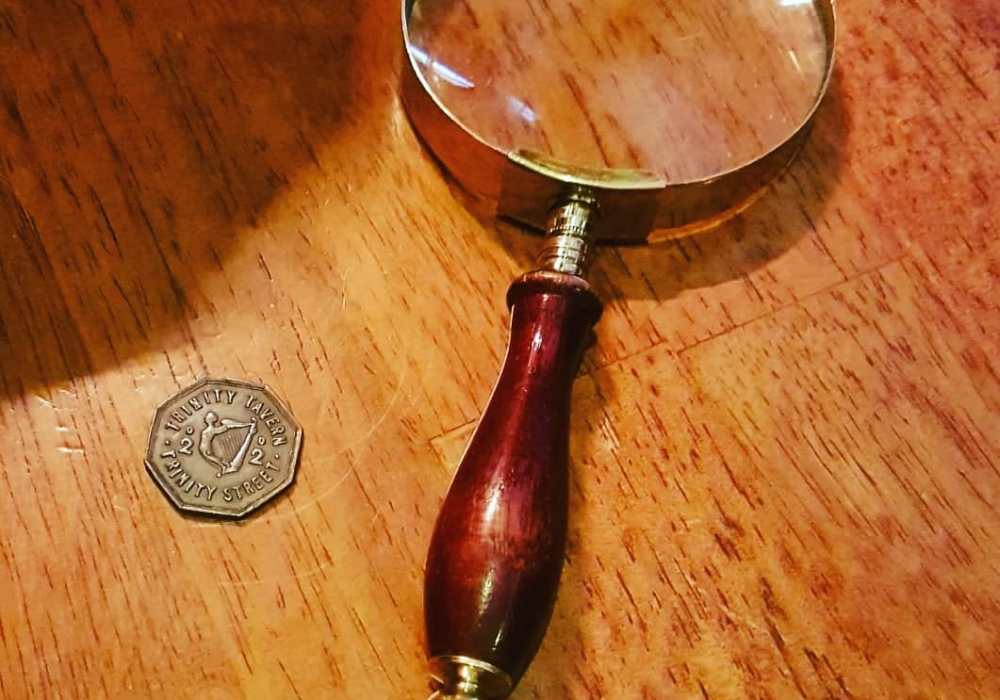
Our first port of call was the Bankers Bar on the corner of Trinity Street and Dame Lane, I’ve written about the history of the Bankers before, and in the 1860’s when it was minting it’s tokens it was known as the Trinity Tavern. 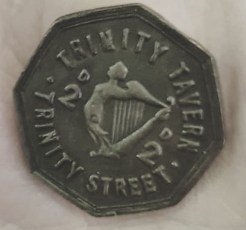 The one shown below was minted in Dublin by John C. Parkes of The Coombe and he was responsible for striking most of the pub gambling tokens.
After our start in the Bankers we made the short journey around the corner and up Grafton Street before turning onto Duke Street and stopping at the Bailey. As it was a warm bright day the famous bar’s outdoor seating area was packed with punters enjoying the fine weather. The Bailey Bar took its name from its former proprietor, Nicholas Bailey who ran the pub (with minor interruption) from 1852 until 1880.
While the Bankers and the Bailey are still with us today some of the pubs that were minting their own coins have disappeared with the passage of time. One of these number George Flood’s once stood at 28 Grafton Street, a site now occupied by the Victoria’s Secret store. No trace of Flood’s pub remains although the tokens that he minted, like the regular coins of the day, featured the head of the reigning British monarch on the reverse, in this case it was Victoria appearing on the back of some Secret currency.
 While Grafton Street isn’t too well known for pubs today the Duke Pub, back on Duke Street is named after the 2nd Duke of Grafton Charles Fitzroy. Originally opened in 1822 the Duke Pub was run by a James Holland when they first started issuing their own tokens in the 1860’s. Since that time the pub has expanded and has taken over premises that once housed the famous Dive Oyster Bar and part of the hotel building that was operated by Kitty Kiernan and her family. It was for a time known as Tobin’s pub but has since reverted back to the original name of the Duke Bar. After a chat and a drink with David, the bar manager we were due to head onto our final watering-hole, north of the river this time to Brannigan’s of Cathedral Street.
En route there was a slight detour at the Westin Hotel, as the site of a major branch of Provincial Bank of Ireland the banking and coinage themes run through the hotel and this is apparent in the names of function rooms like the Banking Hall, or the Mint Bar. They also display many historic coins and notes on the walls of the hotel so keep an eye out next time you drop by.
Elephant Lane
And finally onto Brannigan’s on Cathedral Street. The pub is named after the (in)famous Garda Jim “Lugs” Branigan but has previously been known as “The Goalpost” and “The Thomas Moore”. When it was minting tokens back in the 1860’s it was run by James Kenny and was known as the General Post Office Tavern. It also wasn’t called Cathedral Street but at time was known elusively as Elephant Lane. One theory as to the street’s unusual name was offered by our generous host, publican Padraig McCormack who suggested that the Elephant that was accidentally killed in a fire just off Essex Street in 1681 had been housed in buildings on off the street which gave rise to it’s name.
Padraig was presented with of a framed farthing tavern from the old “General Post Office tavern” days that will hopefully find a home on the wall’s of Brannigan’s along with the extensive array of memorabilia they display.
First featured on DublinTown.ie in July 2018
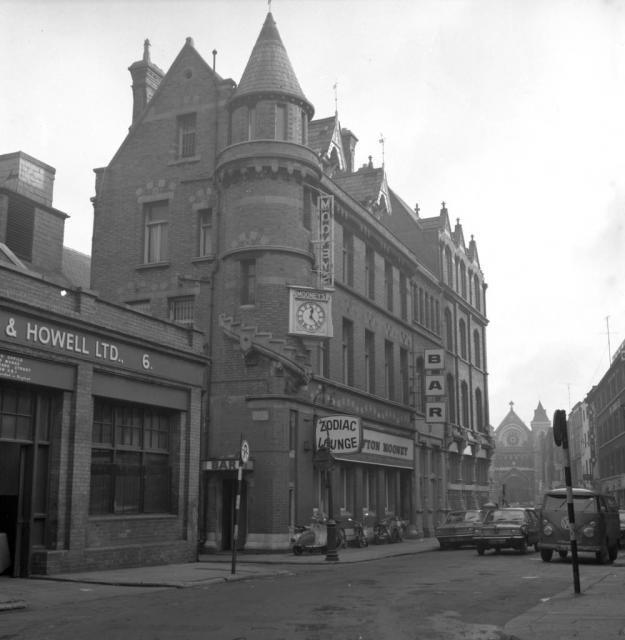


 But why is it called Bruxelles and why are all those flags hanging from the ceiling? And speaking of that, why are there no stars and stripes hanging there an American friend asks? Well, give me a minute and I’ll tell you. In the early 1970’s the bar came into the ownership of the Egan family who continue to run the pub to this day. The purchase of the pub happened to coincide with Ireland’s entry into the EU (or the EEC as it was then) and in the spirit of European harmony the pub was renamed Bruxelles after the Belgian capital. The flags that hang from the ceiling represent all the member nations of the EU so sorry to any visitors from across the Atlantic but that’s why you don’t see an American, or Canadian or Australian flag there.
 While the 70’s brought big changes Bruxelles certainly hasn’t stood still in the intervening decades. The pub, and its famous basement bars became the hangout in Dublin for the emerging Rock scene and was famously frequented by Phil Lynott of Thin Lizzy fame. It’s for this reason that when a statue was erected to Philo, that Harry Street, right next to the pub he knew so well seemed the natural location for its location. The connection with the Lynott clan continues to this day. Philomena, Phil’s Ma in case you didn’t already know, continues to drop by the pub from time to time and has played a big part in its latest development.


 A Bohemian Sporting Life