This is the story of Jocelyn Rowe, Joss to his friends, a man born in India, raised on the outskirts of the great Metropolis of London, who became a boy soldier, ended up in Dublin, joined the Bohemian Football Club, got poached by Manchester United sparking a controversy, defied death on numerous occasions on the battlefields of France and Belgium during World War I, only to return to football, becoming a mentor to younger players, holding his own with the best but never giving up his status as an amateur.
Jocelyn Rowe was born in Prayagraj (then more commonly referred to as Allahabad) in North East India in 1886. He was the son of Henry Smith Sutley Rowe and Elizabeth Rowe (neé Burt), Henry was a Sergeant in the 1st East Surrey regiment and Joss would have been born in the barracks where the family lived. The Naval Military Record noted that “Even as a small boy he was a keen football player”, and he was still a boy when he enlisted, following in his father’s footsteps joining the East Surrey regiment as a member of the band just two days after his 14th birthday.
The East Surrey regiment was an infantry regiment and the 1st Battalion, of which Joss was a member, remained in India until 1903 with their last posting being at Lucknow. They were then recalled to England and were posted to Aldershot, before moving to Jersey in 1905 and to Plymouth in 1909. During his time at Plymouth, Joss was able to indulge his love of sports, playing hockey for Devon against Navy teams while also lining out on occasion as a footballer for Plymouth Argyle.
By late 1912 the Easy Surrey’s were on their way to Dublin, there was a vibrant football scene already established in Dublin at this time, the top clubs such as Bohemian FC and Shelbourne were represented in the Irish League which was dominated, by and large, by the bigger Belfast sides, but there was also the Leinster Senior League which featured representation by Shelbourne and Bohemians as well as numerous other clubs from Dublin and the surrounding area including several of the better regimental teams.
A Saturday Herald image of the 1st East Surrey football team from December 1912. Jocelyn Rowe is the tall man with the moustache, centre in the back row, he has the rank of Sergeant and is listed as the team captain.
The East Surrey’s were too late to register a side for the Leinster Senior League but did immediately play some Army Cup matches as well as a number of friendlies against civilian sides, the only game they lost in those early months in Dublin was against Bohemians and Joss Rowe was the regiment’s star full back.
By the time the photo above was printed in December 1912, Joss Rowe was already lining out for Bohemians as well as his regiment. In a report on 26th October 1912 in the Saturday Herald, Rowe featured in a 3-0 win over Shelbourne, scoring a goal in an Irish League game. Bohemians were without several stars such as Harry Willitts, Battie Brennan and Bill McConnell but were “strengthened by the inclusion of such celebrated internationals as Smith and Rowe” – this was a reference to Jocelyn Rowe and Alfred Smith who had already at that stage made representative apprearances in Army internationals.
The praise of Rowe throughout his time at Bohemians, and indeed throughout his career is fullsome and effusive, described as “a giant of a man, standing over six feet and magnificently built”, and as any casual view of the Surrey team photo shows, Rowe was indeed a well-built man and in some cases a head taller than his teammates, however match reports do not describe a bruiser full-back but point to a player noted for the timing of his tackling as well as the speed and precision of his passing to create counter-attacks from full-back.
Within a year of first appearing for Bohemians, Joss had been selected by the Irish League for a representative game against the Southern League which was played in Dalymount and won by the visitors. The Southern League were those clubs in the south of England who were outside the Football league, for that match in Dalymount this included representatives of clubs like Norwich, Brighton, Millwall, Crystal Palace, QPR and in the case of Bertie Bowler, a former teammate of Joss from Plymouth Argyle.
In 1913 Rowe was a member of the Bohemian side that appeared in the inaugural football match at Shelbourne Park, the new home of cross-city rivals, Shelbourne, that game ended in a 1-1 draw but was most famous for the events around the stadium which formed part of the wider 1913 Lock-out labour dispute. This game and the surrounding incidents are covered in more detail elsewhere on this site, but it is worth noting that among the Shelbourne team was Oscar Linkson, a defender signed that season from Manchester United. Linkson had been born in New Barnet and had made over 50 appearances for United over the previous five seasons, he had also recently married and his teenage wife Olive and a young son Eric came to Dublin with him. Just three years later Oscar would go missing during the Battle of the Somme, his body was never recovered.
This was not to be Joss Rowe’s last connection with Manchester United however, the English club would recruit the Bohemian solider to their starting XI on 5th March 1914, with Rowe, appearing under an assumed name as “Howe” featuring as a full-back in United’s 4-2 defeat to Preston North End. Despite the result the match reports were universal in their praise for the mysterious new United full-back and he was expected to retain his place in the side for United’s next match against Aston Villa. Some reports went so far as to say “Sergeant Rowe, East Surreys and Bohemians… is quite on the cards that a new right full has been unearthed for England for her closing internationals. We can also mention that Rowe is equally at home at left full, or in any position in the middle line”. Despite playing under an assumed name against Preston, Rowe was spotted by a soldier of his acquaintance and his true identity quickly became known by the pressmen in Britain and Ireland and his performance was widely remarked upon. Even that talk of an international call-up!
Headline from the Evening Herald on March 6th, 1914
Despite the expectation that Rowe would line out again for Manchester United and his seeming enthusiasm to continue playing for them, quickly there were signs that this was not likely to happen. The Evening Despatch in the day before the scheduled game between Manchester United and Aston Villa mentioned that there was “interference by another association” that was preventing Rowe from taking his place in the team.
Rather than play for United on March 14th there were reports in the Westmeath Independent promoting the St. Patrick’s Day friendly match between Bohemians and Athlone Town in Athlone. Rowe was mentioned by name as the player who “created a sensation some days ago in English League football”. By the end of the month Manchester United were playing their first game in Dublin, beating Shelbourne 1-0 at in a friendly at Shelbourne Park on March 28th, but once again without Joss in their ranks. A couple of days later news came that Manchester United had been fined £20 by the FA for selecting Rowe for the match against Preston without giving notice to Rowe’s commanding officer, it was hoped that the heavy fine would deter other such approaches by clubs for the playing services of soldiers and sailors. Other football associations it was noted were also asked to play their part and prevent players from the armed services being selected without permission. Nottingham’s Football News went so far as to allege that Rowe’s true identity was leaked by a Dublin journalist who was on the same boat and who had attended the United game as a spectator, noting that “the identity of a good footballer is easily ascertained”.
Joss finished out the 1913-14 season with Bohemians while Manchester United had to look elsewhere for solutions having finished the season 14th in the top flight, they signed a new player from Hull that summer, Patrick O’Connell, a Dubliner from Drumcondra, although they continued to struggle the following season, but by the 1914-15 season’s close and in controversial circumstances football may have been of a secondary concern for the Manchester United players, they certainly were for Joss Rowe.
Britain’s entry into World War I was confirmed at midnight on August 4th, 1914. Immediatedly the 1st battalion of the East Surrey Regiment, Jocelyn Rowe included were mobilised, and by August 13th they had landed in Le Harve as part of the British Expeditionary Force. The British experienced some quick reverses on the battlefield which prompted what became known as the “Great retreat” or the “Retreat from Mons” named after the Battle of Mons which ended in a victory for the German forces. It was later reported that Rowe was injured during the retreat and his regiment the East Surreys were involved in heavy fighting throughout this period.
Joss recovered from his initial injuries and in December 1915, while on furlough back in Surbiton, Kingston upon Thames he managed to find time to marry his fiancé Margaret Thompson, both giving their addresses as 11 Cleaveland Road, Surbiton, a turn of the century terrace home that survives to this day. There was little chance for a honeymoon for the couple however as Joss was granted just eight days leave before he was back to the front and was severely wounded on New Year’s Eve of 1915, his regimental record listing a gun shot wound to the head, back, right leg and left hand. Amazingly Joss survived! The clipping below from an issue of the Irish Independent from March of 1916 details that Joss had received an astounding 83 wounds during his service, mostly from shrapnel, but not only had he survived, that “He hopes to play football again.”
Irish Independent from 30th March 1916
Joss did indeed play football again, although it was some time before he lined out again for Bohemians, returning in March 1917 in an Irish Cup semi-final against Belfast Celtic in the Oval, Belfast. Sadly, Bohemians lost 4-0 in the game, with the opening goal deflecting off Joss and passed Con Drumm in the Bohs goal to give Celtic the lead. This would seem to be one of the last games that Joss played for Bohemians. In an August 1919 edition of the Athletic News there was discussion about Bohs fortunes for the coming season and hope was expressed that the return to demobbed soldiers such as Harry Willits would boost Bohs chances for success and Joss was among those mentioned as being expected to return to the club.
Much was changing in Joss’s personal life, finally away from the battlefield in May 1918 Joss and Margaret had welcomed a son, Anthony into the world, followed by a daughter, Margaret, in September of 1921. After the end of the War the 1st regiment continued in active service around the world, but Joss seems to have found himself back at barracks in Kingston upon Thames and from October 1920 was found playing for Kingstonian F.C. in the Athenian league having spent the previous year playing only Army football for the East Surrey depot.
Image from the Sunday Express, February 4th, 1923
While at Kingstonian he continued to excel, and played in several locations around the pitch, including in the forward line despite the fact that he was by now in his mid 30s. Josh continued on playing with Kingstonian until the 1923-24 season when the club made it as far as the London Senior Cup final, reports at the time stated that he was still playing at a good level but preferred to play in the reserves rather than deny a first team place to a younger player.
One late career highlight for Joss was captaining Kingstonian in a friendly match against FA Cup holders Huddersfield Town in 1922. Kingstonian had just purchased their Richmond Road ground and set about building a new stand that season, and among the club’s star performers was young striker Len Marlow who was snapped up by Huddersfield Town, then under the stewardship of revolutionary manager Herbert Chapman. As part of the transfer a friendly was to be played and Huddersfield also brought the FA Cup trophy to display before the game. In front of a record crowd of 8,000 Joss Rowe’s non-league Kingstonian defeated the FA Cup holders Huddersfield 1-0.
While he finally stepped away from football in 1924 Joss remained with the East Surrey regiment, only retiring in 1934 after 34 years of service. He continued living in the Kingston upon Thames until his death in May 1956, aged 70. During his sporting career, despite playing at the highest level in both England and Ireland he had remained strictly an amateur, though his selection for an Irish League XI and the enthusiastic pursuit of his services by Manchester United demonstrate that he certainly could have pursued a professional career if he had chosen to. The fact, that he lived to the age of 70, and played football at a good level into his late 30s is somewhat amazing considering the injuries he had suffered during the First World War, with varying reports describing either 83 or 86 bullet and shrapnel wounds.
For fifteen months David Davies had searched the Rhondda Fawr for a workable seam, digging into his pockets all he had left for his efforts was a single half crown. Davies stood in front of his workforce and spun the coin into the air, ‘that’s all I’ve left’ he roared, as the men flurried towards it. Impressed by his gesture his workers agreed to work on without pay. On the seventh day as they continued to dig with no wages, a massive seam of the best quality steam coal was found.
It was 1866 and the discovery would lead to the survival of the Maindy Colliery in Ton Pentre, Davies men had sunk the first mine in the village only two years earlier. The workers would be honoured with the construction of the Ton Pentre Miners Insititue in 1895 on Church Road, it would become both a meeting place and an educational venue.
Football arrived in the village in 1903 when Ton Pentre AFC were invited to part take in the Welsh second division. It was a game the valleys would immerse themselves in by 1907 the names of Meredith, Roose and Morris would roll off the tongue as Wales became British Home Champions. Billy Meredith would go on to found the players union with Charlie Roberts he had started his working life down the pits of Black Park in Wrexham at the age of twelve as a pit pony driver; the animal was used underground in the mines.
Leigh Richmond ‘Dick’ Roose was one of the best goalkeepers to ever play for the land of David; his handling skills would lead him to become one of the most skilled grenade throwers during World War I; he would perish at the Somme in 1916. Grenville Morris was known as the prince of the inside lefts and to this day is Nottingham Forest’s all time top goalscorer. Three summers after this great success another protégé was born at no. 43 Treharne Street in Ton Pentre, his name James Patrick Murphy.
The mines of Ton Pentre
William Murphy his father of Irish stock had left the family farm in Ballynunnery, Co. Carlow as thousands of his countrymen died from starvation due to the great famine, he spent his days underground, as a coillery repairer in the mine founded by Davies. The Pentre village primary school opened its doors in 1874 and by 1917 as the sky was full of German led James Patrick Murphy sat in the classrom and on his break James Patrick Murphy kicked the inflatable bladder (used as a football) in the school yard.
Within nine years as Wales were winning their third British Home Championship the boy fom Treharne Street was wearing his country colours in a youth game against England. It was 1924 and that same year unemployment among coalminers rose from 2% to a high of 28.5% in August 1925; the village of Ton Pentre would like many other places in Wales be affected. The decline in the demand in coal was caused by the high exchange rate of sterling and increased coal production elsewhere, while the loss of European markets such as Germany who were paying reparations in coal after the great war ended did not help.
All this would be exacerbated by the Wall Street Crash of 1929 which would lead Wales to become one of the most depressed countries in the world with 42.8% of males unemployed. A year before the crash James Patrick Murphy would leave the valley of Ton Pentre for the black country, he was seventeen and West Bromwich Albion football club beckoned.
The longest serving manager in English football history Fred Everiss signed the young Welsh teenager, Everiss had began life at the Hawthorns in 1902 and would remain as secretary-manager of the club until 1948. West Brom had been founded in 1878 by local workers from the George Salter’s spring works and Everiss had led them to their first and only topflight title to date in the first season after the great war in 1919-20.
As young Jimmy signed on the dotted line West Brom were now in the second division after being relegated in 1927. He would join a team which included Jimmy Cookson, who started life with Salford Boys Club, notching up thirty-eight goals in season 1927-28 as West Brom finished eight. Murphy would have to bide his time with only sporadic game time in that glorious season of 1930-31 for the Throstles as the club would win promotion only the goal scoring exploits of legendary Dixie Dean and Everton stopping them finishing top of division two.
James Patrick Murphy would watch on at Wembley as the Welsh Guards band struck up God Save The Queen as ‘Ginger’ Richardson would write himself into black country folklore with a Wembley brace defeating midland rivals Birmingham City 2-1 in the FA Cup Final of 1931 – Richardson had started life on the buses in Hartlepool playing for the United Bus Company.
Within four years and before he had reached his mid twenties James Patrick Murphy would stand on the hallowed turf of Wembley stadium in front of 93,204 as Bert Frogg blew his whistle for the start of the 1935 FA Cup Final. This time there would be no silverware for the baggies as Sheffield Wednesday’s Ellis Rimmer scored twice late on to break black country hearts as the owls ran out 4-2 victors. Rimmer had scored in every FA Cup round prior to the final and joined the Hillsborough outift in 1928 heavily influencing their ‘Great Escape’ that year as they picked up seventeen points out of possible twenty to remain in division one.
On the international front James Patrick Murphy made his bow at half back for Wales in the annual home championship at the Racecourse ground in Wrexham on November 16th, 1932, against England. One of his teamamates that day was Dai Astley who would go on to manage Inter Milan to second place in Serie A in 1948; Guiseppe ‘Peppino’ Meazza who the San Siro stadium is named after had departed as manager that year. Murphy would be part of the first Welsh team to venture across the channel playing France on European soil in May 1933; the game was played in the Stade de Colombes in Paris, which would stage the 1938 World Cup Final. Tom Griffiths opened the scoring for Wales and in the side was Murphy’s Albion teammate Walter Robbins, who as a teenager, while working in the local brewery, had netted 70 goals for Ely United in the Cardiff district league a record to this day. A famous victory would be denied when Jean Nicolas equalised with ten minutes remaining, Nicolas would make twenty-five appearnaces for France scoring twenty-one times and would net twice for France in the 1938 World Cup.
On St. Patrick’s Day 1937 in Wrexham, William and Florence Murphy would sit in the stands of the Racecourse ground and watch James Patrick Murphy win the British Home Championship for Wales. The men from the valleys had defeated England 2-1 at Ninian Park, Cardiff in their first game with Seymour Morris, who would go on to work in a tool factory in Crickhowell after hanging up his boots, scoring the winner. Pat Glover scored a brace at Dens Park, Dundee in the second game as Scotland were defeated on home soil by the same scoreline. This meant a victory over Ireland would give Murphy and his teammates a clean sweep, Glover again scored twice followed up with goals by Bryn Jones and Fred Warren. Alex Stephenson (still the only man capped by the FAI as a senior international to ever line out for Glasgow Rangers) scored a consolation goal for Ireland in a 4-1 demolition.
It was only the second time the British Home Championship trophy was lifted, it had come into being in 1935 constructed in celebration of King George the V’s silver jubilee, up until then players received engraved pocket watches.
War would eventually bring an end to Murphy’s playing career before he reached his thirtieth birthday, he would make more than 200 appearances for West Brom, leaving the Hawthorns for Swindon Town as the world braced itself for conflict. Like many others James Patrick Murphy would join the war effort in the face of fascism, as a seargent based in Bari, Italy organising troops sports games and coaching clinics.
On one occasion Matt Busby who had been offered the Manchester United job after the war witnessed the Welsh man give a passionate and rousing speech on football and tactics to the young troops. Busby was from the Scottish mining town of Belshill at the age of six he had lost his father to a sniper’s bullet in Arras, France in 1916 – he like Jimmy arrived into the world in 1910. During the second world war his service required him to coach in the Army Physical Training Corps, spending six years as an army P.E. conductor.
From 1946 – 1976 both men worked alongside each other forming one of the greatest ever partnerships in football transforming Manchester United from mediocracy to one of most dominant teams domestically and in Europe. In James Patrick Murphy, Busby had a man who developed a youth structure that included Edwards, Whelan, Taylor, Hamilton, Charlton, Best and many others – a conveyor belt that would bring glory and delight to every Stretford Ender. It would also be tinged with tragedy as the Munich Air Disaster destroyed a team full of fervour and youth; a team that was ready to conquer all.
In 1956 James Patrick Murphy became manager of Wales he would lead his country to the World Cup with names such as Charles, Allchurch and Jones starring on the road to Sweden ’58. On the 5th of February 1958 Wales played Israel as Manchester United went to Belgrade to face Red Star in the European Cup; on this occasion James Patrick Murphy would not sit beside Matt Busby on the plane or have the hotel room next to him like on every previous away trip.
Instead in the cauldron of Ninian Park with ‘bread of heaven’ in his ears being sang by 38,000 Welsh souls, Murphy would watch on as Ivor Allchurch opened the scoring in the 76th minute while Cliff Jones added a second four minutes later. That night Wales would qualify for the World Cup and James Patrick Murphy would become immortalised in Welsh football history. The next day he would leave Cardiff by train for Manchester carrying a box of oranges a present from the Israeli team; on arriving at Picadilly station James Patrick Murphy would take a taxi to Old Trafford.
On arrival at the stadium Murphy would make his way to the boardroom all around there was silence, in front of him stood Matt Busby’s secretary Alma George with tears in her eyes; uttering the words ‘The plane has crashed. A lot of people have died, Jimmy’. James Patrick Murphy went to his office and James Patrick Murphy cried his eyes out.
The next day James Patrick Murphy flew to Munich witnessing at firsthand the suffering and the heartbreak; listening as Duncan Edwards mumbled ‘Oh it’s you Jimmy? Is the kick-off three o’clock? And looking on as his great friend Matt Busby lay in an oxygen tent.
James Patrick Murphy returned to Manchester with survivors Harry Gregg and Bill Foulkes with the words ‘Keep the Flag Flying’ in his ears. In utilising youth team players, he had been nurturing through the central league augmented with only two new signings; James Patrick Murphy stabilised a club that was on its knees.
Under his guidance Manchester United would reach an FA Cup final and the semi-final of the European Cup, all this while he came to terms with the loss of men, he had nurtured on the football fields of England. ‘It needed someone who, though feeling the heartbreak of the situation, could still keep his head and keep the job going. Jimmy was that man.’ Sir Matt Busby. For many years Nick and Paul Muphy have walked to Old Trafford passing the holy trinity and the Munich clock, but nothing of their relation.
In May 2021 with campaigning by six Manchester United supporters’ groups and endorsed by James Patrick Murphy’s family – the football club James Patrick Murphy saved from the brink agreed in principle to construct a statue in his honour.
Jimmy Murphy’s sons with other Manchester United supporters
On the 8th of April 1907, Thomas Blackstock bid farewell to his wife and made his way to the Manchester suburb of Clayton. As the Scot walked through the streets of Manchester, he wondered if today would resurrect him back into the first team. That first team was Manchester United’s, and Tommy’s final destination was the stadium at Bank Street, known locally as the Bradford and Clayton athletic ground. Blackstock had arrived in Manchester from the mining town of Cowdenbeath in June 1903; it was then a football club languishing in the second division which had recently survived a winding-up order. Four months earlier, Newton Heath football club was grappling with severe debt; £2,700 to be exact was required to keep the club operating. Step forward several local businessmen led by John Henry Davies who would save the club from liquidation; Davies would become club president and Manchester United would be born.
Ernest Mangnall was installed as United boss, a man who believed in physical fitness over technique and skill. He is the only man to date to have managed both Manchester clubs; Tommy was one of his first signings. By season 1905/06, Blackstock was part of a United defence that only conceded 28 goals clinching the second division title. Funded by the monies from Brewery owner Davies, Mangnall went on a spending spree which saw the superstar of the day Billy Meredith arrive at Bank Street. Disappointingly for Tommy, another new arrival was Herbert Burgess from rivals Manchester City who would go on to manage AC Milan and would replace him in defence. This led to Tommy lining out for United reserves on that Spring day against St. Helens Recreation F.C. at Bank Street. Ten minutes had elapsed when Tommy with no one around him leaped up to head the ball; after connecting with the ball he collapsed and lay unconscious on the ground. Tommy was carried off the pitch and was brought to the sanctuary of the dressing rooms; sadly he was pronounced dead soon after.
In the inquest, to his death, the Manchester City coroner concluded Tommy Blackstock had ‘died of natural causes’ a possible fatal seizure after heading the ball. In the press comparisons were made with David ‘Soldier’ Wilson who had fought in the Boer War; Wilson had collapsed and died from heart failure playing for Leeds City a year earlier. Although as the United game was only ten minutes in heart failure seemed an unlikely cause of death. On April 11th, 1907 the town of Kirkcaldy came to a standstill as Tommy Blackstock was laid to rest, aged twenty-five, with family mixing with local officials and club representatives. To compound the tragic loss for Blackstock’s family given the coroner’s report Manchester United withheld the insurance money due to his next-of-kin. This terrible treatment of Blackstock’s family and the upholding of the insurance money sparked his fellow teammates into action specifically Charlie Roberts, Billy Meredith, Sandy Turnball, and Oscar Linkson. Roberts had arrived in 1903 like Blackstock for the sum of £600 from Grimsby Town, he had previously come to the attention of the Football Association as rebelliously wearing his shorts above the knee.
A centre half by trade Roberts would lead United to their first title in 1908 followed by FA Cup success in 1909 and another first division championship victory in 1911. However, eight months after Tommy Blackstock’s death Roberts and Meredith were sitting at the top table in a room in the Imperial Hotel, Manchester as the Association of Football Players’ and Trainers Union was formed. The groups aims the freedom of movement of players, an increase in the £4 maximum wage, and obtaining the same employment rights for footballers as other workers. At the annual general meeting of the football association in 1908, the union’s call for the maximum wage to be increased fell on deaf ears as £4 was reaffirmed. Although the possibility of a bonus system was raised whereby players could prosper from club profits. The AFPTU continued to negotiate with the Football Association, but by April 1909 things had drawn to a halt without any agreement.
Charlie Roberts and family
In June of that year the FA announced that all footballers should resign from the AFPTU, they were given until July 1st otherwise their registrations as professionals would be cancelled. Most did except for the players at Manchester United who found themselves suspended by the club for their refusal to leave the union; the English media aptly named them ‘The Outcasts’. One of those who did resign but continued negotiations with the FA was Geordie Colin Veitch who played for Newcastle United captaining the Magpies to league success in 1905, 07, and ‘09 alongside the FA Cup in 1910. By August 1909 as Veitch was celebrating another league title and Roberts and Meredith were stubbornly refusing to budge from the union they had founded the FA relinquished on its position. In the city of Birmingham on the 31st of August word came through from a FA meeting that professional footballers would be allowed to be members of the AFPTU.
The Outcasts F.C.
The Red’s first game of the season in 1909 at Bank Street was against Bradford City as the United team ran onto the pitch the crowd could see each team member wore an AFPTU armband. For those involved in the AFPTU most would never play for their country again, Roberts never represented England again due to his union activities even though he was described as a defender with exceptional ability and truly an inspirational captain. He also missed out on a testimonial at United which would have guaranteed a send-off of £500 a king’s ransom in those days. Roberts left United in 1913 for Oldham Athletic as the great war began a year later and football continued; he captained the Latics to second place in the first division as United struggled narrowly avoiding relegation in the final season of 1914/15. As the war across Europe continued football was cancelled, Roberts hung up his boots. He would still fight for the rights of footballers working as chair of the AFPTU and helping to get the maximum wage up to £9 and bonuses paid to players. Sandy Turnball who had supported Roberts with his Union activities perished at the Battle of Arras in France; the war memorial at Gorse Hill not far from United’s modern-day stadium bears his name. Billy Meredith, a coal-miner before he turned professional at eighteen would stay on at Manchester United until 1920, playing well into his forties. One of Roberts other comrades Oscar Linkson would leave United for the Emerald Isle in 1913 and play in an infamous Dublin derby between Shelbourne and Bohemians to the backdrop of the great Dublin lockout.
Today eight minutes from Bank Street is the PFA offices housed in the Bishopsgate area of Manchester; it seems apt that the union founded by Roberts and the Outcasts still flourishes as a pivotal organisation in the world of modern football.
Do we make a political statement when we as a society decide who to remember and who to forget, whose home or resting place is commemorated, and those who remained unmentioned? This is an argument as old as portraiture and statuary, but one that seems especially relevant today.
Beyond our shores, the ‘Rhodes must fall’ protest movement in South Africa, and more recently in Britain, has campaigned for the removal of statues depicting Cecil Rhodes, as part of a wider protest against institutional racial discrimination. Protests in the United States, especially in the south, have focused on the commemoration of Confederate icons of their Civil War. This has included groups calling for the removal of statues of figures such as Jefferson Davis, while also sparking some counter-protests from torch-wielding white supremacists. This has recently culminated in the outbreak of deadly violence in Charlottesville, Virginia due to the local government’s decision to remove a statue of the Confederate General and slave-owner Robert E. Lee.
In Ireland the contested nature of symbols and artwork has been especially prominent in recent years. The 12th of July commemorations by sections of the Unionist community in Northern Ireland continue to be a highly sensitive issue with occasional flashpoints, while last year saw the huge state commemoration of the 1916 Rising. While there seemed to be broad public support for the tone and content of the commemorations, they have not been immune from criticism. The commemorative wall in Glasnevin Cemetery which listed all the dead from the Rising, and included not just Irish Volunteers and civilians but also British soldiers, was vandalised with paint only a few months ago. Similarly, the statue of Irish Republican Sean Russell that stands in Fairview Park has been repeatedly been vandalised over the years by various groups, including its decapitation, due to his wartime links with Nazi Germany and indeed the Soviet Union.
These historic events and personages are marked either by significant commemorative events, like the 12th of July “festivities” with marches and bonfires, or by physical monuments, like the remembrance wall in Glasnevin, or the statue of Russell. There is also much to be said about the nature of a society in showing who is not commemorated in word, art or celebration. The Tuam babies story, of over 800 children buried in an unmarked grave in a former septic tank has dominated public discussion and forced the nation into uncomfortable reflection about our recent past. For decades, the remains of these babies and toddlers from the Sisters of the Bon Secours Mother and Baby Home in Tuam, Co. Galway, were disposed of as though they were detritus. It was only the work of local people, especially the meticulous research of amateur historian Catherine Corless that brought this story to national attention and meant that these deceased children could at least be remembered and perhaps suitably commemorated.
To try and consider all physical points of remembrance or indeed collective amnesia in a country, or even a city like Dublin would be a lifelong task, but living around Dublin 9 and having a particular interest I’ve decided to focus my modest talents on how our city commemorates something a little more trivial, though still important to many: its footballers.
Dublin has long been the hub for football in the Republic of Ireland, producing more international players than all other counties combined. Areas like Cabra or Ringsend could field full international XI’s out of players born in those suburbs alone. The city is also home to the main stadiums used for international matches, Lansdowne Road, which hosted its first football international in 1900, and Dalymount Park, home to Bohemian F.C. since 1901 and for many years the main home stadium for the Republic of Ireland national team after the FAI/IFA split in 1921. Other stadiums from the past and present such as Drumcondra’s Tolka Park and Glenmalure Park in Milltown also feature prominently in Irish football history. Yet the sport has also seemed controversial to some, viewed as an un-Irish, “garrison game” that was not truly representative of a post- independence Ireland. My focus is on who, and what, we as a supposedly football-loving city have chosen to commemorate.
Plaque build-up
From a quick examination, the commemoration of football in Dublin street signs and plaques is fairly limited to ex-Ireland internationals of prominence, or those sites associated with the creation of the most well-known city clubs.
In terms of playing personnel, there are three men commemorated publicly that I could find; John Giles, Liam Whelan, Patrick O’Connell and Oscar Traynor. Giles, who was the first of these to receive a commemorative plaque, is also the youngest and the only one still alive. His plaque is located in Ormond Square, Dublin 7, just off the city quays close to the house where he was born.
John Giles Irish International Footballer was born and raised in Ormond Square – Heroes come from here
The square of houses surrounds a playground area and, appropriately, the plaque is mounted on a low wall surrounding this space. It was unveiled in 2006 and the intention of the message seems to aim as inspiration for children living in this part of the city. It seems to suggest that if Johnny Giles could make it as an elite player for Manchester United and Leeds United, play for and manage Ireland, then the future should likewise be wide open for other children from this area.
Giles is of course something of a national institution, rightfully regarded as one of the country’s greatest ever players. He also managed Ireland for seven years, and later became known to successive generations due to his extended service as a newspaper, radio and television football pundit through the many highs and lows of the Irish national team.
Giles seems to still be held in affection by the vast majority of Irish football fans despite his playing or managerial involvement ending almost 40 years ago. As a player he was one of our most technically gifted and sought to encourage a more expansive style of play when Irish manager. He found success in England as a cup winner with Manchester United before his move to Leeds United, where he won two league titles, an FA Cup, League Cup and two Fairs/Uefa cups.
Not a great distance from either of the two spots in Dublin that John Giles called home stands a plaque to another ex-Manchester United star, Liam Whelan. The plaque in question is on the east side of a bridge that links Connaught Street across the old railway lines, now part of the extended Luas green route, to Fassaugh Road. The bridge has been known as Liam Whelan Bridge since an act of Dublin City Council gave it that name in 2006. It is a fitting location, as the bridge is just a few seconds walk from St. Attracta Road, where Liam was born.
While Liam was an exceptional player, a back to back league winner with the stylish Manchester United side of the mid-fifties, it is more his tragic death in the Munich air disaster at the tender age of 22 for which he is most remembered. Whelan made but 98 first team appearances for Manchester United and won only 4 four senior caps for Ireland, two of those appearances made in Dalymount Park, located just yards from the bridge that bears his name.
Then as now, Manchester United were a hugely popular team in Ireland. They had been captained to FA Cup glory in 1948 by Irish international Johnny Carey, and a year later 48,000 fans packed out Dalymount Park for a testimonial match for Bohemians’ legendary trainer Charlie Harris, between Bohemians and Man Utd .
The “Busby Babes” team were famed not just for their youth but for the appealing, attacking style of football they played. Liam had been their top scorer when they won their second consecutive title in the 1956-57 season, scoring 33 goals in all competitions. His loss, and that of his team-mates symbolised the unfulfilled potential of a group of young men cut down before even reaching their prime.
Patrick O’Connell plaque at 87 Fitzroy Avenue, Dublin
The most recently unveiled football related plaque in Dublin City is in remembrance of Patrick O’Connell. He was born in Dublin in 1887, growing up on Fitzroy Avenue in Drumcondra, just a stones throw from Croke Park. Patrick was a successful footballer for Belfast Celtic before moving across the Irish Sea with spells at Sheffield Wednesday, Hull City and Manchester United. He also made six appearances for the Irish national team and was a member of the victorious Home Nations Championship winning side of the 1913-14 season, Ireland’s first victory in the competition.
Despite a relatively successful and eventful playing career (captaining Manchester United, becoming embroiled in a betting scandal, winning the Home Nations), O’Connell is best remembered for his managerial achievements. He began his managerial career as player-manager with Ashington before moving to Spain in 1922. During more than 25 years in Spain he managed a host of clubs, including Racing Santander, Real Oviedo, Barcelona and both of the major Seville clubs; Real Betis and Sevilla. O’Connell even lead Betis to their sole league title in the 1934-35 season. Strangely, despite the influence of Irish players and managers in Britain, this success is more recent than the last time an Irish manager won the League in England, namely Belfast’s Bob Kyle with Sunderland in 1913.
O’Connell is revered as a hero in Betis for this championship victory, and is similarly lauded in Barcelona as the man who saved the club from going bankrupt during the tumult of the Spanish Civil War by arranging a series of lucrative foreign tours that kept both the club coffers full and the players out of harm’s way.
The tireless activities of O’Connell’s descendants and enthusiasts has meant that this previously forgotten footballing pioneer is now commemorated not only in Dublin but in Seville, Barcelona, Belfast and in London where he is buried. The efforts of this small group has seen television and radio documentaries commissioned as well as a biography being published. In this regard O’Connell is the 3rd Manchester United player commemorated in Dublin, but the only manager. His unique achievements in Spain and his crucial role in the history of Barcelona setting him apart in an Irish footballing context.
Oscar Traynor is probably better known as a Government Minister for Fiánna Fáil between 1936 and 1961 as well as for his significant role in the revolutionary movement. He was out in 1916, was a senior figure in the Dublin Brigade during the War of Independence and took the anti-treaty side in the Civil War. He was however also a footballer of some talent and a man whose love and interest in game continued throughout his life. The opening of his Bureau of Military History witness statement contains the wonderful lines:
I was connected with football up to that and I broke with football when I saw there was something serious pending.
Traynor’s connections with football included keeping goal for Dublin side Frankfort and most notably for the great Belfast Celtic. Traynor later became President of the FAI from 1948 until his death in 1963. In the 1920s he wrote a series of impassioned articles in Football Sports Weekly defending the sport from the charges that it was a “Garrison Game” or that those who played it were somehow less Irish. In these articles he references several figures of note in the Revolutionary movement who were also prominent soccer players.
In 2016, coinciding with the centenary of the Easter Rising the residents of the Woodlawn estate (just off Oscar Traynor road) were successful in getting a plaque dedicated to Traynor installed at the entrance to the housing estate where it was unveiled by Traynor’s grandnepthew Robbie Gilligan.
Plaque to Oscar Traynor – photo from the Twitter account of his grandnephew Robbie Gilligan
A thank you to Donal Fallon for bringing the Traynor plaque to my attention.
Moore to see!
The most recent plaque dedicated to a footballer in Dublin was unveiled in April 2021 on Clonliffe Avenue, just in the shadow of Croke Park and is dedicated to Paddy Moore. Though born on Buckingham Street in 1909, Moore grew up in the Ballybough neighbourhood and called this single-storey cottage his home.
Moore is most associated with Shamrock Rovers and the plaque records his unique achievement of scoring in three FAI Cup finals and emerging on the victorious side on each occasion. Though short and stocky Moore also had a habit of scoring important goals with his head but was most renowned for his skill and finishing ability. Joe O’Reilly, who played with Moore for both Ireland and Aberdeen had this to say of him.
He was a wonderful footballer, a wonderful personality. The George Best of his time… He was a very cute player. If, in a match, things weren’t going his way, he could produce the snap of genius to turn the match around – and he was always in the right spot. I had a good understanding with him.
The comparison with best in terms of skill and technique was sadly not the only similarity, both Best and Moore developed serious problems with alcohol, and in both cases their careers at elite level were over before the age of 30. Despite this in the space of only five years and a mere nine caps Moore made history for Ireland. He scored on his debut in a 1-1 draw with Spain in Barcelona, before he and O’Reilly scored in a 2-0 win over the Netherlands in 1932. After this match Moore, O’Reilly and Jimmy Daly were all signed by Aberdeen manager Paddy Travers where Moore was an immediate success, scoring 28 goals in 30 games in his opening season for the Scottish side.
However, the following season would be less successful. While Moore still scored a respectable 18 goals in 32 appearances his strike rate had decreased and he eventually ended up going AWOL after returning to Ireland for a match against Hungary in December 1934, blaming injury and a miscommunication with Aberdeen. It seems that Moore’s problematic relationship with alcohol was impacting his performances, to the point that manager Paddy Travers had effectively chaperoned him back to Dublin for an international match against Belgium earlier in 1934. Whatever Travers did seemed to work as Paddy Moore would score all four goals in a 4-4 draw in that game. That match was Ireland’s first ever World Cup qualification game. This historic feat is also recorded on the plaque.
Moore scored again that April in the next qualifier against the Netherlands to give Ireland a 2-1 lead, however the Dutch regrouped and emerged as 5-2 victors, ending Ireland’s hopes of qualification.
One of Moore’s last games for Ireland was in 1936 against Germany in Dalymount , where the German side gave the fascist salute Irish side ran out 5-2 winners with Oldham’s Tom Davis scoring a brace on his debut, and Paddy Moore, slower, less mobile, but still perhaps the most skillful player on the pitch pulling the strings from the unusual position for him of inside left and creating three of the five goals. The German coach Otto Nerz raved about Moore and felt that he was the player that his team could learn the most from.
This was something of an Indian Summer in Moore’s career (a strange thing to say about a man aged just 26), he was back at Rovers and was instrumental in helping the Hoops win the 1936 FAI Cup His last cap for Ireland was an unispiring display in a 3-2 defeat to Hungary two months later. Injury and Moore’s well-documented problems with alcohol had, not for the last time, derailed a hugely promising football career. He finished his Ireland career with nine caps and seven goals. There were later spells with Brideville and Shelbourne before a final ill-fated return to Shamrock Rovers. Paddy Moore, one of the most celebrated and skillful footballers of his era died in 1951 just weeks before his 42nd birthday.
Paddy Moore plaque
Paddy Moore’s house
Pubs, clubs and housing estates
Many League of Ireland fans understandably feel that our domestic game gets a raw deal in wider Irish society, and with the FAI and the Irish media in particular. John Delaney’s description of the league as the “problem child” of Irish football only seemed to confirm this to the die-hard supporters of clubs around the country. However, it was not always thus. In the early days of the FAI, domestic clubs held significant sway and grandees of League of Ireland sides made up many of the committees of the FAI, including the selection committees for the national team.
Dublin has always been at the forefront of the game in this country. Again, the capital alone has comfortably provided more international players than every other county combined and the Dublin clubs have generally tended to be among the predominant clubs in the league, regardless of the era.
Upon creation of the Free State League in 1921 after the split from the IFA, the entirety of the eight-team division were Dublin based clubs. Prior to that, the only non-Ulster based clubs to compete in the Irish league for any significant amount of time came from the capital. Bohemian F.C. and Shelbourne, two clubs formed in the 1890s who remain in existence today and both their founding locations are commemorated.
The gate lodge at the North Circular Road entrance to the Phoenix Park. Bohemian FC were founded here in 1890.
Bohemian F.C. were founded on the 6th September 1890 in the Gate Lodge at the North Circular Road entrance to the Phoenix Park. Those forming the club were young men in their late teens from Bells Academy, a civil service college in North Great Georges Street, and students from the Hibernian Military School, also located in the Phoenix Park. The early matches of the club were played on the nearby Polo grounds. By 1894 the club had its first major piece of silverware, the Leinster Senior Cup, defeating Dublin University 3-0 in the final. It was to be the first of six consecutive victories in the competition. Less than two years after that first victory John Fitzpatrick became the first Bohs player to be capped at international level, captaining Ireland on his debut against England.
The club continued to grow, purchasing Pisser Dignam’s field in Phibsboro as their new home ground. Dalymount Park, named after the nearby line of terrace houses remains the club’s home to this day. It also played host to dozens of cup finals and hundreds of international matches. Bohemians were founder members of the Free State league, becoming champions for the first time in 1923-24. The club have proceeded to win the title on a further ten occasions.
Shelbourne F.C. plaque on Slattery’s Pub
Shelbourne were founded in what is now Slattery’s Pub at the corner of South Lotts Road, Bath Avenue and Shelbourne Road in 1895 by a group of dock workers from the local Ringsend/Sandymount area. Their name was reportedly decided upon by a coin toss between the various nearby streets. By the 1902-03 season they were champions of the Leinster Senior League and by 1905 they had become one of the first Dublin clubs to begin paying players, with James Wall receiving the princely sum of a halfpenny per week!
Paying players seemed to pay dividends because by 1906 the had become the first side from outside of Ulster to win the IFA Cup beating Belfast Celtic in the final. Other triumphs would follow and to date Shelbourne have won 13 league titles and seven FAI Cups.
Commemorating the founding of Shamrock Rovers in 1901. The building is located on Irishtown Road.
Shamrock Rovers, as with Shelbourne mentioned above, took their name from a street in the local area around Ringsend, in this case Shamrock Avenue. The street as it was then no longer remains, but is roughly located where the Square is today, a small side street off Irishtown Road. The first home ground of the nascent Rovers was Ringsend Park, just to the rear of Shamrock Avenue. The club was formed at a meeting held at number 4 Irishtown Road, the home of Lar Byrne, the first secretary of Shamrock Rovers. The plaque shown above commemorates this event, and can be found on Irishtown Road near to the corner with the Square, opposite the Ringsend public library.
Irishtown Road past and present
Ringsend Park would not remain Shamrock Rovers’ permanent home for too long, as the club moved to a number of grounds in their early years and withdrew for competitive football completely on a number of occasions. However, by the early 20s, they were on the rise. They finished as runners-up in the inaugural FAI Cup final in 1921, and would win the league title a year later. By late 1926, Rovers had begun playing their matches in Glenmalure Park on the Milltown Road, and they had been playing on other pitches nearby in the years immediately preceding 1926. Glenmalure Park would remain Rovers’ home until 1987, when it was finally sold for redevelopment as a housing estate by the club’s owner, Louis Kilcoyne. The Rovers support had strongly opposed this move, and formed the pressure group KRAM (Keep Rovers At Milltown) to fight this decision. Ultimately, they were unsuccessful and the intervening years would see Rovers lead a peripatetic existence, moving to Tolka Park, Dalymount Park, the RDS and Morton Stadium amongst others, before finally relocating to their present home in Tallaght in 2009.
Glenmalure Park retains a strong significance for Rovers fans, and more than a decade after leaving, a monument commemorating their time on the Milltown Road was unveiled in 1998. In credit to Shamrock Rovers, a particularly active branch of their support have been prominent in recording and marking their heritage and history, not just with the plaque above, but also with initiatives like the fundraising for a new headstone for their former striker Paddy Moore.
Monument to Glenmalure Park on the Milltown Road at the former site of the stadium
This is pretty much the sum total of the football commemorations that I could find, although I would appreciate any other suggestions. For clarity I’ve excluded and plaques, monuments and such, that exist within football grounds and clubhouses. A quick review shows that despite the long football heritage of the city, very little of this is marked physically.
Statues of other sports stars adorn other parts of the country, from the recently unveiled statue of Sonia O’Sullivan in Cobh, to numerous GAA stars remembered in bronze in other parts of the country, hurlers Nicky Rackard in Wexford Town and Ollie Walsh in Thomastown being two personal favourites. There is a statue of Spanish golfer Seve Ballesteros at Heritage golf club in Co. Laois, and even our four-legged friends have been immortalised, with the legendary racing greyhound Mick the Miller getting pride of place in the centre of Killeigh, Co. Offaly and another of his ancestor Master McGrath just outside Dungarvan. In terms of football, there is a statue of big Jack Charlton in Cork Airport, but if you didn’t know him as the former Irish manager you might think it commemorates a noted angler.
So what have we learned? In Dublin, to be a footballer and receive a physical commemoration, it really helps if you’ve played for Manchester United! The city’s three biggest clubs are all remembered at their places of birth, while Rovers’ home ground at their peak has also been commemorated in granite and bronze. Perhaps Tolka Park will receive similar treatment if and when it is redeveloped? I for one would certainly hope so.
I’ll end on one final commemorative plaque. This one is on Parnell Square East and marks the birth place of the inimitable Oliver St. John Gogarty. The plaque commemorates Gogarty as a Surgeon, Poet and Statesman. Plenty more terms could be added. He was the inspiration for the character Buck Mulligan in James Joyce’s Ulysses, and he was also a fine sportsman, in swimming, cricket and indeed football. Gogarty was a Bohemian F.C. player from 1896 until at least 1898 and featured as a forward in the clubs first team. It may not be as a footballer that he is best remembered but it was certainly another string to his bow.
An introduction to just some of the Bohemian F.C. members who swapped the playing fields of Ireland for the killing fields of Europe.
Fred Morrow was only 17 when he took to the pitch for Bohemians at the curtain raiser at their great rivals’ new home, Shelbourne Park. The Bohs v Shels games were known then as the Dublin derby and as with many derbies, passions were inflamed. But this game’s atmosphere was even more heightened and it wasn’t just to do with the 6,000 spectators packed into the ground. Even in just getting to the ground Morrow and his teammates had seen over one hundred Dublin Tramway workers picketing the game.
The 1913 Dublin lock-out was only a few days old and Jim Larkin had declared that there were players selected for the game who were “scabs”: Jack Millar of Bohemians and Jack Lowry of Shelbourne were the names identified during the strike. The striking tramway workers subjected the players and supporters to (in the words of the Irish Times) “coarse insults” and had even tried to storm the gates of the new stadium. Foreshadowing the events of the next day, there were some violent altercations with the officers of the Dublin Metropolitan Police, with 16 arrests made and over 50 people suffering injuries.
This can’t have affected the teenaged Morrow too badly as he scored Bohs’ goal in a one all draw that day. Although less than 5’5” in height, the youngster was shaping up to be quite a prolific centre forward. Fred had started his career early, lining out for his local side Tritonville FC based in Sandymount, and while with the club he had won a Junior cap for Ireland, scoring in a 3-0 victory over Scotland in front of over 8,000 spectators in Belfast. The following season he’d been persuaded north of the river to Dalymount, and he was to enjoy a successful season including scoring a hat-trick in an unexpected 3-1 victory over title holders Linfield.
The Shelbourne side that Bohs faced that day included in their ranks a new signing of their own, Oscar Linkson, who had just been signed from Manchester United. Linkson had made almost 60 appearances for United and had been at the club when they won the FA Cup in 1909 and the League in 1911. Quite the coup, then, for Shels. Oscar moved to Dublin with his 17 year old wife Olive and his son Eric, who would be joined by a baby sister just months later. He faced Fred Morrow that day as part of the Shels defence.
Within a year of this game, War would be declared. Both Fred Morrow and Oscar Linkson volunteered to serve in the British Army, Oscar with the famous “Football Battalion” of the Middlesex Regiment alongside a whole host of star players which included the Irish international John Doran. Neither Fred nor Oscar would return, by the end of 1917 both were dead on the fields of France.
The Memorial plaque or “Death penny” issued to Fred Morrow’s family
The events that the players had witnessed leading up to that Bohs v Shels game had far-reaching consequences, with the violence in the adjoining Ringsend streets at the game growing worse over the following day, culminating with violent clashes between the Dublin Metropolitan Police and striking workers on Sackville Street (now O’Connell Street). Hundreds were wounded amid baton charges and three striking workers were killed. The dramatic events convinced Union leaders James Connolly, James Larkin and Jack White that the workers needed to be protected, and that an Irish Citizen Army needed to be formed for this purpose. Ireland’s decade of lead had begun.
A year earlier in 1912, in response to the passing of the third Home Rule bill, and the possibility that Home Rule would finally become a reality in Ireland, hundreds of thousands of Irish Unionists signed what was known as the Ulster Covenant, where allegiance was pledged to the King of England. They stated that Home Rule would be resisted by “all means necessary”. This included the very real possibility of armed resistance, as demonstrated by the Ulster Volunteers (formed in 1912) importing thousands of rifles into the port of Larne from Germany in April 1914. In response, the Irish Volunteers, supporters of Home Rule formed in order to guarantee the passage of Home Rule bill, also imported German arms into Howth in July 1914; just days before the outbreak of the First World War. This mini arms-race in Ireland mirrored the greater stockpiling of armour and weaponry by the great European powers in the lead-up to the First World War; the whole Continent was in the grip of militarism. Violence seemed, to many people, to be unavoidable.
Clashes on Sackville Street during the 1913 lock-out
Over 200,000 Irish men fought in the First World War. To put this in perspective, the total male population of Ireland at the 1911 Census was just over 2.1 million. Those who fought did so for many reasons. Some, including many members of the Irish Volunteers, heeded John Redmond, the leader of the Irish Parliamentary Party who called on Irishmen to go and fight to help secure Home Rule, as a gesture of fidelity to Britain, in support of Catholic Belgium and in defence of smaller nations.
Redmond asked Irish men to prove “on the field of battle that gallantry and courage which has distinguished our race” in a war that he said was fought “in defence of the highest principles of religion and morality”.
Some men went in search of adventure, unaware then of the horrors that awaited them. Many Dublin men joined up as a way to financially support their families, the city at the time had a population of 304,000, with roughly 63% described as “working class”, the majority of whom lived in tenement houses, almost half with no more than one room per family. The army might offer death but least it offered a steady income.
What we also know is that many Bohemians joined up. Some like Harry Willits or Harold Sloan may have simply joined out of a sense of duty, that this was the “right thing to do”. Most joined in what was known as a “short service attestation”, meaning that they were only joining for the duration of the war, which many mistakenly assumed would be over quickly. In one edition of the Dublin based weekly paper Sport, it was estimated that Bohemians lost forty members to War service, among the highest of any club in the whole country, although we know that there was also significant enlistment from other Dublin clubs such as Shelbourne and Shamrock Rovers, while the loss of players to military service was cited as one of the reasons for the withdrawal from football of the original Drumcondra F.C.
Bohemian F.C. Roll of Honour – Evening Herald, September 1915 source @Cork1914to1924
Some like Harry Willits did return to resume their football career. Several did not return at all. Corporal Fred Morrow, who we met earlier as Bohs centre-forward, was a member of the Royal Field Artillery in France when he died of his wounds in October 1917. His mother had to write formally asking for the death certificate that the armed forces had neglected to send so that she could receive the insurance money for his funeral.
Private Frank Larkin was only 22 when he died just before Christmas 1915. He had been a Bohs player before the war. At this time, due the growing popularity of both the club and football generally in Dublin, Bohs often fielded several teams. Frank featured for the C and D teams, but like many Bohemians, was a fine all-rounder. He played cricket for Sandymount and rowed for the Commercial Rowing Club. He and two of his colleagues from the South Irish Horse were killed by a shell on December 22nd in Armentieres, Belgium. His will left a grand total of £5 14 shillings and 2p to his two married sisters.
Thomas Johnson as pictured at Royal Lytham & St. Anne’s Golf Club in his later years
Thomas Johnson, a young Doctor from Palmerstown was just 23 when the War broke out. He had won an amateur international cap for Ireland and was a star of the Bohs forward line, usually playing at outside right. He was a hugely popular player who the Evening Herald described as “always likely to do something sensational”. He was another fine sporting all-rounder with a talent for both cricket and golf. Johnson became a Lieutenant in the 5th Connaught Rangers during the War and later brought his professional talents to the Royal Army Medical Corps. He was awarded the Military Cross for his actions at Gallipoli. He received numerous citations for bravery, for example at the Battle of Lone Pine during the Gallipoli campaign the Battalion history notes “Second-Lieutenant T.W.G. Johnson behaved with great gallantry in holding an advanced trench during one of the counter-attacks. Twice he bound up men’s wounds under heavy fire, thereby saving their lives”.
While his medical skills were a great asset in saving lives Johnson also was a fierce soldier during the most brutal and heavy fighting. He was awarded the Military Cross specifically for his actions around the attack on the infamous Battle of Hill 60 where so many Irishmen perished. The battalion history states that on August 21st 1915
“Lieutenant T.W.G. Johnson went out to the charge, with rifle and bayonet, and killed six Turks. He shot two more and narrowly missed killing another one. Later, although wounded severely, he reported to the commanding officer, and showed exactly where the remaining men of his company were still holding their own, in a small trench on “Hill 60.”
It was by this means that these men eventually were carefully withdrawn, after keeping the Turks at bay for some hours.” . Hill 60 of course was for many years the name by which Dubliners knew the terrace at the Clonliffe Road end of Croke Park, it was only in the 1930’s that it became known as Hill 16 and later the apocryphal story emerged that the terrace had been built from the ruins of O’Connell Street after the Easter Rising.
Herbert Charles Crozier – back row far left. Harold Sloan – front row third from the right
Other Bohemians suffered serious wounds but managed to make it through to the armistice. One of the most prominent of these was Herbert Charles “Tod” Crozier. He had joined Bohemians as a 17 year old and took part in the victorious Leinster Senior Cup final of 1899. In 1900 he appeared for Bohs on the losing side in an all-amateur Irish Cup Final, which was won 2-1 by Cliftonville. Crozier was described as one of the most “brilliant half-backs playing association football in Ireland” and he formed a formidable and famous midfield trio of Crozier-Fulton-Caldwell who were still revered for their brilliance decades after their retirement. “Tod” had a long association with Bohemians and was also a prominent member of Wanderers Rugby Club. He grew up on Montpellier Hill, close to the North Circular Road and not far from Dalymount.
Major H.C. Crozier
His Scottish-born father was a veterinary surgeon but “Tod” became a career military man with the 1st battalion of the Royal Dublin Fusiliers. In 1908 he was awarded the Bronze Star by the Royal Humane Society while serving in Sudan for trying to save the drowning Lieutenant Cooper from the River Nile. It was noted that he behaved with great bravery despite knowing of the “dangerous under-current and that crocodiles were present”. He was a Captain at the beginning of the War and was part of the Mediterranean Expedition Force that travelled to Gallipoli. It was here that he was wounded, and as a result of his actions was awarded the Military Cross, and later, after a promotion to the rank of Major, the Military Star. Despite the wounds he received at Gallipoli he returned to Montpelier Hill in Dublin and continued to attend football and rugby games. He was still enough of a well-known figure that he was the first person quoted in a newspaper report about Bohs progression to the 1935 FAI Cup Final. He lived to the age of 80, passing away in 1961 and was buried in Mount Jerome Cemetery.
One man who returned from the War and then joined Bohemian F.C. was the legendary Ernie Crawford. Born in Belfast in 1891 Ernie was perhaps best known for his endeavours on the Rugby pitch. He starred for Malone in Belfast and later Lansdowne Rugby Club and won 30 caps for Ireland, fifteen of them as Captain. He would later be named President of the IRFU. His obituary in the Irish Times listed him as one of the greatest rugby full-backs of all time, he was honoured for his contribution to sport by the French government and even featured on a Tongan stamp celebrating rugby icons.
Ernie Crawford in uniform, on a Tongan stamp and as an Irish Rugby international
He was, however, a successful football player who turned out for Cliftonville and for Bohemians. Ernie, a chartered accountant by trade, moved to Dublin to take up the role of accountant at the Rathmines Urban Council in 1919, and this facilitated his joining Bohemians. Despite his greater reputation as a rugby player, Ernie, as a footballer for Bohs, was still considered talented enough to be part of the initial national squad selected by the FAIFS (now the FAI) for the 1924 Olympics. In all, six Bohemians were selected (Bertie Kerr, Jack McCarthy, Christy Robinson, John Thomas & Johnny Murray were the others and were trained by Bohs’ Charlie Harris), but when the squad had to be cut to only 16 players Ernie was dropped, though he chose to accompany the squad to France as a reserve. The fact that he was born in Belfast may have led to him being cut due to the tension that existed with the FAIFS and the IFA over player selection.
That he could captain the Irish Rugby Team and be selected for the Olympics is even more impressive when you consider that during the Great War Ernie was shot in the wrist causing him to be invalided from the Army and to lose the power in three of his fingers. He had enlisted in the 6th Inniskilling Dragoons in October 1914 and was commissioned and later posted to the London Regiment (Royal Fusiliers), becoming a Lieutenant in August 1917. He was a recipient of the British War and Victory Medals. Ernie later returned to Belfast where he became City Treasurer. It was in Belfast in 1943 that Ernie encountered Bohs again, as he was chosen to present the Gypsies with the Condor Cup after their victory over Linfield in the annual challenge match. He passed away in January 1959.
So who were these men who went to war? From looking through the various records available (very much an ongoing task) it is clear to see that they were of a variety of different backgrounds. Most were from Dublin, though some like Sidney Kingston Gore (born in Wales) were only in Dublin due to Military placement. Some like Harry Willitts came to Dublin as a young man, others like Crozier and Morrow were children to parents from Scotland, Belfast or elsewhere. They were of various religious beliefs with Catholics, Church of Ireland and Presbyterians among their number.
By the outbreak of the War Bohemian F.C. was not yet 25 years old, some of those who had helped to found the club as young men were still very much involved. The employment backgrounds of the men who enlisted seem to have connections back to those early days when young medical students, those attending a civil service college as well as some young men from the Royal Hibernian military school in the Phoenix Park helped found the club. There were a number who are listed as volunteering for the “Pals” battalion of the Royal Dublin Fusiliers, in this case more than likely the 7th battalion. This battalion was made up of white collar workers and many civil servants, they were sometimes referred to as the “Toffs among the toughs”.
The 7th Battalion also featured a large number of Trinity College graduates, as well as many Rugby players encouraged to join by President of the Irish Rugby Football Union, F.H. Browning, a number of those who joined would end up dead on the beaches of Gallipoli. Browning later died after encountering the Volunteers on return from maneuvers at Mount Street Bridge during Easter 1916. The medical profession is clearly represented by men such as Thomas Johnson and J.F. Whelan. There were also characters like Alfred Smith and Tod Crozier who were career military men.
We know that like many Bohemians they were great sporting all-rounders, many being talented Rugby players, rowers, tennis players and cricketers in addition to their talents on the football field. In most cases they were young; Fred Morrow was still a teenager when he joined up, Frank Larkin only 21. Even the prematurely bald Harry Willitts looked much older than his 25 years.
Those who did return from the trenches came back to an Ireland that was changed utterly. The events of the Easter Rising, the growth in Republican Nationalist sentiment and the gathering forces that would soon unleash the War of Independence meant that those who returned may well have felt out of step with the Dublin of 1918-19. Those mentioned above are only a small selection of the Bohemians who took part in the First World War, there are many more stories; of Ned Brooks the prolific centre forward posted to Belfast who ended up guesting for Linfield, of Jocelyn Rowe the half-back who had also played for Manchester United who was injured in combat. There are many others forgotten to history. Those men described above often only appear in the records because of their death or serious injury, many more passed without comment. For men like Harry Willits and Tod Crozier, they could return to familiar surroundings of Dalymount Park whether as a player or just as a spectator. Some of those who returned, like Ernie Crawford, were yet to begin their Bohemian adventure. Among this latter group was a dapper Major of the Dublin Fusiliers named Emmet Dalton. He was a man who had won a Military Cross for his bravery in France and trained British soldiers to be snipers in Palestine. On his return to Ireland, he would join Bohemians as a player along with his younger brother Charlie. Both men would also join the IRA. They would play a central role in the War of Independence and the Civil War though they weren’t the only Bohemian brothers with this distinction as I’ll outline in my next piece.
A partial list of Bohemian F.C.members who served in World War I
Captain H.C. Crozier (wounded, recipient of the Military Cross) 1st Royal Dublin Fusiliers. Later promoted to Major.
Lt-Colonel Joseph Francis Whelan Royal Army Medical Corps, recipient of the Distinguished Service Order for his actions in Mesopotamia (Bohemian player, committee member and club vice-president). Later awarded and O.B.E. as well as an Honorary Master of Science degree by the National University.
Surgeon Major George F. Sheehan, Royal Army Medical Corps. Awarded the D.S.O.
Lieutenant Sidney Kingston Gore, 1st Battalion Royal West Kent Regiment (killed in action). He died after being shot in the head on 28th October 1914 near Neuve Chapelle he was a talented centre-forward who was particularly strong with the ball at his feet.
Sgt-Major Jocelyn Rowe, 1st Battalion, East Surreys (wounded in action). Rowe was born in Nottingham and had briefly played for Manchester United. A report in the Irish Independent of 30th March 1916 stated that Rowe had been wounded an astounding 83 times but was still hopeful of playing football again.
Company Sgt-Major Alfred J Smith, Army Service Corps, (amatuer Irish international, wounded in action)
Private Joseph Irons, on guard duty at the Viceregal Lodge during Easter 1916 he later served duty in the Dardanelles campaign. Irons was born in England and was considered one of the best full-backs in Irish football, he worked on the staff of the Viceregal Lodge (now Áras an Uachtaráin) before being called up to the army from the reserve on the outbreak of War.
Lieutenant P.A. Conmee, Royal Navy (a former Rugby player and a goalkeeper for Bohemians)
Sgt-Major B.W. Wilson Inniskilling Dragoons
Lieutenant JRM Wilson, Bedfords (brother of above)
Reverend John Curtis, Royal Army Chaplains’ Department
Lieutenant Thomas William Gerald Johnson, 5th Connaught Rangers and later Royal Army Medical Corps (wounded in action, awarded the Military Cross for his actions in taking the infamous “Hill 60” during the battle for Gallipoli). Also an Irish amateur international player.
Private Frank Kelly, Army Service Corps
Lieutenant Ernie Crawford, Inniskilling Dragoons and Royal Fusiliers
Corporal F. Barry, Black Watch
Second lieutenant Charlie Webb, King’s Royal Rifle Corps. He was captured in March 1918 near Nesle in Northern France and saw out the war from a Prisoner of War camp near Mainz. Webb was an Irish international forward who was born into a military family in the Curragh Camp, Co. Kildare. He played for Bohemians between 1908-09 but is most associated with Brighton & Hove Albion where as a player he scored the winning goal in the 1910 Charity Shield Final. He later became Brighton’s longest serving manager, beginning in 1919 and continuing until 1947, a span that covered over 1,200 matches.
Private James Nesbitt, Black Watch (killed in action 16/07/15) the son of W. H. and Jeannie Nesbitt, of 54, North Strand Road, Dublin. James was a Customs and Excise Officer at Bantry, Co. Cork, at the outbreak of war. Although badly injured he directed medical attention to other wounded men. He walked back to the field hospital but died soon afterwards. Nesbitt was also a member of the Irish Parliamentary Party who sat on Blackrock Urban Council. He was known as the “Battalion Bard” as he amused the other troops by writing and singing “topical songs”. Nesbitt mostly played for the Bohs C and D teams.
Sergeant Harrison McCloy, Tank Corps. (Killed in action) McCloy was born 12th December 1883 in Belfast. He continued a common tradition of being a footballer for Clinftonville before joining Bohemians. He was a player for Bohemians from 1902 to 1905 including appearing for the first team in the Irish League. He later moved into an administrative role and was a club Vice President for Bohemians from the 1905-06 season through to 1911-12, He was also mentioned as having been Honorary Secretary of the Irish League in 1911. He had been part of the Young Citizens Volunteers before transferring to the Tank Corps serving as a Quartermaster Sergeant during World War I. His main role was supervision and security of tanks used in battle pre or post engagement. He was killed in Belgium by enemy shellfire on the 21st August 1917 whilst engaged in such duties. He was 33 years old. Buried in the White House Cemetery St-Jean-Les-Ypres. His gratuity was left to four of his siblings.
Harrison McCloy, who was killed aged 33
Corporal Fred Morrow, Royal Field Artillery (formerly of Tritonville F.C. Bohemian F.C. and Shelbourne), killed in action 1917.
Private Angus Auchincloss from Clontarf joined the Army Cycling Corps in 1915 and transferred to the Royal Irish Rifles in 1916. He was discharged in 1919 and died in Eastbourne, England in 1975 at the age of 81.
Lieutenant Harold Sloan, Royal Garrison Artillery killed in action January 1917.
Major Emmet Dalton, Royal Dublin Fusiliers. On returning to Dublin Dalton became IRA Head of Intelligence during the War of Independence and later a Major-General in the Free State Army.
Lieutenant Robert Tighe, 5th Battalion Royal Dublin Fusiliers
Private G.R. McConnell, Black Watch (wounded)
Trooper Francis Larkin, South Irish Horse (killed in action)
Major Fred Chestnutt-Chesney, 6th Lancashire Fusiliers (former goalkeeper for Bohemians and for Trinity College’s football team). Later a Church of Ireland Reverend. Wounded in combat by a gun shot to his left leg.
Private J.S. Millar, Black Watch
John C. Hehir, the star goalkeeper for Bohemians until January 1915. He was also capped by Ireland in 1910. Hehir played rugby for London-Irish and also won a Dublin Senior Club championship medal with the Keatings GAA club in 1903. He left Bohs to take up an “important role” with the War Office in London
Lieutenant William James Dawson, Royal Flying Corps. Injured in 1917 he returned to action but died in 1918. He was also a member of the Neptune Rowing Club and the Boys Brigade.
Private F.P. Gosling, Black Watch and later the Machine Gun Corps
Lieutenant L.A. Herbert, Veterinary Corps
Private Bobby Parker, Royal Scots Fusiliers. Parker was the English First Divisions top goalscorer in the 1914-15 season as he helped Everton to the League title. However, after league football was suspended Parker enlisted and was wounded in early 1918. Despite attempts to continue his playing career the bullet lodged in his back essentially meant his time as a player was over at the age of 32 after a brief spell with Nottingham Forest. Parker moved into coaching and in 1927 was appointed coach of Bohemian FC, a position he held until 1933. He led Bohemians to a clean sweep of every major trophy in the 1927-28 season.
Private William Woodman, 7th Battalion Royal Dublin Fusiliers and his brother Private Albert Woodman, Royal Engineers. After the war Albert returned to his job at the General Post Office, working there until his retirement. During World War II, he worked as a censor and redactor. He bought a home on Rathlin Road, in Glasnevin. Albert passed away in 1969, at the age of 78. For more on the Woodman family see here.
Private Stephen Wright served with the Leicestershire Regiment and the Royal Army Medical Corps during World War I. Born in Leicester he had two spells with Bohemians, before the outreak of the war, and again in the 1919-20 season. He would also appear for Bolton Wanderers, Norwich City and Brighton and Hove Albion. He returned to Ireland as a coach after breaking his leg while at Brighton, taking up a role at Dundalk in 1930 and leading the Louth club to their first ever league title in the 1932-33 season.
Private F. W. Taylor
Corporal H. Thompson, Royal Engineers
Trooper Griffith Mathews, North Irish Horse
Part of a series of posts on the history of Bohemian F.C from 1913-1923. Read about Bohs during Easter 1916 here or about the life and career of Harry Willits here.
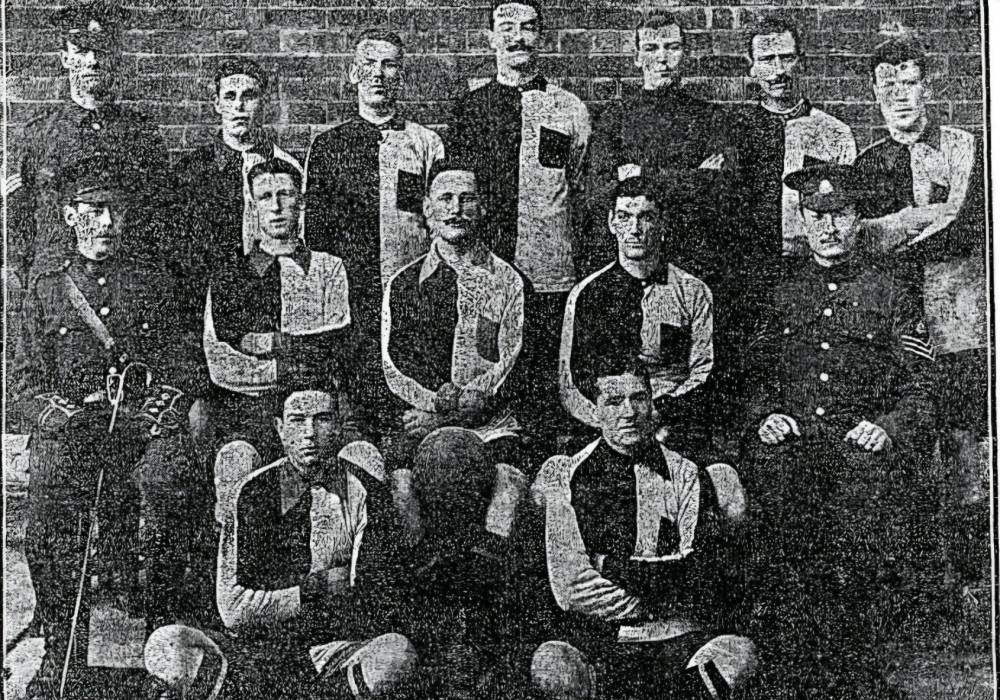
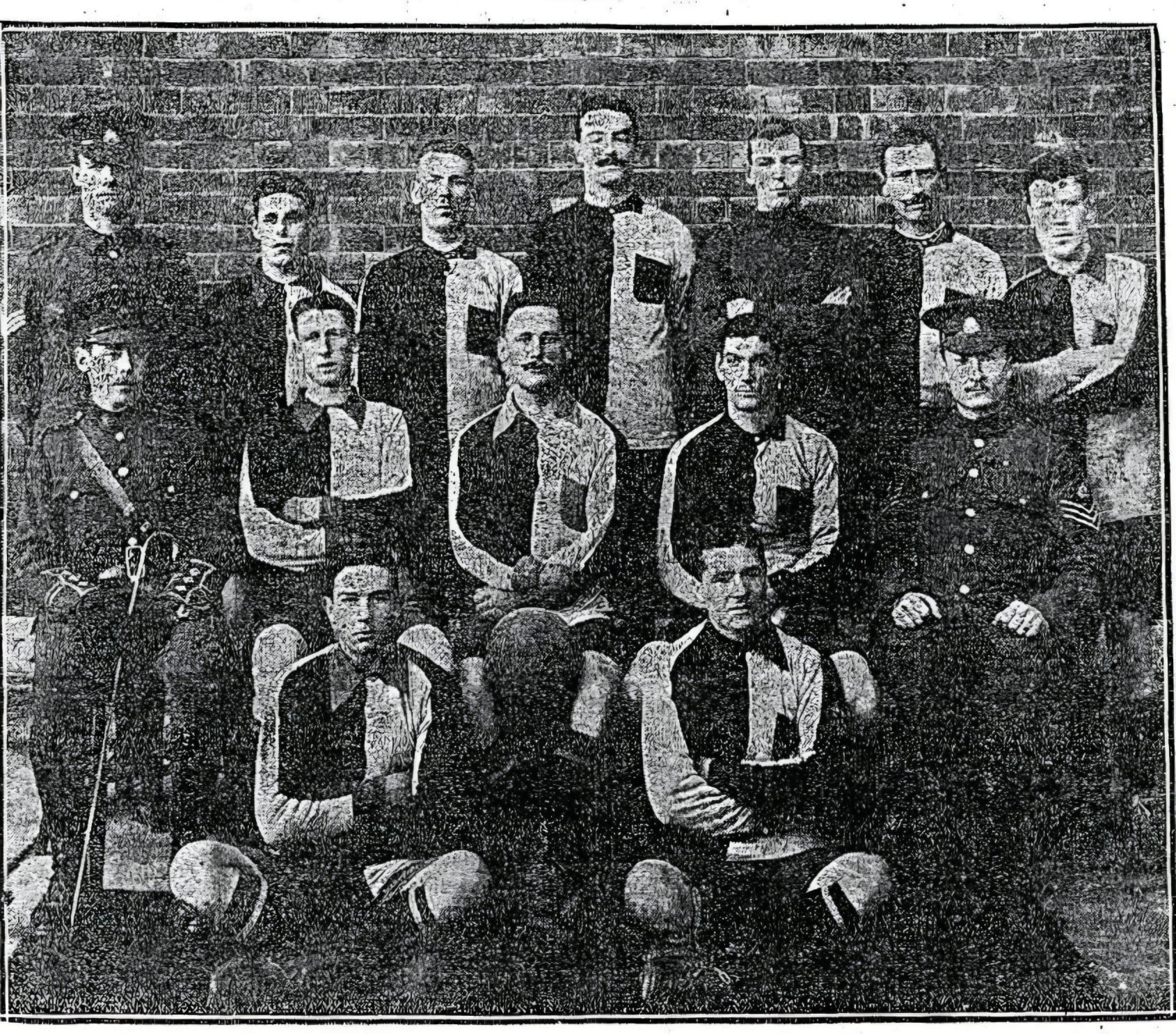
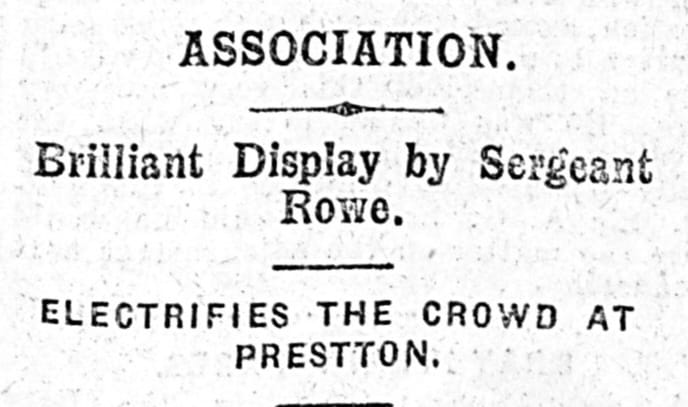
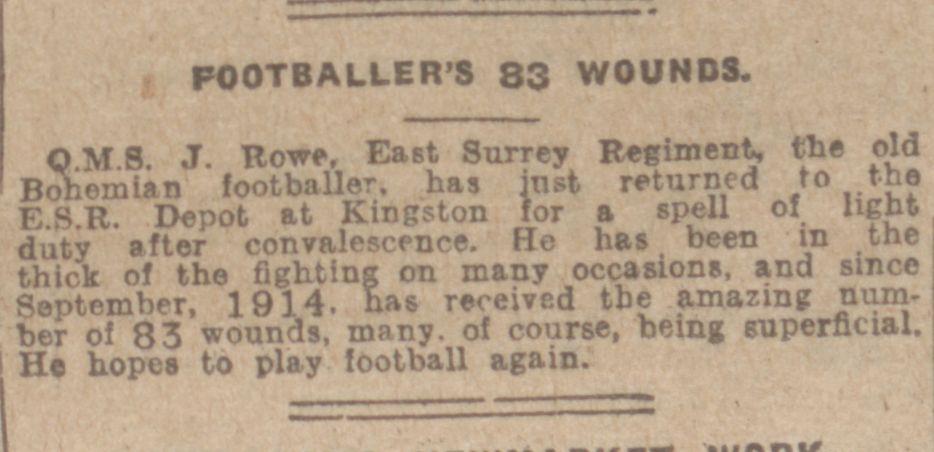
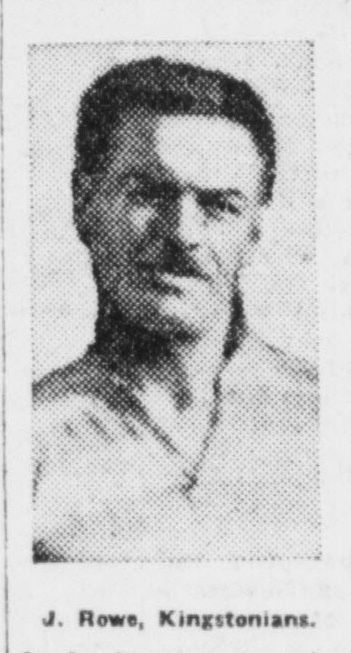
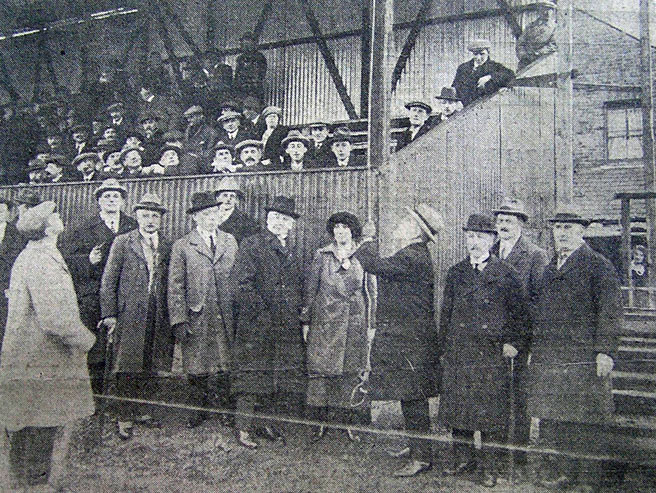
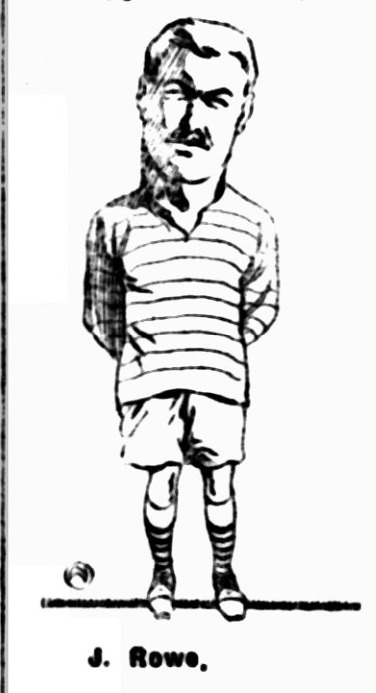
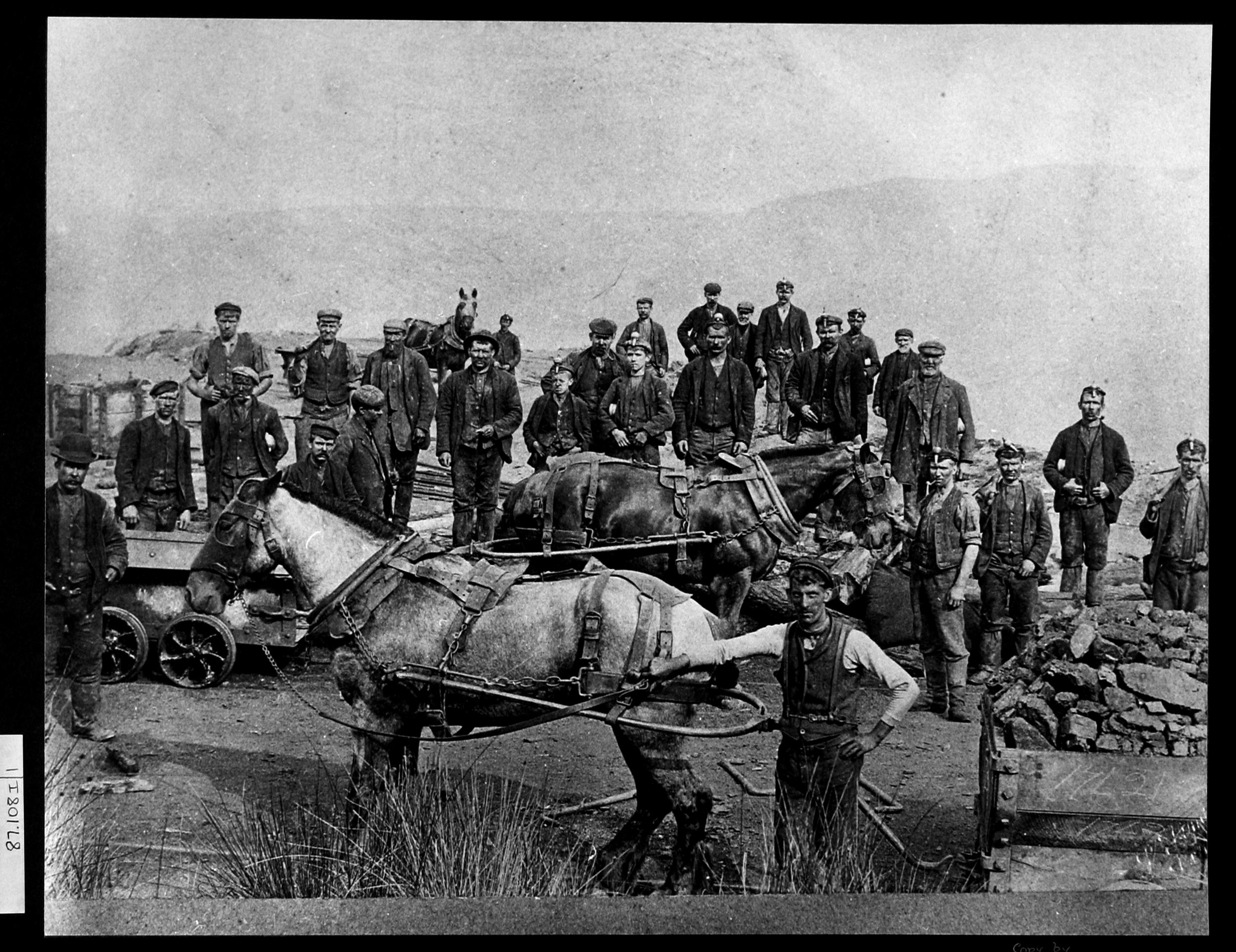


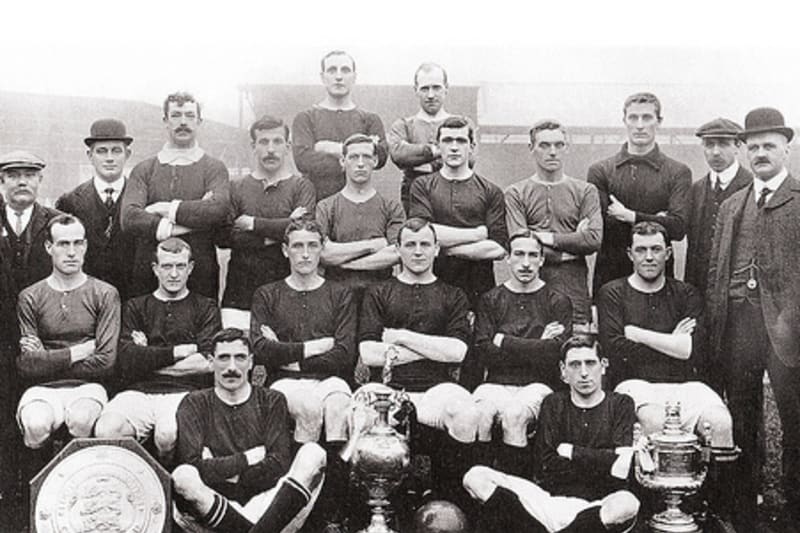


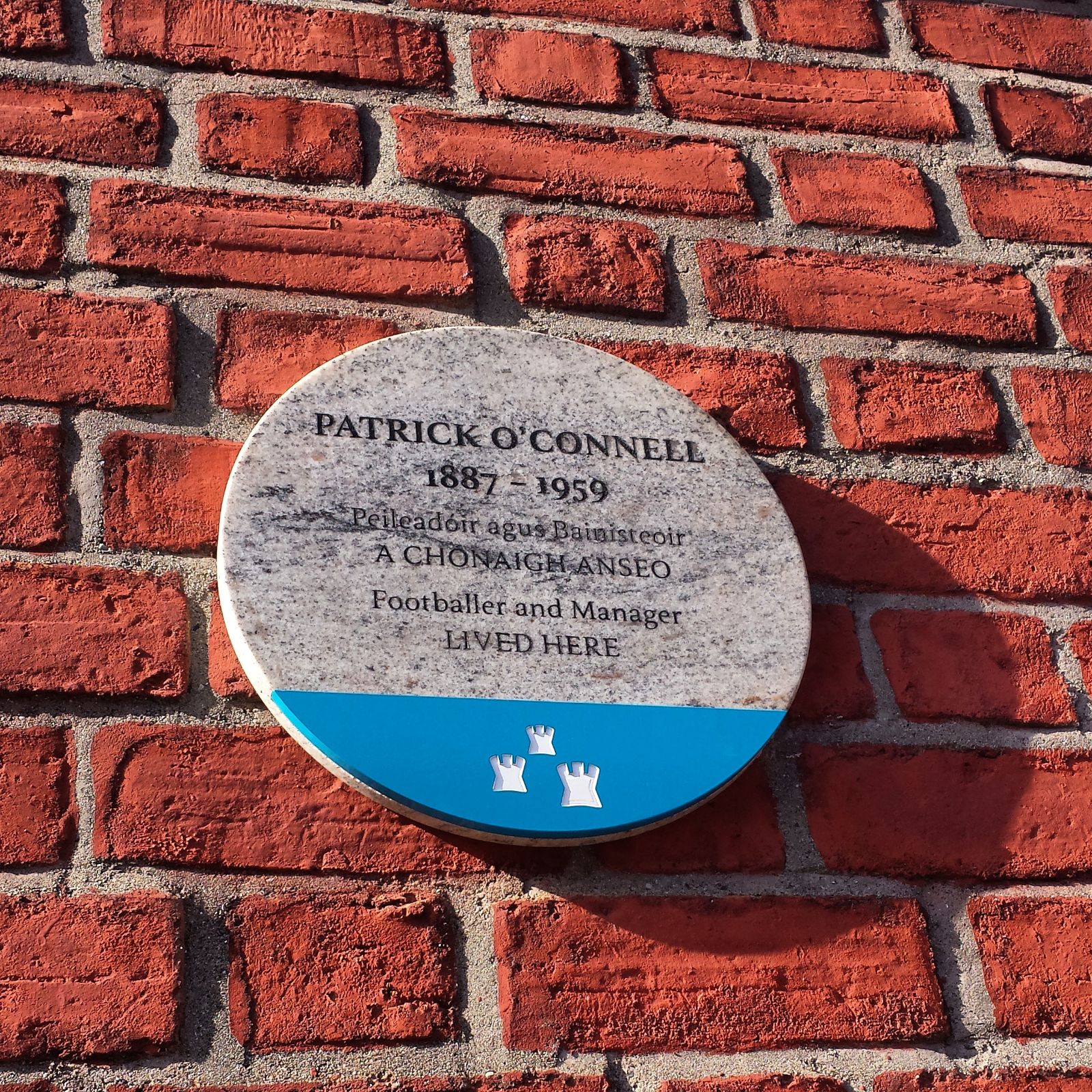


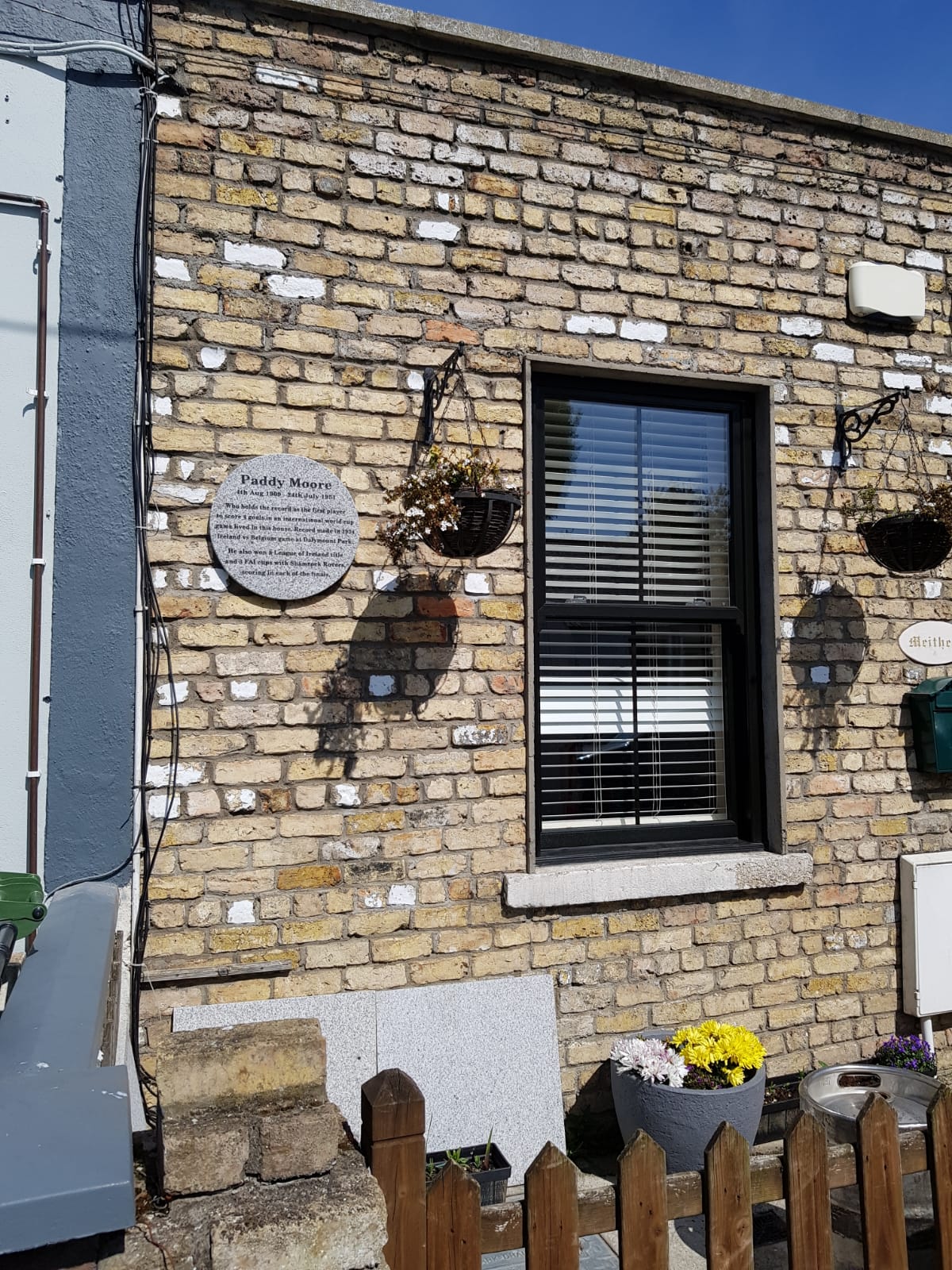
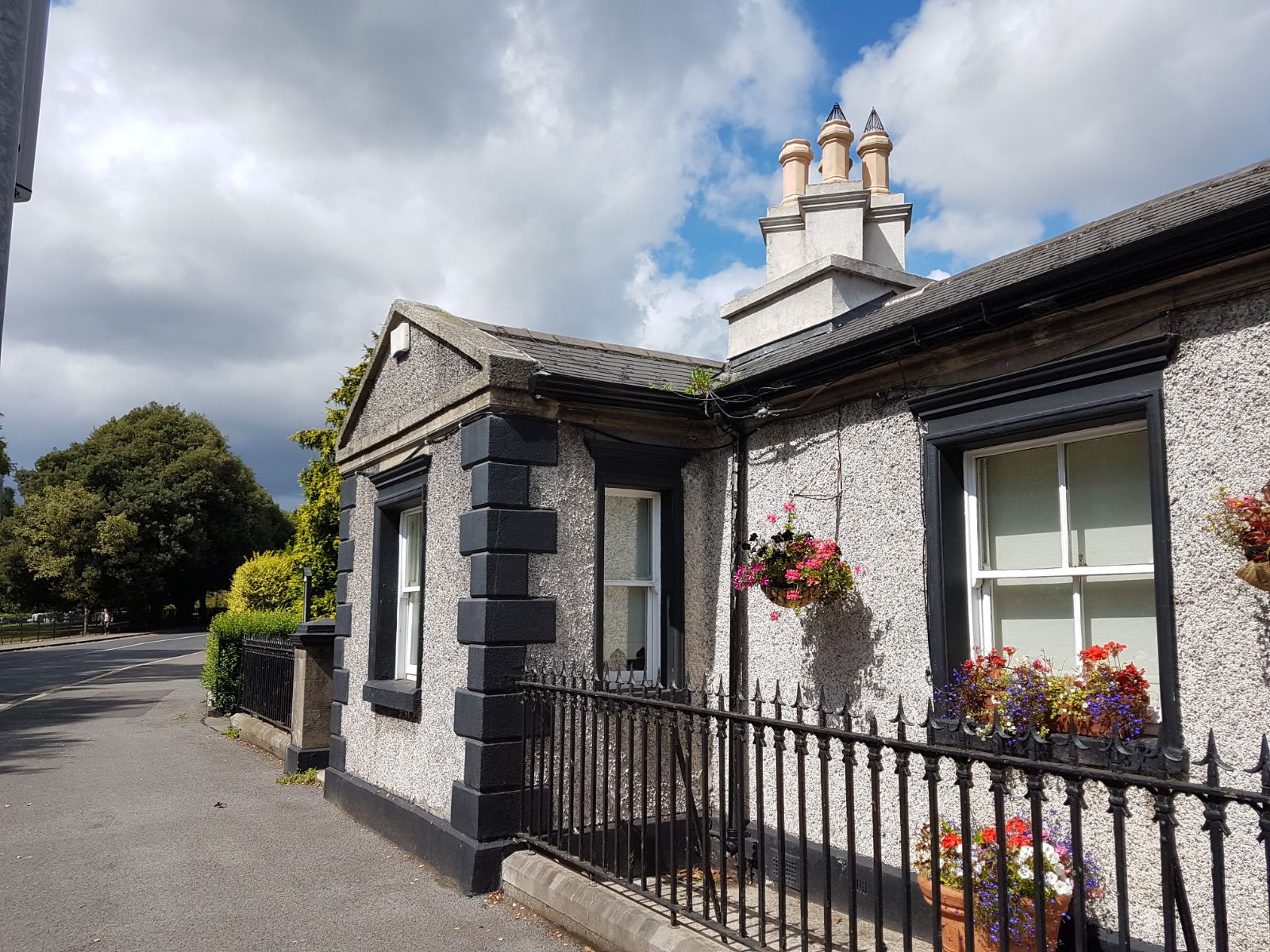
 The early matches of the club were played on the nearby Polo grounds. By 1894 the club had its first major piece of silverware, the Leinster Senior Cup, defeating Dublin University 3-0 in the final. It was to be the first of six consecutive victories in the competition. Less than two years after that first victory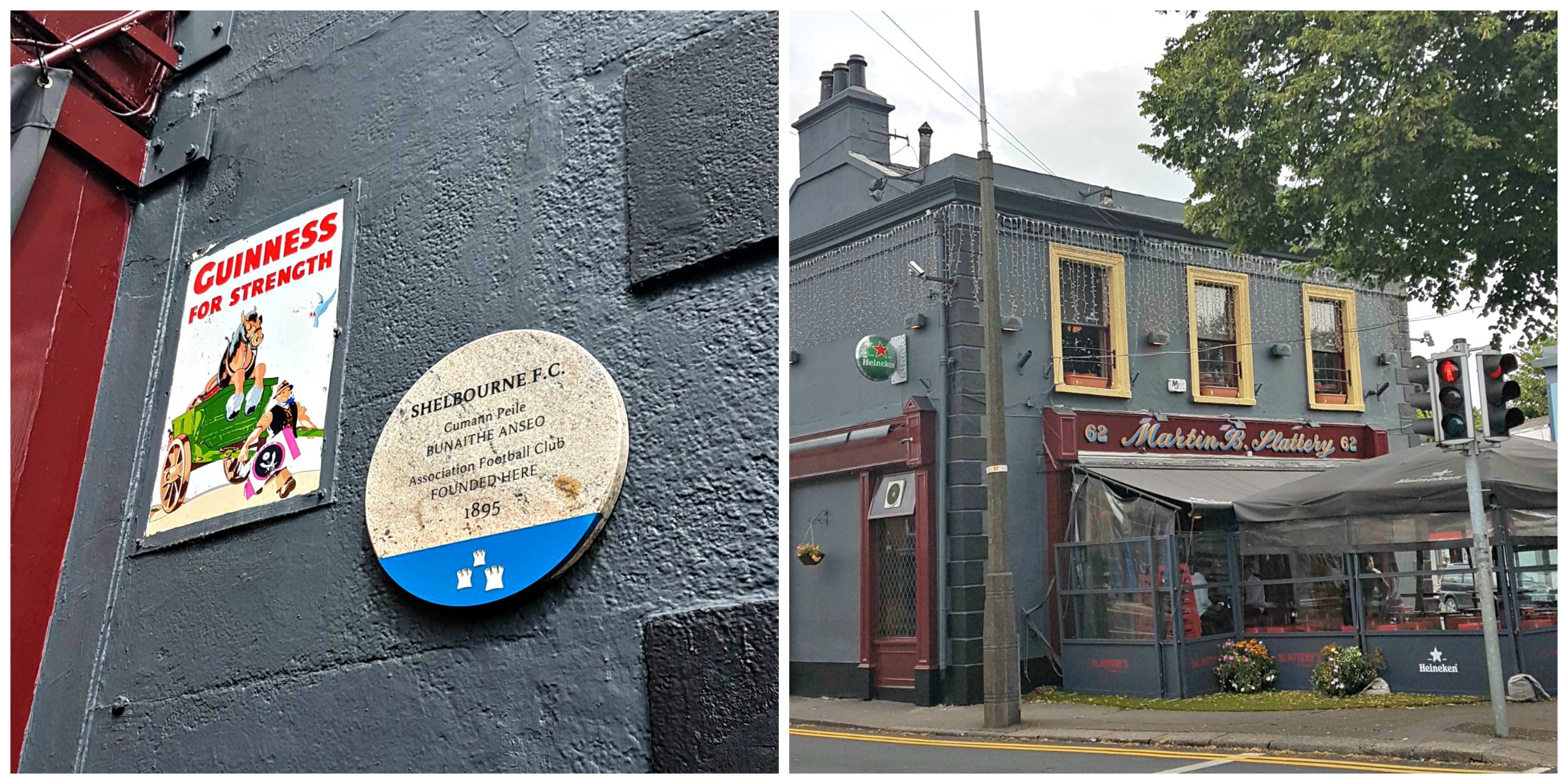


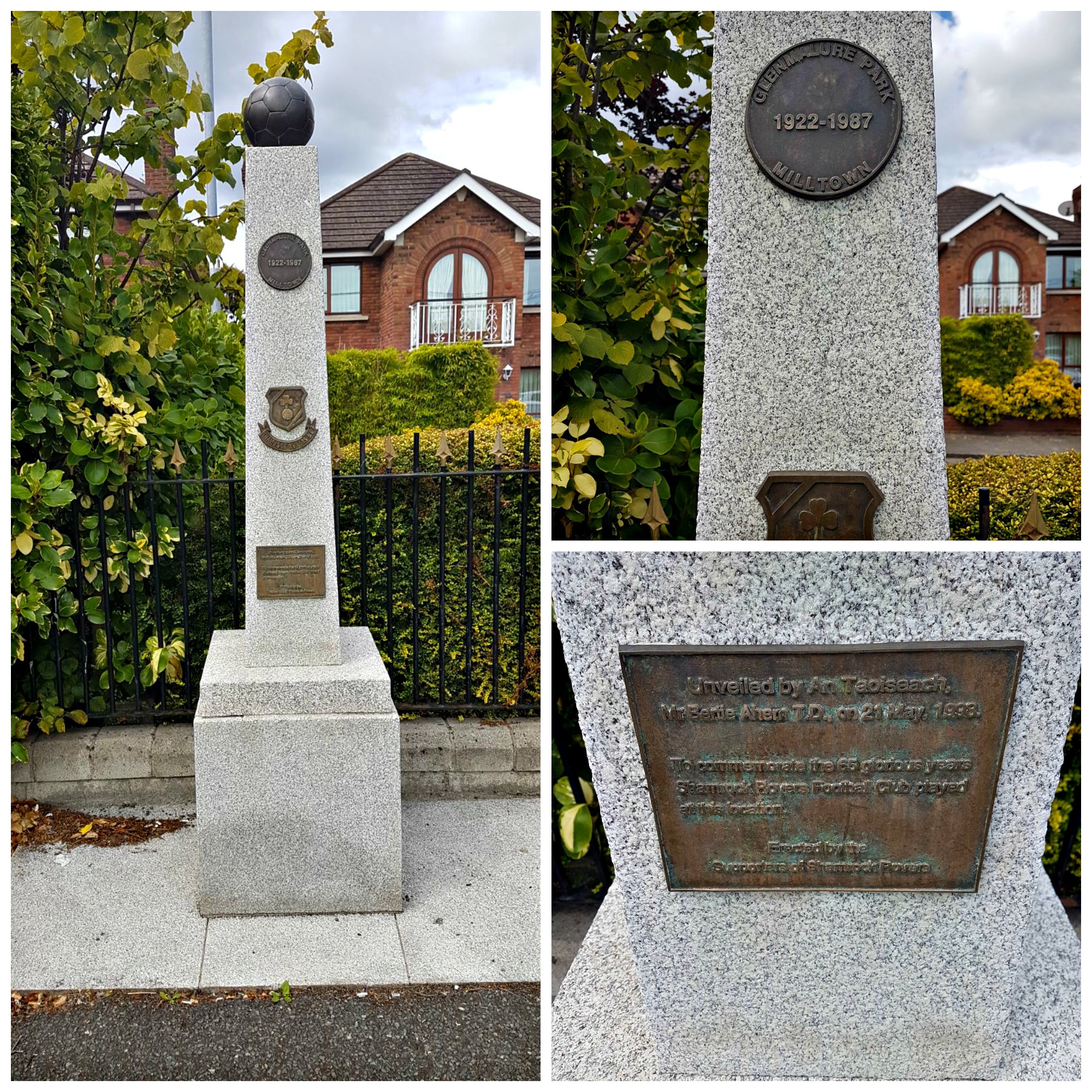
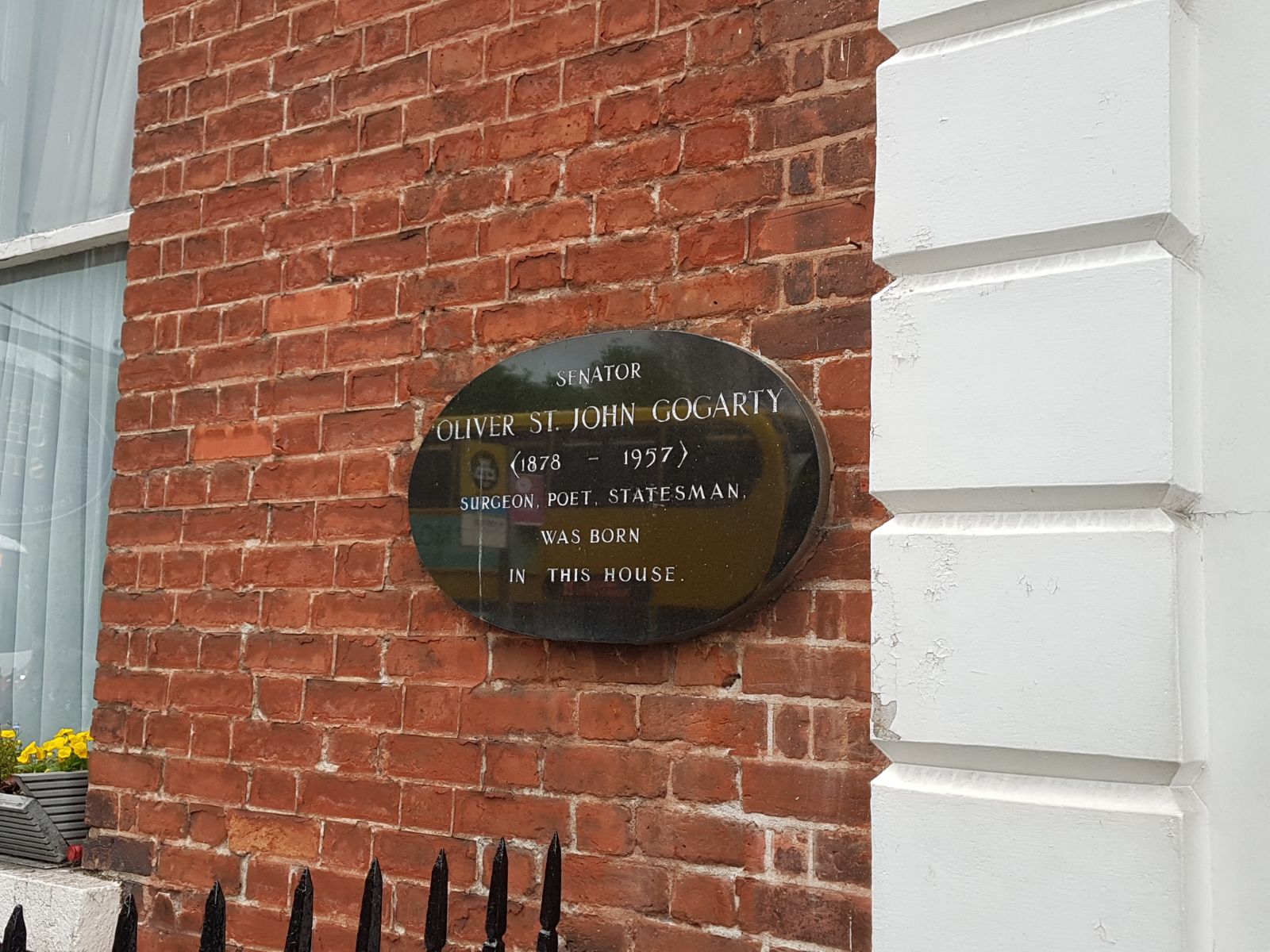
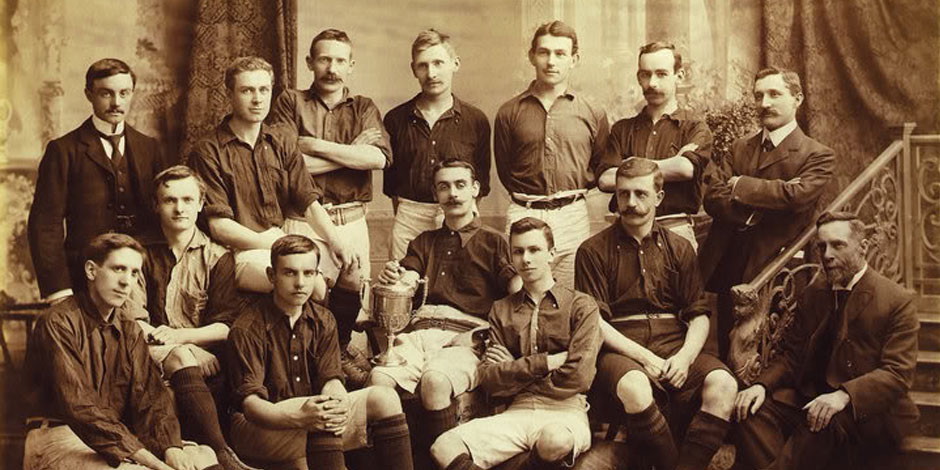
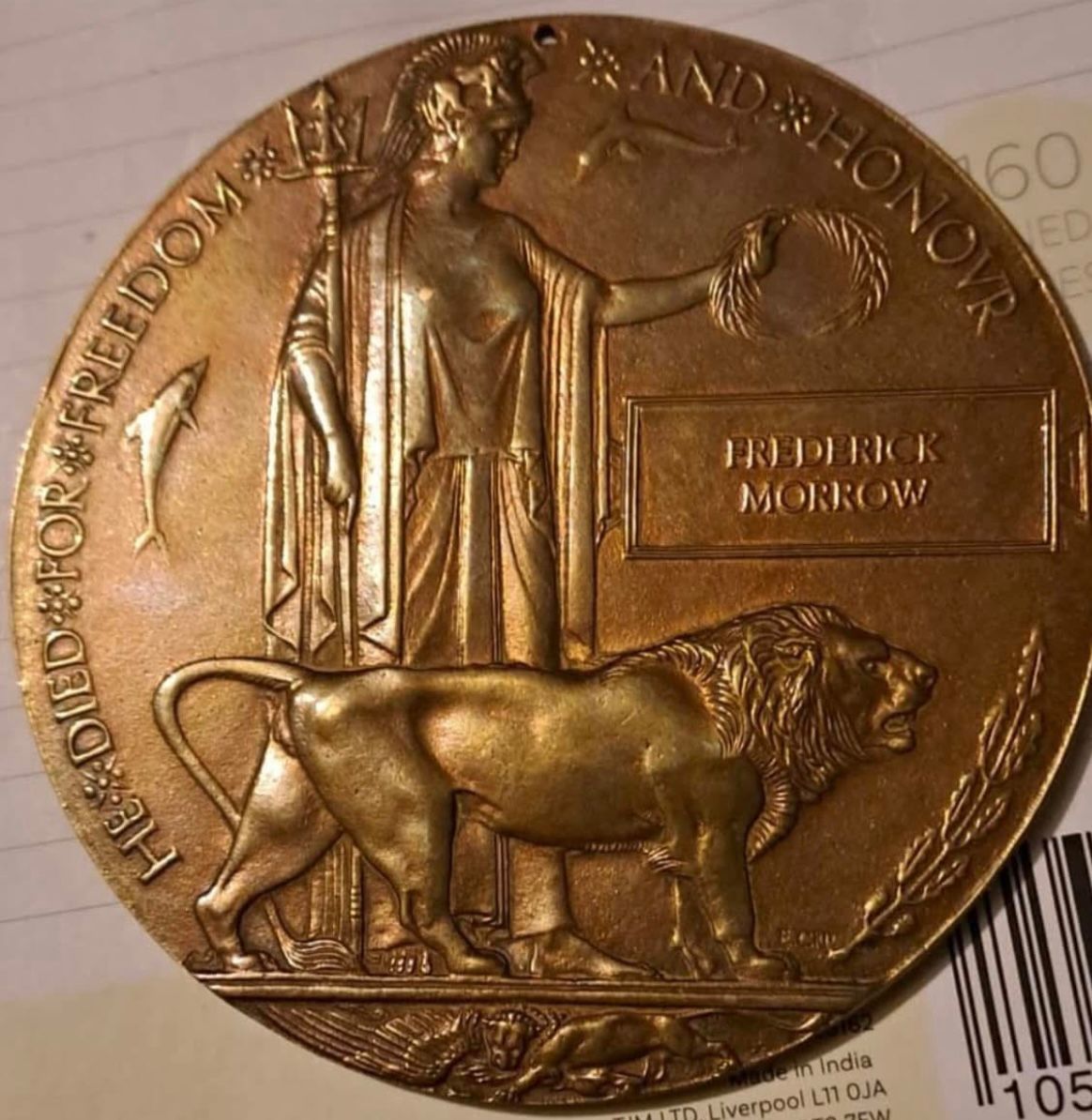

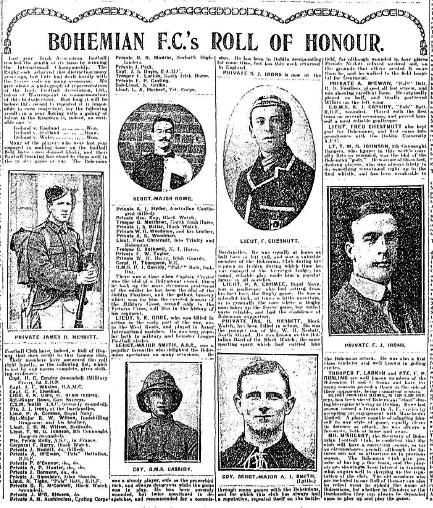


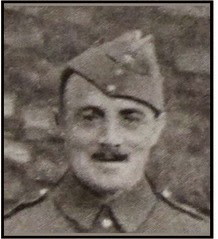

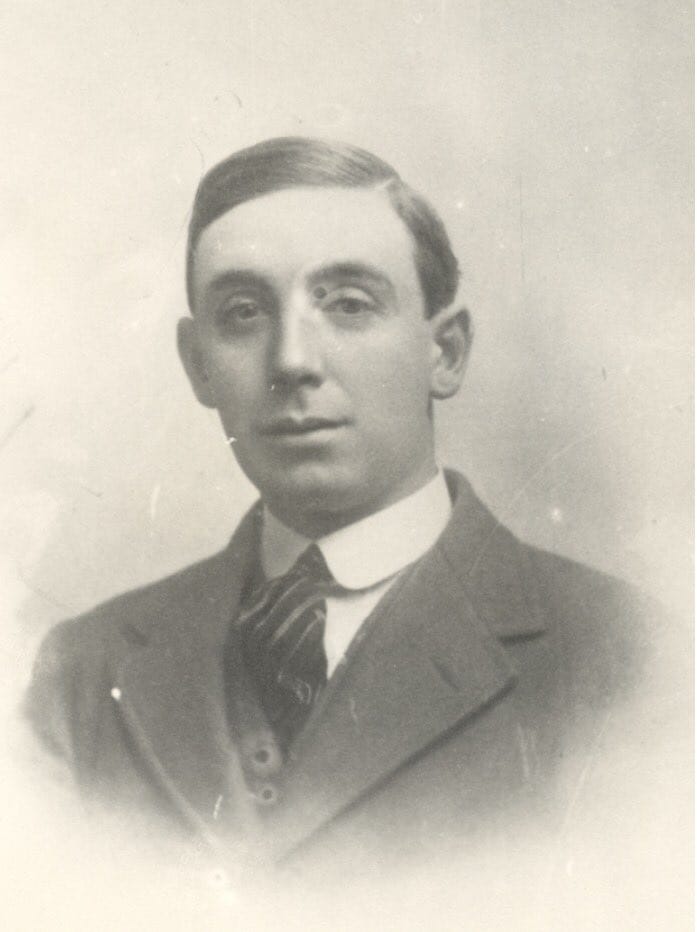
 A Bohemian Sporting Life