Luke Kelly takes the biscuit

Raised on songs & stories Heroes of renown/ 
The passing tales & glories that once was DublinTown

The opening lines of “Dublin in the rare ould times” are a distillation of nostalgia at its purest for many Dubliners. The Pete St. John song found fame on the ballad circuit of the 1970’s and for my money the definitive version of the song will always be the Dubliners’ version with Luke Kelly on lead vocals. This song appeared on The Dubliners 1979 release “Together Again”, it marked the return to the band of Ronnie Drew and it would be the last album to feature Luke Kelly who would pass away less than 5 years later.

A rousing version of the song was performed in January of last year by Damien Dempsey accompanied by Kelly’s former bandmate John Sheahan on South King Street, a short walk from Grafton Street and Merrion Row and many venues that were home to performances by the Dubliners during the so-called “ballad boom”. This performance coincided with the 35th anniversary of Kelly’s death, aged just 43, but more positively it also announded the unveiling of a new bronze statue of the troubador and activist.

Statue

The unveiing of two pieces of public art celebrating the life and work of Luke Kelly provoked much fond reminiscence of him by friends and family, one area of his life that was discussed in detail was Luke’s love of football which was detailed in an excellent piece by David Sneyd in the Irish Mail on Sunday. The article had mentioned Kelly’s time as a schoolboy when he lined out for the famous Home Farm club, playing alongside future League of Ireland legend Billy Dixon.

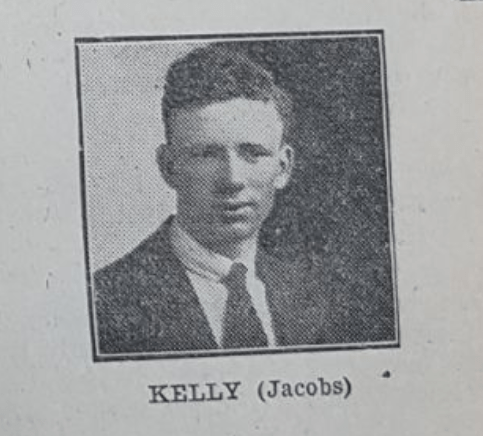
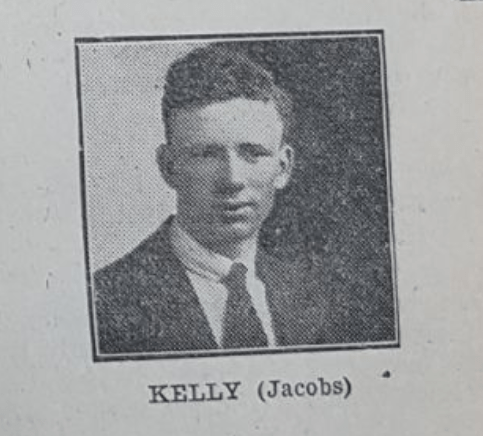
It also mentioned the playing career of his father, Luke Kelly Senior who played in the League of Ireland for Jacob’s F.C. In a piece for the “Lost Clubs” series on this website I focused on the history of Jacobs and in the course of my research had come across Luke Kelly Senior. A talented half-back or “pivot” in the Jacob’s teams of the late 1920’s.  Reports at the time describe him as a “tireless worker” , a “typical tackler and spoiler” and “most consistent”, though he was mentioned as being a shade on the small side. He was however, no brutal hatchet man, plenty of reports mention his range of passing and ability to switch the play and begin attacks.

The “pivot” role so commonly ascribed to him was one which had developed as part of the old 2-3-5 formation. The “centre-half” was not yet a central defender, but played in a more advanced role as an instigator of attacking play who could also drop back and assist in defensive areas. Hence he functioned as the “pivot” between defence and attack. This would change gradually over the 1920s, especially after Arsenal had success with withdrawing a centre-half into a more definsive position of a third defended, helping create what became known as the W-M formation.

Luke Senior was born on 1st September 1904 in Ryan’s Cottages on Marlborough Place in Dublin’s north inner-city. He was the son of Paddy and Christina Kelly who had been married nearby in Dublin’s Pro-Cathedral in 1898. Paddy Kelly had been born in Bealnamulla, Co. Roscommon just outside Athlone back in 1867, he in turn was the son of another Luke Kelly also from Bealnamulla. Luke Sr. married Julie Fleming in September of 1934 in St. Laurence O’Toole’s church which sits next to Sheriff Street, a part of the city to be forever associated with his son, Luke Kelly the singer who was born nearby in 1 Lattimore Cottages, Sheriff Street less than six years later.

Football was obviously deeply engrained in Luke Kelly Sr. from an early age, in an interview many years later when his son was at the height of his fame, he remembered playing football in Fairview Park when he and his pals spotted a brigade of the Scottish Borderers marching towards the city. Kelly recalled in the Irish Independent that he and his friends followed them all the way into the city, jeering at them and throwing stones.

What the young Kelly did not realise then was that the Scottish Borderers regiment had been called into the city centre on serious businesses. Earlier that day the Irish Volunteers had taken possession of a cache of weapons brough by boat into Howth harbour and which were en route to the city. The Dublin Metropolitan Police had been ordered to confront the Volunteers but many would have had sympathy with the Nationalist cause.

As prominent Irish Volunteer and IRB member Bulmer Hobson noted “A considerable number of the police did not move and disobeyed the order, while the remainder made a rush for the front Company of the Volunteers and a free fight ensued, in which clubbed rifles and batons were freely used. This fight lasted probably less than a minute, when the police withdrew to the footpath of their own accord and without orders.”

As a result the Borderers were sent to disarm the Volunteers, they also failed in this task and eventually a growing crowd stoned and jeered them as they marched back to Richmond Barracks along the Dublin quays. The troops opened fire on this taunting crowd on Bachelor’s Walk, killing three bystanders and injuring 37, including a 9 year old Luke Kelly as the youngest victim.

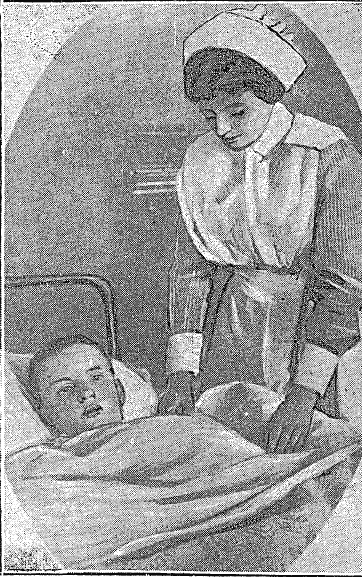
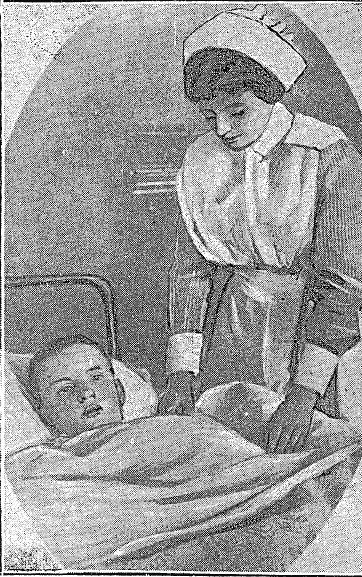
Kelly was shot in the back and a priest was called to administer to him as the staff in the nearby Jervis Hospital feared for his life. However Kelly was lucky and made a full recovery. A photo of him in his hospital bed even appeared in an edition of the Irish Independent a few days after the attack.
Indo hospital pic

Photo taken from the Irish Independent July 28th 1914: Luke Kelly, a little schoolboy, a victim of the Borderers fusilade, in a ward in Jervis Street hospital

Kelly joined the Jacobs factory as an employee at the age of 16 and continued working for them for 46 years, until his passing in 1966. During his time with Jacobs he was an accomplished athlete, he ultimately played seven seasons in the League of Ireland with Jacobs, and although at one stage he was linked with a move to Fordsons in Cork, he remained with the Biscuitmen as a player even after they dropped out of the League of Ireland and returned to the Leinster Senior League.

Though Jacobs struggled for much of Kelly’s time as a player there are numerous reports that mention Kelly as their stand-out individual performer. Such was the high regard in which he was held as a player he was also selected to play in a number of high profile friendly matches, such as a charity game in aid of St. Vincent de Paul at Christmas 1927 as well as being picked to play for Shelbourne as a guest in a benefit match against Linfield for their star player, the Irish international, Val Harris.

Jacobs were justifiably proud of the sporting achievements of their employees, apart from a football team they also constructed a swimming pool for employees, based on the example of a pool built by Heinz for their workers in Pittsburgh. Kelly was also an able swimmer, though it did get him into trouble on one occasion. In May 1932 Luke Kelly senior (then aged 27) was arrested by a Garda Burns and charged with attempted suicide by drowning in the River Liffey.

Kelly’s defence to this charge was that he had been out with friends for a drink on Sunday and after some significant alcohol consumption a bet was proposed as to whether Kelly could swim across the Liffey from Custom House Quay. As part of Kelly’s defence it was stated that he was an excellent swimmer as evidenced by the fact that although he was wearing a hat at the time it had remained dry throughout. The Judge at the hearing of the case let Kelly off on the condition that he took the pledge and kept the peace.

To return to the opening lines of this piece, the words of Pete St. John as sung by Luke Kelly, it always struck me that they apply equally well to how we hear about football and its players when we are young, father’s, olders siblings, relations and bar-room bores regaling youngsters about scarcely believeable feats of skill from years gone by. Luke Kelly Senior was a friend of John Giles’ father Dickie and one can imagine that both Luke and John heard many romanticised tales from their respective fathers about their exploits on and off the field.

Raised on songs & stories Heroes of renown/ 
The passing tales & glories…

The Dubliner who took the biscuit (Podcast)

As part of a regular series of articles that I was writing for the SSE Airtricity League website a number of my stories have been turned into podcasts, as read by Con Murphy. One of the most recent is this piece on the playing career of Luke Kelly Senior, father to the great ballad singer and activist Luke Kelly.

This podcast covers not only his playing career for Jacobs FC in the early years of the League of Ireland but also some family background and some incidents of his early life like why he got arrested for swimming across the Liffey or how he ended up in hospital with a bullet wound aged just 9.

Links below for both Soundcloud and Spotify


Indo hospital picLuke Kelly Jacobs

Statue

From top to bottom: Luke Kelly in hospital aged 9, Luke Kelly as a footballer in 1927, the statue of “Dubliner” Luke Kelly

The Lost Clubs – Jacob’s F.C.

The industrial revolution as experienced in the heartlands of Lancashire; in its mill and mining towns had for the most part bypassed Ireland apart from the area around Belfast in the north west. In Belfast the linen industry had thrived, shipbuilding was king and whiskey distillers prospered. It is not much of a surprise that in these growing towns, full of young men, now with a small amount of disposable income and a half day on a Saturday should see the early growth of football in Ireland and Britain. As football professionalised it was Lancashire clubs like Preston North End and Blackburn Rovers who were early pacesetters in the 1880’s. In Ireland in the 1880’s it was clubs around industrial Belfast the led the way, including the likes of Linfield formed in 1886 by workers at the Ulster Spinning Company’s Linfield Mill.

In a city where regular employment could be in pretty perilous supply, a steady, decent paying job in Dublin in the early decades of the 20th Century was a very valuable commodity. The city did not have the same industrial base as its northern neighbour and the city regularly suffered from high rates of unemployment and an over-reliance on unsteady casual labour such as unreliable work around Dublin Port.

Dublin was an administrative centre and from the late 19th century onward had a growing number of white collar workers, many operating in the civil service and the legal profession. What large scale industry did exist was often derisively referred to as a “beer and biscuits” economy based around the St. James’s Gate brewery and the Jacob’s biscuit factory. Such were the connections between the two firms that many female relatives of Guinness employees were found employment in Jacob’s.

I’ve written elsewhere about the football team that the brewery produced but this piece focuses on the Biscuitmen of Jacob’s Football Club. The Jacob’s factory began life in 1851 in Waterford before setting up base at Peter’s Row off Bishop Street (now occupied by part of the DIT campus) in Dublin soon afterwards. It was initially run by brothers William and Robert Jacob who were later joined in 1864 by William Frederick Bewley of Bewley’s Cafe who invested into the firm. The Bewley’s and the Jacob’s were just a number of prominent Quaker families who had established successful business in the city around this time.

When at its zenith Jacob’s had thousands of Irish men and women working at its factory in Dublin, and many more in it’s UK factories and warehouses. A workforce of this size meant that the company enjoyed many outlets for its workers, including social clubs, swimming pools and of course, football.

Such outlets were important as the life of a factory worker was a tough one, Jim Larkin himself described the conditions for the biscuit makers as ‘sending them from this earth 20 years before their time’. Indeed the factory workers went on strike on several occasions such as in 1909 (led by Rosie Hackett) and again in 1913 in support of the Lock-out workers. The factory was occupied by the rebels during the 1916 Rising under the command of Thomas MacDonagh and John MacBride, both of whom were executed in the weeks afterwards. Jacob’s also lost many men to the front during the First World War with 388 workers from the factory enlisting between 1914 and 1918, of this number 26 were killed and many more were wounded.

However, despite the upheaval of this time period this was when Jacob’s started to reach greater prominence as a football team. During and immediately after the First World War Jacob’s F.C. were playing in the Leinster Senior League. In the 1916-17 season they were runners-up in the IFA Junior Cup and just four years later they were part of the first Free State League season following the split from the Belfast-based IFA.

The club played their fixtures on the company sports grounds at Rutland Avenue in Crumlin and one of their local rivals, Olympia, were also part of that inaugural Free State League season. Olympia were based nearby, in the area around the Coombe and in the season before the formation of the Free State league they had had something of a run-in with Jacob’s in a Leinster Senior Cup game played in April 1920.

It is worth remembering that this game took place in the midst of the Irish War of Independence and apparently during the game the Olympia team, who included active IRA volunteers, taunted the Jacob’s team for the presence in their ranks of the number of former British soldiers.

The Jacob’s players invaded the opposing team’s dressing room at the end of the game and just weeks later the Leinster Football Association issued bans to three players involved in the fracas. A six month ban was issued to Jacob’s defender Stephen Boyne while his brother Edward got a three month ban. Olympia forward Michael Chadwick was also banned for six months. When not banging in goals for Olympia Chadwick was also the Vice – commander of the 6th Battalion of the Dublin Brigade of the IRA. In later life he would also campaign politically for Seán MacBride, son of John MacBride who had been part of the unit that had occupied the Jacob’s factory in 1916.

The Jacob’s team from that era were often known as the Red necks which was not due to a rural origin, but more down to the fact that many of the men literally had red necks from carrying heavy bags of biscuit flour over their shoulders. During the early years of the League of Ireland several Jacob’s players reached positions of prominence through football. Striker Patrick Smith was the second highest scorer in the inaugural league season and just a few years later Jacob’s were to have three players appearing for the League of Ireland XI that took on the Welsh League in the first even inter-league game since the split with the IFA. Representing the League for Jacob’s was Frank Collins in goal, Stephen Boyne in defence and Hugh James Harvey among the forward line. The League drew that 1924 encounter 3-3.

League of Ireland 1924 001

The League of Ireland XI featuring three Jacob’s players

Stephen Boyne we already met above after he had stormed the Olympia dressing room. Frank Collins had returned to Jacob’s after a short sojourn in Scotland with Celtic, he won two caps for the Free State international team in two of their earliest internationals as well as being picked by the Northern selectors in 1922 and keeping goal for Northern Ireland on a single occasion.

As for Hugh James Harvey, he was better known as Jimmy Harvey and was born in Dublin in 1897. He had been a physical instructor in the British Army during World War I and had played for Shelbourne on his return to Dublin, featuring in the 1923 FAI Cup final where Shels had surprisingly lost to Belfast side Alton United, Harvey had the unlucky distiction of being the first player to ever miss a penalty in a FAI Cup final in that game. Harvey was useful in several positions across the forward line but found a new lease of life after his sporting career. During his time as a Jacob’s player records list him as a labourer. However, his father (also Hugh) was a “Variety artist” and the younger Hugh, decided to follow his father into show businesses. He excelled as a comedian as part of a comedy troupe known as the “Happy Gang” who performed in many theatres around Dublin and was also an accomplished singer, dancer and actor.

Jacob’s best league finish would be in the 1923-34 season when they came a respectable third but three consecutive last place finishes saw them fail to be re-elected to the league at the end of the 1931-32 season.

Despite dropping out of the league the Jacob’s team continued on as a football club at Leinster Senior League level, winning that league on four occasions from the early 1950’s to the late 1960’s. In the 1949-50 season the club also won the Intermediate Cup beating St. Patrick’s Athletic in the final just a year before Pat’s moved up a level and joined the League of Ireland. They also made regular trips to England to play matches in Aintree, against a team from the Liverpool Jacob’s factory.

The team continued in existence well into the 1960’s, though the factory’s move away from the city centre and out to Tallaght in the 1970’s probably meant a certain disconnection from their traditional area around the south inner city and Crumlin. There were occasional surprise results against sides in the FAI Cup but the glory days of the team were certainly in the early years of the League when the works teams of the city had such a huge presence in the early Free State League.

First published on the SSE Airtricity League website