The 1930 World Cup, held in Uruguay, had been an open invitation affair. Indeed, so keen were the organisers to get nations to participate that they offered to pay for travel expenses for competing teams. Despite their generosity only four European teams could be coaxed into making the long voyage to South America and ultimately thirteen teams overall would compete in the tournament which saw the hosts crowned as victors.
Fast forward four years and things were a bit different. 32 nations expressed an interest in taking part in the 1934 World Cup which was to be held in Italy, with Ireland among them. Though, holders Uruguay, feeling snubbed by the lack of European participating in the 1930 tournament did not enter. It was decided that to whittle down numbers to a more manageable 16 teams at the tournament some form of qualifying matches had to take place.
Somewhat uneven groups were drawn, some featuring three teams, some with only two, some teams (such as Bulgaria or Turkey) withdrew from qualification or did not complete their fixtures. Even hosts Italy had to play a qualifying game – the Italians won 4-0 at San Siro, with two goals coming from Guiseppe Meazza in a stadium that would one day bare his name. The Greeks declined to play the second leg which secured Italy’s qualification.
Ireland were drawn in a group alongside Belgium and the Netherlands with the simple qualification formula that each team played against each other once and then the group winners and runners-up would qualify. The Irish must have been optimistic, they had played Belgium three times before 1934 and won all three encounters. They had only faced the Dutch once before, in 1932 in Amsterdam, but that game had ended with a 2-0 victory to the Irish.
The opening game against Belgium took place on February 25th 1934 in Dalymount Park. The new competition and qualifying format had obviously captured the imagination of the public as over 35,000 spectators crammed into the Phibsborough venue. While they may have been disappointed with the scoreline they can’t have been let down for a lack of drama. The crowd that day saw an eight goal thriller, and witnessed one of the greatest individual performances by an Irish player as Paddy Moore, then of Aberdeen, scored all four goals in in a 4-4 draw with the Belgians. After an hour of play, Ireland had been trailing 4-3 but with 15 minutes remaining Moore had grabbed the equaliser.
Paddy Moore
While Ireland may have been disappointed not to win against Belgium they knew that a victory in Amsterdam against the Dutch would secure World Cup qualification. The Dutch FA certainly weren’t taking any chances in their preparation, going so far as to ask the FAI for photos and fact-files on their main players under the premise of using this information for promotional material ahead of the game. The FAI duly obliged, with photos and details of Ireland’s star striker Paddy Moore appearing in Dutch newspapers ahead of the game.
Ireland fielded a mostly domestic based XI with Cork City’s Jim “Fox” Foley kept goal, he had just won the FAI Cup with Cork and was about to make a move to Celtic. Bohemians, who had just been on tour in the Netherlands had two players in the squad – Billy Jordan who started the game but was injured in the first half and was replaced by his club-mate Horlacher just before half-time. This meant that Horlacher made history by becoming the first substitute used by the FAI in an international match.
Just before half time Johnny Squires of Shelbourne had equalised for Ireland after Kick Smit had opened the scoring just minutes earlier. In the second half with the sides tied at 1-1, Paddy Moore scored a controversial goal just before the hour mark when he pushed the Dutch keeper Adri van Male over the goal line when he had the ball in his hands. This tactic of barging the keeper was not uncommon in Irish or British football at the time but it was not something the amateur Dutch players had experienced before. The goal was awarded much to the dismay of the record crowd of almost 40,000 packed into the Olympic stadium in Amsterdam. Ireland were now 2-1 up with just over half an hour to play. A win would have sent them to their first ever World Cup.
But it wasn’t to be. The controversial goal spurred the talented Dutch side into action, they scored four unanswered goals in 23 minutes to claim a 5-2 victory and qualify for the 1934 World Cup. Ireland’s World Cup dream was over.
A record crowd at the game in Amsterdam
This first appeared in a 2021 Irish match programme
Between 1864 and 1961 seventeen men were hung in Crumlin Road jail, the first four executions were carried out in a specially-built gallows in the front courtyard. On September 17th 1972 Private Frank Bell from the Wirrall, aged 18, was wounded by a single sniper shot on patrol in Ballymurphy a district of West Belfast, three days later he passed away in the Royal Victoria Hopital he was the 100th British soldier to die in the war in Ireland. In the spring of 1973 Liam Holden, also 18, became the last person in the United Kingdom to be sentenced to hang for the killing of Private Bell, ‘”You will suffer death in the manner authorised by law” were the judges words. Handcuffed to a prison officer Holden was escorted along the underground tunnel that led to Crumlin Road jail on the opposite side of the road. There he was taken straight to C wing – to the condemned man’s cell. A fortnight previous William Whitelaw, the first Secretary of State of Northern Ireland, had pardoned Albert Browne a UDA member from hanging following the shooting of an RUC officer in October 1972. Liam Holden didn’t hang his sentence was commuted to life imprisonment, and shortly after capital punishment was abolished in Northern Ireland bringing it in line with the rest of the United Kingdom – Holden would have his murder conviction quashed four decades later by the court of appeal in Belfast.
That same spring 1973 a tall sparse figure stood at the door of a London hotel room heart beating, palms sweating, full of nervous tension as he knocked on the door. Alexander Derek Dougan from the staunchly Protestant heartland of Newtownards in East Belfast, was born at 41 Susan Street in the shadow of Harland and Wolf where his father worked as a boilermaker; he was capped 43 times and captain of his country Northern Ireland.
He had been the youngest member of the 1958 World Cup squad and was presented with a gold watch as Ulstermen descended on Sweden for the teams first finals. The Doog though stood for more than simple ball-kicking, he was the proud owner of human sentience, a majestic temper, venomous tongue and a fearless spirit – that same year of ’73 he had instigated the PFA awards. Dougan had never respected convention, he was Britain’s first football mod skinhead; he had walked into a Blackburn hairdressers in 1959 and had his head fully shaved. As Dougan entered the hotel room in England’s capital his body language was palpable history in the making was in the air, across the room sat two men Harry Cavan IFA President and Secretary Billy Drennan. Dougan took a seat and outlined to the blazers about two phone calls and the idea of an All-Ireland XI to face world champions Brazil in Dublin… speaking about leadership, healing divisions and building bridges he was faced with deathly silence…
Harry Cavan informed Dougan tersely that he would put the matter to the IFA. Billy Drennan, much more enthusiastic, told his captain that he would keep him posted about developments. Neither would ever speak to Dougan again.
The Northern Ireland team were gathered in London en route to play Cyprus for a World Cup qualifier;
Dougan was plying his trade with Wolverhampton Wanderers in the top division in England – John Giles and Liam Touhy felt he was the man to help knit things together between Northern and Southern players. Giles still then the general of Don Revie’s midfield at Leeds United was soon to take over as manager of the Republic of Ireland – he would pick up his phone in Yorkshire and speak candidly and passionately about the idea to Dougan. The second phone call came from Giles brother-in-law Louis Kilcoyne who had lobbied Jao Havelange, Brazil’s FA President, a man ambitously interested in unseating England’s Stanley Rous as head of FIFA. With elections coming in 1974 Kilcoyne felt he could deliver an FAI vote for Havelange,if he could deliver the lustre of Jairzinho and Rivelino to Lansdowne Road. That spring 1973 while Liam Holden faced the uncertainty of the gallows in Crumlin Road jail the boys from Brazil were on a 1973 European tour helping them acclimatise for the 1974 World Cup which was to be held in Germany. Havalange had agreed to the game but Brazil had two requests: firstly the game had to be played for charity and the secondly the team had to be 32-county in make up, this is why Dougan was contacted.
On the 3rd of July 1973 nine days before the local Newtownards District LOL marched on the streets of East Belfast Alexander Derek Dougan set foot on the hallowed turf of Lansdowne Road in front of 35,000 spectators. As the two teams emerged alongside the Doog was Allan Hunter, Martin O’Neill and Pat Jennings on the bench sat future Northern Ireland manager Bryan Hamilton and Brian Clough’s future right hand man at Notts Forest Liam O’Kane all had travelled south. That day the St. Patrick’s brass and reed band would strike up a nation once again.
Brazil would win out 4-3 but the Irish would hold their heads high coming back from a 4-1 deficit to narrowly lose out – Dougan would net the third with Dublin Northsiders Terry Conroy and Mick Martin also scoring. Mick Martin was the son of the great Con Martin a brilliant sportsman who had won a Leinster Senior Championship medal back in 1942 given his preference for soccer he would not receive his medal until 1972. Mick’s father was involved in the last team to be made up of Northerners and Southerners a World Cup qualifier against Wales in Wrexham for the IFA’s Ireland team, five months earlier he had scored for the FAI’s Ireland team – the year was 1950 and as attitudes hardened and FIFA’s new criteria kicked in there would be no more dual Irish internationals. Four years earlier Cornelius Joseph Martin had moved from Drumcondra to Dougan’s local club Glentoran the pride of East Belfast; CJ Martin would find digs in Ballysillan near the top of the Shankill mixing daily with both Protestant and Catholic.
Brazil v Ireland 1973
On that day in July as the game was beamed out live in Irish homes; the team that took on the best team in the world was called “Shamrock Rovers XI” there was no mention of ‘Ireland’ or ‘All-Ireland’. Harry Cavan had been busy behind the scenes speaking with Stanley Rous making sure there would be no ‘Ireland’ in the title. That evening after the game Dougan, Hunter and Craig all northern Protestants drank in Dublin’s fair city with Mick Martin, Don Givens and Terry Conroy all southern Catholics. The idea had been a great success and Dougan wrote afterwards: ‘They didn’t say it couldn’t be done, they said it shouldn’t be done. It was done and afterwards they couldn’t find any fault with it, so they said nothing.’
Ireland side of 1973 in their “Shamrock Rovers XI” jerseys
Within three months of the match taking place the two associations sat across from each other in Belfast the meeting was described as ‘lengthy and amicable’; another meeting was held in 1974. Four years later both associations went further issuing a joint statement following discussions in Dundalk about ‘the possibility of an All-Ireland Football Federation which would be responsible for football on the island’. However, the European Championships draw for 1980 would be the ruination of all the progress made the two Ireland’s would be drawn in Group One alongside England. In North London at Highbury stadium after the groups were made six Irishmen messers Brady, Jennings, Rice, O’Leary, Stapleton and Nelson sat down and faced up to a sickening and depressing reality.
For the vision he showed Derek Dougan would never play for Northern Ireland again, Cavan advised then manager Terry Neill not to pick him. There would be no second gold watch for being capped 50 times to go with the one received in 1958.
In 1997 after a near fatal heart attack Dougan ran for parliament in his local East Belfast ward running on a ticket which proposed integrated education, a referendum on the province’s political future, and peace through appreciation of difference. Among the bureaucracy and the blazers Alexander Derek Dougan nearly broke the mould.
The split from the IFA and the formation of the FAI in 1921 was an acrimonious one, and the bad blood seeped beyond our own island as the English, Scottish and Welsh football associations roundly supported their colleagues in Belfast. This placed the nascent FAI in a difficult position, it had to look further afield for opponents leading to them joining FIFA, entering a team in the 1924 Olympics and inviting clubs from the Continent to visit Ireland. They knew however that the bigger draw for the sporting public were always going to be for teams from the British associations and if a full international match couldn’t be secured, then the next best thing would be an inter-league game. With an improvement in relations with the other associations after a conference in Liverpool in 1923, this was something that for the first time seemed achieveable.
In February 1924, almost three years since the split from the FAI, an inter-league match was scheduled against the Welsh League, with the match due to take place in Dalymount Park. This was the first time since the creation of the FAI that they would have any sort of representative game. All that would be needed now was to select a team…
There was much discussion about the make-up of the team and not all Irish football supporters were happy. The newspaper letter pages at the time we’re deluged with criticisms and alternative XIs (they had to do something without Twitter) but ultimately side was picked by a Free State league selection committee and was made up of players from Bohemians, Shelbourne, Jacobs, St. James’s Gate and Shamrock Rovers. The Welsh, for their part selected four Cardiff players, three from Llanelli Town and one each from Swansea, Newport, Mid Rhondda and Pontypridd. Neither the League of Ireland team nor the Welsh side limited themselves to Irish or Welsh players only. For the Welsh League the likes of Cardiff’s English goalkeeper Herbert Kneeshaw or forward Jack Nock were selected. Similarly, the League of Ireland side featured English players, the Bohs’ forwards Harry Willitts and Dave Roberts were both born in England. Roberts had even had a brief career in the English league with the likes of Shrewsbury and Walsall.
It was quite an eclectic League of Ireland side, completing the Irish forward line alongside Willitts and Roberts were Hugh (Jimmy) Harvey, Jack (Kruger) Fagan and Christy Robinson. Harvey was a winger for Jacobs who, like Willitts had served in the British Army in World War I, he would later go on to have a career as a music hall performer and comedy actor. Robinson and Fagan, two of the younger players in the side, from Bohemians and Shamrock Rovers respectively, had both been involved with the IRA during the War of Independence.
The side was captained by Shelbourne’s Mick “Boxer” Foley (they loved a nickname back then) who was among the more experienced players on the side having been on the books of the now defunct Leeds City for almost ten years either side of the War. One player who was picked but who would have to be replaced late-on was Val Harris, at almost 40 Harris was back with Shelbourne after a distinguished career in England with Everton, however a late withdrawal saw his place taken by Bohs’ Johnny McIlroy. On the bench was Charlie Harris, the Bohemian FC trainer who also moonlighted as a trainer/physio for O’Toole’s GAC and occassionally the Dublin County GAA side, including on the infamous occassion of a match against Tipperary in Croke Park on Bloody Sunday 1920.
Teamsheet from the match programme.
The night before the game the Welsh delegation were treated to tea in Clery’s department store tearooms followed by a show across the river at the Theatre Royal.
The match itself was a success, a sizeable crowd of 15,000 generated gate receipts of £850, a record soon broken when Glasgow Celtic visited Dalymount to play the League selection later that month. The St. James Brass & Reed band provided entertainment and English referee T.G. Bryan (who would go on to referee the 1928 FA Cup final) was brought to Dublin specially for the match. The crowd were given the best possible start to proceedings when Ernie McKay of St. James’s Gate, and a worker in the GPO for his day job, open the scoring early on, McKay earned special praise for his performance in the game and was complimented for rising to the occasssion and showing leadership in midfield. For the Welsh side Jack Nock quickly equalised before Jimmy Jones of Cardiff put them in front.
Deep in the second half the Welsh did well to preserve their lead but with just 12 minutes to go Bohs striker Roberts who had been having a quiet game scored twice in quick succession to briefly give the Irish the lead. Jones however scored his second of the day which meant that this first ever representative game organised under the auspices of the FAI would end 3-3 and history was made.
Bios of the players involved:
Frank Collins: Collins had two spells with Jacobs, either side of a a short spell at Glasgow Celtic where he saw little first team action, he was restricted to just two first team appearances due to the primacy of regular Celtic custodian Charlie Shaw. While at Celtic he was capped by the IFA in a game against Scotland. He returned to Jacobs in 1922 and continued to play with them for a further ten years. The fact that Collins had played professionally in Scotland probably meant that he missed out on an appearance at the 1924 Olympics, however, he was capped by the FAI in a 3-0 win against the USA in Dalymount directly after the Olympics as well as the 1927 game against Italy.
Stephen Boyne: Boyne and his brother Eddie were both regulars for Jacobs around this time. They were from Bride Street and Stephen worked as a van driver for the Jacobs factory. He had received a significant ban in 1920 after altercations that took place during a game against Olympia.
Herbert (Bert) Kerr: Beginning as a a youth player with Drumcondra, Kerr later joined Bohemians when Drums disbanded during the First World War. Kerr represented Ireland at the 1924 Olympics and won three caps in total. He later became a club captain and a prominent member of the Bohemian FC management committee. A younger brother, Kevin Kerr, also later captained Bohemians. In 1920 he set up his own insurance and bloodstock agency. Bertie had a love of horses and Kerr and Company remain in business to this day. He purchased and sold on four horses that later won the Aintree Grand National as well as a Kentucky Derby winner. He passed away in 1973 aged 77.
Mick (Boxer) Foley: Born in Dublin in 1892 Foley made his name at Shelbourne from where he was purchased by Leeds City along with two of his teammates in 1910. Foley made more than 120 appearances over the next ten, war-interrupted years, for Leeds before the club dissolved in 1919 due to financial irregularities. Foley quickly re-signed for Shelbourne winning the IFA Cup on his return. His grandson Paul played in the League of Ireland and in Australia.
Johnny McIlroy: Another one of the veteran players in the team, McIlroy had made his name with Belfast Celtic, appearing in both the 1917 and 1918 IFA Cup finals. He featured for the Falls League XI in a friendly match against Bohemians in 1921 and was soon signed by the Dublin club for whom he would have great success, winning league titles in 1924 and 1928 as well as the 1928 FAI Cup.
Ernie McKay: The son of a Scottish soldier, McKay was born in Richmond Barracks in Templemore, Tipperary, now the Garda training college. McKay played for St. James’s Gate but did not work for Guinness, instead he spent decades working in the GPO on O’Connell Street, as a teenager he was working there as a telegram boy when the Easter Rising broke out. It was around this time that he first became involved with St. James’s Gate as a footballer. Like other members of this XI he also featured in the 1924 Olympics. McKay won the double with the Gate in the first season of the Laegue of Ireland and formed an imposing half-back line alongside Frank Heaney and Bob Carter. He later retired to Essex and was one of last surviving members of the team, passing away in his later 90s.
John (Kruger) Fagan: “Kruger” as he was known in tribute to one of the heroes of the Boer War, grew up around the Markets area of Dublin. During the 1916 Rising he assisted rebels in the Four Courts in getting to safety and arranging for a safe house. A diminutive forward at just 5’2″ Fagan became part of Shamrock Rovers famed “Four Fs” forward line alongside Bob Fullam, Billy “Juicy” Farrell and John Joe Flood. He was capped by Ireland in the 1926 game against Italy in Turin and made history when his son Fionan, who starred for Manchester City was also capped by Ireland, making them the first father and son to achieve this honour. A talented all round sportsman he won a Leinster title in handball and later worked as an assistant to the first Dáil librarian before moving to the Werburgh Street offices of the Department of social welfare.
Harry Willits: Harry Willits was born in Middlesborough in 1889 and already made a strong impression as a footballer in his teens, when he played for Middlesbrough Old Boys, Cambridge House and the famous South Bank club where a team-mate was later English international George Elliott. He moved to Ireland in 1908 to work in the Civil Service and began playing for Bohemians around this time.
He joined the British Army in late 1915 and was seriously wounded in the leg in 1916. Despite this he returned to football and was an intergral part of the Bohemian side that won the league in 1924. Even before his playing days with Bohemians finally ended, Willits became involved with the club’s Management Committee, also later the Selection Committee, and he served as Vice-President.
Dave Roberts: From the English midlands Roberts had spells at both Walsall and Shrewsbury before moving to Bohemians. He had also served briefly in the British army before his footballing career in Ireland. He was top scorer in the 1923-24 season as Bohs won the league, later moving onto Fordsons in Cork. Roberts had a wife and two children living in Birmingham at this time and in 1925 while playing in Cork he was sentenced to a month in prison for child neglect for failing to pay the Birmingham Guardians £172 for the care of the children. At the time Roberts claimed his salary was only £3 and ten shillings a week. Roberts continued with Fordsons until 1927.
Christy Robinson: Born around the markets area on Arran Street in 1902, Robinson was a skillful inside left and one of the stars of a Bohemian side which won the league in 1924 and a clean sweep of trophies in 1928. He also had spells at both Bendigo and Shelbourne. Prior to his involvement with football he had been an member of Na Fianna Éireann and later a member of the First Battalion of the Dublin Brigade during the War of Independence. During this time he was involved in the raid on Monk’s Bakery where Kevin Barry was captured. He would later name one of his son’s Kevin in his honour. He was a Captain in the Free State army until his departure from it in 1924. Robinson was another player who travelled to the 1924 Olympics and featured in a friendly match against Estonia directly after Ireland’s exit from that competition. His brother Jeremiah (Sam) would also play for Ireland and would have a successful club career alongside his brother at Bohemians before moving onto Dolphin. Christy Robinson passed away in 1954 in Dover, England. He is incorrectly listed as S. Robinson on the match programme pictured above.
Hugh James Harvey: Hugh James Harvey, was better known as Jimmy Harvey and was born in Dublin in 1897. He had been a physical instructor in the British Army during World War I and had played for Shelbourne on his return to Dublin, featuring in the 1923 FAI Cup final where Shels had surprisingly lost to Belfast side Alton United, Harvey had the unlucky distiction of being the first player to ever miss a penalty in a FAI Cup final in that game. Harvey was useful in several positions across the forward line but found a new lease of life after his sporting career. During his time as a Jacob’s player records list him as a labourer. However, his father (also Hugh) was a “Variety artist” and the younger Hugh, decided to follow his father into show businesses. He excelled as a comedian as part of a comedy troupe known as the “Happy Gang” who performed in many theatres around Dublin and was also an accomplished singer, dancer and actor.
I’ve begun writing a series for each Bohemian FC match programme giving a short history of the key events in Irish Football season by season, beginning with the first League of Ireland season in 1921-22. I’ll be adding them to the blog for anyone who cares to read them. Part one begins below.Thanks to Alan Bird for the suggestionto write it in the first place.
In the first of a new series, we look at the major points of interest during a League of Ireland season from the past, and for the first in the series we’re going way back to the first ever season in the League, the 1921-22 season.
That first season is a bit of a misnomer the entire fixture list of 14 games (featuring just eight, Dublin-based, league sides playing each other twice) was completed in the three months between September and December 1921. Bohemians and Shelbourne, as the two sides from outside of Ulster who had competed in the Irish League against the giants of Belfast football, started among the favourites for the title. Bohs v YMCA game was the inaugural league fixture to kick off, in what was described as a “poorly filled” Dalymount, those who did turn out though witness a masterclass from Bohemians. It was Bohs’ striker Frank Haine who had the honour of scoring the first ever LOI goal, getting the opener in a 5-0 win. However, league honours ultimately fell to St. James’s Gate, the brewers pipping Bohs to the title by two points.
Frank Haine of Bohemians
It shouldn’t have come as that much of a surprise though, as the Gate had won both the Leinster Senior Cup and Irish Intermediate Cup just a season earlier. Several of that successful James’s Gate side would go on to represent Ireland but it would be the Paris Olympics in 1924 before they’d have the chance to pull on the green jersey. Among the Gate players from that season were Charlie Dowdall, like Ernie McKay and Paddy “Dirty” Duncan who joined five Bohemians in the squad. It was Duncan who would get the first goal in an international competition for the Irish Free State, grabbing the only score in a 1-0 Olympic victory over Bulgaria.
Joe O’Reilly and Charlie Dowdall with the Cup years later
Of course, the political tumult in the country was never far removed from football, Bohemians began the season playing a pair of friendlies in Dublin and Belfast to help raise funds for the workers locked out of the Belfast shipyards, expelled because of their religion or their politics. The season then ended with pistols drawn in a Dalymount dressing room at a Cup final replay. St. James’s Gate won the double beating Shamrock Rovers (the of the Leinster Senior League) after an ill-tempered game which ended with infuriated Rovers players storming the Gate’s dressing room.
Bob Fullam of Rovers advanced on Charlie Dowdall when Charlie’s younger brother (and an IRA volunteer) Jack stepped forward and produced a pistol. Fullam and his Rovers teammates were outnumbered, and now out-gunned and they sensibly beat a retreat from the James’s Gate changing rooms!
Newspaper cartoon depicting the dressing room scene after the Cup final.
In the summer of 2018 as the elated French champions cavorted and the Croatian players lay prone and disconsolate a group of men in fluorescent light-blue jerseys went to the podium to collect their medals, they were referee Néstor Pitana and his team of officials. This was surely the sporting pinnacle for Pitana, who had celebrated his 43rd birthday just a month before and had begun his career refereeing in the Argentine second tier back in 2006.
But Néstor Pitana is but the latest link in a chain that stretches back almost 90 years to John Langenus, the Belgian official who had refereed the chaotic first World Cup final in 1930, as well as games in the 1934 and ’38 tournaments and the 1928 Olympics. Such was Langenus’s international reputation that he was in high demand for club games outside of his native Belgium, and it is here that the Irish connection appears, because just three months before he refereed in the Amsterdam Olympics of 1928 and two years before the World Cup final, he was in Dalymount Park for the Free State Cup Final between Bohemians and Drumcondra.
Bohs won that Cup final 2-1 in front of a crowd of over 25,000 on St. Patrick’s Day, 1928 to secure a clean sweep of all four domestic competitions that season. Their goals came from Jimmy White and Billy Dennis which cancelled out John Keogh’s opener for Drums. Match reports record that the Bohs were deserved winners with Drumcondra offering little in attack after their opening goal. Of the referee’s role The Irish Times noted that “while feelings ran high at intervals, the referee, Mr. Langenus of Belgium, handled the game splendidly and that nothing unseemly occurred to mar the enjoyment of the huge crowd”.
Langenus was something of a Pierluigi Collina of his day, well-known, popular and well-respected throughout the sporting world as well as being visually arresting, as a tall figure with slicked back hair who took to the field in a shirt, tie, jacket and a pair of plus-fours. It was this reputation that led him to Dalymount Park in 1928. Then as now there were constant debates about the quality of referees and plenty of criticism was aimed at the men in the middle during the early years of the League of Ireland. This meant that for high profile games such as Cup finals the FAI had established the practice of bringing in referees from outside of Ireland.
Usually this meant an English referee, Ireland still looked to England as a bastion of the game and it made sense to use an English speaking referee. For example, in 1927 J.T. Howcroft from Bolton had taken charge of his second FAI Cup Final. A prominent English referee, Howcroft had also officiated the 1920 FA Cup final between Aston Villa and Huddersfield. However, John Langenus had two things in his favour, he was a fluent English-speaker and in addition to his native Flemish he also spoke French, German, Spanish and Italian. The second reason that it should not be such a surprise that he refereed the Cup Final was that a year earlier he had been in Lansdowne Road to referee the Ireland v Italy international which Italy had won 2-1 thanks to two goals from Juventus striker Federico Munerati.
At a banquet following that Ireland match held in the Hibernian Hotel on Dawson Street where John Langenus and his wife were guests, the Honourary Secretary of the Association John S. Murphy toasted Langenus and described him as “one of the best referees they had ever seen in Dublin”. This surely helped with his appointment to the following year’s Cup final.
The paths of the Irish national team and John Langenus would cross on several further occasions, he took charge of Irish matches against Spain, the Netherlands, Hungary, Switzerland and finally against Czechoslovakia in 1938. Langenus himself had many happy memories of his trips to Dublin. He committed some of these to record in one of his memoirs Whistling through the world printed in 1942.
In his book he recalls witnessing the St. Patrick’s day parade on the morning of the FAI Cup Final, as well as his chats with Lord Mayor of Dublin Alfie Byrne, and his visits to the main tourist attractions; Dublin Zoo, the Botanic Gardens and St. Michan’s Church where he saw the famous preserved bodies in the church crypt. But his main memories are of Irish social culture, and Irish drink! John Langenus took a particular interest in Irish whiskey and would go directly to the distilleries to buy 90 and 100 year old bottles that wouldn’t usually be found on general sale, these he would keep as special gifts for friends (and perhaps a couple for his own collection). He was lucky on one occasion that he managed to bluff his was through English customs checks with two bottles of vintage whiskey in his suitcase.
Similarly he remembered the good humour of the after-match banquets, once again his beloved Irish whiskey makes an appearance though he mentioned that the only way he could tell his Irish hosts were getting a little drunk was that they tended to sing more. In winning or losing he recalls the good mood of his hosts remained the same.
Not all of Langenus’s sporting engagements were to be as enjoyable. His most famous role, that of World Cup Final referee was as far from the relaxed surroundings of a Dublin banquet as was possible. As the great Brian Glanville wrote of Langenus during that final match in Montevideo’s Estadio Centenario “The prospects of dealing with twenty-two players, each of whom was capable of disputing any and every decision, to say nothing of the nearly 100,000 spectators who, once they had paid their money, felt entitled to behave as they pleased, would have daunted men of lesser experience and courage than Langenus”.
Doubtless that Langenus was experienced and courageous but he was also pragmatic, he would no doubt have heard the chants and songs thousands of passionate Argentine fans as they streamed from their ferries across the River Plate and into the stadium hours before kick-off, he would have heard their Uruguayan counterparts fanatically chanting their own calls to arms, including the ominous “Victory or death!”. Who’s death exactly? In such cases often it’s the referee in the firing line and Langenus had sought assurances from the Montevideo police that a swift, armed escort, direct to their ship should be arranged right after the match for him and his team of officials should this be required.
Although the match was intense and undoubtedly passionate Langenus escaped the ire of either set of supporters, in fact he was involved in solving the biggest point of conflict even before kick-off. With both sides insisting that a football manufactured in their own country be used, Solomon-like, Langenus agreed that a ball from Argentina would be used in the first half and a ball from Uruguay in the second.
On that day, as Uruguay celebrated victory in the maiden World Cup, in front of their own home fans, John Langenus must have realised he had reached the apex of his refereeing career. He would return again to officiate in the next two World Cups, signing off his last World Cup match officiating the 3rd place play-off in 1938 which saw Brazil claim bronze, defeating Sweden 4-2. While he continued to referee international games for another year the outbreak of World War Two effectively ended his career as an international referee though he continued to referee matches in the Belgian League throughout the War until finally the league was suspended for the 1944-45 season. By that stage Langenus was 53 years of age.
According to one source, as a teenager he had played youth football for AS Anversoise but was already a referee in the Belgian top flight since at least 1912, refereeing his first international match in 1923 aged just 31. Throughout his career he was a committed amateur. He worked as a public servant in his home city of Antwerp for his whole working life and was also an occasional sports journalist. While on international duty only his expenses were paid and he refused any fees to referee games though often in such instances medals, cut glass, watches or decorative cups were given as mementos. He also had the perk of being able to bring back the likes of whiskey from Ireland or cigars from Spain. His positively Corinthian idealism is evident even just by looking at him with august bearing and almost formal attire.
His talent for writing was something that he put to good use in his retirement, writing a memoirs and two other football related books. He passed away in his native Belgium in 1952 aged 60.
With thanks to the people behind @WC1930blogger and @RefereeingBooks for their assistance.
On a cold day in October 1980 a teenaged Grainne Cross, a versatile midfielder, was sent on as a substitute to try and break the deadlock in an international friendly against Belgium at Dalymount Park. With 15 minutes gone in the second half and the score still tied at 0-0 a ball was lofted into the box, Cross got onto the end of it and scored with a beautiful header but was crashing into by the onrushing Belgian goalkeeper. Both players were taken by ambulance to be treated for their injuries and it was only later that Grainne learned she had in fact scored the winning goal of the game. For, Grainne it was one of her, surprisingly, favourite memories from a sporting career that included a move to Italy, playing in Wembley and starting at scrum half for Ireland in a Rugby World Cup!
Grainne was born into a large, sports mad, Limerick family, her father had been a good rugby player and hurler, and her brothers all played rugby as well. However, Grainne and her sisters really excelled at football, Grainne, Tracy and Rose would all be capped by Ireland during their sporting careers.
Grainne began playing in her teens and her talent was quickly spotted, women’s football in the area was mostly focused around factory teams and Grainne appeared for De Beers in Shannon where her mother and sister worked, as well as lining out for other factory teams like Krupp’s and regularly guesting for other sides such as Green Park.
Grainne was talented, (she won her first cap as a 15 year old) and she grabbed the attention of American Colleges who were interested in offering sports scholarships but Grainne followed a different path. Inspired by the success of Anne O’Brien in Italy she contacted the Italian Federation stating her interest in playing in Italy. Amazingly, this paid dividends, what Grainne thought was going to be week-long trial with ASD Fiammamonza in the city Monza, near Milan, turned into a contract offer and chance to pit her wits against the likes of Anne O’Brien, Rose Reilly and Carolina Morace, all gracing the Italian game at the time.
Cross in action as a teenager during an international friendly against Belgium in Dalymount Park
Grainne recalls the professionalism she encountered in Italy, simple things like good playing surfaces, bigger stadiums with crowds of up to 10,000, and not having to wash her own kit. She also remembers the step up in quality as she faced the some of the best players in Europe. Ultimately homesickness ended her stay in Italy after a season, she had initially had to live with her coach and his family, and expecting only to be on a trial hadn’t had a chance to learn much Italian before she left for Monza.
Her career continued with Ireland and she got the chance to play in Wembley in 1988, where as part of the Football League Centenary celebrations she played against her English League counterparts and remembers bumping into the likes of Bryan Robson and Paul McGrath who were playing for Manchester United in the centenary celebrations that day. While Grainne continued to play football her work commitments, including spells working in England and the United States limited her availability for Ireland matches.
In her late 20s as Rugby became more accessible to women Grainne began playing for Old Crescent helping the club to considerable successes, so much so, that she was selected as part of the squad that represented Ireland at the 1998 Rugby World Cup, starting as a scrum half against the Netherlands before an injury limited her participation in the tournament. She’s even been known to dabble occasionally in the GAA codes, a real sporting all-rounder.
To this day Grainne remains an enthusiastic supporter of both football and rugby and is hopeful for the future of the Irish national team.
With thanks to Grainne Cross for taking the time for this interview which first featured in the Irish international match programmes.
As the snow drifted up to his waist in the Siberian wilderness and the wind stung his face, the Gulag prisoner Stanislaus Kobierski dug, lay, and scraped. He would receive 200 grams of bread and a cup of water for his efforts while all around him bodies dropped dead; 300,000 would perish as temperatures plummeted to minus fifty.
The project was the Trans-Polar mainline, Joseph Stalin’s attempt to conquer the Arctic Circle. An audacious scheme to link the eastern and western parts of Siberia by one thousand miles of railway track from the city of Inta via Salekhard to Igarka lying on the Yenisei River. The track that Kobierski lay had the acronym ZIS written into it – it stood for ‘Zavod Imeni Stalina’ factory – named after the Russian leader. Kobierski was part of the 501st labour camp which began work eastward towards Salekhard in 1947 under the supervision of Col. Vasily Barabanov, who would be decorated with the order of Lenin in 1952. All around the camp were watchtowers; any thoughts of escape would be met with the firing squad.
More than a decade earlier, Stanislaus Kobierski had landed in Balmoral Aerodrome on the outskirts of Dublin from Scotland; in his bag were his football boots. It was October 16th, 1936, and two days before Kobierski and his German teammates had given the Nazi salute to sixty thousand Scots at Ibrox stadium. The crowd cheered on seeing this unusual sight as ‘Deutschland Uber Alles’ was struck up as the Swastika flag fluttered in the wind alongside the Union Jack.
At half time a protest took place against the new wave German regime, two of the instigators were arrested and removed from the ground. The Scots ran out two-nil victors with Celtic’s Jimmy Delaney netting twice; Delaney would run out for Cork Athletic in the 1956 FAI Cup Final. Then aged 41, Delaney of Irish descent, who was reared in the Lanarkshire mining village of Cleland, would be denied the opportunity to obtain a unique collection of cup winners medals across the British Isles after winning the IFA Cup with Derry City in 1954, the Scottish Cup with Celtic in 1937 and the FA Cup with Manchester United in 1948.
As Kobierski and his colleagues disembarked from the plane which carried Nazi flags on the tailfin, President Eamon DeValera and Dublin’s Lord Mayor Alfie Byrne stepped forward to welcome the travelling party. The team stayed in the Gresham Hotel on O’Connell Street and were brought into town in a bus adorned with the ancient religious icon from the cultures of Eurasia. Like Ibrox before the playing of anthems, the Germans gave their infamous salute to the main stand at Dalymount Park as locals watched on.
In the 26th minute Kobierski, at the home of Irish football, scored, equalising for the Germans after Dundalk’s Joey Donnelly had netted a minute earlier for the Irish. That same year Kobierski had won the Gauliga Niederrhein with Fortuna Dusseldorf. They would become the most successful German side, winning five championships throughout the reign of the Third Reich. The league was one of sixteen top-flight divisions introduced by the Nazi sports office in 1933, replacing the Bezirksligas and Oberligas as the highest level of play in German football competitions.
Fortuna would reach the national league finals losing out to F.C. Nurnberg two-one after extra time; Kobierski’s colleague on that day in Dalymount, Andreas Munkert would lift the title in Berlin. However, there would be no glory in Dublin for Munkert as he and his defensive partners were run ragged by Paddy Moore and Donnelly, as a marauding Irish team ran out 5-2 winners. One of Schalke’s greatest ever players, Fritz Szepan, scored the German’s second goal. He won six championships and a cup final medal for Die Knappen and was voted on the greatest Schalke team of the century when the club celebrated its 100th anniversary in 2004.
Szepan played for Germany in the second World Cup in 1934, hosted in Italy; Kobierski would score Germany’s first-ever championship goal against Belgium as the Germans would finish a respectable third in the competition. Both would feature in the ‘Unified German’ side, which would also include some of the great Austrian players from the iconic Wunderteam after the Anschluss.
The Austrians played their last match as an independent nation on the 3rd of April 1938 at the Prater Stadium in Vienna against Germany; dubbed ‘the homecoming match’, the Austrian side ran out two-nil winners. Their star forward, Matthias Sindelar, known as ‘The Mozart of Football’, scored one of the goals that day. Karl Sesta got the second an audacious lob, which led to Sindelar dancing in front of the VIP box in celebration, which housed Nazi leaders and their Austrian satraps.
Sindelar was found dead in his flat within a year, alongside his girlfriend Camilla Castagnola, both asphyxiated by a gas leak. In Austria, they still wonder about the mysterious circumstances of the deaths – suicide, an accident, or murder? On that autumnal day at Dalymount, the joyous Irish public invaded the pitch at the end, even cheering the Germans off the pitch, some raising their arms in the salute they had witnessed earlier.
In 1941 after over a decade with his hometown club, Kobierski, whose parents hailed from Poznan, was ordered to line out for the SS & German police club in Warsaw for exhibition games. On the 1st of September 1939, Germany had invaded Poland from the West, while seventeen days later, the Soviets invaded from the East; by October, Poland was defeated. Unlike their German counterparts, the Soviets allowed league football to be played primarily in the city of Lwow, the birthplace of football in Poland.
One of the teams in East Poland was Junak Drohobycz, a side who were actively involved in the Polish resistance movement; the players all in their twenties were also soldiers helping people escape to Hungary across the Carpathians. The team were known as ‘The White Couriers’ and ended up playing matches in Hungary and Yugoslavia during the war. One of the ‘Couriers’ was goalkeeper Stanislaw Gerula, who played for Leyton Orient of London in 1948. Gerula would spend two years at Brisbane Road before turning out for non-league Walthamstow Avenue playing in nets against Arsenal at Highbury in the London FA Challenge in 1952. That same year, Gerula helped Walthamstow win the FA Amateur Cup at Wembley; he was 38 years young. Twelve months later, Gerula rolled back the years against a Manchester United team who had won the championship in 1952 captained by Jackie Carey; in the fourth round of the FA Cup, the amateur side would draw 1-1 at Old Trafford as the ‘Courier’ performed heroics in goals.
In mid-1942, Kobierski and his team faced Huragan Wolomin in Legionowo; the Christmas of 1941 had seen the start of the underground Warsaw District of Association Football league. The Germans banned the league, and most games were played in the suburbs, such as Wolomin, Góra Kalwaria, Brwinow, and Piaseczno, as it was too dangerous to play games in the city. Alfred Nowakowski founded the league an ex-Legia Warsaw player; he would be awarded the Golden Cross of Merit in 1946, a Polish civil state decoration.
On the 1st of August 1944, the Polish Home Army initiated the Warsaw uprising, a non-Communist underground resistance movement to liberate the city from Germany. Forty-five thousand members fought alongside another 2,500 soldiers from the National Armed Forces and the Communist People’s Army against the military might of the Germans. Only a quarter of the partizans had access to weapons. Alongside this came the ‘Red Army’ appearing along the east bank of the Vistula River, Kobierski would eventually be captured and sent to Siberia.
The uprising would last for sixty-three days and be suppressed by the Germans in Oct 1944; with civilians deported to concentration and labour camps, the intensive fighting would reduce Warsaw to ruins. Stanislaus Kobierski would remain in Siberia until 1949 and, on his release, return to live out his days in West Germany, passing away in 1972. Before he took his final breath, Kobierski witnessed his beloved Fortuna finishing third in the Bundesliga and qualifying for European competition for the first time in the club’s history. Football was all he knew, but it took him from hell and back.
In a soccer column in the pages of a regional newspaper there is a short, sad story, based on a message passed onto the author by a local man. In among the snippits about Waterford’s form going into their game with Finn Harps and the need for more referees in the junior leagues, there is a report of a frail, ill man in his seventies, feeling lonely in a hospital in Liverpool. It ends with the line “and now comes word that he would welcome hearing from old friends in a difficult time”. It was a sad situation for anyone to find themselves in, but when one considers the man in question was one of the greatest footballers of his era, beloved by crowds for his skill, trickery and cheekiness then it seems even more strange that he should find himself in that situation.
The man in question was Alex Stevenson. Mention of his plight appeared in the pages of a Waterford newspaper in November of 1984, the heart issues with which he was suffering sadly didn’t abate and by September 1985 Alex Stevenson had passed away in Liverpool aged 72. One of those who did reach out to him before he passed away, and perhaps recorded the last ever media interview with the Everton legend was Irish journalist Seán Ryan.
Irish Independent headline on 3rd September 1985 – the day after Alex Stevenson died
This last interview was published in the Irish Independent the day after Alex’s death under the headline “The football mystery that Alec Stevenson never solved”. While Stevenson spoke with Ryan about various aspects of his successful career the main point of concern from Stevenson was addressing speculation as to why he had to wait fourteen years between his first and second caps from the FAI. As one of the most feared and skilful inside-forwards in Britain, a league winner in both Scotland and England, surely there must have been some other reason for his non-selection? Was it down to the clubs he played for? Was it down to his religion?
I was accused of refusing to play for the FAI because I was a Protestant… but religion never came into it for me. The funny thing was I was never picked by the FAI until after the War but I got all the blame for it!
Alex Stevenson quoted to Seán Ryan in the Irish Independent – 3rd September 1985
We’ll explore the reasons why but first some more background on Alex’s life.
In Dublin’s fair city
Alexander Earnest Stevenson was born in Dublin’s Rotunda Hospital on the 12th of August 1912 as the fourth child of Alexander and Rosalina (often listed as Rosaline) who were living on Richmond Road at the time. While the family moved around quite a bit, with addresses at Cadogan Road, Fairfield Avenue, Northbrook Avenue they always remained close to that same North Strand-East Wall district. Both Alexander Stevenson and Rosalina Caprani were from the area and they didn’t move far from their respective families who had been neighbours on Leinster Avenue. They were married in North Strand Church in 1905 in a Church of Ireland service. The Stevenson and Caprani families were deeply connected, Alexander’s younger sister Robina later married Rosalina’s brother Henry in 1914.
“Palace View” Terrace, Richmond Road – where Alex Stevenson was born
Alexander Senior (our footballer’s father) was the son of yet another Alexander, a Scottish Presbyterian who had likely moved to Ireland in the late 1870s or early 1880s and took up work in Dublin’s extensive printing trade. Rosalina was the daughter of Joseph and Anna Caprani. Joseph was a Catholic, born in Como, northern Italy who likely arrived in Dublin in the early 1860s, while Anna (sometimes listed as Hannah) was originally from Cork and was a member of the Church of Ireland. Their children seemed to be baptised into either religion without any particular pattern, some sons and daughters were listed as Catholics, others, such as Rosalina were Church of Ireland. Based on the current FIFA eligibility criteria Alex Stevenson could have played for Ireland, Scotland – through his paternal grandfather, or Italy – through his maternal grandfather. It is an interesting idea, Stevenson the Irish Oriundo, playing for the Italian world cup winning teams of the 1930s, he certainly had the talent.
Joseph and many of the Caprani family were involved in the printing and compositing trade, another connection apart from geography which linked them with the Stevensons, scions of the family would achieve levels of fame and notoriety for various reasons; Joseph Desmond (J.D.) Caprani (1920-2015) was captain of the Irish Cricket team, while Vincent Caprani (b. 1934) is a poet, writer and historian who has also helped to mythologise figures from Ireland’s sporting past in his stories. Alexander and Rosalina raised their children in the Church of Ireland, Alexander having migrated from Presbyterianism. He would later become involved with local football, with the St. Barnabas club who were based out of the Church of St. Barnabas on Sheriff Street, as well as with the Leinster Football Association, serving on various committees.
St. Barnabas Church of Ireland – Sheriff Street, Dublin
As a teenager Alex began playing with St. Barnabas, alongside his older brother Henry, it didn’t take long for them to find success. While still just 17 Alex, along with Henry, helped St. Barnabas to victory in the 1930 Leinster Junior Cup final win over Seaview after two gruelling replays. Within a year Alex was being called up for an Irish Junior international against Scotland in Falkirk. A battling performance saw Ireland lose 3-2, with Stevenson one of the stand-out performers. There were plenty of clubs interested in his signature including Shamrock Rovers and Hearts, but Arthur Dixon, the shrewd player-manager of Dolphin had spotted Stevenson and secured his signature before the Junior international match was played. Alex’s starting wage was £3 a week with a £1 bonus for win but it meant he got to leave work as a docker and focus on his football full time.
Swimming with the big fish… and Dolphins
Alex was to spend just a year with Dolphin but it was to be an eventful one. Dolphin were one of the glamour clubs of Dublin in the 1930s, originally founded in Dolphin’s Barn, but by Alex’s time playing out of Harold’s Cross they had a reputation for good football and for bringing in quality players from Britain. Arthur Dixon, an English man who had spent most of his career in Scotland with St. Mirren, Rangers and Cowdenbeath was obviously brought in as player-manager to help with this recuitment. Aside from Alex, most of the Dolphin side were Scottish players, usually paid £5 a week rather than the £3 Alex was getting. There were a few other locals in the side however, including Larry Doyle, capped that season against Spain, and Jeremiah “Sam” Robinson, another international who had been part of the all-conquering Bohemians team of the 1927-28 season.
The diminutive Stevenson soon began demonstrating his skills surrounded by these more experienced pros. A lightweight inside-forward who would later draw comparison with the likes of Hughie Gallagher, Alex James and Patsy Gallagher, Alex possessed great ball-control, a range of passing, and bags of tricks. Also for a man only 5′ 5″ tall and weighing just 10 stone he possessed a deceptively powerful shot. In that one full season Stevenson helped Dolphin to a 3-0 victory over Shelbourne in the Leinster Senior Cup, while they also reached their first ever FAI Cup final. They lost a tight game 1-0 to Shamrock Rovers, with the mercurial Paddy Moore scoring the only goal of the match as Rovers extended their stranglehold over the cup.
Moore was from the same area around the North Strand as Alex and was only three years older, they likely would have known of each other growing up. Both men are emblematic of a certain type of Irish footballer – the small, skilful, flamboyant, “street footballer” of Dublin’s inner city. Perhaps the most recent comparable modern footballer in terms of size and style would be Wes Hoolahan, born some 70 years after Stevenson. Wes grew up in nearby Portland Row and would have honed his talents on the same streets as Moore and Stevenson.
Both Moore and Stevenson would line out for Ireland towards the end of that season, just weeks after the Cup final. Amsterdam was the destination and the Dutch national team were the opposition Paddy Moore had made a scoring debut for Ireland the previous year and would win his second cap, Alex would win his first and both played well in a 2-0 win for Ireland with Moore and Brideville’s Joe O’Reilly getting the goals in front of a crowd of 30,000.
Moore, O’Reilly and Jimmy Daly were all signed up by Aberdeen after their performances in that game, within weeks Alex Stevenson would be following them to Scotland.
An intrepid Ranger
In July of 1932 Arthur Dixon returned to Ibrox as a trainer to become part of Bill Struth’s backroom team. He had been part of a hugely successful Rangers side as a player in the 1920s, making over 300 appearances and winning six league titles with the Glasgow club, and he wasn’t returning to Ibrox empty-handed. A month after Dixon arrived back Alex Stevenson was signed on his recommendation. A fee of £250 was reported with Rangers also agreeing to play a game in Dublin against Dolphin with the proceeds being split.
To date he is the only player capped by the FAI at senior level to be signed by Rangers, a club whose Irish recruits had tended to come more from Belfast than from Dublin. It has long been alleged that Rangers, from the 1920s onwards had operated a policy of not signing Catholics, a policy, along with the strong Irish connections of their rivals Celtic that tended to make Rangers unpopular to many Irish football fans. Dixon when signing Stevenson would have known he was a Protestant due to his association with the St. Barnabas club and their connection to the Church of the same name. Among various theories suggested for the fact that Alex went so long before winning a second cap from the FAI was of an anti-Rangers bias because he had chosen to sign for the club.
Things started slowly at Rangers, there were suggestions that some thought him too lightweight for first team football, and he only made one league appearance for the first team in the season he signed. He did however, play in the match against Dolphin arranged as part of his transfer. This game was held in Dalymount in April 1933 and Rangers featured a strong starting XI including their stars Alan Morton, David Meiklejohn, goalie Jerry Dawson, and the Irish (IFA) international striker Sam English. It was English who scored twice in a 3-1 win for Rangers, though the scores were tied with less than ten minutes to go in the game.
The following season would prove more successful, in eleven matches at inside forward he scored seven goals and was described as having all “the craft that goes to make a star”, such was his success that interest soon developed from other clubs, especially Everton who were tracking him closely from the end of 1933. Initial reports on Stevenson had expressed concerns about his small physique but eventually these were dismissed as Stevenson continued to impress. While Everton were readying to make a move Stevenson was selected for all three of the Home Nations games by the IFA, the highpoint being a 2-1 win over Scotland, a game where he first lined out with his future Everton teammate Jackie Coulter.
Rangers meanwhile signed Scottish international Alexander Venters as a replacement for Stevenson as the latters move to Everton was being ironed out. It would take until the start of February 1934 for Alex’s move to Merseyside to be confirmed but the Toffees had finally gotten their man. After 18 months in Scotland his transfer fee had risen from the £250 plus a friendly paid by Rangers to the £2,750 paid by Everton. He had also done enough that season to secure himself a Scottish League winners medal before his move. Some later reports incorrectly stated that the fee was a whopping £37,000, however this would have meant that the Stevenson transfer would have broken the then world record by £14,000!
Mickey Mouse goes to Dixieland
Alex was joining an elite side, Everton were F.A. Cup holders when he joined and had been league Champions the season before that, expectation was high. They featured the great Ted Sagar in goal, one of the longest serving players in Everton history, the classy wing-half Cliff Britton who had helped inspire them to the Cup, Irish international Billy Cook who had won both the Scottish Cup and F.A. Cup and of course there was William Ralph “Dixie” Dean, or just Bill to his friends.
The 1933-34 season was to be a tough one for Dean, he spent most of the year ravaged by injury, only managing twelve league appearances and nine goals, his lowest return for a full season with Everton. Dean would return as the team’s top scorer the following year and he and Stevenson developed a strong rapport, Dean feeding off Stevenson’s clever passes and returning the favour as Dixie nodded down crosses for Alex to unleash one of his trademark, cannon-like strikes. One other player to join just weeks after Alex was Jackie Coulter, who had featured at outside left in the game against Scotland. They were to become the first of a number of great double-acts during Alex’s career.
While Alex was small and lightweight, Coulter was a somewhat more imposing physical specimen especially with his huge size 12 boots. He was dubbed the “Jazz winger” by the Goodison faithful and he and Stevenson developed an excellent almost telepathic understanding. It also endeared them to the crowds that both men were born entertainers, full of individual skill and trickery that was magnified by their play as a duo.
A cartoon featuring Coulter and Stevenson from the Liverpool Echo
If Coulter was the “Jazz Winger” then Stevenson was dubbed “Mickey Mouse” because of his small stature. His Ireland teammate, the legendary Peter Doherty referred to Stevenson as the “Mighty Atom”, a sobriequet used for the another talented Irishman full of trickery from an earlier era, Celtic’s Patsy Gallagher. To many other Evertonians he was just “Stevie”.
Coulter and Stevenson combined in perhaps one of the most famous F.A. Cup ties in history, a fourth round replay against Sunderland in January 1935 witnessed by a crowd of 60,000 in Goodison Park. In a game full of incident the Irish left wing partnership of Coulter and Stevenson were on fire and with 16 mintues left to play two goals from Coulter and one from Stevenson gave Everton a 3-1 lead. Stevenson even provoked laughter from the crowd by trying to barge (the much larger) Sunderland keeper Jimmy Thorpe into his own net. Something still common in the rough and tumble English game at the time, (indeed tragically Jimmy Thorpe would die a year later after being kicked in the head during a game against Chelsea at Roker Park). With Alex this perhaps showed both his committment as well as his ability to play to the crowd. And while Stevenson “controlled the show, delighting the home crowd with his trickery and skill”, Sunderland began to rally, scoring two late goals to take the match to extra-time, Coulter got his hat-trick but Sunderland equalised again before two late goals from Albert Geldard sealed the victory for Everton.
In that first full season with the Toffees Stevenson played 41 games and scored 18 goals in all competitions. His signing was hailed as the bargain of the decade as he immediately cemented his place in the first team while making his name as one of the most skilful and entertaining inside forwards in British football. In the 1936-37 season as Everton were stuggling in the lower half of the table Alex had one of his best seasons, playing 44 games and scoring 21 goals, second only to Dean in the scoring charts. Everton were also a team in transition, the great Dixie Dean was slowing after years of injuries, from football and a motorcycle crash as a younger man. Tommy Lawton was brought in as his long term replacement. Jackie Coulter moved to Grimsby Town, a leg break while playing for Ireland against Wales took him out of the game for a year and sapped some of the magic from his game. T.G. Jones, an elegant and skilful centre half was signed from Wrexham and a young Joe Mercer was establishing himself in the team.
After some mediocre seasons by their recent standards, towards the end of the 30s Everton were ready to challenge for honours again, and Alex Stevenson had a new partner at left wing, Wally Boyes, signed from West Brom and even smaller than Stevenson at only 5′ 3″ , they formed a fantastic new partnership, while Tommy Lawton was now securely installed as Dean’s successor at centre forward. The 1938-39 season would be one of Everton’s best, they would finish as league champions, Lawton scoring 34 from 38 league games and Stevenson finishing with 11 goals, the third highest scorer in the side. His teammate Lawton was in no doubt of Stevenson’s talents, describing him as:
“A great player, greater to the player close to him than to the crowd perhaps… and is one of the finest footballers who have ever kicked a football on an English ground.”
Lawton on Stevenson
The title race was tightly balanced with Wolves pushing Everton all the way. Coming into the final stretch the Toffees faced three matches in just four days during April. In the first game Everton beat Sunderland 2-1 in a Good Friday fixture at Roker Park. There then followed a lengthy train journey to London, where Everton faced Chelsea the following day. Everton laboured and with twenty minutes remaining the scores were still goalless. Then Stevenson intervened with what Lawton dubbed the ‘miracle’ of Stamford Bridge – . Alex had scored the opener after a knockdown from Lawton, before Torrance Gillick secured the victory with a late second. Two days later Everton trounced Sunderland 6-2 in Goodison with Alex again on the scoresheet. The title was all but secured 5 days later after a draw with Preston North End. Recalling Stevenson’s goal against Chelsea his teammate Gordan Watson remembered it as “a great moment because Stevie had played so well all season, he was probably our most consistent player – and that’s saying something because we were a great side”. That title-winning season with Everton was perhaps Alex’s career highlight.
Alex Stevenson wheels away after scoring against Arsenal (source @theleaguemag )
By this stage Stevenson has also established himself as first choice with the IFA selectors and by the mid-30s they possessed a formidable pair of supremely talented inside-forwards in the shape of Stevenson and Peter Doherty. By the time he had become a League champion with Everton, Alex had been awarded 14 caps by the IFA (who continued to select players born in the Irish Free State for a further decade) and had scored four goals.
Alex Stevenson was just 26 when he lifted the English league trophy, an established international and viewed by his peers and the public as one of the most skilful players in Britain. He must have felt confident that his best years were ahead of him. He had got married in 1937 and his with Ethel was pregnant by the beginning of the following season, a bright future on the horizon. However, with the 1939-40 season just three games old all football was suspended, the World was at War.
An Ireland XI (IFA) v Scotland 1938 featuring Stevenson and Coulter on the left of the attack.
Wartime action
With football suspended and the footballers of Britain effectively out of work there were few options for the players. Many joined the armed forces and fought during World War II, others found employment in war industries like munitions factories, there was also a newly appealing option for footballers who wished to continue playing League football. The League of Ireland continued, uninterrupted as the Irish Free State adopted the policy of neutrality during the War. Internationals like Willie Fallon and Bill Hayes returned from England to play for the likes of Shamrock Rovers and Cork United respectively. The later months of 1939 were full of rumours about which star player was next going to turn up in Ireland – Jackie Carey? Peter Doherty? And even Alex Stevenson?
While Carey would make a couple of wartime appearances for Shamrock Rovers, he Doherty and Stevenson would all joined the armed forces, in Carey’s case it was the British Army while in the case of Doherty and Stevenson, it was the RAF. Stevenson, who had been linked with moves back to Ireland to either Shelbourne or Limerick signed up with the Royal Air Force in November of 1940. A journalist with the Evening Express was moved to remark;
“One of the finest inside-forwards football has seen in a decade goes to do his bit. I wish him the best of luck – and many more games with his beloved Everton.”
Evening Express – November 14th, 1940
And there were indeed plenty more games, despite his committments as a ground crew member of the RAF Stevenson still played plenty of football during the war years, some 206 games (and 91 goals) with Everton in the war time competitions, as well as guesting for the likes of Tranmere and Blackpool and lining out for various representative sides as part of matches within the armed forces. Like many footballers Alex lost some of the best years of his career to the War, while competition could be haphazard and the standard of opposition clearly wasn’t as high he still competed against many of his former adversaries in the wartime leagues and Everton performed well. Observers at the time stated that Alex played some of his best football during this period.
Towards the end of the War Alex ended up based in India for a short time and didn’t return to England until the end of 1945. League football didn’t return until the 1946-47, and though the 1945-46 season did feature a return of the FA Cup but league football was still regionalised.
Peacetime and the Greening of Goodison
As the 1946-47 season began Everton were in the unusual position of being defending Champions after a gap of seven seasons, they returned to the league with several of those who had been part of that title-winning team, however many of those players were now diminshed in their footballing capacities. Also several key men from the title-winning campaign had left the club – centre forward Tommy Lawton had moved to Chelsea, while Joe Mercer, then coming into his prime was was sold to Arsenal before the end of the season. Both of these moves were at least in part motivated by the prickly and divisive Everton manager Theo Kelly. Lawton, Mercer and Dean before them, had all fallen foul of Kelly with Dean describing him as “an autocrat and despot“.
Despite his nature Kelly had done a good job as manager in maitaining Everton’s finances and he had recruited new, young players to boost the squad. With Lawton’s departure more firepower was required and Jock Dodds, a prolific scorer for Blackpool before and during the War was recruited after a short spell with Shamrock Rovers. Also recruited from Rovers were Peter Farrell and Tommy Eglington, for a combined fee of £3,000. Eglington would displace Wally Boyes on the left wing and he and Stevenson would form an all-Dublin left-flank for the Toffees.
Everton finished a disappointing 10th that year while their city rivals Liverpool compounded matters by winning the title. The 34 year old Alex Stevenson remained one of the side’s better players that year, playing thirty games and scoring eight times and helping Eglington establish himself in the first team, in what was perhaps his third, and final, great Everton partnership – Coulter – Boyes – Eglington. Stevenson even introduced his young Dublin partner to the joys of golf on Bootle golf course.
There was also a call-up from the FAI. Alex Stevenson would win his second cap 14 years after his first – still a record – and the opposition couldn’t have been more significant. It would be the first time that England would play against Ireland since the split from the IFA in 1921.
Rangers? Sectarianism? – and the exclusion of Alex Stevenson
But why was Stevenson not selected for 14 years? Already an international by the time he left Dolphin he had won a League title with Rangers and one with Everton while establishing himself as one of the most skilful and entertaining forwards in Britain. We can certainly rule out a lack of talent on Stevenson’s behalf. He had also been capped 14 times by the IFA in the intervening period.
We also know from later interviews that it was nothing to do with Stevenson himself refusing a call-up, he had approached both Theo Kelly of Everton and Joe Wickham of the FAI to seek clarity on the issue.
“To clear up the mystery I remember approaching Theo Kelly who was Secretary-Manager of Everton and asked him if they would release me but he wouldn’t discuss the matter… in the 50’s I tried to clear the matter up by speaking to Joe Wickham but he never divulged anything. It’s still a puzzle to me.”
Stevenson interviewed by Seán Ryan in the Irish Independent 3rd September 1985
The answer lies in the, now-digitised, records of Everton Football Club. The minute books reveal that the FAI made regular and repeated attempts to call-up Stevenson to international squads throughout the 1930s but at each point were refused by the club’s management. As early as February 1934, just a month after joining Everton, the FAI requested his release for the World Cup qualifying match against Belgium. This was the famous 4-4 draw in Dalymount where Paddy Moore scored all of Ireland’s goals. It had been noted in the Everton minutes that:
“Irish Free State v Belgium. Application from the Irish Free State F.A. for release of A.E. Stevenson to play in this match on the 25th inst. was refused. Chairman reported that the Football League were not desirous of players to be release for this match.”
Everton minute books
A further request was made by the FAI for Stevenson’s release which was again rejected. If, as suggested above, the Football League had issued a notice to the effect that players should not be released then it is clear to see just the sort of challenges that the FAI faced to putting out their strongest international team. The Chairman of the Football League at this time was in fact an Irishman, John McKenna, born in Co. Monaghan in 1855 he had moved to Liverpool as a young man. In Liverpool he met John Houlding, and through him began an involvement with. first, Everton and later Liverpool F.C. that would later see him become, Secretary and then Chairman of Liverpool. In correspondence with Everton later in 1934 about the release of Stevenson for a match with Hungary, the FAI secretary Jack Ryder pointed out that FAI delegates had been assured personally by John McKenna that the Football League would not prevent players born in the Irish Free State (contrary to the message communicated to Everton, of which the FAI were no doubt unaware) from representing their country. These entreaties fell on deaf ears. Stevenson was not released and the true attitude of John McKenna and the Football League towards the release of players seemed to be against the release of players to the FAI.
The Belgium game was far from a one-off, applications had been made for Stevenson’s services by the FAI for matches throughout the decade. Release for games against the likes of Switzerland, Germany, Hungary and others were refused by Everton. This was not necessarily all that uncommon, as mentioned there was a general lack of support across many British clubs for the release of players to the FAI, Jimmy Dunne went six years between his first and second caps, this period coincided with the best football of his career with Sheffield United and Arsenal. He won the majority of his FAI caps when he was back in Dublin playing for Shamrock Rovers.
There was also the complicating factor that because the IFA continued to select players from the 26 counties the same players’ services could be requested for two different dates by two different Associations. In the 1930s and 40s there were not agreed international breaks and because the IFA continued to compete in the Home Nations Championship, which were held on dates agreed by the IFA, SFA, FAW and English FA, they were always likely to be the beneficiaries. Added to this mix was the personality of Theo Kelly the Everton Secretary-Manager, while his name might suggest an Irish connection Kelly’s father was from the Isle of Mann and his mother was from Cornwall. He also had a track record of complaining about losing players to international call-ups and even wartime charity matches!
While Theo Kelly would remain in charge of Everton until the early 50s the attitude towards the releasing of players for matches under the jurisdiction of the FAI changed after the War. Both Stevenson and Eglington were released for the game against England in 1946. By this stage the FAI were more than 25 years in existence and perhaps the fact that there were now several players in the squad who would want to play for their country changed the thinking of the Everton management? Another possible reason was an improvement in relations between the English FA and the Football League, with the FAI in 1946 after a conference meeting in Glasgow. Agreements were made at this conference regarding the regularisation of transfer of players between the leagues, the recognition of “retained players“, as well as the scheduling of representative games between the various leagues and the League of Ireland. By 1950 the issue about the same player being selected by both the FAI and IFA had also ceased after the FAI requested FIFA’s intervention.
Whatever the precise reasoning Alex Stevenson was to make up for some lost time, he would make six appearances in two years, starting with that game against England in Dalymount. The English fielded a strong side featuring Frank Swift in goal and the likes of Billy Wright, Neil Franklin, Raich Carter, Wilf Mannion, Tom Finney and Alex’s old teammate Tommy Lawton. Ultimately, the English would triumph, a Tom Finney goal scored eight minutes from time was enough to secure a win that many in the English press thought would come easily (England had beaten the IFA XI 7-2 just days earlier). However, the Irish had rattled them, and Alex Stevenson had rattled the crossbar with a rocket of a shot which almost put Ireland ahead in the second half. Summing up the match Henry Rose wrote the in the Daily Express that
“If ever a team deserved to win Eire did. They out-played, out-fought, out-tackled, out-starred generally the cream of English talent, reduced the brilliant English team of Saturday to an ordinary looking side that never got on top of the job.”
Aside from the England game perhaps the most noteworthy of Alex’s subsequent matches was a 3-2 victory over Spain in 1947 in front of over 40,000 fans in Dalymount. Alex, joined by Everton teammates Farrell and Eglington battled back from a 2-1 deficit and defeated Telmo Zarra and Co. thanks to a goal from Paddy Coad and a brace from West Brom striker Davy Walsh. Alex, by then 36 played his final match for Ireland was in December 1948, in a 1-0 defeat to Switzerland in Dalymount.
Goodison goodbyes
Although he still appeared regularly for Everton the number of games became less frequent, over his final two seasons Alex played thirty-seven times for Everton and chipped in with five goals. He had also begun his coaching career, taking on duties with the Everton reserve team. One of Alex’s last significant matches for Everton was also Goodison Park’s biggest, literally. It was the Merseyside derby which set a Goodison attendance record that will never be broken. On 18th September 1948, Alex Stevenson, captain for the day, led out Everton in front of 78,299 people, thousands more were locked outside. In a tight game Liverpool took the lead through Willie Fagan but Jock Dodds equalised for the Toffees with the game finishing 1-1.
Alex (Everton, left) and Jack Balmer (Liverpool, right) lead out their teams at the record-breaking 1948 Merseyside Derby – Liverpool Echo
Alex played his final Everton match on May 7th 1949, a 1-0 defeat away to Bolton on the final day of the season. His Everton career in numbers was 271 appearances and 90 goals in all competitions. If wartime matches are included this totals as 477 appearances 181 goals. The most he ever earned while at Everton was £9 a week, the maximum wage paid at the time within English football. While he had the opportunity to stay with the club in his coaching role Alex still wanted to play, and by the following year he became player-manager of nearby Bootle in the Lancashire Combination while also running a newsagents. As a parting gift to Everton he had scouted and recommended the club sign a 17 year old from Dublin’s Bulfin United named Jimmy O’Neill, he was the man who would ultimately succeed Ted Sagar in the Everton goal.
A Dublin homecoming
Despite relative success with Bootle, as well as helping develop players for top-level football, he left the job in August of 1952 and returned to Dublin a year later to take over the role of Irish national team coach. A role that probably sounds more impressive to modern ears. When Alex was awarded the role the Ireland squad and starting XI were still selected by FAI Committee and with many senior international players based in Britain Alex got to do very little actual coaching, and what coaching he did do seemed to be limited to series of evening lectures. It was a role he soon grew tired of. Only months into the job and he was looking for a way out, one which was presented to him via the offer of a two year contract to be player-manager of St. Patrick’s Athletic. The FAI didn’t stand in his way and by the start of February 1954 Alex was player-manager of St. Pats with a longer contract than the one offered by the FAI as well as a residence in Dublin provided by the club.
His impact at Pat’s was instantaneous, in one of his first games they demolished Dundalk 6-1 with Stevenson scoring twice, his left wing partner, an 18 year old named Joe Haverty was also on the scoresheet. The Irish Independent called it a victory “urged on by the skill and football brains of Alec Stevenson”. By the end of the season young Joe Haverty had been signed by Arsenal and while Pat’s finished towards the bottom of the table they had made the final of the FAI Cup after hard fought victories over Jacobs, Evergreen and in the semi-final, Cork Athletic. Stevenson did cause controversy however, when he dropped star striker Shay Gibbons for the final. According to Stevenson
“Shay had been playing but was not consistent. He had bags of speed and could hit the ball with his right foot but he wasn’t a great header and lacked heart so I left him out. I took a bit of stick over that. Even the chairman didn’t agree with my decision because Gibbons was a big favourite in Inchicore, but I did what I thought was right.”
Alex Stevenson on dropping Shay Gibbons for the 1954 Cup Final – from “The Official Book of the FAI Cup” by Seán Ryan
In the final and without Gibbons, Pat’s lost 1-0 to Drumcondra due to an own goal by centre half Dessie Byrne.
Despite that defeat this was a Pat’s team on the up for the 1954-55 season, and as with Haverty the focus was on bringing through younger players as well as developing those already at the club while adding one or two players in key positions. The signing of Tommy Dunne from Shamrock Rovers was something of a coup while Dinny Lowry became the first choice keeper, while Ronnie Whelan Snr. and Paddy “Ginger” O’Rourke came to prominence. Shay Gibbons had his best ever season for the club, scoring 28 goals to help St. Patrick’s Athletic to their second ever league title, perhaps making a point about his “consistency” as well. Twenty-eight goals in a league season remains a club record for St. Pat’s to this day. Stevenson himself continued to make occasional appearances as a player until at least 1955, at which point he would have been almost forty-three, some twenty-four years after his first league appearance for Dolphin. It also meant that Alex had now won leagues in Scotland, England and Ireland.
St. Pat’s repeated the trick the following year, Gibbons topped the League scoring charts with 21 goals and won a recall to the Irish team, while his teammate “Ginger” O’Rourke chipped in with 17. One disappointment was that the League of Ireland teams chose not to enter into the earliest editions of the European Cup which denied Alex the chance of leading out Pat’s for their European debut.
After this success in Inchicore it was some surprise that in the summer of 1958 that Alex was prized away by Waterford to become their new manager. There was some newspaper speculation as to personal differences between Stevenson and the St. Pat’s board but the exact cause of his departure seems unclear. However, their loss was Waterford’s gain, newspaper reports confirming that Stevenson would “have complete control of selection, signing of players, training and coaching programmes etc.” – very much a manager in the modern understanding of the term.
Just as during his time with Pat’s success was almost instantaneous; Waterford triumphed in the first major competition of the season, winning the League of Ireland Shield, as well as finishing third in the League, they even made their way to the FAI Cup final. There they faced Stevenson’s old club, St. Patrick’s Athletic, and despite taking the match to a replay Waterford would lose the rematch 2-1. As with the Cup final in 1954 Alex made a controversial decision that had reprecussions for the final, playing star player Alfie Hale in a League match just before the final. Hale suffered a serious knee ligament injury and was out for six months. Alfie as well as being the team’s star was also its penalty taker, with him unavailable his brother Richard (also known as “Dixie”) took over spot-kick duties and fired a penalty over the bar in the final.
Headline in praise of Stevenson in the Waterford News and Star (1959)
Despite this initial success the following season was to be Stevenson’s last at Waterford and his last in football management at any significant level. Waterford finished the 1959-60 season with an average enough eighth place finish in the league and failed to replicate the initial season’s success in any other competitions. Key players like Peter Fitzgerald and Alfie Hale were leaving for new pastures as well, Fitzgerald joining Sparta Rotterdam and Hale joining Aston Villa. However, Stevenson was busy at work developing local coaching and scouting networks in Waterford to unearth the best young, local talent, he had a year left on his contract and must have been planning for the coming season. However, he was replaced in summer 1960 by the return of local hero Paddy Coad after his years of success with Shamrock Rovers. Coad and Stevenson had been international teammates and it was Coad who would eventually deliver a league title to the city on the Suir in 1966.
Later years
The Shropshire Arms – a pub in Chester was the next port of call. The footballer turned pub landlord is a well trodden path, Alex’s teammate Dixie Dean had run a pub in the same town some years earlier. But things didn’t go well.
“That was a mistake. My wife hated pub life and we separated. Later we were divorced. I stuck the pub for four years then got an assembly line at Vauxhall’s where I had charge of the firm’s football teams too.”
Alex Stevenson in The Liverpool Echo 15 January 1974
The Shropshire Arms, Chester (source Tripadvisor)
From the assembly line Alex turned his hand to labouring on construction sites (working on a block of flats was “the only time I got to look down on anyone”) and an eventual return to Bootle where he joined the local Council, laying flagstones, driving laundry vans and monitoring the canal banks for vandalism. In interviews the trademark wit that made him so popular with fans and teammates alike was still obvious, but there must have been some sadness, one of the great players of his generations spending his 60s looking for graffiti on canal bridges, with failed marriages behind him and living alone in small flat on Merton Road, Bootle. He wasn’t forgotten by Everton or its supporters however, He shared a table with Dixie Dean and Tommy Lawton at a dinner celebrating Everton’s league triumph in 1970, cracking up his former teammates with his jokes and stories. He was popular at Everton Supporter’s Club fuctions and a cabaret night was held in his honour in 1979 attended by Everton stars of a more recent vintage such as Brian Labone and Mike Lyons.
In 1984 Stevenson began suffering from heart trouble, he spent much of the next year of his life in hospital before passing away on the 2nd of September 1985. In the tributes to him that followed there were as many stories of his wit and humour as of his brilliance on the football field. His partnerships with Coulter and Boyes were often the subject of nostalgic reflection as was the Sunderland Cup match, the title winning season and the story of the day the diminutive Alex played centre forward against Arsenal and frustrated and taunted their towering centre half Leslie Compton so much with his skill and trickery that he provoked Compton into fouling him and giving away a penalty.
No less a figure than Brendan Behan, born a few years after Stevenson and only a few streets away, reminded Dublin’s inner-city Protestant community to “If you are a Protestant remember these are the people of Saint Barnabas’ parish homeland of your illustrious co-religionsits Sean O’Casey, Alex Stevenson who played for Barnabas soccer team and my friend, Ernie Smith who battled in the ring for Ireland in the Olympics.” Brendan’s brother Dominic recalled in his memoir “Teems of Times and Happy Returns” an Everton supporters club on Dublin’s Russell Street in the 1930s arranging trips to Liverpool to see Alex and Everton play. Though forgotten, or perhaps even misremembered today, Stevenson was one of Ireland’s greatest players. Every country has the mythology of its “street footballers” – Stevenson, from Dublin city, small, skinny, skilful, cheeky, a showman, seems to be the Platonic ideal of the Irish street footballer as espoused by the likes of Eamon Dunphy, born a generation later on the same street as Alex.
I’ll leave the closing words to an anonymous football fan in the letters pages and his description of Alex Stevenson. He said that “Everton without Stevenson… is just the same as Joe Louis without his punch.”
The football highlights don’t do justice to the man but let’s recount them anyway. One of only three players in the history of the English top-flight to score 30+ league goals across three consecutive seasons, the most recent is Alan Shearer. The record for the longest scoring streak in English league football; scoring in 12 consecutive games, a league Champion with Arsenal, a League of Ireland and FAI Cup winner, national team record goal-scorer for 28 years. Not a bad football CV – it belongs to Jimmy Dunne.
But there is so much more to Dunne than 90-year-old scoring records. He was born on Cambridge Street in Ringsend in 1905 the son of Thomas and Catherine Dunne. Thomas was a bottle blower in the nearby glass bottle works. The Dunne family’s life was far from easy, of the eight children born to Catherine only four survived, with Jimmy being the youngest.
A further blow to the family occurred with the death of Thomas from tuberculosis when Jimmy was just two years of age. To make ends meet the newly widowed Catherine took in lodgers to their small, two-room tenement home, while Jimmy’s older brother Michael was working at the glass bottle works by the age of 14. Local stories record that Jimmy himself got a job for a local bakery as a delivery boy, bringing fresh bread, and occasionally secret IRA communications, on his bicycle around the city.
As a teenager his Republican sympathies continued, and along with his brother Christy he took the anti-Treaty side in the Civil War, eventually being interned in both Portlaoise and the Tintown camp in the Curragh after being arrested during the “Bridges Job” of August 1922 when anti-Treaty forces sabotaged various roads and bridges throughout Dublin. The association game proved popular in the internment camps and playing with rag-balls in tight confines no doubt honed Dunne’s touch and control. Upon his release in 1923 he played briefly for junior club Parkview before he joined Shamrock Rovers and made his debut for Rovers “B” against Pioneers in the Leinster Senior League in December of that year. While he was a Shield winner with Rovers an extended run in the first team was limited by the dominance and scoring prowess of Billy “Juicy” Farrell at centre forward.
Frustrated at the lack of opportunities Jimmy joined New Brighton (on Merseyside not to be confused with Brighton on the South Coast) in the old English Third Division North for the 1925-26 season.
His time on Merseyside was brief however, he made an impressive start to his career, scoring on his debut against Rochdale and registering six goals in eight league games as well as scoring in the cup, this quickly brought him to the attention of Sheffield United’s secretary John Nicholson who signed him for a fee reported between £750 – £800. Apparently this swift turnaround for Dunne, who had gone from Leinster Senior League to the top of the English football pyramid in less than year, was completely unexpected and the modest Dunne had to be persuaded that his future lay in the First Division.
A young Jimmy Dunne after signing for Sheffield United – 1926
As before with “Juicy” Farrell the path to first team football was initially blocked, this time in the form of Harry Johnson. Dunne spent much of the next three seasons in the reserves, making only occasional appearances and at one stage was on the verge of being transfer listed. However, the 1929-30 season would be his breakthrough year, scoring 36 in 39 league games to keep Sheffield United clear of relegation by the old method of goal ratio. Dunne’s amazing run continued with the 1930-31 season being his best ever 41 goals in 41 league games (a record for an Irish player in the English top-flight) and 50 in all competitions. The following seasons brought more goals, significant improvements in United’s league positions and interest from other clubs, especially from Arsenal and their legendary manager Herbert Chapman.
Sheffield United rebuffed an initial approach of £10,000 as they wanted a record £12,000 for Dunne, however Chapman played the waiting game, and with the 1933-34 season underway United found themselves in financial trouble. Chapman boarded an early train and had Dunne signed up for a reduced fee of just over £8,000. Dunne went right into the team and helped Arsenal to the League title, though the manager who signed him, died suddenly in January 1934. Soon after Ted Drake arrived from Southampton, and it would be the goals of Drake, not Dunne that would propel the Gunners to the title again the following season. Drake’s excellent form effectively ended Dunne’s Arsenal career, and belatedly Jimmy Dunne would end up as Drake’s replacement by signing for a struggling Southampton for the 1936-37 season. He would be the club’s top scorer that season and helped them avoid relegation to the third tier.
Dunne, from the numerous reports and descriptions of him as a player, and the very limited footage of him in action, appears as a complete centre forward, he had a good touch and ball control, no doubt honed as a teenager during times of confinement, he was strong and robust, quick off the mark and could shoot with power with either foot. He was versatile enough to drop deeper and play in the more creative role as an inside forward, however, all sources describe his greatest asset as his heading ability. Despite his height being listed as 5’10” the blonde head of Dunne struck fear into defences across Europe. He once scored a hat-trick of headers in a game for Sheffield United against Portsmouth and the innovative coach Jimmy Hogan (himself the son of Irish immigrants) chose Dunne as the player to demonstrate the skill of heading in an instructional coaching film that he made in the 1930s. In an interesting article with Dunne in the Sunday Pictorial while at Arsenal he even mentions having watched the famously skillful and scheming Austrian centre-forward Matthias Sindelar play, nothing the effectiveness of his “withdrawn striker” or “false 9” role as we would know it today. This demonstated Dunne’s keen eye for positioning and tactical possibilities.
While Dunne could have stayed an extra season at The Dell he chose to return home to Dublin and Shamrock Rovers as a player-coach. Though now into his 30s Dunne’s passion was undimmed and helped Rovers to back to back league titles as well as victory in the 1940 FAI Cup. Despite his advancing years these would be his most productive days in the Green of Ireland, in fact, Dunne won 14 of the 15 caps awarded to him by FAI after the age of 30. While Sheffield United released Dunne for seven IFA games during his time with them they very rarely released him for any FAI squads, this was mainly due to the fact that IFA matches coincided with the English national team game while FAI games had to work to other schedules that made English club reluctant to release players. Despite this Dunne amassed 15 caps and scored a record 13 goals which stood until broken by Noel Cantwell in 1967.
One incident of note was that Dunne was released to the IFA by Sheffield United for a game against Scotland in Ibrox. The goalkeeper Tom Farquharson, born in Dublin, withdrew from the squad and wrote to the IFA stating that he only recognised the FAI as the representative Association for Ireland. Dublin-born Harry Duggan followed suit and there was some expectation that Dunne, another Dubliner would do likewise. Without any guidance from the FAI about whether he should play or not Dunne travelled to Scotland. However, Dunne received a letter, sent to Ibrox from Belfast which called him a “traitor to his country” and threatened him with death for playing for an IFA selection. Dunne started the game and duly scored in a 3-1 defeat to the Scots.
If fixtures had been different or UEFA dictats that today require clubs to release players for internationals had existed magine what he could have achieved had he worn the jersey for Ireland in his goalscoring prime with Sheffield United? Perhaps he could have made the difference in qualifying for the 1934 World Cup? Dunne continued playing into the 1940s, although the War had put an end to his international career. His final game for Ireland being a controversial match against Germany in Bremen in May 1939. Dunne was injured in the game but returned to the pitch and had a huge influence as Ireland drew 1-1.
His playing career finished in slightly acrimonious fashion, when aged 37 he was pressured into not playing in a FAI Cup semi-final by the owners of Shamrock Rovers. Dunne, hung up his boots and left the club to take the reins as coach across the city at Bohemians in 1942. Dunne would improve the fortunes of the Gypsies and led them to victory in the Inter-City Cup in 1945, before eventually rifts were healed with Shamrock Rovers and he returned to them as coach in 1947. Dunne was now a full-time coach with Rovers and gave up his job with boiler manufacturers Babcock and Wilcox.
The Irish football world was plunged into mourning in November 1949 when Jimmy Dunne passed away suddenly. His day had been a usual one, and he even spent time watching the Swedish national team train in Dublin ahead of their match with Ireland. Dunne was keen to talk football with their English coach George Raynor before he passed away suddenly after returning to his home on the Tritonville Road and suffered a heart attack.
It is no exaggeration to say that his footballing legacy endured, whether at Rovers in the form of the likes of Paddy Coad who succeeded him, or with his own family with his sons Jimmy Jnr. and Tommy becoming footballers, as well as his nephews, another Tommy Dunne and Christy Doyle.
While almost always referenced as being quiet apart from occasionally accompanying teammates in a sing-song on his button-accordian, mild-mannered, and gentlemanly in demeanour Dunne, in his playing style was robust and fearless. It is worth remembering he had been part of a revolutionary movement in his youth, he was the man who roared “Remember Aughrim, Remember 1916!” to psyche up his teammates before that match in Bremen against Nazi Germany in 1939 and who left his beloved Rovers because of interference from the Cunningham family, he even defied death threats to play for the IFA selection against Scotland in 1931, he was certainly a man who knew his own mind and could stand up for himself. He should also be remembered as one of the greatest strikers this island has ever produced.
The cover of a match programme from a Jimmy Dunne memorial game in 1952 featuring the two teams that Dunne had coached (courtesy Ruairí Devlin)
It all began in a two room house that no longer stands, on a street that no longer exists. In the summer of 1911, Joseph O’Reilly, a man who go on to be one of the greatest Irish footballers of his era was born at number 4, Willet’s Place. And, like the street where he was born, O’Reilly tends to be forgotten by history.
While Willet’s Place was just one of the many lanes and courts that snaked through Dublin’s impoverished north inner city, a place that many perhaps willingly forgot, Joe is someone who should be more familiar, especially to Irish football supporters. He was the first Irish player to win twenty international caps, a total that would have been significantly higher had the outbreak of World War Two not intervened. O’Reilly’s appearance record wouldn’t be broken until Johnny Carey won his 21st cap in 1949.
He was also a star of the domestic game, winning both a League and an FAI Cup with St. James’s Gate and represented the League of Ireland XI on many occasions. However, despite being a cultured half-back with a rocket of a shot, enjoying club success and scoring on his international debut in a win against the Netherlands, O’Reilly’s name provoked little response when typed into a search bar – a two line wikipedia entry being scant reward for an impressive career.
One reason that Joe O’Reilly is not a more prominent name in the history of Irish football could be down to the man himself. I spoke with Joe’s son Bob about his father and he stressed how little his father courted the limelight, describing him as a quiet and very humble man. Indeed the few articles and interviews that one can find on Joe O’Reilly see him focus praise and attention on his erstwhile teammates and rivals rather than on himself.
Ordnance survey map showing Willet’s Place (top centre right) c.1913 the Gloucester Diamond is shown bottom left.
Off the Diamond
To redress the balance I’ve tried to piece together a descriptive timeline of Joe’s life and career. In doing so let’s return to that two bedroom house in Willet’s Place, a back lane off what we know today as Sean McDermott Street. On May 27th 1911 a son is born to Michael and Mary O’Reilly, they christen him Joseph. This is an area that will become synonymous with Dublin football and footballers, Graham Burke, Jack Byrne and Wes Hoolahan are some of the more recent residents from the area who have worn the green, while the Gloucester Diamond became famous across the city for its 7-a-side matches that often featured the cream of Dublin’s footballing talent.
The Gloucester Diamond and its famous 7 a side concrete pitch – photo from local historian Terry Fagan
However, the O’Reilly family would not remain in the area long, they moved to another hotbed of Dublin football; Ringsend on the southern banks of the Liffey. Michael was a soldier in the Royal Dublin Fusiliers at the time of Joe’s birth and he was predominantly based out of Beggar’s Bush barracks, a short distance from the Ringsend/Irishtown area. The cramped house on Willet’s Place was the family home of mother Mary and shared with her parents Joseph and Mary-Anne Cooling. By 1916, when Joe’s younger brother Peter was born the family were living in one of the newly constructed houses in Stella Gardens, Ringsend. Named after Stella O’Neill, the daughter of local Nationalist Councillor Charles O’Neill these would have been an improvment on Willet’s Place and would have been highly sought after.
The family remained in the Ringsend area although the moved addresses at various times, being listed as living on the likes of South Lotts Road and on Gerald Street. Joe was the third child in a growing family that eventually would welcome seven children, four boys and three girls. Ringsend is of course an area synonymous with soccer, being the original home to both Shamrock Rovers and Shelbourne as well as one of Dublin’s oldest football clubs, Liffey Wanderers. The district has supplied the Irish national team with literally dozens of international players over the years and should count O’Reilly among its number, although he didn’t make the list when the Sunday Tribune set out to map all of Ringsend’s footballers back in 1994 (see below).
Sunday Tribune 1994 map of Ringsend’s footballers
The Ringsend Cycle
While born on the northside of the Liffey, and later to spend much of his life living in the then rural village of Saggart, south county Dublin it would be Ringsend that would provide formative influences on young Joe O’Reilly. Ringsend was home to Jimmy Dunne, who O’Reilly played with on numerous occasions for the national team, a man that he would continue to tell tales about years after he had hung up his boots. Ringsend was also home to Bob Fullam, one of the bona fide stars of Irish football in the 1920s, when terraces used to echo to the chants of “Give it to Bob”, in the hope that his rocket like left foot would create something spectacular. We’ll come on to Fullam later in our story but let’s begin with Dunne.
Jimmy Dunne was born in 1905, six years senior to Joe O’Reilly and packed a lot into those early years. While still a teenager he was interned by the Free State forces in the “Tintown” camp in the Curragh due to his involvement with the anti-treaty IRA, his older brother Christopher was also involved. By that stage Dunne was already something of a footballing prodigy and fellow footballer, and internee Joe Stynes remembered playing matches with Dunne in the cramped confines of the camp. According to O’Reilly’s son Bob, the Republican exploits of Jimmy Dunne extended back even further. During the War of Independence he remembered his father saying that Jimmy Dunne (then no more than 15 or 16) was a delivery boy for a local baker, and would use this job as a way to bring IRA messages across the city on his bicycle, hidden inside a loaf of bread.
An additional layer is added to this when we turn to the life and career of Joe’s father Michael. As mentioned above Michael O’Reilly was a soldier with the Royal Dublin Fusiliers. More than that he was a career soldier, having joined aged 18 and risen to the rank of Sergeant-Major and becoming and physical education instructor for the troops. He was a veteran of the Second Boer War and had an unblemished service record. Well – unblemished apart from one incident which caused him to be “severely reprimanded”. This reprimand related to a “disregard of battalion orders” when his battalion was based in Beggar’s Bush barracks in Dublin on the 24th of April, 1916. The day the Easter Rising began.
Reprimand issued to Michael O’Reilly on the outbreak of the Easter Rising
The specifics of this incident remain unclear but it worth noting that Michael O’Reilly was not a callow recruit, he was a 29 year old Sergeant with over ten years service and battle experience. According to family history Michael gradually became disillusioned with life in the Army and even began training IRA volunteers during the War of Independence after leaving the British Army in early 1920. We do know that he would go on to join the newly created Free State army and would be based in the Curragh camp during the War of Independence, perhaps he even watched his son’s future teammate Jimmy Dunne play a match in the Tintown prisoner camp?
Debuts and defeats
Joe O’Reilly would follow his father into the Army as a young man and was a member of the Army No. 1 band as a clarinet player. While in the army he also lined out for an unofficial Army football team, Bush Rangers (the Association game wasn’t recognised as an official army sport at the time) and it was clear that football was his first love. Aged just 18, Joe O’Reilly made his debut in the League of Ireland, helping Brideville to a win over Dundalk in October 1929. Joe started at the inside right position and scored in the win over Dundalk. Of his debut the newspaper Sport recorded –
“O’Reilly the newcomer, lacks training but he was responsible for many clever touches and a fine goal. He should be persevered with.”
And persevere they did. By the end of that seasons the teenage O’Reilly was a regular for Brideville as they finished fifth in the League of Ireland and was lining out in a Cup final against Shamrock Rovers who were embarking on a famous Cup dynasty. O’Reilly remembered being somewhat overawed by the occasion. He was not yet 19 and here he was starting in front of almost 20,000 in Dalymount Park, facing off against Irish internationals. He recalled years later that he must have looked somewhat of a nervous wreck as Rovers’ star Bob Fullam, a fellow Ringsend man, had a quiet word saying “I know you’re nervous, just do your best”. A small gesture but one which stuck with Joe.
The match didn’t go so well for Brideville though, ending in dramatic and controversial circumstances. With the game entering the 90th minute and the score level at 0-0 it looked like a lucrative replay might be on the cards. Rovers had a late attack and a hopefully ball was lofted into the box. David “Babby” Byrne, the Rovers striker got in between Brideville’s Charlie Reid and goalkeeper Charlie O’Callaghan and leaping with all of his 5’5″ frame guided the ball into the goal with an outstretched arm. 56 years before the dimunitive Diego Maradona did it, the FAI Cup had its own Hand of God moment.
The game’s colourful, English referee Captain Albert Prince-Cox saw no infraction and blew for the final whistle shortly afterwards. Joe had been denied the Cup in his debut season in cruel circumstances. By the end of that season Joe had moved further back on the pitch and instead of playing outside right he had moved into the half back line and his favoured role.
Despite the disappointment of losing the 1930 final further success on the pitch was not far off. In May 1932, just weeks before his 21st birthday Joe O’Reilly made his debut in Amsterdam against the Netherlands. Things got even better when just twenty minutes in O’Reilly scored the game’s opening goal with a rasping, curling shot from the edge of the box, in the second half Paddy Moore, the man who had replaced Bob Fullam as the talismanic figure at Shamrock Rovers scored a second to give Ireland a comfortable 2-0 victory in front of a crowd estimated at 30,000.
That first game for Ireland was an important one in Joe’s career as directly afterwards he, Paddy Moore and Shamrock Rovers’ winger Jimmy Daly, who had also featured against the Netherlands were signed for Aberdeen manager Paddy Travers for the combined fee of just under £1,000. The British transfer record at the time was £10,900 paid by Arsenal for Bolton Wanderers David Jack back in 1928, so to get three internationals for under a grand can count as a canny bit of business by the former Celtic player Travers. Joe became a full-time pro and was paid the princely sum of £6 a week for his efforts.
To the Granite City and back to the Gate
Things started well in the granite city for Joe, he was a first team regular for much of the season, alongside his international teammate Moore. While Jimmy Daly made a mere four appearances before returning to Shamrock Rovers, Joe would make 26 appearances in all competitions that first season, while Moore started off spectacularly, scoring 27 goals in 29 league games (including a double hat-trick against Falkirk) to help Aberdeen to 6th place in the League in the 1932-33 season.
However, the following season would be less successful for both men, while Moore still scored a respectable 18 goals in 32 appearances his strike rate had decreased and he eventually ended up going AWOL after returning to Ireland for a match against Hungary in December 1934, blaming injury and a miscommunication with Aberdeen. It seems that Moore’s problematic relationship with alcohol was impacting his performances, to the point that manager Paddy Travers had effectively chaperoned him back to Dublin for an international match against Belgium. Whatever Travers did seemed to work as Paddy Moore would score all four goals in a 4-4 draw in that game.
Joe’s issues were more prosaic, he felt alone and deeply homesick in Aberdeen which affected his form, he also faced stiff competition for a starting berth from club captain Bob Fraser who often played in the same position at right-half. While he would technically remain on the Aberdeen books by the beginning of 1935 Joe O’Reilly had returned to Dublin and Brideville.
After a year with Brideville he relocated the short distance to the Iveagh Grounds to sign for St. James’s Gate and it would be with the Gate that Joe would enjoy his greatest success domestically. While his first season with the Guinness team was not hugely successful the 1936-37 showed significant promise. For one thing the side featured a versatile teenager by the name of Johnny Carey who would be spotted by Manchester United and go on to captain them to League and FA Cup success during his 17-year stint with the club. While Joe and Johnny would only spend a few months together in the Gate first team they would don the green of Ireland together on many occasions.
The season would also bring around another FAI Cup final for Joe O’Reilly, more mature now, with international experience under his belt, surely this would be different to that teenage cup final defeat against a heavily fancied Rovers side? Alas for Joe this wasn’t to be the case, it was Waterford who triumphed in the final 2-1, bringing the cup to the banks of the Suir for the first time thanks to goals from makeshift centre-forward Eugene Noonan (more accustomed to playing at right back) and Tim O’Keeffe, with the Gate’s Billy Merry scoring a consolation goal late on.
Two lost cup finals by the age of 25 – perhaps Joe thought he was cursed never to lift the trophy? But a year is a long time in football and 12 months later St. James’s Gate were back in the final again, and this time they would emerge triumphant, defeating Dundalk 2-1. Goals from Dickie Comerford and a second half peno from Irish international Peadar Gaskins sealing the win. Incidentally the consolation goal for Dundalk was scored by Alf Rigby, who had been a part of the St. James’s Gate side who lost the cup a year earlier, being on two different losing cup final teams, two years in a row is not a distinction that any player would enjoy.
That cup win in 1938 would mark itself out as an emerging high point in Joe’s career, not only had he won the cup, he had been the victorious captain, leading the Gate to their first win in 16 years. “A marvellous day and one I still treasure” recalled Joe in an Irish Independent interview decades later.
Joe standing behind the cup he had lifted in 1938 as team captain. (Credit Ger Sexton)
At international level Joe’s career was entering its prime. When he had made his debut in 1932 international opposition was difficult for the Irish team to find, near neighbours in Britain were refusing to play the national team in friendly matches for example. 1934 saw the first qualifying matches for the World Cup, Ireland were drawn in a group with the Netherlands and Belgium with Joe playing in both games.
The Belgium match entered the annals of Irish football history as one of the all time great international matches held in Dublin (and would perhaps set a national precedent for celebrating draws!) when Ireland drew 4-4. with Joe’s clubmate Paddy Moore scoring all four goals. The game against the Netherlands would be a disappointment however, despite taking the lead a late onslaught by the Dutch saw them run out 5-2 victors.
For the remaining five years Joe was pretty much an ever-present in the Irish team, playing a then record 17 consecutive international matches. He would score a second international goal in a 3-3 draw with Hungary in Budapest. Jimmy Dunne, also in record breaking form grabbed the other two.
A commemorative medal awarded to Joe after playing against Hungary in Budapest.
Joe also featured in both 1938 World Cup qualifying matches (home and away against Norway) however after a 3-2 defeat in Oslo a 3-3 draw in Dalymount wasn’t enough to get the side to France for the third installment of the tournament. Ultimately Joe’s international record read – played 20, won 8, lost 5, drew 7. This included some stand out victories over the likes of France, Switzerland, Poland and Germany.
The Germans
Two matches against Germany formed some of the clearest memories of Joe’s football career, which he discussed with both the Sunday World and Irish Independent many years later. The first of these matches took place in 1936 in Dalymount.
Infamous match programme from the 1936 game against Germany as presented for sale at Whyte’s auctioneers.
It was in this game that the German team, and over 400 German dignitaries gave the Nazi salute at Dalymount Park. Given the lens of history it is understandable that these events have tended to overshadow the team performance but it was something that shouldn’t be overlooked. The Irish side ran out 5-2 winners with Oldham’s Tom Davis scoring a brace on his debut, and Paddy Moore, slower, less mobile, but still perhaps the most skillful player on the pitch pulling the strings from the unusual position for him of inside left and creating three of the five goals.
This was something of an Indian Summer in Moore’s career (a strange thing to say about a man aged just 26), he was back at Rovers and was instrumental in helping the Hoops win the 1936 FAI Cup and he lit up Dalymount that day against Germany. It was his second last cap for Ireland, followed by an unispiring display in a 3-2 defeat to Hungary two months later. Injury and Moore’s well- documented problems with alcohol had, not for the last time, derailed a hugely promising football career. He finished his Ireland career with nine caps and seven goals.
Joe O’Reilly knew Paddy Moore well, from their time in Aberdeen, their outings together on the Irish national team and from facing him in the League of Ireland. When interviewed in the 1980s by journalist Seán Ryan, he said this of Moore;
He was a wonderful footballer, a wonderful personality. The George Best of his time… He was a very cute player. If, in a match, things weren’t going his way, he could produce the snap of genius to turn the match around – and he was always in the right spot. I had a good understanding with him.
Of that 5-2 win O’Reilly remembered it as the highlight of his playing career, telling Robert Reid in the Sunday World many year later;
The highlight for me was our 5-2 win against the Germans in 1936. Their ultra-nationalism acted as an incentive for us… what they weren’t going to do to us… and we beat them 5-2!
The second game against the Germans was even more controversial and took place three years later in May 1939, it would be the last international match played by the German national team before the outbreak of the Second World War. Similarly it would be the Irish team’s last international match until 1946. Of the eleven Irish players who took to the pitch in Bremen in 1939, only two, Johnny Carey and Kevin O’Flanagan would play for Ireland again.
The match was also a personal landmark for Joe O’Reilly as he became the first player to win 20 caps under the stewardship of the FAI. I’ve written previously on the details of that game in Bremen, the views of the FAI, and more widely about Ireland’s sporting relationship with Germany at this time. It was Joe’s recollections that however, provided one of the quotes that has endured, and it wasn’t even a direct quote from Joe, but rather his memories of Jimmy Dunne.
Dunne, who had never lost his socialist, Republican ideals, gave the Nazi salute under duress. As Joe recalled:
As we stood there with our right arm outstretched, Jimmy kept saying to me ‘Remember Aughrim. Remember 1916.’ By the time the anthem finished, I wasn’t quite sure who was more agitated the Germans or us.
As well as an interest in politics Dunne obviously seemed to have some interest in Irish history. O’Reilly recalls ahead of a game against Norway the usually laconic Dunne riled up his Irish teammates with references to Brian Boru’s victory over the Norse at the Battle of Clontarf. However, Dunne’s attitude in Germany stood in contrast with the official view of the FAI was recorded in the words of Association Secretary Joe Wickham. who said, “In Bremen our flags were flown though, of course, well outnumbered by the Swastika. We also, as a compliment, gave the German salute to their Anthem, standing to attention for our own. We were informed this would be much appreciated by their public which it undoubtedly was.” That the Irish athem was even played was in part down to Joe. On learning that the German band didn’t have the right sheet music Joe was able to write the notation to Amhrán na bhFiann from memory, thanks to his days in the Irish Army band.
Reflecting on his last cap more than 50 years later Joe felt the benefit of hindsight, appreciating things he perhaps didn’t as a sportsman in his 20s. He told Robert Reid;
But war was in the air. You could see it all around you, although you didn’t fully appreciate the extent of what was about to happen. How could anyone have known?
The anti-semetic feeling was already evident. But it was difficult to fathom what was really going on.
I remember the German soldiers. The shouts of “Heil Hitler” and the way we reciprocated their gesture. It was done in pure innocence. It just seemed like the thing to do at the time. I remember the young faces. I still remember them and wonder whatever happened to most of those young people, Germans, Jews, all the nationalities…
This match would be the last that Joseph O’Reilly played for his country, his international career ended, a week before his 28th birthday and three months before the Schleswig-Holstein battleship fired the first shots of World War Two.
This slideshow requires JavaScript.
Above are the panels on an international cap awarded by the FAI reprepsenting games that Joe O’Reilly played for Ireland in 1938 and 1939.
Epilogue
While Joe’s international career had come to a premature end his club career continued unabated. Unlike many European leagues the League of Ireland continued in as close to a normal capacity as was possible, during the years of the Second World War.
The 1939-40 season was to be one of great success for Joe as he captained St. James’s Gate to the league title. The men from the brewery finishing six points clear of nearest rivals Shamrock Rovers, while the Gate’s Paddy Bradshaw (who had scored in the 1-1 draw against Germany in Bremen) would end as the league’s top scorer with 29 goals.
Joe continued with the Gate until the 1943-44 season when the club disappointingly finished bottom of the league and failed to gain re-election, the club announcing that they were to revert to an amateur status thereafter. This wasn’t quite the end of Joe’s top flight career, as the club that replaced St. James’s Gate was his former side Brideville, returning to the League of Ireland after one of their periodic absences. Joe, now in his mid 30s signed on for one more season with the men from the Liberties before eventually hanging up his boots.
By this stage Joe had relocated to Saggart in south county Dublin and was working with Swiftbrook paper mills, a well established business who made official paper for the likes of the Irish Government, and according to historian Mervyn Ennis, James Connolly used the paper milled in Saggart for the publication of the Socialist Magazine, and when it came time to print it, the 1916 Proclamation. By this stage Joe had met and married his wife Helen and together they would eventually have six children; Geraldine, Helen, Maureen, Patricia, Bob and Brian.
Joe and Peter O’Reilly
Sport remained an interest throughout the family, from Joe’s father Michael, the physical education army man who later trained Kildare’s footballers for All-Ireland success in 1928, while his brother Peter who won an All-Ireland with Dublin in 1942. Even his son Bob made the Dublin GAA team league panel in the early 80s as well as playing soccer on the books of Shelbourne.
By all accounts a quite and humble man who preferred to amplify the achievements of others, Joe did gain some wider recognition later in life, being a recipient in 1991 of an Opel Hall of Fame award alongside Paddy Coad and Dundalk’s Joey Donnelly.
The Opel hall of fame award presented to Joe in 1991.
Joe passed away in October 1992 just a year after the receipt of this award. While he surprisingly remains little remembered in many Irish football circles he was one of the most talented and technically astute players for Ireland and an early international record breaker.
A special thank you to Bob O’Reilly for sharing memories of his father as well as many of the photos that feature in this article.


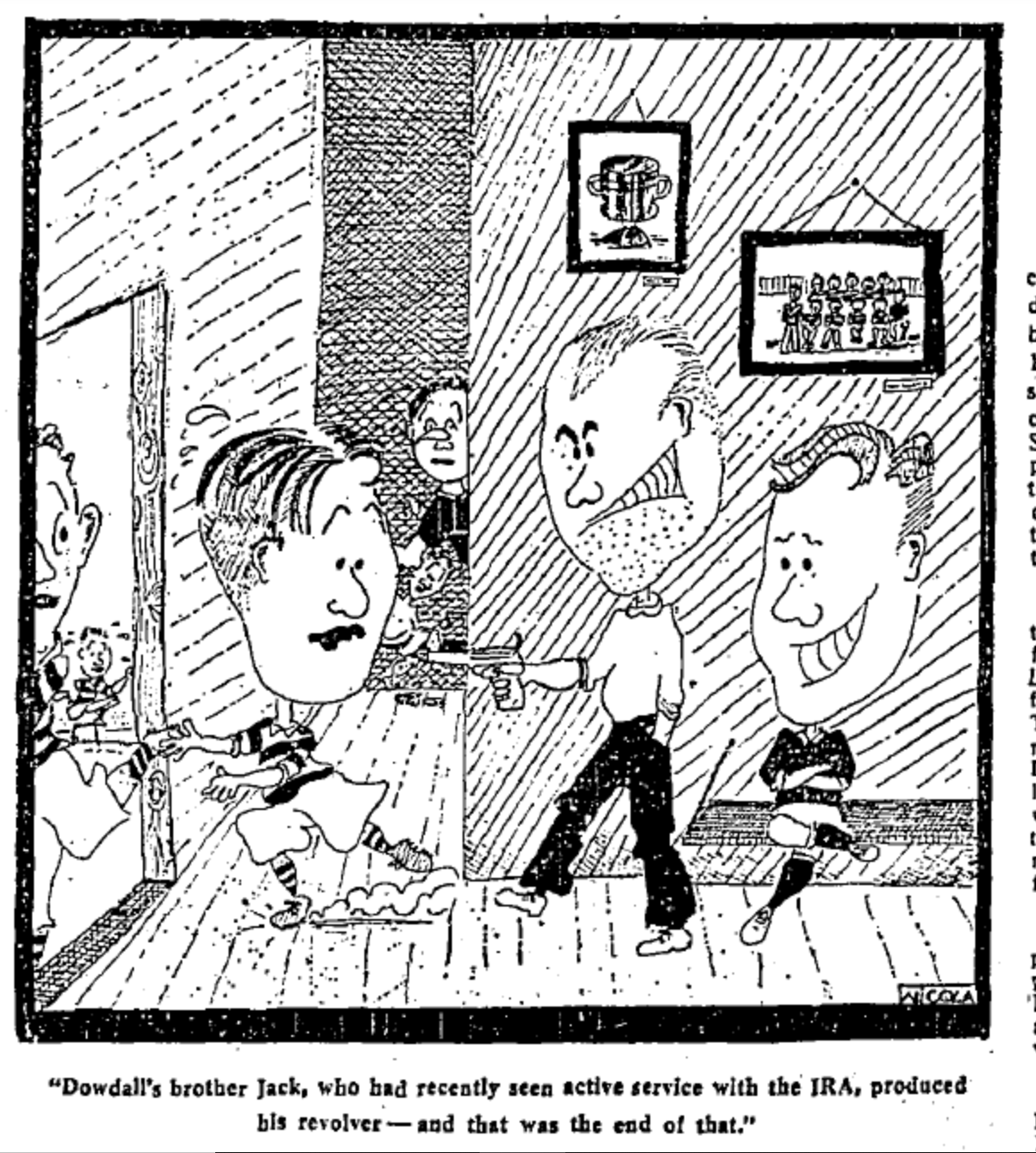


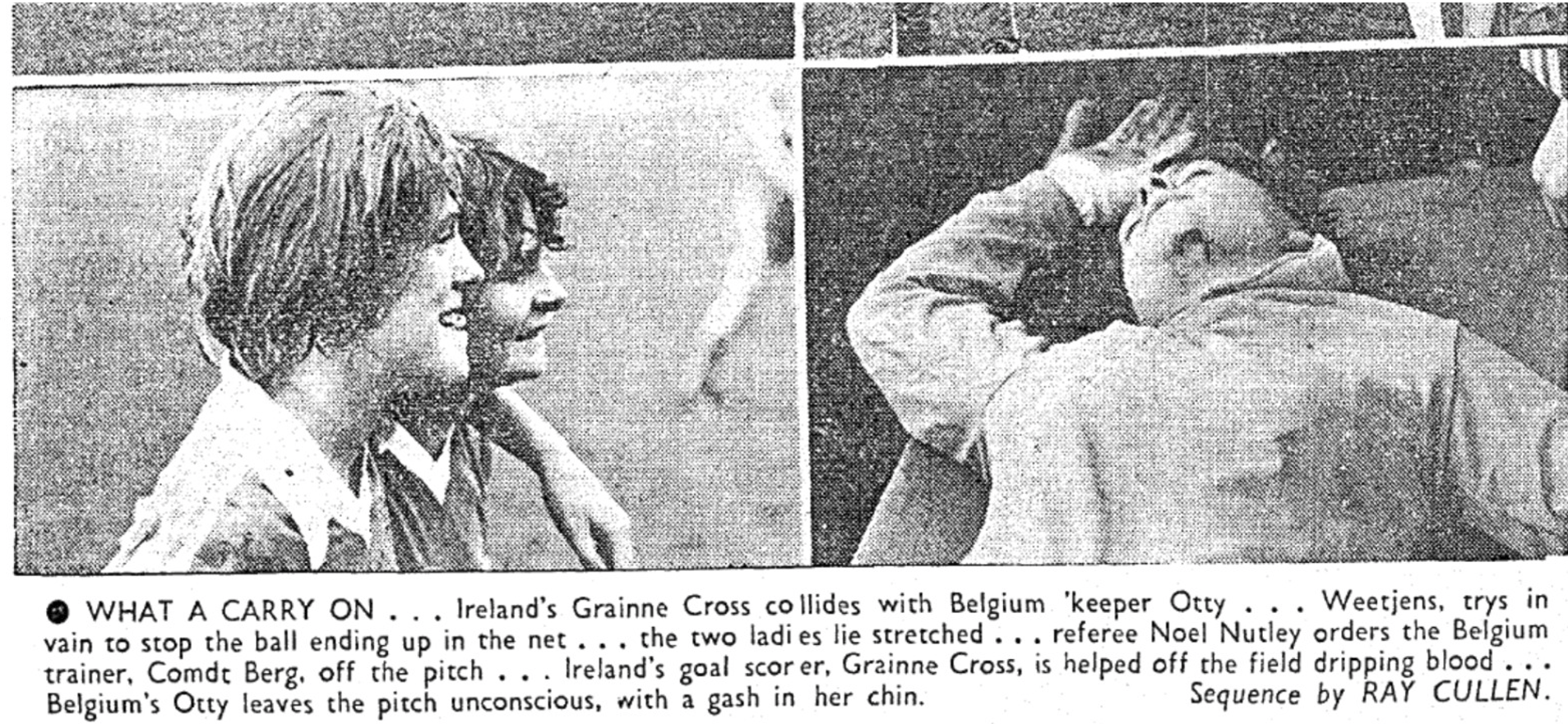

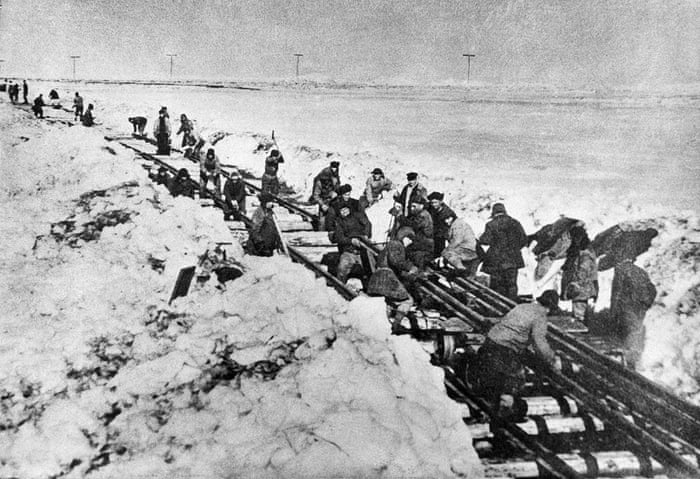


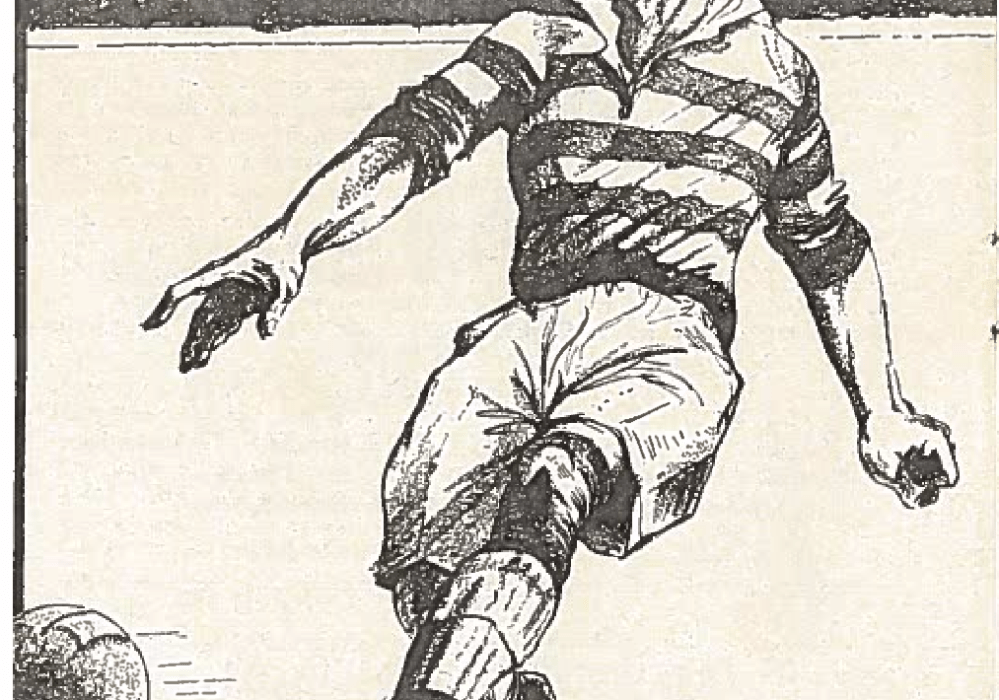
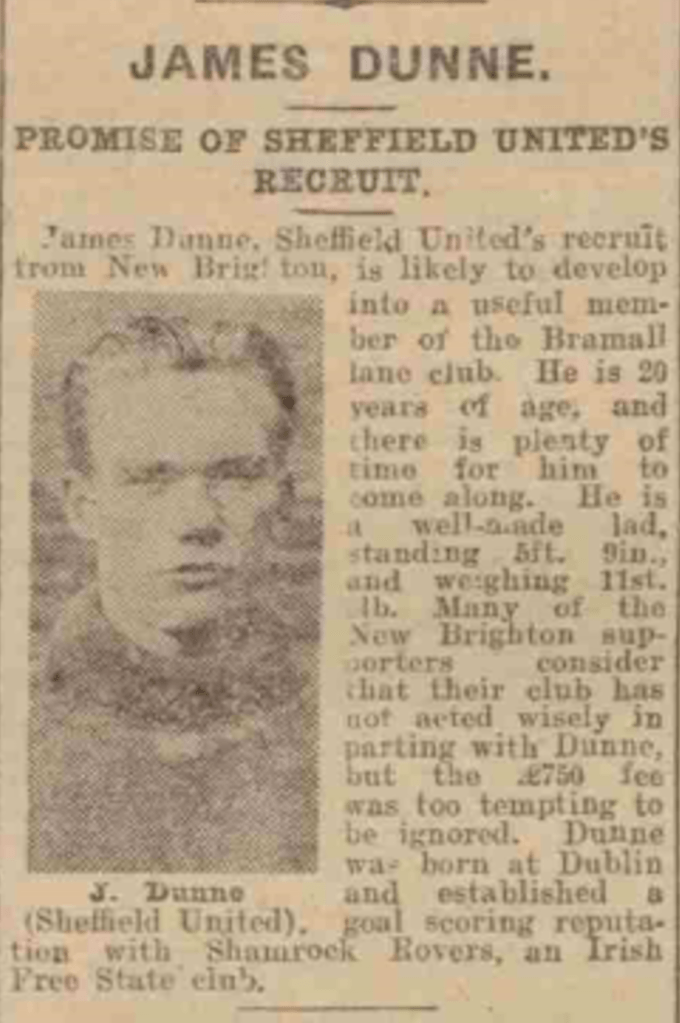
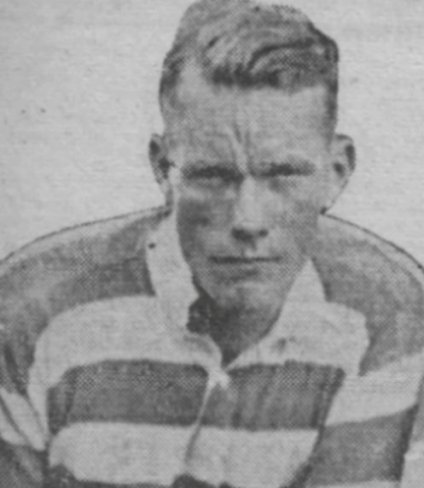


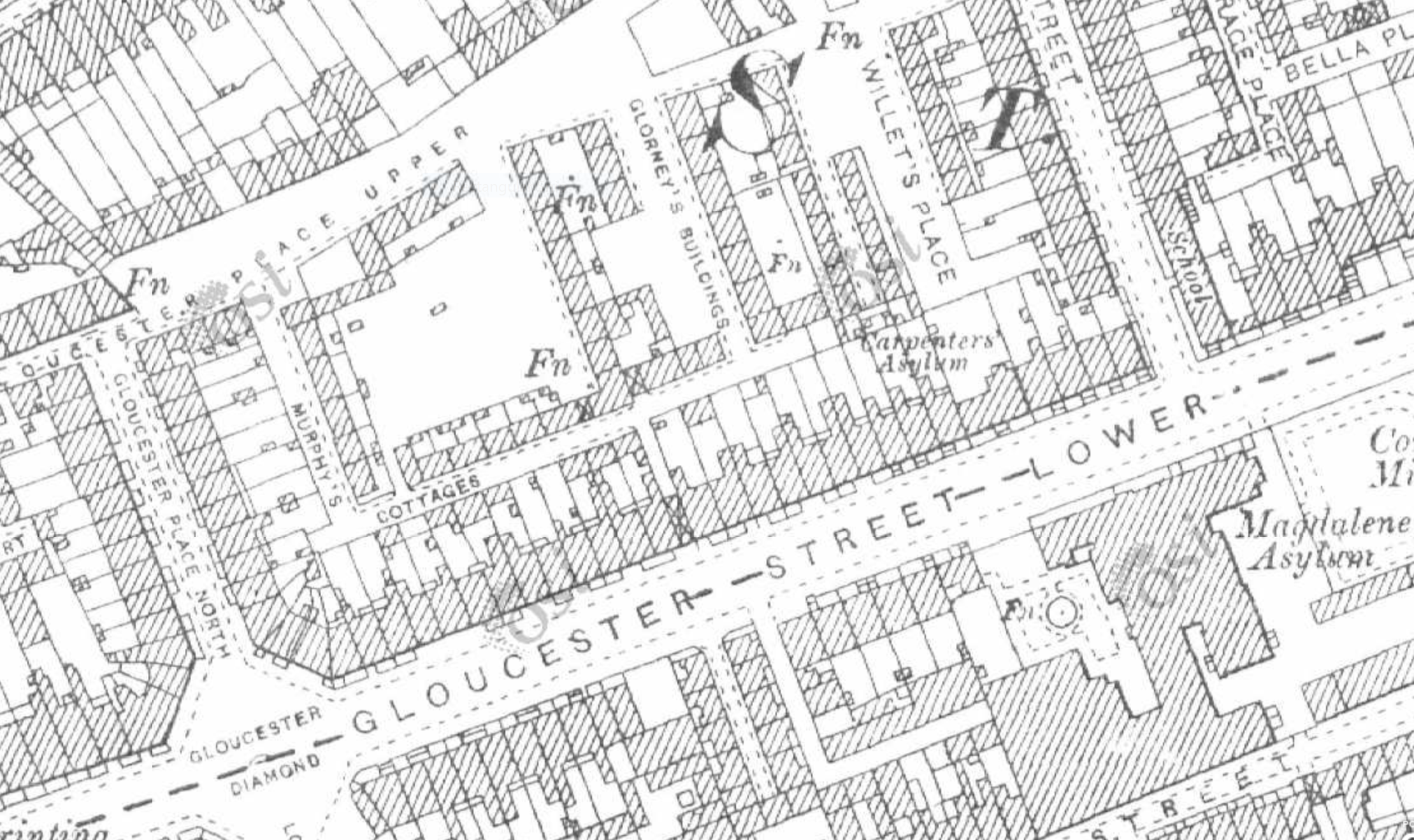
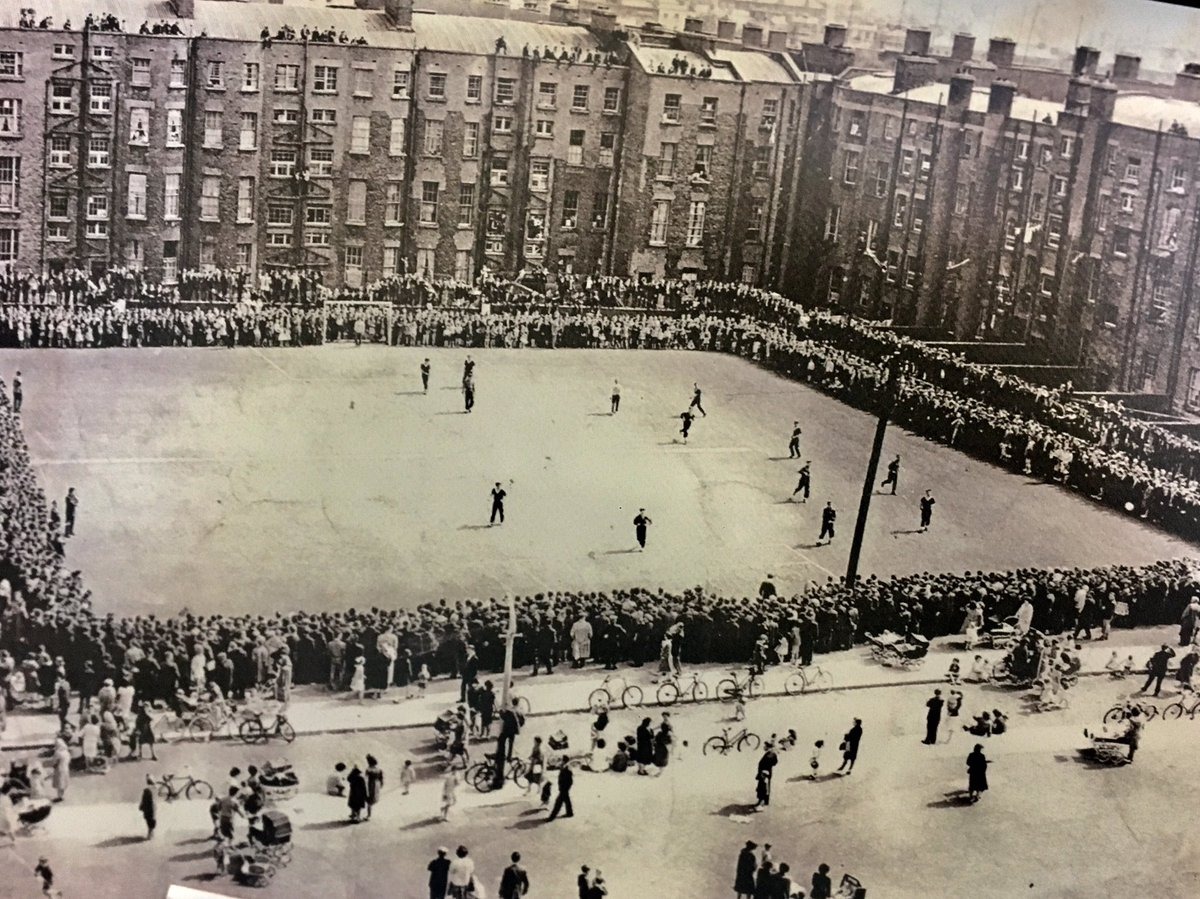
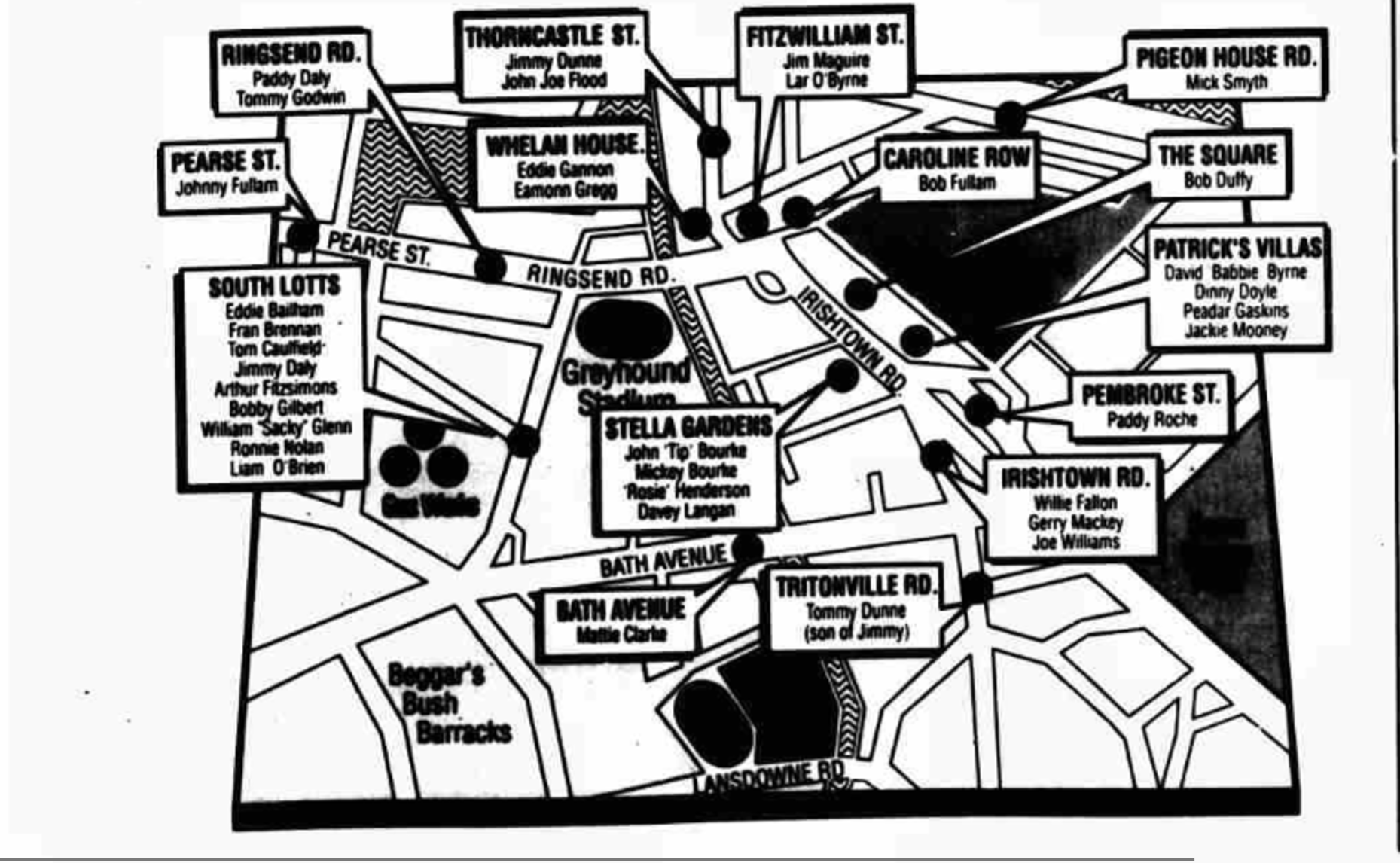
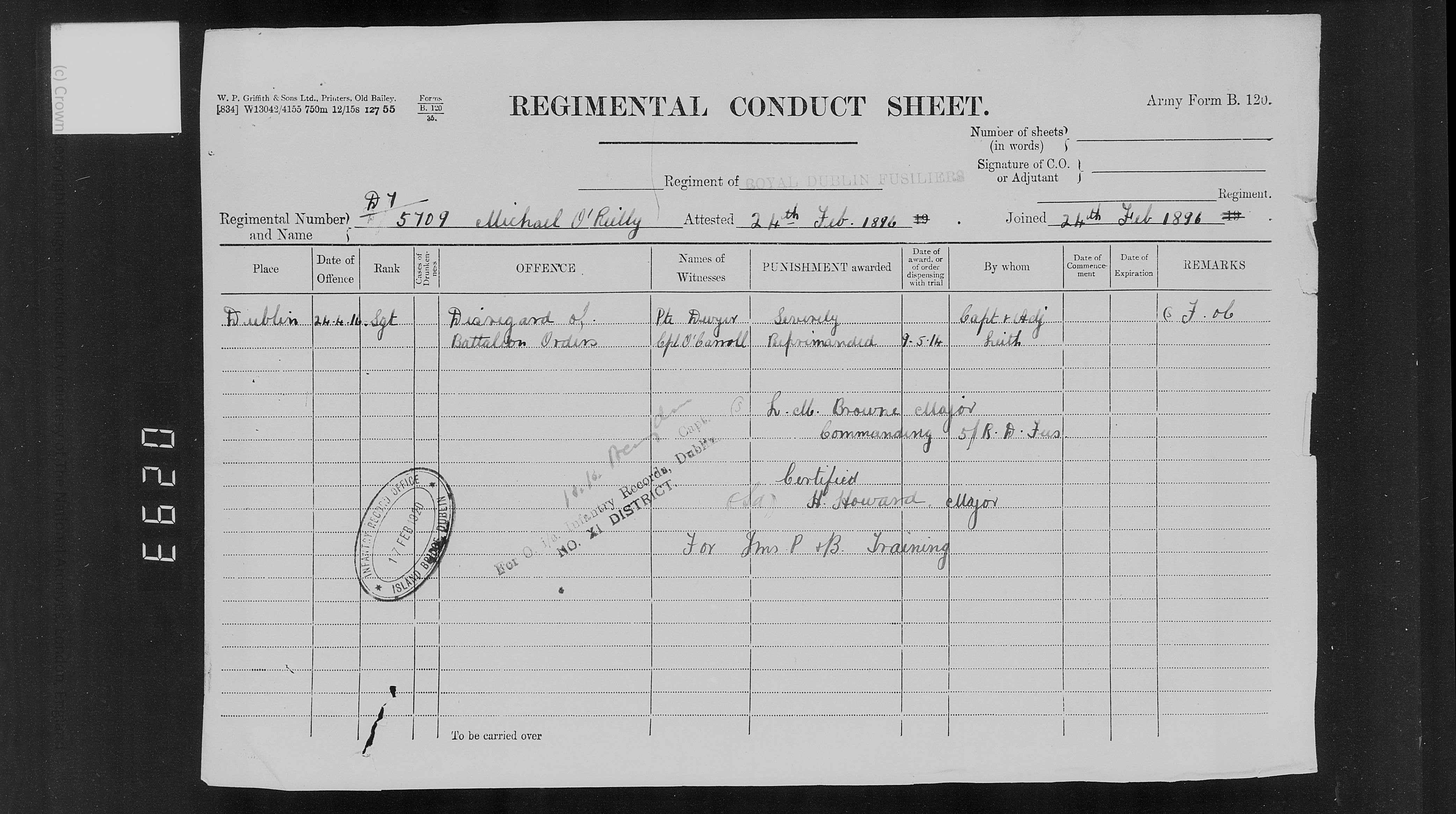
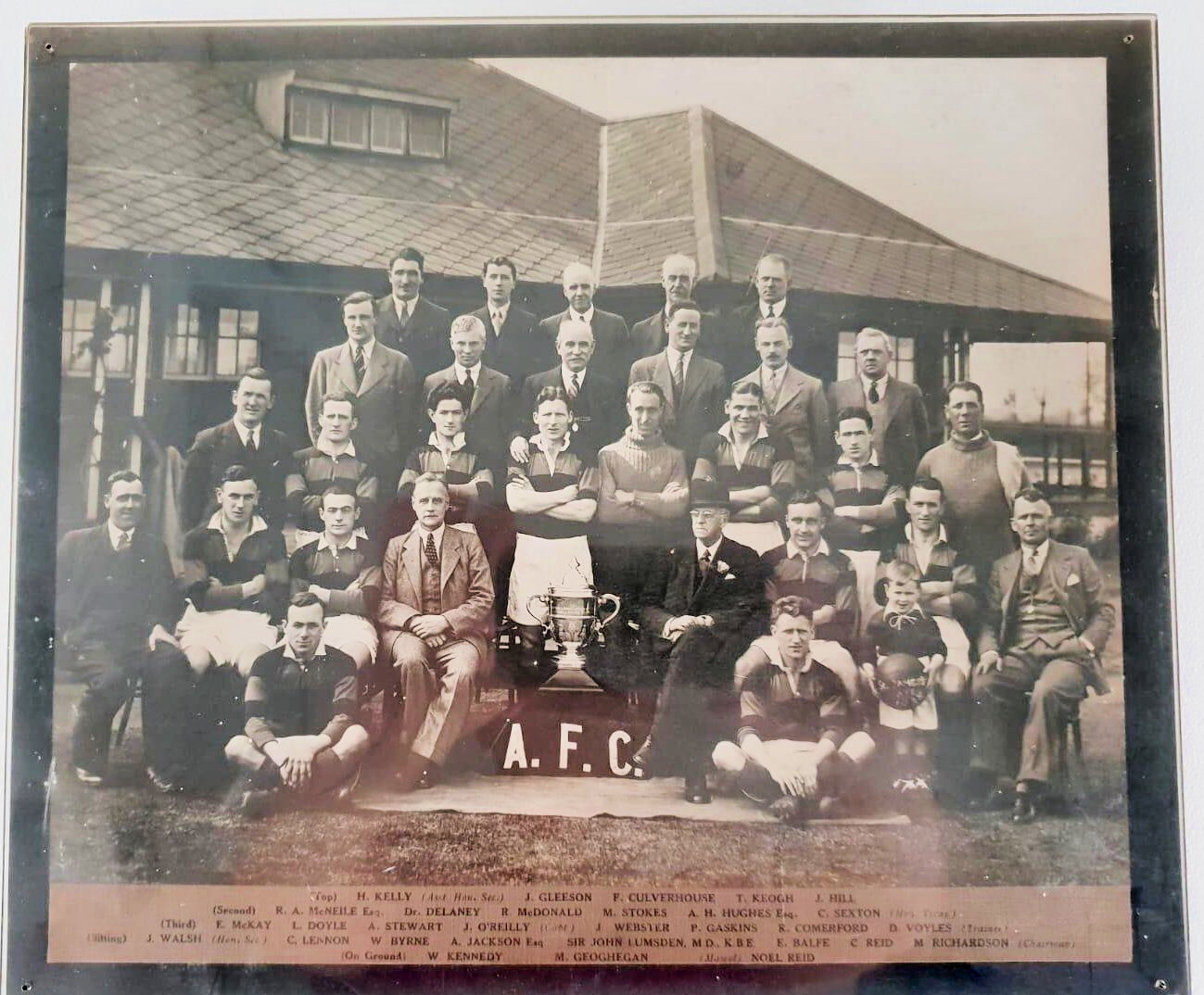
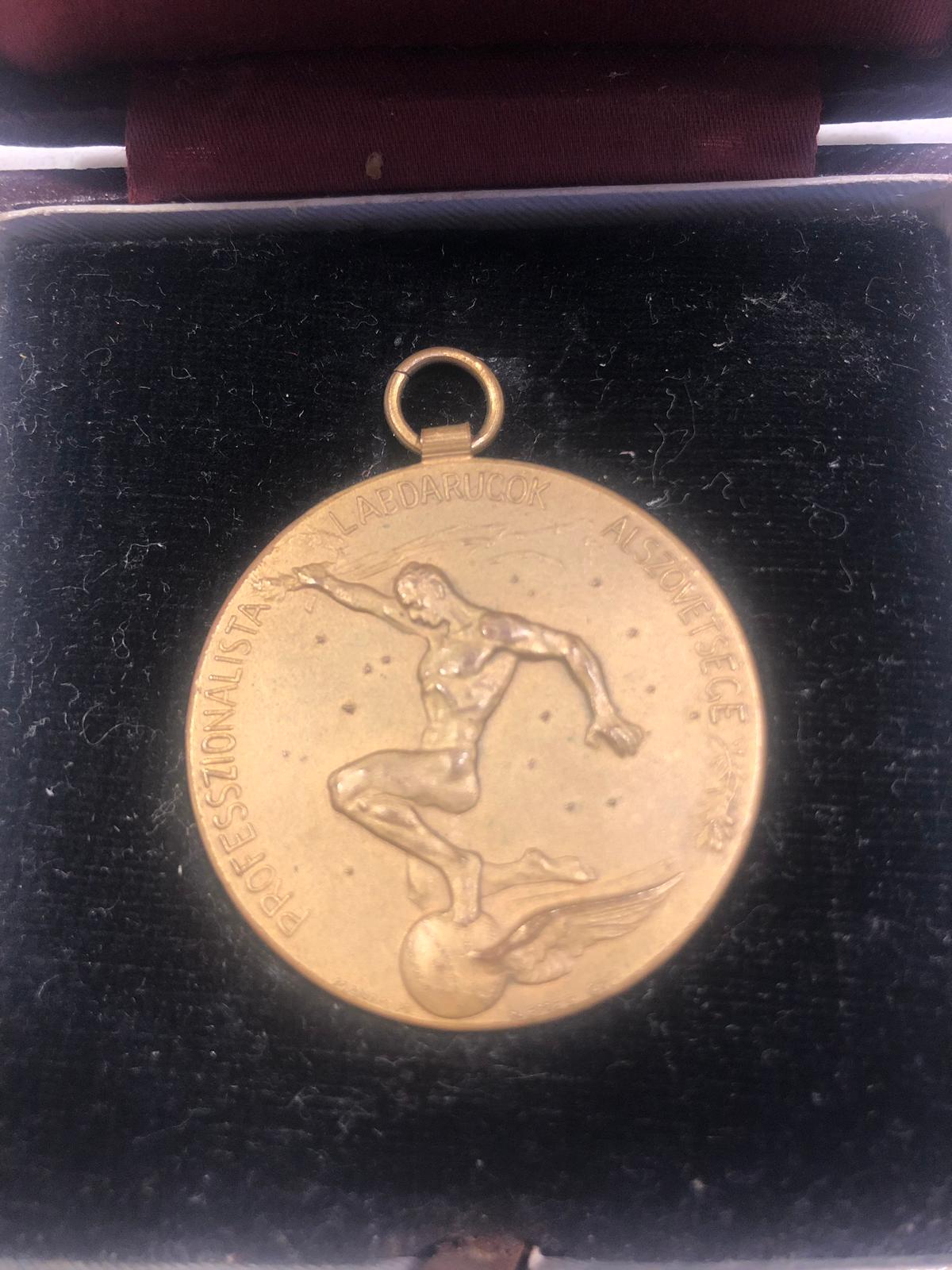
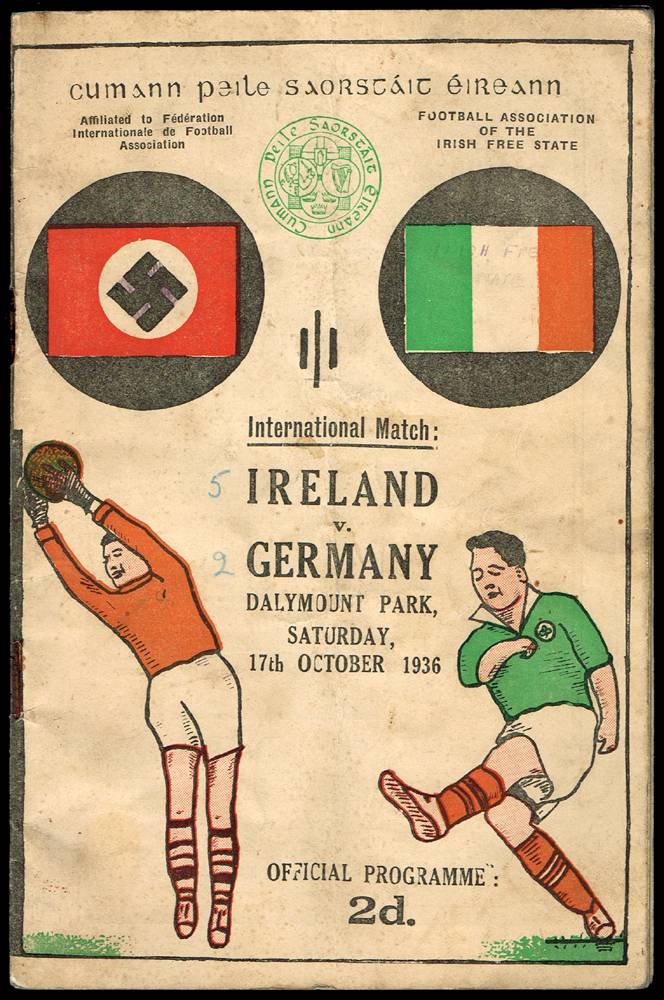
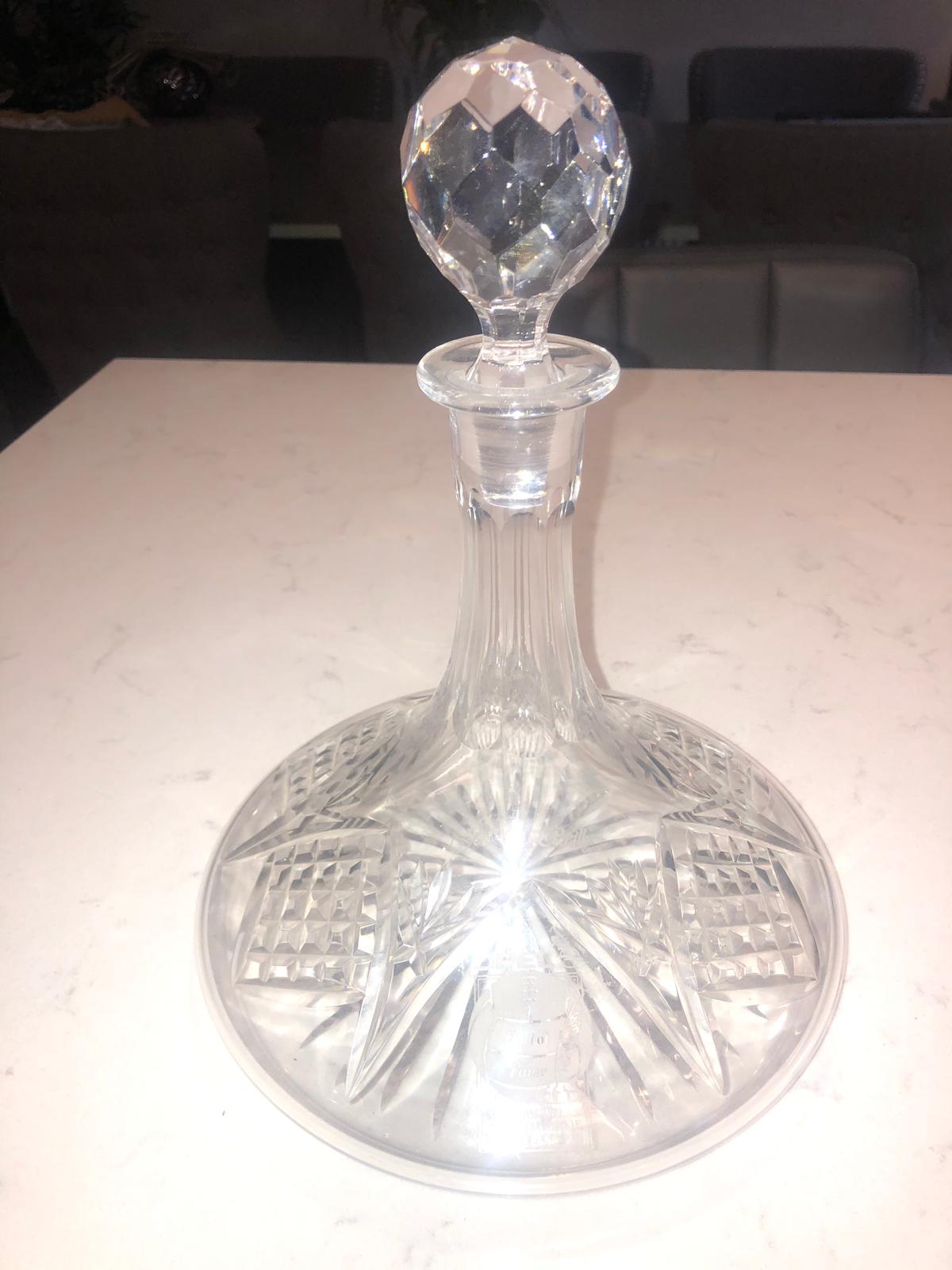
 A Bohemian Sporting Life