With Bohs having finished the debut League of Ireland season in 2nd place we were hoping to go one better the following year and secure the club’s first ever league title. The challenge would be all the greater as the league had swelled from an initial eight teams to twelve, which included the first non-Dublin side in the form of Athlone Town.
Also added to the league were Midland Athletic (associated with the Midland Great Western Railway company), Pioneers, Shelbourne United (no relation to the other Shelbourne, but you see how this can be confusing), Shamrock Rovers, and finally Rathmines Athletic. The Rathmines side were a late addition, initially UCD were going to enter a side but pulled out just before the beginning of the season, allowing Rathmines the chance to play their one and only season of LOI football. It was an inglorious season for the Southsiders as they finished bottom of the table, pulling out of the league even before they’d played their final fixture against Dublin United.
At the other end of the table, it was a three-way fight for supremacy between Bohemians, Shelbourne and newcomers Shamrock Rovers. While Bohs were table toppers at the halfway point, and ran up some spectacular scorelines, including a 7-0 win over Pioneers and an 8-0 drubbing of Olympia, costly defeats to the likes of Shelbourne and Midland Athletic at crucial points in the season meant Bohs had to settle for 3rd place.
The title went to Shamrock Rovers in their debut LOI season, fired to victory by the goals of Bob Fullam, banned at the start of the season for his part in the previous season’s Cup final fracas, Fullam scored 27 times as Rovers lifted the league title.
In the Cup there was a huge surprise win when Alton United, a Belfast team affiliated to the Dublin based FAI, defeated heavy favourites Shelbourne in the final with former Belfast Celtic forward Andy McSherry grabbing the winning goal.
Alton United
Two weeks later Bohemians played their first match against Continental opposition, drawing 1-1 with French side Club Athletic Paris Gallia, who became the first European team to visit Dublin since the split from the IFA. While it was a season that ultimately ended without a trophy Bohs were putting together a talented squad which now included South African midfielder Billy Otto, the talented and tricky inside forward Christy Robinson and a new striker from England named Dave Roberts allied to a core of experienced players such as Harry Willets, Johnny Murray and Johnny McIllroy, they’d have reason to be optimistic.
On a cold day in October 1980 a teenaged Grainne Cross, a versatile midfielder, was sent on as a substitute to try and break the deadlock in an international friendly against Belgium at Dalymount Park. With 15 minutes gone in the second half and the score still tied at 0-0 a ball was lofted into the box, Cross got onto the end of it and scored with a beautiful header but was crashing into by the onrushing Belgian goalkeeper. Both players were taken by ambulance to be treated for their injuries and it was only later that Grainne learned she had in fact scored the winning goal of the game. For, Grainne it was one of her, surprisingly, favourite memories from a sporting career that included a move to Italy, playing in Wembley and starting at scrum half for Ireland in a Rugby World Cup!
Grainne was born into a large, sports mad, Limerick family, her father had been a good rugby player and hurler, and her brothers all played rugby as well. However, Grainne and her sisters really excelled at football, Grainne, Tracy and Rose would all be capped by Ireland during their sporting careers.
Grainne began playing in her teens and her talent was quickly spotted, women’s football in the area was mostly focused around factory teams and Grainne appeared for De Beers in Shannon where her mother and sister worked, as well as lining out for other factory teams like Krupp’s and regularly guesting for other sides such as Green Park.
Grainne was talented, (she won her first cap as a 15 year old) and she grabbed the attention of American Colleges who were interested in offering sports scholarships but Grainne followed a different path. Inspired by the success of Anne O’Brien in Italy she contacted the Italian Federation stating her interest in playing in Italy. Amazingly, this paid dividends, what Grainne thought was going to be week-long trial with ASD Fiammamonza in the city Monza, near Milan, turned into a contract offer and chance to pit her wits against the likes of Anne O’Brien, Rose Reilly and Carolina Morace, all gracing the Italian game at the time.
Cross in action as a teenager during an international friendly against Belgium in Dalymount Park
Grainne recalls the professionalism she encountered in Italy, simple things like good playing surfaces, bigger stadiums with crowds of up to 10,000, and not having to wash her own kit. She also remembers the step up in quality as she faced the some of the best players in Europe. Ultimately homesickness ended her stay in Italy after a season, she had initially had to live with her coach and his family, and expecting only to be on a trial hadn’t had a chance to learn much Italian before she left for Monza.
Her career continued with Ireland and she got the chance to play in Wembley in 1988, where as part of the Football League Centenary celebrations she played against her English League counterparts and remembers bumping into the likes of Bryan Robson and Paul McGrath who were playing for Manchester United in the centenary celebrations that day. While Grainne continued to play football her work commitments, including spells working in England and the United States limited her availability for Ireland matches.
In her late 20s as Rugby became more accessible to women Grainne began playing for Old Crescent helping the club to considerable successes, so much so, that she was selected as part of the squad that represented Ireland at the 1998 Rugby World Cup, starting as a scrum half against the Netherlands before an injury limited her participation in the tournament. She’s even been known to dabble occasionally in the GAA codes, a real sporting all-rounder.
To this day Grainne remains an enthusiastic supporter of both football and rugby and is hopeful for the future of the Irish national team.
With thanks to Grainne Cross for taking the time for this interview which first featured in the Irish international match programmes.
As the dark clouds hovered above, they carried the coffin passed the shrubbery towards the church door as inside the old mixed with the young. It was Friday September 20th, 2003, and the town of Jarrow was saying a ‘farewell’ to Cornelius Whalen the last of the Jarrow Marchers, aged 93.
Whalen was one of two hundred men to walk from the town’s cobbled streets to London in October 1936 to lobby those in Westminster for work – at the time of industrial decline and poverty there was eighty percent unemployment in the town. Palmer’s shipyard was established in 1851 and was the biggest employer in the area, it built its first carrier within one year of opening and within five years it had turned its attentions to the lucrative market of warships. The founder of the shipyard Sir Charles Palmer, a Liberal Democrat MP from 1874 to 1885, had little interest in the conditions which his workers’ lived in.
Local MP Ellen Wilkinson who marched with Whalen and his comrades quotes a local scribe from the time: “There is a prevailing blackness about the neighbourhood. The houses are black, the ships are black, the sky is black, and if you go there for an hour or two, reader, you will be black”. Following the Great Depression, the National Unemployed Workers Movement began organising what the British Press coined ‘Hunger Marches’ across Britain, the 25-day Jarrow Crusade would arrive in London a week before the Sixth Hunger March. On the 4th of November 1936 Ellen Wilkinson presented the Jarrow petition to the House of Commons, it had been carried in an oak box with gold lettering, signed by 11,000 locals. As a brief discussion followed in parliament about the Crusade, the marchers returned by train to a hero’s welcome in the Northeast; sadly, it would take the savagery of war to refuel employment in the town.
That September 1936 as Con Whalen was practicing walking along the hills of Northumberland the locals were bemoaning admission prices for a Sunderland v Celtic match at Roker Park; dubbed ‘The Unofficial Championship of Britain’. ‘Supporters from both districts will find it an expensive afternoon’s entertainment, with nothing being at stake.’ A fan wrote in his letter to the local press editor. Horatio ‘Raich’ Stratton Carter at the tender age of twenty-three had led his hometown club Sunderland to the Championship title that April of 1936, midlanders Derby County finished runners up eight points in arrears.
A confident inside forward is how his fellow English teammate Stanley Matthews saw him: “Bewilderingly clever, constructive, lethal in front of goal, yet unselfish.” Like many from Jarrow, Carter would also join the war effort in 1939 becoming a pilot in the RAF stationed in Loughborough. Carter was considered a terrific competitor in school and presented with a gold watch, on leaving, for outstanding performances in football and cricket. George Medley a local scout had promised Carter a trial with Leicester City on reaching age seventeen, following a game with Sunderland a trial was arranged.
On a heavy pitch a couple of days after Christmas Day 1931, Carter was deemed too small for professional football by then Leicester manager Willie Orr; Orr had led Celtic to a league and cup double in 1906/07. Carter was offered amateur terms initially by Sunderland and would become an electrician earning 45p a week; he would eventually go part time earning £3 a week training two nights a week with the Wearsiders.
Within five years the one they said was ‘too small’ would be joint top scorer for Sunderland that championship winning season and carry the trophy around Roker Park. A few months after the Celtic match Carter would receive a benefit cheque of £650 for five years of service at Sunderland, despite a long career at the club and leading the club to the FA Cup in 1937, he would never receive another benefit.
By 1953 in the twilight of his career Carter found himself in southern Ireland lining out for Cork Athletic; it was said he was paid £50 per match plus £20 expenses, this enabled him to fly from Hull to the Emerald Isle for matches. Carter had become manager of Hull City but a rift with Chairman Harold Needler led to his departure in January of that year, he left football to run a sweet shop. However, within one month Cork Athletic Secretary Donie Forde and director Dan Fitzgibbon had performed a miracle tempting Carter to Leeside.
Raich Carter signing for Cork
It proved an inspirational signing, after making his league debut versus Waterford, Carter and Cork would face Drumcondra. The Dublin club would make an objection regarding Raich’s residency in Éire, he had landed only two weeks previously, his match fee was earned as he scored the victorious goal at Tolka Park. Raich Carter would go on to win an FAI Cup winners medal with Athletic that season and play for a League of Ireland XI versus an England league select.
Glasgow Celtic arrived in Sunderland in the autumn of 1936 after winning the Scottish Championship a few months earlier, Aberdeen and Rangers finished tied for second place five points a drift. In that winnig team was the ‘human torpedo’ Jimmy McGrory who was coming towards the end of his career, by December 1937 he would take the hot seat at Kilmarnock. McGrory was born in Garngad in North Glasgow a place commonly known as ‘Little Ireland’ given the ethnic idenities of many of the habitants. The atmosphere in the area was corroded with incessant smoke and fumes from the Tharsis Sulphur & Copper Works and the Milburn Chemical Works; in 1904 as wee Jimmy was taking his first breath on this earth the Provan Gas works was opened by Glasgow Corporation. It did nothing to improve the environment and only added to the breathing problems and illness for those in Garngad.
In 1921 then Celtic manager Willie Maley signed James Edward McGrory as an inside right from junior side St. Roch it would take him two years to make his debut against Third Lanark in January 1923; he had been loaned to Clydebank intially. Jimmy would be top scorer for the hoops twelve seasons in a row, and the season of 1935/36 would see him top of the European charts after netting fifty times; he was also European top scorer nearly a decade earlier scoring forty-nine times. In 1928 the Arsenal of North London offered £10,000 to make him the highest paid player in Britain. A true Celt Jimmy refused to leave Parkhead; the Celtic board hoping his departure would boost the clubs accounts were furious at his decision. So, much so they secretly paid him less wages than his fellow teammates for the rest of his career. Jimmy to the delight of the Sunderland defence was omitted from the Celtic team that Autumnal day. After notching up 472 goals in 445 league & cup appearances McGrory would retire a year after the Jarrow Crusade. Like Carter he would go on to be a manager leading to Celtic to a 7-1 victory over Rangers, a British record in a domestic cup final – ‘Hampden in the Sun’ they call it!!
Jimmy McGrory in later life
On September 16th, 1936, seventeen thousand paid in at Roker Park to watch Sunderland take on Glasgow Celtic, that same day in a sign of things to come Antonio de Oliveria Salazar’s right-wing dictatorship in Portugal unveiled the Portugeuse Legion a paramiltary state organisation setup to ‘defend the spiritual heritage of Portugal”. In goal for Sunderland that day was Johnny Mapson, he replaced Jimmy Thorpe. Thorpe was netminder for Sunderland from 1930 to 1936, on his one hundred and twenty third appearance against Chelsea in February 1936 he was kicked in the head and chest but played on. After arriving back home Thorpe collapsed and four days later in hospital, he took his last breath.
His widow was presented with his 1935/36 championship medal and the FA rules changed stopping players kicking the ball out of goalkeepers’ arms. Mapson would concede only one goal, on the hour mark to Malky MacDonald who like McGrory had started life at St. Roch’s.
Raich Carter had opened the scoring for the Black Cats on the twentieth minute and referee Harry Nattrass who had officiated the FA Cup final of 1936 drew the afternoon’s proceedings to an end. As the Jarrow marchers arrived in the Yorkshire town of Wakefield a month later on the 14th of October, Nattrass was refereeing at Hampden Park as the Nazi emblem flew alongside the St. Andrew’s Cross. The teams would meet again a fortnight later at Parkhead, the green and white would win out three to two this time, thirteen thousand would witness McGrory netting twice.
Today in England there are no hunger marches, although you will find foodbanks at most league grounds on a Saturday; In Sunderland Raich Carter is eulogised in written word and art, while the name McGrory rolls off the tongue easily around Parkhead. In Jarrow there is a statue dedicated to those who walked to London and if you care to have a pint in one of the locals, an Old Cornelius should be ordered in honour of a great man.
“Cup tie fever! Who is it who has not been affected with it at some period of another? It is an epidemic which always occurs in a virulent form about the same time each year… Its principle characteristics are a blind, unfaltering belief in the capacity of one’s own team to win “The Cup”… I am afraid the supporters of the Bohemian Club are in no way immune from the ravages of this disease”
These words were written by Dudley Hussey, a founder member of Bohemian Football Club in one of the first histories of the club. Though this history was written some 110 years ago the words remain true to this day, indeed his references to epidemics and disease carry an additional significance!
By the time of writing Hussey had seen a club he helped found prosper from humble beginnings in the Phoenix Park to residents of Dalymount and become serial Leinster Senior Cup champions. However, the prize that they most desired was the Irish Cup.
Bohs had been members of the Irish League since the 1902-03 season, the first Dublin club to join, and also regularly competed in the Irish Cup, becoming the first Dublin side to make the final in 1894-95. However, that cup final was to be a bitter disappointment with Bohs incurring a record 10-1 defeat to Linfield. Bohs would reach the final twice more in subsequent years, a narrow, controversial defeat to Cliftonville 2-1 in 1900 and a 3-1 defeat to Distillery in Dalymount Park in 1903. In 1906 Shelbourne became the first Dublin side to lift the trophy, defeating Belfast Celtic 2-0 in the final in Dalymount Park, surely the Cup couldn’t elude Bohs for much longer?
As an amateur side Bohs were often at a disadvantage against the big Belfast clubs who could afford professional players or who could give their stars cushy sinecures with companies connected with the side. Bohemians often travelled north with many of their best players unavailable due to work commitments and league form was patchy at this time. However, they believed that when they could field their strongest XI they were more than a match for any team in Ireland. The 1907-08 cup campaign would prove just that.
As a member of the Irish League; Bohs were exempt from the first round of the cup and were drawn to face Glentoran in the Oval in the second round. Leading 2-1 with minutes remaining in Belfast, the Glens were awarded a late penalty to secure a replay in Dalymount. A week later Bohs made no mistake, running out easy 4-1 winners with Dick Hooper scoring a hat-trick.
The next round pitted Bohs against league champions Linfield in Windsor Park, again a lead was squandered, Bohs being pegged back from 2-0 in driving rain and sleet to be held for a 2-2 draw after another penalty award, and so to another Dublin replay. In a close and hard-fought match in Dalymount Bohs won out 2-1 and were through to the semi-finals of the Cup.
Lying in wait were Belfast Celtic, and once again Bohemians were drawn away, necessitating another trip north to Belfast. In a thrilling game Bohs were 2-0 down inside the first half after giving away yet another penalty, however, an amazing feat of dribbling by Dinny Hannon where he ran the length of the pitch to score, followed by a second half penalty by Willie Hooper secured a replay in Shelbourne Park. The Belfast Celtic performance was far below their standard of the previous week and Bohs ran out easy 2-0 winners. The final was set – for the first time ever two Dublin clubs, Bohemians and Shelbourne would fight it out for the Cup.
On the 21st of March 1908 the first final took place in Dalymount. First final? Because of course even the final would go to a replay after 1-1 draw. Bohemians goalkeeper Jack Hehir was the hero of this match, producing the “most brilliant display of goalkeeping ever seen in Dublin” by saving two penalties over the course of the game.
The following Saturday was to be the 8th and final match of Bohs epic Cup quest. This was a talented Shelbourne side, among their starting XI were the likes of Billy Lacey and captain, Val Harris both of whom would be lining out for Everton as they finished runners up in the English first division the following season. Bohs were not to be overawed however, and tore into Shels from the outset, Hehir was once again impressive in goals but it was the Hooper brothers who ran riot, Dick Hooper scoring after only eight minutes before grabbing a second on the half hour while just before the interval Jack Slemin played in Willie Hooper to put Bohs 3-0 up.
Shels rallied in the second half, putting in some rough tackles and as a result several Shelbourne players were cautioned, one such tackle forced Bohs captain Jimmy Balfe from the pitch for treatment and while Bohs were reduced to 10 men John Owens scored a consolation goal for Shelbourne. But it was to be Balfe’s day, returning to the pitch after treatment it was he who would life the Cup for Bohemians and fulfil what could only have been a distant dream of Hussey and the other founders when the met in the Phoenix Park in 1890.
Teams as shown in the Dublin Daily Express on March 30th
Bohemians Cup Final XI:
Jack Hehir, Jimmy Balfe, P.J. Thunder, William Bastow, Tom Healy, Mick McIlhenney, William Hooper, Dinny Hannon, Dick Hooper, Harold Sloan, Jack Slemin
Originally published in the Bohemian FC match programmein 2021.
A hard tackle on a bare, wintry, public pitch and two players go down in a tangle of limbs. Both rising, angry words, then fists, are thrown – the referee intervenes and both players, one aged 17, the other 23, are sent from the pitch. Not the finest example of the beautiful game, but not exactly an uncommon occurrence across the parks and playing fields of Ireland. It is what happens afterwards, the minute or two of frenzied violence that is unusual and shocking, moments of chaos that leave a young man dead and will see three amateur footballers stand trial in a Dublin court for murder. This is the story of the death of Samuel O’Brien.
The Fifteen Acres
The Fifteen acres of the Phoenix Park has a legitimate claim to be the footballing heart of the city. Located in the expanse between the Magazine Fort and the Hibernian Military School (now St. Mary’s Hospital) it occupies land that were once the parade grounds and firing ranges of the British Army in Dublin. A short distance away at the North Circular Road gate-lodge the Bohemian Football club was founded in September 1890, there are reports that early members of the club included some from the Hibernian Military School among their number. Bohs first pitches were at the nearby Polo Grounds, on the other side of Chesterfield Avenue.
In 1901 the Commissioner for the Board of Public Works agreed to lay out a number of playing pitches in the area of the Fifteen Acres. Out of the thirty-one available pitches twenty-nine were used for soccer. This meant that clubs with limited means or without a pitch of their own had somewhere close to the city to play. Among those to host their early matches on the Phoenix Park pitches were St. Patrick’s Athletic from nearby Inchicore. The park pitches remain in almost constant use to this day, and their footballing significance has even made it into the public shorthand (perhaps unfairly) for poor or amateurish play, via the utterances of the likes of Eamon Dunphy declaring that “you wouldn’t see it in the Phoenix Park”.
Map held by the National Library of Ireland showing the layout of the park during the 1929 Centenary commemorations of Catholic emancipation.
This part of the park has also seen it’s share of violence. At the edge of the Fifteen acres close to Chesterfield Avenue and almost opposite to the Viceregal Lodge (now Áras an Uachtaráin) on a spot of ground now marked by a discreet commemorative cross, one of the most infamous murders in Irish history took place when, in 1882 The Invincibles murdered Lord Frederick Cavendish and Thomas Henry Burke with a set of surgical knives. Cavendish was the newly appointed Chief Secretary for Ireland, having arrived in Dublin just that day, while Burke was the Permanent Undersecretary, the most senior Irish civil servant.
During the 1916 Rising the Magazine Fort was targeted by the Irish Volunteers led by Paddy Daly. Hoping to sieze weapons and destroy British stocks of ammunition and explosives, the members of the Volunteers posed as a football team, passing a ball back and forth as a diversion, until they were close enough to rush the guards and secure the fort. One of the sentries of the fort suffered a bullet in the leg, while George Playfair Jnr. – son of the Commandant of the fort was killed by bullet wounds to the abdomen when he tried to raise the alarm. In more recent times the area just east of the fifteen acres near the Wellington monument was the site of one of the notorious GUBU murders carried out by Malcolm MacAthur when he bludgeoned to death a young nurse, Bridie Gargan, while she lay sunbathing on the grass on a summer afternoon in 1982.
The scene on matchday 1924
Returning to the match in question – a Leinster Junior Alliance division four match between Glenmore and Middleton, two Dublin teams, in the Phoenix Park. Middleton held their club meetings at 35 North Great George’s Street in the north inner city but featured several players from the southside of the inner city. Glenmore (sometimes styled as Glenmore United) were from south of the Liffey and used 30 Charlemont Street as their address.
The game took place on the 7th December 1924, on pitch 28 of the Fifteen acres, an area that remains a focal point for amateur football in Dublin City. It was a fine, dry day for the time of year, though there was a strong breeze blowing in from the west.
Taken from Football Sports Weekly this plan from the 1920s shows the pitch layout of the Fifteen acres as the Glenmore and Middleton players would have known it.
The game itself seems to have been proceeding relatively without incident when according to referee James Rocliffe, with a quarter of an hour remaining, Samuel O’Brien of Middleton was going through with the ball when he was tripped by Patrick Lynam of Glenmore. The referee called a foul and O’Brien, obviously aggreived at the challenge got up in “a fighting attitude” and he and Lynam rushed at each other, trading blows. At this point Rocliffe separated the pair, sent off both players and prepared to restart the game.
However, his action in sending off both players hadn’t eased tensions. The pitches of the Fifteen acres not being served with individual pitch-side dressing rooms both players went behind one of the goals after being sent from the field. Here, tempers flared again with Lynam and O’Brien trading punches and other players rushing from the pitch to intervene, just as Rocliffe was trying to restart the game.
The fatal blow?
What happened next becomes a matter for debate, one which I will try to tease out and present for the reader based on the court testimonies of those present on the day. The version of the story changes with each retelling and with each narrator. What seems to be generally agreed on is that as Lynam and O’Brien set at each other again after their sending off, other players joined the fray, ultimately O’Brien was knocked to the ground and it seems it was then that he was kicked in the head, or possibly struck his head heavily off the ground as he was knocked over. This according to the medical examiner was likely the cause of his death, aged just 23.
In the aftermath the referee retreated to the relative safety of the nearby pavillion, while Thomas Ralfe, a teammate of O’Brien, seeing that his friend was badly injured rushed to the nearby Hibernian School, then in use by the National Army, and sought help. He returned with two army officers who gave O’Brien first aid as they waited for the Dublin Corporation ambulance to arrive to take the stricken footballer the short journey to Dr. Steeven’s hospital.
The approximate location in the Phoenix Park where Samuel O’Brien was assaulted. The buildings behind the tree-line are St. Mary’s Hospital, formerly the Hibernian School.
Samuel O’Brien, arriving at the hospital unconscious, was met by the house surgeon Dr. W.A. Murphy just after 3pm that day. Murphy described O’Brien as being in a state of “profound collapse” and growing steadily worse. Despite medical intervention Murphy would pronounce O’Brien dead later that day at 7:45pm. In the post-mortem report the cause of death was identified as “paralysis of the respiratory centre caused by the compression of the brain by haemorrhage”. To the untrained eye O’Brien appeared to show just minor, superficial injuries; bruising to the right eyelid and a couple of minor abrasions around the same eye. There were no other obvious injuries or bruising to suggest trauma to major organs. It was only upon the opening of his skull that the violence he had suffered was laid plain. The entire of Samuel O’Brien’s brain was covered in blood. The haemorrhage that had killed him caused by significant trauma to the head.
Inquest
The following day, Monday, December 8th 1924 – Dr. Murphy had the opportunity to present his findings to an inquest held in Dr. Steevens’ Hospital chaired by City Coroner, Dr. Louis Byrne and a jury, to decide if the death of Samuel O’Brien should proceed to trial. When describing the injuries recieved by the deceased, Murphy stated that they could be caused by “a person being struck in the face and falling to the ground”.
Present at the inquest apart from Doctors Byrne and Murphy were a Mr. Clarke, representative of the Chief State Solicitors Department, Inspector Patrick Guinan of the Bridewell, Dublin Metropolitan Police and the three young men suspected of causing injury to Samuel O’Brien – they were Patrick Lynam, aged 17, a bookmakers clerk from St. Patrick’s Terrace off the North Strand, Michael Doyle, aged 18, at the time unemployed and living at 14 Richmond Cottages in Summerhill, and Thomas Lynam (no relation to Patrick), aged 17 from 2 Aberdeen Terrace, off the North Strand who worked in the printing business. At the inquest Patrick Lynam was at that stage the only one of the three with legal representation, in the form of a solicitor named Christopher Friery.
Dr. Steevens’ Hospital, site of the inquest
Also present at the inquest were a number of other witnesses including Samuel’s older brother William, the family member who had identified his brother’s body the previous day. He testified that Samuel had left in good health and spirits from the family home on Bride Street the previous day, which backed up the medical testimony which ruled out some underlying medical condition as being a possible cause for Samuel’s death. It was also at this point that Samuel’s profession was disclosed, he worked for the Irish Independent’s distribution section. Indeed their sister paper, the Evening Herald carried extensive coverage of the inquest that evening on its front page.
Other witnesses at the inquest included a number of O’Brien’s Middleton teammates; Thomas Ralph (24) and Edward Maguire (20) who as well as being fellow players were also neighbours of O’Brien on Bride Street, and Edward O’Dwyer of Palmerston Place, Broadstone, the self-described “inside-right” of the team. The other key witness was James Rocliffe (30) of 18 Summerhill, the referee on the day of the match.
It was Rocliffe who next gave evidence after William O’Brien. He noted how he knew neither team nor the men involved personally, he had merely been tasked with refereeing the game by the Association. He detailed the foul on O’Brien by Lynam and their subsequent fight which resulted in both players being sent off. Rocliffe then testified that as he was restarting the match he noticed several players rush off the field in the direction of O’Brien and Lynam, at this point he stopped the game and went to the nearby pavillion. Rocliffe testified that there was only one spectator and his two linesmen at the game that day. Rocliffe did not see further blows struck by either man and had not seen anyone else apart from Patrick Lynam strike Samuel O’Brien as by this stage he had retreated to the safety of the pavillion. When asked if he had seen blows struck like this before he replied:
I often saw rows and blows struck by men fighting on the street. It did not very often occur at football matches.
James Rocliffe quoted in the Evening Herald – 9th December 1924
It was the subsequent testimony from O’Brien’s teammates that was to be most incriminating, Thomas Ralph swore that upon seeing players running towards O’Brien and Lynam he witnessed two opposition players knock O’Brien to the ground and kick him. These two players were identified by Ralph as Thomas Lynam and Michael Doyle, and Ralph would later describe the accused issuing two “unmerciful kicks” to O’Brien, which he would state “were meant” intimating that they were deliberate, though both Lynam and Doyle denied this. Edward Maguire and Edward O’Dwyer confirmed that that they witnessed Michael Doyle kick O’Brien which Doyle strenuously denied at points during the inquest, loudly interjecting to profess his innocence and deny that he kicked O’Brien.
Summing up, the coroner Louis Byrne was moved to say that there had been no pre-existing animosity between the teams or individual players, and he looked upon Samuel O’Brien’s death as,
a tragic result of the blood of these boys “getting up” in the excitement of the game. He would be slow to attach any guilt to any party there on the evidence. His only regret was that when these young men went out to play football that they had not a better spirit of sportsmanship
Freeman’s Journal – December 10th 1924
The inquest jury found that the death of Samuel O’Brien was the result of injuries sustained on the football field. The case was referred to the Dublin District Court where Patrick Lynam, Thomas Lynam and Michael Doyle were to be charged with murder.
The courts
The initial hearing took place later that day with Justice George Cussen presiding, all three were charged with murder and placed on remand for a week with a substantial bail set in each case. All three young men denied the charges with Thomas Lynam saying “I never laid a hand or foot on him”.
When the case reconvened the following week similar evidence to the inquest was presented, however this time all three of the defendants had legal representation and Justice Cussen referred the murder case to the Dublin Circuit Court.
Irish Times headline 10th December, 1924
The Circuit Court hearing took place in February of 1925 with Justice Charles Drumgoole presiding. The state prosecution was entrusted to William Carrigan.
A prominent barrister from Tipperary – Carrigan was later made chair of the Government’s Committee on the Criminal Law Amendment and Juvenile Prostitution Acts – the Carrigan Committee for short. Carrigan was entrusted with examining the “moral condition” of the country and he heard testimony that highlighted issues such as child abuse, prostitution and the suggestions of their root causes; overcrowded tenements shared by large numbers of men, women and children with little privacy or security. Little of this made it into Carrigan’s report, though it’s findings were still too much for the Government to consider publish – the report was shelved by the Fianna Fáil Minister for Justice James Geoghegan.
But in February 1925 this was all still ahead of William Carrigan, his priority the three young men on trial for the alleged murder of Samuel O’Brien. Carrigan begins by questioning the character and attitude of the accused, stating that
The attitude of at least one of the prisoners was far from showing any regret… Their demeanour towards the court showed very little respect. It did not redound to their credit that they should meet the case with such levity as had been observed.
Cork Examiner – 26th February 1925
What “attitude” or “demeanour” was presented or how they were disrespectful is not specified. Once again the key witnesses examined were Dr. Murphy, house surgeon of Dr. Steevens’ Hosptial, the referee James Rocliffe and Middleton team-mates Thomas Ralph and Edward Maguire. Ralph and Maguire both stated that O’Brien had been kicked when on the ground, that O’Brien had tried to rise but collapsed into unconsciousness from which he would never awaken. And significantly both agreed that Michael Doyle had kicked O’Brien, while Ralph said that Thomas Lynam had also kicked him.
The focus of the defence was on medical evidence, honing in on the limited visible, superficial damage to the face of Samuel O’Brien, they asked Dr. Murphy whether it was possible that a fall after being struck in a “fair fight” could have caused the trauma which led to his death, rather than a kick to the head. Something Dr. Murphy agreed was possible.
Patrick Lynam testified that after being sent off he went up to offer O’Brien an apology and “make friends”, which O’Brien refused with the words “We’ll settle it here” before adopting a fighting stance, Lynam claimed this was the cause of the renewed row on the touchline behind the goal.
Michael Doyle claimed in his defence that he had gone to Patrick Lynam’s aid, wanting to take Lynam’s place as he felt that the, smaller Lynam, was “not a match” for O’Brien. Doyle strenuously denied kicking O’Brien but did recall being hit twice about the head by Thomas Ralph, claiming this dazed him and left him unable to remember anything for several minutes.
Ralph for his part admitted to hitting Doyle but claimed that he only did so in an attempt to protect O’Brien after he had been kicked, it was Ralph who then ran to the Hibernian School and returned with two National Army officers who administered First Aid to the unconscious Samuel O’Brien. It appears upon the realisation that O’Brien was seriously hurt, with the attendance of the Army officers and the calling of the ambulance the riotous scenes quickly dissipated. Thomas Lynam and Michael Doyle, perhaps suddenly realising the gravity of the situation even travelled in the ambulance with O’Brien and Ralph to the hospital.
Despite the earlier accusations made by William Carrigan about their demeanour the accused at both the circuit court trail and earlier had expressed their sorrow and commiserations on the death of Samuel O’Brien, and this was expressed by their Counsel in court. Carrigan, as prosecutor then decided to leave the case in the hand of the Judge rather than seek the verdict of a jury.
Judgement
This turn of events was one welcomed by Justice Dromgoole, saying that he was glad a jury had been “spared the necessity of trying to come to a conclusion in the case”, his judgement was reported as follows in the Irish Times:
These young men had no intention of inflicting any serious injury on the unfortunate young man, O’Brien; but at the same time, it was a pity that these games were not played in a little more sportsmanlike manner. These young men, he thought, had learned a lesson that would make them sportsmen and make them “play the game”. No one wanted to brand these young men as criminals, and it was greatly in their favour that two of them accompanied the deceased in the ambulance to hospital.
The three accused were bound to keep the peace by the judge and were charged the sum of £20 each, they were then discharged as free men.
A melancholy epilogue
Whether the family of Samuel O’Brien felt that they were served justice is unrecorded. We know that on the one year anniversary of his death Samuel’s family placed a remembrance notice to “our dear son, Samuel O’Brien… killed while playing football in Phoenix Park”, in the December 7th issue of the Evening Herald, their full notice readwhich reads:
Evening Herald – 7th December, 1925
A second notice appears beneath that of grieving parents Bridget and Samuel Snr. It is also in memory of Samuel and signed off “by his ever-affectionate Ann”, little other information is mentioned to help identify this likely girlfriend of Samuel’s but it contains a touching snippet of verse from “The Heart Bowed Down” taken from Michael William Balfe’s “The Bohemian Girl”.
Memory is the only friend,
That grief can call its own.
The O’Brien family had already suffered their fair share of tragedy by the time of Samuel’s death. His young cousin, Paul Ludlow, who also lived in the same Bride Street tenement building as the O’Brien family had died in February of 1924 of the pulmonary infection aged just 17. He was obviously particularly close to Samuel and Bridget O’Brien who continued placing notices in newspapers mourning their nephew years after his death.
OSI historical Map showing the section of Bride Street where the O’Brien family lived as it appeared in the early 20th Century
Further tragedy struck the family in later years, when, just after 10 o’clock of the morning of the 1st June, 1941, their home in 46 Bride Street collapsed with many of the O’Brien family still in their top floor flat at the house. Samuel O’Brien senior, by then 72 years of age and pensioned off from his job with Guinnesses was killed in the collapse by falling masonary. His wife Bridget and daughters Georgina and Elizabeth were also injured, and of the three only Elizabeth was well enough to attend her father’s funeral three days later.
Also killed in the house collapse were Bridget Lynskey and her six month old son Noel. Bridget’s husband Francis had applied several times to the Corporation for a new home, and in a cruel twist of fate the Lynskey family had just received keys to a new Corporation house on Cooley Road in Crumlin and were due to move there in the coming days.
Image of Bride Street from the Irish Times the day following the collapse
The story of the tenement collapse on Bride Street is perhaps less well remembered than similar events which occured on Church Street in 1913 or on Bolton Street and Fenian Street in 1963. Perhaps because the Bride Street collapse happened just a day after the bombing of the North Strand by the Luftwaffe which may have overshadowed events and dominated popular memory. Indeed the bombing of the North Strand and the impact of the Nazi bombs was cited as one possible cause for the collapse of the more than 100 year old buildings on Bride Street. Neighbouring buildings at 45 and 47 Bride Street were torn down by Dublin Corporation with many of the displaced residents moved to recently developed houses in Crumlin and Drimnagh, including the surviving O’Brien’s who eventually settled in Galtymore Road. An inquest extended sympathy to the relatives of the deceased and agreed that vibrations from the North Strand bombing coupled with the age of the house were the likely causes of the collapse, they found the landlords, the Boland family, not to have been at fault. The site of the collapsed tenement is now occupied by the National Archives building.
Almost 17 years apart Samuel O’Brien, father and son met their end in violent and unexpected circumstances, and cruel chance. One wonders if the O’Brien family having suffered so much felt they had experienced justice for their losses.
Tim Carey’s excellent book “Dublin since 1922” mentions both the Carrigan report and the Bride Street tenement collapse and is well worth a read. Michael Kielty was helpful as always in finding out details relating to Glenmore and Middleton football clubs.Thanks also to Andrew Lacey, and Amanda Lacey (née O’Brien) for further information on the O’Brien family. You can listen to this episode in podcast form here.
The following is a condensed version of the talk given in the Jackie Jameson bar on December 7th 2019
After a gap of eight years the 2020 season will see Bohemian FC return to European competition, given the club’s name and its history it could be argued that this is merely a return to its rightful position as for more than a century the Bohemian Football Club has looked beyond the borders of Ireland for challenge and opposition.
Bohemian internationalism really dates back to the development of Dalymount Park as the club’s permanent home. This base allowed them to invite the cream of British talent to Dublin to try their luck against the Bohemians, in those early years Preston North End, Aston Villa, Celtic and Sheffield United were among the early visitors. In 1908 Bohemians played Queens Park in Glasgow on New Year’s Day in an annual fixture which was the world’s most prestigious amateur club match usually contested against English side Corinthians. With them being unavailable to travel Bohemians were asked in their place and contested the game in front of over 20,000 spectators in Hampden Park.
After the split from the IFA the footballing landscape for clubs based in the new Free State was very different, the emerging FAI sought membership to FIFA and clubs like Bohemians also began to look to the Continent. In 1923 the first Continental side to play in Ireland since the split from the IFA arrived to take on Bohemians and an FAI XI, they were Gallia Club of Paris who played out a draw with Bohs.
From further afield came the South African national team, embarking on a tour of Britain and Ireland, the first opponents on this tour were Bohs in Dalymount Park and the unusual situation arose as two South African captains faced off against each other. Because the captain of Bohs for that 1924 season was Billy Otto, born on Robben Island he had left South Africa as a teenager to fight in World War I before ending up working in Dublin as a civil servant. A talented and versatile footballer he captained Bohemians to the League title before moving back to South Africa with his Irish wife in 1927.
By 1929 Bohemians were embarking on their first European tour themselves, competing in the Aciéries D’Angleur – an annual invitational tournament held around Liege in Belgium. Bohs played four games in all, including friendlies, winning every one and emerging victorious in a tournament which also featured Union Saint Gilloise, Standard Liege and RFC Tilleur. During this visit to Belgium the club also performed diplomatic functions on behalf of the Irish State such as flying the tricolor (at the first game the club had been mistakenly introduced under a Union Jack) and laying a wreath at the tomb of the unknown soldier.
Further continental success would follow three years later in the 1932 Tournois de Pentecôte held in Paris in the Stade Buffalo ahead of the first full professional season of the French League. Bohemians triumphed again by beating Cercle Athlétique de Paris (aka CA Paris/Gallia who we encountered earlier) and Club Français and winning the tournament and securing a second European trophy in three years. These were no mean achievements as both sides featured a number of French internationals who had competed in the 1930 World Cup and who had scored a stunning victory over England only a year earlier.
A year after the trip to France, Dalymount Park welcomed the first ever South American touring side to visit Britain or Ireland. This was the combined selection from Peru and Chile – the “Combinado del Pacifico” who also visited Scotland, England, the Netherlands, Czechoslovakia, Germany, France, Italy and Spain
There was significant interest and media attention paid to the game, with an official reception by the Lord Mayor of Dublin etc. The success of Uruguay in recent Olympic games (1924 & 28) and at the 1930 World Cup had sparked interest in South American football and despite the talent within the squad, including several future Copa America champions Bohs were able to hold out for a more than credible 1-1 with the touring side.
Bohs didn’t even taste defeat on European soil until April 1st 1934 when they were made to look the fools, losing the opening match of another European tournament against Dutch side Go Ahead in Amsterdam. The tournament also featured Cercle Bruges and Ajax. While the Gypsies bounced back and defeated Cercle Bruges 4-1 and secured a draw against ADO Den Haag there was sadly to be no match against that emerging force of Dutch football, Ajax.
While it would be the 1970-71 before Bohs would enter an official UEFA competition let nobody tell you that we don’t have a long history in Europe.
This piece first appeared in the Bohemian FC v Fehérvár match programme in August 2020.
We’re all stuck at home, talking a good game about catching up on our reading or perhaps finally completing that DIY project, more likely if you’re anything like me you’re mindlessly scrolling on your phone, or binge-watching lurid TV series on Netflix. Things are obviously a lot different if you are a frontline worker, in one of our hospitals, a member of our emergency services or working in essential retail businesses. The stress is very real. But this is not unique or unprecedented. This too shall pass.
Just over 100 years ago Ireland faced a not dissimilar epidemic. While the Spanish Flu was something of the misnomer, it was very real, and very deadly. Conservative estimates place the Irish death toll from the virus at over 20,000 from Summer 1918 to Spring 1919. Consider also that this came towards the end of the First World War which claimed the lives of perhaps 50,000 Irish people and saw a country in a state of turmoil on the topics of nationhood, conscription, poverty and on the brink of a violent War of Independence. We can perhaps sympathise with their plight.
Unlike today however, the people of Dublin in 1918 and 1919 had football. Despite schools closing, and many businesses shutting due to illness and self-quarantine measures, football continued in something akin to its usual patterns. To set the scene; at the end of the 1914-15 season due to rising costs, loss of players and supporters to the war-effort and the general disruption brought by the War, the Irish League split into regional competitions for the rest of the War. Bohemians and Shelbourne, the two Dublin sides in an eight-team league dominated by the main Belfast clubs, returned to the Leinster Senior League, and this in effect was our main league for the War and its immediate aftermath. The main Irish Cup competition still ran on an all-Ireland basis, though the early round draws were regionalised, while other trophies such as the Leinster Senior Cup were major priorities.
If anything, the years 1918 and 1919 brought almost a return to normality for Bohemians, the club had lost dozens of players to the War and many more in terms of supporters. At a conservative estimate some 50,000 Dubliners ended up in the battlefields of the First World War and perhaps 8,000 of them never made it home. This impacted not just Bohemians but every football club in Ireland. The Leinster Football Association (LFA) saw a reduction in affiliated clubs which declined by 50% during wartime and by 1919 the LFA had to go cap in hand seeking a grant or loan from the IFA to try and keep the Association afloat. A major concern for Bohemians (and many other clubs) was getting players released from their regiments in order to play for the team. In several games Bohs were hamstrung because of missing key players due to the refusal of the British armed forces to release players for matches, even after the armistice.
A clipping from Sport showing Bohemian FC player Harry Willitts in army uniform in 1917
Despite all this upheaval there were still notes of optimism to be found, Bohemians won the Leinster Senior League – the highest level played by clubs outside of Belfast, in the 1917-18 season and came second to Shelbourne the following year. It should be noted that Bohs, despite the loss of numbers due to the War, were still fielding at least two teams at the time, with a Bohemian “B” side competing at Leinster Senior League Division Two against the like of St. James Gate and Glasnevin F.C.
The influenza epidemic first noticeably hit Ireland in early summer of 1918 as the football season was ending, but arguably had its peak in Dublin in October and November 1918, as well as continuing into the Spring of 1919. There were perhaps three different peaks of the epidemic. One theory for the surge in cases in November 1918 was that people congregated en masse to celebrate the end of the War and inadvertently helped spread the virus. Unlike most of the Covid-19 cases at present the “Spanish flu” (thus described because neutral Spain reported the first cases, it had been rife in the trenches of France and Belgium months earlier) seemed to affect younger, healthier people, with many in their 20s and 30s dying and leaving young families without parents.
One report in The Irish Times on November 16th 1918 noted that between September 28th and November 9th some 756 people had died of the influenza virus in Dublin City alone. Two days later Shelbourne beat Bohs in the league in front of what was described as “a record crowd of the season”. It was a good time for Shels at this point, they seemed to have the upper hand over their main Dublin rivals, the famous Bohemians, in both 1918 and 1919 they knocked Bohs out of the first round of the Irish Cup. In February 1919 they won their Cup match in Dalymount (at another resurgent point for the flu epidemic) in front of a crowd of over 8,000, which was described as a record attendance in Dublin since the outbreak of War.
Indeed, not happy with just the usual run of fixtures Bohs decided to host an alternative Cup final on 29th March 1919. On the same day that Linfield were playing Glentoran in the first of three finals (two drawn games followed by an eventual Linfield victory on the 7th of April) Bohs agreed to host beaten semi-finalists Belfast Celtic in front of a bumper crowd in Dalymount. The Bohs would triumph 2-1 on the day.
Belfast Celtic teams of the era
While the Dublin public were waylaid from all sides by death, whether from War, revolution or disease, somehow football continued, in the case of Bohemians the club saw suffering and death in the war, former players like Fred Morrow, Harold Sloan, Francis Larkin and others had died in action and many more were seriously injured. But during the Spanish Flu epidemic, partially spread by the return of so many soldiers from the front in 1918, while some quarantine measures and closures of businesses and schools did take place football continued as usual.
This article originally appeared in the Bohemian F.C. lockdown match programme which you can read in its entirety here.
As part of a regular series of articles that I was writing for the SSE Airtricity League website a number of my stories have been turned into podcasts, as read by Con Murphy. One of the most recent is this piece on the playing career of Luke Kelly Senior, father to the great ballad singer and activist Luke Kelly.
This podcast covers not only his playing career for Jacobs FC in the early years of the League of Ireland but also some family background and some incidents of his early life like why he got arrested for swimming across the Liffey or how he ended up in hospital with a bullet wound aged just 9.
Links below for both Soundcloud and Spotify
From top to bottom: Luke Kelly in hospital aged 9, Luke Kelly as a footballer in 1927, the statue of “Dubliner” Luke Kelly
A Bohemian history of the 20th Century: An examination as to whether it is possible to write about the key events of the last century through reference only to those people who played for Bohemian Football Club of Dublin. A difficult task but the more I read and research, perhaps not an impossible one. Thus far there are Bohemian connections to the 1916 Rising, the War of Independence and the Civil War in Irish history, and in a wider context there were the global conflicts of World War Iand II which I have mentioned in previous posts. But how about Chinese missionaries and the rise of the Maoist interpretation of Communism? Well to tell that story we have to go back to Dublin in 1880.
John Curtis was born in 1880, as the eldest son of Thomas Hewson Curtis and Margaret Curtis. Thomas was a clerk and later a manager in the corn exchange near to Christchurch Cathedral but as a youngster John lived with his family on Montpellier Hill its steep incline rising to the North Circular Road gate of the Phoenix Park where Bohemian F.C. would be founded in 1890 by a group of men only a few years senior to young John. By that time the growing Curtis family had moved the short distance to Blackhall Street, residing in a house next to the Law Society buildings at Blackhall Place which were then occupied by the King’s Hospital school. Eventually the family moved to Hollybrook Road in Clontarf as Thomas’ career continued to progress. The young John was educated not in King’s Hospital but at Benson’s Grammar School in Rathmines which was founded by Rev. Charles William Benson on the lower Rathmines Road, the school also educated the likes of George Russell (AE) and members of the Bewley family. John then graduated to study in Trinity College Dublin.
It was around this time that a teenage John Curtis first made an appearance for Bohemians. He appears in the first team in the 1897-98 season. He played most of his games for the club at inside-left, and in that first season his partner at outside-left was none other than Oliver St. John Gogarty. The pair starred together as Bohemians won the 1897-98 Leinster Senior Cup final, defeating Shelbourne 3-1 while also progressing to the semi-finals of the Irish Cup.
The following season showed a similar pattern, another Leinster Senior Cup win and another lost Irish Cup semi-final (this time to Linfield) for the Bohs and John Curtis. Though not yet 20 Curtis was already a star player, in the 18 games he played that season he scored an astonishing 21 goals. Bohemians wouldn’t join the Irish league until the 1902-03 season so Cup competitions such as the Leinster Senior Cup and the Irish Cup, as well as the Leinster Senior League, would have taken precedent at the time and Bohemians were clearly the strongest side outside of Ulster at that juncture.
The 1899-1900 season saw further progress in the Irish Cup, this time Bohs got all the way to the final. John Curtis was instrumental in getting them there, scoring a vital equalising goal in the semi-final against Belfast Celtic before Herbert Pratt scored the winner in a match played in the Jones Road sports ground, now better known as Croke Park. John lined out against Cliftonville in the final in Grosvenor Park in Belfast in front of 5,500 spectators. Alas it didn’t turn out to be a first cup win for Bohemians.
Bohs had made it to the cup final once before in 1895 when they were hammered 10-1 by Linfield, but the 1900 final was to be a much closer affair with Bohs being defeated 2-1 with George Sheehan getting the goal for the Dublin side. The newspaper reports described a tight game with Bohs deemed to have been highly unlucky to lose, indeed many observers thought that Cliftonville’s second goal was a clear offside. Matters weren’t helped by four Bohemian players picking up knocks during the course of the match.
On a personal note for John Curtis it seemed that just a week prior to the Irish Cup final he might be honoured with an international cap. A first ever international game was to be staged in Dublin’s Lansdowne Road and Andrew Gara, the Roscommon born, Preston North End forward was earmarked for a spot in the Irish attack, however just days before the game Gara was injured and the Irish Independent reported that his place was to be awarded to John Curtis. This didn’t come to pass however, the sole Dubliner in the line-up was John’s team-mate George Sheehan who was given the honour of captaining Ireland in a 2-0 defeat to England. The closest John would come to an international cap would be representing Leinster in an inter-provincial game that season against an Ulster selection.
While John Curtis would continue to line out for Bohemians his appearances were reduced in number over the coming years, he had sporting commitments with Trinity College as well, representing them in as a footballer in the Irish Cup while also enjoying games of Rugby.
John Curtis is the big bloke with the moustache and his arms folded in the back row.
He features in a team photo from the 1902 Leinster Senior Cup winning photo but lined out for the club less frequently, he did appear in a couple of prestigious friendly matches in the early years of the century however, when Bohemians were keen to invite the cream of British football to their new home in Dalymount Park. John played against Celtic in 1901 and against Bolton Wanderers the following year.
By 1903 John had finished his studies in Trinity College and was ordained as a Reverend, his first parish being that of Leeson Park in Ballsbridge. By this stage his two younger brothers Edward (Ned) and Harry were both playing for Bohemians, though with less distinction than their older brother.
While his footballing life might have been coming to somewhat of an early close the even more remarkable parts of John Curtis’ story were only beginning. After only three years in his Dublin parish John Curtis was setting sail for missionary work in China and embarking on a whole new chapter in his life.
John was bound for the Chinese province of Fujian on the southwest coast of the country. The first Protestant missionaries had only begun working in China in 1807 and among the early missionaries was another Irishman, William Armstrong Russell who arrived in China in the 1840’s. Despite these earlier arrivals John’s journey was still very much a leap into the unknown and certainly a long way from leafy south- Dublin parish work.
John arrived in Fujian in 1906 and later, while working there met fellow missionary Eda Stanley Bryan-Brown, she had been born the daughter of a clergyman in Australia, and in 1914 they were married. In 1916, – perhaps out of a sense of duty? – John returned to Europe in the midst of War, this meant separation from his wife and his missionary work. Curtis joined the British Army Chaplains and shared the dangers of the combat troops in trenches and on battlefields. He spent time in Greece and also would have ministered to members of the Royal Dublin Fusiliers during his service. As one journalist who knew him well observed of his character “one cannot picture him holding back from that cataclysm”. Indeed despite his obvious religious devotion most descriptions of John Curtis focus strongly on his energy and fearlessness, whether on the sports ground, or the battlefield or in his missionary work.
Luckily John survived the War and in 1919 received the Victory medal, however he swiftly returned to his work in China. Since arriving in China in 1906 John had witnessed crowning of the child emperor Puyi in 1908 as well as his forced abdication, the end of Imperial rule, and the founding of the Republic of China just a few years later. His post-war return witnessed further upheaval. In 1927 John and his missionaries would no doubt have been aware of the first major engagements of the Chinese Civil War between the Kuomintang (or KMT, the major political party of the Republic) and the Red Army of the Chinese Communist Party. There was a major battle for control of the city Nanchang in the neighbouring province of Jiangxi which ultimately saw the Communist forces flee in defeat, many of their surviving troops marched hundreds of miles to take refuge in Fujian, the province where John and his family were living.
By this stage John and Eda had become parents to a son, John Guy Curtis in 1919, Arthur Bryan Curtis in 1924 and followed by a sister, Joan. It was a restless time to have a new family but there was further change for John as in 1929 he became Bishop of Zhejiang, replacing his fellow Dubliner Herbert Moloney. This meant that John and Eda moved to the beautiful city of Hangzhou, referred to by some at the time as the “Venice of the east” due to its location on the Grand Canal of China and sections of the Yangtze river delta. By this stage Eda had brought the children to England in 1927 to live with one of her brothers though both parents visited every year up until the outbreak of the Second World War. In their young lives the children had witnessed a great deal of violence. Joan recalled as a four year old hearing “soldier and their cannon” from the Missionary school. On another occasion in 1922 Eda and her two young children were obliged to undertake a long journey up river, during the course of which her oldest son John by then only three years old at the time developed laryngeal diphtheria. When it looked like he might succumb to his illness she was forced to perform a tracheotomy, her only instruments being a pen-knife and some hair-pins. It was perhaps not surprising that the calm of rural England would seem a better place for the children to grow up.
Drama and upheaval followed the Curtis family to this new setting of Hangzhou and as Christmas 1937 approached so too did the forces of Imperial Japan. The Second Sino-Japanese war had broken out that summer and on Christmas day 90,000 Japanese troops entered Hangzhou after fierce fighting. A week earlier the Japanese had advised all foreign consuls to evacuate any of their citizens from the area due to the danger of the fighting, in all there were only 31 foreigners in Hangzhou in 1937 and John Curtis was the only Irishman.
Journalist and Church of Ireland priest, Patrick Comerford notes that “living conditions deteriorated in the city, Curtis constantly visited the hospitals, medical camps and refugees, his overcoat pockets bulging with bottles of milk for the children. On what he called his ‘milk rounds,’ he also shepherded large numbers of frightened women and children to the safety of the refugee camps.”
He continued to administer to his Church’s followers throughout his vast diocese despite the restrictions caused by the Japanese invasion, and the subsequent outbreak of World War II. By September 1942 more than nine months after the Japanese attack at Pearl Harbour many missionaries were called in for questioning. John Curtis was arrested in November and taken to the Haipong Road Camp in Shanghai and then held in Stanley Internment Camp, Hong Kong. Comerford writes that on one occasion, “the Japanese threatened to shoot him if he continued to criticise their treatment of his fellow prisoners, but it was said that in internment he was a great asset to the morale of the camp.”
The Curtis’s would remain in prison of war camps for the remainder of the War, it was in such a camp that they would learn of the death of their oldest son John, in January 1943. John, whose life Eda had saved as a toddler, was only 23 when he died in a flying accident while on service as an RAF pilot. When finally released from the camp at the end of the war both John and Eda were in their 60’s and had suffered cruelly during their captivity. Eda had continued her medical work, helping other prisoners inside the camp and her thoughts were about returning to Hangzhou to continue her work at the mission hospital, which they managed to do with support from the Red Cross. After the war more missionaries did come out to China from Ireland and Britain however their work was made increasingly difficult under the rule of Chairman Mao Zedong. Eventually in 1950 John and Eda left China for the last time and returned to England.
John became a vicar in the small village of Wilden, north east of Stourport-on-Severn in Worcestershire before he eventually retired to Leamington in 1957 at the age of 77. Although struggling with arthritis it was noted that he remained in good spirits when in conversation with his old friends, and he kept in contact with his many old acquaintances and was eager for news from Dublin, indeed he had continued to visit Dublin regularly even while working in China. John was highly thought of as a missionary and often during his returns to Dublin he was asked to speak about his work and travels. And despite the passing of time his reputation as one of the best Irish footballers of his generation lived on for decades as well.
John passed away suddenly in 1962 and Eda died just 18 months later. They had truly lived full, dramatic and difficult lives. Their daughter Joan got married and ended up living in Sligo while their surviving son Arthur Bryan Curtis, who had studied at Oxford and also served in World War II ended up emigrating to Rhodesia (now Zimbabwe) to become a school headmaster.
The sporting connection begun with John Curtis all those years ago for Bohemians continued with his son. John had been a handy Rugby player in his Trinity days and Arthur Bryan also excelled with the oval ball, playing for Oxford University and London Irish. In 1950 he won three Irish international caps as a flanker. Arthur’s son David also represented Ireland at Rugby, winning 13 caps and appearing as a centre during the 1991 Rugby World Cup, David was also a useful cricket player and represented Oxford University in that sport. Continuing a family tradition David’s sons Angus and Graham are currently playing Rugby with Ulster and Angus has already been capped for Ireland at under-20 level.
But however exceptional the sporting careers of the younger Curtis men might be it cannot match the drama of their ancestor, the famous Bohemian John Curtis, or his wife the fearless Doctor, Eda Stanley Curtis.
Many thanks to Stephen Burke for providing information on John Curtis’s playing career. Also for more on Irish missionaries in China check out Patrick Comerford’s blog.
The dim light of the training lamps strung along the old main stand illuminated the thin strip of touchline as the players sprinted by, full tilt. They were trying to impress the coach with their pace and athleticism before turning into the darkness of the shed end. The floodlights that would come to define Dalymount and become a landmark in the Dublin skyline wouldn’t be installed for another year and the majority of the pitch was in complete darkness. As the players, all amateurs, reached the Connaught Street side some of the more experienced ones stopped. Now subsumed into the darkness the only light was the faint amber glow of embers as they lit up their cigarettes. Their plan was to wait until the rest of the team had made their next lap of the pitch and save their energies for another sprint past their coach. The man that they hoped to impress, who unlike his charges was a professional football man, was a middle-aged Yorkshireman in thick glasses by the name of George Lax.
George had first encountered Bohemians as they encountered a period of comparative decline. In the opening decades of the League of Ireland Bohemian F.C. enjoyed more than their fair share of successes. Foremost among these triumphs was the “clean sweep” of the 1927-28 season when the Bohs won every competition available to them. Three further league titles, an FAI cup and an array of other trophies made their way to Dalymount of the following ten years but by the end of the 30’s things were beginning to change.
The end of the 30’s and into the 40’s other teams were coming to dominate the major prizes in Irish football, Shamrock Rovers, Shelbourne, Drumcondra, Dundalk and especially a rampant Cork United side were collecting league titles and cups. Bohs were increasingly being left behind. After winning the league title in 1935-36 Bohs could only finish 7th the following year, and 9th the year after.
The Gypsies policy on remaining an amateur club was beginning to affect their performances on the pitch. While the club, even by this stage had a long and proud history, one of the best stadiums in the league, and a strong record of bringing through talented players, unsurprisingly many of these same players would leave for other clubs prepared to pay them.
While amateur on the pitch the Bohs management committee looked to take a more professional approach to training and management of team affairs. To this end they brought in an English coach not long finished his playing days, George Lax, for the beginning of the 1938-39 season. Important to realise was that while Lax would be responsible for training, coaching and physio work with the players, the starting XI was still primarily decided by a selection committee and this would remain the case until the 1964 appointment of Seán Thomas as Bohs first manager in the modern understanding of the word.
Early days
George Lax was born in Dodworth, a coal mining village near Barnsley in South Yorkshire in 1905. Unsurprisingly young George began his professional life with Frickley Colliery near Wakefield having come from a mining family. The Colliery, one of the deepest coal mines in Britain had a strong sporting tradition, they had swimming baths, cricket clubs, athletics clubs and of course a football club, Frickley Colliery F.C. founded just after George was born. A teenage George lined out for the team at right-half and in his early 20’s was spotted by the legendary Wolves manager Major Frank Buckley and signed by them for the 1929-30 season.
Lax immediately became the sides’ regular right half as Wolves finished in the top half of the second division and continued a good run of form into the next year. His good fortune continued and during his spell at Wolves he also got married, tying the knot with his fiance Kathleen Hill in the Spring of 1932. However, a series of injuries including a badly broken jaw and later a broken ankle began to limit his first team opportunities at Molineux. This saw George move back to his birthplace to sign for Barnsley in 1932 after making 66 appearance for Wolves, although it would not be his last time working with Major Buckley. Further moves, first to Bournemouth and later to non-league sides like Evesham Town and Worcester City. As his playing career wound down he was beginning to get involved as a manager and coach alongside his playing duties.
In 1938 Lax was on the move again, this time having hung up his boots, he was off to Dublin to take over the management of Bohemian Football Club from the former Liverpool star and Irish international Billy Lacey. Lax had benefited greatly from working with Major Frank Buckley, a character with a fearsome reputation who had led the Footballers regiment during the First World War and had fought at the Battle of the Somme. Buckley’s teams were well known for their robust and very direct, physical football but this belied the fact that he was also somewhat of a pioneer and moderniser in other aspects of the game.
Buckley had placed great emphasis on fitness and diet (and allegedly the use of stimulants and animal gland injections) and contrary to popular wisdom at the time had encouraged players to do plenty of ball-work in training. He had also helped Wolves gain promotion to Division One and greatly improved their scouting network and youth system which would help lay foundations for the success enjoyed by Stan Cullis’ Wolves teams in the 1950’s. Lax borrowed heavily from Buckley’s methods and was also one of the first participants in the FA’s early coaching courses. While Bohs amateur status might have seemed a throwback to a bygone age, even by the 30’s, in their choice of trainer they were selecting a man in his early thirties whose coaching methods were cutting edge for their time.
Among the modern elements of the game that Lax brought to Bohs was his “magnetic demonstration board”. While such coaching aids as a tactics board are hardly unusual today its use in the League of Ireland in the 1930’s seems to have raised more than a few eyebrows. He also brought with him a number of other tactical innovations such as “The Switch” which entailed the swapping of roles between the outside-right (usually Kevin O’Flanagan) and the team’s centre forward (Frank Fullen at the time). While this may not seem that groundbreaking to a modern football audience, the idea of swapping a centre-forward with a right-winger as part of a usually rigid W-M formation employed by the vast majority of British and Irish teams was revolutionary. It no doubt helped that O’Flanagan was an exceptional and versatile sportsmen and one of the best forwards in the country. These tactical innovations bore closer resemblance to the type of tactical experiments being tried out by coaches in Hungary or Austria.
It is worth remembering that it was only in 1953 when Hungary’s wandering centre-forward Nándor Hidegkuti helped dismantle the English national teams defense as they destroyed Billy Wright and Co. 5-3 that such tactical experiments began to get greater credence in Britain and Ireland.
Such was the success of this tactical innovation (no doubt worked out on the infamous magnetic tactics board) that other Irish sides soon started copying the ploy with Belfast Celtic using their international winger Norman Kernaghan in the O’Flanagan role.
Call of battle and the return to English football
Lax had two spells with Bohemians, joining in 1938 before leaving in 1942 at the height of the Second World War to enlist in the RAF. As someone resident in neutral Ireland at the time he could have conveniently avoided the danger of the conflict but instead chose to enlist. He was eventually demobilised some months after the end of the War in February 1946. The high-points of his first spell as coach of Bohs included a 3rd place league finish in the 1940-41 season as well as back to back League of Ireland shield wins (1938-39, 1939-40) and a Leinster Senior Cup win also in 1939-40.
George’s first spell at Bohs would see him succeeded by Sheffield United and Ireland legend Jimmy Dunne who had fallen out with Shamrock Rovers where he was previously player-coach. Once he was demobilised George was straight back into his sporting involvement, first with non-league Scunthorpe United where he was coach but also an occasional player while serving at the RAF station at Lindholm and then onto second division Hull City as a “trainer-coach”.
George’s job at Hull was secured by the intervention of his former mentor Major Frank Buckley who wrote to club Chairman Harold Needler stating that Lax was a “grand servant, of irreproachable character, keen, willing and loyal”. Buckley also boasted that it was “on my recommendation that he went as trainer-coach to the famous amateur Irish club, the Bohemians of Dublin. He gave grand service to them and it was the war that caused their severance”.
George was joined by his mentor Buckley as manager at Hull just a month later in May 1946. Hull were stuck in the unglamorous world of the English Division Three North, however they certainly had ambition, over the course of the next few seasons Hull sought promotion to the second division, succeeding by winning Division Three North in 1948-49. By that stage Major Buckley had already moved onto Leeds United where he would help start the careers of John Charles and later Jack Charlton.
His trusty lieutenant George Lax remained on Humberside working for Raich Carter who took over as player-manager. Carter had been one of the most highly-regarded and stylish inside-forwards of his era and over the coming years he brought some big names to Hull’s new ground at Boothferry Park. Joining Carter were players like England centre-half Neil Franklin, Danish international Viggo Jensen and an up and coming young forward named Don Revie.
Carter retired in 1952 and his role was taken over by Bob Jackson, a league winning manager with Portsmouth only a couple of years earlier. George Lax stayed on as part of his coaching team although Hull, despite all their ambition couldn’t do better than lower mid-table finishes in the second tier. After almost ten years with Hull as coach, trainer and physio among other roles George left for a new challenge. During his time at Hull he’d played second fiddle to some of the most famous and successful English managers in the game but perhaps he wanted to be in charge of himself again.
George had been a player-manager at Evesham before he had even hit the age of 30. During his time there he’d helped to launch the career of players like future West Brom and England forward Jack Haines. He was used to being his own man. Still it was with some surprise that in 1955 he moved the short distance to take over the management of Goole Town of the Midland league. During his brief tenure George led the club to the third round of the FA Cup, their best ever result in that competition. George’s time in Goole was short and by 1957 he was heading back to Ireland, but this time not to Dublin but to a new club from Cork.
A return to Hibernia
In 1957 yet another Cork football club went the way of the dodo, this time it was the short-lived Cork Athletic. Although they had won back to back titles and two FAI cups around the turn of the 50’s, and had even coaxed George Lax’s old boss Raich Carter out of retirement to lead them briefly as player-manager, by 1957 financial difficulties saw them withdraw from the League. Their spot was taken by another Cork based club, this time it was Cork Hibernians. Their first manager was to be George Lax.
A tough first season for the Hibernians finish bottom of the 12 team division but gradual progress was made in the following seasons with Hibs finishing 9th and then by 1959-60 up to 6th place. George had set up a comfortable life in Cork, he ran a physiotherapy practice in the city and was on a considerable salary of £1,000 a year to manage the team. However, despite the steady progress Lax was making he left Cork Hibernians to return to Dublin and to Dalymount to take on a Bohs side that had finished bottom the previous two seasons. By the time he left the press credited him with having “moulded Cork Hibs into a first class side”. Lax took the reigns again at Bohemians for the beginning of the 1960-61 season, some 22 years after he had first arrived at Dalymount.
While the side that George had inherited in the late 30’s had some genuine stars like the O’Flanagan brothers, Fred Horlacher, “Pip” Meighan, Kevin Kerr and Billy Jordan. The side of the early 60’s unfortunately wasn’t so blessed and the drawbacks of the enforced amateur ethos at the club was being keenly felt. Some genuine greats of Bohs history were to join not long afterwards, most notably centre-half Willie Browne who would go on to win three Irish caps during his time in red and black and became captain of the club in only his second season.
After two seasons of propping up the table, including the 59-60 season where Bohs had finished without a single win and with a paltry five points there was some modest yet clear improvements under Lax, Bohs finished 11th out of 12th in his first season back in charge and 9th the year after. The following year however Bohs once again finished bottom in a reduced 10 team division and bottom again the following season (1963-64) as the division expanded again to 12 sides. Despite the initial improvements and the fact that he had helped bring through players like Browne, Billy Young, Mick Kearin and Larry Gilmore the club felt it was time for a significant change.
Lax left the club at the end of the 1963-64 season and the club directors finally agreed to the abolition of the 5 man selection committee that still picked the starting XI. Full control of team affairs was to be entrusted to a team manager for the first time and Phibsborough local Seán Thomas was given the reigns. Thomas’s talent and the additional authority invested in his role had the desired impact and Bohs finished the following season in 3rd place and saw the emergence of future Irish internationals like Jimmy Conway and Turlough O’Connor.
During his less successful second stay George remained true to his footballing philosophy. Unlike his mentor Major Buckley the focus on Lax’s teams was always on trying to play good football even on the boggy winter pitches of the League of Ireland. He told the Evening Herald that “there is no substitute for good football and it only will draw the crowds”. He had a focus on discipline and skill, players were instructed strictly to never argue with the referee, a practice that certainly isn’t a new phenomenon. In training his focus was always on improving touch and ball control, often preferring to organise 5-a-sides with various handicaps such as players only taking two touches or only using their weaker foot so as to build technique. Practices that might now seem commonplace but were certainly ahead of their time for the league in the 1960’s. His commitment to this footballing ideal wasn’t even shaken during times of duress. Commenting after a heavy 6-0 defeat to a strong Drumcondra side Lax rejected the idea that his team should have tried to spoil or play more direct, stating simply “I’ve made it quite clear, I want them to play football all the time”. In many ways despite the struggles of the team in the early 60’s George Lax certainly seemed to try to embody the three golden rules of Bohemian F.C. “never say die, keep the ball on the floor and the best defence is attack”.
After leaving the Bohs George’s services were quickly in demand. He was signed up by St. Patrick’s Athletic to replace Ronnie Whelan Snr but he would spend only a season in Inchicore before quitting. He would later take on a physio role at Dundalk and later at Shelbourne where he was working well into his 60’s. He continued to run a physiotherapy practice in the Phibsboro area and treated many prominent GAA players and other athletes in his private practice.


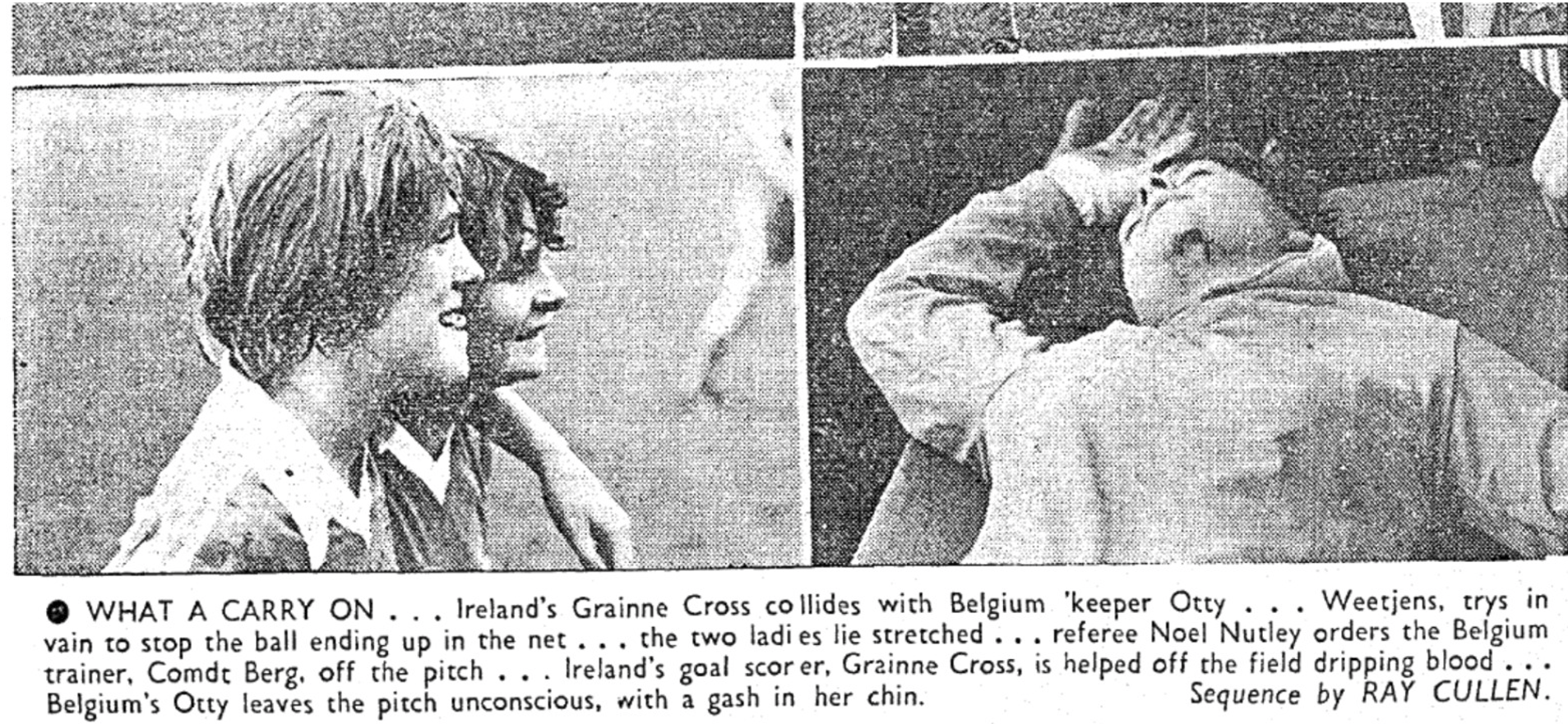

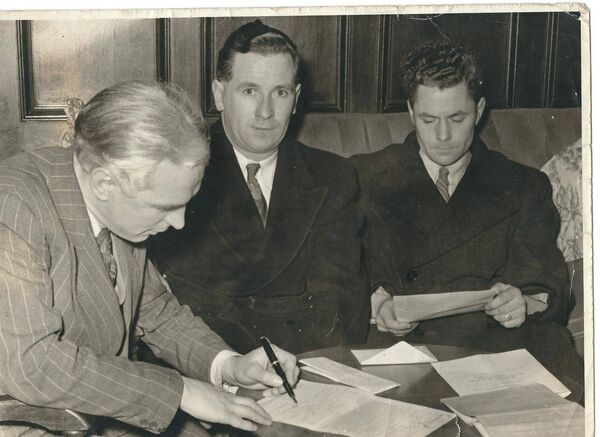
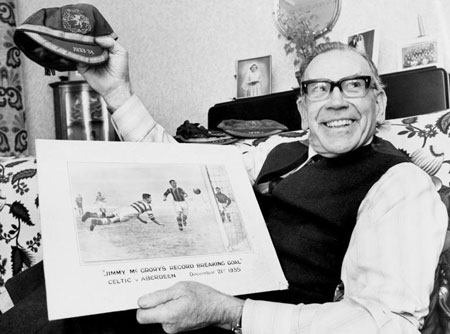
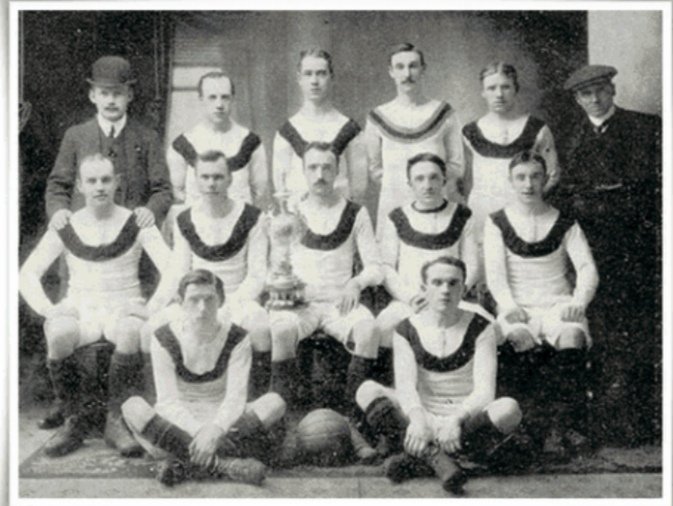
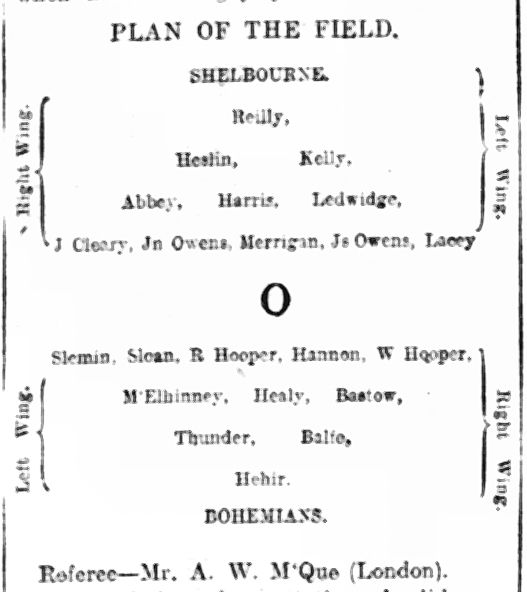


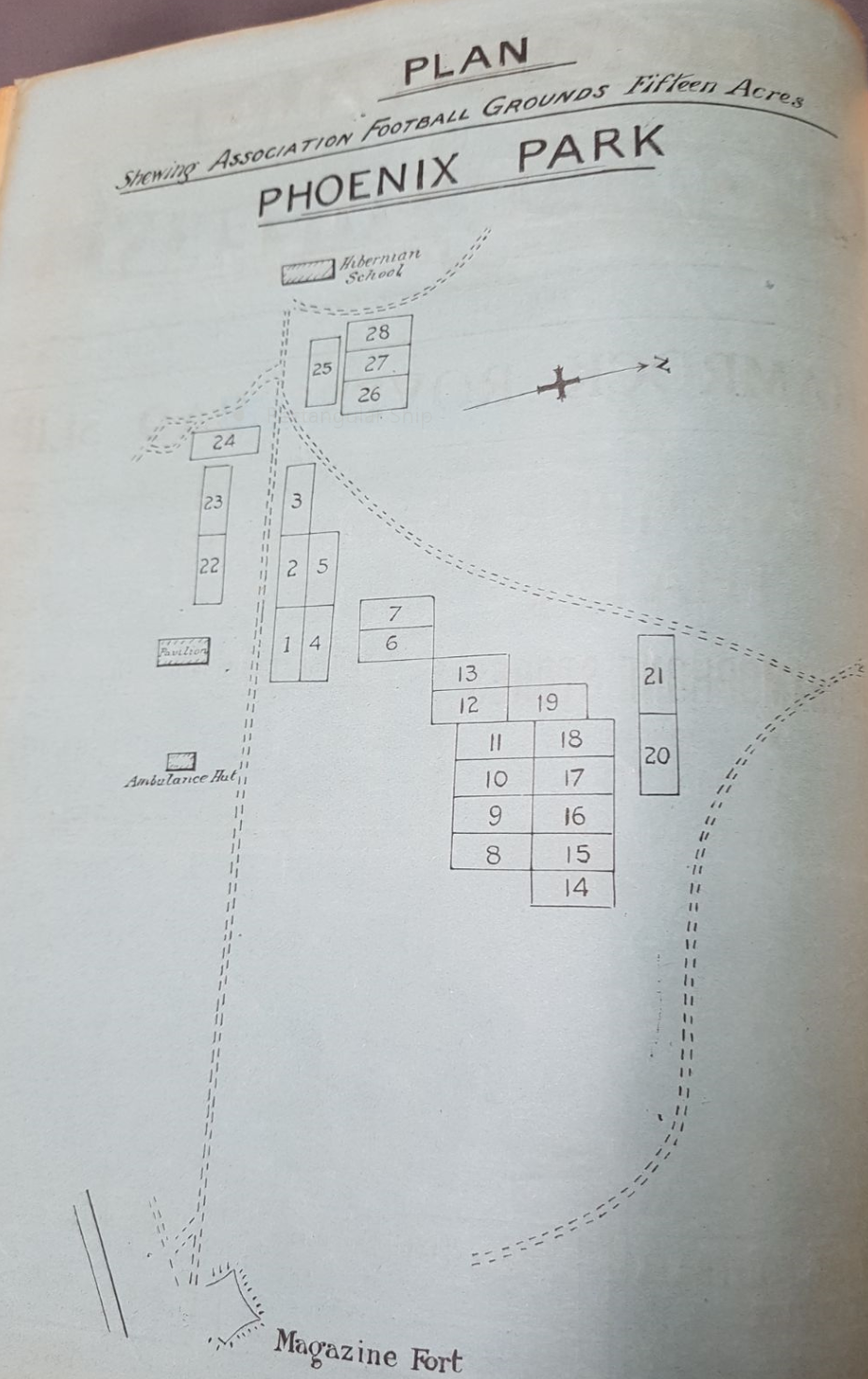

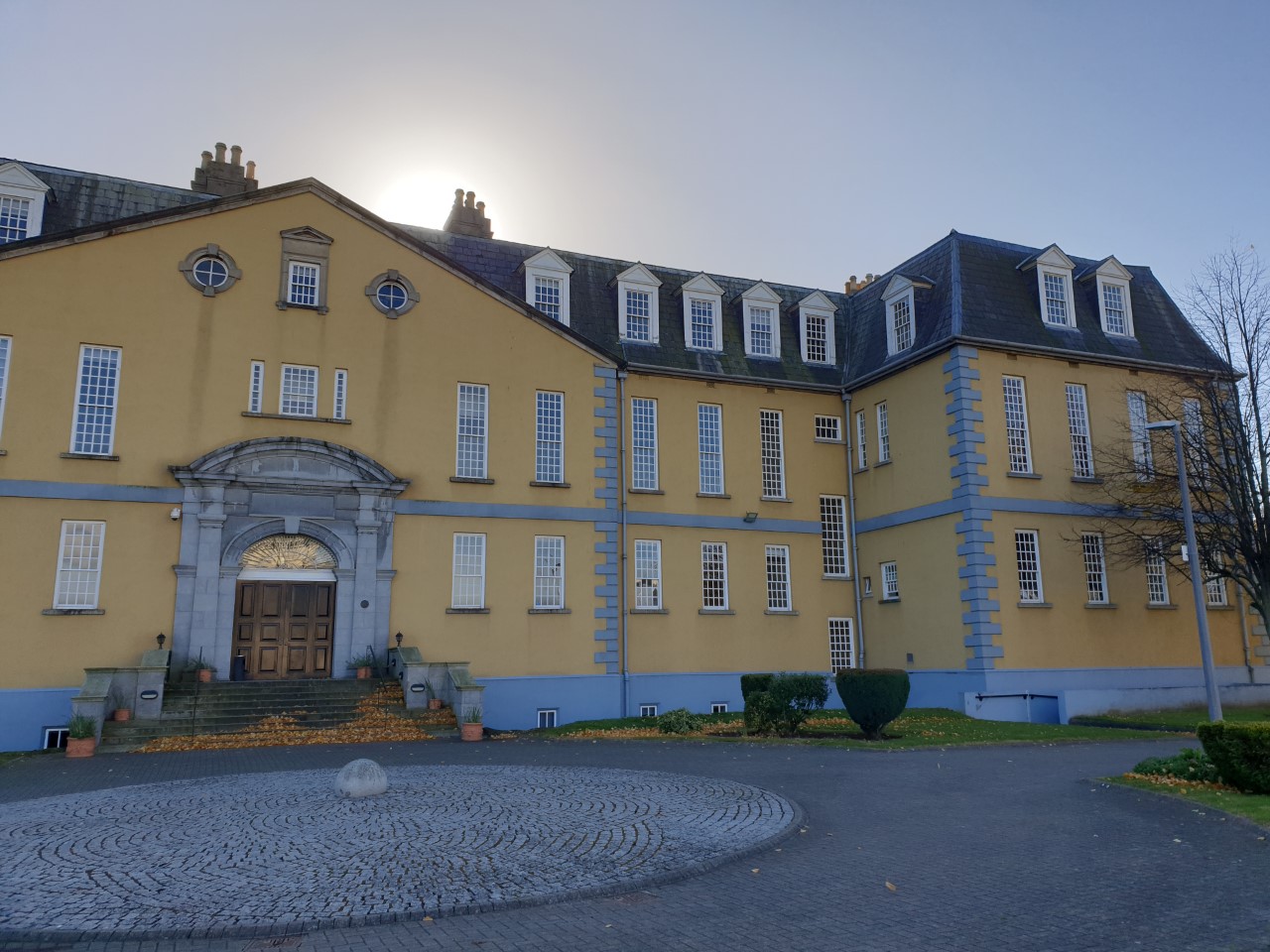


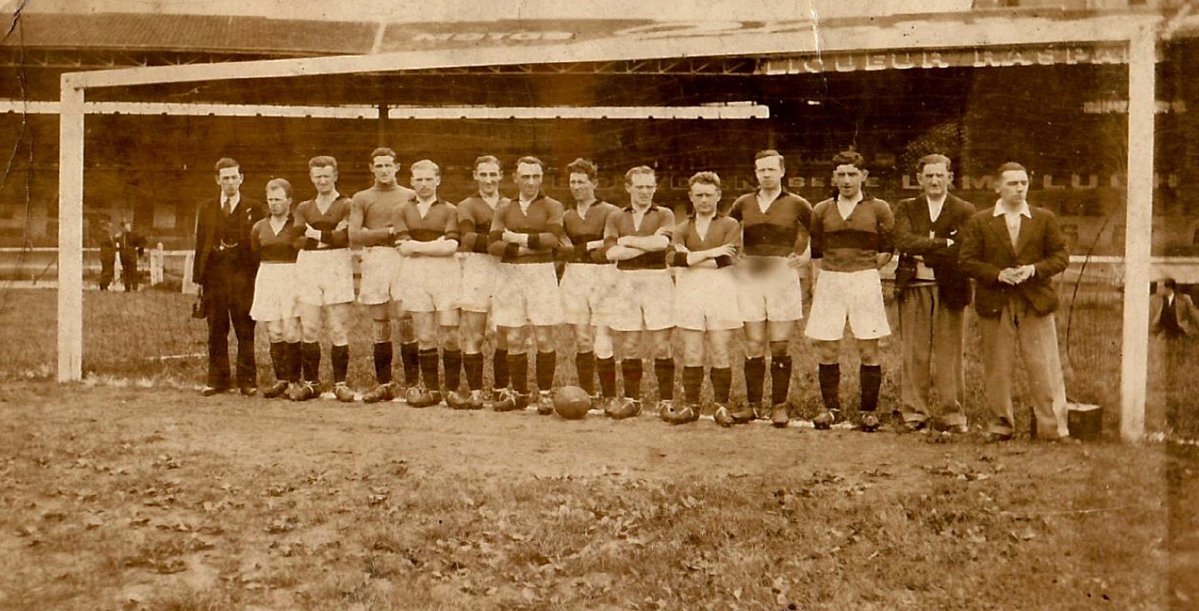


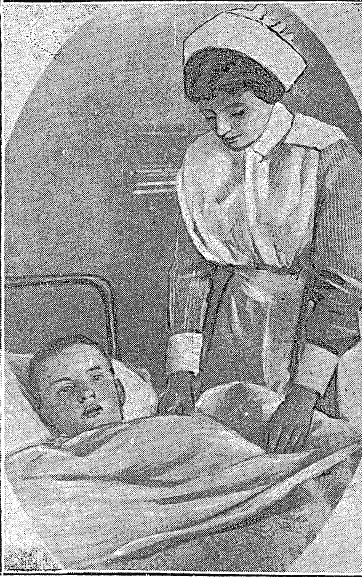
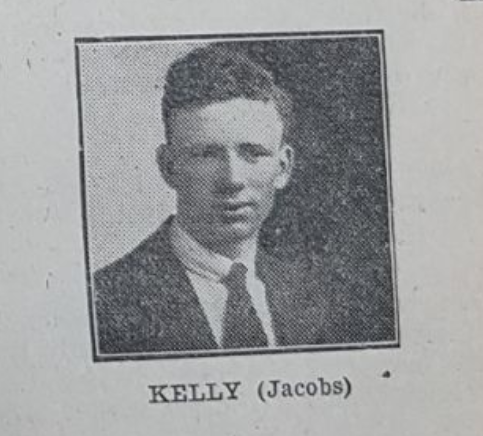
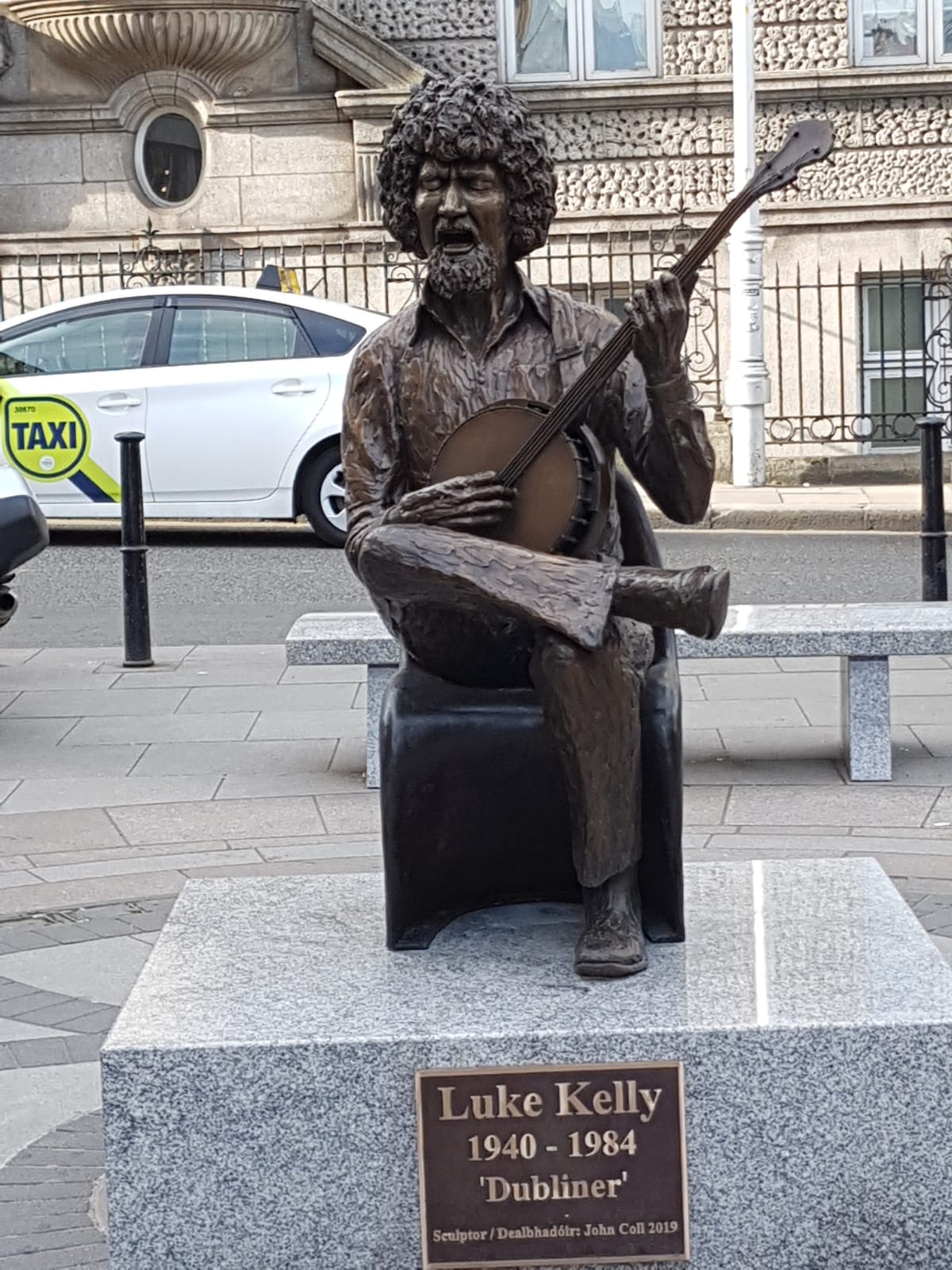

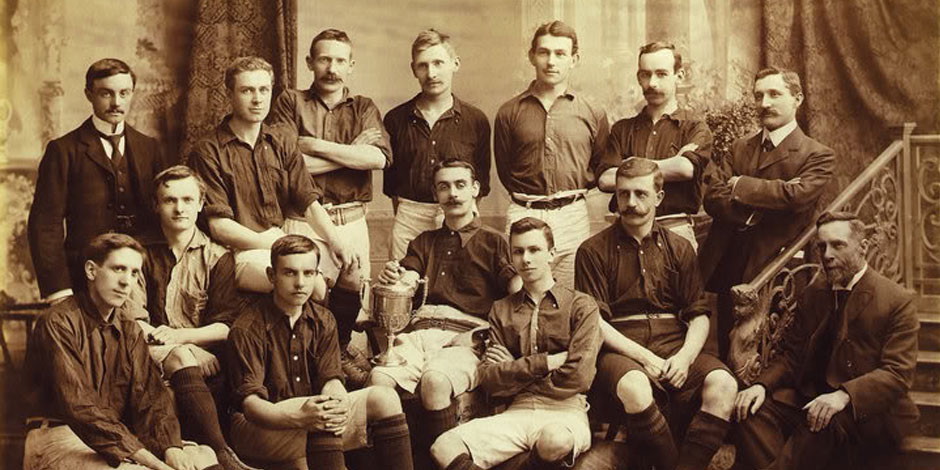


 A Bohemian Sporting Life