The O’Sullivan side – Part I

I’ve previously focused more in my genealogical inquiries on my father’s side of my family but there are plenty of stories and lore on my mother’s side as well. As outlined in earlier posts I do take great pleasure in a long Dublin heritage on my Dad’s side and there are plenty of Dub’s on my Mam’s side as well. This is just the first part of a longer series.

Family tree pic

Both my grandmother Carmel and grandfather Thomas were born in Dublin. Carmel was born in July of 1915 at number 5 Cowper Street near the North Circular Road. Thomas was born in March of that same year on St. Agnes Terrace in Crumlin. Thomas attended Belvedere College and upon leaving went to work in the New Ireland Assurance company as a 17 year old. Carmel attended St. Gabriel’s national school on Cowper Street and later worked in Pim’s department store on South Great George’s Street. The Pim family were Quaker business-people and their huge department store occupied the site that is now home to the Castle House office building, next to the George Nightclub. Carmel and Thomas were married on the 28th July 1941 in the Church of the Holy Family in Aughrim Street. At the time Nana was living around the corner at 24 Carnew Street while Thomas wasn’t too far away, north of the city this time, at 33 Swilly Road in Cabra.

Carnew Street

Carnew Street

Thomas’ parents were John and Ethel O’Sullivan. John was originally from Co. Cork, but we’ll come back him in a later post. Ethel was born Ethel Beahan in Ellen Villas, once a part of Emmet Road, in June of 1884. The family moved a number of times during her early life but stayed in the wider Inchicore/Kilmainham area. In the 1901 census the Beahan family were living at 10 Hawthorne Terrace (part of the Tyrconnell Road) before moving again to 3 St. Patrick’s Terrace, a terrace of fine red-brick, two-storey homes that survives to this day and is situated close to the Inchicore railway works. Ethel was resident in St. Patrick’s Terrace with her family at the time that she married John O’Sullivan in the Catholic Chapel of Goldenbridge in September of 1907.

The Beahan family home on St. Patrick’s Terrace, and their focus on the Kilmainham/Inchicore area was not by chance, Ethel’s father Thomas was employed in the Inchicore works as a clerk for the Great Southern Railways. Thomas had married Mary Meehan in October 1883. Mary Meehan (now Beahan) was a near neighbour of Thomas’s being only from down the road in Goldenbridge.

One thing that jumped out upon carrying out a little bit more research on Thomas Beahan was that unlike his wife, or his nine children who were all born in Dublin, Thomas the railway clerk was born in India. As a result it has been much harder to find information about Thomas’ early life but we know from his marriage cert that his father’s name was James and his profession was listed as a clerk.

What we know about James Beahan is that before he was a clerk he was a soldier in the British army, and it was while he was serving in India that that Thomas was born around 1857 though later documents such as the census of 1901 suggest the later date of 1859. We know from the British Army worldwide index of 1861 that James was stationed in Meerut, India which is about 70 kilometers northeast of New Dehli as part of the 8th King’s Royal Irish Hussars, a cavalry regiment.

By the time of Thomas’ birth in around 1857 James Beahan had already been in the British army for almost ten years.  Born in 1830 in the small village of Ballon, Co. Carlow he had joined the army as a 19 year old in 1849. This was still in the midst of the Great Famine and as James had listed his original profession as a Labourer, most likely a farm labourer, a stint in the Army would have offered decent pay and a chance for adventure as well as an escape from the horrors of the domestic situation in Ireland at the time. He joined up in Dublin and was initially he was part of the 6th Dragoon Guards, a cavalry regiment. In 1857 James was promoted to the rank of Corporal and in early 1861 he transferred regiments to join the 8th Hussars another cavalry regiment. By 1864 he had been promoted again to Sergeant and he remained at that rank and with the same regiment until he left the army in October of 1873.

James’s military records also provide us with some level of personal descriptive information, for instance we know he was 5′ 9″ in height with grey eyes and light brown hair. His commanding officer General John Charles Hope Gibsone stated that his character was “very good” and noted his attainment of good conduct stripes and a good conduct medal. In total he was in the British army for just over 24 years and served for 8 and half of those years abroad.

The 8 and a half years of service abroad consisted of a posting to the Crimean War with the 6th Dragoon Guards for a period of 11 months before spending almost 8 years serving in India. To try and put everything into the context of the geopolitical situation would take thousands of words but to summarise very briefly, the Crimean War began in late 1853 between an alliance that included Britain, France, the Ottoman Empire against the forces of Tsarist Russia. The War became famous, or perhaps better described as infamous, for it’s violence, the suffering of it’s soldiers and the foolish decisions of it’s generals. It also became associated in the popular imagination with a number if key events and figures. Florence Nightingale became a national hero in Britain for her commitment in nursing wounded soldiers, Leo Tolstoy was a soldier on the Russian side and his experiences directly impacted his literary works. Alfred Tennyson wrote his famous poem The Charge of the Light Brigade which commemorated the braveness or the British rank and file cavalry as well as the foolishness and incompetence of their leadership that became features of the war. The charge of the light brigade was an action that was part of the larger Battle of Balaclava, itself part of the wider Siege of the Crimean city of Sevastopol. The 8th Hussars were one of the cavalry regiments involved in the charge of the light brigade but James Beahan had yet to join that regiment.

However James was present during the Siege of Sevastopol with the 6th Dragoon Guards after they were transferred there in 1854. They would have had to endure horrific winter storms where many men and cavalry horses died of starvation and disease. Indeed starvation and disease killed far more men than the Russian guns. The Siege of the great port city continued all the way through to September 1855 with the final assault on the city being made by a force of around 60,000 men, the British forces were originally repulsed by the Russians but the French forces under the command of General MacMahon (a French descendant of an Irish lord who fled to France after the Williamite Wars of the late 17th Century) managed to break through, ultimately forcing the Russians to abandon Sevastopol.

The defeat at Sevastopol was the beginning of the end for the Russian forces who sought to make peace in March 1856. We know that James’s regiment the 6th Dragoon Guards were involved in the Crimean War and from his records we know that he received the Crimean Medal and that as well as serving at Sevastopol he was also stationed in Turkey for a period during the War.

James’s regiment was sent to India in 1857 as part of the British response to the India Mutiny which began in the city of Meerut in May of that year. There were many causes of the uprising which began among the Indian troops within the armed forces of the East India Company, but one of the main flash-points was around the use of grease manufactured from animal fats on the bullet casings of the ammunition provided to the Indian troops. Islam precludes the consumption of pigs while Hinduism precludes the consumption of beef, the bullet casings, which had to be bitten to get them to fit properly in the rifles were reported to be covered in the grease from the fat of both animals. Many Indian soldiers saw this as grave mark of disrespect to their respective religions.

The Indian Mutiny was hugely violent and led to the death of over 800,000 people by some estimates when events such as famine and disease caused by the violence are taken into consideration. The British response to the Mutiny was extremely ruthless, especially in retribution for the incidents such as the killing of civilians by the Indian mutineers during the Siege of Cawnpore. There are even descriptions of British troops tying captured Indian troops to the mouth of cannon before blowing them to pieces as a form of execution. The legacy of the Mutiny was that the British Crown took over the running of India as a colony, rather than as an area to be administered by the British East India Company. Violence wasn’t constrained just to combatants and the whole episode was marked by the deaths of many thousands of civilians.

James Beahan’s regiment saw little action during the India Mutiny but he pops up again in 1871 and then again in the year of his discharge (1873), as he plays a small role as a witness in one of the most infamous and controversial court cases of the 19th Century, a court case dubbed the Tichborne Affair by the press. The case centred around a man who claimed to be Sir Roger Tichborne, heir to the Tichborne baronetcy and family fortune, who disappeared and was presumed dead, only to return some twenty years later after a supposed shipwreck and a long interlude living in the Australian bush. Sir Roger Tichborne had been an officer in the 6th Dragoon Guards at the same time that James was serving. They had been stationed together in barracks in Tipperary.
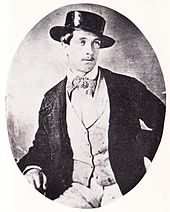
RogerTichborne

Roger Tichborne

Many doubted the identity of the claimant. It was assumed the real Roger Tichborne had perished when the ship he had been travelling on had capsized off the coast of South America in 1854, however, others, including Lady Tichborne were convinced that the man who arrived from Australia in 1866 was indeed her long, lost son. Lady Tichborne died in 1868 and the supposed Sir Roger outraged many of her descendants by claiming the position of chief mourner at her funeral.

A civil case began in 1871 (effectively to decide if the claimant was indeed Sir Roger) but fell apart soon after, with the claimant being gaoled in Newgate prison for perjury. A criminal case began in 1873. James testified in both these cases and was one of a number of witnesses who claimed that the claimant was indeed the Sir Roger Tichborne that they had known from years before in Ireland.

220px-Arthur_Orton_portrait_-_1872

Arthur Orton

All evidence seems to suggest that the claimant was in fact a man named Arthur Orton and that he had no connection to the Tichborne family, George Bernard Shaw, writing much later, highlighted a paradox whereby the Claimant was perceived simultaneously as a legitimate baronet and as a working-class man denied his legal rights by the elite. Whatever his true identity he had managed to convince James Beahan, his supposed mother, and the general public of his legitimacy as the heir to the Tichborne estates and titles. Arthur Orton (or was it really Roger Tichborne?) died in 1898, he was still infamous enough that 5,000 people attended his funeral. Such was the lasting impact of the case that a film on the subject was made in 1998 entitled The Tichborne Claimant featuring the likes of Stephen Fry and John Geilgud, though no actor is mentioned as playing the role of James Beahan.

James Beahan died two years later in 1900 at the age of 70 surrounded by his family in Dublin.


On the Farrell family

Last year amid all the ceremony that surrounded the centenary of the 1916 Rising I set about researching some of the family history around that hugely significant event. I did of course throw in a bit about politics, football and a few other things and the resulting effort can be found here. That article had tended to focus more on the Kieran family; the family of my grandmother and some of their connections to the town of Dundalk.

The post was well received and seemed to be of special interest to family members as it jogged some recollections of long dead aunts and uncles, of half forgotten stories and the other various myths and tales that are told in all families. I was however admonished for not focusing enough on the Farrell side of the clan, after all theirs was a story worthy of telling as well. I’ve duly started to compile some information on the Farrell side of the family from around the same period (turn of the 20th Century) and the results compiled below.

But first back to the Kieran family! In the previous post I touched on the lives of Thomas Kieran and Jane Brennan, my great-grandparents. Thomas as mentioned had been born in Dundalk around 1889 and worked as an engine fitter at the Great Northern Railroad in Dundalk before moving to Dublin where he continued working as an engineer for the railways. He married Jane Brennan of Dominick Street in late 1915. Jane was born around 1891 to Jane and John Brennan.

Tom and Jane lived at 27 Blessington Street in the north inner city. As mentioned in the previous post Tom had been involved with the Volunteers during the Rising in Dundalk and he maintained his republican interests while living in Dublin. On the evening of 16th December 1920, Tom was arrested at his residence in Blessington Street and the house was thoroughly searched for weapons though none were found. The arresting officer was one Lieutenant Percy Gerald Humfrey, who noted that upon being arrested Tom said nothing at all.

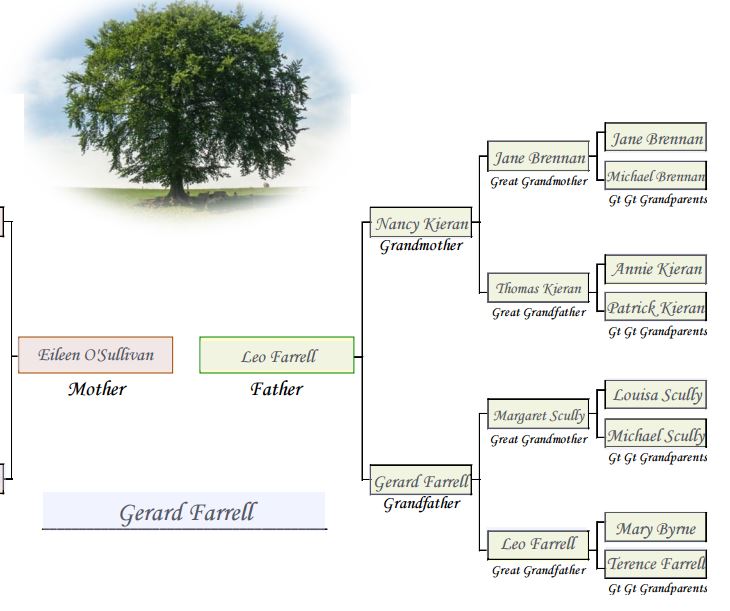
He wasn’t the only family member to be arrested around this time as I discovered tracing back the Farrell line. For reference here’s the basic family tree below because this can get a little complicated.

screencap-family-tree

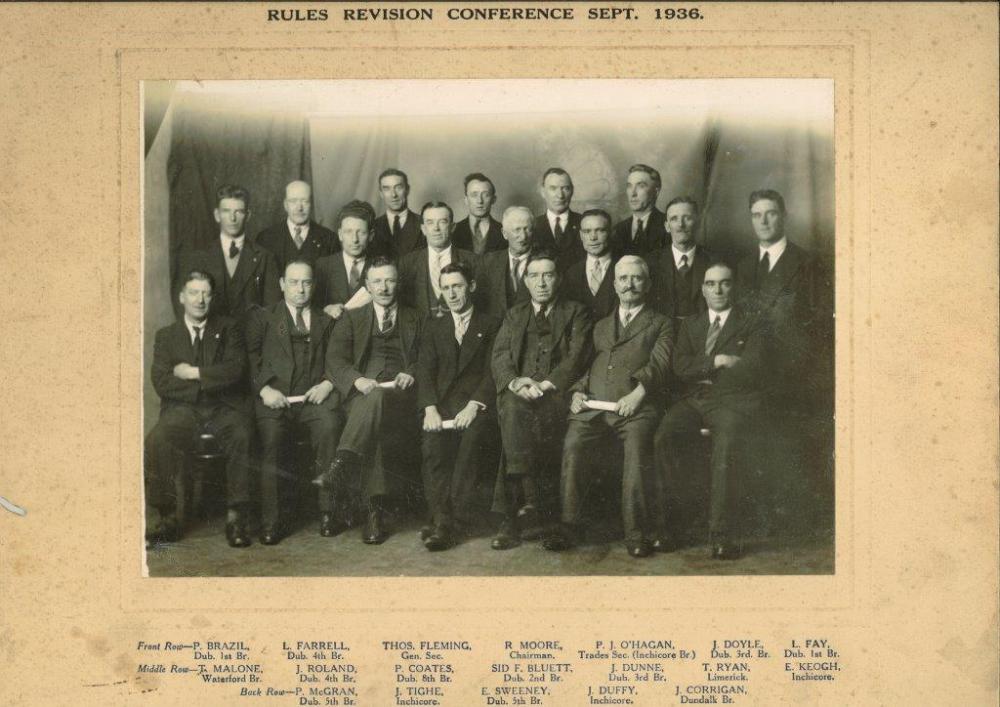
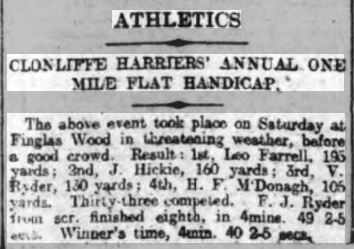
Let’s being with my great-grandfather Leo Farrell (who my Da is named after), he was born in early 1893, one of eight children that survived (there were ten born in total) to Terence Bellew McManus Farrell and Mary Farrell (nee Byrne). Leo was a railway engineer who worked in the CIE yards in Inchicore and was also an active Trade Union member with the Irish Engineering and Foundry Workers Union among others. He was also quite an athlete in his younger days, he was a member of Clonliffe Harriers running club. I’ve recently found a reference to Leo winning a one-mile race for Clonliffe Harriers back in 1911 when he would have been around 18. There is a short report on the race from the Dublin Daily Express (below) showing Leo comfortably finishing the race in a sub 5 minute time. My Dad remembered him as a kind and generous man, who despite his athletic past was short and rotund with a big appetite.

Irish Engineering & Foundry Union Rules Revision Conference 1936 Leo Farrell

Irish Engineering & Foundry Union Rules Revision Conference 1936 – Leo Farrell is in the front row second from the left. Photo provided to me by the TEEU.

Leo runs a mile- Dublin Daily Express 06.11.11

Report in the Dublin Daily Express from 6th November 1911

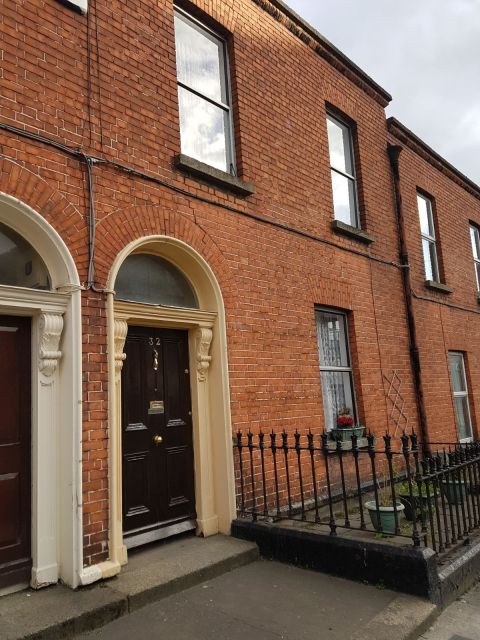
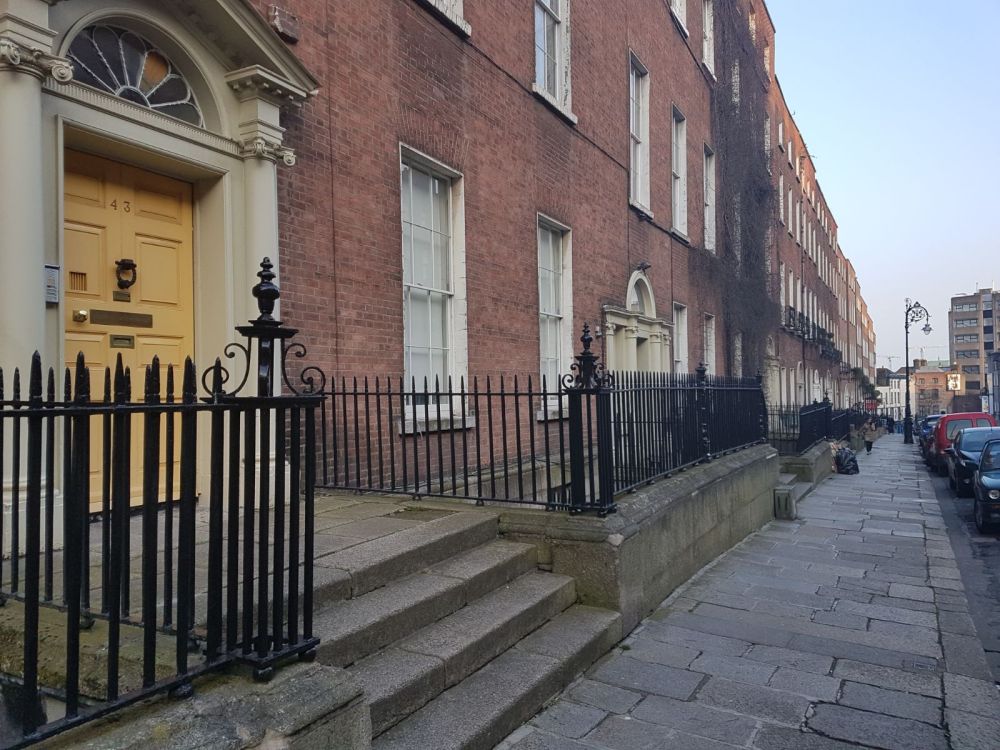
Leo’s younger brother Terence Patrick Farrell was born in late 1898. The younger Terence is quite an interesting character and it was he who was also arrested in December 1920, the same time as Thomas Kieran and from very close by too. Terence had grown up in the family home on Anne Street North, just off the city’s north quays near to the markets area however, the family later moved to 32 Mountjoy Street, just around the corner from Blessington Street where the Kieran’s lived.

32 Mountjoy St

32 Mountjoy Street as it appears today.

Terence became involved with the Republic movement even before the Rising, while still a teenager he joined Fianna Eireann and turned up at Jacob’s biscuit factory as part of E company of the 2nd Battalion of the Dublin Brigade during Easter week. However, he was only there for a few hours before being sent home due to his age (he could only have been 17 at the latest).

Terence rejoined E company of the 2nd Battalion in early 1917 and attended the various parades and drills required of an IRA member. By 1919 he had undertaken a first aid training course and was performing training classes for Cumann na mBan members once or twice a week in Finglas as well as in Summer Street just off Mountjoy Square.

Later in 1920 Terence was involved in an aborted rescue attempt for the recently arrested Kevin Barry. Interestingly Terence noted that it was a cousin of his (a family story was that this was his cousin Rosie McGrane who smuggled Terence’s revolver out of 32 Mountjoy Square when he was arrested so it may she may have also been involved with the Republican movement) who mobilised him for a the rescue attempt. He was armed with a gun and grenades and stationed at North Great George’s Street in what would have been a last-ditch, desperate attempt to liberate Barry from Mountjoy prison. Due to the large crowds gathering outside the prison and the growing number of military personnel that were stationed there it was decided due to the expected carnage that would ensue that the rescue attempt would have to be called off. Kevin Barry was later executed by hanging.

42 North Great Georges St

A view from the spot on North Great George’s Street where Terence was stationed for the Kevin Barry rescue attempt

Undoubtedly the most significant incident in which Terence was involved was his role during Bloody Sunday, 21st November 1920. He was one of the lookouts at the 22 Lower Mount Street where Lieutenant Henry James Angliss and Lieutenant Charles Peel were residing. Angliss, who was going by the code name Peter Mahon/McMahon, was a particular target due to his involvement in the murder of Sinn Fein Councillor John Lynch at the Exchange Hotel on Parliament Street in September 1920.

While Angliss was killed on Bloody Sunday, Peel managed to escape a similar fate by barricading himself in his room. Terence was keeping guard in the hall when some passing Auxiliaries were alerted by the screams of the housemaids, the Volunteers tried to escape from the back of the house but came under fire and they had to fight their way out through the front. Terence was armed with a pair of revolvers and helped cover the group, expending all his ammunition as the rest of the party made their escape up Grattan Street, helping the injured Volunteer Denis Begley to escaper with him. In a letter written years later supporting Terence’s military pension application Begley stated that Terence by his

action in entering the house to give the alarm at Lower Mount St. on that morning, is, I think, worthy of great commendation, being carried out under fire from the “Auxiliaries”, and was the means, no doubt, of saving the lives of the party of of eight Volunteers who were inside the house.

There is a wider account of the assassination here. Terence continued in other activities including the armed raid of the SS Clarecastle, a Guinness ship that was being used to transport weapons. The volunteers were successful in seizing arms from the ship. This must have occurred some time in 1918/1919 when many of the Guinness ships were under the control of the Royal Navy who had commandeered them after the outbreak of World War I, only returning them to the brewery in 1919.

SS Clarecastle

A view of the SS Clarecastle in front of Custom House Quay. Photo kindly provided by the Guinness Archives

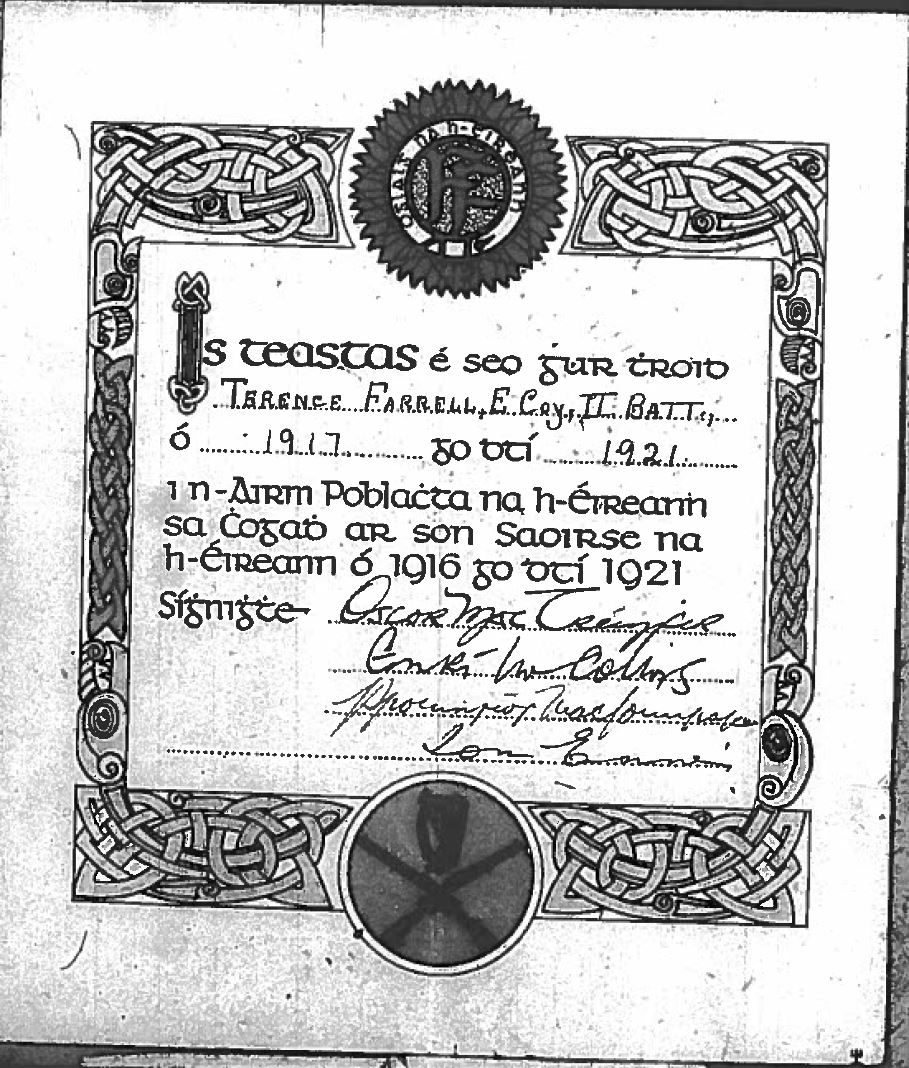
Terence was arrested in early December 1920 at the family home at 32 Mountjoy Street. He was held in Ballykinlar, Co. Down, an army base turning internment camp, and was not released until December 1921. Terence’s autograph book which he kept during his imprisonment is held in the National Library’s microfilm collection.

terence-ira-membership

Certificate showing Terence’s membership of the IRA, signed by Oscar Traynor

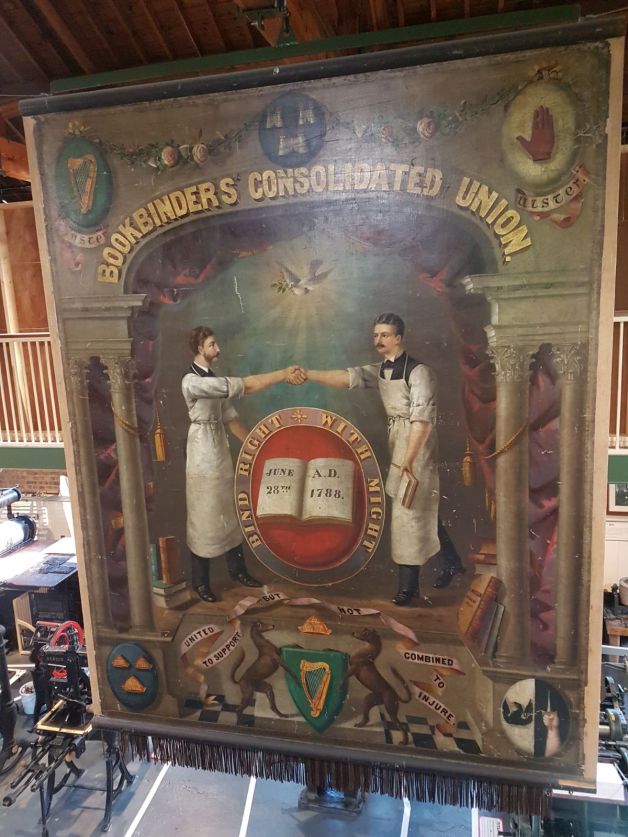
After his release he had a varied and full existence. He was heavily involved in the Trade Union movement. Terence like his father Terence Snr. was a bookbinder by trade and he soon became head of the bookbinders Union. Through his leadership of the bookbinders union he became more prominent in the Trade Union movement, later becoming the last President of the Congress of Irish Unions (CIU), one of the main Trade Union confederations before their amalgamation which led to the creation of ICTU. Terence represented the CIU at the 1958 International Labour Conference in Geneva where he spoke about the importance “educational activity in the field of labour – management relations”, Terence remained active with ICTU and was one of the party who attended the new organisation’s first meeting with then Taoiseach Sean Lemass. Among his other work was a role representing the Trade Union movement on a government committee set up to advise on the establishment of a national television station in 1958, two years before RTE Television was established.

Banner

The banner of the Bookbinders Union made in 1887 and no doubt very familiar to Terence O’Farrell who led the Union and his father who was also a member. The banner is displayed in the Irish Print Museum.

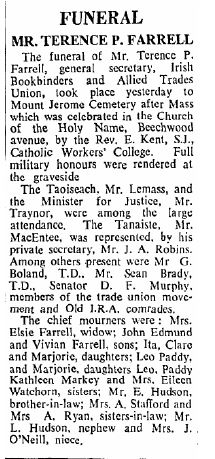
Terence didn’t live quite long enough to see the first television broadcast of the new station on New Year’s Eve 1961, he had passed away in February of that year. The chief mourners at the funeral were his wife Elsie and and his six children. His brothers and sisters were also in attendance as were Taoiseach Sean Lemass and Minister for Justice Oscar Traynor who had known Terence from his days in the IRA. He was accorded full military honours at his funeral.

Terence funeral cap

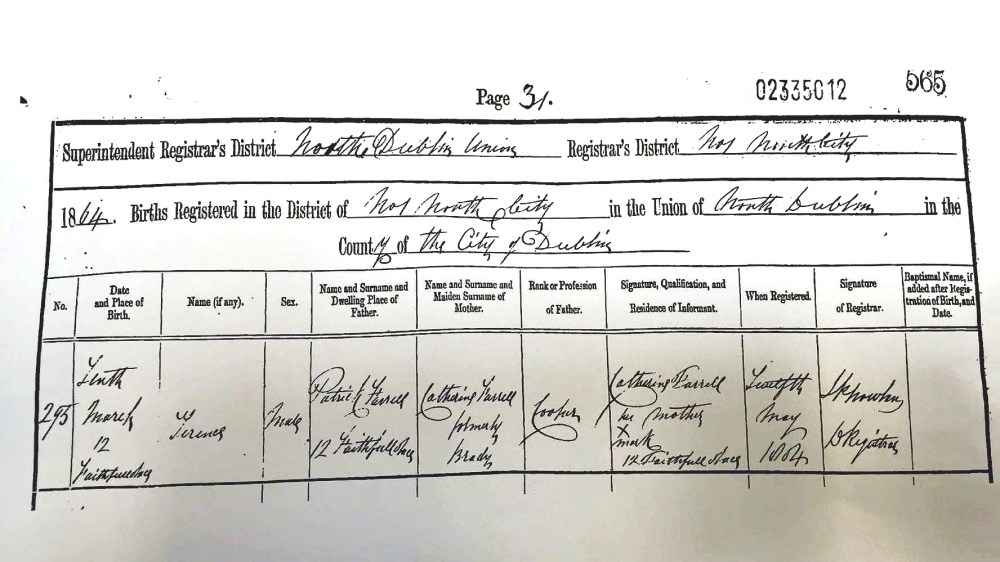
Terence’s father Terence Farrell Snr. who was briefly mentioned above was also a printer by trade which gives us a hint how the younger Terence ended up becoming general secretary of the bookbinders union. He was born in May 1864 in Faithful Place to Patrick and Catherine Farrell. Patrick was a wine barrel cooper while we don’t know if Catherine Farrell (nee Brady) had a job outside the home as this wasn’t recorded at the time.

Terence birthcert

Birth certificate of Terence Farrell Senior

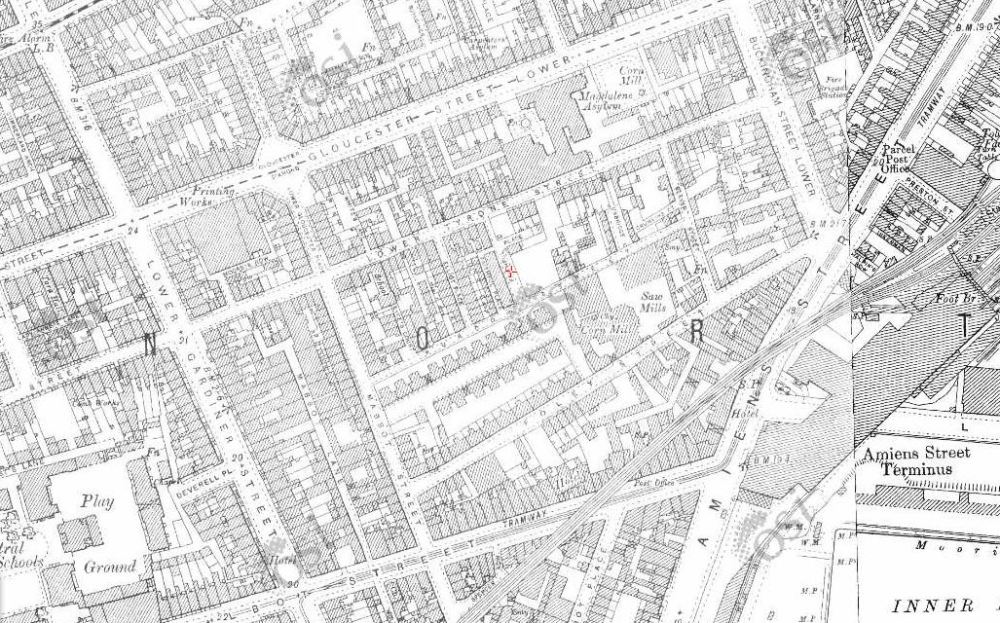
The area where Terence Snr. was born is mentioned as 12 Faithful Place which no longer exists today. However in 1864 it was located in a the area marked by the red “x” in the centre of the map below on an area now just off Railway Street currently by City Council social housing complexes.

Faithful place map

Map of the area around Faithful Place. Lower Gardiner Street is visible to the left.

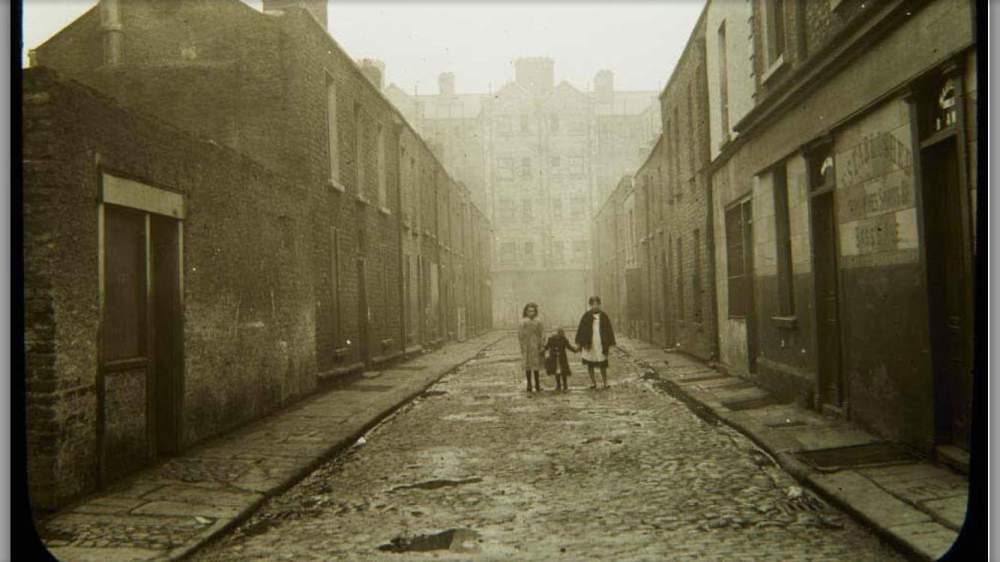
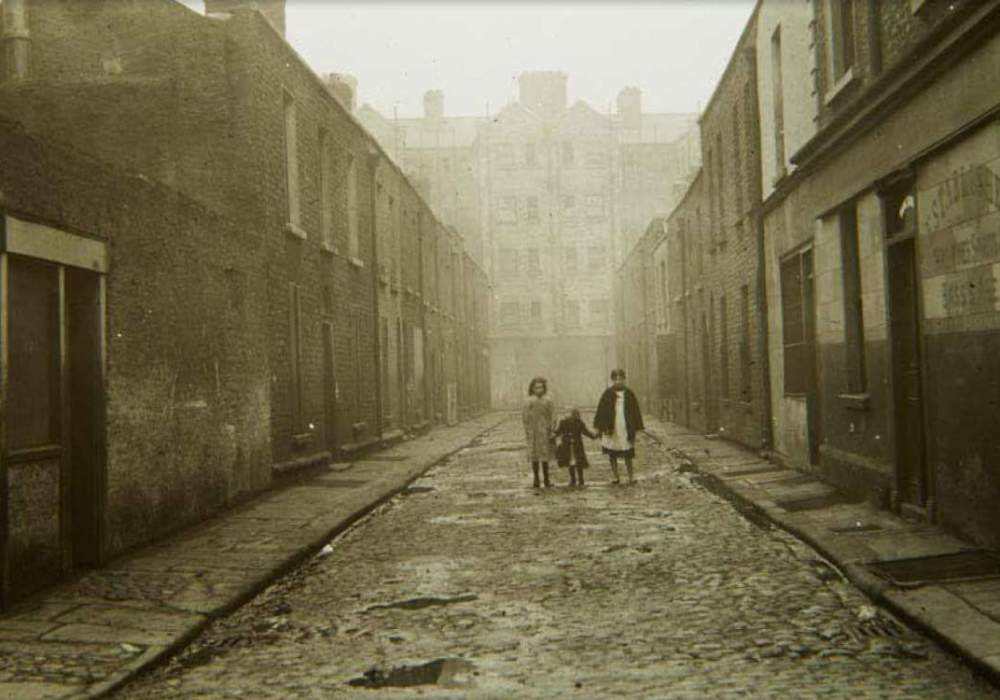
By the end of the 19th Century this area had become synonymous with vice and prostitution, it was the infamous “Monto” area, named after nearby Montgomery Street (now Foley Street), and was the “Night Town” of James Joyce’s Ulysses, however, around the time of Terence’s birth it had not quite become the red light district of the city, only becoming a focal point from the 1870’s onwards. While perhaps not as infamous as it would later become it was a far from wealthy area, the photo below shows the condition of Faithful Place in 1913. While the area had originally been developed by the Gardiner family who had laid out and developed Mountjoy Square as one of Dublin’s finest addresses the area had declined in the early decades of the 19th century leading to the once opulent Georgian houses becoming tenements for the city’s struggling working classes.

Faithful Place - Monto

Faithful Place in 1913 (source http://www.census.nationalarchives.ie)

While Terence would go on to have a certain distant connection to the literary world of Dublin as he worked as a bookbinder but we know less of his parents Patrick and Catherine Farrell, they seem to have been married in April of 1843 in St. Andrew’s Church on Westland Row. Their fate is a little less certain so if anyone comes across any other information on them please let me know.

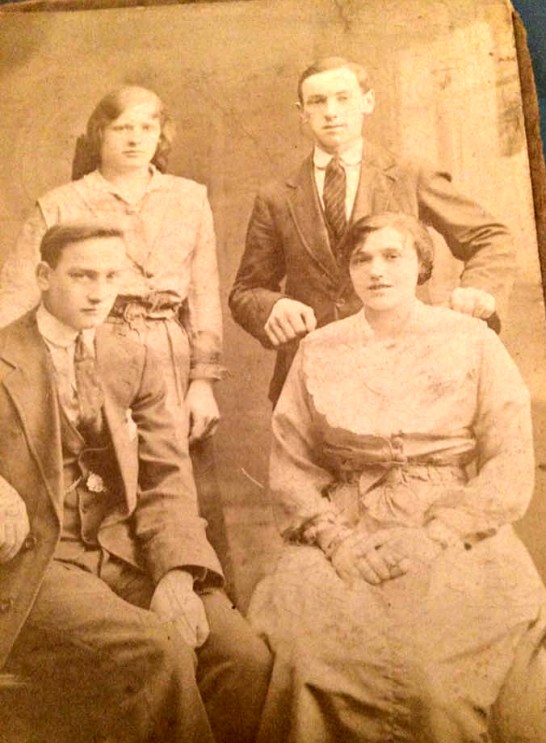
I’d like to finish with a little bit on the Scully side of the family. Leo Farrell married Margaret Scully in 1916. Leo would have been 23 at this stage while Margaret would have been about 20 years old. Margaret was the daughter of Louisa and Michael Scully who lived in rooms in 70 Benburb Street in Dublin 7. Michael was born around 1869 and was listed as a general labourer. He died at the young age of only 30 on St. Stephen’s Day 1899 with the cause of death listed as pneumonia and heart failure, only two months earlier they had registered the birth of their baby daughter, also named Louisa. In the 1901 census Louisa Scully (nee Gavigan) had moved a short distance from Benburb Street, across the river to nearby Watling Street. She had been a widow almost two years by that stage and worked as a laundress supporting her four daughters; Mary Ellen 15, Bridget 12, Margaret 7, and baby Louisa not yet 2.

Farrells & Scullys

Seated in front, Leo Farrell & Margaret Scully on their wedding day in August 1916. At the rear is Margaret’s sister Louisa Scully (aka Francie) and Terence Farrell. Thanks to my cousin Lisa Taylor for the photo.

Although Louisa could neither read nor write she was listed on the 1901 census as being able to speak both English and Irish, her place of birth was listed as Kildare. Recently, I was shown a copy of her baptism cert and this lists her as being baptised in Celbridge, Co. Kildare in December of 1858. All her daughters were still in school and were literate. In the later 1911 census Margaret is the only daughter listed as being able to speak Irish as well as English, then in her later teens she was working as a shirt maker. This connection with the textile industries is something that was obviously passed on to her children, her older sister Bridget also listed her job as “ladies tailoring”, and there has long been a certain fashion and tailoring connection in the family.

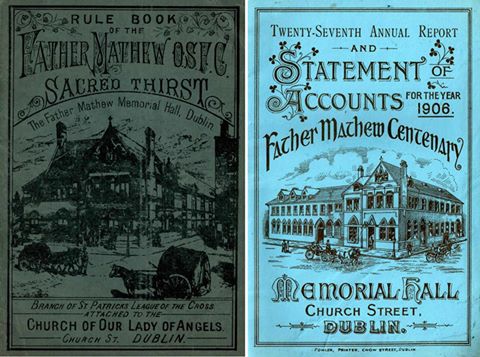
While in the 1901 census the family were all listed as Roman Catholic by 1911 all or Louisa’s daughters listed under the religion heading their devotion to the Roman Catholic sodality of the Sacred Thirst. This was part of the wider temperance movement at the time and was based in Father Matthew Hall on Church Street, the family were at this time living nearby at 144 North King Street. There was widespread interest in these Church led campaigns against drinking beginning in the 1880’s, especially in the working class communities of Dublin. There is some more information about the hall and the sodality here. I have wondered whether the death of their father Michael at the age of 30 might have had an impact on the girls and their devotion to the temperance movement. Deaths listed as pneumonia and heart disease (Michael’s listed cause of death) were often the result of alcohol abuse, might this be have been the root cause for their devotion?

Sacred Thirst Margaret Scully

Publications by the Sacred Thirst sodality based in Fr. Mathew Hall on Church Street.

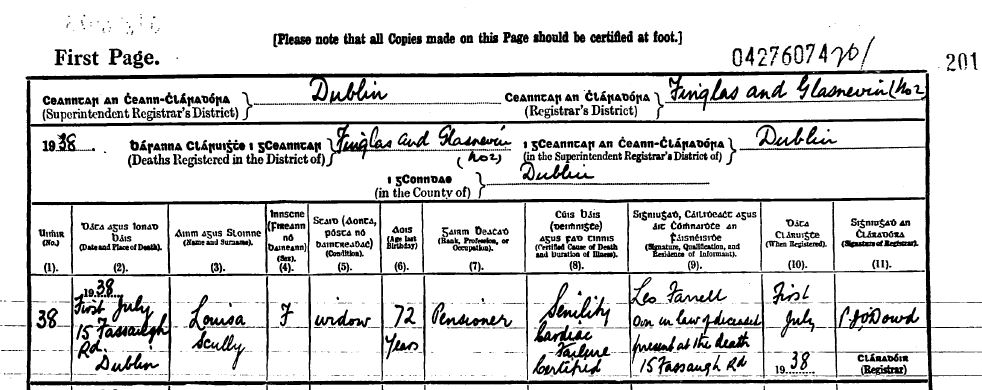
I’m ending this particular chapter of the familial research in a familiar address, 15 Fassaugh Road. A location known to all the family, it was where Louisa Scully Sr. passed away on the 1st of July 1938. She was 72 years old and had at that stage been a widow for more than 40 years. Her causes of death were listed as senility and cardiac arrest, with the witness on her death certificate being her son-in-law Leo.

dc

As with any family history there is always more to be told. Please let me know if I’ve missed out on anything, it certainly won’t be the end of my research. A big thank you to my second cousin, once removed Helen Farrell for all her assistance, her existing research has opened a lot of doors for me. Anyway I’m proud to be a ninth generation Dubliner, who knows what else we’ll find!