A great distance separates the Pacific coast of South America with the more modest expanse of Dublin Bay yet it connects the lives, and the deaths of two former football teammates who died within months of each other more than 100 years ago.
I came across the premature demise of these two Shamrock Rovers players while doing some research on an upcoming piece focusing on the development of the great rivalry between Bohemian F.C. and Shamrock Rovers when I started looking at the earliest recorded meeting between the two sides over 100 years ago in January 1915. As often happens with such investigations I got sidetracked down a different path and onto a tragic tangent of the lives and deaths of James Sims and William Skinner in 1914-15.
William was born in 1880 and grew up in Thomas Street in Ringsend, a street which has since disappeared and which is now roughly occupied by the Ringsend Library. He was son to Laurence, a Dublin born labourer and Lizzie a housewife originally from Co. Wexford. Lizzie gave birth to 14 children during her lifetime but sadly just six of them would survive beyond childhood.
William was listed as a labourer in the 1901 census but just two years later when he was getting married to Catherine (Kate) McDonnell, who also grew up on Thomas Street, he listed his profession as a “sailor on a Man of War”. William had obviously joined the Royal Navy by this stage. When we next encounter William it is in the 1911 Census and he is back in civilian life working as a Hailing Man in Dublin Port and had moved just north of the River Liffey to Russell Avenue in East Wall. He had also become a father to two children; Laurence, born in 1907 and Mary born in 1909. By 1913 the family had moved once more this time to St. Joseph’s Square in Clontarf. This perhaps shows improving fortunes for the family, moving from a smaller, single-storey cottage, to a two storey, terrace in Clontarf.
1914 would be a year of significant change both globally and locally. July saw the outbreak of the First World War. More locally Shamrock Rovers reformed at a meeting in Sam Beatty’s barber shop in Bridge Street, Ringsend, some eight years after they had folded and withdrawn from the Leinster Senior and Junior League due to difficulties securing both a home ground and sufficient player numbers.
In 1914 William and his younger brother James would be listed as Rovers players, William was described as “a very useful forward” while James was mentioned as “a reliable forward with an accurate and speedy shot”. However, 1914 would also see William return to the Royal Navy. He immediately re-enlisted once war was declared.
William’s war was not going to be a long one, at 34 at the time of enlistment and with his previous experience in mind he was already somewhat of a veteran. He was posted aboard the HMS Good Hope. In August 1914 the Good Hope was ordered to reinforce the 4th Cruiser Squadron and became the flagship of Rear Admiral Christopher Cradock. In October the British learned from intercepted radio messages that the Germans planned to attack shipping on the trade routes along the west coast of South America. Cradock’s small squadron was sent to prevent this from happening. On the 1st November 1914 the German Vice Admiral Graf Maximilian von Spee, commander of the East Asia Squadron, identified the light cruiser HMS Glasgow, (part of the British Squadron under Cradock) at the Chilean port of Coronel and pursued the ship in order to engage it. The ensuing encounter was one of the first major naval battles of the War and became known as the Battle of Coronel.
The German squadron of armoured cruisers, SMS Scharnhorst and Gneisenau and the light cruisers SMS Dresden, Leipzig and Nürnberg engaged Cradock’s squadron with the Good Hope as the flagship after its initial pursuit of the HMS Glasgow. The Scharnhorst hit the Good Hope with one of its early salvos causing severe damage. Cradock’s ship was at a disadvantage to the Germans in terms of the range of their guns so his only available tactic was to head directly for the German squadron in order to get them in range by charging down their flagship. The Germans concentrated their fire on the Good Hope and at close to 8pm that night, with much of the ship aflame, their forward ammunition magazine exploded. The force of the blast severed the ship in two and it sank in the darkness. The Good Hope (along with the HMS Monmouth) was sunk with all hands in the chill waters of the ironically named Pacific Ocean. It was the first defeat the British Royal Navy had suffered in combat in more than a hundred years. A total of 919 officers and enlisted men lost their lives including Able Seaman William Skinner from Ringsend.
A year later William’s younger brother James joined the Army Service Corps as a driver. He had been certified as a “Chauffeur” by the Irish Automobile Club and saw action in Egypt and Greece, ended up contracting Malaria, surviving, and being sent to London to work as a driver at the munitions docks at Woolwich before being eventually discharged in 1919.
The HMS Good Hope (source wikipedia)
Much closer to home is the story is that of James Sims, highlighted in the photo above. Born in 1892 in Ringsend, James became a star midfielder with Rovers after their re-emergence in 1914. He was the centre-half in the side that had defeated Derry Swifts 1-0 in the final of the Irish Junior Cup in April of 1915. Sims was not part of that first Rovers side that took on Bohemians in the first of those great derby games (Bohs won 3-1 by the way) in January 1915, but he appeared regularly in team line-ups from February of that year onward.
In August of 1915 at a meeting of the Leinster Senior League Shamrock Rovers were elected to the top division, unlike the situation in 1906 the revived Rovers were better equipped this time to fulfill their fixtures. They played a warm-up match against neighbours Shelbourne on August 28th, James Sims started that game at centre half. Their first Senior League fixture was a game against Strandville on September 18th followed by a League match against Bohemians the week after. Just eight days before the League kicked off James Sims was dead.
Like many men in Ringsend at the time, given its close proximity to the city docks James “Sailor” Sims made his living as a hobbler and occasional fisherman. Hobblers were intrepid, entrepreneurial sailors who set off in groups of between 3 and 6 men in lightweight skiffs or hobbling boats. The purpose of these boats was twofold, to lead cargo vessels into Dublin Port and to be the boat that unloaded the incoming vessels onto the quays.
“Hobbling” was a very competitive business, the small, lightweight boats could be out for hours or even days in attempts to get a ship coming into port. When a ship was spotted it was a rush between the different hobbling boats to get to it first and agree a price with the ship for their services. Hobbling was also dangerous work, as well as the usual dangers of being at sea, the small lightweight boats were trying to load large cargo at sea from winches and cranes, a mistake could mean a severed limb or a capsized boat.
At five in the morning on the 10th of September 1915 James Sims was in a hobble boat with John Lawless (who owned the boat) and John Lynch about two and a half miles beyond Poolbeg Lighthouse when they spotted a steamer coming into port. It was the Huanchaco, named after a Peruvian town, which plied a route from the west coast of South America, including the port of Coronel. It would likely have traveled much the same route as William Skinner’s final journey many times.
The exact details of what happened next to James Sims and his friends is not completely clear. It seems that the 390-foot Huanchaco, either refused their hobble, or were in discussions about a fee when the small skiff got caught in the backwash of the far larger ship. The result was that the smaller vessel got dragged behind the Huanchaco and into its huge propeller. The reports are thankfully more restrained than much modern reportage, but the smaller boat was cut in two, Lynch and Lawless were able to jump into the sea and then scramble back onto what was left of their craft before being rescued by a pilot boat led by a man named Michael Tallon and brought to the safety of Dun Laoghaire harbour. James Sims however was not so lucky, he,was struck by the propeller and killed outright. He met his gruesome end at just 23 years old.
Shamrock Rovers were due to play Orwell F.C. the following day but the game was called off as a mark of respect. At a specially convened meeting Shamrock Rovers issued a notice of condolence with the Sims family and there was a large, well-attended funeral for James in the Ringsend area.
Just two days after James had been killed the Huanchaco was involved in another accident leaving Dublin Port. The Huanchaco under the command of Captain Pierce crashed into the Irish Steam Packet company steamer the Lady Martin badly damaging its starboard bow. Two incidents in the space of three days seems to suggest either extreme bad luck or shows just how dangerous shipping could by at the time even away from the heat of battle.
In 1934 the practice of “hobbling” was finally prohibited although the modernisation of the port also played a part. The main catalyst for this decision was the death of three young men from Dun Laoghaire; brothers Henry and Richard Shortall and their friend John Hughes, all drowned when their boat capsized when they were attempting to hobble a boat into port. A decision that came some 20 years too late for James Sims.
These weren’t the only tragedies to affect Rovers at the time, the Great War dominated the decade, and as I’ve highlighted at other clubs like Bohemians and Shelbourne, claimed its fair share of young sportsmen. In Rovers case one of their early heroes from their beginnings at the turn of the century was full-back James Keogh. Like many he joined the Royal Dublin Fusiliers but never made it back from the battlefields of France.
These men left families and friends behind, they also never got to see the club they re-founded go on to enjoy success as Rovers progressed within ten years from Junior football to League and Cup champions.
For more on life in Dublin Port check out “The Dublin Docker” by Aileen O’Carroll and Don Burnett. Also a thank you to Rovers historian Robert Goggins for proof reading this piece.
The above photograph features my grandfather and namesake Gerard Farrell. Well at least I think it does, I’m fairly sure he’s the guy in the back row, fourth from the left, standing next to the goalkeeper. The photo was found as with wider Farrell and Taylor clans sat in a pub in Cabra looking through various albums and mementos that had belonged to my grand-aunt Betty whose funeral we’d just attended that morning.
A close look at the crest on the jersey seems to confirm it is the now defunct Saint Saviours football team who were based around the Dominick Street area of Dublin’s north inner city. The crest relates back to the Dominican order and the impressive Saint Saviours church and priory complex that remain on Dominick Street to this day. The most notable success of Saint Saviours F.C. was their winning of the FAI Junior Cup in 1959 although the team would fold only a few years later.
My father played for Saint Saviours under-age sides in the 50’s before moving to Drumcondra F.C. and later Bohemians. From talking to both my Dad and my auntie Betty I know that my grandfather Gerard Farrell also played for Saint Saviours and was by all accounts a prolific centre-forward for them. This would have been somewhere roughly between 1937 and 1940. This would have been the era when the photo was taken.
Last week was the first time I’ve ever seen this photo. I don’t know of any other family connections who would have resulted in this photo ended up among my aunt’s belongings. I’d love to find out more about the members of this team and confirm for definite that it is my grandfather in the back row but there are so few people left who would remember or recognise members of a local side from more than 70 years ago.
If anyone does know more about the Saint Saviours team from this era, or indeed recognise and Farrell’s in the photo please do get in touch.
Update – March 2018
My aunt passed on the above, even older photo. This is the St. Saviours team from the 1933-34 season complete with player names. This photo is from the Sodality Cup Final of 1933 played against Mountjoy Rangers. My grandfather, and namesake, Gerard Farrell was the team’s centre forward and he’s pictured in the middle row, second player from the left.
Also pictured in the back row wearing the shirt and tie on the very left is Matt O’Leary the team’s trainer, after whom the Matt O’Leary cup is named after. This competition is still played to this day in the Amateur football league in Dublin, the 2017 winners were Finglas United.
I’d love to hear more from anyone who has any other connections with those in the photo. Clearly visible is a Father Courtney, no doubt a priest in Dominick Street. Also part of the team appear to be a number of brothers, the Greers and the Ormsbys. If you know more please do get in touch.
Do we make a political statement when we as a society decide who to remember and who to forget, whose home or resting place is commemorated, and those who remained unmentioned? This is an argument as old as portraiture and statuary, but one that seems especially relevant today.
Beyond our shores, the ‘Rhodes must fall’ protest movement in South Africa, and more recently in Britain, has campaigned for the removal of statues depicting Cecil Rhodes, as part of a wider protest against institutional racial discrimination. Protests in the United States, especially in the south, have focused on the commemoration of Confederate icons of their Civil War. This has included groups calling for the removal of statues of figures such as Jefferson Davis, while also sparking some counter-protests from torch-wielding white supremacists. This has recently culminated in the outbreak of deadly violence in Charlottesville, Virginia due to the local government’s decision to remove a statue of the Confederate General and slave-owner Robert E. Lee.
In Ireland the contested nature of symbols and artwork has been especially prominent in recent years. The 12th of July commemorations by sections of the Unionist community in Northern Ireland continue to be a highly sensitive issue with occasional flashpoints, while last year saw the huge state commemoration of the 1916 Rising. While there seemed to be broad public support for the tone and content of the commemorations, they have not been immune from criticism. The commemorative wall in Glasnevin Cemetery which listed all the dead from the Rising, and included not just Irish Volunteers and civilians but also British soldiers, was vandalised with paint only a few months ago. Similarly, the statue of Irish Republican Sean Russell that stands in Fairview Park has been repeatedly been vandalised over the years by various groups, including its decapitation, due to his wartime links with Nazi Germany and indeed the Soviet Union.
These historic events and personages are marked either by significant commemorative events, like the 12th of July “festivities” with marches and bonfires, or by physical monuments, like the remembrance wall in Glasnevin, or the statue of Russell. There is also much to be said about the nature of a society in showing who is not commemorated in word, art or celebration. The Tuam babies story, of over 800 children buried in an unmarked grave in a former septic tank has dominated public discussion and forced the nation into uncomfortable reflection about our recent past. For decades, the remains of these babies and toddlers from the Sisters of the Bon Secours Mother and Baby Home in Tuam, Co. Galway, were disposed of as though they were detritus. It was only the work of local people, especially the meticulous research of amateur historian Catherine Corless that brought this story to national attention and meant that these deceased children could at least be remembered and perhaps suitably commemorated.
To try and consider all physical points of remembrance or indeed collective amnesia in a country, or even a city like Dublin would be a lifelong task, but living around Dublin 9 and having a particular interest I’ve decided to focus my modest talents on how our city commemorates something a little more trivial, though still important to many: its footballers.
Dublin has long been the hub for football in the Republic of Ireland, producing more international players than all other counties combined. Areas like Cabra or Ringsend could field full international XI’s out of players born in those suburbs alone. The city is also home to the main stadiums used for international matches, Lansdowne Road, which hosted its first football international in 1900, and Dalymount Park, home to Bohemian F.C. since 1901 and for many years the main home stadium for the Republic of Ireland national team after the FAI/IFA split in 1921. Other stadiums from the past and present such as Drumcondra’s Tolka Park and Glenmalure Park in Milltown also feature prominently in Irish football history. Yet the sport has also seemed controversial to some, viewed as an un-Irish, “garrison game” that was not truly representative of a post- independence Ireland. My focus is on who, and what, we as a supposedly football-loving city have chosen to commemorate.
Plaque build-up
From a quick examination, the commemoration of football in Dublin street signs and plaques is fairly limited to ex-Ireland internationals of prominence, or those sites associated with the creation of the most well-known city clubs.
In terms of playing personnel, there are three men commemorated publicly that I could find; John Giles, Liam Whelan, Patrick O’Connell and Oscar Traynor. Giles, who was the first of these to receive a commemorative plaque, is also the youngest and the only one still alive. His plaque is located in Ormond Square, Dublin 7, just off the city quays close to the house where he was born.
John Giles Irish International Footballer was born and raised in Ormond Square – Heroes come from here
The square of houses surrounds a playground area and, appropriately, the plaque is mounted on a low wall surrounding this space. It was unveiled in 2006 and the intention of the message seems to aim as inspiration for children living in this part of the city. It seems to suggest that if Johnny Giles could make it as an elite player for Manchester United and Leeds United, play for and manage Ireland, then the future should likewise be wide open for other children from this area.
Giles is of course something of a national institution, rightfully regarded as one of the country’s greatest ever players. He also managed Ireland for seven years, and later became known to successive generations due to his extended service as a newspaper, radio and television football pundit through the many highs and lows of the Irish national team.
Giles seems to still be held in affection by the vast majority of Irish football fans despite his playing or managerial involvement ending almost 40 years ago. As a player he was one of our most technically gifted and sought to encourage a more expansive style of play when Irish manager. He found success in England as a cup winner with Manchester United before his move to Leeds United, where he won two league titles, an FA Cup, League Cup and two Fairs/Uefa cups.
Not a great distance from either of the two spots in Dublin that John Giles called home stands a plaque to another ex-Manchester United star, Liam Whelan. The plaque in question is on the east side of a bridge that links Connaught Street across the old railway lines, now part of the extended Luas green route, to Fassaugh Road. The bridge has been known as Liam Whelan Bridge since an act of Dublin City Council gave it that name in 2006. It is a fitting location, as the bridge is just a few seconds walk from St. Attracta Road, where Liam was born.
While Liam was an exceptional player, a back to back league winner with the stylish Manchester United side of the mid-fifties, it is more his tragic death in the Munich air disaster at the tender age of 22 for which he is most remembered. Whelan made but 98 first team appearances for Manchester United and won only 4 four senior caps for Ireland, two of those appearances made in Dalymount Park, located just yards from the bridge that bears his name.
Then as now, Manchester United were a hugely popular team in Ireland. They had been captained to FA Cup glory in 1948 by Irish international Johnny Carey, and a year later 48,000 fans packed out Dalymount Park for a testimonial match for Bohemians’ legendary trainer Charlie Harris, between Bohemians and Man Utd .
The “Busby Babes” team were famed not just for their youth but for the appealing, attacking style of football they played. Liam had been their top scorer when they won their second consecutive title in the 1956-57 season, scoring 33 goals in all competitions. His loss, and that of his team-mates symbolised the unfulfilled potential of a group of young men cut down before even reaching their prime.
Patrick O’Connell plaque at 87 Fitzroy Avenue, Dublin
The most recently unveiled football related plaque in Dublin City is in remembrance of Patrick O’Connell. He was born in Dublin in 1887, growing up on Fitzroy Avenue in Drumcondra, just a stones throw from Croke Park. Patrick was a successful footballer for Belfast Celtic before moving across the Irish Sea with spells at Sheffield Wednesday, Hull City and Manchester United. He also made six appearances for the Irish national team and was a member of the victorious Home Nations Championship winning side of the 1913-14 season, Ireland’s first victory in the competition.
Despite a relatively successful and eventful playing career (captaining Manchester United, becoming embroiled in a betting scandal, winning the Home Nations), O’Connell is best remembered for his managerial achievements. He began his managerial career as player-manager with Ashington before moving to Spain in 1922. During more than 25 years in Spain he managed a host of clubs, including Racing Santander, Real Oviedo, Barcelona and both of the major Seville clubs; Real Betis and Sevilla. O’Connell even lead Betis to their sole league title in the 1934-35 season. Strangely, despite the influence of Irish players and managers in Britain, this success is more recent than the last time an Irish manager won the League in England, namely Belfast’s Bob Kyle with Sunderland in 1913.
O’Connell is revered as a hero in Betis for this championship victory, and is similarly lauded in Barcelona as the man who saved the club from going bankrupt during the tumult of the Spanish Civil War by arranging a series of lucrative foreign tours that kept both the club coffers full and the players out of harm’s way.
The tireless activities of O’Connell’s descendants and enthusiasts has meant that this previously forgotten footballing pioneer is now commemorated not only in Dublin but in Seville, Barcelona, Belfast and in London where he is buried. The efforts of this small group has seen television and radio documentaries commissioned as well as a biography being published. In this regard O’Connell is the 3rd Manchester United player commemorated in Dublin, but the only manager. His unique achievements in Spain and his crucial role in the history of Barcelona setting him apart in an Irish footballing context.
Oscar Traynor is probably better known as a Government Minister for Fiánna Fáil between 1936 and 1961 as well as for his significant role in the revolutionary movement. He was out in 1916, was a senior figure in the Dublin Brigade during the War of Independence and took the anti-treaty side in the Civil War. He was however also a footballer of some talent and a man whose love and interest in game continued throughout his life. The opening of his Bureau of Military History witness statement contains the wonderful lines:
I was connected with football up to that and I broke with football when I saw there was something serious pending.
Traynor’s connections with football included keeping goal for Dublin side Frankfort and most notably for the great Belfast Celtic. Traynor later became President of the FAI from 1948 until his death in 1963. In the 1920s he wrote a series of impassioned articles in Football Sports Weekly defending the sport from the charges that it was a “Garrison Game” or that those who played it were somehow less Irish. In these articles he references several figures of note in the Revolutionary movement who were also prominent soccer players.
In 2016, coinciding with the centenary of the Easter Rising the residents of the Woodlawn estate (just off Oscar Traynor road) were successful in getting a plaque dedicated to Traynor installed at the entrance to the housing estate where it was unveiled by Traynor’s grandnepthew Robbie Gilligan.
Plaque to Oscar Traynor – photo from the Twitter account of his grandnephew Robbie Gilligan
A thank you to Donal Fallon for bringing the Traynor plaque to my attention.
Moore to see!
The most recent plaque dedicated to a footballer in Dublin was unveiled in April 2021 on Clonliffe Avenue, just in the shadow of Croke Park and is dedicated to Paddy Moore. Though born on Buckingham Street in 1909, Moore grew up in the Ballybough neighbourhood and called this single-storey cottage his home.
Moore is most associated with Shamrock Rovers and the plaque records his unique achievement of scoring in three FAI Cup finals and emerging on the victorious side on each occasion. Though short and stocky Moore also had a habit of scoring important goals with his head but was most renowned for his skill and finishing ability. Joe O’Reilly, who played with Moore for both Ireland and Aberdeen had this to say of him.
He was a wonderful footballer, a wonderful personality. The George Best of his time… He was a very cute player. If, in a match, things weren’t going his way, he could produce the snap of genius to turn the match around – and he was always in the right spot. I had a good understanding with him.
The comparison with best in terms of skill and technique was sadly not the only similarity, both Best and Moore developed serious problems with alcohol, and in both cases their careers at elite level were over before the age of 30. Despite this in the space of only five years and a mere nine caps Moore made history for Ireland. He scored on his debut in a 1-1 draw with Spain in Barcelona, before he and O’Reilly scored in a 2-0 win over the Netherlands in 1932. After this match Moore, O’Reilly and Jimmy Daly were all signed by Aberdeen manager Paddy Travers where Moore was an immediate success, scoring 28 goals in 30 games in his opening season for the Scottish side.
However, the following season would be less successful. While Moore still scored a respectable 18 goals in 32 appearances his strike rate had decreased and he eventually ended up going AWOL after returning to Ireland for a match against Hungary in December 1934, blaming injury and a miscommunication with Aberdeen. It seems that Moore’s problematic relationship with alcohol was impacting his performances, to the point that manager Paddy Travers had effectively chaperoned him back to Dublin for an international match against Belgium earlier in 1934. Whatever Travers did seemed to work as Paddy Moore would score all four goals in a 4-4 draw in that game. That match was Ireland’s first ever World Cup qualification game. This historic feat is also recorded on the plaque.
Moore scored again that April in the next qualifier against the Netherlands to give Ireland a 2-1 lead, however the Dutch regrouped and emerged as 5-2 victors, ending Ireland’s hopes of qualification.
One of Moore’s last games for Ireland was in 1936 against Germany in Dalymount , where the German side gave the fascist salute Irish side ran out 5-2 winners with Oldham’s Tom Davis scoring a brace on his debut, and Paddy Moore, slower, less mobile, but still perhaps the most skillful player on the pitch pulling the strings from the unusual position for him of inside left and creating three of the five goals. The German coach Otto Nerz raved about Moore and felt that he was the player that his team could learn the most from.
This was something of an Indian Summer in Moore’s career (a strange thing to say about a man aged just 26), he was back at Rovers and was instrumental in helping the Hoops win the 1936 FAI Cup His last cap for Ireland was an unispiring display in a 3-2 defeat to Hungary two months later. Injury and Moore’s well-documented problems with alcohol had, not for the last time, derailed a hugely promising football career. He finished his Ireland career with nine caps and seven goals. There were later spells with Brideville and Shelbourne before a final ill-fated return to Shamrock Rovers. Paddy Moore, one of the most celebrated and skillful footballers of his era died in 1951 just weeks before his 42nd birthday.
Paddy Moore plaque
Paddy Moore’s house
Pubs, clubs and housing estates
Many League of Ireland fans understandably feel that our domestic game gets a raw deal in wider Irish society, and with the FAI and the Irish media in particular. John Delaney’s description of the league as the “problem child” of Irish football only seemed to confirm this to the die-hard supporters of clubs around the country. However, it was not always thus. In the early days of the FAI, domestic clubs held significant sway and grandees of League of Ireland sides made up many of the committees of the FAI, including the selection committees for the national team.
Dublin has always been at the forefront of the game in this country. Again, the capital alone has comfortably provided more international players than every other county combined and the Dublin clubs have generally tended to be among the predominant clubs in the league, regardless of the era.
Upon creation of the Free State League in 1921 after the split from the IFA, the entirety of the eight-team division were Dublin based clubs. Prior to that, the only non-Ulster based clubs to compete in the Irish league for any significant amount of time came from the capital. Bohemian F.C. and Shelbourne, two clubs formed in the 1890s who remain in existence today and both their founding locations are commemorated.
The gate lodge at the North Circular Road entrance to the Phoenix Park. Bohemian FC were founded here in 1890.
Bohemian F.C. were founded on the 6th September 1890 in the Gate Lodge at the North Circular Road entrance to the Phoenix Park. Those forming the club were young men in their late teens from Bells Academy, a civil service college in North Great Georges Street, and students from the Hibernian Military School, also located in the Phoenix Park. The early matches of the club were played on the nearby Polo grounds. By 1894 the club had its first major piece of silverware, the Leinster Senior Cup, defeating Dublin University 3-0 in the final. It was to be the first of six consecutive victories in the competition. Less than two years after that first victory John Fitzpatrick became the first Bohs player to be capped at international level, captaining Ireland on his debut against England.
The club continued to grow, purchasing Pisser Dignam’s field in Phibsboro as their new home ground. Dalymount Park, named after the nearby line of terrace houses remains the club’s home to this day. It also played host to dozens of cup finals and hundreds of international matches. Bohemians were founder members of the Free State league, becoming champions for the first time in 1923-24. The club have proceeded to win the title on a further ten occasions.
Shelbourne F.C. plaque on Slattery’s Pub
Shelbourne were founded in what is now Slattery’s Pub at the corner of South Lotts Road, Bath Avenue and Shelbourne Road in 1895 by a group of dock workers from the local Ringsend/Sandymount area. Their name was reportedly decided upon by a coin toss between the various nearby streets. By the 1902-03 season they were champions of the Leinster Senior League and by 1905 they had become one of the first Dublin clubs to begin paying players, with James Wall receiving the princely sum of a halfpenny per week!
Paying players seemed to pay dividends because by 1906 the had become the first side from outside of Ulster to win the IFA Cup beating Belfast Celtic in the final. Other triumphs would follow and to date Shelbourne have won 13 league titles and seven FAI Cups.
Commemorating the founding of Shamrock Rovers in 1901. The building is located on Irishtown Road.
Shamrock Rovers, as with Shelbourne mentioned above, took their name from a street in the local area around Ringsend, in this case Shamrock Avenue. The street as it was then no longer remains, but is roughly located where the Square is today, a small side street off Irishtown Road. The first home ground of the nascent Rovers was Ringsend Park, just to the rear of Shamrock Avenue. The club was formed at a meeting held at number 4 Irishtown Road, the home of Lar Byrne, the first secretary of Shamrock Rovers. The plaque shown above commemorates this event, and can be found on Irishtown Road near to the corner with the Square, opposite the Ringsend public library.
Irishtown Road past and present
Ringsend Park would not remain Shamrock Rovers’ permanent home for too long, as the club moved to a number of grounds in their early years and withdrew for competitive football completely on a number of occasions. However, by the early 20s, they were on the rise. They finished as runners-up in the inaugural FAI Cup final in 1921, and would win the league title a year later. By late 1926, Rovers had begun playing their matches in Glenmalure Park on the Milltown Road, and they had been playing on other pitches nearby in the years immediately preceding 1926. Glenmalure Park would remain Rovers’ home until 1987, when it was finally sold for redevelopment as a housing estate by the club’s owner, Louis Kilcoyne. The Rovers support had strongly opposed this move, and formed the pressure group KRAM (Keep Rovers At Milltown) to fight this decision. Ultimately, they were unsuccessful and the intervening years would see Rovers lead a peripatetic existence, moving to Tolka Park, Dalymount Park, the RDS and Morton Stadium amongst others, before finally relocating to their present home in Tallaght in 2009.
Glenmalure Park retains a strong significance for Rovers fans, and more than a decade after leaving, a monument commemorating their time on the Milltown Road was unveiled in 1998. In credit to Shamrock Rovers, a particularly active branch of their support have been prominent in recording and marking their heritage and history, not just with the plaque above, but also with initiatives like the fundraising for a new headstone for their former striker Paddy Moore.
Monument to Glenmalure Park on the Milltown Road at the former site of the stadium
This is pretty much the sum total of the football commemorations that I could find, although I would appreciate any other suggestions. For clarity I’ve excluded and plaques, monuments and such, that exist within football grounds and clubhouses. A quick review shows that despite the long football heritage of the city, very little of this is marked physically.
Statues of other sports stars adorn other parts of the country, from the recently unveiled statue of Sonia O’Sullivan in Cobh, to numerous GAA stars remembered in bronze in other parts of the country, hurlers Nicky Rackard in Wexford Town and Ollie Walsh in Thomastown being two personal favourites. There is a statue of Spanish golfer Seve Ballesteros at Heritage golf club in Co. Laois, and even our four-legged friends have been immortalised, with the legendary racing greyhound Mick the Miller getting pride of place in the centre of Killeigh, Co. Offaly and another of his ancestor Master McGrath just outside Dungarvan. In terms of football, there is a statue of big Jack Charlton in Cork Airport, but if you didn’t know him as the former Irish manager you might think it commemorates a noted angler.
So what have we learned? In Dublin, to be a footballer and receive a physical commemoration, it really helps if you’ve played for Manchester United! The city’s three biggest clubs are all remembered at their places of birth, while Rovers’ home ground at their peak has also been commemorated in granite and bronze. Perhaps Tolka Park will receive similar treatment if and when it is redeveloped? I for one would certainly hope so.
I’ll end on one final commemorative plaque. This one is on Parnell Square East and marks the birth place of the inimitable Oliver St. John Gogarty. The plaque commemorates Gogarty as a Surgeon, Poet and Statesman. Plenty more terms could be added. He was the inspiration for the character Buck Mulligan in James Joyce’s Ulysses, and he was also a fine sportsman, in swimming, cricket and indeed football. Gogarty was a Bohemian F.C. player from 1896 until at least 1898 and featured as a forward in the clubs first team. It may not be as a footballer that he is best remembered but it was certainly another string to his bow.
The great Bohemians team of the 1927-28 season is one that has rightly gone down in the annals as one of the finest sides in Irish football history; simply put they won everything there was to win, the League, the FAI cup, the Shield and the Leinster Senior Cup. An achievement all the more impressive when you remember that Bohs were strictly amateur at the time. Such was the confidence and camaraderie in the team that season that Jeremiah “Sam” Robinson, the tall, well-built and versatile half-back or full back, said that the Bohs players of that season never doubted that they would win the game, the only question was by how much. Sam was joined in that successful team by his older brother Christy, smaller and lighter than Sam, he was a tricky, skillful inside-left whose 12 goals had been crucial when Bohs won the league in 1923-24. He also holds the honour of scoring Bohemians first ever goal in the FAI Cup when he netted the first in a 7-1 win over Athlone Town in 1922.
For these achievements alone the brothers are significant and worthy of discussion, however by the time the Robinson brothers had joined Bohemians, as still young men, they had already led an extraordinary life. Both brothers had been active in the IRA in Dublin and Sam had even become a member of the Active Service Unit and later joined Michael Collins’ infamous “Squad ”.
Both brothers played in the Cup Final of 1928 when Bohemians defeated Drumcondra 2-1, although it was touch and go for Sam. Incidentally the reason Sam was known as Sam, and not by his given name Jeremiah was because of the fondness as a boy for using “Zam-buk” soaps and ointments for his legs, something he may have needed in getting ready for the Cup final. During some dressing room hijinks celebrating yet another victory Sam had his leg badly scalded by a bucket of hot water. The damage was so bad that it looked like he would miss the game until the intervention of Bohemians own Dr. Willie Hooper who bound up Sam’s leg (like a turkey cock as he later remarked) and tended to him regularly as they prepared for the final. The squad were worried that the Sam might not make the game but he was declared fit enough to play. Bohs won the match in front of 25,000 at Dalymount, Billy Dennis and Jimmy White getting the goals.
Bohemians have a long tradition of brothers playing in the same team. The aforementioned Willie Hooper and his brother Richard both captained Bohs in the early 1900’s while Sam and Christy had the distinction of becoming the first brothers to play for Ireland after the FAI had split with the Belfast-based IFA. Christy was part of the Irish Olympic squad that went to Paris in 1924 and defeated Bulgaria before being knocked out by the Netherlands in the next round. In all, six Bohemians were selected (Bertie Kerr, Jack McCarthy, Ernie Crawford, John Thomas & Johnny Murray were the others and were trained by Bohs’ Charlie Harris) The Irish team also played two friendlies after being knocked out of the tournament, Christy played and scored for Ireland in the game against Estonia as Ireland won 3-1 and would also represent the League of Ireland XI in their first ever representative fixture, against the Welsh League that same year. Sam won two senior caps, in 1928 and 1931 with a victory over Belgium and with a draw against Spain respectively.
Sam would eventually move on and play professionally for a period, he joined Dolphin F.C. based in the Dolphin’s Barn area of the city in 1930 and won his second Irish cap while there. He was also part of their team which contested the 1932 FAI Cup final, losing out to Shamrock Rovers in a tight game, while also guesting on a number of occasions for Belfast Celtic.
Christy and “Sam” were born in the Dublin’s north inner city on East Arran Street in 1902 and 1904 respectively, their home was close to the markets where their mother Lizzie worked as a fish dealer. Lizzie’s earnings had to support the family; the two boys and daughter Mary, when their father Charles died in 1905.
From left to right Christy, Lizzy and Sam Robinson
In 1916 as youngsters of 15 and 12 they would presumably have witnessed first-hand the fighting around the Four Courts just yards from their home and the family would likely have known some of the victims of the infamous North King Street massacre when British Army soldiers shot dead unarmed men and boys. Whatever the reason we know that by 1919 Sam, then aged only 15 had joined the IRA. He was a friend of Vinny Byrne who would also form part of the “Squad” and it was Byrne who brought him along to be inducted. At the time Sam lied about his age and claimed to be 17. The family story was that Michael Collins, on seeing young Sam told the boy that he wasn’t running a nursery and he should go home, however Sam insisted that he wished to join and both Byrne and Paddy Daly (one of Collins’ senior officers) vouched for the young man. It was to begin a long association between Sam and the armed forces.
Christy, also joined the IRA and took part in a number of notable actions, the most prominent probably being the raid on a British Army party at Monk’s bakery on Church Street in September 1920. This was the operation in which Kevin Barry was captured. Christy Robinson was one of the section commanders within H company of the 1st Battalion, Dublin brigade of the IRA during the raid when they encountered a much larger British army force than expected. Kevin Barry found that his new-fangled automatic pistol was jamming and hid under a lorry hoping to escape the attentions of the British forces. After heavy gunfire which left three British soldiers dead, H company withdrew but were unaware that Kevin was still hidden under the lorry on the side of the street. The unfortunate teenager was spotted by the British forces, arrested, and later became the first Republican prisoner to be executed since the Easter Rising over four years earlier.
Kevin Barry had attended the prestigious Belvedere secondary school and had been a promising rugby player. He had graduated and was studying medicine, in fact he intended to go sit an exam only hours after the raid on Monk’s bakery and was not a full time soldier. Christy would later christen his son, Kevin in honour of his executed comrade. Christy later joined the Free State Army and rose to the rank of Captain before leaving in 1924. After his football career Christy would move to England, first to London and later to Dover, where he would pass away in 1954.
Most of the members of the Dublin Brigade were men who took part in operations when they could but had to hold down jobs in order to support themselves and their families. Christy Robinson fell into this category. The IRA however saw the need for a full time force of both soldiers and intelligence staff. This led to the creation of the Active Service Unit (ASU); full time soldiers who were expected to make themselves available as operations required them, they were paid a good wage for the time. Sam Robinson would eventually join this select group of full time soldiers; a role he would continue after Independence.
The Robinson family had been victims during this period of bloodshed, two of the brothers’ cousins met violent ends just weeks apart in 1920. William Robinson, a former British soldier and a goalkeeper for the Jacobs football team was shot dead on Capel Street, just yards from his home in October 1920 by men identifying themselves as “Republican Police”. Another cousin, also named William, but better known as Perry Robinson was one of the youngest victims of the Bloody Sunday shootings in Croke Park. Aged just 11 years old Perry was shot in the shoulder and chest as he was perched in a tree watching Dublin take on Tipperary. The trainer of the Dublin side that day was none other than Bohs’ own Charlie Harris who would accompany Christy Robinson to the Paris Olympics just four years later.
The Dublin Football team on Bloody Sunday- Bohemians trainer Charlie Harris is at the back row, far right.
The Robinson family history tells that Sam was out that morning that would be remembered for all time as “Bloody Sunday”, in the company of his friend Vinny Byrne. Their destination on that fateful day was 28 Upper Mount Street, their targets British Lieutenants Aimes and Bennett. This was a late change to the plans due to a recent piece of intelligence received by one of Collins’ intelligence officers, Charlie Dalton who was also at the time also a member of Bohemians. Byrne and fellow Squad member Tom Ennis led the party. Although not named in these accounts Sam always claimed that he was out with Byrne and his group that day when Aimes and Bennett were shot dead in their beds, Byrne’s own witness statement mentioned that there were a party of about ten men involved and that the operation did not go as smoothly as hoped. The sound of shooting aroused the attention of other British military personnel in the area and the men keeping an eye on the entrance to Mount Street came under fire. Most of the party fled to the river and rather than risk crossing any of the city bridges back to the north side where they could be intercepted. They crossed by a ferry and disappeared into the maze of streets and safe-houses of the north inner city.
Not long after the events of Bloody Sunday Sam became a full time member of the “Squad” when it was reinforced in May of 1921. Within weeks they would be pressed into service in one of the largest operations ever undertaken, the attack on the Custom House, one of the centres of British administration, local Government and home to a huge amount of records.
Sam being arrested at the Custom House, he is fourth from the right with his hands on his head.
This was going to be a huge job and a symbolic attack at one of the nerve-centres of British rule in Ireland, up to 120 men of the 2nd Dublin Brigade along with members of the Squad and the Active Service Unit took part. They were poorly equipped, armed only with revolvers and a limited supply of ammunition, they did however have plenty of petrol and bales of cloth which was used to destroy the records and ultimately the building itself which burned for five days straight. The raiding party soon drew the attention of a brigade of Auxiliaries. Unable to stay in the burning building, surrounded by the British forces and very quickly running out of ammunition the Republican forces knew they were in serious difficulty. Most of the men surrendered but some made a run for it, a few escaped, but others like Sean Doyle were killed as they tried to get away. Among the more than 70 IRA men captured was Sam Robinson, although he was not to be in captivity long. Within two months a truce had been called and the Treaty negotiations had begun and Sam was released by Christmas of 1921.
Upon his release Sam became part of the new Free State Army, by the 1922 Army census he was listed as a Lieutenant and he was heavily involved during the Civil War, seeing action in areas of some of the heaviest fighting around Cork, Kerry and later Sligo. He was in the Imperial Hotel in Cork City along with other serving officers to have breakfast with Michael Collins the day he was shot. Despite Collins’ initial scepticism about this teenager who had lied about his age to join the IRA he had trusted and promoted Sam. In turn Sam, like many other officers became a great admirer and loyal follower of the “Big Man” and was devastated to learn of his death at Béal na Bláth. In another freak Bohemians connection, the man who tended to Collins as he died was General Emmet Dalton, a former Bohemian F.C. player and later President of the Club.
Sam was promoted to the rank of Captain in February of 1923 and remained in the Army throughout the horrific violence of the Civil War but left, somewhat disillusioned, in 1924. There was concern among members of the Free State army about plans to significantly decrease the size of the army in peacetime and there was also a feeling among some soldiers that ex-British army officers were being favoured for advancement within the Free State forces. Such was the seriousness of this issue that Charlie Dalton (the ex-Bohs player we encountered above, and brother of Emmet Dalton) and General Liam Tobin were accused of attempting an Army Mutiny due to their opposition to the proposed demobilisation.
Sam in his Irish Army uniform
The army’s loss was Bohemians gain however and the civilian Sam Robinson joined his brother at the club and helped build towards the eventual dominance of the 1927-28 season. It was not to be Sam’s last involvement with the Army however, upon the declaration of the national state of Emergency during World War II Sam re-enlisted and was made a Captain of C Company of the 14th Battalion, his years of experience no-doubt appreciated by younger troops. He stayed in the Army until the end of the War before returned to the trade he had developed as a plasterer. In fact he started his own plastering company, Robinson & Son near Church Street in Dublin.
Things went well for Sam’s business for a while and he was a generous man always making sure that old Army or footballing colleagues were helped out with a job if they fell on hard times. Among those employed at one stage by Sam was his former Bohs team-mate John Thomas. However, in 1957 perhaps because of his generosity, Robinson & Son went out of business, Sam’s auditor incidentally at the time was a young man by the name of Charles J Haughey! While this was a setback Sam used it as an opportunity to travel, his trade took him to Canada, Malta, Britain and even Rhodesia (now Zimbabwe) before he returned to Ireland. Fate would have it that one of his final jobs as a plasterer was on the Phibsboro shopping centre, overlooking the pitch at Dalymount that had been so familiar to him.
Sam’s connection with Bohemians continued long after his playing days ended. His nephew Charlie Byrne began his career for Bohemians in the 1940’s , while his son Johnny Robinson enjoyed a successful League of Ireland career with Drumcondra and Dundalk. Sam remained a Bohemian member until the day he died in 1985.
The Bohemian membership card of Jeremiah “Sam” Robinson
With special thanks to Eamon Robinson, Frank Robinson and Kevin Robinson for their assistance and sharing their family research and photos.
An introduction to just some of the Bohemian F.C. members who swapped the playing fields of Ireland for the killing fields of Europe.
Fred Morrow was only 17 when he took to the pitch for Bohemians at the curtain raiser at their great rivals’ new home, Shelbourne Park. The Bohs v Shels games were known then as the Dublin derby and as with many derbies, passions were inflamed. But this game’s atmosphere was even more heightened and it wasn’t just to do with the 6,000 spectators packed into the ground. Even in just getting to the ground Morrow and his teammates had seen over one hundred Dublin Tramway workers picketing the game.
The 1913 Dublin lock-out was only a few days old and Jim Larkin had declared that there were players selected for the game who were “scabs”: Jack Millar of Bohemians and Jack Lowry of Shelbourne were the names identified during the strike. The striking tramway workers subjected the players and supporters to (in the words of the Irish Times) “coarse insults” and had even tried to storm the gates of the new stadium. Foreshadowing the events of the next day, there were some violent altercations with the officers of the Dublin Metropolitan Police, with 16 arrests made and over 50 people suffering injuries.
This can’t have affected the teenaged Morrow too badly as he scored Bohs’ goal in a one all draw that day. Although less than 5’5” in height, the youngster was shaping up to be quite a prolific centre forward. Fred had started his career early, lining out for his local side Tritonville FC based in Sandymount, and while with the club he had won a Junior cap for Ireland, scoring in a 3-0 victory over Scotland in front of over 8,000 spectators in Belfast. The following season he’d been persuaded north of the river to Dalymount, and he was to enjoy a successful season including scoring a hat-trick in an unexpected 3-1 victory over title holders Linfield.
The Shelbourne side that Bohs faced that day included in their ranks a new signing of their own, Oscar Linkson, who had just been signed from Manchester United. Linkson had made almost 60 appearances for United and had been at the club when they won the FA Cup in 1909 and the League in 1911. Quite the coup, then, for Shels. Oscar moved to Dublin with his 17 year old wife Olive and his son Eric, who would be joined by a baby sister just months later. He faced Fred Morrow that day as part of the Shels defence.
Within a year of this game, War would be declared. Both Fred Morrow and Oscar Linkson volunteered to serve in the British Army, Oscar with the famous “Football Battalion” of the Middlesex Regiment alongside a whole host of star players which included the Irish international John Doran. Neither Fred nor Oscar would return, by the end of 1917 both were dead on the fields of France.
The Memorial plaque or “Death penny” issued to Fred Morrow’s family
The events that the players had witnessed leading up to that Bohs v Shels game had far-reaching consequences, with the violence in the adjoining Ringsend streets at the game growing worse over the following day, culminating with violent clashes between the Dublin Metropolitan Police and striking workers on Sackville Street (now O’Connell Street). Hundreds were wounded amid baton charges and three striking workers were killed. The dramatic events convinced Union leaders James Connolly, James Larkin and Jack White that the workers needed to be protected, and that an Irish Citizen Army needed to be formed for this purpose. Ireland’s decade of lead had begun.
A year earlier in 1912, in response to the passing of the third Home Rule bill, and the possibility that Home Rule would finally become a reality in Ireland, hundreds of thousands of Irish Unionists signed what was known as the Ulster Covenant, where allegiance was pledged to the King of England. They stated that Home Rule would be resisted by “all means necessary”. This included the very real possibility of armed resistance, as demonstrated by the Ulster Volunteers (formed in 1912) importing thousands of rifles into the port of Larne from Germany in April 1914. In response, the Irish Volunteers, supporters of Home Rule formed in order to guarantee the passage of Home Rule bill, also imported German arms into Howth in July 1914; just days before the outbreak of the First World War. This mini arms-race in Ireland mirrored the greater stockpiling of armour and weaponry by the great European powers in the lead-up to the First World War; the whole Continent was in the grip of militarism. Violence seemed, to many people, to be unavoidable.
Clashes on Sackville Street during the 1913 lock-out
Over 200,000 Irish men fought in the First World War. To put this in perspective, the total male population of Ireland at the 1911 Census was just over 2.1 million. Those who fought did so for many reasons. Some, including many members of the Irish Volunteers, heeded John Redmond, the leader of the Irish Parliamentary Party who called on Irishmen to go and fight to help secure Home Rule, as a gesture of fidelity to Britain, in support of Catholic Belgium and in defence of smaller nations.
Redmond asked Irish men to prove “on the field of battle that gallantry and courage which has distinguished our race” in a war that he said was fought “in defence of the highest principles of religion and morality”.
Some men went in search of adventure, unaware then of the horrors that awaited them. Many Dublin men joined up as a way to financially support their families, the city at the time had a population of 304,000, with roughly 63% described as “working class”, the majority of whom lived in tenement houses, almost half with no more than one room per family. The army might offer death but least it offered a steady income.
What we also know is that many Bohemians joined up. Some like Harry Willits or Harold Sloan may have simply joined out of a sense of duty, that this was the “right thing to do”. Most joined in what was known as a “short service attestation”, meaning that they were only joining for the duration of the war, which many mistakenly assumed would be over quickly. In one edition of the Dublin based weekly paper Sport, it was estimated that Bohemians lost forty members to War service, among the highest of any club in the whole country, although we know that there was also significant enlistment from other Dublin clubs such as Shelbourne and Shamrock Rovers, while the loss of players to military service was cited as one of the reasons for the withdrawal from football of the original Drumcondra F.C.
Bohemian F.C. Roll of Honour – Evening Herald, September 1915 source @Cork1914to1924
Some like Harry Willits did return to resume their football career. Several did not return at all. Corporal Fred Morrow, who we met earlier as Bohs centre-forward, was a member of the Royal Field Artillery in France when he died of his wounds in October 1917. His mother had to write formally asking for the death certificate that the armed forces had neglected to send so that she could receive the insurance money for his funeral.
Private Frank Larkin was only 22 when he died just before Christmas 1915. He had been a Bohs player before the war. At this time, due the growing popularity of both the club and football generally in Dublin, Bohs often fielded several teams. Frank featured for the C and D teams, but like many Bohemians, was a fine all-rounder. He played cricket for Sandymount and rowed for the Commercial Rowing Club. He and two of his colleagues from the South Irish Horse were killed by a shell on December 22nd in Armentieres, Belgium. His will left a grand total of £5 14 shillings and 2p to his two married sisters.
Thomas Johnson as pictured at Royal Lytham & St. Anne’s Golf Club in his later years
Thomas Johnson, a young Doctor from Palmerstown was just 23 when the War broke out. He had won an amateur international cap for Ireland and was a star of the Bohs forward line, usually playing at outside right. He was a hugely popular player who the Evening Herald described as “always likely to do something sensational”. He was another fine sporting all-rounder with a talent for both cricket and golf. Johnson became a Lieutenant in the 5th Connaught Rangers during the War and later brought his professional talents to the Royal Army Medical Corps. He was awarded the Military Cross for his actions at Gallipoli. He received numerous citations for bravery, for example at the Battle of Lone Pine during the Gallipoli campaign the Battalion history notes “Second-Lieutenant T.W.G. Johnson behaved with great gallantry in holding an advanced trench during one of the counter-attacks. Twice he bound up men’s wounds under heavy fire, thereby saving their lives”.
While his medical skills were a great asset in saving lives Johnson also was a fierce soldier during the most brutal and heavy fighting. He was awarded the Military Cross specifically for his actions around the attack on the infamous Battle of Hill 60 where so many Irishmen perished. The battalion history states that on August 21st 1915
“Lieutenant T.W.G. Johnson went out to the charge, with rifle and bayonet, and killed six Turks. He shot two more and narrowly missed killing another one. Later, although wounded severely, he reported to the commanding officer, and showed exactly where the remaining men of his company were still holding their own, in a small trench on “Hill 60.”
It was by this means that these men eventually were carefully withdrawn, after keeping the Turks at bay for some hours.” . Hill 60 of course was for many years the name by which Dubliners knew the terrace at the Clonliffe Road end of Croke Park, it was only in the 1930’s that it became known as Hill 16 and later the apocryphal story emerged that the terrace had been built from the ruins of O’Connell Street after the Easter Rising.
Herbert Charles Crozier – back row far left. Harold Sloan – front row third from the right
Other Bohemians suffered serious wounds but managed to make it through to the armistice. One of the most prominent of these was Herbert Charles “Tod” Crozier. He had joined Bohemians as a 17 year old and took part in the victorious Leinster Senior Cup final of 1899. In 1900 he appeared for Bohs on the losing side in an all-amateur Irish Cup Final, which was won 2-1 by Cliftonville. Crozier was described as one of the most “brilliant half-backs playing association football in Ireland” and he formed a formidable and famous midfield trio of Crozier-Fulton-Caldwell who were still revered for their brilliance decades after their retirement. “Tod” had a long association with Bohemians and was also a prominent member of Wanderers Rugby Club. He grew up on Montpellier Hill, close to the North Circular Road and not far from Dalymount.
Major H.C. Crozier
His Scottish-born father was a veterinary surgeon but “Tod” became a career military man with the 1st battalion of the Royal Dublin Fusiliers. In 1908 he was awarded the Bronze Star by the Royal Humane Society while serving in Sudan for trying to save the drowning Lieutenant Cooper from the River Nile. It was noted that he behaved with great bravery despite knowing of the “dangerous under-current and that crocodiles were present”. He was a Captain at the beginning of the War and was part of the Mediterranean Expedition Force that travelled to Gallipoli. It was here that he was wounded, and as a result of his actions was awarded the Military Cross, and later, after a promotion to the rank of Major, the Military Star. Despite the wounds he received at Gallipoli he returned to Montpelier Hill in Dublin and continued to attend football and rugby games. He was still enough of a well-known figure that he was the first person quoted in a newspaper report about Bohs progression to the 1935 FAI Cup Final. He lived to the age of 80, passing away in 1961 and was buried in Mount Jerome Cemetery.
One man who returned from the War and then joined Bohemian F.C. was the legendary Ernie Crawford. Born in Belfast in 1891 Ernie was perhaps best known for his endeavours on the Rugby pitch. He starred for Malone in Belfast and later Lansdowne Rugby Club and won 30 caps for Ireland, fifteen of them as Captain. He would later be named President of the IRFU. His obituary in the Irish Times listed him as one of the greatest rugby full-backs of all time, he was honoured for his contribution to sport by the French government and even featured on a Tongan stamp celebrating rugby icons.
Ernie Crawford in uniform, on a Tongan stamp and as an Irish Rugby international
He was, however, a successful football player who turned out for Cliftonville and for Bohemians. Ernie, a chartered accountant by trade, moved to Dublin to take up the role of accountant at the Rathmines Urban Council in 1919, and this facilitated his joining Bohemians. Despite his greater reputation as a rugby player, Ernie, as a footballer for Bohs, was still considered talented enough to be part of the initial national squad selected by the FAIFS (now the FAI) for the 1924 Olympics. In all, six Bohemians were selected (Bertie Kerr, Jack McCarthy, Christy Robinson, John Thomas & Johnny Murray were the others and were trained by Bohs’ Charlie Harris), but when the squad had to be cut to only 16 players Ernie was dropped, though he chose to accompany the squad to France as a reserve. The fact that he was born in Belfast may have led to him being cut due to the tension that existed with the FAIFS and the IFA over player selection.
That he could captain the Irish Rugby Team and be selected for the Olympics is even more impressive when you consider that during the Great War Ernie was shot in the wrist causing him to be invalided from the Army and to lose the power in three of his fingers. He had enlisted in the 6th Inniskilling Dragoons in October 1914 and was commissioned and later posted to the London Regiment (Royal Fusiliers), becoming a Lieutenant in August 1917. He was a recipient of the British War and Victory Medals. Ernie later returned to Belfast where he became City Treasurer. It was in Belfast in 1943 that Ernie encountered Bohs again, as he was chosen to present the Gypsies with the Condor Cup after their victory over Linfield in the annual challenge match. He passed away in January 1959.
So who were these men who went to war? From looking through the various records available (very much an ongoing task) it is clear to see that they were of a variety of different backgrounds. Most were from Dublin, though some like Sidney Kingston Gore (born in Wales) were only in Dublin due to Military placement. Some like Harry Willitts came to Dublin as a young man, others like Crozier and Morrow were children to parents from Scotland, Belfast or elsewhere. They were of various religious beliefs with Catholics, Church of Ireland and Presbyterians among their number.
By the outbreak of the War Bohemian F.C. was not yet 25 years old, some of those who had helped to found the club as young men were still very much involved. The employment backgrounds of the men who enlisted seem to have connections back to those early days when young medical students, those attending a civil service college as well as some young men from the Royal Hibernian military school in the Phoenix Park helped found the club. There were a number who are listed as volunteering for the “Pals” battalion of the Royal Dublin Fusiliers, in this case more than likely the 7th battalion. This battalion was made up of white collar workers and many civil servants, they were sometimes referred to as the “Toffs among the toughs”.
The 7th Battalion also featured a large number of Trinity College graduates, as well as many Rugby players encouraged to join by President of the Irish Rugby Football Union, F.H. Browning, a number of those who joined would end up dead on the beaches of Gallipoli. Browning later died after encountering the Volunteers on return from maneuvers at Mount Street Bridge during Easter 1916. The medical profession is clearly represented by men such as Thomas Johnson and J.F. Whelan. There were also characters like Alfred Smith and Tod Crozier who were career military men.
We know that like many Bohemians they were great sporting all-rounders, many being talented Rugby players, rowers, tennis players and cricketers in addition to their talents on the football field. In most cases they were young; Fred Morrow was still a teenager when he joined up, Frank Larkin only 21. Even the prematurely bald Harry Willitts looked much older than his 25 years.
Those who did return from the trenches came back to an Ireland that was changed utterly. The events of the Easter Rising, the growth in Republican Nationalist sentiment and the gathering forces that would soon unleash the War of Independence meant that those who returned may well have felt out of step with the Dublin of 1918-19. Those mentioned above are only a small selection of the Bohemians who took part in the First World War, there are many more stories; of Ned Brooks the prolific centre forward posted to Belfast who ended up guesting for Linfield, of Jocelyn Rowe the half-back who had also played for Manchester United who was injured in combat. There are many others forgotten to history. Those men described above often only appear in the records because of their death or serious injury, many more passed without comment. For men like Harry Willits and Tod Crozier, they could return to familiar surroundings of Dalymount Park whether as a player or just as a spectator. Some of those who returned, like Ernie Crawford, were yet to begin their Bohemian adventure. Among this latter group was a dapper Major of the Dublin Fusiliers named Emmet Dalton. He was a man who had won a Military Cross for his bravery in France and trained British soldiers to be snipers in Palestine. On his return to Ireland, he would join Bohemians as a player along with his younger brother Charlie. Both men would also join the IRA. They would play a central role in the War of Independence and the Civil War though they weren’t the only Bohemian brothers with this distinction as I’ll outline in my next piece.
A partial list of Bohemian F.C.members who served in World War I
Captain H.C. Crozier (wounded, recipient of the Military Cross) 1st Royal Dublin Fusiliers. Later promoted to Major.
Lt-Colonel Joseph Francis Whelan Royal Army Medical Corps, recipient of the Distinguished Service Order for his actions in Mesopotamia (Bohemian player, committee member and club vice-president). Later awarded and O.B.E. as well as an Honorary Master of Science degree by the National University.
Surgeon Major George F. Sheehan, Royal Army Medical Corps. Awarded the D.S.O.
Lieutenant Sidney Kingston Gore, 1st Battalion Royal West Kent Regiment (killed in action). He died after being shot in the head on 28th October 1914 near Neuve Chapelle he was a talented centre-forward who was particularly strong with the ball at his feet.
Sgt-Major Jocelyn Rowe, 1st Battalion, East Surreys (wounded in action). Rowe was born in Nottingham and had briefly played for Manchester United. A report in the Irish Independent of 30th March 1916 stated that Rowe had been wounded an astounding 83 times but was still hopeful of playing football again.
Company Sgt-Major Alfred J Smith, Army Service Corps, (amatuer Irish international, wounded in action)
Private Joseph Irons, on guard duty at the Viceregal Lodge during Easter 1916 he later served duty in the Dardanelles campaign. Irons was born in England and was considered one of the best full-backs in Irish football, he worked on the staff of the Viceregal Lodge (now Áras an Uachtaráin) before being called up to the army from the reserve on the outbreak of War.
Lieutenant P.A. Conmee, Royal Navy (a former Rugby player and a goalkeeper for Bohemians)
Sgt-Major B.W. Wilson Inniskilling Dragoons
Lieutenant JRM Wilson, Bedfords (brother of above)
Reverend John Curtis, Royal Army Chaplains’ Department
Lieutenant Thomas William Gerald Johnson, 5th Connaught Rangers and later Royal Army Medical Corps (wounded in action, awarded the Military Cross for his actions in taking the infamous “Hill 60” during the battle for Gallipoli). Also an Irish amateur international player.
Private Frank Kelly, Army Service Corps
Lieutenant Ernie Crawford, Inniskilling Dragoons and Royal Fusiliers
Corporal F. Barry, Black Watch
Second lieutenant Charlie Webb, King’s Royal Rifle Corps. He was captured in March 1918 near Nesle in Northern France and saw out the war from a Prisoner of War camp near Mainz. Webb was an Irish international forward who was born into a military family in the Curragh Camp, Co. Kildare. He played for Bohemians between 1908-09 but is most associated with Brighton & Hove Albion where as a player he scored the winning goal in the 1910 Charity Shield Final. He later became Brighton’s longest serving manager, beginning in 1919 and continuing until 1947, a span that covered over 1,200 matches.
Private James Nesbitt, Black Watch (killed in action 16/07/15) the son of W. H. and Jeannie Nesbitt, of 54, North Strand Road, Dublin. James was a Customs and Excise Officer at Bantry, Co. Cork, at the outbreak of war. Although badly injured he directed medical attention to other wounded men. He walked back to the field hospital but died soon afterwards. Nesbitt was also a member of the Irish Parliamentary Party who sat on Blackrock Urban Council. He was known as the “Battalion Bard” as he amused the other troops by writing and singing “topical songs”. Nesbitt mostly played for the Bohs C and D teams.
Sergeant Harrison McCloy, Tank Corps. (Killed in action) McCloy was born 12th December 1883 in Belfast. He continued a common tradition of being a footballer for Clinftonville before joining Bohemians. He was a player for Bohemians from 1902 to 1905 including appearing for the first team in the Irish League. He later moved into an administrative role and was a club Vice President for Bohemians from the 1905-06 season through to 1911-12, He was also mentioned as having been Honorary Secretary of the Irish League in 1911. He had been part of the Young Citizens Volunteers before transferring to the Tank Corps serving as a Quartermaster Sergeant during World War I. His main role was supervision and security of tanks used in battle pre or post engagement. He was killed in Belgium by enemy shellfire on the 21st August 1917 whilst engaged in such duties. He was 33 years old. Buried in the White House Cemetery St-Jean-Les-Ypres. His gratuity was left to four of his siblings.
Harrison McCloy, who was killed aged 33
Corporal Fred Morrow, Royal Field Artillery (formerly of Tritonville F.C. Bohemian F.C. and Shelbourne), killed in action 1917.
Private Angus Auchincloss from Clontarf joined the Army Cycling Corps in 1915 and transferred to the Royal Irish Rifles in 1916. He was discharged in 1919 and died in Eastbourne, England in 1975 at the age of 81.
Lieutenant Harold Sloan, Royal Garrison Artillery killed in action January 1917.
Major Emmet Dalton, Royal Dublin Fusiliers. On returning to Dublin Dalton became IRA Head of Intelligence during the War of Independence and later a Major-General in the Free State Army.
Lieutenant Robert Tighe, 5th Battalion Royal Dublin Fusiliers
Private G.R. McConnell, Black Watch (wounded)
Trooper Francis Larkin, South Irish Horse (killed in action)
Major Fred Chestnutt-Chesney, 6th Lancashire Fusiliers (former goalkeeper for Bohemians and for Trinity College’s football team). Later a Church of Ireland Reverend. Wounded in combat by a gun shot to his left leg.
Private J.S. Millar, Black Watch
John C. Hehir, the star goalkeeper for Bohemians until January 1915. He was also capped by Ireland in 1910. Hehir played rugby for London-Irish and also won a Dublin Senior Club championship medal with the Keatings GAA club in 1903. He left Bohs to take up an “important role” with the War Office in London
Lieutenant William James Dawson, Royal Flying Corps. Injured in 1917 he returned to action but died in 1918. He was also a member of the Neptune Rowing Club and the Boys Brigade.
Private F.P. Gosling, Black Watch and later the Machine Gun Corps
Lieutenant L.A. Herbert, Veterinary Corps
Private Bobby Parker, Royal Scots Fusiliers. Parker was the English First Divisions top goalscorer in the 1914-15 season as he helped Everton to the League title. However, after league football was suspended Parker enlisted and was wounded in early 1918. Despite attempts to continue his playing career the bullet lodged in his back essentially meant his time as a player was over at the age of 32 after a brief spell with Nottingham Forest. Parker moved into coaching and in 1927 was appointed coach of Bohemian FC, a position he held until 1933. He led Bohemians to a clean sweep of every major trophy in the 1927-28 season.
Private William Woodman, 7th Battalion Royal Dublin Fusiliers and his brother Private Albert Woodman, Royal Engineers. After the war Albert returned to his job at the General Post Office, working there until his retirement. During World War II, he worked as a censor and redactor. He bought a home on Rathlin Road, in Glasnevin. Albert passed away in 1969, at the age of 78. For more on the Woodman family see here.
Private Stephen Wright served with the Leicestershire Regiment and the Royal Army Medical Corps during World War I. Born in Leicester he had two spells with Bohemians, before the outreak of the war, and again in the 1919-20 season. He would also appear for Bolton Wanderers, Norwich City and Brighton and Hove Albion. He returned to Ireland as a coach after breaking his leg while at Brighton, taking up a role at Dundalk in 1930 and leading the Louth club to their first ever league title in the 1932-33 season.
Private F. W. Taylor
Corporal H. Thompson, Royal Engineers
Trooper Griffith Mathews, North Irish Horse
Second Lieutenant Thomas Christopher (Tony) Reddin, South Irish Horse and later Royal Flying Corps (from 1918). Born in Dublin in 1894 Reddin was a centre forward for both Glasnevin and Bohemians during the War years, lining out for Bohs between 1916 and 1919. He later became the manager of the La Scala cinema on Princes Street North (from 1919) before moving to Liverpool to open the Paramount cinema in Liverpool, before becoming head of publicity for Paramount Pictures in Britain and Ireland. He passed away in 1979.
Part of a series of posts on the history of Bohemian F.C from 1913-1923. Read about Bohs during Easter 1916 here or about the life and career of Harry Willits here.
When Harry Willits finished his first season as Bohemian captain in spring 1916 he had other major responsibilities on his mind. He had joined the Royal Dublin Fusiliers in late 1915 “for the duration of the war” and soon he would be sent to the western front in France during the Battle of the Somme.
He had followed his friends and several Bohemian colleagues in signing up for the army. His choice was the Commercial Battalion of the Dublin Fusiliers, established to cater for young men of the “commercial class” and farmers.
Willits was not the military type, according to his daughter Audrey, still living in the family home aged 93. But English-born and a civil servant, he moved in circles where enlisting for military service would have been regarded as a matter of duty.
He was promoted to corporal in February 1916, three months after enlisting. According to military records he became a sergeant in July 1916, though he was already identified in a June 1916 report of a cricket match between King’s Hospital and 10th Dublin Fusiliers as “Sgt Willetts”, bowled out for a duck.
He had a short period – three months – of active military service, yet he lived all his days with the consequences of it. In October or November 1916 he was wounded in the thigh, and he spent several months in hospital in southern England before returning to Dublin, and to Bohemians. His injury was serious enough for amputation to have been considered.
He missed all of the football season, 1916-17, as he recovered from his injury. The mark of the wound remained visible and the strain of playing in a weakened condition took its toll on his health in later life.
Harry Willits was born in Middlesborough in 1889 and already made a strong impression as a footballer in his teens, when he played for Middlesbrough Old Boys, Cambridge House and the famous South Bank club where a team-mate was later English international George Elliott.
Willits’s father was headmaster of Middlesborough High School when Harry and George were pupils there. But it was apparently in order to get away from his over-bearing father that Harry sat the civil service examinations and then, when he was admitted to the service, chose to take up a post in Dublin. He worked in the Post Office stores and later, over several decades, in the Registry of Deeds.
He joined Bohemians just after the club had captured the Irish Cup for the first time in 1908. He was a regular first-team player over the following years in the forward line, at inside-left or outside-left, alongside internationals Harold Sloan and Johnny McDonnell.
In spring 1916 he played football and cricket for the Dublin Fusiliers as well as captaining Bohemians. When he resumed service with Bohemians in late 1917, he was profiled in the Dublin weekly newspaper, Sport, as The Darling of Dalymount. The writer claimed there were many who came to Dalymount specifically to see Willits play.
A feature on Harry in a 1917 edition of Sport
Tall and prematurely balding, he was a striking figure. He was best-known as a skilful passer and crosser of the ball, but also contributed goals, including some from the penalty spot. Willits and Johnny West were a potent partnership at inside- and outside-left. (West was also a popular baritone singer, who performed at summer evening ‘promenades’ in Dalymount during the war years.)
Willits lived for a time near the Botanic Gardens with his mother, who had moved to Dublin following the death of Willits’s father. In 1919, however, Harry married Annie ‘Cis’ Wilson and with her inheritance they bought a house in Lindsay Road that remains in the family nearly a century later. The furniture includes a large dining-room sideboard that was a wedding gift to Harry and Cis from Bohemians, and a mark of the high esteem in which the club held him.
Willits was Bohemian captain again in 1920-21, when he was reported to have had a “new lease of life” as a footballer. Now in his thirties, he was prominent also in the Bohemian team that won their first League of Ireland title in 1923, and was selected with four other Bohemians for the new league in their first representative match against their Welsh counterparts in 1924. Willits played for club and league alongside Christy Robinson, who had a very different military record as a member of the IRA during the War of Independence.
Harry stars in the first ever inter-league game against the Welsh League
Some newspaper correspondents suggested that, but for his English birth, Willits might have been selected for Ireland. From 1925 onwards, he was playing with Bohemians’ second team and scored in a 4-0 win over Dublin University (Trinity College) in 1929, when he was 40. He featured in a short Bohemian’newsreel’ of 1930 as a “model Bohemian” who was “still going strong” and “a sportsman to the core”. Nearly fifty years old, in April 1938, he lined out for an Old Bohs team in a charity match in Dalymount against an Old Rovers side.
Even before his playing days with Bohemians finally ended, Willits became involved with the club’s Management Committee, also later the Selection Committee, and he served as Vice-President.
From the 1920s Harry Willits was a keen and competitive tennis player, being club champion in Drumcondra Tennis Club several times over the period 1923-33. He served also as club president and vice-president.
A man of routines, he always had two books on loan – one fiction, one non-fiction – from the Phibsborough Library. He dressed formally, in suit, tie and hat, and walked from his home to the Registry of Deeds in King’s Inns, responding to the frequent greetings of Bohemian fans in the streets. He practised calligraphy and did charcoal drawings.
His daughter Audrey and son Alec were both kicking footballs with their father in the family’s Glasnevin garden from early days. Alec played briefly for Bohemians first and second teams in the 1940s, but could not live up to what was expected of him as his father’s son. He later played for the Nomads.
Audrey applied her kicking skills to keeping goal for Pembroke Wanderers hockey teams for many years, appearing also for Leinster provincial teams and serving many years in the club’s committees.
From 1937, as Audrey recalls, Harry Willits developed asthma due to the strain of living with a war wound and this had a serious impact on his quality of life, also taking a financial toll. Harry had to reduce his work to half-time, which also meant half-pay, and Audrey remembers that the family often struggled to get by.
Despite this, Willits continued his involvement with Bohemians, as club officer and selector, and even – up to the age of 60 – as a coach. He was actively associated with Bohemians in one capacity or another for over forty years. He died in April 1960, aged 70, and is buried with his wife in Mount Jerome Cemetery.
This post originally appeared on the official Bohemian F.C. website in May 2016. Co-written and researched with Brian Trench as part of an ongoing series on Bohemians players from the First World War to the end of the Irish Civil War
As many of you will know, this September 3rd Boston College and Georgia Tech will be taking to the Aviva Stadium to compete in the Aer Lingus College Football classic.
There are going to be over 20,000 American football fans crossing the Atlantic for the game and tickets for Irish fans go on sale from April 6th. American football has been growing in popularity here in Ireland in recent years, if you visit any Dublin pub late on Super Bowl Sunday you can see that but there is a longer history connecting Ireland with the Gridiron game. In this post we take at some of those connection…
The Beginnings
The first ever College Football match took place way back in 1869 between Princeton and Rutgers Universities. President of Princeton at the time was the Scottish philosopher James McCosh, his Belfast-born son Andrew James McCosh attended the University in the 1870s and was part of the Princeton College Football teams that were College Football national champions in 1874 and 1875. So even way back at the beginnings there was a bit of an Irish connection to College Football.
American Football Comes to Ireland
There are reports of an American football game taking place in Ravenhill, the home of Ulster Rugby back in 1942 when two teams of American armed forces personnel played each other in front of the reported crowd of 8,000 spectators. The first game to take place in Dublin happened in 1953. Again this was between two teams of American armed forces personnel who were still stationed in England after the end of the Second World War. The two teams were called the Burtonwood Bullets and the Wethersfield Raiders, with the bullets running out easy 27-0 victors on the day. The size of the crowd was estimated at 40,000 and this was one of the first occasions that sports other than those controlled by the GAA were played in Croke Park since it became the organisation’s home.
Seeing as it was the first time that the sport had been in the city the American embassy even organised lessons for the press about the rules of the sport and ran special screenings of football games in the embassy offices. The game was organised as a successful fundraiser for the Red Cross and was even attended by the President of the day Sean T. O’Kelly.
More Games for Dublin
There was quiet a gap between the game of 1953 and other visiting teams coming to the city. The next big game featured one of this year’s competing teams, Boston College, taking on the Army team of West Point Academy in Lansdowne Road in 1988, the year of the Dublin Millennium. There have been four further games since then, including two of the classic encounters between Notre Dame v Navy (in 1996 and 2012) as well as most recent game which took place in Croke Park game 2014 between Penn State and UCF. Croke Park also hosted NFL sides the Pittsburgh Steelers and the Chicago Bears in a pre-season game back in 1997.
The League of Ireland Footballer Who Made a Career in the NFL
Neil O’Donoghue grew up in Clondalkin, Dublin in the 60’s and 70’s and did what many young men did, he kicked a ball around the streets of his home town. At the age of just 18 he was good enough to make his debut for Shamrock Rovers in the 1971-72 season. On the back of his performances he won a soccer scholarship to Saint Bernard College in Alabama, however the school soon closed down it’s scholarship programme and Neil moved to Auburn College, also in Alabama where he started to play football of the American variety. During this time he won “All American” honours as a place kicker in 1976 (this means they were selected by media and as the best players, in a season, for each position) before being drafted into the NFL by the Buffalo Bills in 1977. His spell at the Bills was short-lived and he moved to the struggling Tampa Bay Buccaneers in 1978. After two years in Florida Neil moved to the St. Louis Cardinals (now the Arizona Cardinals) for the longest stay of his career. In 1984 he set a Cardinals record by scoring 117 points in a single season and he finished his NFL career the following season having played 110 matches and kicked 576 points. He remains the most recent Irishman to play in the NFL.
Irish Teams Taking Up The Game
In the early 1980s American Football began to get greater coverage in Ireland and interest from Irish people, and American ex-pats in playing the game began to develop. By 1986 such was the interest that the Irish American Football League had been established. The following year the first full season was played with 11 teams participating with the top two teams competing in the annual “Shamrock Bowl”. The league is an All-Ireland affair and the most successful side to date have been the Dublin Rebels who have won 7 titles.
Watching Football
As interest in American Football has grown in recent years so has the demand to see games, especially the Super Bowl each February. Plenty of venues around the city now show the game, and its famous half-time show live, for the recent 2016 edition (Super Bowl 50) some of our favourite places like the Living Room, Harry’s on the Green, the Woolshed, The Boar’s Head, Doyle’s, and Sam’s were all showing the game, often providing American themed food and entertainment.
As part of a new work-related project I’m involved in around the Talbot Street area (stay tuned for more on this later) I’ve decided to look at the history of the Street and its surrounds. The street we know today as Talbot Street emerged in the early 19th Century and it reflected the style and design of that time. The Wide Street Commission was doing important work redesigning the centre of Dublin, it was shifting the city’s axis eastward and creating the broad boulevards that we know today like Dame Street, Westmoreland Street and D’Olier Street.
The Chief commissioner of the Commission was a man named John Beresford who was brother-in-law to Luke Gardiner whose family owned huge tracts of land in the North of city. These lands, known as the Gardiner Estate, included the area we know today as Talbot Street and the wider Gardiner family gave their name to many of the streets we know in the area today, such as Gardiner Street, Mountjoy Square, and Montgomery Street (now Foley Street), which infamously became known as the “Monto” red light district during the 19th and early 20th centuries.
One of the earliest developers in the area was Henry Moore, the Earl of Drogheda, who in the late 17th Century developed the upper end of what we know today as O’Connell Street, as well as Henry Street and North Earl Street, modestly deciding to name all the streets after himself. The earliest incarnation of Talbot Street was known as North Cope Street and had such lovely attractions as the Cow Pock Institution, which opened in 1804 to treat sufferers of Cow Pox. A fairly horrible contagious disease that could be transmitted from livestock to humans!
The more modern Talbot Street appears on William Duncan’s map from 1821 and the area sees some rapid development over the next few decades. In 1846 Connolly Train station (then known simply as Amiens Street station) opened its doors. It was constructed for the Drogheda and Dublin Railway Company and was the first of the four major Dublin Railway stations to be built. The commanding central tower of the station can be seen the length of Talbot Street as far down as O’Connell Street. This was followed with the prominent railway bridge that cuts across Talbot Street in 1891. The area became, over time, even more of a transport hub when the Busáras station opened on Store Street in 1953 and then in 2004 the Luas Red line started to run with stops on Lower Abbey Street, Store Street and at Connolly Station. The area is now arguably the most well connected area for transport in the country which explains one of the reasons that it is so popular with visitors with a proliferation of hotels and backpacker hostels in the district such as the Ripley Court, Isaac’s hostel and The Celtic Lodge.
While the area is well known as a key historic shopping area, with famous traditional Dublin names like Guiney’s, FX Buckley Butchers, O’Neill’s Shoes and many more, it is also home to quality restaurants like 101 Talbot and Le Bon Crubeen. While around the corner is the world-renowned Abbey Theatre. The Abbey was the first state-subsidized theatre in the English-speaking world and played a central role in the cultural revival of the early 20th Century and many key moments in the early decades of the State. Beyond the other boundary of Talbot Street on Marlborough Street lies St. Mary’s Pro Cathedral. Across the road from this bishropic seat are the fine, impressive grounds of the Department of Education which was originally the site of the first stone-built mansion in Dublin, Tyrone House, which still stands there to this day. The Richard Cassells’s designed building was purchased by the state in 1835 and is now home to the Model School and the Scoil Caoimhín Gaelscoil. All of this shows the often overlooked architectural gems that are dotted around the Talbot Street area. Sure did you know that there was even a Welsh language Church on the street?!
During its history the street has been associated with a number of dramatic and tragic events from the death of Sean Tracey in a gun battle in front of what is now the Wooden Whisk cafe. Sean was one of the men who fired what could be viewed as the first shots of the War of Independence during the Solohedbeg ambush in Tipperary, 1918. At the time the Wooden Whisk was a shop that provided uniforms for the Volunteers. The street also witnessed one of the darkest days of the Troubles in 1974 as it was targeted as part of a coordinated bombing attack on the city. But the area has always bounced back, today Talbot Street is a link between the main transport hubs like Connolly Station, the IFSC and docklands and with areas further west like Henry Street and Capel Street while still retaining an appeal all its own. Of late we’ve profiled all the different places to dine in the area while several new companies have opened offices in the area bringing an influx of new workers and an extra vibrancy to the area.
You may have noticed over the last weekend if you were strolling down by the Liffey that the towering edifice of Liberty Hall has gotten a bit of a make-over.
Draped over the different sides of the building are graphic representations of the build-up to the Rising, the action of the Rising itself and its aftermath. A number of the panels are based on the artwork of the renowned Irish artist Robert Ballagh and they have been erected by the SIPTU Trade Union.
Depicted on the various panels are images of the Citizen Army mustering at the old Liberty Hall ahead of the Rising, a depiction of the famous Starry Plough flag, a penal showing an injured James Connolly in the GPO and another of his execution in Kilmainham Gaol. Other images shown include the women of the ICA, a copy of the Proclamation of the Irish Republic and also the site of the Rebels imprisonment in Frongoch in North Wales.
A similar, visually impressive set of banners were displayed on the building to commemorate the 1913 Lock-out and it’s great to see such towering artistry in the city again for the 1916 Commemorations.
During the long history of various Irish independence movements the Dublin Pub has always been a focal point for public meetings, clandestine gatherings and developing networks. Michael Collins’ knowledge of Dublin pubs and network of helpful publicans is legendary. Several famous bars in the city even still bear the scars of bullet and shell from the days of the Rising. Below is a short list of Dublin pubs with connections to the independence movement.
Davy Byrne’s
Situated just off Grafton Street this pub is famously associated with Joyce’s famous character Leopold Bloom who drops in for a bite of lunch but during the War of Independence and Civil War the premises was visited regularly by Michael Collins and Arthur Griffith. Davy Byrne’s nationalist sympathies were evident, permitting as he did the upstairs room to be used for meetings of the Irish Republican Brotherhood (IRB) and the outlawed Provisional Cabinet of the State, of which Collins was Minister for Finance. On one occasion, an officious barman clearing the premises at closing called: “Time, gentlemen please,” to which one customer replied, “Time be damned! The Government is sitting upstairs.”
The Duke
The Duke has a long association with Home Rule and Republican politics. As far back as the 19th Century when Charles Stewart Parnell, the leader of the Home Rule party tended to spend his Dublin sojourns in a hotel on nearby Dawson Street. Many of his Parnellite followers used to meet and socialise in the tavern then run by the Kennedy brothers at 9 Duke Street. From 1900 onward, and just next door to the pub the famous Dive Oyster Bar operated and in 1904 it was taken over by the Kiernan family of Granard, Co. Longford. Their daughter Kitty would famously become the fiancé of Michael Collins and the pub would become one of Collins’ many safe houses in the city.
The Grand Central Bar
Although its only been a licensed premises since 2003 when the former branch of AIB became the latest addition to the Louis Fitzgerald Group, this fine and impressive building dates all the way back to the early 19th Century and was very much in the middle of the action in Easter 1916. The building at no. 10 Sackville Street (now O’Connell Street) was owned by Alderman William McCarthy, a Unionist politician on Dublin City Council, and during Easter week 1916 the building was heavily damaged by the many shells fired by the Royal Navy gunboat the Helga II into the Sackville Street and Abbey Street vicinity. After the Rising the building was so thoroughly repaired that by the following year Aldreman McCarthy was in a position to sell no. 10 and 11 to the Munster and Leinster bank which would later become part of AIB.
The Old Stand
During the War of Independence, the premises was frequently visited by Michael Collins, who had an office nearby at 3, St Andrew Street (now the Trocadero Restaurant). From time to time, Collins held informal meetings of the outlawed I.R.B. (Irish Republican Brotherhood) in the premises and in true Collins tradition, he was less conspicuous while in the midst of the public. A handsome commemorative plaque and a portrait of “the Big Fella” hang in the pub to remind modern customers of these clandestine meetings.
The Swan
The Swan pub on Aungier Street, then owned by Tipperary man John Maher was occupied during Easter 1916 as it sat close to the Jacob’s biscuit factory (now part of the National Archives) which was captured by the rebels under the command of Thomas MacDonagh. Numbered among the ranks of the Volunteers was Peadar Kearney who would later write the words for the Irish national anthem. One of the last garrisons to surrender when the rebels were making their escape and Michael Molloy, a Volunteer stated
“Orders were also given that we were to burrow through from Jacob’s to a public house at the corner facing Aungier Street. We had two masons in our party and the burrowing was made easy. Strict instructions were given that no Volunteer was to take any drink from the public house. And although I am not a drinking man myself I must say that this order was strictly obeyed”
The pockmarks of artillery fire were still visible for many years on the walls of the premises.
The Oval
In the years leading up to 1916 this pub found favour with more that the members of the fourth estate from the nearby Irish Independent offices. Uniformed members of the Irish Citizen Army and the Irish Volunteers frequently dropped in to The Oval after manoeuvres while waiting for trams. A busy pub in a busy city centre was the perfect meeting place for members of the I.R.B., who blended in with a swelling clientèle.
Easter Monday, April 24th seemed a day like any other at The Oval until the Irish Volunteers captured the nearby GPO and proclaimed the Irish Republic. The week that followed would bring chaos, devastation, death and destruction both to the city of Dublin and to The Oval. By Wednesday the HMS Helga II had sailed up the Liffey and commenced shelling Liberty Hall and the GPO. At precisely 10am on Thursday April 27th the fate of The Oval was sealed. New trajectories were set on the Helga and the GPO and surrounding buildings were all hit. Fires blazed in Sackville Street and Abbey Street. Before long an inferno had engulfed the city centre. The Oval and surrounding buildings were destroyed. Abbey Street and Sackville Street smouldered for days as ruin and rubble scattered the pavements.
The pub’s owner John Egan set about rebuilding the pub and it was able to re-open its doors for business in 1922. It is this pub that customers see when they visit today but a brass plaque at the entrance commemorates the pubs historic destruction.
The Confession Box
The reason for the name of the pub dates back all the way to the Irish War of Independence (1919-1921). During that conflict the last know excommunications from the Catholic Church in Ireland took place and were directed against the men involved in the ongoing rebellion. At the forefront of issuing these excommunications was Bishop Daniel Cohalan of Cork and it was rumoured that many of those who were excommunicated, including that famous Corkonian Michael Collins, would drop into what was then the “Maid of Erin” pub and would receive Communion and Confession from sympathetic priests from the nearby Pro-Cathedral. Thus the pub earned the nickname of “The Confession Box”.
The International Bar
The International was another of Michael Collins’ many haunts and has played host to many authors, musicians and artists over the years. It has also been in the possession of the O’Donohoe family since way back in the 1880’s! I’ve left this to the last on the list as it has a very modern connection with 1916 in that the International, at the corner of Wicklow Street and Andrew Street is the meeting point for the hugely popular 1916 Rebellion Walking tours which run seven days a week.
Originally published for DublinTown in January 2016
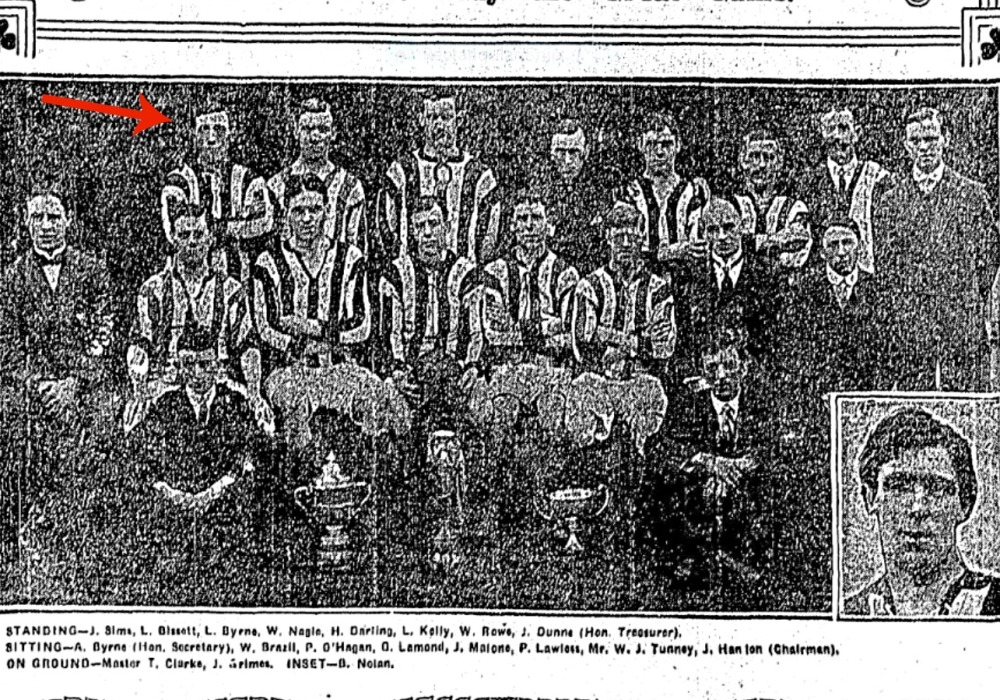
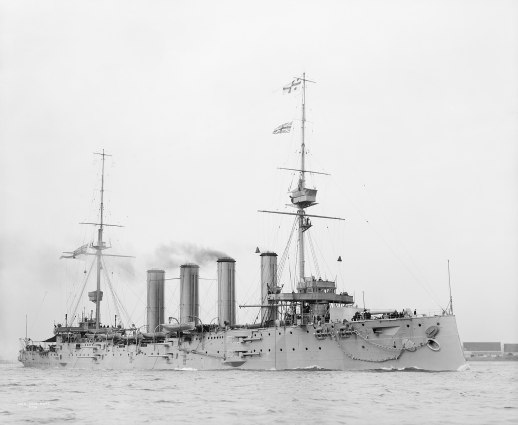

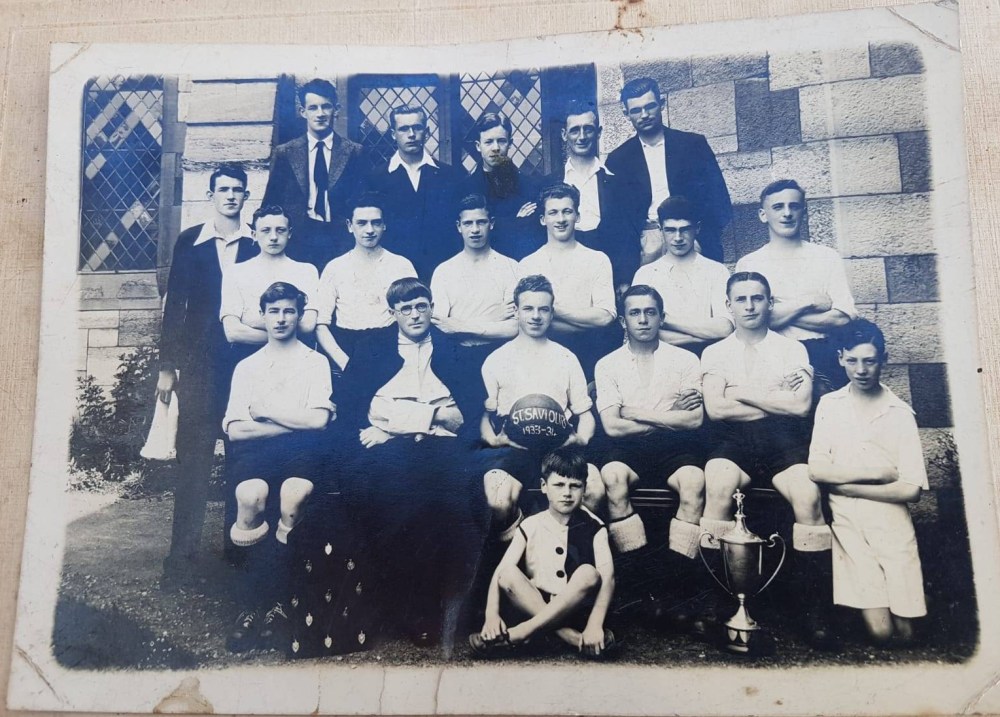
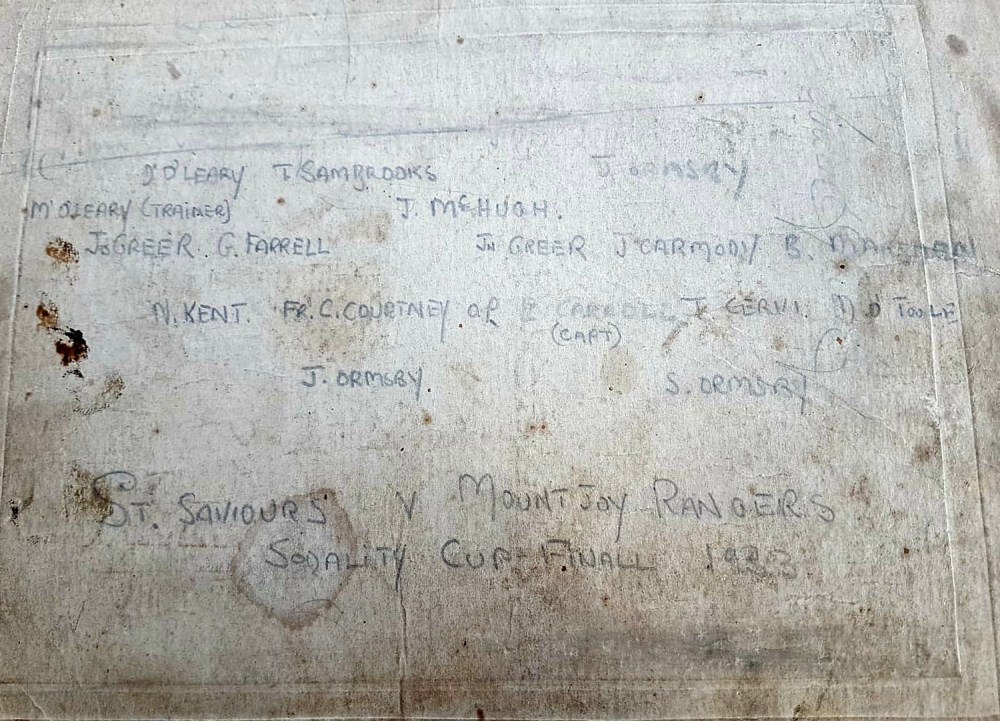


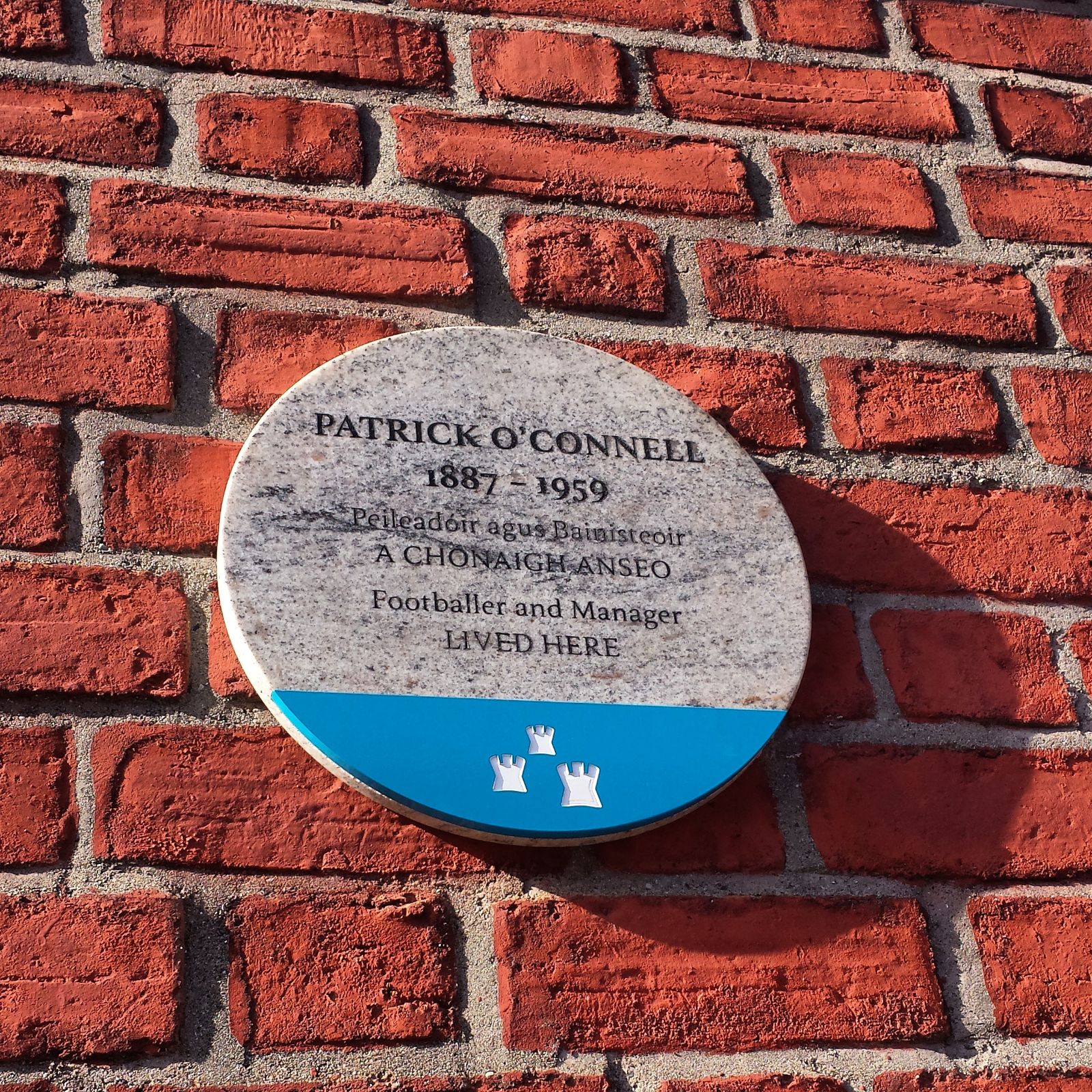


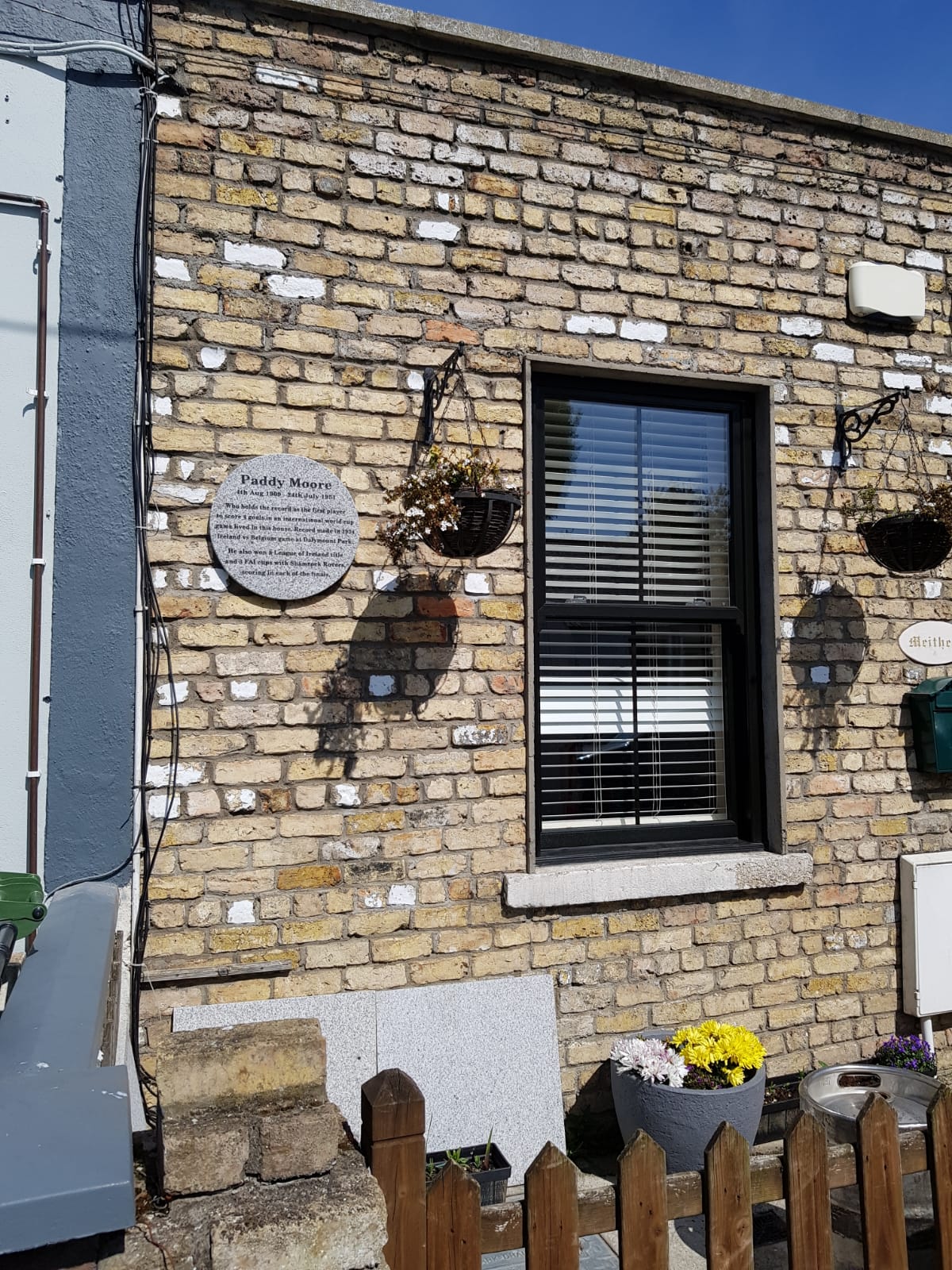
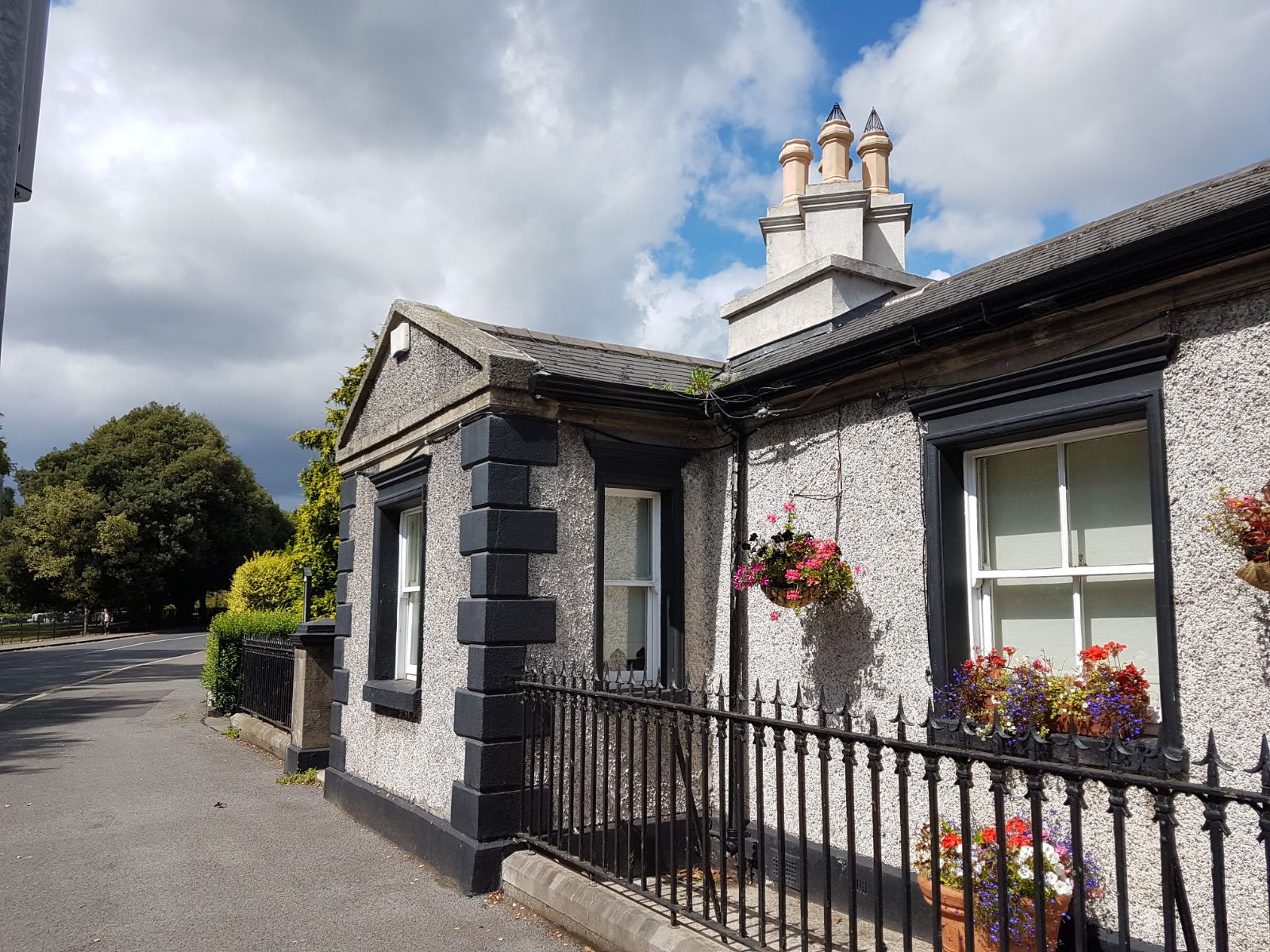
 The early matches of the club were played on the nearby Polo grounds. By 1894 the club had its first major piece of silverware, the Leinster Senior Cup, defeating Dublin University 3-0 in the final. It was to be the first of six consecutive victories in the competition. Less than two years after that first victory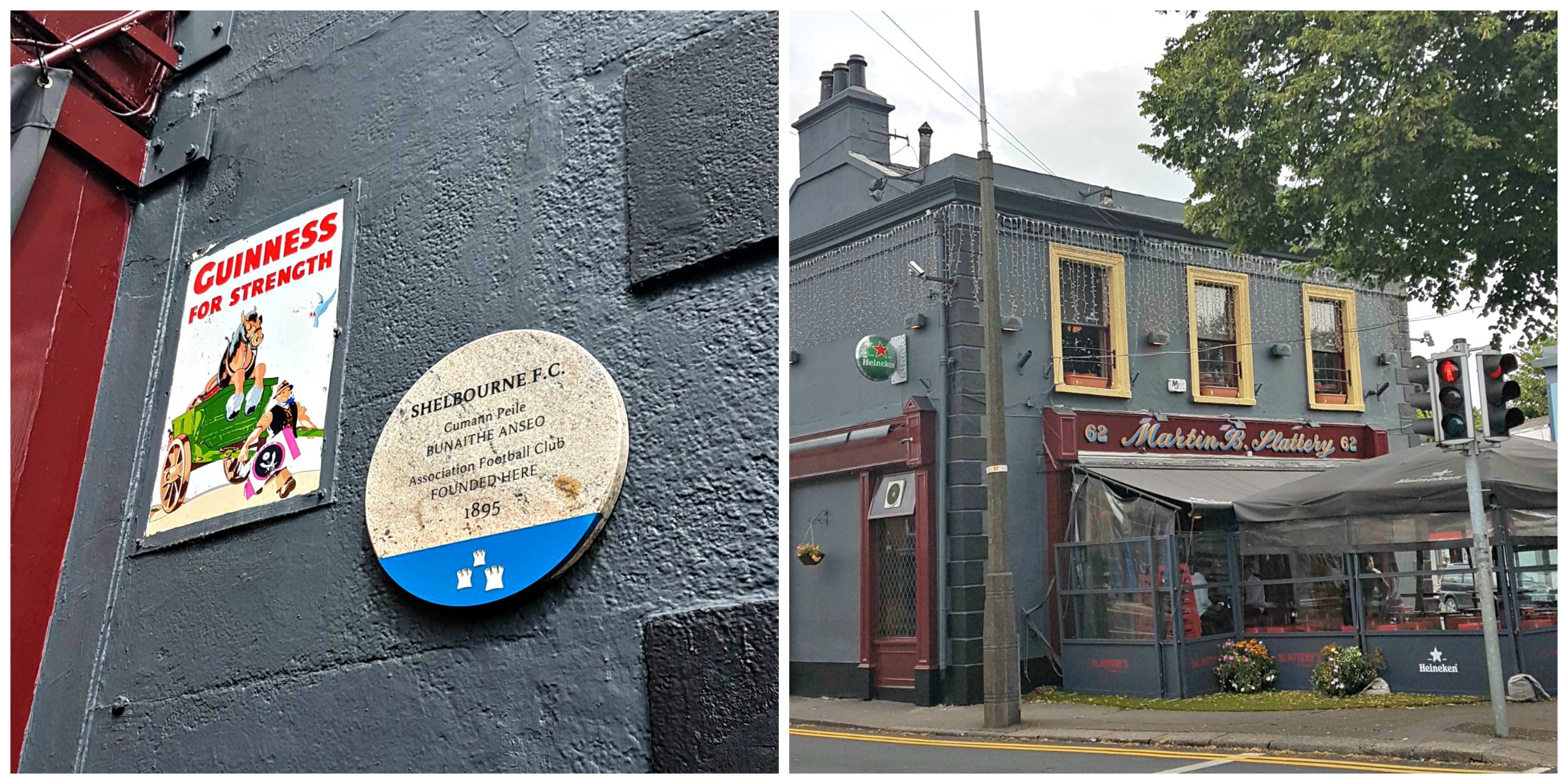


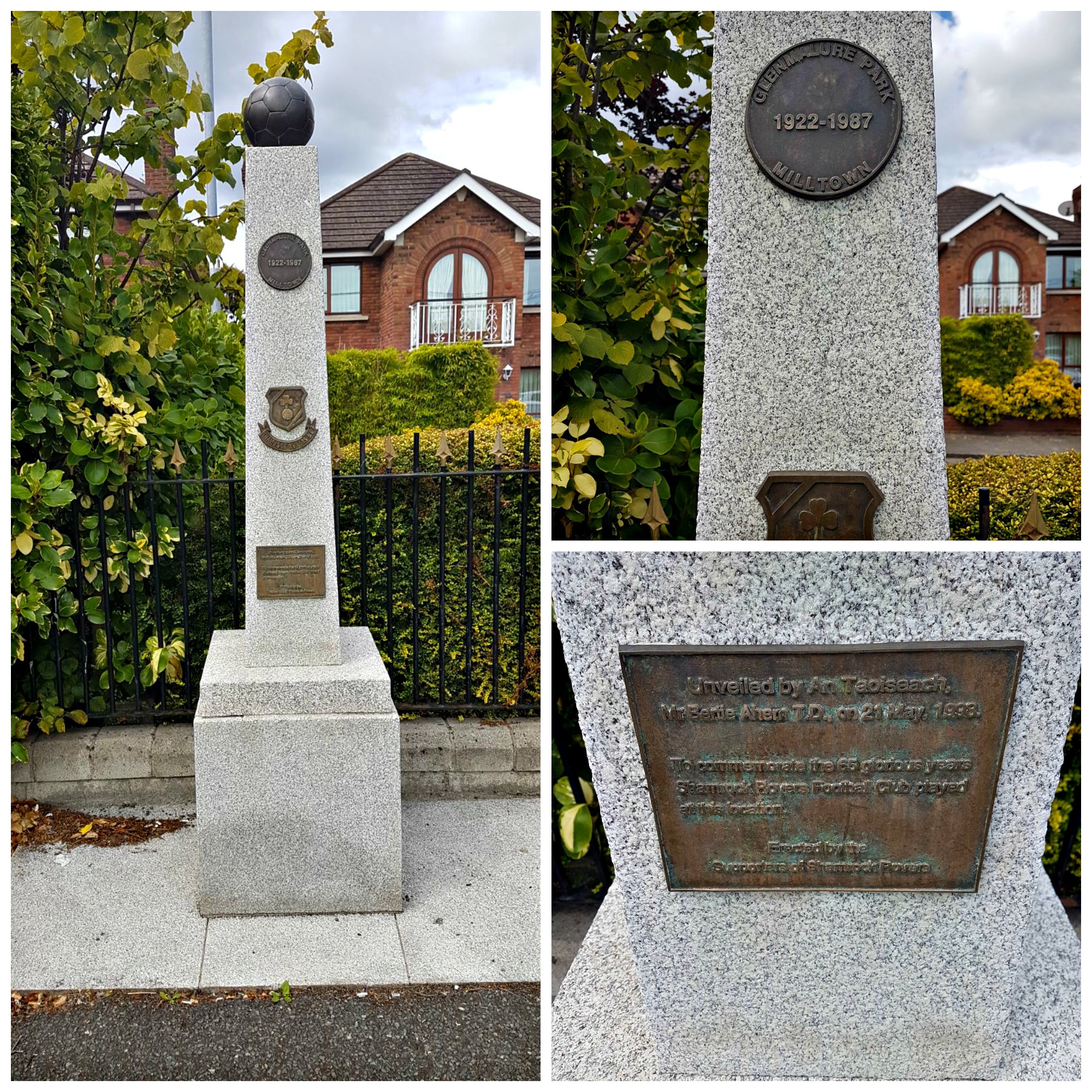
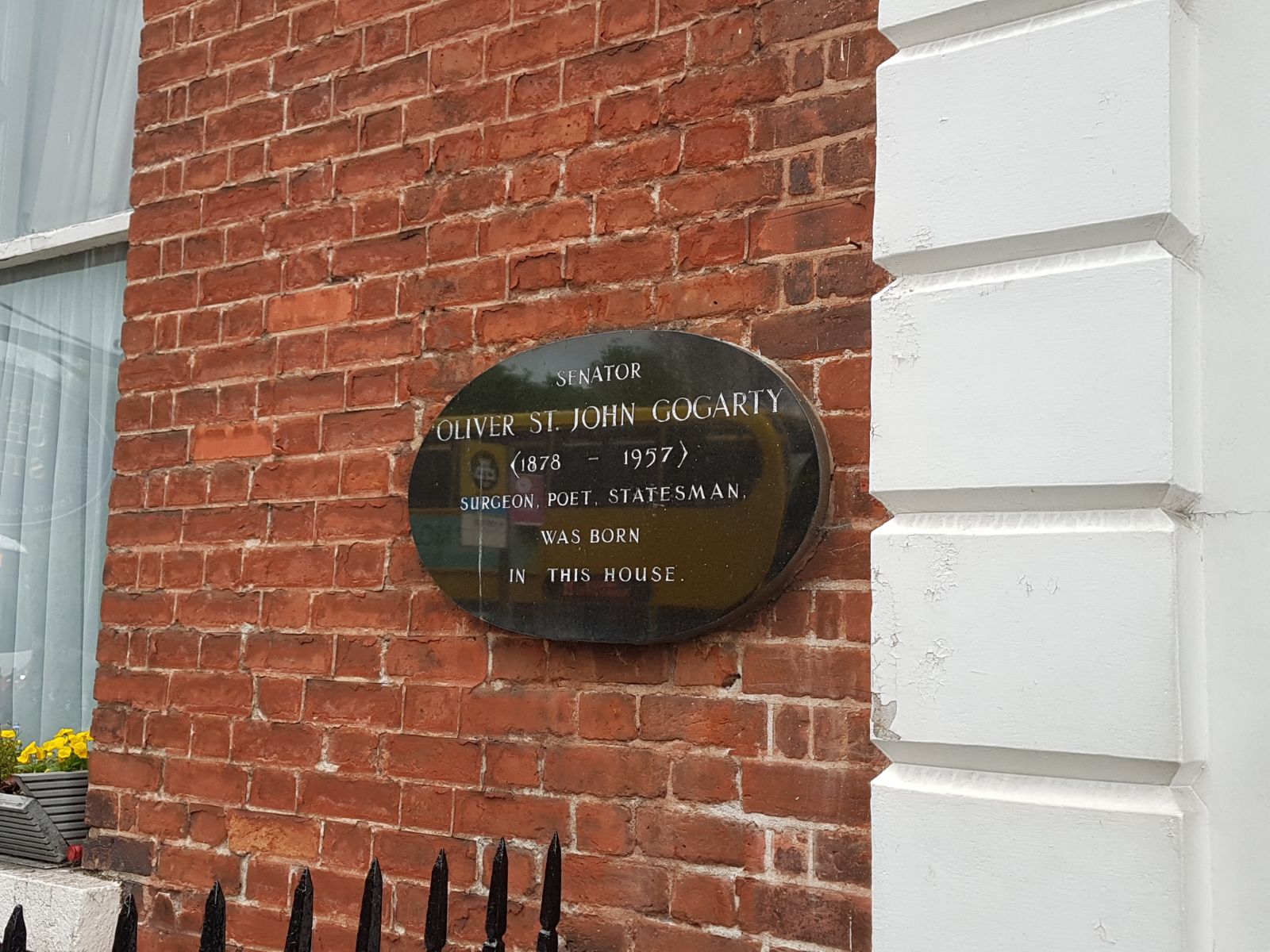
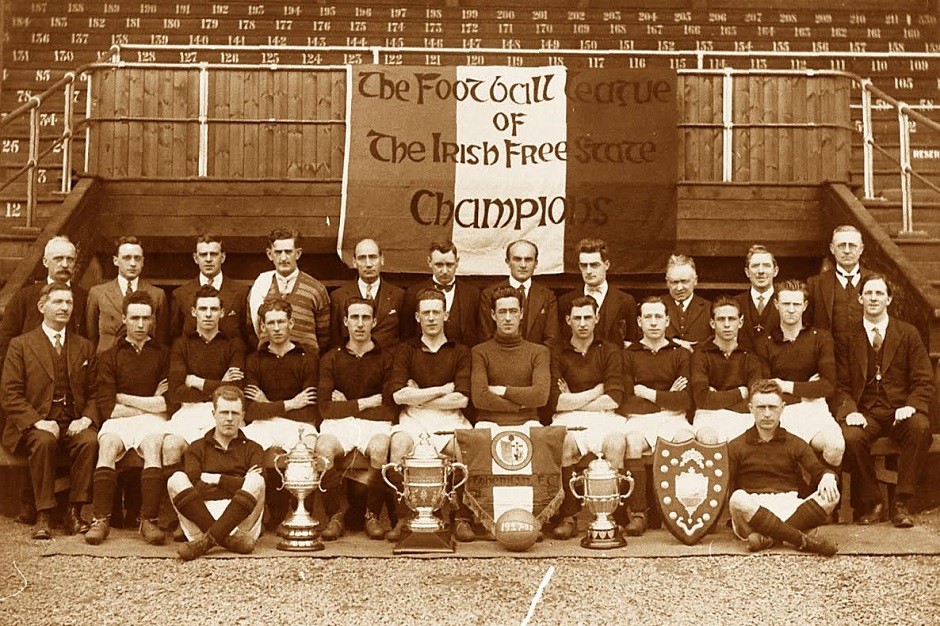


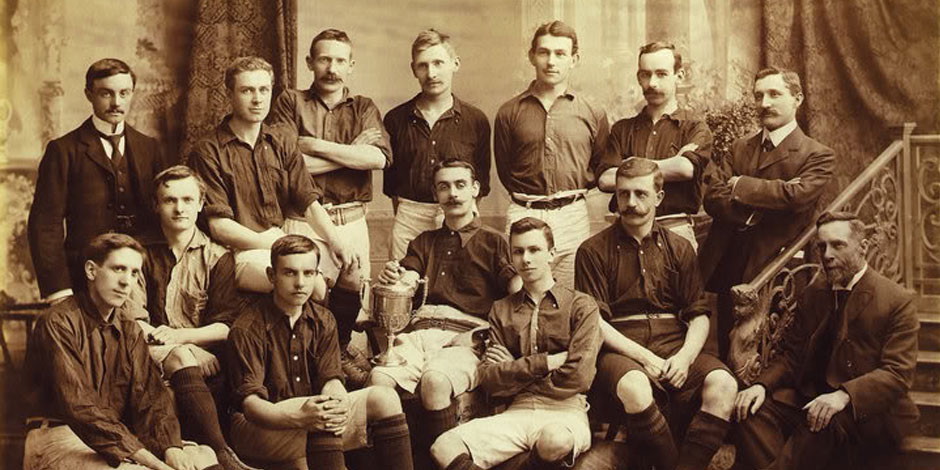
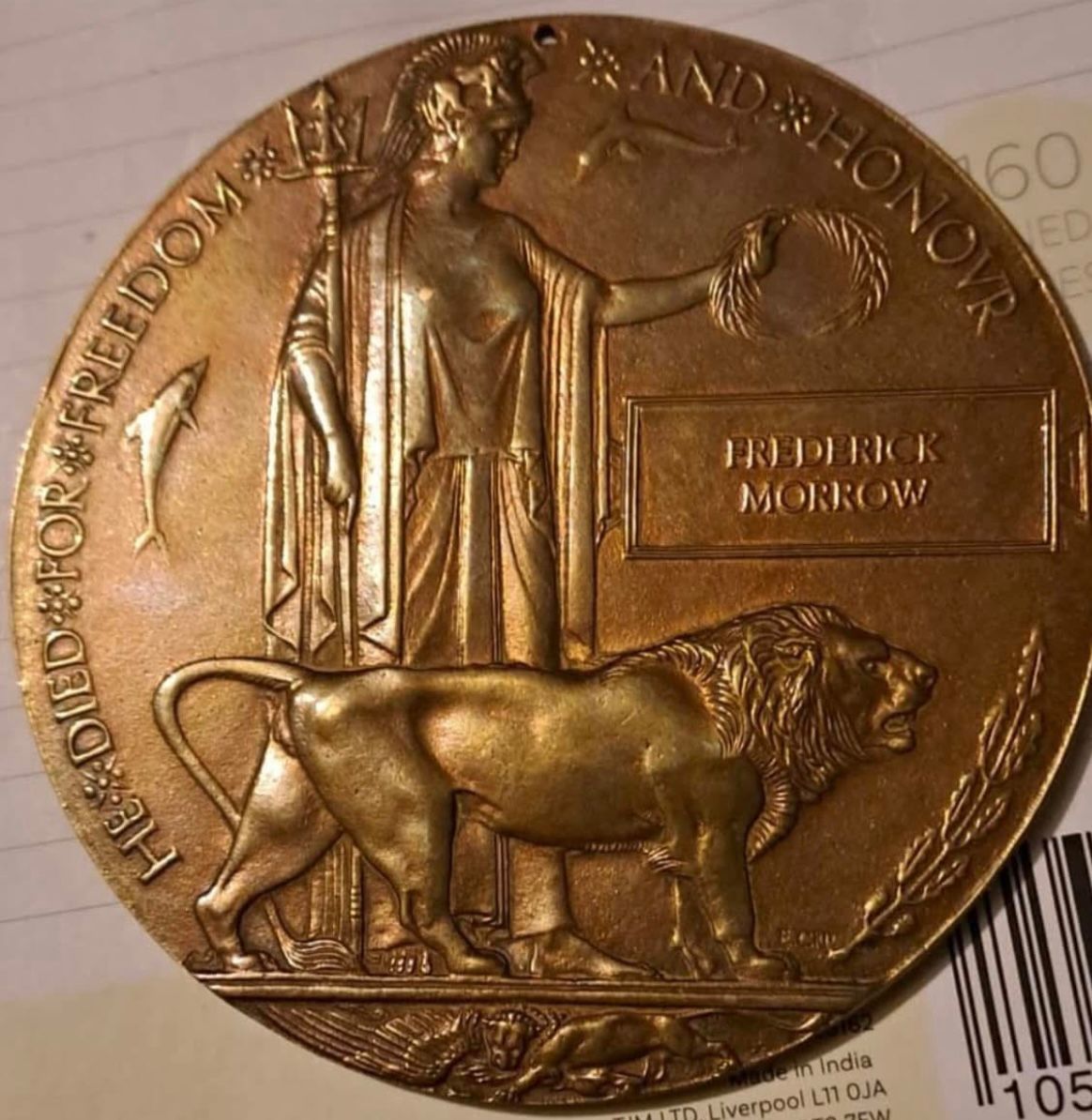

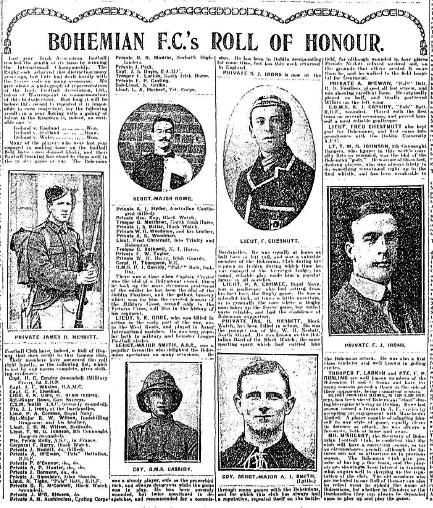


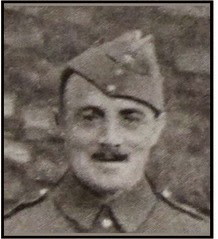

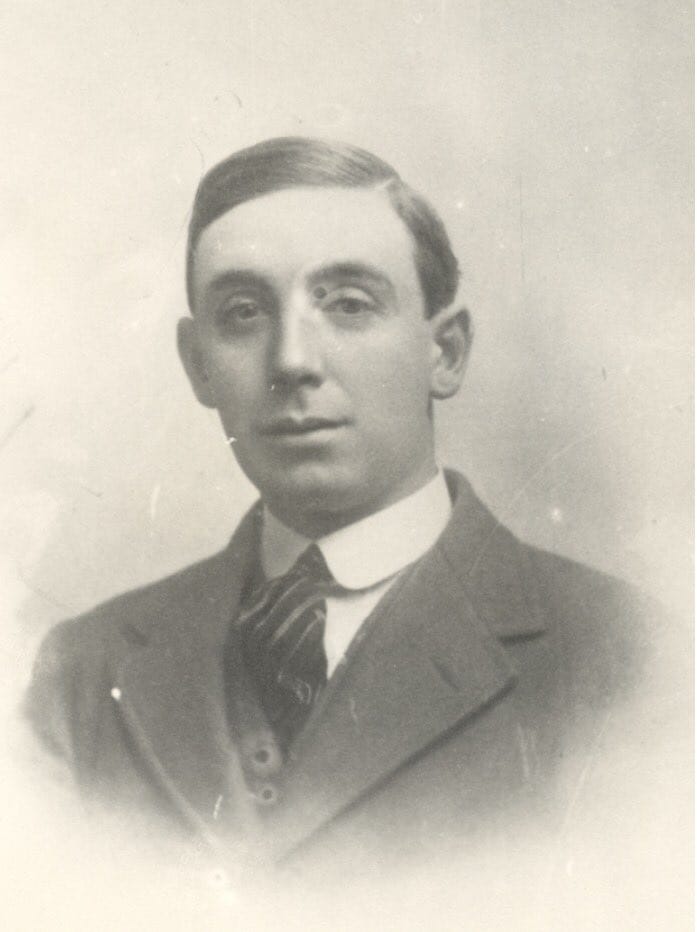


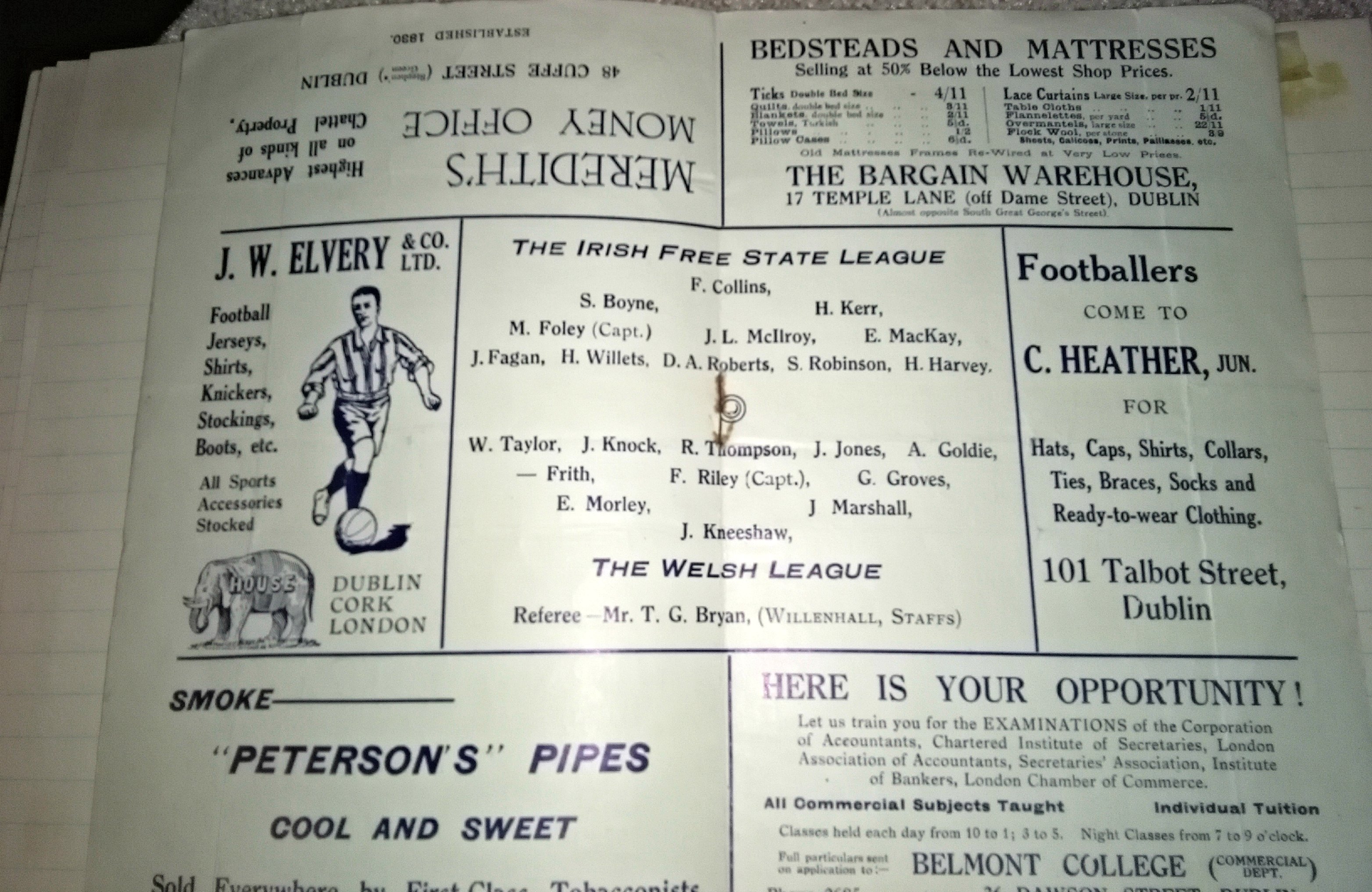


 There was quiet a gap between the game of 1953 and other visiting teams coming to the city. The next big game featured one of this year’s competing teams, Boston College, taking on the Army team of West Point Academy in Lansdowne Road in 1988, the year of the Dublin Millennium. There have been four further games since then, including two of the classic encounters between Notre Dame v Navy (in 1996 and 2012) as well as most recent game which took place in Croke Park game 2014 between Penn State and UCF. Croke Park also hosted NFL sides the Pittsburgh Steelers and the Chicago Bears in a pre-season game back in 1997.
 Neil O’Donoghue grew up in Clondalkin, Dublin in the 60’s and 70’s and did what many young men did, he kicked a ball around the streets of his home town. At the age of just 18 he was good enough to make his debut for Shamrock Rovers in the 1971-72 season. On the back of his performances he won a soccer scholarship to Saint Bernard College in Alabama, however the school soon closed down it’s scholarship programme and Neil moved to Auburn College, also in Alabama where he started to play football of the American variety. During this time he won “All American” honours as a place kicker in 1976 (this means they were selected by media and as the best players, in a season, for each position) before being drafted into the NFL by the Buffalo Bills in 1977. His spell at the Bills was short-lived and he moved to the struggling Tampa Bay Buccaneers in 1978. After two years in Florida Neil moved to the St. Louis Cardinals (now the Arizona Cardinals) for the longest stay of his career. In 1984 he set a Cardinals record by scoring 117 points in a single season and he finished his NFL career the following season having played 110 matches and kicked 576 points. He remains the most recent Irishman to play in the NFL.
 from Irish people, and American ex-pats in playing the game began to develop. By 1986 such was the interest that the Irish American Football League had been established. The following year the first full season was played with 11 teams participating with the top two teams competing in the annual “Shamrock Bowl”. The league is an All-Ireland affair and the most successful side to date have been the Dublin Rebels who have won 7 titles.