
A history of Whelan’s
In the 1700’s the street we know today as Wexford Street wasn’t known by that name. Instead it was called Kevin’s Port, taking its name from the nearby St. Kevin’s Church. Like today it was a key access route to the south of the city of Dublin but the area was much less developed and would be unrecognisable to us today since much of modern Camden Street was simply fields and tracks.

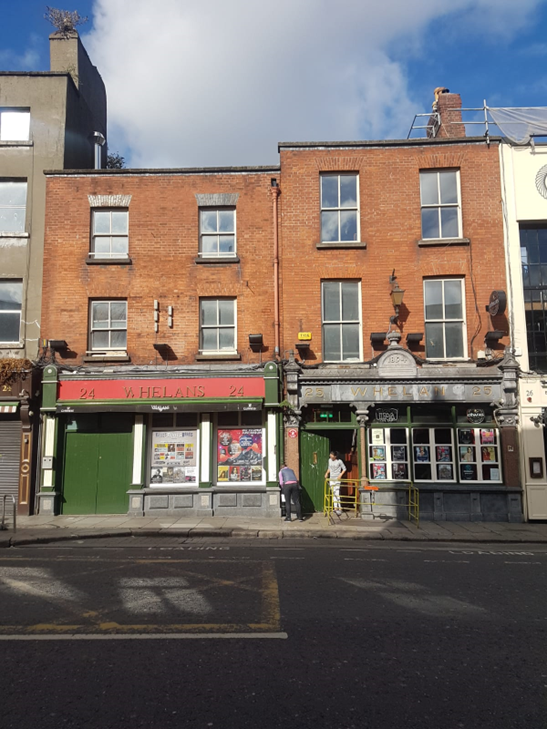
Little remains from the 1700’s, the church of St. Kevin is little more than ruins and its graveyard is now a public park, along the east side of the graveyard lies Liberty Lane, present on the early maps of Dublin, and on the other side of the lane lies the rear of Whelan’s pub and music venue. While the date above the door of Whelan’s may say 1894 the history of the pubs on this site stetch back much further. There are records of a public house being run on that spot as far back as the 1770’s when it was in charge of a Christopher Brady of Kevin’s Port (sometimes spelled Kevan’s Port) and there are plenty of interesting characters who come in succession to Christopher.
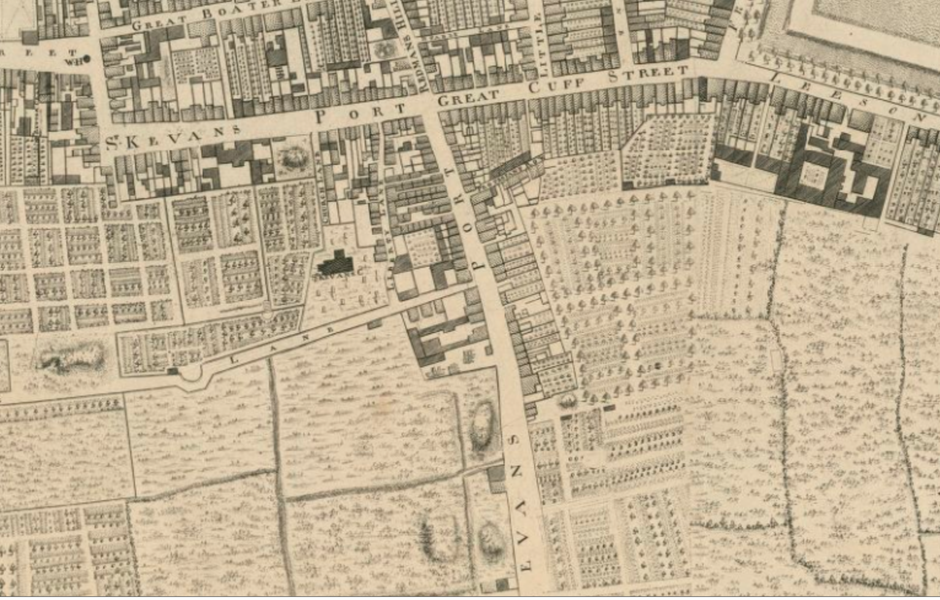
One of the first we encounter are members of the Gorman family. Patrick Gorman senior at various times in the first two decades of the 19th Century is found running a public house at 23 Kevin’s Port and then later at 27 Kevin’s Port. Later still there are various Gormans running businesses from numbers 24, 25 and 27 on Wexford Street after the street was renamed in the 1830’s. Patrick Gorman junior is the man who is running a pub from number 25 Wexford Street from at least 1840. Number 24 Wexford Street seems to have been a grocery store run by other members of the Gorman family and in 1847 Patrick Gorman placed an advertisement of this premises “To Let”, in the ad it is described as “a large shop” which contained “seven apartments” with a kitchen and a yard and was described as being suitable for “bakers, druggists…or provision dealers”.
In May 1848 Patrick Gorman passed away after what was described as a “long and painful illness”, just a year later his relative Julia Gorman who seemed to have taken over the running of number 25 also passed away after a “lingering illness” and it seems that much of the Gorman family interest in the property comes to an end here. This was after all around the time of “Black 48” one of the deadliest years of the Irish famine, while the Gorman’s were relatively well-off, class or wealth was no boundary to the likes of Typhus, Dysentery and even Smallpox which were spread rapidly during the Great Famine and it may have been illnesses like these which killed Patrick or Julia. By the 1850’s the pub was being operated by Bernard Brady, perhaps he was a descendant of the earlier Christopher Brady who ran a public house on the street back in the 1770’s?
There is a suggestion that Bernard Brady was Christopher Brady’s son and had been involved with running the bar since the 1820’s with the Gorman’s running neighbouring premises at the same time. By the 1850’s Brady was a tenant of landlord Thomas Pim, a prominent businessman from the famous Quaker family who are probably best known for Pim’s department store which was founded on South Great George’s Street around this time. By this stage Bernard Brady was already a prominent publican and was also involved in local politics. He was the secretary of the Grocers and Vintners Trade Protection and Benevolent Society, a member of the Society for the promotion of Irish manufacturers and industry, he was a Poor Law Guardian for the South Dublin Union (meaning he was responsible for the administering of an early form of social welfare for some of the city’s poorest citizens) and was also active in local politics where he helped to nominate people within his local ward for positions on the City Council.
Bernard Brady passed away in 1862 after a short illness, he had travelled down to Cork in the hope that fresh air might help him but it seemed to only aggravate his ailment and he died on May 7th at home in 25 Wexford Street before being buried in Glasnevin Cemetery. He was obviously a hugely active man with a wide range of interests in business and politics. His companions in the Grocers and Vintners Society remembered him fondly, saying of him in their first meeting after his death that there “was never a more high minded, single-hearted or honourable man” and they praised the work he had done for the society and the vintners trade in general.
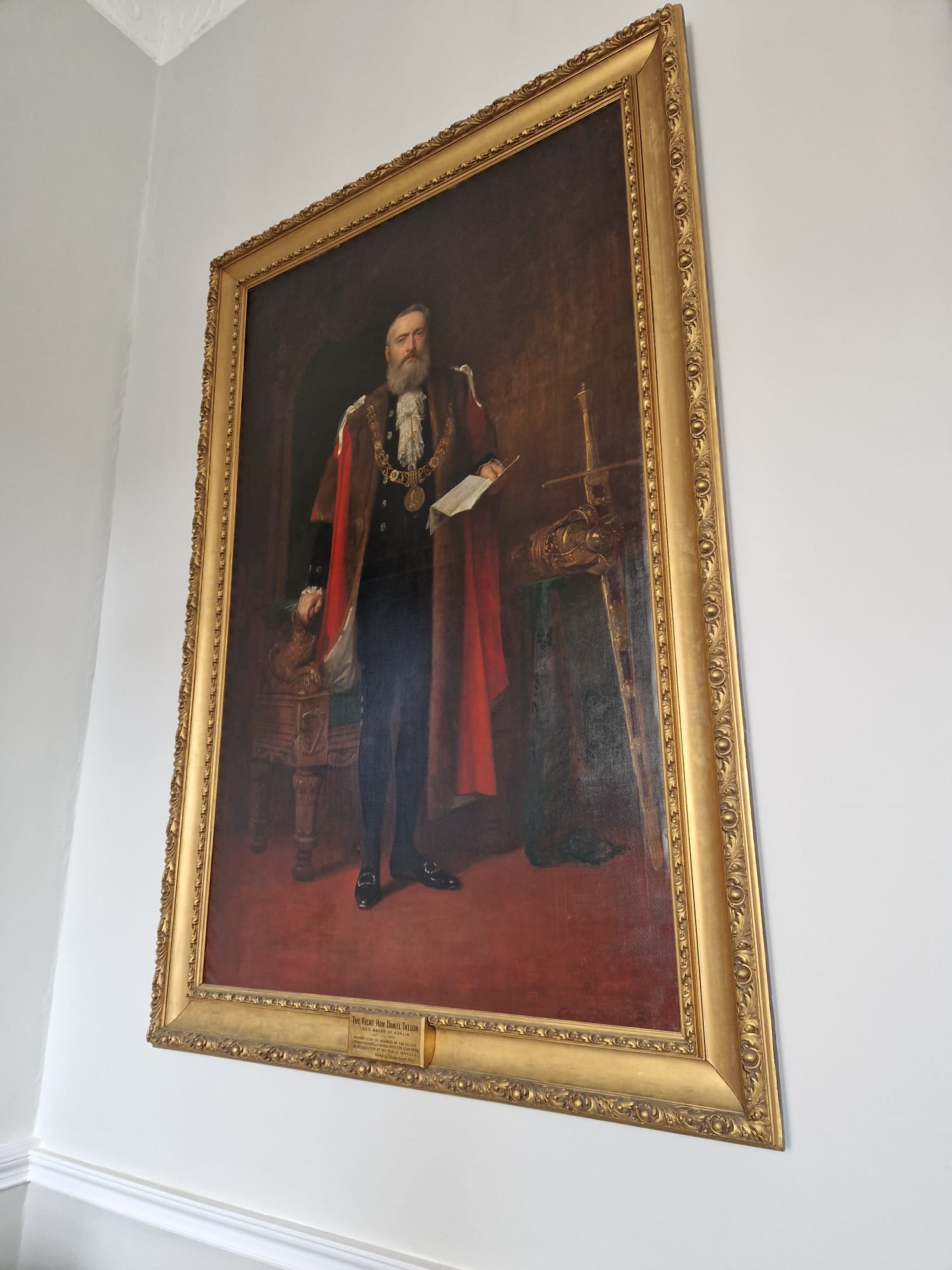
The premises seems to have been run by a William Daly for a time but the lease was back on the market again in 1872 when 25 Wexford Street was bought by a man named Daniel Tallon for £920 while the neighbouring number 26 was bought by a Theodore Rafferty for a more modest £185. Daniel Tallon was perhaps one of the most interesting characters in the long story of Whelan’s. He was born in 1836 in Rathdrum, Co. Wicklow and came to Dublin as a young man to work for the Leeds Woollen Mills based in the Cornmarket area of the city near Christchurch. Such was his success that he was soon able to go out on his own in the tailoring business before, in 1872 he opened that bar on Wexford Street which became known as Dan Tallon’s. Later still he opened another bar at 46 South Great George’s Street (at the corner with Stephen Street). He was also a chairman of the Licenced Vintners and Grocers Association and helped to expand the organisation during his time there.
Daniel’s skills were not limited to the area of business he was also a hugely prominent politician, at various points he served as High Sheriff of Dublin and also as Lord Mayor, from 1898 until 1900, the longest term of any Lord Mayor since the Council was reformed in 1840. A larger than life character, his public houses, as well as his prominence as a member of the Irish Parliamentary Party meant that he was namechecked in both James Joyce’s Ulysses and in Finnegan’s Wake. In Ulysses Daniel’s appearance is about the ranks of famous Dublin publicans and it gives rise to the famous Joycean riddle about whether it was possible to cross Dublin without going by a pub. The quote goes ‘Then, lo and behold, they blossom out as Adam Findlaters or Dan Tallons. Then think of the competition. General thirst. Good puzzle would be cross Dublin without passing a pub.’

Tallon was a prominent Irish Nationalist and a great supporter of the deposed leader Charles Stewart Parnell. Tallon along with Irish Parliamentary Party leader John Redmond travelled to the United States of America to help fundraise for the construction of the Parnell Monument that sits at the top of O’Connell Street today. The tour was hugely successful and Tallon spoke in many US cities, he and Redmond were even invited to dine in the White House with President William McKinley. A couple of years prior to this Tallon had been to the forefront in fundraising to help avert a crisis in parts of the west of Ireland, especially Mayo, after a series of crop failures left many poorer farmers facing starvation.
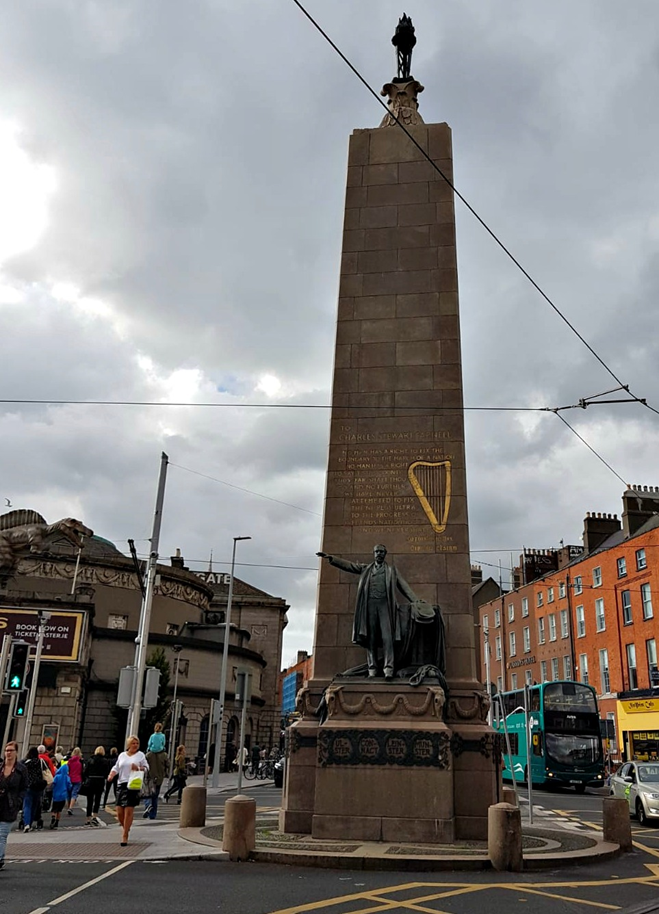
While a staunch Parnellite and a big personality Tallon was not as advanced a nationalist as some emerging politicians, he was booed in 1899 when laying the foundation stone for the Parnell monument because he had failed to attend a meeting organised in sympathy with Boer cause in South Africa. In 1904 Daniel lost his seat and decided to retire from politics. He passed away in 1908 at the age of 72.
In 1894, early into his political career and with a view to opening his new premises on South Great George’s Street Daniel Tallon had sold Tallon’s of Wexford Street to John Galvin. This new owner, John Galvin immediately decided to invest in a significant amount of funds completely refitting the pub and rebuilding the whole frontage of the building. It is from the time of John Galvin’s ownership that the year 1894 appears above the door. This work was overseen by prominent architect John Joseph O’Callaghan who was a founder member of the Architectural Association of Ireland and its first president.

Despite investing huge sums of money John Galvin didn’t get to see it bear fruit, the pub was put up for sale in 1896 owing to a deterioration in Galvin’s health, he passed away a year later aged just 36.
As the pub entered the 20th century it did so under the stewardship of Peter Gilligan and it bore his family name above the door. He paid for a newspaper ad campaign highlighting his re-opening of the “old established licenced premises” (see side panel) and promising a great selection of Dublin whiskey. Peter Gilligan was a Cavan man who married a Dub named Maggie and they had three children together. As was standard practice at the time the whole family lived above the pub along with their bar staff and servants and their dog “Laddy”. By the 1911 census there were nine people living in number 25 Wexford Street, sadly Maggie wasn’t around by this stage, she had died aged 29 in 1907 leaving Peter to raise his daughter Ethel and sons Arthur and Frederick.
Peter Gilligan was also interested in politics like his predecessors Dan Tallon, William Daly and Bernard Brady. He was active in local politics and lent his public support to several candidates. It is worth noting that the right to vote was still limited to men, and required them to be property owners though some of the restrictions were beginning to ease by the end of the 19th century.
Given this background with a smaller voting base it is clear why the support of property owners/leaseholders and prominent business people like Peter Gilligan, Dan Tallon and others would be very desirable for candidates. In 1905 Peter proposed John Reynolds as a Councillor for the Mansion House ward, Reynolds was a businessman on Redmond’s Hill only a short distance from Peter’s bar and they were likely friends and neighbours. John Reynolds was successfully elected but in 1907 did not seek re-election as a Councillor. A new candidate was proposed, and his nomination was seconded by Peter Gilligan for the vacant seat, this man was Richard O’Carroll, General Secretary of the Bricklayers Union and a founding member of the Irish Labour Party in 1912 along with James Connolly, however in 1907 he was running as an independent. O’Carroll lived on Cuffe Street not too far from Wexford Street and the seconding of his nomination by Peter Gilligan suggests that perhaps Gilligan knew O’Carroll personally, or maybe he had a sympathy with the workers rights causes that O’Carroll espoused?
O’Carroll was successfully elected in 1907 and again in 1910 and 1912. He was injured during the 1913 lock-out and later went on to join the Irish Volunteers. He was involved in the organising committee for the funeral of Jeremiah O’Donovan Rossa (the occasion of Patrick Pearse’s famous graveside oration) and was also involved in the 1916 Rising but with tragic consequences. One account states that Carroll, a member of “C” company in the Irish Volunteers was pulled from his motorbike on Camden Street and shot in the chest by the deranged British Army Captain John Bowen-Colthurst who went on a killing spree during the Rising where he also infamously had the pacifist activist Francis Sheehy Skeffington executed by firing squad.
Poor Richard O’Carroll struggled on with a bullet in his lungs for a number of days before dying on May 5th leaving a wife and seven children. As the only sitting Councillor to die during the Rising, in 2016 the City Council decided to name their meeting chamber in City Hall in his honour in 2016.

Returning to Peter Gilligan, he ran a successful pub for many years, in 1909 he was even advertising his own brand of “Gilligan’s Whiskey”, and the pub seemed to have been prospering, he did however end up being cautioned by the police on a couple of occasions for serving beyond permitted hours. Peter continued to run the pub until 1933 when he died suddenly of a brain haemorrhage at the age of 64. The Gilligan family continued to operate the pub until the early 1950’s before selling up to a Stephen Bourke in 1952. Peter’s son Arthur continued in the pub trade afterwards, by the 1960’s he was running the famous Dawson Lounge on Dawson Street.
Stephen Bourke is now commemorated in the newly refurbished “Bourke’s Bar” created by the present owners at 24 Wexford Street in memory of a larger than life publican who ran the bar for several decades. Bourke’s of Wexford Street became a regular meeting spot and was the watering hole for some local hurling clubs in the district and also by the 1970’s it was beginning to host occasional musical acts.
In 1989 Dublin-born actor Gary Whelan purchased the bar along with business partner Ian Keith. Whelan was well-known for his roles in Eastenders, and later for parts in Brookside, The Bill and Ballykissangel. After years of Gilligan’s and Tallon’s it was the Whelan name that now appeared above the door. There was a grand opening and many of Whelan’s celebrity friends attended, including, somewhat randomly. Peter O’Brien an original cast member of Australian soup opera Neighbours. The pub changed ownership again, first being bought by Liam Hanlon in the 1990’s and then later by the Mercantile Group who still run it today. Since its opening as “Whelan’s” the bar has become synonymous with live music in Dublin, and has been gradually developed with new stages, separate bars and a smoking terrace. Hundreds of framed photos line the walls of the famous venues recording for posterity the many musicians who have graced the Whelan’s stage, Jeff Buckley played a solo gig there when virtually an unknown in front of a small devoted fanbase while the venue has been packed out for the likes of The National, or Teenage Fanclub.
During the late 90’s – early noughties boom in Irish signers and songwriters it was Whelan’s that became a sort of Mecca for aspiring Irish musicians like the Frames, Paddy Casey and Mundy. The venue remains as vital as ever with new acts performing nightly in a wide range of genres, while it is still home to the quintessential Dublin indie disco you are as likely to see a folk or jazz act grace the stage.
In its long history the Whelan’s bar has had many connections to the wider life of the city and country, whether that be through politics, music or indeed revolution, the history of the pub is approaching a quarter of a millennium so who knows what the coming centuries have in store.
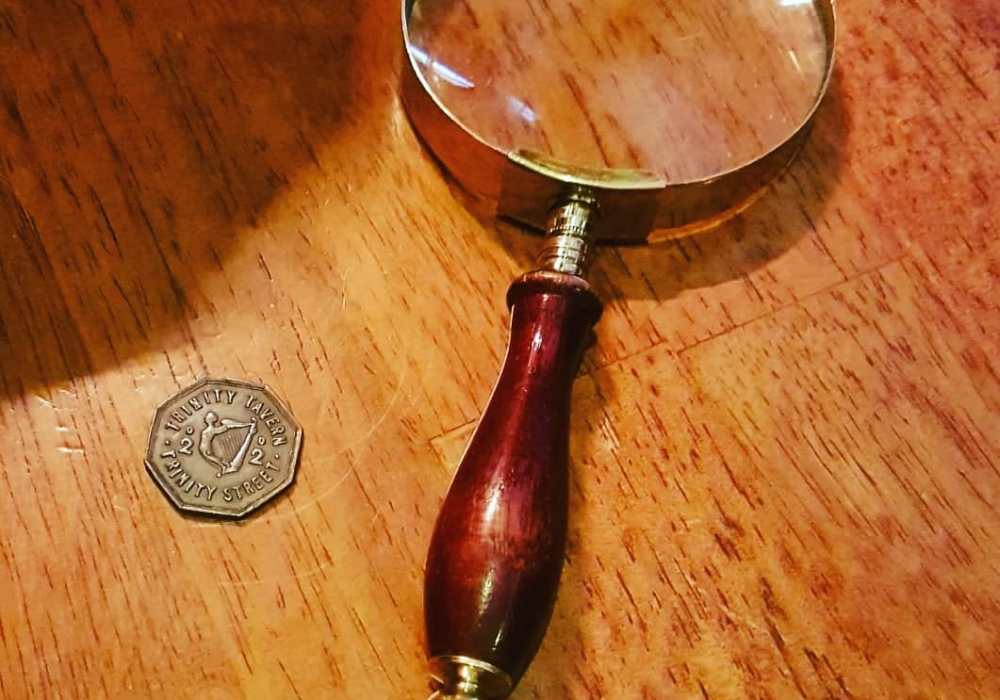
 The one shown below was minted in Dublin by John C. Parkes of The Coombe and he was responsible for striking most of the pub gambling tokens.
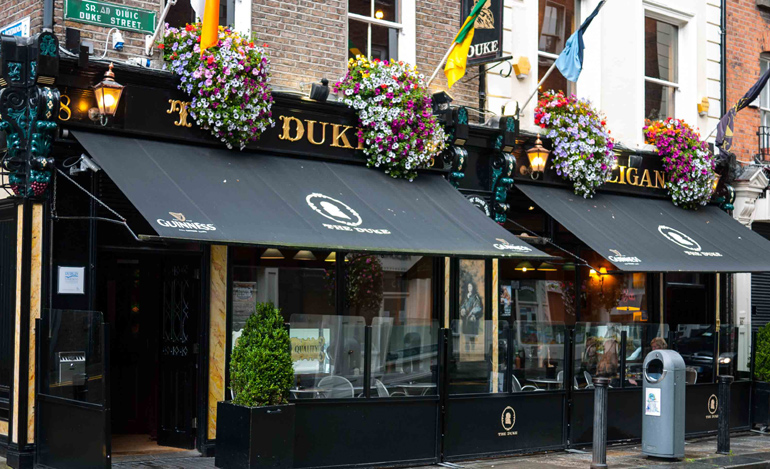
 While Grafton Street isn’t too well known for pubs today the Duke Pub, back on Duke Street is named after the 2nd Duke of Grafton Charles Fitzroy. Originally opened in 1822 the Duke Pub was run by a James Holland when they first started issuing their own tokens in the 1860’s. Since that time the pub has expanded and has taken over premises that once housed the famous Dive Oyster Bar and part of the hotel building that was operated by Kitty Kiernan and her family. It was for a time known as Tobin’s pub but has since reverted back to the original name of the Duke Bar. After a chat and a drink with David, the bar manager we were due to head onto our final watering-hole, north of the river this time to Brannigan’s of Cathedral Street.




 A Bohemian Sporting Life