Patrick Sex from the Freemans Journal 1921

The Death of Sex

It started in somewhat unusual fashion, a Whatsapp chat with some fellow historians, a screenshot from the Irish Newspaper archive with the unusual headline “Replay for Sex Memorial Gold Medals”, which of course provoked a bit of schoolboy humour but also planted a seed of curiosity. From the short clipping I could see that it was a replayed football match between Bohemians and a Leinster football XI, the Bohemian teamsheet was shown and I could tell that this was a game from the early 1920s with several high profile players featuring, including future internationals like Joe Grace, Jack McCarthy, John Thomas and Johnny Murray as well as South African centre-half Billy Otto.

But who or what was “Sex” referring to? Memorial games or charity matches for sets of gold medals were not uncommon in the era but I could find nobody with the surname Sex as having been associated with Bohemian FC in their first thirty or so years, and as the opposition were a selection of other Leinster based players then there was no specific opponent club who might have been arranging a memorial. A quick look at the 1911 Census suggested a possible answer, as it displayed 22 people with the surname “Sex” living in Dublin.

Having ascertained that there indeed may be a “Sex” living in Dublin, deserving of a memorial game, but unsure of any footballing connections I started searching the Irish newspaper archives for the early 1920s and quickly discovered a likely candidate for the “Sex Memorial Gold medal match”, namely Patrick Sex of Dominick Street in Dublin’s north inner city with the memorial match and replay taking place for him in May 1921.

Patrick Sex was born in Dublin in 1880 and by the time of his marriage to Mary Kenna – a dressmaker living in Mary’s Abbey off Capel Street – in September 1901, he was living in Coles Lane, a busy market street off Henry Street and working as a butcher. Coles Lane, which now leads into the Ilac Centre but once ran all the way to Parnell Street, was full of stalls and shops selling everything from clothing to meat, fish and vegetables and formed part of a warren of streets and lanes feeding off the busy shopping areas of Henry Street and Moore Street. The area was a booming spot for a butcher to find work, it is likely that Patrick was raised and apprenticed in the trade as “butcher” is listed as his father James’s trade on Patrick’s marriage certificate.

Patrick and Mary, welcomed a son, James in August 1902 and they moved around the same small footprint of this section of north inner city Dublin in the coming years, with addresses on Jervis Street, Great Britain Street (now Parnell Street) and Dominick Street. It is on Dominick Street where we found the Sex family living in the 1911 Census, by which point they have five children, with one-year-old Esther being the youngest and Patrick was still working in the same trade, being listed as a Butcher’s Porter.

Moving forward ten years to 1921, the year of Patrick’s violent and untimely death, and the family had a total of ten children and were still living at 72 Dominick Street. Patrick was still working in the butchery trade in McInnally’s butchers at 63 Parnell Street, close to the junction with Moore Lane, roughly where the Leonardo (formerly Jury’s) hotel is today and would have been close to Devlin’s Pub, owned by Liam Devlin and a popular meeting spot for the IRA during the War of Independence.

Parnell Street as it appears on the Goad Insurance maps from 1895

By this stage in his life, as well as his place of work and large family we know that Patrick was active in the trade union movement, being Chairman of the No. 3 branch of the Irish Transport and General Workers’ Union (ITGWU), this branch featured many from the butchers’ trade and was known as the Victuallers’ Union. Living and working where he did, no doubt Patrick would have clear memories of the Lock-out in 1913 and the infamous baton charge by the Dublin Metropolitan Police on Sackville Street in August of that year when two workers were mortally wounded.

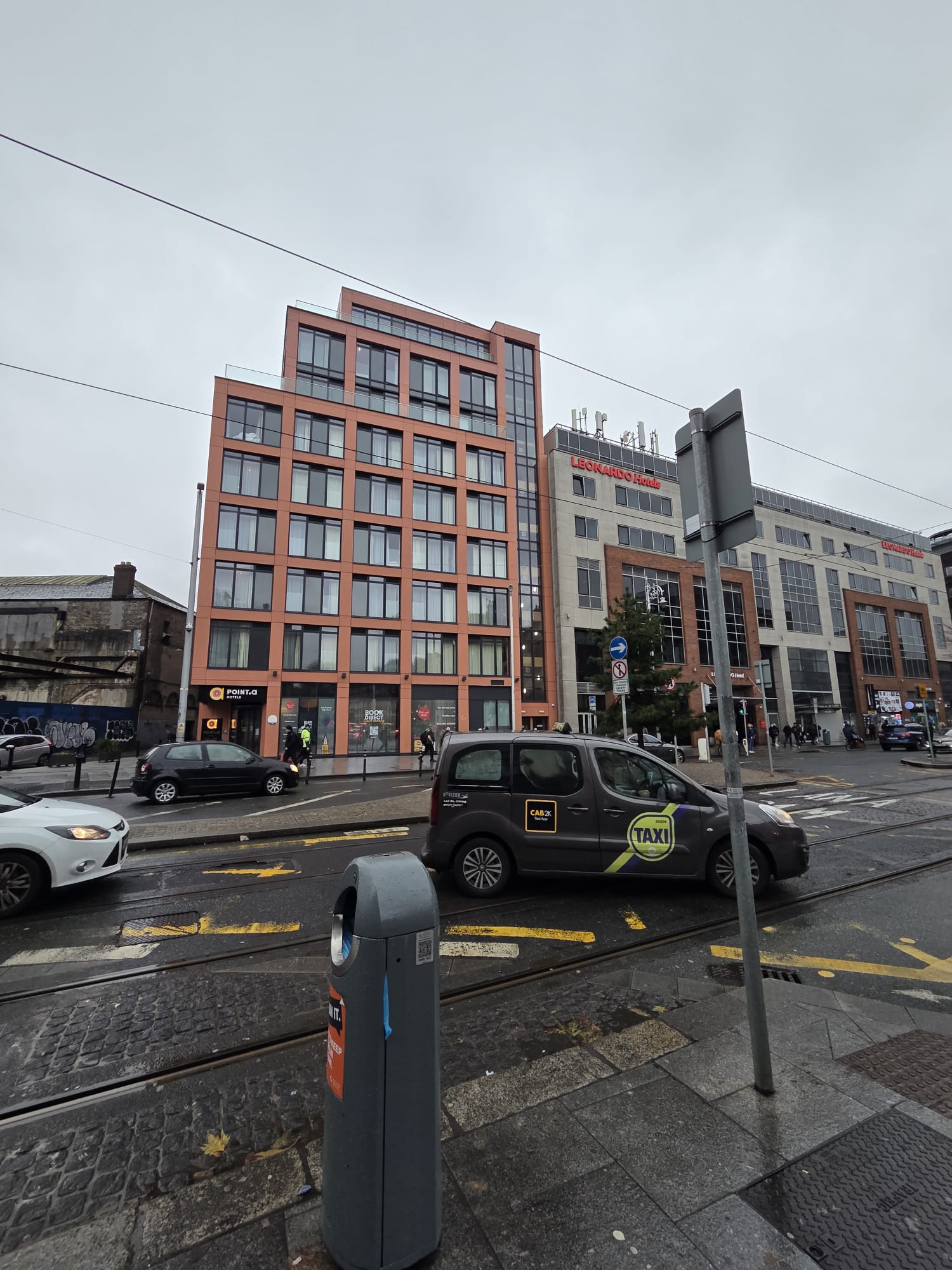
Parnell Street 2025
Parnell Street as it appears today – the Point A hotel is built on the site of the former Devlin’s Pub, McInnally’s butcher shop would have been within the footprint of the current Leonardo Hotel and Moore Street Mall

On March 26th 1921, Patrick Sex was, as usual, working at McInnally’s butcher’s shop on Parnell Street, it was owned by Hugh McInnally, originally from Scotland he had set up a number of butcher’s shops in Dublin and by the 1920s was entering his 70s and living in some comfort near Howth. The city and country more broadly were far less comfortable – more than two years into the violent period of the War of Independence, Dublin had seen the city placed under curfew in February 1920, there had been wide scale arrests, November 1920 had seen Bloody Sunday when fourteen people were killed in Croke Park by Crown Forces in reprisal for the wave of assassinations earlier that morning by the “Squad” and the Active Service Unit of the IRA. Croke Park was just a few minutes walk from Patrick’s home and place of work, he likely knew many who had attended the match, or perhaps some of those arrested in the wide scale arrests across the city by Crown Forces that followed. As mentioned, McInnally’s butcher’s was just doors away from an IRA safe house and meeting place in Devlin’s Pub, while Vaughan’s Hotel was just around the corner on Parnell Square.

This was the backdrop against which Patrick Sex and his family lived and worked in Dublin. On that fateful day of the 26th just before 3pm a lorry, carrying Crown Forces were attacked by members of “B” company of the 1st Dublin Brigade of the IRA as they journeyed up Parnell Street. The brigade report, taken from the Richard Mulcahy papers reads as follows;

“8 men… attacked a lorry containing 16 enemy at Parnell Street and Moore Street. 3 grenades exploded in lorry followed by revolver fire. Enemy casualties believed to be heavy. The lorry drove into O’Connell Street and was again attacked by a further squad of this coy. [company] numbering 18 men. They attacked another lorry at Findlater Place but were counter-attacked by lorry coming from the direction of Nelson’s Pillar. 3 of our grenades failed to explode so we retired. One of our men was slightly wounded”.

The Freeman’s Journal, reporting on the attacks a couple of days later goes into more detail on the impact of the grenade and gun attacks as they affected the public caught in the melee;

“the first bomb was thrown and exploded with a great crash in the channel opposite MacInally’s (sic) victualling establishment, 63 Parnell Street. The explosion was followed by a wild stampede of pedestrians.”

They continued: “The glass and woodwork of the houses from 63 to 66 Parnell Street were damaged by the flying fragments of the bombs. Mr. Patrick Sex, an assistant in the victualling establishment of Mr. MacInally was wounded in the hip and leg… and others in the shop had narrow escapes from the contents of the bomb, which in the words of Mr. O’Doherty ‘came through the shop like a shower of hail’.”

John O’Doherty the butcher in McInnally’s, mentioned above, would later given a statement to a subsequent court of inquiry at Jervis Street Hospital, stating that he heard “two explosions and three or four shots”, before adding that “several fragments of the bombs came into the shop, and Patrick Sex who was attending a customer at the time said ‘I am struck’ , I saw that he had a wound in his left thigh and hurried him off to hospital.”

Another of those to give testimony at the court of inquiry (inquests into deaths had been suspended during the War of Independence) was Charles Smith of the RAF, he was in one of the Crossley Tender lorries, with two other RAF men in the driver’s cab as it made its way up Parnell Street, when he recalled that a man armed with a revolver stepped into the street and shouted “Hands up” and “Stop” at which point “3 or 4 other civilians fired at us, the driver was immediately hit and collapsed in his seat. Several bombs were thrown at us, as far as I know three or four.”

The driver who was hit was Alfred Walter Browning, a nineteen year old RAF recruit from Islington. He was taken to the King George V Hospital (later St Bricin’s Military Hospital) at Arbour Hill where he died later that evening. The other passenger was David Hayden from the Shankill in Belfast, he was badly injured but survived. All three men were based at the airfield in Baldonnell which was in use then as a RAF base. There was another fatality related to the attack on the lorry at Findlater Place, just off O’Connell Street, when 15 year old Anne Seville was struck by a ricocheting fragment of a bullet as she watched the fighting below from her bedroom window. Despite an operation in an attempt to save her life she passed away two days later.

But what of Patrick Sex? His wound was deemed to be not particularly serious, he was brought to Jervis Street hospital and initially it seemed that everything would be alright. Patrick was seen by Dr. L.F. Wallace who also testified before the inquiry and he stated that there was a wound to Patrick’s left thigh, with no corresponding exit wound. Despite being admitted on the 26th March, Patrick was not thought in need of emergency surgery and was not operated on until April 4th when an “irregular piece of metal” about half an inch long was removed from his thigh. However, despite all seeming to have gone well Patrick contracted tetanus and his condition immediately worsened, he only survived until April 6th. His death notice read “cardiac failure following on tetanus caused by a wound from a fragment of a bomb”.

This left Mary, widowed with a family of ten children to support, and while it may not even have been known yet by Mary and Patrick, she was pregnant with their eleventh child, who would be born in November of that year and would be christened, Vincent Patrick by his mother.

Mary hired prominent solicitor John Scallan who had offices on Suffolk Street in the city centre to pursue a claim for compensation from the Corporation of Dublin and the Provisional Government in January, 1922. Scallan’s letters to the military inquiry requested information on the outcome of the inquiry and a list of any witnesses that they could call, the letter also incorrectly states that Patrick Sex was wounded by a bullet and not a bomb fragment. These claims were reported on in May, 1922 with it being stated in the Freeman’s Journal that a claim for £5,000 had been lodged by Mary Sex “in respect of the murder of her husband, Patrick Sex”. The article describes the compensation claims as those “alleged to have been committed by any of the several units of the British forces in Ireland”. While Patrick was an innocent bystander from the medical reports it would seem a bomb fragment from a grenade thrown by members of the Dublin Brigade, rather than a British bullet was the ultimate cause of his death. It was reported that by November 1922 over 10,000 claims for compensation had been made.

While Mary lodged that claim in January 1922, after the ceasing of hostilities and the signing of the Anglo-Irish treaty, she still had to provide for her large, and growing family. The tragic case of Patrick’s death had clearly struck a particular chord among the Dublin public, despite the amount of violence and death they had witnessed over the previous two years. Perhaps it was the fact that he left a widow and ten children, his role as a prominent trade union organiser, or perhaps it was also the fact that several newspapers, including Sport, The Freeman’s Journal and The Dublin Evening Telegraph had reported that Patrick had sustained his injuries while protecting others leant even greater emphasis to his harrowing story.

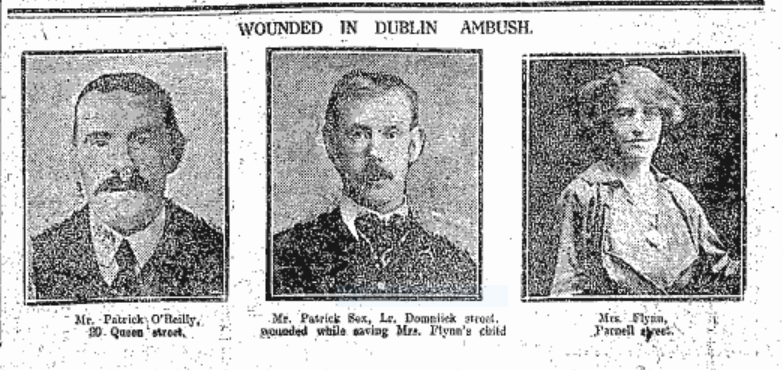
The mention that Patrick had protected others is hard to confirm but from piecing together accounts in various newspaper reports it seems that Patrick may have shielded a child who was in the shop from the blast, possibly the child of an Annie Flynn who was mentioned as also being injured by the grenade blast, (see header image) though this is not specifically mentioned by John O’Doherty, the one witness at the inquiry who had witnessed Patrick get hit by the bomb fragment.

Funeral of Patrick Sex on Marlborough Street
Clipping of Patrick Sex’s funeral from the Freeman’s Journal

Patrick’s funeral took place on the 11th of April in the Pro-Cathedral, just a couple of minutes walk from his place of work. There was a huge crowd in attendance, estimated by the Evening Herald as numbering as high as two thousand with the funeral described as “one of the largest witnessed in Dublin for a considerable period”. As well as family mourners there was a strong representation of Patrick’s trade union colleagues, they presented a large floral wreath in the shape of a celtic cross. His funeral cortege passed through a Parnell Street which shut all its shops in a sign of mourning and was then met by more of the ITGWU branch members at Cross Guns bridge where they took the coffin from the hearse and carried it to Glasnevin cemetery for burial.

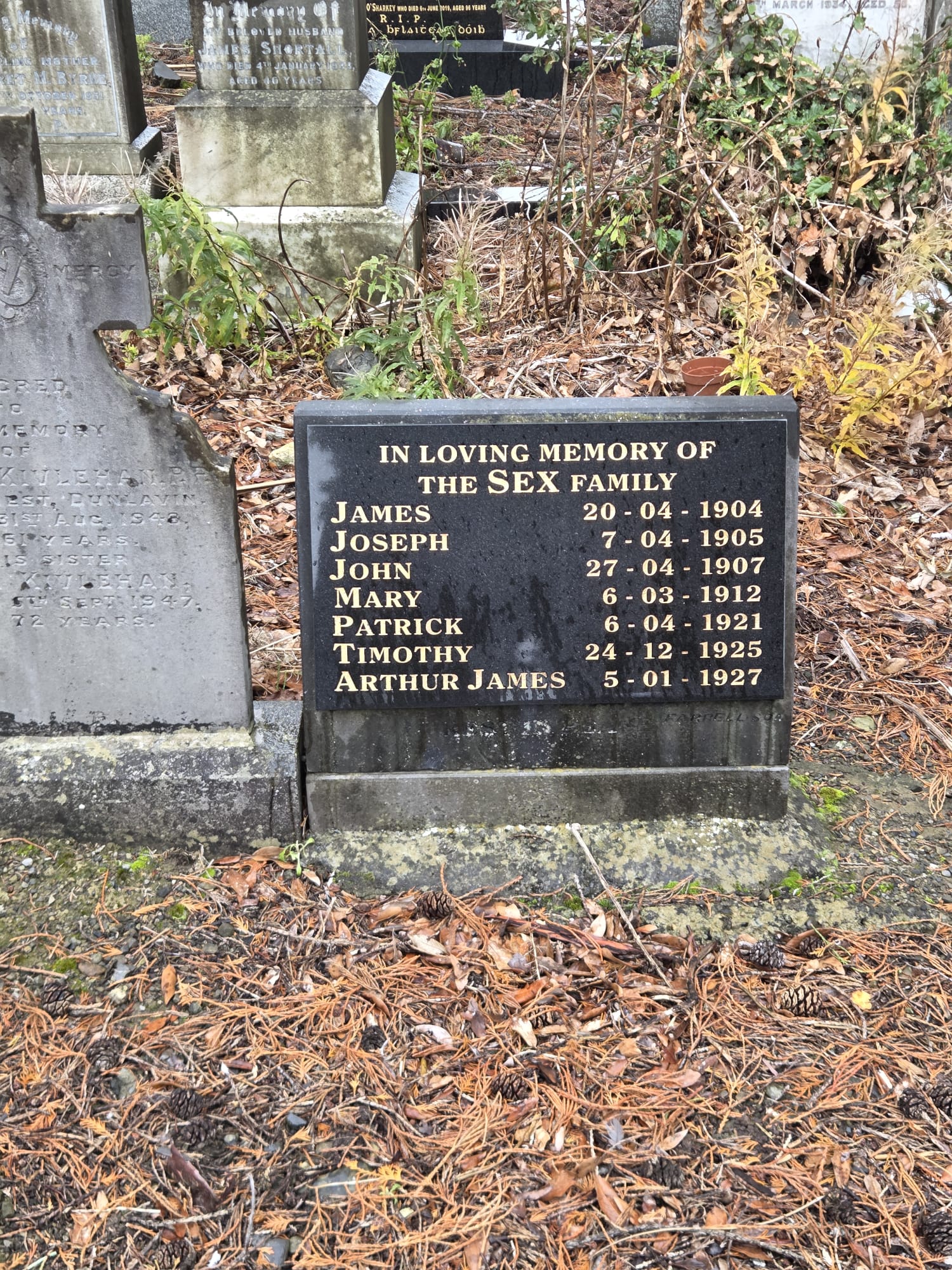
Grave of the Sex family
The grave of Patrick Sex in Glasnevin cemetery

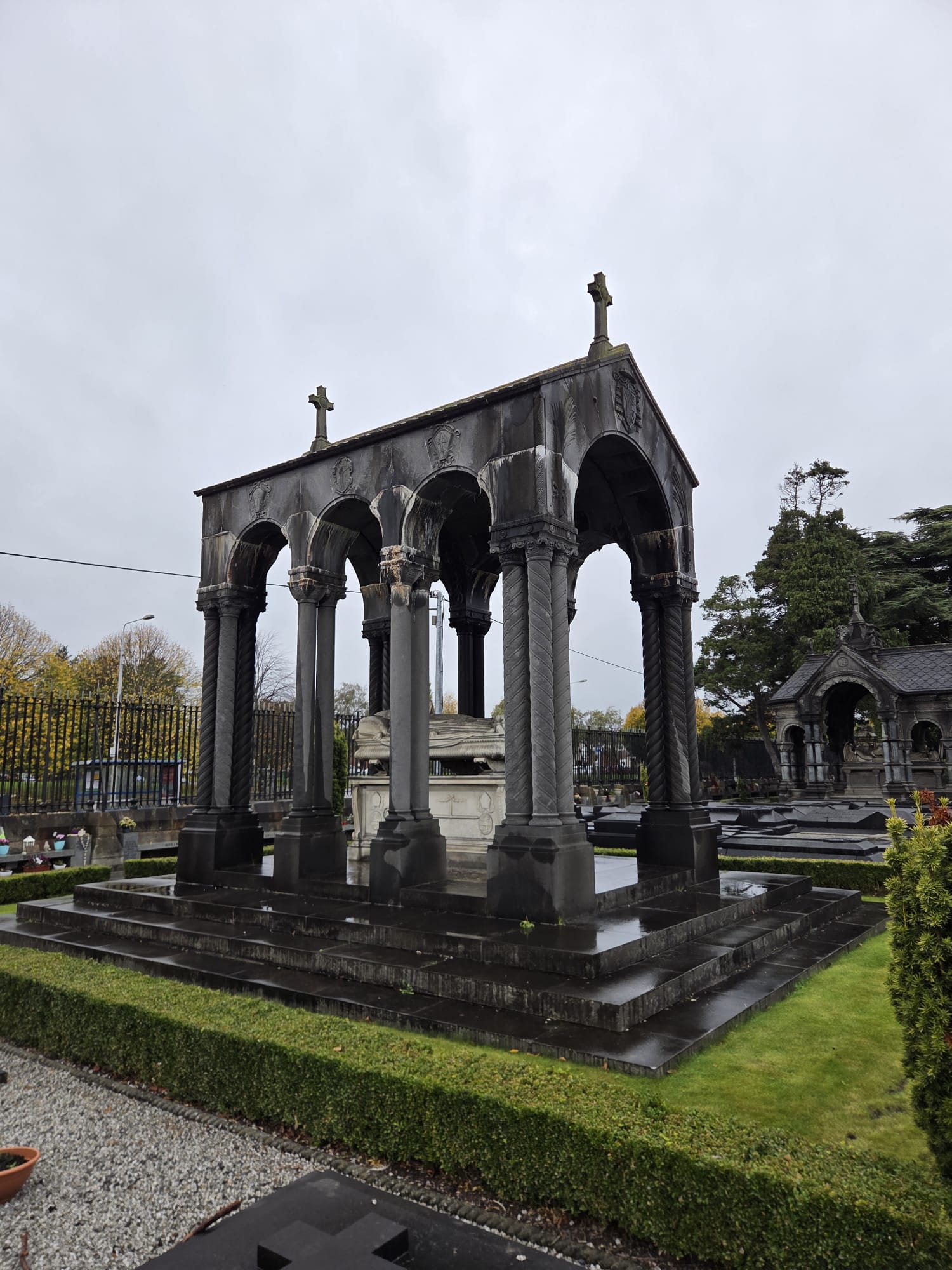
The burial itself was somewhat unusual as the gravediggers at Glasnevin cemetery were on strike, which they would not break, even for a fellow union man, so Patrick’s grave was dug and closed by friends and family members. Gravediggers’ strikes were not uncommon at the time, they had taken place in 1916, 1919, and again in 1920. The one exception made by the gravediggers during their strike did take place a couple of days before Patrick’s burial, for the internment of Dublin’s Archbishop, William Walsh.

By contrast, the elaborate grave of Archbishop William Walsh

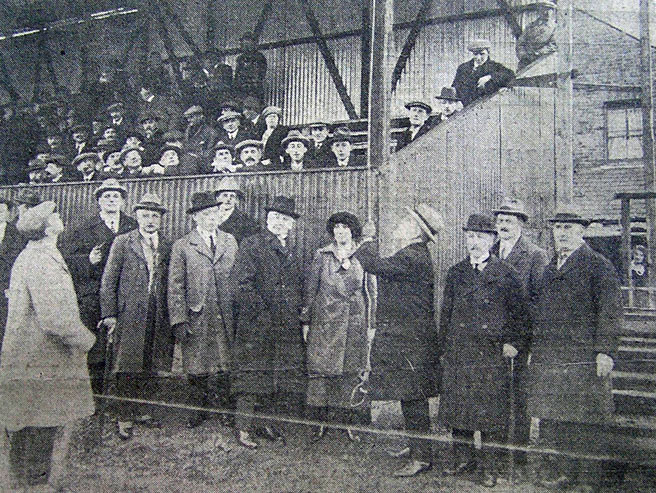
The outpouring of public support for the Sex family was evident not only in the strong turnout for Patrick’s funeral but also in the sporting world. A memorial committee had been established and a month after Patrick’s funeral there was to be an end-of season benefit match staged in Dalymount Park between Bohemians and a Best of Leinster XI, a set of high-quality gold medals were to be presented to the winning team while the proceeds from the game would go to help Mary Sex and her children.

The selection to face Bohemians in the charity match which included future Ireland internationals Alec Kirkland and Paddy Duncan – from the Evening Herald 16th May 1921

The game was played on the 18th May, 1921 and a crowd of around 4,000 was in attendance to witness an entertaining 2-2 draw. With no extra-time and no penalty shoot-outs a replay to decide the winner of the gold medals was set, which also guaranteed a second opportunity to fundraise for the Sex family. After some back and forth around a replay date, the 26th May was chosen and Dalymount Park was once again the venue, this time Bohemians were the victors, triumphing 1-0 over the best of Leinster selection, thanks to a goal by Billy Otto. It was said that the game was played “before a good attendance” and this hopefully translated into funds for Patrick’s family.

It had been suggested in a Dublin Evening Telegraph report that Laurence O’Neill, the Lord Mayor of Dublin might ceremonially kick off the game, but this did not happen due to his having to travel to the USA where O’Neill was working with the “White Cross” who were providing aid in Ireland during the War of Independence. It was suggested in O’Neill’s absence that W.T. Cosgrave, then an Alderman on Dublin City Council, might take over that role but it is not clear from reports whether this happened.

The same report stated that “this is the first time the Dublin footballers and supporters have come forward to do something the alleviate the sorrow of at least one household in these unsettled days” while also encouraging those who did not attend football matches to “rid themselves of all petty prejudices and bring all their friends and associates for the once to Dalymount”. Which would appear to be a not so subtle appeal to supporters of the GAA codes to ignore “the Ban” and attend a soccer match due to the good cause that it was supporting.

One final question that arises, considering the level and scale of violence witnessed over the previous two years, why was Patrick Sex the first victim of the violence in the War of Independence to receive a benefit match? While Patrick Sex may have been a football fan, though it is not specifically mentioned in any reports, he doesn’t seem to have been mentioned in any role in connection with any club or with the Leinster Football Association (LFA). As previously discussed the size of Patrick’s family, his role in the Trade Union movement, and being well known in the local area having worked for many years for McInnally’s butchers all contributed to the prominence given to his funeral, but he was sadly far from unique. Many people with large families, who were well known within their communities lost their lives during the War of Independence, so why a football benefit for Patrick if we can’t find any specific connection of Bohemians, the LFA or any other football club?

I would suggest the answer lies in the timing of Patrick’s death in April 1921, with the benefit match and its replay being held the following month. For context, long-standing issues within the Belfast-based Irish Football Association and its relationship with the LFA and its member clubs were coming to a head against the backdrop of internal bureaucratic strife and the ongoing violence of the War of Independence. In February 1921 there are been consternation among the IFA officials at the displaying of an Irish tricolour at an amateur international against France in Paris, those involved were arrested and there were charges within Dublin football and local media of bias on the part of the IFA. The IFA had also made the decision to not play that season’s Junior Cup and move Intermediate Cup matches which had been scheduled for Dublin to Belfast. The final straw arrived in March 1921 when the venue for a replay of the drawn Cup game between Glenavon and Shelbourne came to be decided. The original match had taken place in Belfast so custom would suggest that the replay should take place in Dublin. However, the IFA ruled that the replay should also take place in Belfast.

On June 1st, less than a week after the Sex memorial match replay, at the annual meeting of the LFA in Molesworth Hall in Dublin, an overwhelming majority of committee members voted to break away from the IFA. The LFA had been polling its member clubs on the subject since April before passing the motion at the beginning of June and by September of that year the Football Association of Ireland had been established, and surprisingly quickly a new League of Ireland cup and league competition had also been formed.

As Neal Garnham notes “by mid-May the LFA was effectively operating independently of the IFA”. Somewhat bizarrely the IFA held a Council meeting on June 7th, seemingly blissfully unaware that the LFA had voted to remove itself from IFA jurisdiction, among the items voted on and approved at the meeting was a motion by Bohemians to play a benefit match for Patrick Sex. It perhaps, shows the sporting and communications division between Belfast and Dublin, that the IFA were unaware that the LFA was no longer affiliated, or that two benefit matches for Patrick Sex had already been played. The organising of the game by Bohemians, the LFA and the role of the memorial committee which seems to have included prominent Republican politicians like Laurence O’Neill and W.T. Cosgrave, seems to suggest that the Patrick Sex memorial match was part of a larger, ongoing process of Dublin football moving away from Belfast control and taking charge of its own affairs, this coupled with the specific nature of Sex’s death and his background suggests why he, and not some other innocent victim was the first to receive such a benefit game.

With special thanks to Aaron Ó’Maonigh, Sam McGrath and Gerry Shannon for their help with elements of the research, and for Aaron for sending on the original “Sex memorial” clipping.

Voyage from Olympia – Ireland against Estonia and the USA

The FAI delegation were busy at the Olympics, it had been a challenge to even get the football team to Paris, considering the cost and a lack of administrative or State support. And while the Irish side had put in a credible display, only losing out at the quarter final stage to the Dutch after extra time, the officials were keen to make the very most of their time in Paris making new connections with other FIFA members and renewing acquaintances with those nations that had supported the Free State in taking its seat at the top table of world football.

It is against this backdrop that two further games were organised, one in Paris, against Estonia, and another back in Dublin against the United States. Immediately after elimination against the Dutch the Irish delegation had arranged another match, this time against the Estonians on June 3rd , which gave an opportunity to give some game-time to those players who hadn’t previously had the opportunity to feature. The likes of Tom Murphy, Charlie Dowdall, John Thomas and Christy Robinson all got to play as the Irish side recorded an impressive 3-1 win. Level 1-1 at the break thanks to a Paddy Duncan goal, second half strikes from Robinson and Frank Ghent gave Ireland the win.

Surprisingly, the Estonia game, a friendly match, was the best attended of the Irish matches played in Paris with over 3,000 spectators turning up. The crowd numbers were significantly helped by the fact that Ireland didn’t have to compete for public interest against other matches kicking off simultaneously in Paris as had happened with the previous games against the Netherlands and Bulgaria. Also of significance was the appearance of Bohs’ Christy Robinson, four years later his brother Jeremiah (Sam) Robinson would win his first cap, versus Belgium, this would mean that they became the first set of brothers capped by the FAI.

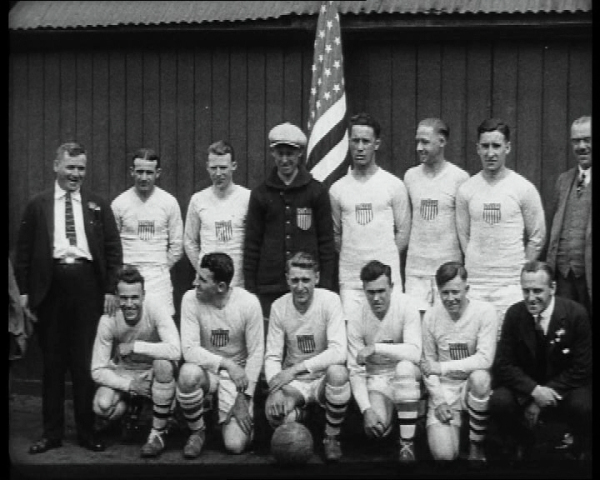
Less than two weeks later, on June 14th , Ireland played their first home international, hosting the USA in Dalymount Park. The USA had eliminated Estonia at the Olympics but had been knocked out by eventual winners Uruguay. They too stayed on for an extra match, beating Poland 3-2 in Warsaw before journeying to Dublin. The USA had supported Ireland’s membership to FIFA, and their journey to Dublin shouldn’t be too surprising as the American soccer party were led by Peter Peel, a Dublin-born, Limerick-raised, sporting all-rounder who had moved to Chicago as a young man. Research by Michael Kielty has shown that Peel retained a profound, active interest in Irish affairs while also running a successful sports medicine practice and being dubbed the “Soccer King of Chicago”.

There was perhaps an added incentive for the Americans to spend a full week in Ireland as the USA was in the middle of its prohibition era and it is believed that the United States party enjoyed the social life available to them in Dublin during their stay. Whether this had any impact on their performance is uncertain, perhaps more likely is the impact of the journey across Europe from Warsaw to Dublin.

USA team in Dalymount

Regardless, the United States, although a fit and physically imposing side were well-beaten 3-1 in front of a somewhat disappointing crowd of only around 5,000 for the summer friendly in the football off-season.
Ireland included several players, who because of previous experience as professional footballers hadn’t travelled to the Olympics, and it was one of these, Ned Brooks of Bohemians who made the biggest impression. Brooks, on his debut, scored a fine hat-trick, pouncing on an early mistake by Arthur Rudd before rounding off the 3-1 win with two fine strikes. Sadly, this would be Brooks only international cap.

It would be 1926 before Ireland would play another international, and while Brooks was selected to start against Italy, tragedy struck days before he was due to travel when his seven-year-old son Harold ran across a busy street in Rathmines to ask for a penny from his father when he was struck and killed by a car. Despite being rushed to hospital and being given a blood transfusion by his father, young Harold succumbed to his injuries. I feel that the story of Ned Brooks, his brilliance and tragedy shows why it is so important that we honour the memory and achievements of the players of 1924.

Originally published in the Ireland v Hungary match programme May 2024

Jack O’Donnell – the Dolphin trawling the seas

As excuses go for missing training it was at least original. Being absent because you were caught in storms aboard a fishing trawler off the coast of Iceland and at any moment feared that you’d be washed overboard to a watery grave. This was the excuse offered by Jack O’Donnell, full-back for Blackpool FC in 1932, when they were still a top-flight side. It wasn’t to be O’Donnell’s first brush with authority, nor his last. This is the story of how a talented footballer went from being a League champion with Everton to making intermittent appearances for Dolphin FC and Reds United in the League of Ireland either side of a stint in prison.

O’Donnell was born in Gateshead in March 1897, the son of John and Grace O’Donnell. John was a labourer from Newcastle, though the O’Donnell surname does suggest an Irish lineage some way back in the family. By the age of 14 young Jack was already working as a driver in a coal mine. Like many young miners-cum-footballers in the north east of England he began playing with his local colliery team, Felling and then later with Gateshead St. Wilfrids, before being signed by Darlington in 1923. At the time Darlington were in the Third Division North, and were on the lookout for a stiker, however a series of injuries meant that O’Donnell was pressed into service on his debut as a left back, the position that he was to make his own over the coming two seasons.

In early 1925 Darlington were drawn against Cardiff City in the first round of the FA Cup. While Cardiff would ultimately prevail, and make it all the way to the final that year, Darlington did manage to take them to two replays with back-to-back 0-0 scorelines. O’Donnell was especially impressive in these games and drew the attention of Everton who signed him just weeks later in February 1925 for a fee of £2,700, huge money at the time for a defender, especially one playing in the Third Division and was at the time far and away the record fee ever received by Darlington.

One issue of note however, is that at the time of signing for the Toffees, O’Donnell was a month shy of his 28th birthday but the newspapers at the time of the transfer list him variously as 20 or 21 years of age. A journalistic mistake or a case of O’Donnell shaving a few years off his actual age? He certainly wouldn’t be the first or last footballer to attempt it if this was the case.

O’Donnell quickly made the Everton first team, although his versatility was occasionally to his detriment, twice in his early days he ended up going in goal to replace an injured goalkeeper as substitutions were not yet allowed. He also ended up featuring as an inside-left for the Toffees and while ‘Dixie’ Dean was clearly the first choice centre forward O’Donnell did contribute five goals in the 1925-26 season when pressed into the forward line. While he made 27 and 24 League appearances respectively in his first two, full seasons with Everton there is a sense that his adaptability stopped him from cementing his place in the team. That was to change for the 1927-28 season though, O’Donnell, along with Scottish winger Alec Troup, were the only two players to feature in all 44 games for Everton that season (42 League, 2 FA Cup) as Everton, propelled by the brilliance of ‘Dixie’ Dean who scored 60 League goals, won the League Championship.

O’Donnell at Everton

O’Donnell the ever-present, won plenty of praise that season, he was a physically tough player but with surprising technical skill, his bravery and fearlessnesss in the tackle also marked him out and there are numerous reports of last ditch tackles saving the day at Goodison Park and elsewhere.

It was also during that league winning season that Jack married Margaret Butcher, with the first of their two children, John, being born the following year. It seemed that everything was going well for Jack. For the following two seasons he was a first team regular for Everton and while they won the Charity Shield the following year there was a drop to 18th in a 22 team league. Worse was to follow the next season (1929-30) as Everton finished bottom and were relegated. In August of 1930, as Everton were facing into the prospect of a season in the Second Division there was a note at a club board meeting mentioning O’Donnell as “suffering from a disease of owing to his own misconduct” and being suspended for 14 days. He would never play for the Toffees again.

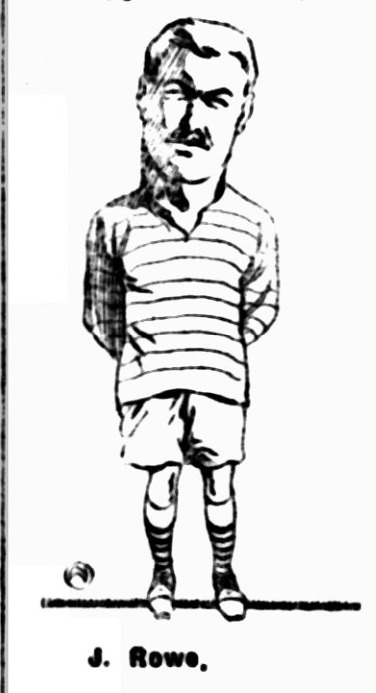
Rather than spend a full season in Division Two, especially having fallen from favour with the board, O’Donnell joined Blackpool in Division One for a fee of around £1,500 just after Christmas 1930, as the seaside club aimed to stave off a relegation battle of their own. Blackpool did manage to narrowly survive that season with O’Donnell installed at full-back and he even was named as team captain. O’Donnell and was a regular starter for the rest of the season as Blackpool finished 20th out of 22 teams, with only two sides relegated Blackpool survived by a single point as Leeds and Manchester United dropped into the second tier.

A cartoon of O’Donnell after his move to Blackpool

The following season was to be a similar experience for Blackpool, once again finishing 20th and avoiding the drop by a single point. Again, O’Donnell was a regular, playing 31 out of 42 League games, however there was significant drama for Jack off the pitch.

In November of 1931 O’Donnell was suspended by Blackpool for fourteen days for an unnamed “breach of discipline”, he had also been stripped of the club captaincy just weeks beforehand. When interviewed later in 1933 for the Topical Times O’Donnell gave a robust, if rambling, defence of himself. In an interview which featured allegations of club directors taking backhanders, O’Donnell alleges that his initial suspension at Blackpool resulted from false rumours being spread about him by “somebody with a nose for trouble-making and a character which didn’t have truth in his make up” who made the claim that O’Donnell was going out and getting drunk every night. O’Donnell denied this but said that these allegations had reached the ears of the Blackpool directors who called him for a meeting. O’Donnell recounts that he was “furious that they even listened to such tales” and that as a result he “said things he didn’t mean”. The outcome was another suspension by the club.

It is however, the way in which O’Donnell chose to spend his suspension that gained him most notoriety. Due to return to training in early December O’Donnell was a no-show at the day he was due back. His landlady, and his friends in the local club where he socialised didn’t know where he was but his landlady did mention that O’Donnell had previously expressed a desire to become a fisherman. A man answering to O’Donnell’s description and wearing a pair of plus fours was seen boarding the trawler Cremlyn in the port of Fleetwood in the company of the trawler’s cook.

Jack O’Donnell had indeed gone to sea! Speaking to the media later in December, after he’d returned to dry land he gave the somewhat implausible story that he had simply been talking to the ship’s cook who was a friend of his, had boarded the Cremlyn with no intention of sailing, but without realising the boat had pulled away from shore. O’Donnell was also quick to deny the allegations that he had claimed he was done with football and was planning on pursuing life as a fisherman.

This rather thin excuse is contradicted by O’Donnell himself in the 1933 Topical Times interview when he says that being suspended and having little to do, that he was invited to go sailing on the basis that it was to be a short trip and that he would be back in Blackpool in plenty of time ahead of the lifting of his suspension. However, these plans were waylaid by Poseidon when, off the coast of Iceland the Cremlyn “ran into one of the biggest storms ever seen in the North Atlantic” according to O’Donnell. He claimed that the lifeboat was washed away in the storm and he feared that “every minute would be out last.”

Jack O’Donnell is front page news over his fishing trawler exploits in 1931

O’Donnell did of course make it back to dry land, but unimpressed with his explanation the board of Blackpool, still fighting off relegation, gave him a further fourteen day suspension. On this occasion O’Donnell had the good sense to remain off the high seas. Jack’s aquatic adventures had further reprecussions for him off the football field, as the New Year turned to January 1932 he found himself served with a court order by his, now estranged, wife Margaret. While Jack was living in Blackpool, Margaret was still living in Gateshead with their son John. There had been a legal agreement in place since July of 1931 that Jack would pay £2 a week in maintenance to his wife, but that around the same time as the trawler incident these payments had ceased.

It was at this point that Margaret declared that she was “absolutely destitute” and had to “apply for relief”, meaning that she had to seek the limited form of social welfare available under the “poor laws” that existed at the time. Representatives of Blackpool FC pleaded with Margaret to cease proceedings in the case, promising a £4 postal order and £2 a week as long as he was employed at Blackpool and further stating that “Jack is making a big effort to make a man of himself and we are doing all possible to assist him.”

The case was adjourned for a week and when it was eventually heard in Gateshead a court order of £2 a week maintenance for his wife and son was made against Jack. Margaret mentioned a particular personal cruelty from Jack, despite being in Newcastle for three days for a cup game against Newcastle United (which was taken to a replay which Blackpool lost) in the week before the hearing, Jack made no effort to get in touch with his wife or three year old son.

O’Donnell finished out the season for Blackpool as they clung on to secure their top-flight status, but there was further drama during the summer as once again Jack went missing, this time in July during pre-season training. Blackpool quickly sought to have O’Donnell suspended by the FA, who duly obliged. With the new season on the horizon Jack O’Donnell found himself in an unevniable position, suspended from playing football but with Blackpool still holding his registration and hoping for some return in terms of a transfer fee for their errant star. The club denied that a transfer was forthcoming but there was still a protracted saga as Hartlepools United, then in the Third Division North, sought to sign O’Donnell. Hartlepools were managed by Jackie Carr, a former England centre half who had briefly played with O’Donnell at Blackpool towards the end of his own career. He clearly believed that his former teammate and powerful full back still had something to offer despite his many off the field issues and disappearing acts.

A prolonged transfer saga was finally brought to an end when Hartlepools paid a fee in the region of £500 for O’Donnell’s services. Blackpool placed certain conditions on the transfer and successfully requested the FA to lift the player’s suspension so that he could move to the County Durham club.

Jack was once again a regular, playing out the season with Hartlepools, and once again he was made club captain making 28 league appearances, scoring twice as they finished lower mid-table in Division Three. It was to be his only year with them as with the season coming to a close he was transfer listed in May 1933 and by August of that year Jack had joined Wigan in the Cheshire League where he was once again made club captain on his arrival.

This return to football wasn’t quite guaranteed as during the summer of 1933 Jack once again took to the seas, taking a job as a steward on an ocean liner sailing between Liverpool and Montreal. In the Topical Times interview he recalls playing football for a team made up of the ship’s crew, playing against barefoot teams in the Canary Islands and against American and Canadian sides, recounting the physicality of the game as played in America (which is saying something considering the physical nature of O’Donnell’s own game but also tallies with other descriptions of the extremely physcial nature of the game in the United States) as well as describing a sporting encounter with Everton legend of the teens and twenties, Sam Chedgzoy who had relocated to Canada.

Despite being installed as captain and some encouraging early performances at Wigan, Jack was once again in trouble with the club heirarchy after only a couple of months. By October 1933 he had pulled yet another of his “disappearing acts” and there was speculation on behalf of Wigan Athletic that his well-known wanderlust and love of deep-sea fishing had gotten the better of him and that he had once more gone to sea, which to some extent he had, bacause Jack was with the Dolphins. He had crossed the Irish sea to sign with League of Ireland side Dolphin, located in the south Dublin suburb of Dolphin’s Barn.

O’Donnell during his time at Dolphin FC

Dolphin FC had finished the previous season as FAI Cup runners-up and were under the tutelage of player-manager Jerry Kelly. The Scottish defender/midfielder had enjoyed a successful career in England winning a league title for Everton alongside Jack O’Donnell and it is likely that his former teammate was responsible for Jack’s trip to Dublin. While Jack had been suspended by Wigan, the fact that they were a non-league club and the somewhat fluid nature of transfers between British and Irish teams at the time meant that transfer rules were less hard and fast, however it still took a couple of weeks for clearance and paperwork to be finalised by Wigan to allow Jack make his League of Ireland debut for Dolphin.

O’Donnell impressed in his first game for Dolphin, a 3-0 win over Cork Bohemians on 26th November 1933, he was praised for his “powerful kicking and positional play” and got on the scoresheet with a penalty after a Cork handball. It is obvious that O’Donnell had impressed not only at the back but with his attacking play and a move to centre-forward, where he had previously played on occasion for Darlington and Everton, was planned for the next game against Shelbourne. This would allow a return to the defence of Dolphin’s international pairing of Larry Doyle and George Lennox. Of course, this wasn’t to be, Jack O’Donnell had pulled yet another one of his “disappearing acts” going missing for both the Shelbourne game and the subsequent match against Bohemians.

By the time O’Donnell returned in mid-December after dealing with unnamed “business” Dolphin had signed a new striker in the form of Jimmy Rorrison who had joined them from Distillery. Rorrison, something of a journeyman striker in the Scottish and English Leagues had impressed at Cork the previous season and took over the centre forward berth with O’Donnell continuing in his favoured role at left-back.

Dolphin cruised to an easy 4-1 victory in their next match with Bray Unknowns with O’Donnell scoring another penalty and his overall display being described as “polished and clever”. O’Donnell featured in a run of games for Dolphin over the Christmas period and into the New Year of 1934, scoring a third penalty in a 2-1 defeat to Shamrock Rovers in January. There was a return to form the following week in the opening round of the FAI Cup, as Dolphin were drawn in something of a local derby with fellow southsiders Jacobs. O’Donnell was installed as centre-forward in place of Rorrison who was released after only a month at the club. O’Donnell scored twice from open play as Dolphin swept to a facile 5-0 over the Biscuitmen which was followed by a victory over Queen’s Park (from the Pearse Street area of the city) after a replay in the second round. All of a sudden Dolphin were into the Cup semi-finals.

However, the cup run seems to have distracted from their league form and Dolphin slumped to a 2-0 defeat to bottom side Cork Bohemians with O’Donnell being utilised as an inside-left to little effect. This slump in form continued for Dolphin as they were beaten in a dull game 1-0 by St. James’s Gate in the Cup semi-final, Billy Kennedy scoring the decisive goal as Jack O’Donnell was returned to his more usual position of left-back. O’Donnell continued as a regular for the remainder of the season, and although Dolphin’s form was patchy he did win praise for his displays, mostly in the full back position although he did score his fourth, and final, league goal for Dolphin in March 1934 as a centre-forward in a resounding 3-0 win over Dundalk in the final game of the season.

Dolphin finished fifth that season and had made the semi-finals of the FAI Cup, however they had probably hoped for a little bit more having recruited heavily from outside the league, including the signing of O’Donnell. Dolphin had led the way in the League in the recruitment of cross-channel players and were known as one of the clubs in the League of Ireland who were prepared to pay higher wages to bring talent across the Irish Sea to Dublin. This also influenced their choice of coaches such as Arthur Dixon who would join the coaching team at Rangers and bring the young Dolphin star Alex Stevenson with him, and Dixon’s eventual replacement, Jerry Kelly who brought his former teammate O’Donnell to Dublin.

Reports stated that Jack had returned to Blackpool for the summer months, he was gone from Dolphin for their League of Ireland Shield campaign and missed the friendly match against Notts County arranged as part of Willie Fallon’s move from Dolphin to the Magpies. However, it wasn’t to be a relaxing summer on the beaches of Lancashire for Jack, in May 1934 he faced another summons from his wife Margaret for once again abandoning her and his family as Margaret had once more been forced to go to the “Public Assistance Committee” to makes ends meet. Jack was now a father of two, as a daughter, Kathleen had been born earlier that year. In her statement Margaret recounted that he had briefly returned to her after being suspended by Wigan and that later that year his “disappearing act” from Dolphin in November had seen him briefly return to his family in Gateshead. After finishing with Dolphin in March he seems to have ended up in Blackpool where he claimed he was looking for work on the town’s pleasure beaches. At the court hearing in Gateshead he was sentenced to a month’s imprisonment.

Upon Jack’s release at the end of June the court ordered that he pay 25 shillings a week in maintenance to his wife and growing family. Faced with this challenge it is unclear what Jack did for the remainder of his summer however he reappears in media reports in September with the news that he has signed for non-league side Clitheroe. Although 37 years of age by this stage, (if his clubs were even aware of his real age), it was to football that he returned yet again to make a living. As always with Jack it wasn’t plain sailing, having only played once for Clitheroe there was an objection to his registration from Dolphin, he remained their player and they claimed that he had been suspended by them and as such couldn’t turn out for another team. This would suggest that Jack’s return to Britain at the end of the previous League campaign wasn’t something that had been agreed with Dolphin.

Frustated in these attempts it seems Jack returned home to Tyneside, lining out for Wardley Welfare FC in his home town of Gateshead, and perhaps spending a bit more time with his family. His younger brother Bill, who had mirrored Jack’s career somewhat, joining Darlington and later Everton, without ever enjoying Jack’s success, was back playing his football in Gateshead as well, turning out for Gateshead FC in the Third Division North. Back in Dublin, Dolphin enjoyed one of their best ever seasons, winning the League title, the Dublin City Cup and finishing runners-up in the Shield without the suspended Jack O’Donnell. Ray Rogers finished as their top scorer, the former Bohemians man solving the centre-forward problem that had plagued them during Jack’s season with the club.

There was one final footballing adventure for Jack and it involved a return to the League of Ireland. With Dolphin beginning the following season as defending champions they once again came calling for the services of Jack O’Donnell, however his time with them was to be very brief. After just one game, a 4-3 defeat to Sligo Rovers he was released only to be signed a week later by another Dublin side, Reds United who were enjoying their sole League of Ireland season. As luck would have it his first, and only game, for Reds he came up against his old side Dolphin with the game ending in defeat for the League newcomers. Once again Jack was released after a single game.

Be the end of the 1930s, his playing days behind him, Jack was back in the North East of England, living with his family and working as a labourer in a timber yard. He made a few more brief appearances in the sports pages – in 1948 when he visited the Everton team ahead of a game against Newcastle in St. James’s Park, while in 1952 he was listed as turning out in a charity match in South Shields alongside a number of other, well-known, retired players. It must have been one of the last games he played as he passed away later that year.

With special thanks to Rob Sawyer of the Everton FC Heritage Society for his assistance, especially the Topical Times article and photos of Jack O’Donnell while at Everton.

Soccer and Society in Dublin – podcast with Conor Curran

I interviewed sports historian Conor Curran recently about his new book, Soccer and Society in Dublin, which you can find in all good bookshops and online here.

I’d recommend it to anyone with even a passing interest in Irish football. You can listed to my chat with Conor on the podcast via the link below.

The League of Ireland: An Historical and Contemporary Assessment – conference on Saturday January 14th

This Saturday (January 14th) Dalymount Park, specifically the Member’s Bar, will host a League of Ireland football history conference to mark the publiction by Routledge of it’s new academic collection The League of Ireland: An Historical and Contemporary Assessment which is edited by Conor Curran.

I have a paper included which looks at several case studies highlighting the complex patterns of migration of players into the League of Ireland over the last century. The conference is free to attend and you might even get a cup of tea and a sandwich.

Conference schedule

  • 9.30-10 am: Conor Curran (Trinity College Dublin) – Introductory Comments
  • 10-10.30 am: Julien Clenet (University College Dublin) – Association football in Dublin in the late Nineteenth Century: an Overview
  • 10.30-11 am: Cormac Moore (Dublin City Council Resident Historian) – The Formation of the Football Association of Ireland
  • 11.00-11.30 am: Aaron Ó Maonaigh (Independent Scholar) – ‘In the Ráth Camp, rugby or soccer would not have been tolerated by the prisoners’: Irish Civil War attitudes to sport, 1922–23.
  • 11.30-12 pm: Conor Heffernan (Ulster University) and Joseph Taylor (University College Dublin) – A League is Born: The League of Ireland’s Inaugural Season, 1921–1922
  • 12-12.30 pm: Conor Curran (Trinity College Dublin) – The cross-border movement of Republic of Ireland-born footballers to Northern Ireland clubs, 1922–2000
  • 12.30-1.30 pm Lunch
  • 1.30-2 pm: Gerry Farrell (Independent Scholar) – One-way traffic? – 100 years of soldiers, mercenaries, refugees and other footballing migrants in the League of Ireland, 1920 -2020
  • 2-2.30 pm: Tom Hunt (Independent Scholar) – Ireland’s Footballers at the 1924 and 1948 Olympic Games: Compromised by the Politics of Sport
  • 2.30-3 pm: Michael Kielty (Dublin Business School): Peter J. Peel: The Soccer King
  • 3-3.30 pm: Ken McCue (De Montfort University) – Who’s SARI now: Social enterprise and the use of the medium of sport to further human rights in society
  • 3.30-4 pm: Helena Byrne (Independent Scholar) – Breaking new ground: The formation of women’s football governing bodies in 1970s Ireland
  • 4-4.15pm Closing Comments
  • Papers will be for the duration of twenty minutes, with ten minutes afterwards for questions.

You can attend for free by registering through eventbrite.

Blowing up King Billy and finding Everton a keeper

Ted Sagar was an Everton legend, a league and cup winning goalkeeper, an England international, and the holder of the record amount of league appearances for the club for some forty years until it was broken by the Toffees other legendary keeper, Neville Southall. It is quite the impressive CV. Sagar’s Everton career ultimately lasted for an amazing 24 years but as time comes for all of us, with Ted approaching his late 30s the Everton manager Cliff Britton was on the lookout for a replacement for his veteran custodian. His eventual long-term successor, a man who would make over 200 appearances in more than ten years at the club was discovered in the most unusual of places, the south Dublin suburbs playing for “Bulfin United under 17s, Division 2.”

This young man was Jimmy O’Neill, as well as over a decade of service with Everton he enjoyed a successful spell at Stoke City where he was hugely popular and would win 17 caps for the Republic of Ireland. At just 5’9″ and willowy thin he didn’t conform to the stereotypical physique of the goalkeeper. This is the story about how his journey from the schoolboy leagues of Dublin to the Everton first team in the course of just over a year was facilitated through an unusual source, a League of Ireland club official and Dublin shopkeeper who had also been a revolutionary from his teens, was imprisioned during the War of Independence and had remained an active member of the IRA during and well after, the Civil War. It is the story of Michael Douglas.

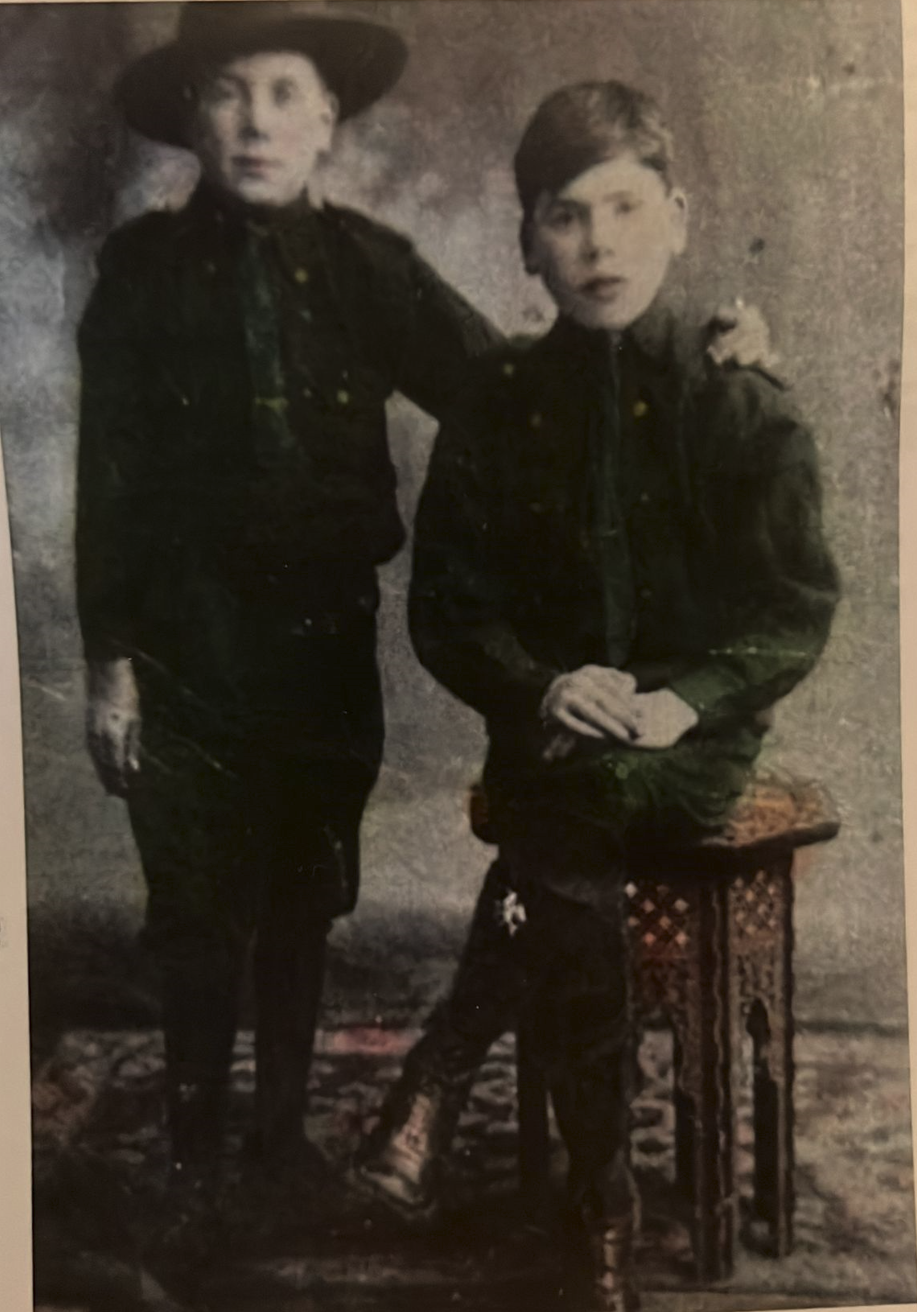
Michael Douglas was born in Dublin’s North Inner City in 1901, growing up on Stafford Street (now Wolfe Tone Street) and later on Granby Place, his parents, James and Lizzie were both born Dubliners, James beginning a family tradition of working for the City Council, his job being a paver. By 1917 young Michael was a member of Na Fianna Éireann, the Republican boy scout movement, where he was later joined by his younger brother Willie, both are pictured below. Also, by this stage the teenage Michael had followed his father into employment with the City Council.

Michael and Willie Douglas in their Na Fianna uniforms

By the end of 1917 Michael had become a fully fledged member of “G company” of the Dublin Brigade of the IRA, parading with them at the enormous public funeral of Thomas Ashe, a 1916 veteran who had died in Mountjoy prison after being force-fed while on hunger strike. Later during the War of Independence Michael continued to parade and provide guard duty at various functions while also being involved in well known raids including the one on Monk’s Bakery, North King Street which left three British soldiers dead but also resulted in the capture, and later execution of Kevin Barry. In another footballing connection with that incident, one of the other members of the Dublin Brigade involved was Christy Robinson who would later represent Bohemian FC and travel to the 1924 Olympics with Ireland.

By 20th November 1920 (a day before Bloody Sunday) Michael had been arrested as part of a wide crackdown by Crown Forces, he was found with Sinn Féin literature in the family home in Granby Place and was sent by steamer to Ballykinlar internment camp in Co. Down. Michael stated that the Crown Forces had not found any weapons in the raid but claimed that £29 (a considerable sum at the time) had been taken from his father’s house during the raid.

Ballykinlar was a former army base turned into an internment camp and which grew to bursting point by the end of 1920 as raids and arrests escalated in November and December of that year. There were upwards of 2,000 men interned from all across Ireland at its peak. Many were active in the Independence struggle, others were unlucky, not actively involved perhaps merely sympathetic to the Republican cause but arrested all the same as part of sweeps by Crown Forces.

While interned in Ballykinlar in July 1921, Michael’s sister Kate was injured in an altercation with Crown Forces around Dominick Street in the north inner city. On two occasions Crown Forces removed an Irish tricolour from the street where it had been strung between houses, on the first occasion a group of local women managed to wrestle the flag back and restring it across the street, however the Military patrol returned later that night to successfully remove the flag and Kate was injured by a revolver bullet as the local women harassed and jeered the soldiers from the street.

Michael requested leave to visit his injured sister, however as a truce was called shortly afterwards gradually the prisoners of Ballykinlar were released. It is around this time after his release that Michael seems to have taken a more keen interest in football and his own letters identifies the early 1920s as around the time he became involved with Shelbourne FC.

Michael’s interest in the national movement did not end after his release however, he remained actively involved, briefly being part of the group of anti-Treaty IRA who were occupying the Four Courts in 1922 just before the outbreak of the Civil War. Michael remained on the anti-Treaty side after the official outbreak of hostilities and was arrested by the Free State forces in November 1922, although he was released a month later. Michael remained inactive as the final months of the Civil War ground on although he did return to IRA activity in 1924 after the effective end of the Civil War and the issuing the of the “Dump arms order” in May 1923.

Perhaps the most significant incident in this period of his involvement was the bombing, in November 1928 of the equestrian statue of King William of Orange on College Green. It had been “first erected in 1701 to commemorate William’s victory over King James at the Battle of the Boyne in 1690″, the statue was always controversial, some felt that even Trinity College was being disrespected as Billy’s horse, White Sorrel, was positioned so its arse faced the University. Even by the end of the 18th Century the statue had been subjected to vandalism, and later in the 19th Century suffered from significant neglect and poor maintenance from an apathetic City Council.

King William’s statue on College Green (pic courtesy of Donal Fallon/Come Here to me)

On Armistice Day, 11th November 1928 in the early hours of the morning the statue was attacked yet again, it was blown up by the IRA. John Dorney explains the significance of the event as follows:

It was a part of a campaign by republicans, casting about for ways to remain relevant following their defeat in the 1922-23 Civil War, against Armistice Day in Dublin in which the Union flag was flown and ‘God Save the King’ sung by war veterans and unionists. On the same day, another bomb was placed at the statue of King George on Stephen’s Green. Rioting also took place between republicans and Poppy wearers in the city centre.

John Dorney, the Irish Story

Such was the damage to the statue that it was ultimately removed permanently by the City Council the following year. Among those responsible for the destruction of the statue was Michael Douglas, working under the supervision of former IRA Quartermaster and explosives expert Paddy Saunders. It is noted in the reports at the time that despite the blast taking place around 5am, with thankfully no injuries to anyone other than the leaden William, there were members of An Garda Síochána nearby who gave chase to those responsible for the bombing, they were chased up Trinity Street before a number of shots were fired at their pursuers. Interestingly in Michael’s military pension application the mention of Saunders (written as Sanders) is crossed out. Possibly because at the time of Michael’s application in the late 1930s Paddy Saunders had joined the ranks of An Garda Síochána himself!

By the 1930s Michael was married to Mary O’Neil and living in Little Ship Street with a growing family, right by the walls of Dublin Castle where he ran a small shop. He was also being referenced as a promintent member of Shelbourne Football Club, appearing in newspaper clippings representing the club at various functions, funerals etc. Moving forward a little later Michael is mentioned and photographed for the Shelbourne Golden Jubilee programme of 1945. Michael is mentioned as being a member of the Ways and Means committee of the club. The committee looked after matters such as the publication of the match programme, and the more social aspects of club life such as organising dances, events and fundraisers.

Douglas as part of the Shelbourne Ways and Means committee, 1945

It is perhaps in this context that Michael encountered Jimmy O’Neill, in a series of correspondence beginning in January 1949 he contacted Cliff Britton the Everton manager to recommend the young goalkeeper to him. Perhaps O’Neill was a relative through his wife and known to him that way? Or perhaps he had gotten to know young Jimmy through his work for Shelbourne? Either way he decided to approach the Everton manager, Britton who had been a star player for the Toffees in the era of ‘Dixie’ Dean and was also capped nine times by England. After enjoying some success with Burnley as a manager in the post war years Everton appointed him as manager in 1948. Everton also had a number of prominent Irish players at this time including Tommy Eglington and Peter Farrell and enjoyed quite a bit of support in Dublin at the time.

First contacting Britton on 25th January 1949, Douglas wrote, apparently with no prior connection with Britton, in order to

“recommend to you a boy who is playing goalkeeper for a schoolboys’ team and he is certainly playing great. I know of two League of Ireland Clubs who are interested in him but he is not inclined to sign for either of them. He has informed me that if he got the chance he would like a trip across.

He is 17 years, 3 months old: height – 5′ 9″: weight – 10st. 10lbs.I should like to mention that I am officially connected with a League of Ireland Club for the past 27 years and, for this reason, whether you are interested or not, I should like you and your Dublin representative (Scout) to treat this matter as strictly confidential.”

Letter from Michael Douglas to Cliff Britton
Reply to Michael Douglas from Cliff Britton

Britton replied within two days, asking for more detail on O’Neill and where he could have him watched. Douglas replied the following day, recommending that Everton have O’Neill watched in Bulfin United’s upcoming cup match against a strong Home Farm team before signing off wishing Everton success in their own Cup tie against Chelsea, a fourth round FA Cup match that Everton lost 2-0.

Everton duly had O’Neill scouted by no less a figure than former Goodison and Ireland great Alex Stevenson and in May 1949 Everton completed the signing of Jimmy O’Neill for the princely sum of £100 from Bulfin United. As for Michael he continued in conversation with Everton and recommended they scout Mortimer “Murty” Broderick, then plying his trade in the League of Ireland for Cork Athletic. He also had to chase Everton for a payment promised arising out the transfer of O’Neill. Eventually in October 1949, five months after signing Jimmy O’Neill, Everton paid Michael Douglas £5 for his part in recommending the club’s new goalkeeper.

Below you can see the fee of £100 paid for O’Neill (left) while on the right the £5 earmarked for Michael Douglas. Both taken from the excellent Everton Collection website

Everton never did sign Murty Broderick although they had played a friendly against Cork Athletic in 1949 and perhaps were not sufficiently impressed, Broderick would later join Sheffield United in 1950 and I can find no further contact or mention of Michael Douglas in club minute books after the signing of Jimmy O’Neill.

Writing an obituary for Jimmy O’Neill in 2007, The Independent’s Ivan Ponting described him as “the sort of goalkeeper that football fans love to watch. Whether plunging acrobatically to repel shots on his line or springing skywards to pluck crosses from the heads of rampaging centre-forwards, the slim, almost willowy Republic of Ireland international was a natural crowd-pleaser.”

He won 17 caps for Ireland playing in World Cup qualifiers and Ireland’s first ever games in European Championship qualification, a popular figure for both Everton and Stoke City but without the personal intervention of Michael Douglas he may never have reached those football pinacles. His almost 20 year professional football career owes a debt to the man who blew King Billy of his horse in College Green.

With a special thank you to the Fox and Carroll families for sharing Michael’s story and to Sam McGrath for assistance in the research of Michael Douglas’ and Paddy Saunders pension files.

Jesus back in a tracksuit – from Carey to Pauw

By Fergus Dowd

‘The pride and self-respect of our country as well as our players will be on show for millions in the pre-match ceremonies at Wembley Stadium on Saturday and it is important that we present ourselves in the best way possible, in terms of both dress and conduct, on every occasion during our stay in England.’

It was April 1957 as Jack Carey uttered those words to the FAI committee ahead of two World Cup preliminary games, home and away, against England the following month. The first Irishman to lift the FA Cup as captain of Manchester United, felt it was a simple request but he considered it essential that the powers that be purchase a set of tracksuits for those who would wear the green of Éire in London.

Today, sports manufacturers fall over themselves to provide football teams with clothing from polo shirts to the neck-warming ‘snood’, but it always wasn’t so. In the case of the FAI tracksuits were recycled on so many occasions they became undeniably shabby only six years before Carey’s words officials were forced to purchase a set in the course of a shopping expedition in downtown Helsinki ahead of a World Cup game in Finland. Unfortunately for the cash-strapped FAI these items of unexpected expenditure were impounded by customs and excise on the team’s return to Dublin, it took government intervention to release the tracksuits without charge. The cost for a set of tracksuits for the English adventure amounted to less than £50 but the word ‘tracksuit’ had left a bitter taste.

In 1946 Carey captained Éire against England at Dalymount Park after an interval of thirty-four years the English FA had agreed to send a team to Dublin. It included Wilf Mannion, Raich Carter, Tommy Lawton and Frank Swift in goals, names that rolled off the tongue easily, Stanley Matthews had also been selected but had to bow out through injury and was replaced by a young Tom Finney. Alongside Carey the Irish lineup included Cornelius (Con) Martin, Tommy Eglington, Alexander Stevenson, Billy Gorman and Bud Aherne.

Ireland v England 1946

Carey, Gorman and Aherne had lined up for the Irish FA in Belfast only two days previously against the same opposition with Mannion finding the net three times with the ‘Special Victory Ball’ supplied by The Athletic Stores of Wellington Place, Belfast as England ran out 7-2 winners. Wilf Mannion became the first debutant for England to score a hat-trick since George Mills in October 1937, only the eleventh player ever to achieve this feat.

Ahead of this meeting in Belfast the English FA had written to the Irish FA requesting an assurance that only players born in the North of Ireland would play, it was an era when men from the four corners of Ireland represented both entities on the football pitch. At the Liverpool Conference of 1923 the IFA was given international status and the Éire Association (FAI) dominion status. Under this agreement the IFA had the right to select any Irish-born player attached to an English or Scottish club and the Eire Association was only permitted to call upon Éire-born players.

Ireland team in Goodison Park 1949

In the press box in Dalymount Park the Fleet Street scribes who had taken the boat to Dublin reported:
“In Dublin, the first-ever meeting between the two nations was played in persistent drizzle and the difficult pitch made life awkward for the players. Throughout the match, the Republic put up a terrific fight and made the England team fight all the way to gain their eventual undeserved win. Indeed, had it not been for the fact that Frank Swift was in inspired form, then the visitors could have been well beaten. With only nine minutes remaining England stole victory with a fine goal. Langton gave Mannion a through pass down the left. The ‘Boro man cut in and unleashed an angled shot which Breen could only parry. The ball ran loose and Finney dashed in to slot it home. England had won by the skin of their teeth.”

Before William E. Webb of Glasgow had blown the whistle to get formalities underway, Dr W.F. Hooper, president of the FAI, handed to the chairman of the FA, Mr W. Brooke-Hurst, a silver cup – a replica of the Ardagh Chalice – to commemorate the first meeting with England in the Silver Jubilee year of the Éire Association.

However, three years later Éire would have their revenge in Goodison Park, Liverpool. Carey’s team, against all the odds, recorded a gratifying two-nil victory, becoming the first foreign team to beat England on their home patch. Nine of the Irish players were with Football League clubs and two from Shamrock Rovers but all of them were born in Ireland.

On the 8th of May 1957 Jackie Carey watched his team warm up at Wembley in tracksuits, Tommy Taylor one of those who would perish in the Munich air disaster would steal the show with a hat trick, and Duncan Edwards another who would die from his injuries from the disaster also lined out for England. Both sides had defeated Denmark and only seventeen days later in the return fixture, forty-seven thousand six hundred patrons watched Ireland warm up in tracksuits. Alf Ringstead son of a jockey from the Curragh would net after three minutes following a move between Billy Whelan and Arthur Fitzsimons led to Joe Haverty crossing for Ringstead, the Dalymount roar was heard as far as the Howth pier, “little Éire” looked destined for their first World Cup in Sweden. However, with the last attack of the game came the last dramatic moment, the Preston plumber Finney set off on a mazy dribble down the right and from the byline produced a perfect centre for John Atyeo to head home.

For some, it was artistry for others heartbreak, the legendary Irish football radio commentator Philip Green summed it up by stating: ‘The pained silence here at Dalymount Park can be heard all the way back to Nelson Pillar’. There would be no Éire tracksuits at the World Cup.

Sixty years after Carey demanded tracksuits for his players fourteen Irish international female footballers hosted an extraordinary press conference in Dublin’s Liberty Hall, it was described as “a last resort” in their treatment by the Football Association of Ireland. The core issues revolved around financial payments and representation of the players, with the FAI withdrawing the previous €30 per diem payment during international camps and failing to cover the earnings lost by members of the squad who were then part-time. Players had requested their Union (PFAI) represent them in negotiations with the FAI but the association outlined they would only negotiate with the payers directly through the help of an independent mediator, leading to the PFAI describing the treatment of the Irish women’s international team as ‘a fifth class citizen’ never mind second.

One of the most astonishing revelations which came from captain Emma Byrne was that “players were forced to change in and out of team kit in airport toilets before and after away trips as the tracksuits are also worn by underage teams” – the tracksuit was back on the agenda.

The conference hit home and by April 2021 equality was the name of the game as it was announced by the FAI players representing the Republic of Ireland’s senior men’s and women’s football teams were to receive equal match fees with immediate effect. “The historic three-way agreement between the men’s and women’s squads and the FAI was brokered by FAI CEO Jonathan Hill and Ciaran Medlar, advisor to the male and female international players, alongside captains Katie McCabe and Seamus Coleman,” outlined the FAI statement. The deal would see male players reducing their fees, with the FAI matching their contribution to ensure that the pay received by the senior women’s team would be aligned with that of their male counterparts.

Only two years earlier 56-year-old Vera Pauw had arrived to take over as manager of the Irish women’s football team, capped eighty-nine times for her native Holland, Pauw had pedigree taking the Netherlands all the way to the 2009 European Championships semi-finals and South Africa to the Olympics in 2016. Her love affair with the beautiful game began like so many playing football on the streets with her brothers in Amsterdam, by the age of thirteen she was playing for the ladies’ youth team of v.v. Brederodes in Utrecht.

The Netherlands had seen women first trying to play football professionally in the 1890s, Sparta Rotterdam even tried to form their own women’s football team in 1896, but the Royal Netherlands Football Association (KNVB) banned them from doing so. The Dutch Ladies Football Association was formed in the 1950s and a women’s football league was established in 1955, which was subsequently banned by the KNVB.

Women’s football was played regionally until the 1970s when UEFA declared that all members would have to invest in women’s football. So, in 1973, the KNVB established the Hoofdklasse. The Hoofdklasse was a playoff competition between six regional champions, with the winner of the group crowned champions of the Netherlands.

The popularity of women’s football rose during the 1990s and, in an effort to stop the best Dutch players from leaving to go to countries with professional leagues, the KNVB established the Eredivisie Vrouwen in 2007. The Eredivisie formally opened on August 29, 2007, with six clubs participating in its first season: ADO Den Haag, AZ, SC Heerenveen, FC Twente, FC Utrecht and Willem II. Only four months after the FAI’s equality pay deal Ellen Fokkema made Dutch football history when she became the first woman to play for a senior men’s team in a league match.

Pauw worked her magic on the Irish women’s team leading them to a World Cup playoff meeting with Scotland at Hampden Park, pre-match Katie McCabe the Ireland captain led her side out in green tracksuits for a stroll around the famous old stadium where Baxter, Law and McGrain had sent fans home with treasured memories. It was the 11th of October 2022 and two thousand and sixteen days since the press conference in Liberty Hall and the Irish women’s football team was on the threshold of history.
In the 71st minute Denise O’Sullivan from Knocknaheeny in Cork who started her career playing with the boys of Nufarm Athletic up until the age of eleven, controlled the ball with her right foot with space in midfield she got her head up to see her colleague Amber Barrett making a run through the centre, with a precision right footed pass O’Sullivan found Barrett. As a nation held its breath Barrett took the ball with her left foot leaving the whole of Scotland in her wake and with her right foot she cooly slotted the ball passed the Scottish goalkeeper.

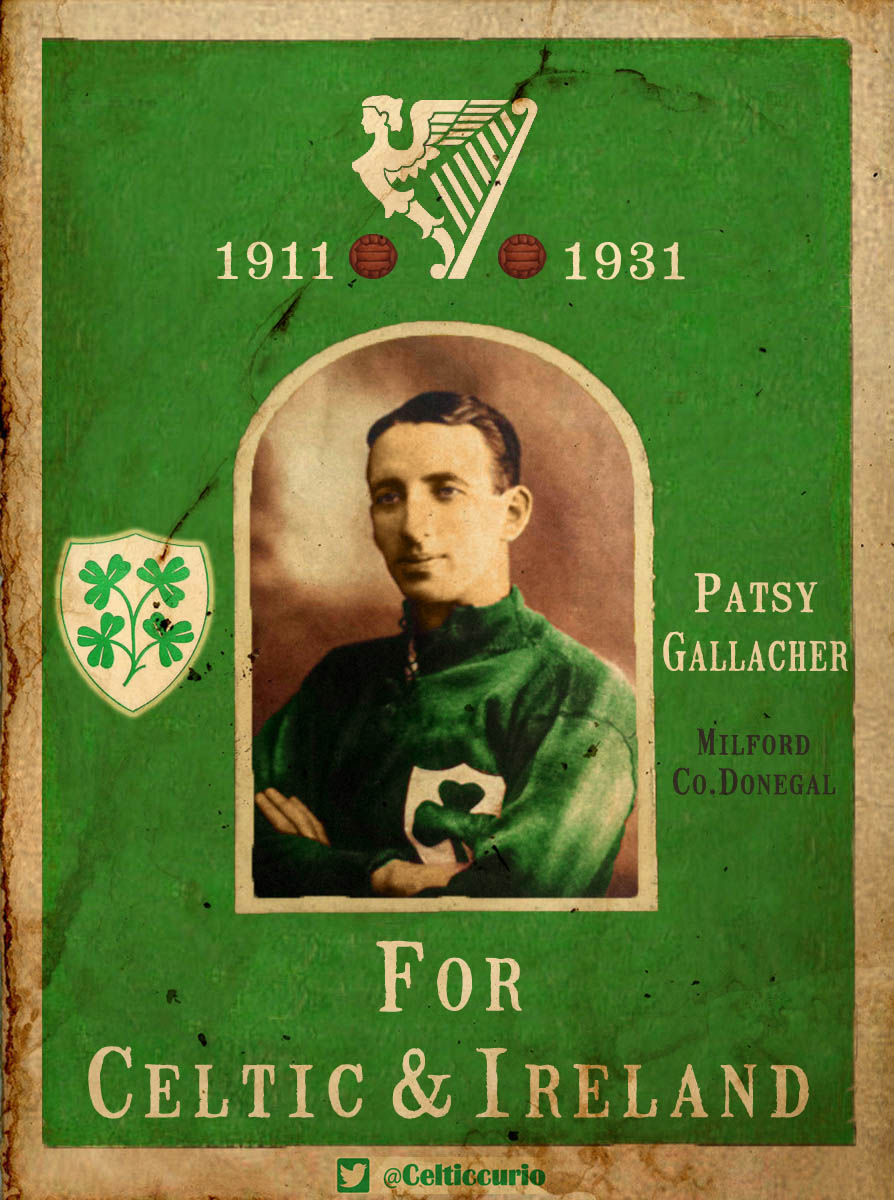
Patsy Gallagher

Amber Barrett celebrated on the same hallowed turf of Hampden Park where the ‘Mighty Atom’ Patsy Gallagher of Milford, Donegal fooled the best of defenders with his dribbling and feints winning four Scottish Cups and six league titles with Glasgow Celtic. Barrett hails from Milford, in 1891 the Poorhouse, which once stood on the outskirts of the town and saw its share of misery in the dark years of the Great Hunger, was where Patrick Gallagher was born his parents would soon leave the hills of Donegal for the shipyards of the Clyde.

In the darkness of the Glasgow night with the Hampden floodlights shining down on her, Amber Barrett kissed the black armband in memory of the ten victims of Creeslough, it was for them, it was for the community of Creeslough and the people of Donegal.

The Ireland women’s team would be part taking in their first World Cup, in her green Irish tracksuit pitchside Vera Pauw spoke to the press celebrating this historic moment with tears and mascara running down her face… Jack Carey would have been proud.

A club for all seasons – 1923-24

Second and third place finishes saw Bohs begin the first years of the League of Ireland as nearly men, despite being one of the most well-established sides in the new league. The third season however, would finally deliver some major silverware to Dalymount in the form of the clubs first League title as well as winning the League of Ireland Shield.

Joining an experienced group were some newcomers; adding firepower to the Bohs’ forward line was Englishman Dave Roberts who had previously played for Walsall and Shrewsbury Town. Roberts would finish the league season as its top scorer with 20 goals, followed by his teammate, the skilful inside forward Christy Robinson with 12. There were goals throughout the Bohs side that year with Mick O’Kane registering eight, and another recent arrival Billy Otto getting five from midfield.

Otto, the captain for that title winning season, had been born on Robben Island just off Cape Town and had ended up in Ireland via the trenches of the Somme and later a Civil Service job in Dublin. He led Bohs to victory as they would finish four points clear of their nearest rivals Shelbourne, clinching the league title by beating St. James’s Gate with a game to spare.

Dublin United, Olympia and Rathmines United had all exited the league that season, with only Brooklyn (named after Brooklyn Terrace off the South Circular Road) joining what was now a 10-team league.
In the Cup it was Athlone Town who triumphed in the St. Patrick’s Day final, they defeated Cork side Fordsons 1-0 with a goal coming from their veteran forward Dinny Hannon who had been a part of the Bohemian side who had won the Irish Cup way back in 1908. Athlone had knocked Bohs out in the semi-final that year and amazingly won the cup without conceding a goal in the entire competition.

At international level February 1924 saw the first League of Ireland XI play an inter-league match, an exciting 3-3 draw with the Welsh League at Dalymount, the LOI side featured five Bohemians that day; Bertie Kerr, Johnny McIlroy, Christy Robinson, Harry Willits and Dave Roberts who scored two of the League’s three that day. Of those players Robinson and Kerr would be selected to represent Ireland in football at the 1924 Olympics along with their fellow Bohemians Jack McCarthy, Johnny Murray, John Thomas and Ernie Crawford. Ireland opened the tournament with a 1-0 victory over Bulgaria thanks to a Paddy Duncan goal before exiting at the quarter final stage to the Netherlands who won 2-1 after extra time.

Ireland v USA in Dalymount, 1924

Further international games were arranged by the FAI including a 3-1 win over Estonia in a friendly in Paris directly after elimination at the Olympics as well as a first home international, another 3-1, this time over the United States in Dalymount in June 1924. The star of the show was hat-trick hero Ned Brooks of Bohemians who had helped the club to success in the League of Ireland Shield a few months earlier.

To read about the 1924-25 season click here.

A club for all seasons – 1922-23

With Bohs having finished the debut League of Ireland season in 2nd place we were hoping to go one better the following year and secure the club’s first ever league title. The challenge would be all the greater as the league had swelled from an initial eight teams to twelve, which included the first non-Dublin side in the form of Athlone Town.

Also added to the league were Midland Athletic (associated with the Midland Great Western Railway company), Pioneers, Shelbourne United (no relation to the other Shelbourne, but you see how this can be confusing), Shamrock Rovers, and finally Rathmines Athletic. The Rathmines side were a late addition, initially UCD were going to enter a side but pulled out just before the beginning of the season, allowing Rathmines the chance to play their one and only season of LOI football. It was an inglorious season for the Southsiders as they finished bottom of the table, pulling out of the league even before they’d played their final fixture against Dublin United.

At the other end of the table, it was a three-way fight for supremacy between Bohemians, Shelbourne and newcomers Shamrock Rovers. While Bohs were table toppers at the halfway point, and ran up some spectacular scorelines, including a 7-0 win over Pioneers and an 8-0 drubbing of Olympia, costly defeats to the likes of Shelbourne and Midland Athletic at crucial points in the season meant Bohs had to settle for 3rd place.

The title went to Shamrock Rovers in their debut LOI season, fired to victory by the goals of Bob Fullam, banned at the start of the season for his part in the previous season’s Cup final fracas, Fullam scored 27 times as Rovers lifted the league title.

In the Cup there was a huge surprise win when Alton United, a Belfast team affiliated to the Dublin based FAI, defeated heavy favourites Shelbourne in the final with former Belfast Celtic forward Andy McSherry grabbing the winning goal.

Alton United

Two weeks later Bohemians played their first match against Continental opposition, drawing 1-1 with French side Club Athletic Paris Gallia, who became the first European team to visit Dublin since the split from the IFA. While it was a season that ultimately ended without a trophy Bohs were putting together a talented squad which now included South African midfielder Billy Otto, the talented and tricky inside forward Christy Robinson and a new striker from England named Dave Roberts allied to a core of experienced players such as Harry Willets, Johnny Murray and Johnny McIllroy, they’d have reason to be optimistic.

For the summary of the 1923-24 season click here.

A club for all seasons – 1921-22

I’ve begun writing a series for each Bohemian FC match programme giving a short history of the key events in Irish Football season by season, beginning with the first League of Ireland season in 1921-22. I’ll be adding them to the blog for anyone who cares to read them. Part one begins below. Thanks to Alan Bird for the suggestion to write it in the first place.

In the first of a new series, we look at the major points of interest during a League of Ireland season from the past, and for the first in the series we’re going way back to the first ever season in the League, the 1921-22 season.

That first season is a bit of a misnomer the entire fixture list of 14 games (featuring just eight, Dublin-based, league sides playing each other twice) was completed in the three months between September and December 1921. Bohemians and Shelbourne, as the two sides from outside of Ulster who had competed in the Irish League against the giants of Belfast football, started among the favourites for the title. Bohs v YMCA game was the inaugural league fixture to kick off, in what was described as a “poorly filled” Dalymount, those who did turn out though witness a masterclass from Bohemians. It was Bohs’ striker Frank Haine who had the honour of scoring the first ever LOI goal, getting the opener in a 5-0 win.
However, league honours ultimately fell to St. James’s Gate, the brewers pipping Bohs to the title by two points.

Frank Haine of Bohemians

It shouldn’t have come as that much of a surprise though, as the Gate had won both the Leinster Senior Cup and Irish Intermediate Cup just a season earlier. Several of that successful James’s Gate side would go on to represent Ireland but it would be the Paris Olympics in 1924 before they’d have the chance to pull on the green jersey. Among the Gate players from that season were Charlie Dowdall, like Ernie McKay and Paddy “Dirty” Duncan who joined five Bohemians in the squad. It was Duncan who would get the first goal in an international competition for the Irish Free State, grabbing the only score in a 1-0 Olympic victory over Bulgaria.

Joe O’Reilly and Charlie Dowdall with the Cup years later

Of course, the political tumult in the country was never far removed from football, Bohemians began the season playing a pair of friendlies in Dublin and Belfast to help raise funds for the workers locked out of the Belfast shipyards, expelled because of their religion or their politics. The season then ended with pistols drawn in a Dalymount dressing room at a Cup final replay. St. James’s Gate won the double beating Shamrock Rovers (the of the Leinster Senior League) after an ill-tempered game which ended with infuriated Rovers players storming the Gate’s dressing room.

Bob Fullam of Rovers advanced on Charlie Dowdall when Charlie’s younger brother (and an IRA volunteer) Jack stepped forward and produced a pistol. Fullam and his Rovers teammates were outnumbered, and now out-gunned and they sensibly beat a retreat from the James’s Gate changing rooms!

Newspaper cartoon depicting the dressing room scene after the Cup final.

Read the review of the 1922-23 season here.