Jimmy McIlroy, Mark Ashton and The Mines
By Fergus Dowd
My English brothers and sisters know, It’s not a case of where you go, it’s race and creed and colour. From the police cell to the deep dark grave, on the underground’s just a stop away. Don’t be too black, don’t be too gay. Just get a little duller.
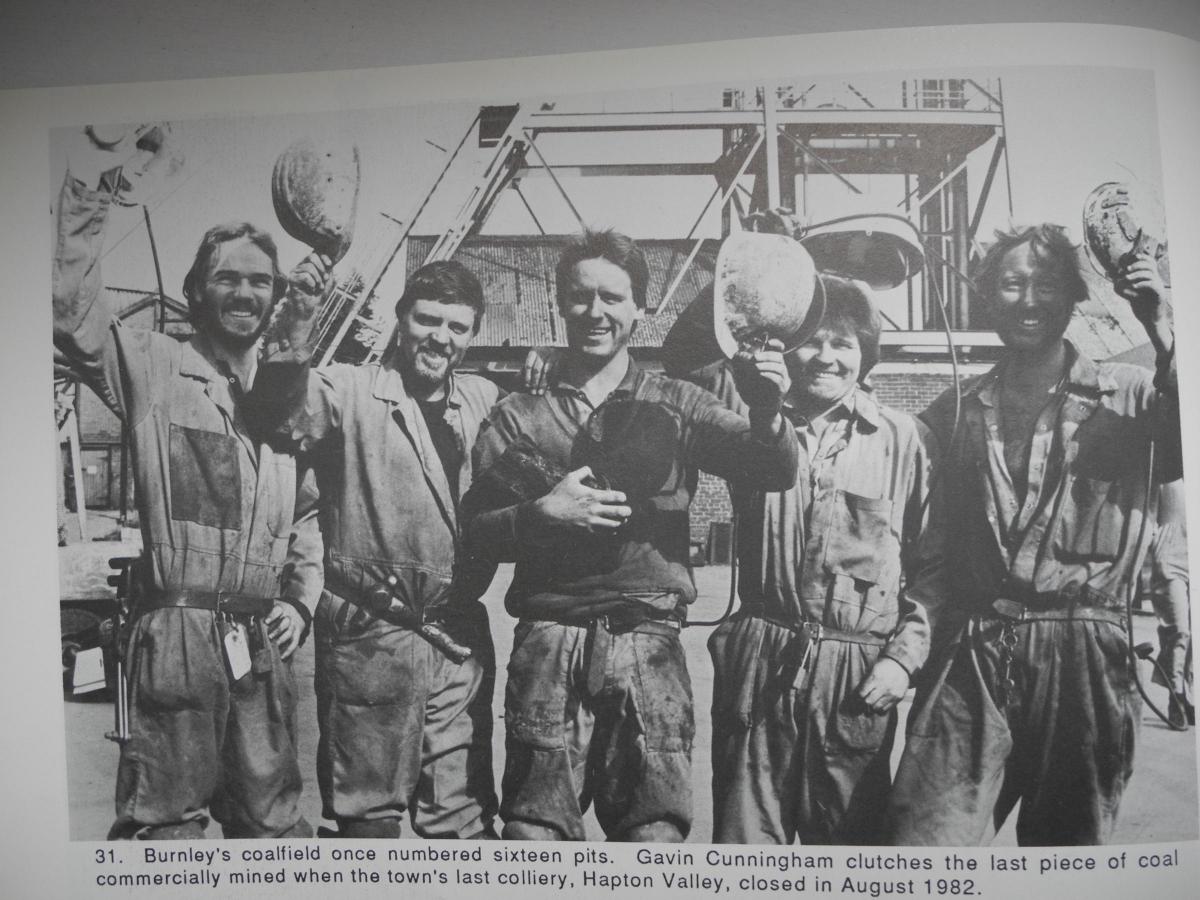
In 1960 the coal industry produced 177m tonnes of coal a year from deep mines and employed over 500,000 miners at 483 facilities. One of those coalfields was in Burnley the most northerly portion of the Lancashire coalfield, where men had been digging coal for five hundred years. By 1984 as four thousand, six hundred police officers in riot gear carrying staves twice the size of truncheons smashed ‘the enemy within’ in fields beside a Rotherham smoking plant, only one mine remained open in Burnley.
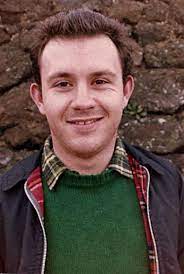
Twelve days after Orgreave two friends Mark Ashton and Mike Jackson decided to found the group London Lesbians and Gays Support the Miners (LGSM); both had Lancashire roots. While miners stood on pickets in 1984 one hundred and eight cases of HIV Aids were reported in Britain with forty six deaths – within four years Margaret Thatcher’s answer to this horrific illness was Section 28 banning the promotion of homosexuality by all local authorities in the UK – at the Conservative Party conference the so-called Iron Lady stated: ‘”Children who need to be taught to respect traditional moral values are being taught that they have an inalienable right to be gay”.
Mark Ashton was born on the 19th of May 1960 at a young age his family moved to the seaside town of Portrush in Co. Derry in Ireland. Seventeen days before his birth the great Jimmy McIlroy sat on the Burnley coach, it was the 2nd of May 1960 and the bus was parked outside Maine Road, Manchester.
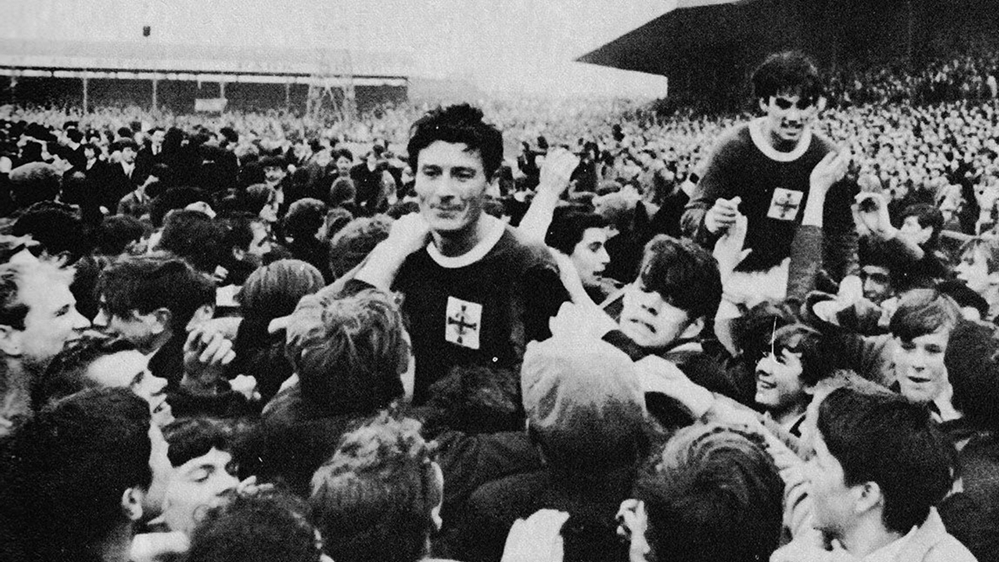
With strapping on his thigh Jimmy veered and dodged that night in Moss Side; unhurried in possession and coolness personified as Burnley were crowned English First Division champions.
Sixty five thousand nine hundred and fifty nine people paid in through the turnstiles as thousands more Clarets paced up and down outside kicking every ball, listening on wirelesses. Burnley the team of quiet men had spent all of the 1959/60 season chasing Stan Cullis’ Wolverhampton Wanderers side, only five days before the Maine Road encounter they had beaten Birmingham City one nil to move up to second place behind Wolves on goal difference. The outfit that cost less than £15,000 to assemble drew their final home game against Fulham while Wolves were victorious in their final game.
As men, women and children from Burnley arrived in Manchester the league standings showed Wolves with a final total of fifty four points with Tottenham second on fifty three points. Burnley sat in third also on fifty three points with an inferior goal difference and one last game to play; the mathematics were simple for the Clarets victory was a must. Burnley made the best possible start to settle their nerves. After just four minutes, winger Pilkington cut in from the by-line and fired a powerful shot which deflected off goalkeeper Bert Trautmann and the post to hit the back of the net. However, within two minutes Manchester City were level twenty one year old Denis Law, who had joined from Huddersfield that season for a record fee of fifty three thousand pounds, miskicked the ball in the box incredibly the ball found its way to his colleague Joe Hayes who found the net to equalise. John Connolly, Burnley’s striking talisman had been forced through injury to sit out the game in his place was reserve winger Trevor Meredith, who had broken his leg earlier in the season. It was to be his night on 31 minutes, during a melee in the goalmouth; he suddenly found himself with the ball at his feet and volleyed a shot sweetly past the despairing Trautmann.
For fifty nine minutes they kept City at bay as Stan Cullis looked on from the stand as the hordes of Burnley fans broke police cordons to celebrate on the Maine Road turf with their heroes, Wolves would be denied the double. In the sanctuary of the dressing room there was no league trophy and City had to provide the champagne it was not until Jimmy and his colleagues sat on the bus that the enormity of their achievement hit home. Undoubtedly the supporter’s favourite player was the inside forward, McIlroy, dubbed by the press as the “Brain of Burnley” with his uncanny ability to unlock defences with his skilful, precision passing.
McIlroy was born in the small village of Lambeg about an hour from Portrush, its damp climate making it the perfect location for the growth of flax and so a centre for the linen industry in the North of Ireland. Football was in the families blood with his father Harry lining out for Distillery, however, young Jimmy had his sights set on technical college. Glentoran football club of East Belfast had other ideas spotting his talent, and because his family needed the money, he took up the offer and signed for Glentoran in 1949.
After 26 games and 9 goals at the Oval in his first season Burnley took him to Turf Moor for a paltry £8,000, and he served them for 13 years, playing 439 times in the First Division and scoring 116 goals. Aside from the First Division title win, he helped Burnley to fourth, second and third places in the league over the next three seasons, and was instrumental in getting them to the 1962 FA Cup final, which Burnley lost 3-1 to Tottenham Hotspur. Such was his status that when the footballers’ maximum wage was abolished in 1961, he became one of the first players to be paid £100 a week. If McIlroy was loved on the terraces of Turf Moor he was adored in the streets of Belfast making his international debut in 1951 in a Home International against Scotland. As part of that Northern Ireland side of the late 50s, he struck up a wonderful relationship with the equally influential Danny Blanchflower, the side’s captain and right-half. The two of them shared sensational technical skills and a sophisticated approach to the game that made them the creative force in a side which, astonishingly, beat Italy in Belfast to knock them out of the World Cup eliminators in 1958. In the cauldron of Windsor Park McIlroy opened the scoring that night in a 2-1 victory only two months earlier police had to baton charge fans after the original tie became a friendly. This was due to the Hungarian referee Istvan Zolt, manager of the Budapest Opera House being fog-bound in a London airport.
He never made it to Belfast and so the qualifying tie was moved at the behest of the Italian FA. Behind closed doors at the Old Midland Hotel a compromise was reached when the match was reduced from a World Cup-tie to a friendly and re-arranged again for January. The document was signed by Dr Barassi, Irish FA president Joseph McBride and Belfast Lord Mayor Sir Cecil McKee. Subsequently, in the 1958 World Cup finals in Sweden, McIlroy played in all Northern Ireland’s games as they reached the quarter-finals, only to be knocked out by France. By the time he finished his international career in 1965, he had won 55 caps and scored 10 goals. Back on the club front in early 1963, McIlroy fell out with the Burnley manager, Harry Potts, after which the club chairman, the abrasive Bob Lord, unexpectedly allowed him to be transferred to Second Division Stoke City for a derisory £25,000 – much to the chagrin of the Burnley fans. At Stoke, McIlroy found himself partnering the great Stanley Matthews, quickly striking up an ideal partnership and enabling Stoke to return to the First Division. He also played in the 1964 League Cup final, which they lost 4-3 to Leicester City.
McIlroy remained at Stoke until 1966, in January of that year he arrived in the town that Mark Ashton was born, becoming player/manager of Oldham Athletic. He lined out thirty eight times for the Latics scoring one league goal and as manager in 1967 he led the Boundary Park outfit to tenth place in the old Third Division, but left after a poor start to the 68/69 season. After Oldham, McIlroy returned to Stoke City as assistant manager to Tony Waddington, before taking on the same position at Bolton shortly thereafter. McIlroy became assistant manager to the great Nat Lofthouse at Bolton Wanderers.
In 1970, when Lofthouse left, McIlroy took over as manager – but departed after only two games in charge, after a row over selling players. Jimmy brought his family back to Burnley and by 1984 was working as a bricklayer while the communities around him were dying – Not long into the strike the slogan was invented, ‘close a pit, kill a community’. The miners – an all-male occupation – were powerfully backed by their wives, who saw clearly that without the pits there was little hope for their children’s future or the viability of the mining community. They set up support groups to run soup kitchens and put together food parcels for striking miner’s families, raising money from local pubs and clubs and then further afield, nationally and later internationally. In London Mark Ashton’s initial idea of a collection for striking miners at the Pride March of 1984 turned into LGSM (Lesbians & Gays Support The Miners) with the group’s headquarters at the aptly named Gay’s The Word bookshop.
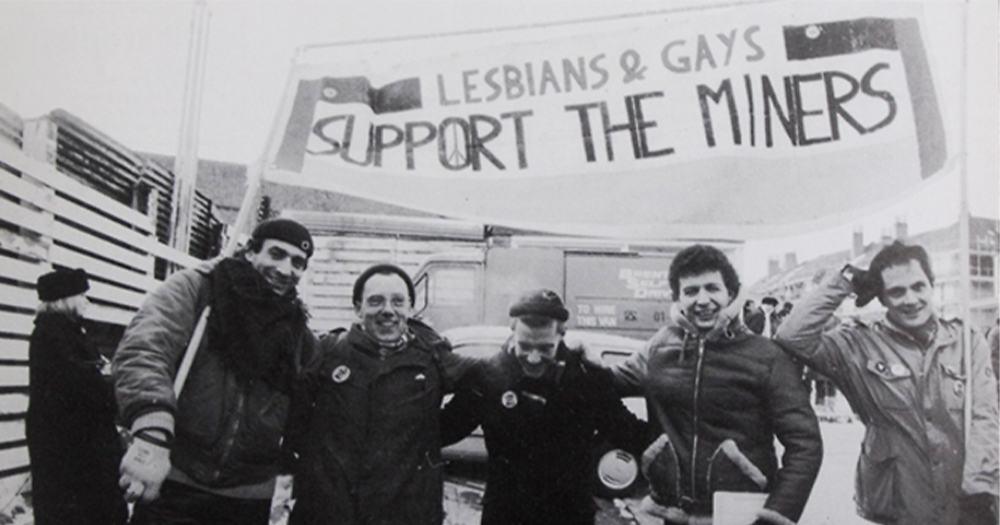
Eleven people attended the group’s first meeting and over sixty people were involved in LGSM by the end of the strike in March 1985. LGSM built solidarity links with the South Wales mining communities of Dulais and also donated funds to the Nottinghamshire Women’s Support Group. The money raised was used to sustain striking miners and their families throughout the duration of the strike. Money was raised primarily from collections at gay pubs and clubs and on the pavement outside Gay’s The Word bookshop. The group raised over £20,000 with a benefit gig headlined by Bronski Beat raising £5,650 alone. It took place in the Electric Ballroom in London and was entitled ‘Pits and Perverts’ in response to a slanderous article by the right wing The Sun newspaper. At the event Dai Donovan a miner from the Dulais valley spoke at the event: ‘You have worn our badge, and you know what harassment means, as we do. Now we will pin your badge on us, we will support you. It won’t change overnight, but now 140,000 miners know that there are other causes and other problems.’
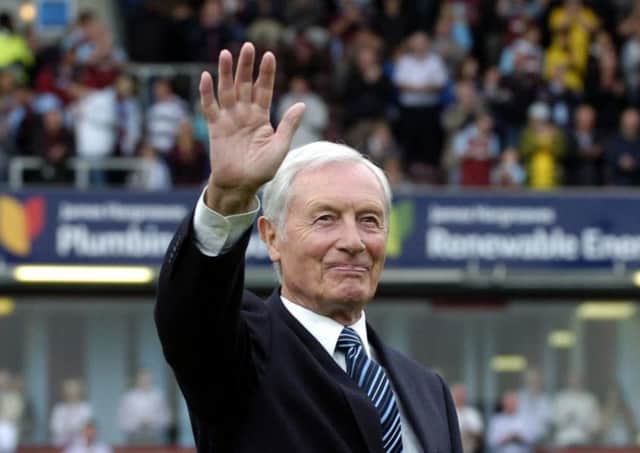
In 1999 Burnley finally honoured their greatest player when the East Stand at Turf Moor was renamed the Jimmy McIlroy Stand – ‘I now feel part of the club which I haven’t done for 30-odd years. Somehow I feel I am now back with my club.’ Jimmy told the press. By 2011 the Queen was honouring James ‘Jimmy Mac’ McIlroy as he became an MBE. On the 11th of February 1987 Mark Ashton took his final breath on this earth he was only 26; in his memory, the Mark Ashton Trust was set up to support people with HIV. On the 19th May 2017 the Irishman was honoured with a Blue Plaque at Gay’s The Word Bookshop, 66 Marchmont Street, London. Today the LGSM group fight to have Mark Ashton honoured with a Blue Plaque in Portrush, he would be the first Gay Rights activist to be honoured in this way in Northern Ireland – it seems appropriate.
 A Bohemian Sporting Life