Bohemian FC v Esbjerg fB


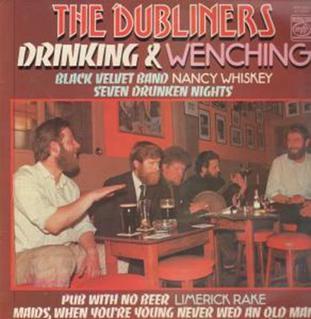
The Dubliners were always a prolific enough band and in 1976 they released the evocatively titled compilation Drinking and Wenching and the studio album A Parcel of Rogues and toured them widely, even playing the famous Montreaux Jazz festival on a European tour.

The Dubliners album Drinking and wenching

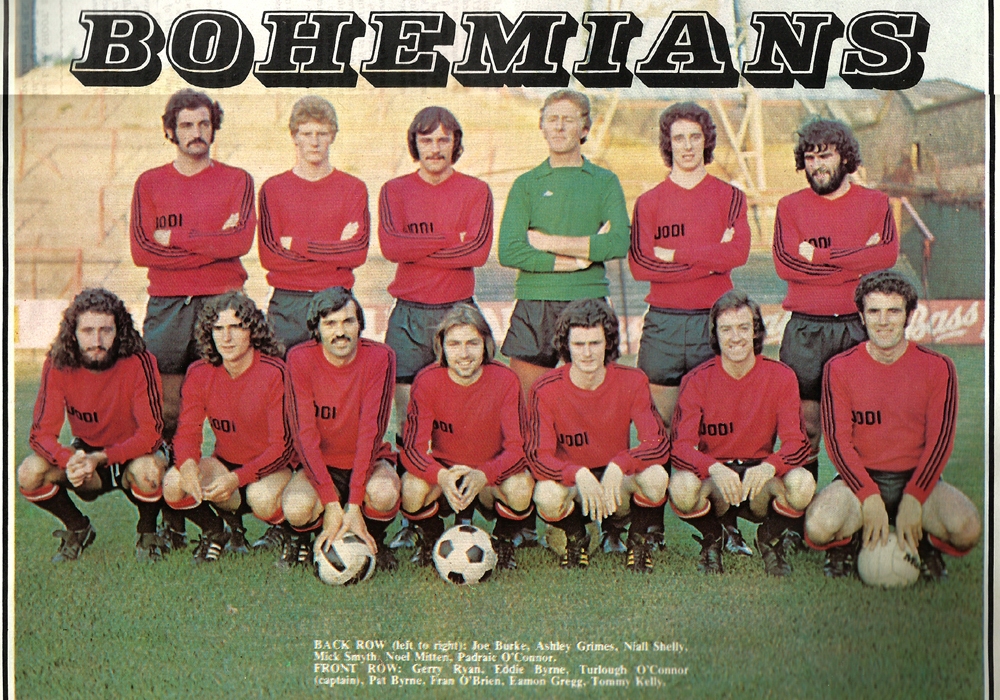
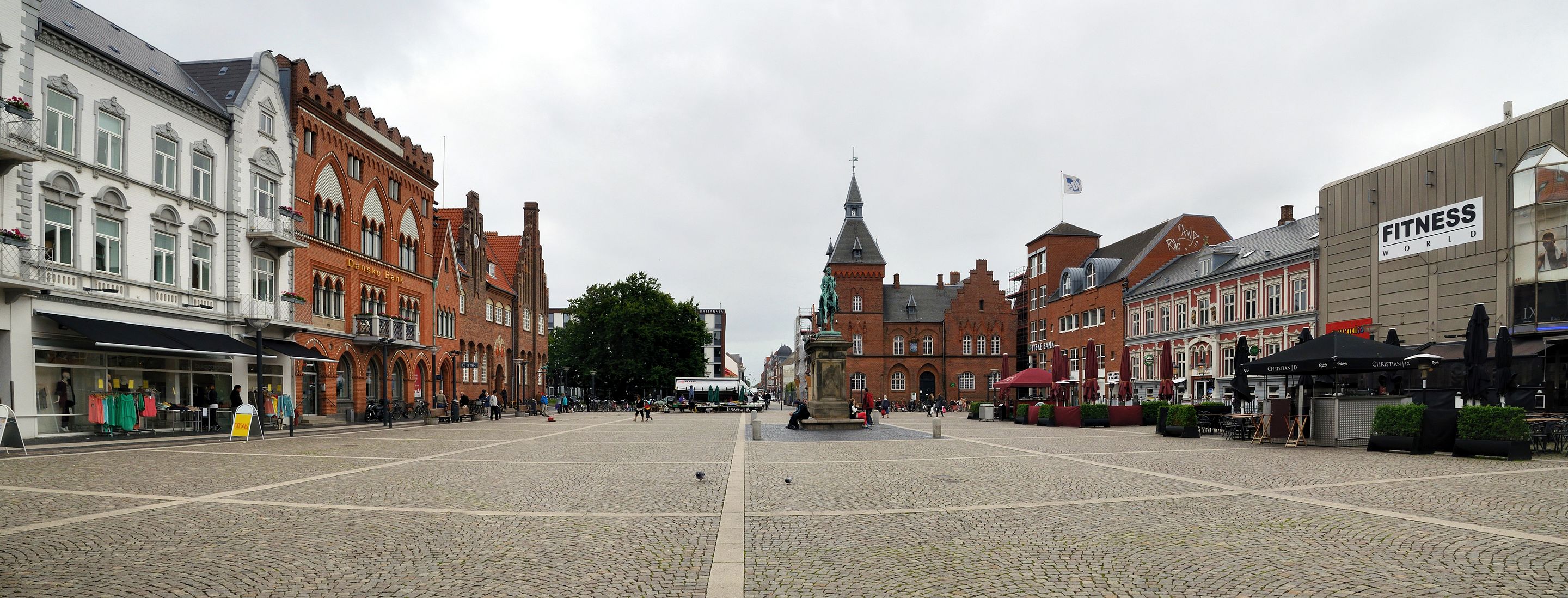
As part of that 1976 tour they played Fanø, the picturesque island just a short ferry ride from the town of Esbjerg and went down a storm, however it was another group of Irishmen who would making sporting history there just a week after that concert, as Bohemian FC knocked out Esbjerg FC in the Cup Winners Cup to secure that they had won a tie for the first time in Europe.

Esbjerg market square -Source wikipedia – Taxiarchos228 – Own work, FAL, https://commons.wikimedia.org/w/index.php?curid=20334358

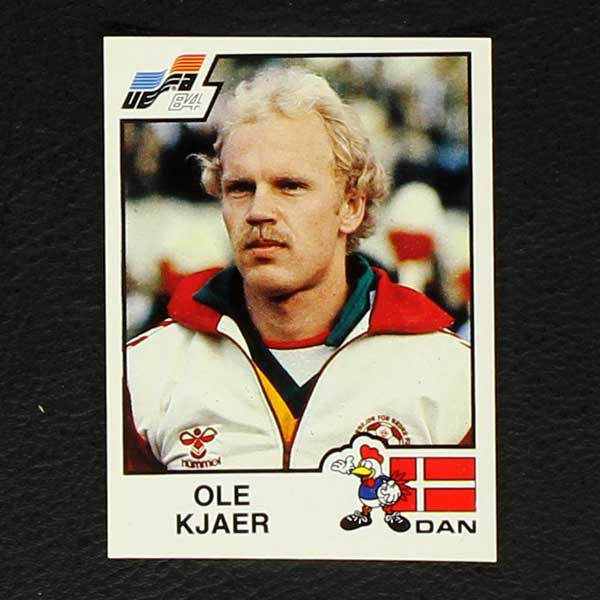
Bohs winning the previous years’ FAI Cup thanks to a screamer from Niall Shelley had secured their fifth ever season of European football and they were drawn against Esbjerg FB, one of the dominant Danish sides of the 1960s who had just won their second domestic cup, they’d also some experience against Irish sides having knocked Linfield out of the European Cup in 1962-63. Danish football was only beginning its transition towards professionalism (this wouldn’t happen until 1978) so all the Esbjerg players were technically amateurs, though they did have players of genuine quality. Young midfielder Jens Jørn Bertelsen made his international debut that year and would go on to represent Denmark at Euro 84 and World Cup 86, while goalkeeper Ole Kjær would go on to win 27 caps for Denmark and was also a squad member Euro 84.

Kjaer at Euro ’84

Bohs were in the unusual position of being the more fancied of the two sides in European competition and to turn stereotypes on their heads it was the Danes who were talked about as being defensive and physical. The first leg in Dalymount saw Esbjerg keep nine men behind the ball most of the time as they tried to hold out for a point in front of a disappointing Dublin crowd of only 2,500.

Bohs won that home leg 2-1, their main attacking threat coming from the wings in the form of Pat Byrne and Gerry Ryan (both future Irish internationals), with Ryan grabbing the opening goal just before half time. In a rare moment of skill from the Danes, Henrick Nielsen levelled on 58 minutes with a spectacular overhead kick, but the Gypsies were to prevail, the Esbjerg keeper Kjær failed to deal with a long-range Niall Shelley shot that rebounded in off a defender to give Bohs the home win. They even had time to bring on another future Irish international, 18-year-old Ashley Grimes as a sub for veteran, Tommy Kelly.

The away goal, however, gave the Danes confidence that they could pull off a result in Esbjerg in front of a home crowd estimated at 8,000. But despite drawing one fine save from ‘keeper Mick Smyth it was Bohs who did the only scoring, Noel Mitten, on as a sub for Turlough O’Connor heading in a cross from Pat Byrne to secure that Bohs progressed in Europe for the first time in their history. A tie with Polish cup winners Śląsk Wrocław awaited. The Dubliners European tour continued…

This piece originally appeared in the Bohemian FC v Fehérvár FC match programme

Bohs in Europe – the early years (podcast)

A recording of the talk I gave on Bohs in Europe – the early years in Liberty Hall in December 2019, now available on all the main podcast platforms for you to listen to below. Also enclosed is a slideshow of photographs relating to the games and personalities that are mentioned. With thanks to Dubin City Council Libraries, Bohemian F.C. and Simon in Con Artist events.


This slideshow requires JavaScript.

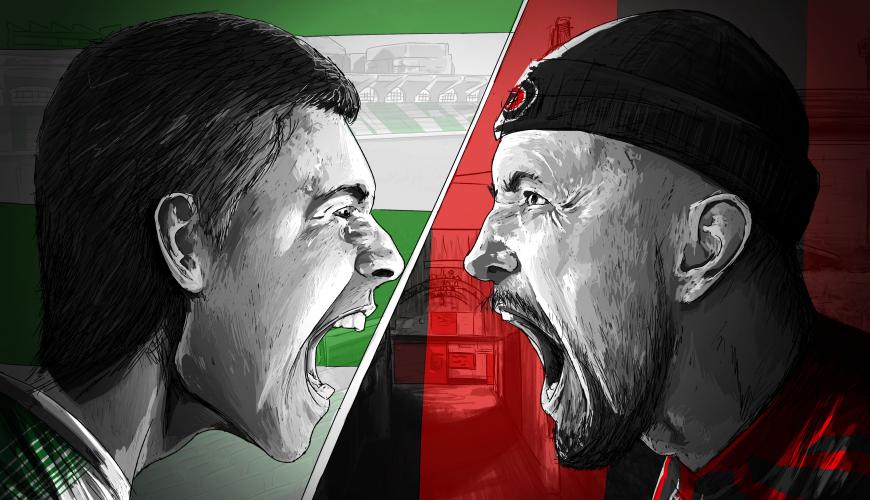
Bohs v Rovers: The biggest rivalry of them all

Bohs versus Rovers, what was the first flashpoint that turned a local game into one of the biggest rivalries in Irish sport? Well to understand we need to travel back almost a century.  Over the course of the month of April 1923 Bohemian F.C. and Shamrock Rovers played each other four times in various cup competitions. As the old saying goes “familiarity breeds contempt” and the final of these matches almost ended in violence after two Bohemians players had to be stretchered from the field due to rough tackling by Rovers. At the final whistle, the Bohemians’ half-back Ernie Crawford removed his jersey and challenged Rovers star forward Bob Fullam to a fist-fight. Crawford was born in Belfast and was the full-back and Captain of the Irish Rugby Team, he was also a decorated World War One veteran. Not a man to be taken lightly.

Fullam himself was no shrinking violet, as well as being an accomplished footballer who was capped twice by Ireland he supplemented his income as a docker in Dublin Port. He had finished the 1922 FAI Cup final amid a mass brawl after Rovers were beaten by St. James Gate. The fighting only ceased when the brother of the Gate’s Charlie Dowdall reportedly confronted Fullam with a pistol.

Could we perhaps trace the beginnings of perhaps the fiercest rivalry in Irish football back to these events in 1920’s?

In the early decades of football in Ireland the Dublin Derby were the games contested between Bohemians and Shelbourne. Both clubs had been founded in the 1890’s with Bohemians finally settling into their permanent home in Dalymount Park in 1901. Shelbourne had their beginnings in what is now Slattery’s Pub at the junction of South Lotts Road, Bath Avenue and Shelbourne Road in 1895. Founded by a group of dock workers from the local Ringsend/Sandymount area, their name was reportedly decided upon by a coin toss between the names of the various nearby streets. It was these two clubs who would have the great north -south city rivalry of the city.

By the 1904-05 season Shelbourne and Bohs were the only Dublin-based clubs who were competing in the Ulster dominated Irish League and they faced off against each other in the final of the 1908 Irish Cup which Bohs won in a replay. This was the first time the final had been contested by two Dublin sides.

Bohs didn’t even face Rovers in competitive games until 1915. In a Leinster Senior Cup first round tie on the 9th January 1915, Bohs won 3-1 thanks to a hat-trick by forward Ned Brooks. Later that same year the Rovers were elected to the top division of the Leinster senior league, their second game at this level was against Bohs where they again lost 3-1. This game came just two weeks after Rovers young centre-back James Sims died tragically in a shipping accident in Dublin Bay. At this time Bohs great rivals were still very much Shelbourne F.C.

By the early 20’s the FAI had split from the Belfast based IFA and founded a new league for the clubs in the nascent Irish Free State. Shamrock Rovers didn’t compete in the League in that first season but they made their mark, reaching the Cup final against eventual double winners St. James Gate. The following season they were elected to the league and finished as Champions.

The 20’s would begin an era of fierce competition for Bohs and Rovers, before the decade was out both clubs would have 3 league titles apiece to their names. Rovers would have also begun a run which would establish their reputation as “Cup kings” by winning the FAI Cup five years in a row. The first of those five-in-a-row titles would begin with victory over the holders Bohemians in the 1928-29 final in Dalymount Park. The initial game finished 0-0 but in the replay Rovers ran out 3-0 winners, with two goals coming from John Joe “Slasher” Flood and another from that man again Bob Fullam.

On 22nd April 1945, almost exactly 22 years since the tussle between Ernie Crawford and Bob Fullam and 16 years since their last cup final meeting Bohs and Rovers met again in Dalymount Park in the final. To date it is the last cup final meeting of the pair and remains the biggest attendance ever for an FAI Cup Final. Depending on which estimate you read there were anything from between 39,000 and 45,000 packed into the famous old ground that Sunday afternoon. Among Bohs ranks was the Irish international Kevin O’Flanagan, newly qualified as a doctor. He had an untypically poor game that day, perhaps due to the fact that he’d failed to diagnose himself with the flu and had played the game with a 103 degree temperature! Podge Gregg, the Rovers centre-forward broke Bohemian hearts in the second half as he converted from a Mickey Delaney cross to score the game’s only goal. On the Rovers bench that day as coach was a man well familiar with the fixture, Bob Fullam.

By the time of that final Bohs star was already on the wane. Their strictly amateur status meant that they tended to bring through and develop players before losing them to other Irish or cross channel clubs who were prepared to offer professional terms. As just one example the following year Rovers lost the FAI Cup final with four former-Bohemians in their line-up; Frank Glennon, Noel Kelly, Charlie Byrne and goalkeeper Jimmy Collins. The team that defeated Rovers in that 1946 final was Drumcondra F.C. For the next two decades as Bohemians drifted towards the lower reaches of the league table the great north-south Dublin rivalry would be between Drumcondra and Rovers in what many view as the competitive peak of the League of Ireland.

Between the end of the 40’s and the early 60’s Drumcondra would see players of exceptional quality grace Tolka Park. Among them future Ireland legends Con Martin, Eoin Hand and Alan Kelly Snr. as well as the likes of Tommy Rowe, “Kit” Lawlor, Christopher “Bunny” Fullam, Ray Keogh, Dessie Glynn, and Jimmy Morrissey to name but a few. They would win five league titles and another two cups. In Europe, they would knock out Danish side Odense from the Fairs Cup and also face the likes of Atletico Madrid and Bayern Munich.

Rovers would claim three more titles in the 50’s. This was the era of player-manager Paddy Coad and his exiting young side that became known as Coad’s Colts and featured the likes of Liam Touhy, Paddy Ambrose and Ronnie Nolan. The matches between Drums and Rovers, whether in Tolka Park or at Milltown were huge fixtures in the sporting calendar. Well before TV coverage became the norm and when direct experience of British football was through occasional newsreels and the odd pre-season friendly or player guest appearance, the Rovers/Drums rivalry capturing the sporting imaginations of the Dublin sporting public in a way that has happened seldom since in relation to the League of Ireland.

As this great rivalry played out during the 50’s and into the 60’s Bohs were very much in the back seat. However, in the early 1960’s they experienced a turnaround in fortunes thanks in no small part to their new manager Seán Thomas. He was the man who had just led Rovers to the 1963-64 league title but quit after a bust up with the club’s owner’s, the Cunningham family. His next port of call was Dalymount Park where he helped revive the fortunes of the struggling Bohemian club. In his first season Bohs finished an impressive 3rd place, a huge improvement on 12th the year before.

By the end of the 60’s the Bohemian membership had decided to make the biggest change in their history. They were going to scrap their amateur status and begin paying players. The policy quickly began to pay dividends. Only a year later Bohs would win their first major trophy in almost 35 years when they defeated Sligo Rovers in a 2nd replay of the FAI Cup final. Among the Bohs XI were a number of seasoned pros, which included  several names more than familiar to the Rovers faithful, among them Ronnie Nolan, Johnny Fullam and the first professional Bohemian, Tony O’Connell.

Over the course of the next decade Bohemians would win another two league titles and another cup during a relatively fallow period for Rovers. Despite bringing in Johnny Giles as player-manager (and a certain Eamon Dunphy as player-coach) and signing Irish international Ray Treacy a solitary FAI Cup was all their reward. Things would change by the beginning of the 1980’s. Manager Jim McLaughlin, backed by the finances of the Kilcoyne family brought unprecedented success to Milltown and in some ways the basis for a lot of the modern enmity with Bohs crystallised in these years.

By the early 70’s Drumcondra were on the wane before their League spot was eventually taken over by Home Farm. With the disappearance of Drums from League football so went over 20 decades of a great footballing rivalry. A resurgent Bohemians in the 1970’s meant a rekindling of an old enmity that had never truly disappeared. While as we’ve seen earlier players swapping the red and black of Bohs for the green and white hoops of Rovers has never been particularly uncommon many Bohemians supporters with longer memories still clearly recollect the movement of several significant players from Dalymount to Milltown. From the 70’s, 80’s and into the 90’s many prominent players such as Pat Byrne, Terry Eviston, Paul Doolin and Alan Byrne all made that journey southside which tended to create a certain amount of rancour amongst Bohs supporters.

It should be mentioned that the movement wasn’t totally one-way, and that (whisper it) even the legendary Jackie Jameson began his footballing career at Shamrock Rovers before making his name at Dalymount in the 1980’s.

Despite the success of the Jim McLaughlin era the 80’s were also a time of disharmony for Rovers. Owner Louis Kilcoyne decided to sell the club’s home ground of Glenmalure Park in Milltown which would then be developed for houses and apartments. Glenmalure had been home to Rovers since the 20’s and the fans acted swiftly by forming the pressure group KRAM (Keep Rovers at Milltown). Their actions however couldn’t halt the sale of the ground and the by the late 80’s Rovers had migrated northside, first to Tolka Park and then, for two seasons to Dalymount Park, home of arch-rivals Bohemians. No doubt a galling episode for the small group of supporters who chose to attend games in the Phibsborough venue, tenants to their great adversaries.

The 90’s were to be fallow years for the Hoops, a solitary league title in the 1993-94 season, when the club were playing their games in the RDS was the sole silverware of note. The club had plans to relocate to a permanent new home in the south Dublin suburb of Tallaght as far back as the mid-1990’s but it was to be almost another 15 years of wandering before Rovers would kick a ball at a completed Tallaght stadium. In the meantime, the intervening period contained more lows than highs, including examinership and a first ever relegation in the 2005 season. But there were a couple of notable victories against their old rivals Bohemians, perhaps the most pleasing would have been Rovers 1-0 win thanks to a Sean Francis goal in Dalymount in 2001. That victory sent Rovers briefly to the top of the league but it also meant that they had defeated their great rivals in their own back yard on the 100th anniversary of the opening of Dalymount Park. Rovers may have viewed that as some form of revenge for a result earlier that year which has gone down as one of the most storied in League of Ireland history.

That particular game took place on the 28th January 2001 in the then-home of Shamrock Rovers, Morton Stadium, Santry. Rovers then managed by Damien Richardson swept into a commanding 4-1 lead by half-time having got their first goal through Tony Grant only two minutes into the game. At half-time Bohs manager Roddy Collins gave a rousing team-talk, exhorting his charges to go out and “win the second half” what followed has gone down in legend for Bohemians supporters.

Five second half goals followed unanswered from Alex Nesovic, Dave Morrison, Mark Rutherford and a brace from Glen Crowe. Bohs left the pitch 6-4 winners and on a roll. Many players from that side have credited that result as part of the impetus that would see Bohemians haul back league leaders Shelbourne and finish up winning the double by the season’s end.

Today whenever the two sides meet they is likely to be action and drama and plenty of colour and pageantry in the stands. There have been times when footballing passions have spilled over as happened all those years ago with Crawford and Fullam. In 2003 Rovers were forced to move from their then-base of Richmond Park in Inchicore after crowd trouble during a match against Bohemians. A year later at a match in Dalymount former Hoops Tony Grant and James Keddy who had just signed for Bohemians were greeted with a torrent of abuse, then pig’s feet and finally a large pig’s head was thrown onto the pitch. A not so subtle message from the Rovers faithful about what they thought of Grant and Keddy’s move cross-city. Grant, interviewed by the Sun newspaper several years after the event described the Derby games in this way,

That game, it’s a religion to the supporters, it’s a cult, it’s what they live for. It’s the same for both sets of fans.

The noughties did nothing to diminish the rivalry between the two. The move to Tallaght stadium was to revitalise Rovers who took the title in 2010. Despite being in the ascendance and Bohs encountering financial troubles of their own the Derby games have remained wildly unpredictable. While recent seasons have been dominated by exceptional Dundalk and Cork City sides the Bohs v Rovers rivalry remains the biggest game in the Irish football calendar.

This article first appeared on the SSE Aitricity League website and in the “Greatest League in the World” magazine, issue one with artwork by Barry Masterson.

Bohemians and brothers in arms – The Robinsons

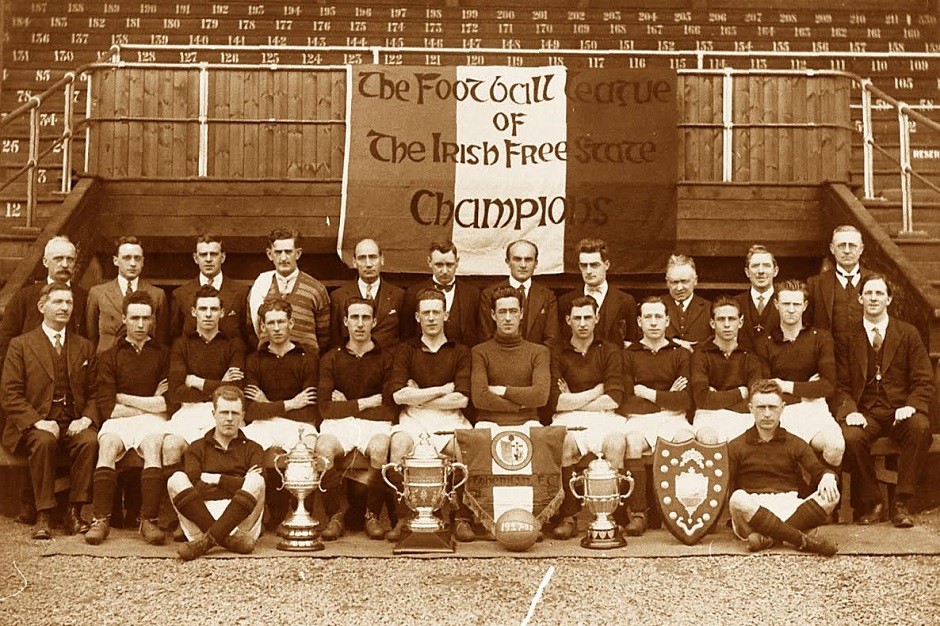
The great Bohemians team of the 1927-28 season is one that has rightly gone down in the annals as one of the finest sides in Irish football history; simply put they won everything there was to win, the League, the FAI cup, the Shield and the Leinster Senior Cup. An achievement all the more impressive when you remember that Bohs were strictly amateur at the time. Such was the confidence and camaraderie in the team that season that Jeremiah “Sam” Robinson, the tall, well-built and versatile half-back or full back, said that the Bohs players of that season never doubted that they would win the game, the only question was by how much. Sam was joined in that successful team by his older brother Christy, smaller and lighter than Sam, he was a tricky, skillful inside-left whose 12 goals had been crucial when Bohs won the league in 1923-24. He also holds the honour of scoring Bohemians first ever goal in the FAI Cup when he netted the first in a 7-1 win over Athlone Town in 1922.

For these achievements alone the brothers are significant and worthy of discussion, however by the time the Robinson brothers had joined Bohemians, as still young men, they had already led an extraordinary life. Both brothers had been active in the IRA in Dublin and Sam had even become a member of the Active Service Unit and later joined Michael Collins’ infamous “Squad ”.

Both brothers played in the Cup Final of 1928 when Bohemians defeated Drumcondra 2-1, although it was touch and go for Sam. Incidentally the reason Sam was known as Sam, and not by his given name Jeremiah was because of the fondness as a boy for using “Zam-buk” soaps and ointments for his legs, something he may have needed in getting ready for the Cup final. During some dressing room hijinks celebrating yet another victory Sam had his leg badly scalded by a bucket of hot water. The damage was so bad that it looked like he would miss the game until the intervention of Bohemians own Dr. Willie Hooper who bound up Sam’s leg (like a turkey cock as he later remarked) and tended to him regularly as they prepared for the final. The squad were worried that the Sam might not make the game but he was declared fit enough to play. Bohs won the match in front of 25,000 at Dalymount, Billy Dennis and Jimmy White getting the goals.

Bohemians have a long tradition of brothers playing in the same team. The aforementioned Willie Hooper and his brother Richard both captained Bohs in the early 1900’s while Sam and Christy had the distinction of becoming the first brothers to play for Ireland after the FAI had split with the Belfast-based IFA. Christy was part of the Irish Olympic squad that went to Paris in 1924 and defeated Bulgaria before being knocked out by the Netherlands in the next round. In all, six Bohemians were selected (Bertie Kerr, Jack McCarthy, Ernie Crawford, John Thomas & Johnny Murray were the others and were trained by Bohs’ Charlie Harris) The Irish team also played two friendlies after being knocked out of the tournament, Christy played and scored for Ireland in the game against Estonia as Ireland won 3-1 and would also represent the League of Ireland XI in their first ever representative fixture, against the Welsh League that same year. Sam won two senior caps, in 1928 and 1931 with a victory over Belgium and with a draw against Spain respectively.

Sam would eventually move on and play professionally for a period, he joined Dolphin F.C. based in the Dolphin’s Barn area of the city in 1930 and won his second Irish cap while there. He was also part of their team which contested the 1932 FAI Cup final, losing out to Shamrock Rovers in a tight game, while also guesting on a number of occasions for Belfast Celtic.

Christy and “Sam” were born in the Dublin’s north inner city on East Arran Street in 1902 and 1904 respectively, their home was close to the markets where their mother Lizzie worked as a fish dealer. Lizzie’s earnings had to support the family; the two boys and daughter Mary, when their father Charles died in 1905.

Sam Rob5

From left to right Christy, Lizzy and Sam Robinson

In 1916 as youngsters of 15 and 12 they would presumably have witnessed first-hand the fighting around the Four Courts just yards from their home and the family would likely have known some of the victims of the infamous North King Street massacre when British Army soldiers shot dead unarmed men and boys. Whatever the reason we know that by 1919 Sam, then aged only 15 had joined the IRA. He was a friend of Vinny Byrne who would also form part of the “Squad” and it was Byrne who brought him along to be inducted. At the time Sam lied about his age and claimed to be 17. The family story was that Michael Collins, on seeing young Sam told the boy that he wasn’t running a nursery and he should go home, however Sam insisted that he wished to join and both Byrne and Paddy Daly (one of Collins’ senior officers) vouched for the young man. It was to begin a long association between Sam and the armed forces.

Christy, also joined the IRA and took part in a number of notable actions, the most prominent probably being the raid on a British Army party at Monk’s bakery on Church Street in September 1920. This was the operation in which Kevin Barry was captured. Christy Robinson was one of the section commanders within H company of the 1st Battalion, Dublin brigade of the IRA during the raid when they encountered a much larger British army force than expected. Kevin Barry found that his new-fangled automatic pistol was jamming and hid under a lorry hoping to escape the attentions of the British forces. After heavy gunfire which left three British soldiers dead, H company withdrew but were unaware that Kevin was still hidden under the lorry on the side of the street. The unfortunate teenager was spotted by the British forces, arrested, and later became the first Republican prisoner to be executed since the Easter Rising over four years earlier.

Kevin Barry had attended the prestigious Belvedere secondary school and had been a promising rugby player. He had graduated and was studying medicine, in fact he intended to go sit an exam only hours after the raid on Monk’s bakery and was not a full time soldier. Christy would later christen his son, Kevin in honour of his executed comrade. Christy later joined the Free State Army and rose to the rank of Captain before leaving in 1924. After his football career Christy would move to England, first to London and later to Dover, where he would pass away in 1954.

Most of the members of the Dublin Brigade were men who took part in operations when they could but had to hold down jobs in order to support themselves and their families. Christy Robinson fell into this category. The IRA however saw the need for a full time force of both soldiers and intelligence staff. This led to the creation of the Active Service Unit (ASU); full time soldiers who were expected to make themselves available as operations required them, they were paid a good wage for the time. Sam Robinson would eventually join this select group of full time soldiers; a role he would continue after Independence.

The Robinson family had been victims during this period of bloodshed, two of the brothers’ cousins met violent ends just weeks apart in 1920. William Robinson, a former British soldier and a goalkeeper for the Jacobs football team was shot dead on Capel Street, just yards from his home in October 1920 by men identifying themselves as “Republican Police”. Another cousin, also named William, but better known as Perry Robinson was one of the youngest victims of the Bloody Sunday shootings in Croke Park. Aged just 11 years old Perry was shot in the shoulder and chest as he was perched in a tree watching Dublin take on Tipperary. The trainer of the Dublin side that day was none other than Bohs’ own Charlie Harris who would accompany Christy Robinson to the Paris Olympics just four years later.

112012_2337_BLOODYSUNDA2

The Dublin Football team on Bloody Sunday- Bohemians trainer Charlie Harris is at the back row, far right.

The Robinson family history tells that Sam was out that morning that would be remembered for all time as “Bloody Sunday”, in the company of his friend Vinny Byrne. Their destination on that fateful day was 28 Upper Mount Street, their targets British Lieutenants Aimes and Bennett. This was a late change to the plans due to a recent piece of intelligence received by one of Collins’ intelligence officers, Charlie Dalton who was also at the time also a member of Bohemians. Byrne and fellow Squad member Tom Ennis led the party. Although not named in these accounts Sam always claimed that he was out with Byrne and his group that day when Aimes and Bennett were shot dead in their beds, Byrne’s own witness statement mentioned that there were a party of about ten men involved and that the operation did not go as smoothly as hoped. The sound of shooting aroused the attention of other British military personnel in the area and the men keeping an eye on the entrance to Mount Street came under fire. Most of the party fled to the river and rather than risk crossing any of the city bridges back to the north side where they could be intercepted. They crossed by a ferry and disappeared into the maze of streets and safe-houses of the north inner city.

Not long after the events of Bloody Sunday Sam became a full time member of the “Squad” when it was reinforced in May of 1921. Within weeks they would be pressed into service in one of the largest operations ever undertaken, the attack on the Custom House, one of the centres of British administration, local Government and home to a huge amount of records.

Sam Robinson Custom House

Sam being arrested at the Custom House, he is fourth from the right with his hands on his head.

This was going to be a huge job and a symbolic attack at one of the nerve-centres of British rule in Ireland, up to 120 men of the 2nd Dublin Brigade along with members of the Squad and the Active Service Unit took part.  They were poorly equipped, armed only with revolvers and a limited supply of ammunition, they did however have plenty of petrol and bales of cloth which was used to destroy the records and ultimately the building itself which burned for five days straight. The raiding party soon drew the attention of a brigade of Auxiliaries. Unable to stay in the burning building, surrounded by the British forces and very quickly running out of ammunition the Republican forces knew they were in serious difficulty. Most of the men surrendered but some made a run for it, a few escaped, but others like Sean Doyle were killed as they tried to get away. Among the more than 70 IRA men captured was Sam Robinson, although he was not to be in captivity long. Within two months a truce had been called and the Treaty negotiations had begun and Sam was released by Christmas of 1921.

Upon his release Sam became part of the new Free State Army, by the 1922 Army census he was listed as a Lieutenant and he was heavily involved during the Civil War, seeing action in areas of some of the heaviest fighting around Cork, Kerry and later Sligo. He was in the Imperial Hotel in Cork City along with other serving officers to have breakfast with Michael Collins the day he was shot. Despite Collins’ initial scepticism about this teenager who had lied about his age to join the IRA he had trusted and promoted Sam. In turn Sam, like many other officers became a great admirer and loyal follower of the “Big Man” and was devastated to learn of his death at Béal na Bláth. In another freak Bohemians connection, the man who tended to Collins as he died was General Emmet Dalton, a former Bohemian F.C. player and later President of the Club.

Sam was promoted to the rank of Captain in February of 1923 and remained in the Army throughout the horrific violence of the Civil War but left, somewhat disillusioned, in 1924. There was concern among members of the Free State army about plans to significantly decrease the size of the army in peacetime and there was also a feeling among some soldiers that ex-British army officers were being favoured for advancement within the Free State forces. Such was the seriousness of this issue that Charlie Dalton (the ex-Bohs player we encountered above, and brother of Emmet Dalton) and General Liam Tobin were accused of attempting an Army Mutiny due to their opposition to the proposed demobilisation.

Sam Rob army pic

Sam in his Irish Army uniform

The army’s loss was Bohemians gain however and the civilian Sam Robinson joined his brother at the club and helped build towards the eventual dominance of the 1927-28 season. It was not to be Sam’s last involvement with the Army however, upon the declaration of the national state of Emergency during World War II Sam re-enlisted and was made a Captain of C Company of the 14th Battalion, his years of experience no-doubt appreciated by younger troops. He stayed in the Army until the end of the War before returned to the trade he had developed as a plasterer. In fact he started his own plastering company, Robinson & Son near Church Street in Dublin.

Things went well for Sam’s business for a while and he was a generous man always making sure that old Army or footballing colleagues were helped out with a job if they fell on hard times. Among those employed at one stage by Sam was his former Bohs team-mate John Thomas. However, in 1957 perhaps because of his generosity, Robinson & Son went out of business, Sam’s auditor incidentally at the time was a young man by the name of Charles J Haughey! While this was a setback Sam used it as an opportunity to travel, his trade took him to Canada, Malta, Britain and even Rhodesia (now Zimbabwe) before he returned to Ireland. Fate would have it that one of his final jobs as a plasterer was on the Phibsboro shopping centre, overlooking the pitch at Dalymount that had been so familiar to him.

Sam’s connection with Bohemians continued long after his playing days ended. His nephew Charlie Byrne began his career for Bohemians in the 1940’s , while his son Johnny Robinson enjoyed a successful League of Ireland career with Drumcondra and Dundalk.  Sam remained a Bohemian member until the day he died in 1985.

Member card2

The Bohemian membership card of Jeremiah “Sam” Robinson

With special thanks to Eamon Robinson, Frank Robinson and Kevin Robinson for their assistance and sharing their family research and photos.