Leaving your Markarov

Ireland and Armenia, as nations that share long and often tragic histories, also share the fact that emigration, often forced and not chosen, has become a defining characteristic of their national stories. This has meant that you can often spot a member of the Irish or Armenian diaspora finding sporting success with other nations many miles from Dublin or Yerevan.

Armenia are justifiably proud of the success of athletes like tennis player Andre Agassi, World Cup winners Youri Djorkaeff and Alain Boghossian, or legendary basketball coach Jerry Tarkanian, all from Armenian backgrounds. However, one of the greatest figures in Armenian football was born on the shore of the Caspian Sea in Baku, capital of Azerbaijan and moved the other direction, finding fame and success in Yerevan.

Eduard Markarov, from a family of ethnic Armenians, was born in Baku in 1942 when it was part of the Soviet Union, at a time when they were engaged in fierce fighting after a massive German offensive in World War Two. Eduard’s father, Artyom had been a footballer and coach and often brought his young son to the local stadium to watch training.

Eduard developed as a skilful forward, first for Torpedo Armavir in what is now Krasnodar Krai in modern Russia, before a return to Azerbaijan with Neftchi Baku in 1961. This was a time of significant success for Neftchi, who competed in the highly competitive Soviet Top League against the footballing powerhouses of Moscow and Kyiv, finishing as high as third in 1966. Even by his second season with the club Markarov was one of the stars of the Top League, scoring sixteen goals for Neftchi and finishing as the league’s second top scorer.

He’d also made the Soviet Union national team and featured as part of the squad that reached the semi-finals at the 1966 World Cup, although such was the competition for places that he only won three caps in total.

1971 was to be a pivotal year for Eduard, approaching thirty he had endured a poor season for Neftchi and made the momentous move to his ancestral lands when he signed for Ararat Yerevan. The fans of Neftchi were outraged, even going so far as to throw stones at his house, but the move gave Eduard’s career a second wind. He was paired with some great talents like Arkady Andriasyan as well as Sergey Bondarenko, a player beloved and famous for his powerful shot and array of spectacular long-range goals.

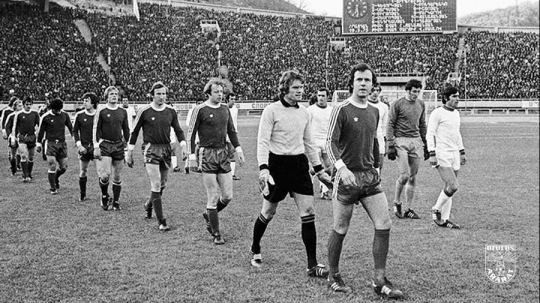
Ararat were coached by the legendary Nikita Simonyan, who was also of Armenian heritage. Simonyan had been a star striker for Spartak Moscow and had moved into coaching and led them to further success. He repeated the trick with Ararat, winning an amazing Soviet League and Cup double in 1973 and winning the cup again in 1975, altering his coaching methods to better indulge the skilful and more individualistic traits of his Armenian players. Markarov played a decisive role in these victories, including scoring the decisive winning goal in the 75 cup final as well as finishing the 1974-75 European Cup campaign as the competition’s joint top-scorer alongside Gerd Muller, with Ararat reaching the quarter final stage of the competition.

1975 was his last season as a player but Markarov swiftly moved into management, taking the helm at Ararat Yerevan. When the Soviet Union collapsed and amid the turmoil the newly independent Armenia came into existence and set about the business of creating an international side there was only one man to turn to as their first head coach, Eduard Markarov despite the new Football Association only being able to offer him a small salary. Markarov stayed involved in football even after leaving the national team job in 1994, coaching in both Armenia as well as Lebanon.

Originally published in the Ireland v Armenia match programme in October 2025
The peak of the mountain

Mount Ararat, though it lies just inside the Turkish border, is visible from almost any location in Yerevan, the capital of Armenia. So much so that the mountain is the primary symbol of the city. It is recounted that after the great flood Noah’s ark was washed ashore atop the mountain and that Noah, while looking in the direction of Yerevan, is said to have exclaimed “Yerevats!” meaning “it appeared” which in turn gave the name of the city.

Despite having only won one league title since independence FC Ararat Yerevan, who take their name from both mountain and city, were the dominant Armenian side of the 1970s when they competed in the old Soviet Top League before the collapse of the USSR and their story is biblical in scope. In a time when the league was mostly dominated by the big clubs in Moscow, or by the likes of Dynamo Kyiv, Ararat Yerevan managed to win a league title and two Soviet Cups while making a significant impression in European competition as well.

Ararat gained huge domestic support and became something of a de facto Armenian national side and a focal point on occasion for occasional, vocal resistance to Soviet rule, their fans would sing chants like Haya-stan, hoop- tor, meaning “Come on Armenia” which would later become a chant of the Armenian independence movement. Ararat secured promotion to the Soviet Top League in 1966 where they remained a permanent fixture until the collapse of the Soviet Union.

In 1973 they shocked Soviet football by winning the League and Cup double beating Dynamo Kyiv to second place in the League and defeating the same opposition in a dramatic Cup final. Ararat were trailing 1-0 with just a couple of minutes remaining when Levon Ishtoyan, one of several Soviet internationals in the Ararat side slammed in a late equaliser. In extra time Ishtoyan grabbed a second to secure the cup for Yerevan and to send thousands of Armenians in both Luzhniki stadium in Moscow and in the capital, Yerevan into rapture. The club was unused to such success and the prevailing view was that bigger and more well-known sides were favoured ahead of smaller more “provincial” sides like Ararat.

Two years later Ararat won the cup again, another 2-1 over opposition from Ukraine, this time it was a victory over Zorya Voroshilovgrad who today are known as FC Zorya Luhansk. In achieving these triumphs Ararat had at their disposal legendary coaches such as Nikita Simonyan who starred as a striker for Spartak Moscow and also enjoyed success with them as a manager. Simonyan had Armenian heritage and had two coaching spells with Ararat as well as coaching the USSR national side on three occasions. Ararat’s second cup win was masterminded by Victor Maslov who had great success with Dynamo Kyiv and is credited by the likes of Jonathan Wilson with inventing the 4-4-2 formation.

In Europe they made their mark as well, during the 1970s Ararat reached the quarter finals of all three major competitions, the UEFA Cup in 1972-73 where they knocked out EPA Larnaca and Grasshoppers of Zurich, the Cup Winners Cup in 1975-76 where West Ham eventually knocked them out, as well as the 1974-75 European Cup where Viking were dispatched 6-2 in the first round to set up a second round tie with Cork Celtic who were beaten 7-1 on aggregate. In the quarter-finals they were narrowly eliminated by eventual Champions, Bayern Munich, losing 2-0 in Germany before winning 1-0 in Yerevan in front of 70,000 fans thanks to an Arkady Andreasyan goal.

This was an Ararat side that contained some of the finest players in Armenian football history such as Andreasyan, Khoren Oganesian and Eduard Markarov who later managed both Ararat Yerevan and the Armenian national team. While Ararat would win the Armenian league title in 1993 the years since independence have been lean years compared with their 1970s heyday. The dominant side in Armenia has tended to by FC Pyunik in recent years, however it is doubtful whether any Armenian club side will reach the heights of Ararat in the 1970s or enjoy the overwhelming popular support of that era.

This article first appeared in the Ireland v Armenia match programme in 2022