International football and fluid identity

I wrote the below piece for backpagefootball back in October 2013 after Jack Wilshere posted some comments on twitter about who should and should not play for England. Although some of the examples are a couple of years old now in light of the Jack Grealish saga and numerous other similar situations I hope it still reads as relevant.

Twitter is a tricky beast to master even for the most verbally concise of individuals, while brevity may be the soul of wit the failures of public figures to get their message across in 140 characters or under, in this most brief of mediums has caused much hilarity, irritation and opprobrium in the seven years since the micro-blogging site first appeared. This is not necessarily to say that a failure to master Twitter is a failure in all cases. Not all subjects of discussion can, or should be reduced to bite-size chunks for public consumption. In the age out of the soundbite it is often refreshing to read a piece of well researched long-form journalism on subjects of importance. This is as true of sport as it is of any other topic.

Diego-Costa-Atletico-Madrid-2013_2902425

Diego Costa- born in Brazil but a Spanish International

With this in mind perhaps Jack Wilshere should have paused for a moment to consider his declaration that  “the only people who should play for England are English people” before hitting send, this is not exactly what one might call a nuanced statement. What followed, a row with South African born, England international Cricketer Kevin Pietersen, the name checking of Olympic hero Mo Farah and Manchester United’s Adnan Januzaj, scorn from Frankie Boyle, opinions on the matter from Roy Hodgson and FA Chairman Greg Dyke was probably all a bit more than Jack expected when he composed his tweet. It does however touch on a topic that is very much in vogue at present, especially so after the decision recently taken by Diego Costa of Atletico Madrid to declare for Spain rather than Brazil, the land of his birth. In reality though it is never a topic far from the agenda in International football, Wilshere’s comments, Costa’s decision and next year’s World Cup only serve in bringing it further to the fore.

What it boils down to is the inherent conflict between the International game, as created in the late 19th Century, forged in, and centred on, the idea of the nation state and the 21st Century globalised world with its fluid sense of identity.  Also at play is the tension between the modern post-Bosman era, hyper-capitalist club game with players moving for vast sums of money, the supposed loss of the one-club man and institutional loyalty. And the International arena where, theoretically at least some vestige of the Corinthian spirit lives on, a game where athletes play for the pride in their nation and the jersey they wear.

The problem is international football was never really like this. Tensions around identity, nationalism and financial reward have existed as long as there has been football played. There are plenty of examples to contradict this idealised image but it still persists to a large extent.  We can go back as far as 1890 for one of the first disputes about nationality; with the case of John “Jack” Reynolds born in Blackburn in 1869 he spent much of his youth in Co. Antrim. While playing for the Belfast club Distillery he made his debut for Ireland and went on to win a further four caps, he scored Ireland’s single goal in their 9-1 defeat to England. However while playing for West Brom and Aston Villa he lined out for the English national team winning eight caps and gaining the dubious honour of being the only man in International football history to have scored both for and against England.

The early decades of football were littered with incidents like this, Italy famously had their Oriundi of the 1930’s that helped them to victory in the 1934 World Cup when the Italian team featured men born in Argentina like Luis Monti and Raimundo Orsi who became naturalised Italians. It is a trend that continues in Italy today with players like Thiago Motta (who like Diego Costa had won caps in friendlies for Brazil) and Southampton’s Dani Osvaldo who has six Italian caps to his name despite his familial connection to Italy being an Italian great-grandfather who emigrated to Argentina in the 19thCentury. Spain’s naturalisation of players isn’t restricted to just the likes of Costa or Marcus Senna but stretches back to the 50’s and 60’s and featured the likes Hungary’s record goalscorer Ferenc Puskás as well as players like Alfredo di Stefano and László Kubala who had both played for three international teams.

Incidents like this led to a tightening of laws which meant that any player who had played a competitive game for a nation had to remain committed to that nation regardless, however as mentioned this does not apply if a player has only appeared in a friendly which has seen players like Motta, Jermaine Jones and Alex Bruce switch national allegiances in recent years.

SAN FRANCISCO, CA - MAY 27: Jermaine Jones #13 of the United States in action against Azerbaijan...

Jermaine Jones the German born United States international

What is at the core of the strong reaction to Wilshere’s comments or Costa’s decision is open for debate. For some it is a further example of the footballer as mercenary, willing to play under whatever flag is convenient for the furtherance of their club career and their personal enrichment.  For some it is nostalgia for strong identifiable national styles of play associated with some notion of national values. For some it is simply old-school racism, fear of the Other and the outsider. What matters though are the rules. Generally if you are entitled to a passport for a country (and have not played competitively for someone else) you can play for that nation. There are usually some caveats with this such as a familial connection through a parent or grandparent or a defined period of residence within that country. In some cases FIFA has had to intervene such as attempts by Qatar to naturalise a number of Brazilian footballers, (the Brazilian Ailton was offered $1 million to take Qatari citizenship) but generally this is respected. For example the CAS (Court of Arbitration for Sport) upheld the right reaffirmed in the Good Friday agreement of 1998 for people born in Northern Ireland to hold a Republic of Ireland passport, this held for footballers too and although born and raised in Northern Ireland a number of players have opted to play for the Republic. If someone can travel under the passport of a nation, can live there, own property there, and partake in the democratic life of a nation who is to say that that person, if talented enough cannot play football for that nation?

To ignore that question is to ignore the mobility and fluidity of identity that exists in the modern world. When Jack Wilshere says that “the only people who should play for England are English people” what idea of Englishness does he have? Bulldogs, bangers and mash, cups o’ tea and Carry On movies? What about the third of Londoners who were born outside of Britain? What about people like Fabrice Muamba, born in what is now the Democratic Republic of Congo but who arrived in Britain aged 11 without a word of English but turned down the chance to play with the Democratic Republic of Congo because he dreamed of playing for his home country, England (which he did at all levels up to under- 21).

Rather than seeing this as a threat perhaps we should look at what having a broader, more inclusive, less fixed approached to nationality has to offer. First of all it offers a more level playing field. Most international nations use naturalised players whether they are Italy, Germany or the Cape Verde Islands. To choose not to select all the potential players available to a national team is to put that team at a disadvantage. Secondly and somewhat personally I look at the role that non-Irish born players have played for the Republic of Ireland and my own ideas of what it means to be Irish. Growing up in Dublin in the 80’s was to part of heterogeneous monoculture, practically every person I knew was white and the vast majority were at least titular Catholics. Although this vista changed rapidly as I entered my teens it was the Irish national team that showed me what diversity could mean. Paul McGrath and Chris Hughton were English born, mixed-race Irishmen, heroes to the youths who grew up watching Euro 88 and Italia 90. The cockney, scouse or Scottish accents of Townsend, Aldridge or Houghton made us remember and appreciate our diaspora, while we hailed as “Captain Fantastic” Mick McCarthy with his Barnsley burr. Never as a child did I question this, or view them as less Irish than Packie Bonner or Niall Quinn. Those men changed how we viewed Ireland and Irishness, a change I would opine for the better. At a time of vicious sectarian strife and hatred in the country did any football fan care that Alan Kernaghan was an Ulster Protestant? As we become more global, as nation states lose power and perhaps relevance and borders begin to blur there is no true Englishman, or Irishman or German or Spaniard if ever there was such a thing. All that we can ask is that on the pitch at least we play by the rules and expect that those individuals who wear our country colours represent us to the best of their abilities wherever their city of birth might be. It’s a sentiment I hope I’ve communicated well , that I’ve explored the nuances of history and identity and it’s probably a little too broad a topic for 140 characters, eh Jack?

League of Ireland international XI

Sander Puri the Estonian international and Sligo Rovers player was called up a couple of weeks ago for the European Championship qualifiers against Lithuania and Slovenia. Manager Micky Adams would have been more used to international call-ups from his previous stints as manager of clubs like Leicester City but admitted it wasn’t something he was expecting upon relocation to the north-west of Ireland.

While not all that common foreign internationals who have played in our very own League or Ireland do have a long and storied history, so I set about creating a match day squad and first XI of players who had been capped by their countries who had also played League or Ireland. The only criteria were that they had been capped at some stage, whether before, during or after their Irish adventure and that they were capped by a nation that was not the Republic of Ireland.

The resulting squad is not exhaustive, it is certainly subjective and probably biased but I hope it makes for interesting reading. It contains three World Cup winners, one beaten world cup finalist, a European player of the year, an international World cup captain and a former team-mate of Pelé.

The first XI features players from seven different nations across Europe, Africa, North and Central America in a slightly unorthodox 3-4-3 formation. I’m sure I’ve made glaring omissions so feel free to make your suggestions below.

Goalkeeper

Gordon Banks

World Cup winner with England in 1966, Banks is often credited with making one of the greatest saves in history during the 1970 World Cup when he acrobatically changed direction to deny Pelé a headed goal when holders England met eventual winners Brazil.
Best remembered at club level for his service to Leicester and Stoke City (he won League Cups with both), he tragically lost the vision in one eye after a car accident in 1972. This led to an enforced retirement, which he broke to line out for the Fort Lauderdale Strikers in the NASL in 1977-78. It was around this time that he made his one appearance in the League of Ireland, guarding the net for St. Patrick’s Athletic in the 1-0 win over Shamrock Rovers in Richmond Park in 1977.

Defence

Avery John

Avery John was a high-profile part of a group of Caribbean players that graced the League of Ireland during the 90’s and early 2000’s. He just about edges out ex Galway United and Bray Wanderers man Wesley Charles (100 caps for St. Vincent & the Grenadines) for spot in defence due to the fact that he played in a World Cup.

Avery

Avery John not only featured in the 2006 World Cup for tournament debutants Trinidad & Tobago, he had the dubious distinction of being the first player in the tournament to be sent off, receiving two yellows in the opening game against Sweden. Trinidad survived, gaining a credible 0-0 draw, thanks in no small part to the expertise of their coach Leo Beenhakker who threw on another attacker shortly after John’s dismissal to keep the Swedes pegged back.

During his club career John played with merit for Bohemians (twice), Shelbourne and Longford Town in the League of Ireland. He spawned his own chant while at Bohs, the highly original “Avery, John, John, John” sung to the tune of “Feeling Hot Hot Hot” before moving to the MLS in 2004, first lining out for New England Revolution and later Miami FC and DC United where he retired in 2010.

Alvaro Ros Rodriguez (Alvarito)

One of more unusual members of the team; a two-time Spanish international who featured in away matches against Chile (win) and Argentina (loss), Alvarito spent the bulk of his career at Atletico Madrid winning two Spanish Cups (Copa del Generalisimo as it was during the Franco dictatorship) as well as the 1961-62 Cup Winners Cup against the competitions’ inaugural Champions Fiorentina.

Despite this success Alvarito was never a regular with Atletico, he suffered injuries including a severe leg-break and was mainly understudy to Spanish international Isacio Calleja. However he did start in the final of the 1959-60 Copa del Generalisimo, a famous 3-1 win over city rivals Real Madrid in a packed Santiago Bernabéu.

His experience of the League of Ireland, like many in our team, was short-lived. Upon leaving Atletico Madrid he spent a single season with Real Murcia before joining Shelbourne as a player-coach in 1965, making his debut in a 2-1 win for Shels over Dublin rivals Drumcondra. Some impressive performances followed but a combination of injury and difficulties with the language meant that his stay was brief. What followed after leaving Shels was over 20 years of coaching in the Spanish lower leagues, something that Shels can look on with a little bit of pride as they gave him his first coaching role in the game.

Bobby Smith

Bobby Smith won 18 caps for the United States national team over a seven-year international career and was an NASL All-Star. Born and raised in the town of Trenton, New Jersey, which would later give us NBA All-Star and global diplomat Denis Rodman, Smith began his career at the Philadelphia Atoms in the NASL, winning the Championship in his debut season of 1973.

As was often the case in the 70s players from both sides of the Atlantic would take advantage of the differing season schedules with European players going on loan to North American teams during the summer off-season, and in the case of Smith some American based players going in the opposite direction during the NASL off-season. Smith’s port of call was Dundalk where he was signed up on loan by the legendary Jim McLaughlin who was player-manager at the time. Also signed up was fellow American Dave D’Errico.

Smith would later join the star-studded New York Cosmos where his team-mates would include Pelé, Franz Beckenbauer, Giorgio Chinaglia and Playgirl centrefold Shep Messing. Further NASL Championships would follow before he was transferred to Seattle, followed by a return to Philadelphia (this time to Philadelphia Fury) where he played alongside Irish international John Dempsey. He continued with Philadelphia Fury when the team was sold, renamed and moved to Montreal finishing his career at Montreal Manic in 1981.

Midfield

George Best

In quite an attacking line-up the European Player of the Year for 1968 is included as an attacking right-winger in our League XI. The great George Best, capped 37 times by Northern Ireland, lined out for Cork Celtic in the 1975-76 season. This was only seven years after winning the European Cup and the previously mentioned player of the year award. Though not quite 30 he was already well on the downward spiral of his peripatetic footballing career.

Spells with the LA Aztecs amongst others in the NASL and two seasons with Fulham would follow, as would occasional reminders of his utter beguiling brilliance . League of Ireland fans only witnessed Best live on three occasions in matches against Drogheda United, Bohemians and Shelbourne, although he attracted sizeable crowds Best failed to score in any of his games and left spectators unimpressed.

Ed McIlvenney

When asked to name the moment in football history when England first realised that they were not the world’s greatest team, when they perhaps got their first inkling that those damn foreigners might know something about football after all, many will point to the 1953 destruction of the English national team by Hungary’s Magic Magyars in Wembley. Certainly the 6-3 humiliation had a seismic impact on English theories of footballing superiority.

Some Irish observers may suggest the 2-0 win by an Irish team over the English in Goodison Park, 1949 as another such a moment. A third such game was in England’s second match of the 1950 World Cup (the first time they had deigned to enter, having tended to ignore the pre-war tournaments) when the United States defeated England 1-0 thanks to a goal from Haitian student Joe Gaetjens.

What is often forgotten is that the captain of the American team that day was a Scotsman named Ed McIlvenney. McIlvenney was born in Greenock in Scotland in 1924 and in the late 1940s went to live with his sister in the States, having by that stage played some football for Wrexham, then in the Third Division North. After excelling for the Philadelphia Nationals he was called up to the United States national team for the World Cup.

His Philadelphia team-mate Walter Bahr was usually the captain of the USA national team, however as a Scotsman, McIlvenney was given the honour of captaining the side against the old enemy for what would become a famous upset. Impressed by his performances Matt Busby gave him a chance at Manchester United where he only made a couple of appearances before moving across the Irish sea to sign for Waterford in 1953.

He even had the privilege of being immortalised in a feature film by none other than Sheffield Wednesday icon John Harkes in 2005’s The Game of their Lives which also bizarrely features Bush lead signer Gavin Rossdale as Blackpool legend Stan Mortensen.

Bobby Charlton

Bobby Charlton, much like Ed McIlvenney was signed for Manchester United by Matt Busby, however their similarities in the red shirt of United end there. The second of our World Cup winners, Charlton remains United’s record goal scorer and certainly adds a goal threat to our midfield.

Also like McIlvenney , Charlton signed for Waterford, in this case in 1976 after his spell as Preston North End player-manager had ended in disaster, with the club being relegated in his first season. His number two at Preston was his old team-mate Nobby Stiles, who was married to Johnny Giles’ sister Kay so perhaps it was Nobby’s idea for Bobby to go to Waterford? More likely it was the diplomacy of Joe Delaney (John’s Da) who correctly saw the potential for Charlton to boost Waterford’s crowds.

Charlton’s career in Ireland was, like Best’s brief, but it was slightly more successful, 6,000 souls braved the snow to see him score against Finn Harps in his second game for the club, after impressing everyone during his debut, a 3-2 win over St. Patrick’s Athletic, in which Charlton won the penalty that opened the scoring. Charlton would play twice more but both games ended in defeat with Waterford going down 2-0 to Bohemians and losing 3-0 as Finn Harps gained their revenge in the Cup.

Joseph N’Do

Many of the players discussed in this article were veteran pros who, in the days before hyper-inflated salaries saw the League of Ireland as somewhere they could earn a few quid by playing a handful of games in the twilight of their careers. Then there are those who were international players from smaller nations for whom the League of Ireland offered professional football and even the potential for a mini-run in European competition. Then there’s Joey N’Do.

An African Cup of Nations winner with Cameroon in 2002 (the year before he signed for Pat’s) and a Coupe de France winner with Strasbourg of Ligue 1, N’Do’s presence seems gloriously incongruous, as though he had just stumbled upon the League of Ireland while looking for somewhere else, liked it and decided to stick around.

N’Do’s career has seen him win every honour in the Irish game as well as being voted player of the year in 2006. He has also managed to play for the four main Dublin clubs; St. Pat’s, Shelbourne, Bohemians and Shamrock Rovers (on loan) without incurring the bile and invective of supporters usually associated with moves to local rivals. During his more than ten years in the League he has played a multitude of roles from tricky, skilful winger to deep-lying forward, and in recent years with Sligo Rovers that of deep- lying play maker, his intelligence and reading of the game making up for any loss of pace. His talent is as self-evident as the warmth and joie de vivre which accompanies his game. The images of Joey dancing pitch-side with a trophy after another victory are ones that many of his fans will fondly remember.

Recently he auctioned off his African Cup of Nations medal, his most recent FAI Cup winner’s medal and his World Cup participation medal to raise money for his former team-mate Gary O’Neil who had just been diagnosed with cancer. Joey N’Do, one of the good guys of Irish football.

Forwards

William Ralph ‘Dixie’ Dean

He didn’t like being called Dixie, he much preferred Bill as a moniker. And for a time in the 20’s and 30’s he was the greatest centre forward in the world. Beginning his career at Tranmere, he was snapped up by Everton, the team he supported as a boy, at the age of 18. He would set a scoring record for the Toffees that stands to this day, along with a record for most goals in a season (60) which also remains intact. His international record reads 18 goals in 16 games for England.

To fully understand his celebrity in a pre-television age consider that Dean was an Evertonian beloved of Bill Shankly, that Babe Ruth asked to meet him after an Everton game and bemoaned how little English football players were paid for their talents. In one possibly apocryphal story a captured Italian soldier during World War 2 was said to have shouted at his English captors “Fuck your Winston Churchill, and fuck your Dixie Dean!”.

This is the same Bill ‘Dixie’ Dean who pitched up at Sligo Rovers in 1939 aged 32. Dean scored 10 goals in his seven-league games for Sligo starting with a goal on his debut against Shelbourne. He would score another against Shelbourne in that years Cup Final, however the game finished 1-1 and Dean was unable to repeat this feat in the replay, Sligo going down 1-0 to a William ‘Sacky’ Glen goal in front of almost 29,000 in Dalymount.

Infamously his runner-up medal went missing after the game only for it to reappear in a package sent from Ireland seven years later to Dean who, by then, was then running the Dublin Packet pub in Chester.

Uwe Seeler

Apart from Pele only two other men has played and scored in four World Cups, both are German, one is current Lazio striker Miroslav Klose the other is Uwe Seeler. The runner-up medal Seeler recieved in 1966 when he was 30 years of age was to be his best placed finish. He retired from international football in 1968 but was coaxed back into the national team by coach Helmut Schoen for the Mexico World Cup of 1970. It proved to be schrewd move as the veteran striker scored three goals, including a header against England in the quarter finals to bring the game to extra time. Inevitably Germany prevailed 3-2 with Seeler’s successor Gerd Muller grabbing the crucial winner.

During his career Seeler remained a one club man almost to the end, spending nearly 20 years as a first team player with his local side Hamburg, where both his father Erwin and brother Dieter also played. He remains their record goalscorer to this day with an astonishing 404 goals in 476 games.

uwe

What endeared Seeler to the German public even more than his goals was his humble and friendly attitude, gaining the nickname ‘Uns Uwe’ or ‘Our Uwe’. He turned down Inter Milan coach Helenio Herrera when he came calling, offering a huge transfer fee and salary. For much of his career Seeler played in a regionalised, ‘amateur’ league system in Germany, whatever he earned from football in Germany would have been a paltry amount compared to the riches available in Italy. However he turned down Herrera and remained in Hamburg. In response the club looked after him with a relatively well-paid role as a regional sales rep for Adidas as some sort of compensation.

However, six years after retirement he, along with his former Hamburg teammate Franz Josef Konig lined out for a club other than Hamburg. That club was Cork Celtic. Seeler thought this game was a sponsored event for Adidas but would find out later that it was an actual league match against Dundalk in 1978. Needless to say Seeler scored both goals as part of Cork Celtic’s 2-1 victory.

Geoff Hurst

Aparently Geoff Hurst scored a hat-trick in a World Cup final, but we don’t really hear too much about that. Hurst is the final World Cup winner in our team but was considered a little bit of a wild card in 1966. Originally a defensive midfielder he benifitted from a move up front early in his West Ham career and then the goals began to flow.

He caught the eye of Alf Ramsey and was given a chance for England in a friendly against Germany in February of 1966, impressing in his role up front with Liverpool’s Roger Hunt as England won 1-0 thanks to a Nobby Stiles goal. Hurst got his chance in the World Cup proper due to an injury to Jimmy Greaves in the final group game against France. Hurst seized his opportunity, scoring against Argentina and impressing against Eusebio’s Portugal in the semi-final. He didn’t disappoint in the final either, even if one of his goals didn’t cross the line.

Hurst finished as the second highest scorer in West Ham’s history before moving on to Stoke and then West Brom. After his contract finished there a 34-year-old Hurst signed a one month deal with (once again) Cork Celtic in 1976. He managed three goals in three league games as well as featuring in cup games against Shamrock Rovers and Dundalk.

Team

Gordon Banks

Alvaro ‘Alvarito’ Ros Rodriguez, Avery John, Bobby Smith

George Best, Ed McIlvenney, Bobby Charlton, Joey Ndo

Dixie Dean, Uwe Seeler, Geoff Hurst

Subs: Ryan Thompson (gk), Bobby Tambling, Wesley Charles, Terry McDermott , Peter Lorimer, Mindaugas Kalonas, Jimmy Johnstone, Piotr Suski, Charles Livingstone Mbabazi

Manager: Raich Carter

Original article published on backpagefootball.com in January 2014

The Flying Doctor & the free-scoring Publican – the famous O’Flanagan brothers

Along Marlborough Street, opposite the Department of Education and a 100 yards or so from the Pro-Cathedral, stands the aptly-named Confession Box pub, a small intimate venue where one could air your concerns over a pint that once belonged to former Bohemians and Ireland centre-forward Mick O’Flanagan.

The pub has its own sporting legacy quite apart from its former proprietor, it was there in 1960 that the Soccer Writers’ Association of Ireland was formed, and it was there that Mick O’Flanagan received the phone call that would make him an Irish International.

It was, as O’Flanagan recalled, around two o’clock in the afternoon of 30th September 1946 when a call came to the pub from Tommy Hutchinson, the Bohemians member of the FAI selection committee which chose the Irish International team.

Ireland were due to play England at 5:30 that afternoon, a historic meeting between the two nations as this was a first time the English national side had agreed to play an FAI selected team since the split with the IFA in 1921.

After decades of being ignored and ostracised by the English FA the FAI had finally secured a fixture against a formidable English side in Dalymount Park. In the minds of the FAI committee of 1946 this was the biggest game in its relatively short history. There was only one problem, their centre-forward, West Brom’s Davy Walsh had pulled out through injury.

This was the purpose of Hutchinson’s call to Mick O’Flanagan, the 24 year old Bohemian striker was being asked to line out against the inventors of the beautiful game at the last minute.

As O’Flanagan remembered:

“I went home to Terenure for a bite to eat, had a short rest and then headed off to Dalymount. It was not really sufficient notice as only the previous evening I had brought a party of English journalists to Templeogue tennis club and I hadn’t got home until nearly two in the morning.”

Despite a laughable lack of preparation, the Irish side put it up to their illustrious opponents who had hammered an IFA selection 7-2 just days earlier. It was only a Tom Finney winner eight minutes from time that sealed victory for the English.

Henry Rose in the Daily Express was moved to write:

“If ever a team deserved to win Eire did. They out-played, out-fought, out-tackled, out-starred generally the cream of English talent, reduced the brilliant English team of Saturday to an ordinary looking side that never got on top of the job.”

Not only did Mick O’Flanagan line out against the likes of Finney, Billy Wright, Tommy Lawton and Raich Carter, he did so alongside his older brother, and fellow Bohemian, Kevin (pictured).

Brothers Kevin and Mick O’Flanagan are unique in world sport as not only did they play international football for their country, they both were capped by Ireland at Rugby, making them the only pair of brothers in the world to play for their nation in both codes.

Mick was capped against Scotland in 1948 as part of the last Irish Grand Slam winning side until 2009, while Kevin had been capped a year previous to that against Australia. This unique achievement is one that isn’t likely to be repeated anytime soon.

Despite this singular accomplishment the sporting careers of the brothers could have been even more illustrious had it not been for the outbreak of World War 2. Both were lining out for Bohemians when hostilities commenced in 1939, Mick a 17-year-old just beginning his career, his older brother Kevin at 20 had been a first-teamer for four years, had already captained Bohemians and had seven Irish caps and three goals to his name as well as being selected to play for Northern Ireland.

While the League of Ireland would continue during the war years, international football would cease for Ireland until 1946. Similarly, Olympic competition would cease which would rob Kevin the chance of competing in the Olympiads of 1940 and 1944. Kevin, at the time was a medical student in UCD, was Irish sprint champion at 60 and 100 yards as well as being national long jump champion.

He had even been a promising GAA footballer, lining out for the Dublin minor panel alongside Johnny Carey (Carey and O’Flanagan would both make their international debuts as teenagers against Norway in 1937) before being dropped because of his involvement with the “Garrison game”.

Young Michael would also miss out, his best goal scoring season would be 1940-41 where he finished as the League’s top scorer with 19 goals for Bohs. Had war not been raging across Europe he might rightly have expected to have more than his solitary international cap.

The brothers remained committed to the amateur ethos of the club which explains the duration of their stays at Bohemians. Mick as a publican in the city centre and Kevin as a medical student and later a Doctor weren’t likely to be swayed by the offer of a couple of extra quid a week from a rival club.

Indeed Kevin took his commitment to the Corinthian ideal to the extreme. Upon qualifying as a doctor in 1945 he had been offered a position as a GP in Ruislip, London. Despite this move he kept up and even increased his sporting activities, he signed on with Arsenal as an amateur while also lining out as a Rugby player for London Irish, when Arsenal invited him to submit his expense claims, they were shocked that he asked for just 4p, the cost of his tube journey from Ruislip to Arsenal.

Bernard Joy, a team-mate of Kevin’s at Arsenal, and a fellow amateur, noted in his history of the club that the then secretary Bob Wall quipped that Kevin “did not want to know anything about tactics. I play football the way I feel it should be played’, he would say.”

Arsenal coach Tom Whittaker said that O’Flanagan could have been “one of the greatest players in football history” if only he could have gotten him to train properly. Despite only spending one full season with the Arsenal first team (for whom he scored three times) Kevin would make a big impression.

No lesser an authority than Brian Glanville described him thus:

“A fascinating, amateur, figure in those Arsenal teams between 1945 and 1947 was the powerfully athletic Irish outside right, the hugely popular Dr. Kevin O’Flanagan. Coming from Dublin to London to take up a general medical practice, he demonstrated pace, strength and a fearsome right foot. He attained the distinction of playing soccer for Ireland on a Saturday, rugby for them the following Sunday.”

Between them, the O’Flanagan brothers would spend almost 20 years as players for Bohemians, while their younger brother Charlie O’Flanagan, a winger, would also line out for the club in the 1946-47 season.

Kevin would return to the Dalymount in another role, that of the club’s Chief Medical Officer and despite his retirement as a player he would remain hugely busy as a sporting physician and sports administrator. He was a member of the International Olympic Committee for almost 20 years before being made an Honorary Lifetime member upon his retirement and was the Chief Medical Officer of numerous Irish Olympic teams throughout the 1960’s and 70’s.

Despite missing out as a competitor, “The Flying Doctor” would manage to make a huge contribution to the Olympics and to Irish Sport in general.

Although they spent almost twenty years service in the red and black of Bohs and scored almost two hundred goals  between them the honours list for the two brothers was relatively short. Both brothers combined to help Bohs win the Inter-City Cup in 1945 in somewhat controversial circumstances.

A year later after Kevin left for London, Mick scored an astonishing six goals in Bohs 11-0 victory over local rivals Grangegorman in the Leinster Senior Cup final, a record not likely to be broken any time soon by a Bohemian player in a cup final.

So much about the brothers’ careers is unique or exceptional, so in this our 125th year it’s worth remembering two of the greatest all-round sportsmen that Ireland has ever produced.

Originally posted on the official Bohemian FC website in August 2015

The fall and rise of UD Salamanca

You could say that the footballing history of most countries began with an Englishman. The national football story of many nations begins with an English engineer, sailor or student stepping off a boat or train with a ball under his arm and a poorly organised kick-about with friends and locals invariably follows.

For many years the Englishman remained the expert, the teacher, and even up to the 1950s the English trainer, manager, football missionary was highly influential. The lives and careers of men like James Richard Spensley, Jimmy Hogan, Vic Buckingham, Fred Pentland and George Raynor are testament to the formative role that these English footballing proselytisers had on the global game.

The role of the Irish is somewhat less obvious, though people like Paddy O’Connell, Jack Kirwan and Monaghan-born Anna Connell (who played a significant part in Manchester City’s foundation) have had some influence beyond our borders. However some of those that influenced the development of the game abroad remain unknown to us to this day, as is the case with the group of Irish students who helped introduce the game to the city of Salamanca and founded the predecessor of Spanish side UD Salamanca.

The first football club in the Spanish city of Salamanca (located about 200km west of Madrid) was founded by Irish students in 1907. This isn’t as strange as it might first seem, Ireland has a greater connection with Salamanca than simply the name of a Dublin tapas restaurant. Salamanca, as one of Spain’s oldest University cities was home to an Irish College, part of a series of educational institutions that were founded throughout Europe during the 16th Century.

These institutions became home to one of the first waves of the IrishUD Salamanca emigrant diaspora after the political turmoil of the times; (the Munster and Ulster plantations, the Nine Years War, the Confederate War and the Cromwellian conquest) drove many of the Gaelic Irish and Old English into the Catholic armies and seminaries of mainland Europe. Indeed many of these colleges still exist or perform some similar role today, the Irish College in Rome still trains Catholic clergy while the Irish College in Paris is now a Cultural centre for Irish students and artists. That Irish students were present in early 20th Century Spain to form the Salamanca Football Team which competed in the early editions of the Copa del Rey shouldn’t surprise us.

While we even know the café where the club was founded the names of the Irish students involved sadly remains unrecorded. Although the early team folded a new side was formed in 1923 as Unión Deportiva Salamanca, they were a yo-yo club for much of their existence but managed to spend 12 seasons in the top-flight and were Segunda division champions on three occasions. However there are to be no more seasons at Spanish football’s top table as the club ceased to exist in the Summer of 2013, the 90th year of their being.

The story of their demise is a familiar one, and one that is likely to be repeated again in the near future. Relegated from the Segunda at the end of the 2010-2011 season, struggling Salamanca’s debts rose. Following the drop to regionalised football, UD Salamanca’s financial problems worsened and by the time the club entered liquidation in June 2013 they owed €23 million to creditors. This raised the very real prospect that the city could have been without a football team for the first time in nearly a Century.

It is into this territory of uncertainty entered Juan José “Pepe” Hidalgo, a local businessman made wealthy through his Globalia company which deals in tourist flights and a chain of hotels. Only days after the liquidation of UD Salamanca a new club, Salamanca Athletic was formed and Argentine coach Gustavo Siviero, formerly in charge at Real Murcia was appointed to manage the fledgling side.

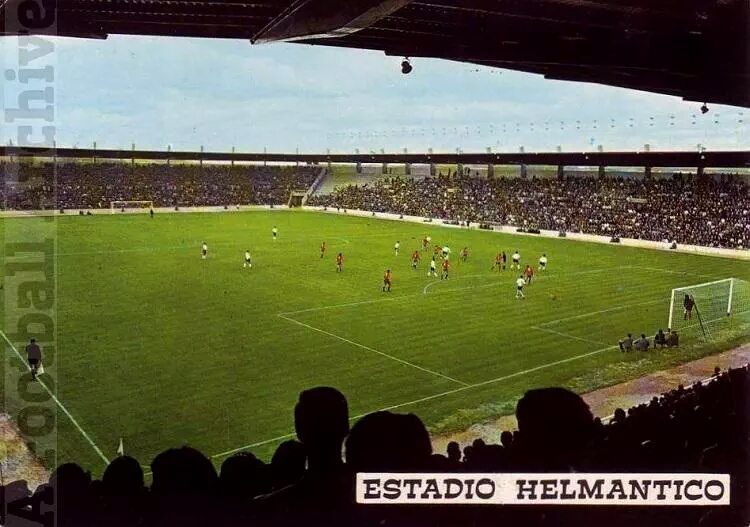
After much wrangling between the Spanish Football Federation and the local judiciary (the football federation initially blocked the new club taking UD Salamanca’s place in the Segunda B division,a decision that was subsequently overturned by the courts) the historic town of Salamanca looked like it would have a football team in place for the 2013-14 season, and looked likely play in UD Salamanca’s old home the Estadio el Helmántico

However this new club never played an official match and looks unlikely ever to do so. A second new club Unionistas de Salamanca CF emerged as a fan owned club made up of former UD Salamanca supporters. The include among their number a local hero in the form of Vincente del Bosque. In their first season secured promotion from the sixth tier of Spanish football into the Primera Regional for Castille and León.

In the chaotic and financially turbulent world it is pleasing that over a Century after some Irish students introduced football to the city, Salamanca will still have a team to support.

Originally posted on Backpagefootball.com in August 2013

Lesser known plaques of Dublin

The poet Patrick Kavanagh once wrote of a “footfall tapping secrecies of stone” and as I walk around Dublin that phrase often rings true.

If the paving stones of our footpaths and the bricks of our buildings could talk to us about the lives once lived in our city they would have quite the story to tell. The thing is that on occasions the walls and pavements of our fair city do talk to use. Though you may pass them by with scant regard the streets and buildings of DublinTown are filled with a vast array of stories from the past in the form of the various plaques and commemorations that adorn bricks, flagstones and pillars. Below are a couple of our personal choices that may have bypassed your attention.

Clerys-plaque

Pawel Edmund Strzelecki – plaque located at the side of Clery’s on Sackville Place

Pawel Edmund Strzelecki was born in 1797 in what is now part of the modern city of Poznan, Poland. A soldier, and an early European explorer through much of Australia, Pawel’s association with Ireland began during the Great Famine when he was sent to Dublin to help distribute supplies donated to relieve the chronic hunger gripping the worst affected areas of the country. Such was his devotion that he even succumbed to “famine fever”, a horribly debilitating illness that was believed to have been spread by lice. Due to his previous connections with Australia he was also well placed to help those Irish families who wished to emigrate there to start new lives.

Lafcadio-Hearn Dion

Lafcadio Hearn and Dion Boucicault – plaque located at 47 & 48 Gardiner Street Lower

Patrick Lafcadio Hearn was born on June 27, 1850, on Lefkada, an Ionian island. The son of a Greek mother and an Irish army surgeon who parted ways shortly after his birth, Hearn was sent to live with relatives in Ireland, specifically 47 Gardiner Street Lower which is now the Townhouse hotel.

His upbringing left him with an unshakeable interest in ghost stories and the occult. He spent time living in Cincinnati and later New Orleans not long after the end of the American Civil War. Later in life he moved to Japan where he ended up teaching English in Tokyo Imperial University. It was his writings during his time in Japan that would secure his cultural legacy, especially his celebrated writings on Japanese folklore and ghost stories which have been made into feature films and manga cartoons.

The neighbouring building was home to Dion Boucicault another writer of note, Boucicault was born in Dublin in 1820 and was a man of many talents. He was an actor, theatre manager and playwright. He helped to define the role of the “stage – Irishman”, while his work tackled risqué subjects for the time such as mixed-race marriage. His writings, often combining Victorian melodrama with farcical comedy remains popular and the Abbey Theatre produced Boucicault’s Arrah na pogue as recently as 2011.

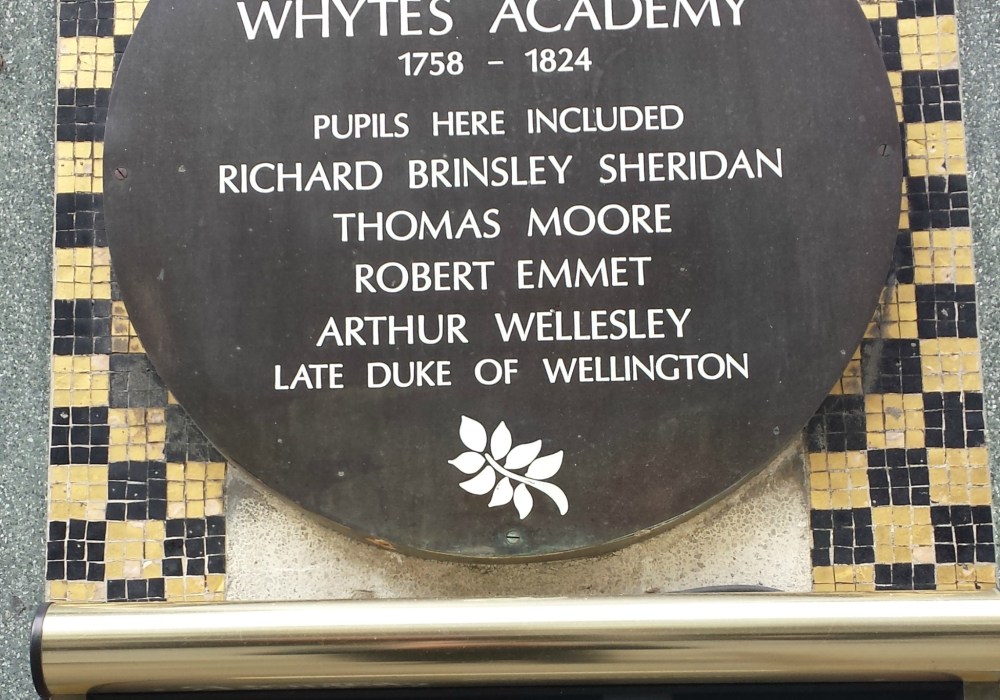
bewleys

Richard Brinsley Sheridan, Thomas Moore, Robert Emmet, The Duke of Wellington – plaque located on Bewley’s of Grafton Street

Grafton Street is the busiest street in the county, and Bewley’s café (currently under refurbishment) is one of its most popular businesses, but many people walk by this impressive plaque without noticing it. Bewley’s was the site where the famous Whytes Academy was established, an English Grammar School, and among its famous students included writers, composers, rebels and politicians. Some famous past pupils were Richard Brinsley Sheridan, one of the foremost playwrights of the day, famous for plays like The Rivals and School for Scandal he was also an MP for over 30 years and is buried in the Poet’s Corner of Westminster Cathedral.

Thomas Moore, born in nearby Aungier Street who is best remembered as one of the most popular songwriters of the 19th Century, his notable works including The Last Rose of Summer, the Minstrel Boy and aptly The Meeting of the Waters as his statue resides over a former public toilet! His works are referenced extensively in the writings of James Joyce and he has a statue next to Trinity College where he was a student, (the statue has been temporarily relocated for the Luas works) and the Westin Hotel.

Robert Emmet the nationalist leader was executed in 1803 at the tender age of 25 on Thomas Street in the city centre. He had been involved in the 1798 rebellion as well as being the leader of the failed revolt that took place in 1803 and which lead to his arrest and death. He remains a hugely significant figure in Irish Republican history, was the subject of songs and poems, as well as a fairly inaccurate play by Dion Boucicault (mentioned above), and has several towns and counties named after him in the United States.

Arthur Wellesley, better known as the conqueror of Napoleon, a two-time British Prime minister and the 1st Duke of Wellington was born in Dublin where the Merrion Hotel now stands. As well as his famous victory at the Battle of Waterloo which is commemorated by the imposing Wellington monument in the Phoenix Park (the monuments’ metal plaques are sculpted out of captured Napoleonic cannon), the Iron Duke during one of his terms as Prime minister brought the Catholic Relief act of 1829 into force which gave Catholics almost full Civil Rights under British law and meant that Members of Parliament like Daniel O’Connell could finally, officially take their seats in Westminster.

Quite the collection of old boys from Samuel Whyte’s Grammar school, give them a thought next time you stop into Bewley’s for a coffee.

Tom-ClarkeTom-Clarke2

Tom Clarke – plaque location at the corner of Parnell Street and O’Connell Street Upper

Thomas Clarke has two plaques which bear his name, both above the tobacconist shop he ran on the corner of Parnell Street and O’Connell Street. As well as selling cigarettes, sweets and other sundry items he also used his business as a meeting place for other members of the IRB. British forces were well aware of Clarke’s Republican past, including his earlier attempt to blow up London Bridge and would often keep the shop under surveillance!

Clarke fought during the Easter Rising in the GPO garrison, only a stone’s throw from his shop. As one of the seven signatories of the proclamation he was sentenced to death and despite possessing American citizenship (which would save Eamon De Valera’s life) he was executed by firing squad on May 3rd 1916. His wife Kathleen would continue on with his political ideals as a TD and Senator and also as the first female Lord Mayor of Dublin. A newsagents shop still trades to this day from the same spot as Clarke’s original tobacconists.

Ernest-Walton

Ernest Walton – plaque location Trinity College

In Ireland many of us would be aware of the contributions of our Nobel laureates in the field of literature, Heaney, Beckett, Shaw and Yeats are well known and oft-quoted. They have featured on banknotes and stamps and in TV documentaries, their faces look out on us from displays in Dublin airport next to quotes from their famous works.

Less in known of Ernest Walton, a scientist and lecturer in Trinity College who won the Nobel Prize for Physics in 1951 and who helped bring about the “atomic age”. Ireland has a rich scientific history which includes contributions of note from the likes of Robert Boyle and William Rowan Hamilton to the wonderfully named Robert Mallet, the father of seismology.

Walton, who had been a student of fellow Nobel laureate Ernest Rutherford, along with his colleague John Cockcroft were among the first people to effectively “split the atom” and were responsible for the development of an early type of particle accelerator. His plaque is tucked down the back of Trinity College on the School of Physics building.

Originally posted on DublinTown.ie in May 2015

Defending the indefensible – the Millionaire Footballer: a retort

It’s hard to have sympathy for the modern day Premier League footballer. Brash, cosseted, occasionally removed from both the average football fan and indeed reality, and of course overpaid.

In a recent article for the Football Pink, Harry Dunford made a cogent argument that modern footballers are absolutely overpaid and that the notion that any top level footballer should automatically be a millionaire and are worth such inflated salaries is a myth. As he noted “In the Premier League alone, where the average wage is around £30,000 per week, how many players really put in a performance week in week out that demands that salary?”

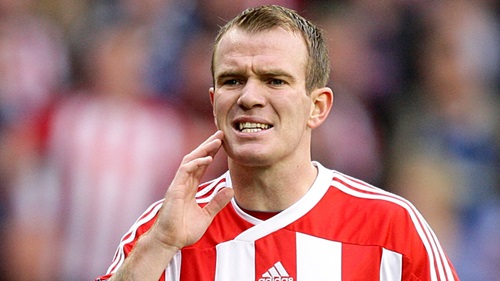
He goes on to add that “This is of course scandalous, a player such as Glenn Whelan, for example, shouldn’t be paid £50,000 per week just because the state of football says the top talent are paid £100,000.” He’s not alone in holding this viewpoint. In fact, Irish football pundit Eamon Dunphy was moved to comment on Glenn Whelan’s earning prowess, sneering of Whelan that “He drives two Ferraris; I think he’s a very lucky lad to have 50 caps for Ireland,” Dunphy would later climb down on his pronouncements after Glenn Whelan went on to challenge Dunphy’s remaks by comparing his career to that of the former Millwall man saying:

I have played 50 times for my country, played at the European Championship finals, played in the Premier League for a long time, played in Europe for two clubs, played in an FA Cup final.

And in fairness to Whelan he has a point, he’s played over 200 games at Premier League level and played in Europe. He’s maintained a first team place under a number of disparate managers when many more overtly talented players have failed to hold down a starting place in the Stoke first XI yet, doesn’t it still seem strange that such an unglamorous footballer should own a Ferrari? Surely such cars are the preserve of continental superstars and not just a midfield workhorse in the Potteries.

btsky

Yet if BT and Sky are willing to pay £5.1billion to secure Premier League TV rights then who should share in this wealth? Harry suggests in his piece, not unreasonably that we all collectively drank the Sky TV Kool-Aid and have been “conned into paying for television subscriptions” which in turn funds the bloated salaries of average footballers. While we could collectively cancel Sky TV subscriptions this, however, ignores a crucial point, that while a British (or indeed Irish) Premier League fan may become turned off from “The best league in the world TM” football is now a truly globalised game, the overseas TV rights for the Premier League have now risen to almost £3billion. For every disillusioned fan in Manchester or Birmingham there are a legion of willing subscribers in other countries.

The viewership of the Premier League (and to a growing but still lesser extent La Liga, Bundesliga and other major leagues) is now global and so is the breadth of sporting talent that the Premier League can call upon – so are these players worth their wages? While Glenn Whelan may not be a marquee name he’s remained playing at a consistent level for a number of years in one of the most viciously competitive sporting meritocracies on the planet. Harry states that “players much further down the talent spectrum within the Premier League are still paid ridiculous amounts of money in relation to their talent” which put me in mind of Nick Hornby’s musings about the hapless Arsenal player Gus Caesar: “To get where he did, Gus Caesar clearly had more talent than nearly everyone of his generation… and it still wasn’t quite enough”. Gus Caesar turned out for Arsenal in the 80s when the majority of the players in the English top flight were British with a few Irish and the odd Dane or Dutchman thrown in. Today, because of the massive scouting networks pioneered in part by the likes of Arsenal and the huge wealth available to Premier League clubs, the talent net can be cast ever wider. Gus Caesar never had to compete against the best talent scouted in Africa, South American and Asia, not to mention all of continental Europe to get an Arsenal squad place, nor were Arsenal at the time richer than the likes of Juventus and AC Milan as they are now. But Glenn Whelan does have to compete in this modern reality, Stoke are signing players from Barcelona for God’s sake. There is an argument that even getting a squad place in a Premier League side has never been as difficult or competitive.

When one thinks of a league so financially dominant one might think of Serie A in the 80s and 90s, yet even that league’s great era didn’t dominate as extensively. There was still greater wage parity between leagues at the time, for example the stars of Brazil’s great 1982 side, Zico, Socrates and Falcao did end up playing in Italy but as mature players who made a decision to leave their domestic game. Today such talent would have been snatched up after a season or two in the Brasileirao. The same is true of European league hierarchies; today a team like Newcastle United, who finished in fifteenth place last year, can snap up a player like Georginio Wijnaldum from PSV. That’s former European Cup winners PSV, Dutch champions who had the opportunity to play Champions League football this year but were out-muscled by a club that in recent years have more experience flirting with relegation than the Champions League. Thus, if even non-elite teams can afford to compile such an array of talent then shouldn’t the players should be recompensed accordingly?

The other main point is that if the players are not to be paid the “millionaire wages”, then where does or should the billions generated by TV deals and sponsorship go?

Should Roman Abramovich just start adding to his art collection? Should Real Madrid, rather than pay huge salaries to Ronaldo, Benzema, Ramos and Co. plan to build more theme parks in Abu Dhabi? Simply put, as football becomes more global in appeal and the elite clubs and leagues become better at generating revenue, then where does this money end up? From a personal point of view I would rather it would go to the athletes on the field who do the most to popularise the game rather than into the pockets of directors, shareholders or oligarchs. Football has always been a game of the masses and in particular the working classes which is where the majority of players still come from. For young boys and men growing up in areas of disadvantage, football offers the chance (albeit a very slim one) of reward and financial security. In a classist society where further education can still seem to be the preserve of the elite, professional football seems one of the only routes of class mobility, one of the only opportunities available to have both the esteem of a community and financial wealth.

hills

When English football had a maximum wage up to 1961 it did not result in great investments or improvements elsewhere in football. The stadium disasters of the 1980’s at Valley Parade and Hillsborough both bear witness to a legacy of massive underinvestment in stadiums in those previous decades, club chairman certainly never gave any great thought to fan comfort or safety when they were paying their players £20 a week but still getting tens of thousands through the turnstiles.

In his piece Harry makes the point that while players like Messi and Ronaldo through their exceptional talent may be somewhat more justified in their massive salaries, but that this raises the bar so that other, lesser players expect far more commensurately. To go back again to the pre-1961 era just look at the example of Fulham’s entertainer chairman Tommy Trinder who publicly proclaimed that star player Johnny Haynes was worth £100 per week. Never adverse to some free publicity, when the maximum wage was abolished, Trinder duly gave Haynes a contract worth £100 a week. However, when teammates like Maurice Cook and Alan Mullery looked for improved deals they were told they could leave the club if they weren’t happy with the contracts that were a fraction of what Haynes would earn. Lest we forget football is a team sport, while stars like Messi gain the plaudits he doesn’t win trophies alone and it would hardly be fair if he earned several multiples of the salary of say Jordi Alba or Ivan Rakitic.

Perhaps the focus should be less on the well paid, mostly working class young men of football, but on how, despite their massive increase in revenue English football clubs in particular have failed to reduce ticket prices, or to improve pay for other workers at their clubs, perhaps issues like these are the more worthy targets of fan frustration. From my point of view, as a football supporter in a country with a much smaller league where many players are part-time and even the very few well paid professionals would not earn more than €2,000 per week, my concern is the ever-growing, cavernous wealth disparity between leagues. I read an article recently that referred to Anderlecht as “minnows” and had a friend’s brother ask me who Club Brugge were when they played Manchester United recently. I would never have traditionally viewed these clubs (who have competed in and indeed won trophies at high levels in Europe) as “minnows”. That is to say nothing of the likes of PSV and Ajax having the cream of their talent picked off by middling teams from wealthier leagues. In the last Forbes football rich list, West Ham and Newcastle were both in the top 20 richest clubs in the world but previous European Cup winners like Benfica or FC Porto weren’t anywhere to be seen.

For me that small minority of well-paid players who play in that small minority of super wealthy leagues deserve to share in the wealth that their endeavour creates. Their position in the game can still be tenuous with injury, capricious managers and the sheer level of unending competition from players around the world who want to take their place. Achieving a fairness and balance in the game is about a lot more than how much Glenn Whelan gets paid.

Originally poster on the Football Pink – August 2015

The Bridges of Dublin

Are you a northsider or a southsider? It’s a question asked a bit. A lot more than are you a Dubliner? You can blame Ross O’Carroll Kelly, Damo & Ivor or odd and even postcodes but it seems that we look on our own lovely Liffey as a barrier that divides us rather than the Life-giving River that is like the blood running through the veins of our vibrant city.

So rather than look at what separates us as Dubliners  why not look at what crosses such divides and brings us together. Our bridges of Dublin. Last year Dublin City Council launched their Bridges of Dublin website along with a small exhibition in the Civic Offices which prompted us here in DublinTown to spend a little time thinking about the bridges of our fair city.

After all doesn’t Baile Átha Cliath simply mean town of the hurdle fort, a reference back to the time when both our Viking and Gaelic ancestors were leppin’ across the Liffey at the site of the current Fr. Mathew Bridge? That’s the one that joins Church Street to Merchant’s Quay, and there has been a bridge of some variety there for over 1,000 years. It’s named after the priest who tried to rid Dublin of the daemon drink as a Temperance campaigner in the 19th Century.

Fr. Mathew was born in County Tipperary and he’s the only priest to have Dublin bridge named after him but not the only non-Dubliner. Jeremiah O’Donovan Rossa, the Fenian leader, was born in Cork and has a bridge named after him, at Winetavern Street (next to the Civic Offices) over to the Four Courts, while an earlier rebel leader Rory O’More (a Laois man) gives his name to the fetching blue bridge that links Watling Street and Ellis Street next to the Guinness brewery,  Sean Heuston (of Limerick) a Volunteer commander in 1916 is also commemorated at both Heuston bridge and nearby Heuston train station.

hinde

As you can see plenty of Rebels are recorded in the stones and struts that criss-cross our city although one of the British army’s most famous leaders was also once commemorated thus. The Duke of Wellington, a Dubliner by birth was once commemorated as you crossed from Liffey Street to Temple Bar, what we now know today as the iconic Ha’penny bridge.

Apart from Rebels and soldiers there are bridges that commemorate politicians and statesmen like Isaac Butt, and most grandly, Daniel O’Connell, his O’Connell Bridge leading into O’Connell Street. A unique bridge, visually appealing and beautifully crafted it is in fact wider than it is long by 5 metres. The building of O’Connell Bridge as well as a construction of the Custom House a few years earlier changed the shape of the city’s business and trade. Throngs of people moved between the widened streets of Sackville Street (now O’Connell Street) and Westmoreland Street which saw these areas become a new commercial hub in the city as the centre of shipping was moved further east into Dublin Bay, reshaping the city profoundly.

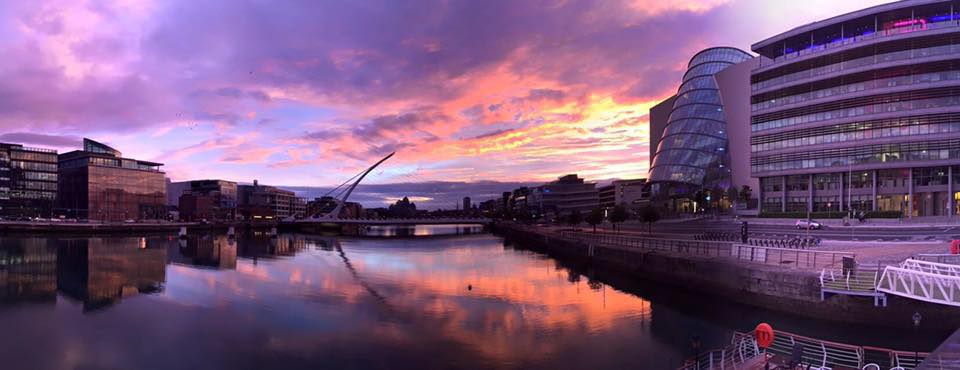
As the centuries progressed our city continued to grow, Eastward Dublin Port developed and later still the IFSC and Docklands areas began to emerge. To serve these new areas and connect our city, new bridges and new designs emerged to reflect a modern city, new names too. The city’s rich literary heritage was celebrated with bridges bearing the names of Sean O’Casey, James Joyce and Nobel Laureate Samuel Beckett. The style and use of the bridges had progressed, the Beckett Bridge reminiscent of the Irish harp straddling the river, while the pedestrian only O’Casey Bridge pivots in sections so as to accommodate boats sailing up the Liffey.

View of the Samuel Beckett bridge

The latest bridge to span the river is the Rosie Hackett Bridge, the first Liffey Bridge named after a woman it opened in 2014. The diminutive Rosie was a long-time member of the ITGWU and was also a member of James Connolly’s Irish Citizen Army during the 1916 Rising, it was Rosie who delivered the still wet proclamation of the Irish Republic to Connolly before it was read out by Padraic Pearse on the steps of the GPO. The Rosie Hackett Bridge also features tram tracks to accommodate the new Luas Cross City line which will begin crossing the river from Marlborough Street to Hawkins Street from 2017.

1901394_10152384220898618_712520739564754956_n

The Rosie Hackett bridge at night

So next time you cross the river try to think more of what connects us as a city, the wrought iron, steel and granite of its bridges, the names of men and women of Dublin and all Ireland who left a mark upon their city and the world. Forget about north side/Southside stereotypes, it’s time to build a bridge and get over it.

Originally posted to DublinTown in June 2015.

From the Andes to Dalymount Park – Bohemians v The Peru/Chile XI

Last year’s World Cup in Brazil conjured up images in the imagination of the European football fan of head-tennis on Copacabana beach, the voluminous bowl of the Maracana, the glorious canary yellow jerseys of the Seleção. The ideas and notions we hold about South American football help create comforting stereotypes of the Brazilian jogo bonito, Argentinians being fabulously unpredictable in their dribbling and their temperament, all spinning in that interior mental carousel of sun-drenched blues, whites and yellows blanched in the Mexican heat of 1970 or 86, Carlos Alberto’s fourth against Italy, Maradona’s hand of god.

These idealised, mythologised notions of South American football that tend to dwell the minds of British and Irish fans did not begin, however, with the World Cup of 1970 but long before, initial interest being piqued by the exceptional displays of the great Uruguayan sides of the 1920s and ’30s. The first chance, however, that British and Irish fans got to see of South American footballers in the flesh was way back in 1933. It was the first time that a South American side had ever visited Ireland or Britain – they came from the land of the Andes and the Pacific. This is an attempt at their story, and the story of the team they would encounter on an October afternoon on the north side of Dublin City.

The side that was to visit Ireland was a select squad made up, not of Brazilians, Argentinians or Uruguayans but of players from the Peruvian and Chilean leagues. With the squad being dominated by players from the Lima based Universitario side, with reinforcements from Alianza Lima (the Peruvian champions at the time), Atlético Chalaco also of Peru, and Chilean side Colo-Colo. The team went by a number of names such as the Combinado del Pacífico and the less evocative Peru-Chile XI.

Colo-Colo were among the first sides who had embarked on a European tour a few years earlier in 1927 which was funded by the Chilean Department of Education as part a diplomatic and educational exercise that saw them take on Spanish sides, Atletico Madrid, Real Union and Barcelona. The tour would end in tragedy as Colo-Colo’s star player and club founder David Arellano died from peritonitis brought on by a rough challenge he received during a game. With this in mind it is perhaps understandable that only three Colo-Colo players would travel as part of the Combinado side. Much like Colo-Colo had done in 1927 the Combinado would also journey to Spain, however their first port of call for a game on this side of the Atlantic was Dublin and Dalymount Park, and their rivals would be Bohemian Football Club.

Bohemians were at the time strictly amateur and would remain so for another 40 years. The Combinado were titular amateurs back in South America but were provided with “tips”, sinecures and other payments (for example a teenage Lolo Fernández’s first contract was worth 120 soles a month, approximately €450 by modern values), they were however officially paid to take part in their European tour, and paid with good reason. Although teams like Colo-Colo, Nacional, Boca Juniors and others had previously toured Europe, the Combinado’s itinerary was truly immense by comparison with any earlier visiting side.

Their journey began in Panama with a win over local side Colón, then a trip to the idyllic Caribbean island of Curaçao and a comfortable 7-0 win in September of 1933 before departing for Europe, where, in total they would play games in Ireland, Scotland, England, the Netherlands, Czechoslovakia, Germany, France, Italy and Spain with the players finally returning home in the Spring of 1934. The results of the Combinado were mixed to say the least, there were victories over the likes of OGC Nice, Sparta Rotterdam and a selection of smaller Spanish sides and credible draws with Slavia Prague, Saint Etienne, Italy’s Pro Vercelli and West Ham.

There were however defeats to the likes of Celtic, Newcastle United, Bayern Munich and a 10-1 drubbing at the hands of a Madrid XI. In fairness to the Combinado this defeat in Madrid wasn’t helped by the fact that on the same day, half the squad, under the name “Chile-Peru” were losing 4-1 to Barcelona in their Les Corts stadium, while the remainder, playing under the title “All Pacific” were playing a combined Madrid side in the Chamartín arena. This was a Madrid side that featured the legendary keeper Ricardo Zamora of Real Madrid, while Atletico Madrid’s Julio Antonio Elícegui grabbed a hat-trick against the unfortunate South Americans.

Although the touring sides’ fortunes varied there is no doubt that there were players of genuine quality in their ranks. In goal was Alianza Lima’s Juan Humberto Valdivieso, the Peruvian national team goalkeeper at the 1930 World Cup, 1936 Olympics and 1939 Copa America. Nicknamed “El Mago” (the magician) he was renowned for his speciality at saving penalties, while during a game for Alianza after star forward Villanueva went off injured, Valdivieso took his place in the attack and proceeded to score seven goals in an 8-1 victory over Sporting Union.

Contemporary reports would describe him as one of best goalkeepers in all of South America and Valdivieso’s exceptionalism would continue through the generations; his son Luis is the current Peruvian Finance Minister while his grandson, a swimmer also named Juan Valdivieso followed in his grandfathers’ footsteps and competed at a Summer Olympics in both 2000 and 2004, something the grand old goalkeeper lived long enough to witness. Valdivieso’s Alianza club-mate on the tour was Alejandro Villanueva, who was nicknamed “Manguera” (Fire-hose) in recognition of his many outrageous moves on the pitch, indeed so well-known was he for his bicycle kicks that he was apocryphally attributed with the creation of that move. Rather than “Fire-hose” The Irish Independent preferred to give him the sobriquet of the “Peruvian Dixie Dean”. A veteran of two Copa Americas, one World Cup and the 1936 Olympics, Villanueva did not enjoy his erstwhile team-mates longevity, dying of tuberculosis in 1944 at the age of just 35. In testament to his enduring popularity and scoring exploits Alianza rechristened their stadium in 2000 as the Estadio Alejandro Villanueva almost 60 years after his death.


The Bohemians line-up from a 1932 trip to France

Although Alianza were represented by these two stars the majority of the squad as mentioned were from Universitario, to date Peru’s most successful club, winning 26 league titles and coming runners-up in the Copa Libertadores in 1972. Brightest among their firmament of stars was the young striker Teodoro “Lolo” Fernández. The famous Chilean sports journalist Renato González Moraga would praise the completeness of his game calling it as both “functional and beautiful” and describing Fernández as capable of striking a ball with ferocious power with both feet, being dangerous in the air, and capable of hitting precise long range passes to split open defences. History would know him as Universitario’s record goalscorer, a distinction he held for the Peruvian national team (with 24 goals) for over 30 years until his record was beaten by the current holder Teófilo Cubillas.

He would be the star player six years after his Dublin visit when he inspired Peru to their maiden victory in the Copa America in 1939; “Lolo” would end the tournament with the best player award and as the top scorer with 7 goals. Like Villanueva he was honoured by his club who played their home games in the Teodoro Lolo Fernández stadium from the 1950s all the way up to 2000. Although at the time of his visit to Dublin, The Irish Press’ correspondent, going under the bye-line of “Socaro” merely described the young striker as “a newcomer to big matches” but a “player of great promise”. He would be joined on the tour by his older brother and fellow Peru international Arturo.

Many of the touring players were young men like Lolo Fernández, players in their early 20s who were only developing the reputations that would later bring them fame. There were, however a handful of more seasoned players, nine of the squad including Valdivieso, Villanueva and Arturo Fernández had been part of Peru’s 1930 World Cup squad, as had midfielder Plácido Galindo who had the dubious distinction of being the first player ever sent off in a World Cup finals. Several of the younger members of the squad would form the core of the Peruvian team that would journey to Berlin to compete in the 1936 Olympics, while the Fernández brothers, Valdivieso and midfielder Carlos Tovar would be part of the Peru squad that would lift the Copa America in 1939.

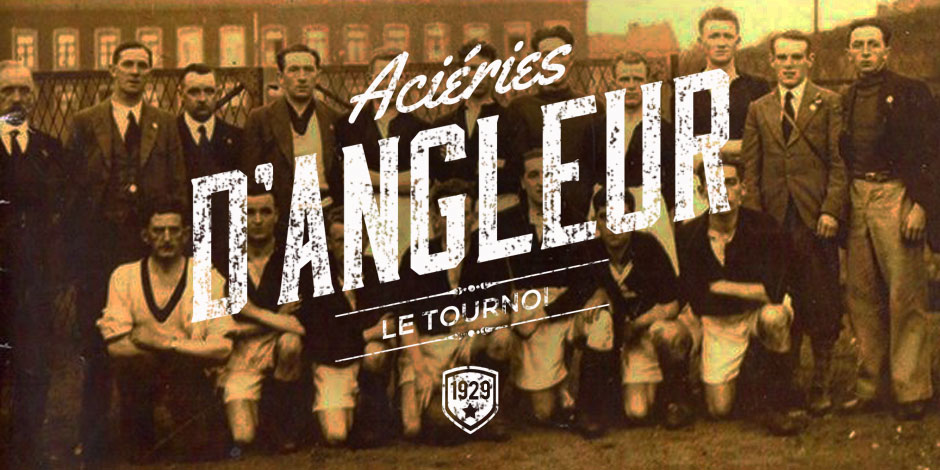
Despite the obvious talents available to the Combinado and the interest created by this exotic side Bohemians were certainly not to be underestimated as opponents. The Bohs were in the middle of one of their most dominant eras, twice champions in the late 20′s the 1933-34 season would yield yet another league title under the shrewd tutelage of Bill Lacey, a versatile former player of both Everton and Liverpool. Lacey had won two league titles with Liverpool in the 20′s and had been part of the pre-partition Irish side that had won the Home Nations Championship in 1914. After his playing days he moved into coaching at Bohemians and also coached the National team of the Irish Free State on a number of occasions throughout the 30s, including a 5-2 victory over Germans in 1936. Bohs had also had some success on European tours of their own; they had won the Acieries d’Angluer tournament in Belgium which included the likes of Standard Liege in 1929, while also playing regular challenge matches in Dublin which included a draw with French side Stade Francais a matter of months before the visit of the Combinado.

Bohemians also included in their ranks a number of Irish internationals such as Fred Horlacher, Jack McCarthy, goalkeeper Harry Cannon and others such as Paddy O’Kane, Billy Jordan and Plev Ellis who would receive their debut caps within the following couple of years. Horlacher, the son of a German immigrant, Pork-butcher, bore some comparisons with his Peruvian counterpart Villanueva. Like Villanueva he was an exciting, versatile attacker, he was also a talented all-round sportsman, representing Ireland at Olympic level in Water Polo and was a fine amateur tennis player and golfer.

Sadly also like Villanueva he would pass away prematurely, dying a year before the Peruvian in 1943 only a month after finishing his career with Bohemians. A reminder that life in 1930s and 40s, even away from combat could be still be brutally short even for the fit, young sportsmen. Another member of the Bohemian side who had won representative honours was Johnny McMahon, born in Derry he was defender who also had an eye for goal, and was the last Bohemian player to be capped by the IFA when he was selected for a game against Scotland in Glasgow earlier in 1933. A league winner with Bohs in 1927-28 and 1929-30 the game against the Combinado would be one of his last for Bohemians after injuring his knee in that same match.

The game itself took place on Sunday October 1st 1933 in front of a full house of over 30,000 at Dalymount Park. The build-up to the game had seen the press tout the Combinado as clear favourites; with The Irish Times noting ominously that “It would be too much to expect Bohemians to overcome them”. Most contemporary reports at the time had been much taken with Uruguay’s earlier footballing successes in the 1924 and 28 Olympics, as well as their World Cup win in 1930 and the image of the skillful and exciting South American footballer was gaining a foothold in the popular imagination.

An example of this attitude can be seen in The Irish Times in one of its previews of the game. It would highlight the significance of the encounter and go as far as to call the match:

The principal event in Free State [now Republic of Ireland] football during the first half of the season…[and that] The South American Republics have taken to Association football as a duck takes to water, and their game now is obviously of a very high standard, since Uruguay has come through very strong opposition to win the last two Olympic tournaments.

This is the first visit of a South American team to the British Isles, and intense interest centres on it, since Spain and Austria have shown themselves capable of challenging English and Scottish supremacy at the game. The visitors are setting out to demonstrate that football in South America is of as high a standard as it is anywhere else.

Our friend “Socaro” in The Irish Press indulged himself so far as to say that the match was “of world-wide interest”, a most uncommon situation for a football match taking place in Dublin at the time. He further stated that the travelling side “must at least consider that they can teach us a thing or two of the art of football”. It’s clear from the reports that the match had created quite a stir, with the main papers devoting significant column space to previews of the match, including pen-pics of all 21 South American players who would make up the Combinado squad, with special mention of Valdivieso, Villanueva and Chilean international Eduardo Schneeberger, of whom much was expected.

The sole negative note in the coverage of the South American’s visit was The Irish Independent’s decision to reprint a cartoon caricature of the Alianza player Villanueva; the black striker is depicted with all the stylized grotesquery one might associate with 1930′s representations of people of colour. To further enforce the significance of their visit the South American party were afforded a Civic welcome from the Lord Mayor of Dublin, while it was noted that “Many public men, including Foreign Consuls have intimated their intention of being present” at the game. A band had been booked to play as a warm-up act for an hour before kick-off and “in order to follow the game with greater interest an official programme” was to be put on sale.

The teams lined out as follows: Bohemian F.C: Harry. Cannon (gk), Aloysius Morris, Jack. McCarthy, Paddy O’Kane, Johnny McMahon, Fred Horlacher, Plev Ellis, William Dennis, Ray Rogers, Billy Jordan, John O’Dempsey
Peru-Chile: Juan Valdivieso (gk Alianza Lima), Alfonso Saldarriaga, Antonio Maquilón (both Atlético Chalaco) Alberto Denegri, Vicente Arce, Eduardo Astengo (all Universitario) Roberto Luco (Colo-Colo), Lolo Fernández (Universitario) Alejandro Villanueva (Alianza Lima) Carlos Tovar (Universitario), Eduardo Schneeberger (Colo-Colo).

The media had predicted a convincing win for the Combinado and it was the South Americans who duly struck first after “twenty five minutes of even play Denegri sent Luco away”, the pace of the Chilean getting beyond the Bohemian defence and though his shot was blocked it fell into the path of 20 year old Carlos Tovar who had an easy finish. Their lead, however would only last ten minutes, Bohemians’ Plev Ellis upon receiving the ball, cut inside his man and was able to fire in a cross, Valdivieso who would pull off a string of miraculous saves throughout the game missed the ball which fell kindly for Billy Jordan who tapped it into the empty net.

In the second half Bohemians attacked strongly but were somewhat hamstrung by the serious injury to defender Johnny McMahon about twenty minutes from time. This injury, which as stated would ultimately cause the premature end of McMahon’s career, forced a reshuffle, with Ellis moving back to right-half and Paddy O’Kane going in at centre-half. In a time before substitutions McMahon was compelled to hobble about out on the wing for the remainder of the game. As Bohs attacked more Valdivieso was forced into a number of saves and Eduardo Astengo had to clear from the goal-line on one occasion, though great praise was also reserved for the efforts of Harry Cannon in the Bohemian goal. Nevertheless, in the closing minutes the Combinado were presented with a chance to win the match but Villanueva shot wide from 6 yards out with only Cannon to beat.

The “interesting and exciting” game would finish 1-1 and Bohemians could reflect positively on their result in front of the bumper crowd who had just gained their first glimpse of South American footballers in the flesh.
Villanueva of all those on show provoked most comment, as a centre forward he was described as a “different conception of that position from British players. Instead of waiting well up the field for the ball to come to him he chases it all over the field”, he is several times described dropping deep and “feeding the wings with skill and precision”. Such descriptions would put one in mind of the type of role, variously described in the modern game as a deep-lying forward or False nine but being executed decades before the likes of Hungary’s Nándor Hidegkuti or even Man City’s Don Revie would popularise the position.

Pathé newsreel footage of the game can be found here.

Villanueva’s performance was somewhat representative of the teams’ style of play; while the reporters watching the game could not fathom his roaming about the pitch similarly they struggled to describe the style of play of the South Americans in general. “Socaro” noticed that they preferred to use their toe when playing as opposed to their instep and that though the Combinado were “adepts in controlling the ball…and with a fine sense of positional play [they]…failed badly in the matter of scoring goals” and that the “fine movements” and build-up play were wasted by their seeming reluctance or inability to finish off such pretty moves. The Irish Times correspondent concurred to an extent stating “they have speed and control the ball well, but… the forwards had not sufficient fire and dash near goal”. Bohemians for their part seemed to have set themselves up to play a counter-attacking game, sitting deep and trying to break quickly on the counter early on, while attacking with more confidence in the second half. “Socaro” despaired of this tactic which he dubbed disparagingly the “Wait and See” approach and went on to bemoan the “little or no charging” in the game.

This view of Peruvians as being a tad too elaborate in their play was not solely the view of the Irish media but one with more common currency. Uruguayan writer and journalist Andreas Campomar described how the sociologist Aldo Panfichi referred to the footballing neurosis of Peru as being the “history of near misses” with Peru producing great players and displays but being undone by individual overindulgence or by refereeing or bureaucratic interference.

In either case the Peruvian public could console itself that the team had played well, deserved to win but had been undone by others. In other words, the moral victory that so many Bohemians fans will be familiar with. Perhaps the most famous example of this neurosis in Peruvian footballing history would occur just three years after the match with Bohemians and featured many of the same players.
The Peruvians went into the 1936 Berlin Olympics with high hopes for victory, which were enhanced after they comfortably dispatched Finland 7-3 in the opening match, Fernández getting 5 of the goals.

In the following game versus Austria, Peru would go two goals down before rallying and drawing level to take the game to extra time. Although the Peruvians had the ball in the back of the net five times in the course of extra time the Norwegian referee only awarded two of them. But for Peru that seemed to be enough. They left the field believing themselves to be 4-2 winners. Austria however protested, arguing that the game had been unlawfully interrupted after spectators had come onto the field during extra time to celebrate one of the Peruvian goals; one such spectator was even reputed to have carried a pistol onto the field of play. The Austrians further alleged that one of the spectators had kicked one of their players and that these events caused a “decrease of the fighting energies of the team”. A rematch, which was due to be played behind the closed doors, was ordered but the Peruvians refused to turn up which resulted in a walkover victory for Austria.
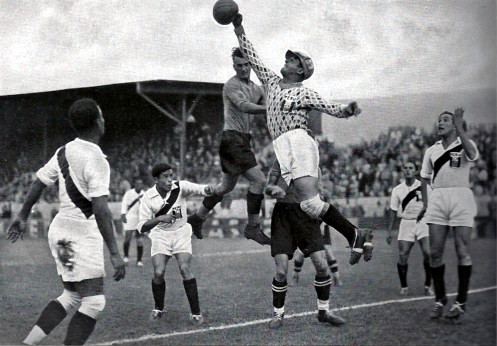
 

Peru_v_Austria_1936_Valdivieso

Juan Valdivieso in action for Peru against Austria in the 1936 Olympic Games

The whole Peruvian Olympic team withdrew from the Games in protest, Colombia did likewise as a gesture of fraternity with their neighbours while other Central and South American nations expressed their solidarity with the Andean Republic. Austria would end up going through to the final but would only collect the silver as they were defeated 2-1 by Italy. Back in Lima the German consulate had its windows smashed while the general population of Peru convinced themselves (with no supporting evidence) that Nazi Germany, sympathetic to Austria had rigged the Olympics to deny Peru the gold medal that was destined to be theirs.

That the touring South Americans should have chosen Dublin as the venue of their first game in Europe might seem a mite strange to modern readers there are a number of reasons as to why this might not be as unusual as it first appears. There was a strong appetite from both Ireland and Peru to test themselves in International competition. Mountainous Peru on the shores of the Pacific was far more geographically isolated that than Brazil or the nations of the River Plate. Apart from the Chileans football in neighbouring states like Columbia and Bolivia was still developing, and despite the tragedy of David Arellano’s death the tour to Spain by Colo-Colo had help put football in this part South American on map.

It was obvious that competitive games against European opposition could provide Peru and Chile with quality opposition as well as boosting the image of the nations abroad. This was similarly the case for the Irish Free State. As The Irish Times noted at the time the “Free State football season suffers from a lack of representative matches, which makes it difficult to assess the true value of the play seen here” which showed how the nascent Free State association faced the same type of challenges as their South American counterparts.

There was of course the still raw topic of the 1921 split of the Dublin-based Football Association of the Irish Free State (which would later become the FAI) from the Belfast based IFA, credibility on a global stage was something that the fledgling organisation craved and was something that the touring South Americans could offer. As well as being the home of Bohemians, Dalymount Park was also home to the Irish Free State’s national team and staging the first game of the tour in Dublin was quite a coup for both Bohemians and for FAI General Secretary Jack Ryder.

It is also worthy to note that sports fans of 1930s Dublin were as big a bunch of event junkies as their modern counterparts. A glamorous touring side in a gala friendly could put bums on seats, over 30,000 of them in Dalymount Park; an attractive venue, and at the time one of the best stadiums in Ireland which had recently been upgraded by the famous stadium architect Archibald Leitch. Such were the crowds in attendance that surviving newsreel footage shows some hardy souls standing on the roof of Dalymount’s main stand to gain a better view. The gate receipts for the Dublin game were a very healthy £900 compared to the £250 taken in Belfast when Glentoran F.C. hosted the Combinado the following day.

Finally there was also an odd Irish connection with the Combinado that may have secured Dublin as the first venue for a game in Europe. The tour organiser/manager was one Jack Gubbins (or John Alejandro Gubbins Pastor) to give him his full name, a Peruvian businessman who along with Colo-Colo president Waldo Sanhueza helped to organise and finance the venture. Mr. Gubbins could trace his family back to Woodstown, County Limerick where his ancestor Joseph Gubbins had settled after arriving in Ireland as a Captain in Oliver Cromwell’s New Model Army. Generations later it was from Limerick that Jack’s father had departed for Peru where the Gubbins family thrived upon their arrival, being especially successful in the rubber industry. An uncle of Jack’s; a John Russell Gubbins had been a director of the Peruvian Amazon Company, rubber manufacturers who had been castigated in the early part of the 20th Century by none other than Sir Roger Casement due to their barbarous practices towards the native Putumayo Indians who worked for the company.

As Casement commented about the Indians plight:

Whole families … were imprisoned-fathers, mothers, and children, and many cases were reported of parents dying thus, either from starvation or from wounds caused by flogging, while their offspring were attached alongside of them to watch in misery themselves the dying agonies of their parents.

Jack was not the only Gubbins to turn up in Ireland either, his brother Reginald (or Reynaldo) also arrived in Dublin, announcing himself as a candidate in Peru’s upcoming Presidential elections. Reginald was a close ally of Augusto Leguia, the recently deposed President. Leguia, (who had once appeared on the cover of Time magazine) was a businessman with experience in the Insurance industry, he had sought to revolutionise Peru’s outdated industrial sector, and set about ambitious infrastructural plans for drainage and health care.

His second term as President came though a Coup d’état and this term would take on a far more dictatorial style, with Leguia oppressing dissenting voices within the political opposition. With the onset of the Great depression and falling demands for Peruvian goods and raw materials his government was overthrown. Leguia’s eventual successor, Luis Sanchez Cerro had been assassinated only months before the Combinado’s departure for Dublin and Reginald Gubbins saw himself as the man to lead the country back to prosperity. He was not to be successful in his campaign however, and Óscar Benavides would become Peruvian president. Sometime later Gubbins’ company would be blacklisted for selling cotton to Nazi Germany in contravention of orders to refrain from trade with Axis powers during the Second World War, a blacklist from which the U.S. House of Representatives would later absolve the company. Such were the colourful Hiberno-Peruvian Gubbins family who surrounded the Combinado tour.

Ireland at the time was not without its own political worries and was wound up with its own paranoia about possible coups. There had been genuine, though unfounded fears earlier in the year that the Cumann na nGaedheal political party would refuse to relinquish power to the incumbent Fianna Fáil party of Éamon DeValera who had triumphed in the recent elections. While only a month before the Bohemian – Combinado game a planned march by the right-wing, quasi-fascist Blueshirts group, led by former Civil War General and Police Commissioner Eoin O’Duffy, had been banned over fears that any such march was intended to as a ploy to overthrow the government in a similar fashion to Mussolini’s infamous March on Rome.

By the end of 1933 the Blueshirts would be banned completely and by 1936 O’Duffy would be leading 700 members of an Irish Brigade to fight for Franco in the Spanish Civil War. It was against this backdrop of national tension and Europe’s gathering storm clouds that this game would take place. Yet despite the proximity of these events, the civil disturbances in Peru or Ireland seem to have had little effect on the sportsmen of the Bohemians or the Combinado. Bohemians would be champions that season and again in 1935-36 while developing numerous players for the National side. Peru would go to the Berlin Olympics and experience joy, sorrow and bitter regret before players like Valdivieso and Lolo Fernández would write their names in their nation’s football history as victors in the 1939 Copa America and enduring icons for their clubs.

Original version published on the official Bohemian FC website in 2014. Special thanks to Simon Alcock for the bespoke artwork.

Bohemians in Europe – The Aciéries D’Angleur trophy 1929

When you look through the history of Bohemian Football Club and you get down as far as the honours section there is, thankfully much to peruse – league titles, cups of various names and hues, some major, some minor, some now defunct.

One that sticks out though, its obscure French title jarring somewhat alongside lists of Leinster Senior Cup victories, is the Aciéries d’Angleur triumph of 1929. Many supporters may imagine this to be some sort of pre-Hanot era version of a European trophy, to be classified with the likes of the Mitropa Cup or Latin Cup which existed before the emergence of the European Cup in the 1950s. Unlike those other competitions, however, there is precious little information immediately available about the Aciéries d’Angleur, so for the benefit of the Bohs faithful, I offer this short account.

The Aciéries d’Angleur was a trophy contested by teams in and around Liege and Brussels, the term ‘Aciéries d’Angleur’ referred to the steel mills (aciéries) of the Angleur region around Liege, an area that had become heavily industrialised from the early 19th century onwards. Bohemians were invited to participate as a guest team in a competition involving , Standard Liege and Royal Tilleur FC but also played matches against a Royal Flemish XI and Charleroi Sporting Club as part of a wider tour of Belgium.

At the time, the national team of the Irish Free State was in its nascent phase. There had been an acrimonious spilt from the Belfast-based Irish Football Association (IFA), and the Football Association of the Irish Free State (FAIFS) had sought recognition from FIFA in order to compete on the international stage.

They knew that this recognition was unlikely to come from the “Home Nation” associations of the UK, whose official line was to recognise the IFA as football’s governing body for the whole island. Though the FAIFS had split from the IFA in 1921 and had been recognised by FIFA in 1923, it would not be until 1924 that a team would take to the pitch under the Free State banner when they competed in that year’s Olympic Games. It would be a further two years before a full international match would take place, this time against Italy in Turin. The Italians would then send a strong side for a return fixture in Dublin, playing in Lansdowne Road in 1927.

The two fixtures against the Italians both ended in defeat – the next international games were against Belgium and were both somewhat more successful. The first game, in February 1928, took place in Liege, with the Free State XI gaining a win with a very credible 4-2 victory in a game that featured Bohs’ Jack McCarthy as captain, Jimmy White grabbing two goals, Jeremiah (Sam) Robinson on the wing and Harry Cannon in goal. The return fixture was held in Dalymount Park a year later with the Irish running out 4-0 winners, thanks in no small part to a hat-trick by John Joe Flood of Shamrock Rovers in a game that also featured Bohs winger Jimmy Bermingham on the right.

Some IFA observers north of the border saw this Free State side as a rump team, playing these early fixtures against other “Catholic” nations and excluded from the Home Nations championship which they viewed, somewhat arrogantly, as the true competitive measure of an international side. However, returning to Bohs, with the Belgian national team having twice played against Ireland, once in Dalymount, it should not perhaps seem so strange that Bohemians – Irish champions in the 1927-28 season – should be invited to compete for the Aciéries d’Angleur trophy.

The tournament was held as a pre-season competition before the beginning of the 1929-30 season, a campaign that would see Bohs again crowned as league champions as they reclaimed their title from rivals Shelbourne. It was contested by teams from the region around Liege and often featured a foreign invitee, the famous amateur English club Dulwich Hamlet had previously taken part, as had PSV Eindhoven.

The fixtures took place in August 1929, with the first match being against Charleroi on August 15th. A crowd of 15,000 was estimated to have attended, with the Bohemians players given a “splendid reception” on what was described as a day “too warm indeed, for football”. Although it was noted by Irish diplomat PJ O’Byrne (a Papal Count from his time as Irish Envoy to Rome) that the Bohemian party were warmly welcomed by the British Consul in Charleroi, there was an incident which caused a bit of a stir.

As Count O’Byrne noted:

“Proceedings were marred somewhat – from our point of view – by the heralding of the Bohemian team on the field under the colours of the Union Jack, which, apparently, was the cause of some manifestation by a section of the crowd, probably British ex-Service Men.”

If the Union Flag incident affected the Bohs players, it didn’t show in their performance, as they ran out 2-1 winners, with goals from a pair of Bills – Bill Cleary and the English-born Bill Dennis. The matches came thick and fast, with another game the following day (Friday 16th) against Royal Flemish select in Brussels with Bohemians winning 1-0 according to a report in the Irish Times.

There is very little information about this game or about who made up the Royal Flemish side but later that same day the Bohemian Football Club party met with Count O’Byrne and arranged to lay a wreath at the tomb of the Unknown Soldier to honour the Irish dead of the First World War. The Free State international side had performed this same ritual the year before with some diplomatic assistance from the impressively named Count Gerald Edward O’Kelly de Gallagh et Tycooly, who had since relocated to Paris.

This simple ceremony, the laying of a wreath, which was a large floral harp in the Saorstát colours, was preceded by a short speech from Joe Wickham, secretary of Bohemians (and later to be General Secretary of the FAI). The diplomatic Free State flag was given to the team for the rest of the tour, so that it could be displayed in the stadium on match days and avoid any further incidents like the one in Charleroi. The wreath-laying ceremony had added significance for Bohemians, as the club had, according to one source, lost up to 40 playing members to the military during the Great War. One such Bohemian who would not return was the club’s early star forward Harold Sloan, who was killed in action on the Western Front in 1917.

On Saturday 17th the third game of the tour took place against Royal Tilleur FC. Royal Tilleur were a moderate side from Liege who had been relegated from the Belgian top flight the previous season. The club went through several mergers, and now exists as part of RFC de Liege, a club most famous for its refusal to release Jean Marc Bosman once his contract had expired and allow him to join French team Dunkerque. Again Bohemians ran out 1-0 winners, and once again Cleary was on the scoresheet.

The final game of the competition was against Standard Liege, to win what the Irish Independent referred to as the Royal Angleur Cup. The match was hard-fought, with the sides level at half-time at one apiece, Bermingham getting the first strike for Bohs. The Gypsies got on top in the second half, finishing as 3-2 winners, with Bill Dennis and Johnny McMahon getting the crucial goals. From there it was swiftly off to Ostend to catch the boat to London, and then back to Dublin to finish preparations for the new season.

Just over two weeks after the return of the triumphant Bohemian side, there was a meeting of the FAIFS Council. At this meeting, PJ Casey of Dundalk FC paid tribute to Bohs on account of their successes in Belgium. The Association agreed to officially record these achievements, and this motion was supported by “various members” of the Council. It was further agreed at this meeting that the Association should endeavour to arrange another match against Belgium (and others against Holland, Germany, Sweden, Italy and Spain).

The game with Belgium was duly arranged for May 1930, and heralded another victory for the Irish, this time a 3-1 win in a game that featured the final international appearance of Bohemians defender Jack McCarthy (then 32), and the debut of 20-year-old forward Fred Horlacher, who was beginning his journey to becoming a club legend.

We often think of European club football as being insular in the years before the European Cup, especially in Ireland of the 1920s and 30s, where the association game was restricted to the hotbeds of Dublin and Cork, separated from the major clubs in the Belfast area, and effectively ostracised by the “Home Nations”.

The Aciéries d’Angleur however, showed that a team like Bohemians, true to their name, were more connected to mainland Europe than one might expect. The journey to Belgium was in its own small way an important step to identify the Free State, its Football Association, and clubs as separate and distinct entities, capable of competing in the international arena.

The issues around the Free State flag and the visit to the grave of the Unknown Soldier show that Bohemian Football Club, in a minor way, did its part to acknowledge the past (such as the contribution of Irish soldiers during the Great War) and herald the future of a small nation in flying the flag of the Free State. It is not far-fetched to assume that many of those attending the matches in Belgium would never have seen the Irish tricolour flown before, or perhaps even been aware of the emergence of this new state.

This was not to be the last engagement between Bohemians and teams from other nations. It is noteworthy that throughout the 1920s and 30s, long before official UEFA club competitions, Bohemians were competing against sides from all over the world. Although the Free State national teams’ victories over Belgium show that Belgian sides were perhaps not world beaters, it is worth remembering that they had been Olympic Champions on home soil in 1920, and players from that victorious side were still featuring against the Irish in 1928.

Bohemians, as a completely amateur side, also had to undertake a boat journey to Belgium via Britain, and play games on consecutive dates in blistering August weather against the local sides and in front of partisan crowds. Their victory is still worthy of respect from the Bohemian faithful to this day, even if the tournament may seem obscure and archaic to modern fans.

Many will already know about Bohs’ historical victories in Europe against Rangers, Aberdeen, Kaiserslautern or BATE Borisov, though some may not be familiar with these earlier games in Belgium or indeed against sides from as far afield as South America, but then that’s a story for another day.

Originally posted on the official Bohemian FC website in 2014 and with special thanks to Simon Alcock for the imagery.

Dalymount days: Identity crises in the home of Irish football 1914-1939

A fine piece from Ciaran Priestly on the role of Dalymount Park in the sporting and social landscape of Dublin and the country as a whole.

Ciaran Priestley's avatardear durty dublin

While speaking at a public event of the Blizzard football journal in Dublin, esteemed French football journalist Philippe Auclair remarked on the “schizophrenic” nature of the modern Irish football fan’s mentality. This analysis of the current state-of-play is entirely accurate. In truth, the most common popular expression of football supporter identity in Ireland is to wear a premier league shirt to the pub. Football’s mass-culture in Ireland grew out of a similar process.

Advocates of the League of Ireland were dismayed that the summer obsession with football during Italia ’90 did not lead to a bounce in attendance figures, despite virtually nothing being done to attract newly converted fans to their clubs. The decline of the League of Ireland continued throughout the nineties as the national team captured the nation’s imagination while elite English club football commercialised at an unprecedented rate. Ireland was a ripe football market which SKY TV…

View original post 3,398 more words