Alexander McDonnell Chess champion and slavery apologist

recent article on sports website balls.ie highlighted the claims by Michael Cusack, one of the founding members of the GAA, that Chess was in fact a game that was Irish in origin. Cusack claimed chess should be “played because it was Irish and National, and especially because it was the principal instrument of culture among the most glorious people that ever lived in Ireland – the Fenians of ancient Erin.” The article focuses on some fascinating research carried out by UCD’s Paul Rouse in his latest book ‘Sport and Ireland: A History’ and the article further mentions that to date our only Grandmaster is the Russian born, Irish resident Alexander Baburin.

Despite this lack of high level achievement  there is a long history of chess in Ireland, though perhaps quite different from the one suggested by Michael Cusack. Chess, or the game from which it originated, has variously been traced to China, Persia or most commonly India, with the game we know today moving westward into Europe and then northward through Italy and Spain. The Prague-born Wilhelm Steinitz has been recognised as the first official Chess “World Champion” in 1886, while the international governing body for chess, FIDE was founded in France in 1924. However in the years before Steinitz’s triumph there were a number of unofficial world champions, and one of the first, and most brief of these champions was an Irishman, the Belfast-born Alexander McDonnell.

McDonnell was born in Belfast in 1798, his father, also named Alexander was a noted surgeon in Belfast. It was said that he attended the the execution of Henry Joy McCracken, one of the leaders of the 1798 rebellion. While his uncle Dr. James McDonnell was the founder of the Belfast Fever Hospital, which exists today as the Royal Victoria Hospital. James was also father to a son named Alexander, but we will return to him in another post.

Alexander, the future chess star, trained and worked as a merchant in the West Indies in the early part of the 19th Century, and this is where the story takes a decidedly dark turn. Reports suggest that Alexander went out to the West Indies at the age of 17 and ended up in the colony of Demerara-Essequibo, now part of modern day Guyana, and worked as a merchant dealing mainly with the export crops of the area, sugar and coffee. McDonnell was obviously well thought of by the merchants and plantation owners of the area because in 1820 he returned to London to act on their behalf as secretary of the Committee of West Indian Merchants. This role was to primarily represent the interests of the British colonists in the West Indies and to liaise with persons of importance and members of Parliament, what we might recognise today as a PR and lobbying role. This was a crucial time for those with financial interests in the West Indies, as there was a growing abolitionist movement in Britain, and the plantations of the West Indies were almost totally operated by slave labour. By 1807 the British Empire had outlawed Slave trading, which ceased the long established practice of the Atlantic slave trade, the forcible capture and relocation of people from west Africa to the Americas for work in the hugely profitable plantations. Slavery itself though remained legal. Those enslaved people already in the possession of plantation owners remained their chattels, as did any children born into slavery.

McDonnell doc

McDonnell’s cruel attempt to justify the conditions of slavery in Demerara.

In 1823 the Anti-slavery society, which sought to abolish slavery completely and which lobbied extensively for this cause, was founded in Britain. 1823 was also the year that Demerara became the focus of international attention, after a slave revolt was ruthlessly put down by the local colonists and their armed forces. While initial public sentiment in Britain was with the plantation owners, this soon changed when details of the conditions for the enslaved people emerged. Central to the revolt seems to have been the actions of an abolitionist preacher named John Smith who wished to provide religious instruction to the enslaved people and who also told them of the abolitionist movement. Smith was arrested and charged with promoting discontent and dissatisfaction among the enslaved people of the plantations. He was duly convicted and sentenced to death but died of “consumption” before the sentence could be carried out. The death of the white Parson Smith caused uproar in Britain, far more than the death of over 200 black people during and after the revolt, and let to over 200 petitions being delivered to Parliament. Over 20 of the enslaved people who had been part of the largely peaceful uprising were executed and their bodies strung up on gibbets as a ghastly warning to any other slave who would dare to seek their freedom.

It was against this background of huge negative publicity, the creation of Parson John Smith as the so-called “Demerara Martyr” and the rise in prominence of abolitionists like William Wilberforce, that Alexander McDonnell wrote a book entitled “Considerations on Negro Slavery with authentic reports illustrative of the actual conditions of the Negroes in Demerara” . The book reads as a condescending apologia for the Demerara plantocracy. McDonnell seeks to the defend the indefensible conditions and practices of the planters, mainly by referring to replies he received from plantation managers to a series of letters he had sent. While he criticises the slave trade and the cruelty of kidnapping people from their native lands, he defends the present “patriarchal” conditions of slavery that existed in Demerara. His arguments against immediate abolition were threefold, though predominatly focused on the financial impact of such a decision. Firstly, he argued that the West Indian colonies were worth a great deal financially to the British Empire, but that this was predicated on the production of items like sugar through slave labour, and abolishing slave labour would make the colonies a drain on the Empire. Secondly, that plantation owners had a right to their property and should not be denied a living. He stated that even the most vociferous abolitionists would have a different view of slavery if its banning should lead to their own loss of income. And thirdly, that the slaves of Demerara could not be freed as they were not yet civilised enough to avoid slipping into complete idleness. To support this hypothesis he drew comparisons with the “keeping up with the Joneses” type of motivations that encouraged the English to strive towards greater security and wealth, comparing the dilligent and hard-working farmers and merchants of England with the feckless and idle farmers from the West of Ireland.

Guyana

Monument to the 1823 Demerara rebellion in modern day Guyana.

Ironically given his preoccupation with idleness, McDonnell’s job representing the interests of West Indies merchants supplied him with a good income and quite an amount of downtime in which he spent honing his skills at the game of chess. McDonnell was only in his early 20s when he was sent back to London in 1820, and by 1825 he was a chess pupil of William Lewis, the first man to ever have the term “Grandmaster” used about him. By 1832 (according to no less an authority than Charles Dickens), McDonnell and several others had joined the Westminster Chess Club, situated on the first floor of a coffee house at Covent Garden. One of the founders of the club was chess player and author George Walker. It was Walker, more than anyone, who helped to popularise chess in Britain at the time. Although not as great a player as the likes of William Lewis, his regular and readable articles on the game, and importantly cheap and accessible books on chess, help drum up interest in the pastime. His Westminster Club would be so successful that it would soon have over 200 members paying two guineas each in membership fees.

Chess clubs such as the Westminster gave McDonnell the opportunity to cement his reputation as the foremost player in Britain, replacing the man who taught him, William Lewis as the top British player of his day. And so, to the chess games that could briefly allow McDonnell a claim to being world chess champion. In 1834, the ever enterprising George Walker sought to arrange a series of games between McDonnell (judged the best player in Britain) and Louis-Charles Mahé de La Bourdonnais, the strongest player in France.

La Bourdonnais was an interesting character. Born on the Indian Ocean island of Reunion, part of the French empire just off the east coast of Africa, he squandered his fortune in a series of bad investments and turned to chess to provide him with a living. In the early 1820’s he had travelled to London and had defeated the foremost players that Britain had to offer, including William Lewis and John Cochrane. In 1834, some nine years after his last visit to England, La Bourdonnais returned at the invitation of George Walker to play Alexander McDonnell, now recognised as Britain’s finest chess player in the Westminster Chess club.

Louis-Charles-Mahe-de-La-Bourdonnais

La Bourdonnais as he appeared on a Cambodian stamp celebrating great chess champions.

Between June and October 1834 the pair would play a series of 6 matches, which eventually totalled 85 games for what was effectively the World Championship of Chess. The two men’s personal styles differed greatly; McDonnell was a quiet, taciturn individual who would spend hours over a single move, but despite this could be highly reckless in his play. He rarely spoke during play and would often be found afterwards in his rooms, pacing up and down furiously as he mentally replayed that day’s games. The fact that McDonnell was by this stage already suffering from Bright’s disease, a kidney ailment similar to nephritis which can also be accompanied by hypertension, probably didn’t assist his mood, and would eventually lead to his death aged just 37.

La Bourdonnais, on the other hand, was a far more garrulous and animated individual, swearing loudly when he lost and chatting affably and drinking when he was winning. It was said that McDonnell’s somewhat inscrutable demeanour during play, whether winning or losing, was quite off-putting for the Frenchman.

Off-putting as McDonnell’s personality may have been, it didn’t stop La Bourdonnais triumphing easily in the opening match, winning 16 games to McDonnell’s 5 with only 4 draws, which demonstrates the wild difference between theses early 19th Century games and modern competitive chess, where draws are far more common. In the second series of matches, there were to be no draws at all, with McDonnell winning 5 games to 4.

Chess board

The final positions of a game from match 4. McDonnell (white) and La Bourdonnais (Black).

As mentioned above, there would not be an officially recognised World Chess Champion for another 52 years after the McDonnell- La Bourdonnais games. It is at this short juncture, after victory in the second series of games, that McDonnell could claim to being the Chess World Champion, and therefore the only Irishman in history who could hope to lay claim to that title.

La Bourdonnais would win the next three series of games, but it was during the sixth set of matches, with McDonnell in the lead 5 games to 4, that the Frenchman left abruptly to return home. It seemed that La Bourdonnais’ poor financial choices were catching up with him again, and he had to leave urgently to deal with his various creditors. Overall, 85 games were played over the six matches, with the final standing at 45 games to La Bourdonnaise, 13 draws and 27 wins for McDonnell. It was the stated intention to reconvene the sixth match of the series, but within a year McDonnell would be dead. Five years later in 1840, La Bourdonnais would die in poverty having been forced to sell even his clothes to try and pay off his debts. George Walker, the man who had organised the 1834 matches undertook the cost of La Bourdonnais’ burial and arranged for him to be buried in Kensal Green cemetery in London, only a few metres from the grave of his old adversary McDonnell. Both graves have been lost now, but their headstones are recorded to have said simply:

Sacred to the Memory of
Alexander McDonnell
(Formerly of Belfast,)
Who died 14th September, 1835,
Aged 37 years.”

&

Louis Charles de la Bouronnais,
The celebrated Chess Player,
Died 13th December, 1840,
Aged 43 years.”

To an extent, both men’s fame outlived their short life span. For this they have William Greenwood Walker to thank. A Secretary of the Westminster Chess Club, Greenwood Walker had diligently recorded almost all of the 85 games played by McDonnell and La Bourdonnais. Accounts of these games were quickly published and were studied eagerly by chess players the world over. Cary Utterburg, who has written extensively on the matches, has said this on the massive impact Greenwood Walker’s records and publications had on the world of chess:

 “The recording and publication of game scores from a series of matches between masters was a first in chess history. The event irrevocably altered the game, giving birth to modern chess theory. Once based upon composed, abstract exercises, studied in isolation, theory now became concrete and measurable. Practice replaced contrivance, and tactics could be studied and honed in light of the avalanche of match records that followed.”

These games changed the history of the game and founded a new specified genre of writing focused on chess theory and tactics. In this sense, an Irish man was central to the notion that there should be such a thing as an international chess competition, that there could be a world chess champion, and that chess games could be recorded, published and studied by future generations of players. McDonnell’s role in all this was revolutionary, and this is to say nothing of the specific stylistic influence that his play had on generations of chess players to come.

However, it is also impossible to ignore McDonnell’s ignoble role in the far more momentous political movements around the abolition of the slavery. McDonnell had become wealthy off the back of the sugar and coffee trade of the Caribbean, and had returned to London to advocate and lobby on the behalf of plantation owners, men like Sir John Gladstone (father of the future Prime Minister William Gladstone) who had never set foot on their massive plantations, but who extracted great wealth from them. The pathetic arguments put forward by McDonnell in his book of 1825 defending the use of slave labour in the Caribbean were used again when he addressed both houses of Parliament on the issue of the “West India question” in 1830.

McDonnell’s wealth and comfortable job, built on the back of slave labour, allowed him to indulge his talent for chess and may have helped him make history in the game, but his efforts on behalf of the plantation owners could not stem the tides of history. The 1823 slave uprising in Demerara that McDonnell wrote about was followed by a number of other rebellions, most notably the Jamaican Slave revolt of Christmas 1831 in which as many as 60,000 people enslaved in Jamaica rebelled against the planter class.  As in Demerara, the reprisals by the plantation owners were brutal and as many as 500 enslaved people were killed, and over 300 further were executed after the end of the uprising.

While McDonnell was playing La Bourdonnais in 1834, the Slavery Abolition Act was being passed in Parliament. As for men like Sir John Gladstone, they could see the writing on the wall but made sure to use people like McDonnell to lobby intensively for massive compensation due to the loss of their “property”. In this McDonnell was successful, as an example Gladstone alone received almost £107,000 for the loss of slaves through the abolition bill. In modern day sums this equates to approximately £83 million. He would later re-staff his plantations with indentured servants from India who continued to endure terrible conditions.

Alexander McDonnell, a fine chess player, with a fair claim to being a World Champion, but someone who did his utmost on behalf of wealthy and unscrupulous plantation owners to impede the abolition of slavery within the British Empire.


You can read McDonnell’s address to Parliament here and a copy of his “Considerations of Negro slavery” here . 


Ghosts Stories of Dublin

Ahead of this year’s Bram Stoker festival we thought we’d look at the darker side of our fair city and dig into the most famous ghosts stories of Dublin. Any city that’s been around over a thousand years is going to have its fair share of ghost stories and Dublin is no different. In fact considering Dublin has ample cause to claim to be one of the great centres of Gothic literature, having been home to writers like Charles Maturin, Lafcadio Hearn, Sheridan Le Fanu and of course the daddy of Dracula himself, Bram Stoker it’s no surprise we like stories of the ghouslish, strange or macabre. Below we’ve listed some of our dark and scary favourites, stories of ghosts, murders most foul and even Satanic worship.

The Black Church

black-church


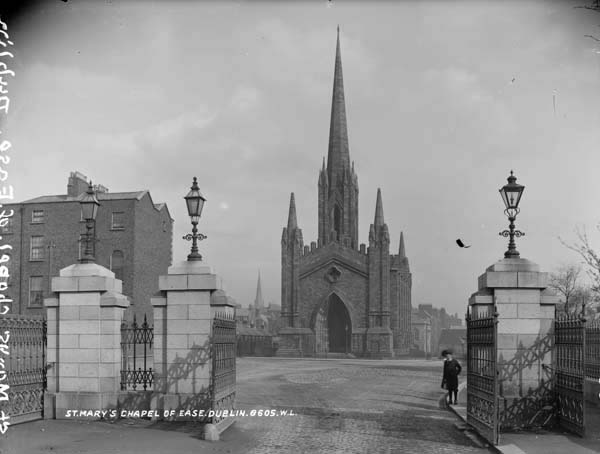
These days the the imposing, dark limestone building in Broadstone houses offices but up until 1962 St. Mary’s was a Chapel of ease for the local north Dublin protestant community. Due to the darkness of the stone the building became better known as the “Black Church” and various myths arose about the building. The most common one being that if you ran around the building three times and then entered the Church and went to the altar you would see the Devil. Although in true Dublin tradition different variations of the required actions emerged including walking around the Church in reverse 13 times or having to recite the “Our Father” backwards!


Darkey Kelly

Hellfire Club James Worsdale


For years the legend of Darkey Kelly was that she was burnt at the stake in 1746 for the crime of witchcraft, her only real crime was falling foul of the Sheriff of Dublin Simon Luttrell, known by his title Earl of Carhampton, who had fathered her child.  It was alleged that Kelly had threatened to out the Earl as a member of the infamous “Hellfire Club” (more of which later) and that it was this threat that lead to her execution.  However later research has shown that it was not dabbling in black magic that did for Dorcas “Darkey” Kelly but the fact that she appears to have been a serial killer.

Dorcas Kelly was a brothel keeper in the area close to Christchurch Cathedral, indeed a pub on Fishamble Street still bears her name to this day. She was being investigated in relation to the death of a local shoemaker named John Dowling and the during the course of searching her brothel the remains of five other murdered men were discovered. Kelly was tried and convicted of murder and she was executed in a brutal fashion (part hanged and then burnt alive) on Baggot Street in the year 1761.

Futher to the ghoulish story of Darkey Kelly’s death stories have often been told of the appearance of her ghost in the grounds of the nearby St. Audeon’s Church off High Street. She is said to be dressed all in green, a colour often associated with death in Irish myth.


The murder of Edward Ford and the dark side of Trinity College

rubrics

Trinity College has its share of ghoulish connections, many of the august University’s students would go on to write their own tales of  dark and unexpected, Oscar Wilde’s The Canterville Ghost and of course Bram Stoker’s Dracula spring to mind but there was plenty of real-life gore and ghoulishness to contend with.

As a centre for medical study Trinity’s medical school still sees its fair share of dead bodies but while the cadavers donated to medical science today are treated with courtesy and respect the bodies used by medical students in the 19th Century suffered a less dignified fate. Upon construction of the Berkeley Library in the late 1990’s the remains of dozens of bodies were discovered. It was theorised that these were bodies, sourced ilicitly through grave robbers and body-snatchers by medical students as part of their medical training, quickly dissected and buried under the cloak of darkness.

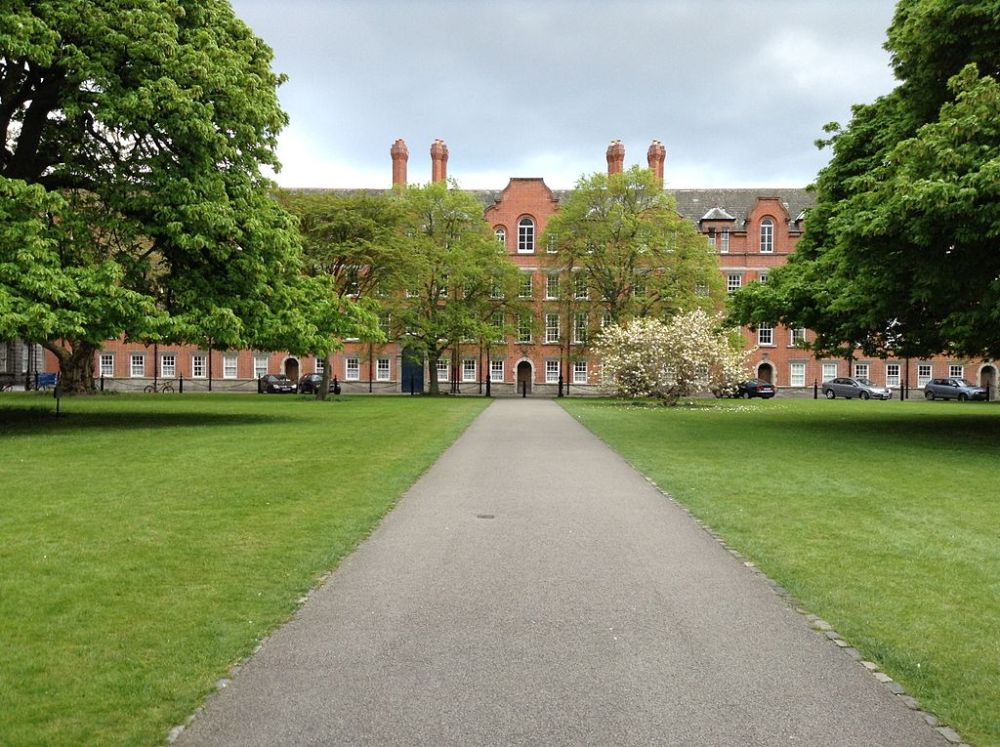
It is not known if any of these individuals haunt the College but one man who reportedly does is former lecturer Edward Ford. In 1734 the somewhat ill-tempered academic was sparked to anger by a group of rowdy Trinity Students throwing stones at his windows in the Rubrics building of the campus (the fine red brick buildings at east end of the main square). Mr. Ford did not take this sort of hijink well and decide to disperse the rambunctious students by firing a pistol at them. The drunken group quickly scattered but sought revenge for being shot at, they returned to their rooms, grabbed their own firearms and returned to the Rubrics building to teach Edward Ford, Fellow of Trinity College a lesson and fired a shot through his window.

Although the intention was not to kill that was the effect, Ford had been shot although he could not name his assailant, his last words were said to have been a reply regarding the identity of the shooter with Ford saying magnanimously “I do not know, but God forgive them, I do.”

No successful charges were ever brought against any student for the shooting of Ford but it is said that a forlorn individual in powdered wig and Georgian attire can be seen wandering the Rubrics building at night and that it is none other than Ford’s ghost that wanders the halls.


The Ghost of the Poet Mangan

lord-edward-pub

The Lord Edward pub and restaurant sit close to Christchurch Cathedral and are named after the famous Lord Edward Fitzgerald the Duke of Leinster who built Leinster House. It was in this building that the poet and scholar James Clarence Mangan was born. Mangan was fluent in a number of languages and became noted for his translations of European and Middles Eastern works to English and also for the quality of his own original poetry. Years later Mangan would admired by the likes of James Joyce and W.B. Yeats and was a friend and comtempory of Thomas Davis whose statue stands on College Green today.

Mangan himself is commemorated with a statue bust in St. Stephen’s Green but his emphemeral, ghostly presence is said to favour returning to the site of his birth and appear in the Lord Edward Tavern.


The Hellfire Club

the-hellfire-club

The original Hellfire club had been formed in London in 1719 but was banned within two years by the King of England, George I. The edicts of the King did not however prevent a Hellfire club emerging for the wealthy young gentlemen of Dublin as a place where they could, drink, gamble, hire prostitutes, torture animals and even do a bit of Satan worshipping. One of the founders of the club was Richard Parsons, 1st Earl of Rosse who was also the first Grandmaster of the Freemasons in Dublin. In fact Parsons’ home was on Molesworth Street where the main Dublin Masonic Lodge has operated since 1869.

Parsons and many of the wealthy young gents or “Bucks” as they called themselves would meet in taverns and Inns around the city to enjoy their debauches and among their number was the Sheriff of Dublin Simon Luttrell who we met earlier in relation to the execution of Darkey Kelly. Luttrell was known by various nicknames and titles including “the King of Hell” and was said to have sold his soul to the Devil in order to escape crippling debts.

The club members moved their many of their meetings into the foothills of the Dublin mountains, specifically the former hunting lodge of William Conolly, (Speaker of the Irish House of Commons and one of Ireland’s richest men) , on Montpelier Hill which took on the name of the Hellfire Club. It was reported that on building the hunting lodge Conolly had used the stones of a former ancient cairn and passage grave which further added to the ghoulish attraction for the club members.

Originally posted on Dublintown.ie in October 2015.

Lesser known plaques of Dublin

The poet Patrick Kavanagh once wrote of a “footfall tapping secrecies of stone” and as I walk around Dublin that phrase often rings true.

If the paving stones of our footpaths and the bricks of our buildings could talk to us about the lives once lived in our city they would have quite the story to tell. The thing is that on occasions the walls and pavements of our fair city do talk to use. Though you may pass them by with scant regard the streets and buildings of DublinTown are filled with a vast array of stories from the past in the form of the various plaques and commemorations that adorn bricks, flagstones and pillars. Below are a couple of our personal choices that may have bypassed your attention.

Clerys-plaque

Pawel Edmund Strzelecki – plaque located at the side of Clery’s on Sackville Place

Pawel Edmund Strzelecki was born in 1797 in what is now part of the modern city of Poznan, Poland. A soldier, and an early European explorer through much of Australia, Pawel’s association with Ireland began during the Great Famine when he was sent to Dublin to help distribute supplies donated to relieve the chronic hunger gripping the worst affected areas of the country. Such was his devotion that he even succumbed to “famine fever”, a horribly debilitating illness that was believed to have been spread by lice. Due to his previous connections with Australia he was also well placed to help those Irish families who wished to emigrate there to start new lives.

Lafcadio-Hearn Dion

Lafcadio Hearn and Dion Boucicault – plaque located at 47 & 48 Gardiner Street Lower

Patrick Lafcadio Hearn was born on June 27, 1850, on Lefkada, an Ionian island. The son of a Greek mother and an Irish army surgeon who parted ways shortly after his birth, Hearn was sent to live with relatives in Ireland, specifically 47 Gardiner Street Lower which is now the Townhouse hotel.

His upbringing left him with an unshakeable interest in ghost stories and the occult. He spent time living in Cincinnati and later New Orleans not long after the end of the American Civil War. Later in life he moved to Japan where he ended up teaching English in Tokyo Imperial University. It was his writings during his time in Japan that would secure his cultural legacy, especially his celebrated writings on Japanese folklore and ghost stories which have been made into feature films and manga cartoons.

The neighbouring building was home to Dion Boucicault another writer of note, Boucicault was born in Dublin in 1820 and was a man of many talents. He was an actor, theatre manager and playwright. He helped to define the role of the “stage – Irishman”, while his work tackled risqué subjects for the time such as mixed-race marriage. His writings, often combining Victorian melodrama with farcical comedy remains popular and the Abbey Theatre produced Boucicault’s Arrah na pogue as recently as 2011.

bewleys

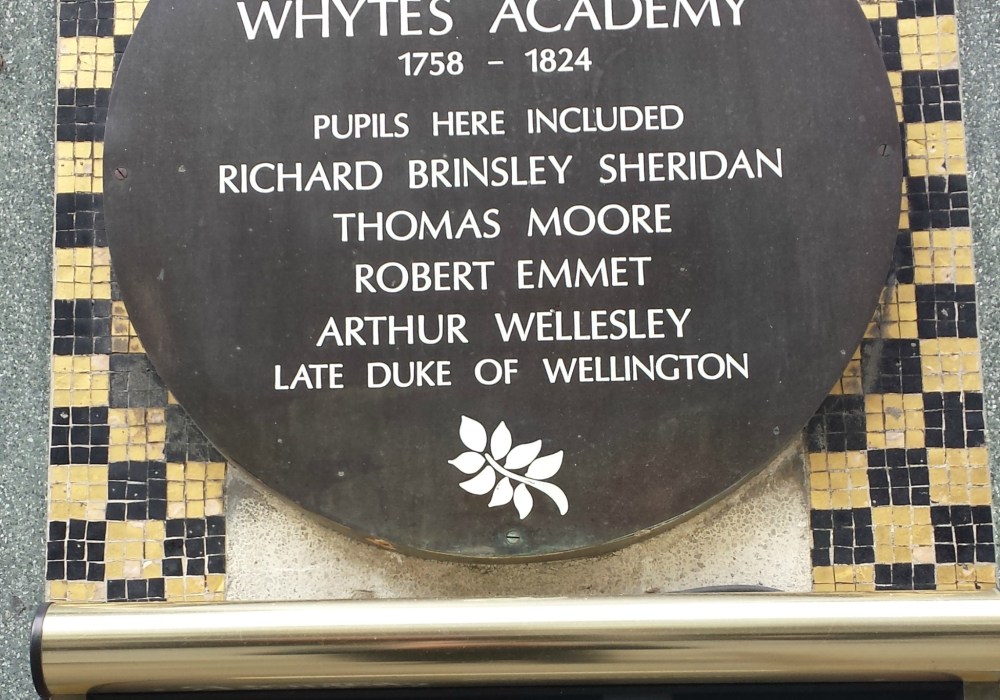
Richard Brinsley Sheridan, Thomas Moore, Robert Emmet, The Duke of Wellington – plaque located on Bewley’s of Grafton Street

Grafton Street is the busiest street in the county, and Bewley’s café (currently under refurbishment) is one of its most popular businesses, but many people walk by this impressive plaque without noticing it. Bewley’s was the site where the famous Whytes Academy was established, an English Grammar School, and among its famous students included writers, composers, rebels and politicians. Some famous past pupils were Richard Brinsley Sheridan, one of the foremost playwrights of the day, famous for plays like The Rivals and School for Scandal he was also an MP for over 30 years and is buried in the Poet’s Corner of Westminster Cathedral.

Thomas Moore, born in nearby Aungier Street who is best remembered as one of the most popular songwriters of the 19th Century, his notable works including The Last Rose of Summer, the Minstrel Boy and aptly The Meeting of the Waters as his statue resides over a former public toilet! His works are referenced extensively in the writings of James Joyce and he has a statue next to Trinity College where he was a student, (the statue has been temporarily relocated for the Luas works) and the Westin Hotel.

Robert Emmet the nationalist leader was executed in 1803 at the tender age of 25 on Thomas Street in the city centre. He had been involved in the 1798 rebellion as well as being the leader of the failed revolt that took place in 1803 and which lead to his arrest and death. He remains a hugely significant figure in Irish Republican history, was the subject of songs and poems, as well as a fairly inaccurate play by Dion Boucicault (mentioned above), and has several towns and counties named after him in the United States.

Arthur Wellesley, better known as the conqueror of Napoleon, a two-time British Prime minister and the 1st Duke of Wellington was born in Dublin where the Merrion Hotel now stands. As well as his famous victory at the Battle of Waterloo which is commemorated by the imposing Wellington monument in the Phoenix Park (the monuments’ metal plaques are sculpted out of captured Napoleonic cannon), the Iron Duke during one of his terms as Prime minister brought the Catholic Relief act of 1829 into force which gave Catholics almost full Civil Rights under British law and meant that Members of Parliament like Daniel O’Connell could finally, officially take their seats in Westminster.

Quite the collection of old boys from Samuel Whyte’s Grammar school, give them a thought next time you stop into Bewley’s for a coffee.

Tom-ClarkeTom-Clarke2

Tom Clarke – plaque location at the corner of Parnell Street and O’Connell Street Upper

Thomas Clarke has two plaques which bear his name, both above the tobacconist shop he ran on the corner of Parnell Street and O’Connell Street. As well as selling cigarettes, sweets and other sundry items he also used his business as a meeting place for other members of the IRB. British forces were well aware of Clarke’s Republican past, including his earlier attempt to blow up London Bridge and would often keep the shop under surveillance!

Clarke fought during the Easter Rising in the GPO garrison, only a stone’s throw from his shop. As one of the seven signatories of the proclamation he was sentenced to death and despite possessing American citizenship (which would save Eamon De Valera’s life) he was executed by firing squad on May 3rd 1916. His wife Kathleen would continue on with his political ideals as a TD and Senator and also as the first female Lord Mayor of Dublin. A newsagents shop still trades to this day from the same spot as Clarke’s original tobacconists.

Ernest-Walton

Ernest Walton – plaque location Trinity College

In Ireland many of us would be aware of the contributions of our Nobel laureates in the field of literature, Heaney, Beckett, Shaw and Yeats are well known and oft-quoted. They have featured on banknotes and stamps and in TV documentaries, their faces look out on us from displays in Dublin airport next to quotes from their famous works.

Less in known of Ernest Walton, a scientist and lecturer in Trinity College who won the Nobel Prize for Physics in 1951 and who helped bring about the “atomic age”. Ireland has a rich scientific history which includes contributions of note from the likes of Robert Boyle and William Rowan Hamilton to the wonderfully named Robert Mallet, the father of seismology.

Walton, who had been a student of fellow Nobel laureate Ernest Rutherford, along with his colleague John Cockcroft were among the first people to effectively “split the atom” and were responsible for the development of an early type of particle accelerator. His plaque is tucked down the back of Trinity College on the School of Physics building.

Originally posted on DublinTown.ie in May 2015

The Bridges of Dublin

Are you a northsider or a southsider? It’s a question asked a bit. A lot more than are you a Dubliner? You can blame Ross O’Carroll Kelly, Damo & Ivor or odd and even postcodes but it seems that we look on our own lovely Liffey as a barrier that divides us rather than the Life-giving River that is like the blood running through the veins of our vibrant city.

So rather than look at what separates us as Dubliners  why not look at what crosses such divides and brings us together. Our bridges of Dublin. Last year Dublin City Council launched their Bridges of Dublin website along with a small exhibition in the Civic Offices which prompted us here in DublinTown to spend a little time thinking about the bridges of our fair city.

After all doesn’t Baile Átha Cliath simply mean town of the hurdle fort, a reference back to the time when both our Viking and Gaelic ancestors were leppin’ across the Liffey at the site of the current Fr. Mathew Bridge? That’s the one that joins Church Street to Merchant’s Quay, and there has been a bridge of some variety there for over 1,000 years. It’s named after the priest who tried to rid Dublin of the daemon drink as a Temperance campaigner in the 19th Century.

Fr. Mathew was born in County Tipperary and he’s the only priest to have Dublin bridge named after him but not the only non-Dubliner. Jeremiah O’Donovan Rossa, the Fenian leader, was born in Cork and has a bridge named after him, at Winetavern Street (next to the Civic Offices) over to the Four Courts, while an earlier rebel leader Rory O’More (a Laois man) gives his name to the fetching blue bridge that links Watling Street and Ellis Street next to the Guinness brewery,  Sean Heuston (of Limerick) a Volunteer commander in 1916 is also commemorated at both Heuston bridge and nearby Heuston train station.

hinde

As you can see plenty of Rebels are recorded in the stones and struts that criss-cross our city although one of the British army’s most famous leaders was also once commemorated thus. The Duke of Wellington, a Dubliner by birth was once commemorated as you crossed from Liffey Street to Temple Bar, what we now know today as the iconic Ha’penny bridge.

Apart from Rebels and soldiers there are bridges that commemorate politicians and statesmen like Isaac Butt, and most grandly, Daniel O’Connell, his O’Connell Bridge leading into O’Connell Street. A unique bridge, visually appealing and beautifully crafted it is in fact wider than it is long by 5 metres. The building of O’Connell Bridge as well as a construction of the Custom House a few years earlier changed the shape of the city’s business and trade. Throngs of people moved between the widened streets of Sackville Street (now O’Connell Street) and Westmoreland Street which saw these areas become a new commercial hub in the city as the centre of shipping was moved further east into Dublin Bay, reshaping the city profoundly.

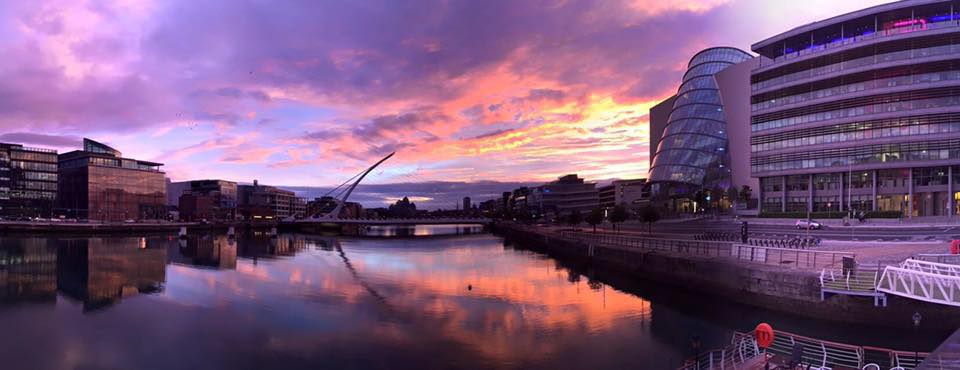
As the centuries progressed our city continued to grow, Eastward Dublin Port developed and later still the IFSC and Docklands areas began to emerge. To serve these new areas and connect our city, new bridges and new designs emerged to reflect a modern city, new names too. The city’s rich literary heritage was celebrated with bridges bearing the names of Sean O’Casey, James Joyce and Nobel Laureate Samuel Beckett. The style and use of the bridges had progressed, the Beckett Bridge reminiscent of the Irish harp straddling the river, while the pedestrian only O’Casey Bridge pivots in sections so as to accommodate boats sailing up the Liffey.

View of the Samuel Beckett bridge

The latest bridge to span the river is the Rosie Hackett Bridge, the first Liffey Bridge named after a woman it opened in 2014. The diminutive Rosie was a long-time member of the ITGWU and was also a member of James Connolly’s Irish Citizen Army during the 1916 Rising, it was Rosie who delivered the still wet proclamation of the Irish Republic to Connolly before it was read out by Padraic Pearse on the steps of the GPO. The Rosie Hackett Bridge also features tram tracks to accommodate the new Luas Cross City line which will begin crossing the river from Marlborough Street to Hawkins Street from 2017.

1901394_10152384220898618_712520739564754956_n

The Rosie Hackett bridge at night

So next time you cross the river try to think more of what connects us as a city, the wrought iron, steel and granite of its bridges, the names of men and women of Dublin and all Ireland who left a mark upon their city and the world. Forget about north side/Southside stereotypes, it’s time to build a bridge and get over it.

Originally posted to DublinTown in June 2015.

The story of Bruxelles- from star signs to rock stars

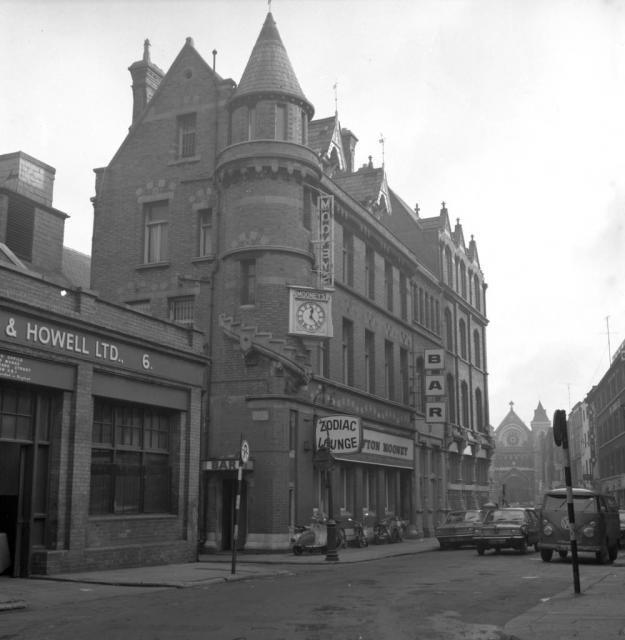
In the late 19th Century there was a revival of interest in those matters spiritual and supernatural. People of the 1880’s and 90’s rediscovered an interest in the forgotten pastime of astrology and this re-emergence of a fascination with astrology and horoscopes might explain the reason that the pub we know today as Bruxelles (more on that name shortly) was originally known as the Zodiac Lounge when it opened its doors for business way back in 1886.

Bruxelles-Bar-Zoodiac

The Zodiac Lounge was part of the famous Mooney’s pub group and was also known as the Grafton Mooney, much as the Parnell Heritage Pub on Parnell Street was known as the Parnell Mooney. The signs of the Zodiac that influenced the pub’s name are still clearly visible in Bruxelles to this day. Just look behind the main bar and you can still see the beautiful tiled mosaics of figures representing each of the star signs, these tiles are almost 130 years old and offer a connection back to the Victorian world of the Zodiac lounge.

Bruxelles-Bar-Zoodiac-2

Bruxelles-Bar-FlagsBut why is it called Bruxelles and why are all those flags hanging from the ceiling? And speaking of that, why are there no stars and stripes hanging there an American friend asks? Well, give me a minute and I’ll tell you. In the early 1970’s the bar came into the ownership of the Egan family who continue to run the pub to this day. The purchase of the pub happened to coincide with Ireland’s entry into the EU (or the EEC as it was then) and in the spirit of European harmony the pub was renamed Bruxelles after the Belgian capital. The flags that hang from the ceiling represent all the member nations of the EU so sorry to any visitors from across the Atlantic but that’s why you don’t see an American, or Canadian or Australian flag there.

Bruxelles-Bar-UndergroundWhile the 70’s brought big changes Bruxelles certainly hasn’t stood still in the intervening decades. The pub, and its famous basement bars became the hangout in Dublin for the emerging Rock scene and was famously frequented by Phil Lynott of Thin Lizzy fame. It’s for this reason that when a statue was erected to Philo, that Harry Street, right next to the pub he knew so well seemed the natural location for its location. The connection with the Lynott clan continues to this day. Philomena, Phil’s Ma in case you didn’t already know, continues to drop by the pub from time to time and has played a big part in its latest development.

The basement bars, so long beloved of rockers, metallers and indie kids have been completely refurbished and extended. The Zodiac Lounge and the Flanders Lounge as they’re dubbed in acknowledgment to the venue’s history look fantastic and the Flanders Lounge has been decked out with a huge amount of Phil Lynott and Thin Lizzy memorabilia kindly donated by Philomena. Phil has his own eponymous snug down the back of the bar and there is a new beer cellar that stretches right out under the flagstones of Grafton Street. It’s the perfect spot to try a pint of Bruxelles own bespoke lager!

The new basement bars are available for private hire and for live music and DJ nights. They’re also a treasure trove for any connoisseur of good beer or good rock music.

Originally poster to Dublintown.ie July 2015

The story behind a pub called the Confession Box

The Confession Box pub resides snuggly at 88 Marlborough Street on the ground floor of a fine old Georgian building at the side of Boyers Department Store. At Confession Box you are guaranteed a good pint & no penance.

The name might seem curious at first but when you consider the size of the cosy confines of the pub and the close proximity to the neoclassical grandeur of St. Mary’s Pro- Cathedral, “the Pro” as it is still known by many Dubs, the pubs’ title begins to make a bit more sense.

confession-box-(3)

There is another reported reason for the name of the pub that dates back all the way to the Irish War of Independence (1919-1921). During that conflict the last know excommunications from the Catholic Church in Ireland took place and were directed against the men involved in the ongoing rebellion. At the forefront of issuing these excommunications was Bishop Daniel Cohalan of Cork and it was rumoured that many of those who were excommunicated, including that famous Corkonian Michael Collins, would drop into what was then the “Maid of Erin” pub and would receive Communion and Confession from sympathetic priests from the nearby Pro-Cathedral. Thus the pub earned the nickname of “The Confession Box”.

There is still a great deal of memorabilia adorning the walls of the pub today from that time period with “the Big Fella” featuring prominently.

confession-box-(2)

These were not the Confession Box’s only claims to fame however. In 1793 the building was the birthplace of Dionysius Lardner the noted scientist and economist who became infamous for his rivalry with the most famous engineer in the Industrial revolution, Isambard Kingdom Brunel. He was also reportedly the father of the famous playwright Dion Boucicault, who features elsewhere on DublinTown.

Many years later the pub came into the ownership of the noted sportsman Michael O’Flanagan and was renamed “O’Flanagan’s” until 1965. Michael was a great all-round athlete and was the younger brother of the famous Dr. Kevin O’Flanagan. Michael and Kevin are unique in the world of sport, both committed amateurs, they are the only brothers who have represented their country at senior level in both soccer and rugby. Michael who was playing for Dublin club Bohemians when he won his only cap for the Irish football team in 1946, a late call up to replace injured striker Davy Walsh in a game against England at Dalymount Park. His brother Kevin, then playing for Arsenal only realised he would be lining out alongside his brother when he turned up in the dressing room an hour before kick-off! Mick was also a member of the Irish Grand Slam winning rugby team of 1948, winning his only cap in the 6-0 win over Scotland. Such was the connections with the pub that years after Mick’s sporting retirement a group of sports journalists who were in for a pint decided to found the Soccer Writers Association of Ireland (SWAI) there and then. An association that exists to this day.

confession-box

Today the pub is probably best known for its pints of Guinness, it has been voted the best pint in Dublin by 98FM listeners for the last two years in their Best of Dublin awards. And for their popular live trad music evenings. The pub has recently been refurbished although the changes have been subtle and have preserved the intimated, old world atmosphere so beloved of locals and tourists alike. So next time you’re on Marlborough Street drop in for a pint. We don’t think they do communion wafers anymore.

Originally posted on Dublintown.ie in July 2015

Blogging beginnings

I’ve been writing bits and pieces about football in general and Bohemian F.C. in particular for a number of years now. I always avoided trying to start my own blog preferring to write pieces for other websites who were either in the process of establishing themselves or were already well established. They already had readers and an audience and I’ve never felt comfortable chasing that and, well it seemed like a much easier way to get stuff read.

The reason I’ve started this blog now is that I wanted to have all the various articles I’ve written in the one place and maybe have a space to put up bits and pieces that are of even more of a minority interest than usual.

What you’ll find is a good bit of Bohs stuff, some general football musings and even a few other bits I’ve done on Dublin history. So please feel free to share, comment or complain.