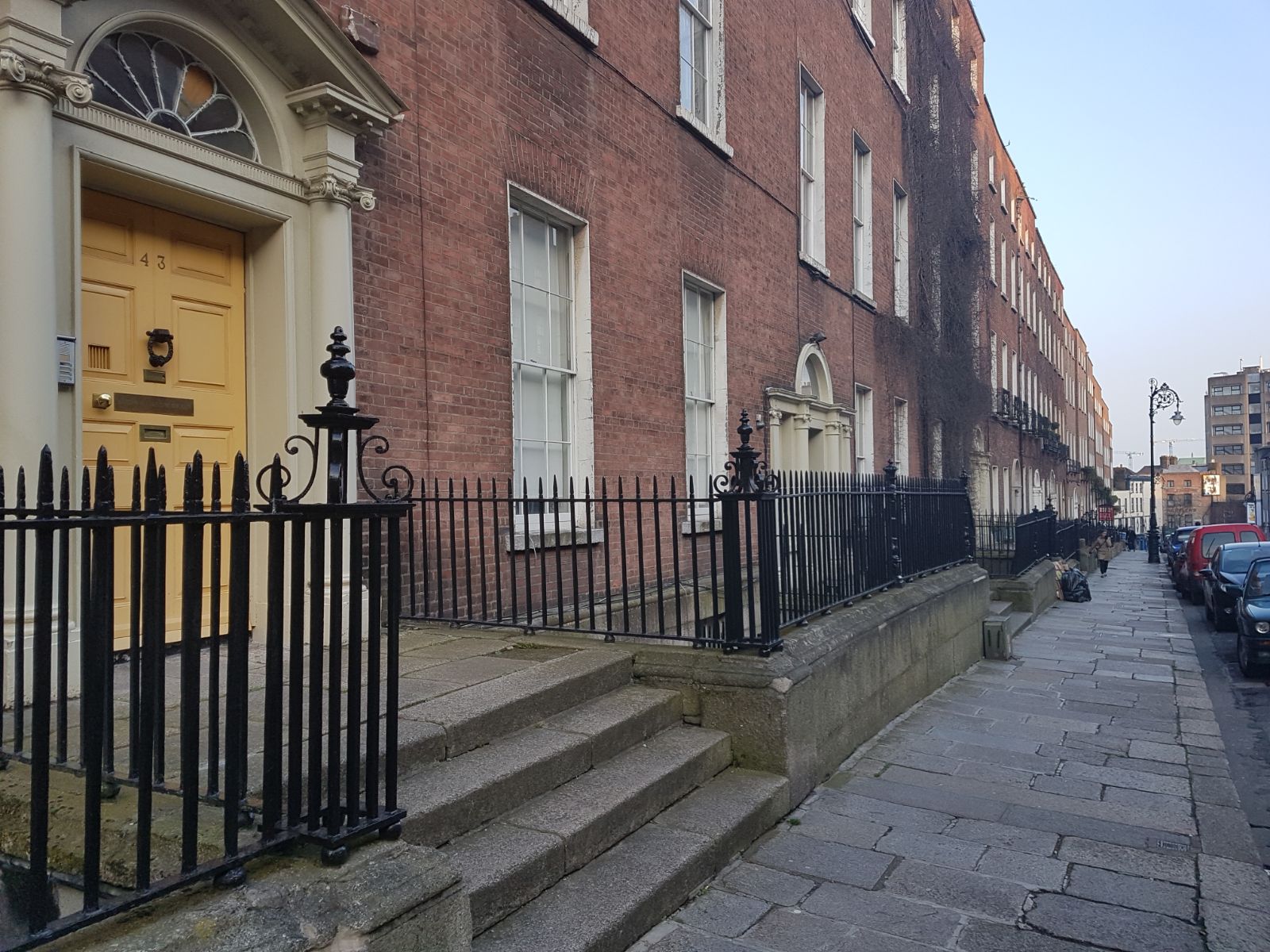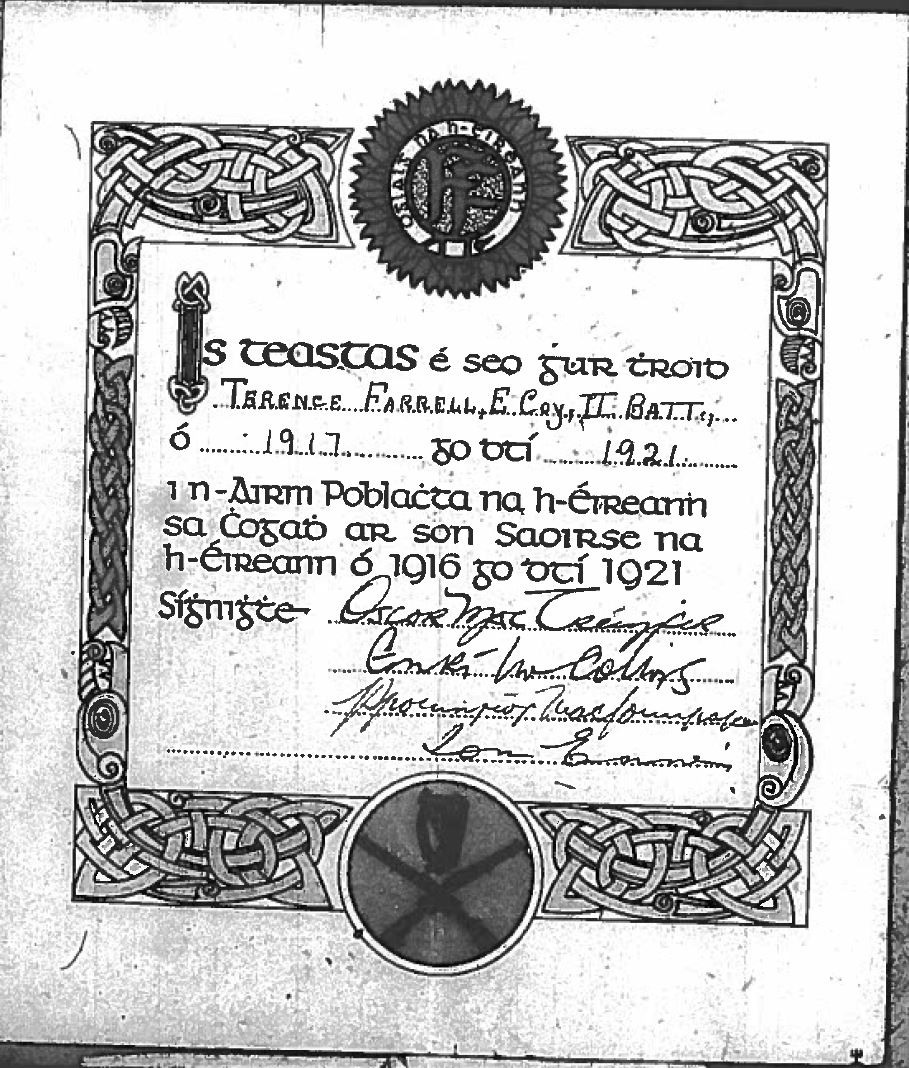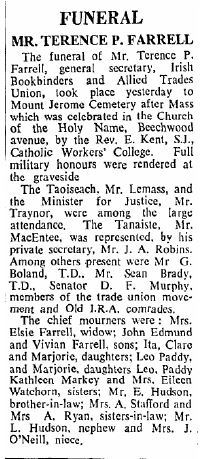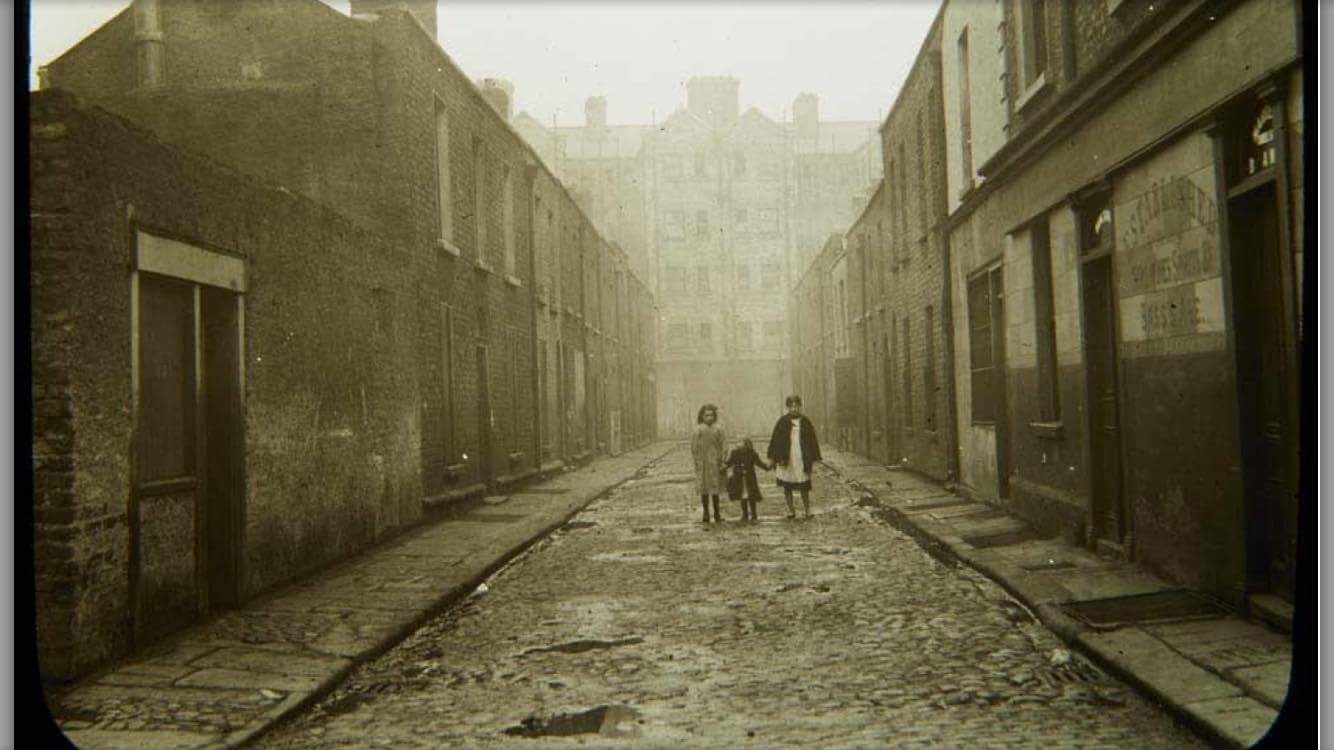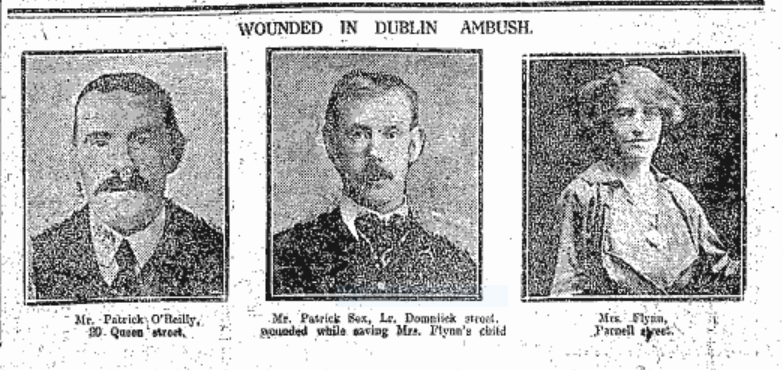
Patrick Sex from the Freemans Journal 1921

The Death of Sex

It started in somewhat unusual fashion, a Whatsapp chat with some fellow historians, a screenshot from the Irish Newspaper archive with the unusual headline “Replay for Sex Memorial Gold Medals”, which of course provoked a bit of schoolboy humour but also planted a seed of curiosity. From the short clipping I could see that it was a replayed football match between Bohemians and a Leinster football XI, the Bohemian teamsheet was shown and I could tell that this was a game from the early 1920s with several high profile players featuring, including future internationals like Joe Grace, Jack McCarthy, John Thomas and Johnny Murray as well as South African centre-half Billy Otto.

But who or what was “Sex” referring to? Memorial games or charity matches for sets of gold medals were not uncommon in the era but I could find nobody with the surname Sex as having been associated with Bohemian FC in their first thirty or so years, and as the opposition were a selection of other Leinster based players then there was no specific opponent club who might have been arranging a memorial. A quick look at the 1911 Census suggested a possible answer, as it displayed 22 people with the surname “Sex” living in Dublin.

Having ascertained that there indeed may be a “Sex” living in Dublin, deserving of a memorial game, but unsure of any footballing connections I started searching the Irish newspaper archives for the early 1920s and quickly discovered a likely candidate for the “Sex Memorial Gold medal match”, namely Patrick Sex of Dominick Street in Dublin’s north inner city with the memorial match and replay taking place for him in May 1921.

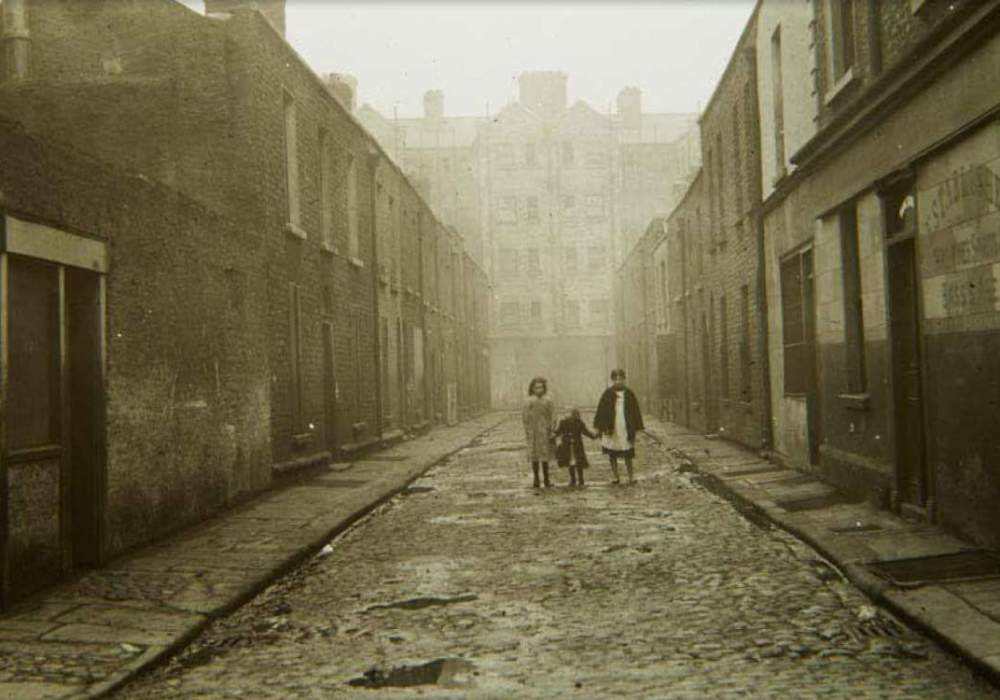
Patrick Sex was born in Dublin in 1880 and by the time of his marriage to Mary Kenna – a dressmaker living in Mary’s Abbey off Capel Street – in September 1901, he was living in Coles Lane, a busy market street off Henry Street and working as a butcher. Coles Lane, which now leads into the Ilac Centre but once ran all the way to Parnell Street, was full of stalls and shops selling everything from clothing to meat, fish and vegetables and formed part of a warren of streets and lanes feeding off the busy shopping areas of Henry Street and Moore Street. The area was a booming spot for a butcher to find work, it is likely that Patrick was raised and apprenticed in the trade as “butcher” is listed as his father James’s trade on Patrick’s marriage certificate.

Patrick and Mary, welcomed a son, James in August 1902 and they moved around the same small footprint of this section of north inner city Dublin in the coming years, with addresses on Jervis Street, Great Britain Street (now Parnell Street) and Dominick Street. It is on Dominick Street where we found the Sex family living in the 1911 Census, by which point they have five children, with one-year-old Esther being the youngest and Patrick was still working in the same trade, being listed as a Butcher’s Porter.

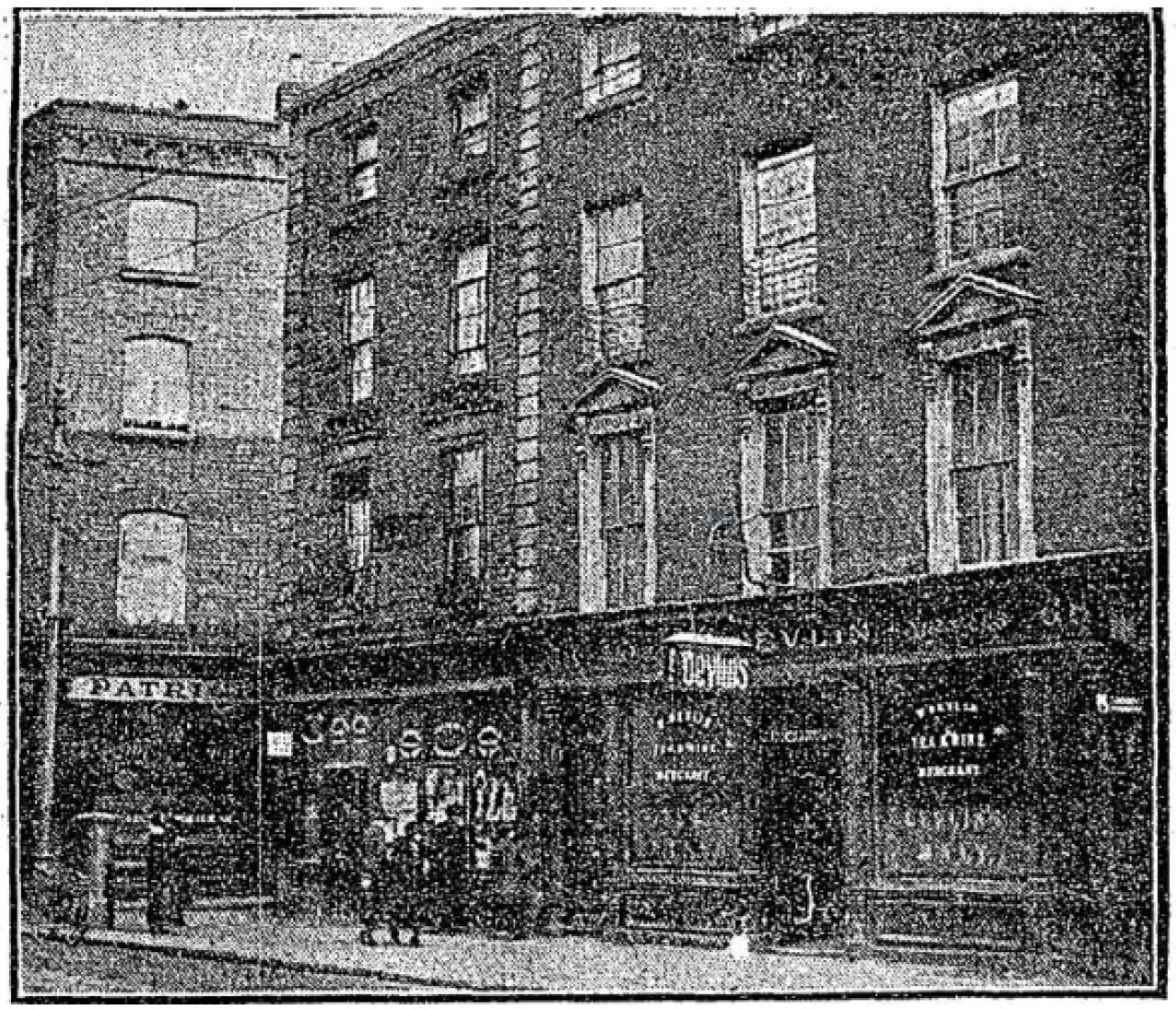
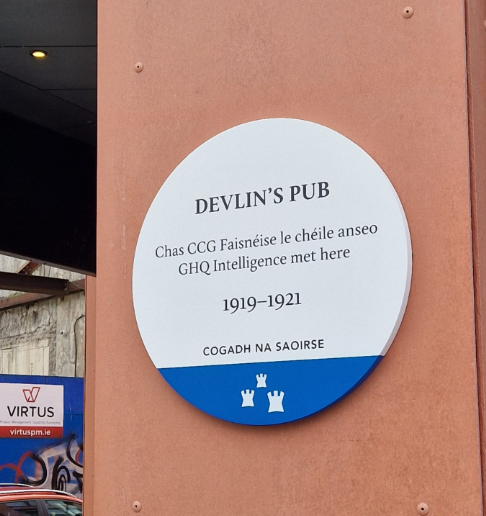
Moving forward ten years to 1921, the year of Patrick’s violent and untimely death, and the family had a total of ten children and were still living at 72 Dominick Street. Patrick was still working in the butchery trade in McInnally’s butchers at 63 Parnell Street, close to the junction with Moore Lane, roughly where the Leonardo (formerly Jury’s) hotel is today and would have been close to Devlin’s Pub, owned by Liam Devlin and a popular meeting spot for the IRA during the War of Independence.

Parnell Street as it appears on the Goad Insurance maps from 1895

By this stage in his life, as well as his place of work and large family we know that Patrick was active in the trade union movement, being Chairman of the No. 3 branch of the Irish Transport and General Workers’ Union (ITGWU), this branch featured many from the butchers’ trade and was known as the Victuallers’ Union. Living and working where he did, no doubt Patrick would have clear memories of the Lock-out in 1913 and the infamous baton charge by the Dublin Metropolitan Police on Sackville Street in August of that year when two workers were mortally wounded.
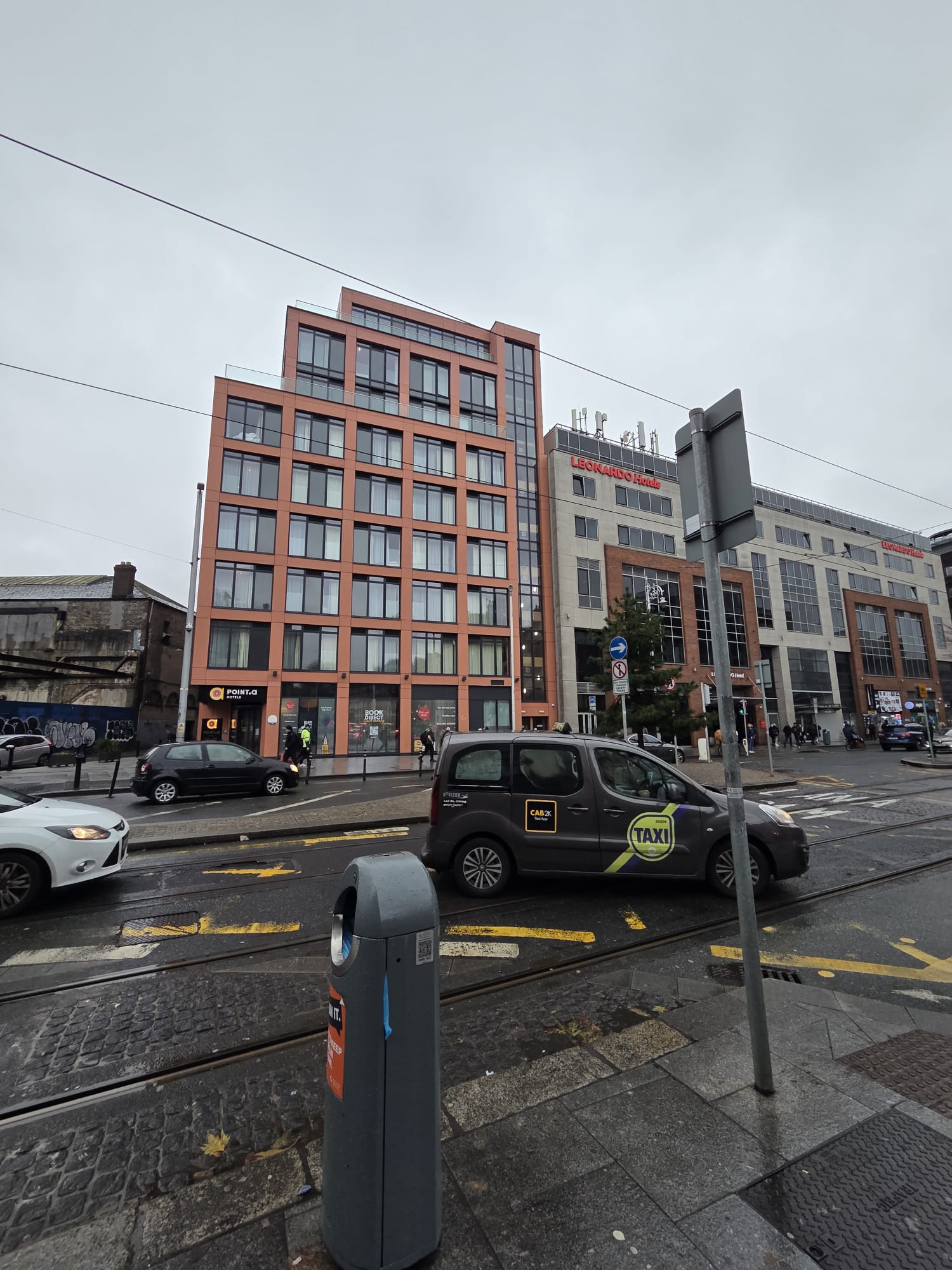
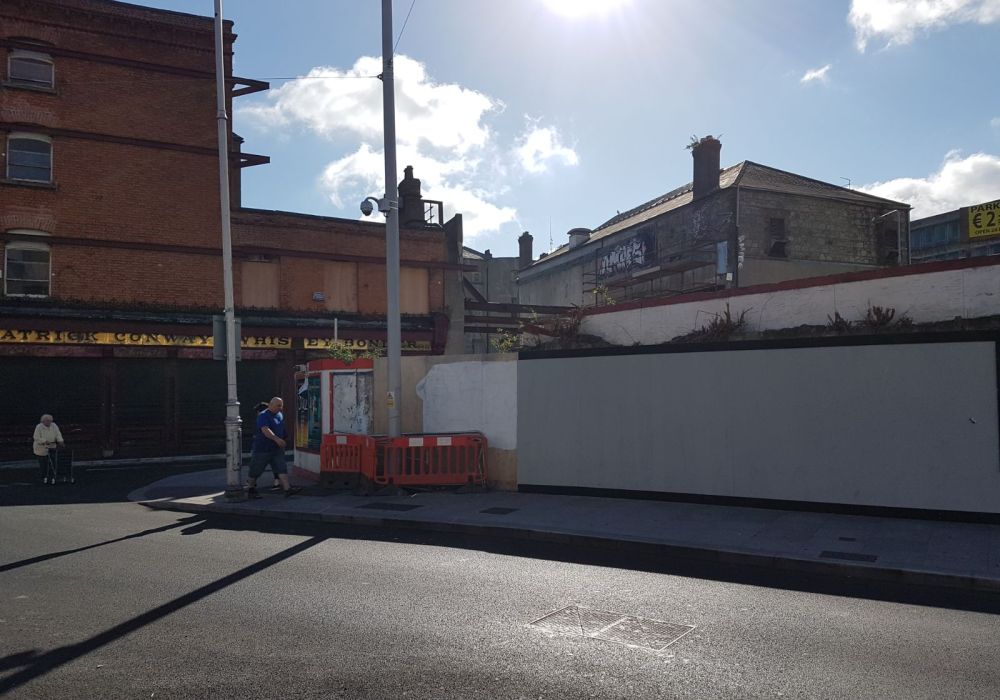
Parnell Street 2025
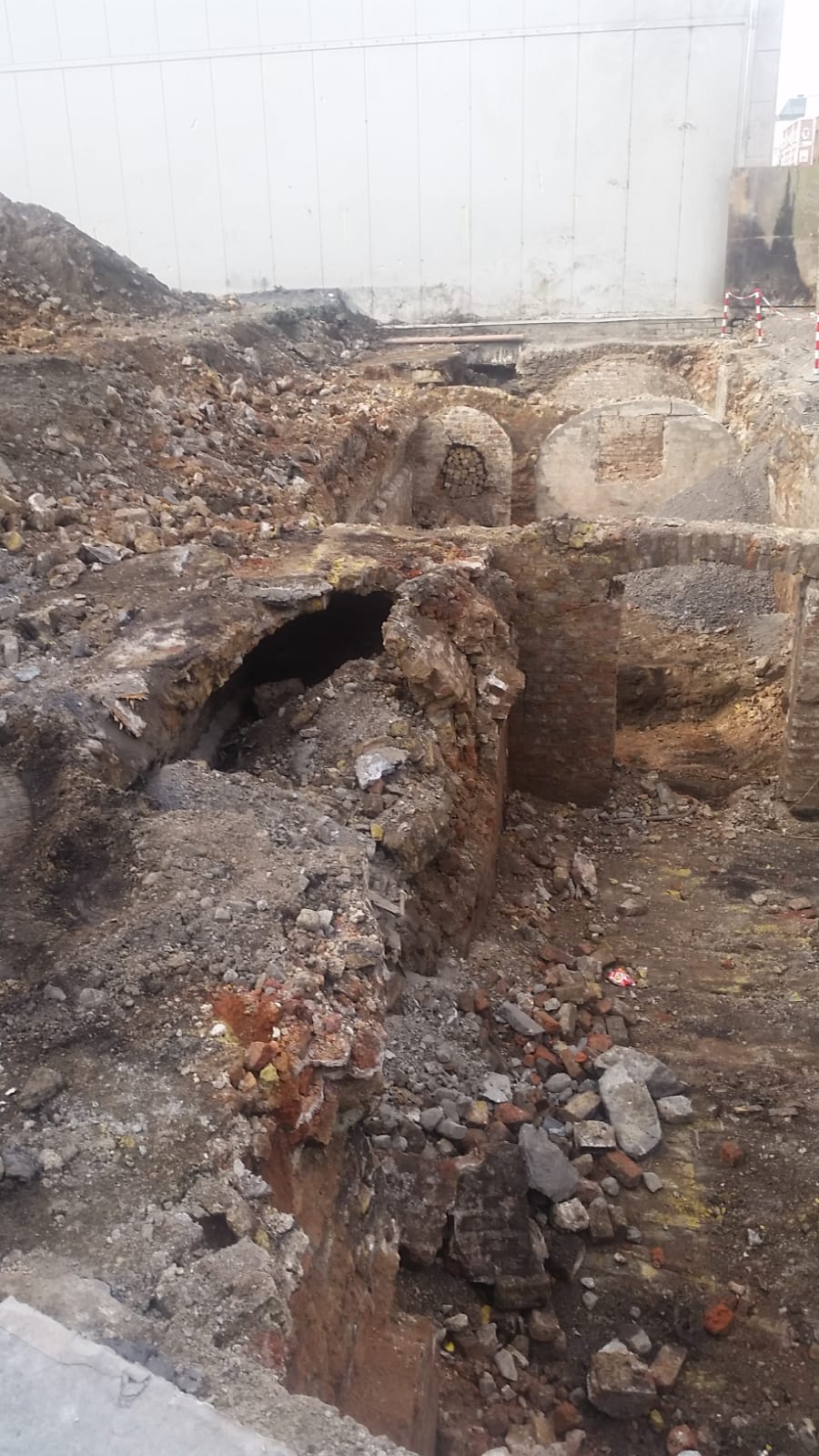
Parnell Street as it appears today – the Point A hotel is built on the site of the former Devlin’s Pub, McInnally’s butcher shop would have been within the footprint of the current Leonardo Hotel and Moore Street Mall

On March 26th 1921, Patrick Sex was, as usual, working at McInnally’s butcher’s shop on Parnell Street, it was owned by Hugh McInnally, originally from Scotland he had set up a number of butcher’s shops in Dublin and by the 1920s was entering his 70s and living in some comfort near Howth. The city and country more broadly were far less comfortable – more than two years into the violent period of the War of Independence, Dublin had seen the city placed under curfew in February 1920, there had been wide scale arrests, November 1920 had seen Bloody Sunday when fourteen people were killed in Croke Park by Crown Forces in reprisal for the wave of assassinations earlier that morning by the “Squad” and the Active Service Unit of the IRA. Croke Park was just a few minutes walk from Patrick’s home and place of work, he likely knew many who had attended the match, or perhaps some of those arrested in the wide scale arrests across the city by Crown Forces that followed. As mentioned, McInnally’s butcher’s was just doors away from an IRA safe house and meeting place in Devlin’s Pub, while Vaughan’s Hotel was just around the corner on Parnell Square.

This was the backdrop against which Patrick Sex and his family lived and worked in Dublin. On that fateful day of the 26th just before 3pm a lorry, carrying Crown Forces were attacked by members of “B” company of the 1st Dublin Brigade of the IRA as they journeyed up Parnell Street. The brigade report, taken from the Richard Mulcahy papers reads as follows;

“8 men… attacked a lorry containing 16 enemy at Parnell Street and Moore Street. 3 grenades exploded in lorry followed by revolver fire. Enemy casualties believed to be heavy. The lorry drove into O’Connell Street and was again attacked by a further squad of this coy. [company] numbering 18 men. They attacked another lorry at Findlater Place but were counter-attacked by lorry coming from the direction of Nelson’s Pillar. 3 of our grenades failed to explode so we retired. One of our men was slightly wounded”.

The Freeman’s Journal, reporting on the attacks a couple of days later goes into more detail on the impact of the grenade and gun attacks as they affected the public caught in the melee;

“the first bomb was thrown and exploded with a great crash in the channel opposite MacInally’s (sic) victualling establishment, 63 Parnell Street. The explosion was followed by a wild stampede of pedestrians.”

They continued: “The glass and woodwork of the houses from 63 to 66 Parnell Street were damaged by the flying fragments of the bombs. Mr. Patrick Sex, an assistant in the victualling establishment of Mr. MacInally was wounded in the hip and leg… and others in the shop had narrow escapes from the contents of the bomb, which in the words of Mr. O’Doherty ‘came through the shop like a shower of hail’.”

John O’Doherty the butcher in McInnally’s, mentioned above, would later given a statement to a subsequent court of inquiry at Jervis Street Hospital, stating that he heard “two explosions and three or four shots”, before adding that “several fragments of the bombs came into the shop, and Patrick Sex who was attending a customer at the time said ‘I am struck’ , I saw that he had a wound in his left thigh and hurried him off to hospital.”

Another of those to give testimony at the court of inquiry (inquests into deaths had been suspended during the War of Independence) was Charles Smith of the RAF, he was in one of the Crossley Tender lorries, with two other RAF men in the driver’s cab as it made its way up Parnell Street, when he recalled that a man armed with a revolver stepped into the street and shouted “Hands up” and “Stop” at which point “3 or 4 other civilians fired at us, the driver was immediately hit and collapsed in his seat. Several bombs were thrown at us, as far as I know three or four.”

The driver who was hit was Alfred Walter Browning, a nineteen year old RAF recruit from Islington. He was taken to the King George V Hospital (later St Bricin’s Military Hospital) at Arbour Hill where he died later that evening. The other passenger was David Hayden from the Shankill in Belfast, he was badly injured but survived. All three men were based at the airfield in Baldonnell which was in use then as a RAF base. There was another fatality related to the attack on the lorry at Findlater Place, just off O’Connell Street, when 15 year old Anne Seville was struck by a ricocheting fragment of a bullet as she watched the fighting below from her bedroom window. Despite an operation in an attempt to save her life she passed away two days later.

But what of Patrick Sex? His wound was deemed to be not particularly serious, he was brought to Jervis Street hospital and initially it seemed that everything would be alright. Patrick was seen by Dr. L.F. Wallace who also testified before the inquiry and he stated that there was a wound to Patrick’s left thigh, with no corresponding exit wound. Despite being admitted on the 26th March, Patrick was not thought in need of emergency surgery and was not operated on until April 4th when an “irregular piece of metal” about half an inch long was removed from his thigh. However, despite all seeming to have gone well Patrick contracted tetanus and his condition immediately worsened, he only survived until April 6th. His death notice read “cardiac failure following on tetanus caused by a wound from a fragment of a bomb”.

This left Mary, widowed with a family of ten children to support, and while it may not even have been known yet by Mary and Patrick, she was pregnant with their eleventh child, who would be born in November of that year and would be christened, Vincent Patrick by his mother.

Mary hired prominent solicitor John Scallan who had offices on Suffolk Street in the city centre to pursue a claim for compensation from the Corporation of Dublin and the Provisional Government in January, 1922. Scallan’s letters to the military inquiry requested information on the outcome of the inquiry and a list of any witnesses that they could call, the letter also incorrectly states that Patrick Sex was wounded by a bullet and not a bomb fragment. These claims were reported on in May, 1922 with it being stated in the Freeman’s Journal that a claim for £5,000 had been lodged by Mary Sex “in respect of the murder of her husband, Patrick Sex”. The article describes the compensation claims as those “alleged to have been committed by any of the several units of the British forces in Ireland”. While Patrick was an innocent bystander from the medical reports it would seem a bomb fragment from a grenade thrown by members of the Dublin Brigade, rather than a British bullet was the ultimate cause of his death. It was reported that by November 1922 over 10,000 claims for compensation had been made.

While Mary lodged that claim in January 1922, after the ceasing of hostilities and the signing of the Anglo-Irish treaty, she still had to provide for her large, and growing family. The tragic case of Patrick’s death had clearly struck a particular chord among the Dublin public, despite the amount of violence and death they had witnessed over the previous two years. Perhaps it was the fact that he left a widow and ten children, his role as a prominent trade union organiser, or perhaps it was also the fact that several newspapers, including Sport, The Freeman’s Journal and The Dublin Evening Telegraph had reported that Patrick had sustained his injuries while protecting others leant even greater emphasis to his harrowing story.

The mention that Patrick had protected others is hard to confirm but from piecing together accounts in various newspaper reports it seems that Patrick may have shielded a child who was in the shop from the blast, possibly the child of an Annie Flynn who was mentioned as also being injured by the grenade blast, (see header image) though this is not specifically mentioned by John O’Doherty, the one witness at the inquiry who had witnessed Patrick get hit by the bomb fragment.

Funeral of Patrick Sex on Marlborough Street
Clipping of Patrick Sex’s funeral from the Freeman’s Journal

Patrick’s funeral took place on the 11th of April in the Pro-Cathedral, just a couple of minutes walk from his place of work. There was a huge crowd in attendance, estimated by the Evening Herald as numbering as high as two thousand with the funeral described as “one of the largest witnessed in Dublin for a considerable period”. As well as family mourners there was a strong representation of Patrick’s trade union colleagues, they presented a large floral wreath in the shape of a celtic cross. His funeral cortege passed through a Parnell Street which shut all its shops in a sign of mourning and was then met by more of the ITGWU branch members at Cross Guns bridge where they took the coffin from the hearse and carried it to Glasnevin cemetery for burial.
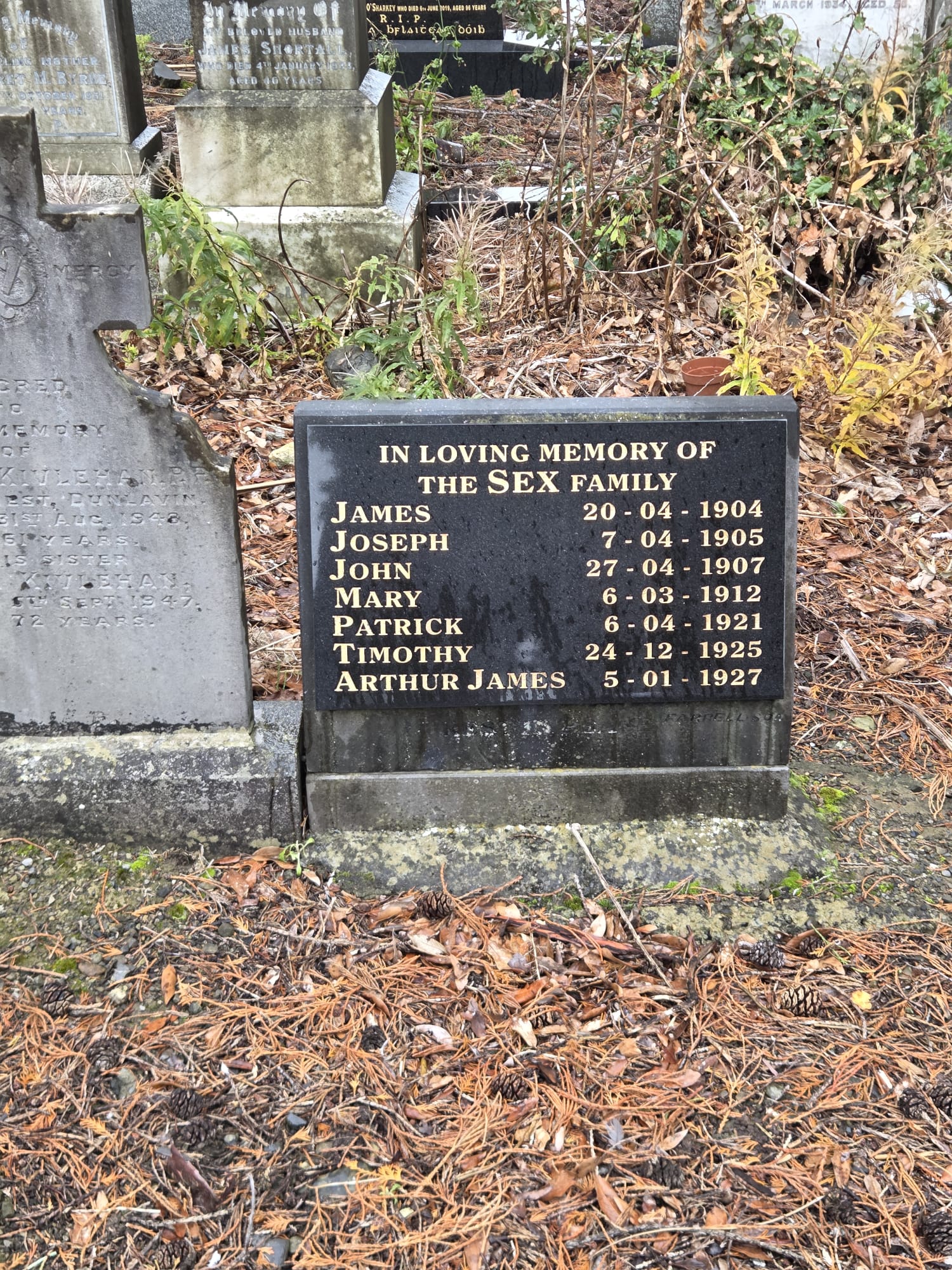
Grave of the Sex family
The grave of Patrick Sex in Glasnevin cemetery

The burial itself was somewhat unusual as the gravediggers at Glasnevin cemetery were on strike, which they would not break, even for a fellow union man, so Patrick’s grave was dug and closed by friends and family members. Gravediggers’ strikes were not uncommon at the time, they had taken place in 1916, 1919, and again in 1920. The one exception made by the gravediggers during their strike did take place a couple of days before Patrick’s burial, for the internment of Dublin’s Archbishop, William Walsh.
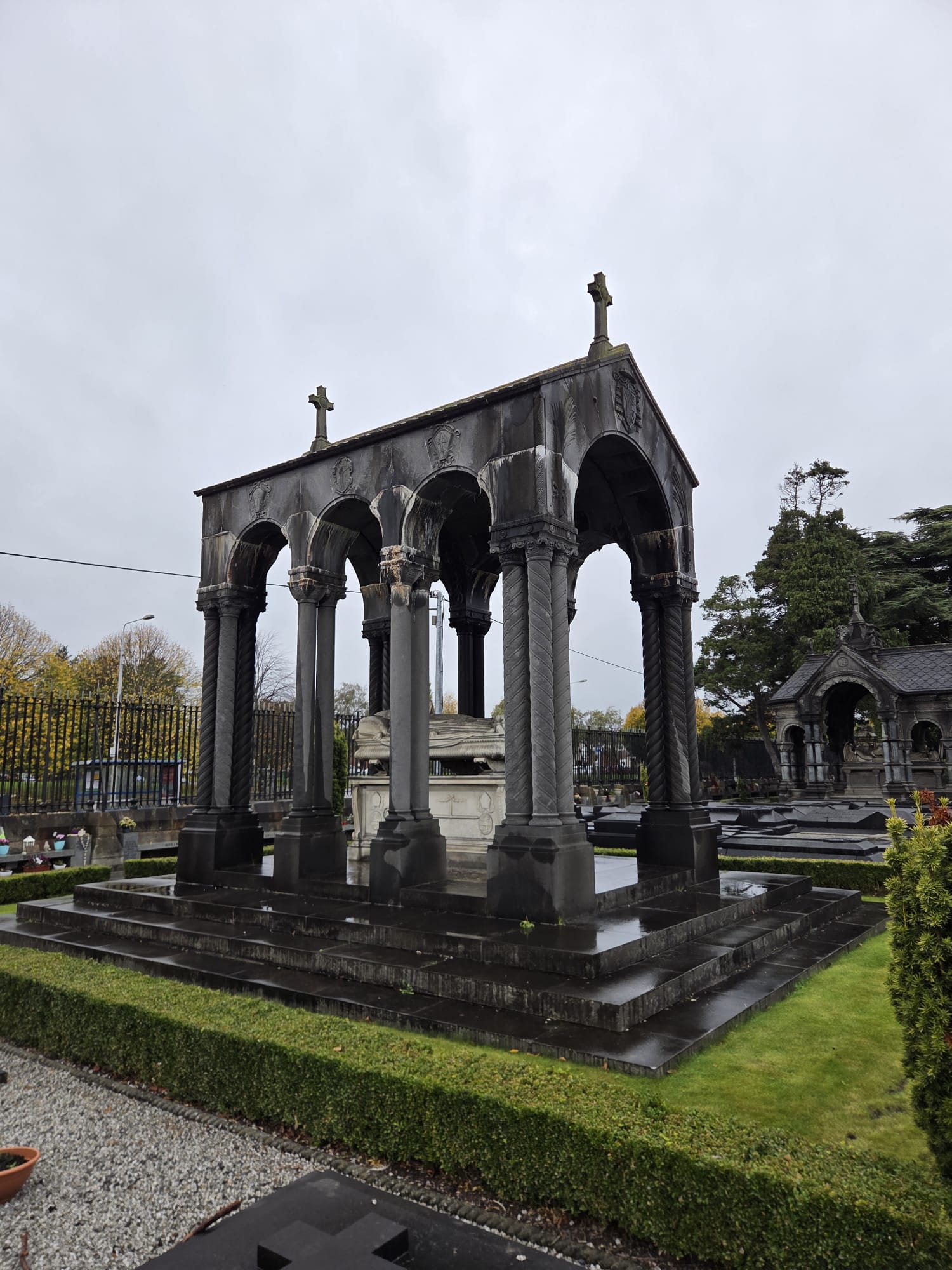
By contrast, the elaborate grave of Archbishop William Walsh

The outpouring of public support for the Sex family was evident not only in the strong turnout for Patrick’s funeral but also in the sporting world. A memorial committee had been established and a month after Patrick’s funeral there was to be an end-of season benefit match staged in Dalymount Park between Bohemians and a Best of Leinster XI, a set of high-quality gold medals were to be presented to the winning team while the proceeds from the game would go to help Mary Sex and her children.

The selection to face Bohemians in the charity match which included future Ireland internationals Alec Kirkland and Paddy Duncan – from the Evening Herald 16th May 1921

The game was played on the 18th May, 1921 and a crowd of around 4,000 was in attendance to witness an entertaining 2-2 draw. With no extra-time and no penalty shoot-outs a replay to decide the winner of the gold medals was set, which also guaranteed a second opportunity to fundraise for the Sex family. After some back and forth around a replay date, the 26th May was chosen and Dalymount Park was once again the venue, this time Bohemians were the victors, triumphing 1-0 over the best of Leinster selection, thanks to a goal by Billy Otto. It was said that the game was played “before a good attendance” and this hopefully translated into funds for Patrick’s family.

It had been suggested in a Dublin Evening Telegraph report that Laurence O’Neill, the Lord Mayor of Dublin might ceremonially kick off the game, but this did not happen due to his having to travel to the USA where O’Neill was working with the “White Cross” who were providing aid in Ireland during the War of Independence. It was suggested in O’Neill’s absence that W.T. Cosgrave, then an Alderman on Dublin City Council, might take over that role but it is not clear from reports whether this happened.

The same report stated that “this is the first time the Dublin footballers and supporters have come forward to do something the alleviate the sorrow of at least one household in these unsettled days” while also encouraging those who did not attend football matches to “rid themselves of all petty prejudices and bring all their friends and associates for the once to Dalymount”. Which would appear to be a not so subtle appeal to supporters of the GAA codes to ignore “the Ban” and attend a soccer match due to the good cause that it was supporting.

One final question that arises, considering the level and scale of violence witnessed over the previous two years, why was Patrick Sex the first victim of the violence in the War of Independence to receive a benefit match? While Patrick Sex may have been a football fan, though it is not specifically mentioned in any reports, he doesn’t seem to have been mentioned in any role in connection with any club or with the Leinster Football Association (LFA). As previously discussed the size of Patrick’s family, his role in the Trade Union movement, and being well known in the local area having worked for many years for McInnally’s butchers all contributed to the prominence given to his funeral, but he was sadly far from unique. Many people with large families, who were well known within their communities lost their lives during the War of Independence, so why a football benefit for Patrick if we can’t find any specific connection of Bohemians, the LFA or any other football club?

I would suggest the answer lies in the timing of Patrick’s death in April 1921, with the benefit match and its replay being held the following month. For context, long-standing issues within the Belfast-based Irish Football Association and its relationship with the LFA and its member clubs were coming to a head against the backdrop of internal bureaucratic strife and the ongoing violence of the War of Independence. In February 1921 there are been consternation among the IFA officials at the displaying of an Irish tricolour at an amateur international against France in Paris, those involved were arrested and there were charges within Dublin football and local media of bias on the part of the IFA. The IFA had also made the decision to not play that season’s Junior Cup and move Intermediate Cup matches which had been scheduled for Dublin to Belfast. The final straw arrived in March 1921 when the venue for a replay of the drawn Cup game between Glenavon and Shelbourne came to be decided. The original match had taken place in Belfast so custom would suggest that the replay should take place in Dublin. However, the IFA ruled that the replay should also take place in Belfast.

On June 1st, less than a week after the Sex memorial match replay, at the annual meeting of the LFA in Molesworth Hall in Dublin, an overwhelming majority of committee members voted to break away from the IFA. The LFA had been polling its member clubs on the subject since April before passing the motion at the beginning of June and by September of that year the Football Association of Ireland had been established, and surprisingly quickly a new League of Ireland cup and league competition had also been formed.

As Neal Garnham notes “by mid-May the LFA was effectively operating independently of the IFA”. Somewhat bizarrely the IFA held a Council meeting on June 7th, seemingly blissfully unaware that the LFA had voted to remove itself from IFA jurisdiction, among the items voted on and approved at the meeting was a motion by Bohemians to play a benefit match for Patrick Sex. It perhaps, shows the sporting and communications division between Belfast and Dublin, that the IFA were unaware that the LFA was no longer affiliated, or that two benefit matches for Patrick Sex had already been played. The organising of the game by Bohemians, the LFA and the role of the memorial committee which seems to have included prominent Republican politicians like Laurence O’Neill and W.T. Cosgrave, seems to suggest that the Patrick Sex memorial match was part of a larger, ongoing process of Dublin football moving away from Belfast control and taking charge of its own affairs, this coupled with the specific nature of Sex’s death and his background suggests why he, and not some other innocent victim was the first to receive such a benefit game.

With special thanks to Aaron Ó’Maonigh, Sam McGrath and Gerry Shannon for their help with elements of the research, and for Aaron for sending on the original “Sex memorial” clipping.

Joyce, Gogarty and Bohemians (Podcast)

Recorded live in the Joyce Tower museum during the Joycenight festival, your host Gerard Farrell chairs a discussion on the events that took place in the Sandycove Martelloe tower that fractured the friendship of James Joyce and Oliver St. John Gogarty, gave rise to Stately plump Buck Mulligan and what all this has to do with Bohemian Football Club.

With expert guests Des Gunning, Graham Hopkins and Brian Trench.

A history of Whelan’s

In the 1700’s the street we know today as Wexford Street wasn’t known by that name. Instead it was called Kevin’s Port, taking its name from the nearby St. Kevin’s Church. Like today it was a key access route to the south of the city of Dublin but the area was much less developed and would be unrecognisable to us today since much of modern Camden Street was simply fields and tracks.

The ruins of St. Kevin’s Church

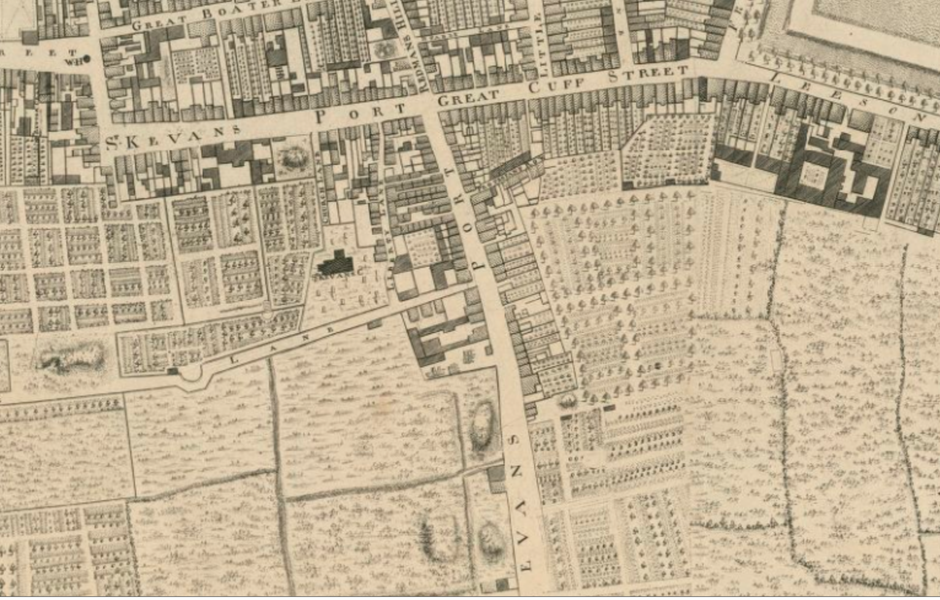
Little remains from the 1700’s, the church of St. Kevin is little more than ruins and its graveyard is now a public park, along the east side of the graveyard lies Liberty Lane, present on the early maps of Dublin, and on the other side of the lane lies the rear of Whelan’s pub and music venue. While the date above the door of Whelan’s may say 1894 the history of the pubs on this site stetch back much further. There are records of a public house being run on that spot as far back as the 1770’s when it was in charge of a Christopher Brady of Kevin’s Port (sometimes spelled Kevan’s Port) and there are plenty of interesting characters who come in succession to Christopher.

18th Century map section of St. Kevin’s Port

One of the first we encounter are members of the Gorman family. Patrick Gorman senior at various times in the first two decades of the 19th Century is found running a public house at 23 Kevin’s Port and then later at 27 Kevin’s Port. Later still there are various Gormans running businesses from numbers 24, 25 and 27 on Wexford Street after the street was renamed in the 1830’s. Patrick Gorman junior is the man who is running a pub from number 25 Wexford Street from at least 1840. Number 24 Wexford Street seems to have been a grocery store run by other members of the Gorman family and in 1847 Patrick Gorman placed an advertisement of this premises “To Let”, in the ad it is described as “a large shop” which contained “seven apartments” with a kitchen and a yard and was described as being suitable for “bakers, druggists…or provision dealers”.

In May 1848 Patrick Gorman passed away after what was described as a “long and painful illness”, just a year later his relative Julia Gorman who seemed to have taken over the running of number 25 also passed away after a “lingering illness” and it seems that much of the Gorman family interest in the property comes to an end here. This was after all around the time of “Black 48” one of the deadliest years of the Irish famine, while the Gorman’s were relatively well-off, class or wealth was no boundary to the likes of Typhus, Dysentery and even Smallpox which were spread rapidly during the Great Famine and it may have been illnesses like these which killed Patrick or Julia. By the 1850’s the pub was being operated by Bernard Brady, perhaps he was a descendant of the earlier Christopher Brady who ran a public house on the street back in the 1770’s?

There is a suggestion that Bernard Brady was Christopher Brady’s son and had been involved with running the bar since the 1820’s with the Gorman’s running neighbouring premises at the same time. By the 1850’s Brady was a tenant of landlord Thomas Pim, a prominent businessman from the famous Quaker family who are probably best known for Pim’s department store which was founded on South Great George’s Street around this time. By this stage Bernard Brady was already a prominent publican and was also involved in local politics. He was the secretary of the Grocers and Vintners Trade Protection and Benevolent Society, a member of the Society for the promotion of Irish manufacturers and industry, he was a Poor Law Guardian for the South Dublin Union (meaning he was responsible for the administering of an early form of social welfare for some of the city’s poorest citizens) and was also active in local politics where he helped to nominate people within his local ward for positions on the City Council.

Bernard Brady passed away in 1862 after a short illness, he had travelled down to Cork in the hope that fresh air might help him but it seemed to only aggravate his ailment and he died on May 7th at home in 25 Wexford Street before being buried in Glasnevin Cemetery. He was obviously a hugely active man with a wide range of interests in business and politics. His companions in the Grocers and Vintners Society remembered him fondly, saying of him in their first meeting after his death that there “was never a more high minded, single-hearted or honourable man” and they praised the work he had done for the society and the vintners trade in general.

The premises seems to have been run by a William Daly for a time but the lease was back on the market again in 1872 when 25 Wexford Street was bought by a man named Daniel Tallon for £920 while the neighbouring number 26 was bought by a Theodore Rafferty for a more modest £185. Daniel Tallon was perhaps one of the most interesting characters in the long story of Whelan’s. He was born in 1836 in Rathdrum, Co. Wicklow and came to Dublin as a young man to work for the Leeds Woollen Mills based in the Cornmarket area of the city near Christchurch. Such was his success that he was soon able to go out on his own in the tailoring business before, in 1872 he opened that bar on Wexford Street which became known as Dan Tallon’s. Later still he opened another bar at 46 South Great George’s Street (at the corner with Stephen Street). He was also a chairman of the Licenced Vintners and Grocers Association and helped to expand the organisation during his time there.

Daniel’s skills were not limited to the area of business he was also a hugely prominent politician, at various points he served as High Sheriff of Dublin and also as Lord Mayor, from 1898 until 1900, the longest term of any Lord Mayor since the Council was reformed in 1840. A larger than life character, his public houses, as well as his prominence as a member of the Irish Parliamentary Party meant that he was namechecked in both James Joyce’s Ulysses and in Finnegan’s Wake. In Ulysses Daniel’s appearance is about the ranks of famous Dublin publicans and it gives rise to the famous Joycean riddle about whether it was possible to cross Dublin without going by a pub. The quote goes ‘Then, lo and behold, they blossom out as Adam Findlaters or Dan Tallons. Then think of the competition. General thirst. Good puzzle would be cross Dublin without passing a pub.’

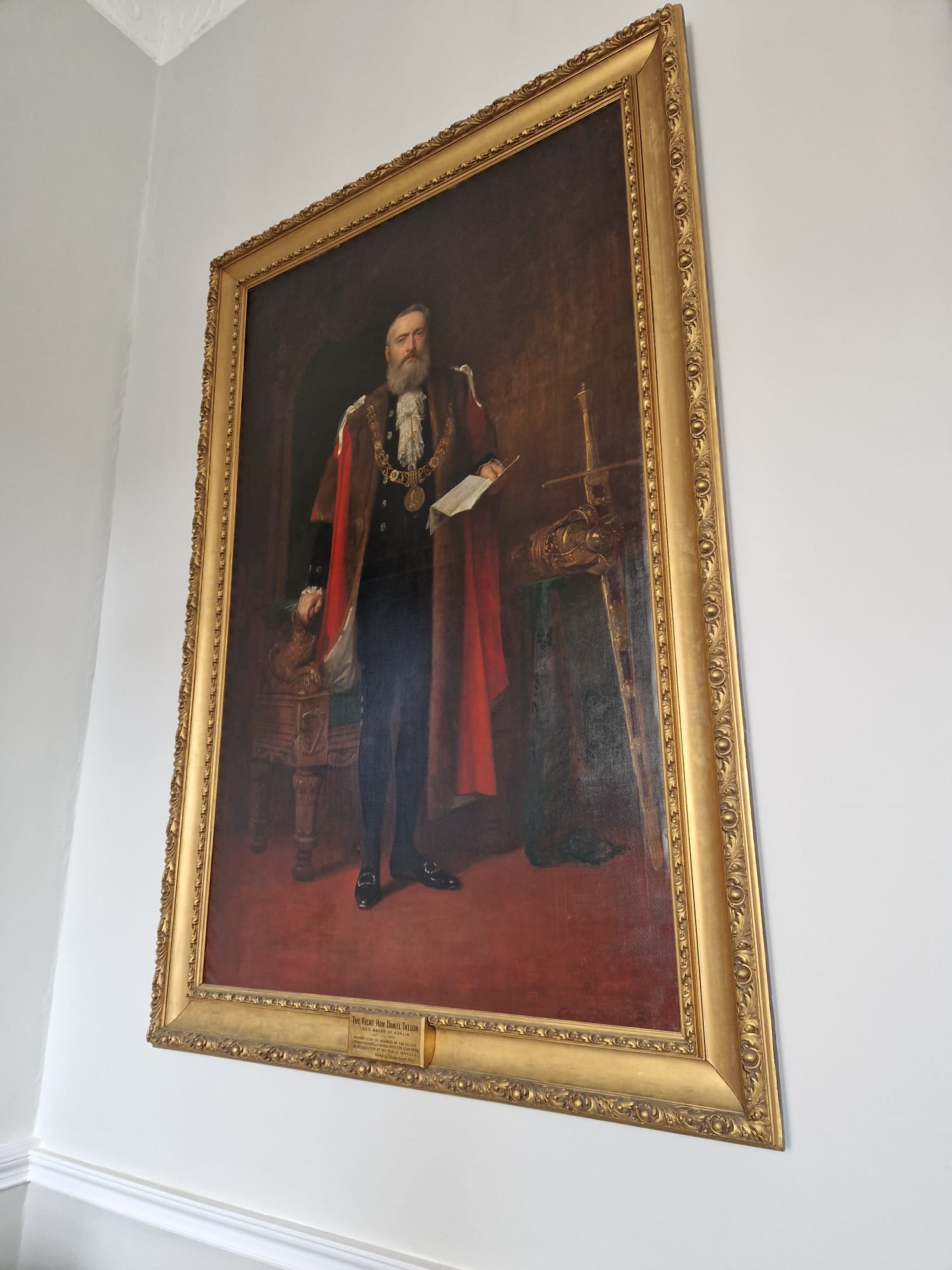
Daniel Tallon – Lord Mayor of Dublin 1898-1900

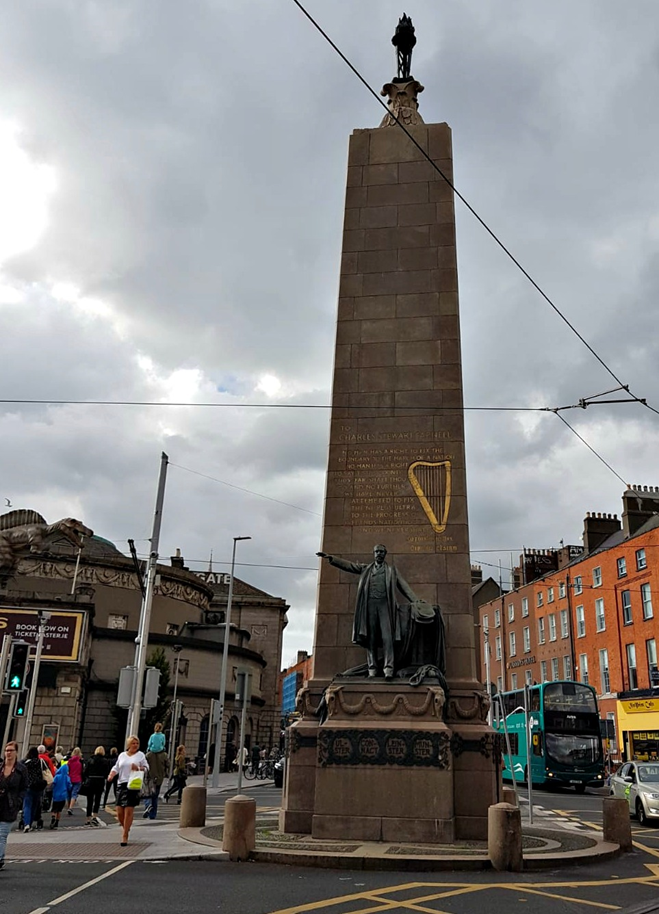
Tallon was a prominent Irish Nationalist and a great supporter of the deposed leader Charles Stewart Parnell. Tallon along with Irish Parliamentary Party leader John Redmond travelled to the United States of America to help fundraise for the construction of the Parnell Monument that sits at the top of O’Connell Street today. The tour was hugely successful and Tallon spoke in many US cities, he and Redmond were even invited to dine in the White House with President William McKinley. A couple of years prior to this Tallon had been to the forefront in fundraising to help avert a crisis in parts of the west of Ireland, especially Mayo, after a series of crop failures left many poorer farmers facing starvation.

The Parnell monument – its foundation stone was laid by Daniel Tallon in 1899

While a staunch Parnellite and a big personality Tallon was not as advanced a nationalist as some emerging politicians, he was booed in 1899 when laying the foundation stone for the Parnell monument because he had failed to attend a meeting organised in sympathy with Boer cause in South Africa. In 1904 Daniel lost his seat and decided to retire from politics. He passed away in 1908 at the age of 72.
In 1894, early into his political career and with a view to opening his new premises on South Great George’s Street Daniel Tallon had sold Tallon’s of Wexford Street to John Galvin. This new owner, John Galvin immediately decided to invest in a significant amount of funds completely refitting the pub and rebuilding the whole frontage of the building. It is from the time of John Galvin’s ownership that the year 1894 appears above the door. This work was overseen by prominent architect John Joseph O’Callaghan who was a founder member of the Architectural Association of Ireland and its first president.

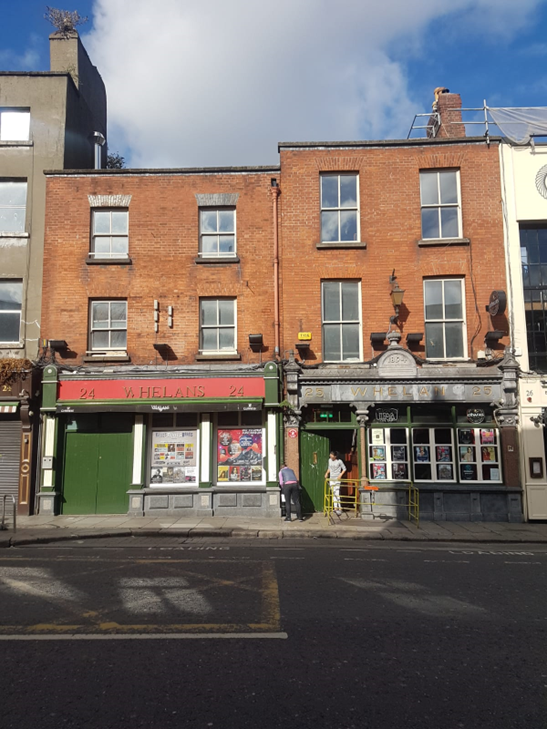
The Whelan’s shopfront – much of this dates from John Galvin’s brief time as owner

Despite investing huge sums of money John Galvin didn’t get to see it bear fruit, the pub was put up for sale in 1896 owing to a deterioration in Galvin’s health, he passed away a year later aged just 36.

As the pub entered the 20th century it did so under the stewardship of Peter Gilligan and it bore his family name above the door. He paid for a newspaper ad campaign highlighting his re-opening of the “old established licenced premises” (see side panel) and promising a great selection of Dublin whiskey. Peter Gilligan was a Cavan man who married a Dub named Maggie and they had three children together. As was standard practice at the time the whole family lived above the pub along with their bar staff and servants and their dog “Laddy”. By the 1911 census there were nine people living in number 25 Wexford Street, sadly Maggie wasn’t around by this stage, she had died aged 29 in 1907 leaving Peter to raise his daughter Ethel and sons Arthur and Frederick.

Peter Gilligan was also interested in politics like his predecessors Dan Tallon, William Daly and Bernard Brady. He was active in local politics and lent his public support to several candidates. It is worth noting that the right to vote was still limited to men, and required them to be property owners though some of the restrictions were beginning to ease by the end of the 19th century.

Given this background with a smaller voting base it is clear why the support of property owners/leaseholders and prominent business people like Peter Gilligan, Dan Tallon and others would be very desirable for candidates. In 1905 Peter proposed John Reynolds as a Councillor for the Mansion House ward, Reynolds was a businessman on Redmond’s Hill only a short distance from Peter’s bar and they were likely friends and neighbours. John Reynolds was successfully elected but in 1907 did not seek re-election as a Councillor. A new candidate was proposed, and his nomination was seconded by Peter Gilligan for the vacant seat, this man was Richard O’Carroll, General Secretary of the Bricklayers Union and a founding member of the Irish Labour Party in 1912 along with James Connolly, however in 1907 he was running as an independent. O’Carroll lived on Cuffe Street not too far from Wexford Street and the seconding of his nomination by Peter Gilligan suggests that perhaps Gilligan knew O’Carroll personally, or maybe he had a sympathy with the workers rights causes that O’Carroll espoused?

A portrait of Daniel Tallon as Lord Mayor that hangs in the Richard O’Carroll room in Dublin’s City Hall

O’Carroll was successfully elected in 1907 and again in 1910 and 1912. He was injured during the 1913 lock-out and later went on to join the Irish Volunteers. He was involved in the organising committee for the funeral of Jeremiah O’Donovan Rossa (the occasion of Patrick Pearse’s famous graveside oration) and was also involved in the 1916 Rising but with tragic consequences. One account states that Carroll, a member of “C” company in the Irish Volunteers was pulled from his motorbike on Camden Street and shot in the chest by the deranged British Army Captain John Bowen-Colthurst who went on a killing spree during the Rising where he also infamously had the pacifist activist Francis Sheehy Skeffington executed by firing squad.

Poor Richard O’Carroll struggled on with a bullet in his lungs for a number of days before dying on May 5th leaving a wife and seven children. As the only sitting Councillor to die during the Rising, in 2016 the City Council decided to name their meeting chamber in City Hall in his honour in 2016.

Returning to Peter Gilligan, he ran a successful pub for many years, in 1909 he was even advertising his own brand of “Gilligan’s Whiskey”, and the pub seemed to have been prospering, he did however end up being cautioned by the police on a couple of occasions for serving beyond permitted hours. Peter continued to run the pub until 1933 when he died suddenly of a brain haemorrhage at the age of 64. The Gilligan family continued to operate the pub until the early 1950’s before selling up to a Stephen Bourke in 1952. Peter’s son Arthur continued in the pub trade afterwards, by the 1960’s he was running the famous Dawson Lounge on Dawson Street.

Stephen Bourke is now commemorated in the newly refurbished “Bourke’s Bar” created by the present owners at 24 Wexford Street in memory of a larger than life publican who ran the bar for several decades. Bourke’s of Wexford Street became a regular meeting spot and was the watering hole for some local hurling clubs in the district and also by the 1970’s it was beginning to host occasional musical acts.

In 1989 Dublin-born actor Gary Whelan purchased the bar along with business partner Ian Keith. Whelan was well-known for his roles in Eastenders, and later for parts in Brookside, The Bill and Ballykissangel. After years of Gilligan’s and Tallon’s it was the Whelan name that now appeared above the door. There was a grand opening and many of Whelan’s celebrity friends attended, including, somewhat randomly. Peter O’Brien an original cast member of Australian soup opera Neighbours. The pub changed ownership again, first being bought by Liam Hanlon in the 1990’s and then later by the Mercantile Group who still run it today. Since its opening as “Whelan’s” the bar has become synonymous with live music in Dublin, and has been gradually developed with new stages, separate bars and a smoking terrace. Hundreds of framed photos line the walls of the famous venues recording for posterity the many musicians who have graced the Whelan’s stage, Jeff Buckley played a solo gig there when virtually an unknown in front of a small devoted fanbase while the venue has been packed out for the likes of The National, or Teenage Fanclub.

During the late 90’s – early noughties boom in Irish signers and songwriters it was Whelan’s that became a sort of Mecca for aspiring Irish musicians like the Frames, Paddy Casey and Mundy. The venue remains as vital as ever with new acts performing nightly in a wide range of genres, while it is still home to the quintessential Dublin indie disco you are as likely to see a folk or jazz act grace the stage.
In its long history the Whelan’s bar has had many connections to the wider life of the city and country, whether that be through politics, music or indeed revolution, the history of the pub is approaching a quarter of a millennium so who knows what the coming centuries have in store.

Whelan’s as it appears today

Do you remember the first time?

The 17th of September marks another landmark moment in the history of Bohemian Football Club, and indeed the League of Ireland as a whole. On that date one hundred years ago the League of Ireland kicked off, and Bohemians played our first League of Ireland fixture against the YMCA. While Bohemians (along with Shelbourne) had been among the very few clubs from outside of Ulster to compete in the Irish League, there had been a significant gap between 1915 to 1920 when football was regionalised due to the War. In June of 1921, the Leinster Football Association, after several disagreements with the IFA, including over venues for Irish Cup matches, formally decided to split from the IFA and later that year they would form the FAI.

It is a testament to how swiftly things were changing that a new League and Cup were arranged so by September, though all of the eight teams in that initial season were Dublin based, most having formed part of the Leinster Senior League prior to the split from the IFA. Alongside recognisable names like Bohemians and Shelbourne, were St. James’s Gate, Dublin United, Jacobs, Frankfort, Olympia and YMCA.

The fixtures on that opening day were Bohemians v YMCA; Shelbourne v Frankfort; and St James’s Gate v Dublin United. The other fixture due to take place had been between Olympia and Jacobs in Donnybrook but this match was postponed at relatively short notice.

The Bohs v YMCA game was the first to kick off, in what was described as a “poorly filled” Dalymount, those who did turn out though witness a masterclass from Bohemians. The Bohemians XI for that first league game was as follows – George Wilson, Tom Parslow, Albert Kelly, Mike Stafford, Tom O’Sullivan, Billy Otto, James Marken, Edward Pollock, Frank Haine, Harry Willitts, Johnny Murray. An eclectic bunch, Parslow was an Irish hockey international, Willitts was a WWI veteran who was originally from Middlesborough, while Billy Otto had been born in the Leper Colony on Robben Island off the coast of South Africa.

It was Haine (a former IFA amateur international) who opened the scoring in the first half after some sustained Bohemian pressure, as a result becoming the first goal-scorer in League of Ireland history. YMCA then gave away two penalties in quick succession for a foul on Pollock and later a handball. Marken duly dispatched both to give Bohs a 3-0 lead. Johnny Murray and Harry Willitts rounded out the scoring to give Bohemians a 5-0 win on the season’s opening day.

Bohs would ultimately finish that season in second place, two points behind inaugural St. James’s Gate who would go on to do the double by beating Shamrock Rovers (then a Leinster Senior League side) in a replayed FAI Cup final. As for YMCA, they finished bottom in what was their only season in the League of Ireland.

First published in the Bohemian FC v Maynooth Town match programme.

The O’Sullivan side – Part I

I’ve previously focused more in my genealogical inquiries on my father’s side of my family but there are plenty of stories and lore on my mother’s side as well. As outlined in earlier posts I do take great pleasure in a long Dublin heritage on my Dad’s side and there are plenty of Dub’s on my Mam’s side as well. This is just the first part of a longer series.

Family tree pic

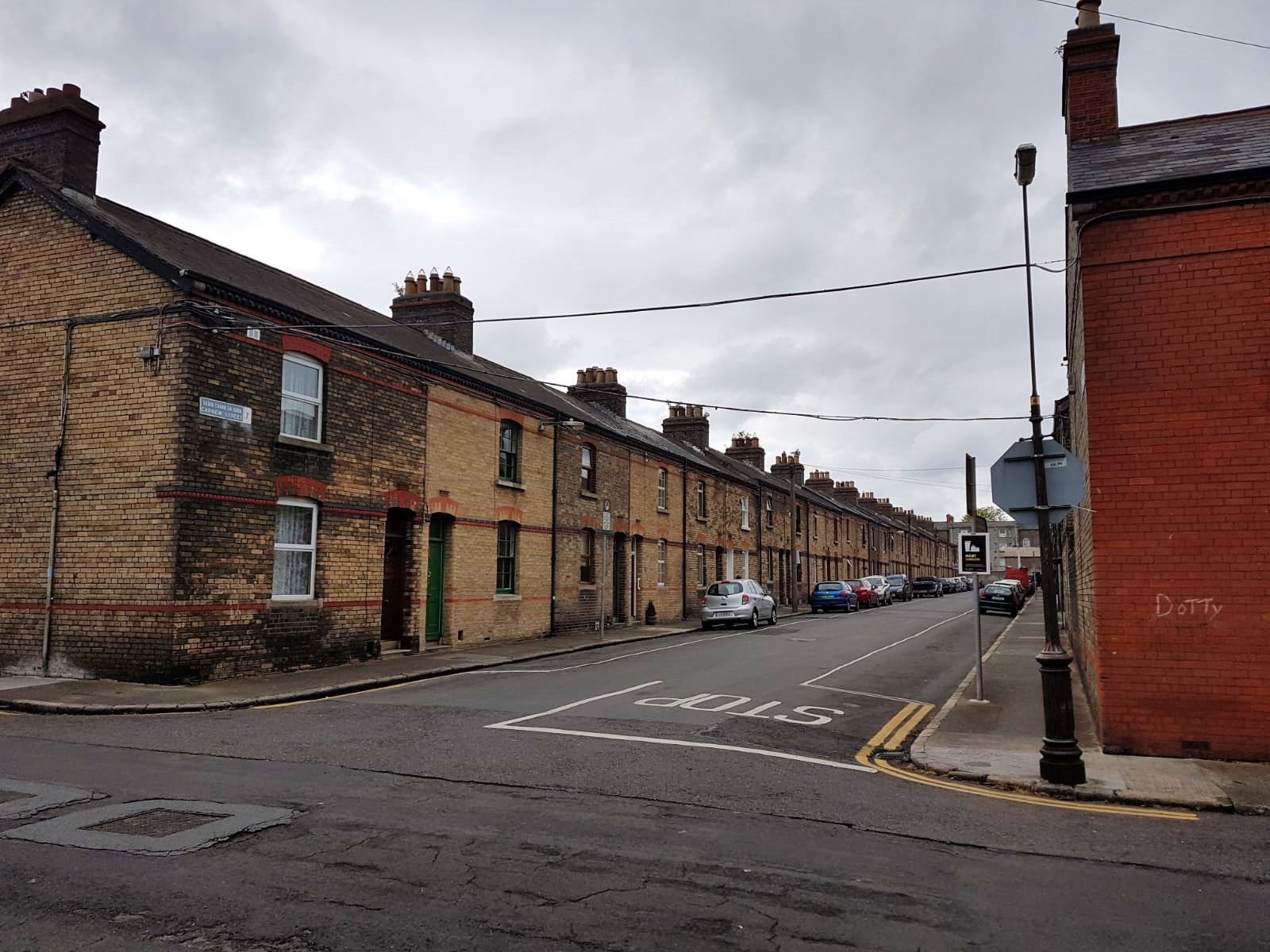
Both my grandmother Carmel and grandfather Thomas were born in Dublin. Carmel was born in July of 1915 at number 5 Cowper Street near the North Circular Road. Thomas was born in March of that same year on St. Agnes Terrace in Crumlin. Thomas attended Belvedere College and upon leaving went to work in the New Ireland Assurance company as a 17 year old. Carmel attended St. Gabriel’s national school on Cowper Street and later worked in Pim’s department store on South Great George’s Street. The Pim family were Quaker business-people and their huge department store occupied the site that is now home to the Castle House office building, next to the George Nightclub. Carmel and Thomas were married on the 28th July 1941 in the Church of the Holy Family in Aughrim Street. At the time Nana was living around the corner at 24 Carnew Street while Thomas wasn’t too far away, north of the city this time, at 33 Swilly Road in Cabra.

Carnew Street

Carnew Street

Thomas’ parents were John and Ethel O’Sullivan. John was originally from Co. Cork, but we’ll come back him in a later post. Ethel was born Ethel Beahan in Ellen Villas, once a part of Emmet Road, in June of 1884. The family moved a number of times during her early life but stayed in the wider Inchicore/Kilmainham area. In the 1901 census the Beahan family were living at 10 Hawthorne Terrace (part of the Tyrconnell Road) before moving again to 3 St. Patrick’s Terrace, a terrace of fine red-brick, two-storey homes that survives to this day and is situated close to the Inchicore railway works. Ethel was resident in St. Patrick’s Terrace with her family at the time that she married John O’Sullivan in the Catholic Chapel of Goldenbridge in September of 1907.

The Beahan family home on St. Patrick’s Terrace, and their focus on the Kilmainham/Inchicore area was not by chance, Ethel’s father Thomas was employed in the Inchicore works as a clerk for the Great Southern Railways. Thomas had married Mary Meehan in October 1883. Mary Meehan (now Beahan) was a near neighbour of Thomas’s being only from down the road in Goldenbridge.

One thing that jumped out upon carrying out a little bit more research on Thomas Beahan was that unlike his wife, or his nine children who were all born in Dublin, Thomas the railway clerk was born in India. As a result it has been much harder to find information about Thomas’ early life but we know from his marriage cert that his father’s name was James and his profession was listed as a clerk.

What we know about James Beahan is that before he was a clerk he was a soldier in the British army, and it was while he was serving in India that that Thomas was born around 1857 though later documents such as the census of 1901 suggest the later date of 1859. We know from the British Army worldwide index of 1861 that James was stationed in Meerut, India which is about 70 kilometers northeast of New Dehli as part of the 8th King’s Royal Irish Hussars, a cavalry regiment.

By the time of Thomas’ birth in around 1857 James Beahan had already been in the British army for almost ten years.  Born in 1830 in the small village of Ballon, Co. Carlow he had joined the army as a 19 year old in 1849. This was still in the midst of the Great Famine and as James had listed his original profession as a Labourer, most likely a farm labourer, a stint in the Army would have offered decent pay and a chance for adventure as well as an escape from the horrors of the domestic situation in Ireland at the time. He joined up in Dublin and was initially he was part of the 6th Dragoon Guards, a cavalry regiment. In 1857 James was promoted to the rank of Corporal and in early 1861 he transferred regiments to join the 8th Hussars another cavalry regiment. By 1864 he had been promoted again to Sergeant and he remained at that rank and with the same regiment until he left the army in October of 1873.

James’s military records also provide us with some level of personal descriptive information, for instance we know he was 5′ 9″ in height with grey eyes and light brown hair. His commanding officer General John Charles Hope Gibsone stated that his character was “very good” and noted his attainment of good conduct stripes and a good conduct medal. In total he was in the British army for just over 24 years and served for 8 and half of those years abroad.

The 8 and a half years of service abroad consisted of a posting to the Crimean War with the 6th Dragoon Guards for a period of 11 months before spending almost 8 years serving in India. To try and put everything into the context of the geopolitical situation would take thousands of words but to summarise very briefly, the Crimean War began in late 1853 between an alliance that included Britain, France, the Ottoman Empire against the forces of Tsarist Russia. The War became famous, or perhaps better described as infamous, for it’s violence, the suffering of it’s soldiers and the foolish decisions of it’s generals. It also became associated in the popular imagination with a number if key events and figures. Florence Nightingale became a national hero in Britain for her commitment in nursing wounded soldiers, Leo Tolstoy was a soldier on the Russian side and his experiences directly impacted his literary works. Alfred Tennyson wrote his famous poem The Charge of the Light Brigade which commemorated the braveness or the British rank and file cavalry as well as the foolishness and incompetence of their leadership that became features of the war. The charge of the light brigade was an action that was part of the larger Battle of Balaclava, itself part of the wider Siege of the Crimean city of Sevastopol. The 8th Hussars were one of the cavalry regiments involved in the charge of the light brigade but James Beahan had yet to join that regiment.

However James was present during the Siege of Sevastopol with the 6th Dragoon Guards after they were transferred there in 1854. They would have had to endure horrific winter storms where many men and cavalry horses died of starvation and disease. Indeed starvation and disease killed far more men than the Russian guns. The Siege of the great port city continued all the way through to September 1855 with the final assault on the city being made by a force of around 60,000 men, the British forces were originally repulsed by the Russians but the French forces under the command of General MacMahon (a French descendant of an Irish lord who fled to France after the Williamite Wars of the late 17th Century) managed to break through, ultimately forcing the Russians to abandon Sevastopol.

The defeat at Sevastopol was the beginning of the end for the Russian forces who sought to make peace in March 1856. We know that James’s regiment the 6th Dragoon Guards were involved in the Crimean War and from his records we know that he received the Crimean Medal and that as well as serving at Sevastopol he was also stationed in Turkey for a period during the War.

James’s regiment was sent to India in 1857 as part of the British response to the India Mutiny which began in the city of Meerut in May of that year. There were many causes of the uprising which began among the Indian troops within the armed forces of the East India Company, but one of the main flash-points was around the use of grease manufactured from animal fats on the bullet casings of the ammunition provided to the Indian troops. Islam precludes the consumption of pigs while Hinduism precludes the consumption of beef, the bullet casings, which had to be bitten to get them to fit properly in the rifles were reported to be covered in the grease from the fat of both animals. Many Indian soldiers saw this as grave mark of disrespect to their respective religions.

The Indian Mutiny was hugely violent and led to the death of over 800,000 people by some estimates when events such as famine and disease caused by the violence are taken into consideration. The British response to the Mutiny was extremely ruthless, especially in retribution for the incidents such as the killing of civilians by the Indian mutineers during the Siege of Cawnpore. There are even descriptions of British troops tying captured Indian troops to the mouth of cannon before blowing them to pieces as a form of execution. The legacy of the Mutiny was that the British Crown took over the running of India as a colony, rather than as an area to be administered by the British East India Company. Violence wasn’t constrained just to combatants and the whole episode was marked by the deaths of many thousands of civilians.

James Beahan’s regiment saw little action during the India Mutiny but he pops up again in 1871 and then again in the year of his discharge (1873), as he plays a small role as a witness in one of the most infamous and controversial court cases of the 19th Century, a court case dubbed the Tichborne Affair by the press. The case centred around a man who claimed to be Sir Roger Tichborne, heir to the Tichborne baronetcy and family fortune, who disappeared and was presumed dead, only to return some twenty years later after a supposed shipwreck and a long interlude living in the Australian bush. Sir Roger Tichborne had been an officer in the 6th Dragoon Guards at the same time that James was serving. They had been stationed together in barracks in Tipperary.

RogerTichborne

Roger Tichborne

Many doubted the identity of the claimant. It was assumed the real Roger Tichborne had perished when the ship he had been travelling on had capsized off the coast of South America in 1854, however, others, including Lady Tichborne were convinced that the man who arrived from Australia in 1866 was indeed her long, lost son. Lady Tichborne died in 1868 and the supposed Sir Roger outraged many of her descendants by claiming the position of chief mourner at her funeral.

A civil case began in 1871 (effectively to decide if the claimant was indeed Sir Roger) but fell apart soon after, with the claimant being gaoled in Newgate prison for perjury. A criminal case began in 1873. James testified in both these cases and was one of a number of witnesses who claimed that the claimant was indeed the Sir Roger Tichborne that they had known from years before in Ireland.

220px-Arthur_Orton_portrait_-_1872

Arthur Orton

All evidence seems to suggest that the claimant was in fact a man named Arthur Orton and that he had no connection to the Tichborne family, George Bernard Shaw, writing much later, highlighted a paradox whereby the Claimant was perceived simultaneously as a legitimate baronet and as a working-class man denied his legal rights by the elite. Whatever his true identity he had managed to convince James Beahan, his supposed mother, and the general public of his legitimacy as the heir to the Tichborne estates and titles. Arthur Orton (or was it really Roger Tichborne?) died in 1898, he was still infamous enough that 5,000 people attended his funeral. Such was the lasting impact of the case that a film on the subject was made in 1998 entitled The Tichborne Claimant featuring the likes of Stephen Fry and John Geilgud, though no actor is mentioned as playing the role of James Beahan.

James Beahan died two years later in 1900 at the age of 70 surrounded by his family in Dublin.


It could happen to a Bishop – John Curtis in faith and football

A Bohemian history of the 20th Century: An examination as to whether it is possible to write about the key events of the last century through reference only to those people who played for Bohemian Football Club of Dublin. A difficult task but the more I read and research, perhaps not an impossible one. Thus far there are Bohemian connections to the 1916 Rising, the War of Independence and the Civil War in Irish history, and in a wider context there were the global conflicts of World War I and II which I have mentioned in previous posts. But how about Chinese missionaries and the rise of the Maoist interpretation of Communism? Well to tell that story we have to go back to Dublin in 1880.

John Curtis was born in 1880, as the eldest son of Thomas Hewson Curtis and Margaret Curtis. Thomas was a clerk and later a manager in the corn exchange near to Christchurch Cathedral but as a youngster John lived with his family on Montpellier Hill its steep incline rising to the North Circular Road gate of the Phoenix Park where Bohemian F.C. would be founded in 1890 by a group of men only a few years senior to young John. By that time the growing Curtis family had moved the short distance to Blackhall Street, residing in a house next to the Law Society buildings at Blackhall Place which were then occupied by the King’s Hospital school. Eventually the family moved to Hollybrook Road in Clontarf as Thomas’ career continued to progress. The young John was educated not in King’s Hospital but at Benson’s Grammar School in Rathmines which was founded by Rev. Charles William Benson on the lower Rathmines Road, the school also educated the likes of George Russell (AE) and members of the Bewley family.  John then graduated to study in Trinity College Dublin.

It was around this time that a teenage John Curtis first made an appearance for Bohemians. He appears in the first team in the 1897-98 season. He played most of his games for the club at inside-left, and in that first season his partner at outside-left was none other than Oliver St. John Gogarty. The pair starred together as Bohemians won the 1897-98 Leinster Senior Cup final, defeating Shelbourne 3-1 while also progressing to the semi-finals of the Irish Cup.

The following season showed a similar pattern, another Leinster Senior Cup win and another lost Irish Cup semi-final (this time to Linfield) for the Bohs and John Curtis. Though not yet 20 Curtis was already a star player, in the 18 games he played that season he scored an astonishing 21 goals. Bohemians wouldn’t join the Irish league until the 1902-03 season so Cup competitions such as the Leinster Senior Cup and the Irish Cup, as well as the Leinster Senior League, would have taken precedent at the time and Bohemians were clearly the strongest side outside of Ulster at that juncture.

The 1899-1900 season saw further progress in the Irish Cup, this time Bohs got all the way to the final. John Curtis was instrumental in getting them there, scoring a vital equalising goal in the semi-final against Belfast Celtic before Herbert Pratt scored the winner in a match played in the Jones Road sports ground, now better known as Croke Park. John lined out against Cliftonville in the final in Grosvenor Park in Belfast in front of 5,500 spectators. Alas it didn’t turn out to be a first cup win for Bohemians.

Bohs had made it to the cup final once before in 1895 when they were hammered 10-1  by Linfield, but the 1900 final was to be a much closer affair with Bohs being defeated 2-1 with George Sheehan getting the goal for the Dublin side. The newspaper reports described a tight game with Bohs deemed to have been highly unlucky to lose, indeed many observers thought that Cliftonville’s second goal was a clear offside. Matters weren’t helped by four Bohemian players picking up knocks during the course of the match.

On a personal note for John Curtis it seemed that just a week prior to the Irish Cup final  he might be honoured with an international cap. A first ever international game was to be staged in Dublin’s Lansdowne Road and Andrew Gara, the Roscommon born, Preston North End forward was earmarked for a spot in the Irish attack, however just days before the game Gara was injured and the Irish Independent reported that his place was to be awarded to John Curtis. This didn’t come to pass however, the sole Dubliner in the line-up was John’s team-mate George Sheehan who was given the honour of captaining Ireland in a 2-0 defeat to England. The closest John would come to an international cap would be representing Leinster in an inter-provincial game that season against an Ulster selection.

While John Curtis would continue to line out for Bohemians his appearances were reduced in number over the coming years, he had sporting commitments with Trinity College as well, representing them in as a footballer in the Irish Cup while also enjoying games of Rugby.

Bohs with Sloan Crozier

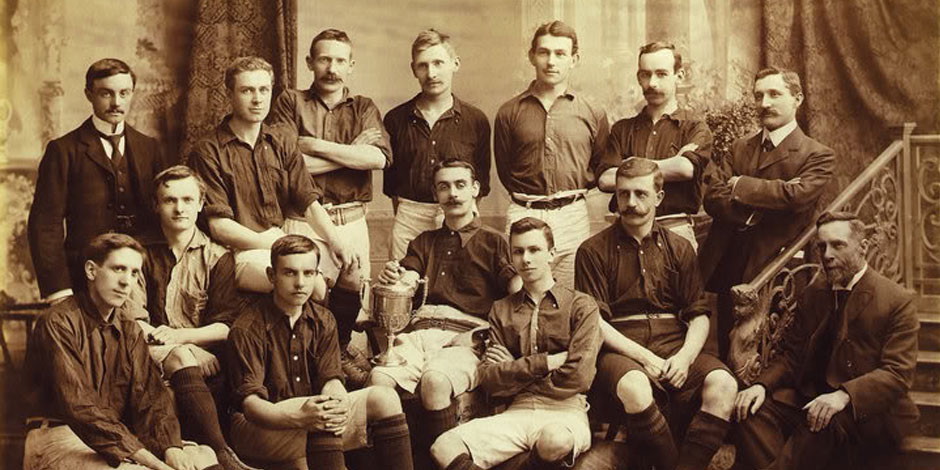
John Curtis is the big bloke with the moustache and his arms folded in the back row.

He features in a team photo from the 1902 Leinster Senior Cup winning photo but lined out for the club less frequently, he did appear in a couple of prestigious friendly matches in the early years of the century however, when Bohemians were keen to invite the cream of British football to their new home in Dalymount Park. John played against Celtic in 1901 and against Bolton Wanderers the following year.

By 1903 John had finished his studies in Trinity College and was ordained as a Reverend, his first parish being that of Leeson Park in Ballsbridge. By this stage his two younger brothers Edward (Ned) and Harry were both playing for Bohemians, though with less distinction than their older brother.

While his footballing life might have been coming to somewhat of an early close the even more remarkable parts of John Curtis’ story were only beginning. After only three years in his Dublin parish John Curtis was setting sail for missionary work in China and embarking on a whole new chapter in his life.

John was bound for the Chinese province of Fujian on the southwest coast of the country. The first Protestant missionaries had only begun working in China in 1807 and among the early missionaries was another Irishman, William Armstrong Russell who arrived in China in the 1840’s. Despite these earlier arrivals John’s journey was still very much a leap into the unknown and certainly a long way from leafy south- Dublin parish work.

John arrived in Fujian in 1906 and later, while working there met fellow missionary Eda Stanley Bryan-Brown, she had been born the daughter of a clergyman in Australia, and in 1914 they were married. In 1916, – perhaps out of a sense of duty? – John returned to Europe in the midst of War, this meant separation from his wife and his missionary work. Curtis joined the British Army Chaplains and shared the dangers of the combat troops in trenches and on battlefields. He spent time in Greece and also would have ministered to members of the Royal Dublin Fusiliers during his service. As one journalist who knew him well observed of his character “one cannot picture him holding back from that cataclysm”. Indeed despite his obvious religious devotion most descriptions of John Curtis focus strongly on his energy and fearlessness, whether on the sports ground, or the battlefield or in his missionary work.

Luckily John survived the War and in 1919 received the Victory medal, however he swiftly returned to his work in China. Since arriving in China in 1906 John had witnessed crowning of the child emperor Puyi in 1908 as well as his forced abdication, the end of Imperial rule, and the founding of the Republic of China just a few years later. His post-war return witnessed further upheaval. In 1927 John and his missionaries would no doubt have been aware of the first major engagements of the Chinese Civil War between the Kuomintang (or KMT, the major political party of the Republic) and the Red Army of the Chinese Communist Party. There was a major battle for control of the city Nanchang in the neighbouring province of Jiangxi which ultimately saw the Communist forces flee in defeat, many of their surviving troops marched hundreds of miles to take refuge in Fujian, the province where John and his family were living.

By this stage John and Eda had become parents to a son, John Guy Curtis in 1919, Arthur Bryan Curtis in 1924 and followed by a sister, Joan. It was a restless time to have a new family but there was further change for John as in 1929 he became Bishop of Zhejiang, replacing his fellow Dubliner Herbert Moloney. This meant that John and Eda moved to the beautiful city of Hangzhou, referred to by some at the time as the “Venice of the east” due to its location on the Grand Canal of China and sections of the Yangtze river delta. By this stage Eda had brought the children to England in 1927 to live with one of her brothers though both parents visited every year up until the outbreak of the Second World War. In their young lives the children had witnessed a great deal of violence. Joan recalled as a four year old hearing “soldier and their cannon” from the Missionary school. On another occasion in 1922 Eda and her two young children were obliged to undertake a long journey up river, during the course of which her oldest son John  by then only three years old at the time developed laryngeal diphtheria. When it looked like he might succumb to his illness she was forced to perform a tracheotomy, her only instruments being a pen-knife and some hair-pins. It was perhaps not surprising that the calm of rural England would seem a better place for the children to grow up.

Drama and upheaval followed the Curtis family to this new setting of Hangzhou  and as Christmas 1937 approached so too did the forces of Imperial Japan. The Second Sino-Japanese war had broken out that summer and on Christmas day 90,000 Japanese troops entered Hangzhou after fierce fighting. A week earlier the Japanese had advised all foreign consuls to evacuate any of their citizens from the area due to the danger of the fighting, in all there were only 31 foreigners in Hangzhou in 1937 and John Curtis was the only Irishman.

Journalist and Church of Ireland priest, Patrick Comerford notes that “living conditions deteriorated in the city, Curtis constantly visited the hospitals, medical camps and refugees, his overcoat pockets bulging with bottles of milk for the children. On what he called his ‘milk rounds,’ he also shepherded large numbers of frightened women and children to the safety of the refugee camps.”

He continued to administer to his Church’s followers throughout his vast diocese despite the restrictions caused by the Japanese invasion, and the subsequent outbreak of World War II.  By September 1942 more than nine months after the Japanese attack at Pearl Harbour many missionaries were called in for questioning. John Curtis was arrested in November and taken to the Haipong Road Camp in Shanghai and then held in Stanley Internment Camp, Hong Kong. Comerford writes that on one occasion, “the Japanese threatened to shoot him if he continued to criticise their treatment of his fellow prisoners, but it was said that in internment he was a great asset to the morale of the camp.”

The Curtis’s would remain in prison of war camps for the remainder of the War, it was in such a camp that they would learn of the death of their oldest son John, in January 1943. John, whose life Eda had saved as a toddler, was only 23 when he died in a flying accident while on service as an RAF pilot. When finally released from the camp at the end of the war both John and Eda were in their 60’s and had suffered cruelly during their captivity. Eda had continued her medical work, helping other prisoners inside the  camp and her thoughts were about returning to Hangzhou to continue her work at the mission hospital, which they managed to do with support from the Red Cross. After the war more missionaries did come out to China from Ireland and Britain however their work was made increasingly difficult under the rule of Chairman Mao Zedong. Eventually in 1950 John and Eda left China for the last time and returned to England.

John became a vicar in the small village of Wilden, north east of Stourport-on-Severn in Worcestershire before he eventually retired to Leamington in 1957 at the age of 77. Although struggling with arthritis it was noted that he remained in good spirits when in conversation with his old friends, and he kept in contact with his many old acquaintances and was eager for news from Dublin, indeed he had continued to visit Dublin regularly even while working in China. John was highly thought of as a  missionary and often during his returns to Dublin he was asked to speak about his work and travels. And despite the passing of time his reputation as one of the best Irish footballers of his generation lived on for decades as well.

John passed away suddenly in 1962 and Eda died just 18 months later. They had truly lived full, dramatic and difficult lives. Their daughter Joan got married and ended up living in Sligo while their surviving son Arthur Bryan Curtis, who had studied at Oxford and also served in World War II ended up emigrating to Rhodesia (now Zimbabwe) to become a school headmaster.

The sporting connection begun with John Curtis all those years ago for Bohemians continued with his son. John had been a handy Rugby player in his Trinity days and Arthur Bryan also excelled with the oval ball, playing for Oxford University and London Irish. In 1950 he won three Irish international caps as a flanker. Arthur’s son David also represented Ireland at Rugby, winning 13 caps and appearing as a centre during the 1991 Rugby World Cup, David was also a useful cricket player and represented Oxford University in that sport. Continuing a family tradition David’s sons Angus and Graham are currently playing Rugby with Ulster and Angus has already been capped for Ireland  at under-20 level.

But however exceptional the sporting careers of the younger Curtis men might be it cannot match the drama of their ancestor, the famous Bohemian John Curtis, or his wife the fearless Doctor, Eda Stanley Curtis.

Many thanks to Stephen Burke for providing information on John Curtis’s playing career. Also for more on Irish missionaries in China check out Patrick Comerford’s blog.

A Dublin pub crawl with a token distraction

Last week I was invited out for a pub crawl to find out more about the betting tokens public houses used during a time when betting was made illegal I went to find out more about how Irish publicans found a loophole in legislation to allow their customers enjoy a not so legal pastime.

In the 1840’s and 1850’s the social ills caused by gambling preoccupied the minds of many in the Westminster parliament. They decided to legislate for the issue, outlawing most forms of gambling apart from things like on-track betting at race meetings which was where the wealthy and influential liked to mingle and place the occasional wager on a horse.

One item that was made illegal was the practice of using licenced premises for gambling of any kind, but in order to provide amenities for their customers, many publicans had tables for bagatelle and other games. As official coins could not be used for gaming, specially minted tokens were issued which could also be used for buying drinks. Very much an Irish solution for an Irish problem.

Many of these tokens still exist and a small collection of them are in the care of collectors from the Numismatic Society of Ireland (coin collectors to you and me) and thankfully many of the pubs that issued their own, early form of crypto-currency are still with us today. So on a warm July afternoon I was invited to join them in recreating a short pub crawl first done some 50 years earlier by society members in 1968.

A pub crawl with a difference

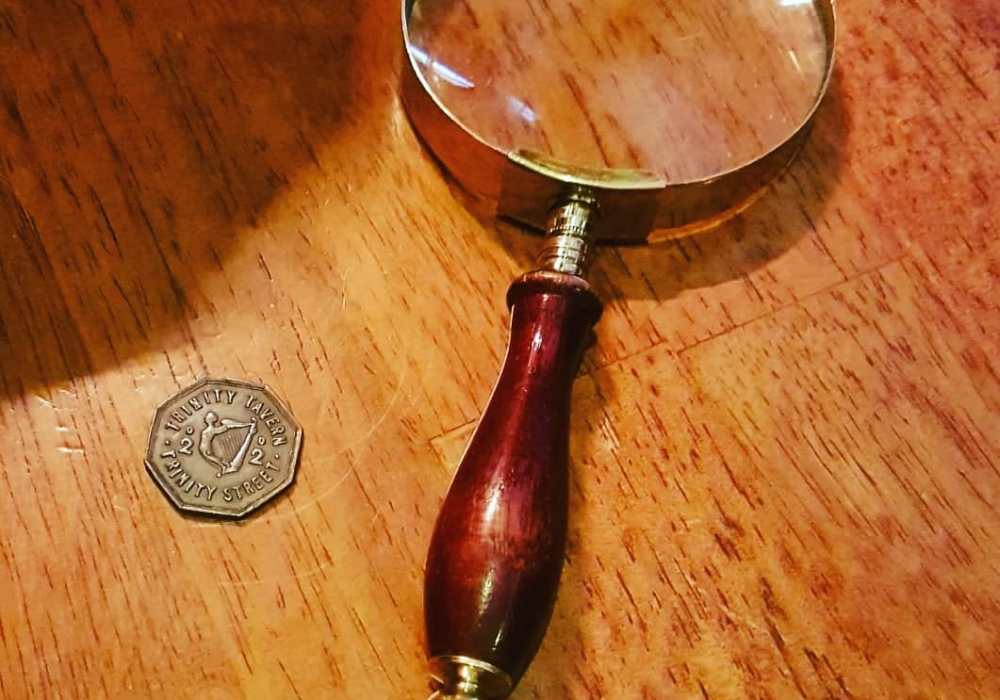
Our first port of call was the Bankers Bar on the corner of Trinity Street and Dame Lane, I’ve written about the history of the Bankers before, and in the 1860’s when it was minting it’s tokens it was known as the Trinity Tavern. Bankers coin2The one shown below was minted in Dublin by John C. Parkes of The Coombe and he was responsible for striking most of the pub gambling tokens.

After our start in the Bankers we made the short journey around the corner and up Grafton Street before turning onto Duke Street and stopping at the Bailey. As it was a warm bright day the famous bar’s outdoor seating area was packed with punters enjoying the fine weather. The Bailey Bar took its name from its former proprietor, Nicholas Bailey who ran the pub (with minor interruption) from 1852 until 1880.

While the Bankers and the Bailey are still with us today some of the pubs that were minting their own coins have disappeared with the passage of time. One of these number George Flood’s once stood at 28 Grafton Street, a site now occupied by the Victoria’s Secret store. No trace of Flood’s pub remains although the tokens that he minted, like the regular coins of the day, featured the head of the reigning British monarch on the reverse, in this case it was Victoria appearing on the back of some Secret currency.

Victoria reverseWhile Grafton Street isn’t too well known for pubs today the Duke Pub, back on Duke Street is named after the 2nd Duke of Grafton Charles Fitzroy. Originally opened in 1822 the Duke Pub was run by a James Holland when they first started issuing their own tokens in the 1860’s. Since that time the pub has expanded and has taken over premises that once housed the famous Dive Oyster Bar and part of the hotel building that was operated by Kitty Kiernan and her family. It was for a time known as Tobin’s pub but has since reverted back to the original name of the Duke Bar. After a chat and a drink with David, the bar manager we were due to head onto our final watering-hole, north of the river this time to Brannigan’s of Cathedral Street.

En route there was a slight detour at the Westin Hotel, as the site of a major branch of Provincial Bank of Ireland the banking and coinage themes run through the hotel and this is apparent in the names of function rooms like the Banking Hall, or the Mint Bar. They also display many historic coins and notes on the walls of the hotel so keep an eye out next time you drop by.

Elephant Lane
And finally onto Brannigan’s on Cathedral Street. The pub is named after the (in)famous Garda Jim “Lugs” Branigan but has previously been known as “The Goalpost” and “The Thomas Moore”. When it was minting tokens back in the 1860’s it was run by James Kenny and was known as the General Post Office Tavern. It also wasn’t called Cathedral Street but at time was known elusively as Elephant Lane. One theory as to the street’s unusual name was offered by our generous host, publican Padraig McCormack who suggested that the Elephant that was accidentally killed in a fire just off Essex Street in 1681 had been housed in buildings on off the street which gave rise to it’s name.

Padraig was presented with of a framed farthing tavern from the old “General Post Office tavern” days that will hopefully find a home on the wall’s of Brannigan’s along with the extensive array of memorabilia they display.

First featured on DublinTown.ie in July 2018

Playing football with a battleship

In February 1937 Seán Lester, the noted Irish diplomat became Deputy Secretary of the League of Nations, a forerunner organisation to the modern-day United Nations. As a result of his promotion he left his role as High Commissioner in the Free City of Danzig (modern day Gdansk in Poland) and moved to the Swiss city of Geneva where the League’s headquarters were based.

His time living in Danzig had been fraught, he had witnessed first hand the rise of Nazi Germany and clearly understood the threat it could pose to the independent port city of Danzig and to wider Europe in general. When speaking about his biography of Lester, his son in law Douglas Gageby described him as “the first western diplomat to receive the full force of Hitler’s hatred” due to his opposition to the Nazi regime. Lester spent the remainder of his time before and during the War trying to stop the League of Nations falling under the the control of the Axis powers. The efforts of this brave Irishman seem to have gone virtually unnoticed by Irish football’s governing body (and many others) however, just months before the outbreak of War the Irish national team played the German national side (which now included players from post-Anschluss Austria) in Bremen and performed a Nazi salute prior to the game in an infamous moment in Irish sport.

Perhaps less well-known is another game that took place in Dublin just two months after Lester’s departure from Gdansk. It was a match between Bohemian F.C. and the crew of the German battleship, Schleswig-Holstein. This was this same battleship that in September 1939 sailed to Gdansk under the pretext of a diplomatic engagement before firing the first shots of the Second World War, attacking the city that Lester had known so well, as German marines over-ran the once Free port city.

This is a brief account of the visit of the Battleship Schleswig-Holstein (pictured above) to the port of Dun Laoghaire in April 1937 and the huge popular reception they received from the Irish people. Among the film-screenings, dinners, tours and parties that were undertaken to welcome the ship to Dublin there was even time for that game of football.

The battleship itself was launched in 1906 as an early part of Kaiser Wilhelm II’s plan to develop and modernise the German navy and make the nation a world naval power. By the time of the ships’ completion the German navy had already seen further technological development as they had begun the roll out of the German dreadnought class of even larger battleships. However the Schleswig-Holstein still saw action during World War I, taking part in the Battle of Jutland where it was damaged and had three of its men killed after being struck by a British shell.

After the First World War the Schleswig-Holstein was one of the ships that the German navy sought to retain under the terms of their disarmament agreements and when Hitler came to power and began to redevelop the German military machine the Holstein became a training vessel for the many new German cadets recruited for a growing Navy. As part of one of these training missions the ship went on a seven month voyage into the Caribbean and south Atlantic calling at ports in Brazil, Venezuela, Costa Rica and Bermuda among others. Their stop at Dun Laoghaire was their first stop-off back in Europe before their return to the naval base at Wilhelmshaven. On board were 31 officers and 785 petty officers and crew which included over 170 naval cadets.

The Schleswig-Holstein arrived into Dun Laoghaire on the 9th April 1937. Due to heavy fog the ship was two hours late in arriving but was still greeted by a 21 gun salute from an artillery battery near Dun Laoghaire’s East Pier. The battleship returned the salute by blazing its cannon in reply and soon after hoisted the Irish tricolour from its mast-head where it fluttered next to the German standard emblazoned with the Nazi swastika at its centre. Several hundred people were gathered at the harbour to see the ship berth, including a sizable contingent from the German legation in Ireland, there to welcome their fellow countrymen. Among them was Erich Schroetter, the head German diplomat in Ireland. Schroetter later fell foul of the influential Dublin-based, Nazi Adolf Mahr and would be replaced within months of the ship’s visit by Eduard Hempel. Mahr, as well as being the Director of the National Museum of Ireland was also head of the Nazi party in Ireland. He was represented on Dun Laoghaire pier that day by his Dutch wife Maria.

This welcoming party was only the first in a cavalcade of social engagements for the ship’s officers and crew. On the afternoon of their landing a deputation from the Schleswig-Holstein, along with members of the German legation visited with the Irish Army Chief of Staff, Lieutenant General Michael Brennan and the Minister for Defence, Frank Aiken in Army Headquarters before stopping off at the Mansion House to drop in on the Lord Mayor of Dublin, Alfie Byrne. The Lord Mayor would pay a return visit to see the German battleship in Dun Laoghaire before the end of their stay and even Taoiseach Eamon De Valera took time out on the Saturday after the battleship’s arrival to meet it’s Captain Günther Krause along with the aforementioned Erich Schroetter.

During their brief stay the crew were not left short for entertainment. While members of the Dublin public were allowed to take tours around the battleship the German sailors quickly became a common sight in both Dun Laoghaire and Dublin City Centre. During the week of their visit they were invited to the Pavillion Theatre in Dun Laoghaire for a special showing of a German film production of the popular opera The Gipsy Princess. Afterwards there was a screening of an Irish tourism short, painfully entitled Top of the Morning. They visited Portobello Barracks (now Cathal Brugha Barracks) where they were introduced to the Irish Army’s own German officer, Friedrich Wilhelm “Fritz” Brase. “Fritz” was the head of music for the Irish Defence Forces and had also briefly been Chairman of the Nazi party in Ireland until advised to step down by his Irish military superiors, at which point he was replaced by Mahr.

Apart from their musical engagements there were excursions arranged for crew members to Dublin’s most prominent tourist attractions, many would still be on most tourists’ itinerary today, namely, St. Patrick’s Cathedral, Trinity College and the Guinness brewery.

Other excursions meant travelling slightly further from the city which allowed Adolf Mahr to indulge his passion for ancient Irish history. He lectured the visiting Germans on monastic Ireland at Glendalough and also provided guided tours to Newgrange and the historic ruins of Monasterboice. Several of the ship’s compliment even climbed the 168 steps up the column of that British naval hero Horatio Nelson to get a better view of O’Connell Street from the top of the pillar.

Somehow among this myriad of social engagements, tours, parties and public concerts by the ship’s band, a selection of the crew also got to squeeze in a football match against Bohemian F.C. in Dalymount Park. There was a good sized crowd in the ground for a Tuesday afternoon as Bohs fielded a fairly strong side against the visiting Germans. Some 120 of the German officers and sailors attended the game among thousands more local spectators. When one considers that contemporary reports stated that over 10,000 locals visited the battleship at berth in Dun Laoghaire it is no exaggeration to say that perhaps more than 20,000 Dubliners must have been to see the German’s either aboard ship or at another event such as the football match during the six days of their visit.

Despite the fact that Bohemians had a league fixture against Shamrock Rovers the following day they named a competitive side including some veterans and “B” team players. Among the starting XI were Irish internationals like Harry Cannon (who was a Captain in the Irish Army and who would work through “The Emergency”), Kevin O’Flanagan and Fred Horlacher (himself the Irish-born son of German immigrants).  Despite the pedigree of the Bohs side the German XI put on a good display and only lost by the odd goal in three. Their goal was scored by their midfielder Bischaf while a Barry Hooper goal and a header from Kevin O’Flanagan had given Bohs the victory. The match had been refereed by Johnny McMahon, a former Bohemian player and a member of An Garda Siochána.

After the game the Germans put on a display of “field ball” which by photographs and reports seems like an 11-a-side version of Olympic handball played with a full sized football. It was reported to be a sport favoured by the German armed forces as a way of keeping fit and developing muscle mass.

German sailors photo

Image and caption from The Irish Times

The teams on the day were as follows: Bohemian F.C. – Capt. Harry Cannon, Kevin Kerr, Jack McCarthy, Barry Hooper, Ivor Hooper, Fred Horlacher, Kevin O’Flanagan, Billy Dennis, Paddy Ennis, Tommy Fitzpatrick, Joe Mullen

Schleswig-Holstein XI: Haas, Gobel, Grosser, Bischaf, Lux, Kaiser, Nowack, Hinneberg, Brix, Gronert, Bucker

Four of that side (Kerr, Barry Hooper, O’Flanagan and Horlacher) would play against Rovers the following day and, perhaps not unexpectedly given the circumstances, lost 3-0.

The Germans left for their home port of Wilhemshaven on the Thursday after the game. Large crowds gathered to see off the German battleship from port and  “Deutschland uber alles” was played followed by the Irish national anthem, which were both greeted by cheers from the quayside. The previous afternoon Captain Krause had entertained several guests at a farewell lunch aboard ship. Along with members of the German legation in Ireland were Free State Government Ministers, Frank Aiken and Seán Murphy. The coverage of the battleship’s visit was overwhelmingly positive. Captain Krause praised the hospitality of the Irish and he and his crew seem to have been viewed as minor celebrities during their week in Dublin.

Captain Krause upon returning to Germany was replaced in command of the Schleswig Holstein by Captain Gustav Kleikamp, and Krause was soon rising up the naval command chain. Krause had always seem blessed with his timing, he had been a U-boat commander during the First World War and had twice been awarded the Iron Cross. During his period in command of the submarine UB-41 in 1917 he had sunk eight enemy ships but less than a month after his transfer the submarine was sunk by a mine with the loss of all hands. The Captain who had so charmed the Dublin public would end the Second World War as a Vice Admiral in the Kriegsmarine and survived the War unscathed, living to the grand old age of 93. He was well departed from the Schleswig-Holstein by the time its crew had to scuttle it in the waters of the Baltic sea in 1945 in order to stop it from falling into the hands of the advancing Soviet Armies.

This couldn’t save the ship from its ultimate ignominious fate however. Once a flagship of the German Navy, the Schleswig-Holstein that so impressed the crowds who had gathered to see her in Dun Laoghaire was raised by the Soviet Navy in 1946 and spent the next two decades off the coast of Estonia being used for Soviet target practice. What became of the eleven sailors who played a match in Dalymount, or their colleagues who climbed Nelson’s pillar to gain a bird’s eye view of Dublin we don’t yet know.

During their Dublin visit criticism of the sailors or of the violently repressive Nazi regime and military that they represented was non-existent in the press reports of the major papers. This is interesting to note as on the same pages that gave over considerable column inches to photos and articles about the German sailors there were also articles detailing the escalating tensions between Nazi Germany and other nations including the United States and the Vatican. The Irish people could not realistically claim complete ignorance of such matters. But such issues do not seem to have bothered the general public who flocked to see what by naval standards was already an old and somewhat obsolete battleship, or the newspapers (particularly The Irish Times and Irish Press) who lavished coverage on the German visitors.

Perhaps the only nod to any controversy or discomfort surrounding the emergence of the Nazi state was when one columnist in The Irish Times noted that whatever-

“views the citizens of Saorstát Eireann may have upon the political philosophy of contemporary Germany – and we do not think that there is much doubt on that score- they demonstrated in the clearest possible way that politics are not permitted to interfere with the cordial – even enthusiastic – reception of our German guests.”

The only other qualm that seems to be expressed in relation to the German visit was that O’Connell Street was a trifle too dirty and that the visiting sailors may have been unimpressed with the levels of litter in Dublin City Centre. There were however some protests a year later when two ships from the Fascist Italian navy docked in Dublin, although again on this occasion the visiting parties were offically treated as honoured guests and were shown hospitality by both Taoiseach Eamon De Valera and Lord Mayor Alfie Byrne.

By the close of August 1939, just two years after her Dublin visit, the Schleswig-Holstein sailed to Danzig under the pretext of a courtesy visit, but this one was very unlike the one she had enjoyed at Dun Laoghaire. On September 1st at 4.45am she began to shell the Polish garrison at Westerplatte with its 15cm cannon from near point-blank range as the shock troops hidden in her hold spilled forth to attack the Polish garrison.  World War II had begun.

As often is the case, thanks again must go to Bohemian F.C. historian Stephen Burke for his assistance in identification of several players involved for Bohs on the day of the match. For more on Adolf Mahr it’s worth checking out Gerry Mullins’ biography of him entitled “Dublin Nazi Number 1”.

Devlin’s of Parnell Street

Walk down Parnell Street towards the Rotunda hospital and you’ll pass the junction with O’Connell Street, followed by the Parnell Heritage Pub (formerly the Parnell Mooney) and then at the corner you’ll reach Conway’s Pub which is closed at present. Opposite Conway’s across the junction with Moore Lane is a hoarded off site.  Wooden panels and advertising boards hide an empty space fronting out onto Parnell Street. Behind that is a small surface car-park and next door is the Jury’s Inn hotel.

It’s a fairly featureless site, but one with a certain weight of history associated with it. This site, 68 Parnell Street was formerly home to Devlin’s pub and hotel. A building of huge significance during the War of Independence and the subsequent Civil War.

The building itself was once a four-storey structure with a bar at ground floor level and rooms to hire on the floors above. It was bought by Liam Devlin and his family in 1920.

Devlin's Parnell Street

Devlin’s as it appeared in the Irish Times in 1924. Conway’s pub is visible to the left.

In his Bureau of Military history witness statement Frank Thornton, the Deputy Assistant Director of Intelligence to Michael Collins spoke about how Liam Devlin had taken over the licenced premises in mid-1920 and began running it with his wife. Devlin was originally from Derry but had moved to Greenock in Scotland and had become involved with the Irish Volunteer movement while based there. He moved to Dublin around 1918 and took over the running of what became Devlin’s pub in 1920 along with his young family. Liam Devlin’s son Denis Devlin (born 1908) would later gain a certain literary fame as a poet while also working for as an Irish diplomat in Italy during the 1950’s.

Through his existing connections with the Gaelic League and the IRB Liam Devlin came to be introduced to Michael Collins and quickly offered Collins and his Intelligence staff the use of his premises as a safe-house and meeting place.

Collins used a number of city centre premises as offices and meeting places during the time of the War of Independence, many in the Parnell Street and Square area such as Vaughan’s Hotel and Jim Kirwan’s. Information would be sent to him in these locations, and he would also use them to meet new recruits and make plans for upcoming operations. Devlin’s soon became a sort of unofficial HQ for Collins and his men.

Again as Frank Thornton’s witness statement noted;

We used Devlin’s extensively and every night Mick, [Collins],  Gearóid O’Sullivan, Liam Tobin, Dermot O’Hegarty, Piaras Beaslaí, Frank Thornton, Tom Cullen and Joe O’Reilly met there, the events of the day were discussed and plans were made for the following day. Any particular Column leader or Brigade Officer arriving in town was generally instructed to report to Devlin’s.

Eamon “Ned” Broy, the infamous double agent who was nominally a “G-man” intelligence officer with the Dublin Metropolitan Police but was in fact feeding information to Collins also remembered Devlin’s well. He remarked that it was known by the men as the “No 1 joint” at the time. It was to Devlin’s pub that Broy went to meet Collins after he had been released from prison. Many expected Broy to be killed and were delighted to see him safe and well, Collins celebrated his release in a somewhat unusual manner, Broy remembers Collins marking their reunion “by demanding a wrestling bout with me”.

The benefits of a welcoming city centre location were obvious but the hospitality of the Devlin family was an added bonus, while the premises’ status as a pub provided a good cover. As Thornton noted:

Mrs. Devlin acted in the capacity of a very generous hostess. Visitors from the country never left without getting a meal and in quite a large number of instances a bed for the night. It can be readily understood that a headquarters of this kind in the heart of the city was valuable to the movement generally and particularly to the Intelligence end of things, for, being a public house, no notice was taken of people continually going in and out.

This helps show the role of Devlin’s in the War of Independence and it was of clear importance and use to Collins personally, however it also had a significant role at the end of the Civil War. After the cessation of hostilities between the pro and anti Treaty forces in May of 1923 a general election was held in August of that year which elected the new Cumann na nGaedheal government led by W.T. Cosgrave. One immediate issue facing the government was how to demobilise a national army that had grown to a great size during the Civil War but was no longer needed in peacetime.

A hardcore of army officers, many of whom had been members of the Dublin Guard such as Liam Tobin, feared for their own positions under this demobilisation and some viewed themselves as being unfairly treated in relation to some former British Army officers who had joined the pro-Treaty forces during the Civil War. On the 7th March 1924 an ultimatum was sent to Cosgrave signed by Tobin and Colonel Charles Dalton demanding an end of the demobilisation.

This was understandably viewed as a mutinous act from a section of the armed forces. Immediately afterwards a number of recruits refused to parade and arrest warrants were issued for Tobin and Dalton. By the 18th of March a group of roughly 40 armed men, including Dalton and Tobin decamped to Devlin’s to plan their next move and in response Kevin O’Higgins, the Minster for Justice who had token over the de facto leadership of a government divided by the issue sent lorry loads of loyal Army troops straight to Parnell Street. Two Cumann na nGaedheal TDs, Joseph McGrath and Daniel McCarthy attempted to negotiate with the surrounded mutineers to deescalate the situation. Tobin and Dalton, knowing Devlin’s well from their days there with Collins escaped along the building roofs and ultimately any threat of a wide scale army mutiny or even a coup d’état soon disappeared. The 1924 mutiny resulted in Richard Mulcahy resigning from his role as Defence Minister as well as nine TD’s resigning their seats from the Cumann na nGaedheal government.

More importantly it demonstrated that after almost a decade of death and violence, and only months after the end of a bloody Civil War, that it was elected government, and not the military that held the power in Ireland. It may be argued that the gun began to leave Irish politics after a period of intense militarisation on a spring night on Parnell Street outside a long demolished pub.

August 2019 update

The Devlin’s site is currently being cleared and excavated in preparation for the construction of a new hotel. Below are a couple of photos taken on 29th August 2019 which show the cellars of what presumably would have been Devlin’s pub.

Devlins1Devlins2

April 2024 update

100 years on from the Army mutiny the site of Devlin’s Pub is now the Point A hotel which is currently being expanded. a plaque was unveiled here on 5th April, 2024 by the Lord Mayor of Dublin Daithí De Róiste.

Devlins

On the Farrell family

Last year amid all the ceremony that surrounded the centenary of the 1916 Rising I set about researching some of the family history around that hugely significant event. I did of course throw in a bit about politics, football and a few other things and the resulting effort can be found here. That article had tended to focus more on the Kieran family; the family of my grandmother and some of their connections to the town of Dundalk.

The post was well received and seemed to be of special interest to family members as it jogged some recollections of long dead aunts and uncles, of half forgotten stories and the other various myths and tales that are told in all families. I was however admonished for not focusing enough on the Farrell side of the clan, after all theirs was a story worthy of telling as well. I’ve duly started to compile some information on the Farrell side of the family from around the same period (turn of the 20th Century) and the results compiled below.

But first back to the Kieran family! In the previous post I touched on the lives of Thomas Kieran and Jane Brennan, my great-grandparents. Thomas as mentioned had been born in Dundalk around 1889 and worked as an engine fitter at the Great Northern Railroad in Dundalk before moving to Dublin where he continued working as an engineer for the railways. He married Jane Brennan of Dominick Street in late 1915. Jane was born around 1891 to Jane and John Brennan.

Tom and Jane lived at 27 Blessington Street in the north inner city. As mentioned in the previous post Tom had been involved with the Volunteers during the Rising in Dundalk and he maintained his republican interests while living in Dublin. On the evening of 16th December 1920, Tom was arrested at his residence in Blessington Street and the house was thoroughly searched for weapons though none were found. The arresting officer was one Lieutenant Percy Gerald Humfrey, who noted that upon being arrested Tom said nothing at all.

He wasn’t the only family member to be arrested around this time as I discovered tracing back the Farrell line. For reference here’s the basic family tree below because this can get a little complicated.

screencap-family-tree

Let’s being with my great-grandfather Leo Farrell (who my Da is named after), he was born in early 1893, one of eight children that survived (there were ten born in total) to Terence Bellew McManus Farrell and Mary Farrell (nee Byrne). Leo was a railway engineer who worked in the CIE yards in Inchicore and was also an active Trade Union member with the Irish Engineering and Foundry Workers Union among others. He was also quite an athlete in his younger days, he was a member of Clonliffe Harriers running club. I’ve recently found a reference to Leo winning a one-mile race for Clonliffe Harriers back in 1911 when he would have been around 18. There is a short report on the race from the Dublin Daily Express (below) showing Leo comfortably finishing the race in a sub 5 minute time. My Dad remembered him as a kind and generous man, who despite his athletic past was short and rotund with a big appetite.

Irish Engineering & Foundry Union Rules Revision Conference 1936 Leo Farrell

Irish Engineering & Foundry Union Rules Revision Conference 1936 – Leo Farrell is in the front row second from the left. Photo provided to me by the TEEU.

Leo runs a mile- Dublin Daily Express 06.11.11

Report in the Dublin Daily Express from 6th November 1911

Leo’s younger brother Terence Patrick Farrell was born in late 1898. The younger Terence is quite an interesting character and it was he who was also arrested in December 1920, the same time as Thomas Kieran and from very close by too. Terence had grown up in the family home on Anne Street North, just off the city’s north quays near to the markets area however, the family later moved to 32 Mountjoy Street, just around the corner from Blessington Street where the Kieran’s lived.

32 Mountjoy St

32 Mountjoy Street as it appears today.

Terence became involved with the Republic movement even before the Rising, while still a teenager he joined Fianna Eireann and turned up at Jacob’s biscuit factory as part of E company of the 2nd Battalion of the Dublin Brigade during Easter week. However, he was only there for a few hours before being sent home due to his age (he could only have been 17 at the latest).

Terence rejoined E company of the 2nd Battalion in early 1917 and attended the various parades and drills required of an IRA member. By 1919 he had undertaken a first aid training course and was performing training classes for Cumann na mBan members once or twice a week in Finglas as well as in Summer Street just off Mountjoy Square.

Later in 1920 Terence was involved in an aborted rescue attempt for the recently arrested Kevin Barry. Interestingly Terence noted that it was a cousin of his (a family story was that this was his cousin Rosie McGrane who smuggled Terence’s revolver out of 32 Mountjoy Square when he was arrested so it may she may have also been involved with the Republican movement) who mobilised him for a the rescue attempt. He was armed with a gun and grenades and stationed at North Great George’s Street in what would have been a last-ditch, desperate attempt to liberate Barry from Mountjoy prison. Due to the large crowds gathering outside the prison and the growing number of military personnel that were stationed there it was decided due to the expected carnage that would ensue that the rescue attempt would have to be called off. Kevin Barry was later executed by hanging.

42 North Great Georges St

A view from the spot on North Great George’s Street where Terence was stationed for the Kevin Barry rescue attempt

Undoubtedly the most significant incident in which Terence was involved was his role during Bloody Sunday, 21st November 1920. He was one of the lookouts at the 22 Lower Mount Street where Lieutenant Henry James Angliss and Lieutenant Charles Peel were residing. Angliss, who was going by the code name Peter Mahon/McMahon, was a particular target due to his involvement in the murder of Sinn Fein Councillor John Lynch at the Exchange Hotel on Parliament Street in September 1920.

While Angliss was killed on Bloody Sunday, Peel managed to escape a similar fate by barricading himself in his room. Terence was keeping guard in the hall when some passing Auxiliaries were alerted by the screams of the housemaids, the Volunteers tried to escape from the back of the house but came under fire and they had to fight their way out through the front. Terence was armed with a pair of revolvers and helped cover the group, expending all his ammunition as the rest of the party made their escape up Grattan Street, helping the injured Volunteer Denis Begley to escaper with him. In a letter written years later supporting Terence’s military pension application Begley stated that Terence by his

action in entering the house to give the alarm at Lower Mount St. on that morning, is, I think, worthy of great commendation, being carried out under fire from the “Auxiliaries”, and was the means, no doubt, of saving the lives of the party of of eight Volunteers who were inside the house.

There is a wider account of the assassination here. Terence continued in other activities including the armed raid of the SS Clarecastle, a Guinness ship that was being used to transport weapons. The volunteers were successful in seizing arms from the ship. This must have occurred some time in 1918/1919 when many of the Guinness ships were under the control of the Royal Navy who had commandeered them after the outbreak of World War I, only returning them to the brewery in 1919.

SS Clarecastle

A view of the SS Clarecastle in front of Custom House Quay. Photo kindly provided by the Guinness Archives

Terence was arrested in early December 1920 at the family home at 32 Mountjoy Street. He was held in Ballykinlar, Co. Down, an army base turning internment camp, and was not released until December 1921. Terence’s autograph book which he kept during his imprisonment is held in the National Library’s microfilm collection.

terence-ira-membership

Certificate showing Terence’s membership of the IRA, signed by Oscar Traynor

After his release he had a varied and full existence. He was heavily involved in the Trade Union movement. Terence like his father Terence Snr. was a bookbinder by trade and he soon became head of the bookbinders Union. Through his leadership of the bookbinders union he became more prominent in the Trade Union movement, later becoming the last President of the Congress of Irish Unions (CIU), one of the main Trade Union confederations before their amalgamation which led to the creation of ICTU. Terence represented the CIU at the 1958 International Labour Conference in Geneva where he spoke about the importance “educational activity in the field of labour – management relations”, Terence remained active with ICTU and was one of the party who attended the new organisation’s first meeting with then Taoiseach Sean Lemass. Among his other work was a role representing the Trade Union movement on a government committee set up to advise on the establishment of a national television station in 1958, two years before RTE Television was established.

Banner

The banner of the Bookbinders Union made in 1887 and no doubt very familiar to Terence O’Farrell who led the Union and his father who was also a member. The banner is displayed in the Irish Print Museum.

Terence didn’t live quite long enough to see the first television broadcast of the new station on New Year’s Eve 1961, he had passed away in February of that year. The chief mourners at the funeral were his wife Elsie and and his six children. His brothers and sisters were also in attendance as were Taoiseach Sean Lemass and Minister for Justice Oscar Traynor who had known Terence from his days in the IRA. He was accorded full military honours at his funeral.

Terence funeral cap

Terence’s father Terence Farrell Snr. who was briefly mentioned above was also a printer by trade which gives us a hint how the younger Terence ended up becoming general secretary of the bookbinders union. He was born in May 1864 in Faithful Place to Patrick and Catherine Farrell. Patrick was a wine barrel cooper while we don’t know if Catherine Farrell (nee Brady) had a job outside the home as this wasn’t recorded at the time.

Terence birthcert

Birth certificate of Terence Farrell Senior

The area where Terence Snr. was born is mentioned as 12 Faithful Place which no longer exists today. However in 1864 it was located in a the area marked by the red “x” in the centre of the map below on an area now just off Railway Street currently by City Council social housing complexes.

Faithful place map

Map of the area around Faithful Place. Lower Gardiner Street is visible to the left.

By the end of the 19th Century this area had become synonymous with vice and prostitution, it was the infamous “Monto” area, named after nearby Montgomery Street (now Foley Street), and was the “Night Town” of James Joyce’s Ulysses, however, around the time of Terence’s birth it had not quite become the red light district of the city, only becoming a focal point from the 1870’s onwards. While perhaps not as infamous as it would later become it was a far from wealthy area, the photo below shows the condition of Faithful Place in 1913. While the area had originally been developed by the Gardiner family who had laid out and developed Mountjoy Square as one of Dublin’s finest addresses the area had declined in the early decades of the 19th century leading to the once opulent Georgian houses becoming tenements for the city’s struggling working classes.

Faithful Place - Monto

Faithful Place in 1913 (source http://www.census.nationalarchives.ie)

While Terence would go on to have a certain distant connection to the literary world of Dublin as he worked as a bookbinder but we know less of his parents Patrick and Catherine Farrell, they seem to have been married in April of 1843 in St. Andrew’s Church on Westland Row. Their fate is a little less certain so if anyone comes across any other information on them please let me know.

I’d like to finish with a little bit on the Scully side of the family. Leo Farrell married Margaret Scully in 1916. Leo would have been 23 at this stage while Margaret would have been about 20 years old. Margaret was the daughter of Louisa and Michael Scully who lived in rooms in 70 Benburb Street in Dublin 7. Michael was born around 1869 and was listed as a general labourer. He died at the young age of only 30 on St. Stephen’s Day 1899 with the cause of death listed as pneumonia and heart failure, only two months earlier they had registered the birth of their baby daughter, also named Louisa. In the 1901 census Louisa Scully (nee Gavigan) had moved a short distance from Benburb Street, across the river to nearby Watling Street. She had been a widow almost two years by that stage and worked as a laundress supporting her four daughters; Mary Ellen 15, Bridget 12, Margaret 7, and baby Louisa not yet 2.

Farrells & Scullys

Seated in front, Leo Farrell & Margaret Scully on their wedding day in August 1916. At the rear is Margaret’s sister Louisa Scully (aka Francie) and Terence Farrell. Thanks to my cousin Lisa Taylor for the photo.

Although Louisa could neither read nor write she was listed on the 1901 census as being able to speak both English and Irish, her place of birth was listed as Kildare. Recently, I was shown a copy of her baptism cert and this lists her as being baptised in Celbridge, Co. Kildare in December of 1858. All her daughters were still in school and were literate. In the later 1911 census Margaret is the only daughter listed as being able to speak Irish as well as English, then in her later teens she was working as a shirt maker. This connection with the textile industries is something that was obviously passed on to her children, her older sister Bridget also listed her job as “ladies tailoring”, and there has long been a certain fashion and tailoring connection in the family.

While in the 1901 census the family were all listed as Roman Catholic by 1911 all or Louisa’s daughters listed under the religion heading their devotion to the Roman Catholic sodality of the Sacred Thirst. This was part of the wider temperance movement at the time and was based in Father Matthew Hall on Church Street, the family were at this time living nearby at 144 North King Street. There was widespread interest in these Church led campaigns against drinking beginning in the 1880’s, especially in the working class communities of Dublin. There is some more information about the hall and the sodality here. I have wondered whether the death of their father Michael at the age of 30 might have had an impact on the girls and their devotion to the temperance movement. Deaths listed as pneumonia and heart disease (Michael’s listed cause of death) were often the result of alcohol abuse, might this be have been the root cause for their devotion?

Sacred Thirst Margaret Scully

Publications by the Sacred Thirst sodality based in Fr. Mathew Hall on Church Street.

I’m ending this particular chapter of the familial research in a familiar address, 15 Fassaugh Road. A location known to all the family, it was where Louisa Scully Sr. passed away on the 1st of July 1938. She was 72 years old and had at that stage been a widow for more than 40 years. Her causes of death were listed as senility and cardiac arrest, with the witness on her death certificate being her son-in-law Leo.

dc

As with any family history there is always more to be told. Please let me know if I’ve missed out on anything, it certainly won’t be the end of my research. A big thank you to my second cousin, once removed Helen Farrell for all her assistance, her existing research has opened a lot of doors for me. Anyway I’m proud to be a ninth generation Dubliner, who knows what else we’ll find!