‘Theirs is a land of hope and glory,Mine is the green field and the factory floor Theirs are the skies all dark with bombers,And mine is the peace we knew Between the wars… ‘ Billy Bragg
On the road outside stands the Cross of Sacrifice in front of the arched entrance of the Faubourg d’Amiens Cemetery, inside the rows of graves run for miles. Surnames etched on headstones from across the globe, men, some boys, who yearned for adventure but only found the travesty of war. On entering, you encounter the Arras Memorial panels and panels of names, thirty-four thousand seven hundred and eighty-five to be exact, souls who perished in no man’s land. The memorial represents the names of those who died in the area between the spring of 1916 and the 7th of August 1918, with no known grave.
Inscribed on one of the panels is the name William Tull a Second Lieutenant of the Middlesex Regiment who had hung up his football boots to join the war effort. Part of a ‘Footballers Battallion’ which drew professional players from across different clubs, he fought on the Alpine Front between November 1917 and March 1918.
Tull arrived after the Battle of Caporetto, where the Austro-Hungarians and their German allies had fired chlorine-arsenic agent and diphosgene, forcing the Italian army into retreat. After leading 26 men on a night raid against an enemy position crossing the River Piave under heavy fire, the men under his command all returned unharmed. Tull was cited for his ‘Coolness and Gallantry’ by Major-General Sydney Lawford, whose son Peter was a Rat Pack member with Frank Sinatra. Tull had returned to the conflict after suffering ‘shell shock’ and became the first British-born black army officer and the first black man to lead white British troops into battle.
A man of firsts on the 1st of September 1909, Walter Tull became the first outfield, black, professional footballer when he wore the white of Tottenham Hotspur at Roker Park. It was Spurs first ever match in the topflight they would lose 3-1, but Tull would become a forefather for black footballers who followed in his footsteps. He had signed from Clapton F.C. as a robust and mobile inside forward and impressed enough to be taken on Tottenham’s 1909 tour of Argentina and Uruguay. The tour was the brainchild of Sir Fredrick Wall of the Football Association, it would see Everton and Spurs making a fourteen-thousand-mile trip. Wall would refuse war-time financial compensation to Anglo-Irish coach Jimmy Hogan for training MTK Budapest while interned as an enemy alien during World War I.
It was a nine-week adventure for Tull and his teammates involving three weeks of travel and twenty days of playing matches in South America; the two teams had successfully toured Astro-Hungary in 1905. Wall felt this tour would help promote the English game further afield. The Tottenham squad missed the boat on the Southampton quays, and a tugboat allowed them to catch it up in the Solent area; by the 6th of June 1909, Tull was lining out in Buenos Aires. In an exhibition match watched on by ten thousand in the city, including the Argentine President José Figueroa Alcorta, Spurs and Everton drew 2-2.
A month earlier, on May Day, local workers had campaigned for human rights ‘Semana Roja’ as mass protests were called for against the backdrop of government-backed limitation of democratic liberties and repressive laws and regulations. As the workers began to march in the local square Plaza Lorea, the police opened fire, killing ten and injuring seventy. The tour yielded a profit of £300, which would promote football in the Argentine; Tull would enhance his reputation in South America as the local scribes wrote about the strength and skill of the inside forward of negro colour.
Following the loss to Sunderland, Tottenham faced champions Manchester United in their first-ever home game in the first division. Tull earned his side a penalty in a 2-2 draw – outside left George Wall scoring one of United’s goals his brother Tom would also perish like Tull in the Great War. On the 18th of September 1909, at Valley Parade, Tull became only the second black man to score a goal in the first division. The ground had been redeveloped by the renowned football architect Archibald Leitch following Bradford’s promotion.
However, across the land and the terraces of England, Tull would face weekly racism; it reached ahead at an away game at Bristol when the newspapers reported the barrage of hateful language and taunts the young man received upon his every touch. This affected Walter’s performances, and eventually, he would be dropped and ended up in the reserves in his first season playing sixteen games for Spurs second string.
Tull need not have worried the great innovator Herbert Chapman had his eye on the youngster, the man who would transform the red and white side of North London, introducing the world to Alex James and Cliff Bastin. Chapman was then at Northampton Town. He was due to retire from football himself a Spurs player to become a mining engineer, but after teammate Walter Bull decided to turn down the advances of the cobblers to remain at White Hart Lane, Chapman stepped into the hot seat.
In 1901/02, Northampton was elected to the Southern League’s first division, joining Tottenham Hotspur and neighbours Kettering; for the first three seasons, the club finished mid-table. The team performances slumped, and by 1906/07 they had finished bottom of the league remaining in the league due to no automatic relegation. Chapman arrived in the summer of 1907, and the club were crowned champions in 1908, the season before they had finished 8th, and Tottenham, who finished 7th, were elected to the old Football second division.
A rejuvenated Tull with Chapman’s unique management style found the net nine times that season from just twelve games played; this included a quartet in the thrashing of Bristol City 5-0. He would line out 110 times for Northampton before joining the war effort; his final game against Southampton ended in a 2-1 victory on the 18th of April 1914.
Walter Tull was born in the port town of Folkestone in 1888; and nearly a century earlier in nearby Portsmouth, two thousand black prisoners arrived on ships from the Caribbean most were imprisoned at Portchester Castle. Tull’s father Daniel had landed in the UK from Barbados in 1876, making his way across the seas as a ship’s carpenter, under the sole direction of his master assisting in all-hands work required on the vessel. From a young age, Walter’s life was marked with tragedy. Aged seven, his mother died of breast cancer, two years later, his father passed away from heart disease. Walter and his siblings found themselves orphans, and eventually, an orphanage in Bethnal Green accepted the brothers.
On the 21st of March 1918 in Arras at 4:40 am, the German Spring offensive began six thousand six hundred guns fired 3.5 million explosive shells over five hours on British positions. In the firing line, that day was Walter Tull among the two hundred and fifty thousand casualties suffered by the combined British and French forces. Tull took his last breath in ‘No Man’s Land’ Private Tom Billingham, who had starred in nets for Leicester Fosse before the war, tried unsuccessfully to drag his body back to the trenches.
In 1984 three quarters of a century after Tull had toured South America, John Barnes, one of the most gifted wingers ever to grace the English game, found himself in Brazil. It was the 10th of June forty-three minutes had passed in the friendly game between England and Brazil fifty-sixty thousand one hundred and twenty-six souls were in the Maracana when Barnes chested the ball on the left-wing. Moving inside, he ghosted past Brazil’s right full-back, Leandro. He moved with menace into the opposition’s penalty box, swerving beyond the advances of Mozer and Ricardo Gomes before leaving keeper Roberto Costa sprawling and nonchantly slotting the ball into an empty net.
John Barnes v Brazil
It was pure genius, for some though one of England’s greatest goals did not exist as miners fought the Iron Lady back home; the National Front had infiltrated the terraces of England. A few days after his ‘Barnstorming’ performance, a reference from the headlines on the back pages, Barnes and England headed for Montevideo and a game against Uruguay.’ On the journey, Barnes was confronted by the National Front group, being told, ‘England only won 1-0 as a N****s goal doesn’t count’ – Barnes had also set up the second goal for Portsmouth’s Mark Hateley, a header from a pinpoint cross from the Watford winger. Throughout the 1980s, Barnes, like all black footballers, would find himself being racially targeted at most football grounds in England; one-touch would be greeted with boos and monkey chants. Barnes would famously back flick a banana skin off the pitch at Goodison Park in 1988.
One man learning his trade in that period was Ian Wright reared on the Merritt Road in Southeast London. He, like Tull, would be a forward and one of Arsenal’s greatest – one hundred and eighty-five goals in just two hundred and eighty-eighth appearances the darling of the Northbank. The current Match of the Day pundit found himself dealing with daily abuse from his stepdad when the very programme came on the TV; Wright would be forced to stand in front of the wall and turn away from the TV so he could not watch the game he loved. A peek at the pictures coming from the TV by young Ian would mean being screamed at to remain in position.
Chris Hughton in action for Ireland
In May 2020, Wright was racially abused online by a youth from Ireland. In the local courts, the crime went unpunished; a first offence and coming from a decent family were the order of the day. You wonder about the mentality of some in a country which across the continent were referred to ‘as the blacks of Europe’ and a nation who faced signs ‘no blacks, no dogs, no Irish’ upon setting foot in Britain. The first black footballer to represent the Republic of Ireland also came from Tottenham Hotspur in full-back Chris Hughton who made his debut in 1979 at Dalymount Park versus the USA.
As football gets ready for another European Championships tournament and modern-day black footballers, continue the fight against racism, not far from where Tull made his debut in the Northeast England line out. We have come a long way from the days of Walter Tull, but as the boos reverberate around the Riverside Stadium as those England players take the knee, have we?
As the snow drifted up to his waist in the Siberian wilderness and the wind stung his face, the Gulag prisoner Stanislaus Kobierski dug, lay, and scraped. He would receive 200 grams of bread and a cup of water for his efforts while all around him bodies dropped dead; 300,000 would perish as temperatures plummeted to minus fifty.
The project was the Trans-Polar mainline, Joseph Stalin’s attempt to conquer the Arctic Circle. An audacious scheme to link the eastern and western parts of Siberia by one thousand miles of railway track from the city of Inta via Salekhard to Igarka lying on the Yenisei River. The track that Kobierski lay had the acronym ZIS written into it – it stood for ‘Zavod Imeni Stalina’ factory – named after the Russian leader. Kobierski was part of the 501st labour camp which began work eastward towards Salekhard in 1947 under the supervision of Col. Vasily Barabanov, who would be decorated with the order of Lenin in 1952. All around the camp were watchtowers; any thoughts of escape would be met with the firing squad.
More than a decade earlier, Stanislaus Kobierski had landed in Balmoral Aerodrome on the outskirts of Dublin from Scotland; in his bag were his football boots. It was October 16th, 1936, and two days before Kobierski and his German teammates had given the Nazi salute to sixty thousand Scots at Ibrox stadium. The crowd cheered on seeing this unusual sight as ‘Deutschland Uber Alles’ was struck up as the Swastika flag fluttered in the wind alongside the Union Jack.
At half time a protest took place against the new wave German regime, two of the instigators were arrested and removed from the ground. The Scots ran out two-nil victors with Celtic’s Jimmy Delaney netting twice; Delaney would run out for Cork Athletic in the 1956 FAI Cup Final. Then aged 41, Delaney of Irish descent, who was reared in the Lanarkshire mining village of Cleland, would be denied the opportunity to obtain a unique collection of cup winners medals across the British Isles after winning the IFA Cup with Derry City in 1954, the Scottish Cup with Celtic in 1937 and the FA Cup with Manchester United in 1948.
As Kobierski and his colleagues disembarked from the plane which carried Nazi flags on the tailfin, President Eamon DeValera and Dublin’s Lord Mayor Alfie Byrne stepped forward to welcome the travelling party. The team stayed in the Gresham Hotel on O’Connell Street and were brought into town in a bus adorned with the ancient religious icon from the cultures of Eurasia. Like Ibrox before the playing of anthems, the Germans gave their infamous salute to the main stand at Dalymount Park as locals watched on.
In the 26th minute Kobierski, at the home of Irish football, scored, equalising for the Germans after Dundalk’s Joey Donnelly had netted a minute earlier for the Irish. That same year Kobierski had won the Gauliga Niederrhein with Fortuna Dusseldorf. They would become the most successful German side, winning five championships throughout the reign of the Third Reich. The league was one of sixteen top-flight divisions introduced by the Nazi sports office in 1933, replacing the Bezirksligas and Oberligas as the highest level of play in German football competitions.
Fortuna would reach the national league finals losing out to F.C. Nurnberg two-one after extra time; Kobierski’s colleague on that day in Dalymount, Andreas Munkert would lift the title in Berlin. However, there would be no glory in Dublin for Munkert as he and his defensive partners were run ragged by Paddy Moore and Donnelly, as a marauding Irish team ran out 5-2 winners. One of Schalke’s greatest ever players, Fritz Szepan, scored the German’s second goal. He won six championships and a cup final medal for Die Knappen and was voted on the greatest Schalke team of the century when the club celebrated its 100th anniversary in 2004.
Szepan played for Germany in the second World Cup in 1934, hosted in Italy; Kobierski would score Germany’s first-ever championship goal against Belgium as the Germans would finish a respectable third in the competition. Both would feature in the ‘Unified German’ side, which would also include some of the great Austrian players from the iconic Wunderteam after the Anschluss.
The Austrians played their last match as an independent nation on the 3rd of April 1938 at the Prater Stadium in Vienna against Germany; dubbed ‘the homecoming match’, the Austrian side ran out two-nil winners. Their star forward, Matthias Sindelar, known as ‘The Mozart of Football’, scored one of the goals that day. Karl Sesta got the second an audacious lob, which led to Sindelar dancing in front of the VIP box in celebration, which housed Nazi leaders and their Austrian satraps.
Sindelar was found dead in his flat within a year, alongside his girlfriend Camilla Castagnola, both asphyxiated by a gas leak. In Austria, they still wonder about the mysterious circumstances of the deaths – suicide, an accident, or murder? On that autumnal day at Dalymount, the joyous Irish public invaded the pitch at the end, even cheering the Germans off the pitch, some raising their arms in the salute they had witnessed earlier.
In 1941 after over a decade with his hometown club, Kobierski, whose parents hailed from Poznan, was ordered to line out for the SS & German police club in Warsaw for exhibition games. On the 1st of September 1939, Germany had invaded Poland from the West, while seventeen days later, the Soviets invaded from the East; by October, Poland was defeated. Unlike their German counterparts, the Soviets allowed league football to be played primarily in the city of Lwow, the birthplace of football in Poland.
One of the teams in East Poland was Junak Drohobycz, a side who were actively involved in the Polish resistance movement; the players all in their twenties were also soldiers helping people escape to Hungary across the Carpathians. The team were known as ‘The White Couriers’ and ended up playing matches in Hungary and Yugoslavia during the war. One of the ‘Couriers’ was goalkeeper Stanislaw Gerula, who played for Leyton Orient of London in 1948. Gerula would spend two years at Brisbane Road before turning out for non-league Walthamstow Avenue playing in nets against Arsenal at Highbury in the London FA Challenge in 1952. That same year, Gerula helped Walthamstow win the FA Amateur Cup at Wembley; he was 38 years young. Twelve months later, Gerula rolled back the years against a Manchester United team who had won the championship in 1952 captained by Jackie Carey; in the fourth round of the FA Cup, the amateur side would draw 1-1 at Old Trafford as the ‘Courier’ performed heroics in goals.
In mid-1942, Kobierski and his team faced Huragan Wolomin in Legionowo; the Christmas of 1941 had seen the start of the underground Warsaw District of Association Football league. The Germans banned the league, and most games were played in the suburbs, such as Wolomin, Góra Kalwaria, Brwinow, and Piaseczno, as it was too dangerous to play games in the city. Alfred Nowakowski founded the league an ex-Legia Warsaw player; he would be awarded the Golden Cross of Merit in 1946, a Polish civil state decoration.
On the 1st of August 1944, the Polish Home Army initiated the Warsaw uprising, a non-Communist underground resistance movement to liberate the city from Germany. Forty-five thousand members fought alongside another 2,500 soldiers from the National Armed Forces and the Communist People’s Army against the military might of the Germans. Only a quarter of the partizans had access to weapons. Alongside this came the ‘Red Army’ appearing along the east bank of the Vistula River, Kobierski would eventually be captured and sent to Siberia.
The uprising would last for sixty-three days and be suppressed by the Germans in Oct 1944; with civilians deported to concentration and labour camps, the intensive fighting would reduce Warsaw to ruins. Stanislaus Kobierski would remain in Siberia until 1949 and, on his release, return to live out his days in West Germany, passing away in 1972. Before he took his final breath, Kobierski witnessed his beloved Fortuna finishing third in the Bundesliga and qualifying for European competition for the first time in the club’s history. Football was all he knew, but it took him from hell and back.
On the 7th of March 1986, John Ryman, MP for Blyth Valley, rose to his feet in the House of Commons ‘I wish to raise the decision of the National Coal Board to close Bates colliery in Blyth’ he stated. The 200-foot-high head gear had been part of the Northumberland landscape since 1935, employing eight hundred and ten people. By 1970 one thousand nine hundred and fifteen souls went down the pit with helmets, cap lamps, belts, and batteries to dig coal.
On that Spring day, Ryman laid out the facts to those listening ‘The colliery, in Northumberland, used to employ nearly two thousand men. That number was later reduced to one thousand seven hundred and then one thousand four hundred, and, by agreement with the NCB, it now employs eight hundred and eighty men. There are 29 million tonnes of high-quality workable reserves.’
The coal industry had been nationalised in 1947 with government investment, new equipment, and mining techniques coming to the fore. However, within a decade, with competition from oil and the middle east, collieries began to close.
On the 9th of January 1972, the miners went on strike in a significant dispute overpay; it was the first time the workers from the mines had taken such official action since 1926. The miners had not got a pay increase since 1960, and workers’ wages lagged well behind other industries. Ted Heath, the Conservative leader, caved in, and the miners received a rise returning to work on the 28th of February 1972. By the 1980s, the British mining industry was one of the safest and efficient globally, although Margaret Thatcher had other ideas.
The Conservative leader and her government were all about ‘cuts’ and slimming down industries which they believed were not profitable; British Telecom became the first service provider to be de-nationalised; the mines were soon to follow, ripping apart communities in the North of England. One of those communities was Blyth, about twelve miles north of Newcastle, the coastal town that Thatcher forgot to close down.
Six minutes from Bates Coillery via Cowpen Road and behind the rows and rows of pit worker houses is Croft Park, home to Blyth Spartans. In the clubhouse of a Saturday, you will find Geordies and Mackems mixing over a pint of Double Maxim or a Brown Ale as dotted around the walls are photos of historical battles on the football pitch.
Those battles started way back in 1899 when the club was founded by 21-year-old Fred Stoker, who would end up a Harley Street Doctor with a passion for horticulture. At his home at no. 13 Blyth Terrace is where the first meeting of Blyth Spartans Athletic Club took place, the name suggesting football was not the only sport the committee had an interest in. Stoker chose the name ‘Spartans’ after the Greek army, hoping those who would wear the shirt would give their all.
Spartans started life in the East Northumberland League in 1901; the record books show an early success, the team playing its games at the Spion Kop. The ground was named in memory of those local British soldiers who perished during the Boer War in 1900 trying to relieve the besieged city of Ladysmith.
It would be four further seasons before the Spartans would win the league again, at that stage Fred Stoker would leave the North East for new pastures. One of his last duties would see him make a presentation to captain George C. Robertson, who took up a position with the bank. After further league success in 1906-07, the club joined the Northern Alliance championships winning titles in 1908-09 and 1912/13, before they joined the semi-professional North Eastern League. The club had moved to Croft Park in 1909, playing Newcastle United Reserves on the 1st of September with 2nd Viscount Ridley starting the game punting the ball goalwards.
As the Great War began, football was suspended in England. On the evening of the 14th of April 1915 the town of Blyth was visited by the Zeppelin L-9, commanded by Kapitänleutnant Heinrich Mathy. Mathy had received permission to launch a raid over the North East; at 7:45 pm, the L-9 made landfall at Blyth.
For only the second time in its history, bombs were dropped on England as Mathy unloaded some of his arsenal on the habitants of West Sleekburn, five miles from Blyth. As thousands of locals joined the war effort, most signing up to the Northumberland Fusiliers consisting of seven battalions, the voices of lady footballers could be heard around Croft Park. The team was the ‘Blyth Spartans Munitionettes’, who would lift the Alfred Wood Munition Girls Cup before women playing football was banned by the F.A. in 1921. Fearing that the women’s game would affect football league attendances after the Great War, the authorities felt compelled to act.
On the 9th of March 1918, as the 158th Infantry Brigade captured Tell ‘Asur in the Jordan Valley at St. James Park, the Spartans ladies took on Armstrong-Whitworth’s 57 Shell Shop. Annie Allen opened the scoring in front of 10,000 spectators; however, Ethel Wallace equalised for ’57 before the break. With five minutes remaining and a draw looking inevitable, the great Bella Reay struck with a solo goal for the Spartans, putting the team into the final. Reay, the daughter of a coal miner from Cowpen, would notch up one hundred and thirty-three goals in one season with Blyth.
Plaque commemorating Bella Reay
Bolckow, Vaughan & Co. of South Bank were the Spartans opponents; the game would go to a replay after an initial nil-nil draw at St. James Park, viewed by 15,000 spectators with the 3rd Battalion Northumberland Volunteers band travelling down on the train with the team. The replay was eventually played on the 14th of May at Ayresome Park, Middlesboro, in front of 22,000 spectators; Blyth would run riot, winning 5-0 with Reay and Mary Lyons starring.
It would take the men of Blyth seventeen years after the end of the Great War to win the North Eastern League in 1936/37; by 1958, the league had folded. After trying their luck in the Midland and Northern Counties Leagues, Blyth Spartans turned amateur joining the ranks of the Northern League in 1964.
In 1977/78, as the Sex Pistols burst upon an astonished British public, Blyth Spartans would become the most famous non-league club in English football history through their displays in the oldest cup competition. It all started on the 7th of January; the same week, Johnny Rotten asked an American audience, ‘Ever get the feeling you’ve been cheated?’ Alan Shoulder, a miner, netted to eliminate Enfield and bring their 32-game unbeaten run to a thundering end in the F.A. Cup third round. The green and white hordes headed for the Potteries on the 6th of February in round four to face second division Stoke City; it was the third attempt to try and fulfill the fixture.
Fifty-two official coaches from the North East arrived at the Victoria Ground on January 28th with an hour to kick off the game was called off due to flooding; the elements continued to play havoc with a further cancellation on the 1st of February. However, on a damp Monday night, the Spartans ran out 3-2 winners with Shoulder’s partner Terry Johnson sending the Northumberland travelling army into raptures after twelve minutes with his fourteenth goal of the season stabbing the ball home after a calamatious error by Jones in the Stoke goal. Spartans incredibly led as the players went for their teatime break, a rejuvenated Stoke looked like they would spoil the party as Viv Busby equalised, and then future BBC analyst Garth Crooks gave Stoke a 2-1 lead. Sensationally Steve Carney, who would sign professionally for Newcastle United in 1979, reacted quickest to an Alan Shoulder header which had hit the post; incredibly, the tiring part-timers had found an equaliser.
As a replay at Croft Park loomed, Terry Johnson popped up to score, rifling a right-footed shot past the hapless Jones in front of a disbelieving Spartans faithful. In the fifth-round draw, Blyth Spartans would face local rivals Newcastle United or Wrexham. A dream tie at St. James Park was ruined when the Welshmen won a replay against the Magpies four to one; the green and white army would be heading to the valleys.
The game would be televised, and so Match of the Day viewers would witness how close the Spartans would come to immortality; coach Jackie Marks had proclaimed to the media that week the team’s secret ingredient ‘speed oil’ a pre-match drink to release matchday tension. Infatuated with manager Slane the teacher, Carney, an electrician, and Shoulder, the coal miner, the Spartans became both local and national heroes as the sports hacks tried to find out more about the giant-killers.
As a local supermarket invited the players to do their weekly shopping for free, in the build-up, twenty-year-old Steve Carney announced how he was due to get married and might have to delay it if Spartans were to achieve the impossible. The dream looked on when Terry Johnson opened the scoring in the Racecourse Ground nipping in after a poor backpass by Alan Hill on a bone-hard surface, placing the ball between Dai Davies legs. Blyth’s F.A. Cup journey began in September 1977 as 2,000/1 outsiders they were now leading one-nil and dreaming of the quarterfinals.
Incredibly the Spartans held out until the final play with Dave Clarke superb in goal; there was sixty seconds on the clock when John Waterson cleverly played the ball off Wrexham’s Shinton for a goal kick. As most in the ground expected Clarke to take the goal kick, referee Alf Grey inexplicably pointed for a Wrexham corner; as the corner flag leaned over like the Tower of Pisa, the referee went over sticking it into the frozen ground, so it stood correctly upright. Cartwright then sent over a curling right-footed corner which Clarke rose to punch away for another corner as the amateur whistles sounded out around the Racecourse. Again, Cartwright took the corner this time, Clarke rose nonchalantly to collect the ball; it seemed history was to be made not since Queens Park Rangers of the Southern League in 1914 had a non-league team reached the sixth round. Alas, Grey had spotted the corner flag lying on the ground when Cartwright took the corner and instructed it to be re-taken. This time Roberts rose with Clarke, and Dixie McNeil broke every heart in the North East.
The replay would take place at St. James Park 42,000 would turn up on the night, and thousands would be locked out, Spartans would succumb to a 2-1 defeat with Johnson netting once more. It was the end of the dream.
Reports of the Cup Run
In Blyth today, on the gable end of Gino’s Fish and Chip Shop, renowned Sunderland-based artist Frank Styles will create a mural of modern legend Robbie Dale. Dale spent fifteen years at Croft Pak wearing the green and white shirt 680 times and netting 212 goals. It is the brainchild of Simon Needham a Leeds fan who grew up in an era when the names Revie, Giles, and Bremner rolled easily off the Yorkshire tongue.
Like the Spartans founder Stoker, Needham is something of a horticulturist, a landscaper by day he cultivates gardens in Blyth and surrounding areas. He has recently gained a master’s from Sunderland University. On moving to Blyth, he became a regular at Croft Park while also travelling up the highways and byways in support of the non-league side. In an era of super leagues and billionaire foreign owners, Needham spearheaded a campaign to raise £5,000 to create the mural, amplifying the saying ‘football is nothing without fans.’
Around Blyth, the pits have been replaced by wind farms, but in the clubhouse, there is still talk of corner flags and women heroes in a place where football still has a soul.
Louis Bookman, formerly Louis Buchalter, the Lithuanian-born, Irish international footballer and cricketer is a figure of huge sporting significance not only in Irish, but in world sporting history. He is likely the first Jewish footballer to play top-flight football in England, for Bradford City and West Bromwich Albion. He was also part of the Irish team that won the British Home Nations Championship for the first time in the 1913-14 season, and represented Ireland with distinction at cricket, including being part of an Irish team that defeated the West Indies.
Bookman had success as a young player with Adelaide, a local, mostly Jewish team from Dublin City’s southside, before moving north to the powerhouse that was Belfast Celtic in 1911 before eventually making the move to England. However, in my research it appears that there may have been another Jewish footballer lining out for Belfast Celtic more than a decade earlier. This same player seems to have also previously played at the highest level in Scotland. While I’m continuing in my attempts to find greater detail on his life and career, this is my early summary of the life and career of Joseph Abrahams, surely one of the first Jewish, top level footballers?
Louis Bookman, complete with Ireland cap, during his time with West Brom
Grasping the Thistle
Joseph Abrahams was born January 28th 1876 in Lanarkshire, Scotland, the son of Nathan Abrahams and his wife Annie (sometimes recorded as Fanny) née Solomon. His parents had been emigrants from Suwalki in the Russian Empire, a city in what is now modern-day Poland. The timing of their move to Britain would coincide with the beginning of large-scale immigration of Jewish citizens of the Russian Empire. Britain was seen as offering a chance for a better life and potentially an escape from rising anti-Semitism which developed into anti-Jewish pogroms in the 1880s. Joseph’s father Nathan was a tailor, and Joseph was the third of their ten children. His two older siblings (Kate and Samuel) had been born in England, most likely in London, while his younger siblings were all born in Glasgow. At the time of the 1881 and 1891 censuses the Abrahams family were living first on Norfolk Street, then in the later census on Robertson Street, both locations were very close to the River Clyde and the job opportunities that the river presented such as shipbuilding as well as large textile factories and warehouses.
As well as his father being a master tailor who had four people in his employment, Joseph’s older sister Kate was also a “tailoress”, while he and his brother Samuel trained to be machinists, with Joseph starting his apprenticeship in his early teens.
Joseph makes his first appearance as a footballer of note in May of 1897, when he would have been about 21 years of age. He was one of the players for Glasgow Perthshire F.C. who won the Glasgow Evening News Charity final cup with a 2-1 win over Ashfield. The game was played in Celtic Park and the Scottish Referee newspaper reported that “Abrahams was a great success on the right wing, where he was admirably backed up by Willie Spence. This young player once he gains confidence will be a great help to the Kelburn club.”
By September of that year the same newspaper was announcing the signing of Joseph Abrahams by Partick Thistle. This was to be the club’s first season in the top division of Scottish football. Founded in 1876 in the area of Partick, north Glasgow, they had won the Scottish Second Division in the 1896-97 season and been elected to promotion to the highest tier of football in the country where they would battle it out with Rangers, Hibernian, Hearts and eventual champions Celtic. Partick Thistle would ultimately finish eighth in the ten-team league, and Joe Abrahams had made a decent start, playing in at least six matches in the early months of the season.
In October 1897, just over a month after signing there was a comment in Scottish Referee that Abrahams, who had mostly been playing at outside right, was to be dropped for the game against St. Mirren. The report noted that “Partick Thistle are giving little Abrahams a rest to-morrow, but only because it is thought the metal opposed to him is too heavy.” From this we can surmise that Abrahams wasn’t the biggest of players and that perhaps the St. Mirren defenders were known for their size and robust play.
Joe Abrahams did return to the team for subsequent matches after that game, his final match for the Thistle seems to have been in November 1897 when they beat St. Bernard’s (a club from Edinburgh rather than a group of large dogs) 5-3 in front of a crowd of 2,000. However, despite this victory just days later it was announced in Scottish Referee that “Abrahams has not come up to expectations in the last few games” and that he had been dropped from the starting XI and was next listed as playing for the Thistle reserve side.
We next encounter Joseph Abrahams in the starting XI of Linthouse in April 1898. Linthouse were another Glasgow club from the Govan area who were playing then in the second division. Joe is recorded as getting on the scoresheet during a 7-1 victory for Linthouse over the hapless Renton and is still in the starting XI at the beginning of the following season (1898-99), however by the end of September he was dropped for a game against Dumbarton and there are no further mentions of an Abrahams in the starting teams for Linthouse who struggled that year, finishing second bottom of the second division.
Across the Irish Sea
It is almost a full year before Joe Abrahams reappears, in late September 1898 he is dropped by Linthouse and in August 1899 he appears on trial at Belfast Celtic. After impressing in training he features in the opening game against Cliftonville at the start of the Irish League season, once again Abrahams impressed in a scoreless draw, this time playing at inside-right and obviously does enough to secure a contract with Belfast Celtic.
Joe quickly became a regular in the Belfast Celtic side and within a couple of weeks he even playing an international of sorts. As Chris Bolsmann writes;
In September 1899 an association football team from Bloemfontein in the Orange Free State, South Africa, arrived in the United Kingdom. The team comprised 16 black South Africans who played under the auspices of the whites-only Orange Free State Football Association and was the first ever South African football team to tour abroad.
The 1899 Orange Free State football team tour of Europe: ‘Race’, imperial loyalty and sporting contest
This touring side from South Africa would play one match in Ireland against Belfast Celtic in front of “an enormous crowd of spectators”. An entertaining game would end with a 5-3 win for Belfast Celtic with Abrahams scoring Celtic’s fifth. Before the season was out Joe Abrahams would be selected to represent Antrim in a match against a selection of the best players from Co. Derry while a month later he would represent Distillery as a guest player in a high-profile friendly match against Blackburn Rovers.
Belfast Celtic in 1900 from John Kennedy’s book Belfast Celtic – thanks to Martin Moore for providing the image. Possibly Abrahams in the back row third from the left?
In fact, Joe’s first season in Ireland (1899-00) couldn’t have gone much better, he was one of the standout players of the Celtic forward line that won the club its first ever Irish League title which helped to establish the club as one of the emerging powers in the Irish game. Abrahams played 22 matches and scored six goals across all competitions that season. By 1901 Belfast Celtic had moved to their new ground at Celtic Park, but by that stage Joe Abrahams had moved on. In fact, by the opening game of the 1900-01 season Joe Abrahams was part of the Linfield team that defeated defending champions Belfast Celtic.
This was a huge move by Joe, Celtic and Linfield were already rivals, a rivalry that would only become more intense as Celtic continued to improve over the coming years. Elements of crowd violence and sectarianism were also already present in the game, it was even something that had been remarked upon during Joe’s first game for Celtic against Cliftonville with the Belfast Newsletter describing the “behaviour of several mobs on leaving the ground was brutal and savage.”
It is during his time at Linfield that there is reference to Joe, albeit not by name, as a professional, in Neal Garnham’s Association Football in pre-partition Ireland he notes that “The Linfield club registered eight players of known religions: three were Anglicans, three were Presbyterians, one a Congregationalist and one a Jew. None was Catholic.”
When examining the 1901 Census Joseph Abraham is easy to spot, he is living, appropriately enough given his upbringing on Lanark Street (now Lanark Way) in the Woodvale area of West Belfast, he is married and has a young son, also named Joseph. Both he and Joseph Junior list their religion as “Jew” while his wife, Fanny, is listed as a member of the Church of England. Joseph’s job is not however listed as professional footballer, a very uncommon designation to find in the Irish census at the time, but rather as “Ship Yard Labourer”.
As was the case with most footballers who were paid in Ireland at the time the amount they received was not sufficient to live on and was usually topping up wages received from more regular work. Payments to players in Ireland had only been allowed since 1894, a year after the practice had been permitted in Scotland and nine years after paying players had been allowed in English football. At the time of Abrahams’ spell in Ireland the number of paid players was still very low, and what could be described as “full time professionals” was even rarer still.
We can speculate that after leaving Linthouse there must have been some inducement to travel to Ireland for the trial with Belfast Celtic in August 1899, perhaps promise of the job in the shipyards, something Joe would have been familiar with from Clydeside, as well as a wage for playing football? We know that within two months of arriving in Belfast he had married Frances “Fanny” Kennon, a dressmaker from Lanark in Scotland who we must assume he had been engaged to before moving to Ireland.
Perhaps she knew Joseph through his tailor father? Or worked near him in one of the textile and garment factories in Glasgow? Fanny was the second child of five born William Kennon, a blacksmith and Sarah Kennon his English wife. They were married on October 5th 1899 in St. Anne’s, Belfast. Who knows if their families could attend from Scotland, this is perhaps unlikely as the witnesses were Charles Frederick Carson and his wife Lillie. Charles was also a shipyard worker and had perhaps become friendly with Joe through this connection after his recent move?
Less than a year later, on the sixteenth of July 1900, just months after Belfast Celtic had won their first ever title with Joe Abrahams in their team, Joseph Junior was born in the family home, which was then at 15 Crumlin Road, Belfast.
The season with Linfield was far less successful than the preceding one with Belfast Celtic. In a six-team league Linfield finished fifth and were knocked out of the Irish Cup at the semi-final stage by Dublin side Freebooters. However, Abrahams was once again selected to represent Antrim in the game against Derry, which they comfortably won 6-1. Despite this, by the beginning of 1901 there were some critical comments about Abraham and his “weak” play. During his time at Linfield he would have played with some high-profile players including a veteran Irish international Jack Peden, who had begun his career at Linfield in the 1880s before becoming one of the first high-profile Irish players to move to England, joining Newton Heath (subsequently renamed Manchester United) and later Sheffield United before returning to Belfast with Distillery and finally Linfield.
While the move from Belfast Celtic to Linfield might have been controversial, Joe Abrahams seemed not to care if he provoked a bit of a reaction. That’s why we perhaps shouldn’t be surprised when he appeared on a teamsheet for Glentoran in a charity cup game in April 1901 for Linfield’s great rivals in a match against Distillery. Glentoran lost the game and it is perhaps the only match that he played for them.
Later Life
According to historians at Partick Thistle around this time Joe Abrahams left Ireland and returned to Scotland where he played briefly for Ayr who were in the Scottish second division. There are reports that the family’s ultimate destination was New York and that Joseph died there many years later in 1965. However, with the help of Michael Kielty I have found that this is not accurate, rather than New York, Joseph would ultimately end up in California. Sadly his wife Fanny would not make it that far with him.
After the birth of their son Joseph there were a further two daughters for Joseph and Fanny but tragedy struck when she died in childbirth with daughter Polly in 1909. Polly was then raised by Fanny’s sister. Joseph later married Sarah Rosenburg, with the help of a matchmaker. Sarah was born on January 31, 1886, in Kaminets, Minsk, Belarus. She had one son from a previous relationship – Charlie, whose father had died during the political unrest in Russia.
When Joseph and Sarah married they had another son together – Maurice. The family moved to Melbourne, Australia in 1912 where they became farmers and as well as taking in some tailoring work. Moving again later in life they landed at Angel Island, San Francisco Bay on board the ship RMS Makura on Christmas Day, 1925 to start another new life in the United States. Joseph, it seems then began a career as a grocer selling vegetables which he added to his previous trades as shipyard worker, machinist, farmer, tailor and footballer.
The Abrahams/Abrams family in Australia
Sarah passed away in 1951 while Joseph died on May 4, 1961, in Alameda County, California, at the age of 85, and was buried in Oakland, California at “Home of Eternity Cemetery” his second wife Sarah is buried next to him. Despite being credited mostly in records and match reports as Abrahams and occasionally Abraham both of their names are spelled “Abrams” on their crypts.
What I believe is that this shows that more than a decade before Louis Bookman, there was a Jewish footballer playing top level football in Scotland and Ireland. During this time he was paid by Linfield and in all likelihood by Belfast Celtic and perhaps by Partick Thistle and Linthouse. While Bookman would ultimately have the more successful career, would play top level football in England, win important titles with Ireland and be paid as a full-time professional, I believe the career of Joseph Abrahams is worthy of note.
Joe Abrahams in later life in Oakland, California. The header photo of this article is of Joe and his first wife Fanny
In the square, they sat and played in unison, a thousand guitars strummed in a musical tribute to Victor Jara as the September sun shone down on their faces. It was the 22nd of the month, 2018, nearly forty-five years to the day the Pinochet regime assassinated the iconic Chilean musician after the coup d’etat in 1973.
On that fateful September day, like so many others, Victor had been taken to the football stadium, all the prisoners stood in the raised, tiered rows of benches dotted around the stadium.
As volleys of machine gunfire were fired into the crowd, bodies tumbled down the inclines as fellow prisoners, who were starved, vomited in shock on their dead colleagues. Through his lyrics and singing, Victor tried to keep his comrades’ spirits up; unfortunately, he fell foul of the prison camp commander. Four guards held Victor as the commander ordered a table to be placed in the centre of the arena; the musician reluctantly spread his hands on it.
As the masses in the stands looked on, six thousand in total, the commander, took an axe with two swipes he severed Victor’s fingers on both hands. The guards began to strike Victor; as the blows reigned down on him, the commander shouted, ‘sing now you motherf***er’. By now trembling and bleeding, incredibly Victor stood and sang the anthem of the Unidad Poplar as his colleagues in the stands joined him – as he neared the end of the anthem, a shot was fired, and Jara took his last breath.
Only nine years earlier, football’s greatest showpiece had been held in Chile with the Estadio Nacional at the centre of the festivities. This all came on the backdrop of the most powerful earthquake in modern times ‘The Valdivia’ quake measured 9.5 on the Richter scale. In its wake, two million people were left homeless more than 3,000 were injured from the destruction while 1,655 souls perished.
The economic cost ran into the millions $550 to be precise, or 4.8 billion in today’s money; ‘We will do everything we can to rebuild’ was the rallying call. They were true to their word as the carnival of football began in the national stadium with English referee Kenneth Aston putting whistle to lips as Chile playing Switzerland tipped off proceedings.
With 65,000 in the same stadium that General Pinochet used as a detention centre, the great Leonal Sanchéz stole the show. Seen as one of Chile’s greatest ever players, Sanchez tormented the men from the Alps, scoring a brace in a 3-1 victory. He would end up the host’s top scorer in the tournament. A left-sided midfielder Sanchez was the son of a professional boxer who played with one of the country’s most successful clubs Universidad de Chile for seventeen years, part of the great Ballet Azul team, which won six championships between 1959 and ’69.
Leonal Sanchéz
In a ferocious contest in the next game, Sanchez would land a left hook that his watching father would have been proud of, breaking the nose of Italian defender Humberto Maschio. Maschio, an Argentine who had won the Copa America in 1957 with the La Albiceleste, was then banned from playing for his country after joining Italian giants Inter Milan.
Through his Italian ancestry from Godiasco, in the province of Pavia, he would get a lifeline lining out for the Azzurri in Chile. In the Estadio Nacional, Chile would run out two-nil victors, with Jaime Ramirez opening the scoring in a turgid affair. Ramirez had played with Club Deportivo O’Higgins, also know as La Celeste, due to their choice of sky-blue jerseys like the Uruguayan national side. The club had only been founded in 1954 after a merger between Braden F.C. and the O’Higgins Institute and was named after the commander-in-chief who had freed Chile from Spanish rule.
Chile would come second in their group, losing out on the top spot to West Germany, who had been forced to withdraw their bid to host the tournament by FIFA. A boycott loomed by South American countries if another tournament was again held in Europe.
The Brazilians with the magic of the ‘little bird’ Garrincha and the great Pele by his side would top Group Two. The final group would see Hungary winning out minus the great Ferenc Puskas. Puskas, captain of the great Hungarian side who demolished England 6-3 and 7-1 in season 1953/54, fled his homeland in 1956 and lined out for Spain.
The Hungarian revolution of that year was instigated in a speech by Nikitta Khrushchev criticising Stalin and leading to the ‘Rebels’ winning the first phase of the revolution. A multiparty system was installed in the country, and Imre Nagy became premiere; as Puskas starred for the Los Blancos of Madrid, his homeland declared neutrality appealing for support from the United Nations. Their cries to the western powers fell on deaf ears, and within two years, the Soviet Union invaded Hungary as Nagy was executed for treason.
Sadly, for Spain and Puskas, they would finish bottom of their group while England would pip Argentina on goal difference to reach the quarter-final stages.
In the last eight, Chile would find themselves leaving Santiago for the port city of Arica, where they would defeat the Soviet Union with Sanchez again on the scoresheet with eighteen thousand cheering them on. Back in Santiago in the Estadio Nacional, Yugoslavia would reach a World Cup Semi-Final for the second time in their history, defeating the Germans one nil with a goal from Petar Radakovic. Radakovic, a Croatian, spent his whole career playing for NK Rijeka, helping them gain promotion from the third division to the top tier of Yugoslavian football by 1959.
A year after the World Cup, the hero of Santiago would begin to have heart problems on a ten-day tour of West Germany; within two years, he was warned he would need to take a break from football. Sadly, by the age of twenty-nine, Petar Radakovic died while training. He had returned to competitive football in 1967/68 and only lasted two matches.
The Brazilians, who were without the injured Pele for the quarter-final in Vina del Mar situated on the Pacific coast, snuffed out England’s chances of glory with a three-one victory. Garrincha’s ‘banana shot’ the outstanding goal of the game, and his wing play being commended by the English press, who likened him to Matthews and Finney.
In September 1973, American journalist Charles Horman took his friend Terry Simon to see the sights of Vin Del Mar they would find themselves stranded on the coast as the coup broke out. Both were surprised to hear how the US personnel on the ground gloated about the attack by General Pinochet’s men and the number of American warships cruising off the coast. Charles, like any good journalist, took notes of what he was hearing the pair would join Captain Ray Davies of the U.S. military group who gave them safe passage from the coastal city to the capital Santiago.
In secret President Richard Nixon and his sidekick Henry Kissenger were in favour of the coup and the toppling of the first ever Socialist Latin American President Salvador Allende. Allende had expropriated the U.S. copper companies in Chile without any compensation, which drew him to the attention of the authorities in America. A few days after returning from Vin Del Mar, Charles was taken from his home in Santiago by a dozen Chilean soldiers.
Like Victor Jara, he was taken to the Estadio Nacional and executed, his bullet-ridden body would be found in a wall in the stadium.
The first semi-final of the 1962 tournament would see the hosts pitted against the flamboyant Brazilians. As more than 76,000 watched Garrincha open the scoring in the ninth minute with a wicked left foot strike that flashed past Escutti in the goals. The lead was doubled with ‘the little bird’ again, netting this time rising highest to head from a corner. Toro pulled one back for the hosts in the second half, but one of Brazil’s greatest ever strikers, Vava, netted twice to condemn the Chileans to a 4-2 defeat.
Brazil would win the tournament outright, lifting the Jules Rimet trophy in the Estadio Nacional after defeating Czechoslovakia. Garrincha would be the player of the tournament finishing also as joint top scorer in later life; he would suffer from alcohol addiction and become a forgotten hero in his homeland.
Today in the Estadio Nacional, the authorities have set aside ‘Hatch no. 8’ in honor of the prisoners who were detained in the wooden bleachers. It is believed over 40,000 people spent time in the compound imprisoned by the junta regime.
In November 1973, as Chile were to face the USSR in the return leg of qualifying for World Cup 1974, the Russians refused to travel, stating it was a place of blood. On the day, the FIFA officials came to visit the stadium, Pinochet’s men took their prisoners below into the bowels of the dressing rooms, and at gunpoint, they were told to remain silent. Sir Stanley Rous, then chair of FIFA, deemed the stadium safe, but the Soviets refused to play, so Chile won by a walkover.
The Republic of Ireland became the first football team to play at the Estadio Nacional on the 12th of May 1974.
Former Manchester United youth Eamon Dunphy initally critical of the decision had handed out leaflets criticising the new regime in Chile at an Irish training session. Dunphy who intially was not picked was asked into the squad by then manager John Giles after injury befell some of the Irish players, the Millwall man swallowed his pride and travelled. The stadium had been freshly painted as the Irish ran out 2-1 winners, Eoin Hand and Jimmy Conway scoring to give the men in green victory.
Victor Jara’s only crime was that he supported Salvador Allende, a socialist politician who served as the 28th president of Chile from the 3rd of November 1970 until he committed suicide on the 11th of September 1973 as Pinochet’s troops stormed the presidential palace.
Not far from the Estadio Nacional, they play volleyball, basketball, and football in the indoor sports arena named after Victor Jara.
In a simpler time European football was full of international club competitions that were outside of the purview of UEFA or FIFA. Sometimes these competitions lasted decades, other times they fell into abeyance after a single outing. The clubs entering changed, as did the scope of the competitions. Travel and touring were more onerous committments so the international tour was a real endeavour and there was often fear that undertaking such journeys could lose a club a lot of money.
One such tour took place in 1954 when Honvéd FC, the Army team of Budapest visited England to play against Wolverhamption Wanderers. Both clubs were national champions and the game was played on a Monday, under lights and the match was broadcast on BBC television as Wolves defeated Honvéd 3-2 in an exciting game, though they did water the pitch at half time to disrupt the Hungarians style of play.
This result salvaged a bit of pride for the English after the Hungarians had defeated their National team a year earlier and they responded in understated fashion with Wolves manager Stan Cullis and many sections of the British press declaring Wolves to be “champions of the world”. In France the former footballer Gabriel Hanot, by then working as a journalist for L’Équipe, saw the ridiculousness of this statement. European club football’s greatest side could not be decided by a one-off game in a non-neutral location. He devised the format for the European Cup and brought it to UEFA, telling the governing body that if they did not create the competition, then his magazine would. In part, due to a reaction to English arrogance and self-imortance the European Cup was born.
The successors of Wolves as English Champions, Chelsea, were invited to take part in the inaugural European Cup tournament. They declined on the invitation after the intervention of Football League secretary Alan Hardaker, a true little Englander who derided European football as being full of “wops and dagoes”. Hibs, who had finished the previous season in Scotland in 5th place became the first British team to enter the competition, they reached the semi-finals.
But from such humble beginnings eventually grew the UEFA Champions League, though for much of the existence of the European Cup the tournament could end up costing a club money rather than making it for them. It truly was about competition and prestige. Sometimes this prestige was usurped by the various dictatorships that existed in Europe at the time, but it was as Danny Blanchflower put it, about the Glory – as he memorably said;
The great fallacy is that the game is first and last about winning. It is nothing of the kind. The game is about glory, it is about doing things in style and with a flourish, about going out and beating the lot, not waiting for them to die of boredom
Danny Blanchflower
There is glory in competing in a gruelling competiton against the best the Contintent has to offer and being crowned Champions. Even better if like Real Madrid of the 1950s, Ajax of the 1970s or AC Milan of the 1990s you can do it with a flourish. But to be clear there can be no Glory in any “super league” because it is objectively not about the best, it is not even about the richest, (though these breakaway clubs aim for this) it is about those with the greatest greed and ego who cannot allow their own rash decisions, mismanagement and avarice get in the way of them “winning”.
Football grew in popularity to become the dominant sport in the world not because the brand, or the tournament, or the stadium or the kit or all the other layers of ephemera that make up the modern game, but because it was simple and easy to play and provided something that humanity craves, competition. It was why it became a game beloved both of factory workers and elite school headmasters who thought they were moulding the future of empire. Strip it all back and even before there were crowds paying to stand on the edge of a pitch there was the thrill of playing, or winning or losing, of glory and magnamimity, of sating that competitive impulse in all of us.
Most of us, before we have entered a stadium or even watch a full game on television have kicked a ball with friends in a park or garden and felt that little rush. This is the basic and fundamental purpose of football, whether playing, or as a spectator supporting our team. With a closed shop super league – a disfunctional plutocracy of the bloated elite – we lose the thrill of competition. Yes someone might win in their sanitised league but there are no real consequences, lesser clubs might be allowed to partake on occasional but the “founders” are untouchable, no matter how badly run they are. There is no glory here.
Incidentally, Danny Blanchflower who made that quote about Glory was the last man to captain Tottenham Hotspur to a League title. Sixty years ago. Super indeed.
Of course, many can argue that this is just natural progression, or that football had lost its soul years ago. And there is truth to this, I stopped taking anything more than a passing interest in the English Premier League years ago partly for the reasons of the increased greed and corporatisation of the game, but this is still worse. We can be critical of existing, deeply imperfect structures, while acknowleding this is worse. We are in the invidious position of being on the side of UEFA and FIFA afterall.
And while the Premier League was about the greed of the Big Six (poor Everton) who had spotted the money to be made through TV rights licencing, the move to separate the “Premier League” at least made a certain sense in the context of the early 1990s. English football was emerging from the ban on European football for its clubs post-Heysel, it had witnessed the horror of Hillsborough and the contempt of the Thatcher government for the sport. The new Premier League even cherry-picked much of the post-Hillsborough Taylor report (ingoring the parts about keeping match tickets affordable for the average fan obviously) and presented this new league as part of a reform agenda in the game. Most importantly it was still part of a wider structure, it remained like the old First Division as part of a wider football pyramid with promotion and relegation. Manchester United were still owned by the likes of the Edwards family who ran a chain of Manchester butcher’s shops. The most controversial owner was someone like evil-Santa lookalike Ken Bates at Chelsea who had spent most of their time back and forth between the first and second tiers over the previous decade.
These men were still somewhat typical of the people who ran football clubs in Britain, and elsewhere – successful, often egotistical, occasionally despotic local businessmen who invested in clubs out of mix of genuine passion, vanity and desire for public profile. Mostly the old maxim held true was that the fastest way to have £1 million was to start with £10 million and get on the board of a football club. That began to change in the 1990s though, in 1998 the Football Association got rid of Rule 34 which “prohibited directors from being paid, restricted the dividends to shareholders, and protected grounds from asset-stripping.”
With growing TV revenue it was now possible to make real money from football and not squander it. For the first time rich people could invest in football and hope to get Richer! This wasn’t just in Britain, in Spain, clubs which were once practically all member owner had to become limited companies in the early 1990s. Only Real Madrid, Barcelona, Osasuna and Athletic Bilbao remain in member ownership now.
As we can see with Barcelona and Real Madrid, despite being the biggest teams in Spain, despite having huge historic European success, and a disproportionate share of domestic TV revenue, both clubs are massively in debt. Their combined debts are over €2bn and it is arguable that if they were anything other than hugely popular football clubs they would have been liquidated. Their debt alone would eat up over a third of $6bn that J.P. Morgan are reportedly providing to back the breakaway league. Both clubs also have ambitious stadium redevelopment plans which will cost 100s of millions. No doubt the super league will be presented to the members who elect men like Florentino Pérez as necessary to the survival of these, incredibly poorly run, badly managed, debt-ridden institutions.
Of course, that is something that J.P. Morgan know all about, Jamie Dimon, their billionaire chair and CEO was at the helm when the bank received a $26bn government bailout in 2008 because of the massive losses they accrued due to their reckless lending practices.
Barca and Real aren’t alone in being horribly indebted and badly run, Inter Milan, (debt at €630m the largest in Serie A) are in turmoil due to uncertainty about the future involvement of its parent company Suning Appliance Group who decided to shut down a soccer club in its hometown of Jiangsu, China and raised concerns that the next to get entangled in the indebted company’s efforts to raise cash could be its prize asset in Italy.
These clubs aren’t the best either on the field, or on the spreadsheet but they hope that the sheer hype of the new league will be enough to sell TV subscriptions and eventually sell match tickets and merchandise. The rationale for all this according to men like Pérez and Andrea Agnelli (and the various American investors who want a franchise model) is that they are giving the “fans” what they want. That at a time when the major five European leagues have never been more sewn up by the bigger clubs, they decided that a club like Leicester winning a title was a “bad” thing for football. These “fans” would rather see a plodding post Wegner Arsenal than Leicester in Europe I suppose? Because… who the fuck knows, they have more social media followers and generate more tedious twitter disputes? This is of course poor little, owned-by-billionaires, Financial Fair Play breaching, plucky underdog Leicester, who had the misfortune of not being bought by the right oligarch or sovereign wealth fund, or at least not being bought at the right time.
As it’s my blog and I can indulge in an old man rant here are a few things I can clearly recall in my 30-odd years. They include Manchester City fighting for promotion with Gillingham and relying on Shaun Goater rather than Sergio Aguero for goals, Athletico Madrid being relegated, Juventus being relegated for their massive corruption (how would the super league deal with this? Where would you relegate them to?) Chelsea being a yo-yo club whose record signing was Paul Furlong. Spurs constantly being Spurs.
Juventus have the same number of European Cups as Nottingham Forest – who to their credit never celebrated winning a title while their fans lay dead in the stadium corridors. Most of those involved have less European titles that say a club like Ajax – four time European Cup winners who have given more to the development of the European game than most, no Benfica or FC Porto mentioned? What of the German heavyweights – in a nation where most clubs remain majority fan-owned and crippling debts are not a concern for Dortmund of Bayern Munich will a super league get the blessing of a politically engaged fan culture?
Also didn’t you like the nod to women’s football? As Suzy Wrack of the Guardian points out this is even more embarrassing that the men’s breakaway league, Liverpool’s women’s team is currently in the Championship after being relegated a couple of seasons ago. Juventus have had a women’s team for four years, Manchester United for three years, AC Milan for two years and Real Madrid? They bought CD TACÓN last year and rebranded them as Real Madrid. Of course no inclusion of Lyon who have only won the Champions League seven times.
So what next? If the “founding 12” do really decide to split then leave them to it, but really leave them, salt the earth of Carthage, refuse them water, fire and shelter. expel them from all domestic competitions, ban all players from playing for their national teams, no World Cup, no Euros, remove all players and teams from FIFA video games or other promotional products. English sides in the “super league” should not be able to avail or the already punitive transfer arrangements in place for the signing of young players from lower league clubs. If Governments have the guts they will see this as bad for the game in their respective nations and will offer concrete resistance and not just verbal condemnation. No more public land, or grants for new or redeveloped stadiums would help.
In closing fuck the so called super league and I hope to see you in Dalymount when next we can dance.
It’s not all that often that an international from one of the bone-fide European football powers ends up playing in the League of Ireland. But just that did happen in the mid 1960’s when Spanish international Alvaro Ros Rodriguez, better known simply as Alvarito joined Shelbourne in 1965.
Alvarito was born in 1936 in the small town of Ujo in Asturias, an industrial area synonymous with the coal mining industry. He was a two-time Spanish international who featured in away matches against Chile (a 4-0 win) and Argentina (2-0 loss) in 1960. For Spain in these games he played alongside the likes of Alfredo Di Stéfano, Luis Suarez, Juan Segarra and his Atlético Madrid teammate Enrique Collar.
Alvarito played for Oviedo early in his career but spent his best years at Atlético Madrid, winning two Spanish Cups (Copa del Generalisimo as it was during the Franco dictatorship) as well as the 1961-62 Cup Winners Cup against that competitions inaugural Champions, Fiorentina.
Despite this success Alvarito was never a regular with Atlético, he suffered injuries including a severe leg-break in a game against Valladolid, and was mainly understudy to Spanish international Isacio Calleja when he returned from injury. That injury not only limited his club career but also put paid to whatever hopes Alvarito might of harboured of a recall to the Spanish national team ahead of the 1962 World Cup.
He did start in the final of the 1959-60 Copa del Generalisimo, a famous 3-1 win over city rivals Real Madrid in a packed Santiago Bernabéu. Atlético went into that game as complete underdogs, not least because their rivals the great Real Madrid that had demolished Eintracht Frankfurt 7-3 in the final of the European Cup final just a month earlier. That famous victory meant that Real had won the first five European Cups and their side was full of stars including Ferenc Puskás, Paco Gento, Alfredo Di Stéfano and José Santamaría. However the Atlético humbled their city rivals and lifted the cup after scoring three unanswered second half goals after Puskás had giving Real an early lead.
Alvarito’s experience of the League of Ireland with Shelbourne was short-lived. Upon leaving Atlético Madrid he spent a single season with Real Murcia before joining Shelbourne as a player-coach in 1965, while studying English in Dublin. Because of injury he hadn’t played much competitive football for five months prior to having signed for Shelbourne, he was also not completely unfamiliar with Shels and their players having seen them play against his former club Atlético in the Inter City Fairs Cup only a month before he joined. Alvarito made his debut in a 2-1 win for Shels over Dublin rivals Drumcondra.
Some impressive performances followed with Alvarito operating in both full-back positions but a combination of recurring injury and difficulties with the language meant that his stay was brief. What followed after leaving Shelbourne was over 20 years of coaching in the Spanish lower leagues, something that Shels can look on with a little bit of pride as they gave him his first coaching role in the game.
Directly after his spell with Shels Alvarito took up an offer from his friend and former international teammate Ferenc Puskás to cross the Atlantic and join the Vancouver Royals in the NASL where Puskás had recently been installed as head coach. Alvarito’s English lessons must have done him some good as he spent a number of years coaching in the United States before returning to Spain to continue his coaching career. He became most associated with UD Melilla, a team based in a autonomous Spanish city of Melilla, on the coast of North Africa.
Alvarito passed away in June 2018 at the age of 82 in the Spanish city of Melilla.
As the rain pounds off the pavement, Jane Crowe walks along Dublin’s empty streets, the pandemic has hit the Emerald Isle hard. For 339 days, Jane has followed the same beaten track; around the back of the Debenhams Store on Henry St. there, she stands in the loading bay trying to find shelter. Last April, Jane, and her colleagues’ retail working life came to a shuddering end as Debenhams closed all stores nationwide.
Since the workers, mainly women, have been on 24-hr pickets, their daily norm has changed from selling clothes to stopping trucks taking the stock from stores. In the corner of the loading bay ‘Strongbow,’ the dog is wrapped in a green and white-collar, Iain Campbell from the Real Betis supporters club Dublin drops off a scarf, while Jane rustles through her bag for the green and white jersey. In an era of billionaire owners, it’s the ordinary football fans where the workers have found support; some has come from Spain.
The shirt plucked from the bag is a ‘Beti’ replica shirt from 1935, the year that Real Betis became kings of Spain. Two miles down the road stands no. 87 Fitzroy Avenue where ‘the General’ as O’Connell was known, lived and where he honed his football skills. Dubliner Patrick O’Connell once said, ‘Seville is a city where the people live like it is their last days’.
He would know under his leadership; Betis found the promised land pipping Madrid by a point to win their only La Liga title in 1935. Incredibly though, O’Connell was the first man to cross the divide switch from Verde Blanco to Roja… from the Estadio Benito Villamarín to the Estadio de Nervión. In Seville, the football club you choose defines your identity; it is who you are and what your family represents, it divides, and it conquers all in the city.
It was the 25th of January 1890 ‘Burns Night’ and in Scotland, while they celebrated with the annual fish soup. In Seville, a group of Scottish students were tinkering with the idea of a football team. The idea became a reality; the clubs founding document would be published on St. Patrick’s Day in the Dundee Courier; it read:
‘Some six weeks ago, a few enthusiastic young residents of British origin met in one of the cáfes for the purpose of considering a proposal that we should start an Athletic Association, the want of exercise being greatly felt by the majority of us.’
Dundee Courier
Mr. Edward Farquharson Johnston, a British Vice-Consul in Seville and then co-proprietor of the firm MacAndrews & Co, who shipped oranges from Spain to the UK, became the club’s first president. The club’s first captain was another Scot, Hugh Maccoll, who had moved to Seville to become a technical manager of Portilla White Foundry. A letter would be sent to Messers Alexander Mackay and Robert Russell Ross, who oversaw the Rio Tinto mines and had founded Huelva Recreation Club, the oldest football team in Spain launched a year earlier. Sevilla won that game against Huelva 2-0 with the first official goal scored in Spanish football history by the Roja’s Isais Ritson; Ritson lived in the city at no 41 Calle Bailen the house still stands to this very day. Downstream, two miles past the port in La Tablada is where this historic game took place.
Seville played a 2,3,5 system, and the team lineup was made up of employees from the Seville Water Works and Johnston’s shipping company: Edwin Plews, Hugh MacColl, GT Charlesworth, D. Thomson, H. Stroneger, W.Logan, T.Geddes, H. Welton P. Merry, J. White Jnr, and J. Poppy were the first men to play for Sevilla.
The letter requesting the friendly game was published in the local Spanish newspaper ‘La Provincia.’ It would take the club fifteen years to officially register their association at then secretary’s house Manuel Jimenez de León at no. 14 Calle Teodosio on the 14th of October ‘the illusion was born…’. By then, the locals had been smitten by association football, and it was mainly locals who formed the club. One stipulation would eventually divide the members that all players live in Seville and have a similar background and a good social status.
Sevilla 1945-46
There are always two great teams in every city, so it was in September 1907 a group of medical students from the local polytechnic formed Sevilla Balompie; Balompie literally meaning football. The team initially togged out in blue and white, but captain and trainer of the team Manuel Ramos Asensio who had been schooled at Dumfries Marist School in Scotland and had taken home a Celtic shirt.
Influenced by the teachings of Celtic founder Andrew Keirns, who had left Ballymote Co. Sligo for a life with the Marist Brothers, young Manuel listened about the club in Glasgow that was founded to feed the poor immigrant Irish. Asensio was in attendance when Celtic played their first-ever competitive game in the International Exhibition against Abercorn on the 1st of August 1888. The tournament was part of the Glasgow International Exhibition in Kelvingrove Park to promote Glasgow and its industry and commerce; matches were played at Glasgow University’s recreation grounds in Kelvinside – Celtic drew 1-1, and Manuel was taken by the colours. Betis would eventually swap their blue and white for the green and white of Glasgow.
In contrast to Sevilla F.C. – Balompie welcomed non-resident foreigners to play for the club, and the two teams met in 1909 when Balompie beat Sevilla. Balompie would beat their rivals in total three times that year which provoked something of a crisis at Sevilla F.C. The club decided to change its rules about lower working-class players being allowed to play for the club; from then on, only those with social standing could wear Seville’s red.
This caused consternation among some members leading to many resigning from the club. Some crossed the divide leading to Sevilla Balompie becoming ‘Betis Balompie’. Within five years, Betis would receive its royal patronage from King Alfonso XIII leading to the name ‘Real Betis Balompie’. In 1922 Patrick O’Connell would land on the Spanish shores in the city of Santander, ‘the General’ would teach the King’s children how to play football in their holiday residence.
On the 23rd of November 1928, the creation of a Spanish football league was mooted; it would see a ten-team league created with the six previous winners of the Copa Del Rey (Kings Cup) automatically admitted with the three other teams who made finals also gaining entry. The tenth place would be decided by a round-robin tournament and in the mix would be the two clubs of Seville.
Real Betis would kick off the tournament on Christmas Day in 1928, beating Alaves 2-1. By then, wearing green and white, Los Beticos would defeat Real Oviedo 1-0 in the quarter-finals. Four days later, on January 17th, Sevilla F.C. would put four goals past Deportivo La Coruna to reach the semi-finals and a tie with Celta Vigo. Ultimately, Don Patricio would destroy the chances of Seville’s finest sitting at the top table of Spanish football; Racing Santander defeated Betis 2-1 in the semi-finals with Basque Larrinaga starring for O’Connell’s team.
During the Spanish Civil War, Larrinaga would tour Eastern Europe and South America, promoting the Republican cause with the Basque National team; the team would form Club Euzkadi and finish second in the Mexican league in 1939. Larrinaga would remain in Mexico and never see his homeland again. The Basque national team would never play again until 1979 against a League of Ireland side managed by Bohemians’ Billy Young.
In the other semi-final, Sevilla played Celta Vigo, with La Roja winning out 2-1. The club were then managed by Hungarian Lippo Hertzka. Hertzka of Jewish decent would manage Real Madrid to an undefeated season in 1931/32 with the Los Blancos clinching their first ever La Liga title. By the 3rd of February, there were two teams left standing; it would take three games to divide the sides, with O’Connell leading Santander to victory and a place in the La Liga Primera Division.
The two Seville clubs would start off life in the second division with the original Gran Derbi being played on the 6th of June 1929, even though the clubs played each other in an unofficial capacity in the regional league. A meeting in 1915 had to be abandoned due to crowd trouble with gunfire going off in the stadium as supporters rioted.
The first meeting of the two clubs in La Liga would occur on the 3rd of March 1935 at the Estadio de Nervión. With O’Connell now in charge of Betis looking for their first-ever title, their bitterest rivals were despatched 3-0; the names of the squad: Urquiaga, Areso, Aedo, Peral, Gómez, Larrinoa, Adolfo, Lecue, Unamuno, Timimi, Saro, Caballero, Rancel, Valera and Espinosa (6 Basques, 3 Canarians, 3 Sevillians and a player from Almeria) would go down in history in the Heliópolis side of town. Patrick lived in the Porvenir neighbourhood among the locals only a twenty-minute walk from the Patronato Field; Betis ground before the Civil War. As Betis were crowned champions that season the boy wonder Isidro Lángara that O’Connell discovered at Real Oviedo finished top scorer.
League winning Betis players with trophy
O’Connell had left Oviedo falling out with the directors on several fronts including the signing of Lángara, as those in the boardroom felt the youngster was too raw to be in the side. Patrick had returned to Dublin in 1931 prior to joining Betis and spent a couple of weeks coaching a local youth team at Dalymount Park where he had made his international debut versus England.
By the summer of 1936, football was brought to a shuddering halt as the Spanish Civil War began. The leader of the coup in Seville, Queipo de Llano, arrived in the city for a tour of inspection on the 18th of July. De Llano arrested Republican General Villa Abrile in his office, the artillery regiment and Civil Guard joined the uprising, and those opposing were executed. Sevillians withdrew back into their districts, building barricades to stop the rebels from entering. However, these working-class areas were bombed, and the Nationalists entered them using women and children as human shields; anybody they encountered was arrested. Executions would take place next to the ancient city walls with people lined up one by one; some estimate 6,000 souls perished, today there is a plaque on the walls in memory of those who died.
After the war, O’Connell returned to Real Betis, who were then in the second division, leading them back to the Primera Division within a year. It was a different city dotted around Seville were concentration camps where those who celebrated the championship victory in 1935 were enslaved. In 1942 O’Connell crossed the divide building a Sevilla F.C. team that would finish second in La Liga to Bilbao in his first season. Ultimately the team he built would win Sevilla F.C.’s first championship in season 1945/46, although O’Connell had left the stage at that point.
In 2017 filmmaker Michael Andersen sat in the bar O’Connell drank in the city; his documentary ‘Don Patricio’ would tell the Irishman’s life. The establishment is on the Betis side of town, and even when O’Connell was manager of Sevilla F.C., he would go to the bar discussing his team lineups with the waiters. That day Michael spoke to a married couple as the camera rolled what developed sums up the city of Seville:
‘Our two sons and I are Beticos, but my wife supports Seville…’ says the husband. ‘I remember when he brought me to the Penya Betica… with the walls green… what am I doing here I thought… what would my father say’ the wife states – ‘when you are born in this city you are either Betis or Sevilla that is it… it is more than a game it’s your identity’ they both agree. Outside the Penya Bomberos Bar, the firemen supporters club, Michael speaks to fans, one steps forward: ‘For us, Betis is more than football or politics; it is a way of life, a rivalry based on different classes.’ It sums it up perfectly, and still, the beat goes on.
Against a backdrop of the War of Independence and a city consumed by sectarian violence, thousands of Belfast’s shipyard and engineering workers found themselves expelled from their jobs for reasons ranging from their religion to their political affiliation. Many of these men found solace and indeed, the money to get by, through football. Cup tournaments for expelled workers were created and fundraising initiatives launched. At a pivotal time for the development of football in Ireland many clubs, including Bohemian FC, were to the fore in showing solidarity with the expelled workers of Belfast. This is my attempt to tell at least part of that story.
On the 12th of July 1920, Edward Carson, the Dublin-born icon of Unionism made an impassioned and inflammatory speech in a field in Finaghy, some four miles from the centre of Belfast, in front of an estimated crowd of 25,000. He railed against the dangers of a Sinn Féin invasion and stressed that, if needed, Ulster Unionism would oppose Home Rule by force, referring to secret plans by prominent Unionist politicians to resurrect the Ulster Volunteer Force (UVF). He then finished with quite the rhetorical flourish –
“We must proclaim today clearly that come what will and be the consequences what they may, we in Ulster will tolerate no Sinn Féin – no Sinn Féin organisation, no Sinn Féin methods… And these are not mere words. I hate words without action”.
Edward Carson – 12th July 1920
Edward Carson
Some Unionists had been shocked when earlier in the year Sinn Féin candidates had made significant gains in local elections across Ireland, including taking control of local Councils in several Ulster Counties. There was also the obvious backdrop of the escalating violence of the Irish War of Independence as further cause for concern. In March 1920 the Sinn Féin Lord Mayor of Cork, Tomás Mac Curtain was murdered in front of his family by members of the Royal Irish Constabulary (RIC) under the orders of RIC District Inspector, Oswald Swanzy. Three months later Lieutenant-Colonel Gerald Bryce Ferguson Smyth, a British Army officer seconded to the RIC made an incendiary speech to members of the RIC in Listowel, Co. Kerry regarding the methods which he wanted to see deployed in dealing with the Volunteers, culminated with the reported lines;
You may make mistakes occasionally and innocent persons may be shot, but that cannot be helped and you are bound to get the right persons sometimes. The more you shoot the better I will like you; and I assure you that no policeman will get into trouble for shooting any man and I will guarantee that your names will not be given at the inquest.
Lieutenant-Colonel Gerald Smyth (RIC) – June 1920
These events specifically would have a bearing on what was to come in Belfast and other parts of Ulster. While the 12th of July holiday had passed off peacefully, on the 17th of July, Gerald Smyth, targeted in part as a reprisal for his speech, was shot dead by the IRA in the smoking rooms of his members club in Cork. His body was taken to Banbridge, Co. Down, where his mother’s family had come from, for burial. It was after his burial on 21st July that most workers in Belfast returned to their jobs after the holiday break. The timing was bad and discussion quickly moved from the funeral of Smyth to Catholic workers in the Belfast shipyards and other related industrial sites, members of the Belfast Protestant Association had put up posters on the gates of Queen’s Island (Belfast Harbour) calling for a meeting of “all Unionist and Protestant workers” for lunchtime that day. Members of the militant Belfast Protestant Association made “very angry and hot” speeches to assembled workers from the Harland and Wolff and the Workman Clark yards, with the result that as many as a thousand workers then swept into the Harland and Wolff yards looking for Catholic workers and so-called “rotten Prods”, those viewed as Socialists or not sufficiently loyal to Unionism. It had not been lost on the mob that Carson in his speeches had also attacked ‘men who come forward posing as the friends of labour’, whose real object was ‘to mislead and bring disunity amongst our own people; and in the end, before we know where we are, we may find ourselves in the same bondage and slavery as is the rest of Ireland’.
Men had their shirt collars torn open as members of the mob searched for religious medals, while some even dived into the Musgrave channel and swam for their lives to escape the violence being meted out. The violence continued to grow and extended beyond the confines of the shipyards and became focused on neighbouring streets and businesses, trams were attacked and workers aboard, fleeing the violence of the shipyard were targeted.
East Belfast 1920
Ultimately, almost 8,000 workers were expelled from their jobs. This in a city where in 1907, the dockers, under the leadership of James Larkin, had put aside sectarian division and stood together and fought for Union recognition. Even as recently as 1919 there had been a level of solidarity among the workers during the Belfast Engineering Strike which helped secure a shorter working week. However, as Padraig Yeates notes among those who were prominent in leading the 1919 strike, such as the Catholic, Charles McKay, the chairman of the strike committee, and James Baird, a syndicalist, were among the thousands of workers expelled from the shipyards.
In response to the expulsion of the workers, who were now left without a wage, a relief fund was set up in August of 1920. Soon there were over 8,000 workers registered for the relief scheme which supported them and their families meaning in all over 23,000 people were dependent on the relief scheme for their daily survival. This situation became even more perilous as the violence continued into the autumn of 1920. As Mícheál MacDonncha writes,
In East Belfast where many Catholic-owned public houses and ‘spirit groceries’ (grocery shops with alcohol licenses) were attacked and looted and the families who lived over them forced out. One estimate said that over 70 such premises were looted and destroyed. The Catholic St. Matthew’s Chapel and nearby convent in Short Strand were attacked and burned. Catholic families were expelled from their homes in Bombay Street between the Falls and Shankill Road
In addition to thousands of men and women being expelled from their jobs the next two years would see close to 500 people lose their lives in political and sectarian violence in the city. Some historians have referred to the events of the period as the “Belfast Progrom”. This violent and uncertain time may be a decidedly inopportune time to start a new football league but that is precisely what happened. As Chris Donnelly has written, the Falls and District League was established to compete in the 1920-21 season, with local businessman John Kennedy a key driver in getting the league established, later becoming its President.
Football was not immune from the social upheaval taking place and there had been several instances of serious violence at games in the previous two years. While this was certainly not confined to Belfast the most prominent incidents had involved Belfast Celtic, the club in the city most closely associated with the Catholic and Nationalist population. The 1920 Irish Cup had been awarded to Dublin side Shelbourne without a final being played after the semi-final between Belfast Celtic and Glentoran, played in March of that year, had to be abandoned amid pitch invasions and revolver fire. Belfast Celtic, league Champions in the 1919-20 season would withdraw from the Irish League and not return until the 1924-25 season.
Several of the former Belfast Celtic players found their way into the line-ups of the Falls & District League teams which soon sought to align itself with the break-away Football Association of Ireland, formed after a split between Dublin and the IFA in Belfast. There were some historic tensions between Dublin and Belfast over issues like player selection as well as choice of venue for international matches and cup games, however, things came to a head in 1921 against the backdrop of the increasing violence of the War of Independence and the sectarian and industrial unrest in Belfast.
The IFA made the decision to move Junior and Intermediate Cup matches which had been scheduled for Dublin to Belfast, while there was something approaching a diplomatic incident at an amateur international between Ireland and France in Paris in February, 1921. The Irish team, which included players from Bohemians, Dublin United and St. James’s Gate in the starting eleven was greeted by a “Sinn Féin flag”, in actuality an Irish tricolour, in Paris by a number of the crowd. These later were reported to be students from Egypt who identified or sympathised with the Irish struggle for independence. In reality, there was only one Egyptian student among their number, Ibrahim Rashid, who had previously attended University College Dublin. The others involved in the protest were members of the Irish Student Association of Paris and included Roy C. Geary, a UCD graduate then studying in the Sorbonne, who would later become the founder of both the Central Statistics Office and the Economic and Social Research Institute, A.J. Leventhal (a Trinity graduate and friend of James Joyce) and man named Patrick Gallagher who later became a Professor of Chemistry in UCD. The identities of those involved were only disclosed by a letter from Roy Geary to the Irish Times in January 1982, more than 60 years after the event.
The final straw arrived in March 1921 when the venue for a replay of the drawn Cup game between Glenavon and Shelbourne came to be decided. The original match had taken place in Belfast so custom would suggest that the replay should take place in Dublin. However, the IFA ruled that the replay should also take place in Belfast. The FAI was founded a few months later in September and it was to this organisation that the teams of the Falls and District League chose to affiliate.
By September 1921, as the FAI was in the process of establishing itself as a separate entity and arranging its first competitions, the Falls and District League were coming to Dublin to take on Bohemians in a fundraising match for the expelled workers of Belfast. The match, set for Saturday, 10th September was to be the curtain raiser of the new season for Bohemians. Both they, and Shelbourne had withdrawn from the Irish League after the end of the 1919-20 season and they were preparing for the first season of the League of Ireland, due to kick off the following week. Bohs would finish second that season behind St. James’s Gate, and possessed a strong squad which included Billy Otto, the South African half-back, English winger Harry Willetts, Johnny Murray, Bert Kerr, Edward Pollock and amateur international striker Frank Haine as well as future Irish international Jack McCarthy.
Teams for the Dalymount match, September 1921
The Falls team were made up of players from several member clubs, St. Peter’s, Alton United, Ardoyne, Rosario, Trojans, Highfield and West Ham. In fact, West Ham, a team made up mostly of expelled workers from the Belfast shipyards won a regional Belfast qualifying competition and as a result were drawn in the first round proper of the inaugural FAI Cup against Dublin side Shelbourne, who they took to a replay. Shelbourne triumphed in the replay but it was not the last significant impact that a Belfast side would have on the FAI Cup. According to one report from the Evening Herald Johnny McIlroy of Rosario and Joe Devlin of St. Peter’s were both former Belfast Celtic players. While it seems that Andy McSherry had also been on their books some years earlier.
There was significant interest in the Bohemians v Falls XI game in Dalymount and a large crowd of around 6,000 attended and significant sums, estimated at £130, were raised for the expelled workers fund. The Herald further reported that “a novelty was occasioned by the policing of the ground by the IRA which proved most satisfactory”, specifically the Military Pension files of Michael Murphy show that this work was done by “C” company of the 3rd Battalion of the Dublin Brigade of the IRA. The reports describe a lively, entertaining, and competitive match. The Falls took the lead after around 15 minutes when O’Donnell of the St. Peter’s club scored after good work from Duffy. Kerr came close to doubling their advantage soon afterwards. Bohs equalized before half-time through the quick-thinking of Harry Willetts whose parried shot was tapped in by Thomas Holden. In the second half Bohs began playing with the wind and began pressing for the winner, it eventually came through some excellent individual play on the part of Johnny Murray who curled a shot past Killeen in the Falls goal which secured a victory for Bohemians.
Afterwards dinner was served to both teams in the Dalymount Pavillion followed by a “smoking concert”. Such was the success of the match that it was agreed that a return game in Belfast in the very near future was desirable. Initially a return game for later that month was suggested, although this clashed with a League of Ireland fixture between Bohs and Jacobs. Eventually October 8th 1921 was agreed as a date for the return fixture in Belfast and the Falls League set about trying to secure Celtic Park, home ground to Belfast Celtic as a venue. This, however, couldn’t be arranged and the match was due to be held in Shaun’s Park, a former home to Belfast Celtic and later known as MacRory Park and in later years more associated as a site for GAA than soccer. As Chris Donnelly notes the venue also played host to an all-Ireland semi final in October 1909 between Antrim and Louth, in which the Wee County would run out winners by 2-13 to 0-15. During the mid-1930s, many Catholic families were forced to take shelter in the park after being burnt out of their homes in the sectarian riots that engulfed the city.
Along with the difficulty securing the ground there were also challenges to even secure a hotel or restaurant to host the visiting Bohemians team. In the end the Falls side had to host Bohs in their clubhouse and arrange their own catering. For Bohs part they seem to have made a day of it in relation to their journey north. Certainly, there was no mention of any concern for the safety of the travelling party. They stopped for lunch at Cushendall where there were speeches from the various members present, including club President Michael Moynihan, and secretary of the FAI Jack Ryder. While dining they also met with Clemens J. France, a lawyer from Seattle working in Ireland as part of the White Cross who were providing aid during the War of Independence. France would later become part of a committee chaired by Michael Collins that helped develop early drafts of the first Constitution of the Irish Free State.
Bohs leisurely journey continued with stops in Camlough, Co. Armagh where they were welcomed by the Parish Priest Father Kerr who described the group as “plucky” for venturing up north during the “days of trouble”, while there was a further stop in Larne before the eventual arrival in Belfast just before the curfew.
The return match itself was a significant draw, even hampered as the game was with having to use Shaun’s Park. The newspaper Sport claimed it was the biggest gate of the weekend, and would have undoubtably been even larger had Celtic Park been made available. That the match drew larger crowds than other games in Belfast that weekend, which included Linfield taking on Cliftonville and Glentoran hosting Distillery, was testament to the appeal of both Bohemians and the Falls selection. Estimates had the crowd at around 3,000 and the return from the gate at around £65. Roughly half and attendance and takings of the earlier Dalymount match.
The scoreline on the day was the reverse of the Dublin game, the Falls selection triumphing 2-1 this time. They were aided considerably by the return to the starting line-up of their centre-forward, Vincent Davey of the St. Matthew’s club. Davey scored both goals either side of Frank Haine netting for Bohs with Johnny Murray missing a great opportunity to equalise. Just a few weeks earlier Haine had scored the first goal ever in the League of Ireland as he helped Bohemians to a comfortable win over YMCA. Davey on the other hand had missed out on the trip to Dublin a few weeks earlier, his absence and his reputation noted by the media on that occasion. As well as being centre-forward for St. Matthew’s, Davey was also the Parish Priest of St. Matthew’s.
Located in the Short Strand area of Belfast, St. Matthew’s Church and the neighbouring convent had been attacked on successive nights on the 22nd and 23rd July as Loyalist gangs first began pelting the buildings with stones before then trying to set them ablaze. This was only prevented by a detachment of British troops opening fire on the attackers. Fr. Davey had also been involved in attempting to ease tensions at the time of the worker expulsions and sectarian violence.
In a somewhat bizarre connection a Church of Ireland Reverend and former British Army officer, Frederick Chesnutt-Chesney from the same area was also involved in leading civilian groups from his congregation to protect Catholics and try to stem the tide of violence in July and again later in the year after the killing of Oswald Swanzy by the IRA in Lisburn sparked a fresh wave of disorder. Chesnutt-Chesney had been a goalkeeper for Bohemians in the years prior to the First World War. In the small world of Belfast surely the two footballing clerics must have known each other?
Around the same time that his Church had been attacked Davey had intervened in a sectarian labour dispute. In response to the shipyard expulsions a small group sent a letter claiming to be from the IRA and threatened the management of the Anderson & Son felt and roofing works factory in Short Strand. They had demanded the dismissal of all Protestant workers from the factory. Fr. Davey as a local priest approached the factory’s Managing Director, a Mr. Brock to assure him that these demands were not representative of the community and we not made “by any responsible members of their flock”. Davey, some other Catholic clergy, and according to the Freeman’s Journal a group of IRA men acted as a picket to protect the Protestant workers at the factory as they left during their dinner hour. Davey would later work in the Catholic Missions in Nigeria before returning to Ireland and becoming the Parish Priest of the town of Antrim until his death in 1970. He maintained in interest in football and an affection for Killyleagh United F.C. from the town where he had been priest during the years of the First World War.
Bohemians returned to Dublin and to the League of Ireland, they would finish second in that inaugural season. Despite the limits placed on their hosts in terms of venue for both the game and a reception the Bohs players and administrators enjoyed themselves after the match and spoke “glowingly in praise of the hospitality of the northern adherents to the FAI”. The following year they bolstered their squad with the signing of Johnny McIlroy, the former Belfast Celtic star who had been lining out for the Falls League as a full-back when they came to Dalymount. McIlroy would have a long and successful career with Bohs, winning league titles in 1924 and 1928 and adding the 1928 FAI Cup to the Irish Cup he had won with Belfast Celtic ten years earlier.
Johnny McIlroy during his time with Belfast Celtic
For the Falls League things remained challenging. A cup competition, entitled the Expelled Workers Cup was created to help raise money and keep the workers active. The teams of the Falls league competed in it. In 1922 this cup was won by the Ardoyne club while West Ham, the side who had taken Shelbourne to replay in the FAI Cup, won the Falls and District League. While they had nearly caused a cup upset, their Falls League counterparts, Alton United, created a downright shock – they would win the 1923 FAI Cup final against Shelbourne.
Alton United, 1923
Alton had some pedigree, previously known just as “United” they had been IFA Junior Cup champions in 1920, when they began operating from rooms above the Alton Bar they changed their name to Alton United. Alton were based in Carrick Hill, a small Catholic enclave at the bottom of Belfast’s fiercely loyalist Shankill Road area and surprised all of Ireland when they defeated Cork side Fordsons in the semi-final and then beat clear favourites Shelbourne 1-0 in the final, with Andy McSherry grabbing the winning goal. On that Alton team was Michael Brennan, who had played centre-half as the only Alton player in the Falls XI which visited Dalymount in September 1921. In another echo of that match the security for the Alton side on their visit to Dublin were, according to some reports members of the IRA. This was likely a mistake and actually referred to the Free State Army as just days earlier Liam Lynch had issued the “Amusements Order” which called for all sports and amusements to be cancelled and called for a period of national mourning for the members of the IRA executed by the Free State Government. This was in March 1923, two months before the “dump arms” notice led to the end of the Irish Civil War.
Michael Brennan, the star centre-half for Alton United and the Falls League XI is an interesting character and his story gives a glimpse into the complexity of life in Belfast at the time. From the research carried out by family members Siobhán Deane and Damien Brannigan we learn that Brennan was a WWI veteran, having heeded the call of John Redmond to join the Irish Volunteers and subsequently the British Army where he served with the 6th Connaught Rangers for whom he was regiment boxing champion as well as playing football for the regiment. He was from Alton Street in Belfast and was a shop owner in the city after being demobbed in 1919. His business was one of those destroyed during the violence of the 1920-22 period while his older brother Bernard (Barney) was seriously injured after being shot in the Carrick Hill area of the city. Both Michael and his brother Robert had fought in World War I and both played for Alton United after their return home. Robert would later become involved with the Belfast Brigade of the IRA and his home was used as a safe house. Michael would remain in Belfast and remain involved with Alton United for many years after hanging up his boots being at various points club chairman as well as club treasurer.
Michael Brennan in the uniform of the Connaught Rangers
The Alton United win, which might have become a significant landmark to progress for Belfast clubs affiliated to the FAI became something of a coda. By the end of 1923 the FAI had affiliated to FIFA and also met with the IFA and the Football Associations of England, Scotland and Wales in Liverpool at a conference designed to heal relations after the split two years previously. Part of this rift-healing meant that the FAI agreed to confine its jurisdiction to the twenty-six counties. One gesture towards a healing of old animosities was an early cross-border competition – the Condor Cup – a two-legged annual affair contested between Bohemians and Linfield. Aside from such cross border cups there would be end to any Northern sides involvement in FAI domestic league and cup competitions until the affiliation of Derry City in 1985. Today, it is fair to say, the Falls league and it’s member clubs are mostly forgotten, even in their home city. Belfast Celtic returned to the Irish League in the 1924-25 season and once again became the footballing focus for much of the city’s Nationalist community until their eventual, complete and final withdrawal from football in 1949.
The expelled workers relief fund continued to support thousands of workers and their families in Belfast, in some cases the burden was even greater than the mere loss of employment as hundreds of predominantly Catholic occupied homes had also been burnt down. Fundraising continued, apart from the games involving Bohemians to raise funds, Shelbourne also made financial donations to support the workers, while in July 1922, some two years after the original shipyard expulsions, there was even an “Italian Operatic concert” under the management of Enrico Gagni, held to raise funds in Dublin’s Theatre Royal.
While the immediate post-War years had seen a boom in Belfast’s shipyards with a huge demand for new shipping to replace the vessels lost in the First World War, the worker expulsions had a damaging impact. Many of the workers expelled has specialist skills that were not easy to replace, they had also gotten rid of some of their strongest, most formidable Trade Union representatives. This coupled with the collapse in global demand by the end of the decade caused by the stock market crash of 1929 meant that Belfast’s shipyards and engineering industries had taken blows from which they wouldn’t recover.
The 1920s were a challenging decade from a sporting point of view for the FAI, they had to battle for international recognition and even domestic credibility. There was real concern that directly after the split that clubs like Bohemians and Shelbourne would want to remain part of the Irish League rather than throw their lot in with the FAI, while it was clear that Belfast clubs like Linfield or Glentoran would never leave the IFA and that the crowds generated by the visits of these clubs as well as international matches in the Home Nations Championship were also lost. Despite being an amateur club the 20s were to be a time of relative success for Bohemians, a league title was secured in 1924 while the 1927-28 season saw Bohs make a “clean sweep” of the League, FAI Cup, Shield and Leinster Senior Cup. This decade also saw Dalymount become the venue of choice for international matches as well as cup finals and prestige friendlies.
The joining of FIFA in 1923 and the Liverpool conference with the other UK associations put an end to any claims of jurisdiction by the FAI over northern clubs, by the 1950s the habit of the IFA and FAI selecting the same players for international games had also come to an end. Cross border tournaments with a variety of sponsorship titles, came and went but the distance between Belfast and Dublin grew in footballing terms. The split which in the 1920s had seemed temporary and resolvable, hardened. It is worth remembering that at a time of crisis Bohemians (and indeed Shelbourne) were there to support the footballers and the workers of Belfast.
With a special thank you to Manus O’Riordan for his assistance in researching thisarticle.
When Dundalk dominated a couple of seasons ago there were many accolades thrown in the direction of the team and its players as they progressed to a historic double. Among the awards amassed was that of top scorer in the league for their prolific striker, Patrick Hoban who fell just one goal short of the 30 mark. A hugely impressive achievement. In fact the last time someone hit the 30 goal mark in the League of Ireland was way back in the 1954-55 season. That man’s name was Jimmy Gauld, and his thirty-goal haul for Waterford was only one dramatic chapter in a life full of intrigue and incident.
Gauld was born in Aberdeen in 1929 and although he lined out as a youth player for his hometown club he never made a first time appearance, instead he plied his trade in the Highland leagues before being signed by Waterford in time for the beginning of the 1954-55 season. The Blues obviously had been keeping an eye on the Scottish game as they also signed ‘keeper Tom Hanson from Greenock Morton on a trial.
Gauld joined an exciting Waterford side who were on the up and featured plenty of talented players in their ranks, including three of the Fitzgerald brothers, the Hale brothers George and “Dixie”, and Scottish-born, United States international, Ed McIlvenney who had been signed from Manchester United.
Stocky, tough and with an incredible burst of acceleration (Jimmy had been a useful sprinter in his youth) Gauld could play anywhere across the front five but tended to line out at inside right for Waterford. He made an immediate impression on the league, within a month of joining Waterford Gauld had been selected to represent the League of Ireland against the Football League in front of an estimated 35,000 spectators at Dalymount Park. The Football League were convincing winners on that day with a certain Don Revie netting a hat-trick, ably assisted by team-mates of the calibre of Stanley Matthews and Billy Wright.
Jimmy Gauld however would have more success on the domestic scene however, over the course of a thrilling season Waterford pushed St. Patrick’s Athletic close for the league title, Pats eventually winning the title race by three points. It was however, an amazing season of goals for runners-up Waterford. In a 22 game league campaign they scored 70 goals, and they broke the 100 mark in all competitions. Gauld got 30 in the league and an incredible 42 in all competitions to beat St. Pats centre-forward Shay Gibbons into 2nd place for the top scorer award. In particular he developed a fine understanding with Jack Fitzgerald and their partnership brought huge crowds to Kilcohan Park with their attacking style of play. Jimmy would also feature again for the League of Ireland XI, this time starring alongside four of his Waterford teammates in a 2-1 victory over the Irish League.
Gauld scores against St. Pats’ from the Irish Press – 28th March 1955
Jimmy Gauld’s scoring exploits didn’t go unnoticed across the water. Charlton Athletic who were enjoying a spell in the top-flight earmarked Jimmy Gauld as the man to replace their departing superstar striker Eddie Firmani who was on his way to Sampdoria. A fee of €4,000 was agreed with Waterford and Gauld enjoyed immediate success in the English First Division, scoring an impressive 17 goals in his first season with Charlton. His good form continued into the early weeks of the following season which prompted a big money move to Everton for over £10,000. Apparently Gauld was upset by dressing room criticism of his style of play from Charlton teammates who accused him of not doing enough in terms of his defensive duties. According to a number of accounts he was also a good friend of Everton captain Peter Farrell who had begun his football career with Shamrock Rovers.
Gauld only lasted a season at Everton, playing 26 games and scoring 8 goals but by the 1957-58 season illness and injury had seen him dropped from the Everton first team. This helped Plymouth Argyle manager Jack Rowley pull off something of a coup by getting him to sign for the club who were then in the Third Division. Gauld’s style of play, goal-scoring ability and searing pace quickly endeared him to the Home Park faithful and he helped the club to promotion to the Second Division, scoring 21 goals in that promotion season of 1958-59. Once again however, Jimmy and the club management had a failing out.
Perhaps enamoured by their star striker’s success and hoping to cash-in on a player who had just hit 30 goals, Plymouth made it known that they would entertain offers for Jimmy’s services. Gauld was upset by this treatment, as were his many fans of the Argyle. There were offers for him to move into a player-coach role at Gloucester City but Plymouth insisted on a significant four-figure transfer fee which the Southern League club couldn’t afford. Ultimately Jimmy’s next port of call was Swindon Town who signed him for a club record fee of £6,500.
Despite a respectable return of 14 goals from 40 games in his only season for Swindon it was around this time that rumours first started to swirl about Jimmy in relation to match fixing. He was released at the end of the season after accusations that he helped to fix a match in April 1960 versus Port Vale, which Swindon lost 6-1. Four years later, he admitted that “Swindon were comfortably in the middle of the League, with nothing to win or lose, so it didn’t seem such a terrible thing to do”.
It turned out that Gauld was able to make good money convincing teammates to throw games while at Swindon which saw him rack up betting earnings of up to £1,000 per game. Huge money when the maximum wage in football was still in place and even the best players couldn’t earn more than £20 a week. Gauld and his colleagues in the Third Division would have been earning considerably less than even that modest amount.
Despite being released by Swindon there were still demands for Gauld’s services in 1960. The match-fixing side of his life hadn’t come to public prominence yet and there was interest in Jimmy from the likes of QPR, Peterborough and from Irish Champions Limerick who surely remembered his record-breaking season just five years earlier and wanted him to lead the line ahead of their first season in European football.
It wasn’t to be however, rather than return across the Irish Sea Jimmy went back to his home country of Scotland and signed for St. Johnstone. After a very brief spell north of the border he was back in the Football League with Mansfield Town in the old Fourth Division. Jimmy had a good start scoring three times in his first four games, but in the last of those games he broke his leg and despite attempted comebacks his career as a player was effectively ended aged just 31.
In 1964 a shock exposé by The People newspaper named Gauld as the ringleader in a bribery scandal which shook British football to its core. It showed that he was at the heart of a scam which had fixed up to three matches per week by utilising contacts from his years in the game, most of whom never knew each other nor who was in on the scam.
One of the most high profile matches that Gauld was involved in fixing was the meeting between Sheffield Wednesday and Ipswich Town which he arranged through his former Swindon teammate David Layne. Wednesday midfielder Tony Kay, who was capped by England and later moved to Everton, recalls Layne approaching him about the game saying;
‘What do you reckon today?’ I said, ‘Well, we’ve never won down here [Portman Road].’ He said: ‘Give me £50 and I’ll get you twice your money.’ I thought that was a good deal.
The story of my bet eventually came out after I was transferred to Everton. I was in a Liverpool nightclub one Saturday night [in 1964] and a friend said to me: ‘You’re all over the front page of the Sunday People about the Ipswich game. They’re saying you bet on the match and the bookmakers have been screaming because they lost £35,000 that week.’
Kay was ironically named Man of the Match in that 2-0 defeat to Ipswich. After the revelations became public he was doorstepped by Jimmy Gauld, who he claimed to never have met previously. Gauld fired a rapid barrage of questions at him about the game and match fixing before leaving his house. It turned out he had secretly been recording Kay and used those taped recordings in the subsequent trial. He also sold his story to the Sunday People newspaper for a reported fee of £7,000.
After pleading guilty Gauld served four years in jail and was fined £5,000 for his illegal activities which also saw nine other players imprisoned, including England internationals Peter Swan and Tony Kay. The judge stated at the hearing in January 1965 that,
“It is my duty to make it clear to all evil-minded people in all branches of sport that this is a serious crime. You are responsible for the ruin of players of distinction like Swan, Layne and Kay.”
After prison Jimmy Gauld did return to Ireland, living on Co. Mayo in the 1970’s, he worked as a driver and assistant to the wealthy industrialist Denis Ferranti who owned Massbrook House on the shores of Loch Conn. Locals remember him as a popular and sociable character, he was well-liked by the local youngsters due to his habit of giving them copies of Shoot magazine, a rare commodity in rural Mayo. He later returned to London where he passed away in 2004. He remains the last player to score 30 goals in a League of Ireland season but this impressive statistic is lost obscured by his key role in organising one of the biggest betting scandals in British sporting history.
A special thank you to Frank Gibbons for information on Jimmy Gauld’s later life on Co. Mayo.
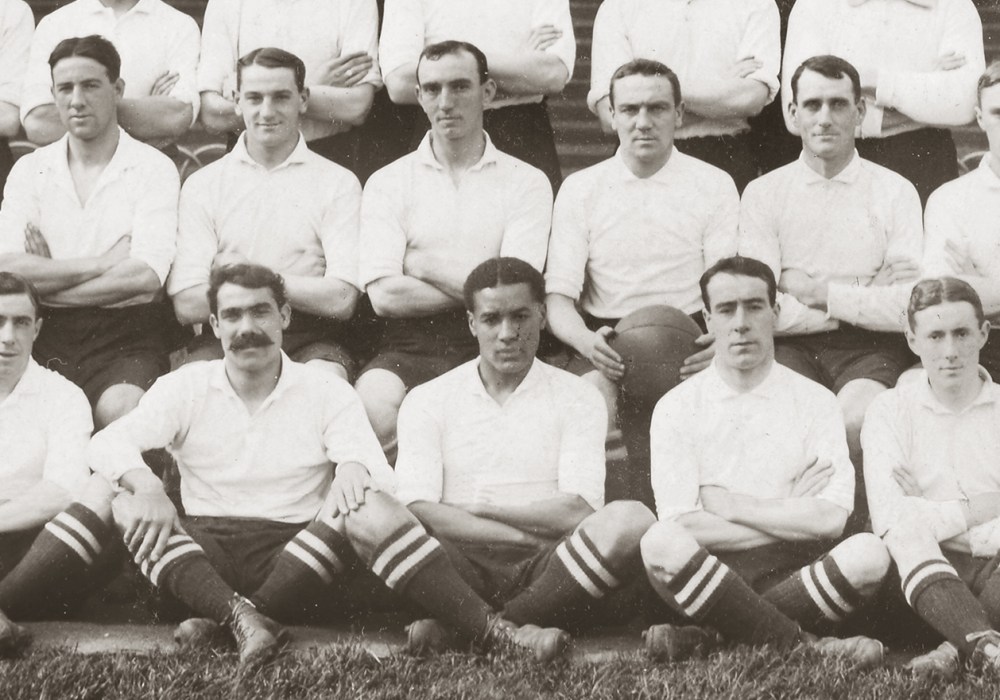
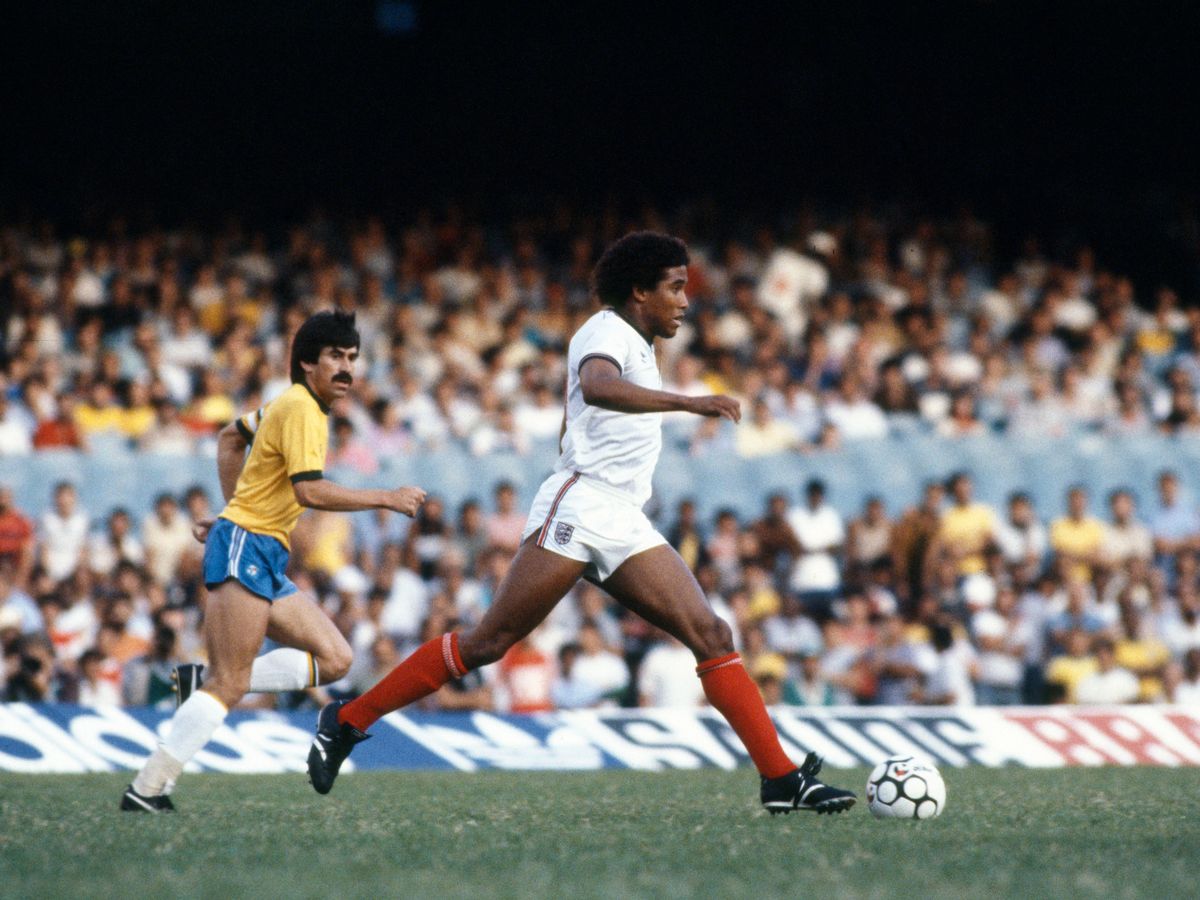


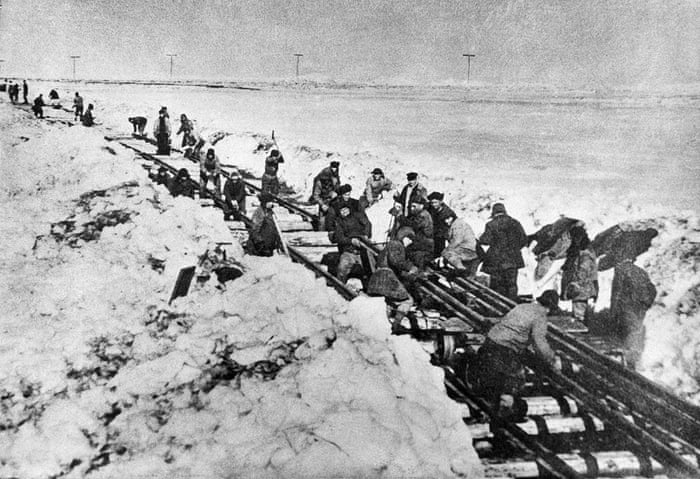


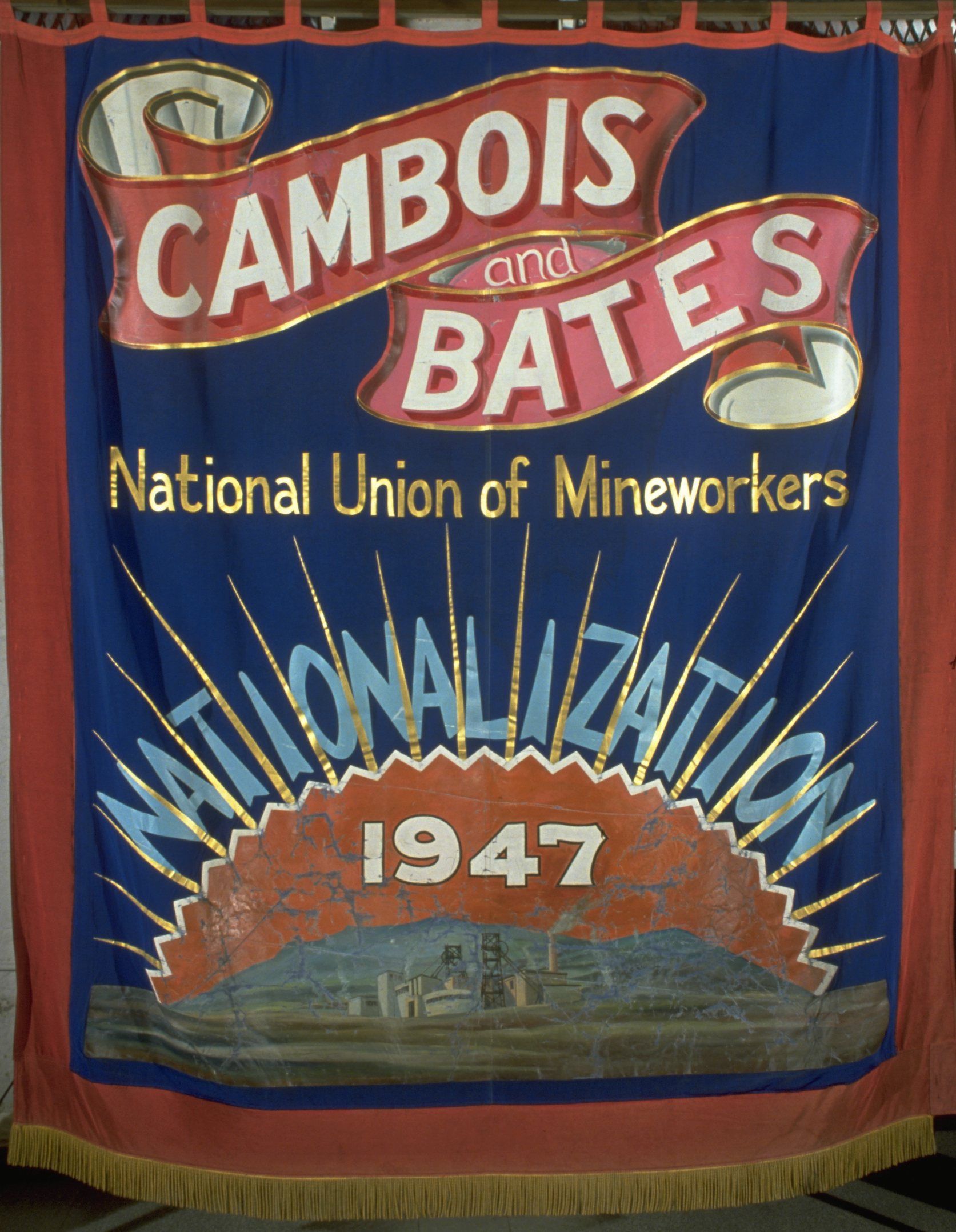
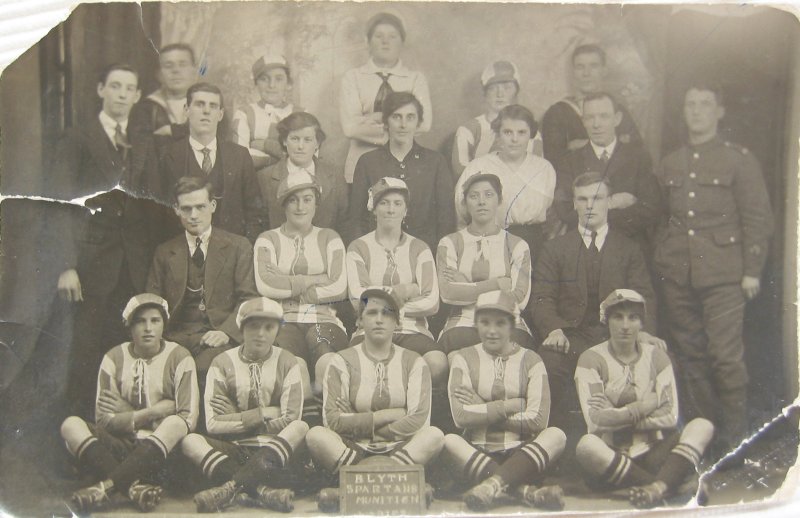
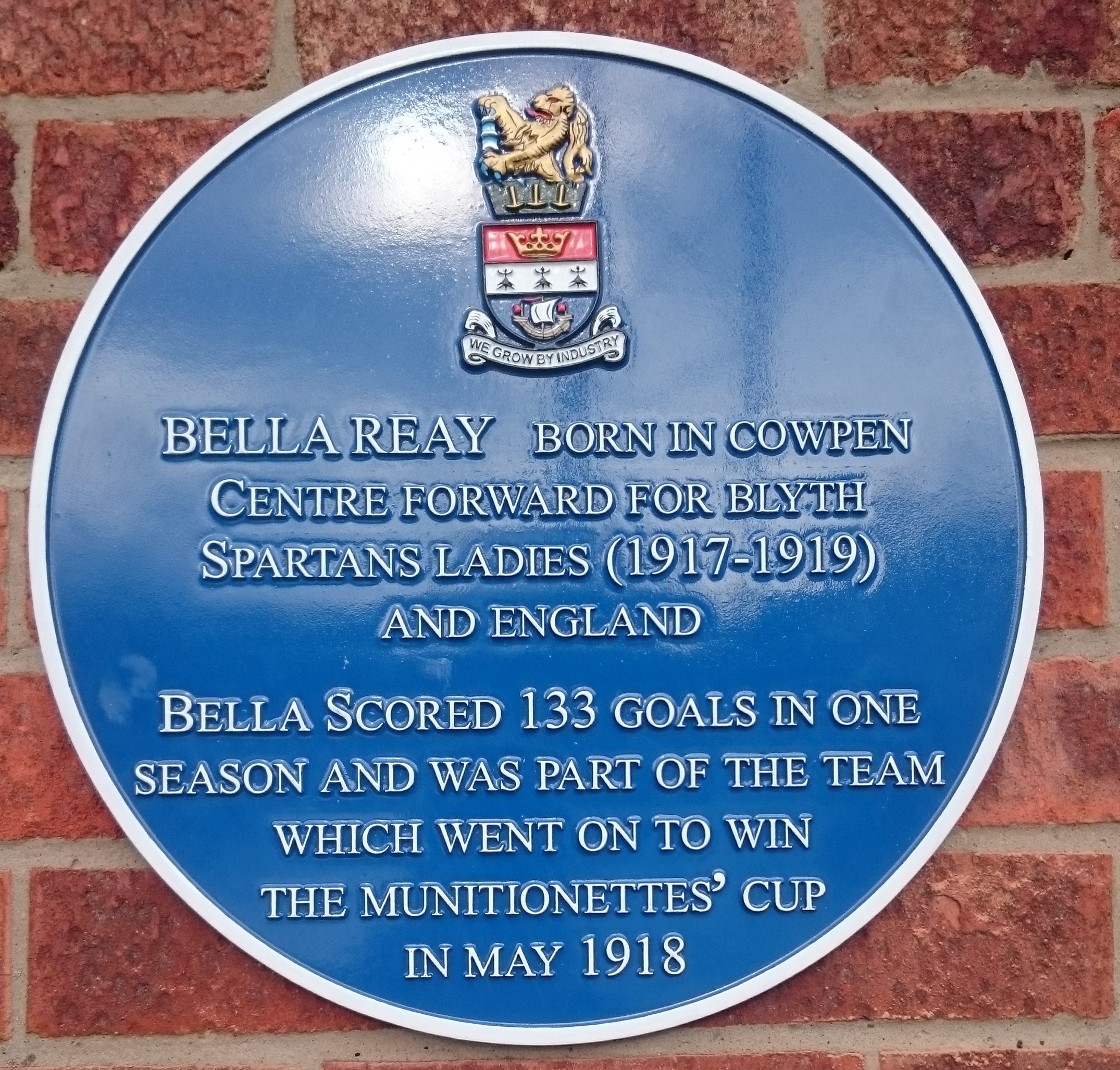
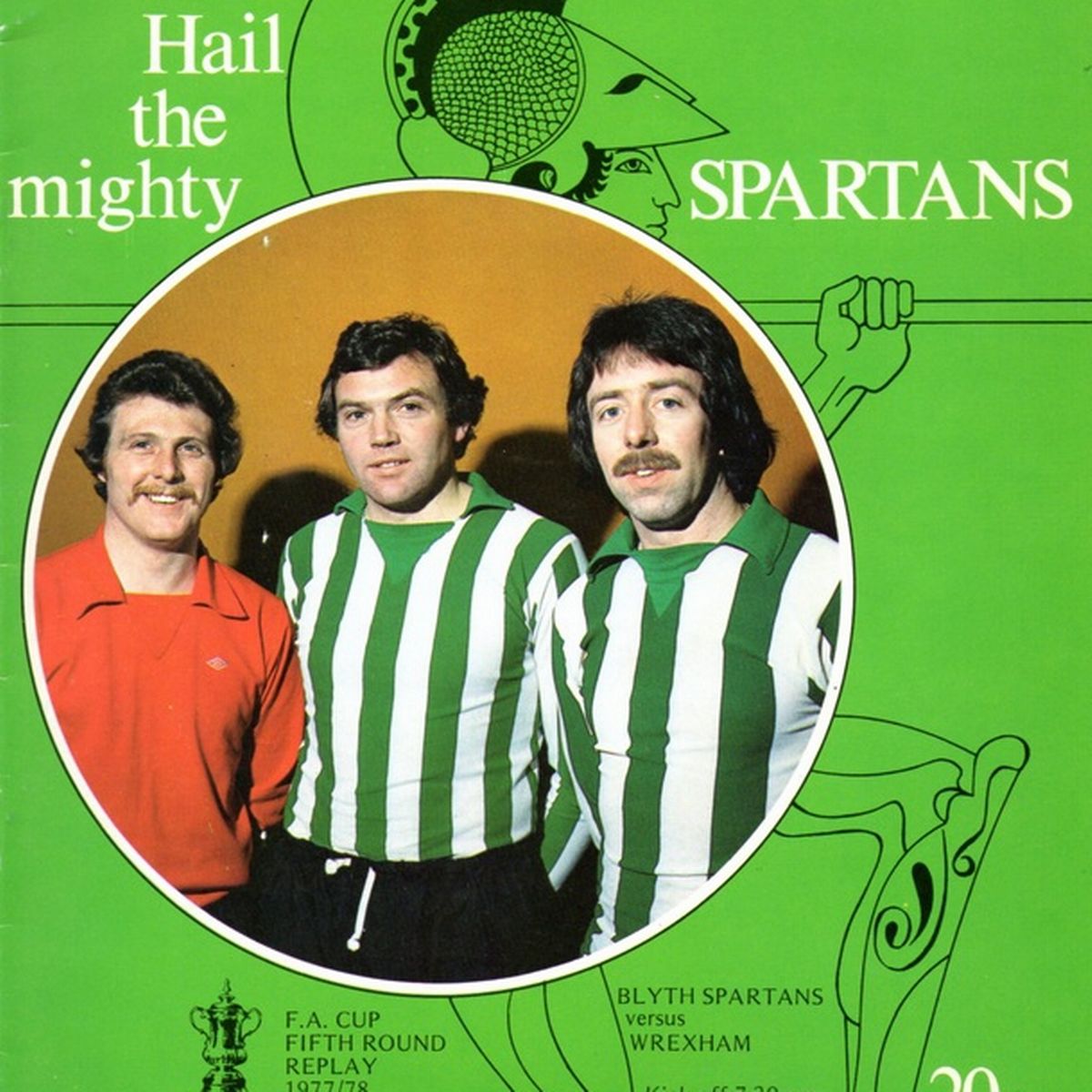
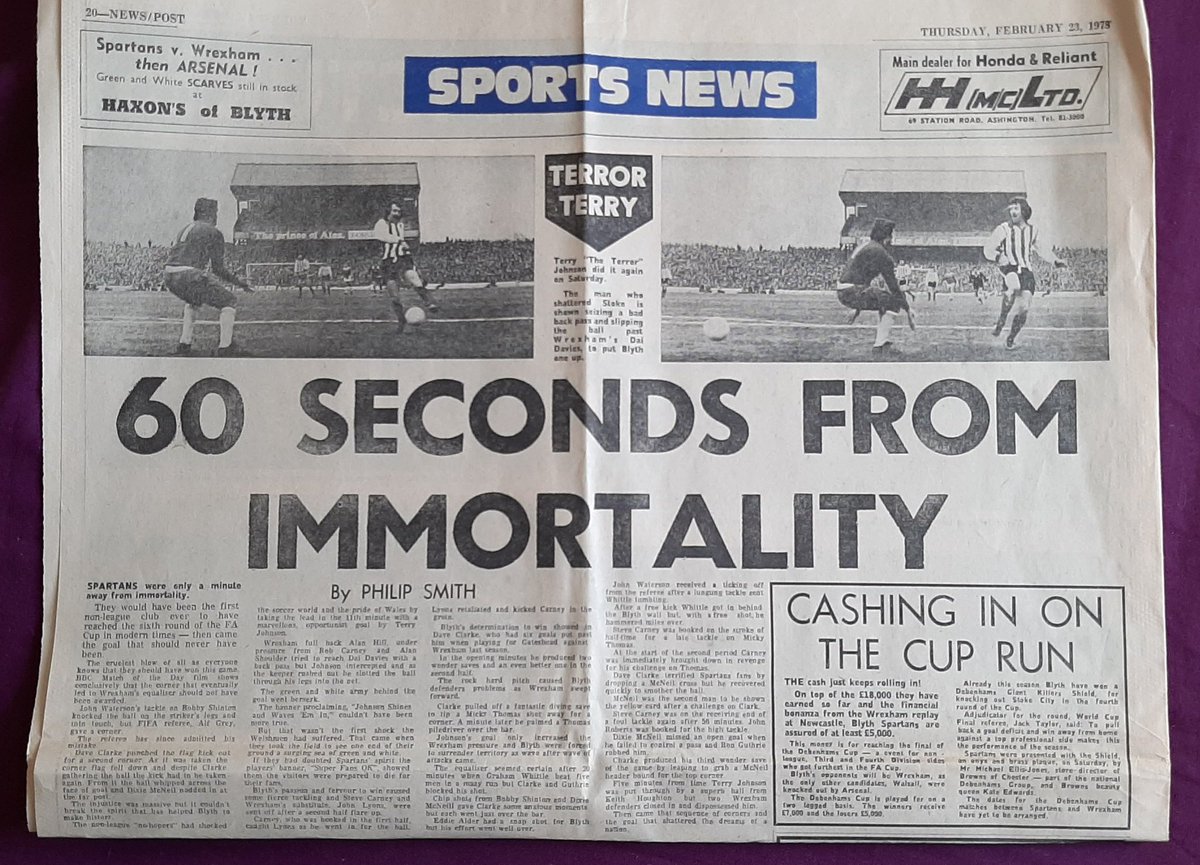

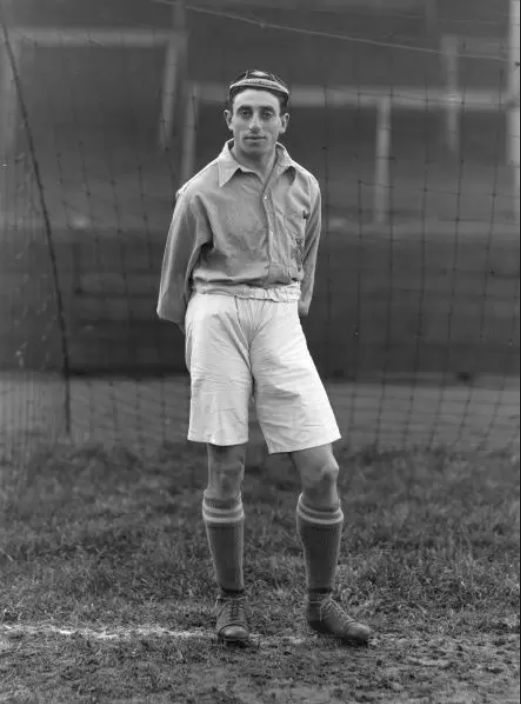


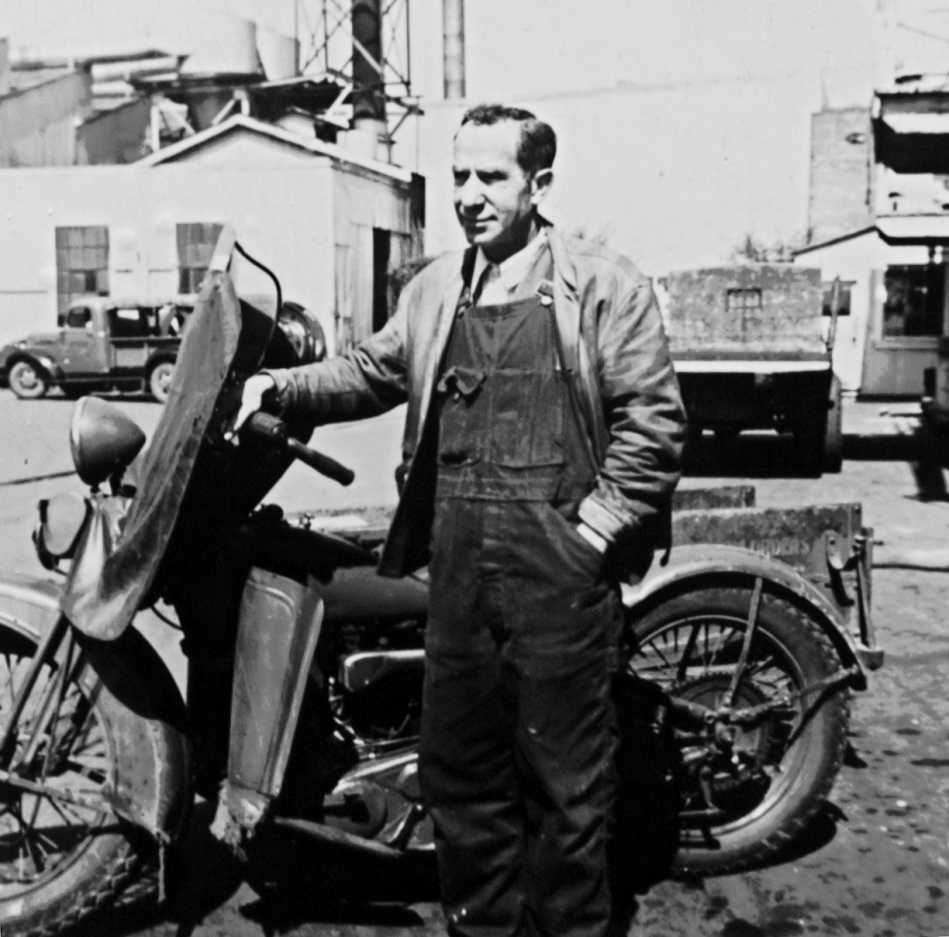

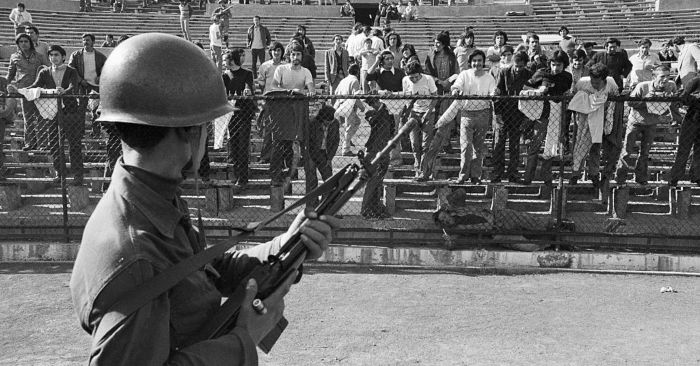
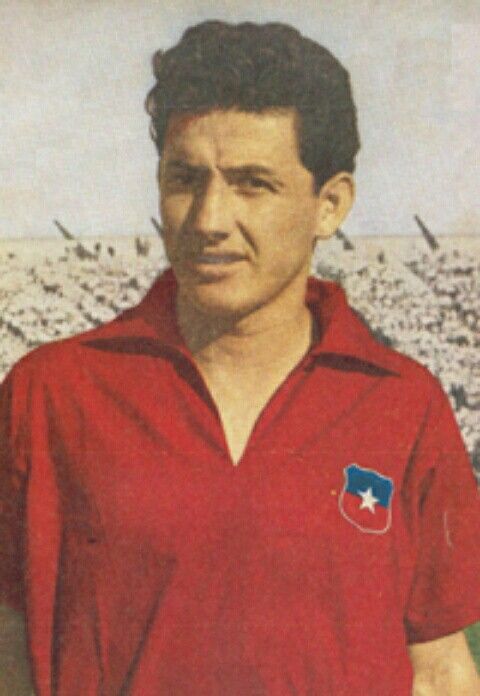



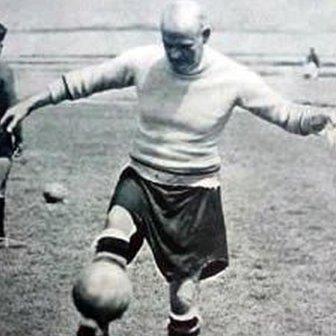
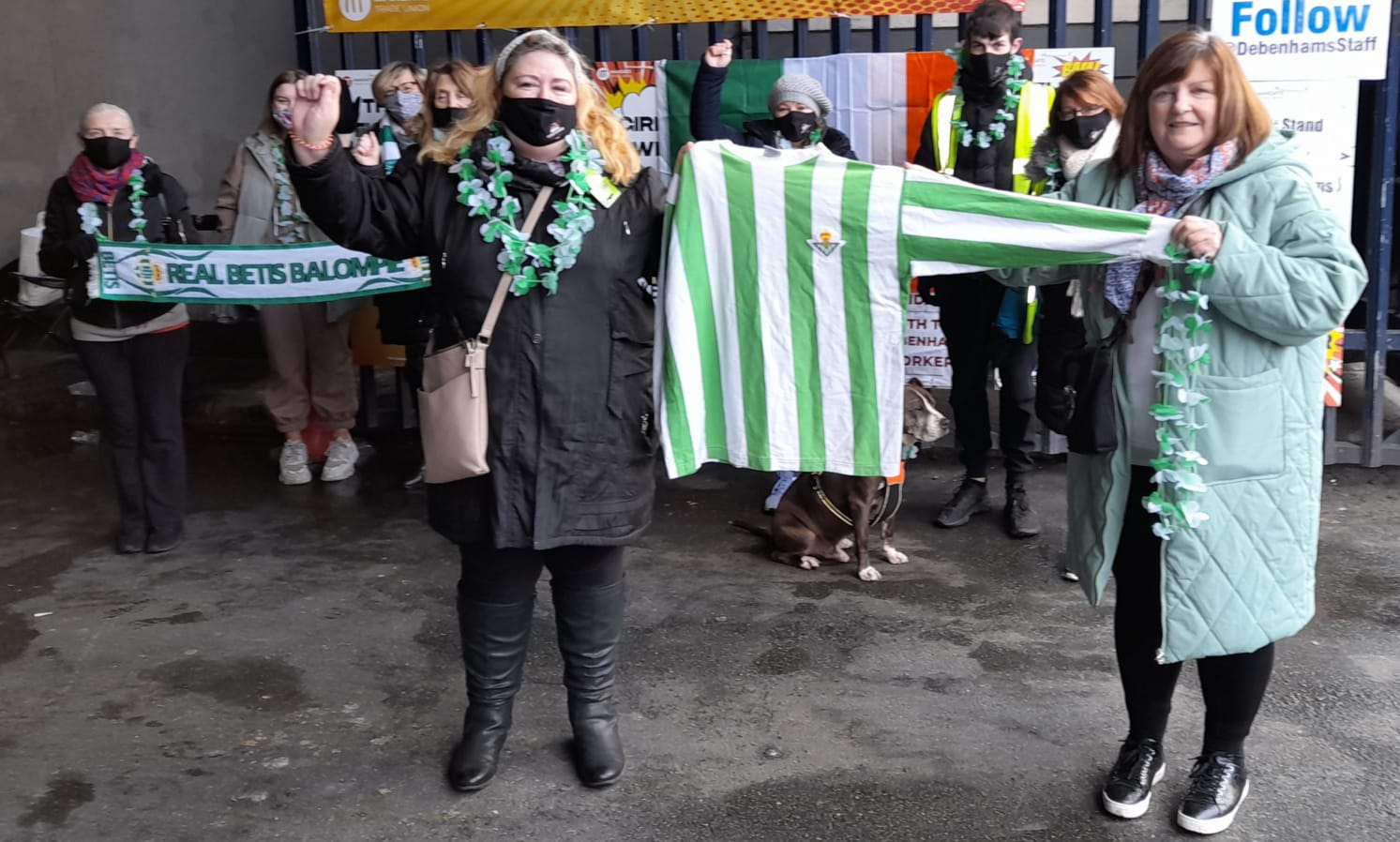


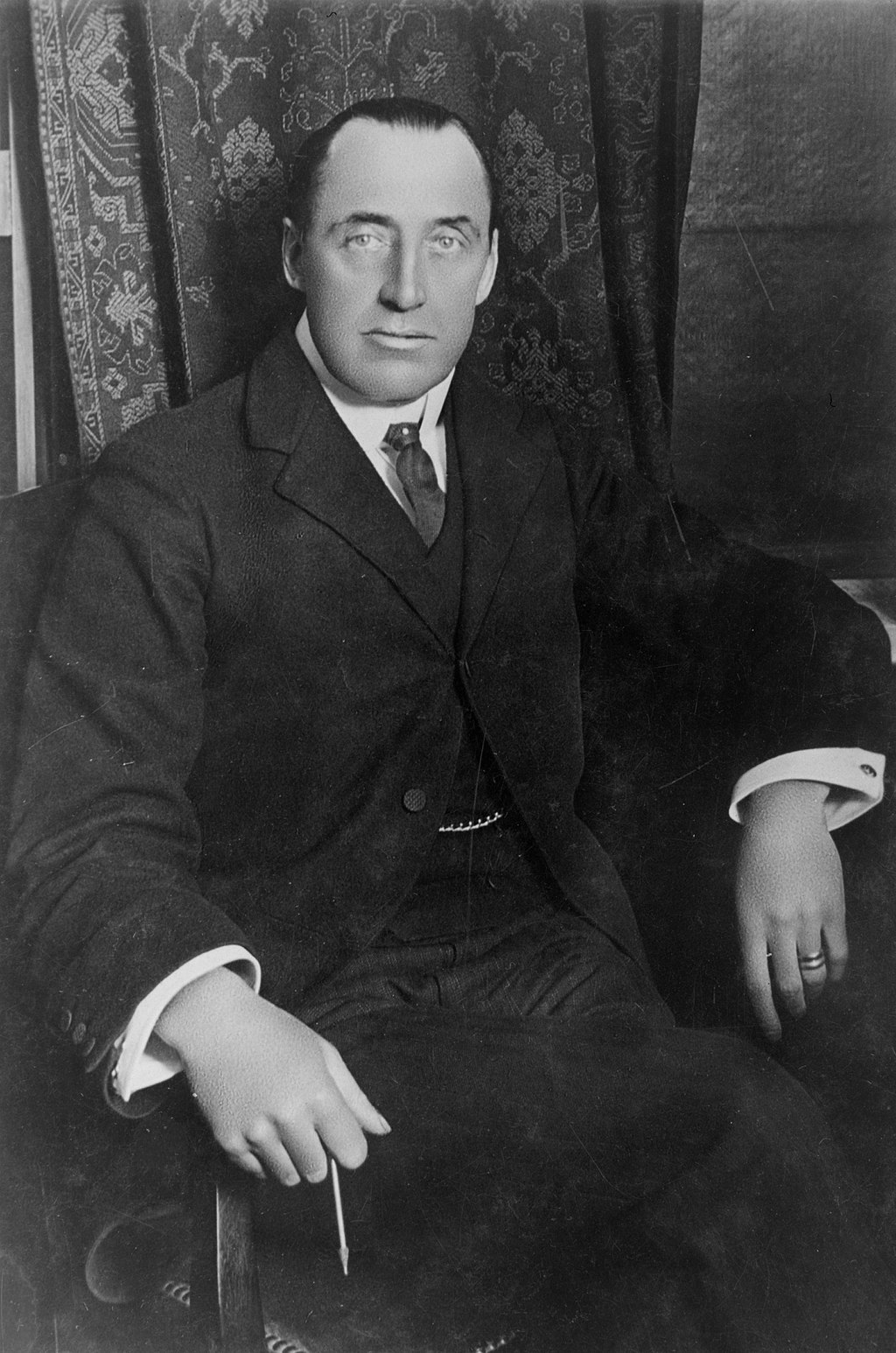
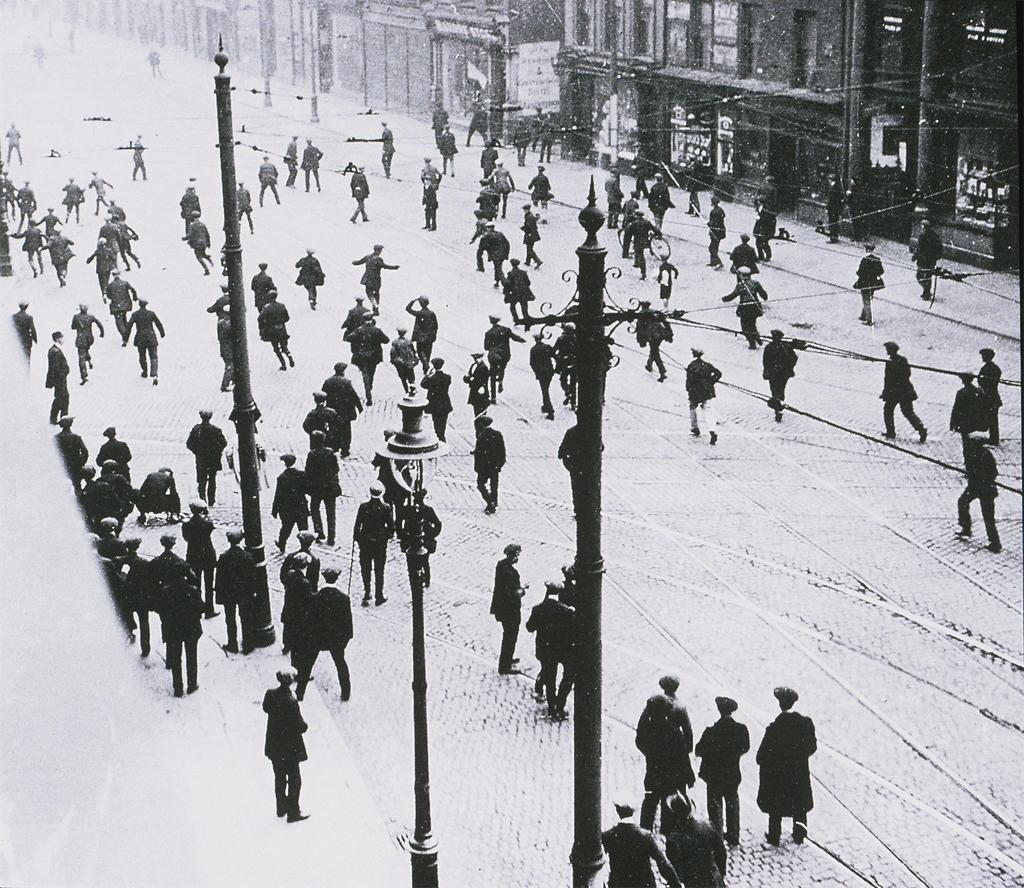

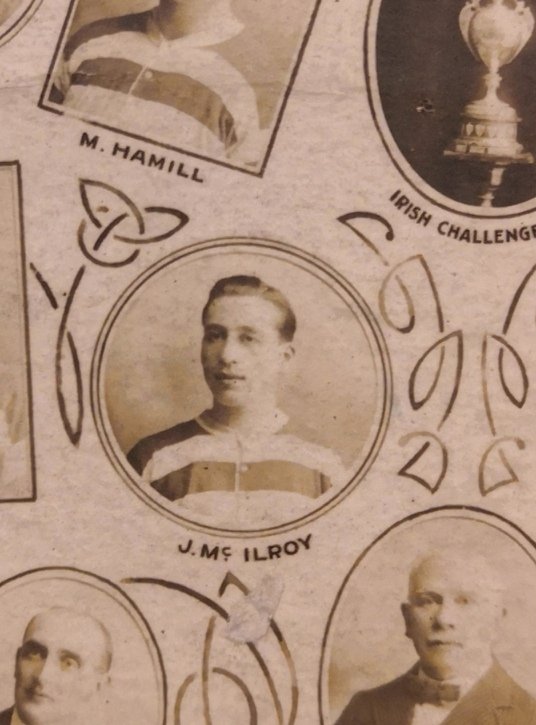


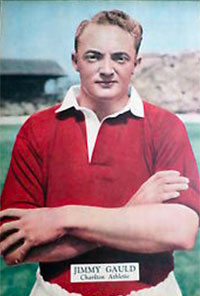

 A Bohemian Sporting Life