Mount Ararat, though it lies just inside the Turkish border, is visible from almost any location in Yerevan, the capital of Armenia. So much so that the mountain is the primary symbol of the city. It is recounted that after the great flood Noah’s ark was washed ashore atop the mountain and that Noah, while looking in the direction of Yerevan, is said to have exclaimed “Yerevats!” meaning “it appeared” which in turn gave the name of the city.
Despite having only won one league title since independence FC Ararat Yerevan, who take their name from both mountain and city, were the dominant Armenian side of the 1970s when they competed in the old Soviet Top League before the collapse of the USSR and their story is biblical in scope. In a time when the league was mostly dominated by the big clubs in Moscow, or by the likes of Dynamo Kyiv, Ararat Yerevan managed to win a league title and two Soviet Cups while making a significant impression in European competition as well.
Ararat gained huge domestic support and became something of a de facto Armenian national side and a focal point on occasion for occasional, vocal resistance to Soviet rule, their fans would sing chants like Haya-stan, hoop- tor, meaning “Come on Armenia” which would later become a chant of the Armenian independence movement. Ararat secured promotion to the Soviet Top League in 1966 where they remained a permanent fixture until the collapse of the Soviet Union.
In 1973 they shocked Soviet football by winning the League and Cup double beating Dynamo Kyiv to second place in the League and defeating the same opposition in a dramatic Cup final. Ararat were trailing 1-0 with just a couple of minutes remaining when Levon Ishtoyan, one of several Soviet internationals in the Ararat side slammed in a late equaliser. In extra time Ishtoyan grabbed a second to secure the cup for Yerevan and to send thousands of Armenians in both Luzhniki stadium in Moscow and in the capital, Yerevan into rapture. The club was unused to such success and the prevailing view was that bigger and more well-known sides were favoured ahead of smaller more “provincial” sides like Ararat.
Two years later Ararat won the cup again, another 2-1 over opposition from Ukraine, this time it was a victory over Zorya Voroshilovgrad who today are known as FC Zorya Luhansk. In achieving these triumphs Ararat had at their disposal legendary coaches such as Nikita Simonyan who starred as a striker for Spartak Moscow and also enjoyed success with them as a manager. Simonyan had Armenian heritage and had two coaching spells with Ararat as well as coaching the USSR national side on three occasions. Ararat’s second cup win was masterminded by Victor Maslov who had great success with Dynamo Kyiv and is credited by the likes of Jonathan Wilson with inventing the 4-4-2 formation.
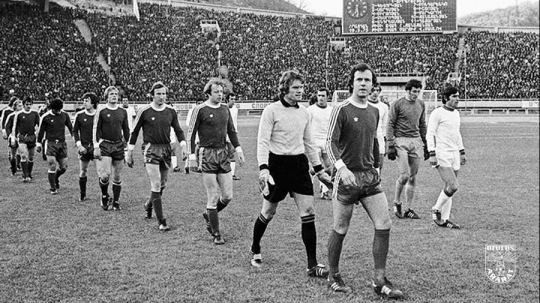
In Europe they made their mark as well, during the 1970s Ararat reached the quarter finals of all three major competitions, the UEFA Cup in 1972-73 where they knocked out EPA Larnaca and Grasshoppers of Zurich, the Cup Winners Cup in 1975-76 where West Ham eventually knocked them out, as well as the 1974-75 European Cup where Viking were dispatched 6-2 in the first round to set up a second round tie with Cork Celtic who were beaten 7-1 on aggregate. In the quarter-finals they were narrowly eliminated by eventual Champions, Bayern Munich, losing 2-0 in Germany before winning 1-0 in Yerevan in front of 70,000 fans thanks to an Arkady Andreasyan goal.
This was an Ararat side that contained some of the finest players in Armenian football history such as Andreasyan, Khoren Oganesian and Eduard Markarov who later managed both Ararat Yerevan and the Armenian national team. While Ararat would win the Armenian league title in 1993 the years since independence have been lean years compared with their 1970s heyday. The dominant side in Armenia has tended to by FC Pyunik in recent years, however it is doubtful whether any Armenian club side will reach the heights of Ararat in the 1970s or enjoy the overwhelming popular support of that era.
This article first appeared in the Ireland v Armenia match programme in 2022
‘The pride and self-respect of our country as well as our players will be on show for millions in the pre-match ceremonies at Wembley Stadium on Saturday and it is important that we present ourselves in the best way possible, in terms of both dress and conduct, on every occasion during our stay in England.’
It was April 1957 as Jack Carey uttered those words to the FAI committee ahead of two World Cup preliminary games, home and away, against England the following month. The first Irishman to lift the FA Cup as captain of Manchester United, felt it was a simple request but he considered it essential that the powers that be purchase a set of tracksuits for those who would wear the green of Éire in London.
Today, sports manufacturers fall over themselves to provide football teams with clothing from polo shirts to the neck-warming ‘snood’, but it always wasn’t so. In the case of the FAI tracksuits were recycled on so many occasions they became undeniably shabby only six years before Carey’s words officials were forced to purchase a set in the course of a shopping expedition in downtown Helsinki ahead of a World Cup game in Finland. Unfortunately for the cash-strapped FAI these items of unexpected expenditure were impounded by customs and excise on the team’s return to Dublin, it took government intervention to release the tracksuits without charge. The cost for a set of tracksuits for the English adventure amounted to less than £50 but the word ‘tracksuit’ had left a bitter taste.
In 1946 Carey captained Éire against England at Dalymount Park after an interval of thirty-four years the English FA had agreed to send a team to Dublin. It included Wilf Mannion, Raich Carter, Tommy Lawton and Frank Swift in goals, names that rolled off the tongue easily, Stanley Matthews had also been selected but had to bow out through injury and was replaced by a young Tom Finney. Alongside Carey the Irish lineup included Cornelius (Con) Martin, Tommy Eglington, Alexander Stevenson, Billy Gorman and Bud Aherne.
Ireland v England 1946
Carey, Gorman and Aherne had lined up for the Irish FA in Belfast only two days previously against the same opposition with Mannion finding the net three times with the ‘Special Victory Ball’ supplied by The Athletic Stores of Wellington Place, Belfast as England ran out 7-2 winners. Wilf Mannion became the first debutant for England to score a hat-trick since George Mills in October 1937, only the eleventh player ever to achieve this feat.
Ahead of this meeting in Belfast the English FA had written to the Irish FA requesting an assurance that only players born in the North of Ireland would play, it was an era when men from the four corners of Ireland represented both entities on the football pitch. At the Liverpool Conference of 1923 the IFA was given international status and the Éire Association (FAI) dominion status. Under this agreement the IFA had the right to select any Irish-born player attached to an English or Scottish club and the Eire Association was only permitted to call upon Éire-born players.
Ireland team in Goodison Park 1949
In the press box in Dalymount Park the Fleet Street scribes who had taken the boat to Dublin reported: “In Dublin, the first-ever meeting between the two nations was played in persistent drizzle and the difficult pitch made life awkward for the players. Throughout the match, the Republic put up a terrific fight and made the England team fight all the way to gain their eventual undeserved win. Indeed, had it not been for the fact that Frank Swift was in inspired form, then the visitors could have been well beaten. With only nine minutes remaining England stole victory with a fine goal. Langton gave Mannion a through pass down the left. The ‘Boro man cut in and unleashed an angled shot which Breen could only parry. The ball ran loose and Finney dashed in to slot it home. England had won by the skin of their teeth.”
Before William E. Webb of Glasgow had blown the whistle to get formalities underway, Dr W.F. Hooper, president of the FAI, handed to the chairman of the FA, Mr W. Brooke-Hurst, a silver cup – a replica of the Ardagh Chalice – to commemorate the first meeting with England in the Silver Jubilee year of the Éire Association.
However, three years later Éire would have their revenge in Goodison Park, Liverpool. Carey’s team, against all the odds, recorded a gratifying two-nil victory, becoming the first foreign team to beat England on their home patch. Nine of the Irish players were with Football League clubs and two from Shamrock Rovers but all of them were born in Ireland.
On the 8th of May 1957 Jackie Carey watched his team warm up at Wembley in tracksuits, Tommy Taylor one of those who would perish in the Munich air disaster would steal the show with a hat trick, and Duncan Edwards another who would die from his injuries from the disaster also lined out for England. Both sides had defeated Denmark and only seventeen days later in the return fixture, forty-seven thousand six hundred patrons watched Ireland warm up in tracksuits. Alf Ringstead son of a jockey from the Curragh would net after three minutes following a move between Billy Whelan and Arthur Fitzsimons led to Joe Haverty crossing for Ringstead, the Dalymount roar was heard as far as the Howth pier, “little Éire” looked destined for their first World Cup in Sweden. However, with the last attack of the game came the last dramatic moment, the Preston plumber Finney set off on a mazy dribble down the right and from the byline produced a perfect centre for John Atyeo to head home.
For some, it was artistry for others heartbreak, the legendary Irish football radio commentator Philip Green summed it up by stating: ‘The pained silence here at Dalymount Park can be heard all the way back to Nelson Pillar’. There would be no Éire tracksuits at the World Cup.
Sixty years after Carey demanded tracksuits for his players fourteen Irish international female footballers hosted an extraordinary press conference in Dublin’s Liberty Hall, it was described as “a last resort” in their treatment by the Football Association of Ireland. The core issues revolved around financial payments and representation of the players, with the FAI withdrawing the previous €30 per diem payment during international camps and failing to cover the earnings lost by members of the squad who were then part-time. Players had requested their Union (PFAI) represent them in negotiations with the FAI but the association outlined they would only negotiate with the payers directly through the help of an independent mediator, leading to the PFAI describing the treatment of the Irish women’s international team as ‘a fifth class citizen’ never mind second.
One of the most astonishing revelations which came from captain Emma Byrne was that “players were forced to change in and out of team kit in airport toilets before and after away trips as the tracksuits are also worn by underage teams” – the tracksuit was back on the agenda.
The conference hit home and by April 2021 equality was the name of the game as it was announced by the FAI players representing the Republic of Ireland’s senior men’s and women’s football teams were to receive equal match fees with immediate effect. “The historic three-way agreement between the men’s and women’s squads and the FAI was brokered by FAI CEO Jonathan Hill and Ciaran Medlar, advisor to the male and female international players, alongside captains Katie McCabe and Seamus Coleman,” outlined the FAI statement. The deal would see male players reducing their fees, with the FAI matching their contribution to ensure that the pay received by the senior women’s team would be aligned with that of their male counterparts.
Only two years earlier 56-year-old Vera Pauw had arrived to take over as manager of the Irish women’s football team, capped eighty-nine times for her native Holland, Pauw had pedigree taking the Netherlands all the way to the 2009 European Championships semi-finals and South Africa to the Olympics in 2016. Her love affair with the beautiful game began like so many playing football on the streets with her brothers in Amsterdam, by the age of thirteen she was playing for the ladies’ youth team of v.v. Brederodes in Utrecht.
The Netherlands had seen women first trying to play football professionally in the 1890s, Sparta Rotterdam even tried to form their own women’s football team in 1896, but the Royal Netherlands Football Association (KNVB) banned them from doing so. The Dutch Ladies Football Association was formed in the 1950s and a women’s football league was established in 1955, which was subsequently banned by the KNVB.
Women’s football was played regionally until the 1970s when UEFA declared that all members would have to invest in women’s football. So, in 1973, the KNVB established the Hoofdklasse. The Hoofdklasse was a playoff competition between six regional champions, with the winner of the group crowned champions of the Netherlands.
The popularity of women’s football rose during the 1990s and, in an effort to stop the best Dutch players from leaving to go to countries with professional leagues, the KNVB established the Eredivisie Vrouwen in 2007. The Eredivisie formally opened on August 29, 2007, with six clubs participating in its first season: ADO Den Haag, AZ, SC Heerenveen, FC Twente, FC Utrecht and Willem II. Only four months after the FAI’s equality pay deal Ellen Fokkema made Dutch football history when she became the first woman to play for a senior men’s team in a league match.
Pauw worked her magic on the Irish women’s team leading them to a World Cup playoff meeting with Scotland at Hampden Park, pre-match Katie McCabe the Ireland captain led her side out in green tracksuits for a stroll around the famous old stadium where Baxter, Law and McGrain had sent fans home with treasured memories. It was the 11th of October 2022 and two thousand and sixteen days since the press conference in Liberty Hall and the Irish women’s football team was on the threshold of history. In the 71st minute Denise O’Sullivan from Knocknaheeny in Cork who started her career playing with the boys of Nufarm Athletic up until the age of eleven, controlled the ball with her right foot with space in midfield she got her head up to see her colleague Amber Barrett making a run through the centre, with a precision right footed pass O’Sullivan found Barrett. As a nation held its breath Barrett took the ball with her left foot leaving the whole of Scotland in her wake and with her right foot she cooly slotted the ball passed the Scottish goalkeeper.
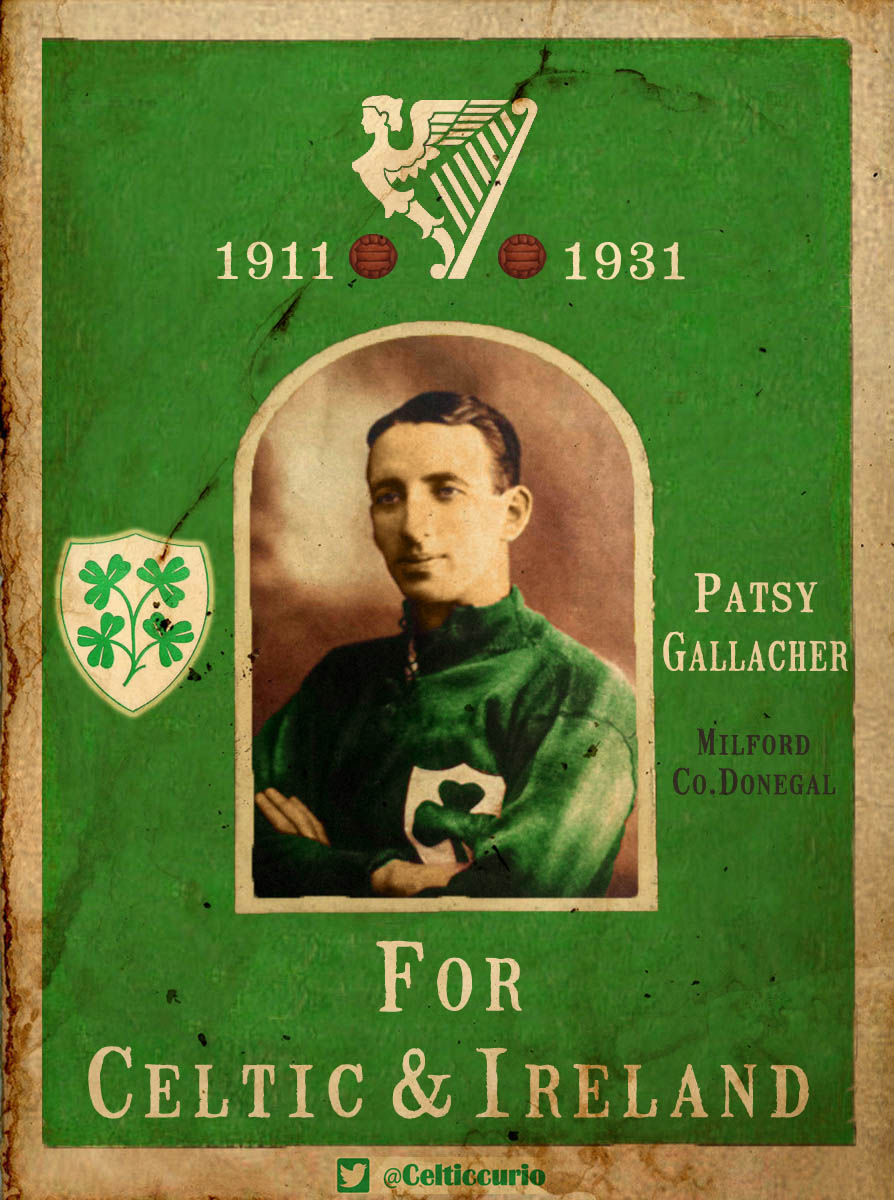
Patsy Gallagher
Amber Barrett celebrated on the same hallowed turf of Hampden Park where the ‘Mighty Atom’ Patsy Gallagher of Milford, Donegal fooled the best of defenders with his dribbling and feints winning four Scottish Cups and six league titles with Glasgow Celtic. Barrett hails from Milford, in 1891 the Poorhouse, which once stood on the outskirts of the town and saw its share of misery in the dark years of the Great Hunger, was where Patrick Gallagher was born his parents would soon leave the hills of Donegal for the shipyards of the Clyde.
In the darkness of the Glasgow night with the Hampden floodlights shining down on her, Amber Barrett kissed the black armband in memory of the ten victims of Creeslough, it was for them, it was for the community of Creeslough and the people of Donegal.
The Ireland women’s team would be part taking in their first World Cup, in her green Irish tracksuit pitchside Vera Pauw spoke to the press celebrating this historic moment with tears and mascara running down her face… Jack Carey would have been proud.
The 1930 World Cup, held in Uruguay, had been an open invitation affair. Indeed, so keen were the organisers to get nations to participate that they offered to pay for travel expenses for competing teams. Despite their generosity only four European teams could be coaxed into making the long voyage to South America and ultimately thirteen teams overall would compete in the tournament which saw the hosts crowned as victors.
Fast forward four years and things were a bit different. 32 nations expressed an interest in taking part in the 1934 World Cup which was to be held in Italy, with Ireland among them. Though, holders Uruguay, feeling snubbed by the lack of European participating in the 1930 tournament did not enter. It was decided that to whittle down numbers to a more manageable 16 teams at the tournament some form of qualifying matches had to take place.
Somewhat uneven groups were drawn, some featuring three teams, some with only two, some teams (such as Bulgaria or Turkey) withdrew from qualification or did not complete their fixtures. Even hosts Italy had to play a qualifying game – the Italians won 4-0 at San Siro, with two goals coming from Guiseppe Meazza in a stadium that would one day bare his name. The Greeks declined to play the second leg which secured Italy’s qualification.
Ireland were drawn in a group alongside Belgium and the Netherlands with the simple qualification formula that each team played against each other once and then the group winners and runners-up would qualify. The Irish must have been optimistic, they had played Belgium three times before 1934 and won all three encounters. They had only faced the Dutch once before, in 1932 in Amsterdam, but that game had ended with a 2-0 victory to the Irish.
The opening game against Belgium took place on February 25th 1934 in Dalymount Park. The new competition and qualifying format had obviously captured the imagination of the public as over 35,000 spectators crammed into the Phibsborough venue. While they may have been disappointed with the scoreline they can’t have been let down for a lack of drama. The crowd that day saw an eight goal thriller, and witnessed one of the greatest individual performances by an Irish player as Paddy Moore, then of Aberdeen, scored all four goals in in a 4-4 draw with the Belgians. After an hour of play, Ireland had been trailing 4-3 but with 15 minutes remaining Moore had grabbed the equaliser.
Paddy Moore
While Ireland may have been disappointed not to win against Belgium they knew that a victory in Amsterdam against the Dutch would secure World Cup qualification. The Dutch FA certainly weren’t taking any chances in their preparation, going so far as to ask the FAI for photos and fact-files on their main players under the premise of using this information for promotional material ahead of the game. The FAI duly obliged, with photos and details of Ireland’s star striker Paddy Moore appearing in Dutch newspapers ahead of the game.
Ireland fielded a mostly domestic based XI with Cork City’s Jim “Fox” Foley kept goal, he had just won the FAI Cup with Cork and was about to make a move to Celtic. Bohemians, who had just been on tour in the Netherlands had two players in the squad – Billy Jordan who started the game but was injured in the first half and was replaced by his club-mate Horlacher just before half-time. This meant that Horlacher made history by becoming the first substitute used by the FAI in an international match.
Just before half time Johnny Squires of Shelbourne had equalised for Ireland after Kick Smit had opened the scoring just minutes earlier. In the second half with the sides tied at 1-1, Paddy Moore scored a controversial goal just before the hour mark when he pushed the Dutch keeper Adri van Male over the goal line when he had the ball in his hands. This tactic of barging the keeper was not uncommon in Irish or British football at the time but it was not something the amateur Dutch players had experienced before. The goal was awarded much to the dismay of the record crowd of almost 40,000 packed into the Olympic stadium in Amsterdam. Ireland were now 2-1 up with just over half an hour to play. A win would have sent them to their first ever World Cup.
But it wasn’t to be. The controversial goal spurred the talented Dutch side into action, they scored four unanswered goals in 23 minutes to claim a 5-2 victory and qualify for the 1934 World Cup. Ireland’s World Cup dream was over.
A record crowd at the game in Amsterdam
This first appeared in a 2021 Irish match programme
Go stand in the members bar and look at the pitch side wall and you’ll see that a huge, framed photograph dominates the wall. It shows 25 men with four trophies seated in front of the old main stand of Dalymount. Of those 25 only twelve are the footballers of Bohemian FC, the remaining gentlemen are committee members as well as the coaching team of Bobby Parker and trainer Charlie Harris. Parker was a Scottish centre forward who went to War as the English First division’s top scorer and returned with a bullet in his back, while Harris had been a top athlete in his youth who also trained the O’Toole’s Gaelic Club and the Dublin County team on occasion.
The all-conquering Bohemian FC team
This is not only one of the greatest Bohemian teams of all time but arguably one of the greatest League of Ireland sides in history. This was a side that swept all before them, winning the League, FAI Cup, Shield and Leinster Senior Cup. Seven of that squad had, or would be, capped by Ireland while Johnny McMahon from Derry was selected by the IFA. Others, like the English born Harry Willits and Billy Dennis were selected to represent the League of Ireland on numerous occasions.
The record for that season for all competitions reads – played 36, won 29, drew 5, lost 2 – Goals for 108, goals against 35. While the team photo does show only 12 players several more were utilised during that remarkable season, however it is true to say that the team starting XI was fairly fixed and six players played in all 36 matches while goalkeeper Harry Cannon played in 35.
Among those players to feature in all 36 games were the Robinson brothers, Christy, at inside forward, and Sam at right back. Both men had been actively involved in the War of Independence, Christy being involved in the raid on Monk’s Bakery when Kevin Barry was captured, while Sam (real name Jeremiah) had been a late addition to Michael Collins’ “Squad”.
Sam almost missed the FAI Cup final when some dressing room hijinks saw a bucket of scalding water tipper over his leg after yet another victory. However, the attentions of Dr. Willie Hooper ensured that Robinson was fit and read for the final against Drumcondra. Despite Drums taking the lead Bohs never panicked and goals from Jimmy White and Billy Dennis secured the victory.
Dennis scored 26 goals in all competitions that season although with only 12 in the league he was some way behind Charlie Heineman, Fordsons’ English centre forward who topped the league scoring charts with 24 goals. In the Shield, which only consisted of eight games, Bohs won seven, only drawing once, while in the Leinster Senior Cup Shelbourne were dispatched 4-1 in a replayed final.
Ireland’s only international that season was in Liège against Belgium, where an Irish side featuring Bohemians Harry Cannon, Jack McCarthy as captain, Sam Robinson and Jimmy White won 4-2 with White grabbing two second half goals for Ireland. Little did they know but many of those players would be returning to Belgium the following year to enjoy more success.
There was change again in the 10-team League of Ireland as Pioneers raised a glass of squash and bid adieu after four seasons. This side, which began as a sporting branch of the Pioneer temperance movement are still around today playing in the Leinster Senior League. Pioneers place was awarded to Dundalk GNR – the GNR standing for Great Northern Railway and the team would have worn amber and black stripes rather than the more familiar white jerseys that we associate with Dundalk today. In that debut season Dundalk used no fewer than 47 different players, including many with experience in the Irish League, ultimately, they finished in 8th position.
The Dundalk team from that season
Bohemians battled it out with their Dublin rivals for the title, finishing 3rd behind defending champs Shelbourne in 2nd place and Shamrock Rovers who claimed their third title. Shorn of the goals of Billy “Juicy” Farrell, Rovers turned to the diminutive, young, striker David “Babby” Byrne who finished that season as joint top alongside Shelbourne’s Scottish striker Jock McMillan with 17 goals.
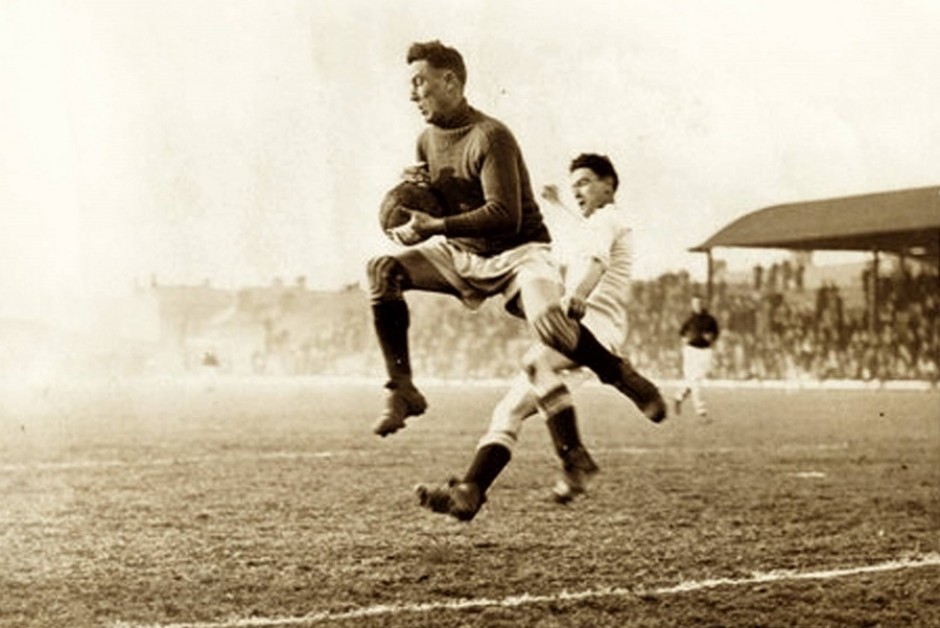
For Bohemians Dr. Jim O’Flaherty and Ernie Graham were the top marksmen but a young English forward, once of Port Vale, named Billy Dennis was also beginning to make his mark. One of the more unusual scorers for Bohs that season was goalkeeper Harry Cannon who scored his solitary goal from the penalty spot. Cannon tried the trick again on a short midseason tour undertaken by Bohs but missed in a game against London Caledonians, that match was quickly followed by another games against Tottenham Hotspur a few days later.
Harry Cannon in action
In the FAI Cup there was to be something of an upset as Leinster Senior League side Drumcondra FC, who had only been re-founded in 1924, defeated League of Ireland side Brideville in the final. Granted, Brideville had finished bottom of the league that year but they were still heavy favourites despite the fact the Drumcondra had already accounted for league sides Jacobs and Bohemians en route to the final. The match went to a replay and with the scores tied at 0-0 after the second 90 minutes extra time was played, it was former Bohemians player Johnny Murray who final grabbed the late winner and insured that Drums could bring the trophy back to their Tolka Park home.
On the international front Ireland hosted the return fixture against Italy in Lansdowne Road, again the Irish were on the losing side, but did get on the scoresheet thanks to Bob Fullam, the score finishing 2-1 to Italy but not before Fullam had come close a second time with a free kick that was struck so hard that it knocked an Italian defender unconscious.
While Bohemians finished the season empty handed an impressive squad was being developed that was on the verge of greatness that would be fully realised the following season.
My English brothers and sisters know, It’s not a case of where you go, it’s race and creed and colour. From the police cell to the deep dark grave, on the underground’s just a stop away. Don’t be too black, don’t be too gay. Just get a little duller.
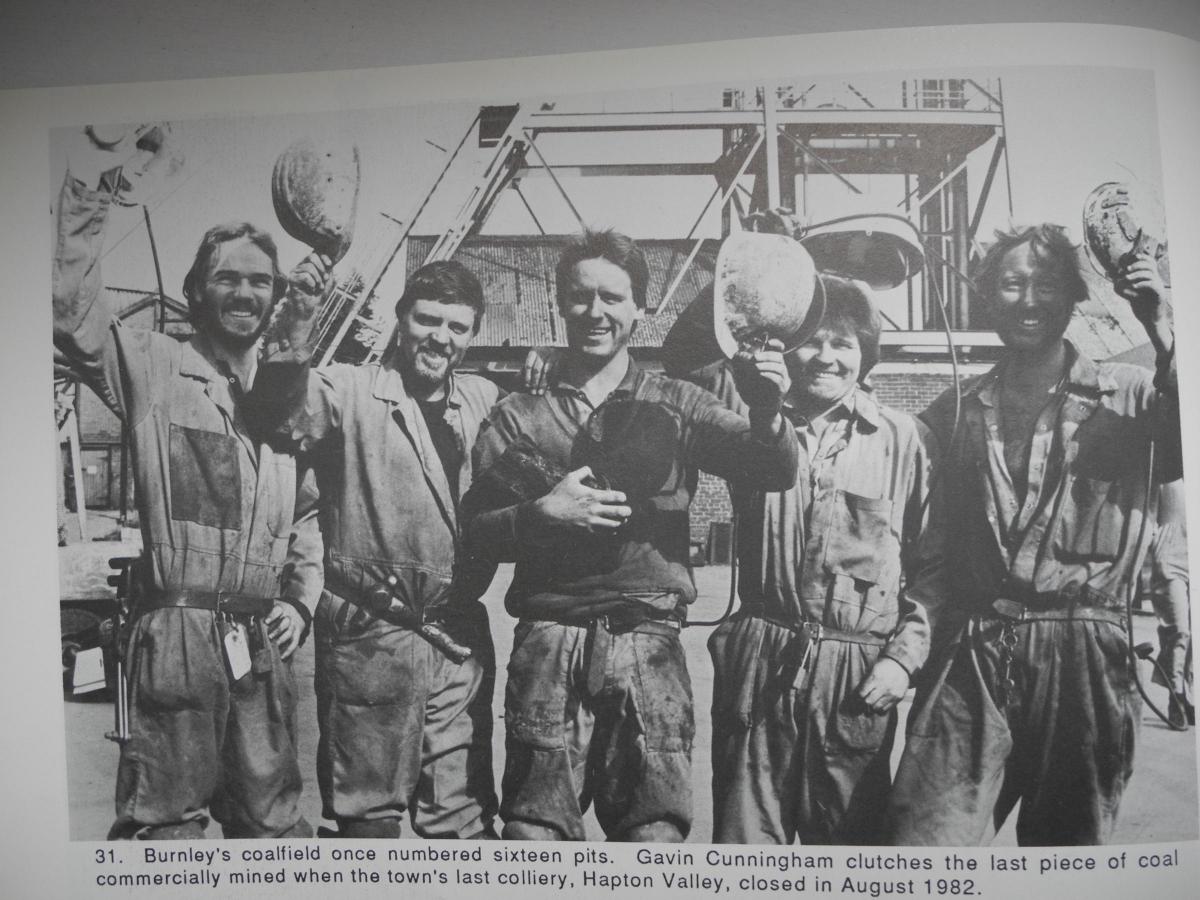
In 1960 the coal industry produced 177m tonnes of coal a year from deep mines and employed over 500,000 miners at 483 facilities. One of those coalfields was in Burnley the most northerly portion of the Lancashire coalfield, where men had been digging coal for five hundred years. By 1984 as four thousand, six hundred police officers in riot gear carrying staves twice the size of truncheons smashed ‘the enemy within’ in fields beside a Rotherham smoking plant, only one mine remained open in Burnley.
Burnley miners
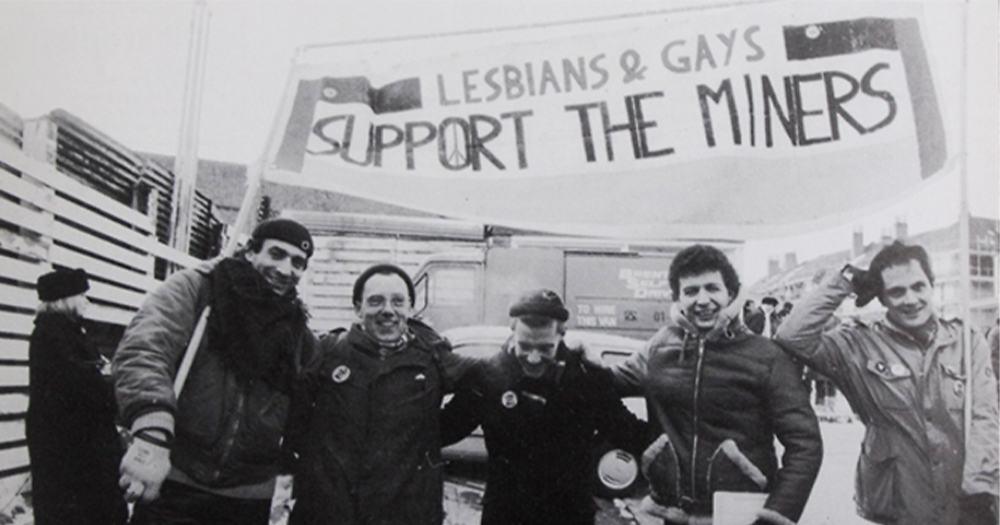
Twelve days after Orgreave two friends Mark Ashton and Mike Jackson decided to found the group London Lesbians and Gays Support the Miners (LGSM); both had Lancashire roots. While miners stood on pickets in 1984 one hundred and eight cases of HIV Aids were reported in Britain with forty six deaths – within four years Margaret Thatcher’s answer to this horrific illness was Section 28 banning the promotion of homosexuality by all local authorities in the UK – at the Conservative Party conference the so-called Iron Lady stated: ‘”Children who need to be taught to respect traditional moral values are being taught that they have an inalienable right to be gay”.
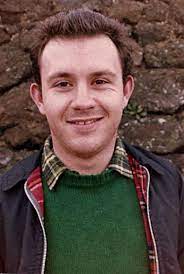
Mark Ashton was born on the 19th of May 1960 at a young age his family moved to the seaside town of Portrush in Co. Derry in Ireland. Seventeen days before his birth the great Jimmy McIlroy sat on the Burnley coach, it was the 2nd of May 1960 and the bus was parked outside Maine Road, Manchester.
Mark Ashton
With strapping on his thigh Jimmy veered and dodged that night in Moss Side; unhurried in possession and coolness personified as Burnley were crowned English First Division champions.
Sixty five thousand nine hundred and fifty nine people paid in through the turnstiles as thousands more Clarets paced up and down outside kicking every ball, listening on wirelesses. Burnley the team of quiet men had spent all of the 1959/60 season chasing Stan Cullis’ Wolverhampton Wanderers side, only five days before the Maine Road encounter they had beaten Birmingham City one nil to move up to second place behind Wolves on goal difference. The outfit that cost less than £15,000 to assemble drew their final home game against Fulham while Wolves were victorious in their final game.
As men, women and children from Burnley arrived in Manchester the league standings showed Wolves with a final total of fifty four points with Tottenham second on fifty three points. Burnley sat in third also on fifty three points with an inferior goal difference and one last game to play; the mathematics were simple for the Clarets victory was a must. Burnley made the best possible start to settle their nerves. After just four minutes, winger Pilkington cut in from the by-line and fired a powerful shot which deflected off goalkeeper Bert Trautmann and the post to hit the back of the net. However, within two minutes Manchester City were level twenty one year old Denis Law, who had joined from Huddersfield that season for a record fee of fifty three thousand pounds, miskicked the ball in the box incredibly the ball found its way to his colleague Joe Hayes who found the net to equalise. John Connolly, Burnley’s striking talisman had been forced through injury to sit out the game in his place was reserve winger Trevor Meredith, who had broken his leg earlier in the season. It was to be his night on 31 minutes, during a melee in the goalmouth; he suddenly found himself with the ball at his feet and volleyed a shot sweetly past the despairing Trautmann.
For fifty nine minutes they kept City at bay as Stan Cullis looked on from the stand as the hordes of Burnley fans broke police cordons to celebrate on the Maine Road turf with their heroes, Wolves would be denied the double. In the sanctuary of the dressing room there was no league trophy and City had to provide the champagne it was not until Jimmy and his colleagues sat on the bus that the enormity of their achievement hit home. Undoubtedly the supporter’s favourite player was the inside forward, McIlroy, dubbed by the press as the “Brain of Burnley” with his uncanny ability to unlock defences with his skilful, precision passing.
Jimmy McIlroy in action for Northern Ireland
McIlroy was born in the small village of Lambeg about an hour from Portrush, its damp climate making it the perfect location for the growth of flax and so a centre for the linen industry in the North of Ireland. Football was in the families blood with his father Harry lining out for Distillery, however, young Jimmy had his sights set on technical college. Glentoran football club of East Belfast had other ideas spotting his talent, and because his family needed the money, he took up the offer and signed for Glentoran in 1949.
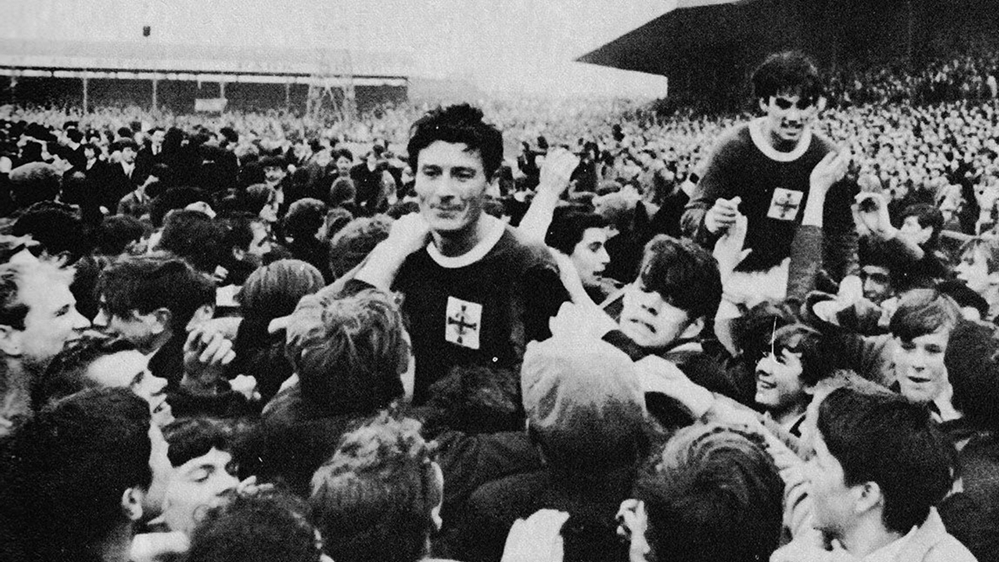
After 26 games and 9 goals at the Oval in his first season Burnley took him to Turf Moor for a paltry £8,000, and he served them for 13 years, playing 439 times in the First Division and scoring 116 goals. Aside from the First Division title win, he helped Burnley to fourth, second and third places in the league over the next three seasons, and was instrumental in getting them to the 1962 FA Cup final, which Burnley lost 3-1 to Tottenham Hotspur. Such was his status that when the footballers’ maximum wage was abolished in 1961, he became one of the first players to be paid £100 a week. If McIlroy was loved on the terraces of Turf Moor he was adored in the streets of Belfast making his international debut in 1951 in a Home International against Scotland. As part of that Northern Ireland side of the late 50s, he struck up a wonderful relationship with the equally influential Danny Blanchflower, the side’s captain and right-half. The two of them shared sensational technical skills and a sophisticated approach to the game that made them the creative force in a side which, astonishingly, beat Italy in Belfast to knock them out of the World Cup eliminators in 1958. In the cauldron of Windsor Park McIlroy opened the scoring that night in a 2-1 victory only two months earlier police had to baton charge fans after the original tie became a friendly. This was due to the Hungarian referee Istvan Zolt, manager of the Budapest Opera House being fog-bound in a London airport.
He never made it to Belfast and so the qualifying tie was moved at the behest of the Italian FA. Behind closed doors at the Old Midland Hotel a compromise was reached when the match was reduced from a World Cup-tie to a friendly and re-arranged again for January. The document was signed by Dr Barassi, Irish FA president Joseph McBride and Belfast Lord Mayor Sir Cecil McKee. Subsequently, in the 1958 World Cup finals in Sweden, McIlroy played in all Northern Ireland’s games as they reached the quarter-finals, only to be knocked out by France. By the time he finished his international career in 1965, he had won 55 caps and scored 10 goals. Back on the club front in early 1963, McIlroy fell out with the Burnley manager, Harry Potts, after which the club chairman, the abrasive Bob Lord, unexpectedly allowed him to be transferred to Second Division Stoke City for a derisory £25,000 – much to the chagrin of the Burnley fans. At Stoke, McIlroy found himself partnering the great Stanley Matthews, quickly striking up an ideal partnership and enabling Stoke to return to the First Division. He also played in the 1964 League Cup final, which they lost 4-3 to Leicester City.
McIlroy remained at Stoke until 1966, in January of that year he arrived in the town that Mark Ashton was born, becoming player/manager of Oldham Athletic. He lined out thirty eight times for the Latics scoring one league goal and as manager in 1967 he led the Boundary Park outfit to tenth place in the old Third Division, but left after a poor start to the 68/69 season. After Oldham, McIlroy returned to Stoke City as assistant manager to Tony Waddington, before taking on the same position at Bolton shortly thereafter. McIlroy became assistant manager to the great Nat Lofthouse at Bolton Wanderers.
In 1970, when Lofthouse left, McIlroy took over as manager – but departed after only two games in charge, after a row over selling players. Jimmy brought his family back to Burnley and by 1984 was working as a bricklayer while the communities around him were dying – Not long into the strike the slogan was invented, ‘close a pit, kill a community’. The miners – an all-male occupation – were powerfully backed by their wives, who saw clearly that without the pits there was little hope for their children’s future or the viability of the mining community. They set up support groups to run soup kitchens and put together food parcels for striking miner’s families, raising money from local pubs and clubs and then further afield, nationally and later internationally. In London Mark Ashton’s initial idea of a collection for striking miners at the Pride March of 1984 turned into LGSM (Lesbians & Gays Support The Miners) with the group’s headquarters at the aptly named Gay’s The Word bookshop.
LGSM group
Eleven people attended the group’s first meeting and over sixty people were involved in LGSM by the end of the strike in March 1985. LGSM built solidarity links with the South Wales mining communities of Dulais and also donated funds to the Nottinghamshire Women’s Support Group. The money raised was used to sustain striking miners and their families throughout the duration of the strike. Money was raised primarily from collections at gay pubs and clubs and on the pavement outside Gay’s The Word bookshop. The group raised over £20,000 with a benefit gig headlined by Bronski Beat raising £5,650 alone. It took place in the Electric Ballroom in London and was entitled ‘Pits and Perverts’ in response to a slanderous article by the right wing The Sun newspaper. At the event Dai Donovan a miner from the Dulais valley spoke at the event: ‘You have worn our badge, and you know what harassment means, as we do. Now we will pin your badge on us, we will support you. It won’t change overnight, but now 140,000 miners know that there are other causes and other problems.’
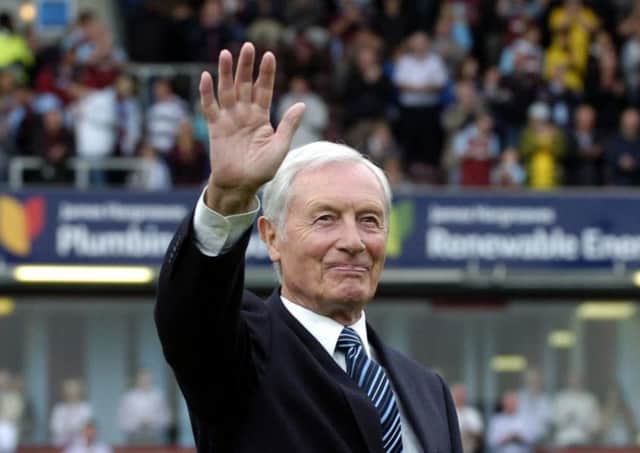
In 1999 Burnley finally honoured their greatest player when the East Stand at Turf Moor was renamed the Jimmy McIlroy Stand – ‘I now feel part of the club which I haven’t done for 30-odd years. Somehow I feel I am now back with my club.’ Jimmy told the press. By 2011 the Queen was honouring James ‘Jimmy Mac’ McIlroy as he became an MBE. On the 11th of February 1987 Mark Ashton took his final breath on this earth he was only 26; in his memory, the Mark Ashton Trust was set up to support people with HIV. On the 19th May 2017 the Irishman was honoured with a Blue Plaque at Gay’s The Word Bookshop, 66 Marchmont Street, London. Today the LGSM group fight to have Mark Ashton honoured with a Blue Plaque in Portrush, he would be the first Gay Rights activist to be honoured in this way in Northern Ireland – it seems appropriate.
The 1925-26 season was a last exit for Brooklyn as the southside club withdrew from the league, being replaced by another Dublin side, Brideville FC who were the original League of Ireland side to compete out of Richmond Park in Inchicore.
Shamrock Rovers were defending champions but there was stiff competition expected from other quarters, mainly from the Fordsons team who started the season strongly and had added Bohemians striker Dave Roberts to their ranks, as well as from Shelbourne for whom John Simpson and Fran Watters provided the bulk of the attacking talent.
Despite all the striking talent in the league in the goalscoring stakes it was once again Billy “Juicy” Farrell of Shamrock Rovers who topped the scoring charts with 24 league goals. An all-round sportsman, Farrell excelled at hockey, cricket, Gaelic football and even billiards. However, the 25-26 season would be the last one in which he would play regularly, a broken leg after a serious motorbike accident in May 1926 prematurely curtailing one of the most promising careers in the League.
For Bohemians their top scorer was the South African, Billy Otto, pressed into service more often as a centre forward after the departure of Roberts, with the likes of Dr. Jim O’Flaherty (another in a long line of Bohemian doctors), Jimmy Bermingham, and Joe Stynes (a prominent Republican during the Civil War and former Dublin county footballer) all chipping in through the season. Between the posts the Irish Army Officer, Harry Cannon had made the goalkeeper spot his own.
As mentioned Fordsons had a particularly good start to the season but it was Bohemians who became the first side to win against them in Cork, securing an impressive 2-0 win. However, this win and the two points that came with it were overturned and awarded to the Cork team after a protest that veteran Bohs player Harry Willits had been listed on a team sheet for the game as “Henry” Willits. The league committee awarding Fordsons the victory due to the mis-spelling of the name of one of the league’s best known and longest serving players.
Despite that dubious victory Fordsons would only finish 3rd in the league, Shelbourne capturing the title for the first time in their history with Simpson and Watters scoring 33 goals between them to propel them to victory. In the Cup however it was to be Fordsons year, they defeated Shamrock Rovers 3-2 in the final in front of a record crowd of 25,000 in Dalymount.
Key to their victory was their goalkeeper Billy O’Hagan, the Donegal born former IFA international saved a penalty from Bob Fullam with the scores tied at 2-2 to inspire his team onwards, and with five minutes to go Paddy Barry scored the winner to bring the cup to Leeside for the first time. Harry Buckle, (who we met in the last issue) made history by becoming the oldest player at 44 years old, to win the cup, a record that still stands to this day.
In terms of trophies Bohemians had to be content with the Leinster Senior Cup which they won 2-1 in a replayed final against Shelbourne, Dr. Jim O’Flaherty grabbing both the goals in the game played on April 19th as one of the final matches of the football season.
A month earlier the League had secured its first inter-league victory, defeating the Irish League 3-1 in a comfortable victory in Dalymount in the first ever meeting between representative teams from the island’s two leagues.
And just a week after that history was made as an Irish international side under the auspices of the FAI took to the field in Turin to face Italy. Despite a 3-0 reverse it was an important first step in world football for the national side, among the starting XI that day were Bohemians Harry Cannon in goal and Jack McCarthy in the defence.
Between 1864 and 1961 seventeen men were hung in Crumlin Road jail, the first four executions were carried out in a specially-built gallows in the front courtyard. On September 17th 1972 Private Frank Bell from the Wirrall, aged 18, was wounded by a single sniper shot on patrol in Ballymurphy a district of West Belfast, three days later he passed away in the Royal Victoria Hopital he was the 100th British soldier to die in the war in Ireland. In the spring of 1973 Liam Holden, also 18, became the last person in the United Kingdom to be sentenced to hang for the killing of Private Bell, ‘”You will suffer death in the manner authorised by law” were the judges words. Handcuffed to a prison officer Holden was escorted along the underground tunnel that led to Crumlin Road jail on the opposite side of the road. There he was taken straight to C wing – to the condemned man’s cell. A fortnight previous William Whitelaw, the first Secretary of State of Northern Ireland, had pardoned Albert Browne a UDA member from hanging following the shooting of an RUC officer in October 1972. Liam Holden didn’t hang his sentence was commuted to life imprisonment, and shortly after capital punishment was abolished in Northern Ireland bringing it in line with the rest of the United Kingdom – Holden would have his murder conviction quashed four decades later by the court of appeal in Belfast.
That same spring 1973 a tall sparse figure stood at the door of a London hotel room heart beating, palms sweating, full of nervous tension as he knocked on the door. Alexander Derek Dougan from the staunchly Protestant heartland of Newtownards in East Belfast, was born at 41 Susan Street in the shadow of Harland and Wolf where his father worked as a boilermaker; he was capped 43 times and captain of his country Northern Ireland.
He had been the youngest member of the 1958 World Cup squad and was presented with a gold watch as Ulstermen descended on Sweden for the teams first finals. The Doog though stood for more than simple ball-kicking, he was the proud owner of human sentience, a majestic temper, venomous tongue and a fearless spirit – that same year of ’73 he had instigated the PFA awards. Dougan had never respected convention, he was Britain’s first football mod skinhead; he had walked into a Blackburn hairdressers in 1959 and had his head fully shaved. As Dougan entered the hotel room in England’s capital his body language was palpable history in the making was in the air, across the room sat two men Harry Cavan IFA President and Secretary Billy Drennan. Dougan took a seat and outlined to the blazers about two phone calls and the idea of an All-Ireland XI to face world champions Brazil in Dublin… speaking about leadership, healing divisions and building bridges he was faced with deathly silence…
Harry Cavan informed Dougan tersely that he would put the matter to the IFA. Billy Drennan, much more enthusiastic, told his captain that he would keep him posted about developments. Neither would ever speak to Dougan again.
The Northern Ireland team were gathered in London en route to play Cyprus for a World Cup qualifier;
Dougan was plying his trade with Wolverhampton Wanderers in the top division in England – John Giles and Liam Touhy felt he was the man to help knit things together between Northern and Southern players. Giles still then the general of Don Revie’s midfield at Leeds United was soon to take over as manager of the Republic of Ireland – he would pick up his phone in Yorkshire and speak candidly and passionately about the idea to Dougan. The second phone call came from Giles brother-in-law Louis Kilcoyne who had lobbied Jao Havelange, Brazil’s FA President, a man ambitously interested in unseating England’s Stanley Rous as head of FIFA. With elections coming in 1974 Kilcoyne felt he could deliver an FAI vote for Havelange,if he could deliver the lustre of Jairzinho and Rivelino to Lansdowne Road. That spring 1973 while Liam Holden faced the uncertainty of the gallows in Crumlin Road jail the boys from Brazil were on a 1973 European tour helping them acclimatise for the 1974 World Cup which was to be held in Germany. Havalange had agreed to the game but Brazil had two requests: firstly the game had to be played for charity and the secondly the team had to be 32-county in make up, this is why Dougan was contacted.
On the 3rd of July 1973 nine days before the local Newtownards District LOL marched on the streets of East Belfast Alexander Derek Dougan set foot on the hallowed turf of Lansdowne Road in front of 35,000 spectators. As the two teams emerged alongside the Doog was Allan Hunter, Martin O’Neill and Pat Jennings on the bench sat future Northern Ireland manager Bryan Hamilton and Brian Clough’s future right hand man at Notts Forest Liam O’Kane all had travelled south. That day the St. Patrick’s brass and reed band would strike up a nation once again.
Brazil would win out 4-3 but the Irish would hold their heads high coming back from a 4-1 deficit to narrowly lose out – Dougan would net the third with Dublin Northsiders Terry Conroy and Mick Martin also scoring. Mick Martin was the son of the great Con Martin a brilliant sportsman who had won a Leinster Senior Championship medal back in 1942 given his preference for soccer he would not receive his medal until 1972. Mick’s father was involved in the last team to be made up of Northerners and Southerners a World Cup qualifier against Wales in Wrexham for the IFA’s Ireland team, five months earlier he had scored for the FAI’s Ireland team – the year was 1950 and as attitudes hardened and FIFA’s new criteria kicked in there would be no more dual Irish internationals. Four years earlier Cornelius Joseph Martin had moved from Drumcondra to Dougan’s local club Glentoran the pride of East Belfast; CJ Martin would find digs in Ballysillan near the top of the Shankill mixing daily with both Protestant and Catholic.
Brazil v Ireland 1973
On that day in July as the game was beamed out live in Irish homes; the team that took on the best team in the world was called “Shamrock Rovers XI” there was no mention of ‘Ireland’ or ‘All-Ireland’. Harry Cavan had been busy behind the scenes speaking with Stanley Rous making sure there would be no ‘Ireland’ in the title. That evening after the game Dougan, Hunter and Craig all northern Protestants drank in Dublin’s fair city with Mick Martin, Don Givens and Terry Conroy all southern Catholics. The idea had been a great success and Dougan wrote afterwards: ‘They didn’t say it couldn’t be done, they said it shouldn’t be done. It was done and afterwards they couldn’t find any fault with it, so they said nothing.’
Ireland side of 1973 in their “Shamrock Rovers XI” jerseys
Within three months of the match taking place the two associations sat across from each other in Belfast the meeting was described as ‘lengthy and amicable’; another meeting was held in 1974. Four years later both associations went further issuing a joint statement following discussions in Dundalk about ‘the possibility of an All-Ireland Football Federation which would be responsible for football on the island’. However, the European Championships draw for 1980 would be the ruination of all the progress made the two Ireland’s would be drawn in Group One alongside England. In North London at Highbury stadium after the groups were made six Irishmen messers Brady, Jennings, Rice, O’Leary, Stapleton and Nelson sat down and faced up to a sickening and depressing reality.
For the vision he showed Derek Dougan would never play for Northern Ireland again, Cavan advised then manager Terry Neill not to pick him. There would be no second gold watch for being capped 50 times to go with the one received in 1958.
In 1997 after a near fatal heart attack Dougan ran for parliament in his local East Belfast ward running on a ticket which proposed integrated education, a referendum on the province’s political future, and peace through appreciation of difference. Among the bureaucracy and the blazers Alexander Derek Dougan nearly broke the mould.
The split from the IFA and the formation of the FAI in 1921 was an acrimonious one, and the bad blood seeped beyond our own island as the English, Scottish and Welsh football associations roundly supported their colleagues in Belfast. This placed the nascent FAI in a difficult position, it had to look further afield for opponents leading to them joining FIFA, entering a team in the 1924 Olympics and inviting clubs from the Continent to visit Ireland. They knew however that the bigger draw for the sporting public were always going to be for teams from the British associations and if a full international match couldn’t be secured, then the next best thing would be an inter-league game. With an improvement in relations with the other associations after a conference in Liverpool in 1923, this was something that for the first time seemed achieveable.
In February 1924, almost three years since the split from the FAI, an inter-league match was scheduled against the Welsh League, with the match due to take place in Dalymount Park. This was the first time since the creation of the FAI that they would have any sort of representative game. All that would be needed now was to select a team…
There was much discussion about the make-up of the team and not all Irish football supporters were happy. The newspaper letter pages at the time we’re deluged with criticisms and alternative XIs (they had to do something without Twitter) but ultimately side was picked by a Free State league selection committee and was made up of players from Bohemians, Shelbourne, Jacobs, St. James’s Gate and Shamrock Rovers. The Welsh, for their part selected four Cardiff players, three from Llanelli Town and one each from Swansea, Newport, Mid Rhondda and Pontypridd. Neither the League of Ireland team nor the Welsh side limited themselves to Irish or Welsh players only. For the Welsh League the likes of Cardiff’s English goalkeeper Herbert Kneeshaw or forward Jack Nock were selected. Similarly, the League of Ireland side featured English players, the Bohs’ forwards Harry Willitts and Dave Roberts were both born in England. Roberts had even had a brief career in the English league with the likes of Shrewsbury and Walsall.
It was quite an eclectic League of Ireland side, completing the Irish forward line alongside Willitts and Roberts were Hugh (Jimmy) Harvey, Jack (Kruger) Fagan and Christy Robinson. Harvey was a winger for Jacobs who, like Willitts had served in the British Army in World War I, he would later go on to have a career as a music hall performer and comedy actor. Robinson and Fagan, two of the younger players in the side, from Bohemians and Shamrock Rovers respectively, had both been involved with the IRA during the War of Independence.
The side was captained by Shelbourne’s Mick “Boxer” Foley (they loved a nickname back then) who was among the more experienced players on the side having been on the books of the now defunct Leeds City for almost ten years either side of the War. One player who was picked but who would have to be replaced late-on was Val Harris, at almost 40 Harris was back with Shelbourne after a distinguished career in England with Everton, however a late withdrawal saw his place taken by Bohs’ Johnny McIlroy. On the bench was Charlie Harris, the Bohemian FC trainer who also moonlighted as a trainer/physio for O’Toole’s GAC and occassionally the Dublin County GAA side, including on the infamous occassion of a match against Tipperary in Croke Park on Bloody Sunday 1920.
Teamsheet from the match programme.
The night before the game the Welsh delegation were treated to tea in Clery’s department store tearooms followed by a show across the river at the Theatre Royal.
The match itself was a success, a sizeable crowd of 15,000 generated gate receipts of £850, a record soon broken when Glasgow Celtic visited Dalymount to play the League selection later that month. The St. James Brass & Reed band provided entertainment and English referee T.G. Bryan (who would go on to referee the 1928 FA Cup final) was brought to Dublin specially for the match. The crowd were given the best possible start to proceedings when Ernie McKay of St. James’s Gate, and a worker in the GPO for his day job, open the scoring early on, McKay earned special praise for his performance in the game and was complimented for rising to the occasssion and showing leadership in midfield. For the Welsh side Jack Nock quickly equalised before Jimmy Jones of Cardiff put them in front.
Deep in the second half the Welsh did well to preserve their lead but with just 12 minutes to go Bohs striker Roberts who had been having a quiet game scored twice in quick succession to briefly give the Irish the lead. Jones however scored his second of the day which meant that this first ever representative game organised under the auspices of the FAI would end 3-3 and history was made.
Bios of the players involved:
Frank Collins: Collins had two spells with Jacobs, either side of a a short spell at Glasgow Celtic where he saw little first team action, he was restricted to just two first team appearances due to the primacy of regular Celtic custodian Charlie Shaw. While at Celtic he was capped by the IFA in a game against Scotland. He returned to Jacobs in 1922 and continued to play with them for a further ten years. The fact that Collins had played professionally in Scotland probably meant that he missed out on an appearance at the 1924 Olympics, however, he was capped by the FAI in a 3-0 win against the USA in Dalymount directly after the Olympics as well as the 1927 game against Italy.
Stephen Boyne: Boyne and his brother Eddie were both regulars for Jacobs around this time. They were from Bride Street and Stephen worked as a van driver for the Jacobs factory. He had received a significant ban in 1920 after altercations that took place during a game against Olympia.
Herbert (Bert) Kerr: Beginning as a a youth player with Drumcondra, Kerr later joined Bohemians when Drums disbanded during the First World War. Kerr represented Ireland at the 1924 Olympics and won three caps in total. He later became a club captain and a prominent member of the Bohemian FC management committee. A younger brother, Kevin Kerr, also later captained Bohemians. In 1920 he set up his own insurance and bloodstock agency. Bertie had a love of horses and Kerr and Company remain in business to this day. He purchased and sold on four horses that later won the Aintree Grand National as well as a Kentucky Derby winner. He passed away in 1973 aged 77.
Mick (Boxer) Foley: Born in Dublin in 1892 Foley made his name at Shelbourne from where he was purchased by Leeds City along with two of his teammates in 1910. Foley made more than 120 appearances over the next ten, war-interrupted years, for Leeds before the club dissolved in 1919 due to financial irregularities. Foley quickly re-signed for Shelbourne winning the IFA Cup on his return. His grandson Paul played in the League of Ireland and in Australia.
Johnny McIlroy: Another one of the veteran players in the team, McIlroy had made his name with Belfast Celtic, appearing in both the 1917 and 1918 IFA Cup finals. He featured for the Falls League XI in a friendly match against Bohemians in 1921 and was soon signed by the Dublin club for whom he would have great success, winning league titles in 1924 and 1928 as well as the 1928 FAI Cup.
Ernie McKay: The son of a Scottish soldier, McKay was born in Richmond Barracks in Templemore, Tipperary, now the Garda training college. McKay played for St. James’s Gate but did not work for Guinness, instead he spent decades working in the GPO on O’Connell Street, as a teenager he was working there as a telegram boy when the Easter Rising broke out. It was around this time that he first became involved with St. James’s Gate as a footballer. Like other members of this XI he also featured in the 1924 Olympics. McKay won the double with the Gate in the first season of the Laegue of Ireland and formed an imposing half-back line alongside Frank Heaney and Bob Carter. He later retired to Essex and was one of last surviving members of the team, passing away in his later 90s.
John (Kruger) Fagan: “Kruger” as he was known in tribute to one of the heroes of the Boer War, grew up around the Markets area of Dublin. During the 1916 Rising he assisted rebels in the Four Courts in getting to safety and arranging for a safe house. A diminutive forward at just 5’2″ Fagan became part of Shamrock Rovers famed “Four Fs” forward line alongside Bob Fullam, Billy “Juicy” Farrell and John Joe Flood. He was capped by Ireland in the 1926 game against Italy in Turin and made history when his son Fionan, who starred for Manchester City was also capped by Ireland, making them the first father and son to achieve this honour. A talented all round sportsman he won a Leinster title in handball and later worked as an assistant to the first Dáil librarian before moving to the Werburgh Street offices of the Department of social welfare.
Harry Willits: Harry Willits was born in Middlesborough in 1889 and already made a strong impression as a footballer in his teens, when he played for Middlesbrough Old Boys, Cambridge House and the famous South Bank club where a team-mate was later English international George Elliott. He moved to Ireland in 1908 to work in the Civil Service and began playing for Bohemians around this time.
He joined the British Army in late 1915 and was seriously wounded in the leg in 1916. Despite this he returned to football and was an intergral part of the Bohemian side that won the league in 1924. Even before his playing days with Bohemians finally ended, Willits became involved with the club’s Management Committee, also later the Selection Committee, and he served as Vice-President.
Dave Roberts: From the English midlands Roberts had spells at both Walsall and Shrewsbury before moving to Bohemians. He had also served briefly in the British army before his footballing career in Ireland. He was top scorer in the 1923-24 season as Bohs won the league, later moving onto Fordsons in Cork. Roberts had a wife and two children living in Birmingham at this time and in 1925 while playing in Cork he was sentenced to a month in prison for child neglect for failing to pay the Birmingham Guardians £172 for the care of the children. At the time Roberts claimed his salary was only £3 and ten shillings a week. Roberts continued with Fordsons until 1927.
Christy Robinson: Born around the markets area on Arran Street in 1902, Robinson was a skillful inside left and one of the stars of a Bohemian side which won the league in 1924 and a clean sweep of trophies in 1928. He also had spells at both Bendigo and Shelbourne. Prior to his involvement with football he had been an member of Na Fianna Éireann and later a member of the First Battalion of the Dublin Brigade during the War of Independence. During this time he was involved in the raid on Monk’s Bakery where Kevin Barry was captured. He would later name one of his son’s Kevin in his honour. He was a Captain in the Free State army until his departure from it in 1924. Robinson was another player who travelled to the 1924 Olympics and featured in a friendly match against Estonia directly after Ireland’s exit from that competition. His brother Jeremiah (Sam) would also play for Ireland and would have a successful club career alongside his brother at Bohemians before moving onto Dolphin. Christy Robinson passed away in 1954 in Dover, England. He is incorrectly listed as S. Robinson on the match programme pictured above.
Hugh James Harvey: Hugh James Harvey, was better known as Jimmy Harvey and was born in Dublin in 1897. He had been a physical instructor in the British Army during World War I and had played for Shelbourne on his return to Dublin, featuring in the 1923 FAI Cup final where Shels had surprisingly lost to Belfast side Alton United, Harvey had the unlucky distiction of being the first player to ever miss a penalty in a FAI Cup final in that game. Harvey was useful in several positions across the forward line but found a new lease of life after his sporting career. During his time as a Jacob’s player records list him as a labourer. However, his father (also Hugh) was a “Variety artist” and the younger Hugh, decided to follow his father into show businesses. He excelled as a comedian as part of a comedy troupe known as the “Happy Gang” who performed in many theatres around Dublin and was also an accomplished singer, dancer and actor.
Name a footballer who has won a cup winners medal in three different countries across three separate decades? Quite the pub quiz brain teaser but if you answered – Jimmy Delaney award yourself 5 points. Delaney the scintillating and pacey Scottish international winger, won a Scottish Cup with Celtic in 1937, the FA Cup with Manchester United in 1948 and the IFA Cup with Derry City in a twice replayed final against Glentoran in 1954. Delaney came within 12 minutes of winning a fourth cup medal, in 1956 with Cork Athletic, but fate, and Paddy Coad intervened.
With Cork leading 2-0 with 12 minutes to go (Delaney then aged 41 had put Cork ahead after 34 minutes) a tactical change by Shamrock Rovers player-manager Paddy Coad helped get them a late lifeline through Tommy Hamilton and two more goals followed between then and the final whistle to deliver the cup to Rovers. The Cork players, including their veteran player-coach Delaney were left in a state shock. Such had been their confidence one of the Cork directors had left Dalymount early to buy bottles of champagne! Delaney had his own theories as to why Cork Athletic lost the cup – mainly around the team diet. As quoted by Seán Ryan he stated that “Soup, spuds, cabbage, meat was their usual diet while I had a poached egg or something light. They ate too much but they were a grand bunch.”
Despite that down-note at the end of his career Delaney, born in Cleland near Motherwell to Patrick and Bridget in an area populated mostly by generations of Irish immigrants, enjoyed great success on the biggest stages. Signed by the legendary Celtic manager Willie Maley, Jimmy made his Celtic debut as a 19-year-old as part of a squad that included the likes of Celtic’s record goalscorer Jimmy McGrory. Delaney was a key component of a Celtic revival in the late 1930s winning two league titles and the aforementioned Scottish Cup, while thrilling crowds with his skill, pace and workrate down the touchline. A severe injury to his arm in 1939 would put him out of the game for a time but would also have likely have exempted him from military service as the Second World War broke out soon after. He did however, work in the mining industry to support the war effort while continuing to line out for Celtic in war time games.
After the hardship of War the opportunity to join fellow Scot Matt Busby at Old Trafford proved too good even for a die-hard Celt like Jimmy to resist and in 1946 he joined Manchester United and became an integral part of Busby’s first great post war team. He played an important role in the 1948 Cup Final as Manchester United, captained by Irishman Johnny Carey, defeated Blackpool. Jimmy set up the opening goal for Jack Rowley with one of his pinpoint crosses.
Just after his move to United he enjoyed one of his finest moments in a Scotland shirt, when in April 1946 he scored the only goal as Scotland defeated England in a post-war “Victory International” in front of a crowd of over 130,000 in Hampden Park. He finished his War-interrupted international career with 15 caps and six goals for Scotland, often playing in front of record-breaking crowds. He was posthumously inducted into the Scottish Football Hall of Fame in 2009
After finishing up at United aged 38 further spells with Aberdeen and Falkirk were followed by Jimmy’s Irish adventure in Derry and Cork. Football also continued in his family, his grandson was Celtic centre back John Kennedy whose career was curtailed by injury but who has since successful moved into coaching with Celtic FC.
This piece first appeared in the 2022 Ireland v Scotland match programme.






 A Bohemian Sporting Life