It’s called the World Cup for a reason

The World Cup is only in its second day but already there has been plenty of comment from people identifying as journalists about the teams that aren’t even there. This is mainly because a tidy, if ineffectual Saudi Arabian team were well beaten by Russia which prompted several of the blue-ticked Twitterati to exclaim how unfair and unjust it was that the USA, the Netherlands, Italy or Chile were not at the World Cup but that Saudi Arabia were.

This was then broadened out by other users of the social media platform to mention teams like Morocco or Iran or Tunisia. Do you see a trend here?

First of all lets point out that this is in fact a WORLD CUP, not a Europe and South American cup with a couple of others we deem worthy thrown in Cup. The first World Cup in 1930 was an open invitation competition, most European nations didn’t even bother turning up. The English national team didn’t bother entering the tournament until 1950, when they qualified they were beaten by Spain and also 1-0 by the United States thanks to a goal scored by a Haitian student in a team captained by a Scottish journeyman. But then that’s the joy of the World Cup, the underdog beating the heavily-favoured, football aristocrat.

Egypt played in the 1934 World Cup, while the Dutch East Indies (now Indonesia) played in 1938 but representatives from Africa and Asia were rare. In 1966 every team in the African confederation boycotted qualifying for the World Cup because they were offered only half a place at the World Cup. Effectively one African side would have to play-off against the winners of the Asia/Oceania group for a place in England. This boycott meant that North Korea qualified and went on to famously beat Italy 1-0 and drew with Chile which saw them through to the Quarter-finals.

In that quarter final the North Koreans took a surprise 3-0 lead before being eventually overhauled by the personal brilliance of Eusébio who scored four of the Portugal’s five goals in a memorable comeback. Eusébio was of course born in Mozambique, (still a Portuguese colony in 1966), as were team captain Mário Coluna and central defender Vincente.

Things did gradually begin to change however, the FIFA President Stanley Rous ran for re-election in 1974 but was roundly defeated by João Havelange, mainly because Havelange has actively canvassed the support of the AFC and CAF with the promises of greater access to the World Cup tournament.

Whatever one says about Havelange and his debatable legacy, he did follow through on his promise and expanded the World Cup to 24 teams in 1982. With each nation having an equal vote Rous’s reluctance to campaign, coupled with his support for keeping apartheid South Africa as a member of FIFA (he famously said if “South Africa applies segregation in soccer, that is its own concern”) meant that his Eurocentric viewpoint was never going to see him elected to another term and practically guaranteed Havelange victory. Havelange was of course later succeeded by his protege Sepp Blatter, perhaps if Stanley Rous had taken the African and Asian confederations more seriously then FIFA wouldn’t have been defined by the hyper-commercial forces that Havelange and Blatter unleashed? It’s just a thought.

’82 saw steady progress for African sides, Cameroon were unlucky to be eliminated having not lost a game, while Algeria, despite impressive performances were also knocked out after the Disgrace of Gijón when Austria and West Germany conspired to play out a mutually beneficial 1-0 win for the Germans which saw both sides progress.

Subsequent tournaments saw further progress and African and Asian sides created several stand-out performances, in my own lifetime I can think of Cameroon in 1990, Nigeria in 1994, South Korea in 2002, Ghana in 2010 as campaigns from African and Asian sides with a special resonance. South Korea got as far as the semi-finals in 2002, which helps show that a regular high standard of competition can indeed help develop football performance of a nation and indeed a Continent.

Due to a number of factors, historic, colonial and industrial among them, European nations developed a football culture, and crucially professionalised and formalised the sport early, this gave them a certain advantage that subsequent generations of men like Rous fought to preserve.

If a World Cup is to be worthy of it’s name it should of course be about crowning the greatest national side on the planet but it should also be a way to celebrate and grow the game globally. That means competitive football for teams from all corners of the world. Representation is important, younger generations seeing their nation compete, even if and when they lose have something to aspire to. Ireland enjoyed a participation boom in football after Euro 88 and Italia 90 which helped embed the sport in areas which previously might have been a cold house for the Association game. It’s also worth noting that Ireland were dismissed and even derided as England’s “B” team by sections of the football media at both tournaments. No doubt if Twitter had existed users would have bemoaned our qualification for a World Cup ahead of the likes of France or Portugal?

And finally the true mark of a great team, one who deserves to lift the World Cup is that they win games, African and Asian teams who participate this year won their qualification matches, often going through arduous groups and play-offs to get to the World Cup. Saudi Arabia finished higher than Australia, who beat Honduras in a play-off to qualify. Honduras in turn finished higher than the USA in qualifying, though you won’t hear many US pundits mention that.

If people want to see Italy or the Netherlands at the World Cup that’s understandable, but those teams also need to, you know, win matches to get there.

My United States of first ever

Back in 2000 the then Enterprise Minister Mary Harney told a gathering of the American Bar Association that Ireland was “a lot closer to Boston than Berlin”. At the time that statement provoked plenty of debate and whatever your views its accuracy it held a certain truth in the very early days of the FAI. There was certainly a greater footballing closeness with the Americans than with our near neighbours in Britain. When the Football Association of Ireland formed out of the split from the Belfast-based IFA they entered a very inhospitable footballing climate. They were no longer part of the British Championship and their requests for fixtures with neighbouring Associations were rebuffed. Looking further afield international recognition came from FIFA in 1923 and the following summer the FAI sent an amateur international side to compete in the Paris Olympics in what was to be the nascent Association’s first foray into International football.

A victory over Bulgaria in the opening round, followed by a quarter final exit after extra time to the Dutch was a credible performance for a new and poorly funded side. But there was little on the horizon in terms of a home international. Here however enter the Americans; another side who had likewise been knocked out in the Olympic quarter finals would be heading Ireland’s way shortly after.

The USA had been knocked out by eventual winners Uruguay and had taken the opportunity to play a couple of friendly games before the long journey back across the Atlantic. After defeating Poland 3-2 in Warsaw on June 10th the Americans were swiftly on a boat to Cork and then by train to Dublin to play the Irish on June 14th 1924 in Dalymount Park.

It was a game of many firsts. It was a first home match for the FAI, indeed it was the first Irish international to be held in Dublin since 1913. It was one of the first football matches to feature the playing of Amhrán na bhFiann as the national anthem (an official decision had not been made on a post-Independence anthem and other songs such as Let Erin Remember had been used before), and it recorded the first hat-trick for the young Free State side as the Irish ran out 3-1 winners.

The side that had travelled to the Olympics had been all amateur but there were to be some changes ahead of the American game. St. James’s Gate’s Charlie Dowdall for one was unavailable. He had gone to visit relatives in England on his was back from Paris!

In goal Frank Collins joined the side. Collins has spent a season as a professional with Glasgow Celtic and had already been capped by the IFA but he was back working as a baker in Dublin in 1924 and playing for his employers Jacob’s in the League of Ireland. Another who was making a debut appearance was the hat-trick hero Ned Brooks of Bohemians, like Collins he had also been previously capped by the IFA.

The USA game was to be his only appearance for Ireland which means he has an enviable goals per game ratio. He started at centre-forward which meant that Paddy Duncan of St. James’s Gate was withdrawn into the midfield which seemed to have the desired affect against the Americans. The side in this first home international was captained by Brooks’ Bohemian team-mate Bertie Kerr.

Brooks ad

Ned Brooks featuring in an advertisement

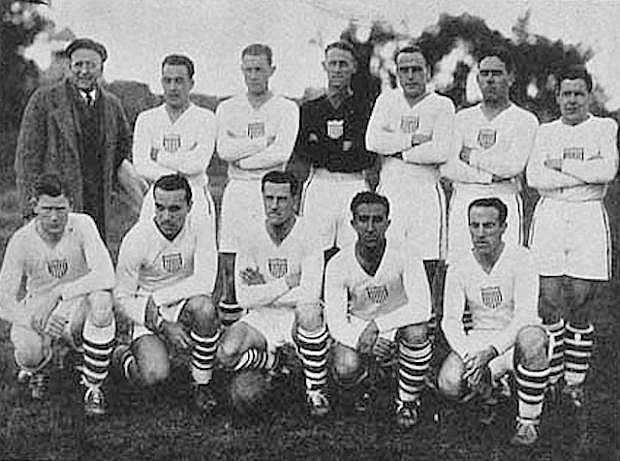
Most of the USA players were active in the American Soccer League (ASL), an early professional soccer league based mainly around the states of New York, New Jersey and Pennsylvania. Many of the participating clubs would have found similarities with the likes of Jacobs and James’s Gate as they too were works teams. The side’s star player on the day was their goalkeeper, Jimmy Douglas who would have a relatively long international career with the USA, featuring for them in the semi-final of the inaugural World Cup in 1930 (see banner pic). A goal from James Rhody of Harrison F.C. and that fine performance for Douglas in goal was as good as it got for the USA on the day.

Pathé newsreel footage of the game can be seen here.

There was also an Irish connection with the USA party, their Association President Peter J. Peel was in Dalymount Park in 1924 and it was sure to have been a familiar sight. Peel had been born in Dublin and moved to Chicago as a young man. He was a sporting all-rounder, prominent in the fields of golf and tennis in his home city. Such was his devotion to football that he was convinced that it would outstrip baseball in the competition for American sporting affections within five years. Peel obviously had the Irish gift of the gab matched with an American sense of indefatigable optimism though with the continued growth of the MLS who is to say that the predictions of a Dubliner some 94 years ago may yet come to pass?


This article first appeared in the June 2018 match programme for the Republic of Ireland v USA international friendly match.

A Bohemian life – through the eyes of Mick Morgan

As a goalkeeper little is more important that being in the right place at the right time. No one wants to be all at sea, watching helplessly as a ball arches overhead and into the goal. The ball nestling accusingly in the back of the net, the criticisms of the crowd ringing in a ‘keeper’s ears, whether its his fault or not the keeper bears the brunt. However, when you’re in the right place at the right time, the slightest tip of a gloved finger sending the ball over the bar and away from danger the keeper becomes the hero, the last line of defence, the glory, fleetingly, is theirs.

At Bohemians we pride ourselves on being a bit different, the clue is in the name. In the reductive dictionary description a Bohemian (noun) is described as a “socially unconventional person”. Through this blog I’ve tried at times to demonstrate this unconventionality through the stories of some significant individuals from the past. And surely the most Bohemian, most unconventional of players is the goalkeeper? Jonathan Wilson in his wonderful examination of the goalkeeper’s lot named his book The Outsider, taking inspiration not only from the keeper’s role on the pitch but from the title of the Albert Camus’ novel. Camus grew up in North Africa, the son of a Spanish mother and a French father and was himself a useful goalkeeper.

Bohs have been lucky over the years to have been blessed with a great array of goalkeepers, recognised not only for their sporting talents but their big personalities. We have a truly impressive collection of great “Outsiders” dating back to the likes of Jack Hehir an Irish international whose Bohs career was interrupted after a mysterious summons for an “important appointment” to the War Office in 1915 through to the likes of Mick Smyth, Mick O’Brien (of crossbar destruction fame) Dermot O’Neill, Dave Henderson, one-season-wonder Ashley Bayes, Brian Murphy and on down to present day Shane Supple. And then of course there is Mick Morgan, a man, depending on how you look at it either in the right place at the right time or the wrong place at the wrong time.

For you see you can’t really tell the story of Mick Morgan, a Bohemian F.C. goalkeeper between 1930 and 1936 without also telling the story of Harry Cannon as Mick’s fortunes were so much intertwined with the peaks and troughs of perhaps Bohemians greatest ever goalkeeper, Captain Harry Cannon. That Morgan was a talented ‘keeper and spent six years at Bohemians yet managed to make only around 50 first team appearances due to the prominence of Cannon in the Bohemian goal tells its own story. However, it was due to Cannon’s success as an all-round sportsman and administrator that presented the opportunity for Morgan to make the bulk of those appearances, including a number of games against quality European opposition.

Cannon was an Irish Army officer who made his Bohemian debut in 1924 at the age of 27 and wouldn’t make his final appearance for Bohs until after his 40th birthday. During this time he was also capped twice by Ireland, against Italy in 1926 and in a 4-2 win against Belgium in 1928 when Cannon saved a penalty. At club level he would win four league titles and two FAI Cups for the Bohs.

Being the understudy to one of the most dominant and consistent goalkeepers in the league couldn’t have been an easy task, especially at what was then an amateur club. Several men filled this role in the more than a decade of Cannon’s dominance but one of the most talented and interesting is Mick “Boysie” Morgan who got the chance to make his mark for Bohemians due to the extra-Bohemian sporting activities of Captain Cannon.

The North Circular, the Lock-out and early sporting passions

Michael Morgan was born in November 1910 to Joseph and Mary Morgan at 35 Avondale Avenue just off the North Circular Road and only a short distance from Dalymount. Both of Michael’s parents were originally from County Meath. Joseph worked as a tram conductor and was one of those transport workers who suffered the deprivations of the 1913 Dublin Lock-out before passing away in December 1916 of tuberculosis at the age of just 33. Michael’s mother Mary was greatly affected by her husband’s early death and her son was sent to live with relatives in Dunboyne.

It was while living in Dunboyne that Michael first rose to sporting prominence, somewhat surprisingly as a Meath hurler. As a 14 year old he was part of the 1924 Dunboyne team that won the Meath Junior hurling title. Included among his hurling teammates was John Oxx Senior who would go on to find greater fame as a racehorse trainer.

Mick’s time as a hurler was short lived however, he had a passion for sports beyond Gaelic Games and fell foul of the infamous GAA Rule 27 which prohibited the playing or watching of “foreign games” like rugby, association football, cricket and hockey. By 1929 when Mick would have been 19 he was double jobbing as a hurler for Dunboyne while playing in goal for Leinster Senior League side Strandville F.C.

Strandville took their name from Strandville Avenue off Dublin’s North Strand and were a team of some prominence. For example Oscar Traynor who achieved fame and on-field success as a goalkeeper for Belfast Celtic had played for Strandville pre-1910. Traynor  became a prominent Republican during the War of Independence as a Brigadier in the Dublin Brigade of the IRA. He would later become a government Minister and was President of the FAI for almost thirty years until he passed away in 1977.

Morgan developed a sufficient profile for Strandville to be signed up by Bohemians, joining the club in March of 1930. According to his son, also Michae,l his signing for Bohs was somewhat fortuitous. As an ambitious young keeper, always eager to improve aspects of his game Mick Morgan used to go to the Connaught Street entrance mid-week to watch Bohemians train. He was there so often that one of the officials asked him what he was doing. Mick simply told them he wanted to watch and learn because he was a football player and that he already played in goal. On one of these mid-week visits Bohs were short a goalkeeper and the trainer asked Mick to fill in and he obviously impressed enough that he was asked if he wanted to join the club.

By this stage however, his GAA career was over. Displeased by the Associations attitude towards his playing soccer he focused his sole sporting attentions on the “garrison game”. Even years later Morgan refused to attend GAA matches and carried a certain resentment towards the organisation due to its attitude.

Morgan had joined Bohemians at a time of success, they were league Champions for the 1929-30 season and secure as first choice keeper was Captain Harry Cannon. Like his young understudy Cannon had also started out as a GAA man, being a talented Gaelic footballer and hurler, however, like Morgan that side of his sporting life came to an end when he joined Bohemians in 1924. Due to Cannon’s prominence Morgan was confined to appearances for the Bohemian “B” selection who competed in the Leinster Senior League and also appeared in competitions like the Metropolitan Cup. Bohs were victorious in that season’s Metropolitan Cup, beating Dolphin in the final 2-0 with Mick Morgan between the sticks.

Harry Cannon

Harry Cannon in action for Bohemian F.C.

Morgan was in good company in that side, featuring alongside the likes of Paddy Andrews (a future Irish international), Christy “Dicky” Giles (father of Irish football legend Johnny Giles), as well as veteran Ireland and Bohemians player Jack McCarthy. During the 1930-31 season the Bohs “B” side also finished runners-up in the Leinster Senior League division one with Mick Morgan as their regular keeper. This good form meant that in December 1930 he was given the chance to keep goal for the Bohs first XI in a league match against Dundalk. The reason this opportunity presented itself was the death of Harry Cannon’s father, Thomas, a carpenter, at the age of 64, a few days before the game. As a mark of respect to Cannon the flags were flown at half mast and the players wore black armbands.

Morgan performed well in this debut match as Bohs ran out 3-1 winners but it was to be his only appearance that season as Harry Cannon returned swiftly as the undisputed number one. Progress was also slow the following year despite Morgan continuing to impress for the Bohs “B” side who triumphed in the Leinster Senior League and in the Intermediate Cup during the 1931-32 season. However his first team appearances were limited to two games in the League of Ireland Shield, one of which ended in a heavy 5-0 defeat to Cork F.C.

How the Los Angeles Olympics sent Mick Morgan to France

There would however be something of a bonus for Mick Morgan towards the end of the year as he was chosen to be part of the travelling party that went to Paris for a series of friendly matches. By early 1932 Harry Cannon was well into his work in preparation for the Los Angeles Olympics taking place later that summer. Through his involvement with the Army Athletics Association and subsequently the Irish Amateur Boxing Association (IABA) he had demonstrated himself to be an able administrator. By the end of 1931 Cannon had found himself the Secretary of a Irish Olympic committee alongside Henry Brennan (Irish Amateur Swimming Association) as Treasurer and the infamous Eoin O’Duffy, Garda Commissioner, sports enthusiast, and future ally of Francisco Franco, as its President.

Cannon as secretary was heavily involved in the detailed preparation for the Los Angelus games and by June of 1932, as Tom Hunt has noted, Harry Cannon was “given an additional responsibility when he was appointed Chef de Mission of the Irish team. As such, he was effectively the team manager in Los Angeles and brought the experience of a still active competitive sportsman to the post for the only occasion in Irish Olympic history”. The Games were to go down in history as one of Ireland’s most successful with both Bob Tisdall (400 meter hurdles) and Dr. Pat O’Callaghan (Men’s hammer) winning gold on the same day, 1st August 1932.

These commitments prevented Cannon from travelling for the end of season tour to France in May of 1932 and gave Mick Morgan his opportunity to shine. Bohs took part in two scheduled games in France in what was an interesting time for football in that nation. The French league had up until that point been an amateur one but the upcoming 1932-33 season was to be professional with the 20 team league broken into two groups of ten with the winners of each group playing off in a final for the title. The ultimate winners would be Olympique Lillois who have since merged with another club to form Lille OSC that we know today.

In this context it is interesting that two of these newly professional clubs chose to play matches against Bohemians as preparation ahead of that first professional campaign. The two sides in question were Cercle Athlétique de Paris (CA Paris) and Club Français, both of whom used the Stade Buffalo in the suburb of Montrouge, Antony in Paris. The stadium got its somewhat unusual name due to the fact that an early incarnation of the ground had hosted the Wild West shows of Buffalo Bill Cody, and it would be here that Bohs would play both matches.

Both French sides had a certain pedigree, to even be accepted to the inaugural professional Ligue 1 season they had to demonstrate that they could sign at least eight professional players and had to have performed to a certain standard in the previous seasons.  CA Paris had been champions in the amateur era in the 1926-27 season while Club Français had been runners up in 1928-29 and also won the 1931 Coupe de France. Both clubs had players of international caliber as well . Lucien Laurent, the inside right for Club Français had appeared for France in the 1930 World Cup and had scored in their win over Mexico in that competition.  He had also gotten on the score-sheet when France played England a year later in Paris where the French emerged triumphant by a 5-2 scoreline. His club mate Robert Mercier scored twice in that game and would finish the inaugural professional season of Ligue 1 as its top scorer.

Lucien_Laurent

Lucien Laurent

Louis Finot of CA Paris also featured in that surprise, first-ever win over England in 1931. Such was the joy of the players in beating the English after six previous defeats that the French players asked to keep the English jerseys as souvenirs in one of the earliest examples of shirt-swapping in football history. Finot was also highly successful in other sporting fields as a champion sprinter.

The games against the two sides were scheduled back to back for a Sunday and Monday (15th & 16th May) to coincide with the public holiday around the feast day of Pentecost which gave the competition its name, the Tournois de Pentecôte . Mick Morgan, who had never been out of the country had to collect his passport on the 12th May, catch the ferry that same day and then travel by train and boat to Paris arriving with the team on the 14th, a day before the first game.

DZOb0EjW0AEPa4C

Michael Morgan’s passport, stamped on the day he arrived in France, 14 May 1932

While this may have been a maiden voyage beyond Irish shores for Mick it was not the first time a Bohs side had traveled abroad. In 1929 Bohemians had journeyed to Belgium to take part in the Aciéries d’Angleur tournament, which also featured Standard Liege and RFC Tilleur. Bohs won both games and the tournament as well as two other friendly matches during that tour and several of the side who took part would also be part of the travelling party to France such as Billy Dennis, Johnny McMahon and Jack McCarthy. In fact McCarthy had already been to Paris as part of the Irish football team that competed in the 1924 Olympics.

It was perhaps not surprising that Bohemians should be invited to tour, the late 20’s and early 30’s was a good period for Bohs results-wise and they may have had a certain prominence after their tour to Belgium in 1929 and other high profile games against English and Scottish sides.

DZOfNn2W0AEtHLx

Team photo from the trip to France with Mick Morgan in the centre

The opening game on Sunday 15th was against CA Paris and finished as a comfortable win for Bohemians. Irish internationals Fred Horlacher and Jimmy White scoring either side of a Parisian O.G. There was a clean sheet for Mick Morgan and the rest of the Bohemian XI that day.  The following day saw the game against Club Français which presented a tougher test.  They were led by player-coach Kaj Andrup, an interesting character, who as a player represented Danish side AB as well as Hamburg SV,  and as a coach would also enjoy spells with Amiens, FC Nancy and Strasbourg later in his career. He was still living in France when the Second World War broke out and despite being a Danish citizen quickly joined up with the French army, he was later captured by the Germans, imprisoned, escaped, and went on to continue his fight as part of the French Resistance.

From the match reports that survive it is not clear if Andrup played against Bohs but he would have been on the touchline to see his charges lose out 2-1. A Billy Dennis goal and a Johnny McMahon penalty making the difference on the day.  The team that day (likely the same XI as the earlier match) was Mick Morgan; King, Jack McCarthy; Paddy O’Kane, Johnny McMahon, Doherty; Plev Ellis, Billy Dennis, Ebbs, Fred Horlacher and Jimmy White. A crowd of 6,000 spectators watched the game which was played in poor conditions due to heavy downpours of rain. Despite the journalists bemoaning the impact of the weather on the quality of football the reports suggest it was still a fiercely contested game which was full of incident.

Two wins out of two and only a single goal conceded and victory in the Tournois de Pentecote proved to be a good return for Mick Morgan in his first trip outside the country. An even more impressive return when considered that both CA Paris and Club Français were professional clubs and founding members of the first professional season of Ligue 1. CA Paris would finish their group in 5th place in that debut season while Club Français would finish in the bottom three in their group and be relegated to the second tier despite the fact that centre-forward Robert Mercier finished as the league’s top scorer.

Bohemians must have made a favourable enough impression on the French footballing public as the following season, prominent amateur French side, Stade Français (not to be confused with Club Français) traveled to Dublin to take on Bohemians in another friendly match in which Mick Morgan also featured in goal as part of a 1-1 draw.

19330417 - Bohemian Stade Francais dinner at Metropole - large group

The Bohemian F.C. and Stade Français players and their partners in formal wear at a celebratory dinner in the Metropole Hotel after their 1-1 draw.

First team action and personal tragedy

That season (1932-33) was the most successful one in terms of appearances and personal achievements for Mick Morgan. Harry Cannon’s role in the organisation of Ireland’s participation in the Olympics meant that this dominated much of his time and gave an opportunity to his young understudy. The Los Angeles Olympics ran from July 30th to August 14th and also around the same time Captain Cannon was elected to the executive board of the Federation Internationale de Boxe Amateur (FIBA), the world governing body of amateur boxing.

While Cannon’s absence may have gifted Morgan his chance it was his ability that kept him in the team. Over the course of the season Morgan made 31 first team appearances, including starting in 14 out of 18 league games. Cannon, by contrast only made 10 appearances in total after his return from the Olympics. Such was the form of young Morgan that he was even selected to keep goal for the League of Ireland XI in a match against the Welsh League. The Irish Press lauded his selection after a series of “brilliant displays” in the league, they further commented that his “rise to fame is meteoric, as he got his place on the Bohemians team due to the absence of Capt. Cannon who was in Los Angeles when the season opened. Since then Morgan has maintained his place on sheer merit”.

Morgan played with “confidence and skill” and kept a clean sheet against the Welsh League as the League of Ireland notched up a 2-0 victory in Dalymount. Inter-league games were highly prestigious affairs at the time and shouldn’t be viewed as a mere friendly. At the time international matches were far less commonplace and the so-called “Home Nations” were still refusing to play an FAI selection after their split from the IFA. Inter-league matches offered Irish footballers and the sporting public the rare chance to compete against cross-channel opposition. Morgan’s form must have been impressive enough for him to be called up ahead of any other keepers in the league.

While there was inter-league action there was also inner-city action as Mick Morgan was chosen to represent Dublin’s Northside against the Southside in a fundraising match for the construction of Christ the King church in Cabra. Morgan was part of a side that contained other Bohemians players as well as representatives of Drumcondra and somewhat confusingly Bray Unknowns players against a selection from Shamrock Rovers, Shelbourne, Dolphin F.C. and St. James’s Gate. The southsiders would win that game one nil.

One game that did see a return to the side for Harry Cannon was a Shield game early in 1933. Much as the passing off Cannon’s father Thomas had given Morgan his first team opportunity so did the sudden passing of Mick’s mother Mary mean that Cannon was recalled to the Bohs side to face St. James’s Gate. Mary Morgan was only 51 when she passed away, she was described in the language at the time as a woman who “suffered from her nerves” and when her body was spotted floating in the Royal Canal on a cold January day it was presumed that she had taken her own life.

The coroner recorded a death by “asphixiation from immersion in the Royal Canal” on her death certificate. The family history tells that there was some salacious interest in her passing from journalists but such comment never made it to print partially due to the intervention of members of the Bohemian F.C. committee.

Harry’s return and Going Dutch

Despite Mick’s personal playing success and prominence over the course of the 1932-33 season Bohs finished a disappointing 9th out of 10 teams. With the veteran Harry Cannon back for the start of the following year Morgan’s contribution to the first team was greatly diminished. In all Mick Morgan would only make seven first team appearances, all in the Shield or in the Leinster Senior Cup while Cannon starred in the League as Bohs won their fourth title.
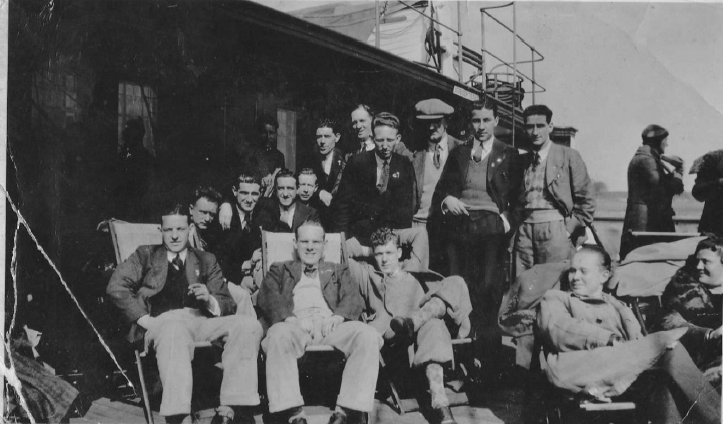
Bohemians ship to France

The Bohemian squad en route to the Netherlands

While not first choice for Bohs that season there was still the bonus of another end of season tour to the Continent and again Mick Morgan would be first choice. Perhaps this could be viewed as an early example of rotating keepers for European competition? In a later reminiscence in the Irish Independent Mick mentioned that Harry Cannon was “unable to travel” on the tour though the reason wasn’t mentioned.

The destination for this tour was the Netherlands, to compete in the Amsterdam International Tournament along with Go Ahead (now Go Ahead Eagles), Belgian side Cercle Bruges and Ajax. There are some tenuous connections between the sides; former Bohemians striker Dominic Foley ended up at Cercle Bruges in 2009 and helped them to a Belgian Cup final. With Ajax there was an early Bohs link, the first professional manager of Ajax in 1910 was Jack Kirwan an ex Irish international who had lined out for Everton and Tottenham Hotspur where he was part of the 1901 FA Cup winning side.

Kirwan took over an Ajax side in 1910 that were struggling in the 2nd tier of Dutch football but won the second division in his debut season which saw Ajax promoted to the top flight for the first time. It is even said that Kirwan was responsible for choosing the distinctive Ajax strip with its prominent central red stripe so as not to clash with the jersey of Sparta Rotterdam. With the outbreak of war on the horizon Kirwan returned to Dublin in 1914 and later became involved in coaching Bohemians before setting off again to coach Livorno in Italy in the 1920’s.

The trip to Holland wasn’t as successful as previous European outings to Belgium and France. The opening game against Go Ahead took place on 1st April 1934 and Bohs were made to look the fools, losing 6-2 against the side from Deventer. There was however a chance to improve the record the following day when Bohs faced Bruges. A comfortable 4-1 win in front of 13,000 fans in Amsterdam followed, with two goals from Billy Dennis and one each from Ray Rogers and Billy Jordan. In a somewhat unusual format, despite only having won one game each Ajax played Go Ahead in the tournament final with Ajax winning 2-0. Ajax never faced Bohemians in the tournament that they hosted.
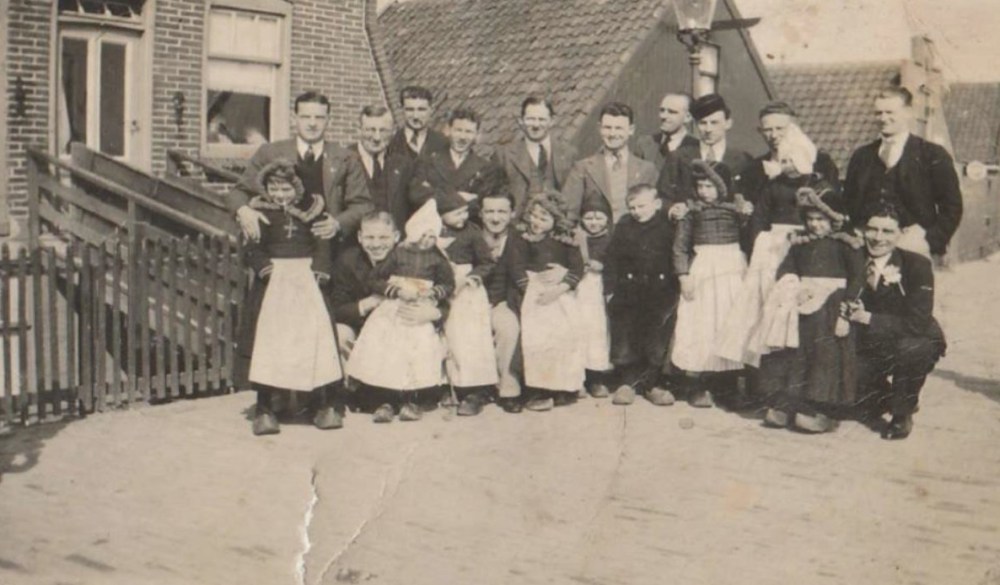
Bohemians Netherlands

The Bohemians team on their tour to the Netherlands

There was one final match as part of Bohs tour, a friendly match in the Hague against a combined XI selected from the city’s clubs.  Bohs secured a 1-1 draw with Billy Dennis on the score-sheet for the third game in a row. This game was also a historic moment for Bohemians since it was the first game the club ever played under floodlights. In three games Bohs had a win, a loss and a draw and Mick Morgan had played 90 minutes in every game. That final match against the Hague XI had taken place on April 4th and most of the Bohs team would then have headed back to Dublin although Billy Jordan and Fred Horlacher remained behind on international duty.

The Netherlands had a World Cup qualifying fixture against Ireland in Amsterdam on the 8th of April and Jordan and Horlacher had been selected as part of the squad. Those with a more cynical view might suggest that the invitation to Bohemians was in fact a bit of a scouting exercise by the Dutch? Bohs were league champions and players like Paddy O’Kane, Paddy Andrews, Fred Horlacher and Billy Jordan were all present or future Irish internationals. Indeed Horlacher had featured for Ireland in 1932 against the Netherlands, a game which Ireland had won 2-0.

The Dutch FA certainly weren’t taking any chances this time around though, going so far as to ask the FAI for photos and fact-files on their main players under the premise of using this information for promotional material ahead of the game. The FAI duly obliged, with photos and details of Ireland’s star striker Paddy Moore appearing in Dutch newspapers ahead of the game. The Dutch had good reason to fear Moore, the Aberdeen player had scored four in the previous game, a 4-4 draw with Belgium and was seen as Ireland’s main attacking threat.

In the game against the Dutch Cork City’s Jim “Fox” Foley kept goal, he had just won the FAI Cup with Cork and was about to make a move to Celtic. Among the Bohs men in the squad Billy Jordan started the game but was injured in the first half and was replaced by his club-mate Horlacher just before half-time. This Bohemian for Bohemian swap meant that Horlacher made history by becoming the first substitute used by the FAI in an international match.

With the sides tied at 1-1 Paddy Moore scored a controversial goal just before the hour mark when he pushed the Dutch keeper Adri van Male over the goal line when he had the ball in his hands. This tactic of barging the keeper was not uncommon in Irish or British football at the time and was something that Mick Morgan and Harry Cannon would have encountered regularly but it was not something the amateur Dutch players had experienced before. The goal was awarded much to the dismay of the record crowd of almost 40,000 packed into the Olympic stadium in Amsterdam. Ireland were now 2-1 up with just over half an hour to play. A win would have sent them to their first ever World Cup.

Holland 1934

A record Dutch crowd at the 5-2 game in 1934. (source http://www.geheugenvannederland.nl )

But it wasn’t to be. The controversial goal spurred the a talented Dutch side into action, they scored four unanswered goals in 23 minutes to claim a 5-2 victory and qualify for the 1934 World Cup. Ireland would just go home.

For Mick Morgan the trip to Holland would prove to be something of a final hurrah for him at Bohemians. The following season (1934-35) Harry Cannon remained firmly Bohemians’ number 1. Morgan’s only first team appearance was in a 3-2 defeat to Drumcondra in the now-defunct Dublin City Cup. Even at the “B” team level his place was under threat from other keepers like Bill Nolan and Austin Norton.

Later life and career

The following season saw Mick keeping goal for the Bohemian “C” team. Slightly later in 1936 he was also tending goal for the Hospitals’ Trust side in the Leinster Senior League and during their successful run to victory in the Metropolitan Cup in May 1936. Around this time he left Bohemians for good as a player and it seems there may have been slightly more to it than just the lack of first team action.

Mick’s son Michael says that around that time things were a bit tight financially for the family, and to help out Mick was gifted some money. Michael says that this was the result of a collection by some concerned team-mates or perhaps another explanation may have been some money paid by Hospitals’ Trust by way of an appearance fee. Somehow the Bohemian board got wind of this and cancelled Mick’s membership, perhaps seeing this as a breach of the club’s strict adherence to it’s amateur ethos? Either way it was a deeply disappointing way for Mick to end his time as a player with Bohemians.

There was a very brief return to League of Ireland action at the beginning of the 1936-37 season when he signed for Shelbourne, however Mick’s time with Shels was brief to say the least, he played a single game in the Shield as Shels lost 4-1 to Dundalk.

Mick had always previously played as an amateur prior to his spell with Shels, his day job was with CIE. As a fifteen year-old he had apprenticed as a tinsmith with CIE for a period of five years before eventually he ended up as an engineer at the works at the Broadstone depot. He also grew to be a prominent individual within the trade union movement where he became treasurer of the Irish Sheet Metal Workers Union. According to his grandson, yet another Michael, he felt uncomfortable being paid as a semi-professional at Shels and decided such a role wasn’t for him and quickly left the club. In August of 1936 he had also gotten married to Mary Flynn from East Wall and soon afterward Mick and Mary became parents, these changes in life and the greater responsibility due to his position in the union would have also placed greater demands on Mick’s time, perhaps to the detriment of his sporting career?

It wasn’t to be his last involvement with the sport however, he continued to appear for the Hospitals’ Trust in the late 1930’s before lining out for Jacob’s F.C. in the Leinster Senior League. There was a family connection, Mick’s in-laws had previously worked in the Jacob’s factory off Bishop Street and their works team were competing at a good standard. He continued to line out in goal for the Biscuitment until the early 1940’s and on one occasion at least was even selected to represent a Leinster Senior League XI.

Leinster XI 1940

Mick Morgan keeping goal for a Leinster Senior League XI in 1940

In later years Mick Morgan also ran the line at League of Ireland matches and was even linesman during some prestige friendly matches, such as the occasion in 1952 when a Bohemians XI took on Glasgow Celtic in Dalymount Park. When asked by his son what was favourite memory from his time in football, he recalled not his trips to France or the Netherlands but rather the occasion when he saved a penalty taken by Shamrock Rovers defender and Irish international William “Sacky” Glen. That precious type of moment when the ‘keeper stands apart from others and can bask in rare glory.

In his personal life Mick and Mary moved to Drimnagh shortly after their wedding (perhaps another reason for representing Jacob’s?) but couldn’t settle in the newly built, south-side suburb, and then moved back to the northside settling in St. Eithne Road in Cabra, staying in close proximity to Mick’s beloved Dalymount. Whatever the nature of his departure, from the club he had remained good friends with several of his former Bohs team-mates, especially the likes of Billy Dennis and Plev Ellis with whom he had surely whiled away hours of boredom on those boat crossings to the Continent. Mick maintained a keen interest in football generally and Bohemians in particular, he regularly attended matches in Dalymount (standing on the Connaught Street side where he had watched Bohs train as an aspiring  goalkeeper) and introduced his grandson Michael to the club as a boy. The younger Michael followed in his grandfather’s footsteps lining out as a goalkeeper for the likes of Home Farm and Tolka Rovers, he also remains a Bohs supporter to this day and was the source for much of the information and excellent photos in this article.

Mick Morgan passed away suddenly in 1979 aged just 69. In a relatively short life he had seen and achieved a great deal. His life was buffeted by the ebbs and flows of wider social change, as a young child his family had been directly affected by the deprivations caused by the 1913 lock-out, had this perhaps informed Mick’s later career for the state-owned CIE and his own activism as a trade union official?

He had encountered first-hand the sporting exclusion of the GAA “ban” as a teenage hurler in the early years of the State, an experience which soured him towards Gaelic Games but perhaps ensured his focus remained on football. It was through football that he had opportunities to travel that were not afforded to many young men of his generation, to play in France and the Netherlands with and against players of international calibre in front of tens of thousands. Even under floodlights decades before the Dalymount pylons would help define the Dublin skyline. Though in all he made barely fifty first team appearances for Bohemians it is through this small sporting prism that we can view a life lived during decades of upheaval in a period that straddles the foundation of the State, exposing the issues of nationalism, worker’s rights and the day to day challenges that ordinary people faced when times were tough and life was too often cut short.

Mick’s story is one that opens a window into the life of an ordinary man in the Dublin of the 20’s and 30’s but one who had little bit more of a Bohemian, unconventional life.

With special thanks to Michael Kielty and his family for sharing their stories, photos and memories of Mick Morgan and as is often the case to Bohemian F.C. historian Stephen Burke.

Playing football with a battleship

In February 1937 Seán Lester, the noted Irish diplomat became Deputy Secretary of the League of Nations, a forerunner organisation to the modern-day United Nations. As a result of his promotion he left his role as High Commissioner in the Free City of Danzig (modern day Gdansk in Poland) and moved to the Swiss city of Geneva where the League’s headquarters were based.

His time living in Danzig had been fraught, he had witnessed first hand the rise of Nazi Germany and clearly understood the threat it could pose to the independent port city of Danzig and to wider Europe in general. When speaking about his biography of Lester, his son in law Douglas Gageby described him as “the first western diplomat to receive the full force of Hitler’s hatred” due to his opposition to the Nazi regime. Lester spent the remainder of his time before and during the War trying to stop the League of Nations falling under the the control of the Axis powers. The efforts of this brave Irishman seem to have gone virtually unnoticed by Irish football’s governing body (and many others) however, just months before the outbreak of War the Irish national team played the German national side (which now included players from post-Anschluss Austria) in Bremen and performed a Nazi salute prior to the game in an infamous moment in Irish sport.

Perhaps less well-known is another game that took place in Dublin just two months after Lester’s departure from Gdansk. It was a match between Bohemian F.C. and the crew of the German battleship, Schleswig-Holstein. This was this same battleship that in September 1939 sailed to Gdansk under the pretext of a diplomatic engagement before firing the first shots of the Second World War, attacking the city that Lester had known so well, as German marines over-ran the once Free port city.

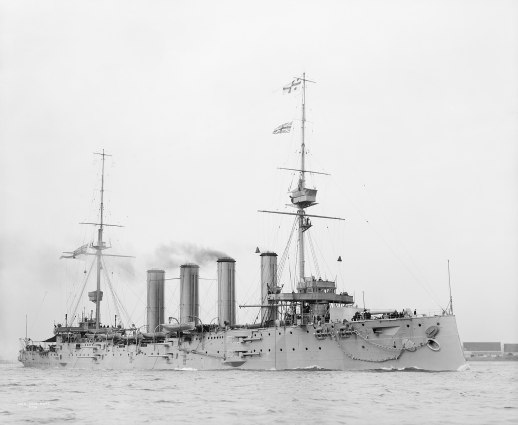
This is a brief account of the visit of the Battleship Schleswig-Holstein (pictured above) to the port of Dun Laoghaire in April 1937 and the huge popular reception they received from the Irish people. Among the film-screenings, dinners, tours and parties that were undertaken to welcome the ship to Dublin there was even time for that game of football.

The battleship itself was launched in 1906 as an early part of Kaiser Wilhelm II’s plan to develop and modernise the German navy and make the nation a world naval power. By the time of the ships’ completion the German navy had already seen further technological development as they had begun the roll out of the German dreadnought class of even larger battleships. However the Schleswig-Holstein still saw action during World War I, taking part in the Battle of Jutland where it was damaged and had three of its men killed after being struck by a British shell.

After the First World War the Schleswig-Holstein was one of the ships that the German navy sought to retain under the terms of their disarmament agreements and when Hitler came to power and began to redevelop the German military machine the Holstein became a training vessel for the many new German cadets recruited for a growing Navy. As part of one of these training missions the ship went on a seven month voyage into the Caribbean and south Atlantic calling at ports in Brazil, Venezuela, Costa Rica and Bermuda among others. Their stop at Dun Laoghaire was their first stop-off back in Europe before their return to the naval base at Wilhelmshaven. On board were 31 officers and 785 petty officers and crew which included over 170 naval cadets.

The Schleswig-Holstein arrived into Dun Laoghaire on the 9th April 1937. Due to heavy fog the ship was two hours late in arriving but was still greeted by a 21 gun salute from an artillery battery near Dun Laoghaire’s East Pier. The battleship returned the salute by blazing its cannon in reply and soon after hoisted the Irish tricolour from its mast-head where it fluttered next to the German standard emblazoned with the Nazi swastika at its centre. Several hundred people were gathered at the harbour to see the ship berth, including a sizable contingent from the German legation in Ireland, there to welcome their fellow countrymen. Among them was Erich Schroetter, the head German diplomat in Ireland. Schroetter later fell foul of the influential Dublin-based, Nazi Adolf Mahr and would be replaced within months of the ship’s visit by Eduard Hempel. Mahr, as well as being the Director of the National Museum of Ireland was also head of the Nazi party in Ireland. He was represented on Dun Laoghaire pier that day by his Dutch wife Maria.

This welcoming party was only the first in a cavalcade of social engagements for the ship’s officers and crew. On the afternoon of their landing a deputation from the Schleswig-Holstein, along with members of the German legation visited with the Irish Army Chief of Staff, Lieutenant General Michael Brennan and the Minister for Defence, Frank Aiken in Army Headquarters before stopping off at the Mansion House to drop in on the Lord Mayor of Dublin, Alfie Byrne. The Lord Mayor would pay a return visit to see the German battleship in Dun Laoghaire before the end of their stay and even Taoiseach Eamon De Valera took time out on the Saturday after the battleship’s arrival to meet it’s Captain Günther Krause along with the aforementioned Erich Schroetter.

During their brief stay the crew were not left short for entertainment. While members of the Dublin public were allowed to take tours around the battleship the German sailors quickly became a common sight in both Dun Laoghaire and Dublin City Centre. During the week of their visit they were invited to the Pavillion Theatre in Dun Laoghaire for a special showing of a German film production of the popular opera The Gipsy Princess. Afterwards there was a screening of an Irish tourism short, painfully entitled Top of the Morning. They visited Portobello Barracks (now Cathal Brugha Barracks) where they were introduced to the Irish Army’s own German officer, Friedrich Wilhelm “Fritz” Brase. “Fritz” was the head of music for the Irish Defence Forces and had also briefly been Chairman of the Nazi party in Ireland until advised to step down by his Irish military superiors, at which point he was replaced by Mahr.

Apart from their musical engagements there were excursions arranged for crew members to Dublin’s most prominent tourist attractions, many would still be on most tourists’ itinerary today, namely, St. Patrick’s Cathedral, Trinity College and the Guinness brewery.

Other excursions meant travelling slightly further from the city which allowed Adolf Mahr to indulge his passion for ancient Irish history. He lectured the visiting Germans on monastic Ireland at Glendalough and also provided guided tours to Newgrange and the historic ruins of Monasterboice. Several of the ship’s compliment even climbed the 168 steps up the column of that British naval hero Horatio Nelson to get a better view of O’Connell Street from the top of the pillar.

Somehow among this myriad of social engagements, tours, parties and public concerts by the ship’s band, a selection of the crew also got to squeeze in a football match against Bohemian F.C. in Dalymount Park. There was a good sized crowd in the ground for a Tuesday afternoon as Bohs fielded a fairly strong side against the visiting Germans. Some 120 of the German officers and sailors attended the game among thousands more local spectators. When one considers that contemporary reports stated that over 10,000 locals visited the battleship at berth in Dun Laoghaire it is no exaggeration to say that perhaps more than 20,000 Dubliners must have been to see the German’s either aboard ship or at another event such as the football match during the six days of their visit.

Despite the fact that Bohemians had a league fixture against Shamrock Rovers the following day they named a competitive side including some veterans and “B” team players. Among the starting XI were Irish internationals like Harry Cannon (who was a Captain in the Irish Army and who would work through “The Emergency”), Kevin O’Flanagan and Fred Horlacher (himself the Irish-born son of German immigrants).  Despite the pedigree of the Bohs side the German XI put on a good display and only lost by the odd goal in three. Their goal was scored by their midfielder Bischaf while a Barry Hooper goal and a header from Kevin O’Flanagan had given Bohs the victory. The match had been refereed by Johnny McMahon, a former Bohemian player and a member of An Garda Siochána.

After the game the Germans put on a display of “field ball” which by photographs and reports seems like an 11-a-side version of Olympic handball played with a full sized football. It was reported to be a sport favoured by the German armed forces as a way of keeping fit and developing muscle mass.

German sailors photo

Image and caption from The Irish Times

The teams on the day were as follows: Bohemian F.C. – Capt. Harry Cannon, Kevin Kerr, Jack McCarthy, Barry Hooper, Ivor Hooper, Fred Horlacher, Kevin O’Flanagan, Billy Dennis, Paddy Ennis, Tommy Fitzpatrick, Joe Mullen

Schleswig-Holstein XI: Haas, Gobel, Grosser, Bischaf, Lux, Kaiser, Nowack, Hinneberg, Brix, Gronert, Bucker

Four of that side (Kerr, Barry Hooper, O’Flanagan and Horlacher) would play against Rovers the following day and, perhaps not unexpectedly given the circumstances, lost 3-0.

The Germans left for their home port of Wilhemshaven on the Thursday after the game. Large crowds gathered to see off the German battleship from port and  “Deutschland uber alles” was played followed by the Irish national anthem, which were both greeted by cheers from the quayside. The previous afternoon Captain Krause had entertained several guests at a farewell lunch aboard ship. Along with members of the German legation in Ireland were Free State Government Ministers, Frank Aiken and Seán Murphy. The coverage of the battleship’s visit was overwhelmingly positive. Captain Krause praised the hospitality of the Irish and he and his crew seem to have been viewed as minor celebrities during their week in Dublin.

Captain Krause upon returning to Germany was replaced in command of the Schleswig Holstein by Captain Gustav Kleikamp, and Krause was soon rising up the naval command chain. Krause had always seem blessed with his timing, he had been a U-boat commander during the First World War and had twice been awarded the Iron Cross. During his period in command of the submarine UB-41 in 1917 he had sunk eight enemy ships but less than a month after his transfer the submarine was sunk by a mine with the loss of all hands. The Captain who had so charmed the Dublin public would end the Second World War as a Vice Admiral in the Kriegsmarine and survived the War unscathed, living to the grand old age of 93. He was well departed from the Schleswig-Holstein by the time its crew had to scuttle it in the waters of the Baltic sea in 1945 in order to stop it from falling into the hands of the advancing Soviet Armies.

This couldn’t save the ship from its ultimate ignominious fate however. Once a flagship of the German Navy, the Schleswig-Holstein that so impressed the crowds who had gathered to see her in Dun Laoghaire was raised by the Soviet Navy in 1946 and spent the next two decades off the coast of Estonia being used for Soviet target practice. What became of the eleven sailors who played a match in Dalymount, or their colleagues who climbed Nelson’s pillar to gain a bird’s eye view of Dublin we don’t yet know.

During their Dublin visit criticism of the sailors or of the violently repressive Nazi regime and military that they represented was non-existent in the press reports of the major papers. This is interesting to note as on the same pages that gave over considerable column inches to photos and articles about the German sailors there were also articles detailing the escalating tensions between Nazi Germany and other nations including the United States and the Vatican. The Irish people could not realistically claim complete ignorance of such matters. But such issues do not seem to have bothered the general public who flocked to see what by naval standards was already an old and somewhat obsolete battleship, or the newspapers (particularly The Irish Times and Irish Press) who lavished coverage on the German visitors.

Perhaps the only nod to any controversy or discomfort surrounding the emergence of the Nazi state was when one columnist in The Irish Times noted that whatever-

“views the citizens of Saorstát Eireann may have upon the political philosophy of contemporary Germany – and we do not think that there is much doubt on that score- they demonstrated in the clearest possible way that politics are not permitted to interfere with the cordial – even enthusiastic – reception of our German guests.”

The only other qualm that seems to be expressed in relation to the German visit was that O’Connell Street was a trifle too dirty and that the visiting sailors may have been unimpressed with the levels of litter in Dublin City Centre. There were however some protests a year later when two ships from the Fascist Italian navy docked in Dublin, although again on this occasion the visiting parties were offically treated as honoured guests and were shown hospitality by both Taoiseach Eamon De Valera and Lord Mayor Alfie Byrne.

By the close of August 1939, just two years after her Dublin visit, the Schleswig-Holstein sailed to Danzig under the pretext of a courtesy visit, but this one was very unlike the one she had enjoyed at Dun Laoghaire. On September 1st at 4.45am she began to shell the Polish garrison at Westerplatte with its 15cm cannon from near point-blank range as the shock troops hidden in her hold spilled forth to attack the Polish garrison.  World War II had begun.

As often is the case, thanks again must go to Bohemian F.C. historian Stephen Burke for his assistance in identification of several players involved for Bohs on the day of the match. For more on Adolf Mahr it’s worth checking out Gerry Mullins’ biography of him entitled “Dublin Nazi Number 1”.

The Lost Clubs – St. James’s Gate

A city can often be known simply by an architectural or geographic feature but it’s not often that a city is known for its smell. However, on certain days, depending on how the wind is blowing there is an aroma that is quintessentially Dublin as the rich, sweet smell of roasting hops wafts down the Liffey in testament to the presence of Europe’s largest brewery, St. James’s Gate. The Gate is home to Guinness, the product, for better or worse, that is most associated with Ireland.

The brewery is situated on an early monastic site and those monks used the fresh water resources of the district for their own brewing, perhaps as far back as the 13th Century. The name of the brewery references it’s history as a site for pilgrim voyages back as far as medieval times when devout Dubliners would set off in pilgrimage to Santiago de Compostela in Spain to venerate the relics of St. James. When the Guinness family signed the famous 9,000 year lease on the brewery site in the 18th Century they quickly grew from being just one of a number of breweries in the city to becoming one of the country’s largest industries. In the years after independence the economy of Dublin was often derogatorily referred to as one of “beer and biscuits” as Guinness and Jacobs were among the dominant large manufacturers in an economically deprived city.

Unsurprisingly both of these large employers followed a trend common with many large manufacturers in Britain and formed sporting and social clubs for their staff. Guinness had long had a reputation as a “good employer” and offered a rare example a decent,  well-paid and steady work in a city where such employment was a scarce commodity. The Guinness family had generally demonstrated a strong paternalism towards their staff as well as to the wider city in terms of the construction of public baths, social housing and the donation of St. Stephen’s Green park as a gift to the city. Such paternalism and munificence motivated the establishment of the St. James’s Gate Football Club in 1902.

A fair share of the credit for these developments must rest with Dr. John Lumsden, chief medical officer with Guinness at this time and a tireless campaigner who made countless improvements to the lives and health of Guinness workers and their families. Born in Drogheda, the son of a Scottish banker, Lumsden was a man of many passions and talents. As a medical doctor as well as his work with Guinness he was a physician at Mercer’s Hospital, he was a hugely active member of the St. John’s Ambulance Brigade, tending to the injured on all sides during the 1916 Rising, and can also lay claim to involvement in the foundation of the Irish Red Cross and what would eventually become the Irish Blood Transfusion Service.

As the medical officer he visited over 1,700 homes of Guinness workers to assess the quality of their accommodation, he set up cookery classes to ensure families of employees knew how to cook nutritious meals, he successfully lobbied to have public baths included in the Iveagh Trust housing developments and he also clearly saw the benefit of sports and exercise to the Guinness workforce. He also had a keen personal interest in sport and helped establish one of Dublin’s first golf clubs.

The St. James’s Gate football club was just one of several works teams that emerged in Ireland around this period, others such as Dundalk, Linfield, or Jacob’s had similar beginnings in other industries (railways, linen and biscuits respectively), but the Gate also had something in common with a continental European model of a wider multi-sports club. As well as playing football the Guinness employees pursued athletics and cycling and later tennis, cricket and rugby. They had access to gymnasiums and swimming baths, and eventually had their own designated sports complex at the Iveagh grounds. All of which gave them an advantage over many other clubs.

Dr. Lumsden who was instrumental in the creation of St. James’s Gate F.C. in 1902 also played an important role in finding the club a permanent home. In their first decades they played their home matches in Inchicore and later in Dolphin’s Barn but by 1928 Lumsden and the club members had secured the purchase and development of the Iveagh Sports Grounds in Crumlin. These were bought, developed and donated to the Guinness Athletic Union by their patron Edmund Guinness, the 1st Earl of Iveagh after whom the grounds are named.

Those early decades were the most successful for the football club, in the 1919-20 season the Gate won both the Leinster Senior Cup and also the Irish Intermediate Cup against Dunmurray. Recreation F.C. Given this success it was no surprise that St. James’s Gate were one of the of the sides who formed the inaugural season of the Free State League of Ireland after the split from the IFA in 1921.

That debut league season was an all-Dublin affair and featured only eight teams in total. While Shelbourne and Bohemians may have been the bigger names, having previously been Irish Cup winners and regular competitors in the earlier, Irish League it was to be a season dominated by the men from the Gate. Not only did they win the title but they added the FAI Cup and Leinster Senior Cup for good measure.

It was a turbulent time in Irish society,, the Gate’s FAI Cup final win against Shamrock Rovers took place just months before the outbreak of the Civil War and the game was marred by a pitch invasion from irate Rovers fans and a standoff in the Dalymount dressing rooms between the Gate’s Charlie Dowdall and Shamrock Rovers’ Bob Fullam. This was only ended when Dowdall’s brother John pulling a gun and Fullam and Co. sensibly backed off.

Several of that successful James’s Gate side would go on to represent Ireland at the Paris Olympics in 1924, among them Charlie Dowdall and team-mates like Ernie McKay and Paddy “Dirty” Duncan. It was Duncan who would get the first goal in an international competition for the Irish Free State, grabbing the only score in a 1-0 victory over Bulgaria in the sparsely populated Stade Olympique de Colombes.

Ultimately there would be five St. James’s Gate players in that Olympic squad. The Olympics at the time was an amateur competition in keeping with a certain Corinthian spirit of the time. The James’s Gate players were nominally amateurs but even by the time of the Cup final they were not necessarily all Guinness employees. There was a quota of a maximum four non-Guinness players allowed play for the club.

Among those not employed by Guinness included Ernie McKay, the son of a Scottish soldier, Ernie worked for at the GPO for decades while also remaining involved with James’s Gate as a player and administrator well into the 1940’s. His team-mate at inside-left, Charlie Dowdall who had worked for Guinness briefly but spent most of his career working at the Inchicore railway works.

The Olympics of 1924 wasn’t the only time that James’s Gate players would pull on the green of Ireland either. Joe O’Reilly, one of Ireland’s most prominent inter-war internationals and team captain on numerous occasions finished his league and international career while a Gate player. Alf Rigby, a centre-forward who twice finished top scorer in the League of Ireland won his three international caps while a St. James’s Gate player though he failed to find the net.

One player who didn’t have that problem was Paddy Bradshaw. Top scorer in the 1939-40 season as St. James’s Gate clinched their second ever league title Bradshaw had a somewhat unusual route to football stardom. A dock worker for much of his life he played at Leinster Senior League level until he was 26 before making an immediate impact upon signing for the Gate in 1938. He would win five international caps, scoring four goals. His first came only 20 seconds into his debut game against Switzerland in a match that ended as a 4-0 victory for Ireland. He grabbed a second in that game as well as scoring against both Hungary and Germany. The outbreak of the Second World War in 1939 brought a premature end to his brief but successful international career.

That short era of the late 1930’s was a period of triumph for the Gate as they won not only the title in 1939-40 but also the FAI Cup in the 1937-38 season, defeating Dundalk 2-1 in front of a crowd of 30,000 in Dalymount Park. A penalty scored by Irish international Peadar Gaskins proving to be the decisive goal.

While players like Bradshaw were coming to the fore in this era perhaps the most famous player to play for the club also got to make his fleeting impression as a Gate player around this time. Despite a first team career at the Iveagh Grounds that last just a matter of months St. James’s Gate have every right to be incredibly proud of the achievements of Johnny Carey. The young Dubliner debuted for the Gate aged just 17 in the 1936-37 season and quickly began to turn heads. He was spotted playing for the Gate in a match against Bohemians by Billy Behan, a one time Manchester United goalkeeper who now acted as a scout for the club in Dublin. With him at that game was Louis Rocca, United’s chief scout who had come to run the rule over Bohs’ forward Benny Gaughran. Rocca was disappointed to learn that Gaughran had already agreed to join Celtic but Behan convinced him that the teenage Carey was worth a closer look.

Ultimately Carey was signed by United for a fee of £250, a reported record for a League of Ireland footballer. By the age of 18 he was starting at inside-left for Manchester United and helping them win promotion from the Second Division. When he left United 16 years later he had captained them to victory to both the FA Cup and a League title while  becoming the first Irish player to be named Football Writers Player of the Year. He’d also won 29 caps for Ireland and captained a European XI in a challenge match against a combined Great Britain side.

Despite recruiting top quality players in the late 30’s and enjoying success in both the league and cup within a couple of years of these triumphs St. James’s Gate would be bottom of the league. That misfortune came to pass in the 1943-44 season and the club were not re-elected to the league for the following season; their spot being taken by another Dublin club, Brideville who had moved between the Leinster Senior League and the League of Ireland on a number of occasions. This, however, wasn’t quite the last experience the Gate had at League of Ireland level.

Forty-six years after failing to be re-elected St. James’s Gate returned to the League of Ireland, rejoining as a First Division side in 1990. During their second spell in the League they never finished higher than 5th in the First Division and even finished bottom on two occasions. The club withdrew from the League before the beginning of the 1996-97 season with their place (albeit briefly) being allotted to St. Francis.

St. James’s Gate continue to this day as a football club, playing in the Leinster Senior League, perhaps one of their most famous recent players was Irish international Katie Taylor who achieved greater international fame in the boxing ring rather than on the football field.

In 2017 St. James’s Gate F.C. celebrated their 115th anniversary, that same year the sale of the Iveagh Sports Grounds to Trinity College Dublin was agreed. As a result the grounds will now be home to the various sports teams associated with the College though it is likely that the Gate will continue to play there for future seasons. As  Guinness advertisements regularly note, they are only a short time into the 9,000 year lease on the St. James’s Gate brewery site, you’d hope that the famous football club had plans for similar longevity.

This article originally featured for the SSE Airtricity League website

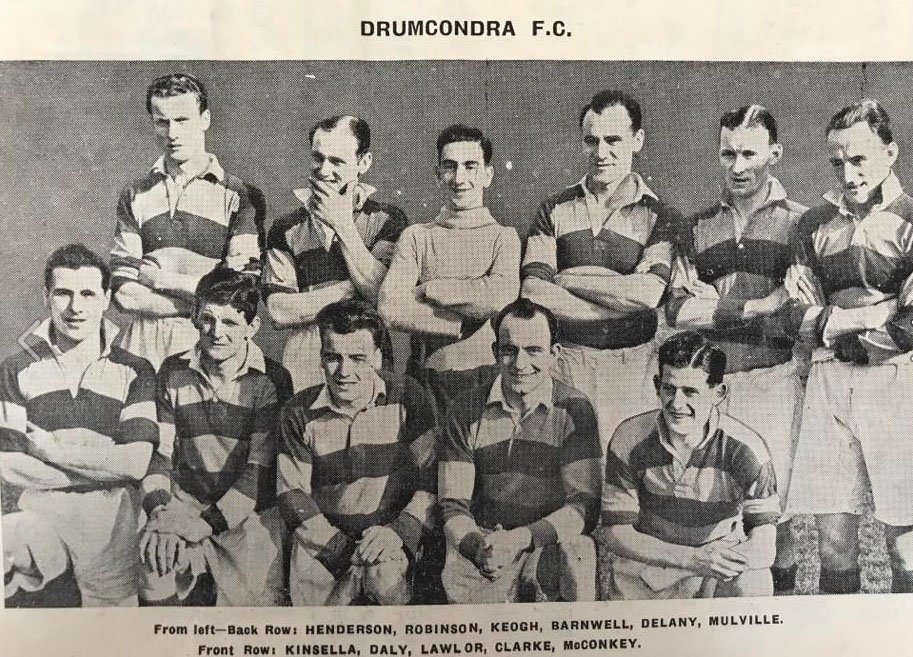
The lost clubs – Drumcondra F.C.

DrumsAs a young lad the sporting geography of the city was always fairly fixed and familiar to me. You saw Bohs and maybe the odd Cup final at Dalymount. You saw Ireland in Lansdowne Road, the Dubs in the freezing expanse of Parnell Park in the league, and if things were going well, in Croke Park in the sun. Morton Stadium in Santry was an annual pilgrimage for the National Athletics championships and as for Tolka Park, well that was Shels’ home, and to the unquestioning mind of a child it was always thus.
But of course it wasn’t always so. Shelbourne were once of Ringsend and took their name from the Shelbourne Road next to the pub where they were founded. While they had spent seasons playing at Tolka in the past they only took over the lease of the ground in 1989. Tolka had originally been the home of Drumcondra F.C. a team that developed rapidly, whose success burned intensely, and who formed arguably one of Irish football’s most storied rivalries at the peak of the league’s popularity. And then almost as quick as their ascent, they disappeared from League of Ireland football.

The area around Drumcondra has always been fertile ground for sporting endeavour. As Dublin city grew beyond the traditional inner city district in the 19th Century the local and wider city population were also availing of greater freedom from the stresses of their work-life. Changes to the working week meant people finally had some proper leisure time, they had access to a growing rail network meaning that they could travel the country more easily. All this lead to the creation of many different local and national clubs and organisations, not surprisingly many focused around sporting activities.

In 1864 Alderman Maurice Butterly leased 21 acres near Jones Road, Drumcondra which for the next couple of decades would be known as the City and Suburban Sports Grounds and which could be hired out by a variety of sports clubs. In the early 1890’s these grounds were briefly the home of Bohemian F.C. they also were a venue for GAA matches. In fact the GAA liked the area so much that by 1907 they’d bought the lands and renamed them after their organisation’s patron Archbishop Thomas Croke.

As Drumcondra developed eastwards as a bustling suburb it should be no surprise that this sporting development continued as you crossed the river Tolka. By 1924 a group of enthusiastic locals including Tom Johnston, Christy Purcell, George Ollis, Paddy Dunne, Tom Cribben and Andy Quinn had founded Drumcondra F.C. and the club were quick to make progress. Even in their early years as a Leinster Senior League side Drums attracted prominent players, including former Bohemians stars Johnny Murray and Joe Grace. In 1926, despite still plying his trade for a lower league side Grace won his only Irish international cap against Italy in Turin. He remains to this day the only Leinster Senior League player to be capped by Ireland.

A year later, while still playing at Leinster Senior League level Drums began lifting serious silverware. They were winners of the inagural Intermediate Cup, then referred to as the Qualifying Cup as it qualified them for the 1st round proper of the FAI Cup. There followed wins over Jacob’s and Bohemians which saw the Drums through to the final where they faced Brideville. A 1-1 draw in the first game forced a replay, held in Shelbourne Park and an extra time winner from Johnny Murray secured the first of five FAI Cup wins for Drumcondra.

Drums got another cup final the following year, losing 2-1 to Bohemians before finally being accepted as a League of Ireland side a year later and shortly afterwards they moved away from their amateur ethos to paying players. It was later into the 1940’s before Drums began to emerge as a real force in the League of Ireland. These sides were built around a core of some exceptional footballers like Kit Lawlor, Benny “Rosie” Henderson and the young and ever versatile Con Martin. The final years of the decade also the emergence of their prolific centre forward Dessie Glynn. By the end of the 40’s Drumcondra had won two more FAI Cups (1942-43 and 1945-46) as well as their first two league titles (1947-48 and 1948-49).

It was perhaps this success that attracted new owners to the club. Father and son William and Walter Hunter had run the club up until the early 1950’s but they were soon to be replaced by another father and son team, that of Sam and Roy Prole. A younger son Robert Prole also became a club director while still a schoolboy and would later feature as a player for the club.

The Proles had a long involvement with Dundalk F.C. having made their money through the Great Northern Railway which had its works and a main station in Dundalk. In progressive moves they improved Tolka Park, levelling the pitch, adding roofs to stands, introducing pitch-side advertising boards and in 1953 Tolka became the first stadium to introduce floodlights when Drums played an exhibition game against St. Mirren in March of that year. The Proles also placed a major focus on developing young players and among the early managers that they appointed was Billy Behan. He was Manchester United’s eyes in Ireland, helping discover a plethora of great young talents from Liam Whelan to Paul McGrath. Perhaps the words of George Orwell may have stuck in the minds of Drumds fans of the time, If There Is Hope It Lies In The Proles. 

With Tolka Park now being developed into one of the better club grounds in the League there was plenty of drama on the pitch to keep supporters entertained. The 1950’s and into the early 1960’s in some ways signified a high watermark in the popularity of the League of Ireland. In an often grey and economically deprived Ireland the game offered a cheap and enjoyable spectacle and a stylish Drumcondra side were at the forefront. To this day recollections of their decade long rivalry with Shamrock Rovers has a misty-eyed effect on Irish football fans of a certain vintage and it’s not hard to understand why.

With little access to the English game apart from occasional touring sides and newsreel footage the League of Ireland was amplified in its sporting significance. It helped that there was a strict wage cap in England up to 1963 so many talented Irish players had less financial incentive to cross the Irish sea. Drums managed to develop and keep many of their talented players for longer than many League of Ireland sides could do today. During the 50’s they could call on Irish International Alan Kelly Senior in goal, “Bunny” Fullam in defence and an array of other young talents like Ray Keogh, Jimmy Morrissey, Stan Pownall and Tommy Rowe while club legend Kit Lawlor would return after a spell in England with Doncaster Rovers.

In just over ten years Drums picked up another two titles (1957-58 and 1960-61 while finishing runners up on a  number of occasions) and two more FAI Cups and by this stage European competition had begun. Here again Drums were quick in making progress. In only their third season in Europe (1962-63) they became the first League of Ireland side to win a tie over two legs when they defeated an Odense city XI  6-5 in the Inter-city Fairs Cup. Jimmy Morrissey and Billy Dixon were prominent among the goals which secured Drums a tie with Bayern Munich.

Bayern weren’t yet established as the behemoths of European football that they are today but they were still an impressive side, many of whom would go on to win titles and cups with the Baverians. Drums lost 6-0 in the first leg in snowy Munich, German international Willi Giesemann as well as Bayern’s 3rd highest scorer of all time, Rainer Ohlhauser among those getting on the score-sheet. Drumcondra did manage to save some face in the return leg when the beat Bayern in Tolka Park 1-0 thanks to another goal from Billy Dixon.

The Drums had something of a habit of facing German sides, in their five seasons in European football they faced three other German sides as well as facing Atlético Madrid in that famous sides first ever appearance in European football. While never again progressing beyond the opening rounds as they had done against Odense there were other credible individual results such as a 1-0 home win against East German champions Vorwärts Berlin.

There would be one final, major trophy for Drums, a league title in the 1964-65 season but it was to be somewhat of a twilight victory. Within five years they would be bottom of the league and a couple of years after that, Drums as we would know them, were gone. After back to back last place finishes Sam Prole agreed to sell up, in a strange turn of events, Drums, a professional side were taken over and replaced by the amateur Home Farm side. A hybrid team name of Home Farm-Drumcondra lost its Drumcondra suffix after a single season and after 45 years of league football Drumcondra F.C. were gone.

It had been an eventful existence, five league titles and five FAI Cups had the Drums name etched against them. There were famous European nights under lights and the club had always tended to punch above their weight, whether as a Leinster Senior League side lifting the cup, or in their famous rivalry of the 50’s and 60’s with Rovers that lit up the league, or even going to toe to toe with some European heavyweights.

A Leinster Senior League club under the name Drumcondra F.C. reformed about ten years ago, wearing the traditional yellow and blue. They’re even based across the street facing their former home at Tolka Park. The memory of the glories of the Drums still lives on, preserved in the name Drumcondra F.C. that adorn a modest the clubhouse on Richmond Road, back where it all began. Up the Drums! 


This piece first appeared on the SSE Airtricity League website and can be found here.


Rovers of the sea

A great distance separates the Pacific coast of South America with the more modest expanse of Dublin Bay yet it connects the lives, and the deaths of two former football teammates who died within months of each other more than 100 years ago.

I came across the premature demise of these two Shamrock Rovers players while doing some research on an upcoming piece focusing on the development of the great rivalry between Bohemian F.C. and Shamrock Rovers when I started looking at the earliest recorded meeting between the two sides over 100 years ago in January 1915. As often happens with such investigations I got sidetracked down a different path and onto a tragic tangent of the lives and deaths of James Sims and William Skinner in 1914-15.

William was born in 1880 and grew up in Thomas Street in Ringsend, a street which has since disappeared and which is now roughly occupied by the Ringsend Library. He was son to Laurence, a Dublin born labourer and Lizzie a housewife originally from Co. Wexford. Lizzie gave birth to 14 children during her lifetime but sadly just six of them would survive beyond childhood.

William was listed as a labourer in the 1901 census but just two years later when he was getting married to Catherine (Kate) McDonnell, who also grew up on Thomas Street, he listed his profession as a “sailor on a Man of War”. William had obviously joined the Royal Navy by this stage. When we next encounter William it is in the 1911 Census and he is back in civilian life working as a Hailing Man in Dublin Port and had moved just north of the River Liffey to Russell Avenue in East Wall. He had also become a father to two children; Laurence, born in 1907 and Mary born in 1909. By 1913 the family had moved once more this time to St. Joseph’s Square in Clontarf. This perhaps shows improving fortunes for the family, moving from a smaller, single-storey cottage, to a two storey, terrace in Clontarf.

1914 would be a year of significant change both globally and locally. July saw the outbreak of the First World War. More locally Shamrock Rovers reformed at a meeting in Sam Beatty’s barber shop in Bridge Street, Ringsend, some eight years after they had folded and withdrawn from the Leinster Senior and Junior League due to difficulties securing both a home ground and sufficient player numbers.

In 1914 William and his younger brother James would be listed as Rovers players, William was described as “a very useful forward” while James was mentioned as “a reliable forward with an accurate and speedy shot”. However, 1914 would also see William return to the Royal Navy. He immediately re-enlisted once war was declared.

William’s war was not going to be a long one, at 34 at the time of enlistment and with his previous experience in mind he was already somewhat of a veteran.  He was posted aboard the HMS Good Hope. In August 1914 the Good Hope was ordered to reinforce the 4th Cruiser Squadron and became the flagship of Rear Admiral Christopher Cradock. In  October the British learned from intercepted radio messages that the Germans planned to attack shipping on the trade routes along the west coast of South America.  Cradock’s small squadron was sent to prevent this from happening. On the 1st November 1914 the German Vice Admiral Graf Maximilian von Spee, commander of the East Asia Squadron, identified the light cruiser HMS Glasgow, (part of the British Squadron under Cradock) at the Chilean port of Coronel and pursued the ship in order to engage it. The ensuing encounter was one of the first major naval battles of the War and became known as the Battle of Coronel.

The German squadron of armoured cruisers, SMS Scharnhorst and Gneisenau and the light cruisers SMS Dresden, Leipzig and Nürnberg engaged Cradock’s squadron with the Good Hope as the flagship after its initial pursuit of the HMS Glasgow. The Scharnhorst hit the Good Hope with one of its early salvos causing severe damage. Cradock’s ship was at a disadvantage to the Germans in terms of the range of their guns so his only available tactic was to head directly for the German squadron in order to get them in range by charging down their flagship. The Germans concentrated their fire on the Good Hope and at close to 8pm that night, with much of the ship aflame, their forward ammunition magazine exploded. The force of the blast severed the ship in two and it sank in the darkness. The Good Hope (along with the HMS Monmouth) was sunk with all hands in the chill waters of the ironically named Pacific Ocean. It was the first defeat the British Royal Navy had suffered in combat in more than a hundred years. A total of 919 officers and enlisted men lost their lives including Able Seaman William Skinner from Ringsend.

A year later William’s younger brother James joined the Army Service Corps as a driver. He had been certified as a “Chauffeur” by the Irish Automobile Club and saw action in Egypt and Greece, ended up contracting Malaria, surviving, and being sent to London to work as a driver at the munitions docks at Woolwich before being eventually discharged in 1919.

1920px-HMS_Good_Hope

The HMS Good Hope (source wikipedia)

Much closer to home is the story is that of James Sims, highlighted in the photo above. Born in 1892 in Ringsend, James became a star midfielder with Rovers after their re-emergence in 1914. He was the centre-half in the side that had defeated Derry Swifts 1-0 in the final of the Irish Junior Cup in April of 1915. Sims was not part of that first Rovers side that took on Bohemians in the first of those great derby games (Bohs won 3-1 by the way) in January 1915, but he appeared regularly in team line-ups from February of that year onward.

In August of 1915 at a meeting of the Leinster Senior League Shamrock Rovers were elected to the top division, unlike the situation in 1906 the revived Rovers were better equipped this time to fulfill their fixtures. They played a warm-up match against neighbours Shelbourne on August 28th, James Sims started that game at centre half. Their first Senior League fixture was a game against Strandville on September 18th followed by a League match against Bohemians the week after. Just eight days before the League kicked off James Sims was dead.

Like many men in Ringsend at the time, given its close proximity to the city docks James “Sailor” Sims made his living as a hobbler and occasional fisherman. Hobblers were intrepid, entrepreneurial sailors who set off in groups of between 3 and 6 men in lightweight skiffs or hobbling boats. The purpose of these boats was twofold, to lead cargo vessels into Dublin Port and to be the boat that unloaded the incoming vessels onto the quays.

“Hobbling” was a very competitive business, the small, lightweight boats could be out for hours or even days in attempts to get a ship coming into port. When a ship was spotted it was a rush between the different hobbling boats to get to it first and agree a price with the ship for their services. Hobbling was also dangerous work, as well as the usual dangers of being at sea, the small lightweight boats were trying to load large cargo at sea from winches and cranes, a mistake could mean a severed limb or a capsized boat.

At five in the morning on the 10th of September 1915 James Sims was in a hobble boat with John Lawless (who owned the boat) and John Lynch about two and a half miles beyond Poolbeg Lighthouse when they spotted a steamer coming into port. It was the Huanchaco, named after a Peruvian town, which plied a route from the west coast of South America, including the port of Coronel. It would likely have traveled much the same route as William Skinner’s final journey many times.

The exact details of what happened next to James Sims and his friends is not completely clear. It seems that the 390-foot Huanchaco, either refused their hobble, or were in discussions about a fee when the small skiff got caught in the backwash of the far larger ship. The result was that the smaller vessel got dragged behind the Huanchaco and into its huge propeller. The reports are thankfully more restrained than much modern reportage, but the smaller boat was cut in two, Lynch and Lawless were able to jump into the sea and then scramble back onto what was left of their craft before being rescued by a pilot boat led by a man named Michael Tallon and brought to the safety of Dun Laoghaire harbour. James Sims however was not so lucky, he,was struck by the propeller and killed outright. He met his gruesome end at just 23 years old.

Shamrock Rovers were due to play Orwell F.C. the following day but the game was called off as a mark of respect. At a specially convened meeting Shamrock Rovers issued a notice of condolence with the Sims family and there was a large, well-attended funeral for James in the Ringsend area.

Just two days after James had been killed the Huanchaco was involved in another accident leaving Dublin Port. The Huanchaco under the command of Captain Pierce crashed into the Irish Steam Packet company steamer the Lady Martin badly damaging its starboard bow. Two incidents in the space of three days seems to suggest either extreme bad luck or shows just how dangerous shipping could by at the time even away from the heat of battle.

In 1934 the practice of “hobbling” was finally prohibited although the modernisation of the port also played a part. The main catalyst for this decision was the death of three young men from Dun Laoghaire; brothers Henry and Richard Shortall and their friend John Hughes, all drowned when their boat capsized when they were attempting to hobble a boat into port. A decision that came some 20 years too late for James Sims.

These weren’t the only tragedies to affect Rovers at the time, the Great War dominated the decade, and as I’ve highlighted at other clubs like Bohemians and Shelbourne, claimed its fair share of young sportsmen. In Rovers case one of their early heroes from their beginnings at the turn of the century was full-back James Keogh. Like many he joined the Royal Dublin Fusiliers but never made it back from the battlefields of France.

These men left families and friends behind, they also never got to see the club they re-founded go on to enjoy success as Rovers progressed within ten years from Junior football to League and Cup champions.

For more on life in Dublin Port check out “The Dublin Docker” by Aileen O’Carroll and Don Burnett. Also a thank you to Rovers historian Robert Goggins for proof reading this piece.

Taking a Lax attitude- George & the magic magnetic board

The dim light of the training lamps strung along the old main stand illuminated the thin strip of touchline as the players sprinted by, full tilt. They were trying to impress the coach with their pace and athleticism before turning into the darkness of the shed end. The floodlights that would come to define Dalymount and become a landmark in the Dublin skyline wouldn’t be installed for another year and the majority of the pitch was in complete darkness. As the players, all amateurs, reached the Connaught Street side some of the more experienced ones stopped. Now subsumed into the darkness the only light was the faint amber glow of embers as they lit up their cigarettes. Their plan was to wait until the rest of the team had made their next lap of the pitch and save their energies for another sprint past their coach. The man that they hoped to impress, who unlike his charges was a professional football man, was a middle-aged Yorkshireman in thick glasses by the name of George Lax.

George had first encountered Bohemians as they encountered a period of comparative decline. In the opening decades of the League of Ireland Bohemian F.C. enjoyed more than their fair share of successes. Foremost among these triumphs was the “clean sweep” of the 1927-28 season when the Bohs won every competition available to them. Three further league titles, an FAI cup and an array of other trophies made their way to Dalymount of the following ten years but by the end of the 30’s things were beginning to change.

The end of the 30’s and into the 40’s other teams were coming to dominate the major prizes in Irish football, Shamrock Rovers, Shelbourne, Drumcondra, Dundalk and especially a rampant Cork United side were collecting league titles and cups. Bohs were increasingly being left behind. After winning the league title in 1935-36 Bohs could only finish 7th the following year, and 9th the year after.

The Gypsies policy on remaining an amateur club was beginning to affect their performances on the pitch. While the club, even by this stage had a long and proud history, one of the best stadiums in the league, and a strong record of bringing through talented players, unsurprisingly many of these same players would leave for other clubs prepared to pay them.

While amateur on the pitch the Bohs management committee looked to take a more professional approach to training and management of team affairs. To this end they brought in an English coach not long finished his playing days, George Lax, for the beginning of the 1938-39 season. Important to realise was that while Lax would be responsible for training, coaching and physio work with the players, the starting XI was still primarily decided by a selection committee and this would remain the case until the 1964 appointment of Seán Thomas as Bohs first manager in the modern understanding of the word.

Early days

George Lax was born in Dodworth, a coal mining village near Barnsley in South Yorkshire in 1905. Unsurprisingly young George began his professional life with Frickley Colliery near Wakefield having come from a mining family. The Colliery, one of the deepest coal mines in Britain had a strong sporting tradition, they had swimming baths, cricket clubs, athletics clubs and of course a football club, Frickley Colliery F.C. founded just after George was born. A teenage George lined out for the team at right-half and in his early 20’s was spotted by the legendary Wolves manager Major Frank Buckley and signed by them for the 1929-30 season.

Lax immediately became the sides’ regular right half as Wolves finished in the top half of the second division and continued a good run of form into the next year. His good fortune continued and during his spell at Wolves he also got married, tying the knot with his fiance Kathleen Hill in the Spring of 1932. However, a series of injuries including a badly broken jaw and later a broken ankle began to limit his first team opportunities at Molineux. This saw George move back to his birthplace to sign for Barnsley in 1932 after making 66 appearance for Wolves, although it would not be his last time working with Major Buckley. Further moves, first to Bournemouth and later to non-league sides like Evesham Town and Worcester City. As his playing career wound down he was beginning to get involved as a manager and coach alongside his playing duties.

In 1938 Lax was on the move again, this time having hung up his boots, he was off to Dublin to take over the management of Bohemian Football Club from the former Liverpool star and Irish international Billy Lacey. Lax had benefited greatly from working with Major Frank Buckley, a character with a fearsome reputation who had led the Footballers regiment during the First World War and had fought at the Battle of the Somme. Buckley’s teams were well known for their robust and very direct, physical football but this belied the fact that he was also somewhat of a pioneer and moderniser in other aspects of the game.

Buckley had placed great emphasis on fitness and diet (and allegedly the use of stimulants and animal gland injections) and contrary to popular wisdom at the time had encouraged players to do plenty of ball-work in training. He had also helped Wolves gain promotion to Division One and greatly improved their scouting network and youth system which would help lay foundations for the success enjoyed by Stan Cullis’ Wolves teams in the 1950’s. Lax borrowed heavily from Buckley’s methods and was also one of the first participants in the FA’s early coaching courses.  While Bohs amateur status might have seemed a throwback to a bygone age, even by the 30’s, in their choice of trainer they were selecting a man in his early thirties whose coaching methods were cutting edge for their time.

Among the modern elements of the game that Lax brought to Bohs was his “magnetic demonstration board”. While such coaching aids as a tactics board are hardly unusual today its use in the League of Ireland in the 1930’s seems to have raised more than a few eyebrows. He also brought with him a number of other tactical innovations such as “The Switch” which entailed the swapping of roles between the outside-right (usually Kevin O’Flanagan) and the team’s centre forward (Frank Fullen at the time). While this may not seem that groundbreaking to a modern football audience, the idea of swapping a centre-forward with a right-winger as part of a usually rigid W-M formation employed by the vast majority of British and Irish teams was revolutionary. It no doubt helped that O’Flanagan was an exceptional and versatile sportsmen and one of the best forwards in the country. These tactical innovations bore closer resemblance to the type of tactical experiments being tried out by coaches in Hungary or Austria.

George Lax board

It is worth remembering that it was only in 1953 when Hungary’s wandering centre-forward Nándor Hidegkuti helped dismantle the English national teams defense as they destroyed Billy Wright and Co. 5-3 that such tactical experiments began to get greater credence in Britain and Ireland.

Such was the success of this tactical innovation (no doubt worked out on the infamous magnetic tactics board) that other Irish sides soon started copying the ploy with Belfast Celtic using their international winger Norman Kernaghan in the O’Flanagan role.

Call of battle and the return to English football

Lax had two spells with Bohemians, joining in 1938 before leaving in 1942 at the height of the Second World War to enlist in the RAF. As someone resident in neutral Ireland at the time he could have conveniently avoided the danger of the conflict but instead chose to enlist. He was eventually demobilised some months after the end of the War in February 1946. The high-points of his first spell as coach of Bohs included a 3rd place league finish in the 1940-41 season as well as back to back League of Ireland shield wins (1938-39, 1939-40) and a Leinster Senior Cup win also in 1939-40.

George’s first spell at Bohs would see him succeeded by Sheffield United and Ireland legend Jimmy Dunne who had fallen out with Shamrock Rovers where he was previously player-coach. Once he was demobilised George was straight back into his sporting involvement, first with non-league Scunthorpe United where he was coach but also an occasional player while serving at the RAF station at Lindholm and then onto second division Hull City as a “trainer-coach”.

George’s job at Hull was secured by the intervention of his former mentor Major Frank Buckley who wrote to club Chairman Harold Needler stating that Lax was a “grand servant, of irreproachable character, keen, willing and loyal”. Buckley also boasted that it was “on my recommendation that he went as trainer-coach to the famous amateur Irish club, the Bohemians of Dublin. He gave grand service to them and it was the war that caused their severance”.

George was joined by his mentor Buckley as manager at Hull just a month later in May 1946. Hull were stuck in the unglamorous world of the English Division Three North, however they certainly had ambition, over the course of the next few seasons Hull sought promotion to the second division, succeeding by winning Division Three North in 1948-49. By that stage Major Buckley had already moved onto Leeds United where he would help start the careers of John Charles and later Jack Charlton.

His trusty lieutenant George Lax remained on Humberside working for Raich Carter who took over as player-manager. Carter had been one of the most highly-regarded and stylish inside-forwards of his era and over the coming years he brought some big names to Hull’s new ground at Boothferry Park. Joining Carter were players like England centre-half Neil Franklin, Danish international Viggo Jensen and an up and coming young forward named Don Revie.

Carter retired in 1952 and his role was taken over by Bob Jackson, a league winning manager with Portsmouth only a couple of years earlier. George Lax stayed on as part of his coaching team although Hull, despite all their ambition couldn’t do better than lower mid-table finishes in the second tier. After almost ten years with Hull as coach, trainer and physio among other roles George left for a new challenge. During his time at Hull he’d played second fiddle to some of the most famous and successful English managers in the game but perhaps he wanted to be in charge of himself again.

George had been a player-manager at Evesham before he had even hit the age of 30. During his time there he’d helped to launch the career of players like future West Brom and England forward Jack Haines. He was used to being his own man. Still it was with some surprise that in 1955 he moved the short distance to take over the management of Goole Town of the Midland league. During his brief tenure George led the club to the third round of the FA Cup, their best ever result in that competition.  George’s time in Goole was short and by 1957 he was heading back to Ireland, but this time not to Dublin but to a new club from Cork.

A return to Hibernia

In 1957 yet another Cork football club went the way of the dodo, this time it was the short-lived Cork Athletic. Although they had won back to back titles and two FAI cups around the turn of the 50’s, and had even coaxed George Lax’s old boss Raich Carter out of retirement to lead them briefly as player-manager, by 1957 financial difficulties saw them withdraw from the League. Their spot was taken by another Cork based club, this time it was Cork Hibernians. Their first manager was to be George Lax.

A tough first season for the Hibernians finish bottom of the 12 team division but gradual progress was made in the following seasons with Hibs finishing 9th and then by 1959-60 up to 6th place. George had set up a comfortable life in Cork, he ran a physiotherapy practice in the city and was on a considerable salary of £1,000 a year to manage the team. However, despite the steady progress Lax was making he left Cork Hibernians to return to Dublin and to Dalymount to take on a Bohs side that had finished bottom the previous two seasons. By the time he left the press credited him with having “moulded Cork Hibs into a first class side”. Lax took the reigns again at Bohemians for the beginning of the 1960-61 season, some 22 years after he had first arrived at Dalymount.

While the side that George had inherited in the late 30’s had some genuine stars like the O’Flanagan brothers, Fred Horlacher, “Pip” Meighan, Kevin Kerr and Billy Jordan. The side of the early 60’s unfortunately wasn’t so blessed and the drawbacks of the enforced amateur ethos at the club was being keenly felt. Some genuine greats of Bohs history were to join not long afterwards, most notably centre-half Willie Browne who would go on to win three Irish caps during his time in red and black and became captain of the club in only his second season.

After two seasons of propping up the table, including the 59-60 season where Bohs had finished without a single win and with a paltry five points there was some modest yet clear improvements under Lax, Bohs finished 11th out of 12th in his first season back in charge and 9th the year after. The following year however Bohs once again finished bottom in a reduced 10 team division and bottom again the following season (1963-64) as the division expanded again to 12 sides. Despite the initial improvements and the fact that he had helped bring through players like Browne, Billy Young, Mick Kearin and Larry Gilmore the club felt it was time for a significant change.

Lax left the club at the end of the 1963-64 season and the club directors finally agreed to the abolition of the 5 man selection committee that still picked the starting XI. Full control of team affairs was to be entrusted to a team manager for the first time and Phibsborough local Seán Thomas was given the reigns. Thomas’s talent and the additional authority invested in his role had the desired impact and Bohs finished the following season in 3rd place and saw the emergence of future Irish internationals like Jimmy Conway and Turlough O’Connor.

During his less successful second stay George remained true to his footballing philosophy. Unlike his mentor Major Buckley the focus on Lax’s teams was always on trying to play good football even on the boggy winter pitches of the League of Ireland. He told the Evening Herald that “there is no substitute for good football and it only will draw the crowds”. He had a focus on discipline and skill, players were instructed strictly to never argue with the referee, a practice that certainly isn’t a new phenomenon. In training his focus was always on improving touch and ball control, often preferring to organise 5-a-sides with various handicaps such as players only taking two touches or only using their weaker foot so as to build technique.  Practices that might now seem commonplace but were certainly ahead of their time for the league in the 1960’s. His commitment to this footballing ideal wasn’t even shaken during times of duress. Commenting after a heavy 6-0 defeat to a strong Drumcondra side Lax rejected the idea that his team should have tried to spoil or play more direct, stating simply “I’ve made it quite clear, I want them to play football all the time”. In many ways despite the struggles of the team in the early 60’s George Lax certainly seemed to try to embody the three golden rules of Bohemian F.C.  “never say die, keep the ball on the floor and the best defence is attack”.

After leaving the Bohs George’s services were quickly in demand. He was  signed up by St. Patrick’s Athletic to replace Ronnie Whelan Snr but he would spend only a season in Inchicore before quitting. He would later take on a physio role at Dundalk and later at Shelbourne where he was working well into his 60’s. He continued to run a physiotherapy practice in the Phibsboro area and treated many prominent GAA players and other athletes in his private practice.

Saint Saviours – searching for a Farrell

The above photograph features my grandfather and namesake Gerard Farrell. Well at least I think it does, I’m fairly sure he’s the guy in the back row, fourth from the left, standing next to the goalkeeper. The photo was found as with wider Farrell and Taylor clans sat in a pub in Cabra looking through various albums and mementos that had belonged to my grand-aunt Betty whose funeral we’d just attended that morning.

A close look at the crest on the jersey seems to confirm it is the now defunct Saint Saviours football team who were based around the Dominick Street area of Dublin’s north inner city. The crest relates back to the Dominican order and the impressive Saint Saviours church and priory complex that remain on Dominick Street to this day. The most notable success of Saint Saviours F.C. was their winning of the FAI Junior Cup in 1959 although the team would fold only a few years later.

My father played for Saint Saviours under-age sides in the 50’s before moving to Drumcondra F.C. and later Bohemians. From talking to both my Dad and my auntie Betty I know that my grandfather Gerard Farrell also played for Saint Saviours and was by all accounts a prolific centre-forward for them. This would have been somewhere roughly between 1937 and 1940. This would have been the era when the photo was taken.

Last week was the first time I’ve ever seen this photo. I don’t know of any other family connections who would have resulted in this photo ended up among my aunt’s belongings. I’d love to find out more about the members of this team and confirm for definite that it is my grandfather in the back row but there are so few people left who would remember or recognise members of a local side from more than 70 years ago.

If anyone does know more about the Saint Saviours team from this era, or indeed recognise and Farrell’s in the photo please do get in touch.

Update – March 2018

Saint Saviours 1933

Saint Saviours 1933 team names

My aunt passed on the above, even older photo. This is the St. Saviours team from the 1933-34 season complete with player names. This photo is from the Sodality Cup Final of 1933 played against Mountjoy Rangers. My grandfather, and namesake, Gerard Farrell was the team’s centre forward and he’s pictured in the middle row, second player from the left.

Also pictured in the back row wearing the shirt and tie on the very left is Matt O’Leary the team’s trainer, after whom the Matt O’Leary cup is named after. This competition is still played to this day in the Amateur football league in Dublin, the 2017 winners were Finglas United.

I’d love to hear more from anyone who has any other connections with those in the photo. Clearly visible is a Father Courtney, no doubt a priest in Dominick Street. Also part of the team appear to be a number of brothers, the Greers and the Ormsbys. If you know more please do get in touch.

Oh commemorate me where there’s football

Do we make a political statement when we as a society decide who to remember and who to forget, whose home or resting place is commemorated, and those who remained unmentioned? This is an argument as old as portraiture and statuary, but one that seems especially relevant today.

Beyond our shores, the ‘Rhodes must fall’ protest movement in South Africa, and more recently in Britain, has campaigned for the removal of statues depicting Cecil Rhodes, as part of a wider protest against institutional racial discrimination. Protests in the United States, especially in the south, have focused on the commemoration of Confederate icons of their Civil War. This has included groups calling for the removal of statues of figures such as Jefferson Davis, while also sparking some counter-protests from torch-wielding white supremacists. This has recently culminated in the outbreak of deadly violence in Charlottesville, Virginia due to the local government’s decision to remove a statue of the Confederate General and slave-owner Robert E. Lee.

In Ireland the contested nature of symbols and artwork has been especially prominent in recent years. The 12th of July commemorations by sections of the Unionist community in Northern Ireland continue to be a highly sensitive issue with occasional flashpoints, while last year saw the huge state commemoration of the 1916 Rising. While there seemed to be broad public support for the tone and content of the commemorations, they have not been immune from criticism. The commemorative wall in Glasnevin Cemetery which listed all the dead from the Rising, and included not just Irish Volunteers and civilians but also British soldiers, was vandalised with paint only a few months ago. Similarly, the statue of Irish Republican Sean Russell that stands in Fairview Park has been repeatedly been vandalised over the years by various groups, including its decapitation, due to his wartime links with Nazi Germany and indeed the Soviet Union.

These historic events and personages are marked either by significant commemorative events, like the 12th of July “festivities” with marches and bonfires, or by physical monuments, like the remembrance wall in Glasnevin, or the statue of Russell. There is also much to be said about the nature of a society in showing who is not commemorated in word, art or celebration. The Tuam babies story, of over 800 children buried in an unmarked grave in a former septic tank has dominated public discussion and forced the nation into uncomfortable reflection about our recent past.  For decades, the remains of these babies and toddlers from the Sisters of the Bon Secours Mother and Baby Home in Tuam, Co. Galway, were disposed of as though they were detritus. It was only the work of local people, especially the meticulous research of amateur historian Catherine Corless that brought this story to national attention and meant that these deceased children could at least be remembered and perhaps suitably commemorated.

To try and consider all physical points of remembrance or indeed collective amnesia in a country, or even a city like Dublin would be a lifelong task, but living around Dublin 9 and having a particular interest I’ve decided to focus my modest talents on how our city commemorates something a little more trivial, though still important to many: its footballers.

Dublin has long been the hub for football in the Republic of Ireland, producing more international players than all other counties combined. Areas like Cabra or Ringsend could field full international XI’s out of players born in those suburbs alone. The city is also home to the main stadiums used for international matches, Lansdowne Road, which hosted its first football international in 1900, and Dalymount Park, home to Bohemian F.C. since 1901 and for many years the main home stadium for the Republic of Ireland national team after the FAI/IFA split in 1921. Other stadiums from the past and present such as Drumcondra’s Tolka Park and Glenmalure Park in Milltown also feature prominently in Irish football history. Yet the sport has also seemed controversial to some, viewed as an un-Irish, “garrison game” that was not truly representative of a post- independence Ireland. My focus is on who, and what, we as a supposedly football-loving city have chosen to commemorate.

Plaque build-up

From a quick examination, the commemoration of football in Dublin street signs and plaques is fairly limited to ex-Ireland internationals of prominence, or those sites associated with the creation of the most well-known city clubs.

In terms of playing personnel, there are three men commemorated publicly that I could find; John Giles, Liam Whelan, Patrick O’Connell and Oscar Traynor. Giles, who was the first of these to receive a commemorative plaque, is also the youngest and the only one still alive. His plaque is located in Ormond Square, Dublin 7, just off the city quays close to the house where he was born.

Giles collage

John Giles Irish International Footballer was born and raised in Ormond Square – Heroes come from here

The square of houses surrounds a playground area and, appropriately, the plaque is mounted on a low wall surrounding this space. It was unveiled in 2006 and the intention of the message seems to aim as inspiration for children living in this part of the city. It seems to suggest that if Johnny Giles could make it as an elite player for Manchester United and Leeds United, play for and manage Ireland, then the future should likewise be wide open for other children from this area.

Giles is of course something of a national institution, rightfully regarded as one of the country’s greatest ever players. He also managed Ireland for seven years, and later became known to successive generations due to his extended service as a newspaper, radio and television football pundit through the many highs and lows of the Irish national team.

Giles seems to still be held in affection by the vast majority of Irish football fans despite his playing or managerial involvement ending almost 40 years ago. As a player he was one of our most technically gifted and sought to encourage a more expansive style of play when Irish manager. He found success in England as a cup winner with Manchester United before his move to Leeds United, where he won two league titles, an FA Cup, League Cup and two Fairs/Uefa cups.

Liam Whelan bridge

Liam Whelan Bridge, Connaught Street, Cabra, Dublin 7

Not a great distance from either of the two spots in Dublin that John Giles called home stands a plaque to another ex-Manchester United star, Liam Whelan. The plaque in question is on the east side of a bridge that links Connaught Street across the old railway lines, now part of the extended Luas green route, to Fassaugh Road. The bridge has been known as Liam Whelan Bridge since an act of Dublin City Council gave it that name in 2006. It is a fitting location, as the bridge is just a few seconds walk from St. Attracta Road, where Liam was born.

While Liam was an exceptional player, a back to back league winner with the stylish Manchester United side of the mid-fifties, it is more his tragic death in the Munich air disaster at the tender age of 22 for which he is most remembered. Whelan made but 98 first team appearances for Manchester United and won only 4 four senior caps for Ireland, two of those appearances made in Dalymount Park, located just yards from the bridge that bears his name.

Then as now, Manchester United were a hugely popular team in Ireland. They had been captained to FA Cup glory in 1948 by Irish international Johnny Carey, and a year later 48,000 fans packed out Dalymount Park for a testimonial match for Bohemians’ legendary trainer Charlie Harris, between Bohemians and Man Utd .

The “Busby Babes” team were famed not just for their youth but for the appealing, attacking style of football they played. Liam had been their top scorer when they won their second consecutive title in the 1956-57 season, scoring 33 goals in all competitions. His loss, and that of his team-mates symbolised the unfulfilled potential of a group of young men cut down before even reaching their prime.

Patrick O'Connell

Patrick O’Connell plaque at 87 Fitzroy Avenue, Dublin

The most recently unveiled football related plaque in Dublin City is in remembrance of Patrick O’Connell. He was born in Dublin in 1887, growing up on Fitzroy Avenue in Drumcondra, just a stones throw from Croke Park. Patrick was a successful footballer for Belfast Celtic before moving across the Irish Sea with spells at Sheffield Wednesday, Hull City and Manchester United. He also made six appearances for the Irish national team and was a member of the victorious Home Nations Championship winning side of the 1913-14 season, Ireland’s first victory in the competition.

Despite a relatively successful and eventful playing career (captaining Manchester United, becoming embroiled in a betting scandal, winning the Home Nations), O’Connell is best remembered for his managerial achievements. He began his managerial career as  player-manager with Ashington before moving to Spain in 1922. During more than 25 years in Spain he managed a host of clubs, including Racing Santander, Real Oviedo, Barcelona and both of the major Seville clubs; Real Betis and Sevilla. O’Connell even lead Betis to their sole league title in the 1934-35 season. Strangely, despite the influence of Irish players and managers in Britain, this success is more recent than the last time an Irish manager won the League in England, namely Belfast’s Bob Kyle with Sunderland in 1913.

O’Connell is revered as a hero in Betis for this championship victory, and is similarly lauded in Barcelona as the man who saved the club from going bankrupt during the tumult of the Spanish Civil War by arranging a series of lucrative foreign tours that kept both the club coffers full and the players out of harm’s way.

The tireless activities of O’Connell’s descendants and enthusiasts has meant that this previously forgotten footballing pioneer is now commemorated not only in Dublin but in Seville, Barcelona, Belfast and in London where he is buried. The efforts of this small group has seen television and radio documentaries commissioned as well as a biography being published. In this regard O’Connell is the 3rd Manchester United player commemorated in Dublin, but the only manager. His unique achievements in Spain and his crucial role in the history of Barcelona setting him apart in an Irish footballing context.

Oscar Traynor is probably better known as a Government Minister for Fiánna Fáil between 1936 and 1961 as well as for his significant role in the revolutionary movement. He was out in 1916, was a senior figure in the Dublin Brigade during the War of Independence and took the anti-treaty side in the Civil War. He was however also a footballer of some talent and a man whose love and interest in game continued throughout his life. The opening of his Bureau of Military History witness statement contains the wonderful lines:

I was connected with football up to that and I broke with football when I saw there was something serious pending.

Traynor’s connections with football included keeping goal for Dublin side Frankfort and most notably for the great Belfast Celtic.  Traynor later became President of the FAI from 1948 until his death in 1963. In the 1920s he wrote a series of impassioned articles in Football Sports Weekly defending the sport from the charges that it was a “Garrison Game” or that those who played it were somehow less Irish. In these articles he references several figures of note in the Revolutionary movement who were also prominent soccer players.

In 2016, coinciding with the centenary of the Easter Rising the residents of the Woodlawn estate (just off Oscar Traynor road) were successful in getting a plaque dedicated to Traynor installed at the entrance to the housing estate where it was unveiled by Traynor’s grandnepthew Robbie Gilligan.

Traynor

Plaque to Oscar Traynor – photo from the Twitter account of his grandnephew Robbie Gilligan

A thank you to Donal Fallon for bringing the Traynor plaque to my attention.

Moore to see!

The most recent plaque dedicated to a footballer in Dublin was unveiled in April 2021 on Clonliffe Avenue, just in the shadow of Croke Park and is dedicated to Paddy Moore. Though born on Buckingham Street in 1909, Moore grew up in the Ballybough neighbourhood and called this single-storey cottage his home.

Moore is most associated with Shamrock Rovers and the plaque records his unique achievement of scoring in three FAI Cup finals and emerging on the victorious side on each occasion. Though short and stocky Moore also had a habit of scoring important goals with his head but was most renowned for his skill and finishing ability. Joe O’Reilly, who played with Moore for both Ireland and Aberdeen had this to say of him.

He was a wonderful footballer, a wonderful personality. The George Best of his time… He was a very cute player. If, in a match, things weren’t going his way, he could produce the snap of genius to turn the match around – and he was always in the right spot. I had a good understanding with him.

The comparison with best in terms of skill and technique was sadly not the only similarity, both Best and Moore developed serious problems with alcohol, and in both cases their careers at elite level were over before the age of 30. Despite this in the space of only five years and a mere nine caps Moore made history for Ireland. He scored on his debut in a 1-1 draw with Spain in Barcelona, before he and O’Reilly scored in a 2-0 win over the Netherlands in 1932. After this match Moore, O’Reilly and Jimmy Daly were all signed by Aberdeen manager Paddy Travers where Moore was an immediate success, scoring 28 goals in 30 games in his opening season for the Scottish side.

However, the following season would be less successful. While Moore still scored a respectable 18 goals in 32 appearances his strike rate had decreased and he eventually ended up going AWOL after returning to Ireland for a match against Hungary in December 1934, blaming injury and a miscommunication with Aberdeen. It seems that Moore’s problematic relationship with alcohol was impacting his performances, to the point that manager Paddy Travers had effectively chaperoned him back to Dublin for an international match against Belgium earlier in 1934. Whatever Travers did seemed to work as Paddy Moore would score all four goals in a 4-4 draw in that game. That match was Ireland’s first ever World Cup qualification game. This historic feat is also recorded on the plaque.

Moore scored again that April in the next qualifier against the Netherlands to give Ireland a 2-1 lead, however the Dutch regrouped and emerged as 5-2 victors, ending Ireland’s hopes of qualification.

One of Moore’s last games for Ireland was in 1936 against Germany in Dalymount , where the German side gave the fascist salute Irish side ran out 5-2 winners with Oldham’s Tom Davis scoring a brace on his debut, and Paddy Moore, slower, less mobile, but still perhaps the most skillful player on the pitch pulling the strings from the unusual position for him of inside left and creating three of the five goals. The German coach Otto Nerz raved about Moore and felt that he was the player that his team could learn the most from.

This was something of an Indian Summer in Moore’s career (a strange thing to say about a man aged just 26), he was back at Rovers and was instrumental in helping the Hoops win the 1936 FAI Cup  His last cap for Ireland was an unispiring display in a 3-2 defeat to Hungary two months later. Injury and Moore’s well-documented problems with alcohol had, not for the last time, derailed a hugely promising football career. He finished his Ireland career with nine caps and seven goals. There were later spells with Brideville and Shelbourne before a final ill-fated return to Shamrock Rovers. Paddy Moore, one of the most celebrated and skillful footballers of his era died in 1951 just weeks before his 42nd birthday.

Paddy Moore plaque

Paddy Moore plaque

Paddy Moore plaque 2

Paddy Moore’s house

Pubs, clubs and housing estates

Many League of Ireland fans understandably feel that our domestic game gets a raw deal in wider Irish society, and with the FAI and the Irish media in particular. John Delaney’s description of the league as the “problem child” of Irish football only seemed to confirm this to the die-hard supporters of clubs around the country. However, it was not always thus. In the early days of the FAI, domestic clubs held significant sway and grandees of League of Ireland sides made up many of the committees of the FAI, including the selection committees for the national team.

Dublin has always been at the forefront of the game in this country. Again, the capital alone has comfortably provided more international players than every other county combined and the Dublin clubs have generally tended to be among the predominant clubs in the league, regardless of the era.

Upon creation of the Free State League in 1921 after the split from the IFA, the entirety of the eight-team division were Dublin based clubs. Prior to that, the only non-Ulster based clubs to compete in the Irish league for any significant amount of time came from the capital. Bohemian F.C. and Shelbourne, two clubs formed in the 1890s who remain in existence today and both their founding locations are commemorated.

Gate lodge

The gate lodge at the North Circular Road entrance to the Phoenix Park. Bohemian FC were founded here in 1890.

Bohemian F.C. were founded on the 6th September 1890 in the Gate Lodge at the North Circular Road entrance to the Phoenix Park. Those forming the club were young men in their late teens from Bells Academy, a civil service college in North Great Georges Street, and students from the Hibernian Military School, also located in the Phoenix Park.Gate lodge plaque The early matches of the club were played on the nearby Polo grounds. By 1894 the club had its first major piece of silverware, the Leinster Senior Cup, defeating Dublin University 3-0 in the final. It was to be the first of six consecutive victories in the competition. Less than two years after that first victory John Fitzpatrick became the first Bohs player to be capped at international level, captaining Ireland on his debut against England.
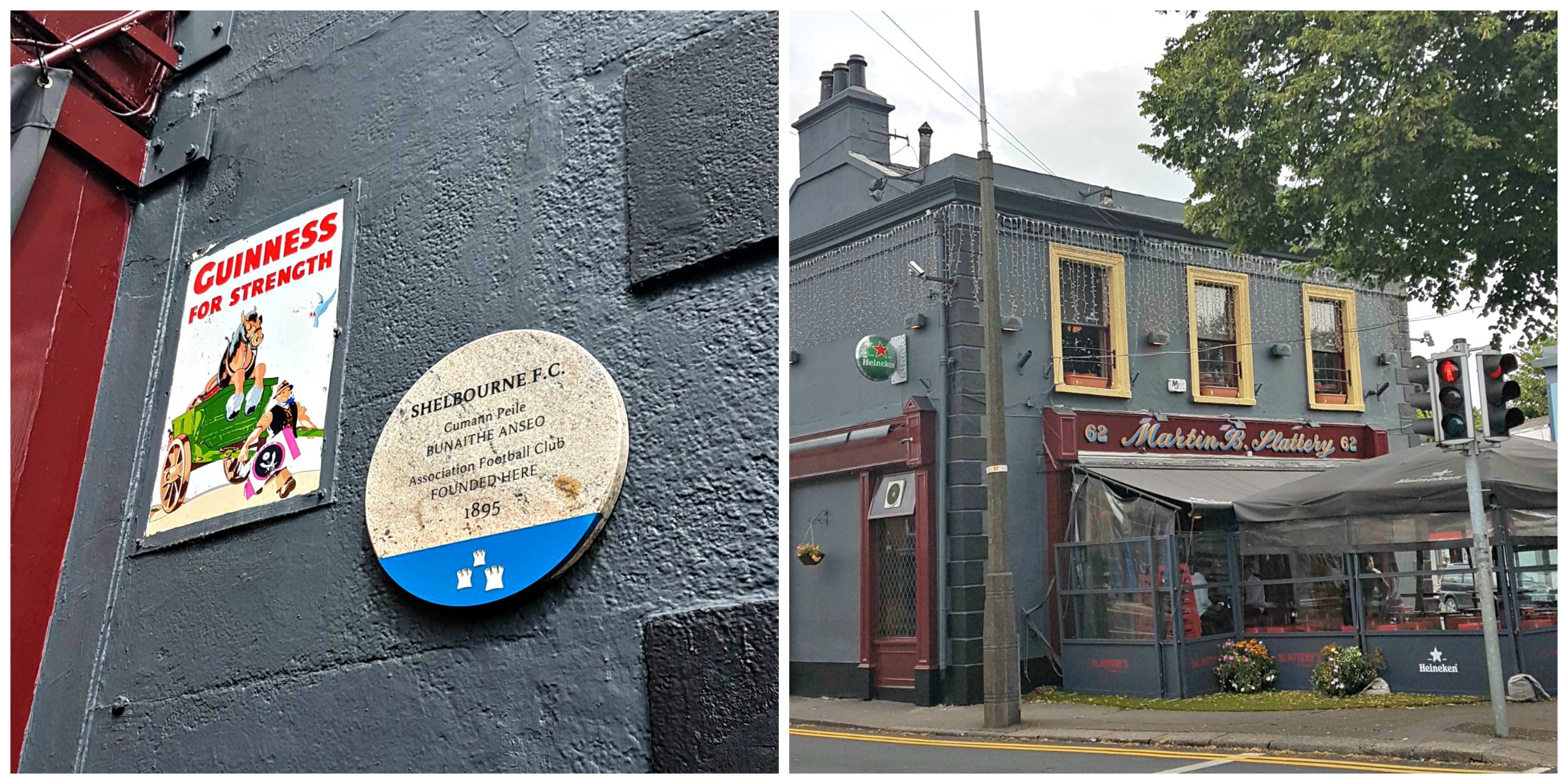
The club continued to grow, purchasing Pisser Dignam’s field in Phibsboro as their new home ground. Dalymount Park, named after the nearby line of terrace houses remains the club’s home to this day. It also played host to dozens of cup finals and hundreds of international matches. Bohemians were founder members of the Free State league, becoming champions for the first time in 1923-24. The club have proceeded to win the title on a further ten occasions.

Shels collage

Shelbourne F.C. plaque on Slattery’s Pub

Shelbourne were founded in what is now Slattery’s Pub at the corner of South Lotts Road, Bath Avenue and Shelbourne Road in 1895 by a group of dock workers from the local Ringsend/Sandymount area. Their name was reportedly decided upon by a coin toss between the various nearby streets. By the 1902-03 season they were champions of the Leinster Senior League and by 1905 they had become one of the first Dublin clubs to begin paying players, with James Wall receiving the princely sum of a halfpenny per week!

Paying players seemed to pay dividends because by 1906 the had become the first side from outside of Ulster to win the IFA Cup beating Belfast Celtic in the final. Other triumphs would follow and to date Shelbourne have won 13 league titles and seven FAI Cups.

Rovers5

Commemorating the founding of Shamrock Rovers in 1901. The building is located on Irishtown Road.

Shamrock Rovers, as with Shelbourne mentioned above, took their name from a street in the local area around Ringsend, in this case Shamrock Avenue. The street as it was then no longer remains, but is roughly located where the Square is today, a small side street off Irishtown Road. The first home ground of the nascent Rovers was Ringsend Park, just to the rear of Shamrock Avenue. The club was formed at a meeting held at number 4 Irishtown Road, the home of Lar Byrne, the first secretary of Shamrock Rovers. The plaque shown above commemorates this event, and can be found on Irishtown Road near to the corner with the Square, opposite the Ringsend public library.

Ringsend map collage

Irishtown Road past and present

Ringsend Park would not remain Shamrock Rovers’ permanent home for too long, as the club moved to a number of grounds in their early years and withdrew for competitive football completely on a number of occasions. However, by the early 20s, they were on the rise. They finished as runners-up in the inaugural FAI Cup final in 1921, and would win the league title a year later. By late 1926, Rovers had begun playing their matches in Glenmalure Park on the Milltown Road, and they had been playing on other pitches nearby in the years immediately preceding 1926. Glenmalure Park would remain Rovers’ home until 1987, when it was finally sold for redevelopment as a housing estate by the club’s owner, Louis Kilcoyne. The Rovers support had strongly opposed this move, and formed the pressure group KRAM (Keep Rovers At Milltown) to fight this decision. Ultimately, they were unsuccessful and the intervening years would see Rovers lead a peripatetic existence, moving to Tolka Park, Dalymount Park, the RDS and Morton Stadium amongst others, before finally relocating to their present home in Tallaght in 2009.

Glenmalure Park retains a strong significance for Rovers fans, and more than a decade after leaving, a monument commemorating their time on the Milltown Road was unveiled in 1998. In credit to Shamrock Rovers, a particularly active branch of their support have been prominent in recording and marking their heritage and history, not just with the plaque above, but also with initiatives like the fundraising for a new headstone for their former striker Paddy Moore.

Monument collage

Monument to Glenmalure Park on the Milltown Road at the former site of the stadium

This is pretty much the sum total of the football commemorations that I could find, although I would appreciate any other suggestions. For clarity I’ve excluded and plaques, monuments and such, that exist within football grounds and clubhouses. A quick review shows that despite the long football heritage of the city, very little of this is marked physically.

Statues of other sports stars adorn other parts of the country, from the recently unveiled statue of Sonia O’Sullivan in Cobh, to numerous GAA stars remembered in bronze in other parts of the country, hurlers Nicky Rackard in Wexford Town and Ollie Walsh in Thomastown being two personal favourites. There is a statue of Spanish golfer Seve Ballesteros at Heritage golf club in Co. Laois, and even our four-legged friends have been immortalised, with the legendary racing greyhound Mick the Miller getting pride of place in the centre of Killeigh, Co. Offaly and another of his ancestor Master McGrath just outside Dungarvan. In terms of football, there is a statue of big Jack Charlton in Cork Airport, but if you didn’t know him as the former Irish manager you might think it commemorates a noted angler.

So what have we learned? In Dublin, to be a footballer and receive a physical commemoration, it really helps if you’ve played for Manchester United! The city’s three biggest clubs are all remembered at their places of birth, while Rovers’ home ground at their peak has also been commemorated in granite and bronze. Perhaps Tolka Park will receive similar treatment if and when it is redeveloped? I for one would certainly hope so.

I’ll end on one final commemorative plaque. This one is on Parnell Square East and marks the birth place of the inimitable Oliver St. John Gogarty. The plaque commemorates Gogarty as a Surgeon, Poet and Statesman. Plenty more terms could be added. He was the inspiration for the character Buck Mulligan in James Joyce’s Ulysses, and he was also a fine sportsman, in swimming, cricket and indeed football. Gogarty was a Bohemian F.C. player from 1896 until at least 1898 and featured as a forward in the clubs first team. It may not be as a footballer that he is best remembered but it was certainly another string to his bow.Gogarty2