The Dalymount Falls – solidarity with Belfast in a time of crisis

Against a backdrop of the War of Independence and a city consumed by sectarian violence, thousands of Belfast’s shipyard and engineering workers found themselves expelled from their jobs for reasons ranging from their religion to their political affiliation. Many of these men found solace and indeed, the money to get by, through football. Cup tournaments for expelled workers were created and fundraising initiatives launched. At a pivotal time for the development of football in Ireland many clubs, including Bohemian FC, were to the fore in showing solidarity with the expelled workers of Belfast. This is my attempt to tell at least part of that story.

On the 12th of July 1920, Edward Carson, the Dublin-born icon of Unionism made an impassioned and inflammatory speech in a field in Finaghy, some four miles from the centre of Belfast, in front of an estimated crowd of 25,000. He railed against the dangers of a Sinn Féin invasion and stressed that, if needed, Ulster Unionism would oppose Home Rule by force, referring to secret plans by prominent Unionist politicians to resurrect the Ulster Volunteer Force (UVF). He then finished with quite the rhetorical flourish

“We must proclaim today clearly that come what will and be the consequences what they may, we in Ulster will tolerate no Sinn Féin – no Sinn Féin organisation, no Sinn Féin methods… And these are not mere words. I hate words without action”.

Edward Carson – 12th July 1920
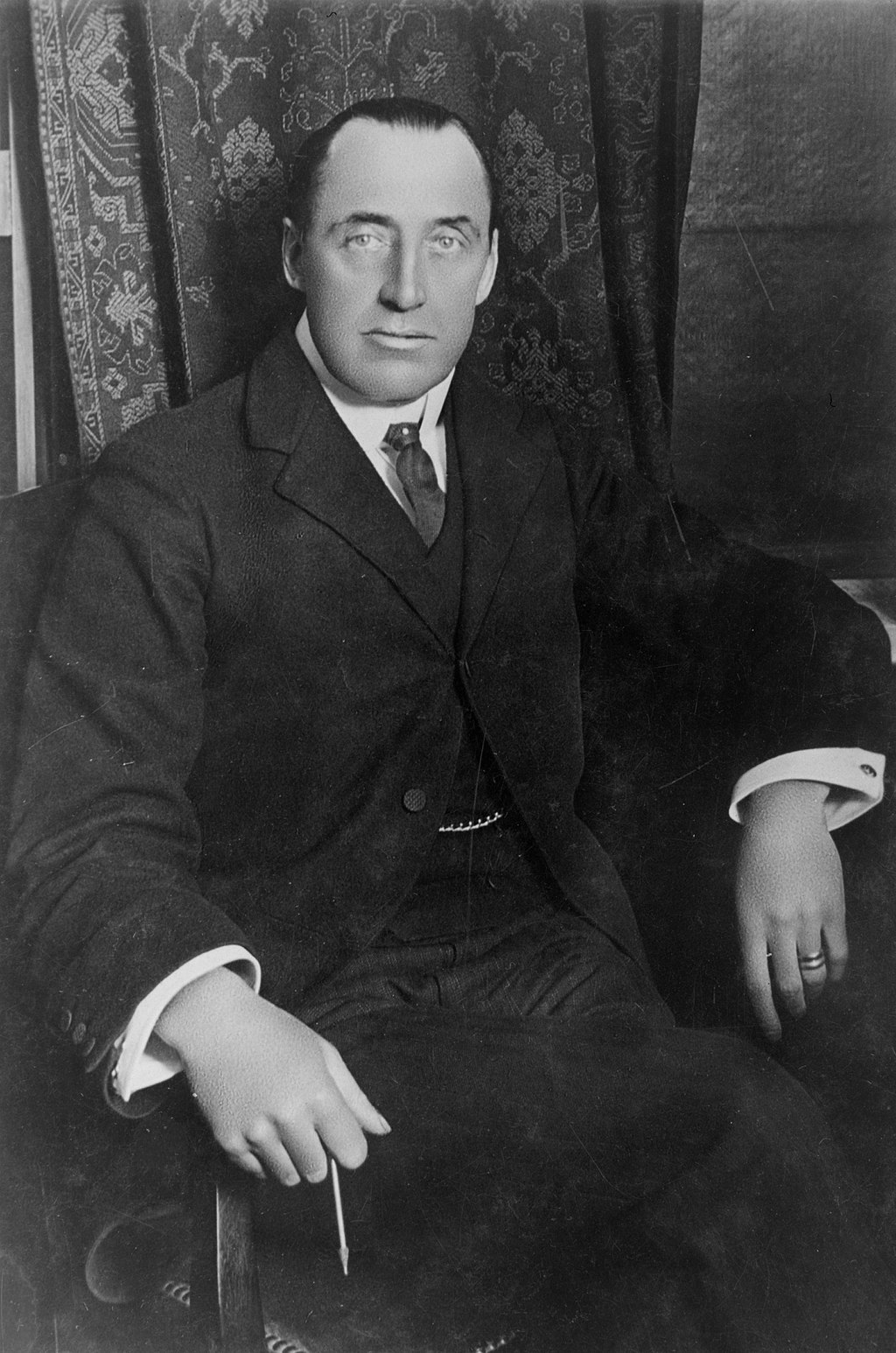
Edward Carson

Some Unionists had been shocked when earlier in the year Sinn Féin candidates had made significant gains in local elections across Ireland, including taking control of local Councils in several Ulster Counties. There was also the obvious backdrop of the escalating violence of the Irish War of Independence as further cause for concern. In March 1920 the Sinn Féin Lord Mayor of Cork, Tomás Mac Curtain was murdered in front of his family by members of the Royal Irish Constabulary (RIC) under the orders of RIC District Inspector, Oswald Swanzy. Three months later Lieutenant-Colonel Gerald Bryce Ferguson Smyth, a British Army officer seconded to the RIC made an incendiary speech to members of the RIC in Listowel, Co. Kerry regarding the methods which he wanted to see deployed in dealing with the Volunteers, culminated with the reported lines;

You may make mistakes occasionally and innocent persons may be shot, but that cannot be helped and you are bound to get the right persons sometimes. The more you shoot the better I will like you; and I assure you that no policeman will get into trouble for shooting any man and I will guarantee that your names will not be given at the inquest.

Lieutenant-Colonel Gerald Smyth (RIC) – June 1920

These events specifically would have a bearing on what was to come in Belfast and other parts of Ulster. While the 12th of July holiday had passed off peacefully, on the 17th of July, Gerald Smyth, targeted in part as a reprisal for his speech, was shot dead by the IRA in the smoking rooms of his members club in Cork. His body was taken to Banbridge, Co. Down, where his mother’s family had come from, for burial. It was after his burial on 21st July that most workers in Belfast returned to their jobs after the holiday break. The timing was bad and discussion quickly moved from the funeral of Smyth to Catholic workers in the Belfast shipyards and other related industrial sites, members of the Belfast Protestant Association had put up posters on the gates of Queen’s Island (Belfast Harbour) calling for a meeting of “all Unionist and Protestant workers” for lunchtime that day. Members of the militant Belfast Protestant Association made “very angry and hot” speeches to assembled workers from the Harland and Wolff and the Workman Clark yards, with the result that as many as a thousand workers then swept into the Harland and Wolff yards looking for Catholic workers and so-called “rotten Prods”, those viewed as Socialists or not sufficiently loyal to Unionism. It had not been lost on the mob that Carson in his speeches had also attacked ‘men who come forward posing as the friends of labour’, whose real object was ‘to mislead and bring disunity amongst our own people; and in the end, before we know where we are, we may find ourselves in the same bondage and slavery as is the rest of Ireland’.

Men had their shirt collars torn open as members of the mob searched for religious medals, while some even dived into the Musgrave channel and swam for their lives to escape the violence being meted out. The violence continued to grow and extended beyond the confines of the shipyards and became focused on neighbouring streets and businesses, trams were attacked and workers aboard, fleeing the violence of the shipyard were targeted.
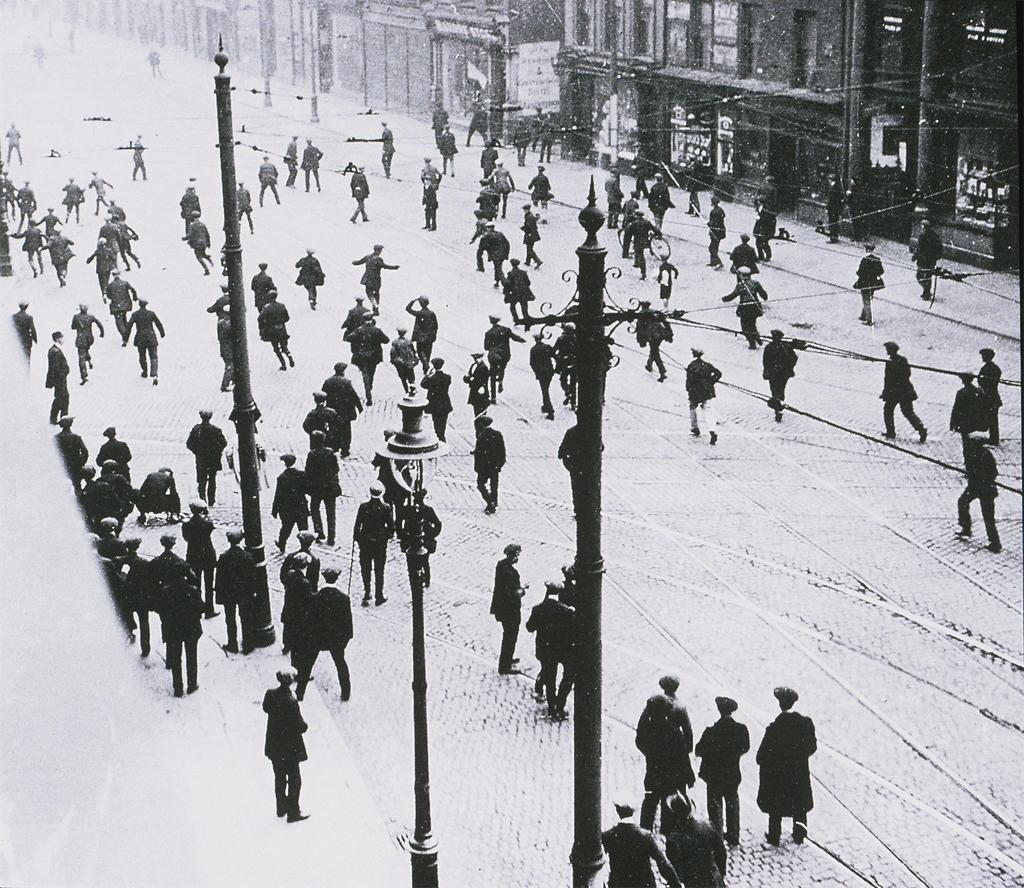
East Belfast 1920

Ultimately, almost 8,000 workers were expelled from their jobs. This in a city where in 1907, the dockers, under the leadership of James Larkin, had put aside sectarian division and stood together and fought for Union recognition. Even as recently as 1919 there had been a level of solidarity among the workers during the Belfast Engineering Strike which helped secure a shorter working week. However, as Padraig Yeates notes among those who were prominent in leading the 1919 strike, such as the Catholic, Charles McKay, the chairman of the strike committee, and James Baird, a syndicalist, were among the thousands of workers expelled from the shipyards.

In response to the expulsion of the workers, who were now left without a wage, a relief fund was set up in August of 1920. Soon there were over 8,000 workers registered for the relief scheme which supported them and their families meaning in all over 23,000 people were dependent on the relief scheme for their daily survival. This situation became even more perilous as the violence continued into the autumn of 1920. As Mícheál MacDonncha writes,

In East Belfast where many Catholic-owned public houses and ‘spirit groceries’ (grocery shops with alcohol licenses) were attacked and looted and the families who lived over them forced out. One estimate said that over 70 such premises were looted and destroyed. The Catholic St. Matthew’s Chapel and nearby convent in Short Strand were attacked and burned. Catholic families were expelled from their homes in Bombay Street between the Falls and Shankill Road

In addition to thousands of men and women being expelled from their jobs the next two years would see close to 500 people lose their lives in political and sectarian violence in the city. Some historians have referred to the events of the period as the “Belfast Progrom”. This violent and uncertain time may be a decidedly inopportune time to start a new football league but that is precisely what happened. As Chris Donnelly has written, the Falls and District League was established to compete in the 1920-21 season, with local businessman John Kennedy a key driver in getting the league established, later becoming its President.

Football was not immune from the social upheaval taking place and there had been several instances of serious violence at games in the previous two years. While this was certainly not confined to Belfast the most prominent incidents had involved Belfast Celtic, the club in the city most closely associated with the Catholic and Nationalist population. The 1920 Irish Cup had been awarded to Dublin side Shelbourne without a final being played after the semi-final between Belfast Celtic and Glentoran, played in March of that year, had to be abandoned amid pitch invasions and revolver fire. Belfast Celtic, league Champions in the 1919-20 season would withdraw from the Irish League and not return until the 1924-25 season.

Several of the former Belfast Celtic players found their way into the line-ups of the Falls & District League teams which soon sought to align itself with the break-away Football Association of Ireland, formed after a split between Dublin and the IFA in Belfast. There were some historic tensions between Dublin and Belfast over issues like player selection as well as choice of venue for international matches and cup games, however, things came to a head in 1921 against the backdrop of the increasing violence of the War of Independence and the sectarian and industrial unrest in Belfast.

The IFA made the decision to move Junior and Intermediate Cup matches which had been scheduled for Dublin to Belfast, while there was something approaching a diplomatic incident at an amateur international between Ireland and France in Paris in February, 1921. The Irish team, which included players from Bohemians, Dublin United and St. James’s Gate in the starting eleven was greeted by a “Sinn Féin flag”, in actuality an Irish tricolour, in Paris by a number of the crowd. These later were reported to be students from Egypt who identified or sympathised with the Irish struggle for independence. In reality, there was only one Egyptian student among their number, Ibrahim Rashid, who had previously attended University College Dublin. The others involved in the protest were members of the Irish Student Association of Paris and included Roy C. Geary, a UCD graduate then studying in the Sorbonne, who would later become the founder of both the Central Statistics Office and the Economic and Social Research Institute, A.J. Leventhal (a Trinity graduate and friend of James Joyce) and man named Patrick Gallagher who later became a Professor of Chemistry in UCD. The identities of those involved were only disclosed by a letter from Roy Geary to the Irish Times in January 1982, more than 60 years after the event.

The final straw arrived in March 1921 when the venue for a replay of the drawn Cup game between Glenavon and Shelbourne came to be decided. The original match had taken place in Belfast so custom would suggest that the replay should take place in Dublin. However, the IFA ruled that the replay should also take place in Belfast. The FAI was founded a few months later in September and it was to this organisation that the teams of the Falls and District League chose to affiliate.

By September 1921, as the FAI was in the process of establishing itself as a separate entity and arranging its first competitions, the Falls and District League were coming to Dublin to take on Bohemians in a fundraising match for the expelled workers of Belfast. The match, set for Saturday, 10th September was to be the curtain raiser of the new season for Bohemians. Both they, and Shelbourne had withdrawn from the Irish League after the end of the 1919-20 season and they were preparing for the first season of the League of Ireland, due to kick off the following week. Bohs would finish second that season behind St. James’s Gate, and possessed a strong squad which included Billy Otto, the South African half-back, English winger Harry Willetts, Johnny Murray, Bert Kerr, Edward Pollock and amateur international striker Frank Haine as well as future Irish international Jack McCarthy.

Teams for the Dalymount match, September 1921

The Falls team were made up of players from several member clubs, St. Peter’s, Alton United, Ardoyne, Rosario, Trojans, Highfield and West Ham. In fact, West Ham, a team made up mostly of expelled workers from the Belfast shipyards won a regional Belfast qualifying competition and as a result were drawn in the first round proper of the inaugural FAI Cup against Dublin side Shelbourne, who they took to a replay. Shelbourne triumphed in the replay but it was not the last significant impact that a Belfast side would have on the FAI Cup. According to one report from the Evening Herald Johnny McIlroy of Rosario and Joe Devlin of St. Peter’s were both former Belfast Celtic players. While it seems that Andy McSherry had also been on their books some years earlier.

There was significant interest in the Bohemians v Falls XI game in Dalymount and a large crowd of around 6,000 attended and significant sums, estimated at £130, were raised for the expelled workers fund. The Herald further reported that “a novelty was occasioned by the policing of the ground by the IRA which proved most satisfactory”, specifically the Military Pension files of Michael Murphy show that this work was done by “C” company of the 3rd Battalion of the Dublin Brigade of the IRA. The reports describe a lively, entertaining, and competitive match. The Falls took the lead after around 15 minutes when O’Donnell of the St. Peter’s club scored after good work from Duffy. Kerr came close to doubling their advantage soon afterwards. Bohs equalized before half-time through the quick-thinking of Harry Willetts whose parried shot was tapped in by Thomas Holden. In the second half Bohs began playing with the wind and began pressing for the winner, it eventually came through some excellent individual play on the part of Johnny Murray who curled a shot past Killeen in the Falls goal which secured a victory for Bohemians.

Afterwards dinner was served to both teams in the Dalymount Pavillion followed by a “smoking concert”. Such was the success of the match that it was agreed that a return game in Belfast in the very near future was desirable. Initially a return game for later that month was suggested, although this clashed with a League of Ireland fixture between Bohs and Jacobs. Eventually October 8th 1921 was agreed as a date for the return fixture in Belfast and the Falls League set about trying to secure Celtic Park, home ground to Belfast Celtic as a venue. This, however, couldn’t be arranged and the match was due to be held in Shaun’s Park, a former home to Belfast Celtic and later known as MacRory Park and in later years more associated as a site for GAA than soccer. As Chris Donnelly notes the venue also played host to an all-Ireland semi final in October 1909 between Antrim and Louth, in which the Wee County would run out winners by 2-13 to 0-15. During the mid-1930s, many Catholic families were forced to take shelter in the park after being burnt out of their homes in the sectarian riots that engulfed the city.

Along with the difficulty securing the ground there were also challenges to even secure a hotel or restaurant to host the visiting Bohemians team. In the end the Falls side had to host Bohs in their clubhouse and arrange their own catering. For Bohs part they seem to have made a day of it in relation to their journey north. Certainly, there was no mention of any concern for the safety of the travelling party. They stopped for lunch at Cushendall where there were speeches from the various members present, including club President Michael Moynihan, and secretary of the FAI Jack Ryder. While dining they also met with Clemens J. France, a lawyer from Seattle working in Ireland as part of the White Cross who were providing aid during the War of Independence. France would later become part of a committee chaired by Michael Collins that helped develop early drafts of the first Constitution of the Irish Free State.

Bohs leisurely journey continued with stops in Camlough, Co. Armagh where they were welcomed by the Parish Priest Father Kerr who described the group as “plucky” for venturing up north during the “days of trouble”, while there was a further stop in Larne before the eventual arrival in Belfast just before the curfew.

The return match itself was a significant draw, even hampered as the game was with having to use Shaun’s Park. The newspaper Sport claimed it was the biggest gate of the weekend, and would have undoubtably been even larger had Celtic Park been made available. That the match drew larger crowds than other games in Belfast that weekend, which included Linfield taking on Cliftonville and Glentoran hosting Distillery, was testament to the appeal of both Bohemians and the Falls selection. Estimates had the crowd at around 3,000 and the return from the gate at around £65. Roughly half and attendance and takings of the earlier Dalymount match.

The scoreline on the day was the reverse of the Dublin game, the Falls selection triumphing 2-1 this time. They were aided considerably by the return to the starting line-up of their centre-forward, Vincent Davey of the St. Matthew’s club. Davey scored both goals either side of Frank Haine netting for Bohs with Johnny Murray missing a great opportunity to equalise. Just a few weeks earlier Haine had scored the first goal ever in the League of Ireland as he helped Bohemians to a comfortable win over YMCA. Davey on the other hand had missed out on the trip to Dublin a few weeks earlier, his absence and his reputation noted by the media on that occasion. As well as being centre-forward for St. Matthew’s, Davey was also the Parish Priest of St. Matthew’s.

Located in the Short Strand area of Belfast, St. Matthew’s Church and the neighbouring convent had been attacked on successive nights on the 22nd and 23rd July as Loyalist gangs first began pelting the buildings with stones before then trying to set them ablaze. This was only prevented by a detachment of British troops opening fire on the attackers. Fr. Davey had also been involved in attempting to ease tensions at the time of the worker expulsions and sectarian violence.

In a somewhat bizarre connection a Church of Ireland Reverend and former British Army officer, Frederick Chesnutt-Chesney from the same area was also involved in leading civilian groups from his congregation to protect Catholics and try to stem the tide of violence in July and again later in the year after the killing of Oswald Swanzy by the IRA in Lisburn sparked a fresh wave of disorder. Chesnutt-Chesney had been a goalkeeper for Bohemians in the years prior to the First World War. In the small world of Belfast surely the two footballing clerics must have known each other?

Around the same time that his Church had been attacked Davey had intervened in a sectarian labour dispute. In response to the shipyard expulsions a small group sent a letter claiming to be from the IRA and threatened the management of the Anderson & Son felt and roofing works factory in Short Strand. They had demanded the dismissal of all Protestant workers from the factory. Fr. Davey as a local priest approached the factory’s Managing Director, a Mr. Brock to assure him that these demands were not representative of the community and we not made “by any responsible members of their flock”. Davey, some other Catholic clergy, and according to the Freeman’s Journal a group of IRA men acted as a picket to protect the Protestant workers at the factory as they left during their dinner hour. Davey would later work in the Catholic Missions in Nigeria before returning to Ireland and becoming the Parish Priest of the town of Antrim until his death in 1970. He maintained in interest in football and an affection for Killyleagh United F.C. from the town where he had been priest during the years of the First World War.

Bohemians returned to Dublin and to the League of Ireland, they would finish second in that inaugural season. Despite the limits placed on their hosts in terms of venue for both the game and a reception the Bohs players and administrators enjoyed themselves after the match and spoke “glowingly in praise of the hospitality of the northern adherents to the FAI”. The following year they bolstered their squad with the signing of Johnny McIlroy, the former Belfast Celtic star who had been lining out for the Falls League as a full-back when they came to Dalymount. McIlroy would have a long and successful career with Bohs, winning league titles in 1924 and 1928 and adding the 1928 FAI Cup to the Irish Cup he had won with Belfast Celtic ten years earlier.
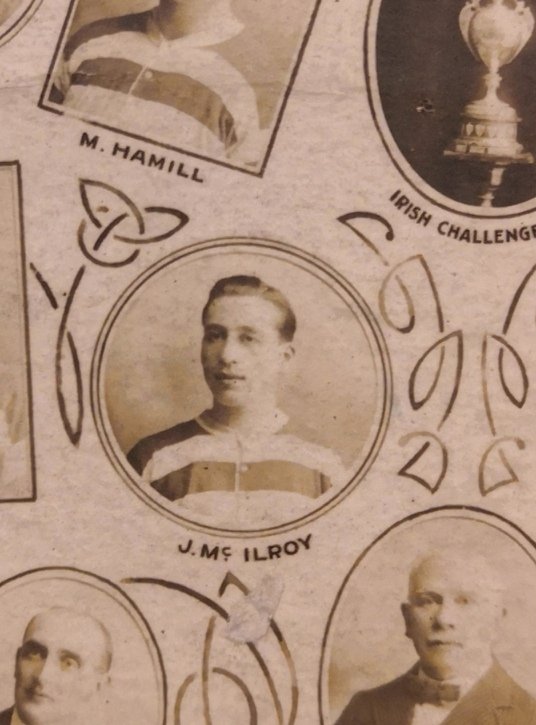
Johnny McIlroy during his time with Belfast Celtic

For the Falls League things remained challenging. A cup competition, entitled the Expelled Workers Cup was created to help raise money and keep the workers active. The teams of the Falls league competed in it. In 1922 this cup was won by the Ardoyne club while West Ham, the side who had taken Shelbourne to replay in the FAI Cup, won the Falls and District League. While they had nearly caused a cup upset, their Falls League counterparts, Alton United, created a downright shock – they would win the 1923 FAI Cup final against Shelbourne.

Alton United, 1923

Alton had some pedigree, previously known just as “United” they had been IFA Junior Cup champions in 1920, when they began operating from rooms above the Alton Bar they changed their name to Alton United. Alton were based in Carrick Hill, a small Catholic enclave at the bottom of Belfast’s fiercely loyalist Shankill Road area and surprised all of Ireland when they defeated Cork side Fordsons in the semi-final and then beat clear favourites Shelbourne 1-0 in the final, with Andy McSherry grabbing the winning goal. On that Alton team was Michael Brennan, who had played centre-half as the only Alton player in the Falls XI which visited Dalymount in September 1921. In another echo of that match the security for the Alton side on their visit to Dublin were, according to some reports members of the IRA. This was likely a mistake and actually referred to the Free State Army as just days earlier Liam Lynch had issued the “Amusements Order” which called for all sports and amusements to be cancelled and called for a period of national mourning for the members of the IRA executed by the Free State Government. This was in March 1923, two months before the “dump arms” notice led to the end of the Irish Civil War.

Michael Brennan, the star centre-half for Alton United and the Falls League XI is an interesting character and his story gives a glimpse into the complexity of life in Belfast at the time. From the research carried out by family members Siobhán Deane and Damien Brannigan we learn that Brennan was a WWI veteran, having heeded the call of John Redmond to join the Irish Volunteers and subsequently the British Army where he served with the 6th Connaught Rangers for whom he was regiment boxing champion as well as playing football for the regiment. He was from Alton Street in Belfast and was a shop owner in the city after being demobbed in 1919. His business was one of those destroyed during the violence of the 1920-22 period while his older brother Bernard (Barney) was seriously injured after being shot in the Carrick Hill area of the city. Both Michael and his brother Robert had fought in World War I and both played for Alton United after their return home. Robert would later become involved with the Belfast Brigade of the IRA and his home was used as a safe house. Michael would remain in Belfast and remain involved with Alton United for many years after hanging up his boots being at various points club chairman as well as club treasurer.

Michael Brennan in the uniform of the Connaught Rangers

The Alton United win, which might have become a significant landmark to progress for Belfast clubs affiliated to the FAI became something of a coda. By the end of 1923 the FAI had affiliated to FIFA and also met with the IFA and the Football Associations of England, Scotland and Wales in Liverpool at a conference designed to heal relations after the split two years previously. Part of this rift-healing meant that the FAI agreed to confine its jurisdiction to the twenty-six counties. One gesture towards a healing of old animosities was an early cross-border competition – the Condor Cup – a two-legged annual affair contested between Bohemians and Linfield. Aside from such cross border cups there would be end to any Northern sides involvement in FAI domestic league and cup competitions until the affiliation of Derry City in 1985. Today, it is fair to say, the Falls league and it’s member clubs are mostly forgotten, even in their home city. Belfast Celtic returned to the Irish League in the 1924-25 season and once again became the footballing focus for much of the city’s Nationalist community until their eventual, complete and final withdrawal from football in 1949.

The expelled workers relief fund continued to support thousands of workers and their families in Belfast, in some cases the burden was even greater than the mere loss of employment as hundreds of predominantly Catholic occupied homes had also been burnt down. Fundraising continued, apart from the games involving Bohemians to raise funds, Shelbourne also made financial donations to support the workers, while in July 1922, some two years after the original shipyard expulsions, there was even an “Italian Operatic concert” under the management of Enrico Gagni, held to raise funds in Dublin’s Theatre Royal.

While the immediate post-War years had seen a boom in Belfast’s shipyards with a huge demand for new shipping to replace the vessels lost in the First World War, the worker expulsions had a damaging impact. Many of the workers expelled has specialist skills that were not easy to replace, they had also gotten rid of some of their strongest, most formidable Trade Union representatives. This coupled with the collapse in global demand by the end of the decade caused by the stock market crash of 1929 meant that Belfast’s shipyards and engineering industries had taken blows from which they wouldn’t recover.

The 1920s were a challenging decade from a sporting point of view for the FAI, they had to battle for international recognition and even domestic credibility. There was real concern that directly after the split that clubs like Bohemians and Shelbourne would want to remain part of the Irish League rather than throw their lot in with the FAI, while it was clear that Belfast clubs like Linfield or Glentoran would never leave the IFA and that the crowds generated by the visits of these clubs as well as international matches in the Home Nations Championship were also lost. Despite being an amateur club the 20s were to be a time of relative success for Bohemians, a league title was secured in 1924 while the 1927-28 season saw Bohs make a “clean sweep” of the League, FAI Cup, Shield and Leinster Senior Cup. This decade also saw Dalymount become the venue of choice for international matches as well as cup finals and prestige friendlies.

The joining of FIFA in 1923 and the Liverpool conference with the other UK associations put an end to any claims of jurisdiction by the FAI over northern clubs, by the 1950s the habit of the IFA and FAI selecting the same players for international games had also come to an end. Cross border tournaments with a variety of sponsorship titles, came and went but the distance between Belfast and Dublin grew in footballing terms. The split which in the 1920s had seemed temporary and resolvable, hardened. It is worth remembering that at a time of crisis Bohemians (and indeed Shelbourne) were there to support the footballers and the workers of Belfast.

With a special thank you to Manus O’Riordan for his assistance in researching this article.
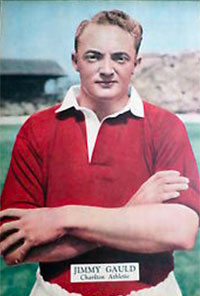
Jimmy Gauld: goal-poaching & match-fixing

When Dundalk dominated a couple of seasons ago there were many accolades thrown in the direction of the team and its players as they progressed to a historic double. Among the awards amassed was that of top scorer in the league for their prolific striker, Patrick Hoban who fell just one goal short of the 30 mark. A hugely impressive achievement. In fact the last time someone hit the 30 goal mark in the League of Ireland was way back in the 1954-55 season. That man’s name was Jimmy Gauld, and his thirty-goal haul for Waterford was only one dramatic chapter in a life full of intrigue and incident.

Gauld was born in Aberdeen in 1929 and although he lined out as a youth player for his hometown club he never made a first time appearance, instead he plied his trade in the Highland leagues before being signed by Waterford in time for the beginning of the 1954-55 season. The Blues obviously had been keeping an eye on the Scottish game as they also signed ‘keeper Tom Hanson from Greenock Morton on a trial.

Gauld joined an exciting Waterford side who were on the up and featured plenty of talented players in their ranks, including three of the Fitzgerald brothers, the Hale brothers George and “Dixie”, and Scottish-born, United States international, Ed McIlvenney who had been signed from Manchester United.

Stocky, tough and with an incredible burst of acceleration (Jimmy had been a useful sprinter in his youth) Gauld could play anywhere across the front five but tended to line out at inside right for Waterford. He made an immediate impression on the league, within a month of joining Waterford Gauld had been selected to represent the League of Ireland against the Football League in front of an estimated 35,000 spectators at Dalymount Park. The Football League were convincing winners on that day with a certain Don Revie netting a hat-trick, ably assisted by team-mates of the calibre of Stanley Matthews and Billy Wright.

Jimmy Gauld however would have more success on the domestic scene however, over the course of a thrilling season Waterford pushed St. Patrick’s Athletic close for the league title, Pats eventually winning the title race by three points. It was however, an amazing season of goals for runners-up Waterford. In a 22 game league campaign they scored 70 goals, and they broke the 100 mark in all competitions. Gauld got 30 in the league and an incredible 42 in all competitions to beat St. Pats centre-forward Shay Gibbons into 2nd place for the top scorer award. In particular he developed a fine understanding with Jack Fitzgerald and their partnership brought huge crowds to Kilcohan Park with their attacking style of play. Jimmy would also feature again for the League of Ireland XI, this time starring alongside four of his Waterford teammates in a 2-1 victory over the Irish League.

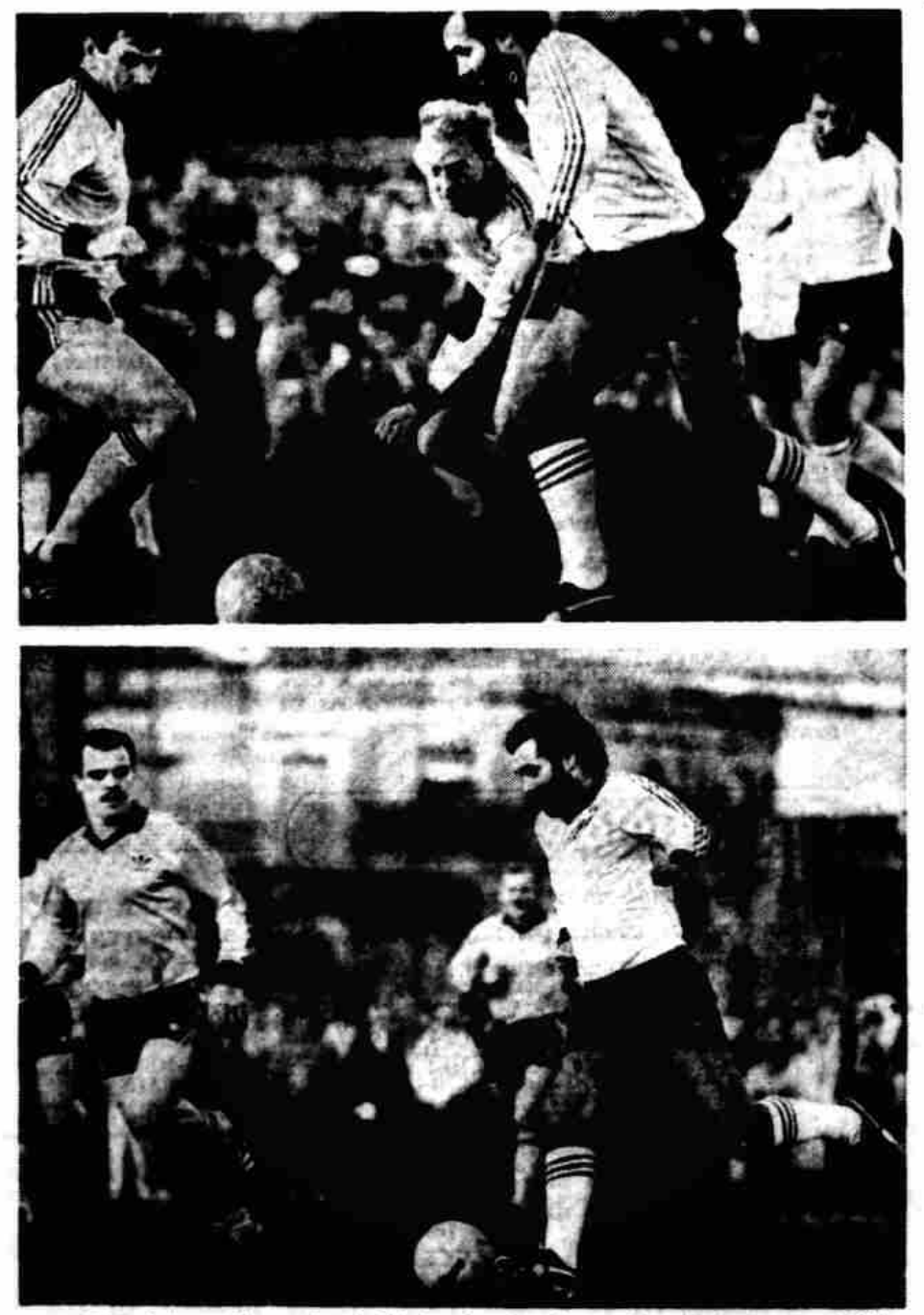
Gauld scores against St. Pats’ from the Irish Press – 28th March 1955

Jimmy Gauld’s scoring exploits didn’t go unnoticed across the water. Charlton Athletic who were enjoying a spell in the top-flight earmarked Jimmy Gauld as the man to replace their departing superstar striker Eddie Firmani who was on his way to Sampdoria. A fee of €4,000 was agreed with Waterford and Gauld enjoyed immediate success in the English First Division, scoring an impressive 17 goals in his first season with Charlton. His good form continued into the early weeks of the following season which prompted a big money move to Everton for over £10,000. Apparently Gauld was upset by dressing room criticism of his style of play from Charlton teammates who accused him of not doing enough in terms of his defensive duties. According to a number of accounts he was also a good friend of Everton captain Peter Farrell who had begun his football career with Shamrock Rovers.

Gauld only lasted a season at Everton, playing 26 games and scoring 8 goals but by the 1957-58 season illness and injury had seen him dropped from the Everton first team. This helped Plymouth Argyle manager Jack Rowley pull off something of a coup by getting him to sign for the club who were then in the Third Division. Gauld’s style of play, goal-scoring ability and searing pace quickly endeared him to the Home Park faithful and he helped the club to promotion to the Second Division, scoring 21 goals in that promotion season of 1958-59. Once again however, Jimmy and the club management had a failing out.

Perhaps enamoured by their star striker’s success and hoping to cash-in on a player who had just hit 30 goals, Plymouth made it known that they would entertain offers for Jimmy’s services. Gauld was upset by this treatment, as were his many fans of the Argyle. There were offers for him to move into a player-coach role at Gloucester City but Plymouth insisted on a significant four-figure transfer fee which the Southern League club couldn’t afford. Ultimately Jimmy’s next port of call was Swindon Town who signed him for a club record fee of £6,500.

Despite a respectable return of 14 goals from 40 games in his only season for Swindon it was around this time that rumours first started to swirl about Jimmy in relation to match fixing.  He was released at the end of the season after accusations that he helped to fix a match in April 1960 versus Port Vale, which Swindon lost 6-1. Four years later, he admitted that “Swindon were comfortably in the middle of the League, with nothing to win or lose, so it didn’t seem such a terrible thing to do”.

It turned out that Gauld was able to make good money convincing teammates to throw games while at Swindon which saw him rack up betting earnings of up to £1,000 per game. Huge money when the maximum wage in football was still in place and even the best players couldn’t earn more than £20 a week. Gauld and his colleagues in the Third Division would have been earning considerably less than even that modest amount.

Despite being released by Swindon there were still demands for Gauld’s services in 1960. The match-fixing side of his life hadn’t come to public prominence yet and there was interest in Jimmy from the likes of QPR, Peterborough and from Irish Champions Limerick who surely remembered his record-breaking season just five years earlier and wanted him to lead the line ahead of their first season in European football.

It wasn’t to be however, rather than return across the Irish Sea Jimmy went back to his home country of Scotland and signed for St. Johnstone. After a very brief spell north of the border he was back in the Football League with Mansfield Town in the old Fourth Division. Jimmy had a good start scoring three times in his first four games, but in the last of those games he broke his leg and despite attempted comebacks his career as a player was effectively ended aged just 31.

In 1964 a shock exposé by The People newspaper named Gauld as the ringleader in a bribery scandal which shook British football to its core. It showed that he was at the heart of a scam which had fixed up to three matches per week by utilising contacts from his years in the game, most of whom never knew each other nor who was in on the scam.

One of the most high profile matches that Gauld was involved in fixing was the meeting between Sheffield Wednesday and Ipswich Town which he arranged through his former Swindon teammate David Layne. Wednesday midfielder Tony Kay, who was capped by England and later moved to Everton, recalls Layne approaching him about the game saying;

‘What do you reckon today?’ I said, ‘Well, we’ve never won down here [Portman Road].’ He said: ‘Give me £50 and I’ll get you twice your money.’ I thought that was a good deal.

The story of my bet eventually came out after I was transferred to Everton. I was in a Liverpool nightclub one Saturday night [in 1964] and a friend said to me: ‘You’re all over the front page of the Sunday People about the Ipswich game. They’re saying you bet on the match and the bookmakers have been screaming because they lost £35,000 that week.’

Kay was ironically named Man of the Match in that 2-0 defeat to Ipswich. After the revelations became public he was doorstepped by Jimmy Gauld, who he claimed to never have met previously. Gauld fired a rapid barrage of questions at him about the game and match fixing before leaving his house. It turned out he had secretly been recording Kay and used those taped recordings in the subsequent trial. He also sold his story to the Sunday People newspaper for a reported fee of £7,000.

After pleading guilty Gauld served four years in jail and was fined £5,000 for his illegal activities which also saw nine other players imprisoned, including England internationals Peter Swan and Tony Kay. The judge stated at the hearing in January 1965 that,

“It is my duty to make it clear to all evil-minded people in all branches of sport that this is a serious crime. You are responsible for the ruin of players of distinction like Swan, Layne and Kay.”

After prison Jimmy Gauld did return to Ireland, living on Co. Mayo in the 1970’s, he worked as a driver and assistant to the wealthy industrialist Denis Ferranti who owned Massbrook House on the shores of Loch Conn. Locals remember him as a popular and sociable character, he was well-liked by the local youngsters due to his habit of giving them copies of Shoot magazine, a rare commodity in rural Mayo.  He later returned to London where he passed away in 2004. He remains the last player to score 30 goals in a League of Ireland season but this impressive statistic is lost obscured by his key role in organising one of the biggest betting scandals in British sporting history.

A special thank you to Frank Gibbons for information on Jimmy Gauld’s later life on Co. Mayo.

The Philadelphia Story

Irish emigration to the United States is not a new phenomenon, Annie Moore from County Cork became the first immigrant to pass through Ellis Island, New York in 1892 but by that stage there had already been millions of Irish immigrants who had set up home throughout the USA. It is estimated that as many as 4.5 million Irish arrived in America between 1820 and 1930. Between 1820 and 1860 alone, the Irish constituted over one third of all immigrants to the United States.

With this number of Irish immigrants it should not be surprising that there are many Irish names to be found within the early years of US football history, names like Cahill, Peel, Farrell and Cunningham who were either Irish-born or the children and grandchildren of emigrants. Even the club names bear witness to this with plenty of Hibernians and Shamrocks being used as suffixes back into the 1890s. There was even mention of a team called the Philadelphia Irish Nationalists back as far as the 1870s.

However by the 1920s something different was happening: along the Eastern seaboard a professional soccer league was emerging, the ASL (American Soccer League), which began its inaugural season in 1921-22 featuring clubs from in and around New York, New Jersey,  Massachusetts and Pennsylvania, areas with strong concentrations of Irish immigrants. The debut season was won by the Philadelphia Field Club who were mostly made up of players formerly of the Bethlehem Steel Football Club. However, after this early success Philadelphia soccer took something of a nose-dive, with the club struggling towards the bottom of the league in subsequent years.

At this point, Irish interest re-emerges in the form of Irish-born, Brooklyn based businessman Fred Maginnis, who took over the struggling Philadelphia Field Club and boldly rebranded them as Philadelphia Celtic ahead of the 1927-28 season of the ASL. The change of name was not just a nod to his homeland; Maginnis had intended to bring across the cream of Irish footballing talent to join his squad. His hope, apparently, was that the significant Irish community in and around the city would come out in big numbers to support this Irish branded football team.

Maginnis got rid of most of the previous year’s squad, though he did keep former Irish League players Billy Pitt, once of Newry Town, and Hugh Reid, a promising defender who had previously been on the books of Glentoran. Both Pitt and Reid had been highly rated during their Irish League careers. Pitt, was a Belfast-born wing-half who had been part of the first Newry Town squad to compete in the Irish League, and he and young Reid had been selected for an Irish League XI for an inter-league game against a League of Ireland XI in 1926.

Billy Pitt proved to be especially useful for Maginnis in recruiting new players for the Philadelphia Celtic directly from Ireland. Pitt’s footballing connections, and Maginnis’ promises of free passage to America and $55 a week in wages, turned a lot of heads and players of varying talents made the journey. Of the more prominent figures convinced to journey across the Atlantic were Ards players Jimmy McAuley and Eddie Maguire, as well as the much-travelled forward Arnold Keenan, who had featured for Fordsons in the Free State League, Glentoran in the Irish League, and for Crystal Palace in England. Others who travelled from the League of Ireland included Michael Maguire, an inside-right, and Paul O’Brien, an outside-left who had played for Brideville, and Larry Kilroy, an inside-right from Bray Unknowns. Also included was Shelbourne player William Burns, who broke an FAI suspension from football to go and play in the United States.

Perhaps the two most famous players who travelled were Free State internationals Denis “Dinny” Doyle and Bob Fullam of Shamrock Rovers, who were joined by fellow Rovers team-mate Alfie Hale (father of the Waterford footballing legend of the same name). By the time of their journey they were both Irish internationals, having represented the Irish Free State in two games against Italy. While Doyle only featured in the home fixture against the Italians, Fullam played in both Turin and Dublin games and got on the score sheet in the home match.

Fullam was one of the best known figures in the League of Ireland. A talented inside forward, he had a rocket-like left-foot and had already been central to Shamrock Rovers’ three league titles and an FAI Cup win. Such was his importance to the team that the popular terrace cry of “Give it to Bob” became common among Rovers fans any time their team were on the back foot.

Fullam had played outside of Ireland before, lining out for a short time for Leeds United but the trip to Philadelphia was a bigger jump into the unknown. Billy Pitt would have faced Fullam in that inter-league match in 1926, and he would certainly been aware of him by reputation when he approached him about the trip to America. It was Fullam in turn who convinced Dinny Doyle to travel. Some newspaper reports suggested that Fullam and co travelled in August 1927, ostensibly as part of a touring Irish exhibition side to the United States, though this seems to have something of a cover story for their true intentions.

What was clear however, was that the Philadelphia Celtic, although rapidly assembled, could certainly hold their own in the professional ranks of the American Soccer League. Although they lost their opening game, they followed this up with a draw and then two victories over the impressive Fall River Marksmen and the Boston team. All was not well in the camp however, as the Boston result was overturned because Philadelphia had made an improper substitution. The lack of any proper coach or manager no doubt was partly to blame, as well as the mounting financial problems.

The ethnic marketing of an Irish Philadelphia side was not creating as big a stir in the city of Brotherly Love as Fred Maginnis might have hoped: even games against strong sides like Boston and Fall River were only drawing crowds of 2,000 – 3,000. Results were very unlikely to improve, as quite quickly the players realised that the riches they had been promised weren’t materialising. Whether Maginnis’s strategy had been to use money raised from expected big gates to pay the squad’s wages, or whether he was just a poor businessman without a Plan B isn’t clear, however, the Irish players quickly realised that the $55 a week they’d be promised wasn’t going to turn up, nor even a fraction of it.

There had been problems with payments from the beginning, and the ASL had come in and taken over the running of the team on an interim basis while they told Maginnis to find a buyer to take over the club. Maginnis, however, didn’t seem to be trying very hard. The Philadelphia franchise being deliberately over-valued put off potential investors, however, Maginnis did seem keen to strike a deal to sell the majority of the club’s playing staff to the Fall River Marksmen club. The league objected to this, and there were even discussions about whether the players could move. Eight of the players had work permits sponsored by Philadelphia Celtic (describing their profession as artists) which would then have to be endorsed by the new club that they would join.

It all came to a head before the end of October 1927 after only 10 games for Celtic, when the League Commissioner Bill Cunningham announced that Philadelphia Celtic had folded and that as far as they were concerned the players who had remained were free agents who could move to a club of their choosing. Some of the Irish contingent decided that they’d had enough; they’d struggled financially due to Maginnis’s mismanagement and by November William Burns and Paul O’Brien had already returned to Ireland. Bob Fullam had a short sojourn with the wonderfully named Detroit Holley Carburettor FC before eventually returning to Shamrock Rovers ahead of the 1928-29 season. Others like Kilroy, McGuire and Alfie Hale would return to Ireland after a matter of months. Billy Pitt, who had helped recruit many of the players for this Philadelphia experiment, would stay a few years longer, playing first for Fall River and later the New Bedford Whalers, Bethlehem Steel and the Pawtucket Rangers. He eventually returned to the Irish League in 1931 where he signed for Glentoran, after some disagreement regarding his transfer from his former club Newry Town. Pitt had left Newry for the States without a transfer being paid and personally faced a significant fine of £50 for breach of contract, it was only after Glentoran agreed to pay this fine that the transfer was sanctioned.

Fullam’s erstwhile team-mate Dinny Doyle had, however, taken to American living and to the ASL. After initially being frustrated in his attempts to sign the Philadelphia players, Sam Mark, owner of the Fall River Marksmen, was successful in signing not only Doyle and Pitt but also Arnold Keenan and Jimmy McAuley. Doyle would go on to be a league Champion with Fall River the following season, as they became one of the most dominant American soccer teams of that era. Dinny Doyle made his life in North America, passing away in his home in Canada in the late 1980s. He was the last surviving member of that first Shamrock Rovers side to win the league title.

The idea of importing an Irish soccer team wholesale into a professional American league was a novel one, it played to the ethnic target marketing that was common in American soccer at the time, but it was ultimately doomed to failure due to the unscrupulous behaviour of an Irish-American businessman trying to get one over on footballers eager for a better life.

While the Philadelphia Celtic quickly failed and many of their players returned to their careers in Ireland, it was not to be the last time that an Irish side was parachuted into an American soccer league…

The research of Steve Holroyd and Michael Kielty has been especially useful in preparing this article.
Thomas Blackstock and the outcasts – the story of the PFA

A guest post by Fergus Dowd

On the 8th of April 1907, Thomas Blackstock bid farewell to his wife and made his way to the Manchester suburb of Clayton. As the Scot walked through the streets of Manchester, he wondered if today would resurrect him back into the first team. That first team was Manchester United’s, and Tommy’s final destination was the stadium at Bank Street, known locally as the Bradford and Clayton athletic ground.
Blackstock had arrived in Manchester from the mining town of Cowdenbeath in June 1903; it was then a football club languishing in the second division which had recently survived a winding-up order.
Four months earlier, Newton Heath football club was grappling with severe debt; £2,700 to be exact was required to keep the club operating. Step forward several local businessmen led by John Henry Davies who would save the club from liquidation; Davies would become club president and Manchester United would be born.

Ernest Mangnall was installed as United boss, a man who believed in physical fitness over technique and skill.
He is the only man to date to have managed both Manchester clubs; Tommy was one of his first signings.
By season 1905/06, Blackstock was part of a United defence that only conceded 28 goals clinching the second division title. Funded by the monies from Brewery owner Davies, Mangnall went on a spending spree which saw the superstar of the day Billy Meredith arrive at Bank Street. Disappointingly for Tommy, another new arrival was Herbert Burgess from rivals Manchester City who would go on to manage AC Milan and would replace him in defence. This led to Tommy lining out for United reserves on that Spring day against St. Helens Recreation F.C. at Bank Street. Ten minutes had elapsed when Tommy with no one around him leaped up to head the ball; after connecting with the ball he collapsed and lay unconscious on the ground. Tommy was carried off the pitch and was brought to the sanctuary of the dressing rooms; sadly he was pronounced dead soon after.
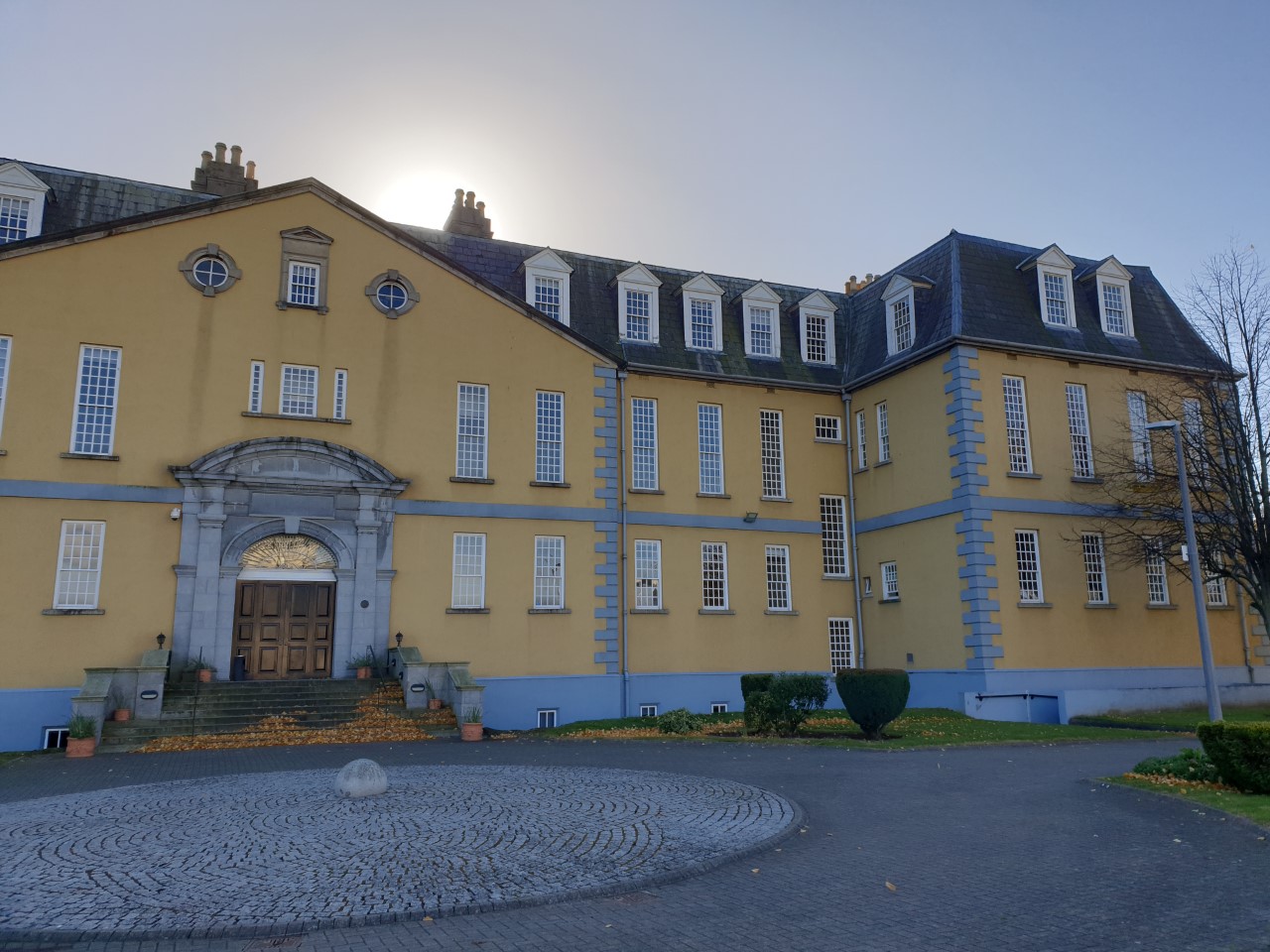
In the inquest, to his death, the Manchester City coroner concluded Tommy Blackstock had ‘died of natural causes’ a possible fatal seizure after heading the ball. In the press comparisons were made with David ‘Soldier’ Wilson who had fought in the Boer War; Wilson had collapsed and died from heart failure playing for Leeds City a year earlier. Although as the United game was only ten minutes in heart failure seemed an unlikely cause of death. On April 11th, 1907 the town of Kirkcaldy came to a standstill as Tommy Blackstock was laid to rest, aged twenty-five, with family mixing with local officials and club representatives.
To compound the tragic loss for Blackstock’s family given the coroner’s report Manchester United withheld the insurance money due to his next-of-kin. This terrible treatment of Blackstock’s family and the upholding of the insurance money sparked his fellow teammates into action specifically Charlie Roberts, Billy Meredith, Sandy Turnball, and Oscar Linkson. Roberts had arrived in 1903 like Blackstock for the sum of £600 from Grimsby Town, he had previously come to the attention of the Football Association as rebelliously wearing his shorts above the knee.

A centre half by trade Roberts would lead United to their first title in 1908 followed by FA Cup success in 1909 and another first division championship victory in 1911. However, eight months after Tommy Blackstock’s death Roberts and Meredith were sitting at the top table in a room in the Imperial Hotel, Manchester as the Association of Football Players’ and Trainers Union was formed. The groups aims the freedom of movement of players, an increase in the £4 maximum wage, and obtaining the same employment rights for footballers as other workers. At the annual general meeting of the football association in 1908, the union’s call for the maximum wage to be increased fell on deaf ears as £4 was reaffirmed. Although the possibility of a bonus system was raised whereby players could prosper from club profits. The AFPTU continued to negotiate with the Football Association, but by April 1909 things had drawn to a halt without any agreement.

Charlie Roberts and family

In June of that year the FA announced that all footballers should resign from the AFPTU, they were given until July 1st otherwise their registrations as professionals would be cancelled. Most did except for the players at Manchester United who found themselves suspended by the club for their refusal to leave the union; the English media aptly named them ‘The Outcasts’. One of those who did resign but continued negotiations with the FA was Geordie Colin Veitch who played for Newcastle United captaining the Magpies to league success in 1905, 07, and ‘09 alongside the FA Cup in 1910. By August 1909 as Veitch was celebrating another league title and Roberts and Meredith were stubbornly refusing to budge from the union they had founded the FA relinquished on its position. In the city of Birmingham on the 31st of August word came through from a FA meeting that professional footballers would be allowed to be members of the AFPTU.

The Outcasts F.C.

The Red’s first game of the season in 1909 at Bank Street was against Bradford City as the United team ran onto the pitch the crowd could see each team member wore an AFPTU armband. For those involved in the AFPTU most would never play for their country again, Roberts never represented England again due to his union activities even though he was described as a defender with exceptional ability and truly an inspirational captain. He also missed out on a testimonial at United which would have guaranteed a send-off of £500 a king’s ransom in those days. Roberts left United in 1913 for Oldham Athletic as the great war began a year later and football continued; he captained the Latics to second place in the first division as United struggled narrowly avoiding relegation in the final season of 1914/15. As the war across Europe continued football was cancelled, Roberts hung up his boots. He would still fight for the rights of footballers working as chair of the AFPTU and helping to get the maximum wage up to £9 and bonuses paid to players.
Sandy Turnball who had supported Roberts with his Union activities perished at the Battle of Arras in France; the war memorial at Gorse Hill not far from United’s modern-day stadium bears his name.
Billy Meredith, a coal-miner before he turned professional at eighteen would stay on at Manchester United until 1920, playing well into his forties. One of Roberts other comrades Oscar Linkson would leave United for the Emerald Isle in 1913 and play in an infamous Dublin derby between Shelbourne and Bohemians to the backdrop of the great Dublin lockout.

Today eight minutes from Bank Street is the PFA offices housed in the Bishopsgate area of Manchester; it seems apt that the union founded by Roberts and the Outcasts still flourishes as a pivotal organisation in the world of modern football.

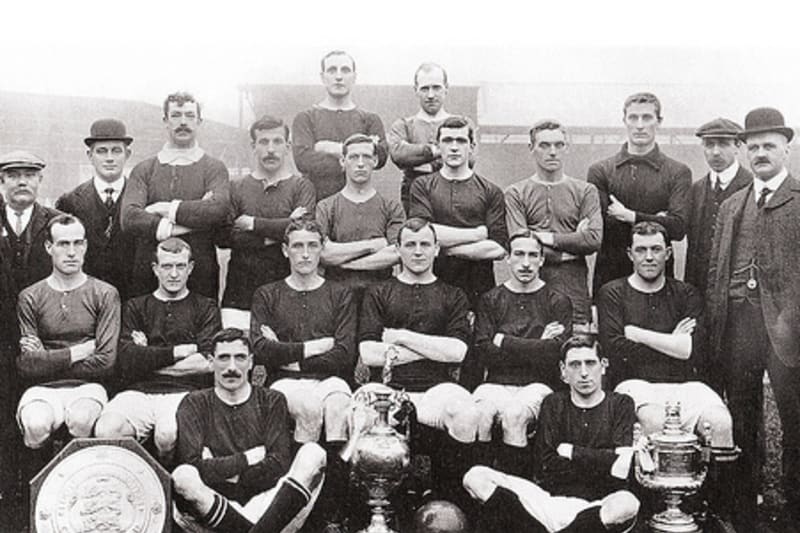
Manchester United -1909

Bohemian FC v Esbjerg fB


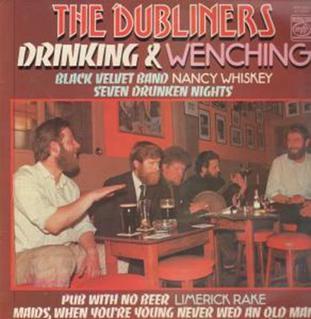
The Dubliners were always a prolific enough band and in 1976 they released the evocatively titled compilation Drinking and Wenching and the studio album A Parcel of Rogues and toured them widely, even playing the famous Montreaux Jazz festival on a European tour.

The Dubliners album Drinking and wenching

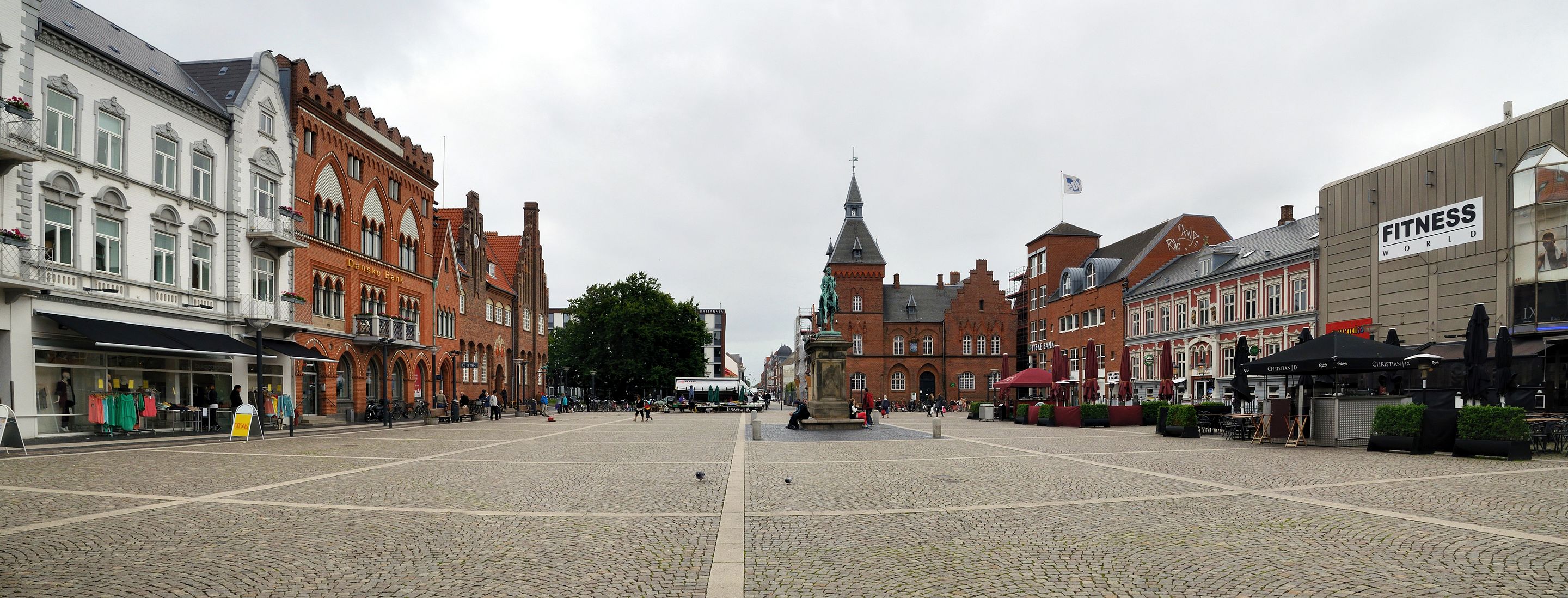
As part of that 1976 tour they played Fanø, the picturesque island just a short ferry ride from the town of Esbjerg and went down a storm, however it was another group of Irishmen who would making sporting history there just a week after that concert, as Bohemian FC knocked out Esbjerg FC in the Cup Winners Cup to secure that they had won a tie for the first time in Europe.

Esbjerg market square -Source wikipedia – Taxiarchos228 – Own work, FAL, https://commons.wikimedia.org/w/index.php?curid=20334358

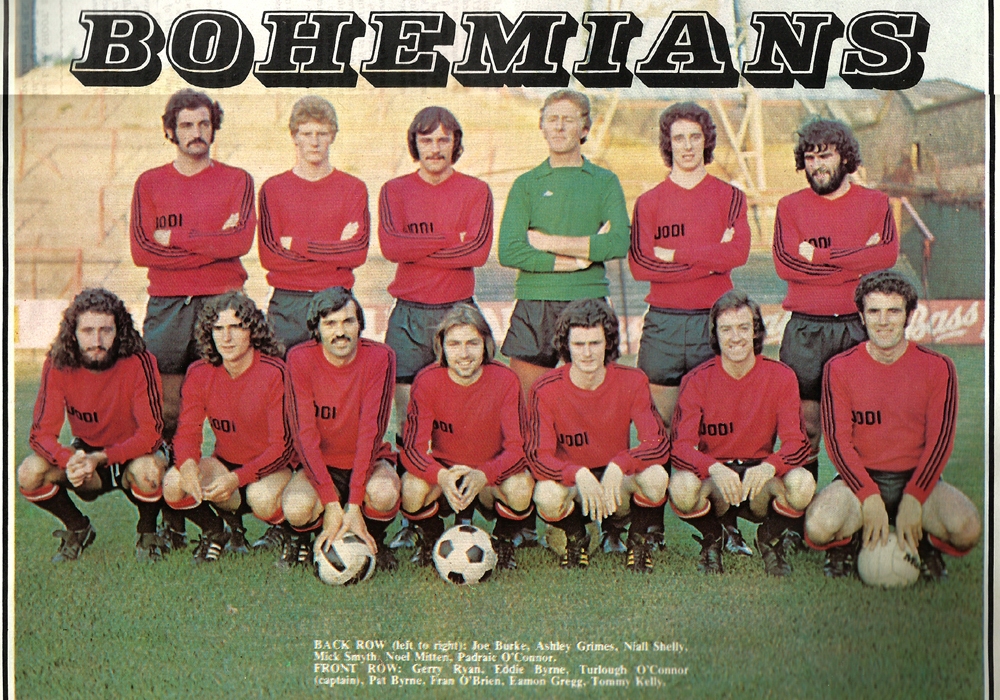
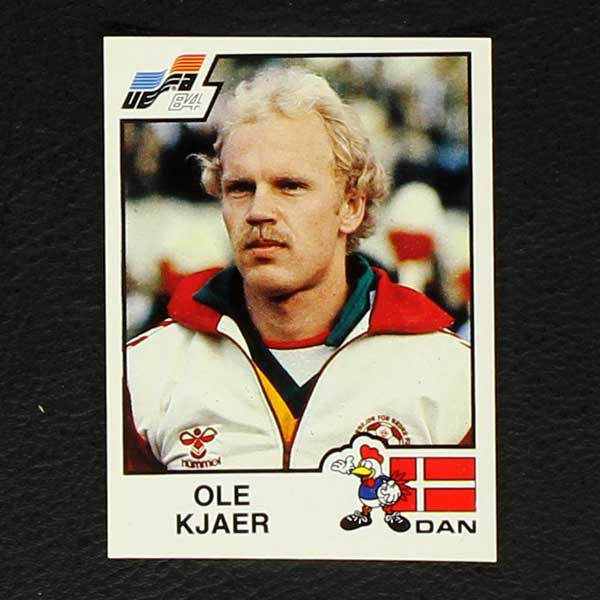
Bohs winning the previous years’ FAI Cup thanks to a screamer from Niall Shelley had secured their fifth ever season of European football and they were drawn against Esbjerg FB, one of the dominant Danish sides of the 1960s who had just won their second domestic cup, they’d also some experience against Irish sides having knocked Linfield out of the European Cup in 1962-63. Danish football was only beginning its transition towards professionalism (this wouldn’t happen until 1978) so all the Esbjerg players were technically amateurs, though they did have players of genuine quality. Young midfielder Jens Jørn Bertelsen made his international debut that year and would go on to represent Denmark at Euro 84 and World Cup 86, while goalkeeper Ole Kjær would go on to win 27 caps for Denmark and was also a squad member Euro 84.

Kjaer at Euro ’84

Bohs were in the unusual position of being the more fancied of the two sides in European competition and to turn stereotypes on their heads it was the Danes who were talked about as being defensive and physical. The first leg in Dalymount saw Esbjerg keep nine men behind the ball most of the time as they tried to hold out for a point in front of a disappointing Dublin crowd of only 2,500.

Bohs won that home leg 2-1, their main attacking threat coming from the wings in the form of Pat Byrne and Gerry Ryan (both future Irish internationals), with Ryan grabbing the opening goal just before half time. In a rare moment of skill from the Danes, Henrick Nielsen levelled on 58 minutes with a spectacular overhead kick, but the Gypsies were to prevail, the Esbjerg keeper Kjær failed to deal with a long-range Niall Shelley shot that rebounded in off a defender to give Bohs the home win. They even had time to bring on another future Irish international, 18-year-old Ashley Grimes as a sub for veteran, Tommy Kelly.

The away goal, however, gave the Danes confidence that they could pull off a result in Esbjerg in front of a home crowd estimated at 8,000. But despite drawing one fine save from ‘keeper Mick Smyth it was Bohs who did the only scoring, Noel Mitten, on as a sub for Turlough O’Connor heading in a cross from Pat Byrne to secure that Bohs progressed in Europe for the first time in their history. A tie with Polish cup winners Śląsk Wrocław awaited. The Dubliners European tour continued…

This piece originally appeared in the Bohemian FC v Fehérvár FC match programme

Alex Stevenson – solving a football mystery?

Sending a message home

In a soccer column in the pages of a regional newspaper there is a short, sad story, based on a message passed onto the author by a local man. In among the snippits about Waterford’s form going into their game with Finn Harps and the need for more referees in the junior leagues, there is a report of a frail, ill man in his seventies, feeling lonely in a hospital in Liverpool. It ends with the line “and now comes word that he would welcome hearing from old friends in a difficult time”. It was a sad situation for anyone to find themselves in, but when one considers the man in question was one of the greatest footballers of his era, beloved by crowds for his skill, trickery and cheekiness then it seems even more strange that he should find himself in that situation.

The man in question was Alex Stevenson. Mention of his plight appeared in the pages of a Waterford newspaper in November of 1984, the heart issues with which he was suffering sadly didn’t abate and by September 1985 Alex Stevenson had passed away in Liverpool aged 72. One of those who did reach out to him before he passed away, and perhaps recorded the last ever media interview with the Everton legend was Irish journalist Seán Ryan.

Irish Independent headline on 3rd September 1985 – the day after Alex Stevenson died

This last interview was published in the Irish Independent the day after Alex’s death under the headline “The football mystery that Alec Stevenson never solved”. While Stevenson spoke with Ryan about various aspects of his successful career the main point of concern from Stevenson was addressing speculation as to why he had to wait fourteen years between his first and second caps from the FAI. As one of the most feared and skilful inside-forwards in Britain, a league winner in both Scotland and England, surely there must have been some other reason for his non-selection? Was it down to the clubs he played for? Was it down to his religion?

I was accused of refusing to play for the FAI because I was a Protestant… but religion never came into it for me. The funny thing was I was never picked by the FAI until after the War but I got all the blame for it!

Alex Stevenson quoted to Seán Ryan in the Irish Independent – 3rd September 1985

We’ll explore the reasons why but first some more background on Alex’s life.

In Dublin’s fair city

Alexander Earnest Stevenson was born in Dublin’s Rotunda Hospital on the 12th of August 1912 as the fourth child of Alexander and Rosalina (often listed as Rosaline) who were living on Richmond Road at the time. While the family moved around quite a bit, with addresses at Cadogan Road, Fairfield Avenue, Northbrook Avenue they always remained close to that same North Strand-East Wall district. Both Alexander Stevenson and Rosalina Caprani were from the area and they didn’t move far from their respective families who had been neighbours on Leinster Avenue. They were married in North Strand Church in 1905 in a Church of Ireland service. The Stevenson and Caprani families were deeply connected, Alexander’s younger sister Robina later married Rosalina’s brother Henry in 1914.

“Palace View” Terrace, Richmond Road – where Alex Stevenson was born

Alexander Senior (our footballer’s father) was the son of yet another Alexander, a Scottish Presbyterian who had likely moved to Ireland in the late 1870s or early 1880s and took up work in Dublin’s extensive printing trade. Rosalina was the daughter of Joseph and Anna Caprani. Joseph was a Catholic, born in Como, northern Italy who likely arrived in Dublin in the early 1860s, while Anna (sometimes listed as Hannah) was originally from Cork and was a member of the Church of Ireland. Their children seemed to be baptised into either religion without any particular pattern, some sons and daughters were listed as Catholics, others, such as Rosalina were Church of Ireland. Based on the current FIFA eligibility criteria Alex Stevenson could have played for Ireland, Scotland – through his paternal grandfather, or Italy – through his maternal grandfather. It is an interesting idea, Stevenson the Irish Oriundo, playing for the Italian world cup winning teams of the 1930s, he certainly had the talent.

Joseph and many of the Caprani family were involved in the printing and compositing trade, another connection apart from geography which linked them with the Stevensons, scions of the family would achieve levels of fame and notoriety for various reasons; Joseph Desmond (J.D.) Caprani (1920-2015) was captain of the Irish Cricket team, while Vincent Caprani (b. 1934) is a poet, writer and historian who has also helped to mythologise figures from Ireland’s sporting past in his stories. Alexander and Rosalina raised their children in the Church of Ireland, Alexander having migrated from Presbyterianism. He would later become involved with local football, with the St. Barnabas club who were based out of the Church of St. Barnabas on Sheriff Street, as well as with the Leinster Football Association, serving on various committees.

St. Barnabas Church of Ireland – Sheriff Street, Dublin

As a teenager Alex began playing with St. Barnabas, alongside his older brother Henry, it didn’t take long for them to find success. While still just 17 Alex, along with Henry, helped St. Barnabas to victory in the 1930 Leinster Junior Cup final win over Seaview after two gruelling replays. Within a year Alex was being called up for an Irish Junior international against Scotland in Falkirk. A battling performance saw Ireland lose 3-2, with Stevenson one of the stand-out performers. There were plenty of clubs interested in his signature including Shamrock Rovers and Hearts, but Arthur Dixon, the shrewd player-manager of Dolphin had spotted Stevenson and secured his signature before the Junior international match was played. Alex’s starting wage was £3 a week with a £1 bonus for win but it meant he got to leave work as a docker and focus on his football full time.

Swimming with the big fish… and Dolphins

Alex was to spend just a year with Dolphin but it was to be an eventful one. Dolphin were one of the glamour clubs of Dublin in the 1930s, originally founded in Dolphin’s Barn, but by Alex’s time playing out of Harold’s Cross they had a reputation for good football and for bringing in quality players from Britain. Arthur Dixon, an English man who had spent most of his career in Scotland with St. Mirren, Rangers and Cowdenbeath was obviously brought in as player-manager to help with this recuitment. Aside from Alex, most of the Dolphin side were Scottish players, usually paid £5 a week rather than the £3 Alex was getting. There were a few other locals in the side however, including Larry Doyle, capped that season against Spain, and Jeremiah “Sam” Robinson, another international who had been part of the all-conquering Bohemians team of the 1927-28 season.

The diminutive Stevenson soon began demonstrating his skills surrounded by these more experienced pros. A lightweight inside-forward who would later draw comparison with the likes of Hughie Gallagher, Alex James and Patsy Gallagher, Alex possessed great ball-control, a range of passing, and bags of tricks. Also for a man only 5′ 5″ tall and weighing just 10 stone he possessed a deceptively powerful shot. In that one full season Stevenson helped Dolphin to a 3-0 victory over Shelbourne in the Leinster Senior Cup, while they also reached their first ever FAI Cup final. They lost a tight game 1-0 to Shamrock Rovers, with the mercurial Paddy Moore scoring the only goal of the match as Rovers extended their stranglehold over the cup.

Moore was from the same area around the North Strand as Alex and was only three years older, they likely would have known of each other growing up. Both men are emblematic of a certain type of Irish footballer – the small, skilful, flamboyant, “street footballer” of Dublin’s inner city. Perhaps the most recent comparable modern footballer in terms of size and style would be Wes Hoolahan, born some 70 years after Stevenson. Wes grew up in nearby Portland Row and would have honed his talents on the same streets as Moore and Stevenson.

Both Moore and Stevenson would line out for Ireland towards the end of that season, just weeks after the Cup final. Amsterdam was the destination and the Dutch national team were the opposition Paddy Moore had made a scoring debut for Ireland the previous year and would win his second cap, Alex would win his first and both played well in a 2-0 win for Ireland with Moore and Brideville’s Joe O’Reilly getting the goals in front of a crowd of 30,000.

Moore, O’Reilly and Jimmy Daly were all signed up by Aberdeen after their performances in that game, within weeks Alex Stevenson would be following them to Scotland.

An intrepid Ranger

In July of 1932 Arthur Dixon returned to Ibrox as a trainer to become part of Bill Struth’s backroom team. He had been part of a hugely successful Rangers side as a player in the 1920s, making over 300 appearances and winning six league titles with the Glasgow club, and he wasn’t returning to Ibrox empty-handed. A month after Dixon arrived back Alex Stevenson was signed on his recommendation. A fee of £250 was reported with Rangers also agreeing to play a game in Dublin against Dolphin with the proceeds being split.

To date he is the only player capped by the FAI at senior level to be signed by Rangers, a club whose Irish recruits had tended to come more from Belfast than from Dublin. It has long been alleged that Rangers, from the 1920s onwards had operated a policy of not signing Catholics, a policy, along with the strong Irish connections of their rivals Celtic that tended to make Rangers unpopular to many Irish football fans. Dixon when signing Stevenson would have known he was a Protestant due to his association with the St. Barnabas club and their connection to the Church of the same name. Among various theories suggested for the fact that Alex went so long before winning a second cap from the FAI was of an anti-Rangers bias because he had chosen to sign for the club.

Things started slowly at Rangers, there were suggestions that some thought him too lightweight for first team football, and he only made one league appearance for the first team in the season he signed. He did however, play in the match against Dolphin arranged as part of his transfer. This game was held in Dalymount in April 1933 and Rangers featured a strong starting XI including their stars Alan Morton, David Meiklejohn, goalie Jerry Dawson, and the Irish (IFA) international striker Sam English. It was English who scored twice in a 3-1 win for Rangers, though the scores were tied with less than ten minutes to go in the game.

The following season would prove more successful, in eleven matches at inside forward he scored seven goals and was described as having all “the craft that goes to make a star”, such was his success that interest soon developed from other clubs, especially Everton who were tracking him closely from the end of 1933. Initial reports on Stevenson had expressed concerns about his small physique but eventually these were dismissed as Stevenson continued to impress. While Everton were readying to make a move Stevenson was selected for all three of the Home Nations games by the IFA, the highpoint being a 2-1 win over Scotland, a game where he first lined out with his future Everton teammate Jackie Coulter.

Rangers meanwhile signed Scottish international Alexander Venters as a replacement for Stevenson as the latters move to Everton was being ironed out. It would take until the start of February 1934 for Alex’s move to Merseyside to be confirmed but the Toffees had finally gotten their man. After 18 months in Scotland his transfer fee had risen from the £250 plus a friendly paid by Rangers to the £2,750 paid by Everton. He had also done enough that season to secure himself a Scottish League winners medal before his move. Some later reports incorrectly stated that the fee was a whopping £37,000, however this would have meant that the Stevenson transfer would have broken the then world record by £14,000!

Mickey Mouse goes to Dixieland

Alex was joining an elite side, Everton were F.A. Cup holders when he joined and had been league Champions the season before that, expectation was high. They featured the great Ted Sagar in goal, one of the longest serving players in Everton history, the classy wing-half Cliff Britton who had helped inspire them to the Cup, Irish international Billy Cook who had won both the Scottish Cup and F.A. Cup and of course there was William Ralph “Dixie” Dean, or just Bill to his friends.

The 1933-34 season was to be a tough one for Dean, he spent most of the year ravaged by injury, only managing twelve league appearances and nine goals, his lowest return for a full season with Everton. Dean would return as the team’s top scorer the following year and he and Stevenson developed a strong rapport, Dean feeding off Stevenson’s clever passes and returning the favour as Dixie nodded down crosses for Alex to unleash one of his trademark, cannon-like strikes. One other player to join just weeks after Alex was Jackie Coulter, who had featured at outside left in the game against Scotland. They were to become the first of a number of great double-acts during Alex’s career.

While Alex was small and lightweight, Coulter was a somewhat more imposing physical specimen especially with his huge size 12 boots. He was dubbed the “Jazz winger” by the Goodison faithful and he and Stevenson developed an excellent almost telepathic understanding. It also endeared them to the crowds that both men were born entertainers, full of individual skill and trickery that was magnified by their play as a duo.

A cartoon featuring Coulter and Stevenson from the Liverpool Echo

If Coulter was the “Jazz Winger” then Stevenson was dubbed “Mickey Mouse” because of his small stature. His Ireland teammate, the legendary Peter Doherty referred to Stevenson as the “Mighty Atom”, a sobriequet used for the another talented Irishman full of trickery from an earlier era, Celtic’s Patsy Gallagher. To many other Evertonians he was just “Stevie”.

Coulter and Stevenson combined in perhaps one of the most famous F.A. Cup ties in history, a fourth round replay against Sunderland in January 1935 witnessed by a crowd of 60,000 in Goodison Park. In a game full of incident the Irish left wing partnership of Coulter and Stevenson were on fire and with 16 mintues left to play two goals from Coulter and one from Stevenson gave Everton a 3-1 lead. Stevenson even provoked laughter from the crowd by trying to barge (the much larger) Sunderland keeper Jimmy Thorpe into his own net. Something still common in the rough and tumble English game at the time, (indeed tragically Jimmy Thorpe would die a year later after being kicked in the head during a game against Chelsea at Roker Park). With Alex this perhaps showed both his committment as well as his ability to play to the crowd. And while Stevenson “controlled the show, delighting the home crowd with his trickery and skill”, Sunderland began to rally, scoring two late goals to take the match to extra-time, Coulter got his hat-trick but Sunderland equalised again before two late goals from Albert Geldard sealed the victory for Everton.

In that first full season with the Toffees Stevenson played 41 games and scored 18 goals in all competitions. His signing was hailed as the bargain of the decade as he immediately cemented his place in the first team while making his name as one of the most skilful and entertaining inside forwards in British football. In the 1936-37 season as Everton were stuggling in the lower half of the table Alex had one of his best seasons, playing 44 games and scoring 21 goals, second only to Dean in the scoring charts. Everton were also a team in transition, the great Dixie Dean was slowing after years of injuries, from football and a motorcycle crash as a younger man. Tommy Lawton was brought in as his long term replacement. Jackie Coulter moved to Grimsby Town, a leg break while playing for Ireland against Wales took him out of the game for a year and sapped some of the magic from his game. T.G. Jones, an elegant and skilful centre half was signed from Wrexham and a young Joe Mercer was establishing himself in the team.

After some mediocre seasons by their recent standards, towards the end of the 30s Everton were ready to challenge for honours again, and Alex Stevenson had a new partner at left wing, Wally Boyes, signed from West Brom and even smaller than Stevenson at only 5′ 3″ , they formed a fantastic new partnership, while Tommy Lawton was now securely installed as Dean’s successor at centre forward. The 1938-39 season would be one of Everton’s best, they would finish as league champions, Lawton scoring 34 from 38 league games and Stevenson finishing with 11 goals, the third highest scorer in the side. His teammate Lawton was in no doubt of Stevenson’s talents, describing him as:

“A great player, greater to the player close to him than to the crowd perhaps… and is one of the finest footballers who have ever kicked a football on an English ground.”

Lawton on Stevenson

The title race was tightly balanced with Wolves pushing Everton all the way. Coming into the final stretch the Toffees faced three matches in just four days during April. In the first game Everton beat Sunderland 2-1 in a Good Friday fixture at Roker Park. There then followed a lengthy train journey to London, where Everton faced Chelsea the following day. Everton laboured and with twenty minutes remaining the scores were still goalless. Then Stevenson intervened with what Lawton dubbed the ‘miracle’ of Stamford Bridge – . Alex had scored the opener after a knockdown from Lawton, before Torrance Gillick secured the victory with a late second. Two days later Everton trounced Sunderland 6-2 in Goodison with Alex again on the scoresheet. The title was all but secured 5 days later after a draw with Preston North End. Recalling Stevenson’s goal against Chelsea his teammate Gordan Watson remembered it as “a great moment because Stevie had played so well all season, he was probably our most consistent player – and that’s saying something because we were a great side”. That title-winning season with Everton was perhaps Alex’s career highlight.

Alex Stevenson wheels away after scoring against Arsenal (source @theleaguemag )

By this stage Stevenson has also established himself as first choice with the IFA selectors and by the mid-30s they possessed a formidable pair of supremely talented inside-forwards in the shape of Stevenson and Peter Doherty. By the time he had become a League champion with Everton, Alex had been awarded 14 caps by the IFA (who continued to select players born in the Irish Free State for a further decade) and had scored four goals.

Alex Stevenson was just 26 when he lifted the English league trophy, an established international and viewed by his peers and the public as one of the most skilful players in Britain. He must have felt confident that his best years were ahead of him. He had got married in 1937 and his with Ethel was pregnant by the beginning of the following season, a bright future on the horizon. However, with the 1939-40 season just three games old all football was suspended, the World was at War.

An Ireland XI (IFA) v Scotland 1938 featuring Stevenson and Coulter on the left of the attack.

Wartime action

With football suspended and the footballers of Britain effectively out of work there were few options for the players. Many joined the armed forces and fought during World War II, others found employment in war industries like munitions factories, there was also a newly appealing option for footballers who wished to continue playing League football. The League of Ireland continued, uninterrupted as the Irish Free State adopted the policy of neutrality during the War. Internationals like Willie Fallon and Bill Hayes returned from England to play for the likes of Shamrock Rovers and Cork United respectively. The later months of 1939 were full of rumours about which star player was next going to turn up in Ireland – Jackie Carey? Peter Doherty? And even Alex Stevenson?

While Carey would make a couple of wartime appearances for Shamrock Rovers, he Doherty and Stevenson would all joined the armed forces, in Carey’s case it was the British Army while in the case of Doherty and Stevenson, it was the RAF. Stevenson, who had been linked with moves back to Ireland to either Shelbourne or Limerick signed up with the Royal Air Force in November of 1940. A journalist with the Evening Express was moved to remark;

“One of the finest inside-forwards football has seen in a decade goes to do his bit. I wish him the best of luck – and many more games with his beloved Everton.”

Evening Express – November 14th, 1940

And there were indeed plenty more games, despite his committments as a ground crew member of the RAF Stevenson still played plenty of football during the war years, some 206 games (and 91 goals) with Everton in the war time competitions, as well as guesting for the likes of Tranmere and Blackpool and lining out for various representative sides as part of matches within the armed forces. Like many footballers Alex lost some of the best years of his career to the War, while competition could be haphazard and the standard of opposition clearly wasn’t as high he still competed against many of his former adversaries in the wartime leagues and Everton performed well. Observers at the time stated that Alex played some of his best football during this period.

Towards the end of the War Alex ended up based in India for a short time and didn’t return to England until the end of 1945. League football didn’t return until the 1946-47, and though the 1945-46 season did feature a return of the FA Cup but league football was still regionalised.

Peacetime and the Greening of Goodison

As the 1946-47 season began Everton were in the unusual position of being defending Champions after a gap of seven seasons, they returned to the league with several of those who had been part of that title-winning team, however many of those players were now diminshed in their footballing capacities. Also several key men from the title-winning campaign had left the club – centre forward Tommy Lawton had moved to Chelsea, while Joe Mercer, then coming into his prime was was sold to Arsenal before the end of the season. Both of these moves were at least in part motivated by the prickly and divisive Everton manager Theo Kelly. Lawton, Mercer and Dean before them, had all fallen foul of Kelly with Dean describing him as “an autocrat and despot“.

Despite his nature Kelly had done a good job as manager in maitaining Everton’s finances and he had recruited new, young players to boost the squad. With Lawton’s departure more firepower was required and Jock Dodds, a prolific scorer for Blackpool before and during the War was recruited after a short spell with Shamrock Rovers. Also recruited from Rovers were Peter Farrell and Tommy Eglington, for a combined fee of £3,000. Eglington would displace Wally Boyes on the left wing and he and Stevenson would form an all-Dublin left-flank for the Toffees.

Everton finished a disappointing 10th that year while their city rivals Liverpool compounded matters by winning the title. The 34 year old Alex Stevenson remained one of the side’s better players that year, playing thirty games and scoring eight times and helping Eglington establish himself in the first team, in what was perhaps his third, and final, great Everton partnership – Coulter – Boyes – Eglington. Stevenson even introduced his young Dublin partner to the joys of golf on Bootle golf course.

There was also a call-up from the FAI. Alex Stevenson would win his second cap 14 years after his first – still a record – and the opposition couldn’t have been more significant. It would be the first time that England would play against Ireland since the split from the IFA in 1921.

Rangers? Sectarianism? – and the exclusion of Alex Stevenson

But why was Stevenson not selected for 14 years? Already an international by the time he left Dolphin he had won a League title with Rangers and one with Everton while establishing himself as one of the most skilful and entertaining forwards in Britain. We can certainly rule out a lack of talent on Stevenson’s behalf. He had also been capped 14 times by the IFA in the intervening period.

We also know from later interviews that it was nothing to do with Stevenson himself refusing a call-up, he had approached both Theo Kelly of Everton and Joe Wickham of the FAI to seek clarity on the issue.

“To clear up the mystery I remember approaching Theo Kelly who was Secretary-Manager of Everton and asked him if they would release me but he wouldn’t discuss the matter… in the 50’s I tried to clear the matter up by speaking to Joe Wickham but he never divulged anything. It’s still a puzzle to me.”

Stevenson interviewed by Seán Ryan in the Irish Independent 3rd September 1985

The answer lies in the, now-digitised, records of Everton Football Club. The minute books reveal that the FAI made regular and repeated attempts to call-up Stevenson to international squads throughout the 1930s but at each point were refused by the club’s management. As early as February 1934, just a month after joining Everton, the FAI requested his release for the World Cup qualifying match against Belgium. This was the famous 4-4 draw in Dalymount where Paddy Moore scored all of Ireland’s goals. It had been noted in the Everton minutes that:

“Irish Free State v Belgium. Application from the Irish Free State F.A. for release of A.E. Stevenson to play in this match on the 25th inst. was refused. Chairman reported that the Football League were not desirous of players to be release for this match.”

Everton minute books

A further request was made by the FAI for Stevenson’s release which was again rejected. If, as suggested above, the Football League had issued a notice to the effect that players should not be released then it is clear to see just the sort of challenges that the FAI faced to putting out their strongest international team. The Chairman of the Football League at this time was in fact an Irishman, John McKenna, born in Co. Monaghan in 1855 he had moved to Liverpool as a young man. In Liverpool he met John Houlding, and through him began an involvement with. first, Everton and later Liverpool F.C. that would later see him become, Secretary and then Chairman of Liverpool. In correspondence with Everton later in 1934 about the release of Stevenson for a match with Hungary, the FAI secretary Jack Ryder pointed out that FAI delegates had been assured personally by John McKenna that the Football League would not prevent players born in the Irish Free State (contrary to the message communicated to Everton, of which the FAI were no doubt unaware) from representing their country. These entreaties fell on deaf ears. Stevenson was not released and the true attitude of John McKenna and the Football League towards the release of players seemed to be against the release of players to the FAI.

The Belgium game was far from a one-off, applications had been made for Stevenson’s services by the FAI for matches throughout the decade. Release for games against the likes of Switzerland, Germany, Hungary and others were refused by Everton. This was not necessarily all that uncommon, as mentioned there was a general lack of support across many British clubs for the release of players to the FAI, Jimmy Dunne went six years between his first and second caps, this period coincided with the best football of his career with Sheffield United and Arsenal. He won the majority of his FAI caps when he was back in Dublin playing for Shamrock Rovers.

There was also the complicating factor that because the IFA continued to select players from the 26 counties the same players’ services could be requested for two different dates by two different Associations. In the 1930s and 40s there were not agreed international breaks and because the IFA continued to compete in the Home Nations Championship, which were held on dates agreed by the IFA, SFA, FAW and English FA, they were always likely to be the beneficiaries. Added to this mix was the personality of Theo Kelly the Everton Secretary-Manager, while his name might suggest an Irish connection Kelly’s father was from the Isle of Mann and his mother was from Cornwall. He also had a track record of complaining about losing players to international call-ups and even wartime charity matches!

While Theo Kelly would remain in charge of Everton until the early 50s the attitude towards the releasing of players for matches under the jurisdiction of the FAI changed after the War. Both Stevenson and Eglington were released for the game against England in 1946. By this stage the FAI were more than 25 years in existence and perhaps the fact that there were now several players in the squad who would want to play for their country changed the thinking of the Everton management? Another possible reason was an improvement in relations between the English FA and the Football League, with the FAI in 1946 after a conference meeting in Glasgow. Agreements were made at this conference regarding the regularisation of transfer of players between the leagues, the recognition of “retained players“, as well as the scheduling of representative games between the various leagues and the League of Ireland. By 1950 the issue about the same player being selected by both the FAI and IFA had also ceased after the FAI requested FIFA’s intervention.

Whatever the precise reasoning Alex Stevenson was to make up for some lost time, he would make six appearances in two years, starting with that game against England in Dalymount. The English fielded a strong side featuring Frank Swift in goal and the likes of Billy Wright, Neil Franklin, Raich Carter, Wilf Mannion, Tom Finney and Alex’s old teammate Tommy Lawton. Ultimately, the English would triumph, a Tom Finney goal scored eight minutes from time was enough to secure a win that many in the English press thought would come easily (England had beaten the IFA XI 7-2 just days earlier). However, the Irish had rattled them, and Alex Stevenson had rattled the crossbar with a rocket of a shot which almost put Ireland ahead in the second half. Summing up the match Henry Rose wrote the in the Daily Express that

“If ever a team deserved to win Eire did. They out-played, out-fought, out-tackled, out-starred generally the cream of English talent, reduced the brilliant English team of Saturday to an ordinary looking side that never got on top of the job.”

Aside from the England game perhaps the most noteworthy of Alex’s subsequent matches was a 3-2 victory over Spain in 1947 in front of over 40,000 fans in Dalymount. Alex, joined by Everton teammates Farrell and Eglington battled back from a 2-1 deficit and defeated Telmo Zarra and Co. thanks to a goal from Paddy Coad and a brace from West Brom striker Davy Walsh. Alex, by then 36 played his final match for Ireland was in December 1948, in a 1-0 defeat to Switzerland in Dalymount.

Goodison goodbyes

Although he still appeared regularly for Everton the number of games became less frequent, over his final two seasons Alex played thirty-seven times for Everton and chipped in with five goals. He had also begun his coaching career, taking on duties with the Everton reserve team. One of Alex’s last significant matches for Everton was also Goodison Park’s biggest, literally. It was the Merseyside derby which set a Goodison attendance record that will never be broken. On 18th September 1948, Alex Stevenson, captain for the day, led out Everton in front of 78,299 people, thousands more were locked outside. In a tight game Liverpool took the lead through Willie Fagan but Jock Dodds equalised for the Toffees with the game finishing 1-1.

Alex (Everton, left) and Jack Balmer (Liverpool, right) lead out their teams at the record-breaking 1948 Merseyside Derby – Liverpool Echo

Alex played his final Everton match on May 7th 1949, a 1-0 defeat away to Bolton on the final day of the season. His Everton career in numbers was 271 appearances and 90 goals in all competitions. If wartime matches are included this totals as 477 appearances 181 goals. The most he ever earned while at Everton was £9 a week, the maximum wage paid at the time within English football. While he had the opportunity to stay with the club in his coaching role Alex still wanted to play, and by the following year he became player-manager of nearby Bootle in the Lancashire Combination while also running a newsagents. As a parting gift to Everton he had scouted and recommended the club sign a 17 year old from Dublin’s Bulfin United named Jimmy O’Neill, he was the man who would ultimately succeed Ted Sagar in the Everton goal.

A Dublin homecoming

Despite relative success with Bootle, as well as helping develop players for top-level football, he left the job in August of 1952 and returned to Dublin a year later to take over the role of Irish national team coach. A role that probably sounds more impressive to modern ears. When Alex was awarded the role the Ireland squad and starting XI were still selected by FAI Committee and with many senior international players based in Britain Alex got to do very little actual coaching, and what coaching he did do seemed to be limited to series of evening lectures. It was a role he soon grew tired of. Only months into the job and he was looking for a way out, one which was presented to him via the offer of a two year contract to be player-manager of St. Patrick’s Athletic. The FAI didn’t stand in his way and by the start of February 1954 Alex was player-manager of St. Pats with a longer contract than the one offered by the FAI as well as a residence in Dublin provided by the club.

His impact at Pat’s was instantaneous, in one of his first games they demolished Dundalk 6-1 with Stevenson scoring twice, his left wing partner, an 18 year old named Joe Haverty was also on the scoresheet. The Irish Independent called it a victory “urged on by the skill and football brains of Alec Stevenson”. By the end of the season young Joe Haverty had been signed by Arsenal and while Pat’s finished towards the bottom of the table they had made the final of the FAI Cup after hard fought victories over Jacobs, Evergreen and in the semi-final, Cork Athletic. Stevenson did cause controversy however, when he dropped star striker Shay Gibbons for the final. According to Stevenson

“Shay had been playing but was not consistent. He had bags of speed and could hit the ball with his right foot but he wasn’t a great header and lacked heart so I left him out. I took a bit of stick over that. Even the chairman didn’t agree with my decision because Gibbons was a big favourite in Inchicore, but I did what I thought was right.”

Alex Stevenson on dropping Shay Gibbons for the 1954 Cup Final – from “The Official Book of the FAI Cup” by Seán Ryan

In the final and without Gibbons, Pat’s lost 1-0 to Drumcondra due to an own goal by centre half Dessie Byrne.

Despite that defeat this was a Pat’s team on the up for the 1954-55 season, and as with Haverty the focus was on bringing through younger players as well as developing those already at the club while adding one or two players in key positions. The signing of Tommy Dunne from Shamrock Rovers was something of a coup while Dinny Lowry became the first choice keeper, while Ronnie Whelan Snr. and Paddy “Ginger” O’Rourke came to prominence. Shay Gibbons had his best ever season for the club, scoring 28 goals to help St. Patrick’s Athletic to their second ever league title, perhaps making a point about his “consistency” as well. Twenty-eight goals in a league season remains a club record for St. Pat’s to this day. Stevenson himself continued to make occasional appearances as a player until at least 1955, at which point he would have been almost forty-three, some twenty-four years after his first league appearance for Dolphin. It also meant that Alex had now won leagues in Scotland, England and Ireland.

St. Pat’s repeated the trick the following year, Gibbons topped the League scoring charts with 21 goals and won a recall to the Irish team, while his teammate “Ginger” O’Rourke chipped in with 17. One disappointment was that the League of Ireland teams chose not to enter into the earliest editions of the European Cup which denied Alex the chance of leading out Pat’s for their European debut.

After this success in Inchicore it was some surprise that in the summer of 1958 that Alex was prized away by Waterford to become their new manager. There was some newspaper speculation as to personal differences between Stevenson and the St. Pat’s board but the exact cause of his departure seems unclear. However, their loss was Waterford’s gain, newspaper reports confirming that Stevenson would “have complete control of selection, signing of players, training and coaching programmes etc.” – very much a manager in the modern understanding of the term.

Just as during his time with Pat’s success was almost instantaneous; Waterford triumphed in the first major competition of the season, winning the League of Ireland Shield, as well as finishing third in the League, they even made their way to the FAI Cup final. There they faced Stevenson’s old club, St. Patrick’s Athletic, and despite taking the match to a replay Waterford would lose the rematch 2-1. As with the Cup final in 1954 Alex made a controversial decision that had reprecussions for the final, playing star player Alfie Hale in a League match just before the final. Hale suffered a serious knee ligament injury and was out for six months. Alfie as well as being the team’s star was also its penalty taker, with him unavailable his brother Richard (also known as “Dixie”) took over spot-kick duties and fired a penalty over the bar in the final.

Headline in praise of Stevenson in the Waterford News and Star (1959)

Despite this initial success the following season was to be Stevenson’s last at Waterford and his last in football management at any significant level. Waterford finished the 1959-60 season with an average enough eighth place finish in the league and failed to replicate the initial season’s success in any other competitions. Key players like Peter Fitzgerald and Alfie Hale were leaving for new pastures as well, Fitzgerald joining Sparta Rotterdam and Hale joining Aston Villa. However, Stevenson was busy at work developing local coaching and scouting networks in Waterford to unearth the best young, local talent, he had a year left on his contract and must have been planning for the coming season. However, he was replaced in summer 1960 by the return of local hero Paddy Coad after his years of success with Shamrock Rovers. Coad and Stevenson had been international teammates and it was Coad who would eventually deliver a league title to the city on the Suir in 1966.

Later years

The Shropshire Arms – a pub in Chester was the next port of call. The footballer turned pub landlord is a well trodden path, Alex’s teammate Dixie Dean had run a pub in the same town some years earlier. But things didn’t go well.

“That was a mistake. My wife hated pub life and we separated. Later we were divorced. I stuck the pub for four years then got an assembly line at Vauxhall’s where I had charge of the firm’s football teams too.”

Alex Stevenson in The Liverpool Echo 15 January 1974
The Shropshire Arms, Chester (source Tripadvisor)

From the assembly line Alex turned his hand to labouring on construction sites (working on a block of flats was “the only time I got to look down on anyone”) and an eventual return to Bootle where he joined the local Council, laying flagstones, driving laundry vans and monitoring the canal banks for vandalism. In interviews the trademark wit that made him so popular with fans and teammates alike was still obvious, but there must have been some sadness, one of the great players of his generations spending his 60s looking for graffiti on canal bridges, with failed marriages behind him and living alone in small flat on Merton Road, Bootle. He wasn’t forgotten by Everton or its supporters however, He shared a table with Dixie Dean and Tommy Lawton at a dinner celebrating Everton’s league triumph in 1970, cracking up his former teammates with his jokes and stories. He was popular at Everton Supporter’s Club fuctions and a cabaret night was held in his honour in 1979 attended by Everton stars of a more recent vintage such as Brian Labone and Mike Lyons.

In 1984 Stevenson began suffering from heart trouble, he spent much of the next year of his life in hospital before passing away on the 2nd of September 1985. In the tributes to him that followed there were as many stories of his wit and humour as of his brilliance on the football field. His partnerships with Coulter and Boyes were often the subject of nostalgic reflection as was the Sunderland Cup match, the title winning season and the story of the day the diminutive Alex played centre forward against Arsenal and frustrated and taunted their towering centre half Leslie Compton so much with his skill and trickery that he provoked Compton into fouling him and giving away a penalty.

No less a figure than Brendan Behan, born a few years after Stevenson and only a few streets away, reminded Dublin’s inner-city Protestant community to “If you are a Protestant remember these are the people of Saint Barnabas’ parish homeland of your illustrious co-religionsits Sean O’Casey, Alex Stevenson who played for Barnabas soccer team and my friend, Ernie Smith who battled in the ring for Ireland in the Olympics.” Brendan’s brother Dominic recalled in his memoir “Teems of Times and Happy Returns” an Everton supporters club on Dublin’s Russell Street in the 1930s arranging trips to Liverpool to see Alex and Everton play. Though forgotten, or perhaps even misremembered today, Stevenson was one of Ireland’s greatest players. Every country has the mythology of its “street footballers” – Stevenson, from Dublin city, small, skinny, skilful, cheeky, a showman, seems to be the Platonic ideal of the Irish street footballer as espoused by the likes of Eamon Dunphy, born a generation later on the same street as Alex.

I’ll leave the closing words to an anonymous football fan in the letters pages and his description of Alex Stevenson. He said that “Everton without Stevenson… is just the same as Joe Louis without his punch.”

How the Belfast Boy became a Croppy Boy

At a conservative estimate there were at least 1,500 people perched on temporary bleachers hoping to catch a glimpse of the fading brilliance of one of the greatest players that Ireland has ever produced. They were crammed into the exercise grounds of Collins Barracks, known simply as the esplanade, where the soldiers of the oldest continually functioning army barracks in Europe exercised and played football. At least that was the case at the time, today the area is better known to the Dublin public as the Croppies’ Acre park, a public space and monument to the dead of 1798, some of whom are reputedly buried beneath the park. However, in April 1986 thoughts were not of the dead of two centuries ago but on the left foot of a 40 year old George Best, playing along the banks of the Liffey to help raise money for an old friend.

While Best was long removed from the brilliance of his Manchester United prime, when he had terrorised defences throughout Europe and been named Footballer of the Year, he was still a box office draw. He had spent the intervening years playing his trade mostly in the North American Soccer League (NASL) while also having spells with the likes of Fulham, Hibernian, Bournemouth and even a three game spell with Cork Celtic in the League of Ireland. While this peripatetic existence meant that he had played in a variety of interesting and unusual surroundings the military exercise grounds of an army barracks flanked by city traffic must be among the more unusual sites that he plied his trade.

The reason for Best’s appearance was the annual Liam Tuohy XI v Collins Barracks celebrity XI match which was a benefit game for his former teammate Shay Brennan. While in Dublin it was announced that a Testimonial match had been confirmed in aid of Brennan between Manchester United and Shamrock Rovers with the game due to take place in August of that year. Brennan was the first English-born footballer to play for the Republic of Ireland and had been a teammate of Best’s as part of the great Manchester United side of the 1960s which had won two league titles and the 1968 European Cup. Brennan had later enjoyed success as player and manager of Waterford, leading them to two league titles and an FAI Cup win. Brennan, who was a close friend of Best, and was known as a man who enjoyed socialising and the occasional bet, had been advised by Busby to take a “pension” of £15 a week from Manchester United in lieu of a testimonial in 1970 as Busby feared he would waste a sudden windfall from a benefit match. In 1985 Brennan had suffered a heart attack which likely prompted the push to fundraise on his behalf.

Best in action from the Irish Independent

In interviews in the lead up to the game at Collins Barracks, Best claimed he had been “on the wagon” for seven months, and that was staying fit by appearing in regular exhibition matches. Most of the reports and photos associated with the game commented on how relatively “trim and fit” Best appeared, though the Irish Independent described the Belfast man as being “fuller of figure”. Most were complimentary on his performance as well, describing some good touches, dribbles and demonstrations of the “full range of his famous skills”. Best was substituted in the game after 70 minutes as he had to get back to Manchester, which also meant that he had to forgo the after game reception and hospitality.

Best in the Evening Press with the crowds at Collins Barracks in the background

Best wasn’t the only prominent player involved, his former Manchester United teammate Pat Crerand was there on behalf of the club to announce the details of the forthcoming benefit match for Brennan and also featured in the match, alongside the likes of John Giles, Mick Leech, Eoin Hand, Mick Martin, Turlough O’Connor and Shamrock Rovers manager Jim McLaughlin. There were also stars from other codes including Dublin GAA goalkeeper John O’Leary, Roscommon footballer and Army Officer Dermot Earley and Rugby player Tony Ward. For the record the Collins Barracks XI won the game 2-1 with goals from Army Quarter Master Kevin Corcoran and Con Martin Jnr. cancelling out a strike from former Irish international Mick Leech.

While Best’s stay was brief he certainly made a splash, as well as the 1,500 or so who squeezed in to watch him by the banks of the Liffey there were the usual throngs of fans seeking autographs and photosgraphs at his hotel, while in interviews Best was his usual conversational, witty, acerbic self, he had been critical of the appointment of Jack Charlton to the Ireland manager’s job earlier in the year, and this continued to be a subject for humour and discussion while he was in Dublin.

Pat Crerand joked with Best that “Jack Charlton is waiting to meet you at the hotel”.

Best replied: “That’s good, I’m looking forward to introducing myself to Jack. I don’t think he ever saw me when we played. I’ll walk backwards so he can recognise me.”

Reported in the Evening Herald, 28th April 1986

Best would go on to say that he had questioned Jack’s appointment “on the grounds of his nationality and on his commitment to the game, that’s all”. Best and Crerand warming to their task also had some choice words on an array of other subjects, such as for the lack of quality in the British game, Brian Clough – “it’s sad when the biggest name in British football is Brian Clough and the media is prepared to pay him money to say ridiculous things” , as well as the treatment of meted out by the British press to sports “superstars” such as Lester Piggot, Alex Higgins or Ian Botham – “Who gives a damn what Ian Botham does off the pitch on tour, or how many beds he breaks doing it. I don’t.” stated Best.

Ian Botham in action in 1983

The much larger testimonial game for Shay “Bomber” Brennan was arranged for August 14th 1986, a pre-season friendly to be held in Milltown, which attracted a crowd of over 10,000. United travelled with a strong squad which included Irish internationals Kevin Moran, Paul McGrath and Frank Stapleton as well as seasoned internationals such as Jesper Olsen, Gordon Strachan and Mike Duxbury. Rovers saw the game as good practice for their upcoming European Cup tie with Celtic and impressed on the day, running out 2-0 winners with goals from Mick Bennett (loaned by Waterford for the match) and Liam O’Brien. United by their own account played poorly with one of the only stand-out players being substitute Joe Hanrahan who had been brought to Old Trafford a year earlier from UCD.

Liam O’Brien, who had won his first international cap earlier that year had obviously impressed United manager Ron Atkinson during the match as he made an offer for the young midfielder shortly afterwards for an initial fee of £50,000. However, O’Brien wouldn’t play under “Big Ron” who was sacked in November 1986 after a poor start to the season, He would have to wait until the arrival of Atkinson’s replacement, Alex Ferguson before he would make his first appearance in the red of United.

The cumulative crowds of around 12,000 across the two games no doubt helped Shay Brennan after his health setbacks. He would pass away in 2000 at the age of 63 while playing golf near Waterford. George Best who was experiencing his own health problems at the time was reported at being deeply upset at the passing of his good friend. Best himself would pass away just five years later. It is a testament to Brennan’s enduring popularity that the world of football was so quick to rally around him in his time of need, he was known for his easy-going nature and sense of humour, and was hugely popular in Manchester, where he had played over 350 games for Manchester United, and in his adoptive home of Waterford where he had helped deliver success but where he also enjoyed small-town life in Tramore and regular games of golf. After all it is not just anybody who could prompt George Best and Johnny Giles into playing a football match in a park on the banks of the Liffey.

Shay Brennan, Manchester United 1966

Bohs and Bloody Sunday

The FAI Cup quarter final versus Dundalk fell just a day shy of the 100th anniversary of Bloody Sunday, a day remembered in Irish history for actions that morning when Michael Collins’ “Squad”, supported by members of the Dublin Brigade carried out a series of assassinations across Dublin which helped to cripple the British Intelligence network in the city. It is also remembered for the brutal reprisal that took place in Croke Park later that day when a combined force of RIC, including the Black and Tans and Auxillaries along with British Army troops opened fire at a Gaelic Football match between Dublin & Tipperary in Croke Park, causing the deaths of thirteen spectators and Tipperary player Michael Hogan.

Though Dalymount Park sits only a short walk away from Croker any connections with Bohemians and the events of that day would appear remote or non-existent, though that is certainly not the case. Both in the streets of Dublin that morning and in Croke Park that afternoon there were men who were, or would become, players, coaches, administrators and supporters of Bohemians.

We’ll begin early that morning on the streets of the south inner city, Charlie Dalton the 17 year old Drumcondra native and IRA intelligence officer has been preparing the attack on 28 Pembroke Street, making arrangements with Maudie, a maid who worked in the house to gather intelligence on the six suspected British intelligence operatives residing there. At the appointed hour of 9am Dalton and several other Volunteers burst into the house. Dalton’s job was to ransack the house for documents and intelligence files. His colleagues were tasked with the other work. Lieutenant Dowling and Captain Price were shot to death in their beds. Four other British officers were also shot in a volley of bullets in the hallway, Colonel Montgomery was killed and though the other officers were badly wounded they survived. Dalton was a member of Bohemians and an occasional player for the lower Bohs sides. His older brother Emmet, a British military veteran had also joined the IRA by this stage and was also a member of Bohemians, playing for the first team as an inside-forward and becoming club President in 1924. Be the end of the War of Independence Emmet had become the IRA’s head of training.

Emmet and Charles Dalton in their National Army uniforms

Teenaged Jeremiah “Sam” Robinson was acting was out that morning as a lookout for was his friend Vinny Byrne, one of Collins’ famed “12 Apostles”. Their destination was 28 Upper Mount Street, their targets British Lieutenants Aimes and Bennett. This was a late change to the plans due to a recent piece of intelligence received Charlie Dalton. Byrne and fellow Squad member Tom Ennis led the party and in Byrne’s witness statement he mentioned that they were a party of about ten men and that the operation did not go as smoothly as hoped. The sound of shooting aroused the attention of other British military personnel in the area and the men keeping an eye on the entrance to Mount Street came under fire. Most of the party fled to the river and rather than risk crossing any of the city bridges back to the north side where they could be intercepted. They crossed by a ferry and Sam and the others disappeared into the maze of streets and safe-houses of the north inner city. Robinson would later become a member of the “Squad” when it was reinforced in 1921.

While Sam, along with his brother Christy (another IRA Volunteer) would go on to enjoy a stellar career with Bohemians as part of the all-conquering 1927-28 side and would be capped twice by Ireland. His cousin William “Perry” Robinson would not escape Bloody Sunday unscathed. He was the second youngest victim in Croke Park, perched in a tree near the Canal end of Croke Park, he was struck by a bullet through the chest and would die in Jervis hospital. He was 11 years old.

The all-conquering 1927-28 Bohemian FC team. Sam Robinson is in the front row immediately to the right of goalkeeper Harry Cannon

On Ranelagh Road was Christopher “Todd” Andrews, a Bohemian fanatic, who would later become a senior civil servant and begin a political dynasty. His younger brother Paddy would enjoy success with Bohs in the 1930s, becoming club captain and would be capped for Ireland. However, for Todd his thoughts were with the headache caused by a clash of heads during a match for UCD the previous day as well as his duty that morning, the shooting of Lt. William Noble. As he later recalled:


“I had increasing fears we might be surprised by the Tans. If that happened and we were captured, we would have been shot or hanged. It is not an agreeable prospect for a nineteen-year-old psychologically unattuned to assassination.”

C.S. “Todd” Andrews – Dublin Made Me

In the end Andrews didn’t have to fire a shot, their target had escaped, Noble had left at 7am that morning. Andrews’ home was raided later than night, and his father, also Christopher, was lifted by the Black and Tans. Todd was forced into hiding, searching for a safe house in the south Dublin suburbs.

That afternoon in Croke Park, strange as it may seem, there was also a strong Bohs connection. Many of the Dublin side were taken from the O’Toole’s club from Seville Place in the North inner city, they would become the dominant club side of the 1920s in Dublin, winning seven county football championships over the course of the decade. Their trainer was Charlie Harris and he was also assisting the Dubs that day from the Croke Park touchline. A former athletics champion, Croke Park was familiar terrain for Harris, he had even raced against a horse there in 1912 (narrowly losing)! Harris had also been the trainer of Bohemians since 1916 and was involved with the club for over 30 years as an integral part of many successful Bohemians teams. He even coached the Irish national side on a number of occasions, including at the 1924 Olympics. Harris, like most of the Dublin team was likely among the group that was rounded up by the RIC and detained in the Croke Park dressing rooms before finally being released later that day.

One other Bohs connection was a steward at that day’s game, Joe Stynes. Already an IRA member Stynes was also an exceptional all round athlete, be it Gaelic Football, hurling or as a goal-scoring winger for Bohemians. Stynes would star for Bohs in the 1925-26 season (and would receive the first of a number of bans from the GAA for it) but back in 1920 he helped dispose of guns belonging to the Volunteers before escaping the ground, according to an account provided by his grand-nephew, the Aussie Rules footballer Jim Stynes.

A version of this piece appeared in the 2020 match programme for the Bohemian F.C. v Dundalk FAI Cup game.

Luke Kelly takes the biscuit

Raised on songs & stories Heroes of renown/ 
The passing tales & glories that once was DublinTown

The opening lines of “Dublin in the rare ould times” are a distillation of nostalgia at its purest for many Dubliners. The Pete St. John song found fame on the ballad circuit of the 1970’s and for my money the definitive version of the song will always be the Dubliners’ version with Luke Kelly on lead vocals. This song appeared on The Dubliners 1979 release “Together Again”, it marked the return to the band of Ronnie Drew and it would be the last album to feature Luke Kelly who would pass away less than 5 years later.

A rousing version of the song was performed in January of last year by Damien Dempsey accompanied by Kelly’s former bandmate John Sheahan on South King Street, a short walk from Grafton Street and Merrion Row and many venues that were home to performances by the Dubliners during the so-called “ballad boom”. This performance coincided with the 35th anniversary of Kelly’s death, aged just 43, but more positively it also announded the unveiling of a new bronze statue of the troubador and activist.

Statue

The unveiing of two pieces of public art celebrating the life and work of Luke Kelly provoked much fond reminiscence of him by friends and family, one area of his life that was discussed in detail was Luke’s love of football which was detailed in an excellent piece by David Sneyd in the Irish Mail on Sunday. The article had mentioned Kelly’s time as a schoolboy when he lined out for the famous Home Farm club, playing alongside future League of Ireland legend Billy Dixon.

It also mentioned the playing career of his father, Luke Kelly Senior who played in the League of Ireland for Jacob’s F.C. In a piece for the “Lost Clubs” series on this website I focused on the history of Jacobs and in the course of my research had come across Luke Kelly Senior. A talented half-back or “pivot” in the Jacob’s teams of the late 1920’s.  Reports at the time describe him as a “tireless worker” , a “typical tackler and spoiler” and “most consistent”, though he was mentioned as being a shade on the small side. He was however, no brutal hatchet man, plenty of reports mention his range of passing and ability to switch the play and begin attacks.

The “pivot” role so commonly ascribed to him was one which had developed as part of the old 2-3-5 formation. The “centre-half” was not yet a central defender, but played in a more advanced role as an instigator of attacking play who could also drop back and assist in defensive areas. Hence he functioned as the “pivot” between defence and attack. This would change gradually over the 1920s, especially after Arsenal had success with withdrawing a centre-half into a more definsive position of a third defended, helping create what became known as the W-M formation.

Luke Senior was born on 1st September 1904 in Ryan’s Cottages on Marlborough Place in Dublin’s north inner-city. He was the son of Paddy and Christina Kelly who had been married nearby in Dublin’s Pro-Cathedral in 1898. Paddy Kelly had been born in Bealnamulla, Co. Roscommon just outside Athlone back in 1867, he in turn was the son of another Luke Kelly also from Bealnamulla. Luke Sr. married Julie Fleming in September of 1934 in St. Laurence O’Toole’s church which sits next to Sheriff Street, a part of the city to be forever associated with his son, Luke Kelly the singer who was born nearby in 1 Lattimore Cottages, Sheriff Street less than six years later.

Football was obviously deeply engrained in Luke Kelly Sr. from an early age, in an interview many years later when his son was at the height of his fame, he remembered playing football in Fairview Park when he and his pals spotted a brigade of the Scottish Borderers marching towards the city. Kelly recalled in the Irish Independent that he and his friends followed them all the way into the city, jeering at them and throwing stones.

What the young Kelly did not realise then was that the Scottish Borderers regiment had been called into the city centre on serious businesses. Earlier that day the Irish Volunteers had taken possession of a cache of weapons brough by boat into Howth harbour and which were en route to the city. The Dublin Metropolitan Police had been ordered to confront the Volunteers but many would have had sympathy with the Nationalist cause.

As prominent Irish Volunteer and IRB member Bulmer Hobson noted “A considerable number of the police did not move and disobeyed the order, while the remainder made a rush for the front Company of the Volunteers and a free fight ensued, in which clubbed rifles and batons were freely used. This fight lasted probably less than a minute, when the police withdrew to the footpath of their own accord and without orders.”

As a result the Borderers were sent to disarm the Volunteers, they also failed in this task and eventually a growing crowd stoned and jeered them as they marched back to Richmond Barracks along the Dublin quays. The troops opened fire on this taunting crowd on Bachelor’s Walk, killing three bystanders and injuring 37, including a 9 year old Luke Kelly as the youngest victim.

Kelly was shot in the back and a priest was called to administer to him as the staff in the nearby Jervis Hospital feared for his life. However Kelly was lucky and made a full recovery. A photo of him in his hospital bed even appeared in an edition of the Irish Independent a few days after the attack.

Indo hospital pic

Photo taken from the Irish Independent July 28th 1914: Luke Kelly, a little schoolboy, a victim of the Borderers fusilade, in a ward in Jervis Street hospital

Kelly joined the Jacobs factory as an employee at the age of 16 and continued working for them for 46 years, until his passing in 1966. During his time with Jacobs he was an accomplished athlete, he ultimately played seven seasons in the League of Ireland with Jacobs, and although at one stage he was linked with a move to Fordsons in Cork, he remained with the Biscuitmen as a player even after they dropped out of the League of Ireland and returned to the Leinster Senior League.

Though Jacobs struggled for much of Kelly’s time as a player there are numerous reports that mention Kelly as their stand-out individual performer. Such was the high regard in which he was held as a player he was also selected to play in a number of high profile friendly matches, such as a charity game in aid of St. Vincent de Paul at Christmas 1927 as well as being picked to play for Shelbourne as a guest in a benefit match against Linfield for their star player, the Irish international, Val Harris.

Jacobs were justifiably proud of the sporting achievements of their employees, apart from a football team they also constructed a swimming pool for employees, based on the example of a pool built by Heinz for their workers in Pittsburgh. Kelly was also an able swimmer, though it did get him into trouble on one occasion. In May 1932 Luke Kelly senior (then aged 27) was arrested by a Garda Burns and charged with attempted suicide by drowning in the River Liffey.

Kelly’s defence to this charge was that he had been out with friends for a drink on Sunday and after some significant alcohol consumption a bet was proposed as to whether Kelly could swim across the Liffey from Custom House Quay. As part of Kelly’s defence it was stated that he was an excellent swimmer as evidenced by the fact that although he was wearing a hat at the time it had remained dry throughout. The Judge at the hearing of the case let Kelly off on the condition that he took the pledge and kept the peace.

To return to the opening lines of this piece, the words of Pete St. John as sung by Luke Kelly, it always struck me that they apply equally well to how we hear about football and its players when we are young, father’s, olders siblings, relations and bar-room bores regaling youngsters about scarcely believeable feats of skill from years gone by. Luke Kelly Senior was a friend of John Giles’ father Dickie and one can imagine that both Luke and John heard many romanticised tales from their respective fathers about their exploits on and off the field.

Raised on songs & stories Heroes of renown/ 
The passing tales & glories…

Death in the Fifteen Acres

A hard tackle on a bare, wintry, public pitch and two players go down in a tangle of limbs. Both rising, angry words, then fists, are thrown – the referee intervenes and both players, one aged 17, the other 23, are sent from the pitch. Not the finest example of the beautiful game, but not exactly an uncommon occurrence across the parks and playing fields of Ireland. It is what happens afterwards, the minute or two of frenzied violence that is unusual and shocking, moments of chaos that leave a young man dead and will see three amateur footballers stand trial in a Dublin court for murder. This is the story of the death of Samuel O’Brien.

The Fifteen Acres

The Fifteen acres of the Phoenix Park has a legitimate claim to be the footballing heart of the city. Located in the expanse between the Magazine Fort and the Hibernian Military School (now St. Mary’s Hospital) it occupies land that were once the parade grounds and firing ranges of the British Army in Dublin. A short distance away at the North Circular Road gate-lodge the Bohemian Football club was founded in September 1890, there are reports that early members of the club included some from the Hibernian Military School among their number. Bohs first pitches were at the nearby Polo Grounds, on the other side of Chesterfield Avenue.

In 1901 the Commissioner for the Board of Public Works agreed to lay out a number of playing pitches in the area of the Fifteen Acres. Out of the thirty-one available pitches twenty-nine were used for soccer. This meant that clubs with limited means or without a pitch of their own had somewhere close to the city to play. Among those to host their early matches on the Phoenix Park pitches were St. Patrick’s Athletic from nearby Inchicore. The park pitches remain in almost constant use to this day, and their footballing significance has even made it into the public shorthand (perhaps unfairly) for poor or amateurish play, via the utterances of the likes of Eamon Dunphy declaring that “you wouldn’t see it in the Phoenix Park”.

Map held by the National Library of Ireland showing the layout of the park during the 1929 Centenary commemorations of Catholic emancipation.

This part of the park has also seen it’s share of violence. At the edge of the Fifteen acres close to Chesterfield Avenue and almost opposite to the Viceregal Lodge (now Áras an Uachtaráin) on a spot of ground now marked by a discreet commemorative cross, one of the most infamous murders in Irish history took place when, in 1882 The Invincibles murdered Lord Frederick Cavendish and Thomas Henry Burke with a set of surgical knives. Cavendish was the newly appointed Chief Secretary for Ireland, having arrived in Dublin just that day, while Burke was the Permanent Undersecretary, the most senior Irish civil servant.

During the 1916 Rising the Magazine Fort was targeted by the Irish Volunteers led by Paddy Daly. Hoping to sieze weapons and destroy British stocks of ammunition and explosives, the members of the Volunteers posed as a football team, passing a ball back and forth as a diversion, until they were close enough to rush the guards and secure the fort. One of the sentries of the fort suffered a bullet in the leg, while George Playfair Jnr. – son of the Commandant of the fort was killed by bullet wounds to the abdomen when he tried to raise the alarm. In more recent times the area just east of the fifteen acres near the Wellington monument was the site of one of the notorious GUBU murders carried out by Malcolm MacAthur when he bludgeoned to death a young nurse, Bridie Gargan, while she lay sunbathing on the grass on a summer afternoon in 1982.

The scene on matchday 1924

Returning to the match in question – a Leinster Junior Alliance division four match between Glenmore and Middleton, two Dublin teams, in the Phoenix Park. Middleton held their club meetings at 35 North Great George’s Street in the north inner city but featured several players from the southside of the inner city. Glenmore (sometimes styled as Glenmore United) were from south of the Liffey and used 30 Charlemont Street as their address.

The game took place on the 7th December 1924, on pitch 28 of the Fifteen acres, an area that remains a focal point for amateur football in Dublin City. It was a fine, dry day for the time of year, though there was a strong breeze blowing in from the west.

Taken from Football Sports Weekly this plan from the 1920s shows the pitch layout of the Fifteen acres as the Glenmore and Middleton players would have known it.

The game itself seems to have been proceeding relatively without incident when according to referee James Rocliffe, with a quarter of an hour remaining, Samuel O’Brien of Middleton was going through with the ball when he was tripped by Patrick Lynam of Glenmore. The referee called a foul and O’Brien, obviously aggreived at the challenge got up in “a fighting attitude” and he and Lynam rushed at each other, trading blows. At this point Rocliffe separated the pair, sent off both players and prepared to restart the game.

However, his action in sending off both players hadn’t eased tensions. The pitches of the Fifteen acres not being served with individual pitch-side dressing rooms both players went behind one of the goals after being sent from the field. Here, tempers flared again with Lynam and O’Brien trading punches and other players rushing from the pitch to intervene, just as Rocliffe was trying to restart the game.

The fatal blow?

What happened next becomes a matter for debate, one which I will try to tease out and present for the reader based on the court testimonies of those present on the day. The version of the story changes with each retelling and with each narrator. What seems to be generally agreed on is that as Lynam and O’Brien set at each other again after their sending off, other players joined the fray, ultimately O’Brien was knocked to the ground and it seems it was then that he was kicked in the head, or possibly struck his head heavily off the ground as he was knocked over. This according to the medical examiner was likely the cause of his death, aged just 23.

In the aftermath the referee retreated to the relative safety of the nearby pavillion, while Thomas Ralfe, a teammate of O’Brien, seeing that his friend was badly injured rushed to the nearby Hibernian School, then in use by the National Army, and sought help. He returned with two army officers who gave O’Brien first aid as they waited for the Dublin Corporation ambulance to arrive to take the stricken footballer the short journey to Dr. Steeven’s hospital.

The approximate location in the Phoenix Park where Samuel O’Brien was assaulted. The buildings behind the tree-line are St. Mary’s Hospital, formerly the Hibernian School.

Samuel O’Brien, arriving at the hospital unconscious, was met by the house surgeon Dr. W.A. Murphy just after 3pm that day. Murphy described O’Brien as being in a state of “profound collapse” and growing steadily worse. Despite medical intervention Murphy would pronounce O’Brien dead later that day at 7:45pm. In the post-mortem report the cause of death was identified as “paralysis of the respiratory centre caused by the compression of the brain by haemorrhage”. To the untrained eye O’Brien appeared to show just minor, superficial injuries; bruising to the right eyelid and a couple of minor abrasions around the same eye. There were no other obvious injuries or bruising to suggest trauma to major organs. It was only upon the opening of his skull that the violence he had suffered was laid plain. The entire of Samuel O’Brien’s brain was covered in blood. The haemorrhage that had killed him caused by significant trauma to the head.


Inquest

The following day, Monday, December 8th 1924 – Dr. Murphy had the opportunity to present his findings to an inquest held in Dr. Steevens’ Hospital chaired by City Coroner, Dr. Louis Byrne and a jury, to decide if the death of Samuel O’Brien should proceed to trial. When describing the injuries recieved by the deceased, Murphy stated that they could be caused by “a person being struck in the face and falling to the ground”.

Present at the inquest apart from Doctors Byrne and Murphy were a Mr. Clarke, representative of the Chief State Solicitors Department, Inspector Patrick Guinan of the Bridewell, Dublin Metropolitan Police and the three young men suspected of causing injury to Samuel O’Brien – they were Patrick Lynam, aged 17, a bookmakers clerk from St. Patrick’s Terrace off the North Strand, Michael Doyle, aged 18, at the time unemployed and living at 14 Richmond Cottages in Summerhill, and Thomas Lynam (no relation to Patrick), aged 17 from 2 Aberdeen Terrace, off the North Strand who worked in the printing business. At the inquest Patrick Lynam was at that stage the only one of the three with legal representation, in the form of a solicitor named Christopher Friery.

Dr. Steevens’ Hospital, site of the inquest

Also present at the inquest were a number of other witnesses including Samuel’s older brother William, the family member who had identified his brother’s body the previous day. He testified that Samuel had left in good health and spirits from the family home on Bride Street the previous day, which backed up the medical testimony which ruled out some underlying medical condition as being a possible cause for Samuel’s death. It was also at this point that Samuel’s profession was disclosed, he worked for the Irish Independent’s distribution section. Indeed their sister paper, the Evening Herald carried extensive coverage of the inquest that evening on its front page.

Other witnesses at the inquest included a number of O’Brien’s Middleton teammates; Thomas Ralph (24) and Edward Maguire (20) who as well as being fellow players were also neighbours of O’Brien on Bride Street, and Edward O’Dwyer of Palmerston Place, Broadstone, the self-described “inside-right” of the team. The other key witness was James Rocliffe (30) of 18 Summerhill, the referee on the day of the match.

It was Rocliffe who next gave evidence after William O’Brien. He noted how he knew neither team nor the men involved personally, he had merely been tasked with refereeing the game by the Association. He detailed the foul on O’Brien by Lynam and their subsequent fight which resulted in both players being sent off. Rocliffe then testified that as he was restarting the match he noticed several players rush off the field in the direction of O’Brien and Lynam, at this point he stopped the game and went to the nearby pavillion. Rocliffe testified that there was only one spectator and his two linesmen at the game that day. Rocliffe did not see further blows struck by either man and had not seen anyone else apart from Patrick Lynam strike Samuel O’Brien as by this stage he had retreated to the safety of the pavillion. When asked if he had seen blows struck like this before he replied:

I often saw rows and blows struck by men fighting on the street. It did not very often occur at football matches.

James Rocliffe quoted in the Evening Herald – 9th December 1924

It was the subsequent testimony from O’Brien’s teammates that was to be most incriminating, Thomas Ralph swore that upon seeing players running towards O’Brien and Lynam he witnessed two opposition players knock O’Brien to the ground and kick him. These two players were identified by Ralph as Thomas Lynam and Michael Doyle, and Ralph would later describe the accused issuing two “unmerciful kicks” to O’Brien, which he would state “were meant” intimating that they were deliberate, though both Lynam and Doyle denied this. Edward Maguire and Edward O’Dwyer confirmed that that they witnessed Michael Doyle kick O’Brien which Doyle strenuously denied at points during the inquest, loudly interjecting to profess his innocence and deny that he kicked O’Brien.

Summing up, the coroner Louis Byrne was moved to say that there had been no pre-existing animosity between the teams or individual players, and he looked upon Samuel O’Brien’s death as,

a tragic result of the blood of these boys “getting up” in the excitement of the game. He would be slow to attach any guilt to any party there on the evidence. His only regret was that when these young men went out to play football that they had not a better spirit of sportsmanship

Freeman’s Journal – December 10th 1924

The inquest jury found that the death of Samuel O’Brien was the result of injuries sustained on the football field. The case was referred to the Dublin District Court where Patrick Lynam, Thomas Lynam and Michael Doyle were to be charged with murder.

The courts

The initial hearing took place later that day with Justice George Cussen presiding, all three were charged with murder and placed on remand for a week with a substantial bail set in each case. All three young men denied the charges with Thomas Lynam saying “I never laid a hand or foot on him”.

When the case reconvened the following week similar evidence to the inquest was presented, however this time all three of the defendants had legal representation and Justice Cussen referred the murder case to the Dublin Circuit Court.

Irish Times headline 10th December, 1924

The Circuit Court hearing took place in February of 1925 with Justice Charles Drumgoole presiding. The state prosecution was entrusted to William Carrigan.

A prominent barrister from Tipperary – Carrigan was later made chair of the Government’s Committee on the Criminal Law Amendment and Juvenile Prostitution Acts – the Carrigan Committee for short. Carrigan was entrusted with examining the “moral condition” of the country and he heard testimony that highlighted issues such as child abuse, prostitution and the suggestions of their root causes; overcrowded tenements shared by large numbers of men, women and children with little privacy or security. Little of this made it into Carrigan’s report, though it’s findings were still too much for the Government to consider publish – the report was shelved by the Fianna Fáil Minister for Justice James Geoghegan.

But in February 1925 this was all still ahead of William Carrigan, his priority the three young men on trial for the alleged murder of Samuel O’Brien. Carrigan begins by questioning the character and attitude of the accused, stating that

The attitude of at least one of the prisoners was far from showing any regret… Their demeanour towards the court showed very little respect. It did not redound to their credit that they should meet the case with such levity as had been observed.

Cork Examiner – 26th February 1925

What “attitude” or “demeanour” was presented or how they were disrespectful is not specified. Once again the key witnesses examined were Dr. Murphy, house surgeon of Dr. Steevens’ Hosptial, the referee James Rocliffe and Middleton team-mates Thomas Ralph and Edward Maguire. Ralph and Maguire both stated that O’Brien had been kicked when on the ground, that O’Brien had tried to rise but collapsed into unconsciousness from which he would never awaken. And significantly both agreed that Michael Doyle had kicked O’Brien, while Ralph said that Thomas Lynam had also kicked him.

The focus of the defence was on medical evidence, honing in on the limited visible, superficial damage to the face of Samuel O’Brien, they asked Dr. Murphy whether it was possible that a fall after being struck in a “fair fight” could have caused the trauma which led to his death, rather than a kick to the head. Something Dr. Murphy agreed was possible.

Patrick Lynam testified that after being sent off he went up to offer O’Brien an apology and “make friends”, which O’Brien refused with the words “We’ll settle it here” before adopting a fighting stance, Lynam claimed this was the cause of the renewed row on the touchline behind the goal.

Michael Doyle claimed in his defence that he had gone to Patrick Lynam’s aid, wanting to take Lynam’s place as he felt that the, smaller Lynam, was “not a match” for O’Brien. Doyle strenuously denied kicking O’Brien but did recall being hit twice about the head by Thomas Ralph, claiming this dazed him and left him unable to remember anything for several minutes.

Ralph for his part admitted to hitting Doyle but claimed that he only did so in an attempt to protect O’Brien after he had been kicked, it was Ralph who then ran to the Hibernian School and returned with two National Army officers who administered First Aid to the unconscious Samuel O’Brien. It appears upon the realisation that O’Brien was seriously hurt, with the attendance of the Army officers and the calling of the ambulance the riotous scenes quickly dissipated. Thomas Lynam and Michael Doyle, perhaps suddenly realising the gravity of the situation even travelled in the ambulance with O’Brien and Ralph to the hospital.

Despite the earlier accusations made by William Carrigan about their demeanour the accused at both the circuit court trail and earlier had expressed their sorrow and commiserations on the death of Samuel O’Brien, and this was expressed by their Counsel in court. Carrigan, as prosecutor then decided to leave the case in the hand of the Judge rather than seek the verdict of a jury.

Judgement

This turn of events was one welcomed by Justice Dromgoole, saying that he was glad a jury had been “spared the necessity of trying to come to a conclusion in the case”, his judgement was reported as follows in the Irish Times:

These young men had no intention of inflicting any serious injury on the unfortunate young man, O’Brien; but at the same time, it was a pity that these games were not played in a little more sportsmanlike manner. These young men, he thought, had learned a lesson that would make them sportsmen and make them “play the game”. No one wanted to brand these young men as criminals, and it was greatly in their favour that two of them accompanied the deceased in the ambulance to hospital.

The three accused were bound to keep the peace by the judge and were charged the sum of £20 each, they were then discharged as free men.

A melancholy epilogue

Whether the family of Samuel O’Brien felt that they were served justice is unrecorded. We know that on the one year anniversary of his death Samuel’s family placed a remembrance notice to “our dear son, Samuel O’Brien… killed while playing football in Phoenix Park”, in the December 7th issue of the Evening Herald, their full notice readwhich reads:

Evening Herald – 7th December, 1925

A second notice appears beneath that of grieving parents Bridget and Samuel Snr. It is also in memory of Samuel and signed off “by his ever-affectionate Ann”, little other information is mentioned to help identify this likely girlfriend of Samuel’s but it contains a touching snippet of verse from “The Heart Bowed Down” taken from Michael William Balfe’s “The Bohemian Girl”.

Memory is the only friend,

That grief can call its own.

The O’Brien family had already suffered their fair share of tragedy by the time of Samuel’s death. His young cousin, Paul Ludlow, who also lived in the same Bride Street tenement building as the O’Brien family had died in February of 1924 of the pulmonary infection aged just 17. He was obviously particularly close to Samuel and Bridget O’Brien who continued placing notices in newspapers mourning their nephew years after his death.

OSI historical Map showing the section of Bride Street where the O’Brien family lived as it appeared in the early 20th Century

Further tragedy struck the family in later years, when, just after 10 o’clock of the morning of the 1st June, 1941, their home in 46 Bride Street collapsed with many of the O’Brien family still in their top floor flat at the house. Samuel O’Brien senior, by then 72 years of age and pensioned off from his job with Guinnesses was killed in the collapse by falling masonary. His wife Bridget and daughters Georgina and Elizabeth were also injured, and of the three only Elizabeth was well enough to attend her father’s funeral three days later.

Also killed in the house collapse were Bridget Lynskey and her six month old son Noel. Bridget’s husband Francis had applied several times to the Corporation for a new home, and in a cruel twist of fate the Lynskey family had just received keys to a new Corporation house on Cooley Road in Crumlin and were due to move there in the coming days.

Image of Bride Street from the Irish Times the day following the collapse

The story of the tenement collapse on Bride Street is perhaps less well remembered than similar events which occured on Church Street in 1913 or on Bolton Street and Fenian Street in 1963. Perhaps because the Bride Street collapse happened just a day after the bombing of the North Strand by the Luftwaffe which may have overshadowed events and dominated popular memory. Indeed the bombing of the North Strand and the impact of the Nazi bombs was cited as one possible cause for the collapse of the more than 100 year old buildings on Bride Street. Neighbouring buildings at 45 and 47 Bride Street were torn down by Dublin Corporation with many of the displaced residents moved to recently developed houses in Crumlin and Drimnagh, including the surviving O’Brien’s who eventually settled in Galtymore Road. An inquest extended sympathy to the relatives of the deceased and agreed that vibrations from the North Strand bombing coupled with the age of the house were the likely causes of the collapse, they found the landlords, the Boland family, not to have been at fault. The site of the collapsed tenement is now occupied by the National Archives building.

Almost 17 years apart Samuel O’Brien, father and son met their end in violent and unexpected circumstances, and cruel chance. One wonders if the O’Brien family having suffered so much felt they had experienced justice for their losses.

Tim Carey’s excellent book “Dublin since 1922” mentions both the Carrigan report and the Bride Street tenement collapse and is well worth a read. Michael Kielty was helpful as always in finding out details relating to Glenmore and Middleton football clubs. Thanks also to Andrew Lacey, and Amanda Lacey (née O’Brien) for further information on the O’Brien family. You can listen to this episode in podcast form here.