Name a footballer who has won a cup winners medal in three different countries across three separate decades? Quite the pub quiz brain teaser but if you answered – Jimmy Delaney award yourself 5 points. Delaney the scintillating and pacey Scottish international winger, won a Scottish Cup with Celtic in 1937, the FA Cup with Manchester United in 1948 and the IFA Cup with Derry City in a twice replayed final against Glentoran in 1954. Delaney came within 12 minutes of winning a fourth cup medal, in 1956 with Cork Athletic, but fate, and Paddy Coad intervened.
With Cork leading 2-0 with 12 minutes to go (Delaney then aged 41 had put Cork ahead after 34 minutes) a tactical change by Shamrock Rovers player-manager Paddy Coad helped get them a late lifeline through Tommy Hamilton and two more goals followed between then and the final whistle to deliver the cup to Rovers. The Cork players, including their veteran player-coach Delaney were left in a state shock. Such had been their confidence one of the Cork directors had left Dalymount early to buy bottles of champagne! Delaney had his own theories as to why Cork Athletic lost the cup – mainly around the team diet. As quoted by Seán Ryan he stated that “Soup, spuds, cabbage, meat was their usual diet while I had a poached egg or something light. They ate too much but they were a grand bunch.”
Despite that down-note at the end of his career Delaney, born in Cleland near Motherwell to Patrick and Bridget in an area populated mostly by generations of Irish immigrants, enjoyed great success on the biggest stages. Signed by the legendary Celtic manager Willie Maley, Jimmy made his Celtic debut as a 19-year-old as part of a squad that included the likes of Celtic’s record goalscorer Jimmy McGrory. Delaney was a key component of a Celtic revival in the late 1930s winning two league titles and the aforementioned Scottish Cup, while thrilling crowds with his skill, pace and workrate down the touchline. A severe injury to his arm in 1939 would put him out of the game for a time but would also have likely have exempted him from military service as the Second World War broke out soon after. He did however, work in the mining industry to support the war effort while continuing to line out for Celtic in war time games.
After the hardship of War the opportunity to join fellow Scot Matt Busby at Old Trafford proved too good even for a die-hard Celt like Jimmy to resist and in 1946 he joined Manchester United and became an integral part of Busby’s first great post war team. He played an important role in the 1948 Cup Final as Manchester United, captained by Irishman Johnny Carey, defeated Blackpool. Jimmy set up the opening goal for Jack Rowley with one of his pinpoint crosses.
Just after his move to United he enjoyed one of his finest moments in a Scotland shirt, when in April 1946 he scored the only goal as Scotland defeated England in a post-war “Victory International” in front of a crowd of over 130,000 in Hampden Park. He finished his War-interrupted international career with 15 caps and six goals for Scotland, often playing in front of record-breaking crowds. He was posthumously inducted into the Scottish Football Hall of Fame in 2009
After finishing up at United aged 38 further spells with Aberdeen and Falkirk were followed by Jimmy’s Irish adventure in Derry and Cork. Football also continued in his family, his grandson was Celtic centre back John Kennedy whose career was curtailed by injury but who has since successful moved into coaching with Celtic FC.
This piece first appeared in the 2022 Ireland v Scotland match programme.
For the 1924-25 season the League of Ireland remained a 10- team league, Midland Athletic – the railway works team withdrew from the league, as did Shelbourne United, who withdrew just after the season had started. The League however, took on a more nationally representative characteristic with two non-Dublin clubs joining. The wonderfully named Bray Unknowns, (though still playing just over the county border in Dublin before reverting to the Carlisle Grounds a few seasons later), and Fordsons of Cork City.
Fordsons had been beaten in the previous season’s Cup Final and were associated with the Ford Factory, but they may never have become a sporting power if it wasn’t for Harry Buckle being thrown in Belfast Lough. Buckle was an Ireland international (IFA) who had starred for Sunderland but was back in his native Belfast working for Harland and Wolff. As a Catholic he had been subjected to sectarian attacks and decided to swap the shipyards for the Ford Factory. While there he helped re-establish the Munster FA and drive forward Fordsons to become Cork’s first (but not last) league of Ireland side where they’d finish a credible fourth in their debut season. His son Bobby Buckle, and great-grandson Dave Barry would also enjoy soccer success on Leeside.
Harry Buckle
At the top of the League it was Bohs and Rovers battling it out for supremacy and despite only losing once during the 18-game season Bohemians had to settle for 2nd place in the table. Shamrock Rovers went through the league season undefeated, with their famous “Four F” forward line propelling them to victory with a +55 goal difference. Top scorer that year was Billy “Juicy” Farrell with 25 goals and the other “F”s being Bob Fullam (who we met in an earlier instalment) Jack “Kruger” Fagan and John Joe “Slasher” Flood. Footballers and fans of the 20s clearly enjoyed the use of nicknames! Bohs top scorer that year was Ned Brooks, who we met in the last article after he had scored a hat-trick against the USA on his Ireland debut.
In the Cup Rovers made it a double with Fullam and Flood scoring in a 2-1 win over Shelbourne in front of 23,000 in Dalymount Park on St. Patrick’s Day 1925. Both teams were still playing in their original homes around Ringsend so the cup final made for something of a super-local derby.
Just three days before the Cup final the LOI had played its second ever inter-league game, once again the Welsh League provided the opposition with Bohemians’ Dave Roberts getting the only goal for the league as they lost 2-1 to their Welsh counterparts.
Roberts was to have an eventful season the following season but most of it would be spent away from Dalymount.
Second and third place finishes saw Bohs begin the first years of the League of Ireland as nearly men, despite being one of the most well-established sides in the new league. The third season however, would finally deliver some major silverware to Dalymount in the form of the clubs first League title as well as winning the League of Ireland Shield.
Joining an experienced group were some newcomers; adding firepower to the Bohs’ forward line was Englishman Dave Roberts who had previously played for Walsall and Shrewsbury Town. Roberts would finish the league season as its top scorer with 20 goals, followed by his teammate, the skilful inside forward Christy Robinson with 12. There were goals throughout the Bohs side that year with Mick O’Kane registering eight, and another recent arrival Billy Otto getting five from midfield.
Otto, the captain for that title winning season, had been born on Robben Island just off Cape Town and had ended up in Ireland via the trenches of the Somme and later a Civil Service job in Dublin. He led Bohs to victory as they would finish four points clear of their nearest rivals Shelbourne, clinching the league title by beating St. James’s Gate with a game to spare.
Dublin United, Olympia and Rathmines United had all exited the league that season, with only Brooklyn (named after Brooklyn Terrace off the South Circular Road) joining what was now a 10-team league. In the Cup it was Athlone Town who triumphed in the St. Patrick’s Day final, they defeated Cork side Fordsons 1-0 with a goal coming from their veteran forward Dinny Hannon who had been a part of the Bohemian side who had won the Irish Cup way back in 1908. Athlone had knocked Bohs out in the semi-final that year and amazingly won the cup without conceding a goal in the entire competition.
At international level February 1924 saw the first League of Ireland XI play an inter-league match, an exciting 3-3 draw with the Welsh League at Dalymount, the LOI side featured five Bohemians that day; Bertie Kerr, Johnny McIlroy, Christy Robinson, Harry Willits and Dave Roberts who scored two of the League’s three that day. Of those players Robinson and Kerr would be selected to represent Ireland in football at the 1924 Olympics along with their fellow Bohemians Jack McCarthy, Johnny Murray, John Thomas and Ernie Crawford. Ireland opened the tournament with a 1-0 victory over Bulgaria thanks to a Paddy Duncan goal before exiting at the quarter final stage to the Netherlands who won 2-1 after extra time.
Ireland v USA in Dalymount, 1924
Further international games were arranged by the FAI including a 3-1 win over Estonia in a friendly in Paris directly after elimination at the Olympics as well as a first home international, another 3-1, this time over the United States in Dalymount in June 1924. The star of the show was hat-trick hero Ned Brooks of Bohemians who had helped the club to success in the League of Ireland Shield a few months earlier.
With Bohs having finished the debut League of Ireland season in 2nd place we were hoping to go one better the following year and secure the club’s first ever league title. The challenge would be all the greater as the league had swelled from an initial eight teams to twelve, which included the first non-Dublin side in the form of Athlone Town.
Also added to the league were Midland Athletic (associated with the Midland Great Western Railway company), Pioneers, Shelbourne United (no relation to the other Shelbourne, but you see how this can be confusing), Shamrock Rovers, and finally Rathmines Athletic. The Rathmines side were a late addition, initially UCD were going to enter a side but pulled out just before the beginning of the season, allowing Rathmines the chance to play their one and only season of LOI football. It was an inglorious season for the Southsiders as they finished bottom of the table, pulling out of the league even before they’d played their final fixture against Dublin United.
At the other end of the table, it was a three-way fight for supremacy between Bohemians, Shelbourne and newcomers Shamrock Rovers. While Bohs were table toppers at the halfway point, and ran up some spectacular scorelines, including a 7-0 win over Pioneers and an 8-0 drubbing of Olympia, costly defeats to the likes of Shelbourne and Midland Athletic at crucial points in the season meant Bohs had to settle for 3rd place.
The title went to Shamrock Rovers in their debut LOI season, fired to victory by the goals of Bob Fullam, banned at the start of the season for his part in the previous season’s Cup final fracas, Fullam scored 27 times as Rovers lifted the league title.
In the Cup there was a huge surprise win when Alton United, a Belfast team affiliated to the Dublin based FAI, defeated heavy favourites Shelbourne in the final with former Belfast Celtic forward Andy McSherry grabbing the winning goal.
Alton United
Two weeks later Bohemians played their first match against Continental opposition, drawing 1-1 with French side Club Athletic Paris Gallia, who became the first European team to visit Dublin since the split from the IFA. While it was a season that ultimately ended without a trophy Bohs were putting together a talented squad which now included South African midfielder Billy Otto, the talented and tricky inside forward Christy Robinson and a new striker from England named Dave Roberts allied to a core of experienced players such as Harry Willets, Johnny Murray and Johnny McIllroy, they’d have reason to be optimistic.
I’ve begun writing a series for each Bohemian FC match programme giving a short history of the key events in Irish Football season by season, beginning with the first League of Ireland season in 1921-22. I’ll be adding them to the blog for anyone who cares to read them. Part one begins below.Thanks to Alan Bird for the suggestionto write it in the first place.
In the first of a new series, we look at the major points of interest during a League of Ireland season from the past, and for the first in the series we’re going way back to the first ever season in the League, the 1921-22 season.
That first season is a bit of a misnomer the entire fixture list of 14 games (featuring just eight, Dublin-based, league sides playing each other twice) was completed in the three months between September and December 1921. Bohemians and Shelbourne, as the two sides from outside of Ulster who had competed in the Irish League against the giants of Belfast football, started among the favourites for the title. Bohs v YMCA game was the inaugural league fixture to kick off, in what was described as a “poorly filled” Dalymount, those who did turn out though witness a masterclass from Bohemians. It was Bohs’ striker Frank Haine who had the honour of scoring the first ever LOI goal, getting the opener in a 5-0 win. However, league honours ultimately fell to St. James’s Gate, the brewers pipping Bohs to the title by two points.
Frank Haine of Bohemians
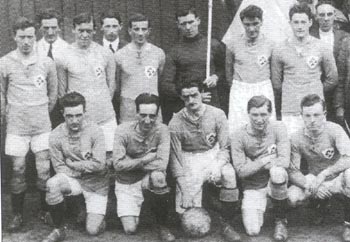
It shouldn’t have come as that much of a surprise though, as the Gate had won both the Leinster Senior Cup and Irish Intermediate Cup just a season earlier. Several of that successful James’s Gate side would go on to represent Ireland but it would be the Paris Olympics in 1924 before they’d have the chance to pull on the green jersey. Among the Gate players from that season were Charlie Dowdall, like Ernie McKay and Paddy “Dirty” Duncan who joined five Bohemians in the squad. It was Duncan who would get the first goal in an international competition for the Irish Free State, grabbing the only score in a 1-0 Olympic victory over Bulgaria.
Joe O’Reilly and Charlie Dowdall with the Cup years later
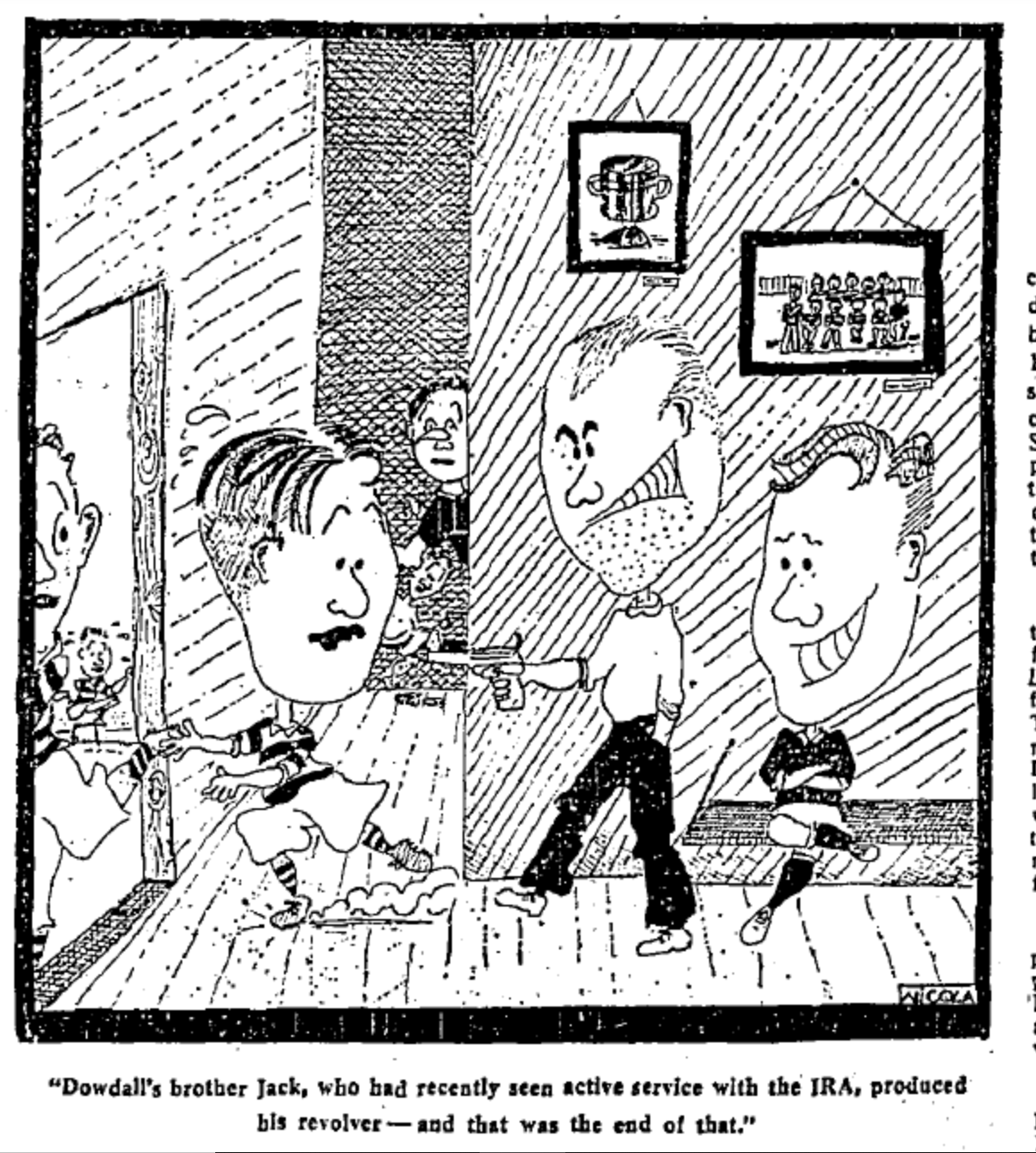
Of course, the political tumult in the country was never far removed from football, Bohemians began the season playing a pair of friendlies in Dublin and Belfast to help raise funds for the workers locked out of the Belfast shipyards, expelled because of their religion or their politics. The season then ended with pistols drawn in a Dalymount dressing room at a Cup final replay. St. James’s Gate won the double beating Shamrock Rovers (the of the Leinster Senior League) after an ill-tempered game which ended with infuriated Rovers players storming the Gate’s dressing room.
Bob Fullam of Rovers advanced on Charlie Dowdall when Charlie’s younger brother (and an IRA volunteer) Jack stepped forward and produced a pistol. Fullam and his Rovers teammates were outnumbered, and now out-gunned and they sensibly beat a retreat from the James’s Gate changing rooms!
Newspaper cartoon depicting the dressing room scene after the Cup final.
The name Callaghan derives from the Irish gaelic Ceallachan synonmous with the 10th century King of Munster who was eventually dispossed of his 24,000 acres of land by the Cromwellian Plantation. Plantations took place in Ireland in the 16th and 17th centuries and involved the confiscation of all Irish owned land by the English crown and the colonisation of these lands by settlers from British shores.
By October 1791 inspired by the French Revolution the Society of United Irishmen in Belfast led by Theobald Wolf Tone were formed, the group sought to secure a reform of the Irish parliament by uniting Protestant, Catholic and Dissenter into one single movement. It would lead to the rebellion of 1798 which was quashed and led to the 1801 Act of Union which brought Britain and Ireland closer and both this and the famine of the 1840s led to millions leaving the emerald isle.
Due to poverty the bottom one-third of the population were exclusively dependent on the potato for sustenance, the daily intake was enormous 4 to 5 kilos daily per adult and the consequences of repeated failures was devastating. In the publicly financed soup kitchens which replaced the public works, established under the Irish Poor Law of 1838, three million people were fed at their peak in early 1847. For those who could afford it escape from the famine came through a boat most were destined for the port of Liverpool more than two million people would land on its shores many with not enough finances to continue their journey.
The Liverpool Mercury newspaper reported in 1847:
“The fact is that in the cold and gloom of a severe winter, thousands of hungry and half naked wretches are wandering about, not knowing how to obtain a sufficiency of the commonest food nor shelter from the piercing cold. The numbers of starving Irish men, women, and children—daily landed on our quays is appalling; and the Parish of Liverpool has at present, the painful and most costly task to encounter, of keeping them alive, if possible…” in that same year 80,000 Irish would find themselves living in dog-kennells and cellars in Liverpool 60,000 alone would perish from fever.
In January 1981 Jerry Harris paced the arrivals lounge in Cork airport, secretary of Cork United he was waiting for a man with the Munster name of Callaghan.
That winters’ evening in polo neck and fur coat Ian Callaghan of Toxteth Liverpool landed in southern Ireland, only three months earlier seven Republican prisoners went on hunger strike in the Maze prison as Margaret Thatcher’s government sought to criminalise both Republican and Loyalist prisoners removing special category status that summer of ’81 the streets of Toxteth would burn in revolt against the same government.
On the afternoon of April 16th, 1960, Ian Callaghan stood at the bus stop among his own, that evening he would wear the red of Liverpool, as the bus opened its doors ‘Let Cally get on first… he is playing tonight…’ came the call as they all journeyed to the red cathedral of football in unison. That night in the cauldron of Anfield Callaghan would wear the famous no. 7 shirt it was like a tent hanging from his slim shoulders, as Liverpool football club demolished Bristol Rovers four to nil. The faithful from the kop to the main stand gave the baby-faced Callaghan a standing ovation as he left the hallowed turf.
Callaghan’s arrival had been predicted by the great Billy Liddell, the Scot had signed professional terms at Anfield in 1939 on the recommendation of Matt Busby, then Liverpool captain. Billy’s parents had only agreed to him signing once he could continue his accountancy studies, he would line out 534 times for the reds netting 228 goals; himself and Bob Paisley made their debuts against Chester City in the FA Cup on the 5th of January 1946.
During the war Liddell had guested for Linfield, he was also asked to play for Belfast Celtic by Liverpool legend Elisha Scott but declined the offer of playing at West Belfast’s paradise.
As the 1960’s beckoned Liddell was asked how Liverpool woud replace him? His answer:
“There is a 17-year-old called Ian Callaghan who looks like taking over from me. I played with him twice, watched his progress and I believe he’ll be a credit to his club, the game, and his country,”
The youngster had to bide his time but by November 1961 as Elvis Presley sang about ‘His Latest Flame’ Callaghan became a permanent fixture on Liverpool’s right wing as pomotion to the first division was gained in the summer of 1962. Under the stewardship of Bill Shankly, Callaghan blossomed. The Scot of mining stock once proclaimed, ‘If there were 11 Callaghan’s at Anfield there would never be any need to put up a team sheet.’
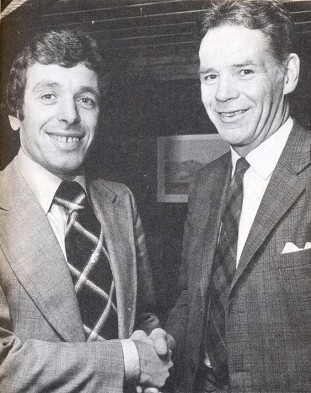
Callaghan and Liddell
Within two years Ian Callaghan, aged 22 was a First Division champion as Bill Shankly and his players walked towards the Spion Kop with the championship trophy and the sounds of the mersey beat in their ears. A year later Callaghan walked out onto the Wembley turf for the FA Cup Final of 1965 against Don Revie’s Leeds United; Yorkshire’s finest had defeated league champions Manchester United one nil in a semi final replay to reach the twin towers.
The Reds had never won the FA Cup and had beaten Chelsea two nil at Villa Park in the other semi final. It was their third effort at trying to lift the blue riband cup of English football losing in 1914 and in 1950 when Liddell had played. As one hundred thousand watched on both teams struggled to create goal chances with the most significant incident being Gerry Byrne’s third minute injury after a hefty challenge by Leeds captain Bobby Collins.
Byrne broke his collar bone but with no substitutions allowed had to play on as the game ended scoreless after ninety plus minutes and went into extra time. In obvious pain Byrne who had also arrived like Callaghan at Anfield aged 17 continued his marauding runs from left back and in the third minute of extra time he found himself on the oppositions by-line centering for Roger Hunt to stoop and head the ball past Gary Sprake. Shankly would later remark about Byrne ‘It was a performance of raw courage by the boy.’
On the stroke of the 100th minute Leeds equalised Norman Hunter crossed for Jack Charlton to head the ball down for Scot Billy Bremner to volley passed the hapless Tommy Lawrence in the Liverpool goal. However, with only three minutes left as the rain fell Callaghan jinked passed Willie Bell and sent in a low cross which Ian St John arched his head to finding the back of the net to send the Liverpudlians into raptures.
In his all-red strip Ian Callaghan climbed the steps to the Royal Box to collect his winners medal, Shankly’s idea of all red was a psychological one he felt his players would look and play like giants – red for danger, red for power. The following day Ian Callaghan and his teammates landed in Lime Street train station with the cup as thousands lined the streets, they were paraded on a bus to the town hall. On the balcony of the town hall as the five hundred thousand crowd swayed to the chants of ‘Liverpool’ Callaghan lifted the trophy.
Callaghan won his second First Division medal as Liverpool were crowned champions of England 1966 with Revie and Leeds runners up, six days later the team would lose 2-1 to Borrussia Dortmund in the European Cup Winners Cup Final at Hampden Park, all of this led to a World Cup call up. After playing one of the group games against France with England winning two nil and teammate Roger Hunt netting twice, Callaghan found himself surplus to requirements. As Alf Ramsey, following the group games, decided to go without wingers and to add more woe only the eleven men who lined out against West Germany in the final received winning medals.
It would take forty-three years for Callaghan, Byrne, and Jimmy Melia the Liverpool squad contingent to get their medals after a succesful campaign made FIFA perform a U-turn – Roger Hunt the other Liverpool squad member played in the final.
In 1970 Callaghan suffered a knee injury on his return Shankly moved him into the centre of midfield it would prolong his career for seven years. More success came in the form of League and Uefa Cup victories in 1973 and 1976 with a further league medal in 1977. FA Cup glory was achieved in 1974 over Newcastle United Bill Shankly would announce his retirement soon after, Ian Callaghan that same year would become Liverpool’s first Footballer of the Year. Shankly was replaced by his side kick Bob Paisley who led Callaghan and Liverpool to European Cup glory in 1977 defeating Borussia Mönchengladbach 3-1 in Rome.
Liverpool celebrating their Cup Final victory in 1965
By 1978, as Liverpool were winning back-to-back European titles with a one nil victory over Brugges of Belgium with Kenny Dalglish scoring at Wembley, Callaghan had lost his place to Graeme Souness. All in all, the boy from Toxteth spent nineteen seaons at Anfield playing 857 games he would break the man he replaced Billy Liddell’s record of 534 appearances for the reds.
After spells with Fort Lauderdale in the States and Swansea under the stewardship of John Toshack Callaghan landed in Cork making his debut that January of 1981 in a three one away victory at Home Farm.
The honeymoon would only last one more game before Callaghan departed, like many League of Ireland clubs Cork United (or Albert Rovers as they were known originally) were besieged with financial problems and could not improve their mid table mediocricy. As well as Callaghan they also signed Irish international Miah Dennehy and Chelsea FA Cup winner Ian Hutchinson but there would be no success.
Cork United and its secretary Jerry Harris put their eggs in one basket that being a lucrative friendly with Manchester City, a request for then City Irish internationals Michael Robinson and Tony Grealish to line out for Cork fell on deaf ears. The event would cost United £15k Irish punts with City requesting an £8k guaranteed fee, the game went ahead with former Republic of Ireland manager Martin O’Neill netting for the blues in a comfortable four nil victory over their Irish counterparts.
Sadly, United didn’t make the profits they envisaged after only 2,000 spectators paid in, United were unable to settle Manchester City’s fee of £8,000. Amid mounting debts, they were expelled at the end of the season, leaving Cork without League of Ireland representation for the first time since 1924.
Dixie Dean of Everton who also spent the twilight of his career in the League of Ireland at Sligo Rovers was once asked if he could replicate his 60 league goals in a season in modern times his reply:
‘If I could play between Ian Callaghan and Peter Thompson, I’d still get my 60 goals a season.’
In 1864 Dutchman James Cox built the largest Jute factory in the world in the town of Lochee just west of Dundee on the Firth of the Tay. Camperdown Works would house five thousand employees and its campanile style chimney would cover the town’s skyline; the town’s prosperity would lie solely on the textile industry and the manufacturing of Jute.
Lochee would soon have a school, two railway stations, a police station, and several chuches and the Irish would flock to the town leaving behind a land scourged by famine. Fourteen thousand would set foot in Lochee lured by the prospect of employment in Cox’s jute mills, the town would soon have the moniker of ‘Little Tipperary’. Most came skilled and knowledgable about the work leaving the linen towns of Donegal, Derry, Sligo, and Monaghan. Within forty years Lochee Harp football club would be formed following in the footsteps of the Irish in the Cowgate area of Edinburgh and the East End of Glasgow.
As the population in the area grew housing and sanitation couldn’t keep a pace with many families living in overcrowded slums and in an era before the welfare state some suffered from hunger and disease leading to a loss of regular income. Among this poverty and prosperity ‘The Harp’ was born by church leaders and members to raise much needed funds through the playing of football matches and to alleviate the boredom of the daily grind for workers.
In their first season the club would win the Dundee Junior Cup with the names of Gallagher, Mac Colla and Curran featuring prominently. Watching from the stands and immersing himself in the success was one James Connolly who had left the British Army in 1889 after serving for seven years in Ireland, to settle back in Dundee. It is in Dundee and the Irish heartland of Lochee where Connolly would begin his activism in socialist politics and trade union rights.
Connolly was born in 1868 at 107 Cowgate in Edinburgh to an Irish immigrant family close to St. Patrick’s Church where the Catholic Youth Mens Society was founded. From the embers of this society Michael Whelehan an Irish immigrant from Co. Roscommon would convince Canon Edward Hannon to allow the CYMS to form its own football club, out of this conversation came Hibernian football club in 1875.
On the football pitches across Dundee Lochee’s success would continue recapturing the local junior cup in season 1906/07 with a third title four years later. The Harp’s achievements did not go unnoticied and by March 22nd, 1909, the Scottish Referee newpaper was reporting of a new ‘Irish team’ being formed taking the name Dundee Hibernian.
“The promoters are all Dundee Irishmen, and as the city is said to include in its population no less than thirty thousand of the same persuasion, the new organisation will not want for support. Mr Pat Reilly, the well-known cycle manufacturer, has been appointed secretary. The new club is meant to take the place of the defunct Dundee Harp, which was, in its time, one of the most prominent clubs outside of Glasgow.”
Scottish Referee newspaper
By mid-May of 1909 Dundee Hibernians became sole tenants of Clepington Park on Tannadice Street, the old tenants Dundee Wanderers took everything but the grass. The local Irish community in the city would put in a mammoth effort to have the ground ready for the clubs first friendly against Hibernians of Edinburgh; a new pavilion was erected, stand and fencing while just days before the match turnstiles were purchased at a cost of £9 each with a discount of 5% sourced by paying in cash.
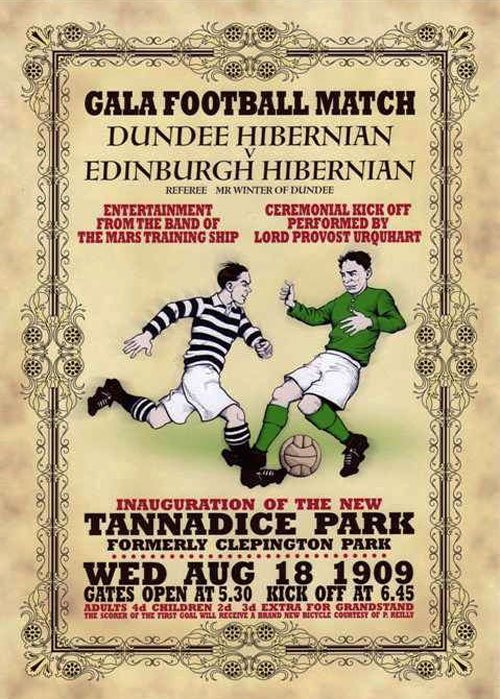
Dundee Hibernians v Hibernian, 1909
At 5:45 pm on Wednesday August 18th, 1909, seven thousand patrons would pay in at the turnstiles to officially open the new ground which would become Tannadice Park. Pre-match entertainment would come from the band of the Mars Training Ship for dissolute children, the music adding to the jovial occasion. Messers Brady, Strachan, Gallacher, Hannan, Ramsay, Boland, Flood, Brown, Dailly, Docherty and McDermott would don the club’s green shirts for this inaugural outing.
Hibernians of Edinburgh who usually wore green and white hoops would borrow a kit from Leith Amatuers lining out in unfamiliar black and white hooped shirts. To watch proceedings adults would be charged 4d and children 2d the crowd primarily drawn from the forty thousand strong Irish community in the city. John O’Hara of Hibs would be the first man to net at the new stadium and after the game he would be presented with a bicycle by Dundee Hibernians founder and manager on the day Pat Reilly from his shop on Perth Road. However, forward Jamie Docherty would send the home crowd into raptures with an equalisier and as Mr. J. Winter blew the proceedings to an end the game finished in an entertaining 1-1 draw. The Edinburgh Hibernians fees amounted to £8 one shilling as darkness fell across Tayside both teams enjoyed an aftermatch cup of tea.
Tannadice, 1909
Disappointingly though the new ‘Irish club’ of Dundee was not welcomed with open arms by all as the Scottish Football Authorities refused an application by Reilly and Dundee Hibernian to join the Scottish League – they would line out in the Northern League facing off against their nemisis Dundee Wanderers. This did not defer Reilly who was born in Dundee to Irish parents, the eldest of five children, the family were steeped in the bicycle trade. Pat would spend his days with his father and two brothers manufacturing two-wheeled cycles fom the ‘standard’ Triumph Roadster for ‘Sir’ to the Chater Lea X-frame for ‘the Ladies’.
Reilly began writing to all Scottish League clubs looking for support to allow Dundee Hibernians join the national league system he advised that Tannadice consisted of a “pavilion with excellent dressing rooms, hot and cold running water, a grandstand holding 1200 supporters and that Tannadice Park could hold 15,000 – 20,000 spectators.”
By 1910 the lobbying of other league clubs paid off and Dundee Hibernian started life in the second tier of Scottish football playing Leith Athletic in their opening league fixture at Tannadice, they would finish the season in 8th place with twenty-two games played and win the local Carrie Cup.
The World at War would have a profound effect on Dundee Hibernian with many players leaving for the front and financial woes leading the club to have to transfer to the Eastern Legue by 1915. However, ‘The Irishmen’ as they were known would be reinstated to the Scottish League after the War ended in 1919 and again in 1920 but no fixture would be fullfilled by the Hibernians of Dundee.
In October 1923 as the club faced financial ruin a group of local businessmen offered the board a financial package to stop ‘The Greens’ going out of business however, it came with a price. Those proposing the stimulus requested a change of name and colours which would appeal to a wider audience not just the Irish of Dundee. Originally the name Dundee City was put forward but frowned upon by city rivals Dundee this was then changed to Dundee United and a black and white kit would replace the green.
United kept the white and black colours until as late as 1969, when they switched to tangerine shirts and black shorts. They had worn this combination while competing as Dallas Tornado in the United Soccer Association in 1967 and it was the wife of manager Jerry Kerr who persuaded the Tannadice outfit to adopt the colours.
In November 1971 a former Lanarkshire joiner by the name of Jim McLean would replace Jerry Kerr as manager of Dundee United, he had made his name in football across the road at Dens Park. McLean would spend twenty-two years in the hot seat at Tannadice and shake the foundations of Scottish football to its very core creating a ‘new firm’ through one of the greatest youth policies ever established in Scotland. Following League Cup victories in 1979-80 and 1980-81 McLean would lead the club that Pat Reilly founded to the promise land winning the title in 1982/83 pipping Glasgow Celtic by a point. The title was clinched at Dens Park with a 2-1 victory, on the day McLean’s men would get changed in Tannadice Park and walk the 200 yards in their orange shirts to their great rival’s stadium.
It would mean United would line out in the European Cup of 1983/84 it would be some adventure with Sturrock, Bannon, Hegarty and Milne all starring along the way as McLean’s charges reached the semi final defeated by Italians Roma 3-2 on aggregate. An impressive two nil victory at Tannadice in the first leg was duly scratched out as United succumb to a three-nil defeat in the second leg in Rome – ‘The Irishmen’ as once they were known had dared to dream of the top prize in European club football.
Three years later Dundee United went one better reaching the UEFA Cup final of 1987, after defeating FC Barcelona in the quarter final where McLean asked those of Irish Catholic faith to pray in the Camp Nou cathedral before the game, they would narrowly lose out to IFK Gothenburg.
Today in the Tannadice boardroom you will find the original minutes book which includes the writings of those who founded the club and those who saved it; a football club founded by Irish immigrants and expanded by locals.
‘Still he sings an empire song And still he keeps his navy strong And he sticks his flag where it ill belongs…’
Eamonn McCann stands with his back to Free Derry Wall and annouces, ‘over there in that ditch is where I lay on Bloody Sunday’. He faces east towards Rossville Street where on the 30th of January 1972 the rubble and wire barricade stood, and the fatal shooting began at 4:10 pm.
The Paracute Regiment had entered the Bogside with several of their Humber Armoured Vehicles driving into the courtyard of Rossville Flats – Alana Burke (18) and Patrick Campbell (53) were mowed down. Jack Duddy was the first of the innocent to be shot dead by the British Army fleeing fom Company C across the courtyard, a fatal single bullet entered his upper chest. As Duddy lay motionless Fr. Edward Daly took cover behind a low wall; that afternoon Fr. Daly would wave a blood-stained handkerchief to try and save the youngster – behind McCann what played out is immortalised in mural artwork. At the barricade that day stood another seventeen-year-old John Young, by 4:15 pm he was dead, killed by a single shot to the head, the bullet entering his left eye.
This is Derry, situated in the Northwest of Ireland the birthplace of the Civil Rights Movement in Ireland and a city sadly scarred by the events of Bloody Sunday. The air is full of injustices on the Messines Park, in the centre of a group of local shops sits a sports shop, among the trophies inside, the wall is filled with photos of Di Stefano, Puskas and Best: names of a bygone era.
Behind the small counter stands Johnny ‘Jobby’ Crossan a man who felt the wrath of football injustice. A son of Sparta Rotterdam who tormented the Rangers at Ibrox and a man who wore the ‘Red’ of Standard Liege marking Alfredo Di Stefano in the cauldron of the Bernabéu in the European Cup semi-final of 1961. Crossan made his name in the stadia of Belgium and Holland, not by choice but by necessity.
In 1957 as a teenage starlet for his local club Derry City, Crossan was the up-and-coming wonder boy of Irish football. With scouts hovering over his every touch Derry City were approached by Sunderland F.C. for the young candystripe, the Wearside club offering £10,000 for Crossan’s services. Crossan who was being paid a paltry £3 a week at Derry was made aware of Sunderland’s approach.
As he states from the centre of his sports shop ‘Derry City would receive £5k and I would get £5k’, however, Johnny had a change of heart and decided to sign for rivals Coleraine. He wasn’t long kicking football in the coastal town when the great Peter Doherty then managing Bristol City came knocking in October 1958, a fee of £7k was agreed and Jimmy headed to Ashton Gate.
The board of Derry City vented their anger by informing on Crossan, and incriminating themselves in the process, to Alan Hardaker then Secretary of the English FA; their main gripe Coleraine would now receive a fee and not Derry City. Crossan’s ‘crime’ was that he had received payment from Derry City even though he was an amateur. Peter Doherty broke the news to the teenager as they travelled home together after training.
Johnny left broken hearted returning home to Hamilton Street to face the wrath of the IFA and in January 1959 they announced wee ‘Jobby’ was banned for life – ‘Life…’ he exclaims” To this day I never received a letter nothing from them…’.
The story made both front and back pages with young Johnny still six weeks short of his 20th birthday left with no way of earning a living and not able to kick football competitively ever again. Of course, Johnny appealed, and the ban was lifted to only include the UK so Johnny could go abroad to play the game he loved. The Continent was calling.
A wandering nomad by the name of Denis Neville had been managing on the continent since 1948 and by 1959 was managing Sparta Rotterdam, then champions of Holland. He would later go on to manage the Dutch National team. More importantly for Johnny, Neville contacted him offering him a chance of redemption with the then Dutch champions. Crossan jumped at the chance.
There was apprehension ‘…of course I was apprehensive I didn’t even have a passport’, one was sourced with the help of Eamonn McCann’s friend John Hume, Crossan was on his way to the land of Oranje. Johnny made his debut against Fortuna 54 and would play in the fifth season of the European Cup with the red and white gladiators, De Rood-Witte Gladiatoren, as they are known in Dutch Football.
Sparta received a bye in the preliminary round and faced the Swedes of IFK Gothenburg in the second round who had overcome a Linfield side featuring an aging Jackie Milburn in the first round. The two-legged affair finished 4-4 and Jimmy and Sparta were off to Bremen in West Germany for a play-off to determine who would go through.
Sparta won 3-1 with Crossan scoring a 23rd minute debut European goal meaning Glasgow Rangers awaited them in the quarter finals. On the 9th of March 1960 referee John Kelly blew his whistle as 53,000 souls in the Sparta Stadion cheered on their side. Rangers ran out 3-2 victors on the night, but Johnny ‘still banned from football in the UK’ and Sparta would have their revenge in front of 100,000 at Ibrox with a 1-0 victory.
With the tie finishing all square at 3-3, the play off was set for Highbury, London home of Arsenal football club. Within the space of a fortnight ‘Jobby’ had played in Ibrox and Highbury, not bad for a man who was banned – ‘lunacy I know’ he exclaims.
In front of the Sparta fans who stood on the North Bank that night Rangers won 3-2 with Sparta helping the Glasgow giants greatly with two own goals. Johnny’s European Cup adventure was over but Crossan had been noticed by next door neighbours Standard Liege, then champions of Belgium.
There would be more European adventures for Johnny as he joined ‘Les Rouges’ in 1961 and on the 6th of September, he lined out again in the European Cup against Fredikstad of Norway winning out 4-1 over the two legs. In the next round Liege dismissed Haka of Israel 7-1 on aggregate and Johnny found himself facing the Rangers again in the quarter finals, the difference this time was that he would taste victory. In front of a 36,000 crowd, Crossan of Hamilton Street in Derry would net twice in the first leg as Liege ran out 4-1 winners at the Stade Maurice Dufrasne. Rangers would win 2-0 at Ibrox in the second leg but Liege had done enough to advance. On the 22nd of March 1962 Johnny Crossan walked out on to the hallowed turf of the Bernabéu to face one of the greatest European Cup teams of all time.
Johnny was tasked with marking the great Alfredo Di Stefano, on the wall in the sports shop is a picture of the Real Madrid team from that fateful night, ‘Puskas, Gento, DelSol, Tejada…’ he calls out as he points at each player. Real Madrid ran out 6-0 winners over the two semi-final legs the greatest team of the 1950’s and early 60’s and a class apart.
One of Johnny’s midfield counterparts at Liege was the affectionaltely named Paul Bonga Bonga the first African to play in the European Cup; in 1960 he would be in line for the Golden Boot of Europe coming second to one of Belgium’s greatest goalscorers Paul Van Himst of Anderlecht.
Paul’s wife would work in the first democratically elected government of the Congo, independence came for the country on the 30th of June 1960. The hero of Congolese independence was Patrice Lumumba he would become the country’s first prime minister but within seven months on the 17th of January 1961 he was assassinatted by the CIA.
The blinkered blazers of the IFA took note of Crossan’s European adventure and Malcolm Brodie reporter of the Belfast Telegraph had been out to the lowlands to interview Johnny. Even though banned from club football in the UK, Crossan represented Northern Ireland against England in November 1959 at Wembley with Munich air disaster survivor Harry Gregg in goal for the Irish.
The Crossan affair was finally resolved in 1962 in Lima, Peru of all places when Harry Cavan of the IFA bumped into Syd Collings a director of Sunderland AFC ahead of a friendly between Peru and England. Collings asked Cavan about Johnny Crossan and suggested the Black Cats were still interested in signing the Derry man. Cavan outlined if Sunderland came to play Linfield at Windsor Park the ban would be lifted, and the Lima side street deal was duly agreed.
Sunderland came to Belfast to play that friendly and Johnny Crossan left Liege for Wearside a lengthy three years since the club’s initial approach to Derry City. Crossan joined a then Division Two Sunderland in October 1962 and played alongside Brian Clough; indeed, he was on the pitch that Boxing Day when Clough’s career came to a shattering injury-induced end. Clough would go on as a manager to have his own European success ’A great man…genius…what he did with Nottingham Forest amazing’ he states – Johnny would name his son Brian after his great friend.
Clough and Crossan
Sunderland were promoted in Johnny’s first season and he would stay on until January 1965 when he was transferred to Maine Road, Manchester. Johnny joined Manchester City who were in the embryonic stages of building a great championship winning side with the names of Summerbee and Bell soon to shine. Crossan became the darling of the Kippax captaining City to the Division Two championship in 1966, meanwhile across the way a kid by the name of Best was also starting to make headlines.
George Best had made his Northern Ireland debut against Wales in 1964 playing outside right and next to him on the field playing inside forward was a certain Johnny Crossan. The pair would become friends as the swinging sixties hit Manchester, although Crossan’s wife Barbara wouldn’t let him out with George! Johnny smiles at the memory.
It is now fifty years since fourteen innocent Irish people were murdered by British Forces not one person has ever been convicted. As lunchtime approaches on Messines Park Johnny shuts up shop with the Bogside below him and the Creggan above him; the man who duelled with Di Stefano and was King of Liege; the man they couldn’t ban.
Did you know that Karl Marx played football with the KGB in East Germany?
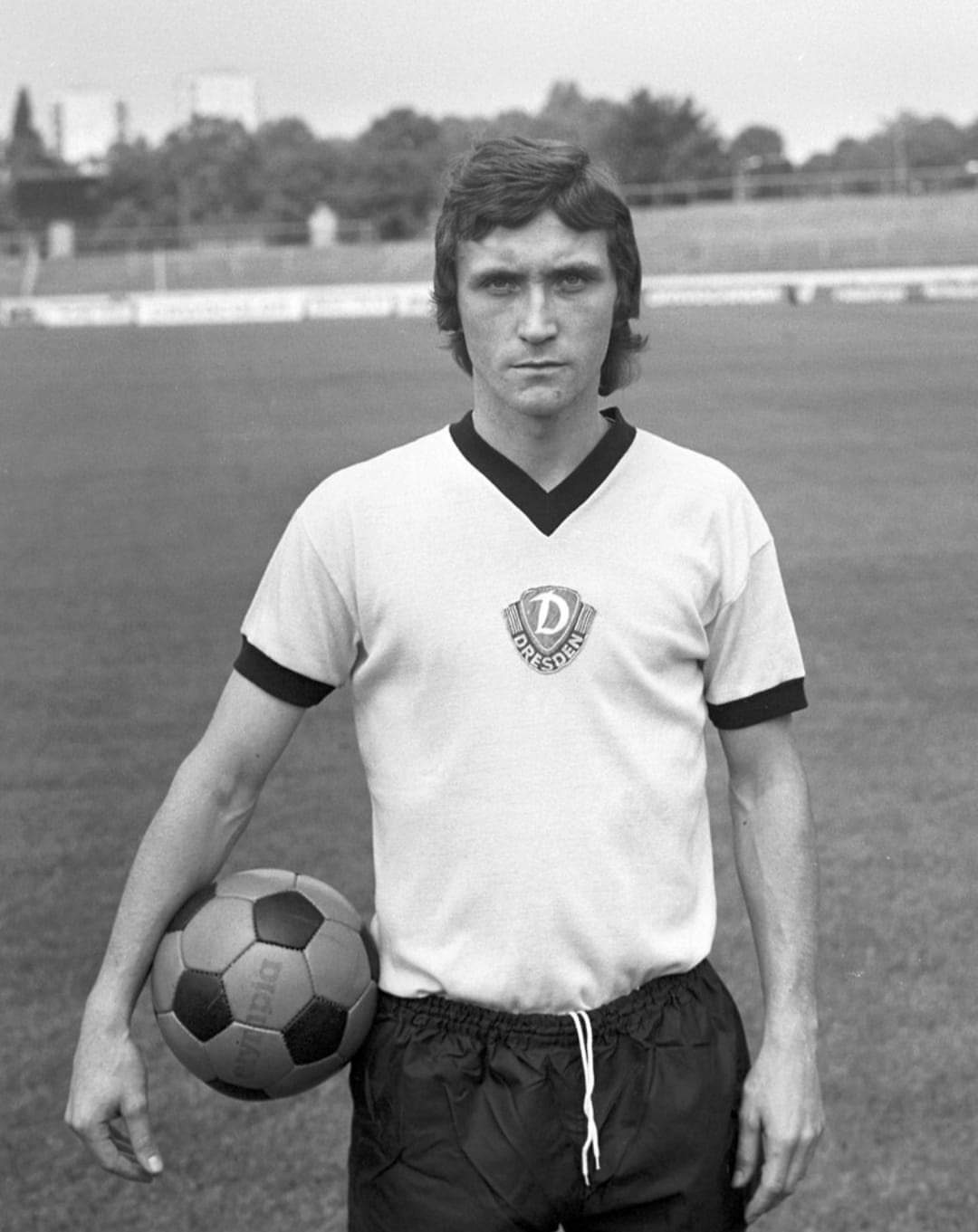
Bit of a trick question obviously but there is a grain of truth in it. As Bohemian Football Club progressed to the last 16 of the European Cup they were drawn against Dynamo Dresden, champions of East Germany and the dominant team there throughout the decade. It was a daunting mission, as we’ll see the Dresden side were packed with internationals and had reached the quarter finals of both the UEFA Cup and European Cup within the previous three years. Being drawn against Dynamo Dresden also meant another trip behind the “Iron Curtain”, something Bohs were getting familiar with having faced Eastern bloc sides in the past such as Polish Cup winners Śląsk Wrocław three years earlier. As well as a trip to face Gottwaldov in Czechoslovakia in the club’s first ever European tie.
But returning to Karl Marx, this was the moniker given by RTÉ commentator Philip Greene when watching one of Bohs’ young stars in action. It helped that Terry Eviston player on the left-wing, and that he was fairly hirsute in those days with a mop of curly hair and a beard, not unlike the famed German political-philosopher. As for the KGB? Well, that was a joking reference to a social group of the Bohs squad who palled around together, the K-G-B stood for (Tommy) Kelly, (Eamonn) Gregg, (Joe) Burke, the defensive backbone of the successful Bohs side of the 1970s.
But before the KGB could grab a couple of German lagers there were still some issues facing Bohemians that needed to be resolved. Having defeated Omonia Nicosia on away goals in the previous round Bohs now faced a difficult and expensive journey to Dresden, coupled with the fact the UEFA ban on using Dalymount for the home leg was still in place. The “home” game against Omonia Nicosia had taken place in Flower Lodge in Cork City and the Bohemians directors had been busy in the meantime trying to gain permission from UEFA to host the home leg closer to Dublin. They appealed against the diktat that the game must be played 150km from Dublin and successfully reduced the distance required as part of their ban to 80km.
According to the press reports the game in Flower Lodge, which attracted a crowd of roughly 4,500 had according to the club, cost Bohs £5,000 and hopeful of a successful appeal the club had already reached an agreement with Dundalk for the use of Oriel Park for the upcoming second round, first leg fixture against Dynamo Dresden. Luckily for the club, less than two weeks before the game their appeal was granted by UEFA President Artemio Franchi. Bohs were going to Oriel Park to face Dynamo Dresden and manager Billy Young encouraged the Bohs faithful, as well as the local Dundalk population to come out in force to support Bohemians.
At the forefront of the mind for Young, and the Bohemians’ Directors was the issue of finance. As mentioned, the previous tie in Cork had ended up costing the club £5,000 and this, coupled with the costs of getting to Dresden was eating into the profits made from the previous year’s league win, bumper gate against Newcastle and sale of winger Gerry Ryan. There costs weren’t insignificant, it is worth noting that the £5,000 quoted for arranging the home tie in Flower Lodge was more than the annual salary for someone on the average industrial wage at the time. Now, thankfully with a home venue secured and the distance to travel for the home games reduced Bohs could actually focus on the task at hand, trying to defeat Dynamo Dresden.
As for Dynamo Dresden they had a similar result to Bohemians, losing away, but winning at home to Partizan Belgrade, but with the scores from both legs finishing at 2-0 a penalty shoot-out was required to separate the teams. Ilija Zavišić missed the decisive penalty for Partizan while Udo Schmuck proved he wasn’t that type of Schmuck by scoring his spot kick for Dresden. It appeared that Dynamo weren’t taking Bohs lightly, in the week before the game they sent two club officials to scout on Bohs as they played Shelbourne in Tolka Park and were even planning on taping the game to analyse it. The Irish Press reported that this would have cost the German club in the region of £1,000 and of course the Dresden officials were referred to as “spying” on Bohemians. For his part Billy Young had been in contact with Liverpool’s Bob Paisley. Liverpool had knocked Dresden out of Europe the previous season 6-3 on aggregate, winning at Anfield but losing in Dresden. Paisley noted how strong they were at home as well as commentating on Dresden’s pace, intense fitness and good technical ability.
In the opening game in Oriel Park Bohs lined out as follows: Mick Smyth, Eamonn Gregg, Austin Brady, Tommy Kelly, Joe Burke, Padraig O’Connor, Gino Lawless, John McCormack, Turlough O’Connor, Paddy Joyce and Terry Eviston. The first half was fairly even as Dynamo seemed to be somewhat nervous, but as the second half progressed the East Germans began to push forward a bit more, winning a series of corners without ever really threatening Mick Smyth’s goal and being restricted to speculative long-range efforts. The media reports gave special praise to the solidity of the back four of Gregg, Burke, McCormack and Brady.
Next up was the daunting task of the away leg. That Bohs had failed to score and hadn’t looked particularly likely to threaten, coupled with the fact that Dresden were expected to be much tougher at home meant that most commentators had understandably written off Bohs chances of progressing. The squad flew out to Dresden with a stopover in Schipol. The over-riding first impression of Dresden in October was one of greyness, modern brutalist buildings alongside memorials to the Second World War seem to be particularly striking, all those spoken to for this piece mentioned the ruins of the Dresden Frauenkirche – an 18th Century Church destroyed in the infamous incendiary bombing of the city by Allied forces in 1945 that had killed as many as 25,000 people and utterly destroyed the city. The ruins of the Church had been left as a memento to these events before eventually being reconstructed after German unification.
Match programme vs Dynamo Dresden
As for the squad’s accommodation they were billeted in a set of holiday chalets outside of the city, usually a spot for families to flock to during the summer they were deserted as winter approached. Crucially they were also somewhat remote and secure and were under constant armed guard. The Bohs party were assured that this was for their protection. The squad also had official plainclothes chaperones to assist them, and keep an eye on them during their stay. Despite these efforts Terry Eviston recalls a leather jacket-clad character who approached the squad with promises to get them products of their choice in return for dollars or other western currency.
The armed guard and various official chaperones who were there to “protect” the team were by all accounts friendly enough though with limited command of English, and according to Billy Young graciously allowed the squad a bit of time to explore the city unsupervised in exchange for a bottle of Jameson whiskey. In fact the players seem to have had plenty of freedom with Tommy Kelly, Joe Burke and Eamonn Gregg (the KGB) managing to nip out for a pint and a bite to eat a couple of days before the game to a local restaurant, only to have to hide themselves behind a curtain in an alcove in the back when Billy Young and journalist Noel Dunne walked in!
What was highly impressive though to the Bohs players and management were the facilities available to Dynamo Dresden. While the club were nominally amateurs, Dynamo being a nationwide sports club for the East German police, meant that all the players were technically policemen or working in the wider police organisation, they were for all intents and purposes professionals, in receipt of better pay, better housing, cars as well as the opportunities for international travel that came with being part of one of the states elite Fußballclubs. A designation afforded only to the elite football teams in East German.
The team played out of the 33,000 capacity Dynamo Stadion, a huge open bowl which had four iconic floodlight pylons towering above it at an angle. The stadium had medical facilities on-site as well as gyms and dormitories nearby. A far call from Dalymount despite the nominal “amateur” status of Dynamo’s players.
This wasn’t the first time that Bohs had played against German opposition in Europe, though of the Western variety, the early part of the decade had seen Bohemians face FC Köln and Hamburger SV in consecutive seasons in the UEFA Cup. As with Dresden the players were blown away by the facilities available to the German clubs, though in this case the Köln and Hamburg players were overt professional outfits.
Tommy Kelly recalled a post match meal after being knocked out of the UEFA Cup by Hamburg, opposite Tommy was the Hamburg captain and German international Georg Volkert, with little English most of the conversation was carried out through a younger Hamburg player who asked Kelly and his Bohemian teammates how much they earned. Kelly recalled that his wages at Bohs were roughly £20 a week at the time, not unusual at a club were most of the players had day jobs. Deciding to inflate the figure he replied to Volkert that he earned £50 a week, when translated this drew surprise from Volkert who reportedly stated with a Naomi Campbell flourish, that he wouldn’t get out of bed for £50 a week. For context it’s worth noting that three years later Hamburg would break the German transfer record to sign Kevin Keegan, offering him a better salary than he was earning at Liverpool.
Dresden were of a similar standard as those sides, six of the gold-medal winning East German squad at the 1976 Monteal Olympics were provided by Dynamo Dresden. They defeated strong (nominally amateur) sides like the Soviet Union and Poland in the semi-final and final respectively. Dresden’s star sweeper Hans-Jürgen “Dixie” Dörner was routinely described as the “Beckenbauer of the East” and eight of the side that faced Bohemians were internationals.
The differences in the home and away legs was stark. During the first half Bohs had been solid in defence as Dynamo, cheered on by a capacity crowd who had begun flooding in hours before kick-off, had begun to exert greater and greater pressure. Bohs had been ably assisted by the oldest man on the pitch, goalkeeper Mick Smyth who had been pressed into service early and produced some remarkable saves. However, the valiant rear-guard action was finally breached by 19 year old Andreas Trautmann in the 29th minute after a goalmouth scramble. Dixie Dörner made it 2-0 with a shot from just inside the box just before half-time and it seems that Bohs knew their race was run by that stage.
In the second half Dynamo ran riot with a goal from Schmuck, a second from Trautmann, and two penalties scored first by Dieter Reidel and then by Peter Kotte. The Irish Press ran with the questionable headline of “Dresden, left in rubble after a bombing raid in 1945 saw another blitz last night when Bohemians were ripped apart”. While the wording may have lack sensitivity Bohs were indeed ripped apart in the second half, as can been seen even by the short clips of footage available. Dynamo Dresden can be seen moving with speed, purpose and precision as they head towards goal.
Billy Young was philosophical after the result, pointing out how well the team had done until conceding the first goal and praising the “blistering pace” of Dynamo Dresden, describing them as “undoubtedly the best side we have ever met in European competition”. Speaking to Billy recently that is a view he still holds to this day with one exception, that of Jim McClean’s Dundee United who so impressed the Dalymount faithful when they played in Dublin in 1985. Eamonn Gregg, who had just won his third international cap a week earlier described Dresden as “better than a lot of international teams I have seen. They always seem to have two or three players in space looking for the ball”.
Dresden in 1978 – photo courtesy of Terry Eviston
All that remained was the traditional post match dinner, held in one of the fine buildings of Dresden’s old town, rebuilt after the devastation of the war, there the players were introduced to the pleasure of quail egg soup while the club were presented with painting as a memento. Young left with the quote that he felt that Bohs had “learned a lot from the game which will help us at home in the championship”. Bohs would ultimately finish second that year, just two points behind Dundalk. This was of course the main benefit of Europe, exposure to good quality sides and new tactics and approaches as well as an excuse for a trip away and some team bonding. At the season’s close the costs of Europe were clear, the lack of proper “home” games and the cost of travel had reduced the club’s financial surplus from almost £45,000 to just under £17,000 a year later. The second place finish that year did however, secure a sixth consecutive season of European football which was ended after a 2-0 aggregate defeat to Sporting Lisbon in the first round despite and impressive scoreless draw in Portugal. Bohs wouldn’t return to European competition until the infamous games against Rangers in the 1984-85 UEFA Cup.
As for Dresden, perhaps they didn’t realise it but their decade of dominance was coming to an end. Their star striker Hans-Jürgen “Hansi” Kreische, who had played in the 1974 World Cup, had retired at the end of the previous season, he had been blacklisted by the national team because of a bet he had made about who would win the 1974 World Cup. The problem was less the bet (for five bottles of whiskey) but who he had made it with; Hans Apel, the new West German finance minister. Further fallings out with coaches and club officials at Dresden hastened his retirement aged just 30.
Apart from the loss of Kreische there was the small matter of Erich Mielke, head of the Stasi. As Dynamo were a police club they fell to an extent under his personal remit. In the 1950s Mielke had wholesale relocated the successful Dynamo Dresden squad to Berlin to play for Dynamo Berlin. Predictably Dynamo Dresden, shorn of their title-winning players were relegated and had to spend years in the wilderness until they were promoted back in 1962. Their further development and success in the 1970s did not please Mielke who wanted a successful club in Berlin, which he eventually got. From 1978-79 Dynamo Berlin would win ten straight league titles amid much controversy and accusations corruption, intimidating referees and preferential treatment of the club from the capital as Dynamo Berlin found success, but also hated outside their small, devoted fanbase.
Two other players involved in the games against Bohemians had careers cut short or diminished due to political decisions, midfield Gerd Weber and striker Peter Kotte, the man who had scored the sixth and final goal against Bohemians. As Alan McDougall writes, in 1981, while waiting to travel with the East German national team to South America, Weber, Kotte and another Dresden player Matthias Müller were arrested on suspicion of Republikflucht, i.e. attempting to defect from East Germany.
Weber, a gold medal winner in Montreal, was also a Stasi informant, who sent in over 70 reports on his teammates during his time as a player. This was not uncommon and there are estimates that up to a quarter of the players and coaches of top club sides in East Germany had been recruited as Stasi informers, however Weber had apparently used a recent UEFA Cup game against FC Twente to discuss a possible defection and move to FC Köln. Kotte and Müller were accused of knowing about this plan and failing to inform the authorities.
Gerd Weber
Weber was sentenced to almost two years in prison, serving nine months, was expelled from Dynamo and from his police job, and had any other privileges that he had accrued due to his position as a well known footballer removed, and was barred from football for life. Kotte and Müller would only spend a few days in jail but they were barred from playing football in the top two division for life.
While Dynamo Dresden would win two more East German titles in 1988-89 and 1989-90 and even make the semi-finals of the 1988-89 UEFA Cup, the reunification of Germany was not kind to them or to any of the Eastern clubs. After early seasons in the Bundesliga, huge debts saw the club relegated to the regionalised third tier, even dropping down a level further for a time in the early 2000s. At the time of writing the club are top of the third division, hoping to be promoted back to the second tier.
In the programme notes to the Newcastle United game in Dalymount Park the Bohemian F.C. President John McNally extended the usual welcome to the visiting team. He even went a little further, promising Newcastle that “they will be the recipients of a true Irish ‘Céad Mile Fáilte’.” As we’ve seen the Part I of this modest series that Hundred Thousand Welcomes was replaced with bottles, bricks and beercans, culminating in a Garda baton charge and several arrests.
In a time of escalating violence at matches throughout Europe, UEFA had to intervene. The result was to exile Bohs from Dalymount for the duration of the following seasons (1978-79) campaign in the European Cup. All Bohemians “home” games would now have to take place 150km from Dublin.
Bohemians were drawn against Omonoia Nicosia of Cyprus in the first round of the European Cup, with the away leg in Nicosia’s GSP stadium coming first. This wasn’t to be the first time that Omonia would face Irish opponents in Europe. In only their second season in Europe, Omonia were drawn against Waterford in the 1972-73 European Cup, narrowing defeating the Suirsiders 3-2 before being heavily beaten by Bayern Munich in the following round. Two years later there was to be another European first round meeting with an Irish team, this time Cork Celtic but that match never took place.
To understand why this match never happened, and to understand a bit about Omonia and society in Cyprus at the time it is worth looking at the origins of the club. Today, Nicosia is the capital and largest city in Cyprus. It was also home to APOEL F.C. (their name being an acronym that translates as Athletic Football Club of Greeks of Nicosia) to date the most successful football team in Cyprus who were founded in 1926. Omonia were formed as a breakaway from APOEL in 1948. This arose after a telegram sent by the APOEL board to the body that governed amateur athletics in Greece which criticised what is described as a Communist, National Killing mutiny. This was a reference to the ongoing Greek Civil War fought between factions backed by the United Kingdom on one side and the Communist states of Yugoslavia, Bulgaria and Albania on the other. There was a view that Communists were less likely to be sympathetic with the aim of Enosis – a nationalist union with the Greek mainland and other Greek communities in the Meditteranean.
There were protests at the decisions of the APOEL board from athletes, especially in the football section, but these players were expelled by the board with the reported comment of Get out of our stadiums, build your own, and enrol in the Russian Federation of Football. While no club enroled in with the Russian Federation a new club was indeed formed from this schism only a month later. Omonia Nicosia was born, Omonia meaning amity or peaceful friendship in Greek. Within five years Omonia were a league side and by the 1960-61 season had won its first league title. It was however, the 1970s when the club really came to dominance as they won seven Cypriot league titles and three cups through the decade.
It was during this period of success that Omonia were due to meet Cork Celtic and a little later Bohemians. The Cork match never happened however, because in July 1974, just two months before the opening rounds of the European Cup were due to take place, there was a Coup d’etat in Cyprus. Makarios III, the first President of Cyprus, who was also an archbishop in the orthodox Christian Church of Cyprus, was ousted by a right wing, nationalist group called EOKA-B, who were supported by the military junta that was ruling Greece at the time. In dramatic events the usurpers claimed that Makarios was dead, however, he had managed to escape to London with help from the RAF. As the Greek puppet regime took power and began a crackdown on supporters of Makarios, the Turkish military invaded Cyprus, ostensibly to protect the Turkish communities on the island. These effectively separated the mostly-Turkish area of Northern Cyprus from the rest of the island, and created a de facto new state. Understandably against this violent backdrop even European Cup games took a back seat and Cork Celtic got a walkover, only to be beaten 7-1 in the next round by Soviet Top League winners Ararat Yerevan.
Cork, and the military situation in Cyprus are both themes that we’ll return to, but back to Bohs. The first leg in Cyprus was due to take place on September 13th with the “home” leg due to take place two weeks later. A new venue, 150km from Dalymount and agreed by UEFA had to be arranged. Eventually, Flower Lodge in Cork was agreed upon. Nowadays, a GAA ground known as Páirc Uí Rinn, Flower Lodge had been home to Cork Hibernians and after they folded it became the home for another Cork-based League of Ireland side, Cork Alberts.
But before the Bohs faithful would have to travel to Cork there was the small matter of the away leg. Omonia had been knocked out of the European Cup at the first round stage in each of the previous three seasons, the previous season they had been beaten 5-0 on aggregate by Italian giants Juventus. Omonia weren’t without some quality however, they possessed a dangerous striker in Sotiris Kaiafas, who had won the European Golden Boot in 1976 and during his career would be top scorer in the Cypriot league on no fewer than seven occasions. The Cypriot FA would name Kaiafas as their Golden Player (best player of the last 50 years) at the UEFA Jubilee Awards in 2004. Kaiafas had been born in the Northern Cypriot town of Mia Milia and was forced to flee after the Turkish invasion, eventually relocating to Nicosia.
Sotiris Kaiafas
Omonia wore green and white and featured a shamrock on their crest so fitted well into the role of rivals for Bohs. While by chance, Shamrock Rovers were paired against Omonia’s great rivals APOEL in the Cup Winners Cup. Arriving in Cyprus a main concern for Bohs’ manager Billy Young was making sure that the squad didn’t over-indulge with the sun-bathing in the sweltering heat of Cyprus in September. The conditions were one of the biggest obstacles facing the team with the Irish Independent worrying about the players “battling against the heat and humidity”.
Early in the game Bohs had more than just the oppressive weather to worry about with the Omonia winger Andreas Kanaris scoring after just twenty minutes. Bohs had started the game well and were having the better of the match to that point but Kanaris, who was his team’s stand-out player on the day latched onto a header from Kaiafas to get the game’s opener from five yards out. Despite this setback Bohs started to press and again and towards the break forced Omonia into conceding consecutive corners, from the second of these Terry Eviston whipped in a cross which was only partially cleared, and fell to Pádraig O’Connor who struck a rocket of a low volley in from 25 yards out, a goal his brother would have been proud of.
Parity wouldn’t last long however, early in the second half during a Omonia attack the ball ricocheted off the Bulgarian referee and into the path of Filippos Dimitriou who scored from ten yards out. The Bulgarian referee came in for some criticism from the Bohs’ players and Irish journalists after the game for favouring Omonia who were also coached by a Bulgarian. Despite these two goals, Mick Smyth had surprisingly little to do in the game, with the conditions beginning to tell and the Bohs players “almost out on their feet at the finish” the game finished as a 2-1 win for Omonia. The narrow margin of defeat and the away goal were something that Bohs were happy with, confident that even if it wasn’t to be Dalymount that they would do the job back in Ireland, a 1-0 win would suffice.
Billy Young summed up the mood simply by saying “I believe we will do it”, before going on to say how “tremendously proud” he was of the players who because of the heat “were almost on their knees but never stopped battling”. The media reports, despite the narrow defeat were full of praise for the Bohs players, especially John McCormack, Joe Burke, the tireless Paddy Joyce and 19 year old Gino Lawless.
While Bohs were optimistic about making the next round, Omonia (or their club secretary at least) was incredibly downbeat, Simos Loizides when interviewed after the game, and quoted in the Irish Press had this to say;
We don’t particularly want to go into the second round. It will give us too many problems, for our league championship starts next month and that must be our priority. I doubt if we can beat or even draw with Bohemians in Ireland.
Simos Loizides, Omonia Nicosia
After the match the Bohemians party had a somewhat unusual reception to attend. As mentioned the political situation in Cyprus was tense and the violent coup, followed by the Turkish invasion of the island had taken place only four years earlier. As a result there was a large UN peacekeeping force deployed on the island who invited the team and officials back to the officer’s mess for food and drink. An offer gratefully accepted by Bohemians. A Colonel Walker was the man in charge and the Quartermaster, a man named Mills was more than generous with food, and indeed with drink.
The cost of said drink at the bar in the officer’s mess was incredibly cheap, according to Billy Young bottles of Scotch whiskey could be bought for a £1 so it is safe to say that the players indulged a bit, according to Tommy Kelly the Quartermaster even surreptitiously billing some of the cost of the drink consumed by him, Joe Burke and Eamonn Gregg and put it on the Colonel’s personal bill. Terry Eviston was good enough to share some of his photographs from the away trips from around this time and you can see the squad members laden with bags and bottles, all purchased at a heavy discount at the UN base, about to board the plane for the flight home.
The Bohemian FC squad, with gifts aplenty, preparing to fly back from Cyprus (courtest Terry Eviston)
Despite the statements from the Omonia club secretary there was still the small matter of having to win the “home” leg of the tie, due to be played in Flower Lodge. The Lodge was at the time a larger ground than Turner’s Cross but the crowd that attended the game was far smaller than the bumper attendance at the Newcastle match in Dalymount the previous year. Just 4,500 thousand made the trip to Cork for the game. The conditions were far different from Cyprus, it was obviously much cooler, but the game was also played in a strong wind.
To make matters more surreal the Bohs team had to change in the nearby Cork Constitution Rugby club and walk the short distance to Flower Lodge. While Bohs may have started brightly in the Cypriot sun things were a bit more nervy down in Cork, as Omonia started well, the main threat being winger Kanaris and Kaiafas up front. Despite showing off his skills Kaiafas was well shackled by Bohs’ Joe Burke, who denied him time and space near goal, and forced Cyprus’s international No. 9 to play much deeper.
While defensively things were sound both teams were cancelling each other out in a close, tense and not particularly attractive match, but Bohs needed that all important goal to go through. Gradually though Bohs began to exert greater pressure on Omonia, with a strong wind at their back Bohs began to pour forward more and more, before finally on twenty-seven minutes when Turlough O’Connor laid on a pass to young Paddy Joyce, who bore down on Loukas Andreou’s goal before a calmly slotting the ball passed the keeper. With an hour still to play Bohemians were though to the second round of the European Cup, they just needed to remain focused and avoid conceding.
Joyce was described by teammate Terry Eviston as a world-beater on his day, his good form that season saw him (and Gino Lawless) called up to the Ireland Olympic squad who were attempting to qualify for the Moscow 1980 tournament. Joyce scored in the game against Norway to put the Irish on the cusp of qualification but two late Norwegian goals saw them secure the qualifying spot. The Norwegians would later join the boycott of Moscow ’80 and their place in the football tournament was ultimately taken by Finland.
Returning to Flower Lodge and although Omonia tried hard to get back into the game Bohs seemed content to stifle them. Eamonn Gregg effectively shutting the winger Kanaris out of the game in the second half, while Joe Burke continued to frustrate Kaiafas. Despite a late chance for the substitute Petsas, Bohs defensive resilience won the day. The club had made the last sixteen of the European Cup for the first time. Awaiting them was a trip behind the Iron Curtain with the formidable Dynamo Dresden as their opposition.










 A Bohemian Sporting Life