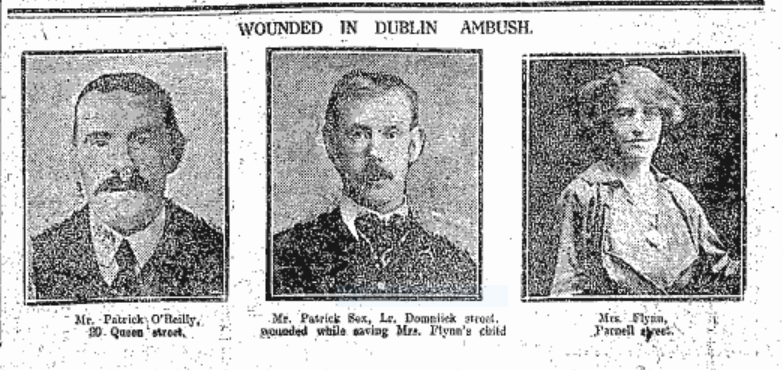
Patrick Sex from the Freemans Journal 1921

The Death of Sex

It started in somewhat unusual fashion, a Whatsapp chat with some fellow historians, a screenshot from the Irish Newspaper archive with the unusual headline “Replay for Sex Memorial Gold Medals”, which of course provoked a bit of schoolboy humour but also planted a seed of curiosity. From the short clipping I could see that it was a replayed football match between Bohemians and a Leinster football XI, the Bohemian teamsheet was shown and I could tell that this was a game from the early 1920s with several high profile players featuring, including future internationals like Joe Grace, Jack McCarthy, John Thomas and Johnny Murray as well as South African centre-half Billy Otto.

But who or what was “Sex” referring to? Memorial games or charity matches for sets of gold medals were not uncommon in the era but I could find nobody with the surname Sex as having been associated with Bohemian FC in their first thirty or so years, and as the opposition were a selection of other Leinster based players then there was no specific opponent club who might have been arranging a memorial. A quick look at the 1911 Census suggested a possible answer, as it displayed 22 people with the surname “Sex” living in Dublin.

Having ascertained that there indeed may be a “Sex” living in Dublin, deserving of a memorial game, but unsure of any footballing connections I started searching the Irish newspaper archives for the early 1920s and quickly discovered a likely candidate for the “Sex Memorial Gold medal match”, namely Patrick Sex of Dominick Street in Dublin’s north inner city with the memorial match and replay taking place for him in May 1921.

Patrick Sex was born in Dublin in 1880 and by the time of his marriage to Mary Kenna – a dressmaker living in Mary’s Abbey off Capel Street – in September 1901, he was living in Coles Lane, a busy market street off Henry Street and working as a butcher. Coles Lane, which now leads into the Ilac Centre but once ran all the way to Parnell Street, was full of stalls and shops selling everything from clothing to meat, fish and vegetables and formed part of a warren of streets and lanes feeding off the busy shopping areas of Henry Street and Moore Street. The area was a booming spot for a butcher to find work, it is likely that Patrick was raised and apprenticed in the trade as “butcher” is listed as his father James’s trade on Patrick’s marriage certificate.

Patrick and Mary, welcomed a son, James in August 1902 and they moved around the same small footprint of this section of north inner city Dublin in the coming years, with addresses on Jervis Street, Great Britain Street (now Parnell Street) and Dominick Street. It is on Dominick Street where we found the Sex family living in the 1911 Census, by which point they have five children, with one-year-old Esther being the youngest and Patrick was still working in the same trade, being listed as a Butcher’s Porter.

Moving forward ten years to 1921, the year of Patrick’s violent and untimely death, and the family had a total of ten children and were still living at 72 Dominick Street. Patrick was still working in the butchery trade in McInnally’s butchers at 63 Parnell Street, close to the junction with Moore Lane, roughly where the Leonardo (formerly Jury’s) hotel is today and would have been close to Devlin’s Pub, owned by Liam Devlin and a popular meeting spot for the IRA during the War of Independence.

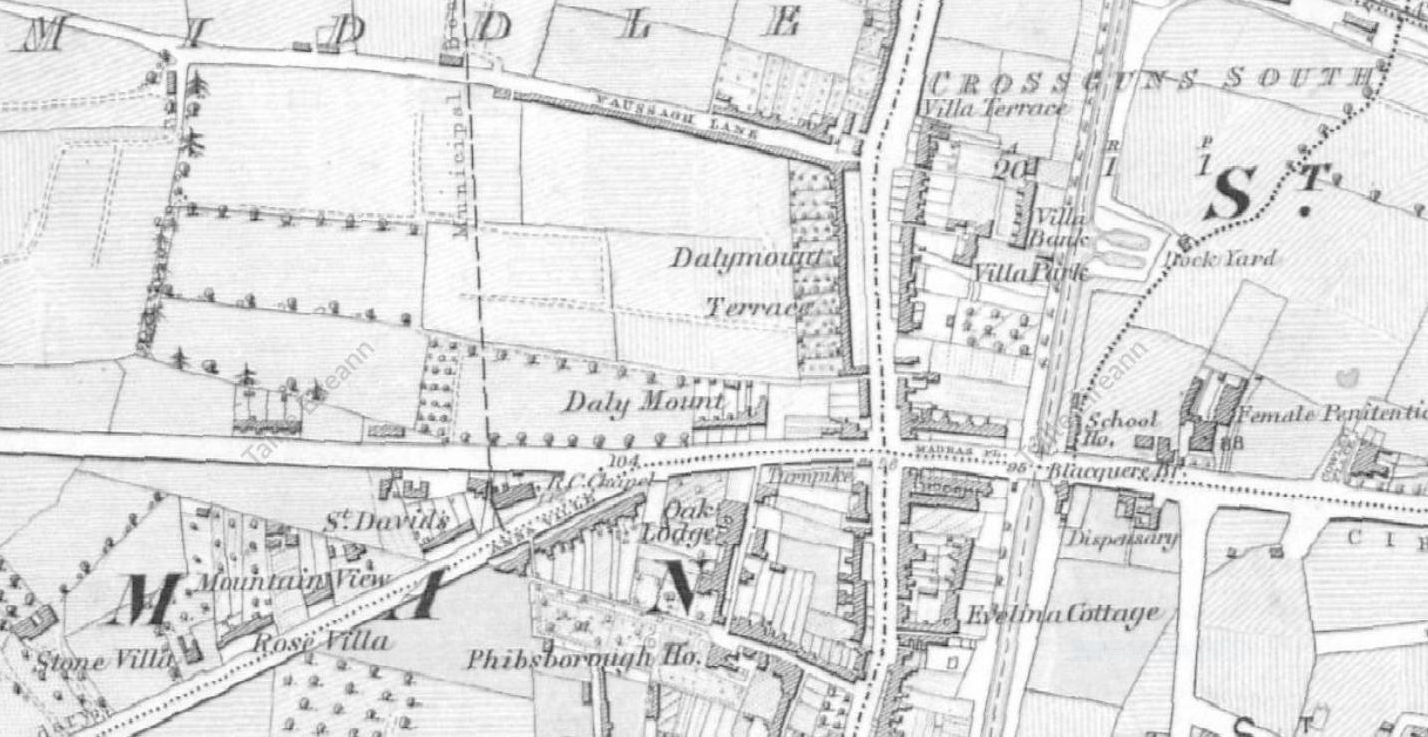
Parnell Street as it appears on the Goad Insurance maps from 1895

By this stage in his life, as well as his place of work and large family we know that Patrick was active in the trade union movement, being Chairman of the No. 3 branch of the Irish Transport and General Workers’ Union (ITGWU), this branch featured many from the butchers’ trade and was known as the Victuallers’ Union. Living and working where he did, no doubt Patrick would have clear memories of the Lock-out in 1913 and the infamous baton charge by the Dublin Metropolitan Police on Sackville Street in August of that year when two workers were mortally wounded.

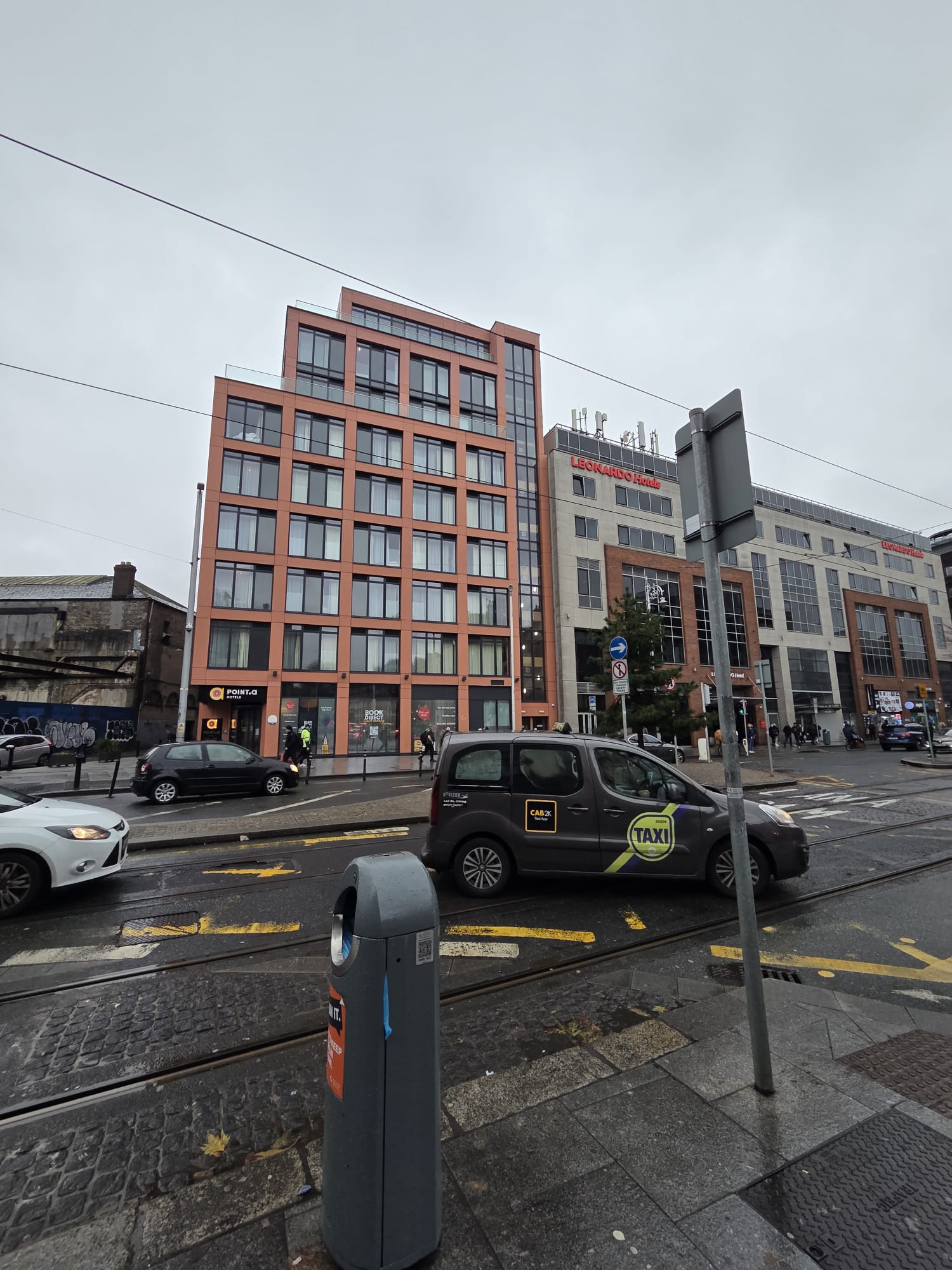
Parnell Street 2025
Parnell Street as it appears today – the Point A hotel is built on the site of the former Devlin’s Pub, McInnally’s butcher shop would have been within the footprint of the current Leonardo Hotel and Moore Street Mall

On March 26th 1921, Patrick Sex was, as usual, working at McInnally’s butcher’s shop on Parnell Street, it was owned by Hugh McInnally, originally from Scotland he had set up a number of butcher’s shops in Dublin and by the 1920s was entering his 70s and living in some comfort near Howth. The city and country more broadly were far less comfortable – more than two years into the violent period of the War of Independence, Dublin had seen the city placed under curfew in February 1920, there had been wide scale arrests, November 1920 had seen Bloody Sunday when fourteen people were killed in Croke Park by Crown Forces in reprisal for the wave of assassinations earlier that morning by the “Squad” and the Active Service Unit of the IRA. Croke Park was just a few minutes walk from Patrick’s home and place of work, he likely knew many who had attended the match, or perhaps some of those arrested in the wide scale arrests across the city by Crown Forces that followed. As mentioned, McInnally’s butcher’s was just doors away from an IRA safe house and meeting place in Devlin’s Pub, while Vaughan’s Hotel was just around the corner on Parnell Square.

This was the backdrop against which Patrick Sex and his family lived and worked in Dublin. On that fateful day of the 26th just before 3pm a lorry, carrying Crown Forces were attacked by members of “B” company of the 1st Dublin Brigade of the IRA as they journeyed up Parnell Street. The brigade report, taken from the Richard Mulcahy papers reads as follows;

“8 men… attacked a lorry containing 16 enemy at Parnell Street and Moore Street. 3 grenades exploded in lorry followed by revolver fire. Enemy casualties believed to be heavy. The lorry drove into O’Connell Street and was again attacked by a further squad of this coy. [company] numbering 18 men. They attacked another lorry at Findlater Place but were counter-attacked by lorry coming from the direction of Nelson’s Pillar. 3 of our grenades failed to explode so we retired. One of our men was slightly wounded”.

The Freeman’s Journal, reporting on the attacks a couple of days later goes into more detail on the impact of the grenade and gun attacks as they affected the public caught in the melee;

“the first bomb was thrown and exploded with a great crash in the channel opposite MacInally’s (sic) victualling establishment, 63 Parnell Street. The explosion was followed by a wild stampede of pedestrians.”

They continued: “The glass and woodwork of the houses from 63 to 66 Parnell Street were damaged by the flying fragments of the bombs. Mr. Patrick Sex, an assistant in the victualling establishment of Mr. MacInally was wounded in the hip and leg… and others in the shop had narrow escapes from the contents of the bomb, which in the words of Mr. O’Doherty ‘came through the shop like a shower of hail’.”

John O’Doherty the butcher in McInnally’s, mentioned above, would later given a statement to a subsequent court of inquiry at Jervis Street Hospital, stating that he heard “two explosions and three or four shots”, before adding that “several fragments of the bombs came into the shop, and Patrick Sex who was attending a customer at the time said ‘I am struck’ , I saw that he had a wound in his left thigh and hurried him off to hospital.”

Another of those to give testimony at the court of inquiry (inquests into deaths had been suspended during the War of Independence) was Charles Smith of the RAF, he was in one of the Crossley Tender lorries, with two other RAF men in the driver’s cab as it made its way up Parnell Street, when he recalled that a man armed with a revolver stepped into the street and shouted “Hands up” and “Stop” at which point “3 or 4 other civilians fired at us, the driver was immediately hit and collapsed in his seat. Several bombs were thrown at us, as far as I know three or four.”

The driver who was hit was Alfred Walter Browning, a nineteen year old RAF recruit from Islington. He was taken to the King George V Hospital (later St Bricin’s Military Hospital) at Arbour Hill where he died later that evening. The other passenger was David Hayden from the Shankill in Belfast, he was badly injured but survived. All three men were based at the airfield in Baldonnell which was in use then as a RAF base. There was another fatality related to the attack on the lorry at Findlater Place, just off O’Connell Street, when 15 year old Anne Seville was struck by a ricocheting fragment of a bullet as she watched the fighting below from her bedroom window. Despite an operation in an attempt to save her life she passed away two days later.

But what of Patrick Sex? His wound was deemed to be not particularly serious, he was brought to Jervis Street hospital and initially it seemed that everything would be alright. Patrick was seen by Dr. L.F. Wallace who also testified before the inquiry and he stated that there was a wound to Patrick’s left thigh, with no corresponding exit wound. Despite being admitted on the 26th March, Patrick was not thought in need of emergency surgery and was not operated on until April 4th when an “irregular piece of metal” about half an inch long was removed from his thigh. However, despite all seeming to have gone well Patrick contracted tetanus and his condition immediately worsened, he only survived until April 6th. His death notice read “cardiac failure following on tetanus caused by a wound from a fragment of a bomb”.

This left Mary, widowed with a family of ten children to support, and while it may not even have been known yet by Mary and Patrick, she was pregnant with their eleventh child, who would be born in November of that year and would be christened, Vincent Patrick by his mother.

Mary hired prominent solicitor John Scallan who had offices on Suffolk Street in the city centre to pursue a claim for compensation from the Corporation of Dublin and the Provisional Government in January, 1922. Scallan’s letters to the military inquiry requested information on the outcome of the inquiry and a list of any witnesses that they could call, the letter also incorrectly states that Patrick Sex was wounded by a bullet and not a bomb fragment. These claims were reported on in May, 1922 with it being stated in the Freeman’s Journal that a claim for £5,000 had been lodged by Mary Sex “in respect of the murder of her husband, Patrick Sex”. The article describes the compensation claims as those “alleged to have been committed by any of the several units of the British forces in Ireland”. While Patrick was an innocent bystander from the medical reports it would seem a bomb fragment from a grenade thrown by members of the Dublin Brigade, rather than a British bullet was the ultimate cause of his death. It was reported that by November 1922 over 10,000 claims for compensation had been made.

While Mary lodged that claim in January 1922, after the ceasing of hostilities and the signing of the Anglo-Irish treaty, she still had to provide for her large, and growing family. The tragic case of Patrick’s death had clearly struck a particular chord among the Dublin public, despite the amount of violence and death they had witnessed over the previous two years. Perhaps it was the fact that he left a widow and ten children, his role as a prominent trade union organiser, or perhaps it was also the fact that several newspapers, including Sport, The Freeman’s Journal and The Dublin Evening Telegraph had reported that Patrick had sustained his injuries while protecting others leant even greater emphasis to his harrowing story.

The mention that Patrick had protected others is hard to confirm but from piecing together accounts in various newspaper reports it seems that Patrick may have shielded a child who was in the shop from the blast, possibly the child of an Annie Flynn who was mentioned as also being injured by the grenade blast, (see header image) though this is not specifically mentioned by John O’Doherty, the one witness at the inquiry who had witnessed Patrick get hit by the bomb fragment.

Funeral of Patrick Sex on Marlborough Street
Clipping of Patrick Sex’s funeral from the Freeman’s Journal

Patrick’s funeral took place on the 11th of April in the Pro-Cathedral, just a couple of minutes walk from his place of work. There was a huge crowd in attendance, estimated by the Evening Herald as numbering as high as two thousand with the funeral described as “one of the largest witnessed in Dublin for a considerable period”. As well as family mourners there was a strong representation of Patrick’s trade union colleagues, they presented a large floral wreath in the shape of a celtic cross. His funeral cortege passed through a Parnell Street which shut all its shops in a sign of mourning and was then met by more of the ITGWU branch members at Cross Guns bridge where they took the coffin from the hearse and carried it to Glasnevin cemetery for burial.

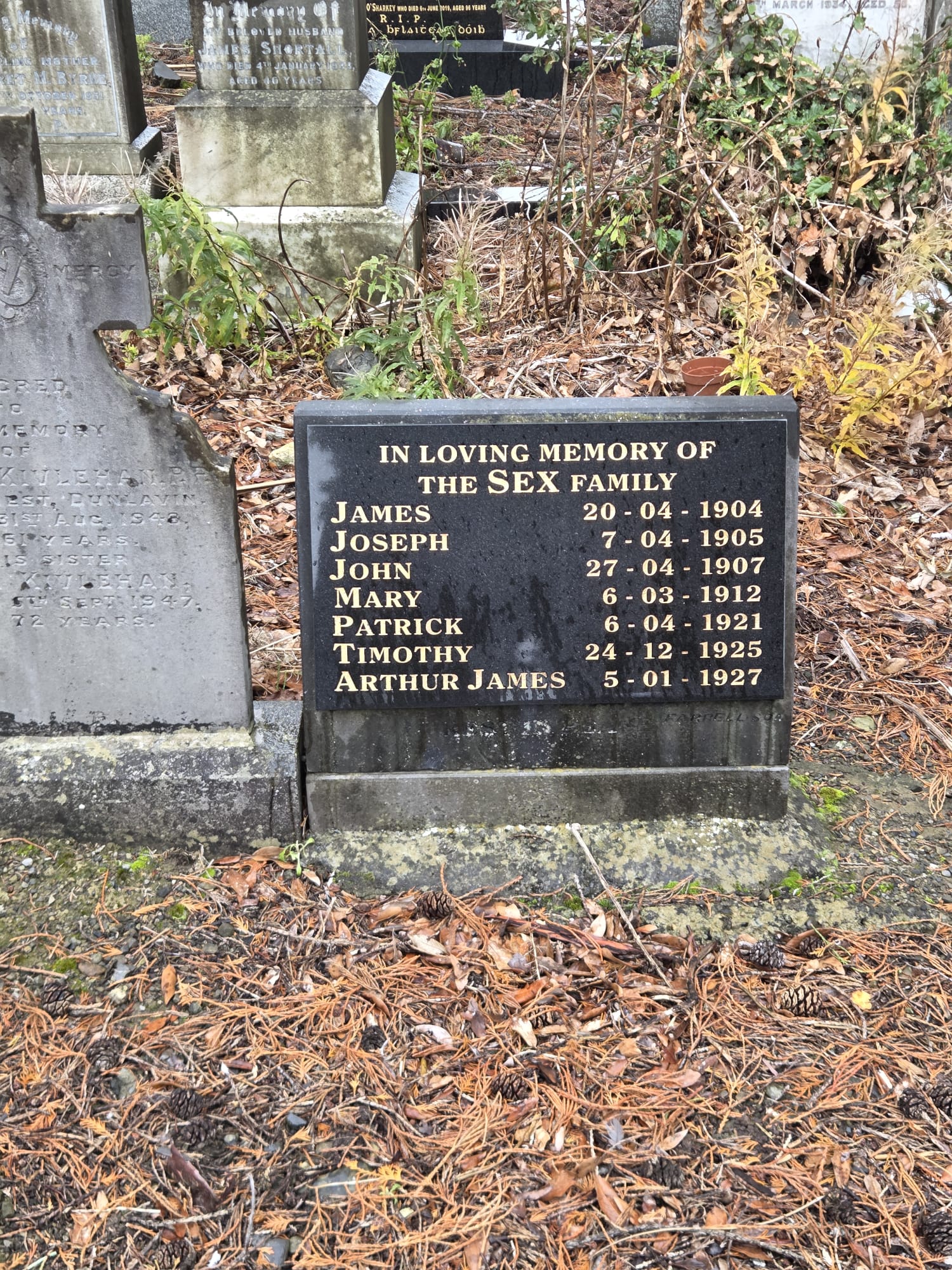
Grave of the Sex family
The grave of Patrick Sex in Glasnevin cemetery

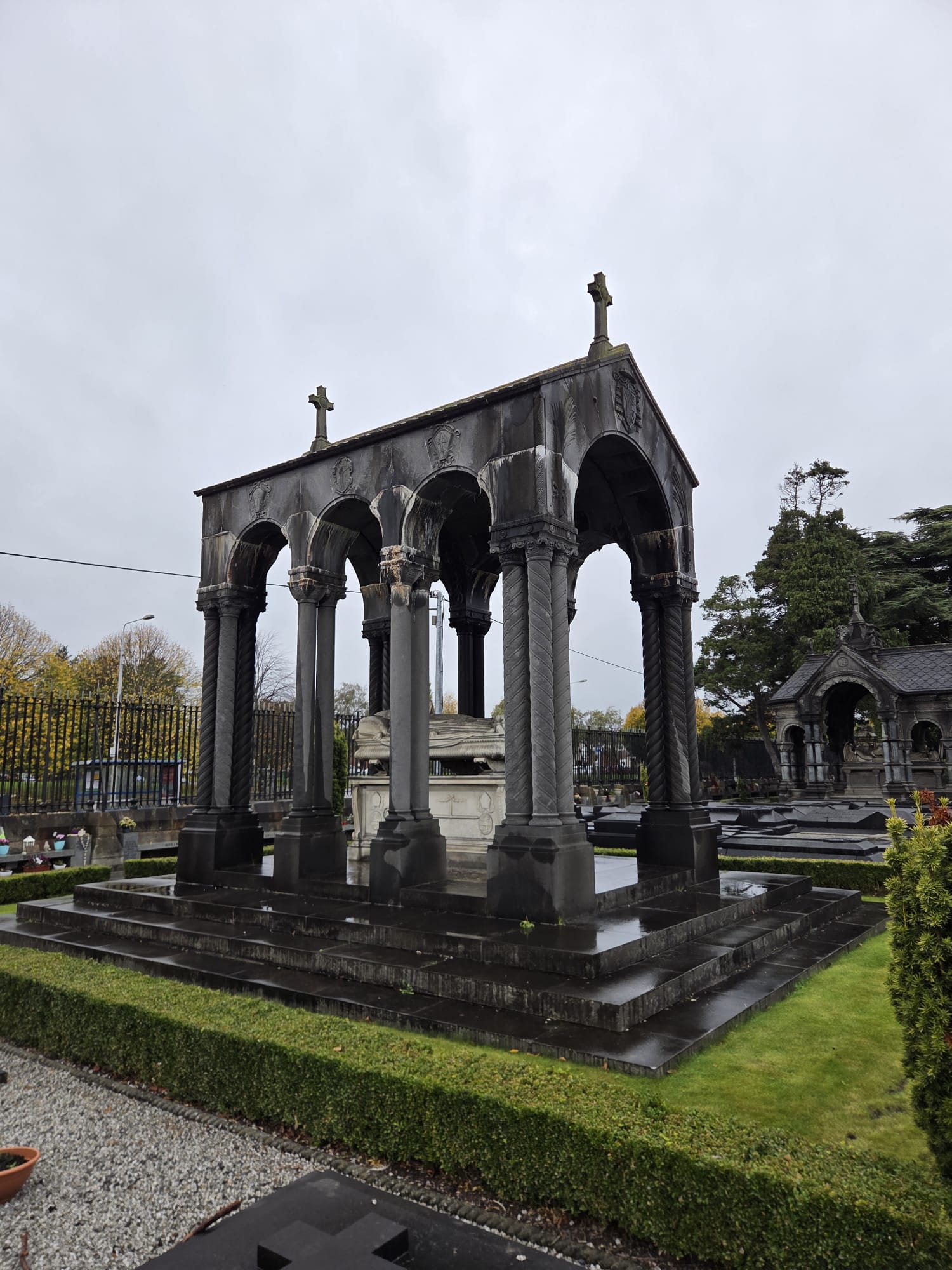
The burial itself was somewhat unusual as the gravediggers at Glasnevin cemetery were on strike, which they would not break, even for a fellow union man, so Patrick’s grave was dug and closed by friends and family members. Gravediggers’ strikes were not uncommon at the time, they had taken place in 1916, 1919, and again in 1920. The one exception made by the gravediggers during their strike did take place a couple of days before Patrick’s burial, for the internment of Dublin’s Archbishop, William Walsh.

By contrast, the elaborate grave of Archbishop William Walsh

The outpouring of public support for the Sex family was evident not only in the strong turnout for Patrick’s funeral but also in the sporting world. A memorial committee had been established and a month after Patrick’s funeral there was to be an end-of season benefit match staged in Dalymount Park between Bohemians and a Best of Leinster XI, a set of high-quality gold medals were to be presented to the winning team while the proceeds from the game would go to help Mary Sex and her children.

The selection to face Bohemians in the charity match which included future Ireland internationals Alec Kirkland and Paddy Duncan – from the Evening Herald 16th May 1921

The game was played on the 18th May, 1921 and a crowd of around 4,000 was in attendance to witness an entertaining 2-2 draw. With no extra-time and no penalty shoot-outs a replay to decide the winner of the gold medals was set, which also guaranteed a second opportunity to fundraise for the Sex family. After some back and forth around a replay date, the 26th May was chosen and Dalymount Park was once again the venue, this time Bohemians were the victors, triumphing 1-0 over the best of Leinster selection, thanks to a goal by Billy Otto. It was said that the game was played “before a good attendance” and this hopefully translated into funds for Patrick’s family.

It had been suggested in a Dublin Evening Telegraph report that Laurence O’Neill, the Lord Mayor of Dublin might ceremonially kick off the game, but this did not happen due to his having to travel to the USA where O’Neill was working with the “White Cross” who were providing aid in Ireland during the War of Independence. It was suggested in O’Neill’s absence that W.T. Cosgrave, then an Alderman on Dublin City Council, might take over that role but it is not clear from reports whether this happened.

The same report stated that “this is the first time the Dublin footballers and supporters have come forward to do something the alleviate the sorrow of at least one household in these unsettled days” while also encouraging those who did not attend football matches to “rid themselves of all petty prejudices and bring all their friends and associates for the once to Dalymount”. Which would appear to be a not so subtle appeal to supporters of the GAA codes to ignore “the Ban” and attend a soccer match due to the good cause that it was supporting.

One final question that arises, considering the level and scale of violence witnessed over the previous two years, why was Patrick Sex the first victim of the violence in the War of Independence to receive a benefit match? While Patrick Sex may have been a football fan, though it is not specifically mentioned in any reports, he doesn’t seem to have been mentioned in any role in connection with any club or with the Leinster Football Association (LFA). As previously discussed the size of Patrick’s family, his role in the Trade Union movement, and being well known in the local area having worked for many years for McInnally’s butchers all contributed to the prominence given to his funeral, but he was sadly far from unique. Many people with large families, who were well known within their communities lost their lives during the War of Independence, so why a football benefit for Patrick if we can’t find any specific connection of Bohemians, the LFA or any other football club?

I would suggest the answer lies in the timing of Patrick’s death in April 1921, with the benefit match and its replay being held the following month. For context, long-standing issues within the Belfast-based Irish Football Association and its relationship with the LFA and its member clubs were coming to a head against the backdrop of internal bureaucratic strife and the ongoing violence of the War of Independence. In February 1921 there are been consternation among the IFA officials at the displaying of an Irish tricolour at an amateur international against France in Paris, those involved were arrested and there were charges within Dublin football and local media of bias on the part of the IFA. The IFA had also made the decision to not play that season’s Junior Cup and move Intermediate Cup matches which had been scheduled for Dublin to Belfast. The final straw arrived in March 1921 when the venue for a replay of the drawn Cup game between Glenavon and Shelbourne came to be decided. The original match had taken place in Belfast so custom would suggest that the replay should take place in Dublin. However, the IFA ruled that the replay should also take place in Belfast.

On June 1st, less than a week after the Sex memorial match replay, at the annual meeting of the LFA in Molesworth Hall in Dublin, an overwhelming majority of committee members voted to break away from the IFA. The LFA had been polling its member clubs on the subject since April before passing the motion at the beginning of June and by September of that year the Football Association of Ireland had been established, and surprisingly quickly a new League of Ireland cup and league competition had also been formed.

As Neal Garnham notes “by mid-May the LFA was effectively operating independently of the IFA”. Somewhat bizarrely the IFA held a Council meeting on June 7th, seemingly blissfully unaware that the LFA had voted to remove itself from IFA jurisdiction, among the items voted on and approved at the meeting was a motion by Bohemians to play a benefit match for Patrick Sex. It perhaps, shows the sporting and communications division between Belfast and Dublin, that the IFA were unaware that the LFA was no longer affiliated, or that two benefit matches for Patrick Sex had already been played. The organising of the game by Bohemians, the LFA and the role of the memorial committee which seems to have included prominent Republican politicians like Laurence O’Neill and W.T. Cosgrave, seems to suggest that the Patrick Sex memorial match was part of a larger, ongoing process of Dublin football moving away from Belfast control and taking charge of its own affairs, this coupled with the specific nature of Sex’s death and his background suggests why he, and not some other innocent victim was the first to receive such a benefit game.

With special thanks to Aaron Ó’Maonigh, Sam McGrath and Gerry Shannon for their help with elements of the research, and for Aaron for sending on the original “Sex memorial” clipping.

Leaving your Markarov

Ireland and Armenia, as nations that share long and often tragic histories, also share the fact that emigration, often forced and not chosen, has become a defining characteristic of their national stories. This has meant that you can often spot a member of the Irish or Armenian diaspora finding sporting success with other nations many miles from Dublin or Yerevan.

Armenia are justifiably proud of the success of athletes like tennis player Andre Agassi, World Cup winners Youri Djorkaeff and Alain Boghossian, or legendary basketball coach Jerry Tarkanian, all from Armenian backgrounds. However, one of the greatest figures in Armenian football was born on the shore of the Caspian Sea in Baku, capital of Azerbaijan and moved the other direction, finding fame and success in Yerevan.

Eduard Markarov, from a family of ethnic Armenians, was born in Baku in 1942 when it was part of the Soviet Union, at a time when they were engaged in fierce fighting after a massive German offensive in World War Two. Eduard’s father, Artyom had been a footballer and coach and often brought his young son to the local stadium to watch training.

Eduard developed as a skilful forward, first for Torpedo Armavir in what is now Krasnodar Krai in modern Russia, before a return to Azerbaijan with Neftchi Baku in 1961. This was a time of significant success for Neftchi, who competed in the highly competitive Soviet Top League against the footballing powerhouses of Moscow and Kyiv, finishing as high as third in 1966. Even by his second season with the club Markarov was one of the stars of the Top League, scoring sixteen goals for Neftchi and finishing as the league’s second top scorer.

He’d also made the Soviet Union national team and featured as part of the squad that reached the semi-finals at the 1966 World Cup, although such was the competition for places that he only won three caps in total.

1971 was to be a pivotal year for Eduard, approaching thirty he had endured a poor season for Neftchi and made the momentous move to his ancestral lands when he signed for Ararat Yerevan. The fans of Neftchi were outraged, even going so far as to throw stones at his house, but the move gave Eduard’s career a second wind. He was paired with some great talents like Arkady Andriasyan as well as Sergey Bondarenko, a player beloved and famous for his powerful shot and array of spectacular long-range goals.

Ararat were coached by the legendary Nikita Simonyan, who was also of Armenian heritage. Simonyan had been a star striker for Spartak Moscow and had moved into coaching and led them to further success. He repeated the trick with Ararat, winning an amazing Soviet League and Cup double in 1973 and winning the cup again in 1975, altering his coaching methods to better indulge the skilful and more individualistic traits of his Armenian players. Markarov played a decisive role in these victories, including scoring the decisive winning goal in the 75 cup final as well as finishing the 1974-75 European Cup campaign as the competition’s joint top-scorer alongside Gerd Muller, with Ararat reaching the quarter final stage of the competition.

1975 was his last season as a player but Markarov swiftly moved into management, taking the helm at Ararat Yerevan. When the Soviet Union collapsed and amid the turmoil the newly independent Armenia came into existence and set about the business of creating an international side there was only one man to turn to as their first head coach, Eduard Markarov despite the new Football Association only being able to offer him a small salary. Markarov stayed involved in football even after leaving the national team job in 1994, coaching in both Armenia as well as Lebanon.

Originally published in the Ireland v Armenia match programme in October 2025

Forever Young

I can’t say that I’m in any real way qualified to talk about Billy Young, the man, the player, the manager, the Bohemian. His managerial spell had finished a few years before I started going to Dalymount, my knowledge of Billy the talented League of Ireland full back was limited to the stories told by my Dad, a brief, erstwhile teammate of his who always singled out Billy and centre-half Willie Browne as the two great players of a difficult Bohemian era.

However, I did get to spend a few hours in Billy’s company on different occasions to interview him for various projects, to hear his amazing recall or games, events, characters. Most importantly, as recently as March this year at our home game against Drogheda United I saw the love and esteem in which Billy was held by many of his former players. There was a half-time presentation at the game to honour Billy and the players of the League winning 1974-75 team, and in the Jackie Jameson Bar beforehand (of course it was Billy who brought Jackie to Dalymount) it was like a celebrity had walked in when Billy arrived with his son Paul.

So many former players, men who won so much in the game, who had been capped at international level, were straight out of their seats to shake his hand, to ask after his health, to share old memories and stories. Walking down in front of the Jodi stand at half-time was a slow process given the amount of well-wishers seeking to stop and chat. Roddy Collins, raced down the steps to embrace his former manager at the halfway line.

Billy was a man who encapsulated so much of Bohemian Football Club’s history, one of the best fullbacks in the League, he stayed loyal to an amateur club through the 1960s knowing there was little chance of silverware. A thoughtful and forward-thinking coach, he replaced the great Seán Thomas in 1973, by which stage Bohemians had abandoned the club’s famed amateur status and would remain at the helm for an unbelievable sixteen years.

During that time he assembled several exciting teams, built around his unerring eye for talent. The 70s witnessed Bohemians win a fist league title since the 1930s a feat achieved again in the 1977-78 season as well as Niall Shelly’s famous winner in the 1976 FAI Cup final. There were numerous other minor trophies as well as many famous European nights. Billy was in change when Bohemians made the last 16 of the European Cup despite having to play home games away from Dalymount, he was the man at the helm when Rangers were beaten in Dalymount in 1984.

The list of players he brought through cannot be done justice in the space available but suffice to say that through the 1970s and 80s it was not unusual for there to be senior Irish internationals in the Dalymount dressing room, or for players to make the step of transferring straight into the first teams of topflight clubs in Britain.

Billy told great stories of transfer dealings with Tommy Docherty, or calling Bob Paisley for advice on European opponents. He was selected as coach for numerous League of Ireland sides, travelling to Libya when under the rule of Muammar Gaddafi or bringing the first side to face the Basque national team in the famous San Mames since the death of Franco. He was a modern, progressive coach in a league with dwindling attendances, aging infrastructure and in time when transfer fees for top players were a pittance and European football often ended up diminishing club coffers.

One wonders, what a man of his talents could achieve in the game were he coming through today. By 1989 some in the club were losing patience with his tenure in charge, a decade of near misses, runner up finishes, a decade that promised much but delivered only occasionally. A group of members tried to force an EGM to have a change in manager but it never got that quite far. After almost 25 years as player of manager Billy’s time with Bohemians came to end. But thankfully, not his involvement in the club, he has still been a regular sight at games, has returned in previous seasons to speak to new players an instil the Bohemian values, and with the benefit of hindsight the scale of his achievements is all the more impressive.

Beyond all this Billy was a gentleman, great company, a wonderful storyteller with a fine eye for humour. I can only imagine how much he will be missed by his family and those close to him. With an association with the club that goes back to 1962, and a winning personality and footballing CV sure we can say that Billy Young is one of the greatest ever Bohemians.

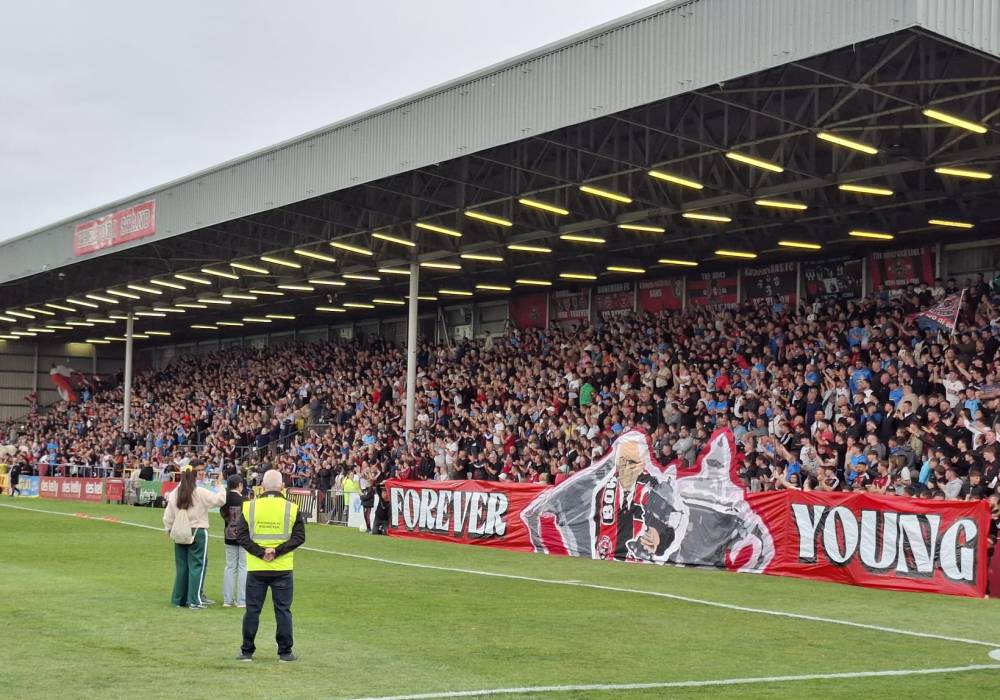
This article originally featured as a tribute to Billy Young in the Bohemian FC match programme in April 2025, the display shown in the photo is the work of the NBB and was unveiled in July 2025

“There is no way anyone can win out here” – but nobody told Gary McKay


The reaction of Irish fans to being drawn in a group that included Bulgaria for the Euro ’88 qualifiers must have been one of dread. Twice in recent campaigns Ireland had been drawn against the Bulgarians, for the World Cup in 1978 and for the 1980 Euros – the games that followed had featured disallowed goals, brawls, red cards, a horrific injury to Ireland’s Jimmy Holmes and a crowd atmosphere in Sofia described as a “Cauldron of hate”.

This was a tough group for Jack Charlton’s opening qualifying campaign, Bulgaria, Belgium, Scotland and Luxembourg were the opposition with only the winner progressing. Bulgaria were a talented side to boot, having qualified for the 1986 World Cup level on points in their group with European Champions, France. And even though they didn’t make it out of a tough group featuring Italy and eventual winners Argentina there was plenty of skill and ability in their ranks.

When Ireland faced Bulgaria away in the first of the game on 1st April 1987 they were buoyed by a somewhat unexpected away win over Scotland that February thanks to a famous Mark Lawrenson goal. Ireland were unbeaten at this stage having drawn at home to Scotland and also drawn against Belgium in Brussels thanks to a late Liam Brady penalty.

Two of the main protagonists in Sofia that night were goalkeeper Boris Mikhailov and striker Nasko Sirakov, stars for Levski Sofia who had both returned from bans after their part in the infamous brawl that marred the 1985 Bulgarian Cup final against their great rivals CSKA Sofia. Mikhailov was impressive in the Bulgarian goal denying efforts from Stapleton, Brady and Ronnie Whelan while Sirakov was won the crucial penalty with just minutes remaining the second half. Latchezar Tanev scored the resulting spot kick to give Bulgaria a 2-1 win but there were significant protests from the Irish. Much of the commentary from Irish observers felt that Kevin Moran made contact with Sirakov outside the box and that it was a “soft penalty”, while there were similar shouts for a first half penalty for Ireland that fell on the deaf ears of Portuguese referee Carlos Silva Valente. It was Ireland though who were ultimately April fools and an angry Jack Charlton blustered to the Press “there is no way anyone can win out here” – though he remained proud of a performance he felt had warranted at least a draw, stating “anyone who thinks that Ireland have no chance of qualifying for the finals must be crackers after such a marvellous display”!

Ireland would meet Bulgaria again in October as the final game of qualifying. It perhaps says something for the lack of optimism among Irish fans that only 26,000 showed up to Lansdowne Road for the game, some twenty thousand less than for the home fixtures against Scotland or Belgium. Ireland turned in one of the best performances of the campaign, with goals coming from a pair of Manchester United defenders in the shape of Kevin Moran and Paul McGrath. The only downside was the dismissal of Liam Brady who received a second yellow for elbowing Ayan Sadakov in retaliation.

Brady was originally to face a four-match ban, and when Gary McKay’s unlikely winner in Sofia a month later guaranteed Irish qualification there was a concerted effort by the FAI to appeal the severity of the suspension. The four-match ban was eventually reduced to two after the FAI’s Des Casey gave a memorable speech, declaring “To Irish football, Liam Brady is what Michel Platini is to French football and what Diego Maradona is to Brazilian football”! Sadly, injury would prevent Brady from playing in the Euros but so much of that first European Championship qualification had hinged on Brady and indeed on results (both Irish and Scottish) against Bulgaria.

This originally appeared in the Ireland v Bulgaria match programme in March 2025

United Ireland v England and the token Welshman

In May 1951 as part of the Festival of Britain, the ten League of Ireland clubs ventured across the Irish Sea to join the festivities and take part in a series of exhibition matches against teams drawn from the Third Division (North) of the Football League. Of the opening round of fixtures involving the Irish sides only Bohemians would emerge with a victory, defeating Accrington Stanley (who are they?) 1-0, although the Bohs would lose their following two games against Oldham and Rochdale respectively.

This invitation was not limited to teams from the League of Ireland, Irish League sides also took part as well as teams from the Netherlands, Austria, Luxembourg, Belgium, Denmark and Yugoslavia. The Festival itself was held on the 100th anniversary of the Great Exhibition and was designed as a measure to showcase the best of British industry, art and design and perhaps most importantly to give a sense of hope and optimism to a nation still witness to the devastation of World War Two and still experiencing rationing, while hoping to rebuild. There was of course a footballing element and as well as the exhibition games played by visiting sides there were various other tournaments contested.

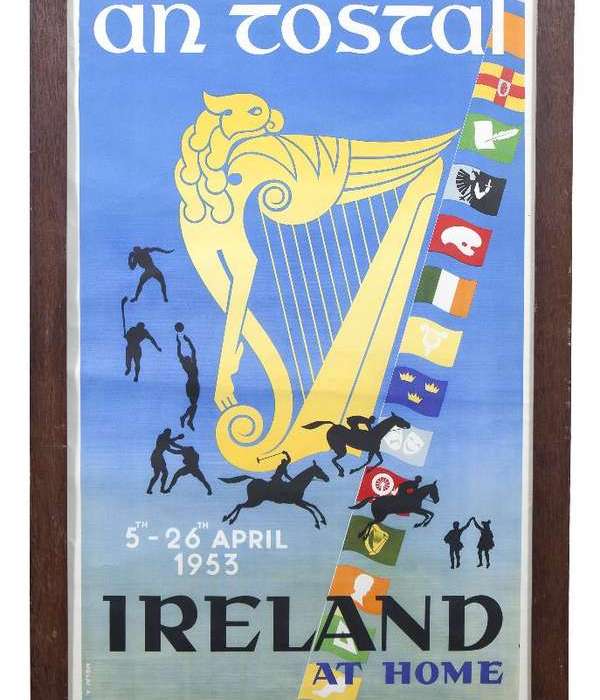
The Festival itself was hugely successful and it was estimated that as much as half the overall population of Britain visited a festival event during the summer of 1951. One man especially impressed was Juan Trippe, the Chairman of US Airline Pan Am who was apparently responsible for suggesting that Ireland might consider a similar festival event. Trippe and men like him were keen to increase trans-Atlantic passenger numbers on their airlines while the struggling Irish economy and Minister for Industry and Commerce, Seán Lemass were keen to elongate the short tourist season and increase visitor numbers. A plan was quickly put into action with An Tóstal (Ireland at home) being announced in 1952 with the aim of showcasing the country to foreign visitors, tapping into the dispora and beginning the tourist season earlier in Spring of 1953 rather than just in the traditional summer months. It was hoped that over 3,000 American tourists might visit for the festival as well as larger numbers travelling from Britain.

Tranmere v Dundalk match programme from the Festival of Britain, courtesy Gary Spain

Sport played a key role from the outset with cycling, athletics, rugby, hockey, greyhound racing, tennis, shooting, badminton, chess and even roller hockey tournaments and exhibitions being held. Association football was not to be found wanting, for the first year of An Tóstal in 1953 the FAI arranged an Irish XI to take on a visiting Celtic side in Dalymount. The FAI selection defeating their Glasgow visitors 3-2, while there was also an Inter-League game arranged against the Irish League a few days later. This was the first meeting of the representative league sides in three years and it was hoped the match might ease relations between the FAI and IFA which had been strained yet again during qualifying for the 1950 World Cup with the IFA trying to select players born outside the six counties. It was only the intervention of FIFA that finally ended the practice of players representing both “Irelands” that had persisted for over twenty years.

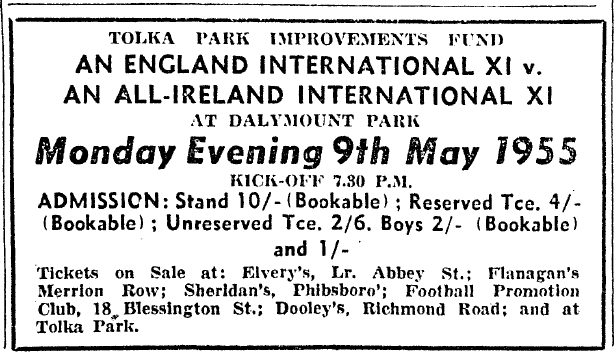
An Tóstal would return again in subsequent years and it was in 1955 that an intriguing fixture was announced featuring and “All Ireland” side who would take on and England XI. This match was the brainchild of Sam Prole, an FAI official and owner of Drumcondra FC, who had also previously had a long involvement with Dundalk FC. The game was to play the dual role of being a focal point for football during a busy end of season period and part of the An Tóstal events and it was also to act as a fundraising event for investment into Tolka Park, home of Drumcondra FC.

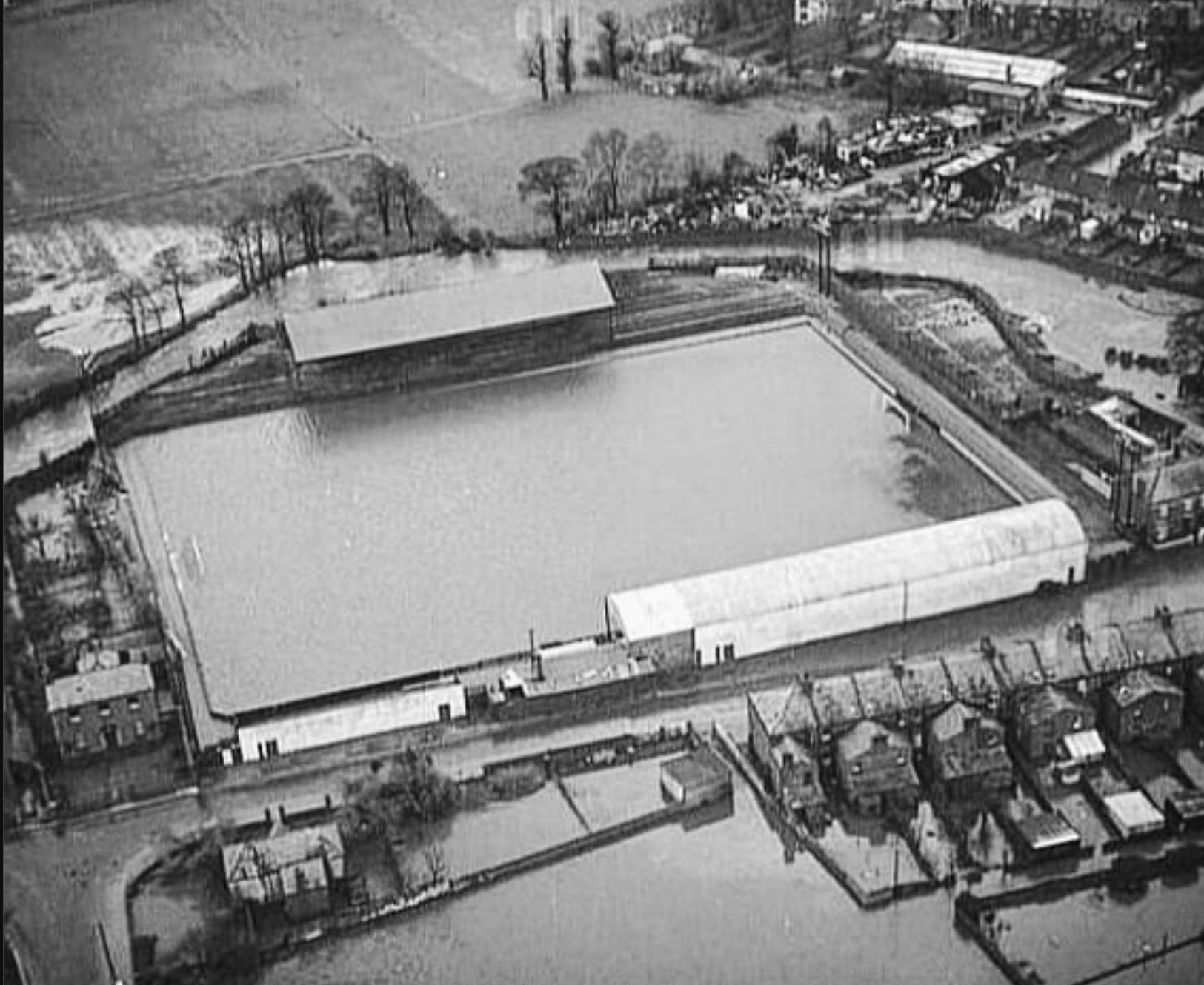
A flooded Tolka Park in 1954

The Prole family had taken over Tolka Park just a couple of years earlier and had seen almost immediate success with an FAI Cup win, they had also invested in the first set of permanent floodlights at a League of Ireland ground and had introduced other stadium innovations such as pitch side advertising boards as well as purchasing the house at the Ballybough end of the ground with a view to increasing stadium capacity. However, in 1954 Drumcondra and the North Strand suffered extreme flooding with the Tolka River bursting its banks and causing significant damage to the stadium. The Proles had ambitious plans for the club but also knew that an insurance settlement from the flood only covered a portion of the costs of repair and they need to generate additional revenue.

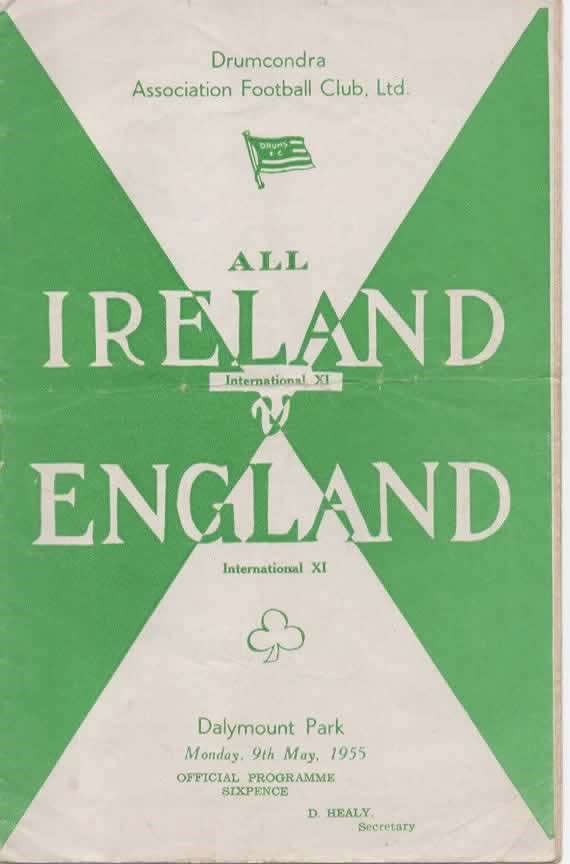
Dalymount Park, the largest football ground in the city, was chosen as the venue for this high-profile fundraising game and Prole went about putting together a pair of squads designed to appeal to the interests of the Dublin football public. The match programme for the game referred to the team as the “England International XI” and the “All Ireland International XI” however in various sections of the Press the teams were variously referred to as All Star XIs an “Old England XI” and also, trading on the name recognition of their star, the “Stanley Matthews Old England XI”. As the names suggest it was something of a veteran side brought over, the side being up of players the wrong side of thirty, while Matthews himself had just turned 40, though he was still a current English international. Nor were the England international side all English! In the side at centre-forward was Cardiff City’s Welsh international striker Trevor Ford.

The All-Ireland side was more mixed in ages, though several veterans still featured in the ranks, including one of the biggest draws Peter Doherty, the manager of Doncaster Rovers . Doherty had been a League winner with Manchester City before the War and a Cup winner with Derby County after it. He’d also been capped sixteen times by the IFA and was considered on of the greatest inside forwards of the 1930s and 40s. The advertising material in the run-up to the game focused on the presence of “Peter the Great” and “Stanley the Wizard” in the opposing sides.

Programme cover from 1955, courtesy of Gary Spain

As often happened with these games there were some last minute changes, the team named as travelling to Dalymount, and listed in the match programme was as follows; Ted Ditchburn, Alf Ramsey (both Tottenham Hotspur), Tom Garrett , Harry Johnston (both Blackpool), Neil Franklin (Hull City), Allenby Chilton (Grimsby Town), Stanley Matthews (Blackpool), Wilf Mannion (Hull City), Tommy Lawton (Arsenal), Jimmy Hagan (Sheffield United), Jack Rowley (Plymouth).

However, Mannion, Lawton and Hagan had to cry off for various reasons and at short notice they were replaced by Charlie Mitten of Fulham, Bobby Langton of Blackburn Rovers, a former England international. Replacing Lawton at centre forward was Trevor Ford of Cardiff City. As mentioned Ford was also the Welsh international centre-forward and as such this “England” side’s attack was led by a man from Swansea. While the side was on the older end of the age spectrum for professional footballers the entire XI apart from Mitten had been capped, and Ditchburn, Matthews and Ford were still current internationals.

Several of the Blackpool team who had won the FA Cup in 1953, famously dubbed the Matthews final, also appeared. Alf Ramsey, Spurs reliable full-back had won 32 caps for England but would find his greatest fame as a manager, first leading unfancied Ipswich to their only league title and then taking England to World Cup victory. The “England” side also featured several players who were somewhat infamous, both Mitten and Franklin were part of the “Bogota bandits” who left their club contracts in England and went to Colombia to play in the non-FIFA recognised league there due to the high wages on offer.

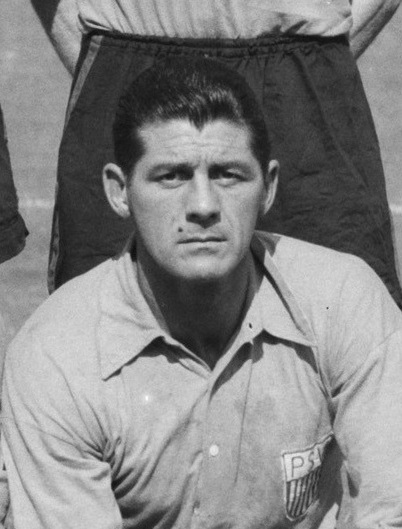
At the time the maximum wage which capped players salaries was still very much in force. Franklin, one of the greatest centre-halves of his generation never won another cap after his Colombian soujourn, while Mitten, who missed out on much of his early due to World War Two was never capped despite being a successful and popular winger for Manchester United and Fulham. A year after the game in Dalymount Trevor Ford would reveal in his autobiography that during his time at Sunderland he had been in receipt of under the counter payments to circumvent the maximum wage. He wasn subsequently suspended and announced his retirement, however changed his mind and moved to the Netherland where his ban could not be enforced and joined PSV Eindhoven.

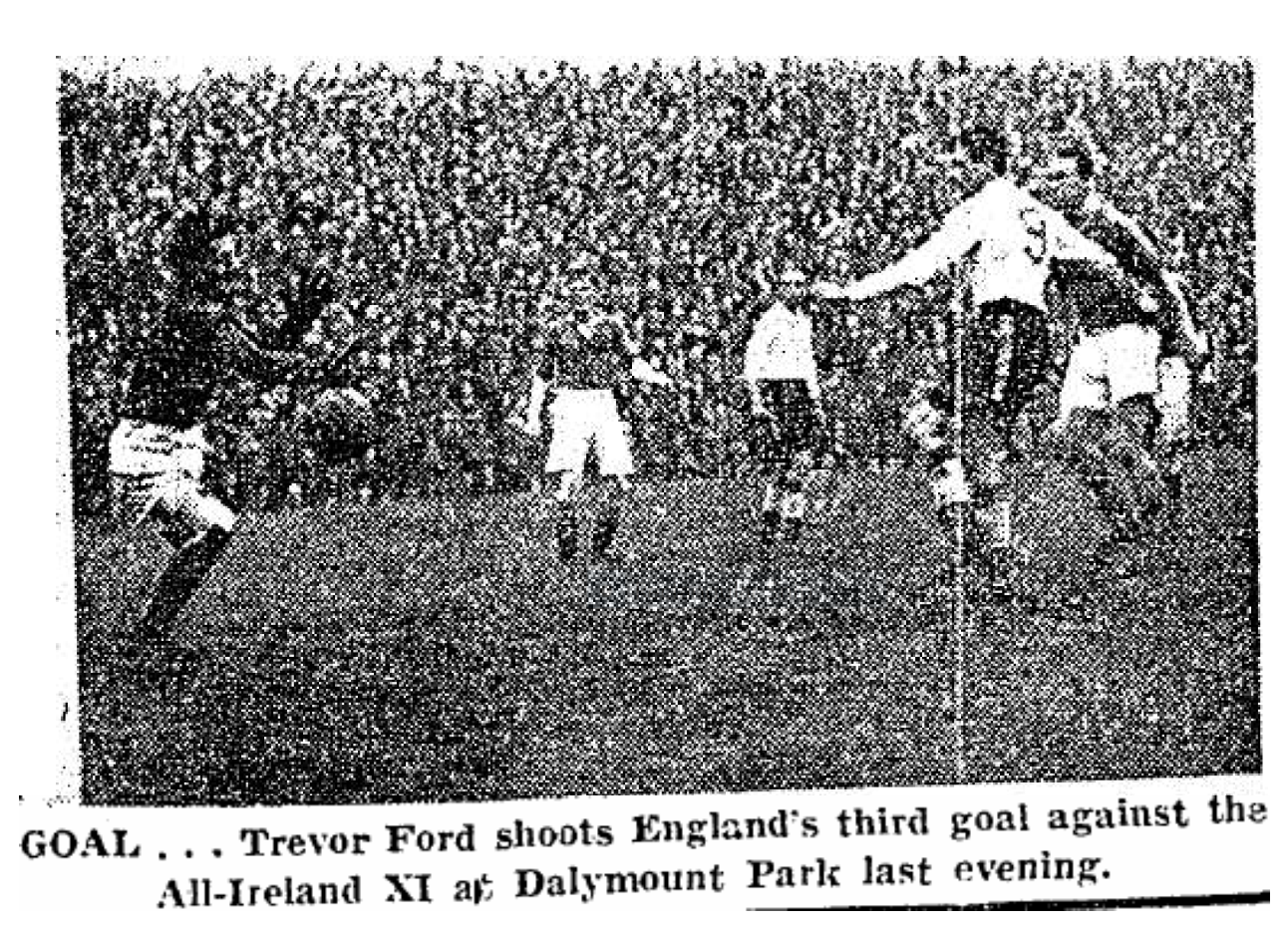
From the Irish Press, Trevor Ford scores for “England” in Dalymount Park.

In the Irish side there was a breakdown of six players born south of the border and five from the north, although like the English side there were late changes, Aston Villa’s Peter McPartland being unavailable he was replaced by his club and international teammate Norman Lockhart. The Irish stating XI read as Tommy Godwin (Bournemouth), Len Graham (Doncaster Rovers), Robin Lawlor (Fulham), Eddie Gannon (Shelbourne), Con Martin (Aston Villa), Des Glynn (Drumcondra), Johnny McKenna (Blackpool), Eddie McMorran (Doncaster Rovers) Shay Gibbons (St. Patrick’s Athletic), Peter Doherty (Doncaster Rovers), Norman Lockhart (Aston Villa).

Sam Prole obviously could rely on the services of his own players like Des Glynn, as well as former Drumcondra men like Con Martin and Robin Lawlor. As mentioned the connection with Doncaster Rovers through manager Peter Doherty, who was also manager of Northern Ireland likely helped secure the services of several other players.

The match proved to be a success in terms of the turnout and entertainment value, 24,000 turned up in Dalymount Park on the 9th of May 1955 for a goal-fest. The main plaudits were rained on Stanley Matthews for his exhibition of wing play, but the entire “England” forward line drew praise from the media reports, Trevor Ford being referred to as the “Welsh wizard among the Saxons” while he scored twice for England. In defence Neil Franklin and keeper Ted Ditchburn were also complimented. Ditchburn was lauded as the best keeper in England despite the fact that he conceded five on the day, Tommy Godwin in the Irish goal came off on worse as the hosts lost 6-5.

There was also praise for several of the Irish performers, despite having hung up his boots two years earlier the technique of Peter Doherty was still remarked upon, however it was Doncaster’s Eddie McMorran who drew the most praise and scoring two of the Irish goals. The press raved about the game, the Evening Herald declaring, in terms of exhibition matches “one of the finest ever seen at Dalymount Park” and again praising Matthews who it described as “being in peak form”. The Irish Press was similarly effusive, leading with the headline “Exhibition Treat Thrills Crowd – Stars Give a Soccer Lesson”. The healthy gate who turned up to see the star names no doubt helped the Prole family in the repair and upgrading work being carried out a short distance away at Tolka Park.

Trevor Ford in 1959, source Wikipedia

This marked a busy time for Dalymount, as days later there was another large attendance for An Tóstal events, with 15,000 turning up for a fireworks display which climaxed with “glittering reproduction of the Tostal harp in fiery gold. Underneath were the words : ” Beannacht De libh.” The young crowd left delighted although there were complaints from residents who were unaware of the event and were frightened by the unexpected noise.

Bouyed by the success of the 1955 match Sam Prole set about organising another All-Ireland v England match for the following year, though this time without the fundraising for Tolka tagline. Once again there was a high-profile selection of English veteran stars recruited and once again there was a cross border make-up to the Irish side. Though for 1956 it was much more weighted to the north with ten of the starting eleven being IFA internationals with only Pat Johnston, a Dubliner then plying his trade for Grimsby Town, coming from south of the border.

Several faces from the previous year’s game returned, including Peter Doherty and his Doncaster Rovers contingent which now included a young goalkeeper named Harry Gregg who would find fame at Manchester United, both on the pitch, and off it as one of the heros of the Munich air disaster. Once again Aston Villa’s Peter McParland was slated to appear but had to cry off, with once again his clubmate Norman Lockhart replacing him. There was also the considerable draw of two stars of Glasgow Celtic, Charlie Tully and Bertie Peacock. Tully, especially was a crowd favourite known for his amazing ball control, on-field trickery and cheeky personality. Such was his popularity among the Celtic faithful there were descriptions of “Tullymania” and his fame spawned an entire trade in Tully products and souveniers.

There were also returning stars from the “England” side that had played in the first game in Dalymount such as Tom Garrett of Blackpool and the “Welsh wizard” Trevor Ford, both late call-ups after Joe Mercer and Stan Mortenson were forced to pull out. The full teams were as follows:

“All-Ireland” – Harry Gregg (Doncaster Rovers), William Cunningham (Leicester City), Len Graham (Doncaster Rovers), Eddie Crossan (Blackburn Rovers), Pat Johnston (Grimsby Town), Bertie Peacock (Celtic), Johnny McKenna (Blackpool), Charlie Tully (Celtic), Jimmy Walker (Doncaster Rovers), Peter Doherty (Doncaster Rovers), Norman Lockhart (Aston Villa)

“England” – Sam Bartram (York City), George Hardwick (Oldham Athletic), Bill Eckersley (Blackburn Rovers), George Eastham Snr. (Ards), Malcolm Barass (Bolton Wanderers), Tom Garrett (Blackpool), George Eastham Jnr (Ards), Ernie Taylor (Blackpool), Trevor Ford (Cardiff City), Jackie Sewell (Aston Villa), Jimmy Hagan (Sheffield United).

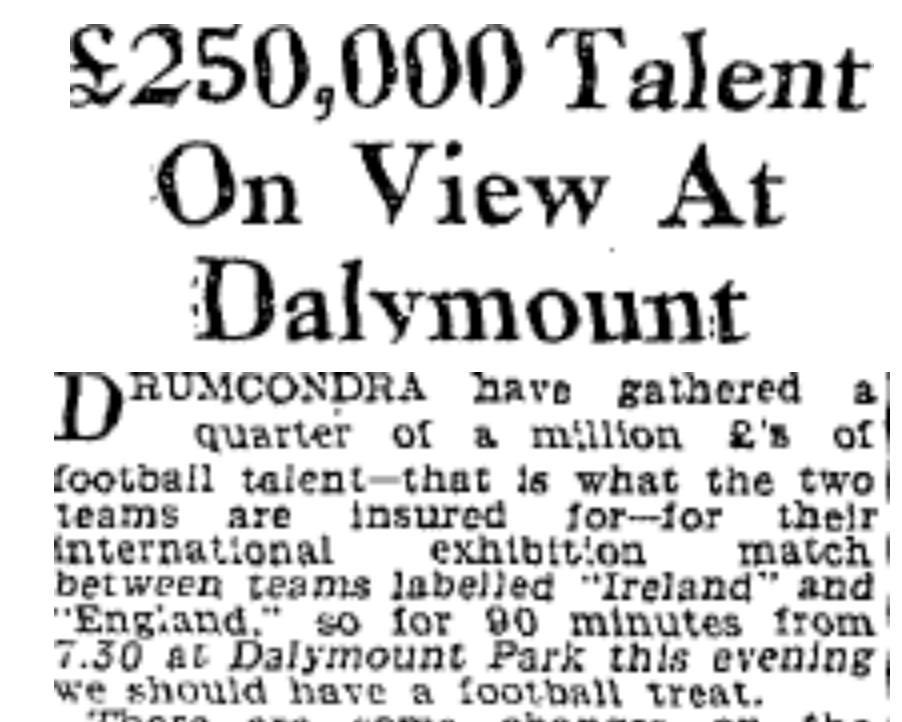
While there were well known veterans in the England team, Hagan was 38 and Sam Bartram, a Charlton legend and one of the most popular goalkeepers in football, was over 40 and had moved into management at York, were in the side there were also several younger players such as Johnny Wheeler and Ronnie Allen who were under the age of 30 and were due to feature but they both pulled out and were replaced by the father and son duo of George Eastham Senior and Junior. In the build up to the game much was made of the value of the team to be put on the pitch with the figure of £250,000 mentioned. In fact, in Jackie Sewell and Trevor Ford, there were two players who had broken the British transfer record over the past six years.

Irish Independent headline

It seems the crowd wasn’t as strong as the one from the previous year, attendance figures not being shared, but newspaper reports variously describing it as a “good” or “medium” crowd, it was also noted that the quality of the display was at a lower lever than the 1955 game, with this match having a more prounounced “end of season friendly” feel to it. The Irish Press called the game an “end of season frolic” while most reports did note the slower pace of the game and the lack of hard tackling, they were quick to praise the style and technique of the players on display. Once again the crowd were treated to a glut of goals, though the score wasn’t a close as the match a year earlier, Ireland lost 5-3 though reports state that this wasn’t a true reflection of the visitors superiority. Once again Trevor Ford was one of the stars while Villa’s Jackie Sewell also earned rave reviews. For the Irish side it was much more the Charlie Tully show, with him seeming to be the one player who was fully committed to the game, being described as a ball of energy and entertaining the crowd with his skills which prompted cries of “Give it to Charlie” from the terraces when Ireland were in possession.

Cover for the 1957 game, courtesy of Gary Spain

The younger George Eastham was also impressive for the English side, still only 19 Eastham had been a stand out player in the Irish League for Ards where his then 42 year old father was player-manager, before the year was out Eastham Jnr would sign for Newcastle United, and later his subsequent, protracted transfer to Arsenal, and court case would win significant change for players rights in English football, doing away with the old “retain and transfer” system clubs still held player’s registrations, even when the player in question was out of contract. He would enjoy a long and successful career and was a squad member of the England side which would win the World Cup in 1966.

Eastham Jnr. would open the scoring for England after Ireland took an unexpected lead through Walker, braces from Ford and Sewell rounded off the scoring for the English side, while the veteran Doherty with a penalty and Norman Lockhart scored Ireland’s other two goals. While the match was not as much of a success as the 55 game there was still praise for Sam Prole for taking the initiative to organise the game and for contributing on behalf of the footballing community to the Tóstal festival.

One possible reason for a smaller crowd in 1956 was not just the different line-ups, late withdrawals, or absence of Stanley Matthews, but also the sheer volume of other exhibition matches, often involving the same players, taking place at the time. Within days of the “All Ireland” v “England” game in May of 1956 there was an Irish youth international against West Germany, followed the next day by a combined Ireland – Wales XI against an England-Scotland XI, both taking place in Dalymount Park. Trevor Ford would feature for the Ireland/Wales side alongside Ivor Allchurch and local Cabra lad Liam Whelan, then making his name at Manchester United.

These games came just days after a Bohemian Select XI took on a side of Football League managers in an entertaining 3-3 draw in aid of the National Association for Cerebal Palsy. Among the Managers XI were players familiar to those who had attended the “All Ireland” games, such as Charlie Mitten, Trevor Ford (again), Peter Doherty (again!) as well as the likes of Bill Shankley and Raich Carter. There was perhaps a law of diminishing returns as despite the reports claiming the game was a highly entertaining spectacle and the associated good cause receiving the benefit, the crowd was descirbed as “disappointing”.

While the Shamrock Rovers XI match against Brazil in 1973, essentially a United Ireland side in all but name, is well known, and its 50th anniversary was marked last year in several quarters, these games in the 1950s are less well remembered. There are perhaps a number of reasons for this, for example, up until 1950 it was common practice for both the IFA and FAI to select players from either side of the borders and more than forty players were capped by both Associations. In this situation “All Ireland” representative sides were not all that uncommon, even if this did occasionally lead to tensions and even threats against players.

In the 1950s, Sam Prole, a key figure in the League of Ireland and the FAI was the driving force behind the matches, similar to the role played by Louis Kilcoyne in the 1973 game against Brazil, and similarly again there was the involvement of a national team manager, Peter Doherty in the 1950s and John Giles in the 1973 game. However, it seems that while the games in 1955 and 1956 used the title Ireland or All Ireland and the 1973 game was compelled to go under the Shamrock Rovers banner, the political situations were quite different. The 1973 game was played against the backdrop of one of the worst years of violence during the troubles, at the time the IFA were playing “home” matches in various grounds around England while a year earlier the 1972 Five nations rugby championship could not be completed as Scotland and Wales had refused to travel to Dublin, highlighting safety concerns.

There seemed to be a concerted effort by players involved in the 73 game to offer a counter narrative and most spoke of being in favour of a 32 county Irish international side. The games in 1955 and 56 lacked this political backdrop, the ill-fated IRA border campaign wouldn’t begin until the winter of 1956, and the stated aim seemed to be a novelty factor and curiousity element as can be seen with the other types of exhibition matches played at the time. There was no sense in any reportage that the games in 55 and 56 were trying to make a political point, they were fundraisers for Tolka Park initially, and a contribution by Irish football to fill a programme for the An Tóstal festival.

Though less than 20 years apart the football landscape was very different between 1955 and 1973. By 1973 European club competition was the norm, when it was only in its earliest phase in 1955 and lacked Irish or English participants. By 1973 colour TV had arrived and there was a massive increase in television set ownership in Ireland through the late 1960s. Where once stars of British football could only be seen in international or exhibition matches, or in snippets on newsreels, now they could be watched every Saturday night on Match of the Day.

While vestiges of An Tóstal live on today, it’s still celebrated in Drumshambo, Co. Leitrim for example, and we can credit it with the genesis of the likes of The Rose of Tralee, The Tidy Towns competition, the Cork Film Festival and Dublin Theatre Festival, one legacy it didn’t leave is a united, 32 county, Irish football team. Perhaps when Ireland is next on our uppers, and we have to reinvent a reason to convincea tourist diaspora to flock home to the old sod, we’ll hold some matches in Dalymount and unite the nation again?

With thanks to Gary Spain for sharing images of the match programmes for the 1955 and 1956 games.

Finn margins in World Cup qualifying 1950

The 1950 World Cup would enter popular memory for the wonder of the Maracanã, the vast and noisy crowds that turned up to follow their Brazilian heroes, and of course the shock result in the “final” which saw Uruguay win their second World Cup by defeating the hosts in what became known as the Maracanzo – A result which seemed to traumatise the Brazilian nation like few others.

It was also the first World Cup to be held in twelve years due to the savagery of the Second World War, and slowly a decimated Europe returned to the football fields and to World Cup qualifying groups. Most groups were two team affairs, simple home and away fixtures with the winner progressing, however Ireland were drawn in a group of three, alongside Sweden and Finland. It was to be Ireland’s first meeting with both nations.

The Swedes would have been strong favourites for the group, they had triumphed in the football tournament at the 1948 Olympics in London and featured stars like Nils Liedholm and Gunnar Gren who would find greater fame in Italy with AC Milan. The Finns, however, were something of an unknown quantity with Irish newspaper previews detailing the struggle faced by Finish football due to the harshness of the climate and the ongoing recovery from the ravages of the Second World War.

For the visit of Finland to Dublin in September of 1949, the Republic of Ireland opted for experimentation. Having been well-beaten by a strong Spanish side in a recent friendly, there was a more youthful look to the Irish team against Finland with several debutants, especially in the attack. A brand-new front five was named, with Johnny Gavin, Arthur Fitzsimons, Jim Higgins, Peter Desmond and Tommy O’Connor all listed to start. Higgins had enjoyed a blistering start to the season with Dundalk, scoring six times before August was out but had to cry off with an injury, his place being taken by Shelbourne’s Brendan Carroll.

It was to be a further changed front line as Carroll had to go off injured after 25 minutes and Paddy Daly being the only outfield player (the 12th man) available as his replacement. This prompted another reshuffle, with the ever-versatile Con Martin moving from centre-half to the centre forward role and Daly taking Martin’s place. Despite the disruption to the team there seemed to be no ill-effects on the pitch. Johnny Gavin opened proceedings with a goal direct from a corner, 21-year-old Gavin was just beginning to make his name at Norwich but he would go on to become the Norfolk club’s record goal-scorer, a distinction still held to this day.

Two more goals followed, Peter Desmond was fouled which drew a penalty and was dispatched by Con Martin before victory was sealed, this time Martin again proving his worth as a striker flicking in a header in the 68th minute from an Ireland corner. A relatively comfortable 3-0 win in front of 23,000 in Dalymount.

The return leg in October was to be a different affair, Finland’s football season was coming to a close and the harsher winter weather was already in force, Ireland were playing in a biting wind with temperatures hovering just above freezing. The FAI had spared no expense, paying over £1,000 to fly an Aer Lingus charter flight to Helsinki and despite the conditions the Irish team must have been optimistic, they had just beaten England in Goodison Park a month earlier and regular centre forward Davy Walsh was back in the starting XI.

Walsh looked to have scored early on but Dutch referee Jan Bronkhorst disallowed it for a supposed foul on the Finish keeper. Ireland did however take the lead through Everton’s Peter Farrell, slipped in by Drums’ Tim Coffey, Farrell beat his man before unleashing a fierce shot into the Finnish net on 65 minutes. Ireland remained in the lead until the last minute when Jorma Vaihela managed to bundle the ball, and a number of Irish players, into the net. The Irish team quickly protested to the referee that the Finns had fouled in the lead up to the equaliser but their laments fell on deaf ears.

Finland decided to withdraw from qualifying after the game and never faced Sweden in the group. Ireland knew they would have to beat the Swedes to force a play-off but these narrow hopes were dashed by a Calle Palmér hat-trick in Dalymount. The Swedes would go to Brazil where they would finish third behind Uruguay and the hosts while it would be another 40 years before Ireland would grace World football’s greatest stage.

This article originally featured in the match programme for Ireland v Finland in November 2024. Banner photo from the Irish Press showing Con Martin bearing down on Finnish keeper Thure Sarnola in the September 1949 game.

Keep the green flag flying – 50 years on from defeating the Soviet Union

John Giles was enthusiastic that the aligning of Ireland’s European Championship qualifying fixtures with that of England, Scotland, Wales and Northern Ireland would have a beneficial effect on securing the release of players from their clubs for the upcoming match against Turkey. He made this point just after his Ireland side, playing in their first competitive game under his management had shocked European football by defeating the Soviet Union 3-0 on October 30th 1974.

Giles waxed lyrical about wanting the opportunity to work with the international team players on a weekly, even daily basis and hoped to have extra days for another opportunity for additional training ahead of the game against Turkey. Even things like the release of players and a day or two to work through set pieces wasn’t guaranteed in 1974.

The hero in that game, Don Givens, who celebrated his 25th cap with a hat-trick recalled being unable to get back to the team bus such were the crowds and didn’t know how to get to the team hotel in Booterstown so he hailed down a car in his muddy kit with a match ball under his arm. He was greeted with the inquiry as to whether he’d been “at the match?” by the driver.

Liam Brady, then an 18-year-old debutant remembered the flaking panelling in the Dalymount dressing room and the smell of liniment mixed with a waft of beer from the nearby club bar. The anxiety, and perhaps the odour meant that he recalled getting sick in the dressing room toilet prior to kick-off.

All of this perhaps sounds a far cry from modern international football but it was something of a dawning of a new era for Ireland. Giles had taken charge mere months earlier, had impressed in a series of friendlies, and was now player-manager leading the bid for Euro 76 qualification in a group featuring the Soviet Union, Switzerland and Turkey. Almost exactly 15 years earlier a teenaged Giles had scored on his debut in a victory over Sweden, now he was in charge on and off the pitch as Ireland took on the world’s largest nation featuring such stars as Oleg Blokhin who would win the Ballon D’Or just months later.

One of the Irish centre-backs that day, Terry Mancini, had praised Giles for his training techniques and the “tremendously professional atmosphere and attitude – as good as any team in the world”. As chance would have it, the Arsenal defender wouldn’t get to experience much more of the Ireland dressing room, a sending off for retaliating against Soviet defender Volodymyr Kaplychnyi saw his international career ended by a four-match ban.

During the game itself the 35,000 spectators were treated to scintillating, confident football by the Irish, with one commentator describing the interplay between Giles and Brady, master and student, as almost arrogant! It was claimed in reports that this was the game that brought Irish football in from the cold and gave Dalymount back its roar.

The crowd had just 23 minutes to wait for the first goal, a delightful ball in from Joe Kinnear, who excelled in marshalling Blokhin as well as joining the attack, which found the head of Givens who powered it home. Five quick passes cutting open the Soviets to give Ireland the lead. The second arrived on the half hour courtesy of the indefatigable Ray Treacy, who’s cross was flicked on by Steve Heighway to present Givens with a simple finish.

However, there was some concern two minutes later when Mancini and Kaplychnyi were sent off. Could Ireland’s 4-3-3 formation adapt to being down a centre half? Mick Martin, filled in ably, switching from midfield to defence, and Ireland managed to weather a Soviet storm in the first period of the second-half and any fears of a comeback were allayed on 70 minutes as Giles’s precise and quickly taken free found the Soviet defence asleep and Don Givens secured his hat-trick.

Through the late 60s and early 70s Irish fans had little reason to be cheerful, 50 years ago a new manager, and a shock result helped the Green army to find their voice and hope again.

This article originally appeared in the Ireland v Finland match programme in November 2024

Goodison and the New Republic

Taoiseach John A. Costello caught the Irish public somewhat unawares when he announced, while on an official visit to Canada in 1948, the planned repeal of the External Relations Act and the effective creation of a Republic. Some historians have suggested that the unexpected announcement was made by Costello in response to the behaviour of the Canada’s Governor General during the visit, but whatever the reason by the end of that year the Republic of Ireland act had been drafted before it was symbolically signed into law on the 33rd anniversary of the Easter Rising in 1949.

Ireland was no longer a member of the Commonwealth, and the British Monarch was no longer a symbol or figurehead. The British had to adopt their own legislation subsequently, while King George VI sent cordial greetings on the signing of the Bill to Costello. There seemed to be a diplomatic thaw on the football fields as well. The British Associations had recently rejoined FIFA and would compete in World Cup qualifying for the first time.

As part of the preparation for these games a friendly match was proposed by the FA between England and Ireland, to be held in Goodison Park in September 1949. FAI secretary Joe Wickam gladly accepted. Ireland had only played England once since the split from the IFA, a narrow 1-0 defeat in Dalymount Park in 1946, surely it was too much to expect to do any better on English soil?

England picked a strong side, Jessie Pye, who had starred as Wolves won the FA Cup a few months earlier made his debut at centre-forward, but otherwise it was a team of well-known stars like Bert Williams, Neil Franklin, Wilf Mannion and Billy Wright. All the players were from the top-flight of English football bar their star winger Tom Finney who was in the second division with his hometown side Preston North End.

Ireland were able to secure the release of most of their best players, seven of whom were playing in the English top-flight, while two were in the second division and another two, Tommy Godwin and Tommy O’Connor were playing with Shamrock Rovers. There was some discussion about the selection of O’Connor ahead of players like Tommy Eglington or Jackie O’Driscoll, with one suggestion that Rovers’ rep on the FAI selection committee, Captain Tom Scully had advocated for the selection of O’Connor to “put him in the shop window” so to speak. Regardless of the reason O’Connor would have an important role in the game.

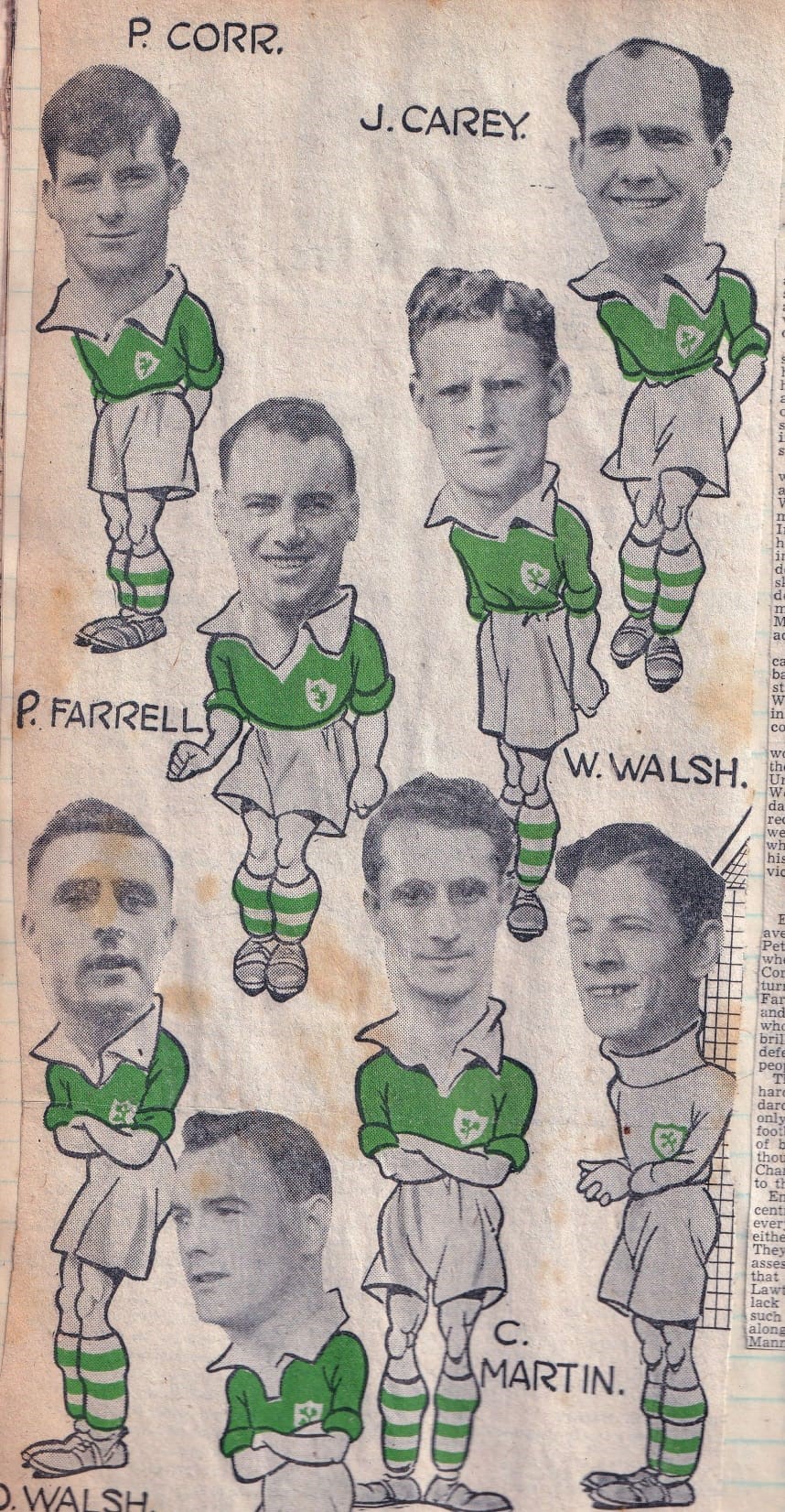
The Irish side trained at Everton’s training ground (well the seven who had arrived in time) while Peter Farrell and Peter Corr, both Evertonians were excused as they had trained there that morning for their club. However, team captain Johnny Carey had worked with both Farrell and Corr, who would occupy the right of the Irish midfield beforehand, working out a tactic to close down the English left back and left half, to isolate star winger Tom Finney and force him to survive off scraps and high balls. A tactic that worked brilliantly on the day with Carey being given no problems by Finney.

Clipping of the Irish team courtest of Rob Sawyer

Many in the media thought an English victory was a foregone conclusion, with one paper referring to the game as a “social occasion” for Ireland, while odds of 10/1 were being given on an Irish victory. There were few takers but Peter Farrell did patriotically take bets from his Everton teammates on an Irish win.

Ireland started positively and dealt well with the numerous English attacks, with Carey, Ahearne and Willie Walsh doing especially well, Tommy Godwin in goals was in inspired form. Godwin

turned out to be the one in the shop window, signed by Leicester shortly after his starring performance. Things got better when Peter Desmond of Middlesboro ran into the England box to latch onto an O’Connor ball and was felled by Bert Mozley giving away a penalty that Con Martin blasted with such power that although Williams in the England goal got a hand to it he could do nothing to keep it out.

Ireland led 1-0 at half-time and managed to endure wave after wave of English attacks, winger Peter Harris hit the bar, Pye in his only England cap came close, but none could beat Godwin. And then with five minutes to go Peter Farrell, playing further forward than usual latched onto an O’Connor pass and calmly lobbed Williams from outside the box to make it 2-0 and secure the victory. Farrell later remarked that he “closed his eyes and banged it” but the shot showed fine technique! He’d won Ireland the game as well as the princely sum of £6 in bets from his Everton teammates.

Most importantly Ireland had made history, they became the first side apart from the Home Nations to beat an English international side on home soil. Before the Mighty Magyars, before Puskás and Hidegkuti, there were the Irish and Martin and Farrell.

This article appeared in the Ireland v England match programme.

Voyage from Olympia – Ireland against Estonia and the USA

The FAI delegation were busy at the Olympics, it had been a challenge to even get the football team to Paris, considering the cost and a lack of administrative or State support. And while the Irish side had put in a credible display, only losing out at the quarter final stage to the Dutch after extra time, the officials were keen to make the very most of their time in Paris making new connections with other FIFA members and renewing acquaintances with those nations that had supported the Free State in taking its seat at the top table of world football.

It is against this backdrop that two further games were organised, one in Paris, against Estonia, and another back in Dublin against the United States. Immediately after elimination against the Dutch the Irish delegation had arranged another match, this time against the Estonians on June 3rd , which gave an opportunity to give some game-time to those players who hadn’t previously had the opportunity to feature. The likes of Tom Murphy, Charlie Dowdall, John Thomas and Christy Robinson all got to play as the Irish side recorded an impressive 3-1 win. Level 1-1 at the break thanks to a Paddy Duncan goal, second half strikes from Robinson and Frank Ghent gave Ireland the win.

Surprisingly, the Estonia game, a friendly match, was the best attended of the Irish matches played in Paris with over 3,000 spectators turning up. The crowd numbers were significantly helped by the fact that Ireland didn’t have to compete for public interest against other matches kicking off simultaneously in Paris as had happened with the previous games against the Netherlands and Bulgaria. Also of significance was the appearance of Bohs’ Christy Robinson, four years later his brother Jeremiah (Sam) Robinson would win his first cap, versus Belgium, this would mean that they became the first set of brothers capped by the FAI.

Less than two weeks later, on June 14th , Ireland played their first home international, hosting the USA in Dalymount Park. The USA had eliminated Estonia at the Olympics but had been knocked out by eventual winners Uruguay. They too stayed on for an extra match, beating Poland 3-2 in Warsaw before journeying to Dublin. The USA had supported Ireland’s membership to FIFA, and their journey to Dublin shouldn’t be too surprising as the American soccer party were led by Peter Peel, a Dublin-born, Limerick-raised, sporting all-rounder who had moved to Chicago as a young man. Research by Michael Kielty has shown that Peel retained a profound, active interest in Irish affairs while also running a successful sports medicine practice and being dubbed the “Soccer King of Chicago”.

There was perhaps an added incentive for the Americans to spend a full week in Ireland as the USA was in the middle of its prohibition era and it is believed that the United States party enjoyed the social life available to them in Dublin during their stay. Whether this had any impact on their performance is uncertain, perhaps more likely is the impact of the journey across Europe from Warsaw to Dublin.

USA team in Dalymount

Regardless, the United States, although a fit and physically imposing side were well-beaten 3-1 in front of a somewhat disappointing crowd of only around 5,000 for the summer friendly in the football off-season.
Ireland included several players, who because of previous experience as professional footballers hadn’t travelled to the Olympics, and it was one of these, Ned Brooks of Bohemians who made the biggest impression. Brooks, on his debut, scored a fine hat-trick, pouncing on an early mistake by Arthur Rudd before rounding off the 3-1 win with two fine strikes. Sadly, this would be Brooks only international cap.

It would be 1926 before Ireland would play another international, and while Brooks was selected to start against Italy, tragedy struck days before he was due to travel when his seven-year-old son Harold ran across a busy street in Rathmines to ask for a penny from his father when he was struck and killed by a car. Despite being rushed to hospital and being given a blood transfusion by his father, young Harold succumbed to his injuries. I feel that the story of Ned Brooks, his brilliance and tragedy shows why it is so important that we honour the memory and achievements of the players of 1924.

Originally published in the Ireland v Hungary match programme May 2024

Charlie Harris – A Sporting Life

Charlie Harris spent the early 1910s collecting an array of titles on the Irish athletics scene, excelling over a variety of events; four miles, five miles, steeplechase, cross country. He beat the best, including John J. Daly an American-based, Irish runner who had won a silver at the 1904 Olympics. Harris even faced off against competitors of the non-human variety, when in 1912, he raced a trotting pony over 10 miles around Jones’s Road (later Croke Park). Harris had a 20-minute head-start over his equine foe, named Kathleen H. and narrowly lost out over the final 100 yards but setting an Irish (human) record for 10 miles in the process.

An advertisement for Charlie Harris’ race against a horse

Eight years later Harris was once again on that touchline where he had once raced a pony, this time trainer of the Dublin Gaelic football team when British Crown Forces opened fire into Croke Park causing murder and panic. No doubt, he feared the worst when he and the other Dublin players and officials were crowded into the dressing rooms in the aftermath of the outrage. Quite the sporting life, and we haven’t even mentioned the football!

Harris can be seen on the far right with the Dublin GAA team on Bloody Sunday

From around 1916 onwards Harris was trainer to Bohemian FC, a role which was part physio, part coach, part cheerleader. His role in various teams over the years puts one in mind of Mick Byrne and the impact he had under Jack Charlton and Mick McCarthy.

Charlie quickly developed a reputation as the best in the business and despite a background of having worked as a sales assistant and carpenter during his running career it was as a sports trainer and physio that he became increasingly sought out, with players from outside of Bohemians and across a variety of sports seeking his assistance.

At international level Charlie was asked by the IFA to accompany its amateur team to France for a match in Paris in 1921. This match caused some controversy when Irish tricolours were displayed by fans in the Parc de Princes which was not well-received by the IFA and added to existing tensions with the Leinster FA just months before an eventual split.

After the split in September 1921 and the formation of the FAI it was inevitable that Charlie Harris would be the go-to man for the new association’s international programme. This meant another trip to Paris for Charlie in 1924 for the Olympic games as a one-man coaching team. Charlie would remain on the touchlines for Ireland, for Bohemians and for the League of Ireland representative sides for more than twenty years to come, travelling Europe in his customary white coat and carrying his faithful leather satchel full of cures, ointments and health salts.

Harris can be seen on the left in his trademark white coat.

In 1940 Charlie was given a benefit match by Bohemians to acknowledge his 25 years service with the club, Belfast Celtic were the guests on that occasion in Dalymount. Some nine years later with Charlie now in his 60s and his health beginning to fail there was another game to honour one of the most popular figures in Irish football. In June of 1949 Manchester United were Bohemians guests in Dalymount as over 40,000 turned up to see United defeat a Bohemian Select XI 3-1 and to pay tribute to Charlie.

The cover of the testimonial game against Manchester United for Charlie Harris

Charlie would pass away just three months later in September 1949, the Evening Herald recalling him as “witty and genial and of a very likeable personality and he will be keenly missed by his legion of friends”. His funeral was attended his wife of 41 years, Kathleen, his children and wider family and by senior representatives of the Army, Gardaí the wider football world but also from the fields of athletics, rugby and boxing showing the esteem in which he was held and the impact he had on the Irish sporting landscape.

A version was first published in the Ireland v Hungary match programme in June 2024. Images of Charlie’s kitbag, watch, pistol and whistle are shared by his family.