Mount Ararat, though it lies just inside the Turkish border, is visible from almost any location in Yerevan, the capital of Armenia. So much so that the mountain is the primary symbol of the city. It is recounted that after the great flood Noah’s ark was washed ashore atop the mountain and that Noah, while looking in the direction of Yerevan, is said to have exclaimed “Yerevats!” meaning “it appeared” which in turn gave the name of the city.
Despite having only won one league title since independence FC Ararat Yerevan, who take their name from both mountain and city, were the dominant Armenian side of the 1970s when they competed in the old Soviet Top League before the collapse of the USSR and their story is biblical in scope. In a time when the league was mostly dominated by the big clubs in Moscow, or by the likes of Dynamo Kyiv, Ararat Yerevan managed to win a league title and two Soviet Cups while making a significant impression in European competition as well.
Ararat gained huge domestic support and became something of a de facto Armenian national side and a focal point on occasion for occasional, vocal resistance to Soviet rule, their fans would sing chants like Haya-stan, hoop- tor, meaning “Come on Armenia” which would later become a chant of the Armenian independence movement. Ararat secured promotion to the Soviet Top League in 1966 where they remained a permanent fixture until the collapse of the Soviet Union.
In 1973 they shocked Soviet football by winning the League and Cup double beating Dynamo Kyiv to second place in the League and defeating the same opposition in a dramatic Cup final. Ararat were trailing 1-0 with just a couple of minutes remaining when Levon Ishtoyan, one of several Soviet internationals in the Ararat side slammed in a late equaliser. In extra time Ishtoyan grabbed a second to secure the cup for Yerevan and to send thousands of Armenians in both Luzhniki stadium in Moscow and in the capital, Yerevan into rapture. The club was unused to such success and the prevailing view was that bigger and more well-known sides were favoured ahead of smaller more “provincial” sides like Ararat.
Two years later Ararat won the cup again, another 2-1 over opposition from Ukraine, this time it was a victory over Zorya Voroshilovgrad who today are known as FC Zorya Luhansk. In achieving these triumphs Ararat had at their disposal legendary coaches such as Nikita Simonyan who starred as a striker for Spartak Moscow and also enjoyed success with them as a manager. Simonyan had Armenian heritage and had two coaching spells with Ararat as well as coaching the USSR national side on three occasions. Ararat’s second cup win was masterminded by Victor Maslov who had great success with Dynamo Kyiv and is credited by the likes of Jonathan Wilson with inventing the 4-4-2 formation.
In Europe they made their mark as well, during the 1970s Ararat reached the quarter finals of all three major competitions, the UEFA Cup in 1972-73 where they knocked out EPA Larnaca and Grasshoppers of Zurich, the Cup Winners Cup in 1975-76 where West Ham eventually knocked them out, as well as the 1974-75 European Cup where Viking were dispatched 6-2 in the first round to set up a second round tie with Cork Celtic who were beaten 7-1 on aggregate. In the quarter-finals they were narrowly eliminated by eventual Champions, Bayern Munich, losing 2-0 in Germany before winning 1-0 in Yerevan in front of 70,000 fans thanks to an Arkady Andreasyan goal.
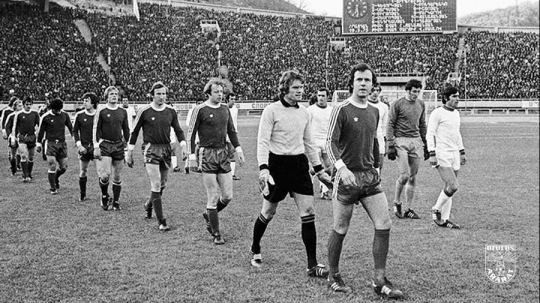
This was an Ararat side that contained some of the finest players in Armenian football history such as Andreasyan, Khoren Oganesian and Eduard Markarov who later managed both Ararat Yerevan and the Armenian national team. While Ararat would win the Armenian league title in 1993 the years since independence have been lean years compared with their 1970s heyday. The dominant side in Armenia has tended to by FC Pyunik in recent years, however it is doubtful whether any Armenian club side will reach the heights of Ararat in the 1970s or enjoy the overwhelming popular support of that era.
This article first appeared in the Ireland v Armenia match programme in 2022
 A Bohemian Sporting Life