
By Fergus Dowd
The name Callaghan derives from the Irish gaelic Ceallachan synonmous with the 10th century King of Munster who was eventually dispossed of his 24,000 acres of land by the Cromwellian Plantation. Plantations took place in Ireland in the 16th and 17th centuries and involved the confiscation of all Irish owned land by the English crown and the colonisation of these lands by settlers from British shores.
By October 1791 inspired by the French Revolution the Society of United Irishmen in Belfast led by Theobald Wolf Tone were formed, the group sought to secure a reform of the Irish parliament by uniting Protestant, Catholic and Dissenter into one single movement. It would lead to the rebellion of 1798 which was quashed and led to the 1801 Act of Union which brought Britain and Ireland closer and both this and the famine of the 1840s led to millions leaving the emerald isle.
Due to poverty the bottom one-third of the population were exclusively dependent on the potato for sustenance, the daily intake was enormous 4 to 5 kilos daily per adult and the consequences of repeated failures was devastating. In the publicly financed soup kitchens which replaced the public works, established under the Irish Poor Law of 1838, three million people were fed at their peak in early 1847. For those who could afford it escape from the famine came through a boat most were destined for the port of Liverpool more than two million people would land on its shores many with not enough finances to continue their journey.
The Liverpool Mercury newspaper reported in 1847:
“The fact is that in the cold and gloom of a severe winter, thousands of hungry and half naked wretches are wandering about, not knowing how to obtain a sufficiency of the commonest food nor shelter from the piercing cold. The numbers of starving Irish men, women, and children—daily landed on our quays is appalling; and the Parish of Liverpool has at present, the painful and most costly task to encounter, of keeping them alive, if possible…” in that same year 80,000 Irish would find themselves living in dog-kennells and cellars in Liverpool 60,000 alone would perish from fever.
In January 1981 Jerry Harris paced the arrivals lounge in Cork airport, secretary of Cork United he was waiting for a man with the Munster name of Callaghan.
That winters’ evening in polo neck and fur coat Ian Callaghan of Toxteth Liverpool landed in southern Ireland, only three months earlier seven Republican prisoners went on hunger strike in the Maze prison as Margaret Thatcher’s government sought to criminalise both Republican and Loyalist prisoners removing special category status that summer of ’81 the streets of Toxteth would burn in revolt against the same government.
On the afternoon of April 16th, 1960, Ian Callaghan stood at the bus stop among his own, that evening he would wear the red of Liverpool, as the bus opened its doors ‘Let Cally get on first… he is playing tonight…’ came the call as they all journeyed to the red cathedral of football in unison. That night in the cauldron of Anfield Callaghan would wear the famous no. 7 shirt it was like a tent hanging from his slim shoulders, as Liverpool football club demolished Bristol Rovers four to nil. The faithful from the kop to the main stand gave the baby-faced Callaghan a standing ovation as he left the hallowed turf.
Callaghan’s arrival had been predicted by the great Billy Liddell, the Scot had signed professional terms at Anfield in 1939 on the recommendation of Matt Busby, then Liverpool captain. Billy’s parents had only agreed to him signing once he could continue his accountancy studies, he would line out 534 times for the reds netting 228 goals; himself and Bob Paisley made their debuts against Chester City in the FA Cup on the 5th of January 1946.
During the war Liddell had guested for Linfield, he was also asked to play for Belfast Celtic by Liverpool legend Elisha Scott but declined the offer of playing at West Belfast’s paradise.
As the 1960’s beckoned Liddell was asked how Liverpool woud replace him? His answer:
“There is a 17-year-old called Ian Callaghan who looks like taking over from me. I played with him twice, watched his progress and I believe he’ll be a credit to his club, the game, and his country,”
The youngster had to bide his time but by November 1961 as Elvis Presley sang about ‘His Latest Flame’ Callaghan became a permanent fixture on Liverpool’s right wing as pomotion to the first division was gained in the summer of 1962. Under the stewardship of Bill Shankly, Callaghan blossomed. The Scot of mining stock once proclaimed, ‘If there were 11 Callaghan’s at Anfield there would never be any need to put up a team sheet.’
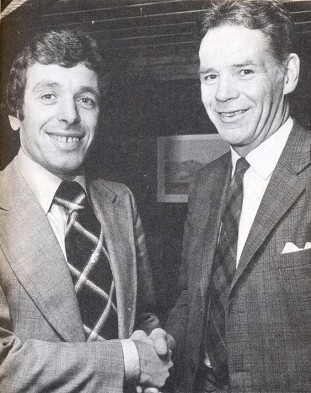
Within two years Ian Callaghan, aged 22 was a First Division champion as Bill Shankly and his players walked towards the Spion Kop with the championship trophy and the sounds of the mersey beat in their ears. A year later Callaghan walked out onto the Wembley turf for the FA Cup Final of 1965 against Don Revie’s Leeds United; Yorkshire’s finest had defeated league champions Manchester United one nil in a semi final replay to reach the twin towers.
The Reds had never won the FA Cup and had beaten Chelsea two nil at Villa Park in the other semi final. It was their third effort at trying to lift the blue riband cup of English football losing in 1914 and in 1950 when Liddell had played. As one hundred thousand watched on both teams struggled to create goal chances with the most significant incident being Gerry Byrne’s third minute injury after a hefty challenge by Leeds captain Bobby Collins.
Byrne broke his collar bone but with no substitutions allowed had to play on as the game ended scoreless after ninety plus minutes and went into extra time. In obvious pain Byrne who had also arrived like Callaghan at Anfield aged 17 continued his marauding runs from left back and in the third minute of extra time he found himself on the oppositions by-line centering for Roger Hunt to stoop and head the ball past Gary Sprake. Shankly would later remark about Byrne ‘It was a performance of raw courage by the boy.’
On the stroke of the 100th minute Leeds equalised Norman Hunter crossed for Jack Charlton to head the ball down for Scot Billy Bremner to volley passed the hapless Tommy Lawrence in the Liverpool goal. However, with only three minutes left as the rain fell Callaghan jinked passed Willie Bell and sent in a low cross which Ian St John arched his head to finding the back of the net to send the Liverpudlians into raptures.
In his all-red strip Ian Callaghan climbed the steps to the Royal Box to collect his winners medal, Shankly’s idea of all red was a psychological one he felt his players would look and play like giants – red for danger, red for power. The following day Ian Callaghan and his teammates landed in Lime Street train station with the cup as thousands lined the streets, they were paraded on a bus to the town hall. On the balcony of the town hall as the five hundred thousand crowd swayed to the chants of ‘Liverpool’ Callaghan lifted the trophy.
Callaghan won his second First Division medal as Liverpool were crowned champions of England 1966 with Revie and Leeds runners up, six days later the team would lose 2-1 to Borrussia Dortmund in the European Cup Winners Cup Final at Hampden Park, all of this led to a World Cup call up. After playing one of the group games against France with England winning two nil and teammate Roger Hunt netting twice, Callaghan found himself surplus to requirements. As Alf Ramsey, following the group games, decided to go without wingers and to add more woe only the eleven men who lined out against West Germany in the final received winning medals.
It would take forty-three years for Callaghan, Byrne, and Jimmy Melia the Liverpool squad contingent to get their medals after a succesful campaign made FIFA perform a U-turn – Roger Hunt the other Liverpool squad member played in the final.
In 1970 Callaghan suffered a knee injury on his return Shankly moved him into the centre of midfield it would prolong his career for seven years. More success came in the form of League and Uefa Cup victories in 1973 and 1976 with a further league medal in 1977. FA Cup glory was achieved in 1974 over Newcastle United Bill Shankly would announce his retirement soon after, Ian Callaghan that same year would become Liverpool’s first Footballer of the Year. Shankly was replaced by his side kick Bob Paisley who led Callaghan and Liverpool to European Cup glory in 1977 defeating Borussia Mönchengladbach 3-1 in Rome.

By 1978, as Liverpool were winning back-to-back European titles with a one nil victory over Brugges of Belgium with Kenny Dalglish scoring at Wembley, Callaghan had lost his place to Graeme Souness. All in all, the boy from Toxteth spent nineteen seaons at Anfield playing 857 games he would break the man he replaced Billy Liddell’s record of 534 appearances for the reds.
After spells with Fort Lauderdale in the States and Swansea under the stewardship of John Toshack Callaghan landed in Cork making his debut that January of 1981 in a three one away victory at Home Farm.
The honeymoon would only last one more game before Callaghan departed, like many League of Ireland clubs Cork United (or Albert Rovers as they were known originally) were besieged with financial problems and could not improve their mid table mediocricy. As well as Callaghan they also signed Irish international Miah Dennehy and Chelsea FA Cup winner Ian Hutchinson but there would be no success.
Cork United and its secretary Jerry Harris put their eggs in one basket that being a lucrative friendly with Manchester City, a request for then City Irish internationals Michael Robinson and Tony Grealish to line out for Cork fell on deaf ears. The event would cost United £15k Irish punts with City requesting an £8k guaranteed fee, the game went ahead with former Republic of Ireland manager Martin O’Neill netting for the blues in a comfortable four nil victory over their Irish counterparts.
Sadly, United didn’t make the profits they envisaged after only 2,000 spectators paid in, United were unable to settle Manchester City’s fee of £8,000. Amid mounting debts, they were expelled at the end of the season, leaving Cork without League of Ireland representation for the first time since 1924.
Dixie Dean of Everton who also spent the twilight of his career in the League of Ireland at Sligo Rovers was once asked if he could replicate his 60 league goals in a season in modern times his reply:
‘If I could play between Ian Callaghan and Peter Thompson, I’d still get my 60 goals a season.’
 A Bohemian Sporting Life