Johnny Crossan – A Tale of Injustice

By Fergus Dowd

‘Still he sings an empire song
And still he keeps his navy strong
And he sticks his flag where it ill belongs…’

Eamonn McCann stands with his back to Free Derry Wall and annouces, ‘over there in that ditch is where I lay on Bloody Sunday’. He faces east towards Rossville Street where on the 30th of January 1972 the rubble and wire barricade stood, and the fatal shooting began at 4:10 pm.

The Paracute Regiment had entered the Bogside with several of their Humber Armoured Vehicles driving into the courtyard of Rossville Flats – Alana Burke (18) and Patrick Campbell (53) were mowed down.
Jack Duddy was the first of the innocent to be shot dead by the British Army fleeing fom Company C across the courtyard, a fatal single bullet entered his upper chest. As Duddy lay motionless Fr. Edward Daly took cover behind a low wall; that afternoon Fr. Daly would wave a blood-stained handkerchief to try and save the youngster – behind McCann what played out is immortalised in mural artwork. At the barricade that day stood another seventeen-year-old John Young, by 4:15 pm he was dead, killed by a single shot to the head, the bullet entering his left eye.

This is Derry, situated in the Northwest of Ireland the birthplace of the Civil Rights Movement in Ireland and a city sadly scarred by the events of Bloody Sunday. The air is full of injustices on the Messines Park, in the centre of a group of local shops sits a sports shop, among the trophies inside, the wall is filled with photos of Di Stefano, Puskas and Best: names of a bygone era.

Behind the small counter stands Johnny ‘Jobby’ Crossan a man who felt the wrath of football injustice. A son of Sparta Rotterdam who tormented the Rangers at Ibrox and a man who wore the ‘Red’ of Standard Liege marking Alfredo Di Stefano in the cauldron of the Bernabéu in the European Cup semi-final of 1961. Crossan made his name in the stadia of Belgium and Holland, not by choice but by necessity.

In 1957 as a teenage starlet for his local club Derry City, Crossan was the up-and-coming wonder boy of Irish football. With scouts hovering over his every touch Derry City were approached by Sunderland F.C. for the young candystripe, the Wearside club offering £10,000 for Crossan’s services. Crossan who was being paid a paltry £3 a week at Derry was made aware of Sunderland’s approach.

As he states from the centre of his sports shop ‘Derry City would receive £5k and I would get £5k’, however, Johnny had a change of heart and decided to sign for rivals Coleraine. He wasn’t long kicking football in the coastal town when the great Peter Doherty then managing Bristol City came knocking in October 1958, a fee of £7k was agreed and Jimmy headed to Ashton Gate.

The board of Derry City vented their anger by informing on Crossan, and incriminating themselves in the process, to Alan Hardaker then Secretary of the English FA; their main gripe Coleraine would now receive a fee and not Derry City. Crossan’s ‘crime’ was that he had received payment from Derry City even though he was an amateur. Peter Doherty broke the news to the teenager as they travelled home together after training.

Johnny left broken hearted returning home to Hamilton Street to face the wrath of the IFA and in January 1959 they announced wee ‘Jobby’ was banned for life – ‘Life…’ he exclaims” To this day I never received a letter nothing from them…’.

The story made both front and back pages with young Johnny still six weeks short of his 20th birthday left with no way of earning a living and not able to kick football competitively ever again. Of course, Johnny appealed, and the ban was lifted to only include the UK so Johnny could go abroad to play the game he loved. The Continent was calling.

A wandering nomad by the name of Denis Neville had been managing on the continent since 1948 and by 1959 was managing Sparta Rotterdam, then champions of Holland. He would later go on to manage the Dutch National team. More importantly for Johnny, Neville contacted him offering him a chance of redemption with the then Dutch champions. Crossan jumped at the chance.

There was apprehension ‘…of course I was apprehensive I didn’t even have a passport’, one was sourced with the help of Eamonn McCann’s friend John Hume, Crossan was on his way to the land of Oranje. Johnny made his debut against Fortuna 54 and would play in the fifth season of the European Cup with the red and white gladiators, De Rood-Witte Gladiatoren, as they are known in Dutch Football.

Sparta received a bye in the preliminary round and faced the Swedes of IFK Gothenburg in the second round who had overcome a Linfield side featuring an aging Jackie Milburn in the first round. The two-legged affair finished 4-4 and Jimmy and Sparta were off to Bremen in West Germany for a play-off to determine who would go through.

Sparta won 3-1 with Crossan scoring a 23rd minute debut European goal meaning Glasgow Rangers awaited them in the quarter finals. On the 9th of March 1960 referee John Kelly blew his whistle as 53,000 souls in the Sparta Stadion cheered on their side. Rangers ran out 3-2 victors on the night, but Johnny ‘still banned from football in the UK’ and Sparta would have their revenge in front of 100,000 at Ibrox with a 1-0 victory.

With the tie finishing all square at 3-3, the play off was set for Highbury, London home of Arsenal football club. Within the space of a fortnight ‘Jobby’ had played in Ibrox and Highbury, not bad for a man who was banned – ‘lunacy I know’ he exclaims.

In front of the Sparta fans who stood on the North Bank that night Rangers won 3-2 with Sparta helping the Glasgow giants greatly with two own goals. Johnny’s European Cup adventure was over but Crossan had been noticed by next door neighbours Standard Liege, then champions of Belgium.

There would be more European adventures for Johnny as he joined ‘Les Rouges’ in 1961 and on the 6th of September, he lined out again in the European Cup against Fredikstad of Norway winning out 4-1 over the two legs. In the next round Liege dismissed Haka of Israel 7-1 on aggregate and Johnny found himself facing the Rangers again in the quarter finals, the difference this time was that he would taste victory.
In front of a 36,000 crowd, Crossan of Hamilton Street in Derry would net twice in the first leg as Liege ran out 4-1 winners at the Stade Maurice Dufrasne. Rangers would win 2-0 at Ibrox in the second leg but Liege had done enough to advance. On the 22nd of March 1962 Johnny Crossan walked out on to the hallowed turf of the Bernabéu to face one of the greatest European Cup teams of all time.

Johnny was tasked with marking the great Alfredo Di Stefano, on the wall in the sports shop is a picture of the Real Madrid team from that fateful night, ‘Puskas, Gento, DelSol, Tejada…’ he calls out as he points at each player. Real Madrid ran out 6-0 winners over the two semi-final legs the greatest team of the 1950’s and early 60’s and a class apart.

One of Johnny’s midfield counterparts at Liege was the affectionaltely named Paul Bonga Bonga the first African to play in the European Cup; in 1960 he would be in line for the Golden Boot of Europe coming second to one of Belgium’s greatest goalscorers Paul Van Himst of Anderlecht.

Paul’s wife would work in the first democratically elected government of the Congo, independence came for the country on the 30th of June 1960. The hero of Congolese independence was Patrice Lumumba he would become the country’s first prime minister but within seven months on the 17th of January 1961 he was assassinatted by the CIA.

The blinkered blazers of the IFA took note of Crossan’s European adventure and Malcolm Brodie reporter of the Belfast Telegraph had been out to the lowlands to interview Johnny. Even though banned from club football in the UK, Crossan represented Northern Ireland against England in November 1959 at Wembley with Munich air disaster survivor Harry Gregg in goal for the Irish.

The Crossan affair was finally resolved in 1962 in Lima, Peru of all places when Harry Cavan of the IFA bumped into Syd Collings a director of Sunderland AFC ahead of a friendly between Peru and England. Collings asked Cavan about Johnny Crossan and suggested the Black Cats were still interested in signing the Derry man. Cavan outlined if Sunderland came to play Linfield at Windsor Park the ban would be lifted, and the Lima side street deal was duly agreed.

Sunderland came to Belfast to play that friendly and Johnny Crossan left Liege for Wearside a lengthy three years since the club’s initial approach to Derry City. Crossan joined a then Division Two Sunderland in October 1962 and played alongside Brian Clough; indeed, he was on the pitch that Boxing Day when Clough’s career came to a shattering injury-induced end. Clough would go on as a manager to have his own European success ’A great man…genius…what he did with Nottingham Forest amazing’ he states – Johnny would name his son Brian after his great friend.

Clough and Crossan

Sunderland were promoted in Johnny’s first season and he would stay on until January 1965 when he was transferred to Maine Road, Manchester. Johnny joined Manchester City who were in the embryonic stages of building a great championship winning side with the names of Summerbee and Bell soon to shine. Crossan became the darling of the Kippax captaining City to the Division Two championship in 1966, meanwhile across the way a kid by the name of Best was also starting to make headlines.

George Best had made his Northern Ireland debut against Wales in 1964 playing outside right and next to him on the field playing inside forward was a certain Johnny Crossan. The pair would become friends as the swinging sixties hit Manchester, although Crossan’s wife Barbara wouldn’t let him out with George! Johnny smiles at the memory.

It is now fifty years since fourteen innocent Irish people were murdered by British Forces not one person has ever been convicted. As lunchtime approaches on Messines Park Johnny shuts up shop with the Bogside below him and the Creggan above him; the man who duelled with Di Stefano and was King of Liege; the man they couldn’t ban.

Bohs in Europe – the 1970s (Part III)

Did you know that Karl Marx played football with the KGB in East Germany?

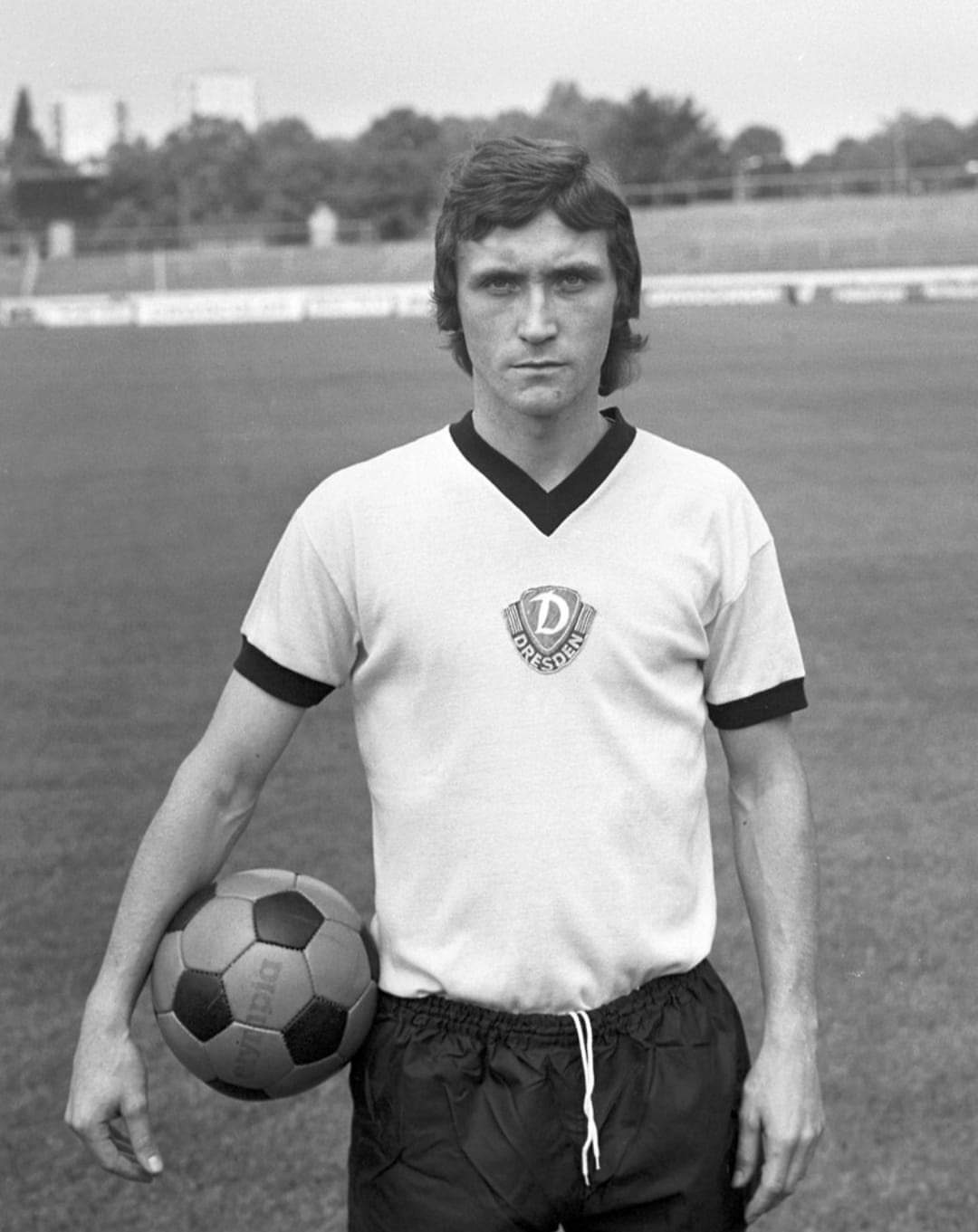
Bit of a trick question obviously but there is a grain of truth in it. As Bohemian Football Club progressed to the last 16 of the European Cup they were drawn against Dynamo Dresden, champions of East Germany and the dominant team there throughout the decade. It was a daunting mission, as we’ll see the Dresden side were packed with internationals and had reached the quarter finals of both the UEFA Cup and European Cup within the previous three years. Being drawn against Dynamo Dresden also meant another trip behind the “Iron Curtain”, something Bohs were getting familiar with having faced Eastern bloc sides in the past such as Polish Cup winners Śląsk Wrocław three years earlier. As well as a trip to face Gottwaldov in Czechoslovakia in the club’s first ever European tie.

But returning to Karl Marx, this was the moniker given by RTÉ commentator Philip Greene when watching one of Bohs’ young stars in action. It helped that Terry Eviston player on the left-wing, and that he was fairly hirsute in those days with a mop of curly hair and a beard, not unlike the famed German political-philosopher. As for the KGB? Well, that was a joking reference to a social group of the Bohs squad who palled around together, the K-G-B stood for (Tommy) Kelly, (Eamonn) Gregg, (Joe) Burke, the defensive backbone of the successful Bohs side of the 1970s.

But before the KGB could grab a couple of German lagers there were still some issues facing Bohemians that needed to be resolved. Having defeated Omonia Nicosia on away goals in the previous round Bohs now faced a difficult and expensive journey to Dresden, coupled with the fact the UEFA ban on using Dalymount for the home leg was still in place. The “home” game against Omonia Nicosia had taken place in Flower Lodge in Cork City and the Bohemians directors had been busy in the meantime trying to gain permission from UEFA to host the home leg closer to Dublin. They appealed against the diktat that the game must be played 150km from Dublin and successfully reduced the distance required as part of their ban to 80km.

According to the press reports the game in Flower Lodge, which attracted a crowd of roughly 4,500 had according to the club, cost Bohs £5,000 and hopeful of a successful appeal the club had already reached an agreement with Dundalk for the use of Oriel Park for the upcoming second round, first leg fixture against Dynamo Dresden. Luckily for the club, less than two weeks before the game their appeal was granted by UEFA President Artemio Franchi. Bohs were going to Oriel Park to face Dynamo Dresden and manager Billy Young encouraged the Bohs faithful, as well as the local Dundalk population to come out in force to support Bohemians.

At the forefront of the mind for Young, and the Bohemians’ Directors was the issue of finance. As mentioned, the previous tie in Cork had ended up costing the club £5,000 and this, coupled with the costs of getting to Dresden was eating into the profits made from the previous year’s league win, bumper gate against Newcastle and sale of winger Gerry Ryan. There costs weren’t insignificant, it is worth noting that the £5,000 quoted for arranging the home tie in Flower Lodge was more than the annual salary for someone on the average industrial wage at the time. Now, thankfully with a home venue secured and the distance to travel for the home games reduced Bohs could actually focus on the task at hand, trying to defeat Dynamo Dresden.

As for Dynamo Dresden they had a similar result to Bohemians, losing away, but winning at home to Partizan Belgrade, but with the scores from both legs finishing at 2-0 a penalty shoot-out was required to separate the teams. Ilija Zavišić missed the decisive penalty for Partizan while Udo Schmuck proved he wasn’t that type of Schmuck by scoring his spot kick for Dresden. It appeared that Dynamo weren’t taking Bohs lightly, in the week before the game they sent two club officials to scout on Bohs as they played Shelbourne in Tolka Park and were even planning on taping the game to analyse it. The Irish Press reported that this would have cost the German club in the region of £1,000 and of course the Dresden officials were referred to as “spying” on Bohemians. For his part Billy Young had been in contact with Liverpool’s Bob Paisley. Liverpool had knocked Dresden out of Europe the previous season 6-3 on aggregate, winning at Anfield but losing in Dresden. Paisley noted how strong they were at home as well as commentating on Dresden’s pace, intense fitness and good technical ability.

In the opening game in Oriel Park Bohs lined out as follows: Mick Smyth, Eamonn Gregg, Austin Brady, Tommy Kelly, Joe Burke, Padraig O’Connor, Gino Lawless, John McCormack, Turlough O’Connor, Paddy Joyce and Terry Eviston. The first half was fairly even as Dynamo seemed to be somewhat nervous, but as the second half progressed the East Germans began to push forward a bit more, winning a series of corners without ever really threatening Mick Smyth’s goal and being restricted to speculative long-range efforts. The media reports gave special praise to the solidity of the back four of Gregg, Burke, McCormack and Brady.

Next up was the daunting task of the away leg. That Bohs had failed to score and hadn’t looked particularly likely to threaten, coupled with the fact that Dresden were expected to be much tougher at home meant that most commentators had understandably written off Bohs chances of progressing. The squad flew out to Dresden with a stopover in Schipol. The over-riding first impression of Dresden in October was one of greyness, modern brutalist buildings alongside memorials to the Second World War seem to be particularly striking, all those spoken to for this piece mentioned the ruins of the Dresden Frauenkirche – an 18th Century Church destroyed in the infamous incendiary bombing of the city by Allied forces in 1945 that had killed as many as 25,000 people and utterly destroyed the city. The ruins of the Church had been left as a memento to these events before eventually being reconstructed after German unification.

Match programme vs Dynamo Dresden

As for the squad’s accommodation they were billeted in a set of holiday chalets outside of the city, usually a spot for families to flock to during the summer they were deserted as winter approached. Crucially they were also somewhat remote and secure and were under constant armed guard. The Bohs party were assured that this was for their protection. The squad also had official plainclothes chaperones to assist them, and keep an eye on them during their stay. Despite these efforts Terry Eviston recalls a leather jacket-clad character who approached the squad with promises to get them products of their choice in return for dollars or other western currency.

The armed guard and various official chaperones who were there to “protect” the team were by all accounts friendly enough though with limited command of English, and according to Billy Young graciously allowed the squad a bit of time to explore the city unsupervised in exchange for a bottle of Jameson whiskey. In fact the players seem to have had plenty of freedom with Tommy Kelly, Joe Burke and Eamonn Gregg (the KGB) managing to nip out for a pint and a bite to eat a couple of days before the game to a local restaurant, only to have to hide themselves behind a curtain in an alcove in the back when Billy Young and journalist Noel Dunne walked in!

What was highly impressive though to the Bohs players and management were the facilities available to Dynamo Dresden. While the club were nominally amateurs, Dynamo being a nationwide sports club for the East German police, meant that all the players were technically policemen or working in the wider police organisation, they were for all intents and purposes professionals, in receipt of better pay, better housing, cars as well as the opportunities for international travel that came with being part of one of the states elite Fußballclubs. A designation afforded only to the elite football teams in East German.

The team played out of the 33,000 capacity Dynamo Stadion, a huge open bowl which had four iconic floodlight pylons towering above it at an angle. The stadium had medical facilities on-site as well as gyms and dormitories nearby. A far call from Dalymount despite the nominal “amateur” status of Dynamo’s players.

This wasn’t the first time that Bohs had played against German opposition in Europe, though of the Western variety, the early part of the decade had seen Bohemians face FC Köln and Hamburger SV in consecutive seasons in the UEFA Cup. As with Dresden the players were blown away by the facilities available to the German clubs, though in this case the Köln and Hamburg players were overt professional outfits.

Tommy Kelly recalled a post match meal after being knocked out of the UEFA Cup by Hamburg, opposite Tommy was the Hamburg captain and German international Georg Volkert, with little English most of the conversation was carried out through a younger Hamburg player who asked Kelly and his Bohemian teammates how much they earned. Kelly recalled that his wages at Bohs were roughly £20 a week at the time, not unusual at a club were most of the players had day jobs. Deciding to inflate the figure he replied to Volkert that he earned £50 a week, when translated this drew surprise from Volkert who reportedly stated with a Naomi Campbell flourish, that he wouldn’t get out of bed for £50 a week. For context it’s worth noting that three years later Hamburg would break the German transfer record to sign Kevin Keegan, offering him a better salary than he was earning at Liverpool.

Dresden were of a similar standard as those sides, six of the gold-medal winning East German squad at the 1976 Monteal Olympics were provided by Dynamo Dresden. They defeated strong (nominally amateur) sides like the Soviet Union and Poland in the semi-final and final respectively. Dresden’s star sweeper Hans-Jürgen “Dixie” Dörner was routinely described as the “Beckenbauer of the East” and eight of the side that faced Bohemians were internationals.

The differences in the home and away legs was stark. During the first half Bohs had been solid in defence as Dynamo, cheered on by a capacity crowd who had begun flooding in hours before kick-off, had begun to exert greater and greater pressure. Bohs had been ably assisted by the oldest man on the pitch, goalkeeper Mick Smyth who had been pressed into service early and produced some remarkable saves. However, the valiant rear-guard action was finally breached by 19 year old Andreas Trautmann in the 29th minute after a goalmouth scramble. Dixie Dörner made it 2-0 with a shot from just inside the box just before half-time and it seems that Bohs knew their race was run by that stage.

In the second half Dynamo ran riot with a goal from Schmuck, a second from Trautmann, and two penalties scored first by Dieter Reidel and then by Peter Kotte. The Irish Press ran with the questionable headline of “Dresden, left in rubble after a bombing raid in 1945 saw another blitz last night when Bohemians were ripped apart”. While the wording may have lack sensitivity Bohs were indeed ripped apart in the second half, as can been seen even by the short clips of footage available. Dynamo Dresden can be seen moving with speed, purpose and precision as they head towards goal.

Billy Young was philosophical after the result, pointing out how well the team had done until conceding the first goal and praising the “blistering pace” of Dynamo Dresden, describing them as “undoubtedly the best side we have ever met in European competition”. Speaking to Billy recently that is a view he still holds to this day with one exception, that of Jim McClean’s Dundee United who so impressed the Dalymount faithful when they played in Dublin in 1985. Eamonn Gregg, who had just won his third international cap a week earlier described Dresden as “better than a lot of international teams I have seen. They always seem to have two or three players in space looking for the ball”.

Dresden in 1978 – photo courtesy of Terry Eviston

All that remained was the traditional post match dinner, held in one of the fine buildings of Dresden’s old town, rebuilt after the devastation of the war, there the players were introduced to the pleasure of quail egg soup while the club were presented with painting as a memento. Young left with the quote that he felt that Bohs had “learned a lot from the game which will help us at home in the championship”. Bohs would ultimately finish second that year, just two points behind Dundalk. This was of course the main benefit of Europe, exposure to good quality sides and new tactics and approaches as well as an excuse for a trip away and some team bonding. At the season’s close the costs of Europe were clear, the lack of proper “home” games and the cost of travel had reduced the club’s financial surplus from almost £45,000 to just under £17,000 a year later. The second place finish that year did however, secure a sixth consecutive season of European football which was ended after a 2-0 aggregate defeat to Sporting Lisbon in the first round despite and impressive scoreless draw in Portugal. Bohs wouldn’t return to European competition until the infamous games against Rangers in the 1984-85 UEFA Cup.

As for Dresden, perhaps they didn’t realise it but their decade of dominance was coming to an end. Their star striker Hans-Jürgen “Hansi” Kreische, who had played in the 1974 World Cup, had retired at the end of the previous season, he had been blacklisted by the national team because of a bet he had made about who would win the 1974 World Cup. The problem was less the bet (for five bottles of whiskey) but who he had made it with; Hans Apel, the new West German finance minister. Further fallings out with coaches and club officials at Dresden hastened his retirement aged just 30.

Apart from the loss of Kreische there was the small matter of Erich Mielke, head of the Stasi. As Dynamo were a police club they fell to an extent under his personal remit. In the 1950s Mielke had wholesale relocated the successful Dynamo Dresden squad to Berlin to play for Dynamo Berlin. Predictably Dynamo Dresden, shorn of their title-winning players were relegated and had to spend years in the wilderness until they were promoted back in 1962. Their further development and success in the 1970s did not please Mielke who wanted a successful club in Berlin, which he eventually got. From 1978-79 Dynamo Berlin would win ten straight league titles amid much controversy and accusations corruption, intimidating referees and preferential treatment of the club from the capital as Dynamo Berlin found success, but also hated outside their small, devoted fanbase.

Two other players involved in the games against Bohemians had careers cut short or diminished due to political decisions, midfield Gerd Weber and striker Peter Kotte, the man who had scored the sixth and final goal against Bohemians. As Alan McDougall writes, in 1981, while waiting to travel with the East German national team to South America, Weber, Kotte and another Dresden player Matthias Müller were arrested on suspicion of Republikflucht, i.e. attempting to defect from East Germany.

Weber, a gold medal winner in Montreal, was also a Stasi informant, who sent in over 70 reports on his teammates during his time as a player. This was not uncommon and there are estimates that up to a quarter of the players and coaches of top club sides in East Germany had been recruited as Stasi informers, however Weber had apparently used a recent UEFA Cup game against FC Twente to discuss a possible defection and move to FC Köln. Kotte and Müller were accused of knowing about this plan and failing to inform the authorities.

Gerd Weber

Weber was sentenced to almost two years in prison, serving nine months, was expelled from Dynamo and from his police job, and had any other privileges that he had accrued due to his position as a well known footballer removed, and was barred from football for life. Kotte and Müller would only spend a few days in jail but they were barred from playing football in the top two division for life.

While Dynamo Dresden would win two more East German titles in 1988-89 and 1989-90 and even make the semi-finals of the 1988-89 UEFA Cup, the reunification of Germany was not kind to them or to any of the Eastern clubs. After early seasons in the Bundesliga, huge debts saw the club relegated to the regionalised third tier, even dropping down a level further for a time in the early 2000s. At the time of writing the club are top of the third division, hoping to be promoted back to the second tier.

Bohs in Europe – the 1970s (Part II)

In the programme notes to the Newcastle United game in Dalymount Park the Bohemian F.C. President John McNally extended the usual welcome to the visiting team. He even went a little further, promising Newcastle that “they will be the recipients of a true Irish ‘Céad Mile Fáilte’.” As we’ve seen the Part I of this modest series that Hundred Thousand Welcomes was replaced with bottles, bricks and beercans, culminating in a Garda baton charge and several arrests.

In a time of escalating violence at matches throughout Europe, UEFA had to intervene. The result was to exile Bohs from Dalymount for the duration of the following seasons (1978-79) campaign in the European Cup. All Bohemians “home” games would now have to take place 150km from Dublin.

Bohemians were drawn against Omonoia Nicosia of Cyprus in the first round of the European Cup, with the away leg in Nicosia’s GSP stadium coming first. This wasn’t to be the first time that Omonia would face Irish opponents in Europe. In only their second season in Europe, Omonia were drawn against Waterford in the 1972-73 European Cup, narrowing defeating the Suirsiders 3-2 before being heavily beaten by Bayern Munich in the following round. Two years later there was to be another European first round meeting with an Irish team, this time Cork Celtic but that match never took place.

To understand why this match never happened, and to understand a bit about Omonia and society in Cyprus at the time it is worth looking at the origins of the club. Today, Nicosia is the capital and largest city in Cyprus. It was also home to APOEL F.C. (their name being an acronym that translates as Athletic Football Club of Greeks of Nicosia) to date the most successful football team in Cyprus who were founded in 1926. Omonia were formed as a breakaway from APOEL in 1948. This arose after a telegram sent by the APOEL board to the body that governed amateur athletics in Greece which criticised what is described as a Communist, National Killing mutiny. This was a reference to the ongoing Greek Civil War fought between factions backed by the United Kingdom on one side and the Communist states of Yugoslavia, Bulgaria and Albania on the other. There was a view that Communists were less likely to be sympathetic with the aim of Enosis – a nationalist union with the Greek mainland and other Greek communities in the Meditteranean.

There were protests at the decisions of the APOEL board from athletes, especially in the football section, but these players were expelled by the board with the reported comment of Get out of our stadiums, build your own, and enrol in the Russian Federation of Football. While no club enroled in with the Russian Federation a new club was indeed formed from this schism only a month later. Omonia Nicosia was born, Omonia meaning amity or peaceful friendship in Greek. Within five years Omonia were a league side and by the 1960-61 season had won its first league title. It was however, the 1970s when the club really came to dominance as they won seven Cypriot league titles and three cups through the decade.

It was during this period of success that Omonia were due to meet Cork Celtic and a little later Bohemians. The Cork match never happened however, because in July 1974, just two months before the opening rounds of the European Cup were due to take place, there was a Coup d’etat in Cyprus. Makarios III, the first President of Cyprus, who was also an archbishop in the orthodox Christian Church of Cyprus, was ousted by a right wing, nationalist group called EOKA-B, who were supported by the military junta that was ruling Greece at the time. In dramatic events the usurpers claimed that Makarios was dead, however, he had managed to escape to London with help from the RAF. As the Greek puppet regime took power and began a crackdown on supporters of Makarios, the Turkish military invaded Cyprus, ostensibly to protect the Turkish communities on the island. These effectively separated the mostly-Turkish area of Northern Cyprus from the rest of the island, and created a de facto new state. Understandably against this violent backdrop even European Cup games took a back seat and Cork Celtic got a walkover, only to be beaten 7-1 in the next round by Soviet Top League winners Ararat Yerevan.

Cork, and the military situation in Cyprus are both themes that we’ll return to, but back to Bohs. The first leg in Cyprus was due to take place on September 13th with the “home” leg due to take place two weeks later. A new venue, 150km from Dalymount and agreed by UEFA had to be arranged. Eventually, Flower Lodge in Cork was agreed upon. Nowadays, a GAA ground known as Páirc Uí Rinn, Flower Lodge had been home to Cork Hibernians and after they folded it became the home for another Cork-based League of Ireland side, Cork Alberts.

But before the Bohs faithful would have to travel to Cork there was the small matter of the away leg. Omonia had been knocked out of the European Cup at the first round stage in each of the previous three seasons, the previous season they had been beaten 5-0 on aggregate by Italian giants Juventus. Omonia weren’t without some quality however, they possessed a dangerous striker in Sotiris Kaiafas, who had won the European Golden Boot in 1976 and during his career would be top scorer in the Cypriot league on no fewer than seven occasions. The Cypriot FA would name Kaiafas as their Golden Player (best player of the last 50 years) at the UEFA Jubilee Awards in 2004. Kaiafas had been born in the Northern Cypriot town of Mia Milia and was forced to flee after the Turkish invasion, eventually relocating to Nicosia.

Sotiris Kaiafas

Omonia wore green and white and featured a shamrock on their crest so fitted well into the role of rivals for Bohs. While by chance, Shamrock Rovers were paired against Omonia’s great rivals APOEL in the Cup Winners Cup. Arriving in Cyprus a main concern for Bohs’ manager Billy Young was making sure that the squad didn’t over-indulge with the sun-bathing in the sweltering heat of Cyprus in September. The conditions were one of the biggest obstacles facing the team with the Irish Independent worrying about the players “battling against the heat and humidity”.

Early in the game Bohs had more than just the oppressive weather to worry about with the Omonia winger Andreas Kanaris scoring after just twenty minutes. Bohs had started the game well and were having the better of the match to that point but Kanaris, who was his team’s stand-out player on the day latched onto a header from Kaiafas to get the game’s opener from five yards out. Despite this setback Bohs started to press and again and towards the break forced Omonia into conceding consecutive corners, from the second of these Terry Eviston whipped in a cross which was only partially cleared, and fell to Pádraig O’Connor who struck a rocket of a low volley in from 25 yards out, a goal his brother would have been proud of.

Parity wouldn’t last long however, early in the second half during a Omonia attack the ball ricocheted off the Bulgarian referee and into the path of Filippos Dimitriou who scored from ten yards out. The Bulgarian referee came in for some criticism from the Bohs’ players and Irish journalists after the game for favouring Omonia who were also coached by a Bulgarian. Despite these two goals, Mick Smyth had surprisingly little to do in the game, with the conditions beginning to tell and the Bohs players “almost out on their feet at the finish” the game finished as a 2-1 win for Omonia. The narrow margin of defeat and the away goal were something that Bohs were happy with, confident that even if it wasn’t to be Dalymount that they would do the job back in Ireland, a 1-0 win would suffice.

Billy Young summed up the mood simply by saying “I believe we will do it”, before going on to say how “tremendously proud” he was of the players who because of the heat “were almost on their knees but never stopped battling”. The media reports, despite the narrow defeat were full of praise for the Bohs players, especially John McCormack, Joe Burke, the tireless Paddy Joyce and 19 year old Gino Lawless.

While Bohs were optimistic about making the next round, Omonia (or their club secretary at least) was incredibly downbeat, Simos Loizides when interviewed after the game, and quoted in the Irish Press had this to say;

We don’t particularly want to go into the second round. It will give us too many problems, for our league championship starts next month and that must be our priority. I doubt if we can beat or even draw with Bohemians in Ireland.

Simos Loizides, Omonia Nicosia

After the match the Bohemians party had a somewhat unusual reception to attend. As mentioned the political situation in Cyprus was tense and the violent coup, followed by the Turkish invasion of the island had taken place only four years earlier. As a result there was a large UN peacekeeping force deployed on the island who invited the team and officials back to the officer’s mess for food and drink. An offer gratefully accepted by Bohemians. A Colonel Walker was the man in charge and the Quartermaster, a man named Mills was more than generous with food, and indeed with drink.

The cost of said drink at the bar in the officer’s mess was incredibly cheap, according to Billy Young bottles of Scotch whiskey could be bought for a £1 so it is safe to say that the players indulged a bit, according to Tommy Kelly the Quartermaster even surreptitiously billing some of the cost of the drink consumed by him, Joe Burke and Eamonn Gregg and put it on the Colonel’s personal bill. Terry Eviston was good enough to share some of his photographs from the away trips from around this time and you can see the squad members laden with bags and bottles, all purchased at a heavy discount at the UN base, about to board the plane for the flight home.

The Bohemian FC squad, with gifts aplenty, preparing to fly back from Cyprus (courtest Terry Eviston)

Despite the statements from the Omonia club secretary there was still the small matter of having to win the “home” leg of the tie, due to be played in Flower Lodge. The Lodge was at the time a larger ground than Turner’s Cross but the crowd that attended the game was far smaller than the bumper attendance at the Newcastle match in Dalymount the previous year. Just 4,500 thousand made the trip to Cork for the game. The conditions were far different from Cyprus, it was obviously much cooler, but the game was also played in a strong wind.

To make matters more surreal the Bohs team had to change in the nearby Cork Constitution Rugby club and walk the short distance to Flower Lodge. While Bohs may have started brightly in the Cypriot sun things were a bit more nervy down in Cork, as Omonia started well, the main threat being winger Kanaris and Kaiafas up front. Despite showing off his skills Kaiafas was well shackled by Bohs’ Joe Burke, who denied him time and space near goal, and forced Cyprus’s international No. 9 to play much deeper.

While defensively things were sound both teams were cancelling each other out in a close, tense and not particularly attractive match, but Bohs needed that all important goal to go through. Gradually though Bohs began to exert greater pressure on Omonia, with a strong wind at their back Bohs began to pour forward more and more, before finally on twenty-seven minutes when Turlough O’Connor laid on a pass to young Paddy Joyce, who bore down on Loukas Andreou’s goal before a calmly slotting the ball passed the keeper. With an hour still to play Bohemians were though to the second round of the European Cup, they just needed to remain focused and avoid conceding.

Joyce was described by teammate Terry Eviston as a world-beater on his day, his good form that season saw him (and Gino Lawless) called up to the Ireland Olympic squad who were attempting to qualify for the Moscow 1980 tournament. Joyce scored in the game against Norway to put the Irish on the cusp of qualification but two late Norwegian goals saw them secure the qualifying spot. The Norwegians would later join the boycott of Moscow ’80 and their place in the football tournament was ultimately taken by Finland.

Returning to Flower Lodge and although Omonia tried hard to get back into the game Bohs seemed content to stifle them. Eamonn Gregg effectively shutting the winger Kanaris out of the game in the second half, while Joe Burke continued to frustrate Kaiafas. Despite a late chance for the substitute Petsas, Bohs defensive resilience won the day. The club had made the last sixteen of the European Cup for the first time. Awaiting them was a trip behind the Iron Curtain with the formidable Dynamo Dresden as their opposition.

Bohs in Europe – the 1970s (Part I)

The 1970s saw Bohs first forays into European competition. The decision taken in 1969 to abandon the strict amateur ethos of the club, observed since its foundation in 1890 paid immediate dividends with victory in the 1970 FAI Cup and secured entry to the 1970-71 European Cup Winners Cup. Given the club’s name it was somehow appropriate that our first opposition should come from what is now the Czech Republic. Over the course of the decade Bohs would qualify for European competition eight times, and would see the club enjoy its first victories. The focus of these articles are the dramatic campaigns of 1977-78 in the UEFA Cup and the 1978-79 European Cup.

The 1976-77 League season had seen Bohs finish second, a point behind Sligo Rovers who won just their second ever title. It was a young, talented Bohs side, packed with players who would go on to have successful international careers, and some who had already been capped by their country. That second-place finish secured qualification for the following season’s UEFA Cup, now rebranded as the Europa League. European football in the 1970s was quite a different place from today, the splintering of the USSR and Yugoslavia into their constituent parts was still decades away and nations like the Faroe Islands or Andorra were not yet represented in European competition. With a smaller number of nations there was no qualifying round and no group stages, qualifying meant entry into a straight knock-out, first round tie and a potential draw against a European heavyweight.

There was the dilemma here for Irish clubs, whether to hope for a smaller, more obscure team, and a better opportunity to progress, or the desire for a big name in the draw and a potential bumper home gate. It’s worth noting that in this era Europe was generally a drain on club resources, prize money was not nearly as significant to an Irish club as it is today and getting drawn against a little-known side from Eastern Europe could end up being hugely costly to a club’s finances. The biggest draws for an Irish club, then as now, were British clubs, well known to the Irish public and almost guaranteed to draw a big crowd even if the chances for progression were slim.

It was against this backdrop that Bohemians were drawn against Newcastle United in the opening round of the 1977-78 UEFA Cup, with the first leg being a home-tie in Dalymount. From a Bohs point of view this had the potential to be a lucrative tie, Newcastle had finished fifth in the First Division the previous year and would be well known to a Dublin audience, while the away trip to Newcastle could be done at relatively low cost. Billy Young, the long-serving Bohs manager during this period recalled that the club made all their travel arrangements through a travel agent named “Mrs. Chisholm” and while she couldn’t always arrange the most direct route, she always arranged the cheapest! For Bohs away trip this would entail a flight to Leeds, and after some delays, a coach to Newcastle.

The Bohs squad for those games against Newcastle was one of the strongest of the decade, in goal was Mick Smyth, the veteran of the team at 37, he was hugely experienced and successful, having starred for Drumcondra and Shamrock Rovers before joining Bohs, he’d also been capped for Ireland against Poland back in 1968. In front of Smyth were the likes of full-back Eamonn Gregg, who would win eight international caps during his time as a Bohs player, and later manage the club, Tommy Kelly, another vastly experienced player who still holds the club record for most appearances for Bohemians, on the left of defence was Fran O’Brien, a pacey, attacking player from a footballing family, he would win three caps for Ireland and ended up spending the majority of his career playing professionally in the United States. These were supported by the likes of the imposing Joe Burke, and classy defender/midfielder John McCormack, inevitably nicknamed “The Count”.

The Bohs midfield set up might strike current fans as familiar, there was a focus on using the flanks as avenues of attack, helped by the fact that in the shape of Gerry Ryan and Pat Byrne they had two of the best wide men in the League. Both players would win numerous caps for Ireland, Ryan would later star for Derby County and Brighton while Byrne enjoyed spells with the likes of Hearts and Leicester City, but is probably best known for his time with Shamrock Rovers (boo!). Up front was the peerless Turlough O’Connor, another Irish international, he would set goalscoring records for Bohs not broken until the time of Glen Crowe, and would finish the 1977-78 season as the league’s top goalscorer. Turlough would later succeed his erstwhile teammate Eamonn Gregg as Bohs manager in 1993.

The Bohs team of 1977-78

This group was ably assisted by players of the quality of Padraic O’Connor (brother of Turlough), Tony Dixon, Eddie Byrne, Niall Shelly and Austin Brady. As mentioned, the side was coached by Billy Young, a stalwart player for Bohs during the club’s amateur era in the 1960s. Young would take the managerial reigns at Dalymount in 1973 and stayed in charge through to 1989!

To ensure a bumper crowd for the Newcastle match the Bohemians committee decided to reduce the standard entry fee for the game, the Irish Independent reporter Noel Dunne went so far as to say that Bohs were offering the cheapest football in Europe with fees ranging from £2 for a stand ticket down to 50p for a spot on the terraces. The pulling power of an English team and cheap tickets had the desired effect and Dalymount welcomed almost 25,000 spectators for the home leg. Bohs were able to field an almost full strength side apart from Joe Burke who missed out having scalded his foot in a workplace accident (not something that the opposition side would likely have had to deal with). The Bohs XI were Mick Smyth, Eamonn Gregg, Fran O’Brien, Tommy Kelly, John McCormack, Padraic O’Connor, Pat Byrne, Niall Shelly, Turlough O’Connor, Eddie Byrne and Gerry Ryan.

Ryan especially was a thorn in the side of Newcastle, going close early on with a long-range shot, and helping create the best chances for the game for Bohemians thanks to his excellent link-up play with Pat Byrne and Turlough O’Connor. While Bohs had enjoyed some decent opportunities in the first half Mick Smyth was called into action to make crucial saves from Micky Burns and it took a last-ditch Eamonn Gregg clearance to deny Irving Nattrass. However, the performance was about to become of secondary importance in proceedings. With the sides still at 0-0 at the break, trouble began to flare when the Newcastle players returned to the pitch for the second half.

Newcastle squad photo taken from the game’s match programme

With Newcastle keeper Mike Mahoney taking up his position in goal in front of the school end of the ground there was a barrage of missiles and he was struck in the head by a beer can and play was suspended so that Mahoney could receive treatment. But that was just the beginning. Trouble began to flare between Bohs supporters in the tramway end and Newcastle fans in the main stand, chants, provocation and missiles flew back and forth. The Newcastle Chronicle reporter John Gibson claimed that the spark had been the unfurling of a Union Flag by some Newcastle fans which was met with anti-British chanting by the home fans, followed by fans hurling more than insults. With only fourteen minutes of the second half played the referee withdrew the players to the relative safety of the dressing rooms. In the interim additional Gardaí had arrived at the ground and there were baton charges to restore order. Post-match reports stated that a Garda and several others were injured and that five arrests were made at the game.

After some semblance of order had been restored the players returned to the pitch to complete the game with the crowd of almost 25,000 in what was described as a somewhat “unreal” atmosphere. The reports of the actual football, and conversations with both Billy Young and Tommy Kelly who were involved in the game, as Bohs manager and player respectively, recall a competitive game full of good football. Kelly remarked on the quality of player that Newcastle had, like Alan Kennedy who would achieve fame as a European Cup winner with Liverpool, Northern Irish international David Craig, and his Scottish namesake Tommy Craig. Indeed, Bohs had a great opportunity to win the game with twelve minutes remaining only for Mahoney (now patched up) saving after an excellent Bohs move put Turlough through on goal.

As was often the case with League of Ireland sides in Europe a decent home result and performance wasn’t enough to get Bohs through the tie. A flight to Leeds and a delay in getting the coach to Newcastle meant that the Bohs side arrived late in the Evening before the away leg, not ideal preparation. The coach had also stopped to collect the Derby County manager Tommy Docherty who had also attended the game in Dalymount. Docherty was a larger than life character, and hugely popular within the game, he had won the FA Cup a year earlier with Manchester United but had been sacked after beginning a relationship with Mary Brown, the wife of club physio Laurie Brown. Docherty was keen on signing two of Bohemians’ outstanding players, left-back Fran O’Brien and winger Gerry Ryan. Both players were in demand and indeed Newcastle had made offers for both players around this time.

Aware that there was competition for the players’ signatures Docherty was adding a personal touch. He was well-known to the Bohs committee, during his time with Manchester United he had signed the likes of Gerry Daly, Mick Martin and Ashley Grimes from the club, and was keen to make some key additions now that he found himself managing at the Baseball Ground. After the home leg in Dalymount, he had asked Billy Young if he could buy the players a drink, Young agreed and Docherty proceeded to order bottles of champagne for the Bohs players, before catching a private flight back to Derby.

The away leg was to be a let-down for Bohs, though Tommy Kelly remarked that the squad travelled with a certain level of confidence, feeling unlucky not to have won the first leg, the Magpies were a different prospect on home turf. They also welcomed back Alan Gowling to the starting eleven and he and Tommy Craig proved the match-winners, both scoring a brace to hand the Geordies a 4-0 win on aggregate. Within two days of the away leg newspapers were announcing that Derby County had signed Gerry Ryan and Fran O’Brien for a combined fee of £75,000 (£40,000 for Ryan and £35,000 for O’Brien), and that the players would merely be flying back to Dublin to collect belongings before moving to their new club. Speaking to Fran O’Brien he claimed the fact that Derby was close to Nottingham, home to his brother Ray who was playing for Notts County, influenced his preference in choosing Derby over the Magpies.

However, a supposed issue with O’Brien’s medical halted the move though what the issue was wasn’t made clear to O’Brien or Bohemians. Whatever the concerns from the Derby medical, Fran O’Brien would enjoy a long and successful career. He joined the Philadelphia Fury in the NASL a year later and played alongside the likes of Alan Ball, John Giles and Peter Osgood, he also became the first player to be capped for Ireland while playing in the United States.

Ryan would only spend a year at Derby before falling out with Docherty and moving to Brighton for a fee of £80,000, double what Bohs had been paid for his services a year earlier. He was to become a fan favourite at Brighton and joined a significant contingent of Irish internationals there including Tony Grealish, Michael Robinson and Mark Lawrenson. He was kept out of the starting XI for the 1983 FA Cup Final by fellow Dubliner and future Shels player Gary Howlett. Ryan would go on to win eighteen caps for Ireland before an injury aged 29 effectively ended his career.

Gerry Ryan during his time with Brighton showing off the souvenirs collected during his international career.

In the UEFA Cup Newcastle would lose their next tie 5-2 on aggregate to Corsican side Bastia, a masterclass by Dutchman Johnny Rep in St. James Park where he scored twice in a 3-1 sealed the Magpies fate in the competition. A week later their manager Richard Dinnis, a man promoted from his role as coach to manager at the insistence of a sizeable proportion of the Newcastle squad, was sacked. The former Wolves manager Bill McGarry was eventually appointed in his place but he couldn’t save Newcastle from finishing second bottom and being relegated. Dinnis would later end up as coach with Philadelphia Fury where he would manage Fran O’Brien, the player he had just previously tried to sign from Bohemians.

As for Bohemians, the season couldn’t have finished more differently to their Geordie opponents, they would finish top of the sixteen team League of Ireland, pipping Finn Harps to the title and seeing Turlough O’Connor as the League’s top goalscorer. Victory also secured entry to the following season’s European Cup, however the crowd trouble at the Newcastle game cast a long shadow and would have consequences for the club.

Tommy Kelly had described the trouble are less violent than that which had accompanied the game against Rangers in 1975, and Billy Young also said that the Bohs’ predicament could have been worse were it not for the intervention of Paddy Daly who had been looking after the UEFA observer at the game. Sensing the tension in the air at the game he ensured that the UEFA official left for the club hospitality before half time and delayed him returning for the second half, meaning that he missed some of the worse incidents of trouble. However, such was the scale of the disturbances action was going to have to be taken.

The Minister for Justice, Gerry Collins TD had demanded an inquiry into the game. The findings were heavily critical of Bohemian Football Club, saying the club hadn’t employed “sufficient Gardaí” while An Garda Síochána stated that Dalymount was no longer suitable for matches of this type, that the “roof of the St. Peter’s Road stand is in danger of collapse” and that “wire around the pitch is cut in several places, and missiles are easily available on waste ground within the stadium”. UEFA were not much kinder in their appraisal; they criticised the supporters “dangerous and violent behaviour” making specific reference to the injury to Mahoney, the Newcastle goalkeeper.

It is worth contextualising the violence at the match, this was not an issue unique to Bohemians, or indeed to Ireland, at the same disciplinary meeting where Bohemians were sanctioned, fines and suspensions were also issued to Manchester City over issues arising from the behaviour of their fans and players. Hooliganism was an issue across European football, and tensions between teams from the League of Ireland and those from Britain and indeed the Irish League also took place amid the backdrop of horrific violence in the North, this was perhaps most famously encapsulated during the 1979-80 European Cup tie between Dundalk and Linfield and indeed by the return to Dalymount of Glasgow Rangers in 1984.

The punishment handed down by UEFA was that the ties for the forthcoming European Cup campaign would have to be played away from Dalymount. The club’s “home” matches would have to take place at a minimum distance of 150 kilometres from Dublin.

Despite this ban the “home” legs for the 1978-79 European Cup would bring a qualified level of success for Bohemians, as we’ll see from part two…

With special thanks to Billy Young, Tommy Kelly and Fran O’Brien for sharing their memories of the era.

From Love Street to Gartcosh in the year of ’86

By Fergus Dowd

In the bowels of the Celtic Park dressing room Daniel Fergus McGrain pinched the skin on his arm and inserted the needle in at a 45-degree angle, leaving the syringe in place for the prescribed five seconds.
Outside the Jungle swayed to the sounds of ‘Off to Dublin in the Green’ and ‘Roamin in the Gloamin’ as the Glasgow Old Firm prepared to welcome in 1986.

Sadly, there were no cameras to capture the atmosphere a dispute between television companies and the Scottish Football League resulted in no coverage of football in Scotland between September 1985 and March 1986. At the same time down south, English football also faced a TV blackout while then prime minister Margaret Thatcher proposed the demonising and draconian football ID scheme making it an imprisonable offence to attempt to attend a game without requisite identification.

Among the throngs that January day at Celtic Park was one Frank Bradley, he witnessed thirty-six-year-old McGrain, a diabetic, roll back the years in a man of the match performance as the Celts won out two to nil. Joe’s forefathers had left Co. Donegal and settled in Coatbridge nine miles from Glasgow, close by was the Gartcosh steelworks where his father and many relations had worked – the steelworks would put food on the table for many families in surrounding villages such as Glenboig, Muirhead and Moodiesburn.
With its origins in the Woodneuk Iron Works, which was established in 1865, Gartcosh was eventually turned into a cold reduction strip mill in 1962 by the time Joe’s father joined the payroll. Mr. Bradley and his colleagues would form the steel into flexible sheets that would be shaped into finished products such as automobile components or kitchen sinks.

As Britain joined the European Union in 1973 opening up foreign competiton and the oil crisis plundered economies worldwide, the steel industry contracted. In 1979 as Mrs Thatcher was preaching St. Francis of Assisi on the steps of No. 10 thousands of Scottish steelworkers were wondering how they would support their families as employment in the industry detoriated from a high of twenty-five thousand plus to eighteen thousand a twenty-five per cent decline.

As Danny McGrain continued to tame Rangers main threat Davie Cooper filling in at left-back to accommodate Paul McStay’s brother Willie who played on the right for the New Year’s 1986 fixture – Tommy Brennan and colleagues were planning to march from Gartcosh to the House of Commons in London. They would leave on January 3rd in the snow performing relays to make London in ten days ahead of a House of Commons debate on the steel industry in Scotland; on the first night as they landed in Peebles the tempearture was minus 20.

The workers would successfully achieve their goal, however, on arrival at Downing Street they were greeted by Margaret Thatcher’s staff outlining the so-called Iron Lady was too busy to meet them.
Brennan would lead the men on the road for another mile as they handed their petition signed by twenty thousand Scots into the Queen’s aides at Buckingham Palace. Gartcosh the size of three football pitches would never open again and Ravenscraig steel works where Brennan worked would fold within six years.
Within twelve months of the march Hibs fans The Proclaimers would stand in Elstree Studios, London and sing about a ‘Letter from America’ and on the cover of the single for the world to see was Gartcosh.

For McGrain Scottish bigotry reared its head in stopping him joining his boyhood heroes Rangers his surname leading the local Ibrox scout to believe like Frank Bradley he was of Irish Catholic stock.
The McGrain’s lived in Finnieston an area made famous by the giant cantilever crane, which was like a beast in the skies, its primary purpose to lift tanks and steam locomotives onto ships for export.
Built of granite Daniel Fergus McGrain signed for Celtic in May 1967 twelve days before Jock Stein led eleven Glaswegians to immortality in Lisbon.

He would become part of the Quality Street gang of Dalglish, Hay, Connelly and Macari, his tough tackling and versatility would make him one of Scotlands greatest ever full backs. In those early years after making his bow at Tannadice against Dundee United in a League Cup fixture McGrain would have instant success as Celtic won the league in 1971 and 1972 – a fractured skull that season would put a slight dent in his progress. By 1974 as Celtic were on the cusp of winning nine league titles in a row, he was diagnosed with diabetes which for many can hinder their life never mind a sporting career.
The bearded one from Finnieston worked around his condition becoming a role model for others.

One of his finest hours came in 1979, as Margaret Thatcher was getting used to her new surroundings, McGrain was leading Celtic to a last day championship victory against the blue half of Glasgow. It was a Monday night, the 21st of May, again there were no cameras as a technician’s dispute meant the game would not be televised, a Celtic win would mean the league title. In an atmosphere you could cut with a knife Danny McGrain wore the captain’s armband in the same arm that he would inject to save him from disease and death.

Alex MacDonald silenced the Celtic faithful after nine minutes putting his name on the scoresheet, an instumental cog in Rangers Cup Winners Cup success of 1972 – by 1986 he would be manager of Heart of Midlothian and come within seven minutes of leading the Edinburgh side to a league title.
Ginger haired Johnny Doyle would seek retributon on MacDonald seeing red before half time, only two years later Celtic’s second son of Viewpark would be gone killed in an accident while rewiring his loft at home.

As the Celtic faithful sipped on their half time bovril the championship seemed destined for Ibrox, however, rallied by McGrain the ten men in green and white had other ideas. With an hour and six minutes on the clock Roy Aitken equalised and within another eight minutes bedlam ensued across two thirds of Parkhead as George McCluskey put McGrain’s men in the lead.

In a see-saw tie Bobby Russell equalised for Rangers sending twenty-five thousand blues into delirium believing again the domestic league trophy was headed across the city to Govan. Alas, with five minutes to play a McCluskey cross was cut out by the 6ft 4inch frame of Peter McCloy sadly for the Gers keeper he succeeded in only touching the ball onto the head of Colin Jackson who directed the ball into his own net – cue pandemonium around Celtic Park.

In the dying embers of the game midfielder Murdo McLeod scored the greatest Old Firm goal ever witnessed in the East End of Glasgow as he found the postage stamp of the Rangers goal with a strike sent from the heavens. As the Celtic faithful celebrated another title Daniel Fergus McGrain led his charges on a lap of honour around the famous hallowed turf as Rangers players lay all around him.

The New Years fixture of 1986 was a much straight forward affair for McGrain and Celtic and as Frank Bradley left the stadium for home his thoughts were of his neighbours, friends, and the imminent death of Lanarkshire’s most famous industry. It had only been nine months since Thatcher and her policies had crushed ‘the Enemy Within’ – mining communties across Britain with hundreds of years history were wiped out.

Within four months as Gartcosh lay empty, Alex MacDonald now manager of Hearts had created a team at Tynescastle that was on the cusp of the championship; moulded around Sandy Clark, Gary Mackay, and John Robertson. On the 3rd of May 1986 exactly sixteen weeks since Tommy Brennan had left for London Heart of Midlothian went to Dens Park while Celtic made the short trip to St. Mirren’s Love Street on the final day of the season – the TV cameras were back in situ. The mathematics were straightforward Hearts had to avoid defeat while Celtic needed a Dundee win and they needed to beat the budgies by 3 goals or more.

The men from Parkhead netted five times with Maurice Johnston, who would cross the religious divide of Glasgow, scoring one of Celtic’s greatest ever goals, while at Dens Park step forward Celtic fan Albert Kidd in the final seven minutes netting twice to break Jambo hearts.

St Mirren versus Celtic 3rd May 1986 Love Street Paisley football Celtic win league championship title on last day of season fans celebrate after invading pitch

In in his Lime green strip in the post match celebrations McGrain holds a bottle of champagne pouring it into the mouth of teammate Roy Aitken – McGrain had captured his ninth individual league title medal, it would be his last. Within one year nearly twenty years after he had walked through the doors of Celtic Park Danny McGrain was handed a free transfer; there was talk of a coaching role, but nothing materialised, it would be a decade before he would return.

In an interview thirty years after the march Tommy Brennan said about Britain’s first female prime minister:
‘So, for Mrs Thatcher I will say she brought the salmon back to the Clyde. By shutting the industries on either side of the river she cleaned it up. There you are.’
Where once Frank Bradley’s father and his relations earned their shillings today Gartcosh steel mill has been replaced by the police’s Scottish Crime Campus at a cost of £82million.

Thirty-two years after Love Street nearly to the day Daniel Fergus McGrain was found slumped in the driving seat of his car by police after going into hypoglycaemic shock – he survived – Celtic’s greatest number two still defying the odds.