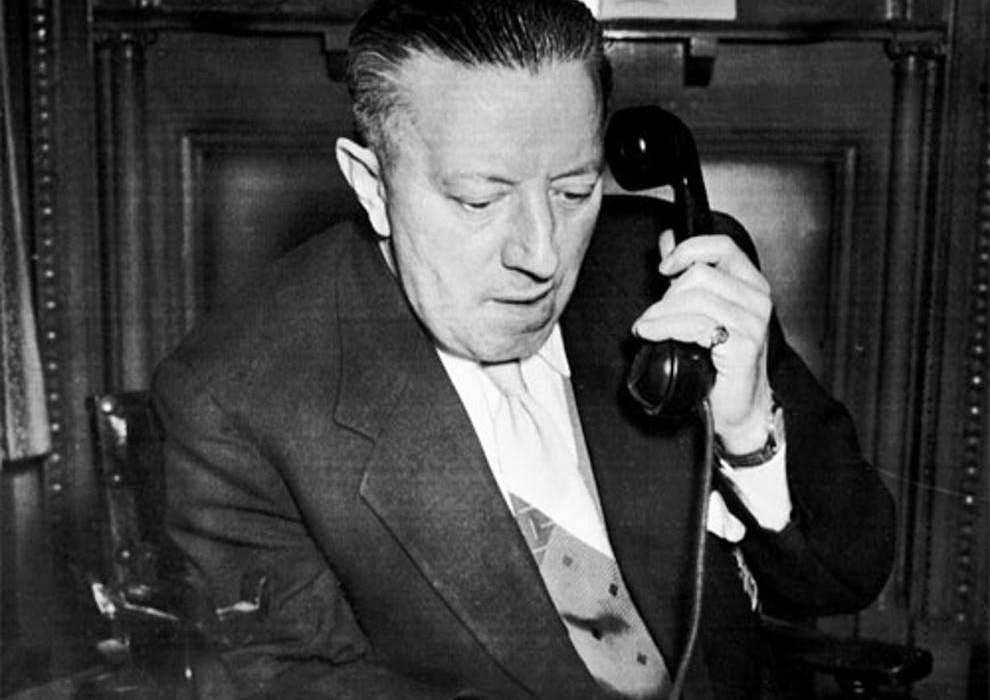
Jimmy Murphy – y dyn a achubodd Man United
By Fergus Dowd
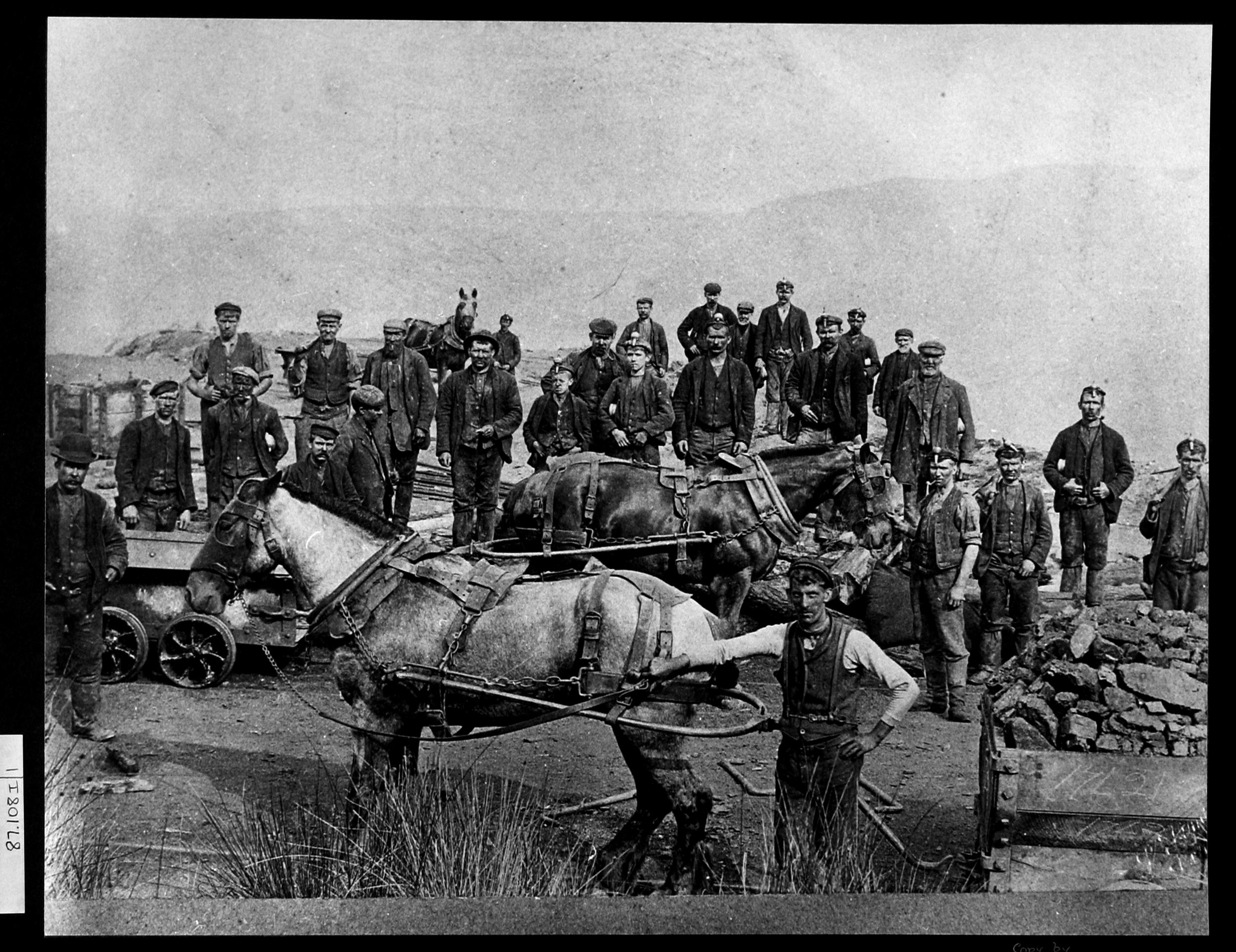
For fifteen months David Davies had searched the Rhondda Fawr for a workable seam, digging into his pockets all he had left for his efforts was a single half crown. Davies stood in front of his workforce and spun the coin into the air, ‘that’s all I’ve left’ he roared, as the men flurried towards it. Impressed by his gesture his workers agreed to work on without pay. On the seventh day as they continued to dig with no wages, a massive seam of the best quality steam coal was found.
It was 1866 and the discovery would lead to the survival of the Maindy Colliery in Ton Pentre, Davies men had sunk the first mine in the village only two years earlier. The workers would be honoured with the construction of the Ton Pentre Miners Insititue in 1895 on Church Road, it would become both a meeting place and an educational venue.
Football arrived in the village in 1903 when Ton Pentre AFC were invited to part take in the Welsh second division. It was a game the valleys would immerse themselves in by 1907 the names of Meredith, Roose and Morris would roll off the tongue as Wales became British Home Champions. Billy Meredith would go on to found the players union with Charlie Roberts he had started his working life down the pits of Black Park in Wrexham at the age of twelve as a pit pony driver; the animal was used underground in the mines.
Leigh Richmond ‘Dick’ Roose was one of the best goalkeepers to ever play for the land of David; his handling skills would lead him to become one of the most skilled grenade throwers during World War I; he would perish at the Somme in 1916. Grenville Morris was known as the prince of the inside lefts and to this day is Nottingham Forest’s all time top goalscorer. Three summers after this great success another protégé was born at no. 43 Treharne Street in Ton Pentre, his name James Patrick Murphy.
William Murphy his father of Irish stock had left the family farm in Ballynunnery, Co. Carlow as thousands of his countrymen died from starvation due to the great famine, he spent his days underground, as a coillery repairer in the mine founded by Davies. The Pentre village primary school opened its doors in 1874 and by 1917 as the sky was full of German led James Patrick Murphy sat in the classrom and on his break James Patrick Murphy kicked the inflatable bladder (used as a football) in the school yard.
Within nine years as Wales were winning their third British Home Championship the boy fom Treharne Street was wearing his country colours in a youth game against England. It was 1924 and that same year unemployment among coalminers rose from 2% to a high of 28.5% in August 1925; the village of Ton Pentre would like many other places in Wales be affected. The decline in the demand in coal was caused by the high exchange rate of sterling and increased coal production elsewhere, while the loss of European markets such as Germany who were paying reparations in coal after the great war ended did not help.
All this would be exacerbated by the Wall Street Crash of 1929 which would lead Wales to become one of the most depressed countries in the world with 42.8% of males unemployed. A year before the crash James Patrick Murphy would leave the valley of Ton Pentre for the black country, he was seventeen and West Bromwich Albion football club beckoned.
The longest serving manager in English football history Fred Everiss signed the young Welsh teenager, Everiss had began life at the Hawthorns in 1902 and would remain as secretary-manager of the club until 1948. West Brom had been founded in 1878 by local workers from the George Salter’s spring works and Everiss had led them to their first and only topflight title to date in the first season after the great war in 1919-20.
As young Jimmy signed on the dotted line West Brom were now in the second division after being relegated in 1927. He would join a team which included Jimmy Cookson, who started life with Salford Boys Club, notching up thirty-eight goals in season 1927-28 as West Brom finished eight. Murphy would have to bide his time with only sporadic game time in that glorious season of 1930-31 for the Throstles as the club would win promotion only the goal scoring exploits of legendary Dixie Dean and Everton stopping them finishing top of division two.
James Patrick Murphy would watch on at Wembley as the Welsh Guards band struck up God Save The Queen as ‘Ginger’ Richardson would write himself into black country folklore with a Wembley brace defeating midland rivals Birmingham City 2-1 in the FA Cup Final of 1931 – Richardson had started life on the buses in Hartlepool playing for the United Bus Company.
Within four years and before he had reached his mid twenties James Patrick Murphy would stand on the hallowed turf of Wembley stadium in front of 93,204 as Bert Frogg blew his whistle for the start of the 1935 FA Cup Final. This time there would be no silverware for the baggies as Sheffield Wednesday’s Ellis Rimmer scored twice late on to break black country hearts as the owls ran out 4-2 victors. Rimmer had scored in every FA Cup round prior to the final and joined the Hillsborough outift in 1928 heavily influencing their ‘Great Escape’ that year as they picked up seventeen points out of possible twenty to remain in division one.
On the international front James Patrick Murphy made his bow at half back for Wales in the annual home championship at the Racecourse ground in Wrexham on November 16th, 1932, against England. One of his teamamates that day was Dai Astley who would go on to manage Inter Milan to second place in Serie A in 1948; Guiseppe ‘Peppino’ Meazza who the San Siro stadium is named after had departed as manager that year. Murphy would be part of the first Welsh team to venture across the channel playing France on European soil in May 1933; the game was played in the Stade de Colombes in Paris, which would stage the 1938 World Cup Final. Tom Griffiths opened the scoring for Wales and in the side was Murphy’s Albion teammate Walter Robbins, who as a teenager, while working in the local brewery, had netted 70 goals for Ely United in the Cardiff district league a record to this day. A famous victory would be denied when Jean Nicolas equalised with ten minutes remaining, Nicolas would make twenty-five appearnaces for France scoring twenty-one times and would net twice for France in the 1938 World Cup.
On St. Patrick’s Day 1937 in Wrexham, William and Florence Murphy would sit in the stands of the Racecourse ground and watch James Patrick Murphy win the British Home Championship for Wales. The men from the valleys had defeated England 2-1 at Ninian Park, Cardiff in their first game with Seymour Morris, who would go on to work in a tool factory in Crickhowell after hanging up his boots, scoring the winner. Pat Glover scored a brace at Dens Park, Dundee in the second game as Scotland were defeated on home soil by the same scoreline. This meant a victory over Ireland would give Murphy and his teammates a clean sweep, Glover again scored twice followed up with goals by Bryn Jones and Fred Warren. Alex Stephenson (still the only man capped by the FAI as a senior international to ever line out for Glasgow Rangers) scored a consolation goal for Ireland in a 4-1 demolition.
It was only the second time the British Home Championship trophy was lifted, it had come into being in 1935 constructed in celebration of King George the V’s silver jubilee, up until then players received engraved pocket watches.
War would eventually bring an end to Murphy’s playing career before he reached his thirtieth birthday, he would make more than 200 appearances for West Brom, leaving the Hawthorns for Swindon Town as the world braced itself for conflict. Like many others James Patrick Murphy would join the war effort in the face of fascism, as a seargent based in Bari, Italy organising troops sports games and coaching clinics.
On one occasion Matt Busby who had been offered the Manchester United job after the war witnessed the Welsh man give a passionate and rousing speech on football and tactics to the young troops. Busby was from the Scottish mining town of Belshill at the age of six he had lost his father to a sniper’s bullet in Arras, France in 1916 – he like Jimmy arrived into the world in 1910. During the second world war his service required him to coach in the Army Physical Training Corps, spending six years as an army P.E. conductor.
From 1946 – 1976 both men worked alongside each other forming one of the greatest ever partnerships in football transforming Manchester United from mediocracy to one of most dominant teams domestically and in Europe. In James Patrick Murphy, Busby had a man who developed a youth structure that included Edwards, Whelan, Taylor, Hamilton, Charlton, Best and many others – a conveyor belt that would bring glory and delight to every Stretford Ender. It would also be tinged with tragedy as the Munich Air Disaster destroyed a team full of fervour and youth; a team that was ready to conquer all.
In 1956 James Patrick Murphy became manager of Wales he would lead his country to the World Cup with names such as Charles, Allchurch and Jones starring on the road to Sweden ’58. On the 5th of February 1958 Wales played Israel as Manchester United went to Belgrade to face Red Star in the European Cup; on this occasion James Patrick Murphy would not sit beside Matt Busby on the plane or have the hotel room next to him like on every previous away trip.
Instead in the cauldron of Ninian Park with ‘bread of heaven’ in his ears being sang by 38,000 Welsh souls, Murphy would watch on as Ivor Allchurch opened the scoring in the 76th minute while Cliff Jones added a second four minutes later. That night Wales would qualify for the World Cup and James Patrick Murphy would become immortalised in Welsh football history. The next day he would leave Cardiff by train for Manchester carrying a box of oranges a present from the Israeli team; on arriving at Picadilly station James Patrick Murphy would take a taxi to Old Trafford.
On arrival at the stadium Murphy would make his way to the boardroom all around there was silence, in front of him stood Matt Busby’s secretary Alma George with tears in her eyes; uttering the words ‘The plane has crashed. A lot of people have died, Jimmy’. James Patrick Murphy went to his office and James Patrick Murphy cried his eyes out.
The next day James Patrick Murphy flew to Munich witnessing at firsthand the suffering and the heartbreak; listening as Duncan Edwards mumbled ‘Oh it’s you Jimmy? Is the kick-off three o’clock? And looking on as his great friend Matt Busby lay in an oxygen tent.
James Patrick Murphy returned to Manchester with survivors Harry Gregg and Bill Foulkes with the words ‘Keep the Flag Flying’ in his ears. In utilising youth team players, he had been nurturing through the central league augmented with only two new signings; James Patrick Murphy stabilised a club that was on its knees.
Under his guidance Manchester United would reach an FA Cup final and the semi-final of the European Cup, all this while he came to terms with the loss of men, he had nurtured on the football fields of England. ‘It needed someone who, though feeling the heartbreak of the situation, could still keep his head and keep the job going. Jimmy was that man.’ Sir Matt Busby. For many years Nick and Paul Muphy have walked to Old Trafford passing the holy trinity and the Munich clock, but nothing of their relation.
In May 2021 with campaigning by six Manchester United supporters’ groups and endorsed by James Patrick Murphy’s family – the football club James Patrick Murphy saved from the brink agreed in principle to construct a statue in his honour.

 A Bohemian Sporting Life