The tail-gunner at full-back

Bohs during the War years

At the outbreak of the Second World War League football ceased in Britain almost immediately, the 1939-40 League season was only three games old when it was suspended and a full league season wouldn’t be completed until the end of the 1946-47 season. This robbed many talented players of the peak years of their careers. However, in neutral Ireland football continued as usual, or as usual as possible in the midst of a bloody and truly global conflict. There may have been food and petrol rationing but the early and mid-40’s gave the League of Ireland one of it’s most dominant ever sides, Cork United, who won the league five times between 1940 and 1946.

For Bohemian F.C. the 40’s weren’t to be their most successful era, victory in the League of Ireland Shield in 1939 and an Inter-city cup win in 1945 were pretty much all that the era provided in terms of silverware but as always the club was developing players who would rise to prominence elsewhere. While I’ve written previously about the likes of the famous O’Flanagan brothers perhaps a less well known story is of Paddy Ratcliffe, a talented full-back for Bohemians who enjoyed a good career in the English League, but by even having a career at all he had cheated death and defied the odds.

From the printers to Dalymount

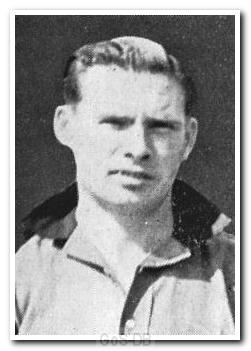
Patrick Christopher Ratcliffe, better known simply as Paddy Ratcliffe was born in Dublin on New Years Eve 1919. Paddy was the son of Bernard and Bridget Ratcliffe. Bernard was a postman but he had also served in the British Army, joining at the age of 18 in 1904 and serving in the Royal Artillery. He later rejoined to serve during World War I.

Patrick first appears on the footballing radar as a player for Hely’s F.C. which was likely the works team of Hely’s stationers and printers of Dame Street. Hely’s were a large and prominent business in Dublin at the time and as well as selling stationery they also had a line in sporting goods, so you could buy a tennis racquet or fishing rod along with your pens and ink. Hely’s is also mentioned in Ulysses as a former place of employment for Leopold Bloom.

Paddy Ratcliffe is mentioned as having left Hely’s F.C. to sign for Bohemians in August 1939, he made his first team debut the following month in a 2-1 win over Jacob’s in the Leinster Senior Cup. The League season began in November of 1939 and Paddy was an ever-present as Bohs playing all 22 games at left-back games as Bohs finished eighth that year. He was also part of the Bohemians side that defeated Sligo Rovers to win the league of Ireland Shield for 1939-40. The following season saw significant improvement in the league with Bohemians finishing third, Paddy played 25 games across all competitions but only 10 in the league, the reason for this fall in appearance numbers had nothing to do with a loss of form however, because in 1941 Paddy Radcliffe joined the RAF to fight in the Second World War. Newspaper reports announced in April 1941 that Paddy had played his last game for Bohemians, and like his father before him he was off into the violent theatre of global conflict.


Paddy the POW

Paddy joined the RAF and became the tail gunner on a Lancaster bomber, Paddy’s role as a tail-gunner saw him sit in an exposed turret at the very rear of the plane, operating four heavy machine guns which would play a crucial role in the defence of these heavy bomber planes. It was also an incredibly dangerous job, the tail-gunner was a particularly vulnerable target to lighter, more maneuverable, fighter plans, there were risks of frostbite from flying at such high altitude often with open panels, and the small, cramped rear turret could be awkward to escape from in the event of an emergency.

Lancaster_tail_gunner_IWM_CH_12776

A tail-gun turret from a Lancaster bomber (source wikipedia)

Not everyone came home from the Lancaster bombing raids over Germany,  for example the Lancaster was the main bomber used in the famed Dambusters attacks of Operation Chastise in May 1943. Of the 19 Lancaster bombers deployed eight were shot down over Germany. A similar fate befell Flight Sergeant Paddy Ratcliffe during one of those bomber missions when his plane was shot down over Germany. Paddy was lucky to survive as he had two Nazi bullets in his leg but he was destined to see out the War as a POW in Stalag 357 in North-western Germany. In these particular POW camps over 30,000 prisoners (the vast majority of them Soviet prisoners) died over the course of the War.

Irish newspaper reports from September 1943 even went so far as to express remorse at his death as it must likely have been assumed that Paddy and his crew had perished over Germany.  We don’t know if even his family knew he had survived. But thankfully Paddy did survive the war and after hostilities had ceased he was straight back into the Bohemians team for the 1945-46 season. While playing usually in the position of left-back he also lined out as both an inside left and scored his only goals for Bohemians in a Shield game from that position.

Lancaster_VR-A

A Lancaster Bomber ( source wikipedia)

A return to football

Ratcliffe’s performances in the early part of the season were impressive enough to secure a move across the water to Notts County as they prepared for a return to post war football. Notts County’s manager was Major Frank Buckley who had known Ratcliffe’s first manager at Bohemians, George Lax. Like Ratcliffe, Lax had also joined the RAF during the War. Perhaps it was on the recommendation of George Lax that Ratcliffe was signed? Paddy may also have come to their attention from playing wartime matches as there are reports of him lining out for the likes of Rochdale during 1942.

Either way, his spell with Notts County was short, by the time the first full, post-war league season was underway in 1946-47 Paddy had signed for Wolverhampton Wanderers. He joined Wolves as part of a deal that also brought forward Jesse Pye to Moulineux for a combined fee of £10,000. Pye would enjoy great success at Wolves scoring 90 times for them, including a brace in the FA Cup final which brought the cup to the black country. He was even capped for England in the famous Goodison Park game when they were defeated 2-0 by Ireland. Paddy, however, would only make two appearances in the English top flight before moving to Plymouth for the 1947-48 season.

This meant that Paddy had to drop down to Division Two to ensure more first team football. He made his Plymouth debut on the opening day of the season in August 1947 against Newcastle in front of a crowd of more than 50,000 in St. James’s Park. Paddy’s first two seasons were ones of mixed fortunes, he played only 25 league games in his first two years, and while he got a better run of games in the 1949-50 season (playing 21 games) Plymouth finished second bottom of the Second Division and were relegated to Division Three South.

Success and a first taste of the Big Apple

Despite the relegation the following seasons were some of Paddy’s best, he became the undisputed first choice as a right-back and began to contribute goals as well, becoming a regular penalty taker for the side. In the 1951-52 season Plymouth Argyle finished as Champions in Division Three South and kept clear of relegation when back in the Second Division. In fact Plymouth came fourth in the second tier in 1952-53 with Paddy as a regular. This remains Plymouth’s best ever league finish.

In the 1953-54 season there were greater challenges for Plymouth, they finished in 19th place in Division Two, only three points clear of relegation but they did take part in an ambitious end of season tour to eight cities across the the USA. Paddy boarded the Ile de France at Southampton on the 27th April 1954 and set sail for New York. The Plymouth Argyle tour would see them face local sides like Simpkins of St. Louis, the Chicago Falcons and various “All-Star” teams, as well as randomly playing two games against Borussia Dortmund in Chicago and then Los Angeles. The games against Dortmund were the only games which Plymouth lost on their tour where they racked up easy wins including a 16-2 trouncing of a supposed “All-Star” team in Denver. The tour ran through to the beginning of June when the Argyle signed off their visit with a 1-0 win over a New York All-Stars team in Astoria, Queens.

A short quote from “Irish soccer player” Paddy Ratcliffe appeared in the Big Spring Daily Herald of West Texas in June of 1954 where he asked what his impressions were of the United States. A somewhat wide-eyed Paddy described his experiences as follows: “Every city I’ve seen is like London at rush hour. Life here is a bit too strenuous for me. You Americans don’t take holidays. You don’t relax and lounge around. But you seem to have more fun. At home we’re in bed by 11. That’s when you people are going out”.  An interesting first impression as we’ll later see.

The 1954-55 season was another tough one for Plymouth. They escaped the drop by a single place. The 1955-56 season was to be Paddy’s last in English football, he had been a regular up until this point but by the start of the season he was 35 years old and new manager Jack Rowley (a superstar as a player in his time with Manchester United) preferred others in the full-back berths. Paddy would only make 8 appearances that season as Plymouth were again relegated from Division Two. In all he had made 246 appearances and scored 10 goals for the Pilgrims.

Despite spending most of his career playing at a decent standard Paddy was never selected for Ireland, this is especially surprising given his versatility in either full back position. There were some suggestions that he should be called up aired in the newspapers, in the Dublin Evening Mail in 1953 and from “Socaro” the football correspondent in the Evening Press.  The Irish selectors had the chance to watch Paddy in the flesh when he lined out one final time for Bohemians in May 1952. He was playing in a memorial match for the Jimmy Dunne, the legendary Irish striker who died suddenly in 1949. Dunne had played and coached Shamrock Rovers but had also been Paddy’s coach during his last spell with Bohs in 1945.  A Rovers XI played a Bohs XI in Dalymount just before a national squad was picked for the upcoming game against Spain but Paddy never got a call up. Guesting for that Bohs XI were the likes of Tom “Bud” Aherne and goalkeeper Jimmy O’Neill who did feature in the heavy 6-0 defeat to Spain just two weeks later.

In America

While he may never have gotten that cap for Ireland and his career in England had come to an end with Plymouth this wasn’t the final act in Paddy’s footballing career. The tour of the United States had obviously made a big enough impact on Paddy and he decided to up sticks and move to the United States with his young family. Paddy had married a Dublin woman named Olive Privett in 1946 and they set off for a new life in Los Angeles in 1957. They moved to the Lawndale area of Los Angeles with their four children (two girls and two boys) and Paddy began a career in the printing business, becoming print foreman of Palos Verdes newspapers and occasionally penning articles in its pages about the beautiful game. Paddy also continued playing for a Los Angeles Danish side well after his 40th birthday, only hanging up his boots in 1962. He was also involved in coaching young American talent in football of the association variety. He even took time to catch up with former professional colleagues when they visited the United States, entertaining his old adversary Stanley Matthews when he was on a tour of America.

paddy-as-california-danes.png

Paddy going for a header on the soccer pitches of Los Angeles

Despite being somewhat of an evangelist for soccer in the States, Paddy’s son Paul shone as a varsity American football player, lining out as a quarter back for his high school. When quizzed about the American variant of the sport, Paddy described it as “a daffy game –  they call it football but a specialist comes on to kick it maybe ten times in a 60 minute game. How can they call it football?”

Paddy passed away in October 1986 at the age of 66 and was buried in Los Angeles. He had begun his career with Bohs before the War, lived a perilous existence as a rear-gunner on an Allied Bomber, survived the deprivations as a prisoner-of-war in Nazi Germany and returned to have a successful footballing career in Britain, despite having a pair of German bullets in his left leg. Even after his playing career had ended he began a new life and trade in the United States believing it presented the best opportunities for his young family but never forgetting where he came from or the sport he loved.


Once more, thanks to Stephen Burke for his assistance on Paddy’s early life and Bohs career, and for more on Paddy’s career at Plymouth check out the excellent Vital Argyle website. Featured image is from the profile of Paddy in the Greensonscreen website.



Paddy – bottom right in the Bohemian team

Bohs v Rovers: The biggest rivalry of them all

Bohs versus Rovers, what was the first flashpoint that turned a local game into one of the biggest rivalries in Irish sport? Well to understand we need to travel back almost a century.  Over the course of the month of April 1923 Bohemian F.C. and Shamrock Rovers played each other four times in various cup competitions. As the old saying goes “familiarity breeds contempt” and the final of these matches almost ended in violence after two Bohemians players had to be stretchered from the field due to rough tackling by Rovers. At the final whistle, the Bohemians’ half-back Ernie Crawford removed his jersey and challenged Rovers star forward Bob Fullam to a fist-fight. Crawford was born in Belfast and was the full-back and Captain of the Irish Rugby Team, he was also a decorated World War One veteran. Not a man to be taken lightly.

Fullam himself was no shrinking violet, as well as being an accomplished footballer who was capped twice by Ireland he supplemented his income as a docker in Dublin Port. He had finished the 1922 FAI Cup final amid a mass brawl after Rovers were beaten by St. James Gate. The fighting only ceased when the brother of the Gate’s Charlie Dowdall reportedly confronted Fullam with a pistol.

Could we perhaps trace the beginnings of perhaps the fiercest rivalry in Irish football back to these events in 1920’s?

In the early decades of football in Ireland the Dublin Derby were the games contested between Bohemians and Shelbourne. Both clubs had been founded in the 1890’s with Bohemians finally settling into their permanent home in Dalymount Park in 1901. Shelbourne had their beginnings in what is now Slattery’s Pub at the junction of South Lotts Road, Bath Avenue and Shelbourne Road in 1895. Founded by a group of dock workers from the local Ringsend/Sandymount area, their name was reportedly decided upon by a coin toss between the names of the various nearby streets. It was these two clubs who would have the great north -south city rivalry of the city.

By the 1904-05 season Shelbourne and Bohs were the only Dublin-based clubs who were competing in the Ulster dominated Irish League and they faced off against each other in the final of the 1908 Irish Cup which Bohs won in a replay. This was the first time the final had been contested by two Dublin sides.

Bohs didn’t even face Rovers in competitive games until 1915. In a Leinster Senior Cup first round tie on the 9th January 1915, Bohs won 3-1 thanks to a hat-trick by forward Ned Brooks. Later that same year the Rovers were elected to the top division of the Leinster senior league, their second game at this level was against Bohs where they again lost 3-1. This game came just two weeks after Rovers young centre-back James Sims died tragically in a shipping accident in Dublin Bay. At this time Bohs great rivals were still very much Shelbourne F.C.

By the early 20’s the FAI had split from the Belfast based IFA and founded a new league for the clubs in the nascent Irish Free State. Shamrock Rovers didn’t compete in the League in that first season but they made their mark, reaching the Cup final against eventual double winners St. James Gate. The following season they were elected to the league and finished as Champions.

The 20’s would begin an era of fierce competition for Bohs and Rovers, before the decade was out both clubs would have 3 league titles apiece to their names. Rovers would have also begun a run which would establish their reputation as “Cup kings” by winning the FAI Cup five years in a row. The first of those five-in-a-row titles would begin with victory over the holders Bohemians in the 1928-29 final in Dalymount Park. The initial game finished 0-0 but in the replay Rovers ran out 3-0 winners, with two goals coming from John Joe “Slasher” Flood and another from that man again Bob Fullam.

On 22nd April 1945, almost exactly 22 years since the tussle between Ernie Crawford and Bob Fullam and 16 years since their last cup final meeting Bohs and Rovers met again in Dalymount Park in the final. To date it is the last cup final meeting of the pair and remains the biggest attendance ever for an FAI Cup Final. Depending on which estimate you read there were anything from between 39,000 and 45,000 packed into the famous old ground that Sunday afternoon. Among Bohs ranks was the Irish international Kevin O’Flanagan, newly qualified as a doctor. He had an untypically poor game that day, perhaps due to the fact that he’d failed to diagnose himself with the flu and had played the game with a 103 degree temperature! Podge Gregg, the Rovers centre-forward broke Bohemian hearts in the second half as he converted from a Mickey Delaney cross to score the game’s only goal. On the Rovers bench that day as coach was a man well familiar with the fixture, Bob Fullam.

By the time of that final Bohs star was already on the wane. Their strictly amateur status meant that they tended to bring through and develop players before losing them to other Irish or cross channel clubs who were prepared to offer professional terms. As just one example the following year Rovers lost the FAI Cup final with four former-Bohemians in their line-up; Frank Glennon, Noel Kelly, Charlie Byrne and goalkeeper Jimmy Collins. The team that defeated Rovers in that 1946 final was Drumcondra F.C. For the next two decades as Bohemians drifted towards the lower reaches of the league table the great north-south Dublin rivalry would be between Drumcondra and Rovers in what many view as the competitive peak of the League of Ireland.

Between the end of the 40’s and the early 60’s Drumcondra would see players of exceptional quality grace Tolka Park. Among them future Ireland legends Con Martin, Eoin Hand and Alan Kelly Snr. as well as the likes of Tommy Rowe, “Kit” Lawlor, Christopher “Bunny” Fullam, Ray Keogh, Dessie Glynn, and Jimmy Morrissey to name but a few. They would win five league titles and another two cups. In Europe, they would knock out Danish side Odense from the Fairs Cup and also face the likes of Atletico Madrid and Bayern Munich.

Rovers would claim three more titles in the 50’s. This was the era of player-manager Paddy Coad and his exiting young side that became known as Coad’s Colts and featured the likes of Liam Touhy, Paddy Ambrose and Ronnie Nolan. The matches between Drums and Rovers, whether in Tolka Park or at Milltown were huge fixtures in the sporting calendar. Well before TV coverage became the norm and when direct experience of British football was through occasional newsreels and the odd pre-season friendly or player guest appearance, the Rovers/Drums rivalry capturing the sporting imaginations of the Dublin sporting public in a way that has happened seldom since in relation to the League of Ireland.

As this great rivalry played out during the 50’s and into the 60’s Bohs were very much in the back seat. However, in the early 1960’s they experienced a turnaround in fortunes thanks in no small part to their new manager Seán Thomas. He was the man who had just led Rovers to the 1963-64 league title but quit after a bust up with the club’s owner’s, the Cunningham family. His next port of call was Dalymount Park where he helped revive the fortunes of the struggling Bohemian club. In his first season Bohs finished an impressive 3rd place, a huge improvement on 12th the year before.

By the end of the 60’s the Bohemian membership had decided to make the biggest change in their history. They were going to scrap their amateur status and begin paying players. The policy quickly began to pay dividends. Only a year later Bohs would win their first major trophy in almost 35 years when they defeated Sligo Rovers in a 2nd replay of the FAI Cup final. Among the Bohs XI were a number of seasoned pros, which included  several names more than familiar to the Rovers faithful, among them Ronnie Nolan, Johnny Fullam and the first professional Bohemian, Tony O’Connell.

Over the course of the next decade Bohemians would win another two league titles and another cup during a relatively fallow period for Rovers. Despite bringing in Johnny Giles as player-manager (and a certain Eamon Dunphy as player-coach) and signing Irish international Ray Treacy a solitary FAI Cup was all their reward. Things would change by the beginning of the 1980’s. Manager Jim McLaughlin, backed by the finances of the Kilcoyne family brought unprecedented success to Milltown and in some ways the basis for a lot of the modern enmity with Bohs crystallised in these years.

By the early 70’s Drumcondra were on the wane before their League spot was eventually taken over by Home Farm. With the disappearance of Drums from League football so went over 20 decades of a great footballing rivalry. A resurgent Bohemians in the 1970’s meant a rekindling of an old enmity that had never truly disappeared. While as we’ve seen earlier players swapping the red and black of Bohs for the green and white hoops of Rovers has never been particularly uncommon many Bohemians supporters with longer memories still clearly recollect the movement of several significant players from Dalymount to Milltown. From the 70’s, 80’s and into the 90’s many prominent players such as Pat Byrne, Terry Eviston, Paul Doolin and Alan Byrne all made that journey southside which tended to create a certain amount of rancour amongst Bohs supporters.

It should be mentioned that the movement wasn’t totally one-way, and that (whisper it) even the legendary Jackie Jameson began his footballing career at Shamrock Rovers before making his name at Dalymount in the 1980’s.

Despite the success of the Jim McLaughlin era the 80’s were also a time of disharmony for Rovers. Owner Louis Kilcoyne decided to sell the club’s home ground of Glenmalure Park in Milltown which would then be developed for houses and apartments. Glenmalure had been home to Rovers since the 20’s and the fans acted swiftly by forming the pressure group KRAM (Keep Rovers at Milltown). Their actions however couldn’t halt the sale of the ground and the by the late 80’s Rovers had migrated northside, first to Tolka Park and then, for two seasons to Dalymount Park, home of arch-rivals Bohemians. No doubt a galling episode for the small group of supporters who chose to attend games in the Phibsborough venue, tenants to their great adversaries.

The 90’s were to be fallow years for the Hoops, a solitary league title in the 1993-94 season, when the club were playing their games in the RDS was the sole silverware of note. The club had plans to relocate to a permanent new home in the south Dublin suburb of Tallaght as far back as the mid-1990’s but it was to be almost another 15 years of wandering before Rovers would kick a ball at a completed Tallaght stadium. In the meantime, the intervening period contained more lows than highs, including examinership and a first ever relegation in the 2005 season. But there were a couple of notable victories against their old rivals Bohemians, perhaps the most pleasing would have been Rovers 1-0 win thanks to a Sean Francis goal in Dalymount in 2001. That victory sent Rovers briefly to the top of the league but it also meant that they had defeated their great rivals in their own back yard on the 100th anniversary of the opening of Dalymount Park. Rovers may have viewed that as some form of revenge for a result earlier that year which has gone down as one of the most storied in League of Ireland history.

That particular game took place on the 28th January 2001 in the then-home of Shamrock Rovers, Morton Stadium, Santry. Rovers then managed by Damien Richardson swept into a commanding 4-1 lead by half-time having got their first goal through Tony Grant only two minutes into the game. At half-time Bohs manager Roddy Collins gave a rousing team-talk, exhorting his charges to go out and “win the second half” what followed has gone down in legend for Bohemians supporters.

Five second half goals followed unanswered from Alex Nesovic, Dave Morrison, Mark Rutherford and a brace from Glen Crowe. Bohs left the pitch 6-4 winners and on a roll. Many players from that side have credited that result as part of the impetus that would see Bohemians haul back league leaders Shelbourne and finish up winning the double by the season’s end.

Today whenever the two sides meet they is likely to be action and drama and plenty of colour and pageantry in the stands. There have been times when footballing passions have spilled over as happened all those years ago with Crawford and Fullam. In 2003 Rovers were forced to move from their then-base of Richmond Park in Inchicore after crowd trouble during a match against Bohemians. A year later at a match in Dalymount former Hoops Tony Grant and James Keddy who had just signed for Bohemians were greeted with a torrent of abuse, then pig’s feet and finally a large pig’s head was thrown onto the pitch. A not so subtle message from the Rovers faithful about what they thought of Grant and Keddy’s move cross-city. Grant, interviewed by the Sun newspaper several years after the event described the Derby games in this way,

That game, it’s a religion to the supporters, it’s a cult, it’s what they live for. It’s the same for both sets of fans.

The noughties did nothing to diminish the rivalry between the two. The move to Tallaght stadium was to revitalise Rovers who took the title in 2010. Despite being in the ascendance and Bohs encountering financial troubles of their own the Derby games have remained wildly unpredictable. While recent seasons have been dominated by exceptional Dundalk and Cork City sides the Bohs v Rovers rivalry remains the biggest game in the Irish football calendar.

This article first appeared on the SSE Aitricity League website and in the “Greatest League in the World” magazine, issue one with artwork by Barry Masterson.

The method in the miracle

The German city of Kaiserslautern sits only a short distance from the French border and close to the edge of the vast Palatinate forest. It’s a city whose history of settlement stretches back into prehistory but after the end of the Second World War the city lay in ruins with as much as 60% of its buildings having been reduced to rubble by aerial bombardment in late 1944. When American troops reached the city in 1945 they faced little resistance. The area around the city later became home to thousands of occupying American and French troops, a legacy that continues to this day in the US air force base at Ramstein. It would not be dismissive to say that for all the other qualities the city of 100,000 possesses it is probably best known for it’s football team 1. FC Kaiserslautern. A side that have been German champions on four occasions and provided the backbone of Germany’s most iconic national teams.

Plenty of notable players have turned out for the Red Devils in the past, among them Youri Djorkaeff, Michael Ballack, Andy Brehme, and a name familiar to English fans, Stefan Kuntz. But head and shoulders above all these players stands Fritz Walter, captain of the Kaiserslautern side that won two league titles in the 1950’s and who, along with four of his club teammates helped an emergent West Germany lift the 1954 World Cup after the famous “Miracle of Berne” victory over the Hungarians.

Miracle is an often overused word in sporting parlance, every mildly unexpected result tends to be recast as some sort of David and Goliath struggle but even competing at the World Cup was an achievement for the West German side.

Kaiserslautern being so badly damaged by the end of the war was not an uncommon fate for many German cities directly after the war. By 1954 the new state of Rhineland-Palatinate where Kaiserslautern were based had only existed for eight years having as part of French Occupied Germany. The neighbouring state of Saarland was still a separate entity under French direction and was on course to be established as an independent state. In the otherworldly post war landscape the West Germans had even played against Saarland (formerly one of their constituent parts) as opponents in their qualifying group. The pace of rebuilding was slow in Germany and subject to the caprices of the various occupying powers. Millions of displaced, ethnic Germans had fled into West Germany from what is today Poland and the Czech Republic seeking homes, jobs, even the bare minimum of food and warmth. Multiple families crowded into cellars, the last habitable remains of a decimated building stock in the ruins of German cities. The civilian death rate in the immediate post war period was several times what it had been in the late 30’s immediately before the war. Those prominent German footballers who had escaped the war relatively unscathed quickly went back to the game (when permitted by the various occupying allied forces) competing in numerous friendlies with local sides in exchange for foodstuffs, coal and even fabric for jerseys. Teams without proper kit often found themselves draped in red and white shirts as they tailored discarded Nazi flags and banners into football shirts.

By the end of the 1940’s there was something approaching a return to league football in Germany but not in the form of the Bundesliga that we would recognise today. Football in Germany was still regional with the best teams of the five West German regional top-level divisions qualifying to play off for the German championship. Full professionalism was still prohibited, players had to have a day job and be able to demonstrate that this was their primary labour, not football.

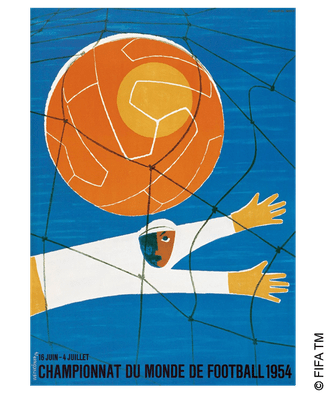
The ’54 World Cup was being held in Switzerland because it was one of the few countries that had escaped the horrors of war relatively unscathed, it was safe and prosperous enough to host a World Cup. Fritz Walter had been a soldier in that war, his coach Sepp Herberger had tried to protect him and his teammates as best he could, he thought that an Air Force regiment would offer the best protection for his star player. It was commanded by a Major Graf, a football lover who appreciated Herberger’s desire to protect a key player like Walter. For the most part Herberger was right, Fritz Walter played more than 20 wartime international games for Germany while with the armed forces, however as the war progressed and the Germans losses mounted Fritz and his colleagues were pressed into more active service.

It was while on active duty with the air force that he contracted malaria, then later towards the very end of the war he was captured and faced the very real possibility of being transported to a Soviet labour camp in Siberia. It was only the intercession of a football loving guard who recognised Fritz during an impromptu kick-about which saw his name removed from a list of those bound for the Soviet camp. His footballing prowess had saved his life.

Also on the pitch that day in Berne was Fritz’s brother Ottmar, or “Otte” as he was affectionately known. He had finished the Second World War with shrapnel throughout his body, but particularly in his right knee. He was lucky even to be alive, as a member of the Navy his ship was sunk near Cherbourg and only 11 of the more than 130 crew survived. The worsening condition of Otte’s ruined knee would end his career in 1956. Apart from the brothers Walter, three further Kaiserslautern players took to the field in the final. Though dominant in the early 50’s they had shocked the German football public when they were hammered 5-1 in the final of the German football championship by the unfancied Hannover 96.

Fritz’s malarial blood didn’t like the heat of the central European summer so the cooler, wetter weather of the final was a blessing, the type of weather when he could play his type of game, to try and dictate the flow of play much as the roving Nandor Hidegkuti did for the opposition. Some to this day call it Fritz Walter weather.

Apart from Toni Turek, his goalkeeper, Fritz was the oldest man on the pitch, it was nearly seventeen years since his debut for his hometown team, FC Kaiserslautern as a naive 17 year old. His sole focus was football, to the absence of all else, despite his natural talent he thought about football so much that he drove himself to a form of obsession; highly-sensitive he fixated on defeats, personal mistakes and guilt for opportunities missed.

The Kaiserslautern players that made up almost half the national team had to prove themselves again, prove their mettle, show that the wouldn’t bottle it on the big occasion as they’d done only weeks earlier against Hannover. They’d achieved respectability to an extent by even getting to the final against the Hungarians. They’d done so in some style, dispatching a good Yugoslavian side before comfortably beating the Austrians 6-1 in the semi-final, Fritz and Otto had split four of the goals in that game between them. In the Yugoslavia game Fritz Walter’s room-mate Helmut Rahn had returned to the starting XI and gotten on the score-sheet, he too would start the final. That Rahn was Fritz’s roommate was no accident, he was eight years junior to Fritz, as a laid-back, humorous and fun-loving character he was chosen to act as an antidote to the stoic, pensive and neurotic Walter. His brother Ottmar recalled that Fritz would emerge to the team breakfast each morning with tears in his eyes from the laughter caused by Rahn’s latest jokes.

Memorial to the Kaiserslautern players who appeared in the 1954 World Cup (source wikipedia)

Rahn like all his team-mates had to have a day job. He enjoyed driving and worked as a chauffeur for a time before later becoming a rep for a confectionery company. Otte Walter ran a petrol station. Fritz Walter ended up working as a sales representative for sports giant Adidas. The founder of the famous company, Adi Dassler (who’s name was the origin of the brand) was on the German bench at the World Cup alongside Herberger, his pioneering use of replaceable screw-in studs of differing lengths to suit changing conditions gave the Germans a slight advantage on the wet, heavy turf of the Wankdorf stadium in Berne.

Thousands of words have been written, dramas and documentaries have been made on the final itself. Suffice to say that no team is unbeatable. While the Hungarians had demolished the Germans 8-3 in a group game Herberger had learned from that defeat. Helmut Rahn had scored one of the Germans three goals and Herberger had noticed how much space Rahn had been afforded by the Hungarian defence. Despite being an outside right Rahn also had a strong left foot shot and often cut inside with devastating effect.

Many theories still swirl about why the game played out as it did. Hungarian complacency after going 2-0 up early on? That the great Ferenc Puskas lacked full fitness having been cynically targeted by Werner Liebrich in the previous meeting of the sides? Even that the Germans were given injections of amphetamines to make them play at a more intense level. The Germans always claimed that they were only given vitamin C injections and several players later developed jaundice due to a dirty needle being used.

Whatever the precise truth the Germans bounced back from an early 2-0 deficit to triumph 3-2 thanks to two goals from Helmut Rahn and one from Max Morlock. Perhaps of greater impact was what happened next. In footballing terms little changed for the next decade. Herberger had been pressing the German FA for a proper nationwide league but his very success in 1954 undermined that. If a regionalised league with semi-professional players could win the World Cup then why would the West German FA change something that wasn’t broken? Or so went the logic. The establishment of the Bundesliga wouldn’t arrive until 1963. In the meantime professional clubs in Spain, France and Italy offered lucrative contracts to the heroes of Berne but to a man they rejected them.

Moving away from Germany would have meant removal from the national team, generally players were “rewarded” with sinecures with sportswear concerns or car companies. A trend that continued for years after with the likes of Uwe Seeler turning down lucrative moves to Italy and Spain to stay with Hamburg.

Politically the ’54 victory has been recast as a foundational moment in modern German history. One German historian credited Sepp Herberger as being one of the three father’s of the emerging West German state along with Konrad Adenauer, the country’s Chancellor and Ludwig Erhard, the Government minister most credited with the German economic miracle of the 1950’s and 60’s. The credit attributed to that maiden World Cup victory’s role in the German economic recovery has tended towards the hyperbolic. While it’s clear that there were massive obstacles to German success to suggest that footballing success spurred economic growth is somewhat far-fetched.

Despite the levels of devastation documented above the German economy was already beginning a period of unlikely, yet stunning growth. The large, young displaced German populations of Poland and Czechoslovakia provided a willing workforce. The deepening of the Cold War prompted the Allied powers to relax restrictions of German industry. A strong West Germany was seen as a necessary bulwark against Soviet expansion eastward. All while the largesse of the Marshall plan provided economic capital to help rebuild German industry.

If anything the World Cup victory provided a rare moment of national pride for a nation that was shamed for their wartime murder and brutality. During the denazification processes instigated immediately after the war it was noted that only two in ten Germans were willing to bear any personal responsibility for the war and the crimes of the Nazis. They were viewed as terrible events that were due to the actions of others. The unexpected triumph in Berne however offered an opportunity to display national pride in the supposedly safe, non-bellicose arena of a sporting rather than a military victory.

Despite this some elements of German society offended the global sporting public with the singing of the infamous opening verse of Deutschland Uber Alles rather than the benign third verse. At a celebratory dinner the German football president, in the alcohol clouded fug of a beer-hall started talking about German superiority and the importance of the Fuhrer principle in German sport. These events were an embarrassment to the overall celebrations and were widely reported at the time but the majority of the celebrations seemed not to tend towards the violent nationalism of the previous decade.

While the ruling regimes of Brazil in 1970 and Argentina in 1978 had sought make political capital out of a World Cup triumph (and how Hitler had used the 1936 Olympics for his Ayrian propoganda) the heads of government in West Germany eschewed the celebrations. Those other fathers of the nation; Adenauer and Erhard avoided the official homecoming celebrations in Berlin. This after all was just football, there were issues of real importance to be dealt with. Neither Adenauer nor Erhard were football fans, the Chancellor preferring the game of bocce (an Italian variant of boules). Not until Helmut Kohl took over the office of Chancellor in 1982 could it be said that there was a true football fan in charge of West Germany.

Kohl had grown up in what is now the state of Rhineland-Palatinate, as a youngster he idolised Fritz Walter and became a lifelong Kaiserslautern fan. He was even Club President for a time. When he became regional governor Kohl awarded Fritz Walter with the Freedom of the State in front of a packed football stadium in 1970. By that stage a new golden age of German football was emerging.

The Bundesliga was by then established as a national league. Within the next five years the West German national team would win the European Championships in some style before shocking the world yet again with an underdog triumph in the World Cup final against the majesty of the Total Football era Dutch team. In that same year of 1974 the second division of the Bundesliga was established while Bayern Munich won the first of their three-in-a-row European Cups. It was an unparalleled time of success at club and international level but for all these triumphs the German nation would never again capture the euphoria of that debut victory.

This piece originally featured in the Football Pink issue 20 World Cup edition.