Bohemians of World War I

An introduction to just some of the Bohemian F.C. members who swapped the playing fields of Ireland for the killing fields of Europe.

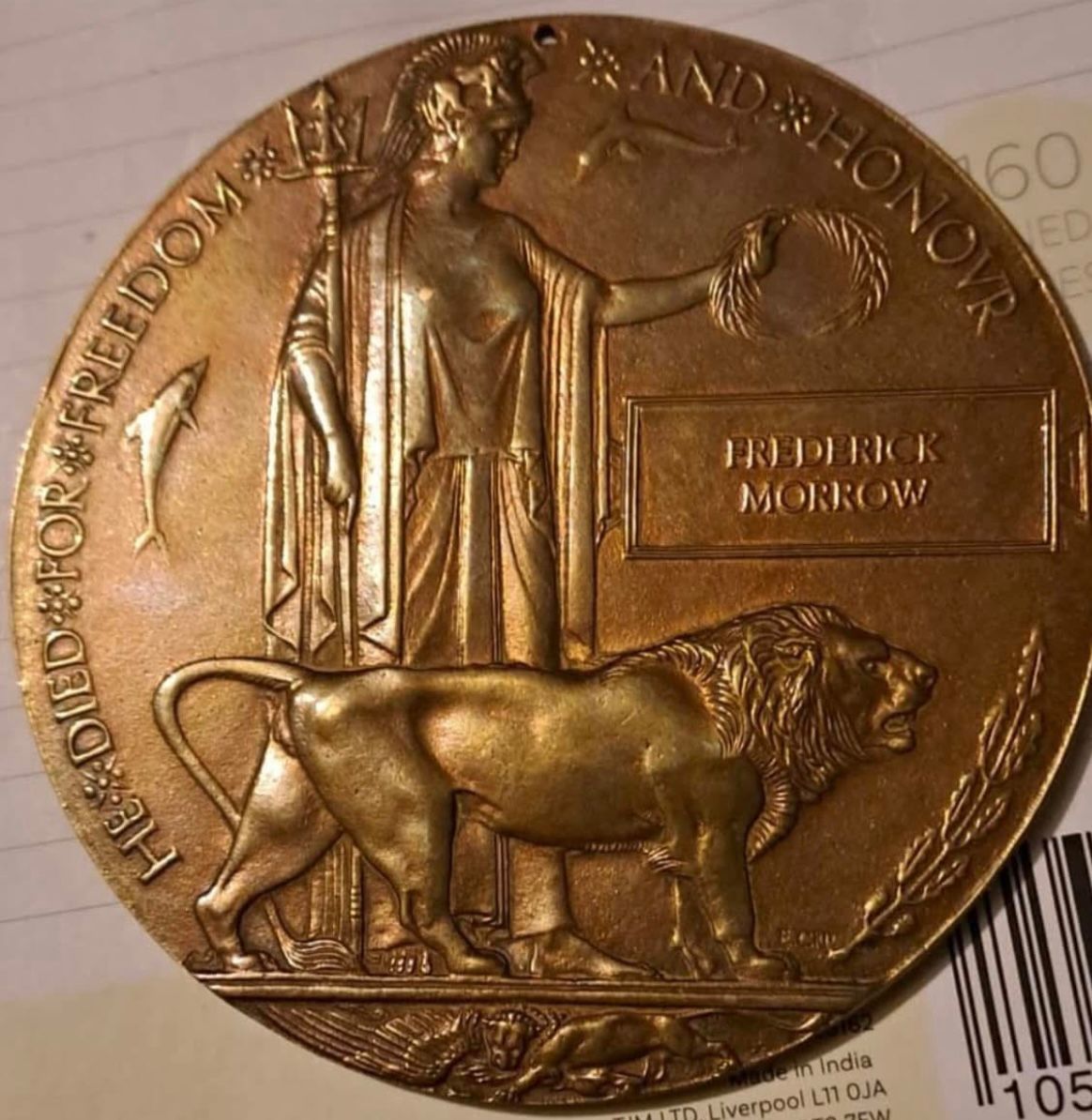
Fred Morrow was only 17 when he took to the pitch for Bohemians at the curtain raiser at their great rivals’ new home, Shelbourne Park. The Bohs v Shels games were known then as the Dublin derby and as with many derbies, passions were inflamed. But this game’s atmosphere was even more heightened and it wasn’t just to do with the 6,000 spectators packed into the ground. Even in just getting to the ground Morrow and his teammates had seen over one hundred Dublin Tramway workers picketing the game.

The 1913 Dublin lock-out was only a few days old and Jim Larkin had declared that there were players selected for the game who were “scabs”: Jack Millar of Bohemians and Jack Lowry of Shelbourne were the names identified during the strike. The striking tramway workers subjected the players and supporters to (in the words of the Irish Times) “coarse insults” and had even tried to storm the gates of the new stadium. Foreshadowing the events of the next day, there were some violent altercations with the officers of the Dublin Metropolitan Police, with 16 arrests made and over 50 people suffering injuries.

This can’t have affected the teenaged Morrow too badly as he scored Bohs’ goal in a one all draw that day. Although less than 5’5” in height, the youngster was shaping up to be quite a prolific centre forward. Fred had started his career early, lining out for his local side Tritonville FC based in Sandymount, and while with the club he had won a Junior cap for Ireland, scoring in a 3-0 victory over Scotland in front of over 8,000 spectators in Belfast. The following season he’d been persuaded north of the river to Dalymount, and he was to enjoy a successful season including scoring a hat-trick in an unexpected 3-1 victory over title holders Linfield.

The Shelbourne side that Bohs faced that day included in their ranks a new signing of their own, Oscar Linkson, who had just been signed from Manchester United. Linkson had made almost 60 appearances for United and had been at the club when they won the FA Cup in 1909 and the League in 1911. Quite the coup, then, for Shels. Oscar moved to Dublin with his 17 year old wife Olive and his son Eric, who would be joined by a baby sister just months later. He faced Fred Morrow that day as part of the Shels defence.

Within a year of this game, War would be declared. Both Fred Morrow and Oscar Linkson volunteered to serve in the British Army, Oscar with the famous “Football Battalion” of the Middlesex Regiment alongside a whole host of star players which included the Irish international John Doran. Neither Fred nor Oscar would return, by the end of 1917 both were dead on the fields of France.
The events that the players had witnessed leading up to that Bohs v Shels game had far-reaching consequences, with the violence in the adjoining Ringsend streets at the game growing worse over the following day, culminating with violent clashes between the Dublin Metropolitan Police and striking workers on Sackville Street (now O’Connell Street). Hundreds were wounded amid baton charges and three striking workers were killed. The dramatic events convinced Union leaders James Connolly, James Larkin and Jack White that the workers needed to be protected, and that an Irish Citizen Army needed to be formed for this purpose. Ireland’s decade of lead had begun.

A year earlier in 1912, in response to the passing of the third Home Rule bill, and the possibility that Home Rule would finally become a reality in Ireland, hundreds of thousands of Irish Unionists signed what was known as the Ulster Covenant, where allegiance was pledged to the King of England. They stated that Home Rule would be resisted by “all means necessary”. This included the very real possibility of armed resistance, as demonstrated by the Ulster Volunteers (formed in 1912) importing thousands of rifles into the port of Larne from Germany in April 1914. In response, the Irish Volunteers, supporters of Home Rule formed in order to guarantee the passage of Home Rule bill, also imported German arms into Howth in July 1914; just days before the outbreak of the First World War. This mini arms-race in Ireland mirrored the greater stockpiling of armour and weaponry by the great European powers in the lead-up to the First World War; the whole Continent was in the grip of militarism. Violence seemed, to many people, to be unavoidable.

O'Connell street 1913 again

Clashes on Sackville Street during the 1913 lock-out

Over 200,000 Irish men fought in the First World War. To put this in perspective, the total male population of Ireland at the 1911 Census was just over 2.1 million. Those who fought did so for many reasons. Some, including many members of the Irish Volunteers, heeded John Redmond, the leader of the Irish Parliamentary Party who called on Irishmen to go and fight to help secure Home Rule, as a gesture of fidelity to Britain, in support of Catholic Belgium and in defence of smaller nations.

Redmond asked Irish men to prove “on the field of battle that gallantry and courage which has distinguished our race” in a war that he said was fought “in defence of the highest principles of religion and morality”.

Some men went in search of adventure, unaware then of the horrors that awaited them. Many Dublin men joined up as a way to financially support their families, the city at the time had a population of 304,000, with roughly 63% described as “working class”, the majority of whom lived in tenement houses, almost half with no more than one room per family. The army might offer death but least it offered a steady income.

What we also know is that many Bohemians joined up. Some like Harry Willits or Harold Sloan may have simply joined out of a sense of duty, that this was the “right thing to do”. Most joined in what was known as a “short service attestation”, meaning that they were only joining for the duration of the war, which many mistakenly assumed would be over quickly. In one edition of the Dublin based weekly paper Sport, it was estimated that Bohemians lost forty members to War service, among the highest of any club in the whole country, although we know that there was also significant enlistment from other Dublin clubs such as Shelbourne and Shamrock Rovers, while the loss of players to military service was cited as one of the reasons for the withdrawal from football of the original Drumcondra F.C.
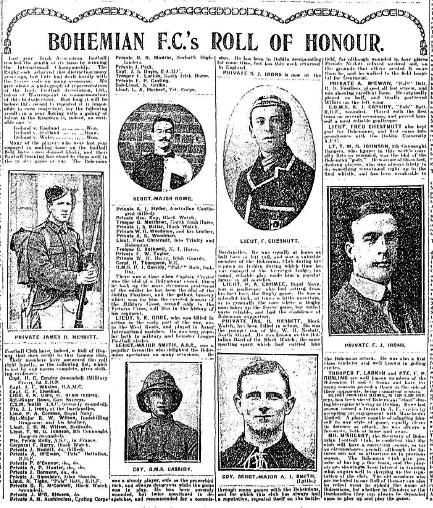
Roll of Honour

Bohemian F.C. Roll of Honour – Evening Herald, September 1915 source @Cork1914to1924

Some like Harry Willits did return to resume their football career. Several did not return at all. Corporal Fred Morrow, who we met earlier as Bohs centre-forward, was a member of the Royal Field Artillery in France when he died of his wounds in October 1917. His mother had to write formally asking for the death certificate that the armed forces had neglected to send so that she could receive the insurance money for his funeral.

Private Frank Larkin was only 22 when he died just before Christmas 1915. He had been a Bohs player before the war. At this time, due the growing popularity of both the club and football generally in Dublin, Bohs often fielded several teams. Frank featured for the C and D teams, but like many Bohemians, was a fine all-rounder. He played cricket for Sandymount and rowed for the Commercial Rowing Club. He and two of his colleagues from the South Irish Horse were killed by a shell on December 22nd in Armentieres, Belgium. His will left a grand total of £5 14 shillings and 2p to his two married sisters.

T.W.G. Johnson

Thomas Johnson as pictured at Royal Lytham & St. Anne’s Golf Club in his later years

Thomas Johnson, a young Doctor from Palmerstown was just 23 when the War broke out. He had won an amateur international cap for Ireland and was a star of the Bohs forward line, usually playing at outside right. He was a hugely popular player who the Evening Herald described as “always likely to do something sensational”. He was another fine sporting all-rounder with a talent for both cricket and golf. Johnson became a Lieutenant in the 5th Connaught Rangers during the War and later brought his professional talents to the Royal Army Medical Corps. He was awarded the Military Cross for his actions at Gallipoli. He received numerous citations for bravery, for example at the Battle of Lone Pine during the Gallipoli campaign the Battalion history notes “Second-Lieutenant T.W.G. Johnson behaved with great gallantry in holding an advanced trench during one of the counter-attacks. Twice he bound up men’s wounds under heavy fire, thereby saving their lives”.

While his medical skills were a great asset in saving lives Johnson also was a fierce soldier during the most brutal and heavy fighting. He was awarded the Military Cross specifically for his actions around the attack on the infamous Battle of Hill 60 where so many Irishmen perished. The battalion history states that on August 21st 1915

“Lieutenant T.W.G. Johnson went out to the charge, with rifle and bayonet, and killed six Turks. He shot two more and narrowly missed killing another one. Later, although wounded severely, he reported to the commanding officer, and showed exactly where the remaining men of his company were still holding their own, in a small trench on “Hill 60.”

It was by this means that these men eventually were carefully withdrawn, after keeping the Turks at bay for some hours.” . Hill 60 of course was for many years the name by which Dubliners knew the terrace at the Clonliffe Road end of Croke Park, it was only in the 1930’s that it became known as Hill 16 and later the apocryphal story emerged that the terrace had been built from the ruins of O’Connell Street after the Easter Rising.

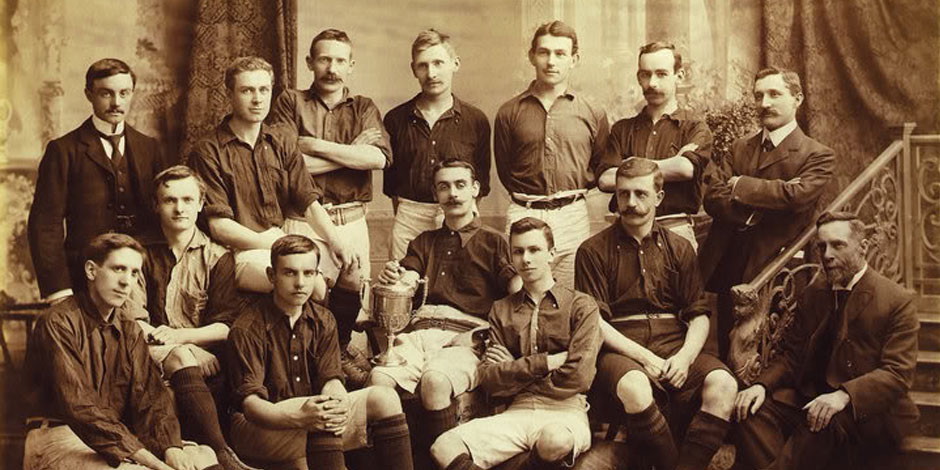
Bohs with Sloan Crozier

Herbert Charles Crozier – back row far left. Harold Sloan – front row third from the right

Other Bohemians suffered serious wounds but managed to make it through to the armistice. One of the most prominent of these was Herbert Charles “Tod” Crozier. He had joined Bohemians as a 17 year old and took part in the victorious Leinster Senior Cup final of 1899. In 1900 he appeared for Bohs on the losing side in an all-amateur Irish Cup Final, which was won 2-1 by Cliftonville. Crozier was described as one of the most “brilliant half-backs playing association football in Ireland” and he formed a formidable and famous midfield trio of Crozier-Fulton-Caldwell who were still revered for their brilliance decades after their retirement. “Tod” had a long association with Bohemians and was also a prominent member of Wanderers Rugby Club. He grew up on Montpellier Hill, close to the North Circular Road and not far from Dalymount.
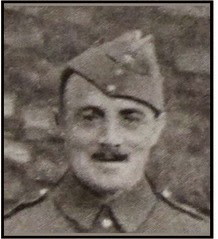
Herbert Crozier1

Major H.C. Crozier

His Scottish-born father was a veterinary surgeon but “Tod” became a career military man with the 1st battalion of the Royal Dublin Fusiliers. In 1908 he was awarded the Bronze Star by the Royal Humane Society while serving in Sudan for trying to save the drowning Lieutenant Cooper from the River Nile. It was noted that he behaved with great bravery despite knowing of the “dangerous under-current and that crocodiles were present”. He was a Captain at the beginning of the War and was part of the Mediterranean Expedition Force that travelled to Gallipoli. It was here that he was wounded, and as a result of his actions was awarded the Military Cross, and later, after a promotion to the rank of Major, the Military Star. Despite the wounds he received at Gallipoli he returned to Montpelier Hill in Dublin and continued to attend football and rugby games. He was still enough of a well-known figure that he was the first person quoted in a newspaper report about Bohs progression to the 1935 FAI Cup Final. He lived to the age of 80, passing away in 1961 and was buried in Mount Jerome Cemetery.

One man who returned from the War and then joined Bohemian F.C. was the legendary Ernie Crawford. Born in Belfast in 1891 Ernie was perhaps best known for his endeavours on the Rugby pitch. He starred for Malone in Belfast and later Lansdowne Rugby Club and won 30 caps for Ireland, fifteen of them as Captain. He would later be named President of the IRFU. His obituary in the Irish Times listed him as one of the greatest rugby full-backs of all time, he was honoured for his contribution to sport by the French government and even featured on a Tongan stamp celebrating rugby icons.

Crawford collage

Ernie Crawford in uniform, on a Tongan stamp and as an Irish Rugby international

He was, however, a successful football player who turned out for Cliftonville and for Bohemians. Ernie, a chartered accountant by trade, moved to Dublin to take up the role of accountant at the Rathmines Urban Council in 1919, and this facilitated his joining Bohemians. Despite his greater reputation as a rugby player, Ernie, as a footballer for Bohs, was still considered talented enough to be part of the initial national squad selected by the FAIFS (now the FAI) for the 1924 Olympics. In all, six Bohemians were selected (Bertie Kerr, Jack McCarthy, Christy Robinson, John Thomas & Johnny Murray were the others and were trained by Bohs’ Charlie Harris), but when the squad had to be cut to only 16 players Ernie was dropped, though he chose to accompany the squad to France as a reserve. The fact that he was born in Belfast may have led to him being cut due to the tension that existed with the FAIFS and the IFA over player selection.

That he could captain the Irish Rugby Team and be selected for the Olympics is even more impressive when you consider that during the Great War Ernie was shot in the wrist causing him to be invalided from the Army and to lose the power in three of his fingers. He had enlisted in the 6th Inniskilling Dragoons in October 1914 and was commissioned and later posted to the London Regiment (Royal Fusiliers), becoming a Lieutenant in August 1917. He was a recipient of the British War and Victory Medals. Ernie later returned to Belfast where he became City Treasurer. It was in Belfast in 1943 that Ernie encountered Bohs again, as he was chosen to present the Gypsies with the Condor Cup after their victory over Linfield in the annual challenge match. He passed away in January 1959.

So who were these men who went to war? From looking through the various records available (very much an ongoing task) it is clear to see that they were of a variety of different backgrounds. Most were from Dublin, though some like Sidney Kingston Gore (born in Wales) were only in Dublin due to Military placement. Some like Harry Willitts came to Dublin as a young man, others like Crozier and Morrow were children to parents from Scotland, Belfast or elsewhere. They were of various religious beliefs with Catholics, Church of Ireland and Presbyterians among their number.

By the outbreak of the War Bohemian F.C. was not yet 25 years old, some of those who had helped to found the club as young men were still very much involved. The employment backgrounds of the men who enlisted seem to have connections back to those early days when young medical students, those attending a civil service college as well as some young men from the Royal Hibernian military school in the Phoenix Park helped found the club. There were a number who are listed as volunteering for the “Pals” battalion of the Royal Dublin Fusiliers, in this case more than likely the 7th battalion. This battalion was made up of white collar workers and many civil servants, they were sometimes referred to as the “Toffs among the toughs”.

The 7th Battalion also featured a large number of Trinity College graduates, as well as many Rugby players encouraged to join by President of the Irish Rugby Football Union, F.H. Browning, a number of those who joined would end up dead on the beaches of Gallipoli. Browning later died after encountering the Volunteers on return from maneuvers at Mount Street Bridge during Easter 1916.  The medical profession is clearly represented by men such as Thomas Johnson and J.F. Whelan. There were also characters like Alfred Smith and Tod Crozier who were career military men.

We know that like many Bohemians they were great sporting all-rounders, many being talented Rugby players, rowers, tennis players and cricketers in addition to their talents on the football field. In most cases they were young; Fred Morrow was still a teenager when he joined up, Frank Larkin only 21. Even the prematurely bald Harry Willitts looked much older than his 25 years.

Those who did return from the trenches came back to an Ireland that was changed utterly. The events of the Easter Rising, the growth in Republican Nationalist sentiment and the gathering forces that would soon unleash the War of Independence meant that those who returned may well have felt out of step with the Dublin of 1918-19. Those mentioned above are only a small selection of the Bohemians who took part in the First World War, there are many more stories; of Ned Brooks the prolific centre forward posted to Belfast who ended up guesting for Linfield, of Jocelyn Rowe the half-back who had also played for Manchester United who was injured in combat. There are many others forgotten to history. Those men described above often only appear in the records because of their death or serious injury, many more passed without comment. For men like Harry Willits and Tod Crozier, they could return to familiar surroundings of Dalymount Park whether as a player or just as a spectator. Some of those who returned, like Ernie Crawford, were yet to begin their Bohemian adventure. Among this latter group was a dapper Major of the Dublin Fusiliers named Emmet Dalton. He was a man who had won a Military Cross for his bravery in France and trained British soldiers to be snipers in Palestine. On his return to Ireland, he would join Bohemians as a player along with his younger brother Charlie. Both men would also join the IRA. They would play a central role in the War of Independence and the Civil War though they weren’t the only Bohemian brothers with this distinction as I’ll outline in my next piece.

A partial list of Bohemian F.C.members who served in World War I

Captain H.C. Crozier (wounded, recipient of the Military Cross) 1st Royal Dublin Fusiliers. Later promoted to Major.

Lt-Colonel Joseph Francis Whelan Royal Army Medical Corps, recipient of the Distinguished Service Order for his actions in Mesopotamia (Bohemian player, committee member and club vice-president). Later awarded and O.B.E. as well as an Honorary Master of Science degree by the National University.

Surgeon Major George F. Sheehan, Royal Army Medical Corps. Awarded the D.S.O.

Lieutenant Sidney Kingston Gore, 1st Battalion Royal West Kent Regiment (killed in action). He died after being shot in the head on 28th October 1914 near Neuve Chapelle he was a talented centre-forward who was particularly strong with the ball at his feet.

Sgt-Major Jocelyn Rowe, 1st Battalion, East Surreys (wounded in action). Rowe was born in Nottingham and had briefly played for Manchester United. A report in the Irish Independent of 30th March 1916 stated that Rowe had been wounded an astounding 83 times but was still hopeful of playing football again.

Company Sgt-Major Alfred J Smith, Army Service Corps, (amatuer Irish international, wounded in action)

Private Joseph Irons, on guard duty at the Viceregal Lodge during Easter 1916 he later served duty in the Dardanelles campaign. Irons was born in England and was considered one of the best full-backs in Irish football, he worked on the staff of the Viceregal Lodge (now Áras an Uachtaráin) before being called up to the army from the reserve on the outbreak of War.

Lieutenant P.A. Conmee, Royal Navy (a former Rugby player and a goalkeeper for Bohemians)

Sgt-Major B.W. Wilson Inniskilling Dragoons

Lieutenant JRM Wilson, Bedfords (brother of above)

Reverend John Curtis, Royal Army Chaplains’ Department

Lieutenant Thomas William Gerald Johnson, 5th Connaught Rangers and later Royal Army Medical Corps (wounded in action, awarded the Military Cross for his actions in taking the infamous “Hill 60” during the battle for Gallipoli). Also an Irish amateur international player.

Private Frank Kelly, Army Service Corps

Lieutenant Ernie Crawford, Inniskilling Dragoons and Royal Fusiliers

Corporal F. Barry, Black Watch

Second lieutenant Charlie Webb, King’s Royal Rifle Corps. He was captured in March 1918 near Nesle in Northern France and saw out the war from a Prisoner of War camp near Mainz. Webb was an Irish international forward who was born into a military family in the Curragh Camp, Co. Kildare. He played for Bohemians between 1908-09 but is most associated with Brighton & Hove Albion where as a player he scored the winning goal in the 1910 Charity Shield Final. He later became Brighton’s longest serving manager, beginning in 1919 and continuing until 1947, a span that covered over 1,200 matches.

Private James Nesbitt, Black Watch (killed in action 16/07/15)  the son of W. H. and Jeannie Nesbitt, of 54, North Strand Road, Dublin. James was a Customs and Excise Officer at Bantry, Co. Cork, at the outbreak of war. Although badly injured he directed medical attention to other wounded men. He walked back to the field hospital but died soon afterwards. Nesbitt was also a member of the Irish Parliamentary Party who sat on Blackrock Urban Council. He was known as the “Battalion Bard” as he amused the other troops by writing and singing “topical songs”. Nesbitt mostly played for the Bohs C and D teams.

Private A. McEwan, Royal Dublin Fusiliers

Private P. O’Connor, Royal Dublin Fusiliers

Private A.P. Hunter, Royal Dublin Fusiliers

Private J. Donovan, Royal Dublin Fusiliers

Sergeant Harry Willitts, Royal Dublin Fusiliers

Sergeant Harrison McCloy, Tank Corps. (Killed in action) McCloy was born 12th December 1883 in Belfast. He continued a common tradition of being a footballer for Clinftonville before joining Bohemians. He was a player for Bohemians from 1902 to 1905 including appearing for the first team in the Irish League. He later moved into an administrative role and was a club Vice President for Bohemians from the 1905-06 season through to 1911-12, He was also mentioned as having been Honorary Secretary of the Irish League in 1911. He had been part of the Young Citizens Volunteers before transferring to the Tank Corps serving as a Quartermaster Sergeant during World War I. His main role was supervision and security of tanks used in battle pre or post engagement. He was killed in Belgium by enemy shellfire on the 21st August 1917 whilst engaged in such duties. He was 33 years old. Buried in the White House Cemetery St-Jean-Les-Ypres.  His gratuity was left to four of his siblings.
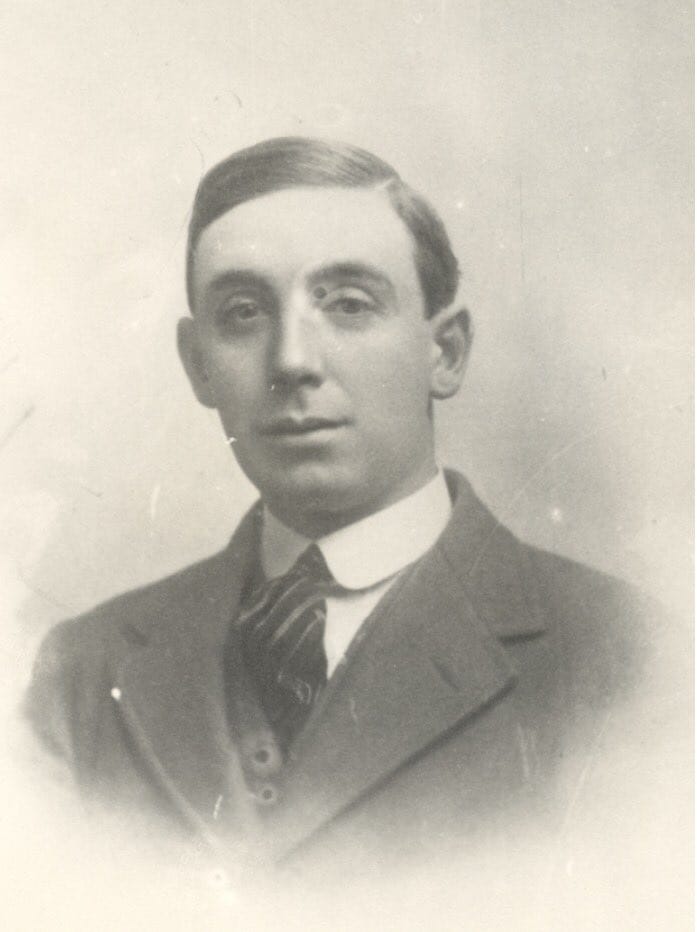
Corporal Fred Morrow, Royal Field Artillery (formerly of Tritonville F.C. Bohemian F.C. and Shelbourne), killed in action 1917.

Private Angus Auchincloss from Clontarf joined the Army Cycling Corps in 1915 and transferred to the Royal Irish Rifles in 1916. He was discharged in 1919 and died in Eastbourne, England in 1975 at the age of 81.

Lieutenant Harold Sloan, Royal Garrison Artillery killed in action January 1917.

Major Emmet Dalton, Royal Dublin Fusiliers. On returning to Dublin Dalton became IRA Head of Intelligence during the War of Independence and later a Major-General in the Free State Army.

Lieutenant Robert Tighe, 5th Battalion Royal Dublin Fusiliers

Private G.R. McConnell, Black Watch (wounded)

Trooper Francis Larkin, South Irish Horse (killed in action)

Major Fred Chestnutt-Chesney, 6th Lancashire Fusiliers (former goalkeeper for Bohemians and for Trinity College’s football team). Later a Church of Ireland Reverend. Wounded in combat by a gun shot to his left leg.

Private J.S. Millar, Black Watch

John C. Hehir, the star goalkeeper for Bohemians until January 1915. He was also capped by Ireland in 1910. Hehir played rugby for London-Irish and also won a Dublin Senior Club championship medal with the Keatings GAA club in 1903. He left Bohs to take up an “important role” with the War Office in London

Lieutenant William James Dawson, Royal Flying Corps. Injured in 1917 he returned to action but died in 1918. He was also a member of the Neptune Rowing Club and the Boys Brigade.

Captain J.S Doyle, Royal Army Medical Corps

William Henry (Billy) Otto, South African Infantry

Private F.P. Gosling, Black Watch and later the Machine Gun Corps

Lieutenant L.A. Herbert, Veterinary Corps

Private Bobby Parker, Royal Scots Fusiliers. Parker was the English First Divisions top goalscorer in the 1914-15 season as he helped Everton to the League title. However, after league football was suspended Parker enlisted and was wounded in early 1918. Despite attempts to continue his playing career the bullet lodged in his back essentially meant his time as a player was over at the age of 32 after a brief spell with Nottingham Forest. Parker moved into coaching and in 1927 was appointed coach of Bohemian FC, a position he held until 1933. He led Bohemians to a clean sweep of every major trophy in the 1927-28 season.

Private William Woodman, 7th Battalion Royal Dublin Fusiliers and his brother Private Albert Woodman, Royal Engineers. After the war Albert returned to his job at the General Post Office, working there until his retirement. During World War II, he worked as a censor and redactor. He bought a home on Rathlin Road, in Glasnevin. Albert passed away in 1969, at the age of 78. For more on the Woodman family see here.

Private Stephen Wright served with the Leicestershire Regiment and the Royal Army Medical Corps during World War I. Born in Leicester he had two spells with Bohemians, before the outreak of the war, and again in the 1919-20 season. He would also appear for Bolton Wanderers, Norwich City and Brighton and Hove Albion. He returned to Ireland as a coach after breaking his leg while at Brighton, taking up a role at Dundalk in 1930 and leading the Louth club to their first ever league title in the 1932-33 season.

Private F. W. Taylor

Corporal H. Thompson, Royal Engineers

Trooper Griffith Mathews, North Irish Horse

Part of a series of posts on the history of Bohemian F.C from 1913-1923. Read about Bohs during Easter 1916 here or about the life and career of Harry Willits here.

Following the money- wanting all the power, instead of just most of it

Follow the money. If you want to get to the heart of the matter always follow the money, in life as in football. As our beloved sport emerged and was codified in Victorian Britain there was a strong attempt to keep football strictly amateur, and by extension out of the reach of the vast bulk of ordinary people and the preserve mainly or a network of public-school Old Boys. This resistance was Canute-like and eventually by 1885, some twenty-two years after the foundation of the FA, professionalism was permitted in British football. Money had always been in the game but now it was openly, if grudgingly accepted.
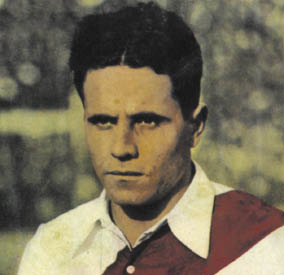
Even back then the sporting public were caught up in the drama of the transfer market, while many clutched their pearls and bemoaned the scandalous sums being paid to bring footballers to new clubs. By 1893 Willie Groves had become the first £100 player when he joined Aston Villa from near neighbours West Brom. Just twelve years later Alf Common became the first £1,000 player when he made the short journey from Sunderland to Middlesbrough. For the next three decades after Common’s move the transfer record would only be broken by English (and one Scottish) clubs. But the British dominance of the transfer record was smashed in 1932 as the world transfer record crossed the Atlantic to the Argentine capital of Buenos Aires. The buying club was River Plate and the player was Bernabé Ferreyra, signed from Tigre for £23,000, an amount that would stand unbroken for a record for seventeen years.

ferrerya

Bernabé Ferreyra – once the world’s most expensive player

Argentina had seen a breakaway professional league emerge in 1931 and River Plate immediately went out and paid 10,000 pesos for winger Carlos Peucelle and signed Ferreyra just a year later, this helped give rise to the clubs’ nickname of Los Millonarios. Although English clubs would take back the transfer record in the late 40s and kept it until 1951 this was to be the last era of British dominance or record breaking transfer fees, only in 1996 when Alan Shearer joined Newcastle from Blackburn would a British club again be a record breaker. For the rest of the last 64 years the transfer record has been held by either Italian on Spanish sides. The last five record fees have all been paid by Real Madrid, from Luis Figo in 2000 to Gareth Bale in 2013.

But of course merely to view the transfer market as a marker of wealth, and indeed power and influence is reductive. For one thing the Bosman ruling has changed the nature of transfer deals to some extent and it also ignores things like the money spent on wages, amounts earned through sponsorship, TV rights and prize money. However, according to Deloitte in their annual football rich list for this year, Real Madrid are once again the top club with a revenue of £439m. They are followed by Barcelona, Manchester United in 3rd and Paris Saint Germain in 4th, Bayern Munich in 5th and Manchester City in 6th. Juventus come in at tenth meaning there is one Italian side in the top category. However the most telling statistic is that overall of the top 30 clubs on the list 17 are in the Premier League.

This wealth created in the Premier League, primarily through super-lucrative television rights, currently trumps anything that can be matched financially by other leagues. Arrangements in Spain mean that clubs like Barcelona and Real Madrid get disproportionately larger shares of television revenue than other Spanish clubs, but the Premier League parity model has been suggested as one of the reasons that a club like Leicester have been able to mount their shock title challenge. While West Ham sit in 20th place on the rich list there is no place for the likes of Ajax, Benfica, FC Porto or many others. They are victims of geography and the rise of power or a super elite group of clubs forming out of the elite leagues. Some clubs like Manchester City and Paris Saint Germain have only been catapulted into these elite realms because of the massive recent investments of petro-wealth tycoons.

Yet despite these financial advantages there is always the search for more. Manchester United remain third on the rich list despite being very much in a period of transition. Real Madrid have sacked another coach and don’t look likely, at the time of writing, to be able to pip their great rivals Barcelona to the title. Their balance sheets are betrayed by their on-field performances. The present state of flux in the Premier League where it is conceivable that United, Chelsea and even possibly Arsenal could actually miss out on Champions League football, coupled with the natural nose for profit of other European football CEOs has led to talk of changes to the Champion’s League.

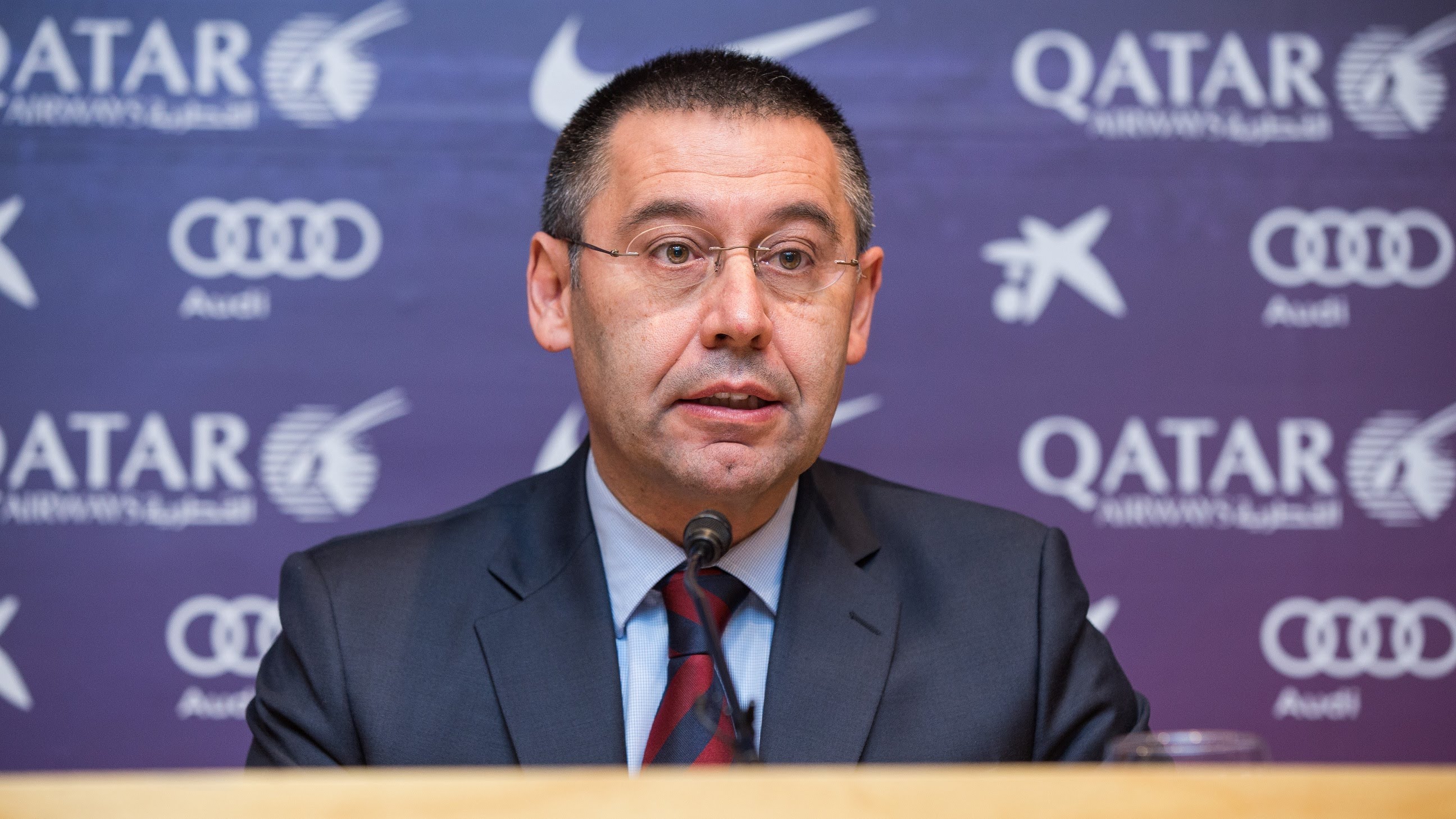
The Barcelona club president Josep Maria Bartomeu has already spoken about a type of fail-safe system that could reward under-performing big clubs who don’t progress to the Champions League, saying:
“Right now, we are lucky – because the important leagues, like the Premier League or the Spanish league or the Italian league – we have more clubs.
“But I’m sure that sometimes for the interest of football, why not give wildcards? Like in tennis – sometimes top players do not qualify and they get wildcards. Why not in football?”

Don’t you love the “important leagues” line? From a revenue point of view a match between Barcelona and an under-performing Manchester United has greater commercial incentives that a game against a more successful Leicester or indeed a Napoli who have gotten to the Champions League on merit. Such suggestions also undermine the whole basis of competitive sport. The notion that any team, on their day can beat any other team, and are thus rewarded accordingly are central to football’s appeal, history and excitement. We have reached a point that for World Cups the holders no longer automatically qualify, so why should say a Chelsea be rewarded to the tune of tens of millions for their gross mismanagement?

maxresdefault

Josep Maria Bartomeu of Barcelona

Should such suggestions be seen as a response to the moderate reforms brought in by Michel Platini which helped to ensure that club sides from smaller nations had a chance at more access to European competition? In recent years teams like APOEL Nicosia, Basel and this year Gent have made it through to the knockout stages of the Champions League on their own merit while supposed bigger names, and certainly wealthier teams have not progressed.

We might view Bartomeu’s comment in the context of the recent meetings of representative of the “Big Five” Premier League clubs (i.e. Man City, Man United, Arsenal, Chelsea and Liverpool) when they were forced to deny that the purpose for their talks was discussions of a breakaway European Super League. Interestingly this was some 25 years ago another “Big Five” met to form the break-away Premier League, they were Man United, Liverpool, Tottenham, Everton and Arsenal. It just goes to show what a Russian or Emerati oligarch can do for a club’s image.

While the current “Big Five” denied any talk of a break away they did start to talk about reform of the Champions League once the current agreements around structure and broadcasting run out in 2018. What this reform could mean has been described thus in a recent article in the Guardian and elsewhere as possibly including:
“…more knockout rounds before the revamped group phase. The top 16 seeds might enter the competition in the last 32, where they would not be able to draw each other. The established continental clubs believe this would allow them a better chance of avoiding lesser teams at the group stage, which in an eight-team format would mean 14 matches, played home and away. An example cited during discussions with UEFA came in 2008-09 when Real Madrid were drawn in a group that included Bate Borisov. The ties between the two sides attracted low viewing figures and there is a firm desire to avoid repeats in the future by having more high-profile games, generating a bigger income.”

Let’s just think about what that means. On the face that doesn’t sound too bad. More knock-out games just like the old European Cup? Seeded teams? Well top-flight teams don’t join the FA Cup until the third round, sounds fairly plausible. However in reality what it aims for is a fossilising of wealth and power in the hands of elite clubs and elite leagues. Whoever at this point in time has the wealth; the billionaire backers who are digging and gouging the earth for natural resources, or who are best at creating “global commercial partnerships” shall remain dominant. It is saying that even with all the advantages that wealth bestows that football is just too damn unpredictable for those in charge. Even Chelsea and Man United can fuck up and Leicester aren’t a big enough draw!
It’s worth thinking about this in the context of the recent passing of Johan Cruyff. The Netherlands only really began to embrace professionalism in the 1960s, but with the brilliance of a generation players like Cruyff and the vision and tactical ingenuity of managers like Rinus Michels Dutch clubs won four consecutive European Cups in the early 1970s. But that didn’t happen overnight, Ajax had been beaten finalists against AC Milan in 1969, before that they had destroyed Shankly’s Liverpool 7-3 in 1966 before being knocked out by Dukla Prague. They got game time against elite opponents, this gave players experience and allowed them to grow and develop and eventually become triple Champions. The plan outlined above effectively removes the number of games that teams from second tier nations get to play in the Champions League by putting in what is in effect an extra preliminary round.

Preliminary rounds already exist which significantly reduces the chances of a team from a smaller or secondary nation gaining access to the group stages, it would seem that Platini’s modest reforms are anathema to the conservative, insular forces of the elite clubs. This process would go against what has been shown to work successfully in International football. If one looks back to the reign of the last English head of FIFA, Sir Stanley Rous you can see how resistant he was to widening inclusion in the World Cup to teams from outside of Europe and South America. Primarily as a vote getting exercise his challenger Joao Havelange promised to open up the World Cup to more teams from Africa and Asia. Greater access to this level of competition has given nations experience to build upon and nowadays nations from throughout Africa, Asia and sides like Australia and New Zealand are less likely to be arrogantly assumed of being pushovers unworthy of entrance to competition. While there is a delicate balance to strike in making sure the best teams are represented for the World Cup to be truly be worthy of its name it needs participants from all over the globe.

The Champions League however has never been worthy of its name. If Mr. Bartomeu had his way this misnomer would be all the more inappropriate. What UEFA must decide is if it wants the Champions League to be a truly European affair, as a mechanism to grow the game in Europe and improve the level of participation and competition throughout the Continent. Or whether it simply wants a European Super League by another name. Just more of the same teams playing each other again and again with little possibility of change, calcifying an established order of the wealthy few for decades to come. It removes even the chance, the possibility of another Ajax-like success story.
Or… UEFA could have some guts. They could stand up to the biggest clubs and say that they already enjoy massive benefits from participation in the elite European club competition, that renegotiation of a deal will likely bring even greater prize money after 2018 and if they don’t like that then go and form a break-away Super League.
But… all players playing in the breakaway league would be removed from their domestic championships, all players playing for the breakaway clubs would be unable to take part in any UEFA/FIFA/CAF etc. tournaments or to play for their national team in any international fixture. Maybe the wealthiest clubs would relish the split with UEFA/FIFA, or maybe they would look at what having numerous governing and awarding bodies and a focus on pay-per view only policies has done to the sport of Boxing and balk at the idea. It could be the perfect opportunity for UEFA and FIFA to show some sort of commitment to fairness and inclusiveness after all the arrests, allegations and mountains of negative press. While the elite clubs and their participation in the Champions League is many ways the greatest advertisement (and revenue generator) that the governing bodies of European and World football could wish for, their power and wealth make them also their greatest threat, perhaps their only threat of a viable breakaway from FIFA hegemony. Such a breakaway however would be even more of a closed shop Plutocracy than what currently exists.

Perhaps the greatest test for the post-Blatter FIFA and post-Platini UEFA will be how they respond to the narrow commercial interests of a tiny number of hyper-wealthy clubs and whether they can take a view that sees that the Good of the Game can be distinguishable from the pursuit of ever-greater wealth. The elite clubs for their part seem prepared to follow a George W Bush era, corporate, “too big to fail” approach where their failures draw no consequence, while their triumphs, or indeed their mediocrity is subject to ever greater rewards. And the shape on football on this Continent will hang in the balance.

This article originally appeared in the Football Pink issue 11

Ireland at Euro 1964: First time to the last 8

Dublin hosting the European Championships, what once was the sort of thing speculated about during the excess of the Celtic Tiger years, usually as part of some sort of All-Ireland, pan-Celtic bid, will come to pass in 2020. The Irish Capital has been chosen as one of 13 “host cities” for a 60th anniversary celebration tournament. We will of course have to qualify if there is to be any chance of seeing an Irish team in action on home soil.

However the idea of hosting all tournament matches in the same one or two countries is relatively recent. When the first Euros were held in 1960 in France only the semi-finals, finals and 3rd/4th playoff were played in the host country while only in 1980 did the tournament grow to eight teams. The qualifying was somewhat more straight-forward in those days as UEFA was a much smaller place. The Soviet Union had a single team, the Czech Republic and Slovakia had not separated and Yugoslavia hadn’t splintered into its constituent parts.

In 1964, during the second ever tournament, Ireland even got as far as the quarter-finals which were two-legged affairs, home and away. These quarter-final games took place in March and April of 1964 before the semi-finals and finals took place in the host country of Spain in the middle of June.

Ireland had had an inauspicious start during the first Euros in 1960. With 17 nations entering and a straight knock-out style of qualification without a group format, one pair of nations would have to play a preliminary round to even up the numbers. Ireland were drawn with Czechoslovakia and despite a promising start in the home leg with Ireland winning 2-0 they were eventually eliminated 4-2 on aggregate by an improving Czech side that would make it all the way to the World Cup final only two years later.

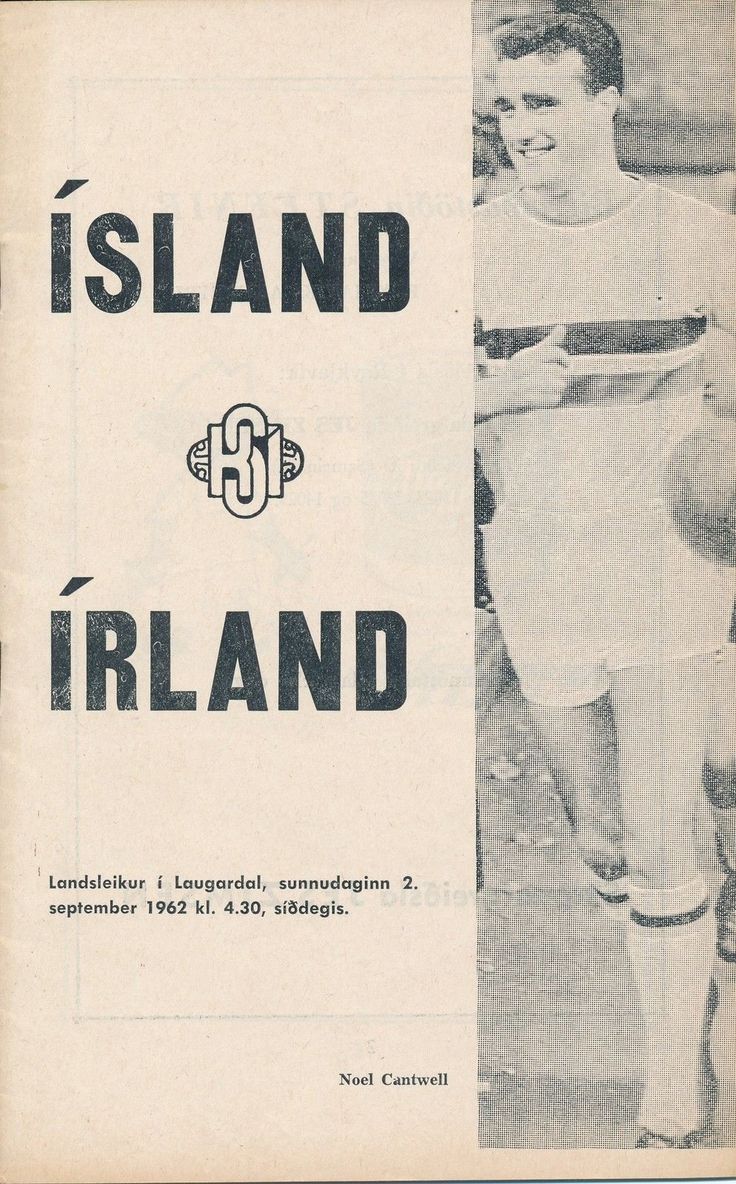
Four years later in 1964 there was thankfully no preliminary round for the Irish but the qualifying format continued as a straight knock-out competition. Round one pitched Ireland against Iceland with Ireland drawn at home first with the game starting well with Newcastle’s Liam Touhy getting Ireland off the mark after just 11 minutes and while Ríkharður Jónsson equalised for Iceland Amby Fogarty of Sunderland restored Ireland’s lead before half time. In the second half Noel Cantwell extended Ireland’s lead to 4-1 with two goals before Jónsson grabbed a consolation before the final whistle. Cantwell usually lined out at full back for his club Manchester United but was often employed as a centre forward for Ireland. Tall and well-built Cantwell made a good target man and also had a strong shot, he was Ireland’s usual penalty taker and scored an impressive 14 goals in 36 appearances, a record for Ireland that wasn’t broken until the heyday of Don Givens in the 1970s.

iceland v ireland

Ireland v Iceland with Noel Cantwell on the programme cover

A weakened Irish team made the journey to Reykvanik for the return leg, the side were without Giles in midfield and Tony Dunne in defence and had to settle for a 1-1 draw, Tuohy again on the scoresheet. This 5-3 aggregate victory set up a meeting with Austria in the second round.

Now Austria have never been Ireland’s easiest opponents, David Alaba’s fantastic strike in qualifying for Brazil 2014 will be fresh in the memories of Irish fans. Many of us will also remember the pair of 3-1 losses late in Jack Charlton’s tenure, including Ireland’s infamous pre-match preparation of a visit to Harry Ramsden’s fish and chip restaurant the day before the home game. Back in 1963 our record was not much healthier, it read played 4, won 1, lost 3, including a 6-0 shellacking way back in 1952. However, things would be different this time round.

Ireland were drawn away in the opening leg and were not at full strength, and there was significant trepidation ahead of the trip to Vienna with certain newspapers suggesting that a weakened Irish side would need a miracle to get a result and that the focus should be one of damaged limitation and preserving national pride. Ireland were without Cantwell and Tony Dunne who were not released by Manchester United and there would be three débutantes for the game, Bohemians’ right back Willie Browne (until Joey Lapira the last amateur capped by Ireland), Ray Brady of QPR in the centre of defence alongside Charlie Hurley and Ronnie Whelan Snr of St. Patrick’s Athletic at inside forward. The conditions however suited Ireland with the game being played in a downpour and Ray Brady in particular impressing. Well, impressing the Irish fans at least, the Austrians were not pleased with what they viewed as Brady’s rough play. His combative style also upset the Austrian players, so much so that he was kicked by one of the Austrian forwards who was luckily quick enough to escape retaliation from a furious Brady before the referee intervened to calm things down. Apart from Brady an inspired performance by Alan Kelly Snr. in goal denied the Austrians on numerous occasions and they were unable to force a goal and the game ended 0-0.

The controversy didn’t end with the away leg, while Ireland would be ultimately successful against Austria in Dalymount Park the game very nearly could have been called off. There are plenty of examples from Ireland’s football history of unjust decisions going against us in games and stories of hotels serving dodgy food or rowdy fans creating so much noise that the Irish players couldn’t sleep before a game. This time however it was the Irish fans who were the ones doing the intimidating. Over the course of the game, which Ireland won 3-2 there were no less than four pitch invasions! The old Phibsboro ground was packed with over 40,000 people, including a number who clambered up the floodlight pylons to get a better view so its not too surprising that there might have been some incursions onto the field.  The most controversial was the pitch invasion just before the final whistle. Ireland had been just awarded a penalty when a Joe Haverty cross was handled in box in the 89th minute. The crowd spilled onto the pitch yet again and had to be herded back by Gardaí and stewards just as had happened earlier when they encroached on the pitch at half time and also to celebrate the second Irish goal.

ireland-1963-crop

Ireland team v Austria

Duly intimidated by the boisterous Irish crowd the Austrian keeper Gernot Fraydl dived the wrong way and Noel Cantwell’s second goal sealed a famous victory for the Irish. They were through to the quarter-finals of the European Championships. It had not been a pretty game, Ireland had effectively played much of the match with only ten men after Blackburn’s Mick McGrath was kicked in the head early in the first half, McGrath had to get seven stitches in his scalp and although he togged back out for the second half he was pretty much a passenger for the rest of the game, stuck out ineffectively on the right wing. The Irish too, knew how to dish it out and the Irish Times correspondent described their tackling as “verging on the unorthodox”. The Austrians were furious after the game and their Coach Karl Decker threatened to appeal to UEFA to overthrow the result and force a replay due to the pitch invasions. The result stood however, and despite the intimidating atmosphere Ireland had played well with Millwall’s diminutive winger Joe Haverty coming in for special praise, Brady and Hurley had performed well in defence with the result that Alan Kelly in the Ireland goal was not unduly tested apart from Austria’s two strikes. While the central Europeans were perhaps the better footballing side the weather had been against them in the first leg and the Irish had out-competed them in the return fixture. Next up for the Irish were the Spaniards in the last 8.

The Spaniards were hosts of the ’64 semi-finals and finals with games split between Camp Nou in Barcelona and the Bernabeu stadium in Madrid. In 1960 despite boasting some scintillating talents and numerous stars from the all-conquering Real Madrid side the Spaniards had essentially withdrawn from the inaugural European Championships (or nations cup as it was then known)  when they had been drawn away to the USSR. Just two days before the game was to be played the Spanish team withdrew and when a furious Alfredo Di Stefano confronted the President of the Spanish Football Federation, Alfonso de la Fuente Chaos as to why they were not travelling to Moscow he was told, “Orders from above,”. Franco himself had intervened. The Soviets, who had militarily backed the Republican side against Franco in the Spanish Civil War would see their side progress. They would eventually become the tournaments inaugural winners, beating Yugoslavia after extra time in the final. It had been a disaster for the reputation of Spanish football and even for Franco himself, they would have to make amends in ’64.

The first leg of the quarter final would take place on 11th March 1964 in the Sanchez Pizjuan stadium, home of Sevilla. The Spanish national team had used this stadium as a home base many time before and since due to the undoubted passion and volume of the local Andalusian crowd. Things did not start well for Ireland, due to the FA Cup sixth round tie between Manchester Utd and Sunderland going to a second replay which was to take place two days before the Spanish game United refused to allow Tony Dunne and Noel Cantwell to travel. It also meant that Charlie Hurley who had been at the heart of the Sunderland defence would have to play his third game in five days.

It would be Hurley’s tired legs that would give away the first goal, he played a square ball which was intercepted by the pacey Real Madrid forward Amancio who easily converted past Kelly in the Irish goal. Josep Maria Fusté of Barcelona then added a second only a few minutes later. Ireland did try to get back in the game, a clever chipped pass from Giles sent Andy McEvoy away and the Blackburn striker converted his chance in the 22nd minute to get his first for Ireland. McEvoy was in the best form of his career at the time, he would finish that season as the 2nd top scorer in England’s top flight just behind Jimmy Greaves, however he had been crowbarred into previous Irish XI’s as a half back.

Amancio.jpg

Amancio of Spain & Real Madrid

The game belonged to Amancio, the Real Madrid right-winger was running rings around the Irish defence which included the exhausted Hurley and debut cap Theo Foley of Northampton Town. He grabbed his second of the evening on the half-hour mark before setting up Zaragoza striker Marcelino for Spain’s fourth on 33 minutes. Marcelino would add a second goal just before the final whistle, a shot deflecting off Tommy Traynor and past Kelly into the Irish goal. The game finished 5-1. The home leg in Dalymount could only be a formality, Ireland were out.

Despite the crushing defeat 40,000 Irish fans turned up in Dalymount the following month perhaps in some mad, deluded hope that a stronger Ireland side with home advantage might make a miraculous comeback. Tony Dunne and Cantwell were made available by Manchester United, there were recalls for Willie Browne of Bohemians and Johnny Fullam of Shamrock Rovers to add steel to the team, and best of all Spain were without the services of Amancio who had caused the Irish defence such difficulty in Seville. It was not to be though, Pedro Zaballa, the Barcelona winger in for Amancio scored two goals in what would be his only senior cap for Spain to secure them passage to the semi-finals. While the Irish had been committed and work hard throughout it says much that the stand-out player was once again Alan Kelly in goal.

Spain 64

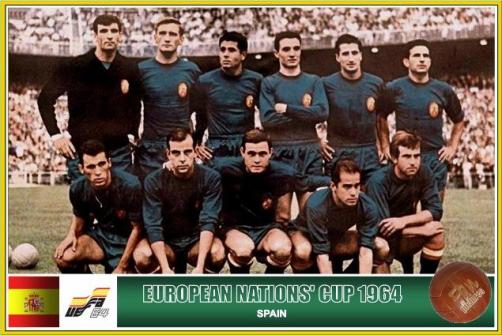
The victorious Spain side of 1964

Spain would go on to win the tournament on home soil, defeating the USSR side that they had refused to play four years earlier in the final. The final score was 2-1 with the winner scored by Marcelino, the same striker who had put two past Ireland in Seville. Amancio would end up coming third in the voting for that year’s Ballon D’Or award, his international captain Luis Suarez came second. And Franco had his win against an arch-enemy. Upon their return the USSR coach Konstantin Beskov and team director Andrei Starostin, were summoned to a meeting at the Soviet Football Federation after a furious Nikita Khrushchev had watched the game on TV and seen pictures of a smiling Franco beamed around the Soviet Union. They were both fired from their posts.

As for Ireland they would meet Spain again the following year in qualifying for the 1966 World cup, losing out in a controversial play-off leg in Paris. For the next European Championships qualifying groups had been introduced but the Irish team that had promised so much was now in decline. Players like Joe Havery, Amby Fogarty, Noel Cantwell and Charlie Hurley who had all been so influential were in their 30’s and coming toward the end of their careers. Ireland were also severely restricted compared to other nations, as we’ve seen there were no guarantees that key players would be released by British clubs, the team manager Johnny Carey was little more than a glorified trainer with little power except to give a pep talk to his hastily gathered players before the game. The Irish team was still selected by an FAI committee and it wasn’t until 1969 that this changed with the appointment of Mick Meagan as manager. It wouldn’t be until 1988 that the Republic of Ireland would have a side that would reach the last eight of the European Championships again.


This first appeared on backpagefootball.com in June 2016