Ghosts Stories of Dublin

Ahead of this year’s Bram Stoker festival we thought we’d look at the darker side of our fair city and dig into the most famous ghosts stories of Dublin. Any city that’s been around over a thousand years is going to have its fair share of ghost stories and Dublin is no different. In fact considering Dublin has ample cause to claim to be one of the great centres of Gothic literature, having been home to writers like Charles Maturin, Lafcadio Hearn, Sheridan Le Fanu and of course the daddy of Dracula himself, Bram Stoker it’s no surprise we like stories of the ghouslish, strange or macabre. Below we’ve listed some of our dark and scary favourites, stories of ghosts, murders most foul and even Satanic worship.

The Black Church

black-church


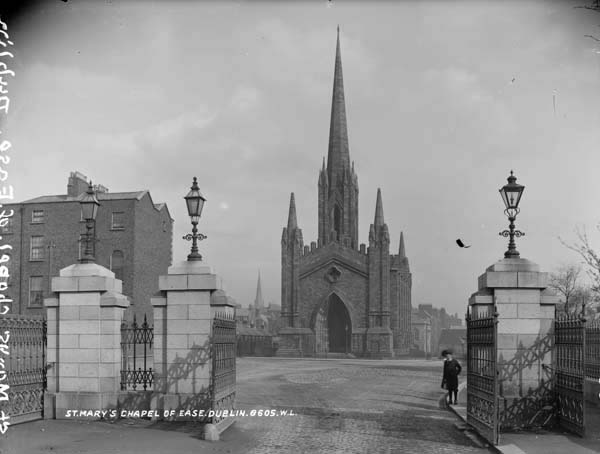
These days the the imposing, dark limestone building in Broadstone houses offices but up until 1962 St. Mary’s was a Chapel of ease for the local north Dublin protestant community. Due to the darkness of the stone the building became better known as the “Black Church” and various myths arose about the building. The most common one being that if you ran around the building three times and then entered the Church and went to the altar you would see the Devil. Although in true Dublin tradition different variations of the required actions emerged including walking around the Church in reverse 13 times or having to recite the “Our Father” backwards!


Darkey Kelly

Hellfire Club James Worsdale


For years the legend of Darkey Kelly was that she was burnt at the stake in 1746 for the crime of witchcraft, her only real crime was falling foul of the Sheriff of Dublin Simon Luttrell, known by his title Earl of Carhampton, who had fathered her child.  It was alleged that Kelly had threatened to out the Earl as a member of the infamous “Hellfire Club” (more of which later) and that it was this threat that lead to her execution.  However later research has shown that it was not dabbling in black magic that did for Dorcas “Darkey” Kelly but the fact that she appears to have been a serial killer.

Dorcas Kelly was a brothel keeper in the area close to Christchurch Cathedral, indeed a pub on Fishamble Street still bears her name to this day. She was being investigated in relation to the death of a local shoemaker named John Dowling and the during the course of searching her brothel the remains of five other murdered men were discovered. Kelly was tried and convicted of murder and she was executed in a brutal fashion (part hanged and then burnt alive) on Baggot Street in the year 1761.

Futher to the ghoulish story of Darkey Kelly’s death stories have often been told of the appearance of her ghost in the grounds of the nearby St. Audeon’s Church off High Street. She is said to be dressed all in green, a colour often associated with death in Irish myth.


The murder of Edward Ford and the dark side of Trinity College
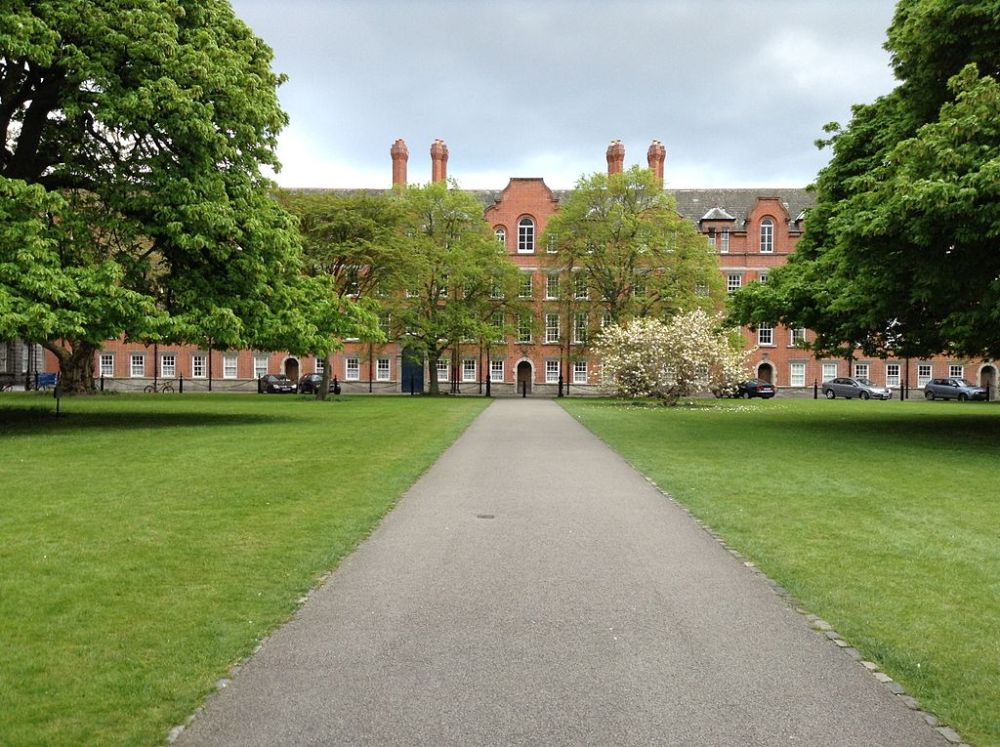
rubrics

Trinity College has its share of ghoulish connections, many of the august University’s students would go on to write their own tales of  dark and unexpected, Oscar Wilde’s The Canterville Ghost and of course Bram Stoker’s Dracula spring to mind but there was plenty of real-life gore and ghoulishness to contend with.

As a centre for medical study Trinity’s medical school still sees its fair share of dead bodies but while the cadavers donated to medical science today are treated with courtesy and respect the bodies used by medical students in the 19th Century suffered a less dignified fate. Upon construction of the Berkeley Library in the late 1990’s the remains of dozens of bodies were discovered. It was theorised that these were bodies, sourced ilicitly through grave robbers and body-snatchers by medical students as part of their medical training, quickly dissected and buried under the cloak of darkness.

It is not known if any of these individuals haunt the College but one man who reportedly does is former lecturer Edward Ford. In 1734 the somewhat ill-tempered academic was sparked to anger by a group of rowdy Trinity Students throwing stones at his windows in the Rubrics building of the campus (the fine red brick buildings at east end of the main square). Mr. Ford did not take this sort of hijink well and decide to disperse the rambunctious students by firing a pistol at them. The drunken group quickly scattered but sought revenge for being shot at, they returned to their rooms, grabbed their own firearms and returned to the Rubrics building to teach Edward Ford, Fellow of Trinity College a lesson and fired a shot through his window.

Although the intention was not to kill that was the effect, Ford had been shot although he could not name his assailant, his last words were said to have been a reply regarding the identity of the shooter with Ford saying magnanimously “I do not know, but God forgive them, I do.”

No successful charges were ever brought against any student for the shooting of Ford but it is said that a forlorn individual in powdered wig and Georgian attire can be seen wandering the Rubrics building at night and that it is none other than Ford’s ghost that wanders the halls.


The Ghost of the Poet Mangan

lord-edward-pub

The Lord Edward pub and restaurant sit close to Christchurch Cathedral and are named after the famous Lord Edward Fitzgerald the Duke of Leinster who built Leinster House. It was in this building that the poet and scholar James Clarence Mangan was born. Mangan was fluent in a number of languages and became noted for his translations of European and Middles Eastern works to English and also for the quality of his own original poetry. Years later Mangan would admired by the likes of James Joyce and W.B. Yeats and was a friend and comtempory of Thomas Davis whose statue stands on College Green today.

Mangan himself is commemorated with a statue bust in St. Stephen’s Green but his emphemeral, ghostly presence is said to favour returning to the site of his birth and appear in the Lord Edward Tavern.


The Hellfire Club

the-hellfire-club

The original Hellfire club had been formed in London in 1719 but was banned within two years by the King of England, George I. The edicts of the King did not however prevent a Hellfire club emerging for the wealthy young gentlemen of Dublin as a place where they could, drink, gamble, hire prostitutes, torture animals and even do a bit of Satan worshipping. One of the founders of the club was Richard Parsons, 1st Earl of Rosse who was also the first Grandmaster of the Freemasons in Dublin. In fact Parsons’ home was on Molesworth Street where the main Dublin Masonic Lodge has operated since 1869.

Parsons and many of the wealthy young gents or “Bucks” as they called themselves would meet in taverns and Inns around the city to enjoy their debauches and among their number was the Sheriff of Dublin Simon Luttrell who we met earlier in relation to the execution of Darkey Kelly. Luttrell was known by various nicknames and titles including “the King of Hell” and was said to have sold his soul to the Devil in order to escape crippling debts.

The club members moved their many of their meetings into the foothills of the Dublin mountains, specifically the former hunting lodge of William Conolly, (Speaker of the Irish House of Commons and one of Ireland’s richest men) , on Montpelier Hill which took on the name of the Hellfire Club. It was reported that on building the hunting lodge Conolly had used the stones of a former ancient cairn and passage grave which further added to the ghoulish attraction for the club members.

Originally posted on Dublintown.ie in October 2015.

UCD – teaching a football lesson?

Something I did up for The Football Pink on the unique place occupied by UCD in Irish football.

It’s a strange situation when the most famous player ever to play for your club didn’t actually do so; but then that’s the League of Ireland for you. The player in question was the louche, chain-smoking, erudite Brazilian genius Sócrates and the story went that while studying medicine at UCD (University College Dublin) he joined the College football team (UCD AFC) and played in the unremarkable surroundings of the League of Ireland B division. It’s a lovely image, a young Sócrates, maybe 20 years old playing against the reserve sides of League of Ireland teams in front of a couple of hundred spectators on a muddy pitch in Belfield, the University’s sports grounds. The only problem is it never happened. Sócrates did indeed study medicine and was a qualified Doctor but he studied in the state of Sao Paulo and not in the leafy suburbs of south Dublin.

socrates

While the concept of a University team playing league football is not unique, UCD are a bit of a quirk in Irish football. A rock of stability in the financially turbulent League of Ireland, UCD – because of their connection with Ireland’s largest university and their focus on providing sports scholarships to aspiring students – have a “business model” that has always been different from some of the more established League of Ireland clubs.

While no Brazilian philosopher-footballers have turned out for the Students there have been some well-known players who’ve donned the blue and navy of UCD. Peter Lorimer played a handful of games for them before his second spell with Leeds United while Irish international Kevin Moran also played while studying for his degree. There are other points of interest with the club; their Executive Vice President is the remarkable Josef Veselsky; a formidable table tennis player in his youth in his home city of Bratislava, he joined the Czech resistance when the Nazis invaded before relocating to Ireland in the 1940s. Even UCD’s rare forays into Europe have been of note; back in the 1984-85 Cup Winners Cup, the Students were the width of a crossbar away from knocking Everton out of a competition they would eventually win.

Then, of course, there is the “fan culture” of the club. One of the team’s most famous fans was University alumnus Dermot Morgan, better known to international audiences as Fr. Ted Crilly from Channel 4 sitcom Father Ted. In typical Morgan style, when asked why he supported UCD he is reported to have replied “because I don’t like crowds” – an apt response. UCD’s ground; the Belfield Bowl has a seated area of 1,500 and can accommodate more standing but the ground stewards are rarely troubled with capacity crowds. A couple of hundred students and alumni attending games is par for the course for UCD which is low even for the First Division where they currently reside; indeed it is not unusual for opposition supporters to outnumber home fans.

belfield

This has raised the question as to what UCD bring to the league. In terms of boisterous travelling support and match day atmosphere not a great deal, but in other areas they offer a lot. The scholarship system has offered talented young footballers the chance to play league football while pursuing further education. Though not a scholarship student, UCD’s most famous ex-player – the former Manchester United and Ireland defender Kevin Moran – has often said that delaying his move to England until after he completed his Commerce degree meant both that he was more mature when heading over and also less worried about his future, as he had his degree to fall back on. The most recent Ireland international to come through the UCD scholarship system has been Conor Sammon, (dubbed the “Sammon of College” during his stay there) who’s currently on-loan at Sheffield United from Derby County while many other League of Ireland of clubs have benefitted from UCD’s approach.

Dundalk, for example, have just won their second league title in a row and central to this latest triumph has been midfielder Ronan Finn, who won a football scholarship to UCD while one of the star performers who helped St. Patrick’s Athletic win last year’s FAI Cup was Conan Byrne, another UCD past man. UCD aren’t expected to challenge for trophies and are not reliant on generating big gates or chasing prize money, they expect their best performers like Finn and Byrne to get poached by other clubs offering decent wages which means they have always been the club to give youth a chance and to develop quality young players.

At the time of writing, UCD occupy a play-off spot in the First Division having been relegated from the Premier Division last year, yet despite this state of affairs 2015 has seen UCD secure one of the greatest financial windfalls of any League of Ireland club. The University side qualified for the Europa League this year by the Fair Play award route. UCD have always focussed on trying to play expansive, passing football – perhaps best exemplified by previous coach Martin Russell – and eschewing the more physical side of the game which has ultimately benefitted them. While many in Irish football expected UCD to be humiliated in Europe, they surprised many commentators when their young side defeated F91 Dudelange of Luxembourg 2-1 over two legs. Star of the tie was 19-year-old striker Ryan Swan, the third generation of the Swan family to play in the League of Ireland; his father Derek had finished his career at UCD and his cousin Tony McDonnell was the clubs’ erstwhile captain. Progress through the first qualifying round meant the Students met Slovan Bratislava in the next phase, but a heavy home defeat meant that UCD would progress no further. The blow was softened as the club banked over €400,000 in UEFA prize money during their European adventure. To put this into context Dundalk won just €100,000 in prize money for winning the league title. A club that was relegated and only got to play in Europe due to the Fair Play league got several multiples of that amount, and this sums up the dilemma in the League of Ireland.

swan

Dundalk, so impressive over the last two years, were on the brink of going bust only a year earlier and the club is still in dispute with their former owner over lease arrangements of their ground, Oriel Park, and their youth development facilities. UCD and other clubs such as Cabinteely F.C. and especially Wexford Youths present an alternative model to the more established sides in the league. While Wexford, Cabinteely and UCD might lack the trophies and support levels of other clubs, their focus on the youth development of mostly amateur players raises a dilemma for the league.

Dundalk, Bohemians, Shelbourne, Shamrock Rovers, Cork City, Drogheda United, Derry City and others have all chased, and in some cases achieved, on field success but have very nearly gone out of business in the process due to overspending, mostly in terms of player wages. A discussion is now whether the aim for clubs should be one of full professionalism of players and coaching staff with a focus on European progress and using such successes to grow existing fan bases, or a return to a mostly amateur player set up with resources focused more on local area player development.

Wexford Youths are newly crowned First Division champions and UCD may yet join them in the Premier Division next year via the play-offs. Some League of Ireland fans are asking themselves if these clubs are good for the nation’s top flight; they are not going to bring legions of travelling fans nor are they likely to entice the sceptical armchair football fans of Ireland through the turnstiles of Irish clubs in the way that the stylish football of Richie Towell, Daryl Horgan and co. have brought crowds back to Dundalk games.

That is unlikely to be of concern to UCD, their European windfall has helped to secure the future of the club even further and they are likely to continue offering young men the chance to play league football while pursuing further education. Those same players are likely to be hoovered up by League of Ireland sides with bigger wage budgets and UCD will begin again, as they always do – with a minimum of fuss.


The FAI’s Selection of “Granny Rulers” and Northerners: A Response to Eamonn Sweeney

A good reply to Eamonn Sweeney’s recent Independent article about the pursuit of granny-rule players.

Daniel Collins's avatarDaniel Collins

According to Eamonn Sweeney, writing for the Irish Independent on the 4th of October, “the way [Ireland have] used the granny rule is a prime example of sleeveenism, sharp practice and the search for a short-term advantage”. Sweeney makes a number of negative points, with which I take issue, both in relation to the FAI’s utilisation of the rule and in relation to specific, once-potential or assumed “granny rulers”. He begins:

There’s been something utterly demeaning about the way Martin O’Neill and the FAI have traipsed after [Jack] Grealish, trying to hurry him into accepting the green jersey like it was some piece of dodgy merchandise which might not pass muster on closer inspection.

In the end Grealish didn’t buy it and his refusal brought home just what a squalid mess our Find Another Irishman policy has become. Like many other tenuously qualified players we seek, Grealish would…

View original post 2,705 more words

Bohemians and world beaters: Ireland’s international triumph

The split between the footballing associations of the FAI and the IFA has had many consequences for football on our island, many hours have been whiled away with “what if” scenarios with barflies imagining an Irish side of the 60’s featuring the likes of John Giles and George Best. Another less discussed consequence of the split between the two associations was for many the loss of any sense of identity with the all Ireland side that had competed from the 1880’s through to 1921. Any connection with the history of this 32 county team has for most football fans in the Republic, (and indeed some in the North) been severed and there is little sense of identification with the players and their achievements pre -1921.

I for one think that this is a great pity, it ignores the history of the sport and the rich and interesting personal stories of those involved. It also means modern fans in the Republic often feel little pride or connection to the victory by a truly representative Irish team in the Home Nations Championship of 1914. At the time the Home Nations Championship was viewed, in the British Isles at least, as the foremost International football competition in the world with the winners rating themselves as the best international side in the world. While this is obviously an isolated and arrogant viewpoint it is reasonable to say that the winners could legitimately claim to be among the very best international sides in the world.

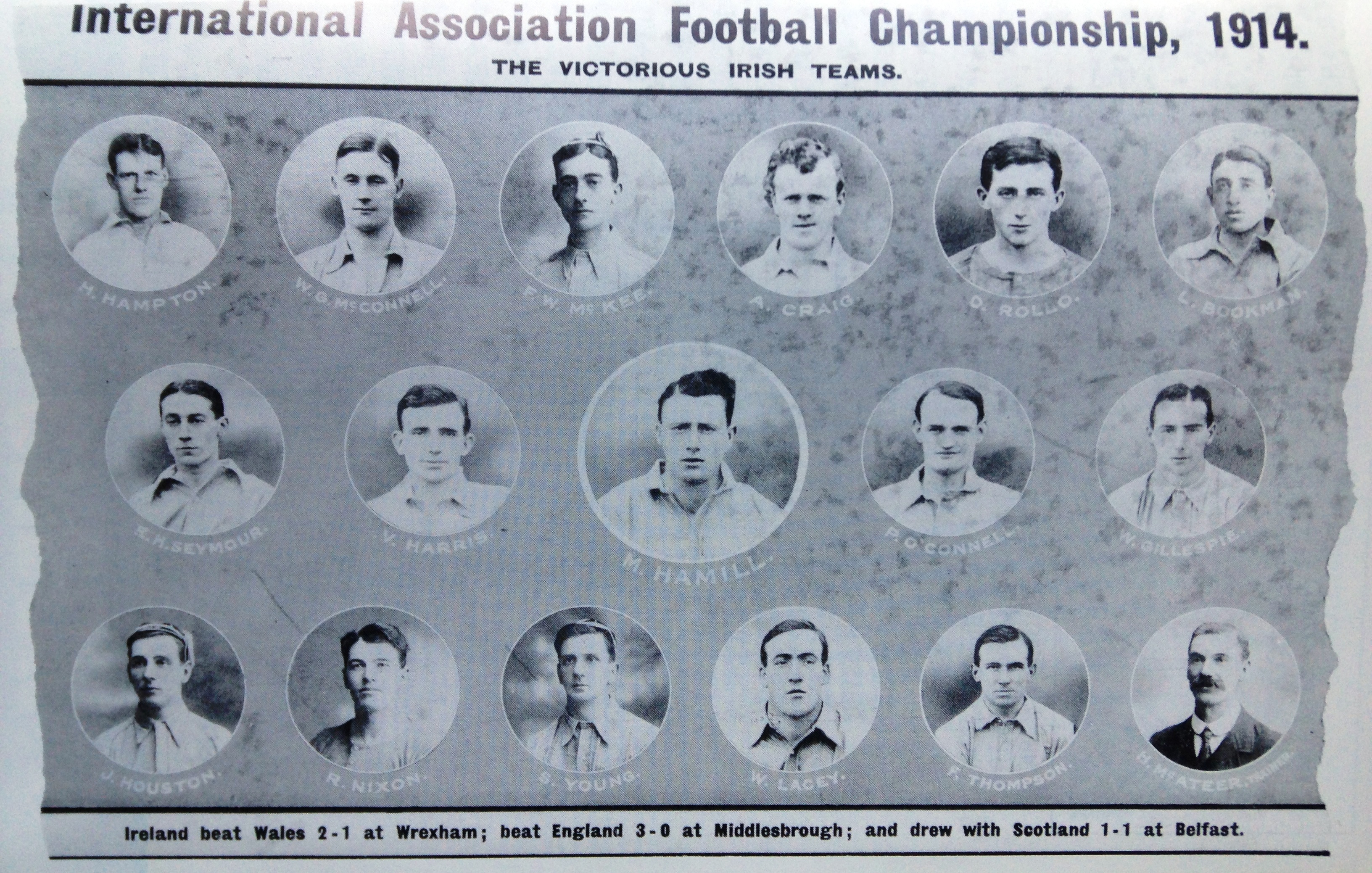
The side that triumphed in 1914 was a young, impressive and truly representative team. While in previous years there had been a great deal of tension and legitimate criticism about Belfast based players being favoured ahead of Leinster based players, the squad for the 1914 Championship was a truly all island affair. It featured players from the footballing hotbeds of Dublin and Belfast but also players born in the likes of Wexford (Billy Lacey), Galway (Alex Craig) and even Lithuania in the case of Louis Bookman who was born in what was then part of the Russian Empire. Bookman’s  family fled to Dublin when he was a boy to escape the persution of Jews then taking place, he began his footballing career for Belfast Celtic before moving to England with Bradford City, in course becoming the first Jewish professional  footballer in Britain. Bookman was playing for Bradford when he was called up in 1914 but the squad was a mix of players who were plying their trade in both Ireland and Britain, it also included two players from Bohemians, William McConnell and Ted Seymour.

1914_ireland_british_champions

1914 Home Nations Champions

Both players were of course amateurs in keeping with the traditions in place at Bohs which meant that they were in a minority even by 1914 as most of the major teams in Ireland had already embraced professionalism by that time. The two main exceptions being Bohemians and Cliftonville. Seymour was an outside-right for Bohemians and one of the stand-out forwards for the Gypsies at the time, the son of an RIC officer who lived in the nearby Phoenix Park he won his first amateur cap for Ireland by 1912 scoring in a 3-2 victory against England, the same year he would win the Leinster Senior Cup with Bohemians. His lone senior cap would come in Ireland’s opening match of the Home Nations Championship, an away fixture against Wales which Ireland won 2-1 when he was called up as a replacement for Everton’s injured winger John Houston. Sheffield United forward Billy Gillespie got both goals in that game but Seymour obviously impressed over the course of the match as he was quickly signed up by Cardiff City on the strength of his performance.

Amateur team pic

The Irish amateur team which defeated England 3-2 in 1912. The side featured three Bohemian F.C. players; William McConnell, Ted Seymour and Dinny Hannon.

William McConnell had a somewhat more extensive career at International level. Regarded as one of the best full backs in Ireland McConnell was a strong and physically dominant defender for Bohemians and Ireland. A member of the Bohemians team that lost out in the 1911 Cup Final to Shelbourne he also won a pair of Leinster Senior Cups with Bohemians and represented the Irish League on three occasions. At International level McConnell won six senior caps and was only on the losing side once, in a 2-1 defeat to Scotland in 1913. McConnell made his debut in 1912 in a 3-2 win over Wales and was part of an historic victory in only his second cap as Ireland beat England for the first time ever. Billy Gillespie grabbed both goals in a 2-1 victory in Windsor Park as McConnell lined out alongside his Bohs team-mate Dinny Hannon. Despite that landmark victory the Irish side still finished bottom of the Home Nations Championship but things were to be much different the following year. McDonnell was an ever present in the successful Home Nations campaign starting every game at full back.

The Ireland side before the opening game against Wales

The Ireland side before the opening game against Wales

The campaign opened with the aforementioned 2-1 win away to Wales and was followed by another away fixture, this time against England in Middlesboro’s Ayresome Park. Proving that the previous victory against England was no flash in the pan the Irish trounced the English on home soil, two goals from the ever versatile Billy Lacey, then of Liverpool and a third from Billy Gillespie eased Ireland to victory over a stunned England. The Donegal born Gillespie would end the tournament as its top scorer with three goals and was arguably one of the greatest players in the world at this time. He would captain Sheffield United to victory in the 1925 FA Cup final and play on for them until he was more than 40, towards the end of his career his role at the heart of the Blades attack would be taken over by another Irishman, Jimmy Dunne who would later coach Bohemians in the 1940’s. At international level his 13 goals for Ireland/Northern Ireland would remain a record until it was eclipsed by David Healy in 2004.

However Gillespie would miss the final match that could guarantee Ireland the 1914 Championship, as Sheffield United had to replay an FA cup tie they refused to release Gillespie for the game against Scotland in Belfast’s Windsor Park. This would require a significant reshuffle on behalf of the Irish with Samuel Young of Linfield coming into the forward line and Billy Lacey taking over Gillespie’s role in the attack. McConnell continued as usual alongside Alex Craig (Greenock Morton) in a defence that had proven solid over the previous two games.

William

William “Bill” McConnell

The match would be the only home game for Ireland that year taking place in Windsor Park, but under far from ideal conditions. Not only was Gillespie unavailable but there was a downpour the day before the game which continued through to the game meaning that both sets of players were ankle deep in mud. The view of the press at the time was that this would suit a more physically imposing Scottish side. Worse was to come for the Irish as the conditions and the hard-fought nature of the game began to take their toll and injuries on the Irish side began to mount. Paddy O’Connell, then of Manchester United and later manager of Barcelona picked up a knock as did McConnell who had to leave the field of play. However the Bohs man wasn’t out of the action long as the Irish keeper Fred McKee of Cliftonville suffered a broken collar bone during the first half. McKee managed to struggle on until half time but once the second half commenced McConnell took to the field in his place in a sodden goalkeeper jersey that was supposedly “two sizes too small” . As substitutions were not in use at the time Ireland were down to ten men with Lacey dropping back from the forwards to take McConnell’s place at full back.

This was not the first time Ireland had found themselves in this situation, Lacey had been forced off in the Welsh game yet Ireland had triumphed and now he was in defence helping protect McConnell in goal. Forced into making a couple of saves early on McConnell seemed to be doing alright in his unfamiliar position but a mis-timed run forward  meant he gave possession to the onrushing Scottish forward Joe Donnachie who had a simple finish to give Scotland the lead. It seemed like all could be lost in the cruellest fashion. The team without its main goalscoring threat in Gillespie and down to ten men looked doomed but with just eight minutes remaining a fine pass from Patrick O’Connell sent Sam Young free and he blasted the ball home to send the crowd wild. Despite the terrible weather the huge crowd had been in full voice behind the Irish team and Windsor Park saw record gate receipts of £1,600 on the day. The supporters had gotten their moneys worth, the underdog team, shorn of their best player, having finished two of their three matches with only ten men were now outright Champions for the first time.

This victory was met with great joy and optimism on behalf of the footballing community throughout Ireland. Having defeated England in their last two outings and having won the Home Nations Championship outright there were high hopes that the team could push on from this achievement and defend their title the following year. Other matters were to intercede however.

While the outbreak of War did not bring about a halt to all football it did end international matches. Players were encouraged to set a good example to other young men and enlist. Football clubs in all parts of the country faced tough times losing both players and fans to the trenches of France and Belgium while the league would split for the course of the war creating regional leagues focusing on Dublin and Belfast.

By the time peace was restored to Europe several of the squad had passed their prime and although players like Lacey and Gillespie were still top performers for their clubs in England the split between the Irish football associations which led to the formation of what we know today as the FAI meant that the potential of a united Irish XI would never be realised.

For those players with a Bohemians connection their careers were varied. Ted Seymour’s stay in the Welsh capital was brief and included works in a Welsh munitions factory to support the War effort, he left Cardiff City in 1915 and returned to Ireland with Glentoran for whom he lined out for much of the War years. Despite twice winning the Irish Cup (once with Glentoran and later with Linfield) Seymour was never again selected to represent Ireland.

McConnell also transferred to Britain, signing for Bradford Park Avenue who were then in enjoying their best ever league season, finishing 9th in the Football League in 1914/15, McConnell would have a limited role however, making only 4 league appearances. He would spend a brief sojourn in Belfast with Linfield before returning to Bohemians in 1916 where he played a handful of games. This was not to be the end of his sporting career however, he found significant success as an amateur golfer being successful enough to triumph in the 1925 and 1929 West of Ireland Amateur Championships. Some Pathé newsreel footage even survives of McConnell playing a round at a new golf course in Dun Laoghaire.

Though the war would disrupt the career of Billy Lacey he would still go on to have considerable success in the 1920s as a player for Liverpool, winning back to back titles. Lacey would return to Ireland to finish his playing career at Shelbourne and then as player-coach of Cork Bohemians. It was in 1930 during this spell in Cork that he would win his final cap for Ireland at the age of 41, he remains to this date the oldest player ever capped by the FAI. With his playing career finally over Lacey brought his considerable experience to the Bohemians of the Dublin variety. During his five years at Dalymount Park (between 1933 and 1938) Lacey would lead Bohs to two league titles and an FAI Cup as well as a host of other minor honours. During this stint Lacey would also provide his coaching talents to the Irish national side.

While the split remains as wide as ever between the FAI and the IFA and relations between the associations have been strained over players like James McClean and Darron Gibson electing to play for the Republic, it is worth remembering a time when a truly all-Ireland team triumphed against the odds and the role that key figures in the history of Bohemians would play in that victory.

If you are interested in further reading on the subject I’d suggest David Owen’s article in The Blizzard Issue 8. Neil Garnham’s “Association Football and Society in pre-partition Ireland” and also Cormac Moore’s “The Irish Soccer Split”. Finally a special thanks to Stephen Burke of Bohemian F.C. for providing additional information on the career of Bill McConnell. For more on Louis Bookman and his fascinating life try “Does your Rabbi know you’re here?” by Anthony Clavane.